Books in Brief: Five I Enjoyed Recently
Lab Girl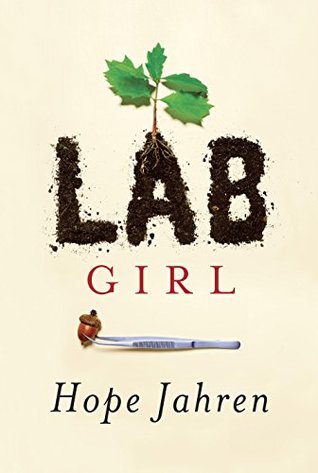
By Hope Jahren
This memoir puts so many things together that it shouldn’t work, yet somehow – delightfully – does. With witty anecdotes and recreated dialogue, Jahren tells about her Minnesota upbringing, crossing the country to take up geobiology/botany academic posts in Atlanta, Baltimore and Hawaii, her long-time platonic relationship with eccentric lab partner Bill, and zany road trips for conferences and field work. On the serious side, she writes about how bipolar disorder complicated work life, marriage and motherhood. Add to that the interspersed chapters illuminating aspects of plant biology and you get a truly varied and intricate narrative. What Jahren does best is simply convey what it is like to have true passion for your work, a rare thing. You don’t have to be a science type to enjoy this book. All that’s required is curiosity about how others live. Jahren might even inspire you to go plant a tree.
My rating: 
 It’s Okay to Laugh (Crying Is Cool, Too)
By Nora McInerny Purmort
Purmort was hit by a triple whammy of loss: within weeks of miscarrying her second child, both her father and her husband were dead of cancer. After a seizure revealed his brain tumor, she and Aaron got engaged on his hospital bed and went through fertility treatment to have their son. All in all they got three years together, after which the Minneapolis-based author founded what she calls the “Hot Widows Club.” She’s only about my age but, as she puts it, has “been through some shit.” The book is in the form of short essays, a lot like blog entries, that tread the fine line between heartbreak and humor. I might have preferred a bit more of a narrative; I wearied of open letters and lists. The book is best where she eases up on self-deprecating jokes and pop culture references and just tells her story, so much of which resonates with my sister’s experience. As soon as I finished the book, I ordered her a copy.
My rating: 
My Heart Can’t Even Believe It: A Story of Science, Love, and Down Syndrome
 By Amy Silverman
When her younger daughter Sophie was born with Down’s syndrome in 2003, Silverman had no idea what to expect. The long-time Arizona journalist put her investigative skills to work, finding out everything she could about the discovery of Down’s and the history of how patients have been treated down the decades. In addition, she delves into the foundation of the Special Olympics (which had a connection with the Kennedy family) and its alternatives, and – not being a “support group kinda girl,” the other sources of encouragement she finds, especially through fellow bloggers. A significant portion of the book is about finding the best schools for Sophie – information that may well be not just U.S.-specific but particular to Arizona, where charter schools are popular. Still, what comes through is Silverman’s fierce love for her daughter and her insistence that every person with Down’s is an individual.
My rating:
 How to Ruin Everything: Essays
By George Watsky
Watsky is a slam poet and rap/hip hop artist from San Francisco. These essays about his misadventures reminded me most of Lauren Weedman (Miss Fortune) and John Jeremiah Sullivan (Pulphead). My favorite pieces were “Tusk,” on smuggling a narwhal tusk from Canada to the States to be his roommate’s great-aunt June’s hundredth birthday present, and “The White Whale,” about his unreliable tour bus. Others see him moving from a crumbling Boston college house to the heart of Hollywood deadbeat territory, traveling through India, fishing in Alaska, trying to attract older women, and reflecting on a childhood love of baseball. In the other stand-out essay, a more serious one, he reveals his experience of epilepsy and weaves in the history of its diagnosis and treatment. Also remarkable was a mention of Pauly Shore, a personage I haven’t thought about in, oh, I don’t know, a decade?
My rating:
Only in Naples: Lessons in Food and Famiglia from My Italian Mother-in-Law
 By Katherine Wilson
This is just the kind of book I would want to write about my experience studying abroad in England and eventually settling here. Of course, Wilson had it harder: she had to conduct her romance with Salvatore Avallone, relate to her future in-laws, and start a career all in a different language. But there were consolation prizes, chief among them the food. A lot of the best anecdotes revolve around Italian cuisine, like Salva’s mother Raffaella sending food down to her daughter in the apartment below via the elevator, or his uncle catching octopi with his one arm. I loved the colorful Italian and Neapolitan dialect expressions Wilson dots around, and as a fellow expat it was interesting to see what her non-negotiable American imports are (we all have our own list, I’m sure): wall-to-wall carpeting, air conditioning, a garbage disposal, and peanut butter – I’m with her on that last one, anyway.
My rating:
(For each one, read my full Goodreads review by clicking on the title link.)
Have you read any of these? Which one takes your fancy?
Note: I’m traveling until the 24th so won’t be responding to comments right away, but will be sure to catch up soon after I’m back. I always welcome your thoughts!
European Holiday Reading – A (Temporary) Farewell
Tomorrow we’re off to continental Europe for two weeks of train travel, making stops in Brussels, Freiburg (Germany), two towns in Switzerland, and Salzburg and Vienna in Austria. This will be some of the most extensive travel I’ve done in Europe in the 11 or so years that I’ve lived here – and the first time I’ve been to Switzerland or Austria – so I’m excited. I’ve been working like a fiend recently to catch up and/or get ahead on reviews and blogs, so it will be particularly good to spend two weeks away from a computer. It’s also nice that our adventure doesn’t have to start with going to an airport.
Here’s what I’ve packed:
- Setting Free the Bears by John Irving (his first novel; set in Vienna)
- Diary of a Pilgrimage by Jerome K. Jerome (about a train journey from England to Germany)
- Me and Kaminski by Daniel Kehlmann (the author is Austrian)
- A Whole Life by Robert Seethaler (a novella set in the Austrian Alps)
+ Enchanting Alpine Flowers & the Rough Guide to Vienna
Also on the e-readers, downloaded from Project Gutenberg:
- Three Men on the Bummel by Jerome K. Jerome (further humorous antics in Germany)
- Burning Secret by Stefan Zweig (a novella; the author is Austrian)
+ another 250+ Kindle books from a wide variety of genres and topics – I’ll certainly have no shortage of reading material!
(Looking back now, it occurs to me that this all skews rather towards Austria! Oh well. Vienna is one of our longer stops.)

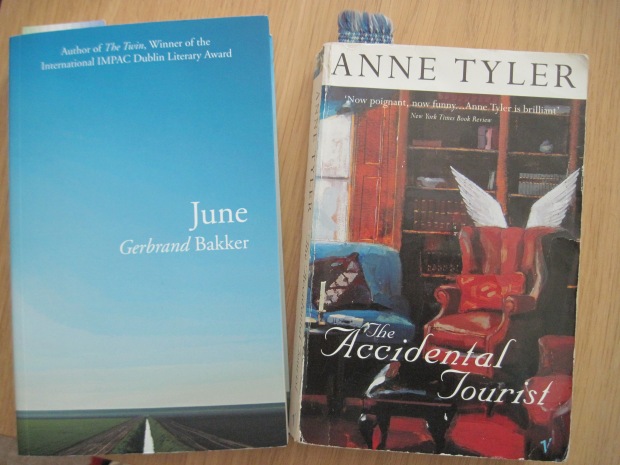
I’m supposed to be making my way through the books we already own, but on Saturday I was overcome with temptation at our local charity shop when I saw that all paperbacks were on sale – 5 for £1. I’m in the middle of one of the novels I bought that day, June by Gerbrand Bakker, along with The Accidental Tourist by Anne Tyler, and need to decide whether to put them on hold while I’m away or take one or both with me. Either way I’ll try to finish June this month; it’s just too appropriate not to!
I was also overcome with temptation at the thought of a new Eowyn Ivey novel coming out in August, so requested a copy for review.

It’s an odd time here in the UK. Readers from North America or elsewhere might be unaware that we’re gearing up for a referendum to decide whether to remain in the European Union. By the time we pass back through Brussels (‘capital’ of the European Union) on the 24th, there’s every chance the UK might no longer be an official member of Europe. I haven’t taken British citizenship so am ineligible to cast a vote; I won’t court debate by elaborating on a comparison of “Brexit” with the specter of Trump in the States. My husband has sent in his postal vote, so collectively we’ve done all we can do and now just have to wait and see.
We’re not back until late on the 24th, but I’ve scheduled a few posts for while we’re away. I will only have sporadic Internet access during these weeks, so won’t be replying to blog comments or reading fellow bloggers’ posts, but I promise to catch up when we get back.
Happy June reading!
An Anthology of Summer Reading
In partnership with the UK’s Wildlife Trusts, London-based publisher Elliott & Thompson is celebrating the seasons with a series of anthologies edited by novelist and nature writer Melissa Harrison. My husband had a short piece published in the first volume (Spring), so I was eager to get my hands on a copy of Summer.
 The format in all the books is roughly the same: they’re composed of short pieces that range from one to a few pages and run the gamut from recurring phenological records (Gilbert White and Thomas Furly Forster) and extracts from classic literature (Adam Bede and Far from the Madding Crowd) to recent nature books (Mark Cocker’s Claxton and Paul Evans’s Field Notes from the Edge). In addition, there are new contributions from established writers or talented amateurs, one as young as twelve – heartening proof that young people are still enthused about nature.
With the exception of the poems, none of these entries have titles, and the attribution and date of composition are not given until the very end. The idea behind this pseudo-anonymity, I think, is that if – as I sometimes was – you are patient enough to not skip ahead to discover who wrote it when, you will judge all of the pieces by the same standards. You approach each without expectations, and in many cases may be stumped as to whether the writing is historical or modern. I found W.H. Hudson’s and Mary Webb’s extracts particularly readable, for instance; you wouldn’t guess they’re from the early decades of the twentieth century.
There are 70-some pieces here on a wide variety of subjects, but a few of the ones that struck me were on badger-watching (Caroline Greville, who is writing a memoir on the topic), looking for orchids (environmental journalist Michael McCarthy), moth trapping, and night-time wildlife like glow-worms and bats. I especially appreciated Alexandra Pearce’s essay on the brief life of mayflies and Nicola Chester’s on searching for owls. Of the previously published pieces, Paul Evans’s on ant swarms is a stand-out. My two favorites, though, are from celebrated nature columnist Simon Barnes, who writes about paddling a canoe in Norfolk with his son in search of adventure, and Esther Woolfson, who, as she does in her book Field Notes from a Hidden City, illuminates the unnoticed wildlife of Aberdeen.

Courtesy of Chris Foster
Again and again this message comes through: take the time to look closely and you will find great wonders. “Perhaps as adults our lives are so filled with bills, chores, jobs and other things that we often forget to stop and look at the world around us,” Jan Freedman, curator of natural history at Plymouth City Museum and Art Gallery, astutely notes. Whether it’s lichens or weevils, all you generally have to pay to experience nature’s delights is attention. I loved Alexi Francis’s description of a hare: “Haunches down, nose cross-stitched, it closes its eyes to the sun in a moment of blissful slumber.” Having that moment of communion with nature and then choosing just the right words to capture it is what this book is all about.
Taken together, these pieces truly give the feeling of an English summer. The older writing is remarkably undated, which contributes to a sense of continuity across the centuries. However, the book also evokes more universal notions of summer: those drowsy, leisurely days we gild with nostalgia. As Harrison puts it in her introduction, the longing for summer is really a wish to return to childhood: “Those elysian summers, polished to dazzling brightness by the flow of years, can never be recaptured; but we have this summer, however imperfect we as adults might deem it, and we can go out and seek it at every opportunity we find.”

Courtesy of Chris Foster
As the relatively frequent typos – three in the Barnes piece alone, for example – suggest, the series has been somewhat hastily put together. Nonetheless, these are really rather lovely books. Summer is a perfect bedside companion to dip into as the days warm up. Impossible not to covet the whole four-season set.
With thanks to Marianne Thorndahl at Elliott & Thompson for the free copy for review.
My rating:
Discover Some Shiny New Books
If you haven’t already come across it, let me commend to you the UK-based web magazine Shiny New Books. It’s been around for two years now and has just released Issue #10. Each installment is stuffed full of terrific reviews and features. I suggest setting aside a bit of time each day for a week or two, say a half-hour tea break, to browse what the site has to offer. It specifically highlights what’s been recently published or reprinted in the UK, so in some cases these will be books that are already available in North America; in others these will be sneak previews of books not yet published there. You’re sure to find plenty that appeals.
I’m proud to be part of the stellar (if I do say so myself) team of SNB reviewers. Somehow I just kept volunteering for things and ended up with – whoops! – a whole five pieces in this latest issue: four reviews (two fiction, one nonfiction, and one classic reprint) and an interview. Two of the novels were fantastic, among my best reads of the year so far, while the other two books were worthwhile, even very good in places. Here are tasters of my reviews; click on a title to read the whole thing – and then spend some good time browsing the site.
Sweetbitter by Stephanie Danler
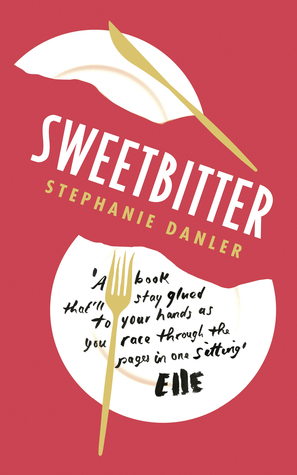 Twenty-two-year-old Tess arrives in New York City by car in June 2006. Two days later she interviews at a restaurant in Union Square and gets a job as a backwaiter and barista. Camaraderie makes the restaurant not just bearable but a kind of substitute home. Tess is most fascinated by two colleagues who stand apart from the crowd: Simone, the resident wine know-it-all, and bartender Jake. Try as she might, Tess can’t work out the dynamic between them. To mirror her one-year taste apprenticeship, the book is broken into four seasonal parts, headed by short sections in the second person or first-person plural. Everything about this novel is utterly assured: the narration, the characterization, the prose style, the plot, the timing. It’s hard to believe that Danler is a debut author rather than a seasoned professional. It captures the intensity and idealism of youth yet injects a hint of nostalgia. I’m willing to go out on a limb and call Sweetbitter my favorite novel of 2016.
My rating: 
I also interviewed Stephanie Danler over e-mail.
My Son, My Son by Howard Spring
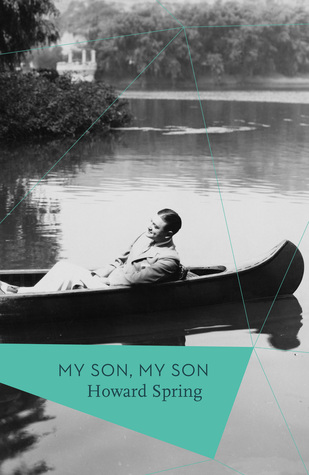 My Son, My Son opens in working-class Manchester in the 1870s and stretches through the aftermath of World War I. Like a Dickensian urchin, William Essex escapes his humble situation thanks to a kind benefactor and becomes a writer. His best friend is Dermot O’Riorden, a fervid Irish Republican. William’s and Dermot’s are roughly parallel tracks. Their sons’ lives, however, are a different matter. Oliver Essex and Rory O’Riorden are born on the same day, and it’s clear at once that both fathers intend to live vicariously through their sons. My Son, My Son struck me as an unusual window onto World War I, a subject I’ve otherwise wearied of in fiction. A straight line could be drawn between Great Expectations, Maugham’s Of Human Bondage, My Son, My Son, and The Goldfinch: all four feature a simultaneously sympathetic and enraging protagonist who overcomes family difficulties to dream of fame and fortune. No mere period or local interest piece, this is a book for the ages.
My rating: 
The Sellout by Paul Beatty
 This is such an outrageous racial satire that I kept asking myself how Beatty got away with it. Not only did he get away with it, he won a National Book Critics Circle Award. The novel opens at the U.S. Supreme Court, where the narrator has been summoned to defend himself against a grievous but entirely true accusation: he has reinstituted slavery and segregation in his hometown of Dickens, California. All the old stereotypes of African Americans are here, many of them represented by Hominy Jenkins. This reminded me most of Ishmael Reed’s satires and, oddly enough, Julian Barnes’s England, England, which similarly attempts to distill an entire culture and history into a limited space and time. The plot is downright silly in places, but the shock value keeps you reading. Even so, after the incendiary humor of the first third, the satire wears a bit thin. I yearned for more of an introspective Bildungsroman, which there are indeed hints of.
My rating:
The Abundance by Annie Dillard
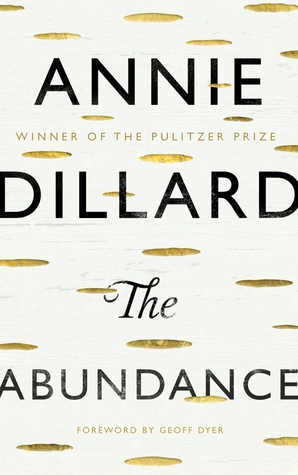 Dillard was raised a Christian in Pittsburgh, Pennsylvania, but her writing expresses an open spirituality rather than any specific faith. For readers who are reasonably familiar with her work, the selection given here might be a little disappointing. Why reread 60 pages from Pilgrim at Tinker Creek, I thought, when I have a copy of it up on the shelf? Rather than reading long, downright strange portions of For the Time Being and Teaching a Stone to Talk, why not go find whole copies to read (which might help with understanding them in context)? None of Dillard’s poetry or fiction has been included, and the most recent piece, “This Is the Life,” from Image magazine, is from 2002. I wish there could have been more fresh material as an enticement for existing fans. However, this will serve as a perfect introduction for readers who are new to Dillard’s work and want a taste of the different nonfiction genres she treats so eloquently and mysteriously.
My rating: 
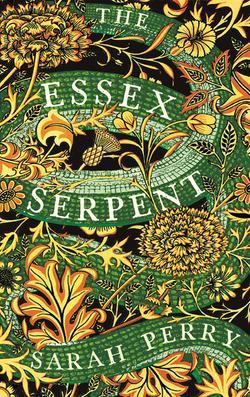
The Essex Serpent by Sarah Perry
This exquisite work of historical fiction explores the gaps – narrower than one might think – between science and superstition and between friendship and romantic love. The Essex Serpent was a real-life legend from the latter half of the seventeenth century, but Perry’s second novel has fear of the sea creature re-infecting Aldwinter, her invented Essex village, in the 1890s. Mysterious deaths and disappearances are automatically attributed to the Serpent who dwells in the depths of the Blackwater. This atmosphere of paranoia triggers some schoolgirls to erupt in frenzied delusions as in The Crucible. It is unclear whether the Church should tolerate a source of mystery or dismiss it all as nonsense – after all, there’s a winged serpent carved onto one of the pews at the parish church.
 In a domestic counterpart to all these supernatural goings-on, we gain entry into two middle-class households. Cora Seaborne’s abusive husband, Michael, has recently died of throat cancer, leaving her to raise their odd (autistic, I wondered?) eleven-year-old son Francis on her own. She has an amateur interest in fossils to rival Mary Anning’s, so when she hears of a cache near Colchester she leaves London for Essex, bringing along Frankie and her companion, Martha. Mutual friends put her in touch with Will Ransome, the vicar of Aldwinter, sure that he and his family – consumptive wife Stella and children Joanna, James and John – will be able to show her around the coast.
Despite an inauspicious first meeting, which sees Cora and Will, still unknown to each other, hauling a drowning sheep out of a lake, theirs soon becomes a close, easy friendship. Cora feels she can speak her mind about the faith she lost and the new marvels she finds in nature:
I had faith, the sort I think you might be born with, but I’ve seen what it does and I traded it in. It’s a sort of blindness, or a choice to be mad – to turn your back on everything new and wonderful – not to see that there’s no fewer miracles in the microscope than in the gospels!
She holds her own in cerebral debates with Will as he deplores his parishioners’ fantasies about the Serpent. Is there really such a big difference between his faith – “all strangeness and mystery – all blood, and brimstone,” Cora teases – and the Serpent legend? In seeming contradiction to his career path, Will is more suspicious than many of the other characters of things he doesn’t understand and can’t explain away, like hypnosis and a Fata Morgana.
The novel’s nuanced treatment of faith and doubt is enhanced by references to Victorian science, including fossil hunting and early medical procedures. Dr. Luke Garrett, Michael’s surgeon, is one of Cora’s best friends back in London; she calls him “The Imp.” In one of the most striking passages of the entire book, he performs rudimentary heart surgery on the young victim of a stab wound. Perry fills in the novel’s background with a plethora of apt Victorian themes, including housing reform and London crime. For a book of 440 pages, it has a large cast and a fairly epic scope. Although there are places where subplots and minor characters might have been expanded upon, Perry wisely refrains from stuffing the novel with evidence of her research. Indeed, it’s a restrained book overall, yet breaks out into effusiveness in just the right places, as in Stella’s mystical adoration of the color blue.
Descriptive passages and the letters passing between the characters give a clear sense of the months passing, yet there is also something timelessly English about the narrative – Dickensian in places (Our Mutual Friend) and Hardyesque in others (Far from the Madding Crowd). I especially loved this picture of the June countryside:
Essex has her bride’s gown on: there’s cow parsley frothing by the road and daisies on the common, and the hawthorn’s dressed in white; wheat and barley fatten in the fields, and bindweed decks the hedges.
Cross this cozy pastoral vision with the Gothic nature of the Serpent craze and you get quite a unique atmosphere. The vague, unexplained sense of menace didn’t work for me at all in Perry’s previous novel, After Me Comes the Flood, but here it’s just right.
It was no doubt true in the late Victorian period that “men and women can’t be friends because the sex part always gets in the way” (as famously declared in When Harry Met Sally). No one is sure what to make of a sexually available, self-assured female like Cora. The different kinds of Greek love, from philia to eros, keep shading into each other here. Like the water that forms the book’s metaphorical substrate, the relationships ebb and flow. Yet there’s no denigrating any connection as just friendship; in fact, friendship is enough to rescue one character from suicide. Like Hanya Yanagihara’s A Little Life, the novel asks whether love is ever enough to save us – and gives a considerably more optimistic answer.

My proof copy didn’t have quite such a gorgeous cover but did come intriguingly wrapped in snakeskin ribbon…
The fact that I have an MA in Victorian literature means I’m drawn to Victorian-set novels but also highly critical about their authenticity. While reading this, though, I thoroughly believed that I was in 1890. Moreover, Perry adroitly illuminates the situation of the independent “New Woman” and the quandary of science versus religion (which were the joint subjects of my dissertation: women’s faith and doubt narratives in Victorian fiction).
I’m delighted, especially having seen Perry speak at Bloxham Festival in February (see my write-up for more on her background and the inspirations behind this novel), to have liked The Essex Serpent three times as much as her debut. It has an elegant, evocative writing style reminiscent of A.S. Byatt and Penelope Fitzgerald. Something holds me back from the full 5 stars – too diffuse? Too much staying on the surface of things? Not quite intimate enough, especially about Cora’s inner life? – but I still declare myself mightily impressed. The Essex Serpent counts as one of my favorite novels of 2016 so far. You can see why Serpent’s Tail (how perfect is her publisher’s name?!) rushed this one into publication a few weeks early. Expect to see it on the Booker Prize shortlist and any other award list you care to mention.
With thanks to Anna-Marie Fitzgerald at Serpent’s Tail for the free review copy.
My rating:
Library Checkout: May 2016
The next week and a half will be my last chance to read library books before we head off on our European vacation. Apart from the Rough Guide to Vienna and one novella I plan on taking with us, everything else needs to go back to the library before we leave on June 9th. Luckily several of the books I have out at the moment are quite thin.
I’ve vowed not to borrow any library books for the rest of the summer so I can concentrate on books I actually own and cull some before our move in mid-August. Depending on where we move, I may be using a different library system come autumn.
So, much as I enjoy putting these together, I will be taking a break from Library Checkout posts until September.
LIBRARY BOOKS READ
- The Revised Fundamentals of Caregiving by Jonathan Evison
- The Signature of All Things by Elizabeth Gilbert
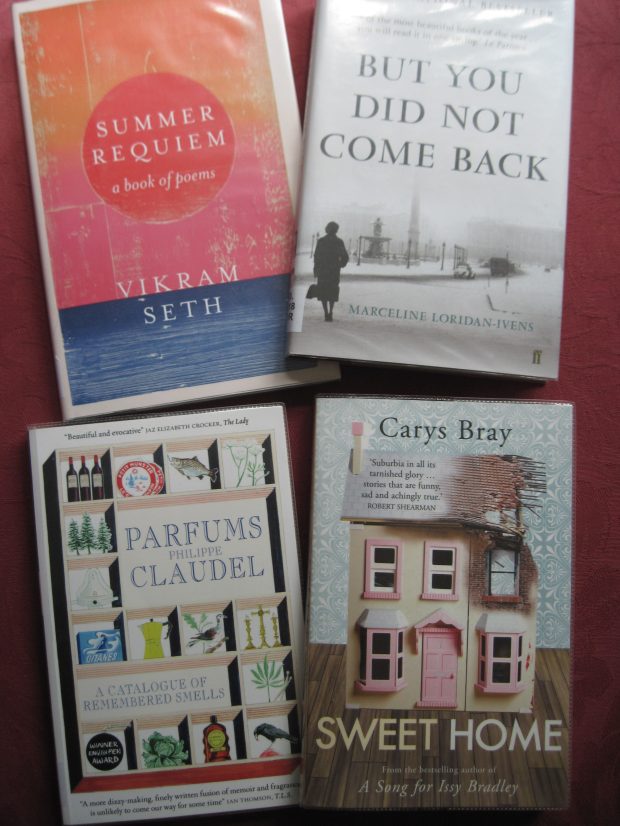
- But You Did Not Come Back by Marceline Loridan-Ivens
LIBRARY BOOKS CURRENTLY READING
- Sweet Home (short stories) by Carys Bray
- Parfums: A Catalogue of Remembered Smells by Philippe Claudel
- Summer Requiem (poems) by Vikram Seth
- Words in Air: The Complete Correspondence between Elizabeth Bishop and Robert Lowell, edited by Thomas Travisano
CHECKED OUT, TO BE READ
- The Running Hare: The Secret Life of Farmland by John Lewis-Stempel
- A Whole Life by Robert Seethaler (for reading on our European holiday)
RETURNED UNREAD
- In the Unlikely Event by Judy Blume
- The Great Soul of Siberia by Sooyong Park
(Thanks, as always, to Shannon of River City Reading for the great blog idea and template!)
Four Books Abandoned Recently (+ One I SHOULD Have)
I’d like to think I’ve gotten better at choosing books that are sure to suit me, but sometimes it’s still a matter of ditching the duds when it becomes clear they’re not working. Here’s the small (digital) pile of abandoned novels I’ve amassed over the last couple of months. I’d be interested to hear if you’ve read any of them and thought they were worth persisting with.
Mrs. Houdini by Victoria Kelly
 Perfectly serviceable historical fiction, but with no spark. I felt like I was just being given a lot of information about the two major time periods (1894 and 1929). Alas, scenes set at a séance, a circus, and an insane asylum are not nearly as exciting as they promise to be. And, as is often the case with these famous wives books – a genre I generally love but can also find oddly disappointing from time to time – the protagonist tries but fails to explain why she finds her husband so fascinating. “His eyes danced. There was a madness to his passion, but he was not insane. There was something real and familiar about him. … Harry was promising her a life of possibility, of magic, and it was unlike anything she had ever imagined for herself.” [Read the first 40%.]
My rating:
 Terrible Virtue by Ellen Feldman
Another case of expectations too high and payoff too little. Fictionalized biographies can be among my favorite historical fiction, but the key is that they have to do something that a biography doesn’t do. They have to shape a story that goes beyond the chronology of what happened to whom and when. This novel about contraception activist Margaret Sanger failed to tell me anything I didn’t already know from The Birth of the Pill, a more engaging book all round. If anything this left me more confused about why Sanger consented to marriage and motherhood. These cringe-worthy lines try to explain it: “His [Bill’s] sex upended the world. His love filled the hole my childhood had carved out of me. Maybe that was the reason I married him.” [Read the first 26%.]
My rating: 
Vexation Lullaby by Justin Tussing
 This started off very promising, with Pete Silver, a doctor in Rochester, New York, being summoned by ageing rock star Jimmy Cross for a consult. Jimmy knows Pete’s mother from way back and wants to know if he’ll accompany him on the airplane during this comeback tour as his personal physician. However, after that there was a lot of downtime filling in Pete’s backstory and introducing a first-person voice that didn’t feel relevant. This is Arthur Pennyman, a fan who’s seen every Jimmy Cross show and writes them up on his website. I didn’t care for Arthur’s sections and thought they pulled attention away from Pete’s story. That’s a shame, as the plot reminded me of Jennifer Egan’s A Visit from the Goon Squad. [Read the first nearly 100 pages.]
My rating:
 Over the Plain Houses by Julia Franks
Entirely decent historical fiction with a flavor of Ron Rash or Virginia Reeves (Work Like Any Other), but it felt so slow and aimless. Irenie Lambey is married to a harsh fundamentalist preacher named Brodis. She longs for their son to get a good education and hopes that the appearance of a USDA agent may be the chance, but Brodis cares about the boy’s soul rather than his mind. On night-time walks, Irenie stores up artifacts and memories in a cave – desperately trying to have a life larger than what her husband controls. It could well just be my lack of patience, but the believable dialect and solid characters weren’t quite enough to keep me reading. [Read the first 16%.]
My rating:
And now for the one I should have stopped reading at about the 25% point. I have an expanded version of this review on Goodreads; click on the title to read more.
The Mandibles: A Family, 2029–2047 by Lionel Shriver
 Shriver does a good line in biting social commentary. Here she aims at Atwood-style near-future speculative fiction and takes as her topic the world economy. I had big problems with this one. Worst is the sheer information overload: tons of economic detail crammed into frequent, wearisome conversations. Instead of making America’s total financial collapse a vague backdrop for her novel, she takes readers through it event by agonizing event. This means the first third or more of the novel feels like prologue, setting the scene. When she finally gets around to the crux of the matter – the entire extended Mandible family descending on Florence’s small New York City house – it feels like too little plot, too late. Everything Shriver imagines for the near future, except perhaps the annoying slang (e.g. “boomerpoop”), is more or less believable. But boy is it tedious in the telling.
My rating: 
Now in November by Josephine Johnson
I’d never heard of this 1935 Pulitzer Prize winner before I saw a large display of titles from publisher Head of Zeus’s new imprint, Apollo, at Foyles bookshop in London the night of the Diana Athill event. Apollo, which launched with eight titles in April, aims to bring lesser-known classics out of obscurity: by making “great forgotten works of fiction available to a new generation of readers,” it intends to “challenge the established canon and surprise readers.” I’ll be reviewing Howard Spring’s My Son, My Son for Shiny New Books soon, and I’m tempted by the Eudora Welty and Christina Stead titles. Rounding out the list are two novels set in Eastern Europe, a Sardinian novel in translation, and an underrated Western.
 Missouri-born Johnson was just 24 years old when she published Now in November. The novel is narrated by the middle Haldmarne daughter, Marget, looking back at a grueling decade on the family farm. She recognizes how unsuited her father, Arnold, was to farming: “He hadn’t the resignation that a farmer has to have – that resignation which knows how little use to hope or hate.” The remaining members of this female-dominated household are mother Willa, older sister Kerrin and younger sister Merle. Half-feral Kerrin is a creature apart. She’s always doing something unpredictable, like demonstrating knife-throwing to disastrous effect or taking over as the local schoolteacher, a job she’s not at all right for.
The arrival of Grant Koven, a neighbor in his thirties hired to help Arnold with hard labor, seems like the only thing that might break the agricultural cycle of futile hope and disappointment. Marget quickly falls in love with him, but it takes her a while to realize that her sisters are smitten too. They all keep hoping their fortunes will change:
‘This year will have to be different,’ I thought. ‘We’ve scrabbled and prayed too long for it to end as the others have.’ The debt was still like a bottomless swamp unfilled, where we had gone year after year, throwing in hours of heat and the wrenching on stony land, only to see them swallowed up and then to creep back and begin again.
Yet as drought settles in, things only get worse. The fear of losing everything becomes a collective obsession; a sense of insecurity pervades the community. The Ramseys, black tenant farmers with nine children, are evicted. Milk producers go on strike and have to give the stuff away before it sours. Nature is indifferent and neither is there a benevolent God at work: when the Haldmarnes go to church, they are refused communion as non-members.
Marget skips around in time to pinpoint the central moments of their struggle, her often fragmentary thoughts joined by ellipses – a style that seemed to me ahead of its time:
if anything could fortify me against whatever was to come […] it would have to be the small and eternal things – the whip-poor-wills’ long liquid howling near the cave… the shape of young mules against the ridge, moving lighter than bucks across the pasture… things like the chorus of cicadas, and the ponds stained red in evenings.
Michael Schmidt, the critic who selected the first eight Apollo books, likens Now in November to the work of two very different female writers: Marilynne Robinson and Emily Brontë. What I think he is emphasizing with those comparisons is the sense of isolation and the feeling that struggle is writ large on the landscape. The Haldmarne sisters certainly wander the nearby hills like the Brontë sisters did the Yorkshire moors.

The cover image, reproduced in full on the endpapers, is Jackson Pollock’s “Man with Hand Plow,” c. 1933.
As points of reference I would also add Jane Smiley’s A Thousand Acres and Joan Chase’s During the Reign of the Queen of Persia (resurrected by NYRB Classics in 2014), which also give timeless weight to the female experience of Midwest farming. Like the Smiley, Now in November stars a trio of sisters and makes conscious allusions to King Lear. Kerrin reads the play and thinks of their father as Lear, while Marget quotes it as a prophecy that the worst is yet to come: “I remembered the awful words in Lear: ‘The worst is not so long as we can say “This is the worst.”’ Already this year, I’d cried, This is enough! uncounted times, and the end had never come.”
Johnson lived to age 80 and published another 11 books, but nothing ever lived up to the success of her first. This is an atmospheric and strangely haunting novel. The plot is simple enough, but the writing elevates it into something special. The plaintive tone, the folksy metaphors, and the philosophical earnestness all kept me eagerly traveling along with Marget to see where this tragic story might lead. Apollo has done the literary world a great favor in bringing this lost classic to light.
With thanks to Blake Brooks at Head of Zeus for the free copy.
My rating:
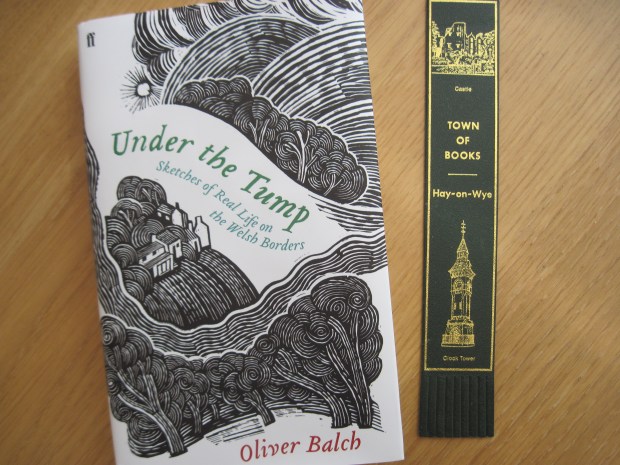
Looking for Community: Oliver Balch’s Under the Tump
My eagle eye for anything related to Hay-on-Wye led me to this book, a memoir of sorts about moving to the Welsh Borders in the search for a sense of community. Journalist Oliver Balch and his wife had previously lived in London and then started a family while living in Argentina. Although they loved the vibrancy and social opportunities of city life, when they moved back to the UK in 2012 they were in search of something different:
I fancied living somewhere with open skies and fresh air; somewhere I could strap on my walking boots and head out for a hike; somewhere alive to the sound of birdsong rather than bus exhausts. I envisioned the same for the boys. Growing up in wellies and with dirty knees. Weekend camping trips. Swimming in the river.
But it was more than just the natural scenery that drew him to the England–Wales border town of Clyro. “I liked the idea of finding a place where I could truly belong. It would be good to be on the inside for once, to be a thread or stitch in the social fabric.” It was John Updike, of all people, who inspired him to seek out small-town life. “For a writer, it’s good to live between a widow and a plumber,” Updike wrote – to be surrounded by different, ordinary people and get to know your neighbors in an old-fashioned but still desirable way.
After the family settled in at Pottery Cottage, another of Balch’s guiding spirits was Reverend Francis Kilvert, curate of Clyro from 1865 to 1872. He’s known today for the diary he started keeping in 1870. As he went around visiting, he made pen portraits of his parishioners, often summing people up through one apt phrase of Dickensian description. In a sense, Balch is trying to do the same thing with these sketches of his new community members. Meanwhile, he weaves in biographical information about Kilvert in much the same way that Helen Macdonald does about T.H. White in H is for Hawk.
![Francis Kilvert [Public domain], via Wikimedia Commons.](https://commons.wikimedia.org/wiki/File:Francis_Kilvert.jpg)
Francis Kilvert [Public domain], via Wikimedia Commons.
The Wye is at its nearest to the east, huddled in the dip between two rippled fields of honeyed wheat and brilliant yellow rapeseed, its emerald-green waters rushing fast above the reeds. … Burrowed among the trees above its far bank stands Hay, a blue-grey patchwork of tiled rooftops amid a swathe of sylvan green. Poking above the tree canopy is the castle … And then beyond, of course, the barren bouldery bulk of the Black Mountains. Implacably wild. Their beauty hard, unremitting, almost brutish in their bluntness.
Balch starts trying to fit in by joining the regular drinkers at the Rhydspence Inn, an old-fashioned pub, on Wednesday nights. He’s closest with Tony, a farmer, and subsequently observes the Young Farmers group. In other chapters he profiles the unconventional, hippie types drawn to the area, like the owners of Hay’s fair trade shop; and the locals and shopkeepers involved in the Thursday market. He also sits in on some community planning meetings and learns about a recent anti-supermarket campaign. The Town Council and the “Hay Together” interest group are often at odds, he learns. A Chamber of Commerce meeting turns into an argument about renovating the Castle, one of Hay’s chief landmarks.
![Hay Castle (a partial ruin) with the outdoor 'honesty bookshop' below. Michael Graham [CC BY-SA 2.0], via Wikimedia Commons.](https://commons.wikimedia.org/wiki/File:Hay_Castle_-_geograph.org.uk_-_1452325.jpg)
Hay Castle (a partial ruin) with the outdoor ‘honesty bookshop’ below. Michael Graham [CC BY-SA 2.0], via Wikimedia Commons.
Part of me is elated that the outside world has landed on our doorstep. For a brief window in late spring, everywhere I turn there are urbanites like me. … Simultaneously, part of me recoils. … I feel invaded. Some traitorous wretch has spilled word of our rural haven and now legions of out-of-towners have arrived, overrunning the place with their unmuddied cars and city manners.
Even in the decade that I’ve been visiting, I can recognize some of the processes Balch pinpoints – essentially evidence of gentrification going on in Hay and the surrounding area. Under the ownership of an American female entrepreneur, for instance, Booth’s Bookshop has been transformed from a falling-down jumble sale into a well-presented independent bookstore with a posh café. Some of the locals Balch meets are delighted with the changes, while others feel that the snobs are taking over and driving up prices for regular folk.
If I was a bit disappointed with this book, it’s because I didn’t fully heed the subtitle – “Sketches of Real Life on the Welsh Borders.” It’s not meant to be a chronological narrative of Balch’s time in Clyro but a thematic tour, with some common threads running through. This means that, depending on the reader, certain chapters will probably seem much more interesting than others. So the best part of “The Young Farmers” chapter, for me, was a description of a cow doing a messy poo (“the most splendid jet of steaming gravy-colored excrement”); otherwise I found it entirely tedious.
![The view from the Castle, looking back over the town towards the hills. By Schuy (Own work) [CC BY-SA 4.0-3.0-2.5-2.0-1.0], via Wikimedia Commons.](https://commons.wikimedia.org/wiki/File:Hay.jpg)
The view from the Castle, looking back over the town towards the hills. By Schuy (Own work) [CC BY-SA 4.0-3.0-2.5-2.0-1.0], via Wikimedia Commons.
With thanks to Faber & Faber for the free copy.
My rating:
Further reading:
- Other books that reference Hay-on-Wye:
- Reading in Bed by Sue Gee opens at the Hay Festival.
- In The Red House by Mark Haddon, a dysfunctional family vacations in the countryside near Hay.
- In Next Life Might Be Kinder by Howard Norman, the main female character is from Hay.
- One of the settings in The Rise and Fall of Great Powers by Tom Rachman is a bookstore in a small Welsh village. (Okay, not quite Hay.)
- Plus one from the TBR: in The Bookman’s Tale by Charlie Lovett, an antiquarian bookseller browsing in a shop in Hay finds a book that sets him off on a quest.
Random Searches that Led People to My Blog
Something quick and lightweight for a Saturday…
One of my favorite things to keep an eye on in WordPress is the “Top Searches” (beneath the Stats table on the Dashboard). I always find it interesting, and often pretty bizarre, what random web searches led people to my blog. Two searches that seem to be perennially popular are for images of women reading and the novel The Girl Who Slept with God. And then there is the handful of slightly dodgy ones…
My blog’s top searches for the past two and a half months:
March 8, 2016: seal morning rowena farre, war & peace 2016 mini series masonic influence, did roman soldiers sodomize jesis?, ann kidd taylor 2015
March 11: orthodox hymns in bbc war and peace, public domain woman reading
April 4: ann kidd taylor wedding, caught again bondage
April 13: rebecca carter london book fair, ice cream driver name in girl who slept with god
April 15: let the empire down goodreads alexandra oliver poet, what is d nature of poetry
April 21: the girl who slept with god review, the penny heart martine bailey, public domain photographs elena ferrante
May 5: picture of ladies and girls reading in public, bookcycle
May 9: beck site female picture hd, barbara pym vicar and widow
May 21: women reading picture
 Bookish Beck = Rebecca Foster. American transplant to England. Freelance proofreader and book reviewer.
 Bookish Beck