Library Checkout: August 2016
I still have dozens of priority books to read from my own shelves , and I’ve been building up a stock of Booker-longlisted titles on my Kindle through NetGalley to try to get through before the shortlist announcement … BUT now that I live in a district where library reservations are free, I haven’t been able to resist placing holds on a bunch of books I’ve been wanting to read.
LIBRARY BOOKS READ
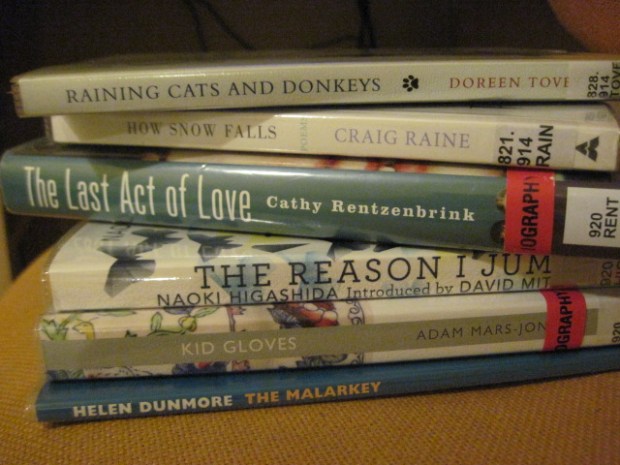
- Raining Cats and Donkeys by Doreen Tovey: Thanks to Liz at Adventures in reading for the recommendation of Tovey’s cat books. I’ll save up a mini-review of this one for a future follow-up post on books about cats.
LIBRARY BOOKS CURRENTLY READING
- How Snow Falls: Poems by Craig Raine
- The Last Act of Love: The Story of My Brother and His Sister by Cathy Rentzenbrink [in advance of a September 20th event at Foyles, London I’ll be attending on grief in literature, featuring her and Michel Faber]
CHECKED OUT, TO BE READ
- The Malarkey (poems) by Helen Dunmore
- The Reason I Jump: One Boy’s Voice from the Silence of Autism by Naoki Higashida
- Kid Gloves: A Voyage round My Father by Adam Mars-Jones
ON HOLD, TO BE PICKED UP
- Late Fragments: Everything I Want to Tell You (about This Magnificent Life) by Kate Gross
IN THE RESERVATION QUEUE
- The Crime Writer by Jill Dawson
- Let Me Tell You about a Man I Knew by Susan Fletcher
- Hot Milk by Deborah Levy [Booker longlist]
- Thirteen Ways of Looking by Colum McCann
- Winter by Christopher Nicholson
- The House at the Edge of the World by Julia Rochester
- Maus: A Survivor’s Tale by Art Spiegelman [graphic novel]
- Golden Hill by Francis Spufford
- Do Not Say We Have Nothing by Madeleine Thien [Booker longlist]
- The Painted Bridge by Wendy Wallace
RETURNED UNFINISHED
Words in Air: The Complete Correspondence between Elizabeth Bishop and Robert Lowell, edited by Thomas Travisano: I paused at page 140. I was enjoying this very much but am setting it aside because it’s an enormous book that I’ve had out from the university library for months and months, and I was making very little visible progress. Like Airmail, the collection of Robert Bly and Tomas Tranströmer’s letters that I read last year, it’s a delightful mixture of the two poets’ reading, writing, travels, and relationships, including their own burgeoning friendship. I need to get hold of a secondhand copy so I can read it at my leisure, a few letters at a time.
(Thanks, as always, go to Shannon of River City Reading for the great blog idea and template!)
Settling in, aka Organizing My Bookshelves
We moved into our new rental house a week and a half ago. For most of that time my husband has been away in Devon for work, which created the perfect opportunity for me to have free rein in organizing the place – clothes, framed photos, toiletries, desk supplies: yeah, sure, all that; but really, my focus was always on the books.
I thought I had the perfect plan: general fiction in our bedroom; classics and literary reference books in the spare room/office; and the rest in the lounge on a big bookcase divided into one shelf biographies, one shelf nature, one shelf religion, and one shelf travel. This system quickly broke down. For one thing, we actually have three or more shelves’ worth of nature books, more than a shelf each of most other nonfiction genres, and way more fiction than would ever fit on one small Ikea Billy.
The result has been some inevitable dividing and jumbling. Much as I didn’t want to do so, I’ve had to put some books on their sides on top of rows, and I had to double stack the religion shelf. I made three shelves of nature and travel combined, but put the travel guidebooks and the nature field guides in separate places. Fiction ends up scattered in several places, including priority stacks on our bedside tables plus one shelf devoted to novels I mean to get to soon.
Ultimately we’re going to have to get another bookcase, but I’m pretty pleased with the results thus far. Here’s a peek:
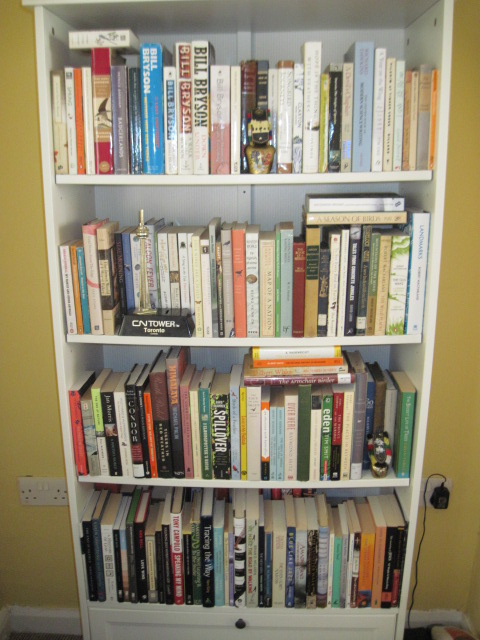
Lounge unit: three shelves of mixed nature and travel (alphabetical by author); one double-stacked shelf of religion.

Bedroom bookcase: general fiction (all but one of which I have read!) with areas on the bottom shelf for oversized graphic novels and science/nature books. On top are various nature field guides.
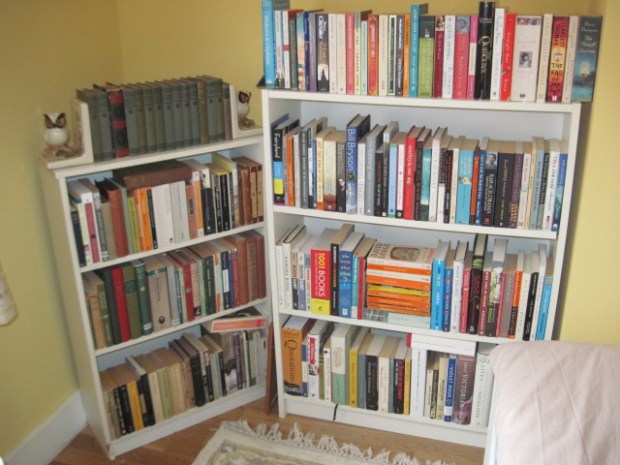
Spare room/office bookcases. Left: classics and poetry (Dickens set on top); right: top shelf of priority fiction, second shelf of biographies, third shelf of literary reference and generally nonfiction (divided by some Penguin paperbacks), and a bottom shelf of more literary reference and biography.

Overflow area (on office desk shelves): travel guides; mixed reference and humor; paperback fiction that doesn’t fit elsewhere.
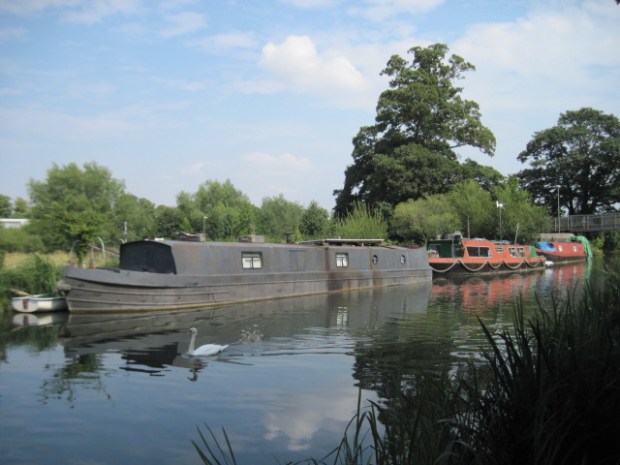
I’ve been enjoying my walks into town along the Kennet & Avon canal. Up until Tuesday we were without Internet at home, so I had to make daily excursions to the lovely public library to do my editing work. It’s great watching life on a canal change: some houseboats seem permanent, while others drift in and out from day to day; the swans and ducks are always on the move, looking out for their next wheaten snack; and every time I walk the tow path I notice something new, like a large stand of hops. Home brew, anyone?
After several years of not having access to our own outdoor space, we now have as much garden as we could ever want. The back door lets out onto a large stone patio, followed by a grassy area with a rotary washing line, a huge combined storage shed and summer house (too warm now, but should be a perfect reading spot next month); an emptied pond, some pear and plum trees and a bench; blackcurrant and raspberry bushes; a second shed (currently inaccessible due to a wasp’s nest); a dilapidated vegetable bed; a compost heap; a cuttings area; more grass; some scrub; and finally the secluded gate onto the canal path. Every time you think you’ve gotten to the end, it just keeps going. At some point it’s going to represent an awful lot of work, but for now I’m just in awe of the space and the sense of freedom.
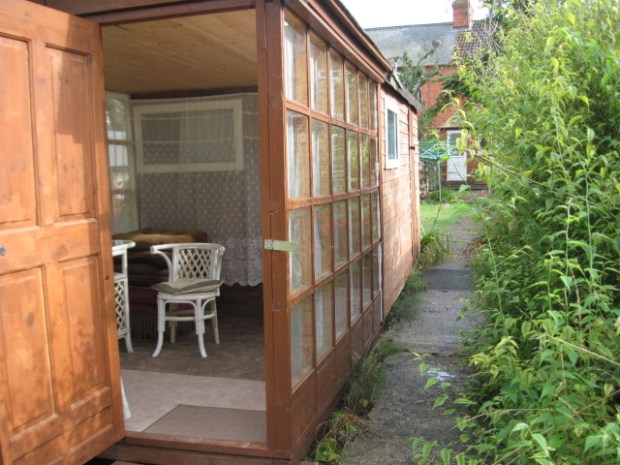
Looking back from the summer house.
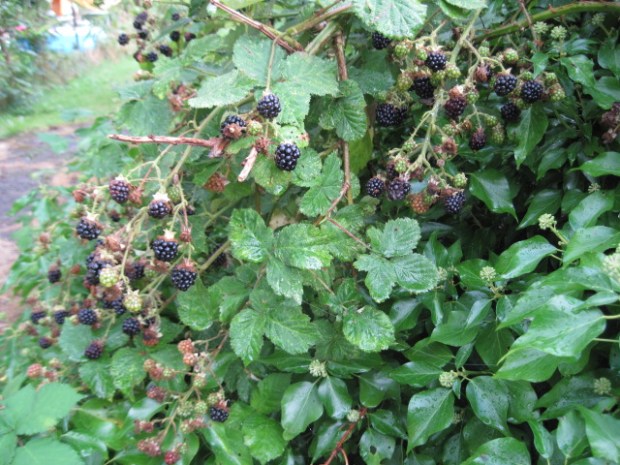
We’re having the mildest of heat waves here in southern England, but the signs of autumn are poking through – especially the ripening fruit you see everywhere. We have lots of ready blackberries in the garden; add to that some foraged plums, pears and apples and we’ll soon have the makings of a hearty crumble with which to welcome our first guests this weekend.
What’s your strategy in organizing your bookshelves?
Does it feel like autumn where you are?
Literary Blind Spots: Hemingway and Fitzgerald
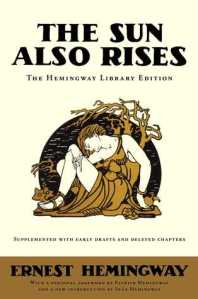 Despite being educated through university level in the United States, I’m better acquainted with British literature than American, in part due to my own predilections. Ernest Hemingway and F. Scott Fitzgerald are two of the American authors I’ve most struggled with. For one thing, their novels’ titles are interchangeable, abstract quotations that I can never keep straight. Which is which? The Sun Also Rises is the bullfighting one, right? And is A Farewell to Arms the other one I’ve read? Fitzgerald is an even worse offender as titles go, with The Great Gatsby the only one that actually refers to its contents.
 For the record, I recognize The Great Gatsby as a masterpiece, and I absolutely loved A Moveable Feast, Hemingway’s memoir of life in Paris. I also enjoy reading about the Hemingways (Paula McLain’s The Paris Wife and Naomi Wood’s Mrs. Hemingway) and the Fitzgeralds (Therese Anne Fowler’s Z: A Novel of Zelda Fitzgerald and R. Clifton Spargo’s Beautiful Fools). But when I’ve tried to go deeper into the authors’ work, it hasn’t been an unmitigated success. The above two Hemingway novels are just okay for me. The Sun Also Rises struck me as having a thin plot, two-dimensional characters and repetitious dialogue.
When I eagerly approached Tender Is the Night last year – having recently read a novel about the real-life couple who inspired Fitzgerald’s portrait of Dick and Nicole Diver, Gerald and Sara Murphy (Villa America by Liza Klaussmann) – I pulled out a lot of great individual lines but had trouble following the basic plot and only really enjoyed the early chapters of Book Two. Here are some of those pearls of prose:
The delight in Nicole’s face—to be a feather again instead of a plummet, to float and not to drag. She was a carnival to watch—at times primly coy, posing, grimacing and gesturing—sometimes the shadow fell and the dignity of old suffering flowed down into her finger tips.
somehow Dick and Nicole had become one and equal, not apposite and complementary; she was Dick too, the drought in the marrow of his bones. He could not watch her disintegrations without participating in them.
Well, you never knew exactly how much space you occupied in people’s lives.
women marry all their husbands’ talents and naturally, afterwards, are not so impressed with them as they may keep up the pretense of being.
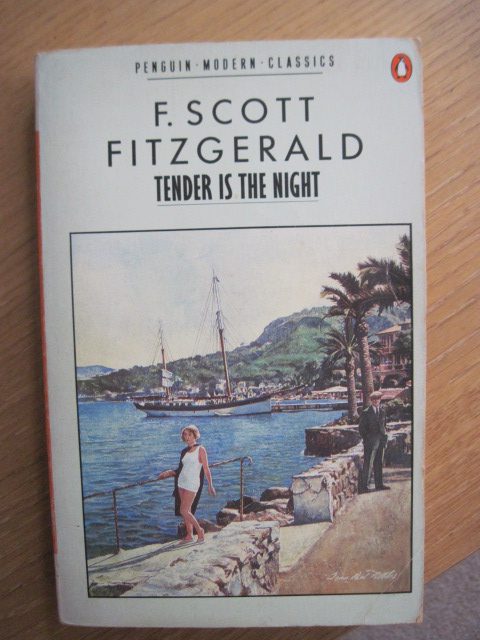
Imagine my surprise when I learned from a note at the end of my Penguin paperback that Fitzgerald made a major revision that rearranged the action into chronological order, thus opening with Book Two. That text, edited by Malcolm Cowley, appeared in 1951 and was printed by Penguin from 1955. However, the version I have – as reprinted from 1982 onwards – goes back to Fitzgerald’s first edition. Would I have had a more favorable reaction to the novel if I’d encountered it in its revised version? Somehow I think so.
Is there a Hemingway or Fitzgerald novel that will change my opinion about these literary lions? Share your favorites.
Watch the Movie or Read the Book?
It’s a risky business, adapting a well-loved book into a film. I’m always curious to see how a screenwriter and director will pull it off. The BBC generally does an admirable job with the classics, but contemporary book adaptations can be hit or miss. I’ve racked my brain to think of cases where the movie was much better than the book or vice versa, but to my surprise I’ve found that I can only think of a handful of examples. Most of the time I think the film and book are of about equal merit, whether that’s pretty good or excellent.
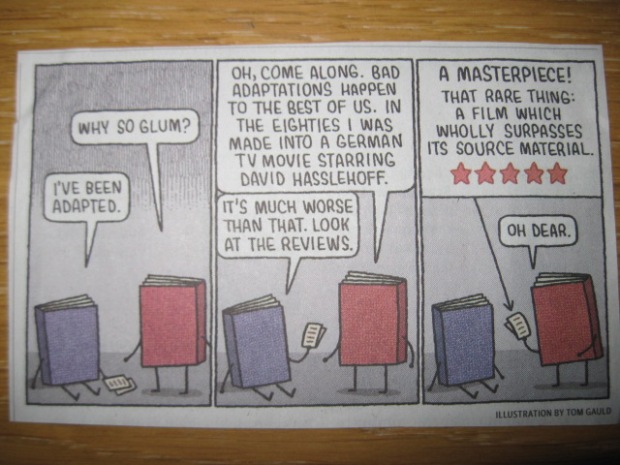
From one of my favorite Guardian cartoonists.
Watch the Movie Instead:
Birdsong [Sebastian Faulks] – Eddie Redmayne, anyone? The book is a slog, but the television miniseries is lovely.
One Day [David Nicholls] – Excellent casting (though Rafe Spall nearly steals the show). Feels less formulaic and mawkish than the novel.
 Father of the Bride and its sequel [Edward Streeter] – The late 1940s/early 1950s books that served as very loose source material are hopelessly dated.
This Is Where I Leave You [Jonathan Tropper] – Again, perfect casting. Less raunchy and more good-natured than the book.
Read the Book Instead:
 Possession [A.S. Byatt] – This is one of my favorite novels of all time. It has a richness of prose and style (letters, poems, etc.) that simply cannot be captured on film. Plus Aaron Eckhart couldn’t act his way out of a paper bag.
Everything Is Illuminated [Jonathan Safran Foer] – The movie’s not bad, but if you want to get a hint of Foer’s virtuosic talent you need to read the novel he wrote at 25.
A Prayer for Owen Meany [John Irving] – The film version, Simon Birch, was so mediocre that Irving wouldn’t let his character’s name be associated with it.
It’s Pretty Much Even:
Decent book and movie: Harry Potter and the Sorcerer’s Stone, The Help, The Hours, Memoirs of a Geisha, Never Let Me Go, The Remains of the Day
 Terrific book and movie: The Fault in Our Stars, The Hundred-Year-Old Man Who Climbed out of the Window and Disappeared (Swedish language), The Orchid Thief / Adaptation (both great but in very different ways!), Tamara Drewe (based on a graphic novel, which itself is based on Far From the Madding Crowd)
If I’m interested in a story, my preference is always to watch the movie before I read the book. If you do it the other way round, you’re likely to be disappointed with the adaptation. Alas, this means that the actors’ and actresses’ faces will be ineradicably linked with the characters in your head when you try to read the book. I consider this a small disadvantage. Reading the book after you’ve already enjoyed the storyline on screen means you get to go deeper with the characters and the plot, since subplots are often eliminated in movie versions.
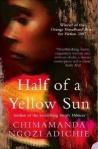 So although I’ve seen the films, I’m still keen to read Half of a Yellow Sun and The Kite Runner. I’m eager to both see and read The English Patient and The Shipping News (which would be my first by Proulx). All four of these I own in paperback. I’m also curious about two war novels being adapted this year, Billy Lynn’s Long Halftime Walk and The Yellow Birds. There’s every chance I’d like these better as movies than I did as books.
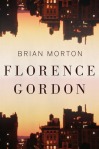 As to books I’m interested in seeing on the big screen, the first one that comes to mind is Kitchens of the Great Midwest by J. Ryan Stradal. It might also be interesting to see how the larger-than-life feminist heroines of Siri Hustvedt’s The Blazing World and Brian Morton’s Florence Gordon would translate for cinema. Can you think of any others?
What film adaptations have impressed or disappointed you recently? Do you watch the movie first, or read the book first?
Mini Reviews Roundup for the Summer
Here’s a quick look at some of the book reviews I’ve had published elsewhere on the web over the past few months, with a taster so you can decide whether to read more by clicking on the link. These are all 4-star reads I can highly recommend.
The Bookbag
Trio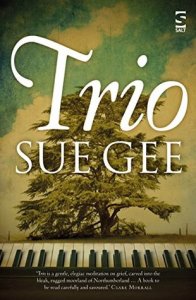 by Sue Gee: Sue Gee’s tenth novel is a sensitive portrait of life’s transience and the things that give us purpose. In the late 1930s, a widowed history teacher in Northumberland finds a new lease on life when he falls for one of the members of a local trio of musicians. My favorite passages of the book are descriptive ones, often comprised of short, evocative phrases; I also loved the banter between the musicians. The novel has a reasonably simple plot. We delve into the past to discover each main character’s backstory and some unexpected romantic entanglements, but in the 1930s storyline there aren’t a lot of subplots to distract from the main action. I was reminded in places of Downton Abbey: the grand hall and its village surroundings, the build-up to war, the characters you come to love and cheer for. [Thanks to Elle for piquing my interest in this one.]
How to Set a Fire and Why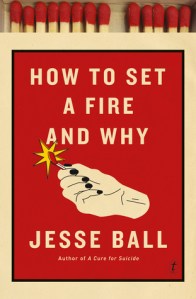 by Jesse Ball: Lucia Stanton is a cynical 14-year-old misfit who lives with her elderly aunt in a garage. At first she only supports the idea of arson, but events draw her into getting personally involved. This is one of those fairly rare novels that stand out immediately for the first-person voice. Lucia reminded me of Holden Caulfield or of Mim Malone from David Arnold’s Mosquitoland. She’s like a cynical philosopher. For as heartbreaking as her family history is, she was always either making me laugh or impressing me with her wisdom. Although this is his sixth novel, I hadn’t heard much about Jesse Ball prior to picking it up. His skill at creating the interior world of a troubled 14-year-old girl leads me to believe that the rest of his work would be well worth a look.
BookBrowse
[Non-subscribers can read excerpts of my reviews]
Imagine Me Gone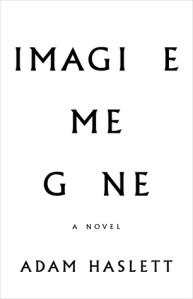 by Adam Haslett: Mental illness plagues two generations of an Anglo-American family in Haslett’s moving second novel. Narration duties are split between the five members: father John, mother Margaret, and siblings Alec, Michael, and Celia. By giving each main character a first-person voice, Haslett offers readers a full picture of how mental illness takes a toll not only on sufferers but also on those who love and care for them. John’s descriptions of what mental illness is like are among the most striking passages in the book. Michael’s sections are wonderfully humorous, a nice counterbalance to some of the aching sadness. The multiple points of view fit together beautifully in this four-decade family symphony, although I sometimes felt that Celia was one main character too many – her story doesn’t contribute very much to the whole. A powerful read for fans of family stories.
Dinner with Edward by Isabel Vincent: In this heartwarming memoir, a journalist tells how friendship with an elderly gentleman rekindled her appetite for life. New to NYC and with a faltering marriage, Isabel received an unusual request from her friend Valerie: Would she look in on Valerie’s father, Edward? In his nineties, he’d recently been widowed and Valerie was worried about him losing the will to live. If he could have a guest to cook for and entertain, it might give him a new sense of purpose. As it turned out, it was a transformative friendship for the author as much as for Edward. Each chapter opens with a mouth-watering menu. Although Edward is now deceased, when we see him for the final time, he is still alive and well. This is a nice way to leave things – rather than with a funeral, which might have altered the overall tone.
Nudge
Ruby by Cynthia Bond: When Ruby Bell returns to Liberty Township, her east Texas hometown, in 1964, her fellow black folk turn her into a victim of derision. The churchgoing men of the town get the idea that they can use her body however they want. In part this is because her mental health is deteriorating, and the more she struggles to stifle traumatic memories the stranger she acts. The only one who continues to see Ruby as a human being rather than a demon or a subhuman object is Ephram Jennings. I found their relationship, reminiscent of that between Sethe and Paul D. in Toni Morrison’s Beloved, very touching. The novel moves fluidly between the past and present to give all of the central characters’ backstories – most of them unremittingly tragic. As difficult as some of the later scenes are to take, you feel entranced into continuing because of the touches of magic realism. Out of the darkness Bond weaves enchanting language and scenes. I highly recommend this to fans of Ayana Mathis’s The Twelve Tribes of Hattie and Angela Flournoy’s The Turner House.
The Hatred of Poetry by Ben Lerner: This fluid essay asks how poetry navigates between the personal and the universal. Socrates famously wanted to ban poets, fearing poetry might be turned to revolutionary purposes. Lerner wonders whether poetry still has a political role. Whitman’s goal was to create a new American verse style. But was it realistic for him to think that he could speak for everyone? The same might be asked about the poets who read at presidential inaugurations. Can different races and genders speak to and for each other, or is it only white males who are assumed to be able to pronounce on humanity’s behalf? Those are some of the questions addressed in this conversational yet unabashedly highbrow essay. Lerner’s points of reference range from Keats and Dickinson to Claudia Rankine, with ample quotations and astute commentary.
Pittsburgh Post-Gazette
Before the Fall by Noah Hawley: The key is in the title: perhaps playing on the theological implications of “the Fall” and Scott and JJ’s “salvation” from a plane crash, the novel toggles between build-up and aftermath. Disasters bring disparate people together to make superb fictional setups. Crucially, Hawley doesn’t make the mistake of conflating characters under easy labels like “victims” and “survivors.” Instead, he renders them all individuals with complete backstories. Some of their potted histories are relevant, while others throw up red herrings in the ensuing enquiry. Readers’ task is to weigh up what is happenstance and what is destiny. This lies somewhere on the continuum between crime and literary fiction; if it’s not quite Jonathan Franzen, nor is it Robert Ludlum. It’s a pretty much ideal summer vacation read – though you might think twice about taking it on a plane.
Music to Read and Write By
I usually can’t read while music is playing; the exception is if we’re on a long car journey – my husband needs to have peppy music playing to keep alert while he’s driving, so I have to find a Kindle book or two that I can zone out with. In day-to-day life, though, I tend to read in silence. If I find myself a little dozy and want to stay awake to get more pages read or edited, my music choices tend to be wordless: a classical compilation, or some instrumental folk. However, here’s another exception: I can read and work very well to Sigur Rós, an Icelandic indie/post-rock group who sing in Icelandic and/or Hopelandic, their invented language. For some reason Jónsi’s ethereal falsetto just washes over me and I can turn off the part of my brain that tries desperately to make English sense out of the words.

Writing is another matter. Unless I urgently need to concentrate – for instance, if I’m writing my first article for a new venue and feeling daunted and inadequate (cough, LARB, cough) – I almost always have music playing. I often turn to albums I know very well: they provide good cheer but aren’t distracting, so make for good background music. My most played tracks of all are from three playlists I made for my sister around the time of her husband’s death. I chose songs that would be meaningful and even uplifting without being in any way sappy. Examples: “The Drugs Don’t Work” (The Verve), “The Heart of Life” (John Mayer), “P.S. You Rock My World” (Eels) and “All Possibilities” (Badly Drawn Boy).
I recently discovered the play count feature on Windows Media Player and had great fun going through and seeing which individual songs and whole albums I’d played the most in the couple of years I’ve used my secondhand laptop. In some cases I was surprised, but most of these artists I could have predicted:
My 17 Most Played Albums:
Fading West, Switchfoot (32 plays)
Flat Earth Diary, Krista Detor (30 plays)
Memory Man, Aqualung (30 plays)
The Take-off and Landing of Everything, Elbow (25 plays)
You Knows It, Folk On (25 plays)
One Wild Life: Soul, Gungor (25 plays)
Barely, Krista Detor (24 plays)
Collapsible Lung, Relient K (24 plays)
Carrie & Lowell, Sufjan Stevens (23 plays)
Sparks, Imogen Heap (20 plays)
Havoc and Bright Lights, Alanis Morissette (17 plays)
Chocolate Paper Suites, Krista Detor (16 plays)
With Love, Rosie Thomas (16 plays)
Ghost Stories, Coldplay (15 plays)
Born and Raised, John Mayer (15 plays)
The Impersonator, Marc Martel (15 plays)
This Earthly Spell, Karine Polwart (15 plays)
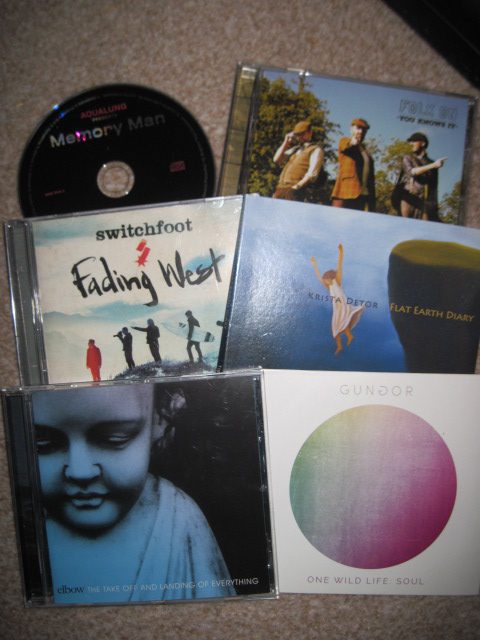
Of course, this mostly just tells you my listening tastes. But I’d like to think these artists hit a good balance of upbeat and mellow, catchy and contemplative. Or just plain daft, in the case of comedy folk trio Folk On. If I’m feeling particularly nostalgic, my inclination might be to play albums that defined the late 1990s or early 2000s for me, from artists like Matchbox 20, Snow Patrol, Coldplay, Sting and The Verve. (Not represented on this list, but I feel like I play them all the time: Bell X1, The Bookshop Band, Duke Special, and The Shins.)
Can you read or write to music? What are some of your favorite albums to work by?
We’re moving on Monday and may be without home Internet access for a week, so I’ll be scheduling a few posts ahead in case I can’t devote much time to blogging.
Literary Connections in Whitby
This past weekend marked my second trip to Whitby in North Yorkshire, more than 10 years after my first. It was, appropriately, on the occasion of a 10-year anniversary – namely, of the existence of Emmanuel Café Church, an informal group based at the University of Leeds chaplaincy center that I was involved in during my master’s year in 2005–6. I was there for the very first year and it was a welcome source of friendship during a tough year of loneliness and homesickness, so it’s gratifying that it’s still going nearly 11 years later (but also scary that it’s all quite that long ago). The reunion was held at Sneaton Castle, a lovely venue with a resident order of Anglican nuns that’s about a half-hour walk from central Whitby.
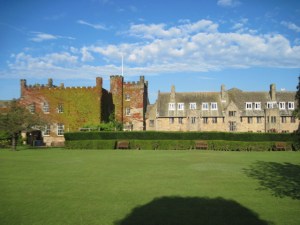
Sneaton Castle and grounds
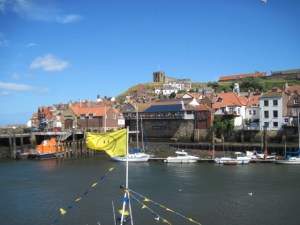
Whitby harbor, with St. Mary’s Church on the hill.
The more I think about it, Leeds was a fine place to do a Victorian Literature degree – it’s not too far from Haworth, the home of the Brontës, or Whitby, a setting used in Bram Stoker’s Dracula. Two of my classmates and I made our own pilgrimages to both sites in 2006. The Whitby Abbey ruins rising above the churchyard of St. Mary’s certainly create a suitably creepy atmosphere. No wonder Whitby is enduringly popular with Goths and at Halloween.

Another resident of Victorian Whitby, unknown to me until I saw a plaque designating her cottage on the walk from Sneaton into town, was Mary Linskill (1840–91), who wrote short stories and novels including Between the Heather and the Northern Sea (1884), The Haven under the Hill (1886) and In Exchange for a Soul (1887). I checked Project Gutenberg and couldn’t find a trace of her work, but the University of Reading holds a copy of her Tales of the North Riding in their off-site store. Perhaps I’ll have a gander!
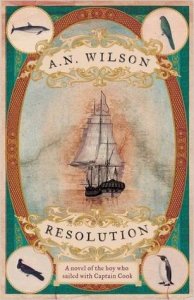
 There are other connections to be made with Whitby, too. For one thing, it has a long maritime history: it was home to William Scoresby (“Whaler, Arctic Voyager and Inventor of the Crow’s Nest,” as the plaque outside his house reads), and Captain James Cook grew up 30 miles away and served an apprenticeship in the town. There’s a statue of Cook plus a big whalebone arch on the hill the other side of the harbor from the church and abbey. It felt particularly fitting that I’ve been reading A.N. Wilson’s forthcoming novel Resolution, about the naturalists who sailed on Captain Cook’s second major expedition in the 1770s.
(My other apt reading for the sunny August weekend was Vanessa Lafaye’s Summertime.)
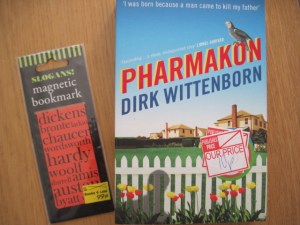
On our Sunday afternoon browse of Whitby’s town center we couldn’t resist a stop into a bargain bookshop, where my husband bought a cheap copy of David Lebovitz’s all-desserts cookbook; I picked up a classy magnetic bookmark and a novel I’d never heard of for a grand total of £1.09. I know nothing about Dirk Wittenborn’s Pharmakon, but this 10 pence paperback comes with high praise from Lionel Shriver, Bret Easton Ellis and the Guardian, so I’ll give it a try and let you know how it works out in terms of literary value for money!
Have you explored any literary destinations recently? What have you been reading on summer weekends?
Books in Brief: Five I Enjoyed Recently
Despite my largely successful resolution to focus on my own books for the summer, I’ve also gotten through plenty of e-books from NetGalley and Edelweiss, too. I just find it easier to fit time with the Kindle into my day, whether it’s 20 minutes over lunch (food-themed nonfiction works particularly well for such situations) or 30 minutes on the cross trainer. Here’s a sample of the e-books I’ve enjoyed this summer: four nonfiction and one fiction.
Pancakes in Paris: Living the American Dream in France
By Craig Carlson
 A good-natured memoir about the travails of opening the first American-style diner in Paris. Carlson charts his somewhat chaotic growing-up years in Connecticut, the college study abroad experience that kindled his love for France, his years trying to make it as a screenwriter and director in Hollywood, his long-held dream of opening Breakfast in America, and finding a French sweetheart of his own. Much of the book is devoted to a blow-by-blow of the bureaucratic nightmare of opening a restaurant, starting with getting investors on board and continuing through France’s ridiculously restrictive labor laws. (The impression I came away with was: France – great place to be an employee or rent property; terrible place to start a business.) Next time I’m in Paris, I will be looking to get myself a stack of his signature blueberry and white chocolate chip pancakes. Releases September 6th.
When in French: Love in a Second Language
By Lauren Collins
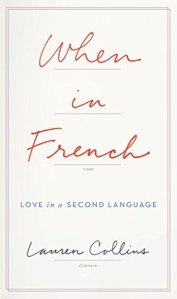 Collins, a journalist from North Carolina, married a Frenchman named Olivier she met while working in London. They then moved to Geneva, a mutually unfamiliar place but one where French reigned. For the first time, she was forced to learn a new language to survive. I love how she blends her own story with the philosophy, history and science behind language use. As she learned how to do things she never expected to have to in French – deal with her in-laws and give birth, for instance – she developed a new appreciation for the marvel that is bilingualism and pondered whether she was the same person in a different language. My favorite section recounts a holiday to Corsica that brought her family and Olivier’s into close quarters and cast her in the unforeseen role of translator. There’s a surprising amount of linguistic detail here, but Collins incorporates it well. Releases September 13th.
A Body, Undone: Living On After Great Pain
By Christina Crosby
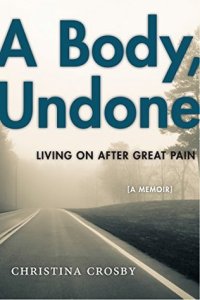 Crosby teaches English and gender studies at Wesleyan University. Her inclusion in this “Sexual Cultures” series has to do with her lesbian feminist ideology but also the new understanding of her body an accident forced upon her at age 50. While she was cycling, a stick stuck in her spokes and she fell over onto concrete, breaking vertebrae in her neck that damaged her spinal cord. In the midst of a full and physical life, she became a quadriplegic. The great irony was that in this she joined her brother Jeff, whose MS had long since reduced him to a wheelchair. Here, in a memoir written 11 years after the accident, she reflects on chronic pain and new limitations – even including bowel habits – with blunt honesty as well as literary allusions. Along the way she remembers physical pleasures now denied to her. Nonetheless, she never comes across as sorry for herself. I found this to be highly absorbing.
The Reader on the 6.27
By Jean-Paul Didierlaurent
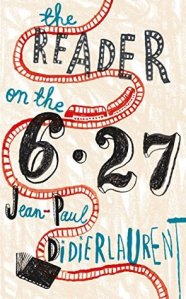 Guylain Vignolles works in a paper pulping plant. Rather than an enemy of books, however, he’s really a champion of the written word and its power to improve people’s lives. Every day when he descends into the belly of “The Thing” to clean it, he rescues the stray pages that escaped destruction and reads them aloud the following morning on his twenty-minute train commute, or to the residents of an old-folks home, no matter what their subject. He also helps his disabled former colleague Giuseppe stockpile all the books made from the recycled paper created on the fateful day the machine shredded his legs. There’s a charming Amélie vibe to this short novel, especially in the later chapters when Guylain sets off on a romantic quest to find the lavatory attendant whose wry diary he finds on a memory stick on the train. Most of the subplots could do with some expanding, but it’s a pleasant and super-quick read.
Stir: My Broken Brain and the Meals that Brought Me Home
By Jessica Fechtor
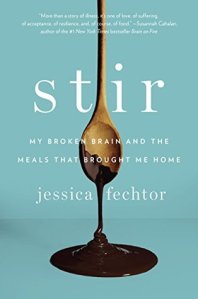 For me this is right up there with Molly Wizenberg and Ruth Reichl in how the author merges food writing with a frank recounting of personal experiences with crisis and heartache. At age 28 Fechtor, then a graduate student in history and Yiddish, collapsed on a treadmill with a brain bleed. Surgery to clip the aneurysm left her blind in one eye. During her long recovery process she started a food blog. At the end of each chapter she shares recipes that alternate between simple, favorite dishes and more involved ones. It’s that unpretentiousness that really endears her to me. She doesn’t think she was particularly brave in getting through an unwanted illness; nor does she think the perfect almond macaroon or cherry clafoutis is beyond anyone’s capability. Instead, she gives a glimpse into an ordinary life turned upside down and the foods that helped her regain a zest for life.
Have you read any of these? Which one takes your fancy?
To the Bright Edge of the World by Eowyn Ivey
Eowyn Ivey’s intricate second novel weaves together diaries, letters, photographs, and various other documents and artifacts to tell the gently supernatural story of an exploratory mission along Alaska’s Wolverine River in 1885 and its effects through to the present day. If you have read Ivey’s 2012 debut, The Snow Child, you’ll remark once again on her skill in bringing the bleak beauty of Alaska to life on the page and blending magic realism and folktales with a nonetheless realistic view of history.
In March 1885 Lieutenant Colonel Allen Forrester sets out with a small team – including brash Sergeant Bradley Tillman, melancholy photographer Lieutenant Andrew Pruitt, native guides, and Samuelson, a trapper who serves as a go-between – to navigate a previously unmapped portion of Alaska. Back at Vancouver Barracks he’s left his wife of four months, Sophie. Bold and curious, she intended to travel into Alaska with Allen until she learned she was pregnant. Now she passes the months of her confinement – and raises eyebrows among the military wives – by pursuing her amateur hobbies of birdwatching and photography.
 Through alternating passages from journals by Allen and Sophie, Ivey contrasts the big adventures of surveying new territory with the smaller adventures of domestic life. Along their perilous journey Allen and his men encounter many legends and incidents they cannot explain: shape-shifters, like the women who morph into flocks of geese or the shaman who takes the form of a half-lame raven; a baby born out of a tree trunk; and a prehistoric creature that guards a lake. As Allen writes in a letter to Sophie towards the end of his journey:
I can find no means to account for what we have witnessed, except to say that I am no longer certain of the boundaries between man & beast, of the living and & dead. It has been a strange experience indeed. All that I have taken for granted, of what is real & true, has been called into question.
A framing story sets the historical narrative in the context of the present day: Walter Forrester has sent his great-uncle Allen’s letters and journal to a small Alaska museum for safekeeping. Initially the young curator, Joshua Sloan, is annoyed at the unwanted donation and the extra work it creates for him, but gradually – right alongside the novel’s readers – he starts to be sucked into the story the documents reveal. Through their correspondence, Josh and Walt develop a touching friendship despite their differences.
Ivey fits the pieces of her epistolary together in a sophisticated manner and makes you care about each of the characters. Sophie and Pruitt, especially, have traumatic backstories that help you understand their behavior. Sophie reminded me most of Meridian Wallace in Elizabeth J. Church’s The Atomic Weight of Love – both are self-taught scientists with a deep love for birds and a determination to live interesting lives even if others disapprove. The novel also brings to mind Maggie O’Farrell’s This Must Be the Place in that it skips back and forth in time and intersperses a central narrative with other documents, including an auction catalogue of relevant objects.
I found Sophie’s voice instantly more engaging than Allen’s shorthand-like style, and it took me a while – maybe 60–80 pages – to warm up to the storyline and characters. I would have appreciated an Author’s Note at the end of the book explaining what, if anything, was based on a true story and which documents are authentic. (As it is, I assume that all the characters are fictional but the explorers’ journey is based on the historical record.) Nonetheless, I can highly recommend this rollicking adventure tale to fans of historical fiction and magic realism.
With thanks to Katie Brown at Tinder Press for the free review copy.
My rating:
A Booker Prize & Libraries Action Plan, Etc.
On Wednesday the Man Booker Prize’s longlist of 13 novels was announced. I never bother making predictions in advance of prize list announcements because inevitably I forget what was released during the eligibility period and I’m no good at squaring personal favorites with what a judging panel is likely to admire. See the Guardian’s photo essay and Karen’s thorough discussion at Booker Talk for more information about the nominees.
It turns out I’ve read and reviewed four of the longlisted books:
The Sellout by Paul Beatty for Shiny New Books: This is such an outrageous racial satire that I kept asking myself how Beatty got away with it. The Sellout struck a chord in America, but I’m slightly surprised that it’s also been received well in the UK.
The North Water by Ian McGuire for BookBrowse: A gritty, graphic novel about 19th-century whaling that traverses the open seas and the forbidding polar regions. It’s a powerful inquiry into human nature and the making of ethical choices in extreme circumstances.
Work Like Any Other by Virginia Reeves on Goodreads: I was meant to review this for BookBrowse but couldn’t rate it highly enough despite the competent writing. Between the blurb and the first paragraph, you already know everything that’s going to happen.
My Name Is Lucy Barton by Elizabeth Strout on Goodreads: I won a free copy through a Goodreads giveaway. I read this in one sitting on a plane ride and found it to be a powerful portrayal of the small connections that stand out in a life.
As for what’s next from the longlist, I finally have an excuse to read the copy of The Childhood of Jesus by J.M. Coetzee I won from Goodreads many moons ago – a sequel to which (The Schooldays of Jesus) is among the nominees. It’ll be my first Coetzee; if I like it I’ll be sure to read the follow-up book when it comes out in September.
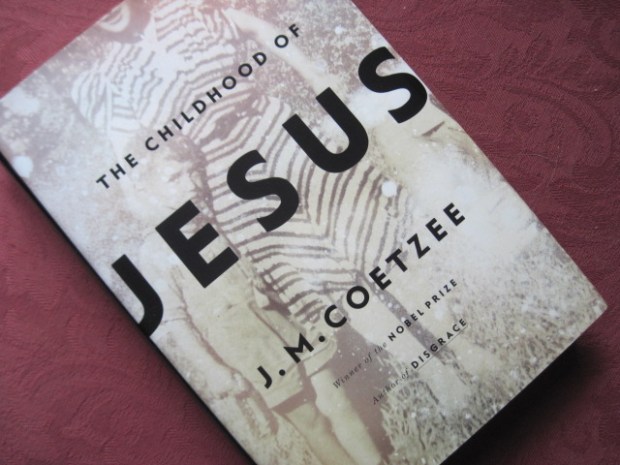
I already knew I was interested in Eileen by Ottessa Moshfegh, a creepy debut novel about a misfit; All That Man Is by David Szalay, a linked short story collection about stages of men’s lives; and Do Not Say We Have Nothing by Madeleine Thien, set in Canada in the wake of the Tiananmen Square protests. I’ve only read one novel each by A.L. Kennedy and Deborah Levy and wasn’t hugely keen on either author’s style, but the subject matter of both Serious Sweet and Hot Milk is more tempting. I might seek them out from the library.
 And then there’s the books I’d simply never heard of. Of these I’m most interested in His Bloody Project by Graeme Macrae Burnet, based on a true-life murder in Scotland in the 1860s, and The Many by Wyl Menmuir, a debut novella about a village newcomer.
The surprise omission for me is Sarah Perry’s The Essex Serpent. I might also have expected to see Julian Barnes, Adam Haslett, and maybe even Ann Patchett on the longlist.
We’ve found a new rental house and hope to move in on August 15, but we’re waiting for our reference check to be complete and the tenancy contract to be drawn up before we can start doing official things like hire movers, change our address with a zillion service providers, and start packing in earnest.
This past week I’ve busied myself with comparing removals quotes and doing pre-packing tasks I’ve tried to convince myself are useful, like sorting through drawers of mementoes, assessing what’s in storage under the beds, and shifting some unwanted possessions through Freegle, a local web forum for giving away free stuff. So far I’ve gotten rid of a spice rack, 11 empty bottles, 55 empty CD cases, a cat tower plus some food and toys our fussy cat won’t use, and a wildly popular picnic hamper (11 offers came through!). It’s really gratifying to see things go to a good home.
Alas, we did also have to take some items to the local recycling center this weekend, which always seems like something of a failure, but no one’s going to want a broken vacuum cleaner and printer. My hope is that the small appliances dumped there will at least be mined for parts, so it’s better than sending them to landfill.
The weekend has also included berry picking at the local pick-your-own farm and making a summer pudding, a labor-intensive but delicious annual tradition. Plus this afternoon we’re off to Northampton to meet our newest nephew, born on the 20th.
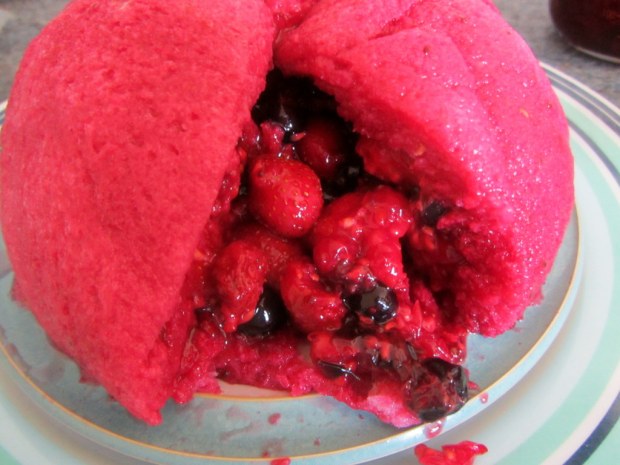
Last year’s summer pudding.
I did finally start boxing up books last night. Much as I love my print library, it’s dispiriting just how much space it takes up. It took five boxes just to empty the small spare room bookcase! Before packing anything I did another full inventory of unread books in the flat and came up with a total of 205, higher than last time but not too bad considering the review books I’ve acquired recently as well as the secondhand shopping I’ve done. I’ve made good progress in my attempt to read mostly books I own for the summer, but it’s a resolution that will have to carry over into the autumn and winter.
The one thing that might scupper me in that plan is that, although we’re only moving 45 minutes away, we’ll be in a new council area where library reservations are free! For years I’ve been a part of library systems where it costs 40 or 50 pence to reserve each book, so I’ve kept holds to an absolute minimum. But from now on you can be sure I’ll be putting myself on the waiting list for every new and forthcoming book that appeals to me! Expect the monthly Library Checkout posts to resume by September.
 Bookish Beck = Rebecca Foster. American transplant to England. Freelance proofreader and book reviewer.
