Bibliotherapy for the New Year
In January lots of us tend to think about self-improvement for the New Year. Books can help! I’m resurrecting a post I first wrote as part of a series for Bookkaholic in April 2013 in hopes that those new to the concept of bibliotherapy will find it interesting.
I happen to believe – and I’m not the only one, not by a long shot – that a relationship with books can increase wellbeing. The right book at the right time can be a powerful thing, not just amusing and teaching, but also reassuring and even healing. Indeed, an ancient Greek library at Thebes bore an inscription on the lintel naming it a “Healing-Place for the Soul.”
The term “bibliotherapy,” from the Greek biblion (books) + therapeia (healing), was coined in 1916 by Samuel McChord Crothers (1857-1927). Crothers, a Unitarian minister and essayist, introduced the word in an Atlantic Monthly piece called “A Literary Clinic.” The use of books as a therapeutic tool then came to the forefront in America during the two world wars, when librarians received training in how to suggest helpful books to veterans recuperating in military hospitals. Massachusetts General Hospital had founded one of the first patients’ libraries, in 1844, and many other state institutions – particularly mental hospitals – had followed suit by the time of the First World War. Belief in the healing powers of reading was becoming more widespread; whereas once it had been assumed that only religious texts could edify, now it was clear that there could be benefits to secular reading too.
Read this for what ails you
Clinical bibliotherapy is still a popular strategy, often used in combination with other medical approaches to treat mental illness. Especially in the UK, where bibliotherapy is offered through official National Health Service (NHS) channels, library and health services work together to give readers access to books that may aid the healing process. Over half of England’s public library systems offer bibliotherapy programs, with a total of around 80 schemes documented as of 2006. NHS doctors will often write patients a ‘prescription’ for a recommended book to borrow at a local library. These books will usually fall under the umbrella of “self-help,” with a medical or mental health leaning: guides to overcoming depression, building self-confidence, dealing with stress, and so on.
Books can serve as one component of cognitive behavioral therapy, which aims to modify behavior through the identification of irrational thoughts and emotions. Bibliotherapy has also been shown to be an effective method of helping children and teenagers cope with problems: everything from parents’ divorce to the difficulties of growing up and resisting peer pressure. Overall, bibliotherapy is an appealing strategy for medical professionals to use with patients because it is low-cost and low-risk but disproportionately effective.
In addition to clinical bibliotherapy, libraries also support what is known as “creative bibliotherapy” – mining fiction and poetry for their healing powers. Library pamphlets and displays advertise their bibliotherapy services under names such as “Read Yourself Well” or “Reading and You,” with eclectic, unpredictable lists of those novels and poems that have proved to be inspiring or consoling. With all of these initiatives, the message is clear: books have the power to change lives by reminding ordinary, fragile people that they are not alone in their struggles.
The School of Life
London’s School of Life, founded by Alain de Botton, offers classes, psychotherapy sessions, secular ‘sermons,’ and a library of recommended reading tackle subjects such as job satisfaction, creativity, parenting, ethics, finances, and facing death with dignity. In addition, the School offers bibliotherapy sessions (one-on-one, for adults or children, or, alternatively, for couples) that can take place in person or online. A prospective reader fills out a reading history questionnaire before meeting the bibliotherapist, and can expect to walk away from the session with one instant book prescription. A full prescription of another 5-10 books arrives within a few days.
In 2011 The Guardian sent six of its writers on School of Life bibliotherapy sessions; their consensus seemed to be that, although the sessions produced some intriguing book recommendations, at £80 (or $123) each they were an unnecessarily expensive way of deciding what to read next – especially compared to asking a friend or skimming newspapers’ reviews of new books. Nonetheless, it is good to see bibliotherapy being taken seriously in a modern, non-medical context.
A consoling canon
You don’t need a doctor’s or bibliotherapist’s prescription to convince you that reading makes you feel better. It cheers you up, makes you take yourself less seriously, and gives you a peaceful space for thought. Even if there is no prospect of changing your situation, getting lost in a book at least allows you to temporarily forget your woes. In Comfort Found in Good Old Books (1911), a touching work he began writing just 10 days after his son’s sudden death, George Hamlin Fitch declared “it has been my constant aim to preach the doctrine of the importance of cultivating the habit of reading good books, as the chief resource in time of trouble and sickness.”
Indeed, as Rick Gekoski noted last year in an article entitled “Some of my worst friends are books,” literary types have always turned to reading to help them through grief. He cites the examples of Joan Didion coming to grips with her husband’s death in The Year of Magical Thinking, or John Sutherland facing up to his alcoholism in The Boy Who Loved Books. Gekoski admits to being “struck and surprised, both envious and a little chagrined, by how literary their frame of reference is. In the midst of the crisis…a major reflex is to turn, for consolation and understanding, to favorite and esteemed authors.” Literary critic Harold Bloom confirms that books can provide comfort; in The Western Canon he especially recommends William Wordsworth, Walt Whitman, and Emily Dickinson as “great poets one can read when one is exhausted or even distraught, because in the best sense they console.”
Just as in a lifetime of reading you will develop your own set of personal classics, you are also likely to build up a canon of favorite books to consult in a crisis – books that you turn to again and again for hope, reassurance, or just some good laughs. For instance, in More Book Lust Nancy Pearl swears by Bill Bryson’s good-natured 1995 travel book about England, Notes from a Small Island: “This is the single best book I know of to give someone who is depressed, or in the hospital.” (With one caveat: beware, your hospitalized reader may well suffer a rupture or burst stitches from laughing.)
Just what you needed
There’s something magical about that serendipitous moment when a reader comes across just the right book at just the right time. Charlie D’Ambrosio confides that he approaches books with a quiet wish: “I hope in my secret heart someone, somewhere, mysteriously influenced and moved, has written exactly what I need” (his essay “Stray Influences” is collected in The Most Wonderful Books). Yet this is not the same as superstitiously expecting to open a book and find personalized advice. Believe it or not, this has been an accepted practice at various points in history. “Bibliomancy” means consulting a book at random to find prophetic help – usually the Bible, as in the case of St. Augustine and St. Francis of Assisi. St. Francis’s first biographer, Thomas of Celano, wrote that “he humbly prayed that he might be shown, at his first opening the book, what would be most fitting for him to do” (in his First Life of St Francis of Assisi).
Perhaps meeting the right book is less like a logical formula and more like falling in love. You can’t really explain how it happened, but there’s no denying that it’s a perfect match. Nick Hornby likens this affair of the mind to a dietary prescription – echoing that medical tone bibliotherapy can often have: “sometimes your mind knows what it needs, just as your body knows when it’s time for some iron, or some protein” (in More Baths, Less Talking).
Entirely by happenstance, a book that recently meant a lot to me is one of the six inaugural School of Life titles, How to Stay Sane by psychotherapist Philippa Perry. Clearly and practically written, with helpful advice on how to develop wellbeing through self-observation, healthy relationships, optimism, and exercise, Perry’s book turned out to offer just what I needed.
I’ve been busy visiting family in the States but I’ll be back soon with a review of The Novel Cure from School of Life bibliotherapists Ella Berthoud and Susan Elderkin.
2015 in review
The WordPress.com stats helper monkeys prepared a 2015 annual report for this blog.
Here’s an excerpt:
A New York City subway train holds 1,200 people. This blog was viewed about 4,000 times in 2015. If it were a NYC subway train, it would take about 3 trips to carry that many people.
A Few Simple New Year’s Resolutions
I’m not big on New Year’s resolutions – I prefer to set challenges and commitments at any time of year – but I have a few professional and reading-related goals that I will share here for the sake of accountability.
Career
- Target a few more big-name publications. My work will appear in the Pittsburgh Post-Gazette and the Los Angeles Review of Books in the early months of 2016 – that’s progress, but I’d like to work on getting some other noteworthy publications.
- Assess which freelance gigs are working for me and which ones are not worth it. Sometimes I look at the number of hours I put into a project compared to the ultimate payment amount and think I must be crazy to continue with it.
- Find ways of being paid into my British bank account rather than hoarding lots of dollars in an American bank account where they’re not doing me much good.
Leisure Reading
- Focus on reading more of the books I actually own. This means cutting down on NetGalley and Edelweiss requests and volunteer reviewing!
- Keep an ongoing priority list of books and authors I want to try, and make steady progress through it. On the list so far: Elena Ferrante, Matt Haig, Karl Ove Knausgaard, Wallace Stegner, Tim Winton, and Nell Zink.
What are some of your goals for 2016 – reading-related or otherwise?
Library Checkout: December 2015

This month while staying with family in the States I’ve gotten to do one of my favorite things: raid Maryland’s public libraries for some American titles I’d been hankering to read. Through the local Prince George’s County Memorial Library System I’m able to request any book in Maryland for free on interlibrary loan.
We picked these books up from the library on the 11th, so I think I did pretty well to get through 12 in total, considering it was the holidays and we were busy going back and forth to Pennsylvania and visiting friends. It helped that several were poetry collections, two of the memoirs were very short, and two books I only skimmed.
Still, my reach was wider than my grasp: I had to return four books unread.
(Thanks to Shannon at River City Reading for the great blog idea and template! Check out her blog for other link-ups.)
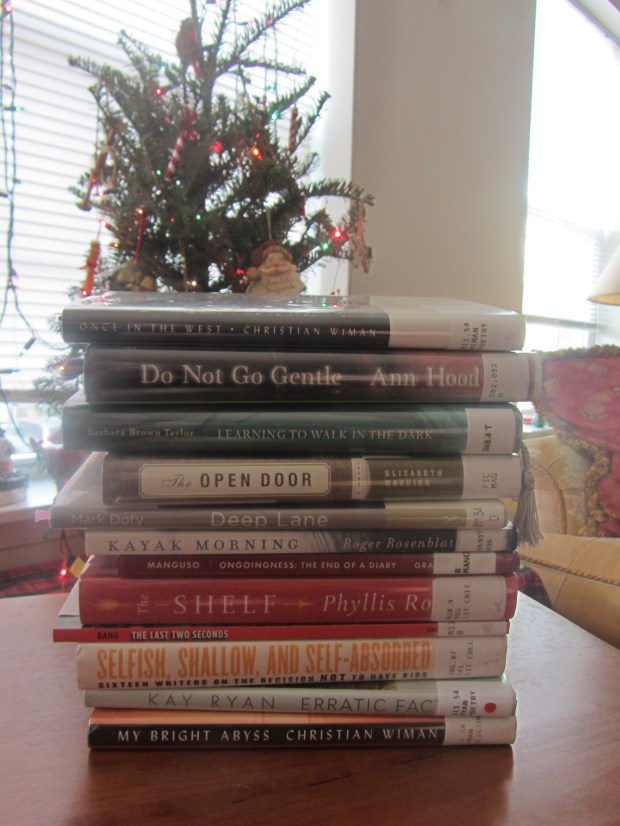
LIBRARY BOOKS READ
The Open Door, Elizabeth Maguire (novel about Constance Fenimore Woolson)
Kayak Morning: Reflections on Love, Grief, and Small Boats, Roger Rosenblatt
Ongoingness: The End of a Diary, Sarah Manguso*
My Bright Abyss: Meditation of a Modern Believer, Christian Wiman
Do Not Go Gentle: My Search for Miracles in a Cynical Time, Ann Hood
Learning to Walk in the Dark, Barbara Brown Taylor*
[Not books, but I did also borrow and finish Parks & Recreation Seasons 4 and 5.]
+ Poetry books:
Deep Lane, Mark Doty*
The Last Two Seconds, Mary Jo Bang*
Erratic Facts, Kay Ryan
Once in the West, Christian Wiman
* = interlibrary loan orders
Skimmed only:
The Shelf from LEQ to LES: Adventures in Extreme Reading, Phyllis Rose
Selfish, Shallow and Self-Absorbed: Sixteen Writers on the Decision Not to Have Kids, ed. Meghan Daum
RETURNED UNREAD
Tickets for a Prayer Wheel, Annie Dillard
The Vermeer Conspiracy, Eytan Halaban
Notes on the Assemblage, Juan Felipe Herrera
The Folded Clock: A Diary, Heidi Julavits
ON HOLD
The Invention of Nature: Alexander von Humboldt’s New World, Andrea Wulf
What were some of your best recent library reads?
My Favorite Nonfiction Reads of 2015
Without further ado, I present to you my 15 favorite non-fiction books read in 2015. I’m a memoir junkie so many of these fit under that broad heading, but I’ve dipped into other areas too. I give two favorites for each category, then count down my top 7 memoirs read this year.
Note: Only four of these were actually published in 2015; for the rest I’ve given the publication year. Many of them I’ve already previewed through the year, so – like I did yesterday for fiction – I’m limiting myself to two sentences per title: the first is a potted summary; the second tells you why you should read this book. (Links given to full reviews.)
Foodie Lit
 A Homemade Life: Stories and Recipes from My Kitchen Table by Molly Wizenberg (2009): Wizenberg reflects on the death of her father Burg from cancer, time spent living in Paris, building a new life in Seattle, starting her food blog, and meeting her husband through it. Each brief autobiographical essay is perfectly formed and followed by a relevant recipe, capturing precisely how food is tied up with memories.
 Comfort Me with Apples: More Adventures at the Table by Ruth Reichl (2001): Reichl traces the rise of American foodie culture in the 1970s–80s (Alice Waters and Wolfgang Puck) through her time as a food critic for the Los Angeles Times, also weaving in personal history – from a Berkeley co-op with her first husband to a home in the California hills with her second after affairs and a sticky divorce. Throughout she describes meals in mouth-watering detail, like this Thai dish: “The hot-pink soup was dotted with lacy green leaves of cilantro, like little bursts of breeze behind the heat. … I took another spoonful of soup and tasted citrus, as if lemons had once gone gliding through and left their ghosts behind.”
Nature Books
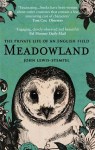 Meadowland: The Private Life of an English Field by John Lewis-Stempel (2014): Lewis-Stempel is a proper third-generation Herefordshire farmer, but also a naturalist with a poet’s eye. Magical moments and lovely prose, as in “The dew, trapped in the webs of countless money spiders, has skeined the entire field in tiny silken pocket squares, gnomes’ handkerchiefs dropped in the sward.”
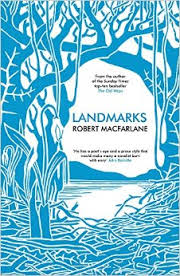 Landmarks by Robert Macfarlane: This new classic of nature writing zeroes in on the language we use to talk about our environment, both individual words – which Macfarlane celebrates in nine mini-glossaries alternating with the prose chapters – and the narratives we build around places, via discussions of the work of nature writers he admires. Whether poetic (“heavengravel,” Gerard Manley Hopkins’s term for hailstones), local and folksy (“wonty-tump,” a Herefordshire word for a molehill), or onomatopoeic (on Exmoor, “zwer” is the sound of partridges taking off), his vocabulary words are a treasure trove.
Theology Books
 Amazing Grace: A Vocabulary of Faith by Kathleen Norris (1998): In few-page essays, Norris gives theological words and phrases a rich, jargon-free backstory through anecdote, scripture and lived philosophy. This makes the shortlist of books I would hand to skeptics to show them there might be something to this Christianity nonsense after all.
 My Bright Abyss: Meditation of a Modern Believer by Christian Wiman (2013): Seven years into a cancer journey, Wiman, a poet, gives an intimate picture of faith and doubt as he has lived with them in the shadow of death. Nearly every page has a passage that cuts right to the quick of what it means to be human and in interaction with other people and the divine.
General Nonfiction
 Penelope Fitzgerald: A Life by Hermione Lee (2013): Although Penelope Fitzgerald always guarded literary ambitions, she was not able to pursue her writing wholeheartedly until she had reared three children and nursed her hapless husband through his last illness. This is a thorough and sympathetic appreciation of an underrated author, and another marvellously detailed biography from Lee.
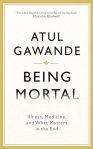 Being Mortal: Medicine and What Matters in the End by Atul Gawande (2014): A surgeon’s essential guide to decision-making about end-of-life care, but also a more philosophical treatment of the question of what makes life worth living: When should we extend life, and when should we concentrate more on the quality of our remaining days than their quantity? The title condition applies to all, so this is a book everyone should read.
Memoirs
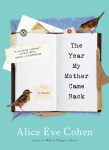 The Year My Mother Came Back by Alice Eve Cohen: Wry and heartfelt, this is a wonderful memoir about motherhood in all its variations and complexities; the magic realism (Cohen’s dead mother keeps showing up) is an added delight. I recommend this no matter what sort of relationship, past or present, you have with your mother, especially if you’re also a fan of Anne Lamott and Abigail Thomas.
- The Art of Memoir
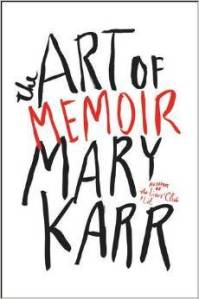 by Mary Karr: There is a wealth of practical advice here, on topics such as choosing the right carnal details (not sexual – or not only sexual – but physicality generally), correcting facts and misconceptions, figuring out a structure, and settling on your voice. Karr has been teaching (and writing) memoirs at Syracuse University for years now, so she’s thought deeply about what makes them work, and sets her theories out clearly for readers at any level of familiarity.
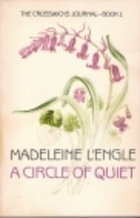 A Circle of Quiet by Madeleine L’Engle (1971): In this account of a summer spent at her family’s Connecticut farmhouse, L’Engle muses on theology, purpose, children’s education, the writing life, the difference between creating stories for children and adults, neighbors and fitting into a community, and much besides. If, like me, you only knew L’Engle through her Wrinkle in Time children’s series, this journal should come as a revelation.
-
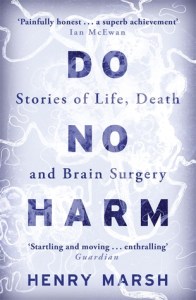 Do No Harm: Stories of Life, Death and Brain Surgery by Henry Marsh (2014): “Terrible job, neurosurgery. Don’t do it.” – luckily for us, Henry Marsh reports back from the frontlines of brain surgery so we don’t have to. In my favorite passages, Marsh reflects on the mind-blowing fact that the few pounds of tissue stored in our heads could be the site of our consciousness, our creativity, our personhood – everything we traditionally count as the soul.
 I Hate to Leave This Beautiful Place by Howard Norman (2013): Norman has quickly become one of my favorite writers. You wouldn’t think these disparate autobiographical essays would fit together as a whole, given that they range in subject from Inuit folktales and birdwatching to a murder–suicide committed in Norman’s Washington, D.C. home and a girlfriend’s death in a plane crash, but somehow they do; after all, “A whole world of impudent detours, unbridled perplexities, degrading sorrow, and exacting joys can befall a person in a single season, not to mention a lifetime.”
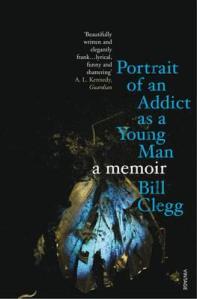 Portrait of an Addict as a Young Man by Bill Clegg (2010): Through this book I followed literary agent Bill Clegg on dozens of taxi rides between generic hotel rooms and bar toilets and New York City offices and apartments; together we smoked innumerable crack pipes and guzzled dozens of bottles of vodka while letting partners and family members down and spiraling further down into paranoia and squalor. He achieves a perfect balance between his feelings at the time – being out of control and utterly enslaved to his next hit – and the hindsight that allows him to see what a pathetic figure he was becoming.
And my overall favorite nonfiction book of the year:
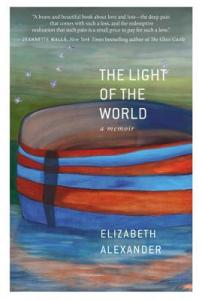 1. The Light of the World by Elizabeth Alexander: In short vignettes, beginning afresh with every chapter, Alexander conjures up the life she lived with – and after the sudden death of – her husband Ficre Ghebreyesus, an Eritrean chef and painter. This book is the most wonderful love letter you could imagine, and no less beautiful for its bittersweet nature.
What were some of your best nonfiction reads of the year?
The Best Fiction of 2015: My Top 15
2015 was a great year for fiction, largely dominated by doorstoppers (like Death & Mr. Pickwick and City on Fire, in addition to the Franzen and Yanagihara listed below) and Harper Lee. I’ve decided to pass on Go Set a Watchman, but I’ve read plenty of the year’s big-name fiction, as well as some more obscure titles I’d like to bring to your attention.
As difficult as it is to pit books against each other and come up with a numbered list, I’ve given it a go and come up with my top 15 fiction works of the year. To keep it simple for myself and straightforward for potential readers, I’m limiting myself to two sentences per title: the first is a potted summary; the second tells you why you should read it. I also link to any full reviews.
Let the countdown begin!
- The Shore
 by Sara Taylor: Gritty and virtuosic, this debut novel-in-13-stories imagines 250 years of history on a set of islands. Every region needs a literary chronicler, and I reckon Taylor – channeling David Mitchell with her cross-centuries approach – is it for the Eastern Shore of Maryland and Virginia’s islands.
 Gold Fame Citrus by Claire Vaye Watkins: Gold, fame, citrus: reasons people once came to California; now, only a desperate remnant remains in the waterless wasteland. As a smart, believable dystopian with a family at its heart, this trumps any of last year’s efforts (like Station Eleven or California).
 Preparation for the Next Life by Atticus Lish: Like West Side Story, this debut novel is an updated Romeo and Juliet narrative – a tragedy-bound love story with a grimy contemporary setting and a sobering message about racism and the failure of the American dream. The matter-of-fact style somehow manages to elevate the everyday and urban into an art form. (Reviewed for Third Way magazine in August.)
- Circling the Sun
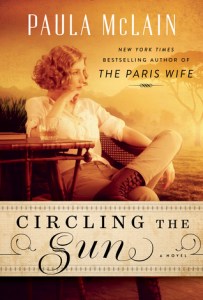 by Paula McLain: Before she ever thought of flying solo across the Atlantic, aviatrix Beryl Markham was just Beryl Clutterbuck: raised in Kenya, one of Africa’s first female horse trainers, its first professional female pilot, and the other side of the love triangle featuring Karen Blixen (Isak Dinesen) and Denys Finch Hatton. McLain describes her African settings beautifully, and focuses as much on the small emotional moments that make a life as she does on its external thrills.
 Kitchens of the Great Midwest by J. Ryan Stradal: One of my favorite debuts of the year: a culinary-themed collection of short stories loosely linked through the character of Eva Thorvald, a young chef with an unfortunate past and a rare palate. Read it for a glimpse of how ordinary, flawed Americans live – no fairytale endings here.
 Hausfrau by Jill Alexander Essbaum: This arresting debut reads like a modern retelling of Madame Bovary, with its main character a desperate American housewife in Zurich. Watch Anna’s trajectory with horror, but you cannot deny there is a little of her in you.
 The Versions of Us by Laura Barnett: In this impressively structured, elegantly written debut, Barnett chronicles the romantic lives of two Cambridge graduates through three-quarters of a century, giving three options for how their connection might play out. There is no one perfect person or story: unsentimental this may be, but it feels true to how life works. (Reviewed for Third Way magazine in July.)
 Fates and Furies by Lauren Groff: An incisive study of a marriage, beautifully written and rich with allusions to Shakespeare and Greek mythology. Groff makes it onto a short list of women I expect to produce the Great American Novel (along with Curtis Sittenfeld, Jennifer Egan, and Hanya Yanagihara).
 Purity by Jonathan Franzen: East Germany, Bolivia and Oakland, California: Franzen doesn’t quite pull all his settings and storylines together, but this is darn close to a 5-star Dickensian read. It’s strong on the level of character and theme, with secrecy, isolation and compassion as recurring topics.
 You Too Can Have a Body Like Mine by Alexandra Kleeman: Kleeman’s first novel is a full-on postmodern satire bursting with biting commentary on consumerism and conformity. Think of her as an heir to Dave Eggers and Douglas Coupland, with a hefty dollop of Margaret Atwood thrown in.
 The Animals by Christian Kiefer: Kiefer’s second novel contrasts wildness and civilization through the story of a man who runs an animal refuge to escape from his criminal past. A tough opening sequence establishes themes that will be essential to the novel: the fine line between instincts and decisions, the moral dilemmas involved in environmentalism, and the seeming inescapability of violence.
 The Tsar of Love and Techno by Anthony Marra: A collection of tightly linked short stories giving an intimate look at Russia and Chechnya in wartime and afterwards – revealing how politics, family, and art intertwine. Just as he did in his first novel, Marra renders unspeakable tragedies bearable through his warm and witty writing.
 Girl at War by Sara Nović: This pitch-perfect debut novel is an inside look at the Yugoslavian Civil War and its aftermath, from the perspective of a young girl caught up in the fighting. The way Nović recreates a child’s perspective on the horrors of war is masterful: Ana’s viewpoint is realistic and matter-of-fact, without the melodrama an omniscient narrator might inject.
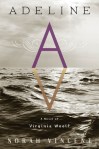 Adeline by Norah Vincent: Set in 1925–1941 and structured like a five-act play, the novel revolves around Virginia Woolf’s philosophical conversations with Leonard Woolf, Lytton Strachey and his lover Carrington, T.S. and Valerie Eliot, W.B. Yeats, and her doctor, Octavia Wilberforce. Vincent has produced a remarkable picture of mental illness from the inside.
- A Little Life
 by Hanya Yanagihara: Jude St. Francis: Dickensian orphan, patron saint of lost causes, Christlike Man of Sorrows, and one of the most memorable characters in recent fiction. This novel is an attempt to tackle the monolithic question of what makes life worth living; among the potential answers: love (though it doesn’t conquer all), friendship, creativity, and the family you create for yourself.
Best Discoveries of the Year: Mary Lawson (Road Ends), Daniel Kehlmann (F: A Novel), Jonathan Evison (This Is Your Life, Harriet Chance!) and Jonathan Coe (Number 11).
Debut Novelists Whose Next Work I’m Most Looking Forward to: Jessamyn Hope (Safekeeping – reviewed here in June) and Carmiel Banasky (The Suicide of Claire Bishop – reviewed for Foreword’s Fall 2015 issue).
 The Year’s Biggest Disappointments: Etta and Otto and Russell and James by Emma Hooper; Where My Heart Used to Beat by Sebastian Faulks and Avenue of Mysteries by John Irving (both rehash the authors’ familiar themes; I couldn’t make it past 15% in the latter).
Novels I Most Wish I’d Gotten to in 2015: Nell Zink’s Mislaid, Sara Baume’s Spill Simmer Falter Wither, and the final two volumes of Jane Smiley’s “Last Hundred Years” trilogy.
What are the best novels you read this year? Any new favorite books or authors? Your comments are always welcome.
I’ll be back tomorrow with my top 15 nonfiction books I read this year (most of them not published in 2015, however – I seem to have been a nonfiction slacker!)
When Is a Bookshop Not a Bookshop?
The answer to the riddle: when all the books are free! Christmas came early on Sunday when I visited a place I long knew of but had never visited: The Book Thing of Baltimore. It’s an entirely not-for-profit venture run with the help of volunteers and donations. “Our mission is to put unwanted books into the hands of those who want them,” says their website. My hubby and I were going into the city to meet friends for the day, so I suggested a quick run to Book Thing, a hidden treasure on an unassuming concrete lot that’s only open on the weekends.
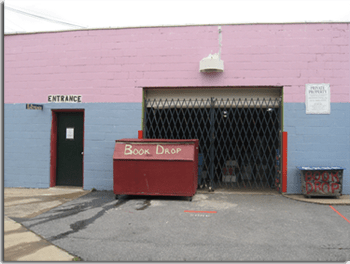
The unassuming shop front for Book Thing. (From their website)
I brought along a backpack crammed full of unwanted books from my old bedroom to donate, thinking that I would pick up just two or three in return. I was expecting one disorganized room full of pretty crummy books. To my delight, it was an enormous four-room warehouse with an amazing selection. A wonderful place to wander around and pick up things at random, but not great for seeking out particular titles given that the books – notably, fiction and biographies – are in no discernible alphabetical order.
Are you at all surprised to learn that I came away with a backpack just as overstuffed as I came with? At one point, as I was stacking up some terrific animal-themed books, my husband said, “You do realize you can only take what you can fit in your backpack? We’re going back by train!” My refrain was “but they’re all free!” I ended up with 31 books in total.
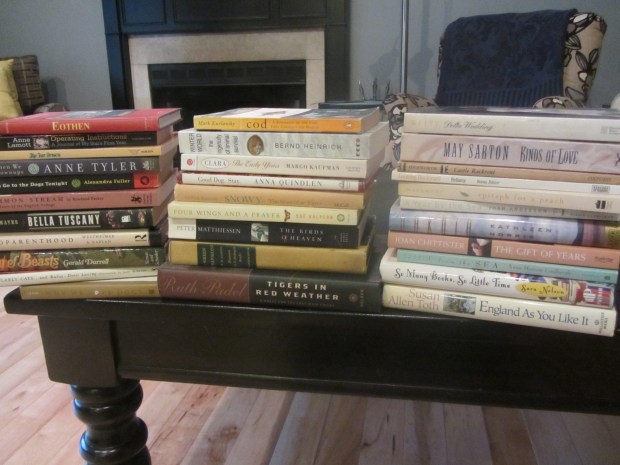
The haul.
I was especially thrilled with: The Fur Person, May Sarton’s book about cats, which I’d been hoping to find secondhand on this trip; Tigers in Red Weather, Ruth Padel’s travel book about searching for the world’s few remaining tigers in all their known habitats – I’d already read it but my husband hasn’t; Dakota by Kathleen Norris, a new favorite theology writer; Sara Nelson’s So Many Books, So Little Time (how apt!); and A Year by the Sea by Joan Anderson, which I’d never heard of but should fit right into my interest in women’s diaries.
Lest you think I’m some selfish book fiend, note that the pile on the left in the photograph below is for giving away to family and friends this Christmas. (Yes, I am aware that the pile of books we are keeping dwarfs the gift stack. Sigh.)
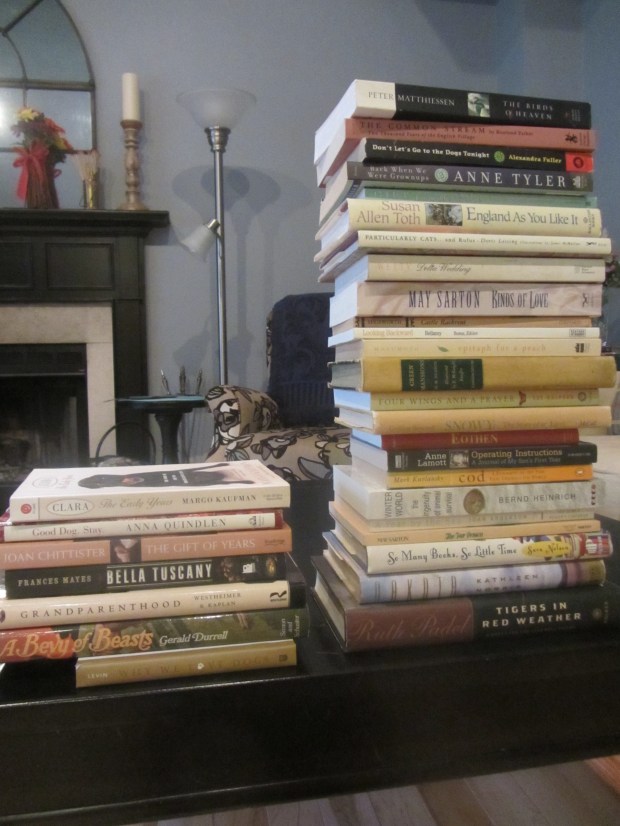
Dueling stacks.
All in all, it was a great day in Baltimore. We had a terrific lunch at City Café; browsed part of the amazing (and also free!) Walters Art Museum; toured the central campus of Johns Hopkins University, where my friend is a PhD student; walked through a small park; observed the shops and eateries of hipster Hampden; and saw the famous Christmas lights on 34th Street. They call it “Charm City,” and on Sunday it more than lived up to its name.
Book Thing is as sprawling as my favorite bookshop, Wonder Book (Frederick, Maryland), but you needn’t hand over any money. It’s as varied and tempting as any public library, but you don’t have to bring the books back. Nothing says “Merry Christmas” like free books!
Reviews Roundup, November–December
One of my goals with this blog is to have one convenient place where I can gather together all my writing that has appeared in disparate online locations. To that end, once a month I provide links to all book reviews I’ve published elsewhere, with a rating (below each description) and a taster so you can decide whether to read more. A few exceptions: I won’t point out my Kirkus Indie, BlueInk or Publishers Weekly reviews since I don’t get a byline.
The Bookbag
 In Search of Mary: The Mother of All Journeys by Bee Rowlatt: A BBC journalist and mother of four sets out, baby in tow, to trace the steps of Mary Wollstonecraft in Norway and France. A follow-up trip to California is a little off-topic, but allows Rowlatt to survey the development of feminism over the last few centuries. This isn’t as successful a bibliomemoir as many I’ve read in recent years, such as Rebecca Mead’s My Life in Middlemarch or Samantha Ellis’s How to Be a Heroine, but for readers interested in engaging in the ongoing debate about how women can balance work life with motherhood, and especially for any women who have attempted traveling with children, it’s a fun, sassy travelogue.

Foreword Reviews
 Italy Invades: How Italians Conquered the World by Christopher Kelly and Stuart Laycock: Proceeding alphabetically from Afghanistan to Zimbabwe, the authors give a comprehensive picture of Italians’ global reach through one- to five-page snapshots. There are many familiar names here, such as Caesar, Garibaldi and Marco Polo. Along with exploration, some major reasons for historical crossover were trade, war, colonialism and immigration. At times it feels as if the authors are grasping at straws; better to skip one-paragraph write-ups altogether and focus instead on the countries that have extensive links with Italy. Nonetheless, this is a lively, conversational book full of surprising facts.

Why You Won’t Go to Hell by Benjamin Vande Weerdhof Andrews: In a well-structured argument, Andrews prizes empirical thinking, rejects the supernatural, and affirms the possibility of godless morality. His central thesis is that religion doesn’t evolve to keep pace with society and so holds humanity back. The book’s tone is too often defensive, often in response to included website comments, and there are some failures of accuracy and fairness. Ultimately, though, this could be an inspirational book for atheists or believers, prompting both groups to question their assumptions and be willing to say “I don’t know.” Readers of Sam Harris and Christopher Hitchens will be particularly drawn to the book, but others should take a chance on it too.

 Cultured Food for Health by Donna Schwenk: When Schwenk started eating cultured foods in 2002, she had diabetes, high blood pressure, and a premature newborn. Keen to see if good bacteria could help with her medical problems, she started introducing the “healing powerhouse” of kefir (a fermented milk product resembling thin yogurt), kombucha (bubbly tea), and cultured vegetables into her diet, and soon reaped the rewards. About a quarter of the book is background information about probiotic foods. Bullet-pointed lists of health benefits, along with an alphabetical inventory of the diseases that cultured foods can treat, should prove helpful. The rest of the book is devoted to recipes, most vegetarian.
Three Simple Questions: Being in the World, But Not of It by Charlie Horton: Horton, trained as a social worker, was diagnosed with cerebellar degeneration in 1988. It has gradually affected his speech and movement. Despite having lived with disability for nearly three decades, he declares, “the world I live in is rich, and my spirit is young.” Here he documents how he deals with depression and physical limitations through guided meditations that bring him closer to God. Although he comes from a Christian perspective, he writes about spirituality in such inclusive terms that his work should speak to people of any faith.
Middle Passage: The Artistic Life of Lawrence Baker by Louis B. Burroughs, Jr.: This ghostwritten autobiography of an African-American artist is not only an evocative, eventful life story that moves from the Jim Crow South to the North, but also a forceful artist’s manifesto. Burroughs writes in Baker’s voice, a decision that works surprisingly well. The title is a powerful reference to the slave trade. Indeed, Burroughs consciously crafts Baker’s autobiography as an “up from slavery” narrative reminiscent of Richard Wright and Maya Angelou – with ‘slavery’ in this case being poverty and racism.
Nudge
 40 Sonnets by Don Patterson: All but one of the poems in this new book have the sonnet’s traditional 14 lines; “The Version” is a short prose story about writing an untranslatable poem. However, even in the more conventional verses, there is a wide variety of both subject matter and rhyme scheme. Topics range from love and death to a phishing phone call and a footpath blocked off by Dundee City Council. A few favorites were “A Powercut,” set in a stuck elevator; “Seven Questions about the Journey,” an eerie call-and-response; and “Mercies,” a sweet elegy to an old dog put to sleep. There weren’t quite enough stand-outs here for my liking, but I appreciated the book as a showcase for just how divergent in form sonnets can be.
 Without You There Is No Us by Suki Kim: This is a quietly gripping book even though not much of moment happens over Kim’s five months teaching young men at a missionary-run college in Pyongyang. She was in a unique position in that students saw her as ethnically one of their own but she brought an outsider’s perspective to bear on what she observed. Just before she flew back to the States in 2011, Kim Jong-Il died, an event she uses as a framing device. It could have represented a turning point for the country, but instead history has repeated itself with Kim Jong-un. Kim thus ends on a note of frustration: she wants better for these young men she became so fond of. A rare glimpse into a country that carefully safeguards its secrets and masks its truth.
 Alive, Alive Oh!: And Other Things that Matter by Diana Athill: Diana Athill turns 98 on December 21st. Apart from “Dead Right,” however, this collection is not primarily concerned with imminent death. Instead Athill is still grateful to be alive: marveling at a lifetime of good luck and health and taking joy in gardening, clothing, books, memories and friendships. Six of the 10 essays originally appeared elsewhere. The collection highlight is the title piece, about a miscarriage she suffered in her forties. Another stand-out is “The Decision,” about moving into a retirement home in her nineties. This doesn’t live up to her best memoirs, but is an essential read for a devoted fan, and a consolation given she will likely not publish anything else (though you never know). [For first-time Athill readers, I’d recommend starting with Somewhere Towards the End, followed by Stet, about her work as a literary editor.]
I also post reviews of most of my casual reading and skimming on Goodreads:
The Weightless World by Anthony Trevelyan: This debut novel blends postcolonial bureaucracy with steampunk zaniness. The setup is familiar enough: businessmen head overseas to take financial advantage of a former colony, puzzle over unfamiliar customs, and by the end are chastened but gain a clearer sense of values. Narrator Steven Strauss is the personal assistant to Raymond Ess, an entrepreneur with a history of mental illness. Their aviation company has gone bust; Strauss is to accompany Ess to India and keep him occupied by looking for an anti-gravity machine. Not anchored by either current events or convincing fantasy, the plot suffers in comparison to works by Geoff Dyer or Nick Harkaway. Despite entirely serviceable writing and a gravity-defying theme, it never really takes off.

 My Confection: Odyssey of a Sugar Addict by Lisa Kotin: 1978. Twenty-one-year-old mime goes to macrobiotic rehab to recover from sugar addiction. Fails. Shows signs of being a sex addict as well. Pared down to headlines, that’s how this fairly rambling memoir about Kotin’s relationships with food, family, lovers, and career opens. I kept waiting for a turn, some moment of revelation, when Kotin’s binge eating would be solved. Still, her recreation of her obsessive younger self can be pretty funny and charming, and her family sounds a bit like the Sedaris clan. I found this a bit dated, but others may find the time period and Jewish family background more evocative.
 Good on Paper by Rachel Cantor: I’m going to chalk this one up to blurb inflation. The writing is lively and the plot well crafted, with quirky postmodern touches, but the novel as a whole did not live up to my absurdly high expectations: it’s really nothing like A.S. Byatt’s Possession. It’s 1999 and Shira Greene is a failed translator from the Italian, now working as a temp in New York City and raising her daughter Andi with the help of her gay, Pakistani co-parent, Ahmad. One day she gets a call from Romei, a Nobel Prize-winning Italian poet who wants her to translate his new work, a version of Dante’s Vita Nuova that focuses on his relationship with his ill wife – and eventually starts to comment on Shira’s own life in surprising ways.
Water Sessions by James Lasdun: Wonderful poems from a severely underrated writer. The British Lasdun has relocated to small-town upstate New York, where he’s learned the spiritual worth of manual labor. There are such interesting rhyme schemes and half-rhymes throughout. One of the most striking poems, “Thing One and Thing Two,” compares human and animal sexuality in a rather disturbing way. The title sequence is a dialogue between a patient and a therapist, discussing what went wrong in a relationship and how arguments are never ‘about’ the thing that started it.
 The Secret Chord by Geraldine Brooks: A retelling of the life of King David from the perspective of the prophet Nathan. The naming takes some getting used to, but the stories – from gory massacres to moments of triumph – are recognizable from the Old Testament. What makes Brooks’s take unique is the different points of view it shows and the ways it subtly introduces doubt about David’s carefully cultivated image. It’s sensual historical fiction, full of rich descriptive language. Strangely unmemorable for me, perhaps because the storyline is just too familiar. Brooks doesn’t offer a radical reinterpretation but sows small seeds of doubt about the hero we think we know. (Full review in Jan/Feb 2016 issue of Third Way magazine.)
 When I Die: Lessons from the Death Zone by Philip Gould: Gould may be familiar to British readers as a key strategist of the New Labour movement and one of Tony Blair’s advisors. In 2008 he was diagnosed with esophageal cancer and chose to pay for private treatment at New York’s Sloan-Kettering hospital instead of going for a radical operation through the NHS – a fateful decision. Gould’s own account is fairly short, about 140 pages, but it’s supplemented by short reminiscences from his wife and two daughters. Daughter Georgia’s, especially, is a very good blow-by-blow of his final week. All royalties from the book went to the National Oesophago-Gastric Cancer Fund.
 Twain’s End by Lynn Cullen: “Twain’s End” was a possible name for the Clemens house in Connecticut, but it’s also a tip of the hat to Howards End and an indication of the main character’s impending death. In January 1909, when the novel opens, Samuel Clemens, 74, is busy dictating his autobiography and waiting for Halley’s Comet, the heavenly body that accompanied his birth, to see him back out. His secretary, Isabel Lyon, is 45 and it’s no secret that the two of them are involved. I love how the novel shifts between the perspectives of several strong female characters yet still gives a distinct portrait of Clemens/Twain. Interestingly, I found that it helped to have visited the Twain house in Connecticut – I could truly picture all the scenes, especially those set in the billiard room and conservatory.
 Meadowland: The Private Life of an English Field by John Lewis-Stempel: Lewis-Stempel is a proper, third-generation Herefordshire farmer, but also a naturalist with a poet’s eye. His day job might involve shooting rabbits, cutting hay and delivering lambs, but he still finds the time to notice and appreciate wildlife. He knows his field’s flowers, insects and birds as well as he knows his cows; he gets quiet and close enough to the ground to watch a shrew devouring beetles. June and July are the stand-out chapters, with some truly magical moments. When his mower breaks on a stone, he has to cut the hay by hand, returning him to a centuries-gone model of hard labor. All delivered in the loveliest prose.

Did You Ever Have a Family by Bill Clegg: A strong debut novel about personal and community responses to tragedy. Clegg’s multivocal approach works quite well, though there are perhaps a few too many voices diluting the mixture. I like how the revelations of what really happened that night before the wedding to cause the fatal house fire come gradually, making you constantly rethink who was responsible and what it all means. The small-town Connecticut setting is a good one, but I’d question the decision to set so much of the book in Washington, where the bereaved June drives on a whim. For a tragic story, it’s admirably lacking in melodrama.
 A Homemade Life: Stories and Recipes from My Kitchen Table by Molly Wizenberg: Foodoir extraordinaire! I liked this even better than Delancey, which is a terrific book about opening a pizza restaurant in Seattle with her husband. Here we get the prequel: the death of her father Burg from cancer, time spent living in Paris, building a new life in Seattle, starting her now-famous food blog (Orangette), and meeting her husband Brandon through it. Each brief autobiographical essay is perfectly formed and followed by a relevant recipe, capturing precisely how food is tied up with her memories. Wizenberg’s very fond of salad, but also of cake, and every recipe is full-on in terms of flavors and ingredients.
Ellen Foster by Kaye Gibbons: This was a random library book sale purchase, chosen almost entirely for the title. I set aside my usual dislike of child narrators and found an enjoyable voice-driven novella about a feisty ten-year-old who loses both her parents (good riddance to her father, at least) and finds her own unconventional family after cycling through the homes of some truly horrid relatives. Just as an example, her maternal grandmother sends her out to work picking cotton. The book is set in the South, presumably in the 1970s or 80s, so it’s alarming to see how strong racial prejudice still was.
 The Ecco Book of Christmas Stories, edited by Alberto Manguel: I read this over several years, a handful each holiday season. There are some very unusual choices, including some that really have hardly anything to do with Christmas (e.g. one by Bessie Head). Still, it’s a nice book to have to hand, even if just to skip through. Manguel strikes a good balance between well-known short story writers, authors you might never think to associate with Christmas, and fairly obscure works in translation. Four favorites: “A Christmas Memory,” Truman Capote (overall favorite); “Christmas Is a Sad Season for the Poor,” John Cheever; “The Zoo at Christmas,” Jane Gardam; and “O’Brien’s First Christmas,” Jeanette Winterson.
Surveying the Almighty TBR List
Coming to the end of one year and looking ahead to another: it’s a good opportunity to take stock of my virtual and physical to-read piles once more. Thanks to fellow book bloggers Naomi at The Writes of Woman and Eleanor at Elle Thinks for giving me this meme idea and tagging me in it, respectively.
How do you keep track of your TBR pile?
I have a ridiculously large to-read shelf on Goodreads, but that’s more like a vague lifelong wish list – some of them I own, some I’ve only heard of and want to investigate further, some I’m desperate to get hold of, and so on. I recently culled my online TBR and cut it by about 10%, but it’s still overwhelming. In real life, I take occasional inventories of the unread books in our flat (192 at last count). However, this doesn’t account for the fact that at least half of my book collection is still in my parents’ house in the States. While I’m back there for some time over the holidays, I enjoy gazing at my books and choosing a select few to bring back in my suitcase. On this trip I’ll be boxing them all up to go into storage. When shall I ever be reunited with them?!
Is your TBR mostly print or e-book?
If I only consider the books I already have access to, there are more unread print ones on my shelves than there are e-book approvals through NetGalley and Edelweiss. There’s not all that much in it, though; I might estimate the print TBR at 400–500, while I have about 300 books at my disposal through those online sources and new titles come up for request all the time.
How do you determine which books from your TBR to read next?
This generally depends on review deadlines, library due dates, and e-book expirations. In some sense, then, my reading list is completely imposed on me from outside. However, I always make sure I let whimsy guide some of my choices. Next year I hope to be even better about just picking up a book off my shelves and starting it for no reason other than instantaneous interest.
A book that has been on my TBR the longest
On the virtual TBR: probably Fast Food Nation and some of Margaret Atwood’s back catalogue. On the vague list in my head: all the more obscure Dickens and Hardy titles.
 A book I recently added to my TBR
Rochester Knockings: A Novel of the Fox Sisters by Hubert Haddad.
 A book on my TBR strictly because of its beautiful cover
I love the beard-house on the cover of Know Your Beholder by Adam Rapp.
A book on my TBR that I never plan on reading
Will I really pick up Martin Amis’s novels, or Ian McEwan’s early work? How about those obscure Thomas Hardy novels like A Laodicean and A Pair of Blue Eyes?
 An unpublished book on my TBR that I’m excited for
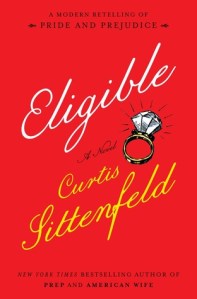
I recently started Eligible by Curtis Sittenfeld (to be published on April 19, 2016). Her novel American Wife is one of my absolute favorites, so I was excited about her Pride and Prejudice retelling and lucky enough to be sent an advanced copy. I’m not that into it yet – the third-person omniscient voice is taking a while to get used to because first-person female narrators are Sittenfeld’s forte – but I hope it will pick up soon.
 A book on my TBR that everyone recommends
I’ve encountered almost universal praise for Elena Ferrante’s four autobiographical novels, the first of which is My Brilliant Friend. They’re on my priority list for 2016.
A book on my TBR that everyone has read but me
1984 by George Orwell.
 A book on my TBR that I’m dying to read
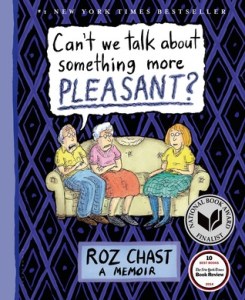
Some of my priority books to get hold of are Nell Zink’s novels, the final two books in Jane Smiley’s The Last Hundred Years trilogy, Can’t We Talk about Something More Pleasant? by Roz Chast, and Reasons to Stay Alive by Matt Haig. I’ve also been meaning to read The Signature of All Things by Elizabeth Gilbert for ages, and I’m intrigued to try The Guest Cat by Takashi Hiraide.
How many books are on your TBR shelf?
5,664 on the Goodreads shelf; maybe 500 in the print queue.
People I’m tagging:
Shannon at River City Reading
Lucy at Literary Relish
 Bookish Beck = Rebecca Foster. American transplant to England. Freelance proofreader and book reviewer.
