Book Serendipity, Mid-February to Mid-April
I call it “Book Serendipity” when two or more books that I read at the same time or in quick succession have something in common – the more bizarre, the better. This is a regular feature of mine every couple of months. Because I usually have 20–30 books on the go at once, I suppose I’m more prone to such incidents. People frequently ask how I remember all of these coincidences. The answer is: I jot them down on scraps of paper or input them immediately into a file on my PC desktop; otherwise, they would flit away!
The following are in roughly chronological order.
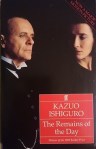
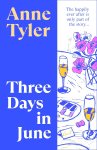
- The protagonist isn’t aware that they’re crying until someone tells them / they look in a mirror in The Remains of the Day by Kazuo Ishiguro and Three Days in June by Anne Tyler.
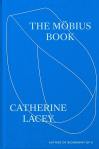
- A residential complex with primal scream therapy in Confessions by Catherine Airey and The Möbius Book by Catherine Lacey.
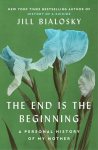
- Memories of wiping down groceries during the early days of the pandemic in The End Is the Beginning by Jill Bialosky and Human/Animal by Amie Souza Reilly.
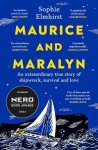
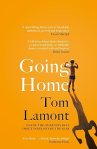
- A few weeks before I read Maurice and Maralyn by Sophie Elmhirst, I’d finished reading the author’s husband’s debut novel (Going Home by Tom Lamont); I had no idea of the connection between them until I got to her Acknowledgements.
- A mention of the same emergency money passing between friends in Alligator Tears by Edgar Gomez ($20) and The Möbius Book by Catherine Lacey ($100).
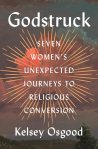
- Autobiographical discussions of religiosity and anorexia in The Möbius Book by Catherine Lacey and Godstruck by Kelsey Osgood.
- The theme of the dark night sky in The Wild Dark by Craig Childs, followed almost immediately by Night Magic by Leigh Ann Henion.
- Last year I learned about Marina Abramović’s performance art where she and her ex trekked to China’s Great Wall from different directions, met in the middle, and continued walking away to dramatize their breakup in The Ritual Effect by Michael Norton. Recently I saw it mentioned again in The Möbius Book by Catherine Lacey. Abramović’s work is also mentioned in Human/Animal by Amie Souza Reilly and is the basis for the opening track on Anne-Marie Sanderson’s album Old Light, “Amethyst Shoes.”
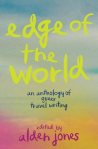
- The idea of running towards danger appears in Alex Marzano-Lesnevich’s essay in Edge of the World, a queer travel anthology edited by Alden Jones; and the bibliography of The Möbius Book by Catherine Lacey.
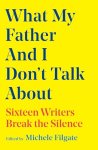
- I then read another Alex Marzano-Lesnevich essay in quick succession (both were excellent, by the way) in What My Father and I Don’t Talk About, edited by Michele Filgate.
- A scene in which a woman goes to a police station and her concerns are dismissed because she has no evidence and the man/men’s behaviour isn’t ‘bad enough’ in I Am, I Am, I Am by Maggie O’Farrell and Human/Animal by Amie Souza Reilly.
- Too many details as the sign of a lie in Dream Count by Chimamanda Ngozi Adichie and Three Days in June by Anne Tyler.
- Scenes of throwing all of a spouse’s belongings out on the yard/street in Old Soul by Susan Barker, How to Survive Your Mother by Jonathan Maitland, and Human/Animal by Amie Souza Reilly.
- Reading two lost American classics about motherhood and time spent in a mental institution at the same time: The Shutter of Snow by Emily Holmes Coleman and I Am Clarence by Elaine Kraf.
- Disorientation underwater: a literal experience in I Am, I Am, I Am by Maggie O’Farrell, then used as a metaphor for what it was like to be stuck in a blizzard on Annapurna in 2014 in The Secret Life of Snow by Giles Whittell.
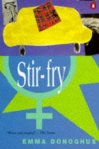
- A teenager who has a job cleaning hotels in Old Soul by Susan Barker and I Am, I Am, I Am by Maggie O’Farrell. (In Stir-Fry by Emma Donoghue, Maria is also a teenaged cleaner, but of office buildings.)
- A vacuum cleaner bag splits in Stir-Fry by Emma Donoghue and one story of Are You Happy? by Lori Ostlund – in the latter it’s deliberate, searching for evidence of the character’s late son after cleaning his room.

- An ailing tree or trees that have to be cut down in one story of The Accidentals by Guadalupe Nettel and The Lost Trees of Willow Avenue by Mike Tidwell.
- Buchenwald was mentioned in one poem each in A God at the Door by Tishani Doshi and The Ghost Orchid by Michael Longley.
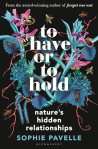
- A reference to Robin Wall Kimmerer’s Braiding Sweetgrass in To Have or to Hold by Sophie Pavelle and Human/Animal by Amie Souza Reilly.

- A mentally unwell woman deliberately burns her hands in I Am Clarence by Elaine Kraf and Every Day Is Mother’s Day by Hilary Mantel.
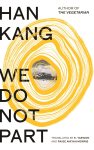
- A mention of the pollution caused by gas stoves in We Do Not Part by Han Kang and The Lost Trees of Willow Avenue by Mike Tidwell.
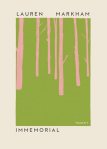
- An art installation involving part-buried trees was mentioned in Immemorial by Lauren Markham and then I encountered a similar project a few months later in We Do Not Part by Han Kang. Burying trees as a method of carbon storage is then discussed in The Lost Trees of Willow Avenue by Mike Tidwell.

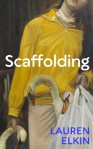
- Imagining the lives of the people living in an apartment you didn’t end up renting in Scaffolding by Lauren Elkin and one story of The Accidentals by Guadalupe Nettel.
- The Anthropocene is mentioned in Scaffolding by Lauren Elkin and The Alternatives by Caoilinn Hughes.
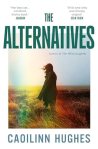
- I was reading three debut novels from the McKitterick Prize longlist at the same time, all of them with very similar page counts of 383, 387, and 389 (i.e., too long!).
- Being appalled at an institutionalized mother’s appearance in The End Is the Beginning by Jill Bialosky and Every Day Is Mother’s Day by Hilary Mantel.
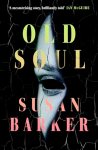 A remote artist’s studio and severed fingers in Old Soul by Susan Barker and We Do Not Part by Han Kang.
- A lesbian couple in New Mexico, the experience of being watched through a window, and the mention of a caftan/kaftan, in Old Soul by Susan Barker and one story of Are You Happy? by Lori Ostlund.
- Refusal to go to a hospital despite being in critical condition in I Am, I Am, I Am by Maggie O’Farrell and one story of Are You Happy? by Lori Ostlund.
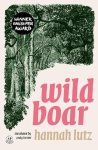
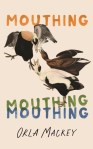
- It’s not a niche stylistic decision anymore; I was reading four novels with no speech marks at the same time: Old Soul by Susan Barker, Scaffolding by Lauren Elkin, The Alternatives by Caoilinn Hughes, and We Do Not Part by Han Kang. [And then, a bit later, three more: Wild Boar by Hannah Lutz, Mouthing by Orla Mackey, and How to Be Somebody Else by Miranda Pountney.]
 A lesbian couple is alarmed by the one partner’s family keeping guns in Spent by Alison Bechdel and one story of Are You Happy? by Lori Ostlund.
- Responding to the 2021 murder of eight Asian spa workers in Atlanta in Foreign Fruit by Katie Goh and Find Me as the Creature I Am by Emily Jungmin Yoon.
- Disposing of a late father’s soiled mattress in Mouthing by Orla Mackey and one story of Are You Happy? by Lori Ostlund.
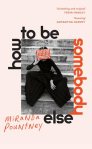 New York City tourist slogans in Apple of My Eye by Helene Hanff and How to Be Somebody Else by Miranda Pountney.
- A Jewish care home for the elderly in The End Is the Beginning by Jill Bialosky and Joanna Rakoff’s essay in What My Father and I Don’t Talk About (ed. Michele Filgate).
- A woman has no memory between leaving a bar and first hooking up with the man she’s having an affair with in If You Love It, Let It Kill You by Hannah Pittard and How to Be Somebody Else by Miranda Pountney.
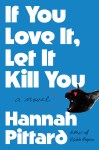 A stalker-ish writing student who submits an essay to his professor that seems inappropriately personal about her in one story of Are You Happy? by Lori Ostlund and If You Love It, Let It Kill You by Hannah Pittard.
- A pygmy goat as a pet (and a one-syllable, five-letter S title!) in Spent by Alison Bechdel and Sleep by Honor Jones.
- A Brooklyn setting and thirtysomething female protagonist in Sleep by Honor Jones, So Happy for You by Celia Laskey, and How to Be Somebody Else by Miranda Pountney.
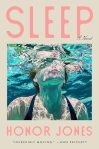
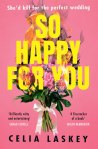
- A mention of the American Girl historical dolls franchise in Sleep by Honor Jones and If You Love It, Let It Kill You by Hannah Pittard, both of which I’m reviewing early for Shelf Awareness.
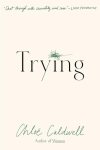 A writing professor knows she’s a hypocrite for telling her students what (not) to do and then (not) doing it herself in Trying by Chloé Caldwell and If You Love It, Let It Kill You by Hannah Pittard. These two books also involve a partner named B (or Bruce), metafiction, porch drinks with parents, and the observation that a random statement sounds like a book title.
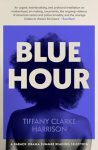
- The protagonist’s therapist asks her to find more precise words for her feelings in Blue Hour by Tiffany Clarke Harrison and So Happy for You by Celia Laskey.
- The protagonist “talks” with a dying dog or cat in The Möbius Book by Catherine Lacey and If You Love It, Let It Kill You by Hannah Pittard.
 Shalimar perfume is mentioned in Scaffolding by Lauren Elkin and Chopping Onions on My Heart by Samantha Ellis.
- The Rapunzel fairytale is a point of reference in In the Evening, We’ll Dance by Anne-Marie Erickson and Secret Agent Man by Margot Singer, both of which I was reading early for Foreword Reviews.
What’s the weirdest reading coincidence you’ve had lately?
Finishing 20 Books of Summer: The Anthropocene Reviewed by John Green
The final choice for my colour-themed 20 Books of Summer, a terrific essay collection about the best and worst of the modern human experience, also happened to be the only one where the colour was part of the author’s name rather than the book’s title. I also have a bonus rainbow-covered read and a look back at the highlights of my summer reading.
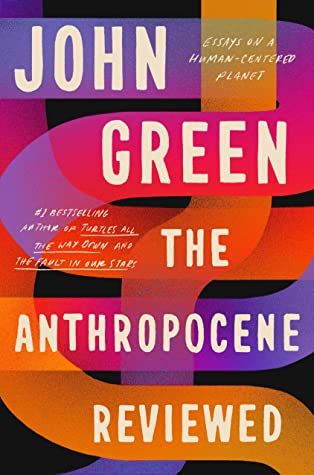
The Anthropocene Reviewed: Essays on a Human-Centered Planet by John Green (2021)
(20 Books of Summer, #20) How Have You Enjoyed the Anthropocene So Far? That’s the literal translation of the book’s German title, but also a tidy summary of its approach. John Green is not only a YA author but also a new media star – he and his brother Hank are popular vlogging co-hosts, and this book arose from a podcast of the same name. Some of the essays first appeared on his various video projects, too. In about 5–10 pages, he takes a phenomenon experienced in the modern age, whether miraculous (sunsets, the Lascaux cave paintings, favourite films or songs), regrettable (Staph infections, CNN, our obsession with grass lawns), or just plain weird, and riffs on it, exploring its backstory, cultural manifestations and personal resonance.
Indeed, the essays reveal a lot about Green himself. I didn’t know of his struggles with anxiety and depression. “Harvey,” one of the standout essays, is about a breakdown he had in his early twenties when living in Chicago and working for Booklist magazine. His boss told him to take as much time as he needed, and urged him to watch Harvey, the Jimmy Stewart film about a man with an imaginary friend that happens to be a six-foot rabbit. It was the perfect prescription. In “Auld Lang Syne,” Green toggles between the history of the song and a friendship from his own old times, with an author and mentor who has since died. “Googling Strangers” prides itself on a very 21st-century skill by which he discovers that a critically injured boy from his time as a student chaplain at a children’s hospital lived to adulthood.
Green is well aware of the state of things: “Humans are already an ecological catastrophe … for many forms of life, humanity is the apocalypse.” He plays up the contradictions in everyday objects: air-conditioning is an environmental disaster, yet makes everyday life tolerable in vast swathes of the USA; Canada geese are still, to many, a symbol of wildness, but are almost frighteningly ubiquitous – one of the winners in the species roulette we’ve initiated. And although he’s clued in, he knows that in many respects he’s still living as if the world isn’t falling apart. “In the daily grind of a human life, there’s a lawn to mow, soccer practices to drive to, a mortgage to pay. And so I go on living the way I feel like people always have.” A sentiment that rings true for many of us: despite the background dread about where everything is headed, we just have to get on with our day-to-day obligations, right?
Although he’s from Indianapolis, a not particularly well regarded city of the Midwest, Green is far from the conservative, insular stereotype of that region. There are pockets of liberal, hipster culture all across the Midwest, in fact, and while he does joke about Indy in the vein of “well, you’ve gotta live somewhere,” it’s clear that he’s come to love the place – enough to set climactic scenes from two of his novels there. However, he’s also cosmopolitan enough – he’s a Liverpool FC fan, and one essay is set on a trip to Iceland – to be able to see America’s faults (which, to an extent, are shared by many Western countries) of greed and militarism and gluttony and more.
In any book like this, one might quibble with the particular items selected. I mostly skipped over the handful of pieces on sports and video games, for instance. But even when the phenomena were completely unknown to me, I was still tickled by Green’s take. For example, here he is rhapsodizing on Diet Dr Pepper: “Look at what humans can do! They can make ice-cold, sugary-sweet, zero-calorie soda that tastes like everything and also like nothing.” He veers between the funny and the heartfelt: “I want to be earnest, even if it’s embarrassing.”
Each essay closes with a star rating. What value does a numerical assessment have when he’s making such apples-and-oranges comparisons (a sporting performance vs. sycamore trees vs. hot dog eating contests)? Not all that much. (Of course, some might make that very argument about rating books, but I persist!) At first I thought the setup was a silly gimmick, but since reviewing anything and everything on Amazon/TripAdvisor/wherever is as much a characteristic of our era as everything he’s writing about, why not? Calamities get 1–1.5 stars, things that seemed good but have turned out to be mixed blessings might get 2–3 stars, and whatever he unabashedly loves gets 4.5–5 stars.
As Green astutely remarks, “when people write reviews, they are really writing a kind of memoir—here’s what my experience was.” So, because I found a lot that resonated with me and a lot that made me laugh, and admired his openness on mental health à la Matt Haig, but also found the choices random such that a few essays didn’t interest me and the whole doesn’t necessarily build a cohesive argument, I give The Anthropocene Reviewed four stars. I’d only ever read The Fault in Our Stars, one of the first YA books I loved, so this was a good reminder to try more of Green’s fiction soon.
(Public library) 
Initially, I thought I might struggle to find 20 appealing colour-associated books, so I gave myself latitude to include books with different coloured covers. As it happens, I didn’t have to resort to choosing by cover, but I’ve thrown in this rainbow cover as an extra.
Songs in Ursa Major by Emma Brodie (2021)
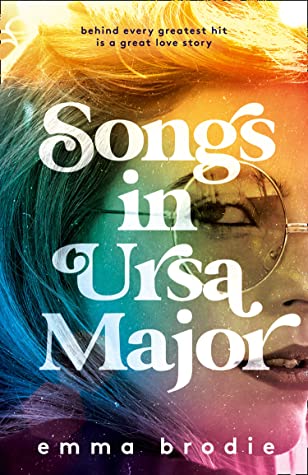 A Daisy Jones and the Six wannabe for sure, and a fun enough summer read even though the writing doesn’t nearly live up to Reid’s. Set largely between 1969 and 1971, the novel stars Jane Quinn, who lives on New England’s Bayleen Island with her aunt, grandmother and cousin – her aspiring singer mother having disappeared when Jane was nine. Nursing and bartending keep Jane going while she tries to make her name with her band, the Breakers. Aunt Grace, also a nurse, cares for local folk rocker Jesse Reid during his convalescence from a motorcycle accident. He then invites the Breakers to open for him on his tour and he and Jane embark on a turbulent affair. After Jane splits from both Jesse and the Breakers, she shrugs off her sexist producer and pours her soul into landmark album Songs in Ursa Major. (I got the Sufjan Stevens song “Ursa Major” in my head nearly every time I picked this up.)
There are some soap opera twists and turns to the plot, and I would say the novel is at least 100 pages too long, with an unnecessary interlude on a Greek island. Everyone loves a good sex, drugs and rock ’n roll tale, but here the sex scenes were kind of cringey, and the lyrics and descriptions of musical styles seemed laboured. Also, I thought from the beginning that the novel could use the intimacy of a first-person narrator, but late on realized it had to be in the third person to conceal a secret of Jane’s – which ended up feeling like a trick. There are also a few potential anachronisms (e.g. I found myself googling “how much did a pitcher of beer cost in 1969?”) that took me out of the period. Brodie is a debut novelist who has worked in book publishing in the USA for a decade. Her Instagram has a photo of her reading Daisy Jones and the Six in March 2019! That and the shout-out to Mandy Moore, of all the musical inspirations, in her acknowledgments, had me seriously doubting her bona fides to write this story. Maybe take it as a beach read if you aren’t too picky.
(Twitter giveaway win) 

Looking back, my favourite read from this project was Nothing but Blue Sky by Kathleen MacMahon, closely followed by the novels Under the Blue by Oana Aristide and Ruby by Ann Hood, the essay collection The Anthropocene Reviewed by John Green (above), the travel book The Glitter in the Green by Jon Dunn, and the memoirs Darkness Visible by William Styron and Direct Red by Gabriel Weston. A varied and mostly great selection, all told! I read six books from the library and the rest from my shelves. Maybe next year I’ll not pick a theme but allow myself completely free choice – so long as they’re all books I own.
What was the highlight of your summer reading?
Recent BookBrowse & Shiny New Books Reviews, and Book Club Ado
Excerpts from and links to some of my recent online writing for other places:
BookBrowse
Three O’Clock in the Morning by Gianrico Carofiglio
 The quotation that gives Carofiglio’s tender novel its title is from F. Scott Fitzgerald’s The Crack-Up: “In a real dark night of the soul it is always three o’clock in the morning.” It lends an appropriate sense of time suspended, of earnest seeking and extreme circumstances: The main action of the book takes place over just a few days in June of 1983, when Italian teenager Antonio and his father are stranded in Marseilles while there for Antonio to be seen by an epilepsy specialist. The gift of this time outside of time allows them to get to know each other better, such that the memory of the trip will be precious to Antonio even decades later. I appreciated how the limited setting heightened this short novel’s emotions. Carofiglio invites readers to peer between the leisurely progression of events to see the bond that is being formed. (See my full review at BookBrowse. See also my related article on HarperVia, a new publishing imprint for international literature.)
The Dictionary of Lost Words by Pip Williams
 Inspired by the composition of the Oxford English Dictionary, this Australian debut novel explores the lives of the women on its fringes through the words that were omitted. The suffrage movement and World War I loom large as the storyline enters the 1910s. I most appreciated the relationships Esme has with the various women in her life. The main action spans the 40 years of the original composition of the OED. That scope means there is a lot of skipping forward in time. Especially in the first half, I longed for the narrative to slow down so I could spend more time with this character. Despite the first-person narration, I never felt I knew Esme very well. Women’s bonds and women’s words are strong themes in this forthrightly feminist novel that, despite its flaws, would make a great book club selection. (See my full review at BookBrowse. See also my reading list of books about dictionaries and lost words.)
Shiny New Books
Notes from Deep Time: The Hidden Stories of the Earth Beneath Our Feet by Helen Gordon
 To assess the place of humanity, we can look back to prehistory, but also forward to envision the “deep future.” (It was only in a late chapter on nuclear waste disposal sites and warning messages to the future that I found too much direct overlap with Footprints by David Farrier.) This engagingly blends both tactics, surveying the fields of geology and palaeontology and pondering the future traces of the Anthropocene. I most enjoyed the middle chapters, in which science meets wildlife and cultural studies. For instance, a chapter on ammonites leads into a profile of Mary Anning and the history of both fossil hunting and women in STEM careers. The prose is well pitched to the layman’s level. Interviews, travels, and snapshots from her own life generally keep the material from becoming too dry. An invigorating interdisciplinary tour. (See my full review at Shiny New Books.)
My book club has been meeting via Zoom since April 2020. This is a common state of affairs for book clubs around the world. Especially since we have 12 members (if everyone attends, which is rare), we haven’t been able to contemplate meeting in person as of yet. However, a subset of us meet midway between the monthly reads to discuss women’s classics like Marge Piercy’s Woman on the Edge of Time. For next week’s meeting on Mrs. Dalloway, we are going to attempt a six-person get-together in one member’s house.
 Anyway, a neat thing we did last month was a Zoom chat with the author: a BBC correspondent who happens to be the brother of one of our members. If you’re a news junkie in the UK, you may know the name Jon Sopel, though since I don’t have a telly or ever listen to radio, I hadn’t encountered him until this “in-person” meet-up. He has been the BBC’s North America Editor since 2014.
UnPresidented is the third book he wrote over the course of the Trump presidency. It started off as a diary of the 2020 election campaign, beginning in July 2019, but of course soon morphed into something slightly different: a chronicle of life in D.C. and London during Covid-19 and a record of the Trump mishandling of the pandemic. But as well as a farcical election process and a public health crisis, 2020’s perfect storm also included economic collapse and social upheaval – thanks to the murder of George Floyd and the subsequent Black Lives Matter protests worldwide plus isolated rioting.
UnPresidented served as a good reminder for me of the timeline of events and the full catalogue of outrages committed by Trump and his cronies. You just have to shake your head over the litany of ridiculous things he said and did, and got away with – any one of which might have sunk another president or candidate. The style is breezy and off-the-cuff, so the book reads quickly. There’s a good balance between world events and personal ones, with his family split across the UK and Australia. I appreciated the insight into differences from the British system. I thought it would be depressing reading back through the events of 2020, but for the most part the knowledge that everything turned out “right” allowed me to see the humour in it. Still, I found it excruciating reading about the four days following the election.

Sopel kindly gave us an hour of his time one Wednesday evening before he had to go on air and answered our questions about Biden, Harris, journalistic ethics, and more. He was charming and eloquent, as befits his profession.
Would any of these books interest you?
Thinking about the Future with David Farrier & Roman Krznaric (Hay Festival)
My last of three digital Hay Festival* talks this year was by Roman Krznaric, a School of Life philosopher with a background in politics and gardening. I discovered him through Greenbelt Festival eight years ago and have since enjoyed several of his books on the topics of empathy, finding purposeful work, and models for living well. His talk on his upcoming book, The Good Ancestor: How to Think Long Term in a Short Term World, was an ideal follow-up to one of the top three 2020 nonfiction works I’ve read so far:
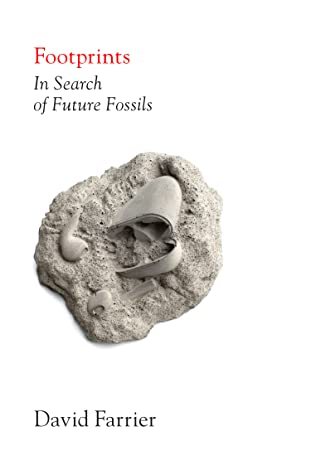
Footprints: In Search of Future Fossils by David Farrier
Look on my Works, ye Mighty, and despair!
Nothing beside remains. Round the decay
Of that colossal Wreck, boundless and bare
The lone and level sands stretch far away.
~from “Ozymandias” by Percy Bysshe Shelley
In May 2013 a set of fossil human footprints was found at Happisburgh in Norfolk. At 850,000 years old, they were the oldest outside of Africa. In the same month, atmospheric CO2 passed 400 ppm for the first time. It’s via such juxtapositions of past and future, and longevity versus precariousness, that Farrier’s book – a sophisticated lattice of human and planetary history, environmental realism and literary echoes – tells the story of the human impact on the Earth.
Unusually, Farrier is not a historian or a climate scientist, but a senior lecturer in English literature at the University of Edinburgh specializing in nature and place writing, especially in relation to the Anthropocene. That humanities focus allowed him to craft a truly unique, interdisciplinary work in which the canon both foreshadows and responds to environmental collapse. On a sabbatical in Australia, he also gets to hold an ice core taken by an icebreaker, swim above coral reefs and visit a uranium mine exempted from protection in a national park.
 He travels not just through space, but also through time, tracing a plastic bottle from algal bloom to oil to factory to river/landfill to ocean; he thinks about how cultural memory can preserve vanished landscapes; he imagines propitiatory rites arising around radioactive waste to explain poisoned lakes and zinc-lined coffins; and he wonders how to issue appropriate warnings to the future when we don’t even know if English, or language in general, will persist (a nuclear waste storage site in Carlsbad uses a combination of multilingual signs, symbols, monoliths and planned oral tradition, while one in Finland is unmarked).
Each chapter is an intricate blend of fact, experience and story. For example, “The Insatiable Road” is about cars and the concrete landscapes they zip through – all made possible by oil. Farrier wins a chance to be among the first to cross the new Forth Bridge on foot and finds himself awed by the human achievement. Yet he knows that, in a car, the bridge will be crossed in seconds and soon taken for granted. Whether as a driver or a passenger, we have become detached from the journey and from the places we are travelling through. The road trip, a standard element of twentieth-century art and literature, has lost its lustre. “Really, we have conceded so much,” he writes. “Most of us live and wander only where road networks permit us to, creeping along their edges and lulled into deafness by their constant roar.” Ben Okri’s legend provides the metaphor of a famished road that swallows all in its path.
What will the human species leave behind? “The entire atmosphere now bears the marks of our passage … Perhaps no one will be around to read our traces, but nonetheless we are, everywhere, constantly, and with the most astonishing profligacy, leaving a legacy that will endure for hundreds of thousands or even hundreds of millions of years to come.” That legacy includes the concrete foundations of massive road networks, the remnants of megacities on coastal plains, plastics that will endure for many centuries, carbon and methane locked up in permafrost, the 2300-km fossil of the dead Great Barrier Reef, nuclear waste in isolation plants, jellyfish-dominated oceans and decimated microbial life.
Thinking long term doesn’t come naturally. In the same way that multiple books of 2019 (Time Song, Surfacing, Underland) helped us think about the place of humanity in reference to deep time, Footprints offers an invaluable window onto the deep future. Its dichotomies of hubris and atonement, and culpability versus indifference, are essential to ponder. It was always going to be sobering to read about how we have damaged our only home, but I never found this to be a needlessly depressing book; it is clear-eyed and forthright, but also meditative and beautifully constructed. Life on the planet continues in spite of our alterations, but all the diminishment was unavoidable, and perhaps some of it is remediable still.
My rating: 
 Related reading: Notes from an Apocalypse by Mark O’Connell. I’m only up to page 36 and at the moment it’s just him watching loads of crackpot preppers’ videos on YouTube, but already I think that Footprints should have had this book’s spot on the Wainwright Prize for Writing on Global Conservation longlist (a new prize run in addition to the standard UK nature writing one) for being more directly engaged with conservation issues rather than just humorously commenting on the end-of-the-world mindset.
Roman Krznaric at Hay Festival
 Krznaric’s discussion of being a “good ancestor” resonated in connection with the long-term thinking of Farrier’s book. “This is the age of the tyranny of the now,” he began, but “humankind has colonized the future” as well, treating it as a tempus nullius where we can dump our ecological waste and tech failures. Yet long-termism is needed more than ever as a way of planning for environmental challenges (and pandemics and the like). Future generations have no say in the decisions we make now that will affect them. To put this in perspective, he showed an image of three spheres, proportionally sized: one represented the 100 billion dead, one was the 7.7 billion currently living, and one was the 6.75 trillion in unborn generations (if the current birth rate continues).
It was Jonas Salk, creator of the polio vaccine, who asked, “Are we being good ancestors?” Krznaric invited the audience to come up with examples (in the chat window on the sidebar) of long-term projects through which people are trying to help future generations, such as the Svalbard Seed Depository, the Green New Deal, the 10,000-Year Clock (inside a mountain in the Texas desert), the Long Play piece of music to last 1,000 years, rewilding, archives and libraries, and tree planting. He had also opened the talk with his own modest contribution: he and his partner ‘gave’ their 11-year-old twins their votes in the latest election.
Krznaric elaborated on four of his book’s six ways of thinking about the future: 1) Rethink human nature by using the “acorn brain” (long-term thinking) rather than the “marshmallow brain” (instant gratification). 2) Embark on projects with long time horizons (“cathedral thinking”). 3) Think in terms of legacies, whether familial or transcendent – leaving a gift to the citizens of the future (e.g. The Future Library of 100 books not published or read until 2114). 4) Create a politics for the future, e.g. the citizen assembly movement.
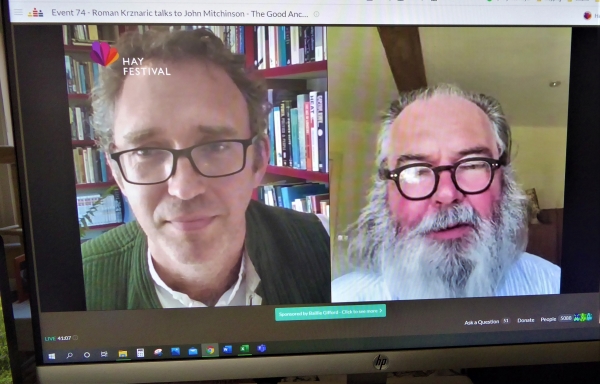
Roman Krznaric at the digital Hay Festival. Q&A led by John Mitchinson (right).
In the case of the UK, Krznaric advocates abolishing the House of Lords, replacing it with a citizens’ assembly and a Minister for the Future, and establishing legal rights for future generations. He noted that globally we’re at a “devil’s fork” where there’s a danger of authoritarian regulations continuing around the world after quarantine ends, endangering the future of social democracy. Instead, we need grassroots activism and “doughnut economics.” He pictures devolution of power away from central governments, with progressive cities becoming new loci of power. Individual actions like vowing not to fly and installing solar panels can inspire peers, but only collective action can tackle environmental breakdown.
 Related reading: I’ll be reviewing Eric Holthaus’s forthcoming book The Future Earth: A Radical Vision for What’s Possible in the Age of Warming for BookBrowse later this month. The meteorologist and science journalist fleshes out some of Krznaric’s ideas, such as a citizen assembly and the cyclical economy, in his proposal for the drastic changes needed over the next three decades.
*You can access the recorded Hay Festival talks by paying a £10 annual subscription here.
 Bookish Beck = Rebecca Foster. American transplant to England. Freelance proofreader and book reviewer.
 Bookish Beck