The Story of My Life by Helen Keller (#NovNov Nonfiction Buddy Read)
For nonfiction week of Novellas in November, our buddy read is The Story of My Life by Helen Keller (1903). You can download the book for free from Project Gutenberg here if you’d still like to join in.

Keller’s story is culturally familiar to us, perhaps from the William Gibson play The Miracle Worker, but I’d never read her own words. She was born in Alabama in 1880; her father had been a captain in the Confederate Army. An illness (presumed to be scarlet fever) left her blind and deaf at the age of 19 months, and she describes herself in those early years as mischievous and hot-tempered, always frustrated at her inability to express herself. The arrival of her teacher, Anne Sullivan, when Helen was six years old transformed her “silent, aimless, dayless life.”
I was fascinated by the glimpses into child development and education. Especially after she learned Braille, Keller loved books, but she believed she learned just as much from nature: “everything that could hum or buzz, or sing, or bloom, had a part in my education.” She loved to sit in the family orchard and would hold insects or fossils and track plant and tadpole growth. Her first trip to the ocean (Chapter 10) was a revelation, and rowing and sailing became two of her chief hobbies, along with cycling and going to the theatre and museums.

Helen Keller with Annie Sullivan. (Public domain, via Wikimedia Commons.)
At age 10 Keller relearned to speak – a more efficient way to communicate than her usual finger-spelling. She spent winters in Boston and eventually attended the Cambridge School for Young Ladies in preparation for starting college at Radcliffe. Her achievements are all the more remarkable when you consider that smell and touch – senses we tend to overlook – were her primary ones. While she used a typewriter to produce schoolwork, a teacher spelling into her hand was still her main way to intake knowledge. Specialist textbooks for mathematics and multiple languages were generally not available in Braille. Digesting a lesson and completing homework thus took her much longer than it did her classmates, but still she felt “impelled … to try my strength by the standards of those who see and hear.”
It was surprising to find, at the center of the book, a detailed account of a case of unwitting plagiarism (Chapter 14). Eleven-year-old Keller wrote a story called “The Frost King” for a beloved teacher at the Perkins Institution for the Blind. He was so pleased that he printed it in one of their publications, but it soon came to his attention that the plot was very similar to “The Frost Fairies” in Birdie and His Friends by Margaret T. Canby. The tale must have been read to Keller long ago but become so deeply buried in the compost of a mind’s memories that she couldn’t recall its source. Some accused Keller and Sullivan of conspiring, and this mistrust more than the incident itself cast a shadow over her life for years to come. I was impressed by Keller discussing in depth something that it would surely have been more comfortable to bury. (I’ve sometimes had the passing thought that if I wrote a memoir I would structure it around my regrets or most embarrassing moments. Would that be penance or masochism?)
This short memoir was first serialized in the Ladies’ Home Journal. Keller was only 23 and partway through her college degree at the time of publication. An initial chronological structure later turns more thematic and the topics are perhaps a little scattershot. I would attribute this, at least in part, to the method of composition: it would be difficult to make large-scale edits on a manuscript because everything she typed had to be spelled back to her for approval. Minor line edits would be easy enough, but not big structural changes. (I wonder if it’s similar with work that’s been dictated, like May Sarton’s later journals.)

Helen Keller in graduation cap and gown. (PPOC, Library of Congress. Public domain, via Wikimedia Commons.)
Keller went on to write 12 more books. It would be interesting to follow up with another one to learn about her travels and philanthropic work. For insight into a different aspect of her life – bearing in mind that it’s fiction – I recommend Helen Keller in Love by Rosie Sultan. In a couple of places Keller mentions Laura Bridgman, her less famous predecessor in the deaf–blind community; Kimberly Elkins’ 2014 What Is Visible is a stunning novel about Bridgman.
For such a concise book – running to just 75 pages in my Dover Thrift Editions paperback – this packs in so much. Indeed, I’ve found more to talk about in this review than I might have expected. The elements that most intrigued me were her early learning about abstractions like love and thought, and her enthusiastic rundown of her favorite books: “In a word, literature is my Utopia. Here I am not disenfranchised. No barrier of the senses shuts me out from the sweet, gracious discourse of my book-friends.”
It’s possible some readers will find her writing style old-fashioned. It would be hard to forget you’re reading a work from nearly 120 years ago, given the sentimentality and religious metaphors. But the book moves briskly between anecdotes, with no filler. I remained absorbed in Keller’s story throughout, and so admired her determination to obtain a quality education. I know we’re not supposed to refer to disabled authors’ work as “inspirational,” so instead I’ll call it both humbling and invigorating – a reminder of my privilege and of the force of the human will. (Secondhand purchase, Barter Books) 
Also reviewed by:
Keep in touch via Twitter (@bookishbeck / @cathy746books) and Instagram (@bookishbeck / @cathy_746books). We’ll add any of your review links in to our master posts. Feel free to use the terrific feature image Cathy made and don’t forget the hashtag #NovNov.
Finishing Off the Barbellion Prize Shortlist: Sam Mills and Dr Amit Patel
The Barbellion Prize 2020 will be awarded tomorrow “to an author whose work has best represented the experience of chronic illness and/or disability.” (See also my reviews of Golem Girl by Riva Lehrer and Sanatorium by Abi Palmer.)
These two memoirs, though very different outwardly, both draw attention to the practical and emotional challenges of life with disability or a mental illness, and call for compassion from individuals and a commitment to help from governing bodies.
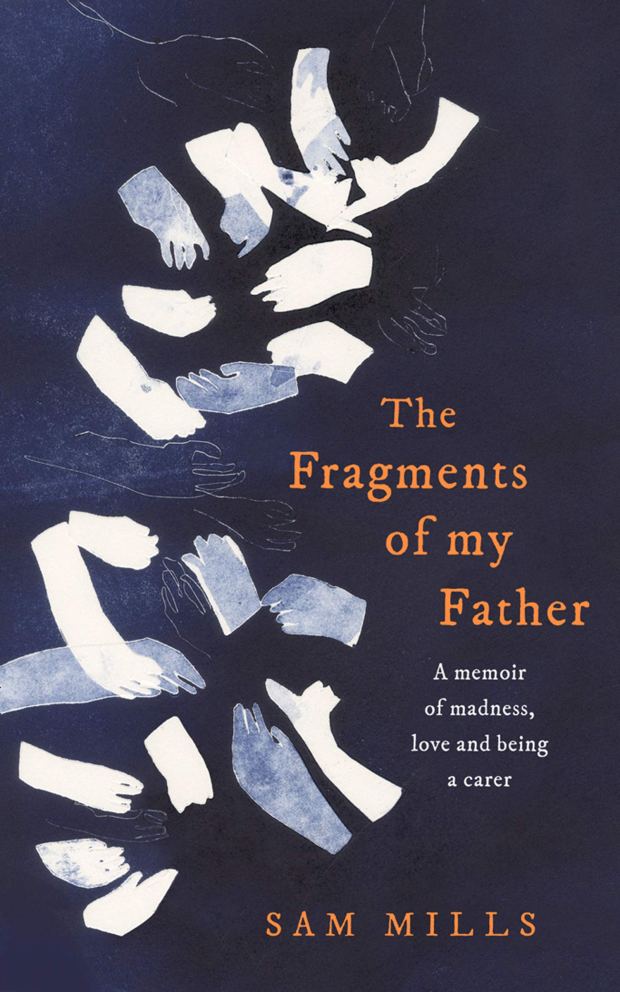
The Fragments of My Father: A memoir of madness, love and being a carer by Sam Mills
One in eight people in the UK cares for an ill or disabled relative. Sam Mills has been a carer for a parent – not once, but twice. The first time was for her mother, who had kidney cancer that spread to her lungs and died one Christmas. A few years later, Mills’s father, Edward, who has paranoid schizophrenia, started having catatonic episodes, as with the incident she opens her memoir on. In 2016, on what would have been her mother’s 70th birthday, Edward locked himself in the toilet of the family home in Surrey. Her brother had to break in with a screwdriver and ambulance staff took him away to a hospital. It wasn’t the first time he’d been institutionalized for a mental health crisis, nor would it be the last. It was always excruciating to decide whether he was better off at home or sectioned on a ward.
Mills darts between past and present as she contrasts her father’s recent condition with earlier points in their family life. She only learned about his diagnosis from her mother when, at age 14, she saw him walk down the stairs naked and then cry when he burned the chips. While schizophrenia can have a genetic element, relatives of a schizophrenic are also more likely to be high achievers. So, although Mills went through a time of suicidal depression as a teenager, meditation got her through and she exhibits more of the positive traits: An author of six books and founder of the small press Dodo Ink, she is creative and driven. Still, being her father’s full-time carer with few breaks often leaves her exhausted and overwhelmed.
The book’s two main points of reference are Leonard Woolf and F. Scott Fitzgerald, who cared for mentally ill wives and had to make difficult choices about their treatment and housing. In a nutshell, Mills concludes that Woolf was a good carer while Fitzgerald was a terrible one. Leonard was excused World War I service due to his nervous exhaustion from being a carer, and he gave up on the idea of children when doctors said that motherhood would be disastrous for Virginia. Virginia herself absolved Leonard in her suicide note, reassuring him that no couple could have been happier and that no one could have looked after her better. Scott, on the other hand, couldn’t cope with Zelda’s unpredictable behaviour – not least because of his own alcoholism – so had her locked up in expensive yet neglectful institutions and censored her work when it came too close to overlapping with his own plots.
The Fragments of My Father brings together a lot of my favourite topics to read about: grief, physical and mental illness, and literary biography. It had already been on my wish list since I first heard about it last year, but I’m glad the Barbellion Prize shortlisting gave me a chance to read it. It helps to have an interest in the Fitzgeralds and Woolfs – though in my case I had read a bit too extensively about them for this strand to feel fully fresh. (I also had a ‘TMI’ response to some revelations about the author’s relationships and sex life.)
Ultimately, I most appreciated the information on being a carer, including the mental burden and the financial and social resources available. (Although there is a government allowance for carers, Mills wasn’t eligible because of her freelance earnings, so she had to apply for Society of Authors grants instead.) With caring so common, especially for women, we need a safety net in place for all whose earnings and relationships will be affected by family duties. I read this with an eye to the future, knowing there’s every possibility that one day I’ll be a carer for a parent(-in-law) or spouse.
Readalikes I have also reviewed:
- Labours of Love: The Crisis of Care by Madeleine Bunting
- All the Lives We Ever Lived: Seeking Solace in Virginia Woolf by Katharine Smyth
Favorite lines:
“had I ever made a conscious choice? Caring felt like something that was happening to me, as though my father’s illness had been an eruption that had flowed like lava over my life. … I can’t think of any other job where someone defines your role by conferring its title on you, as though they are holding out a mould that you must fill.”
“caring is rarely simple because its nature is not static. It creates routines, crafts the days into set shapes, lulls you into states of false security, and then mutates, slaps you with fresh challenges, leaves you lost just when you feel you have gained wisdom.”
With thanks to Fourth Estate for the free copy for review.
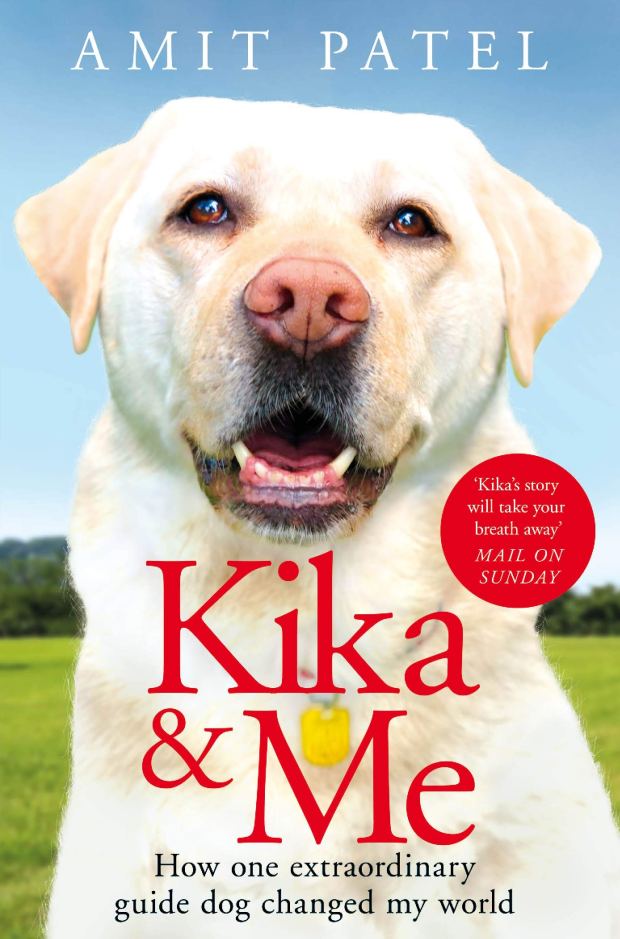
Kika & Me: How one extraordinary guide dog changed my world by Dr Amit Patel with Chris Manby
Dr Patel grew up in Guildford, studied medicine at Cambridge, and specialised in trauma medicine as a junior doctor in London. Diagnosed with keratocornus, which changes the shape of the cornea (it affects 1 in 450), he required first special contact lenses and then a series of cornea transplants. By the time of his eighth transplant, he’d remortgaged his house to pay an American specialist. Meeting and marrying Seema was a time of brightness before, in November 2013, he completely lost his vision within 36 hours. Blindness meant that he could no longer do his job, and constant eye pain and inactivity exacerbated his depression. While white cane and Braille training, plus the Royal National Institute of Blind People’s “Living with Sight Loss” course, started to boost his independence, it was being paired with his guide dog, Kika the Labrador, in 2015 that truly gave Patel his life back.
Trying out guide dogs sounds a little bit like speed dating. The Guide Dogs for the Blind Association (founded in the UK in 1931) warned that Kika was a “Marmite dog,” moody and likely to push boundaries; there was no guarantee she and Patel would get along. But from the start Kika was just right for him. More than once, what seemed like her pure stubbornness – lying on his feet and refusing to move – kept him from dangerous situations, like getting trapped between a busy road and a building site on an unfamiliar route. After a 10-day core skills training course, during which man and dog stayed at a hotel together, Kika was ready to join them at home. In the days to come, she would learn all Patel’s usual routes around their neighbourhood and into the City – with the help of smears of mackerel pâté.
If you’re like me, you’ll be most curious to learn about the nitty-gritty of life for a visually impaired person. I loved hearing about how Patel practiced his Braille letters with an egg container and ping pong balls. Since he went blind, he and his wife have had two children, and with Kika’s help manoeuvring a baby buggy is no problem. Guide dogs are trained to be predictable, e.g., doing their business in the same spot at the same times so it’s much easier to find and clean up. Some dog training tricks also worked for children, like putting a bell on a Labrador or a toddler to know when they wandered off!
Patel has had some unfortunate experiences since he went blind, particularly on the London Underground: teenagers picking him up and spinning him around on a train platform, busy commuters barging past him and Kika on an escalator, and an impatient woman hitting Kika with her handbag. While Patel doesn’t like being negative on social media, he finds that posting video clips of these incidents raises awareness of the challenges VIPs face. Every time he hits a setback, he uses it as an opportunity. For instance, one Diwali he was excited to visit Neasden Temple, only to be dismayed that they wouldn’t allow Kika inside. Since then, he has worked with temples around the world to improve disability services. He is also involved in London’s “Transport for All” work, and advises companies on access issues.
More so than the rest of the shortlist, Kika & Me is illuminating about daily life with a disability and has a campaigning focus. It’s an easy read, and not just for animal lovers. Judging the book by the cover, I might not have picked it up otherwise, so I’m grateful that the Barbellion put it on my radar. I’m deeply impressed by what Patel has achieved and the positive attitude he maintains. (Kika has her own Twitter account! @Kika_GuideDog)
With thanks to Pan Macmillan for the free copy for review.
(Fellow bloggers John Fish and Jackie Law have also been reading along with the Barbellion Prize shortlist. See their reviews thus far: John—Mills and Palmer; Jackie—Mills and Palmer.)
Next year the Barbellion Prize hopes to award more money, including to all nominated authors. They are accepting submissions for 2021, and are grateful for any Paypal donations via their website (see the page footer). I’ve donated to the cause. Can you help, too?
Five Novellas in Translation
We’re coming to the close of Literature in Translation week of Novellas in November. Cathy and I have both noted that novellas seem more common in other languages, with the work more likely to take on experimental forms. We wondered why this is – do foreign languages and cultures somehow lend themselves to concise storytelling that takes more risks? However, a commenter on a post of Cathy’s suggested that economic realities may have something to do with it: translating short works is faster and cheaper. In a recent blog post, Louise Walters, whose indie publishing imprint is preparing to release its shortest book yet (In the Sweep of the Bay by Cath Barton, 22,000 words), confirms that production and shipping costs are lower for novellas, so she has the chance of recouping her investment.

I’ve gotten to five short translated works this month: three fiction and two nonfiction. (Or should that be four fiction and one nonfiction? With autofiction it’s hard to tell.)
Dependency by Tove Ditlevsen (1971; 2019)
[Translated from the Danish by Michael Favala Goldman]
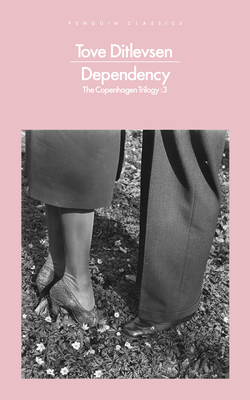 The final volume of the autobiographical Copenhagen Trilogy, after Childhood and Youth. Ditlevsen recalls her upbringing in poverty and her early success as a poet. By the end of the second book, she’s engaged to a much older literary editor. A series of marriages and affairs follows: Viggo, Ebbe, Carl and Victor are the major names, with some others in between. She produces stories and poems as well as a daughter and a son, but also has two abortions. Carl performs one of these and gives her a Demerol shot; ever afterwards, she takes advantage of his obsession with her chronic ear infection to beg for painkiller shots. “Then time ceases to be relevant. An hour could be a year, and a year could be an hour. It all depends on how much is in the syringe.” Addiction interferes with her work and threatens her relationships, but it’s an impulse that never leaves her even when she swaps the harder stuff for alcohol.
I only skimmed this one because from the other volumes I knew how flat and detached the prose is, even when describing desperate circumstances. I can admire this kind of writing – the present-tense scenes, the lack of speech marks, the abrupt jumps between time periods and emotional states, all coldly expressed – but I’m not sure I’ll ever love it. Of the three books, I liked Childhood the best for its universal observations. 
La Symphonie Pastorale by André Gide (1919; 1931)
[Translated from the French by Dorothy Bussy]
“Love is blindness / I don’t want to see” (U2)
 I had a secondhand French copy when I was in high school, always assuming I’d get to a point of fluency where I could read it in its original language. It hung around for years unread and was a victim of the final cull before my parents sold their house. Oh well! There’s always another chance with books. In this case, a copy of this plus another Gide novella turned up at the free bookshop early this year. A country pastor takes Gertrude, the blind 15-year-old niece of a deceased parishioner, into his household and, over the next two years, oversees her education as she learns Braille and plays the organ at the church. He dissuades his son Jacques from falling in love with her, but realizes that he’s been lying to himself about his own motivations. This reminded me of Ethan Frome as well as of other French classics I’ve read (Madame Bovary and Thérèse Raquin). Melodramatic, maybe, but I loved the religious and medical themes (deaf-blind Laura Bridgman gets a mention; when the preacher and Gertrude attend the title symphony, he encourages her synesthetic thinking).
Stammered Songbook: A Mother’s Book of Hours by Erwin Mortier (2011; 2015)
[Translated from the Dutch by Paul Vincent]
 In fragmentary vignettes, some as short as a few lines, Belgian author Mortier chronicles his mother’s Alzheimer’s, which he describes as a “twilight zone between life and death.” His father tries to take care of her at home for as long as possible, but it’s painful for the family to see her walking back and forth between rooms, with no idea of what she’s looking for, and occasionally bursting into tears for no reason. Most distressing for Mortier is her loss of language. As if to compensate, he captures her past and present in elaborate metaphors: “Language has packed its bags and jumped over the railing of the capsizing ship, but there is also another silence … I can no longer hear the music of her soul”. He wishes he could know whether she feels hers is still a life worth living. There are many beautifully meditative passages, some of them laid out almost like poetry, but not much in the way of traditional narrative; it’s a book for reading piecemeal, when you have the fortitude.
Bonjour Tristesse by Françoise Sagan (1954; 1955)
[Translated from the French by Irene Ash]
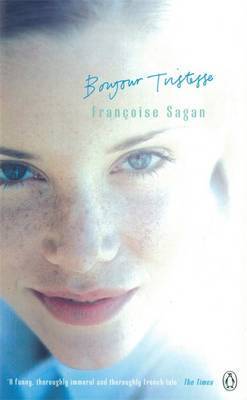 Like The Go-Between and Atonement, this is overlaid with regret about childhood caprice that has unforeseen consequences. That Sagan, like her protagonist, was only a teenager when she wrote it only makes this 98-page story the more impressive. Although her widower father has always enjoyed discreet love affairs, seventeen-year-old Cécile has basked in his undivided attention until, during a holiday on the Riviera, he announces his decision to remarry a friend of her late mother. Over the course of one summer spent discovering the pleasures of the flesh with her boyfriend, Cyril, Cécile also schemes to keep her father to herself. Dripping with sometimes uncomfortable sensuality, this was a sharp and delicious read.
The Order of the Day by Éric Vuillard (2017; 2018)
[Translated from the French by Mark Polizzotti]
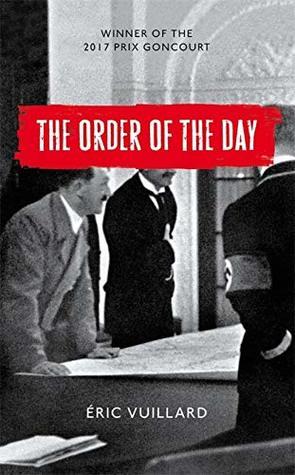 February 1933: 24 German captains of industry meet with Hitler to consider the advantages of a Nazi government. I loved the pomp of the opening chapter: “Through doors obsequiously held open, they stepped from their huge black sedans and paraded in single file … they doffed twenty-four felt hats and uncovered twenty-four bald pates or crowns of white hair.” As the invasion of Austria draws nearer, Vuillard recreates pivotal scenes featuring figures who will one day commit suicide or stand trial for war crimes. Reminiscent in tone and contents of HHhH, The Tobacconist, and the film Downfall, this starts off promisingly and ends with clear relevance to the present moment (“a mysterious respect for lies. Political manoeuvring tramples facts”) and a brilliant final paragraph, but in between was dull. You’d have to have more interest in history than I do to love this Prix Goncourt winner.
Publishers that specialize in novellas in translation:
Charco Press – I’ve reviewed:
 The Wind that Lays Waste by Selva Almada
Fish Soup by Margarita García Robayo
Die, My Love by Ariana Harwicz
Peirene Press – I’ve reviewed:
Mr. Darwin’s Gardener by Kristina Carlson
The Looking-Glass Sisters by Gøhril Gabrielsen
Ankomst by Gøhril Gabrielsen
 Dance by the Canal by Kerstin Hensel
The Last Summer by Ricarda Huch
Snow, Dog, Foot by Claudio Morandini
Her Father’s Daughter by Marie Sizun
The Orange Grove by Larry Tremblay
The Man I Became by Peter Verhelst
A few more favorite novellas in translation:
The Plimsoll Line by Juan Gracia Armendáriz
 Silk by Alessandro Baricco
Agatha by Anne Cathrine Bomann
Swallowing Mercury by Wioletta Greg
Next week, we’re closing out Novellas in November with a focus on short classics. I’ll introduce the week’s theme with some of my favorite examples on Monday.
Any theories as to why so many novellas are from other languages?
What are some of your favorites?
Reviews Roundup, March–April
One of my goals with this blog is to have one convenient place where I can gather together all my writing that has appeared in disparate online locations. To that end, once a month – or maybe more often – I’ll provide links to all the book reviews I’ve published elsewhere, with a short taster and a rating (below) so you can decide whether to click to read more. (A couple of exceptions: I won’t point out my Kirkus Indie or BlueInk reviews since I don’t get a byline.)
BookBrowse
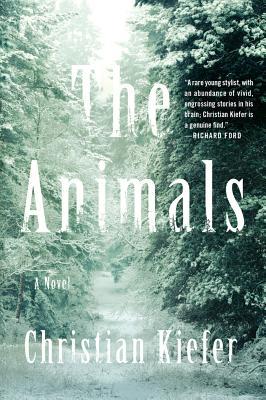 The Animals by Christian Kiefer [BookBrowse is a subscription service, but an excerpt is available for free on the website]: Kiefer’s second novel contrasts wildness and civilization through the story of a man who runs an animal refuge to escape from his criminal past.

The Bookbag
 The Sunlit Night by Rebecca Dinerstein: A debut novel as charming as it is quirky. Two young adults from Brooklyn meet in the far north of Norway, where one is an artist’s apprentice and the other is burying a beloved father. Bittersweet family backstories and burgeoning romance make this a winner.

Beauty and Chaos: Slices and Morsels of Tokyo Life by Michael Pronko (& interview): The pleasant and diverse travel essays in this collection draw on Pronko’s 15 years living in Japan. A long-term resident but still an outsider, he is perfectly placed to notice the many odd and wonderful aspects of Tokyo life.
The Blind Man of Hoy: A True Story by Red Szell: Red Széll started losing his sight at age 19. In 2013 he became the first blind person to climb the Old Man of Hoy, off the Orkney Islands. An inspirational rock-climbing adventure.

 Adeline: A Novel of Virginia Woolf by Norah Vincent: Set in 1925–1941 and focusing on Virginia Woolf’s marriage and later career, this is a remarkable picture of mental illness from the inside. For the depth of its literary reference and psychological insight, this is my favorite novel of 2015 so far.
Nudge
On Immunity: An Inoculation by Eula Biss: This wide-ranging work of nonfiction explores the facts, myths and metaphors of vaccination. Biss powerfully captures the modern phenomenon of feeling simultaneously responsible and powerless.
Chaplin and Company by Mave Fellowes: An aspiring mime buys a London canal boat and finds her father in this debut novel. Fellowes writes good descriptive passages and handles past and present capably. However, I was unsure whether Chaplin and Company overall has much narrative verve. What I will take away is an offbeat, bittersweet coming-of-age story.

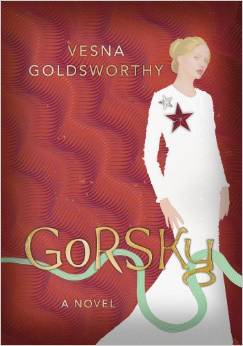 Gorsky by Vesna Goldsworthy: An updated version of The Great Gatsby set amongst contemporary London’s über-rich Russians. The novel is wise about the implications of class and immigration. However, as a whole it doesn’t work as well as some updated classics, such as The Innocents (Francesca Segal). In a sense, Goldsworthy’s literary debt is too obvious.

Quite a Good Time to Be Born: A Memoir, 1935-1975 by David Lodge [more personal musings and an overview of the book’s content]: David Lodge, one of Britain’s most celebrated comic novelists, surveys 40 years of personal and social change.
Better Than Before: Mastering the Habits of Our Everyday Lives by Gretchen Rubin: The author of The Happiness Project returns with a thorough guide to making and breaking habits, offering different strategies for different personality types.
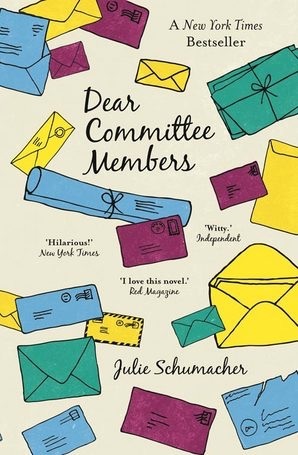 Dear Committee Members by Julie Schumacher: A very funny epistolary novel in the form of letters of recommendation written by a grouchy English professor. English graduates and teachers in particular will get a kick out of this, but I daresay anyone who has ever been fed up with bureaucracy at work will sympathize with Fitger.
The Last Asylum: A Memoir of Madness in Our Time by Barbara Taylor: Taylor was once a mental patient at Friern Hospital. This is an arresting vision of madness from the inside, as well as a history of England’s asylum system.
We Love This Book
 It’s What I Do: A Photographer’s Life of Love and War by Lynsey Addario: Photojournalist Lynsey Addario remembers a decade on the frontline of conflicts in the Middle East and Africa and strives for balance in her work and personal life. Journalists face real danger every day. It’s all here: bombs, car accidents, dehydration, beatings, and sexual assault. Yet all the risks over the years have been worth it “to convey beauty in war.”
Hausfrau by Jill Alexander Essbaum: Essbaum’s arresting debut novel reads like a modern retelling of Madame Bovary, with its main character a desperate housewife in Zurich. As deplorable as Anna’s actions may be, she is an entirely sympathetic tragic heroine. Watch her trajectory with horror but you cannot deny there is a little of Anna in you.
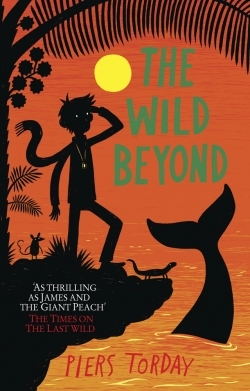 The Wild Beyond by Piers Torday: the suspenseful finale to “The Last Wild,” a fantasy trilogy for younger readers. The environmentalist message is not subtle but it is powerful and should inspire older children. Blending hints of Pullman and Tolkien with up-to-the-minute dystopian themes, this is an inventive take on the classic quest narrative.
The Time in Between: A Memoir of Hunger and Hope by Nancy Tucker: Nancy Tucker suffered from anorexia and bulimia for nearly a decade. Written in an original blend of styles, her eating disorder memoir is wrenching but utterly absorbing. You won’t find epiphanies or happy endings here, just a messy, ongoing recovery process – but 21-year-old Tucker narrates it exquisitely.
Quadrapheme literary magazine
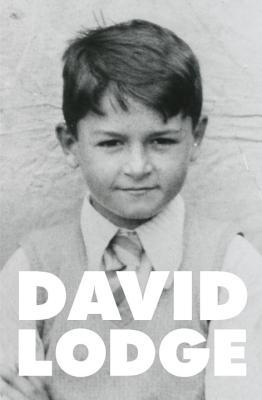 Quite a Good Time to Be Born: A Memoir, 1935-1975 by David Lodge [more of an essay about the context and sociological themes]: Even readers less familiar with Lodge’s work may be interested in the book’s insights into the social changes of post-war Britain. Lodge has not had a conventionally exciting life, and he knows it. From the title onward, his focus is more on his time period than his own uniqueness. He appears as an Everyman who superseded his working-class origins and expectations through hard work and luck.
Shiny New Books
 Reading the World: Confessions of a Literary Explorer by Ann Morgan: Not just another bibliomemoir. A better balance could have been struck between recycled blog content and academic musings on postcolonial literature and censorship. An interest in the politics of literature in translation would be a boon to anyone attempting this.
Foreword Reviews (self-published titles)
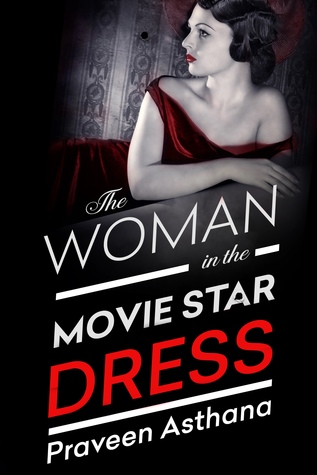 The Woman in the Movie Star Dress by Praveen Asthana: In this carefully plotted novel, a young Native American finds self-assurance and explores her sexuality by trying on the clothing – and personae – of Hollywood actresses. Spirited characters and dialogue make this an enjoyable read for classic film lovers.
Silence by Deborah Lytton: Lytton’s second novel for young adults concerns the unlikely match between a Broadway-bound singer who experiences temporary deafness after an accident and a pianist with a speech impediment and a traumatic past. It is a touching story about the forces that so often threaten us into silence and the struggle to find a voice anyway.
 Woody Allen: Reel to Real by Alex Sheremet: Woody Allen fans will prize this comprehensive, readable rundown of his oeuvre. This is an exhaustive study, ideal for established Allen enthusiasts and film students rather than the average moviegoer looking for an introduction.
I also post reviews of most of my casual reading on Goodreads.
The Mermaid’s Child by Jo Baker: This was Baker’s second novel, originally published in 2004. It doesn’t nearly live up to Longbourn, but it’s a fairly intriguing blend of historical fiction and fantasy. Malin’s father was a ferryman; her absent mother, so he swears, was a mermaid. Curiously timeless and placeless.
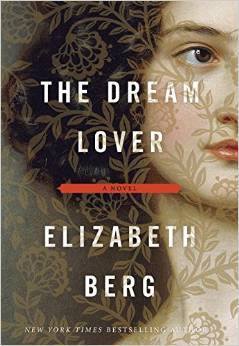 The Dream Lover: A Novel of George Sand by Elizabeth Berg: This historical novel about George Sand is a real slow burner. Berg makes the mistake of trying to be too comprehensive about Sand’s life; it would be better to just choose illustrative vignettes or representative love affairs (e.g. with Chopin) rather than include them all. There are two different timelines, 1831–1876 and 1804–1831, but together they’re still just a chronological slog.
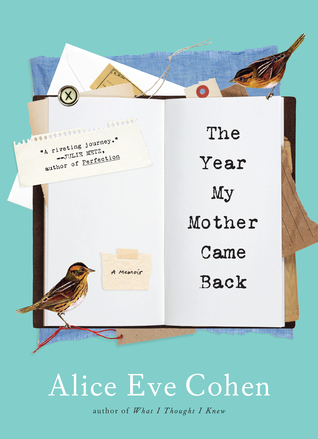 The Year My Mother Came Back by Alice Eve Cohen: There’s some gentle magic realism to this mother-daughter memoir. In the difficult year that forms the kernel of the memoir, Cohen’s younger daughter, Eliana, had a leg-lengthening surgery; her adopted older daughter, Julia, met her birth mother, Zoe; and Cohen herself underwent a lumpectomy and radiation for breast cancer. During radiation sessions, when she had to lie face-down, perfectly still, for 10 minutes at a time, her mother – dead for 20 years – would appear and talk to her.
A Sting in the Tale: My Adventures with Bumblebees by Dave Goulson: A wholly engaging tour through everything we know and are still trying to learn about bumblebees. I saw Goulson, founder of the UK’s Bumblebee Conservation Trust, speak at a nature conference in November and found him to be just as enthusiastic and well-informed in person. His occasional anthropomorphisms are unfailingly endearing.
 Black River by S.M. Hulse: Back in the town of Black River, Montana after his wife’s agonizing death, Wesley Carver must face the trauma he experienced as a prison guard when he was held hostage and tortured during an inmate riot. Now his attacker is up for parole, and Wes plans to attend the hearing and discourage the jury. At first you might think you’re reading a revenge story, but this is something subtler and sweeter than that. (What a shame that Hulse had to go by her initials, rather than Sarah, to be taken seriously in this genre, even though she’s on a level with Philipp Meyer.)
Trumbull Ave. by Michael Lauchlan: I didn’t like this quite as much as the other Made in Michigan books I’ve read, but Lauchlan does a good job of contrasting pastoral and post-industrial views of Detroit through free verse, as in “Detroit Pheasant,” the poem that gives the collection its cover image.
What Ridiculous Things We Could Ask of Each Other by Jeffrey Schultz: I enjoyed these poems set in a seemingly post-apocalyptic urban wasteland. They’re full of black humor, sarcasm and realistically pessimistic views of the American future. They’re very densely structured, usually in complete sentences of free verse.
 Bookish Beck = Rebecca Foster. American transplant to England. Freelance proofreader and book reviewer.
 Bookish Beck