(Goodbye to) Winter Reads by Sylvia Plath (#ReadIndies) & Kathleen Winter
The sunshine, temperatures and flora suggest that spring is here to stay, though I wouldn’t be surprised by a return of the cold and wet in March. We live in the wrong part of the UK for snow lovers; we didn’t get any snow this winter, apart from some early-morning flurries one day when I was fast asleep. My seasonal reading consisted of a lesser-known posthumous poetry collection, a record of a sea voyage past Greenland, and a silly children’s book.
Winter Trees by Sylvia Plath (1971)
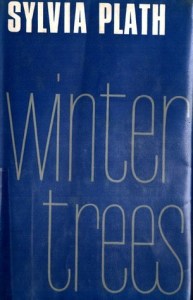 A prefatory note from Ted Hughes explains that these poems “are all out of the batch from which the Ariel poems were more or less arbitrarily chosen and they were all composed in the last nine months of Sylvia Plath’s life.” Ariel is much the stronger collection. There are only 19 poems here; the final one, “Three Women,” is more of a play (subtitled “A Poem for Three Voices”) set on a maternity ward. Motherhood is a central concern throughout. There’s harsh, unpleasant language around womanhood in general. The opening title poem is a marvel of artistic imagery, assonance and internal rhyme, but also contains a metaphor that made me cringe: “Knowing neither abortions nor bitchery, / Truer than women, / They seed so effortlessly!”


That paints motherhood as hard won, as “Childless Woman” reinforces by turning purposeless menstruation into a horror story with its vocabulary of “a child’s shriek” — “Spiderlike” — “Uttering nothing but blood— / Taste it, dark red!” — “My funeral” — “the mouths of corpses”. Plath was certainly ambivalent about babies (“Thalidomide” is particularly frightening) but I bristled at childlessness being linked with living only for oneself. Then again, pretty much everything – men, God, travel, animals – is portrayed negatively here. “Winter Trees” is the single poem I’d anthologize. (University library) 
Published by Faber, so counts for #ReadIndies
Boundless: Adventures in the Northwest Passage by Kathleen Winter (2015)
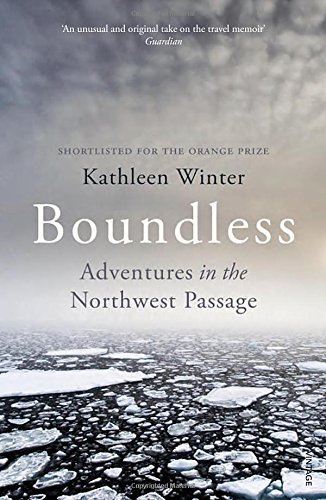 I read this excellent travel book slowly, over most of the winter, including during that surreal period when He Who Shall Not Be Named was threatening to annex Greenland. Winter was invited to be a writer-in-residence aboard an icebreaker travelling through the Northwest Passage, past southwest Greenland and threading between the islands of the Canadian Arctic. She was prepared: a friend had taught her that the only thing to say in these sorts of lucky, unexpected scenarios is “My bags are already packed.” Her ‘getaway bag’ of two pairs of underwear, a T-shirt, a pair of jeans, and a LBD wasn’t exactly Arctic-ready, but she still had a head start. She adds an old concertina and worn hiking boots that resemble “lobes of some mushroom cracked off the bole of an old warrior tree.”
It’s not a long or gruelling trip, so there’s not much of the bellyaching that bores me in trekking books. Winter is interested in everything: birds, folk music, Indigenous arts and crafts, her fellow passengers’ stories, the infamous lost Arctic expeditions, and her family’s history in England and Canada. She collects her scraps of notes in a Ziploc, and that’s what this book is – a grab bag. Winter is enthusiastic yet prioritizes quiet epiphanies about the sacredness of land and creatures over thrills – though their vessel does get stranded on rocks and requires a Coast Guard rescue. It would be interesting to reread her Orange Prize-shortlisted novel about an intersex person, Annabel. (If you hanker to go deeper about Greenland, read This Cold Heaven by Gretel Ehrlich and Miss Smilla’s Feeling for Snow by Peter Høeg.) (Secondhand – Bas Books) 
& A bonus children’s book:
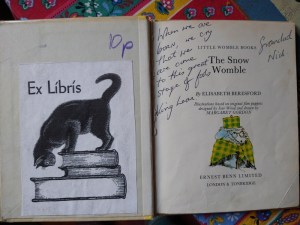
 The Snow Womble by Elisabeth Beresford; illus. Margaret Gordon (1975) – I thought this would be a cute one to read even though I’m unfamiliar with the Wombles. But it’s just a one-note extended joke about the creatures not being able to tell their snowman version of Great-Uncle Bulgaria apart from the real one. The best thing about reading this was the frontispiece’s juxtaposition of elements: the computer-printed bookplate, the nominal secondhand price (withdrawn from London Borough of Sutton Public Libraries), and the wholly inappropriate inscription Grandad Nick chose from King Lear! (Little Free Library)
#DoorstoppersInDecember: Book of Lives by Margaret Atwood & The End of Mr. Y by Scarlett Thomas
Later than intended, I’m reporting back on Margaret Atwood’s memoir, which I started in late November, and a long-neglected 500+-page novel I plucked from my shelves. Both offered page-turning intrigue and a blend of history, magic, and pure weirdness. Many thanks to Laura for hosting Doorstoppers in December, which encouraged me to pick them up!
Book of Lives: A Memoir of Sorts by Margaret Atwood (2025)
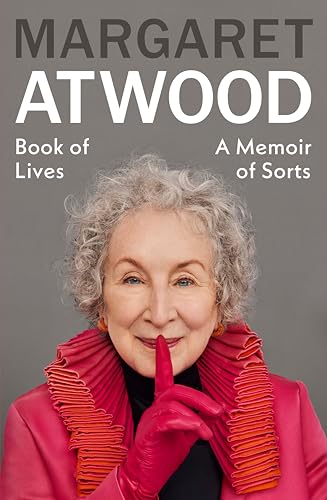 I gave some initial thoughts about the book here to tie in with Margaret Atwood Reading Month. What I said then proved true of the book as a whole: it’s delightful though dense with detail and historical context. I did get a little bogged down in the names and details of decades worth of publishing, but there is some tasty gossip, such as the fact that Margaret Laurence spread mean rumours about her (and was a drunk) but later changed her ways. It’s been a lucky window of time for Atwood to live through: she has known simplicity and the need for do-it-yourself practicality, but has also experienced privilege, even luxury (multiple homes and worldwide travel). Mostly, she had the good fortune of being at the start of Canada’s literary boom. In the early 1960s, only five Canadian novels were published per year. Through her involvement with literary magazines and House of Anansi Press and her books on Susanna Moodie and the tropes of Canadian literature, she helped create the scene.
There are frequent mentions of how people or events made their way into her fiction and poetry. Coyly, she writes, “I just have a teeming imagination. Also, like all novelists, I’m a kleptomaniac.” The page or two of context on each book is illuminating and it never becomes the tedious “I published this book … then I published this book” that she mentioned wanting to avoid in the introduction. Rather, these sections made me want to go reread lots of her books to appreciate them anew. I was also reminded how often she’s been ahead of her time, with topics and details that seem prophetic (she proposed Payback before the financial crisis hit, for instance). Some elements felt particularly timely: she experienced casual misogyny and an alarming number of near-misses – she says things like “I won’t give his name … you know who you are … though you’re probably dead” – and, through her involvement in bird conservation, she’s well aware of the disastrous environmental trajectory we’re on.
For a memoir, this is not especially forthcoming about the author’s inner life and emotions. Where it is, she masks the material in a layer of technique. So when she’s confessing to having an affair while married to Jim Polk (whom she met at Harvard), she writes it like a fairytale scene in which she went into the woods with a wolf. When she was fretting about Graeme Gibson’s reluctance to divorce her first wife and marry her, she imagines letters to her ‘inner advice columnist’. (Note: Gibson was her long-time partner and his sons were like her stepchildren but they never did marry – and he only ‘allowed’ her the one child, though she wanted two of her own. One ‘Jess Gibson’ has a speculative short story collection, The Good Eye, coming out in May 2026. No doubt her work will be compared with her mother’s, but bully for her for not using the name Atwood to try to ride her coattails.)
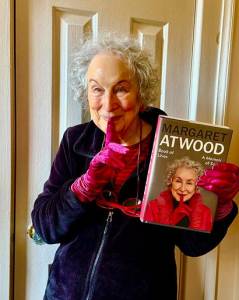
A cute pic from her Substack in November
One of the successful literary touches is the recurring “We Nearly Lose Graeme” segments about his risky behaviour and various mishaps. He had dementia and mini strokes before suffering a major one while in London with her for The Testaments tour; he died five days later. Her reflections on his death are poignant, but generic: “We can all believe three things simultaneously: The person is in the ground. The person is in the Afterlife. The person is in the next room. You keep expecting to see him. Even when you know it’s coming, a death is a shock.” At the crucial moment, she turns to the first-person plural and the second person.
I skimmed some of the bits about Graeme’s earlier life and the behind-the-scenes of publishing; I felt that he and many of her literary pals are more important to her than they are to readers. But that’s okay. The same goes for her earlier life; I noted that the account of her time as a summer camp counsellor felt more detailed than necessary. However, with her gift for storytelling, even the smallest incident can be rendered amusing. She looks for the humour, coincidence, or irony in any situation, and her summations and asides are full of dry humour. Some examples:
- “Spoiler: Jim and I eventually got married, one of the odder things to happen to both of us.”
- “After a while, the hand [at the window of her Harvard student accommodation] went away. It’s what you wish for in a disembodied hand.”
- “Eventually the iguana [inherited from her roommate] was given a new home at a zoo among other iguanas, where it was probably happier. Hard to tell.”
It’s not a book for the casual reader who kinda liked one or two Atwood novels; it’s more for the diehard fans among us, and offers a veritable trove of stories and photographs. But don’t expect a tell-all. Think of this more as a companion to her oeuvre. The title feels literal in that it’s as if she’s lived several lives: the wilderness kid, the literary ingénue, the family and career woman, the philanthropist and elder stateswoman. She doesn’t try to pull all of her incarnations into one, instead leaving all of the threads trailing into the beyond. If anything, “Peggy Nature” (her name from summer camp) is the role that has persisted. I probably liked the childhood material most, which makes sense as it’s what she’s looking back on with most fondness. Towards the close, Atwood mentions her heart condition and seems perfectly accepting of the fact that she won’t be around for much longer. But her body of work will endure. I’m so grateful for it and for the gift of this self-disclosure, however coy. (Can I be greedy and hope for another novel?) She leaves this message: “We scribes and scribblers are time travellers: via the magic page we throw our voices, not only from here to elsewhere, but also from now to a possible future. I’ll see you there.” [570 pages] (Public library) 
The End of Mr. Y by Scarlett Thomas (2006)
 This is a mash-up of the campus novel, the Victorian pastiche, and the time travel adventure. Ariel Manto is a PhD student working on thought experiments. Inciting incidents come thick and fast: her supervisor disappears, the building that houses her office partially collapses as it’s on top of an old railway tunnel, and she finds a copy of Thomas Lumas’s vanishingly rare The End of Mr. Y in a box of mixed antiquarian stock going for £50 at a secondhand bookshop. Rumour has it the book is cursed, and when Ariel realises that the key page – giving a Victorian homoeopathic recipe for entering the “Troposphere,” a dream/thought realm where one travels through time and space – has been excised, she knows the quest has only just begun. It will involve the book within a book, Samuel Butler novels, a theologian and a shrine, lab mice plus the God of Mice, and a train line whose destinations are emotions.
The plot is pretty bonkers and I’m not sure I can satisfactorily explain its internal logic now, but as is true of the best doorstoppers, it absorbed me completely. I read it very quickly (for me) and even read 120 pages in one sitting thanks to my cat pinning me to the sofa. It also felt prescient in discussing “machine consciousness” – a topic adjacent to artificial intelligence. Ariel is a Disaster Woman avant la lettre, living on noodles and cut-price wine. Her current ‘relationship’ consisting of rough sex with a married professor is the latest in a string of unhealthy connections. But time travel offers the possibility not just of reversing her own mistakes, but of going right back to the start of humanity. Verging on steampunk, this was much better than the other Thomas novels I’ve read, The Seed Collectors and Oligarchy. It was longlisted for the Orange (Women’s) Prize and would be a great choice for readers of Nicola Barker and Susanna Clarke. [502 pages] (Secondhand – Book-Cycle, Exeter; it’s been on my shelves since 2016!)
Short Story Catch-Up: Carver, Cunningham, Park, Polders, Racket, Schweblin, Williams (& Heti Stand-Alone)
I actually read 15 collections in total for Short Story September. I’m finally catching up on reviews, though I’m aware that I’ve missed out on Lisa’s link-up. (My other reviews: Heiny, Mackay, McEwan; the BBC National Short Story Award 2025 anthology; Donoghue, Grass, Isherwood, Mansfield as part of my Germany reading.) To keep it simple and get the basics across before I forget any more about these books, I’ll post some shorthand notes under headings.
Cathedral by Raymond Carver (1983)
Why I read it:
- I’d really enjoyed What We Talk about When We Talk about Love.
- This fits into my project to read books from my birth year.
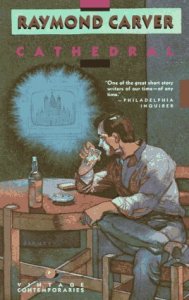 Stats: 12 stories (6 x 1st-person, 6 x 3rd-person)
Themes: alcoholism, adultery, fatherhood, crap jobs, crumbling families
Tone: melancholy, laconic
File under: grit-lit
For fans of: John Cheever, Ernest Hemingway, Denis Johnson
Caveat(s): It doesn’t match What We Talk about When We Talk about Love.
If you read just one story, make it: “A Small, Good Thing”
(University library) 
A Wild Swan and Other Tales by Michael Cunningham (2015)
Why I read it:
- I have a vague plan to read through Cunningham’s whole oeuvre.
- This one is different to his others, and beautifully illustrated by Yuko Shimizu.
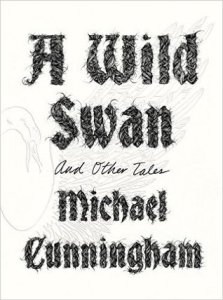 Stats: 11 stories (3 x 2nd-person, 8 x 3rd-person)
Themes: coming of age, longing, loss, bargaining
Tone: witty, knowing
File under: fairy tale updates
For fans of: Margaret Atwood, Neil Gaiman
Caveat(s): For the most part, he doesn’t do anything interesting with the story lines.
If you read just one story, make it: “Little Man” (the Rumpelstiltskin remake)
(Secondhand – Awesomebooks.com)
An Oral History of Atlantis by Ed Park (2025)
Why I read it:
- I’d heard buzz, probably because Park was a Pulitzer Prize finalist for his novel.
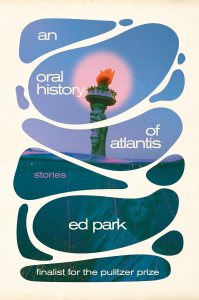 Stats: 16 stories (12 x 1st-person, 1 x 1st-person plural, 1 x 2nd-person, 2 x 3rd-person)
Themes: the Asian American and university experience, writing, translation, aphorisms
Tone: jokey, nostalgic
File under: dystopian fiction, metafiction
For fans of: George Saunders
Caveat(s): There’s more intellectual experimentation than emotional engagement.
If you read just one story, make it: “An Accurate Account”
(Read via NetGalley)
Woman of the Hour by Clare Polders (2025)
Why I read it:
- I always like to sneak at least one flash fiction collection in for this challenge.
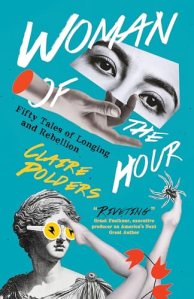 Stats: 50 stories, a mixture of 1st- and 3rd-person
Themes: childhood, sexuality, motherhood, choices vs. fate
Tone: sharp, matter-of-fact
File under: feminist, satire
For fans of: Claire Fuller, Terese Svoboda
Caveat(s): There’s too many stories to keep track of and not enough stand-outs.
If you read just one story, make it: “Woman of the Hour”
(BookSirens)
Racket: New Writing Made in Newfoundland, ed. Lisa Moore (2015)
Why I read it:
- Naomi’s blog always whets my appetite for Atlantic Canadian fiction, but I’m rarely able to find it over here.
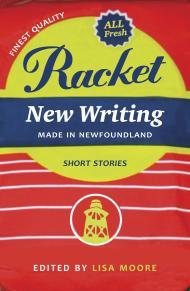 Stats: 11 stories, mostly by Memorial University creative writing graduates (7 x 1st-person, 1 x 2nd-person, 3 x 3rd-person)
Themes: mental health, bereavement, tragic accidents
Tone: jaunty, reflective
File under: voice-y early-2000s lit-fic
For fans of: Sharon Bala (her story is among the best here), Jonathan Safran Foer; hockey
Caveat(s): I wouldn’t say I’m now a fan of any of the writers I hadn’t heard of before.
If you read just one story, make it: “23 Things I Hate in No Particular Order” by Gary Newhook
(Little Free Library)
Good and Evil and Other Stories by Samanta Schweblin (2025)
[Translated from Spanish by Megan McDowell]
Why I read it:
- I thought it would be good to add in another title in translation.
- I’d read Schweblin before (but I wish I’d remembered that I rated Fever Dream 2*.)
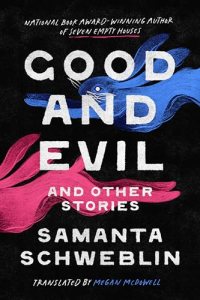 Stats: 6 stories (5 x 1st-person, 1 x 3rd-person)
Themes: near-misses, grief, memory, suicidal ideation
Tone: introspective, jaded
File under: Latin American weirdness (some mild magic realism)
For fans of: Guadalupe Nettel (The Accidentals is very similar but a bit better)
Caveat(s): A couple of the stories are overlong and none of them are particularly memorable.
If you read just one story, make it: “William in the Window”
(Read via NetGalley) 
The Doctor Stories by William Carlos Williams, compiled by Robert Coles (1939)
Why I read it:
- I’m not sure how I came across it; perhaps through another doctor–author such as Gavin Francis or Atul Gawande?
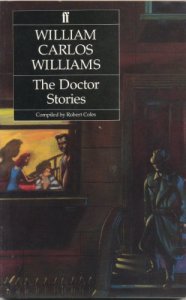 Stats: 14 stories (plus a handful of poems and an autobiographical fragment), all 1st-person
Themes: addiction, childbirth, immigrants, poverty, the randomness of suffering
Tone: hardboiled, dedicated
File under: autofiction, dirty realism
For fans of: Raymond Carver, Gabriel Weston
Caveat(s): The descriptions of immigrants’ appearance/behaviour/speech is not always kind.
If you read just one story, make it: “Old Doc Rivers”
(University library)
And a stand-alone story:
“The St. Alwynn Girls at Sea” by Sheila Heti (New Yorker, 2025)
To my knowledge, this is the only short fiction Heti has published. I’m generally a big fan of her bizarre autofiction – though Pure Colour was a step too far for me – and was fascinated to see on Eleanor’s blog that this is historical fiction, a genre Heti hasn’t attempted before. Or is it historical? The students of a girls’ boarding school have been sent out on a ship for their safety during a conflict. With news of a planned meet-up with a boys’ boat for a talent show and calls to knit socks for soldiers, it seems it must be the Second World War. But then there are references to headphones, Prince and Kurt Vonnegut. So it’s an alternative Cold War fantasy? Or a dystopian future scenario with retro elements? As in Motherhood, the characters appeal to an Oracle (here, a photograph of a departed girl called Audrey) when stymied by confusion. But the actual plot is just girls wanting men to love them – Dani obsesses about Sebastien, with whom she’s exchanging letters; Flora can’t stop thinking about her father’s infidelity – a common Heti theme, but the teenage perspective feels glib, indulgent; it’s YA without the heart or commitment. So I was somewhat aghast to learn this is from Heti’s novel in progress.
Winter Reading, Part II: “Snow” Books by Coleman, Rice & Whittell
Here I am squeaking in on the day before the spring equinox – when it’s predicted to be warmer than Ibiza here in southern England, as headlines have it – with a few snowy reads that have been on my stack for much of the winter. I started reading this trio when we got a dusting back in January, in case (as proved to be true) it was our only snow of the year. I have an arresting work of autofiction that recreates a period of postpartum psychosis, a mildly dystopian novel by a First Nations Canadian, and a snow-lover’s compendium of science and trivia.
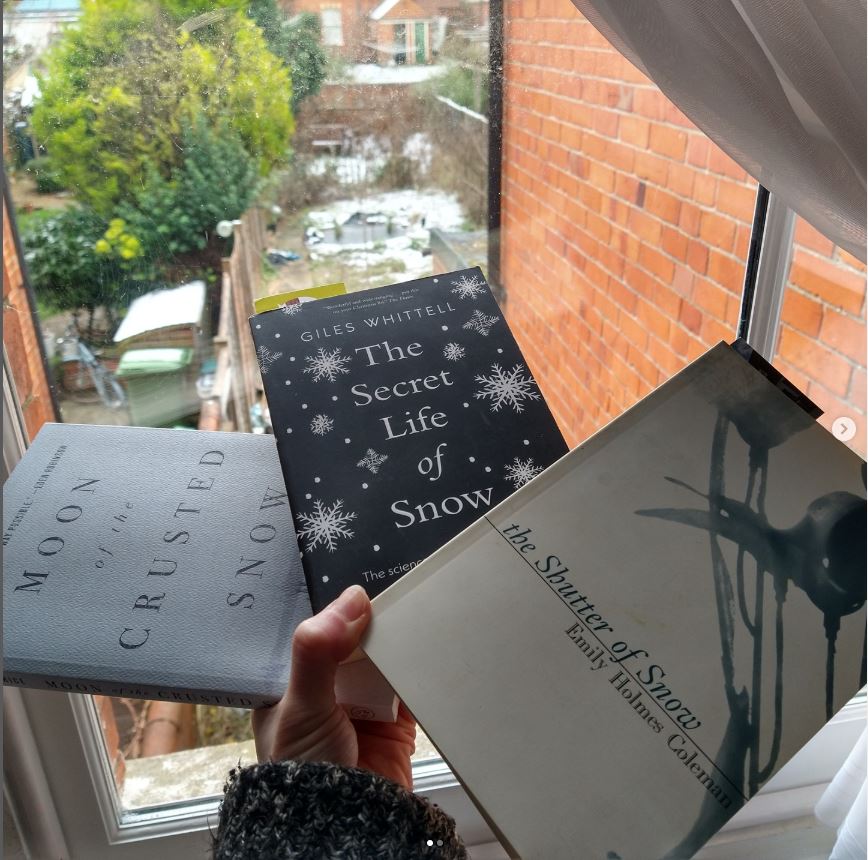
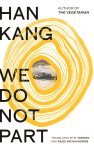 As it happens, I’ll be starting the spring in the middle of We Do Not Part by Han Kang, which is austerely beautiful and eerily snowy: its narrator traverses a blizzard to rescue her friend’s pet bird; and the friend’s mother recalls a village massacre that left piles of snow-covered corpses. Here Kang muses on the power of snow:
Snow had an unreality to it. Was this because of its pace or its beauty? There was an accompanying clarity to snow as well, especially snow, drifting snow. What was and wasn’t important were made distinct. Certain facts became chillingly apparent. Pain, for one.
The Shutter of Snow by Emily Holmes Coleman (1930)
 Coleman (1899–1974), an expatriate American poet, was part of the Paris literary milieu in the 1920s and then the London scene of the 1930s. (She worked with T.S. Eliot on editing Djuna Barnes’s Nightwood, for instance.) This novella, her only published work of fiction, was based on her experience of giving birth to her son in 1924, suffering from puerperal fever and a mental breakdown, and being incarcerated in Rochester State Hospital. Although the portrait of Marthe Gail is in the omniscient third person, the stream-of-consciousness style – no speech marks or apostrophes, minimal punctuation – recalls unreliable first-person narration. Marthe believes she is Jesus Christ. Her husband Christopher visits occasionally, hoping she’ll soon be well enough to come home to their baby. It’s hard to believe this was written a century ago; I could imagine it being published tomorrow. It is absolutely worth rediscovering. While I admired the weird lyrical prose (“in his heart was growing a stern and ruddy pear … He would make of his heart a stolen marrow bone and clutch snow crystals in the night to his liking”; “This earth is made of tar and every morsel is stuck upon it to wither … there were orange peelings lying in the snow”), the interactions between patients, nurses and doctors got tedious. (Secondhand – Community Furniture Project, Newbury)
Moon of the Crusted Snow by Waubgeshig Rice (2018)
 A mysterious total power outage heralds not just the onset of winter or a temporary crisis but the coming of a new era. For this Anishinaabe community, it will require a return to ancient nomadic, hunter-gatherer ways. I was expecting a sinister dystopian; while there are rumours of a more widespread collapse, the focus is on adaptation versus despair, internal resilience versus external threats. Rice reiterates that Indigenous peoples have often had to rebuild their worlds: “Survival had always been an integral part of their culture. It was their history. The skills they needed to persevere in this northern terrain … were proud knowledge held close through the decades of imposed adversity.” As an elder remarks, apocalypse is nothing new. I was more interested in these ideas than in how they played out in the plot. Evan works snow-ploughs until, with food running short and many falling ill, he assumes the grim task of an undertaker. I was a little disappointed that it’s a white interloper breaks their taboos, but it is interesting how he is compared to the mythical windigo in a dream sequence. As short as this novel is, I found it plodding, especially in the first half. It does pick up from that point (and there is a sequel). I was reminded somewhat of Sherman Alexie. It was probably my first book by an Indigenous Canadian, which was reason enough to read it, though I wonder if I would warm more to his short stories. (Birthday gift from my wish list last year)
The Secret Life of Snow: The science and the stories behind nature’s greatest wonder by Giles Whittell (2018)
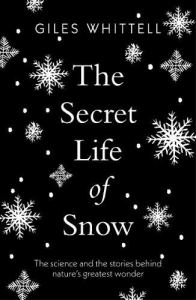 This is so much like The Snow Tourist by Charlie English it was almost uncanny. Whittell, an English journalist who has written history and travel books, is a snow obsessive and hates that, while he may see a few more major snow events in his lifetime, his children probably won’t experience any in their adulthood. Topics in the chatty chapters include historical research into snowflakes, meteorological knowledge then and now and the ongoing challenge of forecasting winter storms, record-breaking snowfalls and the places still most likely to have snow cover, and the depiction of snow in medieval paintings (like English, he zeroes in on Bruegel) and Bond films. There’s a bit too much on skiing for my liking: it keeps popping up in segments on the Olympics, avalanches, and how famous snow spots are reckoning with their uncertain economic future. It’s a fun and accessible book with many an eye-popping statistic, but, coming as it did a decade after English’s, does sound the alarm more shrilly about the future of snow. As in, we’ll get maybe 15 more years (until 2040), before overall warming means it will only fall as rain. “That idea, like death, is hard to think about without losing your bearings, which is why, aware of my cowardice and moral abdication, I prefer to think of the snowy present and recent past rather than of the uncertain future.” (Secondhand – Community Furniture Project, Newbury)
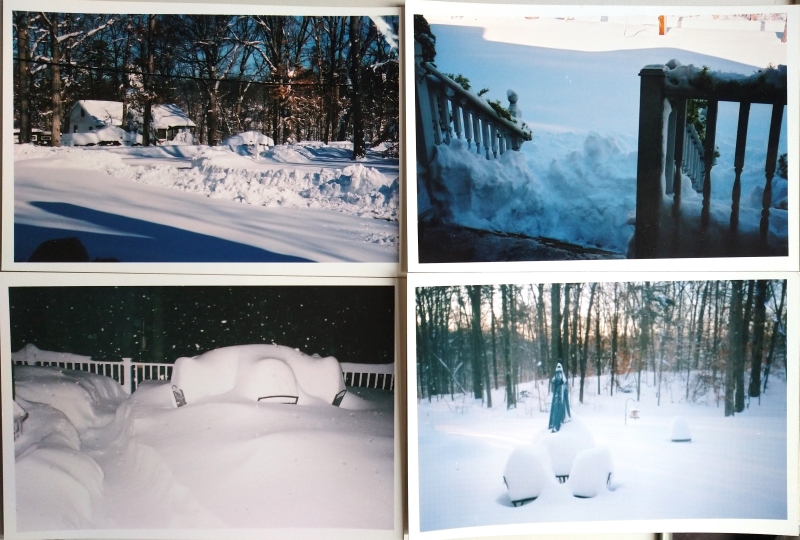
Whittell’s mention of the U.S. East Coast “Snowmaggedon” of February 2010 had me digging out photos my mother sent me of the aftermath at our family home of the time.
Any wintry reading (or weather) for you lately? Or is it looking like spring?
#NovNov24 Catch-Up, I: Comyns, Figes, McEwan, Radcliffe, Thériault
Still more to finish reading and/or belatedly review this week before the Novellas in November link-up closes – another, er, nine books after this, I think! I’ll save the short nonfiction for a couple of other posts. For now I have five novellas that range from black comedy to utter heartbreak and from quotidian detail to magic realism.
The House of Dolls by Barbara Comyns (1989)
 What a fantastic opening line: “Amy Doll, are you telling me that all those old girls upstairs are tarts?” Amy is a respectable widow and single mother to Hetty; no one would guess her boarding house is a brothel where gentlemen of a certain age engage the services of Berti, Evelyn, Ivy and the Señora. When a policeman starts courting Amy, she feels it’s time to address her lodgers’ profession and Hetty’s truancy. The older women disperse: move, marry or seek new employment. Sequences where Berti, who can barely boil an egg, tries to pass as a cook for a highly exacting couple, and Evelyn gets into the gin while babysitting, are hilarious. But there is pathos to the spinsters’ plight as well. “The thing that really upset [Berti] was her hair, long wisps of white with blazing red ends which she kept hidden under a scarf. The fact that she was penniless, and with no prospects, had become too terrible to contemplate.” She and Evelyn take to attending the funerals of strangers for the free buffet and booze. Comyns’ last novel (I’d only previously read Who Was Changed and Who Was Dead) is typically dark, but the wit counteracts the morbid nature. It reminded me of Beryl Bainbridge, late Barbara Pym, Lore Segal, and Muriel Spark. (Passed on by Liz – thank you! Even with the hideous cover.) [156 pages]
Light by Eva Figes (1983)
 I read this as part of my casual ongoing project to read books from my birth year. This was recently reissued and I can see why it is considered a lost classic and was much admired by Figes’ fellow authors. A circadian novel, it presents Claude Monet and his circle of family, friends and servants at home in Giverny. The perspective shifts nimbly between characters and the prose is appropriately painterly: “The water lilies had begun to open, layer upon layer of petals folded back to the sky, revealing a variety of colour. The shadow of the willow lost depth as the sun began to climb, light filtering through a forest of long green fingers. A small white cloud, the first to be seen on this particular morning, drifted across the sky above the lily pond”. There are also neat little hints about the march of time: “‘Telephone poles are ruining my landscapes,’ grumbled Claude”. But this story takes plotlessness to a whole new level, and I lost patience far before the end, despite the low page count, and so skimmed half or more. If you are a lover of lyrical writing and can tolerate stasis, it may well be your cup of tea. (Secondhand – Community Furniture Project?) [91 pages]
On Chesil Beach by Ian McEwan (2007)
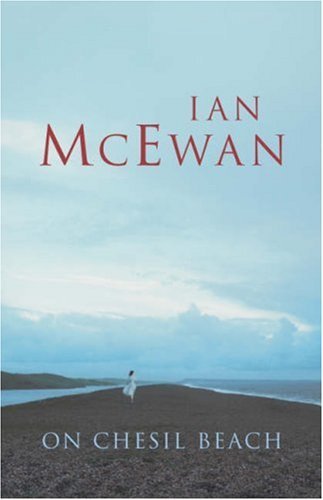 “They were young, educated, and both virgins on this, their wedding night, and they lived in a time when a conversation about sexual difficulties was plainly impossible.” Another stellar opening line to what I think may be a perfect novella. Its core is the night in July 1962 when Edward and Florence attempt to consummate their marriage in a Dorset hotel, but it stretches back to cover everything we need to know about this couple – their family dynamics, how they met, what they want from life – and forward to see their lives diverge. Is love enough? “And what stood in their way? Their personalities and pasts, their ignorance and fear, timidity, squeamishness, lack of entitlement or experience or easy manners, then the tail end of a religious prohibition, their Englishness and class, and history itself. Nothing much at all.” I had forgotten the sources of trauma: Edward’s mother’s brain injury, perhaps a hint that Florence was sexually abused by her father? (But she also says things that would today make us posit asexuality.) I knew when I read this at its release that it was a superior McEwan, but it’s taken the years since – perhaps not coincidentally, the length of my own marriage – to realize just how special. It’s a maturing of the author’s vision: the tragedy is not showy and grotesque like in his early novels and stories, but quiet, hinging on the smallest of actions, or the words not said. This absolutely flayed me emotionally on a reread. (Little Free Library) [166 pages]
The Old Haunts by Allan Radcliffe (2023)
 I was sent this earlier in the year in a parcel containing the 2024 McKitterick Prize shortlist. It’s been instructive to observe the variety just in that set of six (and so much the more in the novels I’m assessing for the longlist now). The short, titled chapters feel almost like linked flash stories that switch between the present day and scenes from art teacher Jamie’s past. Both of his parents having recently died, Jamie and his boyfriend, a mixed-race actor named Alex, get away to remote Scotland. His parents were older when they had him; growing up in the flat above their newsagent’s shop in Edinburgh, Jamie felt the generational gap meant they couldn’t quite understand him or his art. Uni in London was his chance to come out and make supportive friends, but being honest with his parents seemed a step too far. When Alex is called away for an audition, Jamie delves deeper into his memories. Kit, their host at the cottage, has her own story. Some lovely, low-key vignettes and passages (“A smell of soaked fruit. Christmas cake. My mother liked to be organised. She was here, alive, only yesterday.”), but overall a little too soft for the grief theme to truly pierce through. [158 pages]
With thanks to the Society of Authors for the free copy for review.
The Peculiar Life of a Lonely Postman by Denis Thériault (2005; 2008)
[Translated from the French by Liedewy Hawke]
 {BEWARE SPOILERS} Like many, I was drawn in by the quirky title and Japan-evoking cover. To start with, it’s the engaging story of Bilodo, a Montreal postman with a naughty habit of steaming open various people’s mail. He soon becomes obsessed with the haiku exchange between a certain Gaston Grandpré and his pen pal in Guadeloupe, Ségolène. When Grandpré dies a violent death, Bilodo decides to impersonate him and take over the correspondence. He learns to write poetry – as Thériault had to, to write this – and their haiku (“the art of the snapshot, the detail”) and tanka grow increasingly erotic and take over his life, even supplanting his career. But when Ségolène offers to fly to Canada, Bilodo panics. I had two major problems with this: the exoticizing of a Black woman (why did she have to be from Guadeloupe, of all places?), and the bizarre ending, in which Bilodo, who has gradually become more like Grandpré, seems destined for his fate as well. I imagine this was supposed to be a psychological fable, but it was just a little bit silly for me, and the way it’s marketed will probably disappoint readers who are looking for either Harold Fry heart warming or cute Japanese cat/phone box adventures. (Public library) [108 pages]
Which of these catches your eye?
#MARM2024: Life before Man and Interlunar by Margaret Atwood
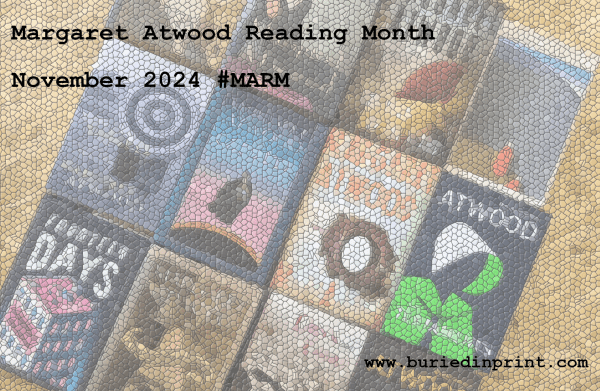
Hard to believe, but it’s my seventh year participating in the annual Margaret Atwood Reading Month (#MARM) hosted by indomitable Canadian blogger Marcie of Buried in Print. In previous years, I’ve read Surfacing and The Edible Woman, The Robber Bride and Moral Disorder, Wilderness Tips, The Door, and Bodily Harm and Stone Mattress; and reread The Blind Assassin. I’m wishing a happy belated birthday to Atwood, who turned 85 earlier this month. Novembers are my excuse to catch up on her extensive back catalogue. In recent years, I’ve scoured the university library holdings to find works by her that I often had never heard of, as was the case with this early novel and mid-career poetry collection.
Life before Man (1979)
 Atwood’s fourth novel is from three rotating third-person POVs: Toronto museum curator Elizabeth, her toy-making husband Nate, and Lesje (pronounced “Lashia,” according to a note at the front), Elizabeth’s paleontologist colleague. The dated chapters span nearly two years, October 1976 to August 1978; often we visit with two or three protagonists on the same day. Elizabeth and Nate, parents to two daughters, have each had a string of lovers. Elizabeth’s most recent, Chris, has died by suicide. Nate disposes of his latest mistress, Martha, and replaces her with Lesje, who is initially confused by his interest in her. She’s more attracted to rocks and dinosaurs than to people, in a way that could be interpreted as consistent with neurodivergence.
It was neat to follow along seasonally with Halloween and Remembrance Day and so on, and see the Quebec independence movement simmering away in the background. To start with, I was engrossed in the characters’ perspectives and taken with Atwood’s witty descriptions and dialogue: “[Nate]’s heard Unitarianism called a featherbed for falling Christians” and (Lesje:) “Elizabeth needs support like a nun needs tits.” My favourite passage encapsulates a previous relationship of Lesje’s perfectly, in just the sort of no-nonsense language she would use:
The geologist had been fine; they could compromise on rock strata. They went on hikes with their little picks and kits, and chipped samples off cliffs; then they ate jelly sandwiches and copulated in a friendly way behind clumps of goldenrod and thistles. She found this pleasurable but not extremely so. She still has a collection of rock chips left over from this relationship; looking at it does not fill her with bitterness. He was a nice boy but she wasn’t in love with him.
Elizabeth’s formidable Auntie Muriel is a terrific secondary presence. But this really is just a novel about (repeated) adultery and its aftermath. The first line has Elizabeth thinking “I don’t know how I should live,” and after some complications, all three characters are trapped in a similar stasis by the end. By the halfway point I’d mostly lost interest and started skimming. The grief motif and museum setting weren’t the draws I’d expected them to be. Lesje is a promising character but, disappointingly, gets snared in clichéd circumstances. No doubt that is part of the point; “life before man” would have been better for her. (University library)
This prophetic passage from Life before Man leads nicely into the themes of Interlunar:
The real question is: Does [Lesje] care whether the human race survives or not? She doesn’t know. The dinosaurs didn’t survive and it wasn’t the end of the world. In her bleaker moments, … she feels the human race has it coming. Nature will think up something else. Or not, as the case may be.
The posthuman prospect is echoed in Interlunar in the lines: “Which is the sound / the earth will make for itself / without us. A stone echoing a stone.”
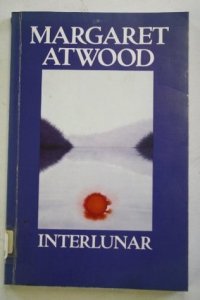
Interlunar (1984)
Some familiar Atwood elements in this volume, including death, mythology, nature, and stays at a lake house; you’ll even recognize a couple of her other works in poem titles “The Robber Bridegroom” and “The Burned House.” The opening set of “Snake Poems” got me the “green” and “scales” squares on Marcie’s Bingo card (in addition to various other scattered ones, I’m gonna say I’ve filled the whole right-hand column thanks to these two books).
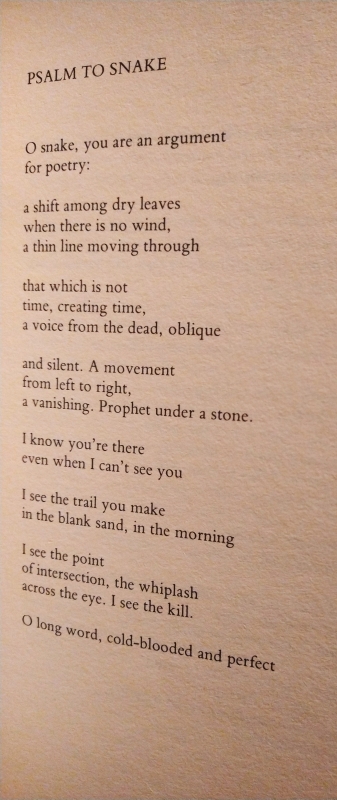
This one brilliantly likens the creature to the sinuous ways of language:
 “A Holiday” imagines a mother–daughter camping vacation presaging a postapocalyptic struggle for survival: “This could be where we / end up, learning the minimal / with maybe no tree, no rain, / no shelter, no roast carcasses / of animals to renew us … So far we do it / for fun.” As in her later collection The Door, portals and thresholds are of key importance. “Doorway” intones, “November is the month of entrance, / month of descent. Which has passed easily, / which has been lenient with me this year. / Nobody’s blood on the floor.” There are menace and melancholy here. But as “Orpheus (2)” suggests at its close, art can be an ongoing act of resistance: “To sing is either praise / or defiance. Praise is defiance.” I do recommend Atwood’s poetry if you haven’t tried it before, even if you’re not typically a poetry reader. Her poems are concrete and forceful, driven by imagery and voice; not as abstract as you might fear. Alas, I wasn’t sent a review copy of her collected poems, Paper Boat, as I’d hoped, but I will continue to enjoy encountering them piecemeal. (University library)
#SciFiMonth: A Simple Intervention (#NovNov24 and #GermanLitMonth) & Station Eleven Reread
It’s rare for me to pick up a work of science fiction but occasionally I’ll find a book that hits the sweet spot between literary fiction and sci-fi. Parable of the Sower by Octavia Butler, The Book of Strange New Things by Michel Faber and The Sparrow by Mary Doria Russell are a few prime examples. It was the comparisons to Margaret Atwood and Kazuo Ishiguro, masters of the speculative, that drew me to my first selection, a Peirene Press novella. My second was a reread, 10 years on, for book club, whose postapocalyptic content felt strangely appropriate for a week that delivered cataclysmic election results.

A Simple Intervention by Yael Inokai (2022; 2024)
[Translated from the German by Marielle Sutherland]
Meret is a nurse on a surgical ward, content in the knowledge that she’s making a difference. Her hospital offers a pioneering procedure that cures people of mental illnesses. It’s painless and takes just an hour.
The doctor had to find the affected area and put it to sleep, like a sick animal. That was his job. Mine was to keep the patients occupied. I was to distract them from what was happening and keep them interacting with me. As long as they stayed awake, we knew the doctor and his instruments had found the right place.
 The story revolves around Meret’s emotional involvement in the case of Marianne, a feisty young woman who has uneasy relationships with her father and brothers. The two play cards and share family anecdotes. Until the last few chapters, the slow-moving plot builds mostly through flashbacks, including to Meret’s affair with her fellow nurse, Sarah. This roommates-to-lovers thread reminded me of Learned by Heart by Emma Donoghue. When Marianne’s intervention goes wrong, Meret and Sarah doubt their vocation and plan an act of heroism.
Inokai invites us to ponder whether what we perceive as defects are actually valuable personality traits. More examples of interventions and their aftermath would be a useful point of comparison, though, and the pace is uneven, with a lot of unnecessary-seeming backstory about Meret’s family life. In the letter that accompanied my review copy, Inokai explained her three aims: to portray a nurse (her mother’s career) because they’re underrepresented in fiction, “to explore our yearning to cut out our ‘demons’,” and to offer “a queer love story that was hopeful.” She certainly succeeds with those first and third goals, but with the central subject I felt she faltered through vagueness.
Born in Switzerland, Inokai now lives in Berlin. This also counts as my first contribution to German Literature Month; another is on the way!
[187 pages]
With thanks to Peirene Press for the free copy for review.


Station Eleven by Emily St. John Mandel (2014)
For synopsis and analysis I can’t do better than when I reviewed this for BookBrowse a few months after its release, so I’d direct you to the full text here. (It’s slightly depressing for me to go back to old reviews and see that I haven’t improved; if anything, I’ve gotten lazier.) A couple book club members weren’t as keen, I think because they’d read a lot of dystopian fiction or seen many postapocalyptic films and found this vision mild and with a somewhat implausible setup and tidy conclusion. But for me this and Cormac McCarthy’s The Road have persisted as THE literary depictions of post-apocalypse life because they perfectly blend the literary and the speculative in an accessible and believable way (this was a National Book Award finalist and won the Arthur C. Clarke Award), contrasting a harrowing future with nostalgia for an everyday life that we can already see retreating into the past.
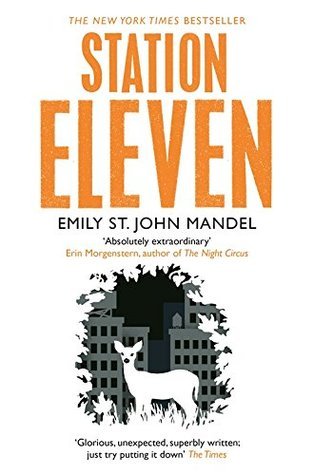 Station Eleven has become a real benchmark for me, against which I measure any other dystopian novel. On this reread, I was captivated by the different layers of the nonlinear story, from celebrity gossip to a rare graphic novel series, and enjoyed rediscovering the links between characters and storylines. I remembered a few vivid scenes and settings. Mandel also seeds subtle connections to later work, particularly The Glass Hotel (island off Vancouver, international shipping and finance) but also Sea of Tranquility (music, an airport terminal). I haven’t read her first three novels, but wouldn’t be surprised if they have additional links.
The two themes that most struck me this time were the enduring power of art and how societal breakdown would instantly eliminate the international – but compensate for it with the return of the extremely local. At a time when it feels difficult to trust central governments to have people’s best interests at heart, this is a rather comforting prospect. Just in my neighbourhood, I see how we implement this care on a small scale. In settlements of up to a few hundred, the remnants of Station Eleven create something like normal life by Year 20.
Book club members sniped that the characters could have better pooled skills, but we agreed that Mandel was wise to limit what could have been tedious details about survival. “Survival is insufficient,” as the Traveling Symphony’s motto goes (borrowed from Star Trek). Instead, she focuses on love, memory, and hunger for the arts. In some ways, this feels prescient of Covid-19, but even more so of the climate-related collapse I expect in my lifetime. I’ve rated this a little bit higher the second time for its lasting relevance. (Free from a neighbour) 
Some favourite passages:
the whole of Chapter 6, a bittersweet litany that opens “An incomplete list: No more diving into pools of chlorinated water lit green from below” and includes “No more pharmaceuticals,” “No more flight,” and “No more countries”
“what made it bearable were the friendships, of course, the camaraderie and the music and the Shakespeare, the moments of transcendent beauty and joy”
“The beauty of this world where almost everyone was gone. If hell is other people, what is a world with almost no people in it?”

Buddy Reads: Kilmeny of the Orchard by L.M. Montgomery & The Waterfall by Margaret Drabble
Buddy reading and other coordinated challenges are a good excuse to read the sort of books one doesn’t always get to, especially the more obscure classics. This was my third Lucy Maud Montgomery novel within a year and a bit, and my first contribution to Ali’s ongoing year with Margaret Drabble.
{SPOILERS IN BOTH OF THE FOLLOWING REVIEWS}
Kilmeny of the Orchard by L. M. Montgomery (1910)
I’ve participated in Canadian bloggers Naomi of Consumed by Ink and Sarah Emsley’s readalongs of three Montgomery works now. The previous two were Jane of Lantern Hill and The Story Girl. This sweet but rather outdated novella reminded me more of the latter (no surprise as it was published just a year before it) because of the overall sense of lightness and the male perspective, which isn’t what those familiar with the Anne and Emily books might expect from Montgomery.
 Eric Marshall travels to Prince Edward Island one May to be the temporary schoolmaster in Lindsay, filling in for an ill friend. At his graduation from Queenslea College, his cousin David Baker had teased him about his apparent disinterest in girls. He arrives on the island to an early summer idyll and soon wanders into an orchard where a beautiful young woman is playing a violin.
This is, of course, Kilmeny Gordon, her first name from a Scottish ballad by James Hogg, and it’s clear she will be the love interest. However, there are a couple of impediments to the romance. One is resistance from Kilmeny’s guardians, the strict aunt and uncle who have cared for her since her wronged mother’s death. But the greater obstacle is Kilmeny’s background – illegitimacy plus a disability that everyone bar Eric views as insuperable: she is mute (or, as the book has it, “dumb”). She hears and understands perfectly well, but communicates via writing on a slate.
There is interesting speculation as to whether her condition is psychological or magically inherited from her late mother, who had taken a vow of silence. Conveniently, cousin David is a doctor specializing in throat and voice problems, so assures Eric and the Gordons that nothing is physically preventing Kilmeny from speech. But she refuses to marry Eric until she can speak. The scene in which she fears for his life and calls out to save him is laughably contrived. The language around disability is outmoded. It’s also uncomfortable that the story’s villain, an adopted Gordon cousin, is characterized only by his Italian heritage.
Like The Story Girl, I found this fairly twee, with an unfortunate focus on beauty (“‘Kilmeny’s mouth is like a love-song made incarnate in sweet flesh,’ said Eric enthusiastically”), and marriage as the goal of life. But it was still a pleasant read, especially for the descriptions of a Canadian spring. (Downloaded from Project Gutenberg) #ReadingKilmeny
The Waterfall by Margaret Drabble (1969)
 This was Drabble’s fourth novel; I’ve read the previous three and preferred two of them to this (A Summer Bird-Cage is fab). The setup is similar to The Garrick Year, which I read last year for book club, in that the focus is on a young mother of two who embarks on an affair. When we meet Jane Gray she is awaiting the birth of her second child. Her husband, Malcolm, walked out a few weeks ago, but she has the midwife and her cousin Lucy to rely on. Lucy and her husband, James, trade off staying over with Jane as she recovers from childbirth. James is particularly solicitous and, one night, joins Jane in bed.
At this point there is a stark shift from third person to first person as Jane confesses that she’s been glossing over the complexities of the situation; sleeping with one’s cousin’s husband is never going to be without emotional fallout. “It won’t, of course, do: as an account, I mean, of what took place”; “Lies, lies, it’s all lies. A pack of lies.” The novel continues to alternate between first and third person as Jane gives us glimpses into her uneasy family-making. I found myself bored through much of it, only perking back up for the meta stuff and the one climactic event. In a way it’s a classic tale of free will versus fate, including the choice of how to frame what happens.
I am no longer capable of inaction – then I will invent a morality that condones me.
It wasn’t so, it wasn’t so. I am getting tired of all this Freudian family nexus, I want to get back to that schizoid third-person dialogue.
The narrative tale. The narrative explanation. That was it, or some of it. I loved James because he was what I had never had: because he drove too fast: because he belonged to my cousin: because he was kind to his own child
(What intriguing punctuation there!) The fast driving and obsession with cars is unsubtle foreshadowing: James nearly dies in a car accident on the way to the ferry to Norway. Jane and her children, Laurie and baby Bianca, are in the car but unhurt. This was the days when seatbelts weren’t required, apparently. “It would have been so much simpler if he had been dead: so natural a conclusion, so poetic in its justice.” The Garrick Year, too, has a near-tragedy involving a car. Like many an adultery story, both novels ask whether an affair changes everything, or nothing. Infidelity and the parenting of young children together don’t amount to the most scintillating material, but it is appealing to see Drabble experimenting with how to tell a story. See also Ali’s review. (Secondhand – Alnwick charity shopping)
Carol Shields Prize Reading: Daughter and Dances
Two more Carol Shields Prize nominees today: from the shortlist, the autofiction-esque story of a father and daughter, both writers, and their dysfunctional family; and, from the longlist, a debut novel about the physical and emotional rigours of being a Black ballet dancer.
Daughter by Claudia Dey
Like her protagonist, Mona Dean, Dey is a playwright, but the Canadian author has clearly stated that her third novel is not autofiction, even though it may feel like it. (Fragmentary sections, fluidity between past and present, a lack of speech marks; not to mention that Dey quotes Rachel Cusk and there’s even a character named Sigrid.) Mona’s father, Paul, is a serial adulterer who became famous for his novel Daughter and hasn’t matched that success in the 20 years since. He left Mona and Juliet’s mother, Natasha, for Cherry, with whom he had another daughter, Eva. There have been two more affairs. Every time Mona meets Paul for a meal or a coffee, she’s returned to a childhood sense of helplessness and conflict.
I had a sordid contract with my father. I was obsessed with my childhood. I had never gotten over my childhood. Cherry had been cruel to me as a child, and I wanted to get back at Cherry, and so I guarded my father’s secrets like a stash of weapons, waiting for the moment I could strike.
It took time for me to warm to Dey’s style, which is full of flat, declarative sentences, often overloaded with character names. The phrasing can be simple and repetitive, with overuse of comma splices. At times Mona’s unemotional affect seems to be at odds with the melodrama of what she’s recounting: an abortion, a rape, a stillbirth, etc. I twigged to what Dey was going for here when I realized the two major influences were Hemingway and Shakespeare.
 Mona’s breakthrough play is Margot, based on the life of one Hemingway granddaughter, and she’s working on a sequel about another. There are four women in Paul’s life, and Mona once says of him during a period of writer’s block, “He could not write one true sentence.” So Paul (along with Mona, along with Dey) may be emulating Hemingway.
And then there’s the King Lear setup. (I caught on to this late, perhaps because I was also reading a more overt Lear update at the time, Private Rites by Julia Armfield.) The larger-than-life father; the two older daughters and younger half-sister; the resentment and estrangement. Dey makes the parallel explicit when Mona, musing on her Hemingway-inspired oeuvre, asks, “Why had Shakespeare not called the play King Lear’s Daughters?”
Were it not for this intertextuality, it would be a much less interesting book. And, to be honest, the style was not my favourite. There were some lines that really irked me (“The flowers they were considering were flamboyant to her eye, she wanted less flamboyant flowers”; “Antoine barked. He was barking.”; “Outside, it sunned. Outside, it hailed.”). However, rather like Sally Rooney, Dey has prioritized straightforward readability. I found that I read this quickly, almost as if in a trance, inexorably drawn into this family’s drama. 
Related reads: Monsters by Claire Dederer, The Wren, The Wren by Anne Enright, The Wife by Meg Wolitzer, Mrs. Hemingway by Naomi Wood
With thanks to publicist Nicole Magas and Farrar, Straus and Giroux for the free e-copy for review.
Also from the shortlist:
 Brotherless Night by V.V. Ganeshananthan – The only novel that is on both the CSP and Women’s Prize shortlists. I dutifully borrowed a copy from the library, but the combination of the heavy subject matter (Sri Lanka’s civil war and the Tamil Tigers resistance movement) and the very small type in the UK hardback quickly defeated me, even though I was enjoying Sashi’s quietly resolute voice and her medical training to work in a field hospital. I gave it a brief skim. The author researched this second novel for 20 years, and her narrator is determined to make readers grasp what went on: “You must understand: that word, terrorist, is too simple for the history we have lived … You must understand: There is no single day on which a war begins.” I know from Laura and Marcie that this is top-class historical fiction, never mawkish or worthy, so I may well try it some other time when I have the fortitude.
Longlisted:
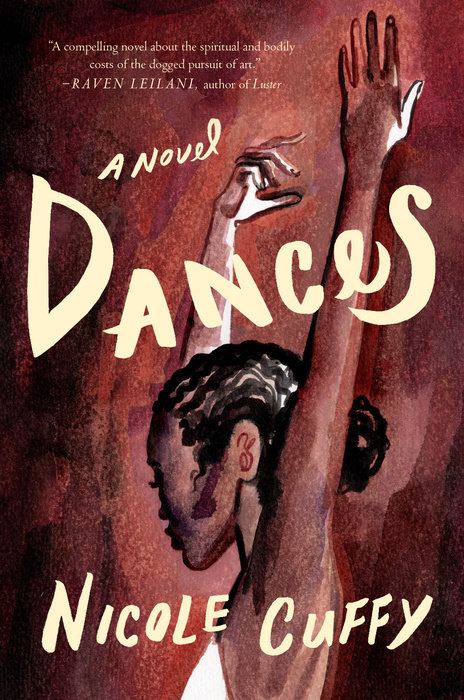
Dances by Nicole Cuffy
This was a buddy read with Laura (see her review); I think we both would have liked to see it on the shortlist as, though we’re not dancers ourselves, we’re attracted to the artistry and physicality of ballet. It’s always a privilege to get an inside glimpse of a rarefied world, and to see people at work, especially in a field that requires single-mindedness and self-discipline. Cuffy’s debut novel focuses on 22-year-old Celine Cordell, who becomes the first Black female principal in the New York City Ballet. Cece marvels at the distance between her Brooklyn upbringing – a single mother and drug-dealing older brother, Paul – and her new identity as a celebrity who has brand endorsements and gets stopped on the street for selfies.
Even though Kaz, the director, insists that “Dance has no race,” Cece knows it’s not true. (And Kaz in some ways exaggerates her difference, creating a role for her in a ballet based around Gullah folklore from South Carolina.) Cece has always had to work harder than the others in the company to be accepted:
Ballet has always been about the body. The white body, specifically. So they watched my Black body, waited for it to confirm their prejudices, grew ever more anxious as it failed to do so, again and again.
A further complication is her relationship with Jasper, her white dance partner. It’s an open secret in the company that they’re together, but to the press they remain coy. Cece’s friends Irine and Ryn support her through rocky times, and her former teachers, Luca and Galina, are steadfast in their encouragement. Late on, Cece’s search for Paul, who has been missing for five years, becomes a surprisingly major element. While the sibling bond helps the novel stand out, I most enjoyed the descriptions of dancing. All of the sections and chapters are titled after ballet terms, and even when I was unfamiliar with the vocabulary or the music being referenced, I could at least vaguely picture all the moves in my head. It takes real skill to render other art forms in words. I’ll look forward to following Cuffy’s career.
With thanks to publicist Nicole Magas and One World for the free e-copy for review.
Currently reading:
(Shortlist) Coleman Hill by Kim Coleman Foote
(Longlist) Between Two Moons by Aisha Abdel Gawad
Up next:
(Longlist) You Were Watching from the Sand by Juliana Lamy
I’m aiming for one more batch of reviews (and a prediction) before the winner is announced on 13 May.
Dressing Up for the Carnival by Carol Shields (Buddy Reread)
Marcie of Buried in Print and I have spent the first few months or so of 2024 rereading Carol Shields’s short stories: one volume per month from the Collected Stories. (Previous reviews: Various Miracles (1985) and The Orange Fish (1989).) Dressing Up for the Carnival was a late collection, published in 2000 – just a few years before the author’s death. Like Various Miracles, it’s a long book; in fact, at 22 stories, it’s the longest of the three. And, just like the other two, it opens with the title story, which is itself akin to “Various Miracles” with its pile-up of seemingly random happenings. All the examples are of how the things that people wear, or carry, create a persona. I noted pleasing symmetry in that “Dressing Up for the Carnival” opens the book, while the final story is “Dressing Down,” about a married couple divided by the husband’s devotion to naturism for one month out of each year.
 I hadn’t realized that Unless, Shields’s final, Booker-shortlisted novel, arose from one of these stories: “A Scarf.” It took me just two paragraphs to figure it out, based on her narrator’s punning novel title (My Thyme Is Up). I’d also forgotten about the fun Shields pokes at literary snobbishness through her protagonist winning the Offenden Prize, which “recognizes literary quality and honors accessibility”. (There is actually a UK prize that rewards ease of reading, the Goldsboro Books Glass Bell Award.)
Many main characters throughout Shields’s work are artists, musicians, writers or poets. When windows are subject to an exorbitant tax, two painters decide to create their own, a joint project that brings the couple closer (in “Windows”). The elevated diction and proliferating French phrases skewer the narrator’s pretensions. Edging towards surrealism is another custom of Shields’s, seen here in “Weather,” where meteorological phenomena – or the lack thereof – are literal and a metaphor for marriage. This one finds an echo in “Stop!”, a fable about a queen who avoids all risk and change and thus disallows weather.
A number of the flash-length stories are similarly allegorical, or linguistic experiments, e.g., “Absence,” which is lipogrammatic (no “I”). “Flatties: their Various Forms and Uses” is a faux-anthropological one about flatbreads that reminded me of “Today Is the Day.” “The Harp” looks at the aftermath of the freak accident of a harp falling from the sky. “Keys” is a daisy-chain type of story (like “Home” et al.), with the keys symbolic of access, ownership, secrets, home, and more. Academia is another frequent subject for Shields. “Ilk” has the same academic jargon (“narrativity is ovarian, not ejaculatory”) and mockery of a predominantly male preserve as in “The Metaphor Is Dead–Pass It On” and “Salt.”
A topic shared with The Orange Fish is the biographer’s art. I loved “Edith-Esther,” about a biographer who becomes so obsessed with the expression of spirituality in his subject’s works that he completely skews her life story towards it, even though she tells him flat out she doesn’t believe in God. What a nightmare for an author to be so misunderstood; it’s no accident, of course, that it’s a male critic doing it to a female writer. “Invention” imagines creation scenarios for everything from steering wheel covers to daydreaming.
 In “Dying for Love,” an early standout for me, three wronged women consider suicide. The vocabulary quickly alerts the reader to a change of time period after each section break. All three decide “Life is a thing to be cherished”. My three favourites, though, were the final three – all slightly cheeky with the focus on sex (and naturism). They were together an excellent way to close the volume, and the Collected Stories. In “The Next Best Kiss,” single mother Sandy meets a new paramour at a conference. She and Todd share garrulousness, and a sexual connection. But he doesn’t’ see the appeal of her biography’s subject, a Gregor Mendel-meets-John Clare type, and she is aghast to learn that he still lives with his mother.
“Eros,” set at a sexually charged dinner party (and you know from Larry’s Party that Shields is brilliant at party scenes), spools back through Ann’s erotic life, all the way to childhood ignorance and curiosity. “Everyone knew this awful secret which was everywhere suggested but which for Ann lay, still, a quarter-inch out of reach.” That Ann has lost a breast to cancer treatment made me ponder whether this story reflected Shields’s own experience – she died in 2003 of a recurrence of breast cancer.
There were a few too many second-tier stories here compared to The Orange Fish, but several gems; and I always appreciate Shields’s wordplay and insider’s satire on being an academic and/or a writer.
My original rating (c. 2008):
My rating now:
Bonus
Shields’s final short story, “Segue,” is printed first in the Collected Stories. Dutiful Marcie read it first, whereas I saved it for last to try to preserve a sense of chronological order. Max Sexton writes novels, the latest of which sounds exactly like The Corrections – a 2001 publication, and Shields also references 9/11. Jane Sexton, the narrator, writes sonnets (“little sounds”) and thinks about ageing, routine, and the transmutation of life into art. A sonnet typically involves a “turn,” which I suppose is the origin of the title. Coming to the end of her life, did Shields think of herself primarily as a poet? This line did strike me as autobiographical: “Forget you are a sixty-seven-year-old woman with a girlish white pageboy.” The Oak Park, Illinois setting inevitably reminded me of Hemingway, but Shields, too, was from Chicago. The final line captures the bittersweet nature of so much of her work: “if it weren’t for my particular circumstances I would be happy.”
Rereading Shields is a habit I plan to keep up. For my next reread, I fancy Mary Swann.
 Bookish Beck = Rebecca Foster. American transplant to England. Freelance proofreader and book reviewer.
 Bookish Beck