Book Serendipity, November to December 2024
I call it “Book Serendipity” when two or more books that I read at the same time or in quick succession have something in common – the more bizarre, the better. This is a regular feature of mine every couple of months. Because I usually have 20–30 books on the go at once, I suppose I’m more prone to such incidents. People frequently ask how I remember all of these coincidences. The answer is: I jot them down on scraps of paper or input them immediately into a file on my PC desktop; otherwise, they would flit away! The following are in roughly chronological order.
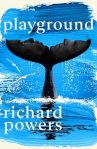
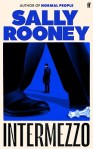
- Characters who were in a chess club and debating society in high school/college in Playground by Richard Powers and Intermezzo by Sally Rooney.
- Pondering the point of a memorial and a mention of hiring mourners in Immemorial by Lauren Markham and Basket of Deplorables by Tom Rachman.
- A mention of Rachel Carson, and her The Sea Around Us in particular, in Playground by Richard Powers, while I was also reading for review Rachel Carson and the Power of Queer Love by Lida Maxwell.
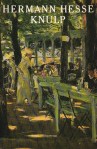
- A character pretends to be asleep when someone comes into the room to check on them in Knulp by Hermann Hesse and Rental House by Weike Wang.
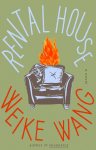
- A mention of where a partner puts his pistachio shells in After the Rites and Sandwiches by Kathy Pimlott and Rental House by Weike Wang.
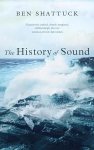
 A character who startles very easily (in the last two cases because of PTSD) in Life before Man by Margaret Atwood, A History of Sound by Ben Shattuck, and Disconnected by Eleanor Vincent.
- The husband is named Nate in Life before Man by Margaret Atwood and Rental House by Weike Wang.
- In People Collide by Isle McElroy, there’s a mention of Elizabeth reading “a popular feminist book about how men explained things to women.” The day I finished reading the novel, I started reading the book in question: Men Explain Things to Me by Rebecca Solnit.
- I learned about the “he’s-at-home” (19th-century dildo) being used by whalers’ wives on Nantucket while the husbands are away at sea through historical fiction – Daughters of Nantucket by Julie Gerstenblatt, which I read last year – and encountered the practice again through an artefact found in the present day in The History of Sound by Ben Shattuck. Awfully specific!
- A week after I finished reading Station Eleven by Emily St. John Mandel, it turned up in a discussion of Vancouver Island in Island by Julian Hanna.
- A Cape Cod setting in Sandwich by Catherine Newman (earlier in the year) plus The History of Sound by Ben Shattuck and Rental House by Weike Wang.
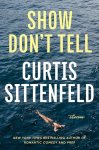
- A gay character references Mulder and Scully (of The X-Files) in the context of determining sexual preference, and there’s a female character named Kit, in The Old Haunts by Allan Radcliffe and one story of Show Don’t Tell by Curtis Sittenfeld.
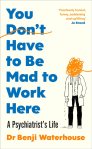
- A mention of The Truman Show in the context of delusions in The Year of Living Biblically by A.J. Jacobs and You Don’t Have to Be Mad to Work Here by Benji Waterhouse.
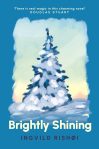
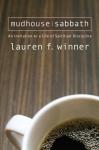
- St. Lucia is mentioned in Beasts by Ingvild Bjerkeland, Brightly Shining by Ingvild Rishøi (two Norwegian authors named Ingvild there!), and Mudhouse Sabbath by Lauren Winner.
- A pet named Darwin: in Levels of Life by Julian Barnes it’s Sarah Bernhardt’s monkey; in Cold Kitchen by Caroline Eden it’s her beagle. Within days I met another pet beagle named Darwin in Island by Julian Hanna. (It took me a moment to realize why it’s a clever choice!)
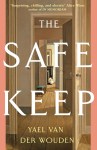
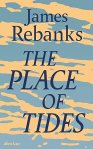
- A character named Henrik in The Place of Tides by James Rebanks and one story of Show Don’t Tell by Curtis Sittenfeld, and a Hendrik in The Safekeep by Yael van der Wouden.
- A hat with a green ribbon in The Safekeep by Yael van der Wouden and one story of Show Don’t Tell by Curtis Sittenfeld (in which it’s an emoji).
- Romanian neighbours who speak very good English in Island by Julian Hanna and Rental House by Weike Wang.
- A scene of returning to a house one used to live in in Hyper by Agri Ismaïl, The Old Haunts by Allan Radcliffe, and one story of Show Don’t Tell by Curtis Sittenfeld.
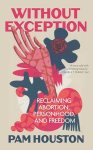
- A woman has had three abortions in The House of Dolls by Barbara Comyns and Without Exception by Pam Houston.
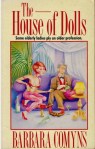
- Household items keep going missing and there’s broken china in The House of Dolls by Barbara Comyns and The Safekeep by Yael van der Wouden.
- Punctuated equilibrium (a term from evolutionary biology) is used as a metaphor in Hyper by Agri Ismaïl and Men Explain Things to Me by Rebecca Solnit.
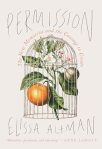 The author’s mother repeatedly asked her daughter a rhetorical question along the lines of “Do you know what I gave up to have you?” in Permission by Elissa Altman and Without Exception by Pam Houston.
- The author/character looks in the mirror at the end of a long day and hardly recognizes him/herself in The Place of Tides by James Rebanks, You Don’t Have to Be Mad to Work Here by Benji Waterhouse, and Amphibian by Tyler Wetherall.
- A man is afraid to hold his boyfriend’s hand in public in another country because he’s unsure about the cultural attitudes towards homosexuality in Clinical Intimacy by Ewan Gass and Small Rain by Garth Greenwell.
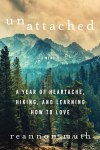
- The author’s mother is a therapist/psychologist and the author her/himself is undergoing some kind of mental health treatment in Unattached by Reannon Muth and You Don’t Have to Be Mad to Work Here by Benji Waterhouse.
- A man declares that dying in one’s mid-40s is nothing to complain about in A Beginner’s Guide to Dying by Simon Boas and Small Rain by Garth Greenwell.
- A woman ponders whether her ongoing anxiety is related to the stressful circumstances of her birth in Unattached by Reannon Muth and When the World Explodes by Amy Lee Scott.
What’s the weirdest reading coincidence you’ve had lately?
December Releases by Anita Felicelli, Lise Goett, Brooke Randel & Weike Wang
December isn’t a big month for new releases, but here are excerpts from a few I happened to review early for U.S. publications BookBrowse, Foreword Reviews, and Shelf Awareness: Speculative short stories, loss-tinged poetry, a family memoir based on Holocaust history, and a satirical short novel about racial microaggressions and class divides in contemporary America.
How We Know Our Time Travelers by Anita Felicelli
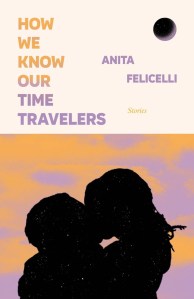 These linked speculative stories, set in near-future California, are marked by environmental anxiety. Many of their characters have South Asian backgrounds. A nascent queer romance between co-op grocery colleagues defies an impending tsunami. A painter welcomes a studio visitor who could be her estranged husband traveling from the past. Mysterious “fog catchers” recur in multiple stories. Memory bridges the human and the artificial, as in “The Glitch,” wherein a coder, bereaved by wildfires, lives alongside holograms of her wife and children. But technology, though a potential means of connecting with the dead, is not an unmitigated good. Creative reinterpretations of traditional stories and figures include urban legends, a locked room mystery, a poltergeist, and a golem. In these grief- and regret-tinged stories, heartbroken people can’t alter their pasts, so they’ll mold the future instead. (See my full Foreword review.)
The Radiant by Lise Goett
 In the 25 poems of Goett’s luminous third poetry collection, nature’s beauty and ancient wisdom sustain the fragile and bereaved. The speaker in “Difficult Body” references a cancer experience and imagines escaping the flesh to diffuse into the cosmos. Goett explores liminal moments and ponders what survives a loss. The use of “terminal” in “Free Fall” denotes mortality while also bringing up fond memories of her late father picking her up from an airport. Mythical allusions, religious imagery, and Buddhist philosophy weave through to shine ancient perspective on current struggles. The book luxuriates in abstruse vocabulary and sensual descriptions of snow, trees, and color. (Tupelo Press, 24 December. Review forthcoming at Shelf Awareness)
Also Here: Love, Literacy, and the Legacy of the Holocaust by Brooke Randel
 Randel’s debut is a poised, tender family memoir capturing her Holocaust survivor grandmother’s recollections of the Holocaust. Golda (“Bubbie”) spoke multiple languages but was functionally illiterate. In her mid-80s, she asked her granddaughter to tell her story. Randel flew to south Florida to conduct interviews. The oral history that emerges is fragmentary and frenetic. The structure of the book makes up for it, though. Interview snippets are interspersed with narrative chapters based on follow-up research. Golda, born in 1930, grew up in Romania. When the Nazis came, her older brothers were conscripted into forced labor; her mother and younger siblings were killed in a concentration camp. At every turn, Golda’s survival (through Auschwitz, Christianstadt, and Bergen-Belsen) was nothing short of miraculous. This concise, touching memoir bears witness to a whole remarkable life as well as the bond between grandmother and granddaughter. (See my full Shelf Awareness review.)
Rental House by Weike Wang
 Their interactions with family and strangers alike on two vacations – Cape Cod and the Catskills, five years apart – put interracial couple Keru and Nate’s choices into perspective as they near age 40. Although some might find their situation (childfree, with a “fur baby”) stereotypical, it does reflect that of a growing number of aging millennials. Wang portrays them sympathetically, but there is also a note of gentle satire here. The way that identity politics comes into the novel is not exactly subtle, but it does feel true to life. And it is very clever how the novel examines the matters of race, class, ambition, and parenthood through the lens of vacations. Like a two-act play, the framework is simple and concise, yet revealing about contemporary American society. (See my full BookBrowse review.)
Sandwich by Catherine Newman (Blog Tour)
Catherine Newman’s second novel for adults, Sandwich, takes place during a week on Cape Cod, a popular Massachusetts beach resort. Rachel, nicknamed “Rocky,” is a fiftysomething mother to two young adults, Jamie and Willa. She and her husband Nick have been renting the same cottage for their family’s summer vacations for 20 years. Although Rocky narrates most of the novel in the first person, in the Prologue she paints the scene for the reader in the third person: “They’ve been coming here for so many years that there’s a watercolor wash over all of it now … pleasant, pastel memories of taffy, clam strips, and beachcombing.”
 Also present are Maya, Jamie’s girlfriend; Rocky’s ageing parents; and Chicken the cat (can you imagine taking your cat on holiday?!). With such close quarters, it’s impossible to keep secrets. Over the week of merry eating and drinking, much swimming, and plenty of no-holds-barred conversations, some major drama emerges via both the oldies and the youngsters. And it’s not just present crises; the past is always with Rocky. Cape Cod has developed layers of emotional memories for her. She’s simultaneously nostalgic for her kids’ babyhood and delighted with the confident, intelligent grown-ups they’ve become. She’s grateful for the family she has, but also haunted by inherited trauma and pregnancy loss.
There couldn’t be more ideal reading for women in the so-called “sandwich generation” who have children growing towards independence as well as parents starting to struggle with infirmity. (The contemporary storyline of Barbara Kingsolver’s Unsheltered, which coincidentally is about a character named Willa, is comparable in that respect.) Newman is frank about Willa’s lesbianism and Rocky’s bisexuality, and she doesn’t hold back about the difficulties of menopause, either. Rocky is challenged to rethink her responsibilities as a daughter, wife and mother when she’s surrounded by equally strong-willed people who won’t do what she wants them to. The novel is so quirky, funny and relatable that it’s impossible not to sympathize with Rocky even if, like me, you’re in a very different life situation.

I like the U.S. cover so much more!
One observation I would make is that Rocky is virtually identical to Ash in Newman’s debut, We All Want Impossible Things, and to the author in real life (as I know from subscribing to her Substack). If you read even the most basic information about her, it’s clear that it’s all autofiction. That’s not an issue for me as I don’t think inventing is inherently superior to drawing from experience; some authors write what they know in a literal sense and that’s okay. So, for her fans, more of the same will be no problem at all. But it is a very particular voice: intense, scatty, purposely outrageous. Rocky is a protagonist who says things like, “How am I a feminist, an advocate for reproductive rights, Our Bodies, Ourselves, hear me roar, blah blah, and I am only just now learning about vaginal atrophy?” (A companion nonfiction read would be Nina Stibbe’s Went to London, Took the Dog.)
In outlook Newman reminds me a lot of Anne Lamott, who is equally forthright and whose books similarly juxtapose life’s joy and sorrows, especially in this late passage: “this may be the only reason we were put on this earth. To say to each other, I know how you feel.”
This is a sweet, fun, chatty book that’s about a summer break – and would be perfect to read on a summer break.
With thanks to Anne Cater of Random Things Tours and Doubleday for the free e-copy for review.
Buy Sandwich from Bookshop.org [affiliate link]
I was delighted to help close out the blog tour for Sandwich. See below for details of where the other reviews have appeared.

#ReadingtheMeow2024 and 20 Books of Summer, 2: Sleeping with Cats by Marge Piercy
Reviews of books about cats have been a standard element on my blog over the years, and the second annual Reading the Meow challenge, hosted by Mallika of Literary Potpourri, was a good excuse to pick up some more. Tomorrow I’ll review two cat-themed novels; today I have a 2002 memoir that I have been meaning to read for ages.
I discovered Piercy through her poetry, then read Woman on the Edge of Time, a feminist classic that contrasts utopian and dystopian views of the future. Like May Sarton (whom Piercy knew), she devotes equal energy to both fiction and poetry and is an inveterate cat lady. Piercy is still publishing and blogging at 88; I have much to catch up on from her back catalogue. A précis of her life is almost stranger than fiction: she grew up in poverty in Detroit, joining a teen gang and discovering her sexuality first with other girls (“The first time I had an orgasm—I was eleven—I was astonished and also I had a feeling of recognition. Of course, that’s it. As if that was what I had been expecting or looking for”) then with men; had a couple abortions, including one self-administered, then got sterilized; honed her writing craft at college; married three times – briefly to a Frenchman, an unhappy open arrangement, and now for 40+ years to fellow writer Ira Wood; and wrote like a dervish yet has remained on the periphery of the literary establishment and thus struggled financially.
Political activism has been a constant for Piercy, whether protesting the Vietnam War or supporting women’s reproductive rights. She and Wood also nurtured a progressive Jewish community around their Cape Cod home. Again like Sarton, she has always embraced the term feminist but been more resistant to queerness. A generational thing, perhaps; nowadays we would surely call Piercy bisexual or at least sexually fluid, but she’s more apt to dismiss her teen girlfriends and her later affairs with women as a phase. The personal life and career mesh here, though there is more of a focus on the former, such that I haven’t really gotten a clear idea of which of her novels I might want to try. Each chapter ends with one of her poems (wordy, autobiographical free verse), giving a flavour of her work in other genres. She portrays herself as a nomad who wandered various cities before settling into an unexpectedly homely and seasonal existence: “I am a stray cat who has finally found a good home.”

I admired Piercy’s self-knowledge here: her determination to write (including to keep her late mother alive in her) and to preserve the solitude necessary to her work –
I know I am an intense, rather angular passionate woman, not easy to like, not easy to live with, even for myself. Convictions, causes jostle in me. My appetites are large. I have learned to protect my work time and my privacy fiercely. I have been a better writer than a person, and again and again I made that choice. Writing is my core. I do not regret the security I have sacrificed to serve it.
and her conviction that motherhood was not for her –
I did not want children. I never felt I would be less of a woman, but I feared I would be less of a writer if I reproduced. I didn’t feel anything special about my genetic composition warranted replicating it. … I liked many of my friends’ children as they grew older: I was a good aunt. But I never desired to possess them or have one of my own. … I have never regretted staying childless. My privacy, my time for work … are precious. I feel my life is full enough.
“There were no role models for a woman like me,” she felt at the end of college, but she can in her turn be a role model of the female artist’s life, socially engaged and willing to take risks.
As to the title: There is, of course, special delight here for cat lovers. Piercy has had cats since she was a child, and in the Cape Cod era has usually kept a band of five or so. In the interludes we meet some true characters: Arofa the Siamese, Cho-Cho who lived to 21, mother and son Dinah and Oboe, alpha male Jim Beam, and many more. Of course, they age and fall ill and there are some goodbye scenes. She mostly describes these unsentimentally – if you’ve read Doris Lessing on cats, I’d say the attitude is similar. There are extremes of both love and despair: she licks a kitten to bond with her; she euthanizes one beloved cat herself. She wrote this memoir at 65 and felt that her cats were teaching her how to age.
There is a sadness to living with old cats; also a comfort and pleasure, for you know each other thoroughly and the trust is almost absolute. … The knowledge of how much I will miss them is always with me, but so is the sense of my own time flowing out, my life passing and the necessity to value it as I value them. Old cats are precious.
Even those unfamiliar with Piercy’s work might enjoy reading a perspective on the radical movements of the 1960s and 70s. This was right up my street because of her love of cats, her defence of the childfree life, and her interest in identity and memory. Because she doesn’t talk in depth about her oeuvre, you needn’t have read anything else of hers to appreciate reading this. I hope you have a cat who will nap on your lap as you do so. (Secondhand, a gift from my wish list) 

Autumn Reading: Two Gems by MacNeice and Teale
With bare trees leading down to the canal and frosty temperatures forecast for the weekend, it’s starting to feel more like winter here. I journeyed through a fine autumn with two obscure classics that ended up being  gems.
gems.
Autumn Journal by Louis MacNeice (1939)
 MacNeice, a poet and man of letters from Northern Ireland, wrote this long verse narrative between August 1938 and the turn of the following year. It’s simultaneously about everything and nothing, about everyday life for the common worker and the political rumblings that suggest all is not right in the world. As summer fades and Christmas draws closer, he reflects on his disconnection from Ireland; and on fear, apathy and the longing for purpose.
Two in every four lines rhyme, but the rhyme scheme is so subtle that I was far into the book before I recognized it. I tend not to like prose poems, but this book offers a nice halfway house between complete sentences and a stanza form, and it voices the kinds of feelings we can all relate to. How can this possibly be 80 years old? It is so relevant to our situation now.
we think ‘This must be wrong, it has happened before,
Just like this before, we must be dreaming…’
now it seems futility, imbecility,
To be building shops when nobody can tell
What will happen next.
There are only too many who say ‘What difference does it make
One way or the other?
To turn the stream of history will take
More than a by-election.’
Still there are … the seeds of energy and choice
Still alive even if forbidden, hidden,
And while a man has voice
He may recover music.
The university library copy I borrowed smells faintly of incense, so reading it was rather like slipping into the back pew of an old church and pondering timelessness.
Autumn Across America by Edwin Way Teale (1950)
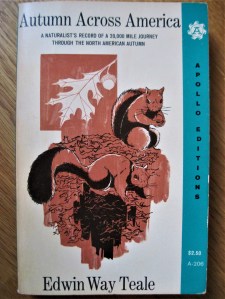 Teale is a lesser-known naturalist who specialized in insects and edited or introduced works by famous natural historians of a previous era like Thoreau, Fabre, Hudson and Muir. In the late 1940s he and his wife Nellie set out on a meandering 20,000-mile road trip from Cape Cod on the Atlantic coast to Point Reyes on the Pacific to track autumn from its first hints to its last gasp. It was the third of four seasonal journeys the Teales undertook in part to distract them from their grief over their son David, who was killed in Germany during WWII. Their route passes through about half the states and experiences nearly every landscape you can imagine, some that are familiar to me and others that would be totally new. They delve in rockpools; observe bird and monarch migration; cross desert, mountains and prairie; and watch sea otters at play.
Although there is a sense of abundance – they see a million ducks in one day, and pass dozens of roadkill jackrabbits – like Aldo Leopold, Teale was an early conservationist who sounded the alarm about flora and fauna becoming rarer: “So much was going even as we watched.” His descriptions of nature are simply gorgeous, while the scientific explanations of leaf color, “Indian summer” and animal communication are at just the right level for the average reader. This was a lucky find at the Book Thing of Baltimore this past spring, and if I ever get the chance, I will delight in reading the other three in the quartet.
Some favorite lines:
“The stars speak of man’s insignificance in the long eternity of time; the desert speaks of his insignificance right now.”
“Those to whom the trees, the birds, the wildflowers represent only ‘locked-up dollars’ have never known or really seen these things. They have never experienced an interest in nature for itself. Whoever stimulates a wider appreciation of nature, a wider understanding of nature, a wider love of nature for its own sake accomplishes no small thing.”
I’m also still reading Led by the Nose: A Garden of Smells by Jenny Joseph, a book about what you see and smell in the garden month by month. I only have the December chapter still to read, followed by some lists of plants set out by ‘when they smell’ and when you plant them. I’ve also been slowly working through A Country Year: Living the Questions by Sue Hubbell, another Book Thing find. After her divorce, Hubbell lived alone on her 90 acres in the Ozarks of Missouri, keeping bees and conscientiously rebuilding a life in communion with nature. I still have the final two sections, “Winter” and “Spring,” left to read.
How’s the weather where you are?
Have you read any “Autumn” books lately?
Reviews for Shiny New Books & TLS, Plus Simon’s “My Life in Books”
I recently participated in the one-week “My Life in Books” extravaganza hosted by Simon Thomas (Stuck in a Book), where he asks bloggers to choose five books that have been important to them at different points in their reading lives. The neat twist is that he puts the bloggers in pairs and asks them to comment anonymously on their partner’s reading choices and even come up with an apt book recommendation or two. A few of my selections will be familiar from the two Landmark Books posts I wrote in 2016 (here and here), but a couple are new, and it was fun to think about what’s changed versus what’s endured in my reading taste.
Shiny New Books
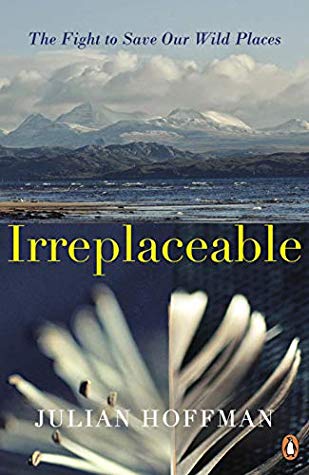 Irreplaceable by Julian Hoffman: If you read one 2019 release, make it this one. (It’s too important a book to dilute that statement with qualifiers.) Species and habitat loss are hard to comprehend even when we know the facts. This book is a way of taking stock, taking responsibility, and going beyond the numbers to tell the stories of front-line conservation work. From the Kent marshes to the Coral Triangle off Indonesia, Hoffman discovers the situation on the ground and talks to the people involved in protecting places at risk of destruction. Reassuringly, these aren’t usually genius scientists or well-funded heroes, but ordinary citizens who are concerned about preserving nearby sites that mean something to them. Irreplaceable is an elegy of sorts, but, more importantly, it’s a call to arms. It places environmentalism in the hands of laypeople and offers hope that in working together in the spirit of defiance we can achieve great things. It takes local concerns seriously, yet its scope is international. But what truly lifts Hoffman’s work above most recent nature books is the exquisite prose.
Times Literary Supplement
These three reviews are forthcoming.
 The Heat of the Moment: Life and Death Decision-Making from a Firefighter by Sabrina Cohen-Hatton: Cohen-Hatton is one of the UK’s highest-ranking female firefighters. A few perilous situations inspired her to investigate how people make decisions under pressure. For a PhD in Psychology from Cardiff University, she delved into the neurology of decision-making. Although there is jargon in the book, she explains the terms well and uses relatable metaphors. However, the context about her research can be repetitive and basic, as if dumbed down for a general reader. The book shines when giving blow-by-blow accounts of real-life or composite incidents. Potential readers should bear in mind, though, that this is ultimately more of a management psychology book than a memoir.
Henry David Thoreau’s Walden (1854), a record of his two-year experiment living alone in a cabin near a Massachusetts pond, has inspired innumerable back-to-nature adventures, including these two books I discuss together in a longer article.
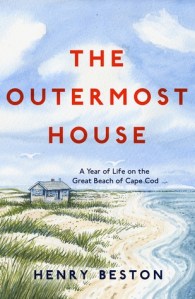 The Outermost House: A Year of Life on the Great Beach of Cape Cod by Henry Beston: Beston had a two-room wooden shack built at Cape Cod in 1925. Although he only intended to spend a fortnight of the following summer in the sixteen-by-twenty-foot dwelling, he stayed a year. The chronicle of that year, The Outermost House (originally published in 1928 and previously out of print in the UK), is a charming meditation on the turning of the seasons and the sometimes terrifying power of the sea. The writing is often poetic, with sibilance conjuring the sound of the ocean. Beston will be remembered for his statement of the proper relationship between humans and the natural world. “We need another and a wiser and perhaps a more mystical concept of animals,” he declares; “they are not underlings; they are other nations.” One word stands out in The Outermost House: “elemental” appears a dozen times, evoking the grandeur of nature and the necessity of getting back to life’s basics.
(See also Susan’s review of this one.)
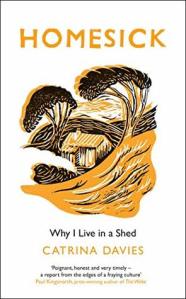 Homesick: Why I Live in a Shed by Catrina Davies: Davies crosses Thoreauvian language – many chapter titles and epigraphs are borrowed from Walden – with a Woolfian search for a room of her own. Penniless during an ongoing housing crisis and reeling from a series of precarious living situations, she moved into the shed near Land’s End that had served as her father’s architecture office until he went bankrupt. Like Raynor Winn’s The Salt Path, this intimate, engaging memoir is a sobering reminder that homelessness is not so remote, and education is no guarantee of success. There is, understandably, a sense of righteous indignation here against a land-owning class – including the lord who owns much of the area where she lives and works – and government policies that favour the wealthy.
20 Books of Summer, #5–8: Anderson, Cusk, Fitch & L’Engle
I’ve been reading a feminist memoir set on Cape Cod, a subtle novel about the inner life and outward experiences of a writer, a soapy literary thriller about a troubled mother and teen daughter, and a slightly melancholy reminiscence of an aged mother succumbing to dementia.
A Walk on the Beach: Tales of Wisdom from an Unconventional Woman by Joan Anderson (2004)
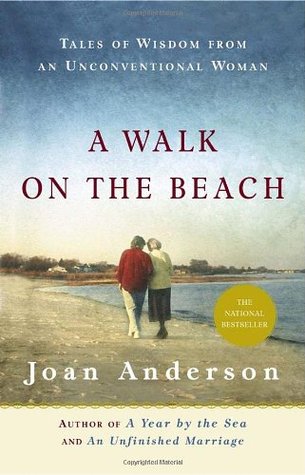 This is the third volume in a loose autobiographical trilogy about Anderson’s experiment with taking a break from her marriage and living alone in a Cape Cod cottage to figure out what she really wanted from the rest of her life. Specifically, this book is about the inspirational relationship she formed with Joan Erikson, who moved to the area in her eighties when her husband, the famous psychologist Erik Erikson, was admitted to a care home. Joanie was a thinker and author in her own right, publishing books on life’s stages, especially those of older age. She encouraged Anderson to have the confidence to write her own story, and to take up challenges like a trip to Peru and learning to weave on a loom. Joanie’s aphoristic advice is valuable, but there’s a fair bit of overlap between this book and A Year by the Sea, which I would recommend over this.
My rating:
Some of Joan Erikson’s words of wisdom:
“Doing something with your hands, rather than your head, is often the best route to clarity.”
“wisdom comes from life’s experiences well digested. Stop relying so much on your mind and get in touch with experience.”
“The struggle is to try and obtain a sense of participation in your life the whole way through. We must treasure old age, but not wallow in nostalgia.”
Transit by Rachel Cusk (2016)
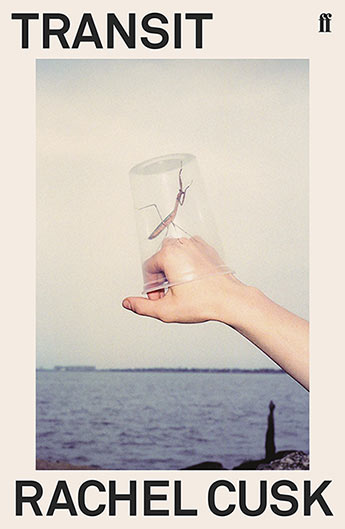 I finally made it through a Rachel Cusk book! (This was my third attempt; I made it just a few pages into Aftermath and 60 pages through Outline.) I suspected this would make a good plane read, and thankfully I was right. Each chapter is a perfectly formed short story, a snapshot of one aspect of Faye’s life and the relationships that have shaped her: a former lover she bumps into in London, a builder who tells her the flat she’s bought is a lost cause, the awful downstairs neighbors who hate her with a passion, the fellow writers (based on Edmund White and Karl Ove Knausgaard?) at a literary festival event who hog most of the time, the jolly Eastern European construction workers who undertake her renovations, a childless friend who works in fashion design, and a country cousin who’s struggling with his new blended family.
Like in Outline, the novel is based largely on the conversations Faye overhears or participates in (“I had found out more, I said, by listening than I had ever thought possible”), but I sensed more of her personality this time, and could relate to her questioning: Why do her neighbors hate her so? How much of her life is fated, and how much has she chosen? I doubt I’ll read another book by Cusk, but I ended up surprisingly grateful to have gotten hold of this one as a free proof copy of the new paperback edition from the Faber Spring Party.
My rating:
Some favorite lines:
“we examine least what has formed us the most, and instead find ourselves driven blindly to re-enact it.”
“Without children or partner, without meaningful family or a home, a day can last an eternity: a life without those things is a life without a story, a life in which there is nothing – no narrative flights, no plot developments, no immersive human dramas – to alleviate the cruelly meticulous passing of time.”
White Oleander by Janet Fitch (1999)
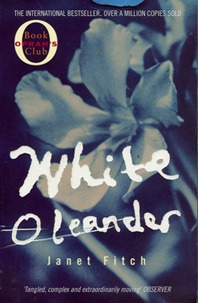 Man, that Oprah knows how to pick ’em! This was a terrific read; I’m not sure why I’d never gotten to it before. I read huge chunks during my travel to the States and then slowed down quite a bit, which was a shame because it meant I felt less connected to Astrid’s later struggles in the foster care system. It’s an atmospheric novel full of oppressive Los Angeles heat and a classic noir flavor that shades into gritty realism as it goes on, taking us from when Astrid is 12 to when she’s a young woman out in the world on her own.
Astrid’s mother Ingrid, an elitist poet, becomes obsessed with a lover who spurned her and goes to jail for his murder. Bouncing between foster homes and children’s institutions, Astrid is plunged into a world of sex, drugs, violence and short-lived piety. “Like a limpet I attached to anything, anyone who showed me the least attention,” she writes. Her role models change over the years, but always in the background is the icy influence of her mother, through letters and visits.
Fitch’s writing is sumptuous, as in a house “the color of a tropical lagoon on a postcard thirty years out of date, a Gauguin syphilitic nightmare.” I might have liked a tiny bit more of Ingrid in the book, but I can still recommend this one wholeheartedly as summer reading.
My rating:
Some favorite lines:
The knock-out opening two lines: “The Santa Anas blew in hot from the desert, shriveling the last of the spring grass into whiskers of pale straw. Only the oleanders thrived, their delicate poisonous blossoms, their dagger green leaves.”
“I couldn’t imagine my mother in prison. She didn’t smoke or chew on toothpicks. She didn’t say ‘bitch’ or ‘fuck.’ She spoke four languages, quoted T. S. Eliot and Dylan Thomas, drank Lapsang souchong out of a porcelain cup. She had never been inside a McDonald’s. She had lived in Paris and Amsterdam. Freiburg and Martinique. How could she be in prison?”
The Summer of the Great-Grandmother by Madeleine L’Engle (1974)
 L’Engle is better known for children’s books, but wrote tons for adults, too. In this second volume of The Crosswicks Journal, she recounts her family history as a way of remembering on behalf of her mother, who at age 90 was slipping into dementia in her final summer. “I talked awhile, earlier this summer, about wanting my mother to have a dignified death. But there is nothing dignified about incontinence and senility.” L’Engle found herself in the unwanted position of being like her mother’s mother, and had to accept that she had no control over the situation. “This summer is practice in dying for me as well as for my mother.”
One of the reasons L’Engle was driven to write science fiction was because she couldn’t reconcile the idea of permanent human extinction with her Christian faith, but nor could she honestly affirm every word of the Creed. Hers is a more broad-minded, mystical spirituality that really appeals to me. (Her early life reminds me of May Sarton’s, as recounted in I Knew a Phoenix: both were born right around World War I, raised partially in Europe and sent to boarding school; a frequent theme in their nonfiction is the regenerative power of solitude and of the writing process itself.)
My rating:
Some favorite lines:
“I said [in a lecture] that the artist’s response to the irrationality of the world is to paint or sing or write, not to impose restrictive rules but to rejoice in pattern and meaning, for there is something in all artists which rejects coincidence and accident. And I went on to say that we must meet the precariousness of the universe without self-pity, and with dignity and courage.”
“Our lives are given a certain dignity by their very evanescence. If there were never to be an end to my quiet moments at the brook, if I could sit on the rock forever, I would not treasure these minutes so much. If our associations with the people we love were to have no termination, we would not value them as much as we do.”
Reviews Roundup, April–May
Every month I compile the book reviews I’ve published elsewhere, with a rating (below each description) and a taster so you can decide whether to click on the link to read more.
The Bookbag
 The Good Guy by Susan Beale: You might think there’s nothing new to add to the suburban-angst-and-adultery storyline. What Beale does so beautifully in this debut novel is to put you right into the minds of the three main characters. This is a story about the differences between what’s easy and what’s right, and the quest to make amends wherever possible. It’s also a cautionary tale: be careful what you wish for, because that boring life you were so eager to escape may just be what you wanted after all. I also love the range of settings, from the dazzling Shoppers’ World mall to a beach house on Cape Cod. This is a delicious, slightly gossipy summer read with a Mad Men feel to it. I’d especially recommend this to fans of The Longest Night and Tigers in Red Weather. Releases June 16th.

 Invincible Summer by Alice Adams: Four Bristol University friends navigate the highs and lows of life in the 20 years following graduation. Like in One Day, the narrative checks in on the characters nearly every summer. As happens in real life, even the closest friends gradually drift apart. Job situations and relationships change, and external events like the financial collapse of 2008 take a toll. Compared to some other similar recent novels (e.g. Why We Came to the City by Kristopher Jansma), this debut somewhat lacks sparkle. Releases June 2nd in the UK and June 28th in the USA.

This Must Be the Place by Maggie O’Farrell: O’Farrell’s globe-trotting seventh novel opens in 2010 with Daniel Sullivan, an American linguistics professor in Donegal. Spreading outward from Ireland and reaching into every character’s past and future, this has all O’Farrell’s trademark insight into family and romantic relationships, as well as her gorgeous prose and precise imagery. The disparate locations and the title suggest our nomadic modern condition. It’s the widest scope she has attempted yet; that’s both a good and a bad thing. I did wonder if there were a few too many characters and plot threads.
BookBrowse
(A subscriber service, so I can only make excerpts available.)
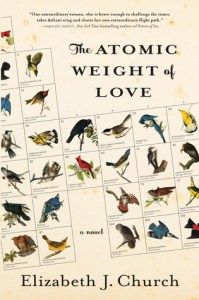 The Atomic Weight of Love by Elizabeth J. Church: In Church’s debut, an amateur ornithologist learns about love and sacrifice through marriage to a Los Alamos physicist and a relationship with a Vietnam veteran. Torn between two men who mean so much to her, Meri has to consider what her true duties are. “There was no good solution. No clear way out, no approach that would earn the Good Housekeeping Seal of Approval,” she wryly observes. I instantly warmed to Meri as a narrator and loved following her unpredictable life story. Church reveals the difficulty a woman of that time had in choosing her own path and making it fit into men’s plans, and shows how love, as the title suggests, can be a burden but also a thing of reassuring substance. Meri longs, like one of her beloved birds, to take flight into her dreams. Whether she gets there, and how, is a bittersweet trip but one you’ll be glad you went along for.
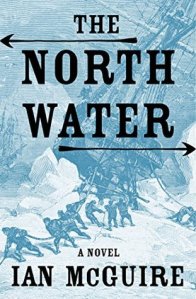 The North Water by Ian McGuire: A gritty tale of adventure and murder set aboard a mid-nineteenth-century whaling ship. Archaic adjectives pile up in a clever recreation of Victorian prose: “The men, empurpled, reeking, drenched in the fish’s steaming, expectorated gore.” Much of the novel is bleak and brutal like that. There are a lot of “F” and “C” words, too; this is so impeccably researched that I don’t doubt the language is accurate. McGuire never shies away from gory detail, whether that’s putrid smells, bodily fluids, animal slaughter, or human cruelty. I thought the novel’s villain was perhaps too evil, with no redeeming features. Still, this is a powerful inquiry into human nature and the making of ethical choices in extreme circumstances. From the open seas to the forbidding polar regions, this is a journey worth taking.
Foreword Reviews
Rediscovering the Immune System as an Integrated Organ by Peter Bretscher: A rigorous introduction to current immunological thought. Vocabulary terms are given in bold italics and defined in context on first use, and each chapter ends with a helpful synopsis. However, these summaries are almost as dense as the text itself, and the many acronyms are difficult to keep straight. Unlike a textbook, though, the book also contains welcome snippets of autobiography. Bretscher traces not just the evolution of immunological knowledge, but also the development of his own thinking. This will be an invaluable resource for students in search of a nonstandard immunology primer. With research under way into vaccinations against AIDS, tuberculosis, and cancer, the field has a bright future.
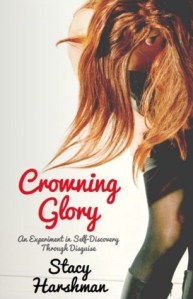 Crowning Glory: An experiment in self-discovery through disguise by Stacy Harshman: In 2005, Harshman decided to embark on a sociological experiment-cum-personal challenge: each week for six weeks she donned a different wig, and with the help of her assistant, Bonnie, she carefully recorded the reactions she received from onlookers and potential partners. Each day she chose three New York City locales, taking in events like lunch, happy hour, and late night socializing. Recalling the time she was hospitalized for a psychotic break in 2000, she marvels at how changing hairstyles could help her feel self-assured and sexy. The book is an appealing cross between a scientific study and a spy story.
Nudge
 All at Sea by Decca Aitkenhead: In May 2014, Aitkenhead, a Guardian writer, was on vacation with her partner Tony Wilkinson and their two young sons in Jamaica. A beautiful sunny morning turned disastrous when Tony swam out to rescue their son Jake and drowned. After the tragic events of the first chapter, this wrenching memoir retreats to consider the 10 years she and Tony (a former criminal and crack addict) spent as “the most implausible couple I have ever known.” More than half the book is devoted to the aftermath of Tony’s death, described in a matter-of-fact style that still manages to convey the depth of Aitkenhead’s pain. This is a unique combination of a journalist’s forthright storytelling and the ‘magical thinking’ Joan Didion introduced. Releases in the States on August 16th.
 Diary of a Short-Sighted Adolescent by Mircea Eliade: This rediscovered Romanian classic is what you might get if a teenage Adrian Mole was studying for a philosophy degree. Before picking this up I knew of Eliade as a commentator on world religions. I didn’t realize he also wrote novels. This is particularly special in that it’s a lost manuscript he wrote as a teenager; it was only discovered in a Bucharest attic after his death in the 1980s. The novel’s chief detriments – the repetitive nature of the sections about his schooling, and his obsessive introspection – are also, ironically, what make it most true to the adolescent experience. I’d recommend it to fans of My Brilliant Friend and Melanie Sumner’s How to Write a Novel.

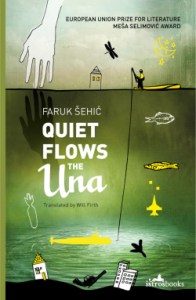 Quiet Flows the Una by Faruk Šehić: This autobiographical novel by a Bosnian poet and former soldier is full of poetic language and nature imagery. The narrator transcends his sordid war memories through his magical approach to life. Actual war scenes only come much later in the book; even then they are conveyed in such an abstract style that they seem more like hallucinations than remembered events. The lyrical writing about his beloved river provides a perfect counterpoint to the horror and absurdity of war. “We made this town, Bosanska Krupa, of black mire, yellow sand and green water borrowed from the Una. The tall towers of our town tickle God’s feet.” What most impressed me about passages like that one is the alliteration that shines through even after translation. I would highly recommend this to readers of Anthony Marra and Daniel Kehlmann.

 Shelter by Jung Yun: A Korean-American family faces up to violence past and present in this strong debut. Finances and relationships just keep going from bad to worse, as the novel’s tripartite structure suggests: “Dawn” cedes to “Dusk,” which descends into “Night.” You wonder just how terrible things can get – will this really reach the Thomas Hardy levels of tragedy it seems to portend? – until, in the incredible last 10 pages, Yun pulls back from violence and offers the hope of redemption. I did wonder if there were a few too many secondary characters. However, the Korean-American culture of honor and shame makes a perfect setting. I would recommend this to fans of David Vann and Richard Ford.
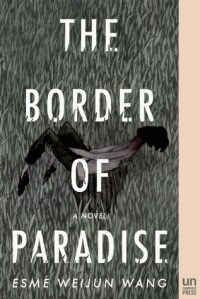 The Border of Paradise by Esmé Weijun Wang: Mental illness haunts an Asian-American family in this offbeat multi-generational saga. Wang’s debut novel opens in 1968 with David Nowak reporting from the motel room where he plans to kill himself. Succeeding portions of the novel are narrated from other perspectives: David’s wife Jia-Hui, aka Daisy, whom he met in Taiwan; then their son William and his half-sister Gillian. Jia-Hui’s narrative is the most entrancing. Presented as a translation, it includes occasional foreign characters or blank spaces where she couldn’t quite catch what someone was saying in English. Her sections are full of foreboding about the family legacy of madness. I was reminded most of A Reunion of Ghosts and All My Puny Sorrows. Something about this book left a slightly bitter aftertaste for me, but there’s no doubt Wang has fine plotting, character building, and prose skills.
 The Story of a Seagull and the Cat Who Taught Her to Fly by Luis Sepúlveda: Zorba, a fat black cat, will be alone this summer while his boy’s family go on holiday – convenient given the adventure that’s about to befall him. Kengah, an exhausted and oil-drenched seagull, lands on his balcony and lays a final, precious egg. She makes Zorba promise he will not eat the egg but will look after her baby and teach it to fly. He enlists his motley group of fellow cats at the port of Hamburg to help him figure out how to raise a chick. Sepúlveda, a Chilean author, was jailed under the Pinochet regime and was later on the crew of a Greenpeace ship. The environmental message here is noticeable but not overpowering. Geared towards confident nine- to eleven-year-olds, this might also be read aloud with younger children.
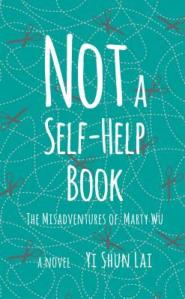 Not a Self-Help Book: The Misadventures of Marty Wu by Yi Shun Lai: Marty Wu is an advertising account executive for a NYC retirees’ magazine but dreams of opening her own costume shop. This debut novel is her Bridget Jones-esque diary, often written in a kind of shorthand style contrasting her goals with her seemingly inevitably failures, as in: “Crap. Is 4:00 a.m. Have breakfast meeting. Must sleep.” She’s constantly quoting to herself the advice and wisdom she’s gleaned from various motivational books she picked up in hopes of self-improvement. Lai writes engagingly about the contrasts between Taiwan and the States, especially the complexities of family roles. This is a lighthearted, summery read. Watch Marty ditch self-help books and start living the life she wants anyway.
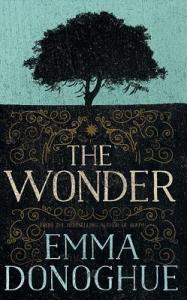 The Wonder by Emma Donoghue: A nurse investigates the case of an Irish girl surviving without food for months: miracle or hoax? The novel draws on about 50 historical cases of “Fasting Girls” that occurred in Europe and North America in the 16th to 20th centuries. It sets up a particularly effective contrast between medicine and superstition. Donoghue writes convincing, vivid historical fiction, peppering the text with small details about everything from literature to technology. This is the fifth book I’ve read by her, and it’s by far my favorite. With the two-week time limit and the fact that most scenes take place in the cabin – with just a handful set in other village locales like the bog and the pub where Lib stays – this has something of the flavor of a locked-room mystery. Releases September 20th.
Football by Jean-Philippe Toussaint: A nostalgic tour through a soccer fan’s highlights. Over the years Toussaint has realized what he loves about the sport: its seasonality (the World Cup “comes round every four years with the regularity of a leap-year seasonal fruit”) and the rituals of attending a match. On the other hand, he recognizes downsides, such as temporary permission given to chauvinism and the fact that it doesn’t age well – it’s an instant thing; one doesn’t tend to watch repeats. My favorite chapter, set in 2014, is less about sports and more about a hard time in the author’s personal life: he had recently lost his father and finished a ten-year novel sequence, leaving him unsure what to do next. I enjoyed his introspective passages about the writing life and the sense of purpose it gives his struggles. I was not the ideal reader, given my general antipathy to sports and my unfamiliarity with the author. All the same, I can see how this would appeal to fans of Fever Pitch.
 Bookish Beck = Rebecca Foster. American transplant to England. Freelance proofreader and book reviewer.
 Bookish Beck