Three for the First Day of Spring: Renkl, Sukegawa and Tucker
I suppose the best kind of spring morning is the best weather God has to offer.
~I Capture the Castle by Dodie Smith
Happy spring! (Although the blossom is fading and, going by the temperature the past few days, you might think it was early summer here.) When I borrowed the psychological thriller The First Day of Spring from the library, I decided to consider that my built-in review deadline. As is my wont, I’ve turned it into a trio with two books more laterally related to spring: a lovely book of miniature autobiographical essays about interactions with family and the natural world, and a short Japanese novel about misfits who find belonging at a pancake restaurant.
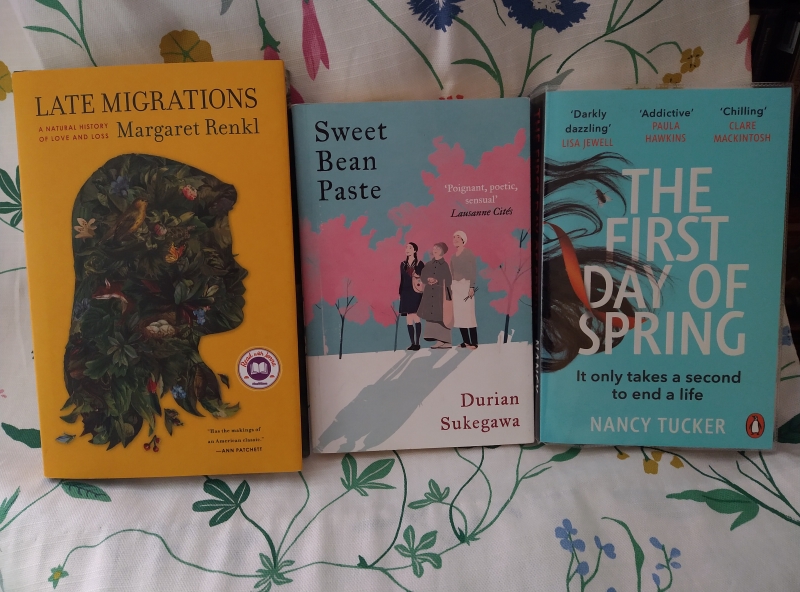
Late Migrations: A Natural History of Love and Loss by Margaret Renkl (2019)
My favorite season is spring—until fall arrives, and then my favorite season is fall: the seasons of change, the seasons that tell me to wake up, to remember that every passing moment of every careening day is always the last moment, always the very last time, always the only instant I will ever take that precise breath or watch that exact cloud scud across that particular blue of the sky.
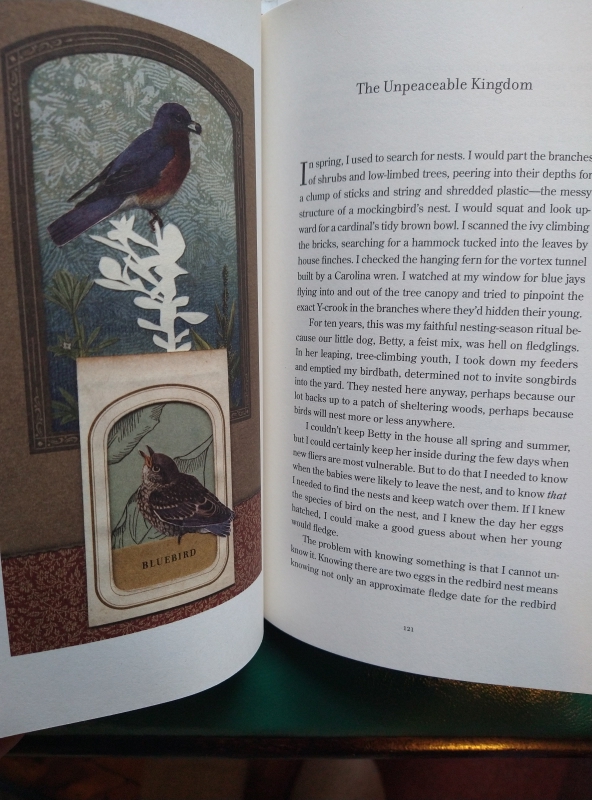
 The memoir in flash essays is one of my favourite niche forms. (Beth-Ann Fennelly and Abigail Thomas also do it exceptionally well.) It took me a long time to promote this book from occasional bedside reading pile to daytime stack, but at a certain point it became impossible to let it out of my hands for very long. I had to smell it and browse her brother Billy’s collage artworks. Each piece is somewhere between a paragraph and several pages long, and they make up a rough chronology of a life, from her grandmother’s memories of the 1930s onward (the passages in italics are interview transcripts) through to the present day.
Renkl grew up in Alabama in the 1960s–70s, in the sort of mildly dysfunctional family that most of us probably have. She contrasts what she knew as a child with what she didn’t. It was a happy childhood but. (Her mother’s recurring mental health problems and racial tensions in the South would be two ways to finish that sentence.) There were hounds and porch seats and three kids in the backseat on vacations. There were funerals and old love songs and Bible verses and playing in the woods. Grandmother tells of births and deaths, and Renkl remembers life’s transitions: getting her first period, being so homesick that she couldn’t finish college in Philadelphia, adjusting to early motherhood and then to an empty nest – an appropriate metaphor because many of the essays are about birds Renkl watches feeding and nesting. She isn’t naïve; she knows nature is cruel. Not every fledgling will survive and majestic hawks will kill equally beautiful songbirds. She realizes how dire the situation is for monarch butterflies, too, but keeps planting milkweed at her Nashville home.
This balancing of appreciation for life and acceptance of death is at its finest in the late pieces on her parents’ death. Her mother, like mine, died suddenly after a stroke, and her words on that loss are exquisite as well as painful. Still, she asserts, “Human beings are creatures made for joy. Against all evidence, we tell ourselves that grief and loneliness and despair are tragedies, unwelcome variations from the pleasure and calm and safety that in the right way of the world would form the firm ground of our being.”
Like Ross Gay and Aimee Nezhukumatathil, Renkl brings a poet’s eye for language and an amateur’s awe at the natural world to her micro-essays. She calls a cedar waxwing “An operatic aria of a bird. A flying jungle flower. A weightless coalescence of air and light and animation.” This is a book to cherish and learn from and reread. (Birthday gift from my sister from my wish list) 
{SPOILERS IN THESE NEXT TWO REVIEWS}
Sweet Bean Paste by Durian Sukegawa (2013; 2017)
[Translated from Japanese by Alison Watts]
 It was the colours (especially that wash of cherry-blossom pink) that first attracted me to this book, and the foodie theme that kept me reading. Sentaro manages a small shop on Cherry Blossom Street, Doraharu, which sells dorayaki – pancakes filled with sweet bean paste (“during cherry-blossom season petals sometimes drifted in, falling into the pancakes as they cooked”). He takes little pride in the work; it’s just a way to keep busy and pay off his debts from the time he was in prison for drug-dealing. When an elderly woman named Tokue offers to make the sweet bean paste for a pittance, he decides to give her a trial even though he usually orders it in bulk. Tokue’s homemade is so much better that the shop is soon making record profits. She trains Sentaro up in the art of making the perfect paste, which to her is a mystical process that involves listening to the beans. Not only does Tokue have new ideas for the menu, but she also makes troubled teenage customers such as Wakana welcome with friendly conversation. Along with Marvy the canary, these three form a fragile little family.
But then rumours start spreading about Tokue and her health, and Doraharu’s owner threatens to shut the place down if Sentaro doesn’t let her go. It turns out that she had Hansen’s disease (the preferred term for leprosy) and lives in a sanatorium. Even though she has long since been cured, there is still a stigma, and when she was young she could only find love and community among her fellow patients. In an Author’s Note, Sukegawa explains that the legislation keeping Hansen’s patients isolated was only repealed in 1996. His philosophy, made explicit in the letters Tokue writes to Sentaro after leaving the shop, is that one doesn’t have to be useful to have a meaningful life; simply being alive and observing is enough. I found Tokue saccharine: too wise, good and all-forgiving. This is easy reading, yet the dialogue felt stiff, the characterization thin, the letters unsubtle, and the detail of confectionery-making too technical. Secondhand – public library book sale) 
The First Day of Spring by Nancy Tucker (2021)
I’d very much admired Tucker’s first two books – The Time in Between, a memoir of her childhood anorexia; and especially That Was When People Started to Worry, case studies of young women’s mental health – so asked my library to purchase her debut novel. Tucker is a trainee clinical psychiatrist. The psychological insight she’s developed professionally and through writing about herself and others served her well in crafting this portrait of a deprived girl who murders other children. I could have included it in my Mother’s Day post because, as in the similarly dark Like Mother (by Jenny Diski), it’s the lack of a mother’s love that leaves the protagonist numb and unsure of how to bring up her own daughter.
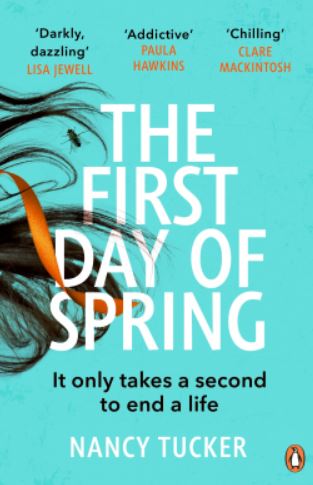 It’s no whodunit because eight-year-old Chrissie admits in the novel’s first line, “I killed a little boy today.” The mystery is why, and how she’s ultimately caught. It’s the first day of spring when she commits that first murder, of a toddler who lives on the same rough housing estate. Her house isn’t much of a home with no money for electricity, no food in the cupboards, an emotionally absent mother and a father who comes and goes without warning. Chrissie is always hungry, always craving. She couldn’t stand that Steven was loved and coddled while she had nothing. Harbouring “a delicious secret” gives her a “belly-fizzing feeling … like sherbet exploding in my guts. … That was all it took for me to feel like I had all the power in the world.” She wants to tell people what she’s done, but knows she mustn’t.
It’s also the first day of spring when five-year-old Molly falls from a seawall and breaks her wrist. Her mum, Julia, panics when she gets a call from child social services. It becomes clear by the second chapter that Julia is the new name Chrissie was given when she left the residential home for child offenders to start a new life. Sure that they’ll blame her and take Molly away, she gets on a train back to her old neighbourhood to see Mam and her childhood best friend, Linda. “I remembered this in Mam – the pull and push, cling and reject.” The subject matter might have become unbearable had Tucker emphasized the salacious details. Instead, she casts a compassionate eye on generational patterns of neglect and incompetence – patterns that can be broken through hard work. It’s riveting reading, and Julia’s love for Molly and Linda’s enduring friendship brought tears to my eyes. (Public library) 
Three on a Theme for Mother’s Day: Baker, Diski and Sampson
It’s Mothering Sunday in the UK today, so, like last year, I’m featuring three very different books about mothers and motherhood: a memoir, a novel and a poetry anthology. There are complex emotions at play in the first two due to grief, abuse and disability. The poems are cheerier (thankfully) and reflect on the experience of motherhood but also of being mothered. On that last point, I’ve added my response to a relevant short story I happened to read today.
Reading My Mother Back: A memoir in childhood animal stories by Timothy C. Baker (2022)
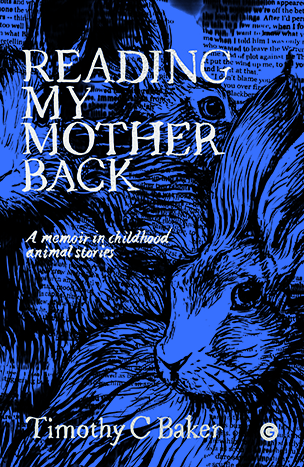 Baker is a lecturer in Scottish literature at the University of Aberdeen. His first non-academic publication is a curiously beguiling novella-length reappraisal of favourite children’s books. “To misquote Heraclitus, you cannot read the same book twice.” While he’s sheepish about including so many 19th- and early-20th-century white male authors, he can’t do otherwise as these are the texts that first taught him about death, loneliness and friendship: Charlotte’s Web, The Wind in the Willows, The Magician’s Nephew and Watership Down. (Also The Secret Garden.) Baker grew up in Maryland and Vermont, lonesome and closeted, with parents who briefly joined a cult. In his memory, his mother (who had been abused) always suffered with chronic illness and pain. In each chapter, he weaves together a discussion of a plot with stories from his early life and critical opinion on the value of rereading. It helped that I was familiar with six of the nine books Baker features (and others by Gallico, though not The Man Who Was Magic); I’d not even heard of Merle the High Flying Squirrel or The Book of the Dun Cow.
I spotted this in the Wigtown Festival Shop* on our 2023 visit to Scotland’s Book Town and could hardly believe it existed because it seemed so perfectly suited to me: I loved animal books, especially Watership Down, as a child; I’ll read any bereavement memoir going; I grew up 30 miles from Baltimore, where Baker spent his early life; he and I both had strict religious upbringings; and his mother experienced kidney failure (after eating a foxglove??), a link to my family’s history of kidney disease. There are plentiful differences, too, of course, but Baker emphasises connection. “If reading these books has taught me anything,” he concludes, “it is that all of my stories are individual, and all of them are universal. What we share is the unshareability of our grief … [but also] the joy of knowing that we have loved.” And for such a seemingly niche book (from Goldsmiths Press), I have actually found myself mentioning it to two blogger friends in recent days, so that’s proof he was right. 
[*As to how the book finally came into my possession: I added it to my wishlist and an acquaintance (a former mayor of Newbury, in fact) bought it for me for my 40th birthday. However, he forgot to bring the gift to our joint party and it took another 2+ years to extract it from him – through explicit reminders when we invited him to join us on a quiz team.]
Like Mother by Jenny Diski (1988)
I’ve enjoyed the late Jenny Diski’s travel memoirs (Skating to Antarctica and Stranger on a Train) and essays (On Trying to Keep Still). This novella was my first taste of her fiction and, while it’s dark as hell, I admired the psychological acuity and playfulness with narration. Occasional chapters introduce a dialogue between Nony and an imaginary interlocutor whose role is to listen to the story of her mother, Frances, a former dancer. That family history is the substance of the rest of the book, which is in an omniscient third person. The artificiality of the setup is blatant, though; Nony can neither think nor speak, having been born without a brain (hydranencephaly). Nony’s full name is thus Frances’s cruel joke.
By necessity, the story stretches back to Frances’s parents, Ivy and Gerald, whose postwar optimism soon ceded to the reality of addiction, adultery and the attrition of love. A semiferal Frances escaped her unhappy home for the streets of London and engaged in sex play with Stuart on a bombsite. This went on for years. For Stuart, it blossomed into genuine love, but the numb Frances could never return his feelings and only used him. There are some really painful scenes here, such as Stuart stealing ether from the chemistry supply cupboard so she can huff herself into temporary oblivion, and a drunk Ivy molesting adolescent Frances. “Like mother, like daughter” is a bitter confirmation of inherited trauma. Nony might well be a symbolic manifestation of Frances’s desire to cultivate nothingness. To the extent that she is a literal baby – I’m really not sure – Frances does seem to love her and care for her physical needs, even as she’s grateful that the relationship will be short-lived.
Diski draws attention to the falsity of her narrative technique at the very end. It’s a disturbing yet intriguing novel that I think must be trying to make a wider point about postwar disillusionment. (Enough to make one question one’s growing antipathy towards Boomers?) I was reminded faintly of Nutshell by Ian McEwan, which is from the perspective of a fetus, and I Am Clarence by Elaine Kraf, a troubling story of a mentally ill mother and her disabled son. I have another novella plus a short story collection by Diski on the shelf, and I daresay after those I’ll have to seek out everything else she wrote. (University library)
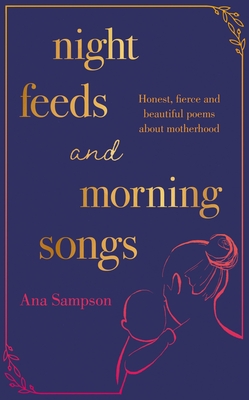
Night Feeds and Morning Songs, ed. Ana Sampson (2021)
“I crossed the border into the Republic of Motherhood
and found it a queendom, a wild queendom.”
~Liz Berry
It would have been easy to make such an anthology samey and sentimental, so kudos to Sampson for curating a solid mix of contemporary and period work. The poems are grouped into loose categories covering pregnancy, the sleepless nights of early motherhood, the power of womanly solidarity, the legacy (or absence) of one’s own mother, and the milestones of life as a child grows up and moves away. (Jackie Kay marvels that her baby boy is now a 6-foot-2 world traveller.) However, there are almost as many emotional approaches and poetic forms as there are contributors. Exhilaration meets exhaustion; guilt and grief threaten to overwhelm the good times. Sometimes the infant is addressed directly. The tone might be sombre, outraged or satirical. A few excerpts:
from “Labour Ward Prayer” by Vicky Thomas
Give us this day our daily miracle.
Exchange our offering of sweat and tears
and, most of all, of blood,
for new life, crumpled as a new leaf bud.
 from “The Visitor” by Idra Novey
…more dragon
than spaniel, more flammable
than fluid …
All wet mattress to my analysis,
he’s stayed the loudest and longest
of any houseguest
from “What My Kids Will Write about Me in Their Future Tell-All Book” by January Gill O’Neil
They will say that no was my favourite word,
More than stop, or eat, or love.
That some morning, I’d rather stay in bed,
laptop on lap, instead of making breakfast
…
They will say they have seen me naked.
Front side, back side – none of which
were my good side.
I enjoyed re-encountering work by some personal favourite poets such as Caroline Bird, though most entries were new to me. Sampson’s section introductions aren’t particularly illuminating and often reference poems that aren’t actually in the part in question. Some of the 19th-century and earlier material is quaintly twee, but I did love discovering Christina Rossetti’s “To My First Love, My Mother.” This is the poem that made me cry, though:
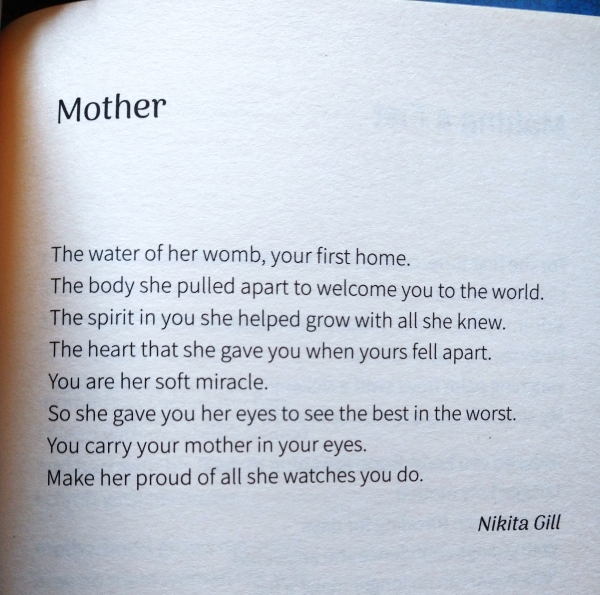
(Little Free Library)
And a bonus short story:
 “Egg Mother” by Kim Samek (from I Am the Ghost Here): I’m two stories into Samek’s gently surreal collection. This second story combines the themes of parenting and grief prevalent above. Her openings are knockout: “At thirty-six I turn into a scrambled egg. It happens a few months after I give birth.” In therapy, the narrator discovers that she’s been repressing her grief over her mother, who died of cancer when the narrator was 13. The therapist suggests that she and her husband hold a joint ‘funeral’ for her mother and her younger self in a graveyard. But even after the ritual, she doesn’t return to herself. It’s a sobering but realistic message: some things one just doesn’t get over.
“Every story that I read becomes the story of my mother.”
~Timothy C. Baker
Last night, we saw Brooklyn expat singer-songwriter Annie Dressner (and Sean Duggan of Steady Habits) in concert at a church hall. I was mostly underwhelmed by her quirky confessional songs and little-girl voice, but a couple of songs stood out for me. One, “I Just Realized,” includes the line “And I hope that I can be just like my mother.”
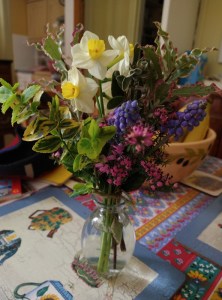
Today was a more emotional day than I was expecting. I got a sweet posy from church, but having a whole service focussed on mothers and mothering was hard for me. I had to mostly switch off to get through it.
Just in my current stack, there are so many books about mothers or mothering…
 the loss of a mother (Eva Luna by Isabel Allende; The Memory of Borrowed Books by Meg Anderson; The Curious Incident of the Dog in the Night-Time by Mark Haddon; Late Migrations by Margaret Renkl; I Capture the Castle by Dodie Smith) – so common an element in novels that I have to think it’s shorthand for a character who has to pluckily rely on their own psychological resources
- mothers’ protective instinct (The Benefactors by Wendy Erskine)
- emotional distance from an unstable mother (Carrie by Stephen King; First Rain in Paradise by Gwyneth Lewis; Blonde by Joyce Carol Oates; The First Day of Spring by Nancy Tucker, which also includes the struggle to be a good mother in turn)
- mixed feelings about the inability to have a child (Mare by Emily Haworth-Booth)
- a mother’s grief at the loss of a child (Ordinary Saints by Niamh Ni Mhaoileoin)
I know it’s a subject I’ll be reading and thinking about for the rest of my life.
November Releases Including #NovNov24: Bennett, Pimlott, Rishøi, Shattuck
Two belated novellas: one a morbid farce set at an old folks’ home; the other a sweet Norwegian tale that offers sisterhood and magic as ways to survive a rough upbringing. Plus a lovely poetry pamphlet about the early days of widowhood and a linked short story collection spanning several centuries of art and relationships in New England.
Killing Time by Alan Bennett
I’d only previously read The Uncommon Reader by Alan Bennett; I perpetually have him confused with Arnold Bennett, by whom I know more. It could be debated whether this is a novella by word count, but even if more of a short story, for me it counts for #NovNov24 because it’s in a stand-alone volume, as publishing partner Faber produced for Claire Keegan’s So Late in the Day last year.
I polished this off in one sitting. Bennett’s black comedy is set at a posh home for the elderly, the Edwardian mansion Hill Topp House. (Residents know to be on their best behaviour lest they be demoted to an inferior neighbouring facility, Low Moor.) When a prospective client calls, Mrs McBryde enthusiastically lists the assets:
We have a choir and on special occasions a glass of dry sherry. It’s less of a home and more of a club and very much a community. We go on frequent trips out. Only last week we went to a local farm where they have a flamingo. … We don’t vegetate at Hill Topp. And the cuisine is not unadventurous. It’s not long since we had a Norwegian evening.
 The dialogue is sparkling, just like you’d expect from a playwright. As in the Hendrik Groen books and Elizabeth Taylor’s Mrs Palfrey at the Claremont, the situation invites cliques and infantilizing. The occasional death provides a bit more excitement than jigsaws and knitting. Ageing bodies may be pitiable (the incontinence!), but sex remains a powerful impulse.
Here is where readers might start to feel disconnected from Bennett’s dated humour. The window cleaner turned gigolo is somewhat amusing; the repeated gag of a flasher, not so much. “Has she seen the sights yet?” two ladies ask. And a jesting conversation about clerical sexual abuse scandals seems particularly ill considered given recent news.
The story is most interesting and fresh once Covid comes onto the scene. Some perish early on; the survivors, ungoverned, do their best. I loved the detail of a resident turning a velvet dress into 60 masks. Two objects, one of them depicted on the cover (it’s not a grenade as I thought at first!), come to have particular importance. I liked this but thought by favouring broad humour it sacrificed characterization or compassion. You’ll enjoy it if you’re fond of wicked comedy by the likes of Alan Ayckbourn. [112 pages]
With thanks to Profile Books for the free copy for review.
After the Rites and Sandwiches: Poems by Kathy Pimlott
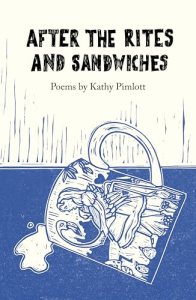 The 18 poems in this pamphlet (in America it would be called a chapbook) orbit the sudden death of Pimlott’s husband a few years ago. By the time she found Robert at the bottom of the stairs, there was nothing paramedics could do. What next? The callousness of bureaucracy: “Your demise constitutes a quarter off council tax; / the removal of a vote you seldom cast and then / only to be contrary; write-off of a modest overdraft; / the bill for an overpaid pension” (from “Death Admin I”). Attempts at healthy routines: “I’ve written my menu for the week. Today’s chowder. / I manage ten pieces of the 1000-piece jigsaw’s scenes / from Jane Austen. Tomorrow I’ll visit friends and say // it’s alright, it’s alright, seventy, eighty percent / alright” (from “How to be a widow”). Pimlott casts an eye over the possessions he left behind, remembering him in gardens and on Sunday walks of the sort they took together. Grief narratives can err towards bitter or mawkish, but this one never does. Everyday detail, enjambment and sprightly vocabulary lend the wry poems a matter-of-fact grace. I plan to pass on my copy to a new book club member who was widowed unexpectedly in May – no doubt she’ll recognise the practical challenges and emotional reality depicted.
With thanks to The Emma Press for the free copy for review.
Brightly Shining by Ingvild Rishøi (2021; 2024)
[Translated from the Norwegian by Caroline Waight]
 Ten-year-old Ronja and her teenage sister Melissa have to stick together – their single father may be jolly and imaginative, but more often than not he’s drunk and unemployed. They can’t rely on him to keep food in their Tøyen flat; they subsist on cereal. When Ronja hears about a Christmas tree seller vacancy, she hopes things might turn around. Their father lands the job but, after his crew at a local pub pull him back into bad habits, Melissa has to take over his hours. Ronja hangs out at the Christmas tree stand after school, even joining in enthusiastically with publicity. The supervisor, Tommy, doesn’t mind her being around, but it’s clear that Eriksen, the big boss, is uncomfortable with even a suggestion of child labour.
It’s touching to see Melissa take on a caring role and to meet the few indisputably good people who help the sisters, such as their elderly neighbour, Aronsen. Ronja’s innocent narration emphasizes her disbelief at their father’s repeated failings and also sets the story up for a late swerve into what seems like magic realism. I’m genuinely not sure what’s supposed to happen at the end, but the sisters find themselves alone in a wintry storm and the language of miracles is used. Rishøi’s debut will surely be compared to Small Things Like These and other classic holiday novellas. I found it a little obvious and saccharine, but if you find the right mood and moment it might just tug at your heart in the run-up to Christmas. [182 pages]
With thanks to Grove Press UK for the free copy for review.
The History of Sound by Ben Shattuck
“history is personal, even when it isn’t”
The dozen stories of Shattuck’s fiction debut form a “hook-and-chain” structure of five couplets, bookended by a first and last story that are related to each other. The links are satisfyingly overt: A pair might take place in the same house in different centuries, or the second will fill in the history of the characters from the first. In “Edwin Chase of Nantucket,” the eponymous figure recognizes his bereaved mother’s loneliness and does her a kindness. “Silver Clip,” which follows, is separated by 200 years, but its accounts of a young painter living in his ancestral island home reprises the motifs of grief, compassion and memory. “Graft,” about a woman spurned in the 1880s, and “Tundra Swan,” in which a man concocts a swindle to pay for his son’s rehab in the present day, are connected by a Cape Cod orchard. Artefacts and documents also play important roles: a journal accounts for a mysterious mass death, a radio transcript and a photograph explain a well-meaning con, and an excerpt from a history textbook follows up on the story of the religious cult in “The Children of New Eden.”
 My favourite individual story was “August in the Forest,” about a poet whose artist’s fellowship isn’t all it cracked up to be – the primitive cabin being no match for a New Hampshire winter. His relationships with a hospital doctor, Chloe, and his childhood best friend, Elizabeth, seem entirely separate until Elizabeth returns from Laos and both women descend on him at the cabin. Their dialogues are funny and brilliantly awkward (“Sorry not all of us are quietly chiseling toward the beating heart of the human experience, August. One iamb at a time”) and it’s fascinating to watch how, years later, August turns life into prose. But the crowning achievement is the opening title story and its counterpart, “Origin Stories,” about folk music recordings made by two university friends during the First World War – and the afterlife of both the songs and the men.
From the start I was reminded strongly of North Woods by Daniel Mason, and particular sequences recall Shoot the Horses First by Leah Angstman and An Account of the Decline of the Great Auk, According to One Who Saw It by Jessie Greengrass. It’s a slight shame for Shattuck that what he was doing here didn’t seem as original to me because of my familiarity with these predecessors. Yet, to my surprise, I found that The History of Sound was more consistent than any of those. With the exception of a few phrases from “Graft” (“living room,” “had sex” and “boring” don’t strike me as 1880s lingo), all of the stories are historically convincing, and the very human themes of lust, parenthood, sorrow and frustrated ambition resonate across centuries and state lines. Really beautiful. (See Susan’s review too.)
[Some you-couldn’t-make-it-up trivia about Shattuck: he’s married to Jenny Slate (author of Little Weirds et al., as well as an actress known to me as Mona Lisa from Parks and Recreation); and he runs the oldest general store in America, built in 1793.]
With thanks to Swift Press for the free copy for review.
Which of these November releases catches your eye? What others can you recommend?
Carol Shields Prize Longlist: A Council of Dolls by Mona Susan Power
my doll is a collector of tragedy … the device I use to hide from something I already know
Mona Susan Power’s fourth novel, A Council of Dolls, is an Indigenous saga that draws on her own family history. Through first-person narratives by three generations of Dakhóta and Lakhóta women, she explores the ongoing effects of trauma resulting from colonialist oppression. The journey into the past begins with Sissy, a little girl in racist 1960s Chicago with an angry, physically abusive mother, Lillian. This section sets up the book’s pattern of ascribing voice and agency to characters’ dolls. Specifically, Sissy dissociates from her own emotions and upsetting experiences by putting them onto Ethel, her Black doll. Power relies on the dramatic irony between Sissy’s childhood perspective and readers’ understanding.
Moving backward: In 1930s North Dakota, we see Lillian coping with her father’s alcohol-fuelled violence by pretending she is being directed in a play. She loses her Shirley Temple doll, Mae, in an act of charity towards a sickly girl in the community. Lillian and her sister, Blanche, attend an Indian school in Bismarck. Run by nuns, it’s even crueller than the institution their parents, Cora and Jack, attended: the infamous Carlisle Indian Industrial School in Pennsylvania (also a setting in Wandering Stars by Tommy Orange). Cora’s beautifully introspective journal from the 1910s reveals the systematic cultural annihilation that took place there. Her doll, Winona, rescued from a massacre in the time of Sitting Bull, was on the pyre of precious belongings – tribal costumes, instruments, medals, sacred feathers – burned on students’ arrival. But her stone heart survives as a totem of resilience.

This is a powerful but harrowing story. The characterization and narration are strong, and the nesting-dolls structure means we get glimpses into the future for all three protagonists. However, I was disappointed by a number of Power’s decisions. It appeared that a fourth and final narrator close to the present day would introduce another aspect, but in fact Jesse is a new name that Sissy chose for herself. Now a 50-year-old academic and writer, she becomes a medium for the dolls’ accounts – but this ends up repeating material we’d already encountered. The personification of familial tragedy in the figure of “the injured woman” who appears to Cora verges on mawkish, and the touches of magic realism to do with the dolls sit uneasily beside clinical discussions of trauma. In Jesse’s section, there is something unsubtle about how this forms the basis of a conversation between her and her friend Izzy:
(Jesse thinks) “I wanted that chance to break the chain of passing on harmful inner scripts, the self-loathing that comes from brutally effective colonization.”
(Izzy says) “whoo, that’s a big fat pipe full of misery … Our people have been pathologized from the very beginning. Still are.”
It’s possible I would have responded to this with more enthusiasm had it been packaged as a family memoir. As it is, I was unsure about the hybridization of autofiction and magic realism and wondered what white readers coming to the novel should conclude. I kept in mind Elaine Castillo’s essay “How to Read Now,” about her sense of BIPOC writers’ job: “if our stories primarily serve to educate, console and productively scold a comfortable white readership, then those stories will have failed their readers”. Perhaps Power’s novel was not primarily intended to serve in that way.
I’ll let her have the last word, via the Author’s Note: “outrageously prejudiced depictions of my ancestors and our people are one reason I became a writer. From childhood I felt an urgent need to speak my truth, which was long suppressed. Writing this book was a healing endeavor. May it support the healing of others.”
With thanks to publicist Nicole Magas and Mariner Books for the free e-copy for review.
This was a buddy read with Laura; see her review here.
Before the shortlist is announced on 9 April, I plan to review my two current reads, Cocktail by Lisa Alward and Land of Milk and Honey by C Pam Zhang, and concoct a personal wish list.
#ReadIndies Catch-up: Ansell, Kinard, McNaught, Ponce, Toews and Vara
At last, my first dedicated selections for Read Indies month, two of which have been languishing on the shelf since 2022! A few more indie titles will appear in my February roundup tomorrow. I’ve got a huge variety here: an extended essay comparing life among the unhoused in London in the 1980s with the freedom of the open road and the island of Jura; gospel-saturated poems of queer African American life; an exposé of spiritual abuse in a Pentecostal church with branches in England and Nigeria; an Ecuadorian novella obsessed with bodies and sex; a funny yet heartbreaking novel about a zany family trying not to fall apart; and short stories about siblings, adolescence, memory, death and much more. I name the publishers and other books I have on the docket from each one.

Deer Island by Neil Ansell (2013)
 My last unread book by Ansell (whose Deep Country, The Last Wilderness, and The Circling Sky I’ve loved) and one that had been out of print for many years, so it was great to hear that Little Toller was reissuing it. Ansell has visited most countries; pressed for a favourite place, he names the Scottish isle of Jura. In memory he returns to a place he hadn’t been in over 20 years. In the early 1980s he lived in London and volunteered with The Simon Community, a homeless charity, for three years. Later that decade, he found himself in the same situation as those he served, squatting in chaotic multi-occupancy London properties. But in between he’d had a magical jaunt to Jura by hitchhiking and motorbike with a girlfriend. And later, when his only sentimental keepsake was stolen from his squat bedroom, he left that lifestyle behind and fled to Jura, haunt of golden eagles and otters; refuge for George Orwell, who experienced his fair share of squalor – Down and Out in Paris and London gets a mention, but Ansell doesn’t belabour a comparison he more than earns. It’s a shame this is so short, but it’s a carefully crafted slice of life, and illustrates a sobering truth: “Security is an illusion.”
With thanks to Little Toller Books for the free copy for review. Deer Island came out in paperback on 27 February.
Little Toller
Also read recently: brother. do. you. love. me. by Manni Coe
Currently reading: The Long Field by Pamela Petro
Orders of Service by Willie Lee Kinard III (2023)
 At a confluence of Southern, Black and gay identities, Kinard writes of matriarchal families, of congregations and choirs, of the descendants of enslavers and enslaved living side by side. The layout mattered more than I knew, reading an e-copy: often it is white text on a black page; words form rings or an infinity symbol; erasure poems gray out much of what has come before. “Boomerang” interludes imagine a chorus of fireflies offering commentary – just one of numerous insect metaphors. Mythology also plays a role. “A Tangle of Gorgons,” a sample poem I’d read before, wends its serpentine way across several pages. “Catalog of My Obsessions or Things I Answer to” presents an alphabetical list. For the most part, the poems were longer, wordier and more involved (four pages of notes on the style and allusions) than I tend to prefer, but I could appreciate the religious frame of reference and the alliteration.
Two favorite passages:
Ma taught me how to change a tire
the fall before it got real cold one October,
on the plot of dirt the pole beans we call Babel
spiral from, where our boozy station wagon
sat after hobbling home & passing out
in the backyard
(from “Work”)
I left before the door was closed.
I built myself of drowning hymns.
I stole every one to fly.
(from “Icarus Confesses”)
With thanks to Alice James Books for the advanced e-copy for review.
Alice James Books
Also read recently: Theophanies by Sarah Ghazal Ali
Immanuel by Matthew McNaught (2022)
 “Immanuel was the centre of the world once. Long after it imploded, its gravitational pull remains.” McNaught grew up in an evangelical church in Winchester, England, but by the time he left for university he’d fallen away. Meanwhile, some peers left for Nigeria to become disciples at charismatic preacher TB Joshua’s Synagogue Church of All Nations in Lagos. It’s obvious to outsiders that this was a cult, but not so to those caught up in it. It took years and repeated allegations for people to wake up to faked healings, sexual abuse, and the ceding of control to a megalomaniac who got rich off of duping and exploiting followers. This book won the inaugural Fitzcarraldo Editions Essay Prize. I admired its blend of journalistic and confessional styles: research, interviews with friends and strangers alike, and reflection on the author’s own loss of faith. He gets to the heart of why people stayed: “A feeling of holding and of being held. A sense of fellowship and interdependence … the rare moments of transcendence … It was nice to be a superorganism.” This gripped me from page one, but its wider appeal strikes me as limited. For me, it was the perfect chance to think about how I might write about traditions I grew up in and spurned.
With thanks to Fitzcarraldo Editions for the proof copy for review.
Fitzcarraldo Editions
Currently reading: Intervals by Marianne Brooker
Up next: Alphabetical Diaries by Sheila Heti
Blood Red by Gabriela Ponce (2020; 2024)
[Translated from the Spanish by Sarah Booker]
 Like other short works I’ve read by Hispanic women authors (Die, My Love, September and the Night, In Vitro), this Ecuadorian novella is intense, fragmentary, and obsessed with the female body and psyche. The unnamed narrator, a woman separated from her husband and freed from inhibitions, gives in to her substance and sex addictions – “For me, anything that isn’t falling in love has never merited much attention. That giddiness from proximity or bodies”. I was reminded of A Spy in the House of Love in that she flits compulsively from one lover to another, but Ponce is much more explicit than Nin. At least at the start, the sex scenes are almost constant and described in graphic detail. The narrator meets her lovers in warehouses and caves. Literal holes/orifices and blood are profuse, but also symbolically weighty, with fear of pregnancy also featuring heavily. I was impressed at how Booker rendered the stream-of-consciousness approach, which involves several-page paragraphs and metaphors of moths and moss. I wouldn’t say this was a pleasant book to spend time with, but the style and vocabulary made it worthy of note.
With thanks to Dead Ink for the free copy for review. Blood Red was first published in English by Restless Books in the USA in 2022.
Dead Ink
Up next: Sinking Bell by Bojan Louis
Fight Night by Miriam Toews (2022)
 I knew from All My Puny Sorrows that Canadian author Miriam Toews has a knack for combining humour and heartbreak. I can’t believe it took me since 2015 to read another of her novels. Once again, there seems to be a strong autobiographical element and suicide in the family is part of the backstory. Although abandonment and failure haunt these three female generations, we see everything through a child’s point-of-view, which turns life into a jolly adventure. Swiv’s mother, an underemployed actress, is heavily pregnant with “Gord”; her father is out of the picture. Swiv has been expelled, which gives her plenty of time with Grandma Elvira, who makes friends with everyone she meets but, alas, is crumbling physically. Luckily, Swiv knows just how to keep her going with nitro spray and compression socks and pills rescued from the floor. Before Gord arrives, Grandma wants one last adventure: a flight from Canada to Fresno, California to see her remaining family. Their trip is a disaster, in hilarious ways. Child narrators are tough to pull off, so kudos to Toews for making eight-year-old Swiv almost completely believable (though a bit too precocious). These characters are all foul-mouthed fighters, with a quick wit and the determination to make their stories matter. You’ll laugh and cry.
With thanks to Faber for the proof copy for review.
Faber
Also read recently: Happiness Falls by Angie Kim
Currently reading: Places I’ve Taken My Body by Molly McCully Brown
This Is Salvaged by Vauhini Vara (2023)
 The epigraph is from the two pages of laughter (“Ha!”) in “Real Estate,” one of the stories of Birds of America by Lorrie Moore. Vara shares Moore’s themes, which are the stuff of literary fiction generally – adolescence, friendship, ageing, memory, romantic relationships – but also her tone of dark comedy. The death of a sibling recurs. In “The Irates,” teenage Swati, whose brother died of cancer, and her friend Lydia get phone sales jobs through the Chinese restaurant where they go for egg rolls. In “I, Buffalo,” Sheila tries to hide her alcoholism when her sister Priya comes for a visit with Sheila’s brother-in-law and niece. “The girl” in “You Are Not Alone” is delighted to spend her eighth birthday in Florida with her estranged father, but less so when she learns there’s a stepmother figure in the picture. The women of “Sibyls” look after an elderly neighbour with dementia. The querulous child in “Unknown Unknowns” reminded me of Good Talk by Mira Jacob. My two favourites were the title story, about building a Noah’s Ark replica, and “What Next,” about a woman accompanying her teenage daughter to meet her father for the first time. A few stories didn’t stand out, and while I liked the writing, this didn’t necessarily feel like a cohesive collection.
With thanks to Grove Press UK for the free copy for review. This Is Salvaged came out in paperback in the UK on 1 February.
Grove Atlantic
Up next: Get the Picture by Bianca Bosker, Home/Land by Rebecca Mead, We Play Ourselves by Jen Silverman
Have you discovered any new-to-you independent publishers recently?
A Contemporary Classic: Foster by Claire Keegan (#NovNov22)
This year for Novellas in November, Cathy and I chose to host one overall buddy read, Foster by Claire Keegan. I ended up reviewing it for BookBrowse. My full review is here and I also wrote a short related article on Keegan’s career and the unusual publishing history of this particular novella. Here are short excerpts from both:
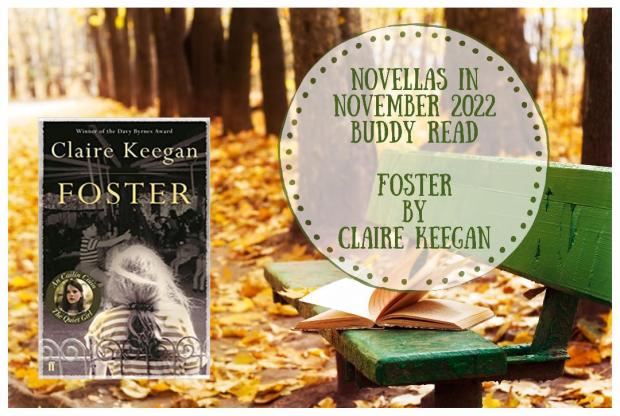
Claire Keegan’s delicate, heart-rending novella tells the story of a deprived young Irish girl sent to live with rural relatives for one pivotal summer. Although Foster feels like a timeless fable, a brief mention of IRA hunger strikers dates it to 1981. It bears all the hallmarks of a book several times its length: a convincing and original voice, rich character development, an evocative setting, just enough backstory, psychological depth, conflict and sensitive treatment of difficult themes like poverty and neglect. I finished the one-sitting read in a flood of tears, hoping the Kinsellas’ care might be enough to protect the girl from the harshness she may face in the rest of her growing-up years. Keegan unfolds a cautionary tale of endangered childhood, also hinting at the enduring difference a little compassion can make. [128 pages] 
 Foster is now in print for the first time in the USA (from Grove Atlantic), having had an unusual path to publication. It first appeared in the New Yorker in 2010, but in abridged form. Keegan told the Guardian she felt the condensed version “was very well done but wasn’t the whole story. It had some of the layers taken out, but I think the heart was the same.” She herself has described Foster as a long short story; “It is definitely not a novella. It doesn’t have the pace of a novella.” Faber & Faber first published it as a standalone volume in the UK in 2010. A 2022 Irish-language film version of Foster, called The Quiet Girl (which names the main character Cait) became a favorite on the international film festival circuit.
[Edited on December 1st]
A number of you joined us in reading Foster this month:
Lynne at Fictionophile
Karen at The Simply Blog
Davida at The Chocolate Lady’s Book Reviews
Tony at Tony’s Book World
Brona at This Reading Life
Janet at Love Books Read Books
Jane at Just Reading a Book
Kate at Books Are My Favourite and Best
Carol at Reading Ladies
(Cathy also reviewed it last year.)
Our bloggers have been impressed with the spare, precise writing style and the emotional heft of this little tale. Their only complaint? The slight ambiguity of the ending. Read it yourself to find out what you think! If you’d still like to take part in the buddy read and have an hour or two free, remember you can access the original version of the story here.
Dubiously Thematic Easter Reading
In 2015 and 2017 I came up with some appropriately theological reading recommendations for Easter. This year I’m going for a more tongue-in-cheek approach, as befits the unfortunate conjunction of Easter with April Fools’ Day.
Currently reading or reviewing:
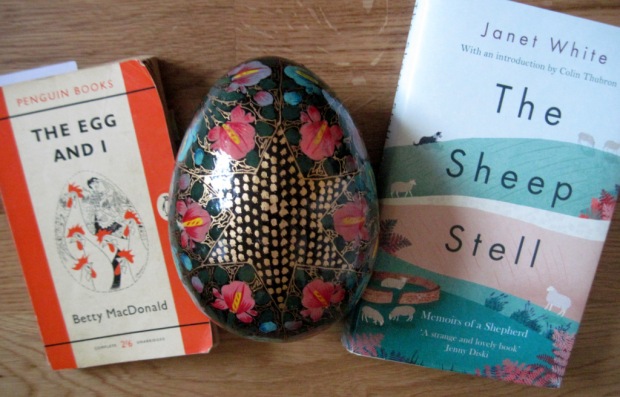
The Egg and I by Betty MacDonald
I bought this on a whim from a local charity shop, based on the title, cover and blurb. I’m about one-third of the way through so far. MacDonald and her husband started a chicken farm in a mountainous area of the Pacific Northwest in the 1940s. Her account of her failure to become the perfect farm wife is rather hilarious. My only hesitation is about her terrible snobbishness towards rednecks and “Indians.”


A representative passage: “Gathering eggs would be like one continual Easter morning if the hens would just be obliging and get off the nests. Co-operation, however, is not a chickenly characteristic and so at egg-gathering time every nest was overflowing with hen, feet planted, and a shoot-if-you-must-this-old-grey-head look in her eye.”
The Sheep Stell by Janet White
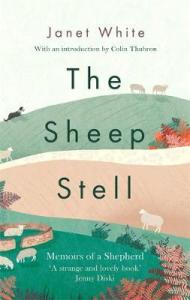 I’m reviewing this reissued memoir for the TLS. It’s a delightful story of finding contentment in the countryside, whether on her own or with family. White, now in her eighties, has been a shepherd for six decades in the British Isles and in New Zealand. While there’s some darker material here about being stalked by a spurned suitor, the tone is mostly lighthearted. I’d recommend it to anyone who’s enjoyed books by Gerald Durrell, James Herriot and Doreen Tovey.
Representative passages: “Shepherding is a strange mixture of tremendous physical work alternating with periods of calm, quiet indolence.” & “A dare, a dream and a challenge. I could have hunted the whole world over and never in a lifetime found anywhere so right: warm, high, pastoral and severed by the sea.”
Read recently:
The Trouble with Goats and Sheep by Joanna Cannon
 Mrs. Creasy disappears one Monday in June 1976, and ten-year-old Grace Bennett and her friend Tilly are determined to figure out what happened. I have a weakness for precocious child detectives (from Harriet the Spy to Flavia de Luce), so I enjoyed Grace’s first-person sections, but it always feels like cheating to me when an author realizes they can’t reveal everything from a child’s perspective so add in third-person narration and flashbacks. These fill in the various neighbors’ sad stories and tell of a rather shocking act of vigilante justice they together undertook nine years ago.
Sheep are a metaphor here for herd behavior and a sense of belonging, but also for good versus evil. Grace and Tilly become obsessed with a Bible passage the vicar reads about Jesus separating the sheep from the goats. But how can he, or they, know who’s truly righteous? As Grace says, “I think that’s the trouble, it’s not always that easy to tell the difference.” It’s a simplistic message about acknowledging the complexity of other lives and situations rather than being judgmental, and matches the undemanding prose.
Reminiscent of Rachel Joyce, but not as good.
My rating:
Vita Nova by Louise Glück
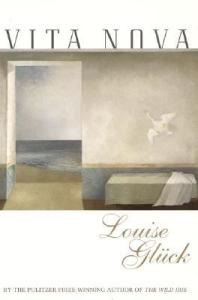 My first collection from the prolific Pulitzer winner. Some of the poems are built around self-interrogation, with a question and answer format; several reflect on the myth of Orpheus and Eurydice. The first and last poems are both entitled “Vita Nova,” while another in the middle is called “The New Life.” I enjoyed the language of spring in the first “Vita Nova” and in “The Nest,” but I was unconvinced by much of what Glück writes about love and self-knowledge, some of it very clichéd indeed, e.g. “I found the years of the climb upward / difficult, filled with anxiety” (from “Descent to the Valley”) and “My life took me many places, / many of them very dark” (from “The Mystery”).
Best lines about spring:
“The spring of the year; young men buying tickets for the ferryboats. / Laughter, because the air is full of apple blossoms.” (from “Vita Nova”)
“Spring / descended. Or should one say / rose? … yellow-green of forsythia, the Commons / planted with new grass— // the new / protected always” (from “Ellsworth Avenue”)
My rating: 
Plucked off the shelf for their dubious thematic significance!

To Rise Again at a Decent Hour by Joshua Ferris
Animal, Vegetable, Miracle by Barbara Kingsolver
Wise Blood by Flannery O’Connor
So You’ve Been Publicly Shamed by Jon Ronson
The Resurrection of Joan Ashby by Cherise Wolas
Happy Easter to all those who mark it, and have a good week. I have a few review-based posts scheduled for while we’re in Wigtown, a trip I hope to report on next Monday, when I will also attempt to catch up on blogs and comments.
The Truth According to Us and Safekeeping
They say there are only two basic plots: a stranger comes to town, or the hero sets off on a journey. So far this summer I’ve enjoyed two novels that exemplify one or the other model.
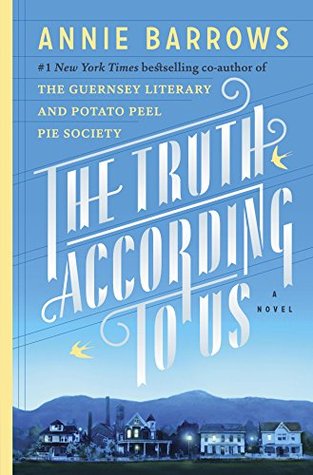 First is The Truth According to Us by Annie Barrows, co-author of the endearing The Guernsey Literary and Potato Peel Pie Society. This atmospheric historical novel is set in the sweltering summer of 1938. Layla Beck, a spoiled senator’s daughter, has been sent to Macedonia, West Virginia by the WPA to document the town’s story in advance of its sesquicentennial. Her uncle pulls strings to get her the job even though he thinks his flighty niece is “exactly as fit to work on the project as a chicken is to drive a Buick.”
From a lunatic Civil War general onwards, Macedonia has certainly had a colorful history. The problem is that all the local lights want to skew history to present themselves in the most favorable light. This applies to the family Layla boards with as well, the Romeyns. Felix and Jottie’s father ran the American Everlasting Hosiery Company until a devastating fire some 20 years ago – blamed on Jottie’s old sweetheart, Vause Hamilton.
Now Felix’s twelve-year-old daughter Willa, who narrates much of the novel, wants to get to the bottom of things. What really happened during that factory fire? Why are the Romeyns snubbed around town? Has her divorcé father turned to bootlegging, and can she stop Miss Beck from bewitching him? Like Scout Finch in To Kill a Mockingbird or Flavia de Luce in Alan Bradley’s mysteries, Willa is a spunky heroine whose curiosity carries the plot.
Once again Barrows makes good use of the epistolary format by inserting the letters Layla sends and receives during her time in Macedonia. Third person narration also gets us into the mind of Jottie, one of the strongest characters. However, later sections of the novel get a little bogged down in Jottie’s romantic history, and overall it is too long by at least a quarter. Barrows is better at capturing everyday speech and routines than momentous activities like a factory strike, but she certainly evokes the oppressive heat of a long American summer.
As Willa concludes, “The truth of other people is a ceaseless business. You try to fix your ideas about them, and you choke on the clot you’ve made.” This novel reminds us that others – whether strangers or family – are always a mystery, and history is a matter of interpretation.
My rating: 
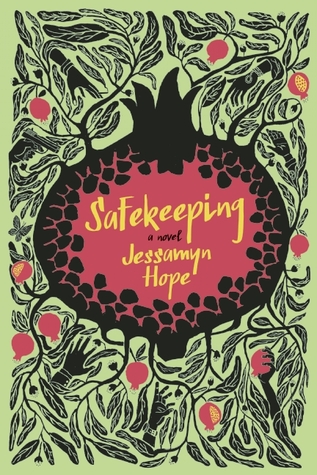 Next up is Safekeeping, the debut novel from Jessamyn Hope. A bit like All the Light We Cannot See, the Pulitzer Prize-winning novel from Anthony Doerr, the plot revolves around a priceless jewel. In this case it’s a medieval sapphire brooch that has been passed down through Adam’s family for centuries. In 1994, after the death of his grandfather, a Holocaust survivor, Adam undertakes a quest to return the brooch to the woman he fell in love with on an Israeli kibbutz and never forgot. Adam has his own problems – he’s a recovering junkie and alcoholic – but he feel he owes this to his grandfather’s memory.
A kibbutz undergoing the bitter transition from communalism to salaried work provides a vivid contrast to Adam’s native New York City. Hope populates her novel with a wonderful cast of eccentric characters. There’s Ulya, a Belarussian prima donna with a shoplifting habit; Claudette, a French Canadian Catholic crippled by mental health issues; Ziva, a kibbutz veteran who fights the changes tooth and nail despite advancing infirmity; and Ofir, a young man who endeavors to finish his military service early so he can return to his beloved piano.
I loved the way that Hope links the disparate characters in a constellation of connections. Acts of generosity, small or large, make a huge difference, even though betrayals past and present still linger. Close third person narration shifts easily between all the characters’ viewpoints, while two surprising historical interludes add depth. Hope handles flashbacks as elegantly as I’ve ever seen: you follow characters into their thoughts and suddenly snap back to the present right along with them.
I’ll confess I was slightly disappointed with the inconclusive ending. We follow the brooch rather than the characters, which means that in two cases we are left wondering about a person’s fate. Still, I was so impressed with the writing, especially the interweaving of past and present, that I will be eager to watch Hope’s career. Safekeeping is published by Fig Tree Books, a champion of modern Jewish literature, and has one of the most terrific book covers I’ve seen in a while.
My rating:
 Bookish Beck = Rebecca Foster. American transplant to England. Freelance proofreader and book reviewer.
 Bookish Beck