Three on a Theme: Armchair Travels at the Italian Coast (Rachel Joyce, Sarah Moss and Jess Walter – #18 of 20 Books)
I’ve done a lot of journeying through Italy’s lakes and islands this summer. Not in real life, thank goodness – it would be far too hot! – but via books. I started with the Moss, then read the Joyce, and rounded off with the Walter, a book that had been on my TBR for 12 years and that many had heartily recommended, so I was delighted to finally experience it for myself.
The Homemade God by Rachel Joyce (2025)
Joyce has really upped her game. I’ve somehow read all of her books though I often found them, from Harold Fry onward, disappointingly sentimental and twee. But with this she’s entering the big leagues, moving into the more expansive, elegant and empathetic territory of novels by Anne Enright (The Green Road), Patrick Gale (Notes from an Exhibition), Maggie O’Farrell (Instructions for a Heatwave) and Tom Rachman (The Italian Teacher). It’s the story of four siblings, initially drawn together and then dramatically blown apart by their father’s death. Despite weighty themes of alcoholism, depression and marital struggles, there is an overall lightness of tone and style that made this a pleasure to read.
Vic Kemp, the title figure, was a larger-than-life, womanizing painter whose work divided critics. After his first wife’s early death from cancer, he raised three daughters and a son with the help of a rotating cast of nannies (whom he inevitably slept with). At 76 he delivered the shocking news that he was marrying again: Bella-Mae, an artist in her twenties – much younger than any of his children. They moved from London to his second home in Italy just weeks before he drowned in Lake Orta. Netta, the eldest daughter, is sure there’s something fishy; he knew the lake so well and would never have gone out for a swim with a mist rolling in. Did Bella-Mae kill him for his money? And where is his last painting? Funny how waiting for an autopsy report and searching for a new will and carping with siblings over the division of belongings can ruin what should be paradise.
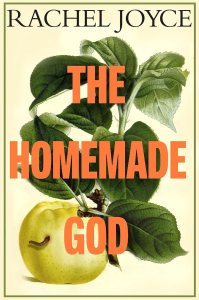
The interactions between Netta, Susan, Goose (Gustav) and Iris, plus Bella-Mae and her cousin Laszlo, are all flawlessly done, and through flashbacks and surges forward we learn so much about these flawed and flailing characters. The derelict villa and surrounding small town are appealing settings, and there are a lot of intriguing references to food, fashion and modern art.
My only small points of criticism are that Iris is less fleshed out than the others (and her bombshell secret felt distasteful), and that Joyce occasionally resorts to delivering some of her old obvious (though true) messages through an omniscient narrator, whereas they could be more palatable if they came out organically in dialogue or indirectly through a character’s thought process. Here’s an example: “When someone dies or disappears, we can only tell stories about what might have been the case or what might have happened next.” (One I liked better: “There were some things you never got over. No amount of thinking or talking would make them right: the best you could do was find a way to live alongside them.”) I also don’t think Goose would have been able to view his father’s body more than two months after his death; even with embalming, it would have started to decay within weeks.
You can tell that Joyce got her start in theatre because she’s so good at scenes and dialogue, and at moving people into different groups to see what they’ll do. She’s taken the best of her work in other media and brought it to bear here. It’s fascinating how Goose starts off seeming minor and eventually becomes the main POV character. And ending with a wedding (good enough for a Shakespearean comedy) offers a lovely occasion for a potential reconciliation after a (tragi)comic plot. More of this calibre, please! (Public library) 
Ripeness by Sarah Moss (2025)
One sneaky little line, “Ripeness, not readiness, is all,” a Shakespeare mash-up (“Ripeness is all” is from King Lear vs. “the readiness is all” is from Hamlet), gives a clue to how to understand this novel: As a work of maturity from Sarah Moss, presenting life with all its contradictions and disappointments, not attempting to counterbalance that realism with any false optimism. What do we do, who will we be, when faced with situations for which we aren’t prepared?
Now that she’s based in Ireland, Moss seems almost to be channelling Irish authors such as Claire Keegan and Maggie O’Farrell. The line-up of themes – ballet + sisters + ambivalent motherhood + the question of immigration and belonging – should have added up to something incredible and right up my street. While Ripeness is good, even very good, it feels slightly forced. As has been true with some of Moss’s recent fiction (especially Summerwater), there is the air of a creative writing experiment. Here the trial is to determine which feels closer, a first-person rendering of a time nearly 60 years ago, or a present-tense, close-third-person account of the now. [I had in mind advice from one of Emma Darwin’s Substack posts: “What you’ll see is that ‘deep third’ is really much the same as first, in the logic of it, just with different pronouns: you are locking the narrative into a certain character’s point-of-view, but you don’t have a sense of that character as the narrator, the way you do in first person.” Except, increasingly as the novel goes on, we are compelled to think about Edith as a narrator, of her own life and others’.
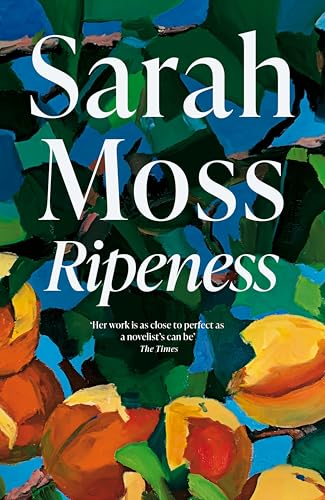
In the current story line, everyone in rural West Ireland seems to have come from somewhere else (e.g. Edith’s lover Gunter is German). “She’s going to have to find a way to rise above it, this tribalism,” Edith thinks. She’s aghast at her town playing host to a small protest against immigration. Fair enough, but including this incident just seems like an excuse for some liberal handwringing (“since it’s obvious that there is enough for all, that the problem is distribution not supply, why cannot all have enough? Partly because people like Edith have too much.”). The facts of Maman being French-Israeli and having lost family in the Holocaust felt particularly shoehorned in; referencing Jewishness adds nothing. I also wondered why she set the 1960s narrative in Italy, apart from novelty and personal familiarity. (Teenage Edith’s high school Italian is improbably advanced, allowing her to translate throughout her sister’s childbirth.)
Though much of what I’ve written seems negative, I was left with an overall favourable impression. Mostly it’s that the delivery scene and the chapters that follow it are so very moving. Plus there are astute lines everywhere you look, whether on dance, motherhood, or migration. It may simply be that Moss was taking on too much at once, such that this lacks the focus of her novellas. Ultimately, I would have been happy to have just the historical story line; the repeat of the surrendering for adoption element isn’t necessary to make any point. (I was relieved, anyway, that Moss didn’t resort to the cheap trick of having the baby turn out to be a character we’ve already been introduced to.) I admire the ambition but feel Moss has yet to return to the sweet spot of her first five novels. Still, I’m a fan for life. (Public library) 
#18 of my 20 Books of Summer
(Completing the second row on the Bingo card: Book set in a vacation destination)


Beautiful Ruins by Jess Walter (2012)
 I loved how Emma Straub described the ideal summer read in one of her Substack posts: “My plan for the summer is to read as many books as possible that make me feel that drugged-up feeling, where you just want to get back to the page.” I wish I’d been able to read this faster – that I hadn’t had so much on my plate all summer so I could have been fully immersed. Nonetheless, every time I returned to it I felt welcomed in. So many trusted bibliophiles love this book – blogger friends Laila and Laura T.; Emma Milne-White, owner of Hungerford Bookshop, who plugged it at their 2023 summer reading celebration; and Maris Kreizman, who in a recent newsletter described this as “One of my favorite summer reading novels ever … escapist magic, a lush historical novel.”
I’m relieved to report that Beautiful Ruins lived up to everyone’s acclaim – and my own high expectations after enjoying Walter’s So Far Gone, which I reviewed for BookBrowse earlier in the summer. I was immediately captivated by the shabby glamour of Pasquale’s hotel in Porto Vergogna on the coast of northern Italy. With refreshing honesty, he’s dubbed the place “Hotel Adequate View.” In April 1962, he’s attempting to build a cliff-edge tennis court when a boat delivers beautiful, dying American actress Dee Moray. It soon becomes clear that her condition is nothing nine months won’t fix and she’s been dumped here to keep her from meddling in the romance between the leads in Cleopatra, filming in Rome. In the present day, an elderly Pasquale goes to Hollywood to find out whatever happened to Dee.
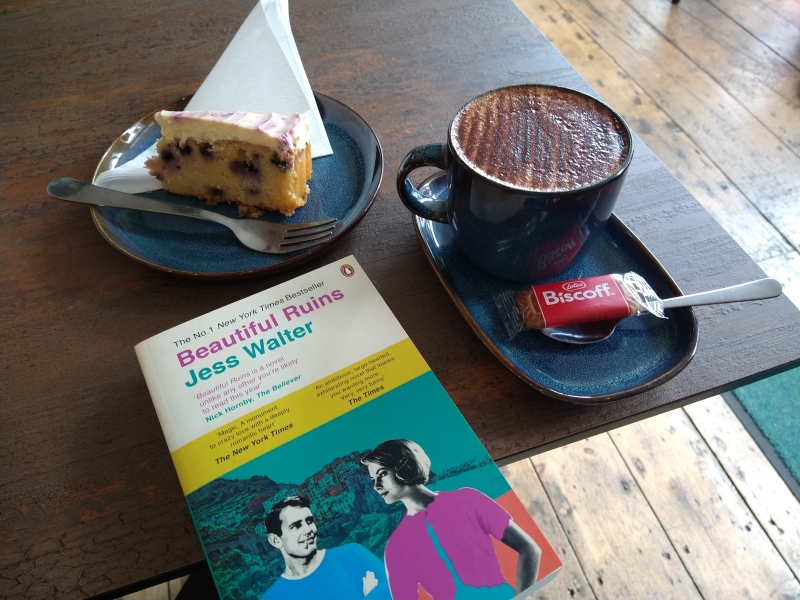
A myriad of threads and formats – a movie pitch, a would-be Hemingway’s first chapter of a never-finished wartime masterpiece, an excerpt from a producer’s autobiography and a play transcript – coalesce to flesh out what happened in that summer of 1962 and how the last half-century has treated all the supporting players. True to the tone of a novel about regret, failure and shattered illusions, Walter doesn’t tie everything up neatly, but he does offer a number of the characters a chance at redemption. This felt to me like a warmer and more timeless version of A Visit from the Goon Squad. There are so many great scenes, none better than Richard Burton’s drunken visit to Porto Vergogna, which had me in stitches. Fantastic. (Hungerford Bookshop – 40th birthday gift from my husband from my wish list) 
Astraea by Kate Kruimink (Weatherglass Novella Prize) #NovNov24
Astraea by Kate Kruimink is one of two winners* of the inaugural Weatherglass Novella Prize, as chosen by Ali Smith. Back in September, I was introduced to it through Weatherglass Books’ “The Future of the Novella” event in London (my write-up is here).
Taking place within about a day and a half on a 19th-century convict ship bound for Australia, it is the intense story of a group of women and children chafing against the constraints men have set for them. The protagonist is just 15 years old and postpartum. Within a hostile environment, the women have created an almost cosy community based on sisterhood. They look out for each other; an old midwife can still bestow her skills.
The ship was their shelter, the small chalice carrying them through that which was inhospitable to human life. But there was no shelter for her there, she thought. There was only a series of confines between which she might move but never escape.
The ship’s doctor and chaplain distrust what they call the “conspiracy of women” and are embarrassed by the bodily reality of one going into labour, another tending to an ill baby, and a third haemorrhaging. They have no doubt they know what is best for their charges yet can barely be bothered to learn their names.

Indeed, naming is key here. The main character is effectively erased from the historical record when a clerk incorrectly documents her as Maryanne Maginn. Maryanne’s only “maybe-friend,” red-haired Sarah, has the surname Ward. “Astraea” is the name not just of the ship they travel on but also of a star goddess and a new baby onboard.
The drama in this novella arises from the women’s attempts to assert their autonomy. Female rage and rebellion meet with punishment, including a memorable scene of solitary confinement. A carpenter then constructs a “nice little locking box that will hold you when you sin, until you’re sorry for it and your souls are much recovered,” as he tells the women. They are all convicts, and now their discipline will become a matter of religious theatrics.
Given the limitations of setting and time and the preponderance of dialogue, I could imagine this making a powerful play. The novella length is as useful a framework as the ship itself. Kruimink doesn’t waste time on backstory; what matters is not what these women have done to end up here, but how their treatment is an affront to their essential dignity. Even in such a low page count, though, there are intriguing traces of the past and future, as well as a fleeting hint of homoeroticism. I would recommend this to readers of The Mercies by Kiran Millwood Hargrave, Devotion by Hannah Kent and Women Talking by Miriam Toews. And if you get a hankering to follow up on the story, you can: this functions as a prequel to Kruimink’s first novel, A Treacherous Country. (See also Cathy’s review.)
[115 pages]
With thanks to Weatherglass Books for the free copy for review.
*The other winner, Aerth by Deborah Tomkins, a novella-in-flash set on alternative earths, will be published in January. I hope to have a proof copy in hand before the end of the month to review for this challenge plus SciFi Month.
The Bookshop Band in Abingdon & 20 Books of Summer, 6: Orphans of the Carnival by Carol Birch
The Bookshop Band have been among my favourite musical acts since I first saw play live at the Hungerford Literary Festival in 2014. Initially formed of three local musicians for hire, they got their start in 2010 as the house band at Mr B’s Emporium of Reading Delights in Bath, England. For their first four years, they wrote a pair of original songs about a new book, often the very day of an author’s event in the shop, and performed them on guitar, cello, and ukulele as an interlude to the evening’s reading and discussion.
Notable songs from their first 13 albums are based on Glow by Ned Beauman (“We Are the Foxes”), Don’t Let’s Go to the Dogs Tonight by Alexandra Fuller (“Bobo and the Cattle”), The Unlikely Pilgrimage of Harold Fry by Rachel Joyce (“How Not to Woo a Woman”), and Bring Up the Bodies by Hilary Mantel (“You Make the Best Plans, Thomas”). They have also written responses to classic literature, with songs inspired by Alice in Wonderland, various Shakespeare plays, and a compilation of first lines called “Once Upon a Time.”
I got to see the band live five times pre-pandemic, even after husband-and-wife-duo Ben Please and Beth Porter moved nearly 400 miles away to Wigtown, the Book Town of Scotland. During the first six months of Covid-19 lockdown, the livestream concerts from their attic were weekly treats to look forward to. They also interviewed authors for a breakfast chat show as part of the Wigtown Book Festival, which went online that year.

In the years since, the band has kept busy with other projects (not to mention two children). Porter sings and performs on the two Spell Songs albums based on Robert Macfarlane’s The Lost Words and its sequel. Together they composed the soundtrack to Aardman Animations’ short film, Robin Robin (2021) – winning Best Music at the British Animation Awards, and wrote an album of songs based on Scottish children’s literature. And they have continued writing one-off book songs, such as for the launch of Birnam Wood by Eleanor Catton. (I’m disappointed their songs about All My Wild Mothers by Victoria Bennett and The Spinning Heart by Donal Ryan still haven’t made it onto record.)
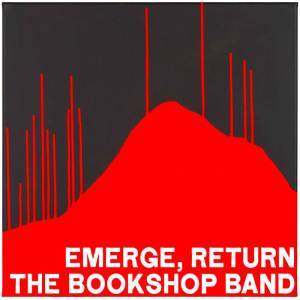 I’ve been enthusing about them for nearly a decade, but they’ve remained mostly under the radar in that time. Not so any longer; their recent album Emerge, Return was produced by Pete Townshend of The Who; the production value has notably advanced while retaining their indie spirit. Foreword Reviews kindly agreed to pay me to fangirl – er, write a blog – about Emerge, Return and the tour supporting it, so I’ll leave it there for the music criticism (their complete discography is now available on Bandcamp and Spotify). I’ll just add that a number of these ‘new’ songs have been kicking around for six to ten years but went unrecorded until now. For that reason, I worried that it might feel like a collection of cast-offs, but in fact they’ve managed to produce something sonically and thematically cohesive. It’s darker than some of their previous work, with moody minor chords and slightly sinister subjects.

Julia Pastrana after death. George Wick, Public domain, via Wikimedia Commons.
I’ve often found that the band will zero in on a detail, scene, or idea that never would have stood out to me while reading a book but, in retrospect, evokes the whole with great success. I decided to test this out by reading Carol Birch’s Orphans of the Carnival in the weeks leading up to seeing them on their months-long UK summer/autumn tour. It’s a historical novel about real-life 1850s Mexican circus “freak” Julia Pastrana, who had congenital conditions that caused her face and body to be covered in thick hair and her jaw and lips to protrude. Cruel contemporaries called her the world’s ugliest woman and warned that pregnant women should not be allowed to see her on tour lest the shock cause them to miscarry. Medical doctors posited, in all seriousness, that she was a link between humans and orangutans.
My copy of Birch’s novel was a remainder, and it is certainly a minor work compared to the Booker Prize-shortlisted Jamrach’s Menagerie. Facts about Julia’s travel itinerary and fellow oddballs quickly grow tedious, and while one of course sympathizes when children throw rocks at her, she never becomes a fully realized character rather than a curiosity.
There is also a bizarre secondary storyline set in 1983, in which Rose fills her London apartment with hoarded objects, including a doll she rescues from a skip and names Tattoo. She becomes obsessed with the idea of visiting a doll museum in Mexico. I thought that Tattoo would turn out to be Julia’s childhood doll Yatzi (similar to in A Council of Dolls by Mona Susan Power, where dolls have sentimental and magical power across the centuries), but the connection, though literal, was not as I expected. It’s more grotesque than that. And stranger than fiction, frankly.
{SPOILERS AHEAD}
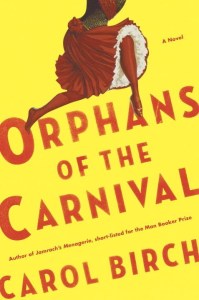 Birch sticks to the known details of Julia’s life. She had various agents, the final one being Theo Lent, who married her. (In the novel, he can’t bring himself to kiss her, but he can, you know, impregnate her.) She died of a fever soon after childbirth. Her son, Theo Junior, who inherited her hypertrichosis, also died within days. Both bodies were embalmed, sold, and exhibited. Theo then married another hairy woman, Marie Bartel of Germany, who took the name “Zenora” and posed as Julia’s sister. Theo died, syphilitic (or so Birch implies) and insane, in a Russian asylum. Julia and Theo Junior’s remains were displayed and mislaid at various points over the years, with Julia’s finally repatriated to Mexico for a proper burial in 2013. In the novel, Tattoo is, in fact, Theo Junior’s mummy.
Two Bookshop Band songs from the new album are about the novel: “Doll” and “Waggons and Wheels.” “Doll” is one of the few more lighthearted numbers on the album. It ended up being a surprise favourite track for me (along with the creepy “Eve in Your Garden,” about Margaret Atwood’s The Testaments, and “Room for Three,” a sombre yet resolute epic written for the launch of Philip Pullman’s La Belle Sauvage) because of its jaunty music-hall tempo; the pattern of repeating most nouns three times; and the hand claps, “deedily” vocal fills, unhinged recorder playing, and springy sound effects. The lyrics are almost a riddle: “When’s a doll (doll doll) not a doll (doll doll)?” They somehow avoid all spoilers while conveying something of the mental instability of a couple of characters.
The gorgeous “Waggons and Wheels” picks up on the melancholy tone and parental worries of earlier tracks from the album. The chorus has a wistful air as Julia ponders the passage of time and her constant isolation: “old friends, new deals / Winter or spring, I am hiding … Winter or spring, I’ll be travelling.” Porter’s mellow soprano tempers Julia’s outrage at mistreatment: “who are you to shout / Indecency and shame? / Shocking, I shock, so lock me out / I’m locked into this face.” She fears, too, what will happen to her child, “a beast or a boy, a monster or joy”. Listening to the song, I feel that the band saw past the specifics to plumb the universal feelings that get readers empathizing with Julia as a protagonist. They’ve gotten to the essence of the story in a way that Birch perhaps never did. Mediocre book; lovely songs. (New (bargain) purchase – Dollar Tree, Bowie, Maryland) 
I caught the Emerge, Return tour at St Nicolas’ Church in Abingdon (an event hosted by Mostly Books) last night. It was my sixth time seeing the Bookshop Band in concert – see also my write-ups of two 2016 events plus one in 2018 and another in 2019 – but the first time in person since the pandemic. I got to show off my limited-edition T-shirt. How nice it was to meet up again with blogger friend Annabel, too! Fun fact for you: Ben was born in Abingdon but hadn’t been back since he was two. Beth’s cousin turned up to the show as well. Although they have their daughters, 2 and 7, on the tour with them, they were being looked after elsewhere for the evening so the parents could relax a bit. Across the two sets, they played seven tracks from the new album, six old favourites, and two curios: one Spell Song, and an untitled song they wrote for the audiobook of Jackie Morris’s The Unwinding. It was a brilliant evening!


Reading about Mothers and Motherhood: Cosslett, Cusk, Emma Press Poetry, Heti, and Pachico
It was (North American) Mother’s Day at the weekend, an occasion I have complicated feelings about now that my mother is gone. But I don’t think I’ll ever stop reading and writing about mothering. At first I planned to divide my recent topical reads (one a reread) into two sets, one for ambivalence about becoming a mother and the other for mixed feelings about one’s mother. But the two are intertwined – especially in the poetry anthology I consider below – such that they feel more like facets of the same experience. I also review two memoirs (one classic; one not so much) and two novels (autofiction vs. science fiction).

The Year of the Cat: A Love Story by Rhiannon Lucy Cosslett (2023)
This was on my Most Anticipated list last year. A Covid memoir that features adopting a cat and agonizing over the question of whether to have a baby sounded right up my street. And in the earlier pages, in which Cosslett brings Mackerel the kitten home during the first lockdown and interrogates the stereotype of the crazy cat lady from the days of witches’ familiars onwards, it indeed seemed to be so. But the further I got, the more my pace through the book slowed to a limp; it took me 10 months to read, in fits and starts.
 I’ve struggled to pinpoint what I found so off-putting, but I have a few hypotheses: 1) By the time I got hold of this, I’d tired of Covid narratives. 2) Fragmentary narratives can seem like profound reflections on subjectivity and silences. But Cosslett’s strategy of bouncing between different topics – worry over her developmentally disabled brother, time working as an au pair in France, PTSD from an attempted strangling by a stranger in London and being in Paris on the day of the Charlie Hebdo terrorist attack – with every page or even every paragraph, feels more like laziness or arrogance. Of course the links are there; can’t you see them?
3) Cosslett claims to reject clichéd notions about pets being substitutes for children, then goes right along with them by presenting Mackerel as an object of mothering (“there is something about looking after her that has prodded the carer in me awake”) and setting up a parallel between her decision to adopt the kitten and her decision to have a child. “Though I had all these very valid reasons not to get a cat, I still wanted one,” she writes early on. And towards the end, even after she’s considered all the ‘very valid reasons’ not to have a baby, she does anyway. “I need to find another way of framing it, if I am to do it,” she says. So she decides that it’s an expression of bravery, proof of overcoming trauma. I was unconvinced. When people accuse memoirists of being navel-gazing, this is just the sort of book they have in mind. I wonder if those familiar with her Guardian journalism would agree. (Public library)
A Life’s Work: On Becoming a Mother by Rachel Cusk (2001)
 When this was first published, Cusk was vilified for “hating” her child – that is, for writing honestly about the bewilderment and misery of early motherhood. We’ve moved on since then. Now women are allowed to admit that it’s not all cherubs and lullabies. I suspect what people objected to was the unemotional tone: Cusk writes like an anthropologist arriving in a new land. The style is similar to her novels’ in that she can seem detached because of her dry wit, elevated diction and frequent literary allusions.
I understand that crying, being the baby’s only means of communication, has any number of causes, which it falls to me, as her chief companion and link to the world, to interpret.
Have you taken her to toddler group, the health visitor enquired. I had not. Like vaccinations and mother and baby clinics, the notion instilled in me a deep administrative terror.
We [new parents] are heroic and cruel, authoritative and then servile, cleaving to our guesses and inspirations and bizarre rituals in the absence of any real understanding of what we are doing or how it should properly be done.
She approaches mumsy things as an outsider, clinging to intellectualism even though it doesn’t seem to apply to this new world of bodily obligation, “the rambling dream of feeding and crying that my life has become.” By the end of the book, she does express love for and attachment to her daughter, built up over time and through constant presence. But she doesn’t downplay how difficult it was. “For the first year of her life work and love were bound together, fiercely, painfully.” This is a classic of motherhood literature, and more engaging than anything else I’ve read by Cusk. (Secondhand purchase – Awesomebooks.com)
The Emma Press Anthology of Motherhood, ed. by Rachel Piercey and Emma Wright (2014)
There’s a great variety of subject matter and tone here, despite the apparently narrow theme. There are poems about pregnancy (“I have a comfort house inside my body” by Ikhda Ayuning Maharsi), childbirth (“The Tempest” by Melinda Kallismae) and new motherhood, but also pieces imagining the babies that never were (“Daughters” by Catherine Smith) or revealing the complicated feelings adults have towards their mothers.
“All My Mad Mothers” by Jacqueline Saphra depicts a difficult bond through absurdist metaphors: “My mother was so hard to grasp: once we found her in a bath / of olive oil, or was it sesame, her skin well-slicked / … / to ease her way into this world. Or out of it.” I also loved her evocation of a mother–daughter relationship through a rundown of a cabinet’s contents in “My Mother’s Bathroom Armoury.”
 In “My Mother Moves into Adolescence,” Deborah Alma expresses exasperation at the constant queries and calls for help from someone unconfident in English. “This, then, is how you should pray” by Flora de Falbe cleverly reuses the structure of the Lord’s Prayer as she sees her mother returning to independent life and a career as her daughter prepares to leave home. “I will hold you / as you held me / my mother – / yours are the bathroom catalogues / and the whole of a glorious future.”
I connected with these perhaps more so than the poems about becoming a mother, but there are lots of strong entries and very few unmemorable ones. Even within the mothers’ testimonials, there is ambivalence: the visceral vocabulary in “Collage” by Anna Kisby is rather morbid, partway to gruesome: “You look at me // like liver looks at me, like heart. You are familiar as innards. / In strip-light I clean your first shit. I’m not sure I do it right. / It sticks to me like funeral silk. … There is a window // guillotined into the wall. I scoop you up like a clod.”
A favourite pair: “Talisman” by Anna Kirk and “Grasshopper Warbler” by Liz Berry, on facing pages, for their nature imagery. “Child, you are grape / skins stretched over fishbones. … You are crab claws unfurling into cabbage leaves,” Kirk writes. Berry likens pregnancy to patient waiting for an elusive bird by a reedbed. (Free copy – newsletter giveaway)
Motherhood by Sheila Heti (2018)
I first read this nearly six years ago (see my original review), when I was 34; I’m now 40 and pretty much decided against having children, but FOMO is a lingering niggle. Even though I already owned it in hardback, I couldn’t resist picking up a nearly new paperback I saw going for 50 pence in a charity shop, if only for the Leanne Shapton cover – her simple, elegant watercolour style is instantly recognizable. Having a different copy also provided some novelty for my reread, which is ongoing; I’m about 80 pages from the end.
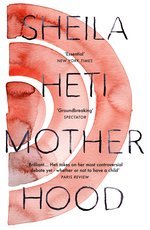 I’m not finding Heti’s autofiction musings quite as profound this time around, and I can’t deny that the book is starting to feel repetitive, but I’ve still marked more than a dozen passages. Pondering whether to have children is only part of the enquiry into what a woman artist’s life should be. The intergenerational setup stands out to me again as Heti compares her Holocaust survivor grandmother’s short life with her mother’s practical career and her own creative one.
For the past month or so, I’ve also been reading Alphabetical Diaries, so you could say that I’m pretty Heti-ed out right now, but I do so admire her for writing exactly what she wants to and sticking to no one else’s template. People probably react against Heti’s work as self-indulgent in the same way I did with Cosslett’s, but the former’s shtick works for me. (Secondhand purchase – Bas Books & Home, Newbury)
A few of the passages that have most struck me on this second reading:
I think that is how childbearing feels to me: a once-necessary, now sentimental gesture.
I don’t want ‘not a mother’ to be part of who I am—for my identity to be the negative of someone else’s positive identity.
The whole world needs to be mothered. I don’t need to invent a brand new life to give the warming effect to my life I imagine mothering will bring.
I have to think, If I wanted a kid, I already would have had one by now—or at least I would have tried.
Jungle House by Julianne Pachico (2023)
{BEWARE SPOILERS}
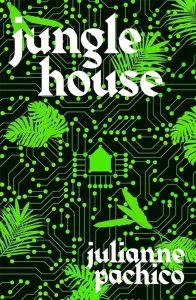 Pachico’s third novel is closer to sci-fi than I might have expected. Apart from Lena, the protagonist, all the major characters are machines or digital recreations: AI, droids, a drone, or a holograph of the consciousness of a dead girl. “Mother” is the AI security system that controls Jungle House, the Morel family’s vacation home in a country that resembles Colombia, where Pachico grew up and set her first two books. Lena, as the human caretaker, is forever grateful to Mother for rescuing her as a baby after the violent death of her parents, who were presumed rebels.
Mother is exacting but mercurial, strict about cleanliness yet apt to forget or overlook things during one of her “spells.” Lena pushes the boundaries of her independence, believing that Mother only wants to protect her but still longing to explore the degraded wilderness beyond the compound.
Mother was right, because Mother was always right about these kinds of things. The world was a complicated place, and Mother understood it much better than she did.
In the house, there was no privacy. In the house, Mother saw all.
Mother was Lena’s world. And Lena, in turn, was hers. No matter how angry they got at each other, no matter how much they fought, no matter the things that Mother did or didn’t do … they had each other.
It takes a while to work out just how tech-reliant this scenario is, what the repeated references to “the pit bull” are about, and how Lena emulated and resented Isabella, the Morel daughter, in equal measure. Even creepier than the satellites’ plan to digitize humans is the fact that Isabella’s security drone, Anton, can fabricate recorded memories. This reminded me a lot of Klara and the Sun. Tech themes aren’t my favourite, but I ultimately thought of this as an allegory of life with a narcissistic mother and the child’s essential task of breaking free. It’s not clinical and contrived, though; it’s a taut, subtle thriller with an evocative setting. (Public library)
See also: “Three on a Theme: Matrescence Memoirs”
Does one or more of these books take your fancy?
Buddy Reads: Kilmeny of the Orchard by L.M. Montgomery & The Waterfall by Margaret Drabble
Buddy reading and other coordinated challenges are a good excuse to read the sort of books one doesn’t always get to, especially the more obscure classics. This was my third Lucy Maud Montgomery novel within a year and a bit, and my first contribution to Ali’s ongoing year with Margaret Drabble.
{SPOILERS IN BOTH OF THE FOLLOWING REVIEWS}
Kilmeny of the Orchard by L. M. Montgomery (1910)
I’ve participated in Canadian bloggers Naomi of Consumed by Ink and Sarah Emsley’s readalongs of three Montgomery works now. The previous two were Jane of Lantern Hill and The Story Girl. This sweet but rather outdated novella reminded me more of the latter (no surprise as it was published just a year before it) because of the overall sense of lightness and the male perspective, which isn’t what those familiar with the Anne and Emily books might expect from Montgomery.
 Eric Marshall travels to Prince Edward Island one May to be the temporary schoolmaster in Lindsay, filling in for an ill friend. At his graduation from Queenslea College, his cousin David Baker had teased him about his apparent disinterest in girls. He arrives on the island to an early summer idyll and soon wanders into an orchard where a beautiful young woman is playing a violin.
This is, of course, Kilmeny Gordon, her first name from a Scottish ballad by James Hogg, and it’s clear she will be the love interest. However, there are a couple of impediments to the romance. One is resistance from Kilmeny’s guardians, the strict aunt and uncle who have cared for her since her wronged mother’s death. But the greater obstacle is Kilmeny’s background – illegitimacy plus a disability that everyone bar Eric views as insuperable: she is mute (or, as the book has it, “dumb”). She hears and understands perfectly well, but communicates via writing on a slate.
There is interesting speculation as to whether her condition is psychological or magically inherited from her late mother, who had taken a vow of silence. Conveniently, cousin David is a doctor specializing in throat and voice problems, so assures Eric and the Gordons that nothing is physically preventing Kilmeny from speech. But she refuses to marry Eric until she can speak. The scene in which she fears for his life and calls out to save him is laughably contrived. The language around disability is outmoded. It’s also uncomfortable that the story’s villain, an adopted Gordon cousin, is characterized only by his Italian heritage.
Like The Story Girl, I found this fairly twee, with an unfortunate focus on beauty (“‘Kilmeny’s mouth is like a love-song made incarnate in sweet flesh,’ said Eric enthusiastically”), and marriage as the goal of life. But it was still a pleasant read, especially for the descriptions of a Canadian spring. (Downloaded from Project Gutenberg) #ReadingKilmeny
The Waterfall by Margaret Drabble (1969)
 This was Drabble’s fourth novel; I’ve read the previous three and preferred two of them to this (A Summer Bird-Cage is fab). The setup is similar to The Garrick Year, which I read last year for book club, in that the focus is on a young mother of two who embarks on an affair. When we meet Jane Gray she is awaiting the birth of her second child. Her husband, Malcolm, walked out a few weeks ago, but she has the midwife and her cousin Lucy to rely on. Lucy and her husband, James, trade off staying over with Jane as she recovers from childbirth. James is particularly solicitous and, one night, joins Jane in bed.
At this point there is a stark shift from third person to first person as Jane confesses that she’s been glossing over the complexities of the situation; sleeping with one’s cousin’s husband is never going to be without emotional fallout. “It won’t, of course, do: as an account, I mean, of what took place”; “Lies, lies, it’s all lies. A pack of lies.” The novel continues to alternate between first and third person as Jane gives us glimpses into her uneasy family-making. I found myself bored through much of it, only perking back up for the meta stuff and the one climactic event. In a way it’s a classic tale of free will versus fate, including the choice of how to frame what happens.
I am no longer capable of inaction – then I will invent a morality that condones me.
It wasn’t so, it wasn’t so. I am getting tired of all this Freudian family nexus, I want to get back to that schizoid third-person dialogue.
The narrative tale. The narrative explanation. That was it, or some of it. I loved James because he was what I had never had: because he drove too fast: because he belonged to my cousin: because he was kind to his own child
(What intriguing punctuation there!) The fast driving and obsession with cars is unsubtle foreshadowing: James nearly dies in a car accident on the way to the ferry to Norway. Jane and her children, Laurie and baby Bianca, are in the car but unhurt. This was the days when seatbelts weren’t required, apparently. “It would have been so much simpler if he had been dead: so natural a conclusion, so poetic in its justice.” The Garrick Year, too, has a near-tragedy involving a car. Like many an adultery story, both novels ask whether an affair changes everything, or nothing. Infidelity and the parenting of young children together don’t amount to the most scintillating material, but it is appealing to see Drabble experimenting with how to tell a story. See also Ali’s review. (Secondhand – Alnwick charity shopping)
Book Serendipity, January to February 2024
I call it “Book Serendipity” when two or more books that I read at the same time or in quick succession have something in common – the more bizarre, the better. This is a regular feature of mine every couple of months. Because I usually have 20–30 books on the go at once, I suppose I’m more prone to such incidents. The following are in roughly chronological order.
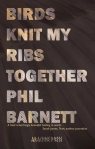
- I finished two poetry collections by a man with the surname Barnett within four days in January: Murmur by Cameron Barnett and Birds Knit My Ribs Together by Phil Barnett.

- I came across the person or place name Courtland in The Optimist’s Daughter by Eudora Welty, then Cortland in a story from The Orange Fish by Carol Shields, then Cotland (but where? I couldn’t locate it again! Was it in Elizabeth Is Missing by Emma Healey?).
- The Manet painting Olympia is mentioned in Christmas Holiday by W. Somerset Maugham and The Paris Novel by Ruth Reichl (both of which are set in Paris).


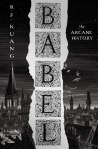
- There’s an “Interlude” section in Babel by R.F. Kuang and The Vulnerables by Sigrid Nunez.
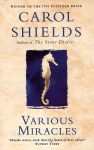
- The Morris (Minor) car is mentioned in Elizabeth Is Missing by Emma Healey and Various Miracles by Carol Shields.
- The “flour/flower” homophone is mentioned in Babel by R.F. Kuang and Various Miracles by Carol Shields.
- A chimney swift flies into the house in Cat and Bird by Kyoko Mori and The Optimist’s Daughter by Eudora Welty.
- A character named Cornelius in The Fruit Cure by Jacqueline Alnes and Wellness by Nathan Hill.
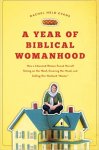
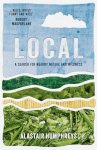
- Reading two year challenge books at the same time, A Year of Biblical Womanhood by Rachel Held Evans and Local by Alastair Humphreys, both of which are illustrated with frequent black-and-white photos by and of the author.
- A woman uses a bell to summon children in one story of Universally Adored and Other One Dollar Stories by Elizabeth Bruce and The Optimist’s Daughter by Eudora Welty.
- Apple turnovers get a mention in A Year of Biblical Womanhood by Rachel Held Evans and Wellness by Nathan Hill.
- A description of rolling out pie crust in A Year of Biblical Womanhood by Rachel Held Evans and Cat and Bird by Kyoko Mori.

- The idea of a house giving off good or bad vibrations in Wellness by Nathan Hill and a story from Various Miracles by Carol Shields.

- Emergency C-sections described or at least mentioned in Brother Do You Love Me by Manni Coe, The Unfamiliar by Kirsty Logan, Wellness by Nathan Hill, and lots more.
- Frustration with a toddler’s fussy eating habits, talk of “gentle parenting” methods, and mention of sea squirts in Wellness by Nathan Hill and Matrescence by Lucy Jones.
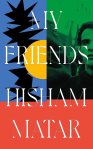
- The nickname “Poet” in The Tidal Year by Freya Bromley and My Friends by Hisham Matar.
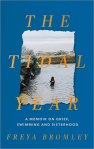
- A comment about seeing chicken bones on the streets of London in The Tidal Year by Freya Bromley and Went to London, Took the Dog by Nina Stibbe.
- Swans in poetry in The Tidal Year by Freya Bromley and Egg/Shell by Victoria Kennefick.
- A mention or image of Captcha technology in Egg/Shell by Victoria Kennefick and Went to London, Took the Dog by Nina Stibbe.
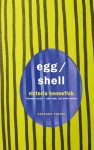

- An animal automaton in Loot by Tania James and Egg/Shell by Victoria Kennefick.
- A mention of Donna Tartt in The Tidal Year by Freya Bromley, Looking in the Distance by Richard Holloway, and Matrescence by Lucy Jones.
- Cathy Rentzenbrink appears in The Tidal Year by Freya Bromley and Went to London, Took the Dog by Nina Stibbe.
 Dialogue is given in italics in the memoirs The Tidal Year by Freya Bromley and The Unfamiliar by Kirsty Logan.
- An account of a man being forced to marry the sister of his beloved in A Year of Biblical Womanhood by Rachel Held Evans, Wellness by Nathan Hill, and The Tiger’s Wife by Téa Obreht.
- Saying that one doesn’t want to remember the loved one as ill (but really, not wanting to face death) so not saying goodbye (in Cat and Bird by Kyoko Mori) or having a closed coffin (Wellness by Nathan Hill).
- An unhappy, religious mother who becomes a hoarder in Wellness by Nathan Hill and I’m Glad My Mom Died by Jennette McCurdy.
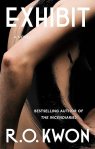
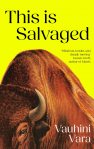
- Characters called Lidija and Jin in Exhibit by R. O. Kwon and Lydia and Jing in the first story of This Is Salvaged by Vauhini Vara.
- Distress at developing breasts in Cactus Country by Zoë Bossiere and I’m Glad My Mom Died by Jennette McCurdy.
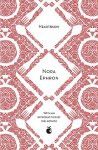
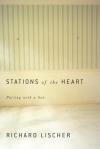
- I came across mentions of American sportscaster Howard Cosell in Heartburn by Nora Ephron and Stations of the Heart by Richard Lischer (two heart books I was planning on reviewing together) on the same evening. So random!
- Girls kissing and flirting with each other (but it’s clear one partner is serious about it whereas the other is only playing or considers it practice for being with boys) in Cactus Country by Zoë Bossiere and Winter’s Bone by Daniel Woodrell.
- A conversion to Catholicism in Places I’ve Taken My Body by Molly McCully Brown and Stations of the Heart by Richard Lischer.
- A zookeeper is attacked by a tiger when s/he goes into the enclosure (maybe not the greatest idea!!) in Tiger by Polly Clark and The Tiger’s Wife by Téa Obreht.

- The nickname Frodo appears in Tiger by Polly Clark and Brother Do You Love Me by Manni Coe.
- Opening scene of a parent in a coma, California setting, and striking pink and yellow cover to Death Valley by Melissa Broder and I’m Glad My Mom Died by Jennette McCurdy.

- An Englishman goes to Nigeria in Howards End by E.M. Forster and Immanuel by Matthew McNaught.
 The Russian practice of whipping people with branches at a spa in Tiger by Polly Clark and Fight Night by Miriam Toews.
- A mother continues washing her daughter’s hair until she is a teenager old enough to leave home in Mrs. March by Virginia Feito and I’m Glad My Mom Died by Jennette McCurdy.
- Section 28 (a British law prohibiting the “promotion of homosexuality” in schools) is mentioned in A Bookshop of One’s Own by Jane Cholmeley, Some Kids I Taught and What They Taught Me by Kate Clanchy, and Brother Do You Love Me by Manni Coe.
- Characters named Gord (in one story from Various Miracles by Carol Shields, and in Fight Night by Miriam Toews), Gordy (in The Absolutely True Diary of a Part-Time Indian by Sherman Alexie), and Gordo (in Blood Red by Gabriela Ponce).

- Montessori and Waldorf schools are mentioned in Cactus Country by Zoë Bossiere and When Fragments Make a Whole by Lory Widmer Hess.
- A trailer burns down in The Absolutely True Diary of a Part-Time Indian by Sherman Alexie and Cactus Country by Zoë Bossiere.
What’s the weirdest reading coincidence you’ve had lately?
Three on a Theme: Matrescence Memoirs (and a Bonus Novel)
I think of pregnancy and childbirth like any extreme adventure (skydiving, polar exploration): wholly extraordinary experiences with much to recommend them – though better appreciated retrospectively than in the moment – to which my response is a hearty “no, thanks.” But just as books have taken me to deserts and the frozen north, miles above or below the earth, into many eras and cultures, they’ve long been my window onto motherhood.
Matrescence, a word coined by anthropologist Dana Raphael in the 1970s, is the process of becoming a mother. It’s a transition period, like adolescence, that involves radical physical and mental changes and has lasting effects. And as Lucy Jones reports, up to 45% of women describe childbirth as traumatic. That’s not a niche experience; it’s an epidemic. If it was men going through this, you can bet it would be at the top of international research agendas.
These three memoirs (and a bonus novel) are bold, often harrowing accounts of the metamorphosis involved in motherhood. They’re personal yet political in how they expose the lack of social support for creating and raising the next generation. All four of these 2023 releases are eye-opening, lyrical and vital; they deserve to be better known.
Matrescence: On the Metamorphosis of Pregnancy, Childbirth and Motherhood by Lucy Jones
Like Jones’s previous book, Losing Eden, about climate breakdown and the human need for nature, Matrescence is a potent blend of scientific research and stories from the frontline. She has synthesized a huge amount of information into a tight 260-some pages that are structured thematically but also proceed roughly chronologically through her own matrescence. Not long into her pregnancy with her first child, a daughter, she realised the extent to which outdated and sexist expectations still govern motherhood: concepts like “natural childbirth” and “maternal instinct,” the judgemental requirement for exclusive breastfeeding, the idea that a parent should “enjoy every minute” of their offspring’s babyhood rather than admitting depression or overwhelm. After the cataclysm of birth, loneliness set in. “Matrescence was another country, another planet. I didn’t know how to talk about the existential crisis I was facing, or the confronting, encompassing relationship I was now in.”
 Jones is now a mother of three. You might think delivery would get easier each time, but in fact the birth of her second son was worst, physically: she had to go into immediate surgery for a fourth-degree anal sphincter tear. In reflecting on her own experiences, and speaking with experts, she has become passionate about fostering open discussion about the pain and risk of childbirth, and how to mitigate them. Women who aren’t informed about what they might go through suffer more because of the shock and isolation. There’s the medical side, but also the equally important social implications: new mothers need so much more practical and mental health support, and their unpaid care work must be properly valued by society. “Yet the focus remains on individual responsibility, maintaining the illusion that we are impermeable, impenetrable machines, disconnected from the world around us.”
The hybrid nature of the book is its genius. A purely scientific approach might have been dry; a social history well-trod and worthy; a memoir too inward-looking to make wider points. Instead it’s equally committed to all three purposes. I appreciated the laser focus on her own physical and emotional development, but the statistical and theoretical context gives a sense of the universal. The literary touches – lists and word clouds, verse-like meditations and flash vignettes about natural phenomena – are not always successful, but there is a thrill to seeing Jones experimenting. Like Leah Hazard’s Womb, this is by no means a book that’s just for mothers; it’s for anyone who’s ever had a mother.
With thanks to Allen Lane (Penguin) for the free copy for review.
Milk: On Motherhood and Madness by Alice Kinsella
 Kinsella is an Irish poet who became a mother in her mid-twenties; that’s young these days. In unchronological vignettes dated in relation to her son’s birth – the number of months after; negative numbers to indicate that it happened before – she explores her personality, mental health and bodily experiences, but also comments more widely on Irish culture (the stereotype of the ‘mammy’; the only recent closure of Magdalene laundries and overturning of anti-abortion laws) and theories about motherhood.
I liked this most when the author stuck close to her own sensory and emotional life; overall, the book felt too long and I thought a late segue into an argument against the dairy industry was unnecessary. Had I been the editor, I would have cut the titled essays and just stuck to the time-stamped pieces. At its best, though, this is a poetic engagement with the tropes and reality of motherhood, sometimes delivered in paragraphs that more closely resemble verse:
+1 I have become the common myth. Mother. The sleepy hum of early memories. The smell of shampoo, of Olay, of lavender. The feeling of safety. The absence of fear.
+2 There’s a possibility,
that we are among the happiest
people in the world:
mothers.[Record freeze preserve.] Fighting death by reproducing our days. Fighting death by reproducing. Here: your life on paper. Here: their life to come.
We’re expected to be mothers the instant we lock eyes with our baby. To shed everything we were and be reborn: Madonnas.
The baby’s favourite thing to do is sit on my lap and interact with other people. This is what mothers are for, I think. Comfort, security, a place to get to know the world from.
The language is gorgeous, and while Kinsella complains of disorientation to the point of worrying about losing herself (although she had struggled with mental health earlier in life, the subtitle’s reference to ‘madness’ seemed to me like overkill compared to other memoirs I’ve read of postpartum depression, trauma or psychosis, such as Inferno by Catherine Cho and Birth Notes by Jessica Cornwell), she comes across as entirely lucid. Her goal here is to find and add to the missing literature of motherhood, in much the same way that Jazmina Barrera, another young mother and writer, attempted with Linea Nigra. This would also make a good companion read to A Ghost in the Throat by Doireann Ní Ghríofa.
Kinsella is among my predictions for the Sunday Times Charlotte Aitken Young Writer of the Year Award shortlist, along with Eliza Clark (Penance) and Tom Crewe (The New Life). (Public library)
The Unfamiliar: A Queer Motherhood Memoir by Kirsty Logan
 I’ve read one of Kirsty Logan’s novels and dipped into her short stories. I immediately knew her parenting memoir would be up my street, but wondered how her fantasy/horror style might translate into nonfiction. Second-person narration is perfect for describing her journey into motherhood: a way of capturing the bewildering weirdness of this time but also forcing the reader to experience it firsthand. It is, in a way, as feminist and surreal as her other work. “You and your partner want a baby. But your two bodies can’t make a baby together. So you need some sperm.” That opening paragraph is a jolt, and the frank present-tense storytelling carries all through.
To start with, Logan’s wife Annie tried getting pregnant. They had a known sperm donor and did home insemination, then advanced to IVF. But after three miscarriages and a failed cycle, they took a doctor’s advice and switched to the younger womb – Logan’s, by four years. As “The Planning” makes way for “The Growing,” it helps that Annie knows exactly what she’s going through. The pregnancy sticks, though the fear of something going wrong never abates, and after the alternating magic and discomfort of those nine months (“You’ve reached the ‘shoplifting a honeydew’ stage”) it’s time for “The Birth,” as horrific an account as I’ve read. The baby had shifted to be back-to-back, which required an emergency C-section, but before that there was a sense of total helplessness, abandonment to unmanaged pain.
Finally the doctor comes. She asks what you would like, and you, shaking shitting pissing bleeding, unable to see when the pain reaches its peak, not screaming, not swearing, not being rude to anyone, not begging for an epidural, … say: I’d like to try some gas and air, if that’s okay, please.
What is remarkable is how Logan recreates this time so intensely – she took notes all through the pregnancy, plus on her phone in hospital and in the early days after bringing the baby home – but can also see how, even in the first hours, she was shaping it into a narrative. “You like that it’s a story. You like that it’s Gothic and gory … and funny.” Except it wasn’t. “You thought you were going to die.” And yet. “How can the lucid, everyday world explain this? The wonder, the curiosity, the recognition. The baby has lived inside your body, and you’ve only just met. The baby is your familiar, and deeply unfamiliar.”
This reminded me of other memoirs I’ve read about queer family-making, especially small by Claire Lynch, which similarly turns on the decision about which female partner will carry the pregnancy and is written in an experimental style. The Unfamiliar is utterly absorbing and conveys so much about the author and her family, even weaving in her father’s death seven years before. I’ve signed up for Logan’s online memoir-writing course (“Where to Start and Where to End”) organised by Writers & Artists (part of Bloomsbury) for next month.
With thanks to Virago Press for the free copy for review.
And, as a bonus, a short novel that deals with many of these same themes:
Reproduction by Louisa Hall
 Procreation. Duplication. Imitation. All three connotations are appropriate for the title of an allusive novel about motherhood and doppelgangers. A pregnant writer starts composing a novel about Mary Shelley and finds the borders between fiction and (auto)biography blurring: “parts of her story detached themselves from the page and clung to my life.” The first long chapter, “Conception,” is full of biographical information about Shelley and the writing and plot of Frankenstein, chiming with Mary and the Birth of Frankenstein by Anne Eekhout, which I read last year. It’s a recognisable piece of autofiction, moving with Hall from Texas to New York to Montana to Iowa as she marries, takes on various university teaching roles and goes through two miscarriages and then, in the “Birth” section, the traumatic birth of her daughter, after which she required surgery and blood transfusions.
These first two sections are exceptional. There’s a sublime clarity to them, like life has been transcribed to the page exactly as it was lived. The change of gears to the third section, “Science Fiction,” put me off, and it took me a long time to get back into the flow. In this final part, the narrator reconnects with a friend and colleague, Anna, who is determined to get pregnant on her own and genetically engineer her embryos to minimise all risk. Here she is more like a Rachel Cusk protagonist, eclipsed by another’s story and serving primarily as a recorder. I found this tedious. It all takes place during Trump’s presidency [Laura F. told me I accidentally published with that saying pregnancy – my brain was definitely saturated with the topic after these reads!] and the Covid pandemic, heightening the strangeness of matrescence and of the lengths Anna goes to. “What, after all, in these end times we lived in, was still really ‘natural’ at all?” the narrator ponders. She casts herself as the narrating Walton, and Anna as Dr. Frankenstein (or sometimes his monster), in this tale of transformation – chosen or not – and peril in a country hurtling toward self-implosion. It’s brilliantly envisioned, and – almost – flawlessly executed. (Public library)
Additional related reading:
Notes Made while Falling by Jenn Ashworth
After the Storm by Emma Jane Unsworth
And coming out in 2025: Mother, Animal by Helen Jukes (Elliott & Thompson)
May Poetry Releases: Blood & Cord Anthology; Connolly, Goss, Harrison
Apart from Monsters, my focus for May releases has been on poetry, with three Carcanet collections plus a poetry-heavy anthology of writing on early parenthood. Love, history, nature and parental bonds are a few underlying subjects that connect some or all of these.
The Recycling by Joey Connolly
Joey Connolly’s second collection reminded me most of Caroline Bird’s work (especially the mise en abyme ending to “For Such a Widely Used Material, Glass Sure Does Have Some Downsides”): effusive and sometimes absurdist, with unexpected imagery and wordplay.
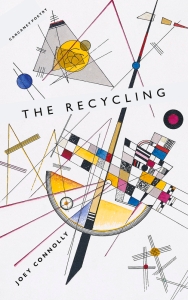 In keeping with the title, there are environmentalist considerations and musings on materials, but also the connotation of reusing language or rehashing ideas. I appreciated this strategy when he’s pondering etymology (“Strange noun full of verb, noun / bending to verb, strange / idea of repeating repetition” in the title poem) or reworking proverbs in the hilarious “Poem in Which Is Is Sufficient” (“Sufficient unto the glaze / is the primer thereunder. Sufficient / unto the applecart is the upset / thereof” and so on) but perhaps less so during 22 indulgent pages of epigraphs. The distance-designated poems of the inventive “Solvitur Ambulando” section range from history to science fiction: “Abstracted, ankle deep in the proto-gutters of Elizabethan London: / how were you ejected from your life to wash up here?”
It’s such a versatile book. I loved the philosophical self-questioning of “Why Try and Be Good When This World” (“the / mental carapace required to weather the hardness / of indifference insulates you from what it means to be alive”) and the utterly original love poetry (“I will take out the bins, and I will try not to leave the keys / in the door, and I will continue / to love you / to the fullest extent to which I find myself able. Oh love. Checkmate”). Eminently quotable stuff. Here are two of my favourite passages:
like an
amateur kintsugi enthusiast in the ruined chinashop
of my childhood idealism
What sweet sorrow
to persist within this disappeared world
With thanks to Carcanet Press for the advanced e-copy for review.
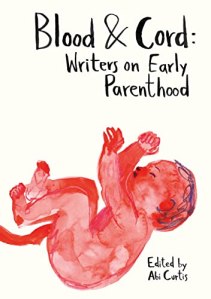
Blood & Cord: Writers on Early Parenthood, edited by Abi Curtis
“The introduction of a new baby rearranges a life, and this requires a new language and a new kind of engagement with the world,” Abi Curtis writes in her introduction. These poems and pieces of flash autofiction or memoir are often visceral, as the title and cover image by Elīna Brasliņa indicate. Elizabeth Hogarth’s “Animal Body” tracks how primal instinct takes over. Second- and third-person narratives distance the speaker from the experience, as in Ruth Charnock’s hybrid “three tarot cards for the new mother.” As I’ve come to expect from The Emma Press, there’s a wide variety of formats, styles and even page layout, with some poems printed in landscape.
 Curtis’s four poems are, together, the strongest entry. I particularly loved the final lines of “September Birth”: “We listen close but cannot fathom / Your new language. We will spend / The rest of our days learning it.” Naomi Booth, too, zeroes in on language in “What is tsunami?” A daughter’s acquisition of language provides entertainment (“She names her favourite doll, Hearty Campfire”) but also induces apprehension:
There are certain words that you dread hearing her say. The first is money. … You dread the way it will become as concrete to her as sky and cat and gate. Mu-nee. Mu-nee.
Not all of these are jubilant birth stories. There are children who are longed for but never arrive. There are also babies who never breathe, or soon die. Alex McRae Dimsdale’s “Bath” is a heartbreaking poem about bidding goodbye to a stillborn son:
It wasn’t the first time that a couple had to leave
the hospital without their newborn.
What could they give us instead?
Here, a small white wooden box –
inside, a packet of wildflower seeds,
your wristband, little
stripy hat. A curlicued certificate
inked with your footprints.
…
what maternal sin did I commit,
deciding who you were
for a whole life that was
already stopped before it started?
“Other Mothers,” a prose essay by poet Rebecca Goss (from whom more below), is about her infant daughter’s death in hospital.
There are a few male contributors, outnumbered five to one by women writers. Poets Liz Berry and Gail McConnell illuminate same-sex motherhood. The two short stories – i.e., those that are clearly fiction rather than memoir by different pronouns – were among the weakest pieces for me: the one piles cruel irony on misery (no real surprise as it’s by an author I’ve had a strong reaction against in the past; the only saving grace was a clever reference to Hemingway’s six-word story about baby shoes); the other is silly and contrived.
I think this was my seventh Emma Press book, and my fourth of their anthologies, of which I’d recommend The Emma Press Anthology of Love. This one was a bit more uneven for me, but I can see it holding appeal for new parents who are of a literary bent.
Published in association with the York Centre for Writing, York St John University. With thanks to The Emma Press for the free copy for review.
Latch by Rebecca Goss
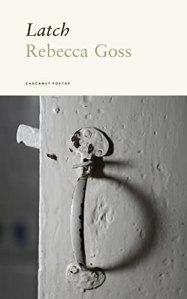 Rebecca Goss’s fourth poetry collection arises from a rural upbringing in Suffolk. Her parents’ farm was a “[s]emi-derelict, ramshackle whimsy of a place”. There’s nostalgia for the countryside left behind and for a less complicated family life before divorce, yet this is no carefree pastoral. From the omnipresent threats to girls to the challenges of motherhood, Goss is awake to the ways in which women are compelled to adapt to life in male spheres. The title/cover image has multiple connotations: the first bond between mother and child; the gates and doors that showcase craftsmanship (as in “Blacksmith, Making”) or seek to shut menacing forces out (see “The Hounds”), but cannot ensure safety.
Even the individual poem titles tell tales: “The Retired Agronomist Drives a Tractor in the Summer Because He Likes the Oily Smell of the Machine” and three with the enticing pattern “Woman Returns to Childhood Home…” Trees and animals provide much of the imagery. A few of my personal favourites were “Rooks,” “Weir,” and “In Song Flight.”

With thanks to Carcanet Press for the advanced e-copy for review.
Kitchen Music by Lesley Harrison
Lesley Harrison is a Scottish poet with a number of pamphlets and collections to her name. Orkney and other remote islands are settings for these atmospheric poems filled with whale song and weather (“the vast dark hung with / ropes of song”), birds and wordplay. Language and folktales inspire the poet, and she engages in word association and creates rebuses built around middle letters rather than first. There are also black-and-white photographs, and whale images by Marina Rees punctuating “C-E-T-A-C-E-A.” My attention threatened to drift away from the sometimes wispy lines and paragraphs, but this would be well worth taking on holiday to read on location.

With thanks to Carcanet Press for the advanced e-copy for review.
Would you be interested in reading one or more of these?
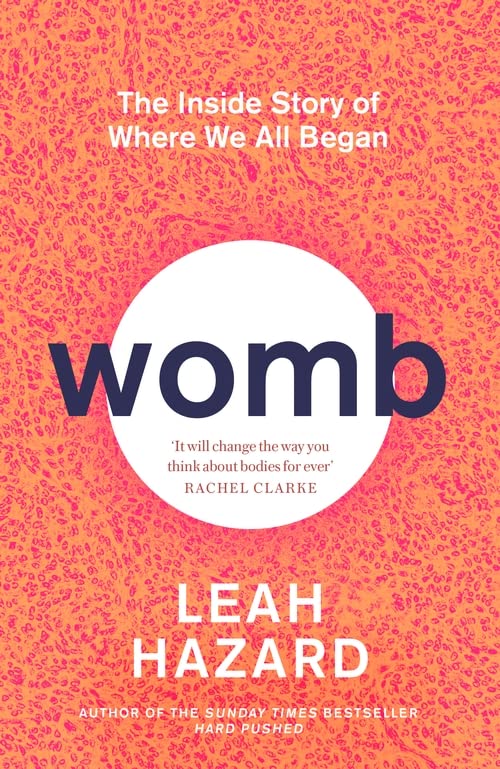
Womb: The Inside Story of Where We All Began by Leah Hazard
Back in 2019, I reviewed Hard Pushed, Leah Hazard’s memoir of being a midwife in a busy Glasgow hospital. Here she widens the view to create a wide-ranging and accessible study of the uterus. As magisterial in its field as Siddhartha Mukherjee’s The Emperor of All Maladies was for cancer, it might have shared that book’s ‘A Biography’ subtitle and casts a feminist eye over history and future alike. Blending medical knowledge and cultural commentary, it cannot fail to have both personal and political significance for readers of any gender.
The thematic structure of the chapters also functions as a roughly chronological tour of how life with a uterus might proceed: menstruation, conception, pregnancy, labour, caesarean section, ongoing health issues, menopause. With much of Hazard’s research taking place at the height of the pandemic, she had to conduct many of her interviews online. She consults mostly female experts and patients, meeting people with surprisingly different opinions. For instance, she encounters opposing views on menstruation from American professors: one who believes it is now optional, a handicap – for teenagers, especially – and that the body was never meant to endure 350–400 periods compared to the historical average of 100 (based on shorter lifespan plus more frequent pregnancy and breastfeeding); versus another who is concerned about the cognitive effects of constant hormonal intervention.
The book forcefully conveys how gynaecological wellness is threatened by a lack of knowledge, sexist stereotypes, and devaluation of certain wombs. Even today, little is known about the placenta, she reports, so research involves creating organoids from stem cells that act like it would. The use of emotionally damaging language like “irritable/hostile uterus,” “incompetent cervix” and “too posh to push” is a major problem. The sobering chapter on “Reprocide” elaborates on enduring threats to reproductive freedom, such as non-consensual sterilization of women in detention centres and the revoking of abortion rights. And even routine problems like endometriosis and fibroids disproportionately affect women of colour.
Hazard has taken pains to adopt an inclusive perspective, referring to “menstruators” or “people with a uterus” as often as to women and mentioning health concerns specific to transgender people. She is also careful to depict the sheer variety of experience: age at first menses, subjective reactions to labour or hysterectomy, severity of menopause symptoms, and so on. Where events have potentially traumatic effects, she presents alternatives, such as a “gentle” or “natural” Caesarean, which is less clinical and more empowering. The prose is pitched at a good level for laypeople: conversational, and never bombarding with information. That I have not had children myself was no obstruction to my enjoyment of the book. It is full of fascinating content that is relevant to all (as in the Harry and Chris solidarity-themed song “Womb with a View,” which has the repeated line “we’ve all been in a womb”). 
Here are just some of the mind-blowing facts I learned:
- Infant girls bleed in what as known as pseudomenses.
- Research is underway to regularly test menstrual effluent for endometriosis, etc. and the uterine microbiome for signs of cancer.
- The cervix can store sperm and release it later for optimal fertilization.
- Caesarean section and induction with oxytocin now occur in one-third of pregnancies, despite the WHO recommendation of no more than 10% for the former and the danger of postpartum haemorrhage with the latter.
- After childbirth, a discharge called lochia continues for 4–6 weeks.
- There have been successful uterine transplants from living donors and cadavers.
- Artificial wombs (“biobags”) have been used for other mammals and are in development; Hazard cautions about possible misogynistic exploitation.
With thanks to Virago Press for the free copy for review.
Animal Life by Auður Ava Ólafsdóttir
Icelandic author Auður Ava Ólafsdóttir was familiar to me from Butterflies in November (2013), a whimsical, feminist road trip novel I reviewed for For Books’ Sake. Dómhildur or “Dýja” is, like her grandaunt before her, a midwife – a word that was once voted Iceland’s most beautiful: ljósmóðir combines the words for light and mother, so it connotes “mother of light.” On the other side of the family, Dýja’s relatives are undertakers, a neat setup that sees her clan “handling people at their points of entry and exit.”
 Along with her profession, Dýja inherited her great-aunt’s apartment, nine bottles of sherry, pen pal letters to a Welsh midwife and a box containing several discursive manuscripts of philosophical musings, one of them entitled Animal Life. In fragments from this book within the book, we see how her grandaunt recorded philosophical musings about coincidences and humanity in relation to other species, vacillating between the poetic and the scientific.
As Christmas – and an unprecedented storm prophesied by her meteorologist sister – approaches, Dýja starts to make the apartment less of a mausoleum and more her own home, trading lots of the fusty furniture for a colleague’s help with painting and decorating, and flirting with an Australian tourist who’s staying in the apartment upstairs. Outside of work she has never had much of a personal life, so she’s finally finding a better balance.
I really warmed to the grandaunt character and enjoyed the peppering of her aphorisms. As in novels like The Birth House and A Ghost in the Throat, it feels like this is a female wisdom, somewhat forbidden and witchy. The idea of it being passed down through the generations is appealing. We get less of a sense of Dýja overall, only late on finding that she has her own traumatic backstory. For a first-person narrator, she’s lacking the expected interiority. Mostly, we see her interactions with a random selection of minor characters such as an electrician whose wife is experiencing postpartum depression.
I felt there were a few too many disparate elements here, not all joined but just left on the page as a quirky smorgasbord. Still, it’s fun to try fiction in translation sometimes, especially when it’s of novella length. This also reminded me a bit of Weather and Brood.
Translated by Brian FitzGibbon. With thanks to Pushkin Press for my free copy for review.
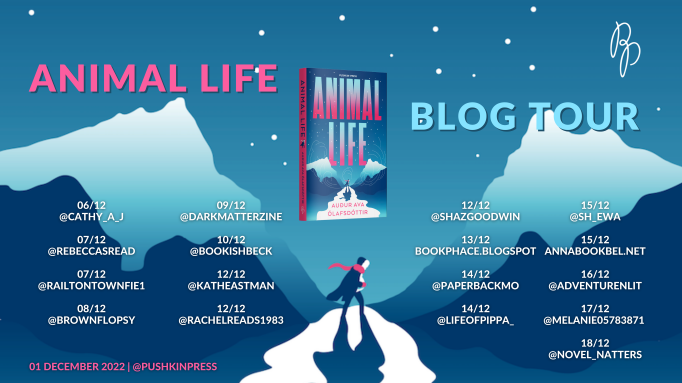
I was delighted to be part of the blog tour for Animal Life. See below for details of where other reviews have appeared or will be appearing soon.
 Bookish Beck = Rebecca Foster. American transplant to England. Freelance proofreader and book reviewer.
 Bookish Beck