(Goodbye to) Winter Reads by Sylvia Plath (#ReadIndies) & Kathleen Winter
The sunshine, temperatures and flora suggest that spring is here to stay, though I wouldn’t be surprised by a return of the cold and wet in March. We live in the wrong part of the UK for snow lovers; we didn’t get any snow this winter, apart from some early-morning flurries one day when I was fast asleep. My seasonal reading consisted of a lesser-known posthumous poetry collection, a record of a sea voyage past Greenland, and a silly children’s book.
Winter Trees by Sylvia Plath (1971)
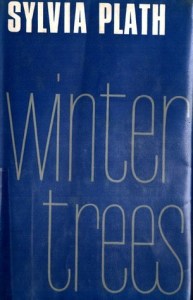 A prefatory note from Ted Hughes explains that these poems “are all out of the batch from which the Ariel poems were more or less arbitrarily chosen and they were all composed in the last nine months of Sylvia Plath’s life.” Ariel is much the stronger collection. There are only 19 poems here; the final one, “Three Women,” is more of a play (subtitled “A Poem for Three Voices”) set on a maternity ward. Motherhood is a central concern throughout. There’s harsh, unpleasant language around womanhood in general. The opening title poem is a marvel of artistic imagery, assonance and internal rhyme, but also contains a metaphor that made me cringe: “Knowing neither abortions nor bitchery, / Truer than women, / They seed so effortlessly!”


That paints motherhood as hard won, as “Childless Woman” reinforces by turning purposeless menstruation into a horror story with its vocabulary of “a child’s shriek” — “Spiderlike” — “Uttering nothing but blood— / Taste it, dark red!” — “My funeral” — “the mouths of corpses”. Plath was certainly ambivalent about babies (“Thalidomide” is particularly frightening) but I bristled at childlessness being linked with living only for oneself. Then again, pretty much everything – men, God, travel, animals – is portrayed negatively here. “Winter Trees” is the single poem I’d anthologize. (University library) 
Published by Faber, so counts for #ReadIndies
Boundless: Adventures in the Northwest Passage by Kathleen Winter (2015)
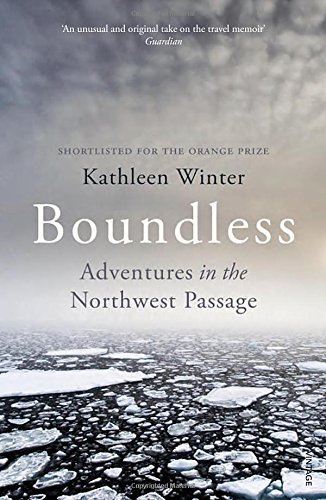 I read this excellent travel book slowly, over most of the winter, including during that surreal period when He Who Shall Not Be Named was threatening to annex Greenland. Winter was invited to be a writer-in-residence aboard an icebreaker travelling through the Northwest Passage, past southwest Greenland and threading between the islands of the Canadian Arctic. She was prepared: a friend had taught her that the only thing to say in these sorts of lucky, unexpected scenarios is “My bags are already packed.” Her ‘getaway bag’ of two pairs of underwear, a T-shirt, a pair of jeans, and a LBD wasn’t exactly Arctic-ready, but she still had a head start. She adds an old concertina and worn hiking boots that resemble “lobes of some mushroom cracked off the bole of an old warrior tree.”
It’s not a long or gruelling trip, so there’s not much of the bellyaching that bores me in trekking books. Winter is interested in everything: birds, folk music, Indigenous arts and crafts, her fellow passengers’ stories, the infamous lost Arctic expeditions, and her family’s history in England and Canada. She collects her scraps of notes in a Ziploc, and that’s what this book is – a grab bag. Winter is enthusiastic yet prioritizes quiet epiphanies about the sacredness of land and creatures over thrills – though their vessel does get stranded on rocks and requires a Coast Guard rescue. It would be interesting to reread her Orange Prize-shortlisted novel about an intersex person, Annabel. (If you hanker to go deeper about Greenland, read This Cold Heaven by Gretel Ehrlich and Miss Smilla’s Feeling for Snow by Peter Høeg.) (Secondhand – Bas Books) 
& A bonus children’s book:
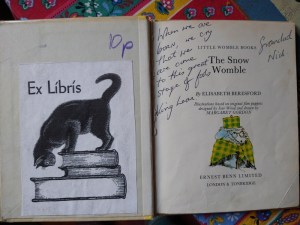
 The Snow Womble by Elisabeth Beresford; illus. Margaret Gordon (1975) – I thought this would be a cute one to read even though I’m unfamiliar with the Wombles. But it’s just a one-note extended joke about the creatures not being able to tell their snowman version of Great-Uncle Bulgaria apart from the real one. The best thing about reading this was the frontispiece’s juxtaposition of elements: the computer-printed bookplate, the nominal secondhand price (withdrawn from London Borough of Sutton Public Libraries), and the wholly inappropriate inscription Grandad Nick chose from King Lear! (Little Free Library)
Literary Wives Club: Their Eyes Were Watching God by Zora Neale Hurston (1937)
This is one of those classics I’ve been hearing about for decades and somehow never read – until now. Right from the start, I could spot its influence on African American writers such as Toni Morrison. Hurston deftly reproduces the all-Black milieu of Eatonville, Florida, bringing characters to life through folksy speech and tying into a venerable tradition through her lyrical prose. As the novel opens, Janie Crawford, forty years old but still a looker, sets tongues wagging when she returns to town “from burying the dead.” Her friend Pheoby asks what happened and the narrative that unfolds is Janie’s account of her three marriages.
{SPOILERS IN THE REMAINDER!}
- To protect Janie’s reputation and prospects, her grandmother, who grew up in the time of slavery, marries Janie off to an old farmer, Logan Killicks, at age 16. He works her hard and treats her no better than one of his animals.
- She then runs off with handsome, ambitious Joe Starks. [A comprehension question here: was Janie technically a bigamist? I don’t recall there being any explanation of her getting an annulment or divorce.] He opens a general store and becomes the town mayor. Janie is, again, a worker, but also a trophy wife. While the townspeople gather on the porch steps to shoot the breeze, he expects her to stay behind the counter. The few times we hear her converse at length, it’s clear she’s wise and well-spoken, but in the 20 years they are together Joe never allows her to come into her own. He also hits her. “The years took all the fight out of Janie’s face.” When Joe dies of kidney failure, she is freer than before: a widow with plenty of money in the bank.
- Nine months after Joe’s death, Janie is courted by Vergible Woods, known to all as “Tea Cake.” He is about a decade younger than her (Joe was a decade older, but nobody made a big deal out of that), but there is genuine affection and attraction between them. Tea Cake is a lovable scoundrel, not to be trusted around money or other women. They move down to the Everglades and she joins him as an agricultural labourer. The difference between this and being Killicks’ wife is that Janie takes on the work voluntarily, and they are equals there in the field and at home.
In my favourite chapter, a hurricane hits. The title comes from this scene and gives a name to Fate. Things get really melodramatic from this point, though: during their escape from the floodwaters, Tea Cake has to fend off a rabid dog to save Janie. He is bitten and contracts rabies which, untreated, leads to madness. When he comes at Janie with a pistol, she has to shoot him with a rifle. A jury rules it an accidental death and finds Janie not guilty.
I must admit that I quailed at pages full of dialogue – dialect is just hard to read in large chunks. Maybe an audiobook or film would be a better way to experience the story? But in between, Hurston’s exposition really impressed me. It has scriptural, aphoristic weight to it. Get a load of her opening and closing paragraphs:
Ships at a distance have every man’s wish on board. For some they come in with the tide. For others they sail forever on the horizon, never out of sight, never landing until the Watcher turns his eyes away in resignation, his dreams mocked to death by Time. That is the life of men.
Here was peace. [Janie] pulled in her horizon like a great fish-net. Pulled it from around the waist of the world and draped it over her shoulder. So much of life in its meshes! She called in her soul to come and see.
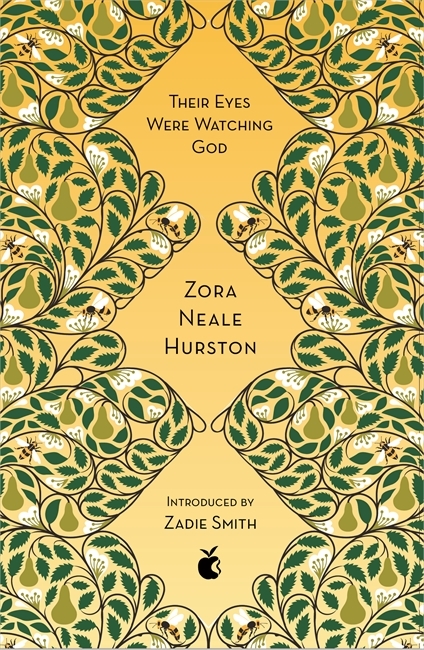
There are also beautiful descriptions of Janie’s state of mind and what she desires versus what she feels she has to settle for. “Janie saw her life like a great tree in leaf with the things suffered, things enjoyed, things done and undone. Dawn and doom was in the branches.” She envisions happiness as sitting under a pear tree; bees buzzing in the blossom above and all the time in the world for contemplation. (It was so pleasing when I realized this is depicted on the Virago Modern Classics cover.)
I was delighted that the question of having babies simply never arises. No one around Janie brings up motherhood, though it must have been expected of her in that time and community. Her first marriage was short and, we can assume, unconsummated; her second gradually became sexless; her third was joyously carnal. However, given that both she and her mother were born of rape, she may have had traumatic associations with pregnancy and taken pains to prevent it. Hurston doesn’t make this explicit, yet grants Janie freedom to take less common paths.
What with the symbolism, the contrasts, the high stakes and the theatrical tragedy, I felt this would be a good book to assign to high school students instead of or in parallel with something by John Steinbeck. I didn’t fall in love with it in the way Zadie Smith relates in her introduction, but I did admire it and was glad to finally experience this classic of African American literature. (Secondhand purchase – Community Furniture Project, Newbury) 
The main question we ask about the books we read for Literary Wives is:
What does this book say about wives or about the experience of being a wife?
- A marriage without love is miserable. Marriage is not a cure for loneliness.
There are years that ask questions and years that answer. Janie had had no chance to know things, so she had to ask. Did marriage end the cosmic loneliness of the unmated? Did marriage compel love like the sun the day?
(These are rhetorical questions, but the answer is NO.)
- Every marriage is different. But it works best when there is equality of labour, status and finances. Marriage can change people.
Pheoby says to Janie when she confesses that she’s thinking about marrying Tea Cake, “you’se takin’ uh awful chance.” Janie replies, “No mo’ than Ah took befo’ and no mo’ than anybody else takes when dey gits married. It always changes folks, and sometimes it brings out dirt and meanness dat even de person didn’t know they had in ’em theyselves.”
Later Janie says, “love ain’t somethin’ lak uh grindstone dat’s de same thing everywhere and do de same thing tuh everything it touch. Love is lak de sea. It’s uh movin’ thing, but still and all, it takes its shape from de shore it meets, and it’s different with every shore.”
This was a perfect book to illustrate the sorts of themes we usually discuss!
See Kate’s, Kay’s and Naomi’s reviews, too!
Coming up next, in December: Euphoria by Elin Cullhed (about Sylvia Plath)
Others Like Me: The Lives of Women without Children by Nicole Louie
I’ve read quite a lot about matrescence and motherhood so far this year, and I value these women authors’ perspectives on their experiences. There is much that resonates with me as I look back to my relationships with my parents and observe how my sister, brother-in-law and friends are raising their children. Yet as I read of the joys and struggles of parenthood, I do sometimes think, what about the rest of us? That’s the question that drove Nicole Louie to write this impassioned book, which combines the strengths of an oral history, a group biography and a fragmented memoir. Like me, she was in search of role models, and found plenty of them – first on the library shelves and then in daily life by interviewing women she encountered through work or via social media.
The 14 Q&As, shaped into first-person narratives, are interspersed with Louie’s own story, creating a chorus of voices advocating for women’s freedom. The particulars of their situations vary widely. A Venezuelan graphic designer with MS doesn’t want to have a baby to try to fill a perceived lack. A blind Canadian writer hopes for children but knows it may be too complicated on her own. A Ghanaian asexual woman confronts her culture’s traditional expectations of woman. A British nurse in her sixties is philosophical about not having a long-term relationship at the right time, and focuses instead on the thousands of people she’s been able to care for.
The subjects come from Iceland, Peru, the Isle of Man; they are undecided, living with illness or disability, longing but unpartnered, or utterly convinced that motherhood is not for them. Their reasons are logical, psychological, personal and/or environmental, and so many of their conclusions rang true for me:
I just want to make the most of what’s here now instead of always having to long for something else I don’t already have.
I have this strong core intent to be useful to society. To channel as much energy into it as I would put into raising two children … You can’t experience everything available to you in life. So you make choices, and you decide which paths to take and which ones to leave behind without trying. And that’s okay. What’s important is to move forward with intent.
Louie herself has an interesting background: she’s Brazilian but has lived in Sweden, the UK and Ireland. Her work as a copywriter and translator has taken her behind the scenes in training AI. She first had to give serious thought to the question of becoming a mother in 2009, when it became an issue in her first marriage. But, really, she’d known for a long time that it didn’t appeal to her – at age six she was given a doll whose tummy opened to reveal a baby and quickly exchanged that toy for another. A late diagnosis of PCOS and a complicated relationship with her own mother only reinforced a clear conviction.
Other works that I’ve encountered on childlessness, such as Childless Voices by Lorna Gibb (2019) and No One Talks about This Stuff: Twenty-Two Stories of Almost Parenthood, ed. Kat Brown (2024), are heavily weighted towards infertility. Here the spotlight is much more on being childfree, although the blurb is inclusive, speaking of “women who are not mothers by choice, infertility, circumstance or ambivalence.” (I love the inclusion of that final word.)
“Motherhood as the epicentre of women’s lives was all I’d ever witnessed” via her mother and grandmother, Louie writes, so finding examples of women living differently was key for her. As readers, then, we have the honour of watching her life, her thinking and the book all take shape simultaneously in the narrative. A lovely point to mention is that Molly Peacock (The Analyst and A Friend Sails in on a Poem) mentored her throughout the composition process.
Intimate and empathetic, Others Like Me is also elegantly structured, with layers of stories that reflect diversity and the intersectionality of challenges. This auto/biographical collage of life without children will be reassuring for many, and a learning opportunity for others. I’m so glad it exists.
With thanks to Nicole Louie and Dialogue Books for the proof copy for review.
Buy Others Like Me from Bookshop.org in the UK [affiliate link]
Women’s Prize Shadowing & Men Reading Books by Women
Back in April I announced that my book club was one of six selected to shadow this year’s Women’s Prize shortlist by reading and discussing one of the finalists. Our assigned title was one I’d already read, but I skimmed back through it before our meet-up and enjoyed getting reacquainted with Martha Friel. Here’s our group’s review:

Sorrow and Bliss by Meg Mason
Readability: 5/5
Characters: 5/5
Storyline: 4/5
Can’t Put It Down: 4.5/5
Total = 18.5/20
 Our joint highest rating, and one of our best discussions – taking in mental illness and its diagnosis and treatment, marriage, childlessness, alcoholism, sisterhood, creativity, neglect, unreliable narrators and loneliness. For several of us, these issues hit close to home due to personal or family experience. We particularly noted the way that Mason sets up parallels between pairs of characters, accurately reflecting how family dynamics can be replicated in later generations.
Even the minor characters are fully rounded, and although Martha is not always pleasant to spend time with, her voice is impressively rendered. The picture of mental illness from the inside feels authentic, including the fact that Martha uses it as an excuse for her bad behaviour, becoming self-absorbed and not seeing how she is affecting others around her. Our main point of disagreement was about Mason’s decision not to name the mental illness Martha is suffering from. It seemed clear to several of us that it was meant to be bipolar disorder, so we wondered if it was a copout not to identify it as such.
We also thought about the meaning of the term “literary fiction”, and whether this has the qualities of a prize winner and will stand the test of time.
We had to fill out a feedback questionnaire about our experience of shadowing, and most of us sent in individual blurbs in response to the book. Some ended up in the final Reading Agency article. Here was mine:
“This deceptively light novel was a perfect book club selection, eliciting deep discussion about mental illness, family relationships and parenthood. Martha’s (unreliable) narration is a delight, wry and deadpan but also with moments of wrenching emotion. Mason masterfully controls the tone to create something that is witty and poignant all at once.”
Probably the main reason we were chosen for this opportunity is that we have a man – my husband, that is! – who attends regularly. This year the prize has been particularly keen to get more men reading books by women (see more below). So, he was responsible for giving The Male Response to the novel. No pressure, right? Luckily, he enjoyed it just as much as the rest of us. From the cover and blurb, it didn’t necessarily seem like the sort of book that he would pick up to read for himself, but he was fully engaged with the themes of mental illness, family relationships, and the question of whether or not to have children, and was so compelled that he read over half of it in a day.
I’m not sure who I expect to be awarded the Women’s Prize tomorrow. We of West Fields Readers would be delighted if it went to Meg Mason for Sorrow and Bliss, but I’d also be happy with a win for Louise Erdrich or Ruth Ozeki – though I wasn’t taken with their latest works compared with earlier ones I’ve read, they are excellent authors who deserve recognition. I don’t think The Bread the Devil Knead has a chance; I’d be disappointed in a win by Elif Shafak in that I would feel obligated to try her novel – the kind that gives magic realism a bad name – again; and, while I’m a Maggie Shipstead fan in general and admire the ambition of Great Circle, it would be galling for a book I DNFed twice to take the title!
Who are you rooting for/predicting?
I’d like to mock you with that thought,
jeer at the man
who won’t read novels
written by women –
at least not if they’re still alive
~from The Poet by Louisa Reid
Maybe you’ve seen on social media that the Women’s Prize has been canvassing opinion on the books by women that all men should read. This was prompted by some shocking statistics suggesting that even bestselling female authors can only attract a 20% male readership, whereas the best-known male authors are almost equally popular with men and women. They solicited 60 nominations from big names and ran a public poll. I voted for these 10:
Half of a Yellow Sun (Chimamanda Ngozi Adichie)
Possession (A.S. Byatt)
Homegoing (Yaa Gyasi)
The Poisonwood Bible (Barbara Kingsolver)
The Sea, The Sea (Iris Murdoch)
The Stone Diaries (Carol Shields)
We Need to Talk about Kevin (Lionel Shriver)
Olive Kitteridge (Elizabeth Strout)
The Goldfinch (Donna Tartt)
Orlando (Virginia Woolf)
*If I could have added to that list, though, my top recommendations for all men to read would be Station Eleven by Emily St. John Mandel and Bring Up the Bodies by Hilary Mantel (and probably a different Octavia E. Butler novel from the one nominated).


Three of my selections were among the 10 essential reads announced on the WP website. Their list was headed by Margaret Atwood’s The Handmaid’s Tale, though of her works I’d be more likely to direct men to Oryx and Crake.
I’ve seen discussions on Twitter about why men don’t read novels (at all, prioritizing nonfiction), or specifically not ones by women. Do you have any theories?
What one book by a woman do you think all men should read?
These Precious Days by Ann Patchett
I consider myself an Ann Patchett fan, having read eight of her books by now. Although she’s better known for her novels, I have a slight preference for her nonfiction – Truth and Beauty, her memoir of her friendship with Lucy Grealy; and her two collections of autobiographical essays, This Is the Story of a Happy Marriage and now These Precious Days, which made it onto my Best of 2021 list last month. Compared to the previous volume, the essays here, though no less sincere and thoughtful, are more melancholy. The preoccupation with death and drive to simplify life (“My Year of No Shopping,” “How to Practice”) seem appropriate for Covid times.
The opening essay, “Three Fathers,” gives wry portraits of her father and her two stepfathers, contrasting their careers, her relationship with each, and their deaths. In a final piece before the epilogue, she notes the bittersweet privilege of her membership in the American Academy of Arts and Letters – new members are only inducted to replace senior ones, for each of whom she receives a death notice in the mail. Memento mori are everywhere; “The human impulse is to look for order, but there isn’t any. People come and go. When you try to find your place among all the living and dead, the numbers are unmanageable.”
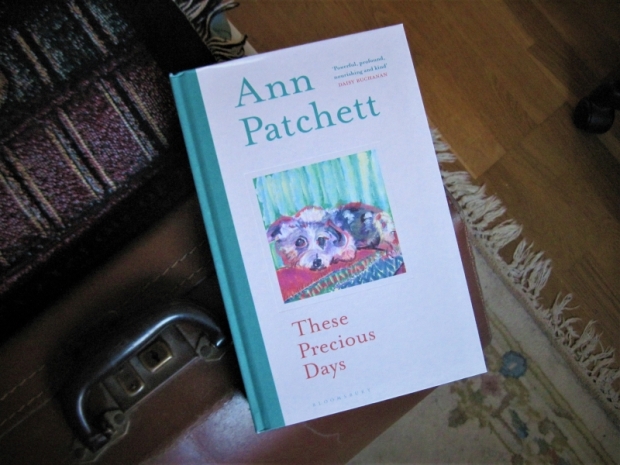
The long title essay, first published in Harper’s, is about her stranger-than-fiction friendship with Tom Hanks’s personal assistant, Sooki Raphael (her painting of Patchett’s dog Sparky adorns the cover). They first made contact after Patchett read an early copy of Hanks’s short story collection, gave it a nice endorsement, and then interviewed him at the D.C. stop on his book tour. Sooki had recurrent pancreatic cancer; Patchett’s husband Karl, a doctor, got her into a medical trial in Nashville and she lived with them throughout her treatment, including during Covid. There are so many twists to this story, so many moments when it might have faltered. Patchett is well aware of the unlikelihood and uses it to comment on her own plots, and the fact that sometimes what she thinks a novel is about ends up being far from the truth.
Patchett also expresses her appreciation of other authors (“Eudora Welty, an introduction,” “Reading Kate DiCamillo”), looks back to her young adulthood (“The First Thanksgiving,” “The Paris Tattoo”) and explores her other key relationships: her ever-youthful mother is the subject of “Sisters,” she celebrates a childhood friend in “Tavia,” and her worry over her 16-years-older husband fuels “Flight Plan” (about his amateur pilot hobby) and “The Moment Nothing Changed” (about his heart attack scare). Many of the shorter pieces first appeared in other publications or anthologies; a few verge on throwaway if I’m being harsh (did we need the essays on Snoopy and knitting?).
But it’s the approach that distinguishes the work as a whole: a clear eye on herself and others; honesty and deep emotion that never tip into mawkishness. I also enjoyed the little glimpses into her everyday domestic life, as well as her work behind the scenes at Parnassus Books. The one essay that meant the most to me, though, was “There Are No Children Here,” which matter-of-factly covers everything I’d ever like to say or hear about childlessness. At their best, Patchett’s books are not just pleasant reads but fond companions on the journey of life, and that’s how I felt about this one. (Susan included it on her list of comfort reading, too.)
With thanks to Bloomsbury for the free copy for review.
Fairy Tales, Outlaws, Experimental Prose: Three More January Novels
Today I’m featuring three more works of fiction that were released this month, as a supplement to yesterday’s review of Mrs Death Misses Death. Although the four are hugely different in setting and style, and I liked some better than others (such is the nature of reading and book reviewing), together they’re further proof – as if we needed it – that female authors are pushing the envelope. I wouldn’t be surprised to see any or all of these on the Women’s Prize longlist in March.
The Charmed Wife by Olga Grushin
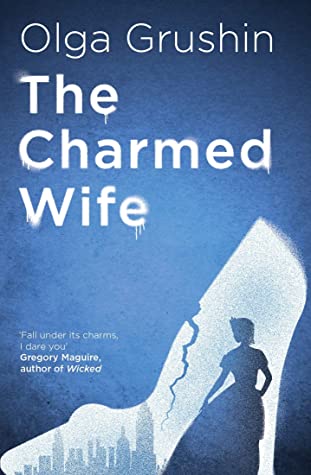 What happens next for Cinderella?
Grushin’s fourth novel unpicks a classic fairy tale narrative, starting 13.5 years into a marriage when, far from being starry-eyed with love for Prince Roland, the narrator hates her philandering husband and wants him dead. As she retells the Cinderella story to her children one bedtime, it only underscores how awry her own romance has gone: “my once-happy ending has proved to be only another beginning, a prelude to a tale dimmer, grittier, far more ambiguous, and far less suitable for children”. She gathers Roland’s hair and nails and goes to a witch for a spell, but her fairy godmother shows up to interfere. The two embark on a good cop/bad cop act as the princess runs backward through her memories: one defending Roland and the other convinced he’s a scoundrel.
Part One toggles back and forth between flashbacks (in the third person and past tense) and the present-day struggle for the narrator’s soul. She comes to acknowledge her own ignorance and bad behaviour. “All I want is to be free—free of him, free of my past, free of my story. Free of myself, the way I was when I was with him.” In Part Two, as the princess tries out different methods of escape, Grushin coyly inserts allusions to other legends and nursery rhymes: a stepsister lives with her many children in a house shaped like a shoe; the witch tells a variation on the Bluebeard story; the fairy godmother lives in a Hansel and Gretel-like candy cottage; the narrator becomes a maid for 12 slovenly sisters; and so on.
 The plot feels fairly aimless in this second half, and the mixture of real-world and fantasy elements is peculiar. I much preferred Grushin’s previous book, Forty Rooms (and Angela Carter’s The Bloody Chamber, one of her chief inspirations). However, her two novels share a concern with how women’s ambitions can take a backseat to their roles, and both weave folktales and dreams into a picture of everyday life. But my favourite part of The Charmed Wife was the subplot: interludes about Brie and Nibbles, the princess’s pet mice; their lives being so much shorter, they run through many generations of a dramatic saga while the narrator (whose name we do finally learn, just a few pages from the end) is stuck in place.
With thanks to Hodder & Stoughton for the free copy for review.
Outlawed by Anna North
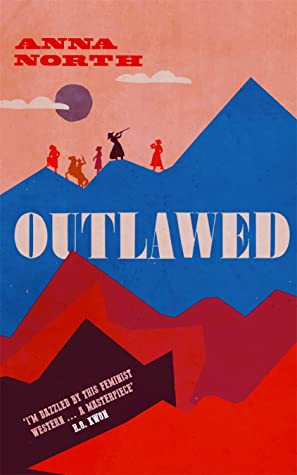 I was a huge fan of North’s previous novel, The Life and Death of Sophie Stark, which cobbles together the story of the title character, a bisexual filmmaker, from accounts by the people who knew her best. Outlawed, an alternative history/speculative take on the traditional Western, could hardly be more different. In a subtly different version of the United States, everyone now alive in the 1890s is descended from those who survived a vicious 1830s flu epidemic. The duty to repopulate the nation has led to a cult of fertility and devotion to the Baby Jesus. From her mother, a midwife and herbalist, Ada has learned the basics of medical care, but the causes of barrenness remain a mystery and childlessness is perceived as a curse.
Ada marries at 17 and fails to get pregnant within a year. After an acquaintance miscarries, rumours start to spread about Ada being a witch. Kicked out by her mother-in-law, she takes shelter first at a convent and then with the Hole in the Wall gang. She’ll be the doctor to this band of female outlaws who weren’t cut out for motherhood and shunned marriage – including lesbians, a mixed-race woman, and their leader, the Kid, who is nonbinary. The Kid is a mentally tortured prophet with a vision of making the world safe for people like them (“we were told a lie about God and what He wants from us”), mainly by, Robin Hood-like, redistributing wealth through hold-ups and bank robberies. Ada, who longs to conduct proper research into reproductive health rather than relying on religious propaganda, falls for another gender nonconformist, Lark, and does what she can to make the Kid’s dream a reality.
Reese Witherspoon choosing this for her Hello Sunshine book club was a great chance for North’s work to get more attention. However, I felt that the ideas behind this novel were more noteworthy than the execution. The similarity to The Handmaid’s Tale is undeniable, though I liked this a bit more. I most enjoyed the medical and religious themes, and appreciated the attention to childless and otherwise unconventional women. But the setup is so condensed and the consequences of the gang’s major heist so rushed that I wondered if the novel needed another 100 pages to stretch its wings. I’ll just have to await North’s next book.
With thanks to W&N for the proof copy for review.
little scratch by Rebecca Watson
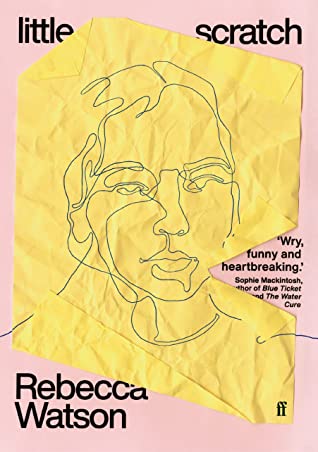 I love a circadian narrative and had heard interesting things about the experimental style used in this debut novel. I even heard Watson read a passage from it as part of the Faber Live Fiction Showcase and found it very funny and engaging. But I really should have tried an excerpt before requesting this for review; I would have seen at a glance that it wasn’t for me. I don’t have a problem with prose being formatted like poetry (Girl, Woman, Other; Stubborn Archivist; the prologue of Wendy McGrath’s Santa Rosa; parts of Mrs Death Misses Death), but here it seemed to me that it was only done to alleviate the tedium of the contents.
A young woman who, like Watson, works for a newspaper, trudges through a typical day: wake up, get ready, commute to the office, waste time and snack in between doing bits of work, get outraged about inconsequential things, think about her boyfriend (only ever referred to as “my him” – probably my biggest specific pet peeve about the book), and push down memories of a sexual assault. Thus, the only thing that really happens happened before the book even started. Her scratching, to the point of open wounds and scabs, seems like a psychosomatic symptom of unprocessed trauma. By the end, she’s getting ready to tell her boyfriend about the assault, which seems like a step in the right direction.
I might have found Watson’s approach captivating in a short story, or as brief passages studded in a longer narrative. At first it’s a fun puzzle to ponder how these mostly unpunctuated words, dotted around the pages in two to six columns, fit together – should one read down each column, or across each row, or both? – but when all the scattershot words are only there to describe a train carriage filling up or repetitive quotidian actions (sifting through e-mails, pedalling a bicycle), the style soon grates. You may have more patience with it than I did if you loved A Girl Is a Half-Formed Thing or books by Emma Glass.


A favourite passage: “got to do this thing again, the waking up thing, the day thing, the work thing, disentangling from my duvet thing, this is something, this is a thing I have to do then,” [appears all as one left-aligned paragraph]
With thanks to Faber & Faber for the free copy for review.
Tomorrow I’ll review three nonfiction works published in January, all on a medical theme.
What recent releases can you recommend?
Childless Voices by Lorna Gibb
People end up not having children for any number of reasons: medical issues, bereavement, a lack of finances, not having a partner at the right time, or the simple decision not to become a parent. The subtitle of Lorna Gibb’s Childless Voices acknowledges these various routes: “Stories of Longing, Loss, Resistance and Choice.”
 For Gibb, a university lecturer, biographer and novelist, the childless state was involuntary, a result of severe endometriosis that led to infertility and early menopause. Although this has been a source of sadness for her and her husband, she knows that she has it easy compared to women in other parts of the world. Through her research and Skype interviews, she hears horrific stories about infertile women who meet with domestic violence and social ostracism and are sometimes driven to suicide. In Ghana childless women can be branded as witches and exiled. Meanwhile, some are never given the chance to have the children they might long for: Gibb cites China’s one-child policy, female genital mutilation, and enforced sterilization programs like those of the Roma in Yugoslavia and the Quechua in Peru.
Gibb is admirably comprehensive here, considering every possible aspect of childlessness. Particularly interesting are the different cultural adaptations childless women make. Certain countries allow polygamy, giving a second wife a chance to bear children on behalf of an infertile one; Kenya and other parts of sub-Saharan Africa recognize ‘marriages’ between childless women so they can create a family and support system. In Albania being a “sworn virgin” is an old and venerable custom. And, of course, there are any number of support groups and online communities. The situation of those who were once parents but are no longer is especially wrenching. Stillbirth only started to be talked about in the 1980s, Gibb notes, but even today is seen as a lesser loss than that of a child who dies later in life.
The author believes there is societal injustice in terms of who has access to fertility treatment and how the state deals with childless people. In the UK, she characterizes IVF as a “postcode lottery”: where you live often determines how many free cycles you’re entitled to on the NHS. In the USA, meanwhile, fertility treatment is so expensive that only those with a certain level of wealth can consider it. The childless may also feel ‘punished’ by tax breaks that favor parents and workplaces that expect non-parents to work unsociable hours. In a sense, then, the childless contribute more but benefit less.
Chosen childlessness is perhaps given short shrift at just 32 pages out of 239. However, it’s still a very thorough treatment of the reasons why couples decide not to become parents, including cultural norms, career goals, self-knowledge and environmental concerns. No surprise that this was the chapter that resonated with me the most. I also especially enjoyed the personal interludes (all titled “A Short Note on…”) in which Gibb celebrates her feminist, childless heroes like Frida Kahlo and Anaïs Nin and writes about how much becoming a godmother meant to her but also of the sadness of seeing a good friend’s teenage son die of a brain tumor.
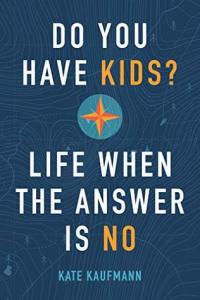 By coincidence, I’ve recently read another book on the same topic: Do You Have Kids? Life when the Answer Is No, by Kate Kaufmann (coming out in America next month). Gibb primarily traces the many different reasons for childlessness; Kaufmann mostly addresses the question of “now what?” – how women without children approach careers, wider family life, housing options, spirituality and the notion of leaving a legacy. Gibb’s approach is international and comparative, while Kaufmann’s is largely specific to the USA. Though the two authors are childless due to endometriosis and infertility, they feel sisterhood with women who never became mothers for whatever reason. I’d say these two books are complementary rather than rivals, and reveal valuable perspectives that can sometimes be overlooked.
My rating: 
Childless Voices was published by Granta on February 7th. My thanks to the publisher for the free copy for review.
 Bookish Beck = Rebecca Foster. American transplant to England. Freelance proofreader and book reviewer.
 Bookish Beck