“Why We Sleep” … And Why Can’t I Wake Up?
Why We Sleep: The New Science of Sleep and Dreams by Matthew Walker
I’d heard about this book but didn’t feel compelled to get hold of it until David Lodge, one of my favorite authors, named it his book of 2017 in the TLS year-end roundup. I got an e-copy from NetGalley but then found the physical book on the bestsellers display in my local library and found that a more conducive format for skimming. It’s a fairly long and dense book, with smallish type and scientific figures, so I knew I was unlikely to read the whole thing, but enjoyed mining it for fascinating information about evolution, neuroscience and child development.
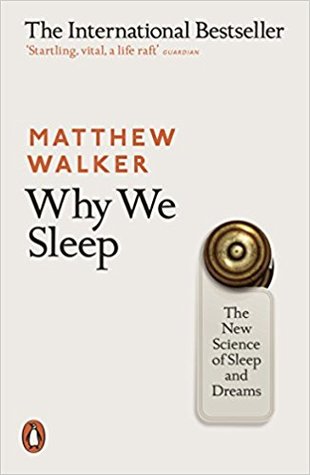 We often hear that sleep, diet and exercise are the three pillars of health, but Walker, a professor of neuroscience at the University of California, Berkeley, goes further: he believes sleep is the platform on which diet and exercise rest. Getting 7–9 hours of sleep a night is not some luxury to aim for but an absolute essential for the brain to process new information and prepare for receiving more the next day. Dreaming is like overnight therapy, and fuels creativity. Sleep deprivation has been associated with dementia and cancer: it’s no accident that Margaret Thatcher and Ronald Reagan, who prided themselves on getting by on just five hours of sleep a night, both developed Alzheimer’s. Just a few nights of insufficient sleep can weaken the immune system and increase the risks of developing a serious illness. It’s no wonder Walker calls sleep loss an epidemic.
Here are some other facts I gleaned:
- During primate evolution, the transition to sleeping on the ground instead of in trees meant we could sleep more deeply – not having to worry about falling out – and the resulting increase in REM sleep and dreams contributed to the development of complex culture and creativity.
- Fetuses are asleep most of the time; they kick in their sleep. Alcohol use during pregnancy or breastfeeding can lead to a decline in the offspring’s sleep quality or quantity.
- People with autism get 30–50% less REM sleep than neurotypical people.
- The postprandial slump in energy many of us experience is evolutionarily inbuilt, and suggests that a short nap (30–40 minutes) would be natural and beneficial. For instance, some African tribespeople still regularly nap at the hottest point of the day.
Walker’s sleep tips are mostly common-sense stuff you will have heard before. His #1 piece of advice is to have a sleep schedule, always going to sleep and waking up at the same time. (“Catching up” on weekends doesn’t work, though napping before 3 p.m. can.) Set an alarm for bedtime so you’ll stick to it, he suggests.
My rating: 
Making It Personal
I like my sleep, and I like my lie-ins. It’s one of many reasons why I don’t have kids. But I hoped that the older I got the better I’d be about waking up in the mornings. That hasn’t seemed to be the case. The past couple of weeks have been abnormal in that my husband has been working from home, too – he’s been on strike from the university and/or keeping clear of the snow – but on an average weekday, when the alarm goes off at a time starting with a 6, I feel like I could sleep for hours more. I usually cover my head with a pillow and stay in bed with the cat curled against my legs for an extra half-hour while my husband showers and starts getting things ready; only when I hear the tea being poured do I finally extricate myself from the covers and lurch downstairs to eat breakfast and make our sandwiches for the day.
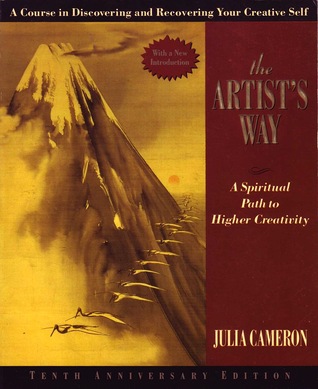 One of my bibliotherapy prescriptions was The Artist’s Way by Julia Cameron, a 12-week set of readings and exercises – chiefly 20 minutes of automatic writing each morning and creative “dates” you take yourself on. For the former, you set your alarm half an hour early each day and fill three longhand pages with whatever comes to mind. It’s not a journal; it’s more a way of processing what’s going on in your life, gradually moving from mundane thoughts about daily pressures to more creative stuff. But if I can’t wake up for our regular alarm, how in the world would I get up even earlier to commit to this creative exercise? I’ve wondered if I could cheat a bit and do the pages after a short nap in the early afternoons, but I think the idea really is to put down whatever comes into your head first thing every morning.
I can see that this would be a good discipline, especially as I come up to my fifth anniversary of freelancing and take stock of my career. I just don’t know if I can make myself do it.
Have you read anything about sleep, creativity or mindfulness recently?
Also on my TBR to be skimmed:
 24/7: Late Capitalism and the Ends of Sleep by Jonathan Crary
- The Business of Sleep: How Sleeping Better Can Transform Your Career by Vicki Culpin, a TEDx speaker and professor of organizational behavior [forthcoming on May 8th from Bloomsbury Business]
- The Secret World of Sleep: The Surprising Science of the Mind at Rest by Penelope A. Lewis
- Dreamland: Adventures in the Strange Science of Sleep by David K. Randall
My Most Anticipated 2018 Releases, Part I
Here are 30 books that are on my radar for the months of January through June. This is by no means a full inventory of what’s coming out (or even of what I have available through NetGalley and Edelweiss); instead, think of it as a preview of the books I actually intend to read. This time my list seems strangely skewed towards plants (the covers too), with a couple of bird- and medical-themed reads in there too. Also: two feminist group biographies, plenty of historical fiction, some short stories, a bit of true crime, and a fair few memoirs. I hope you’ll find a book or two here to tempt you.
(The descriptions below are generally adapted from the publisher blurbs on Goodreads, NetGalley or Edelweiss. Some of these I already have access to in print or galley form; others I’m still on the look-out for. The list is in chronological order by first publication date; if multiple books release on the same day they are in alphabetical order by author surname.)
January
 On the Bright Side: The New Secret Diary of Hendrik Groen [Jan. 11, Michael Joseph (Penguin UK)]: I loved the first Hendrik Groen novel back in 2016 (reviewed here); this promises more of the same witty, bittersweet stories about elderly Dutch eccentrics. “Chaos will ensue as 85-year-old Hendrik Groen is determined to grow old with dignity … He dreams of escaping the confines of his care home and practising hairpin turns on his mobility scooter.” (NetGalley download)
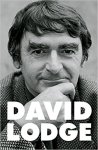 Writer’s Luck: A Memoir: 1976–1991 by David Lodge [Jan. 11, Harvill Secker]: I reviewed the first volume of Lodge’s memoirs, Quite a Good Time to Be Born, for Nudge back in 2015, so I’m eager to continue his life story in this second installment. “Readers of Lodge’s novels will be fascinated by the insights this book gives—not only into his professional career but also more personal experience. The main focus, however, is on writing as a vocation.”
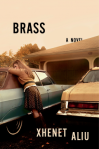 Brass: A Novel by Xhenet Aliu (for BookBrowse review) [Jan. 23, Random House]: “A waitress at the Betsy Ross Diner, Elsie hopes her nickel-and-dime tips will add up to a new life. Then she meets Bashkim, … who left Albania to chase his dreams. … Told in equally gripping parallel narratives with biting wit and grace, Brass announces a fearless new voice with a timely, tender, and quintessentially American story.” (NetGalley download)
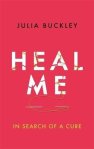 Heal Me: In Search of a Cure by Julia Buckley [Jan. 25, Weidenfeld & Nicolson]: The “search for a cure [for chronic pain] takes her on a global quest, exploring the boundaries between science, psychology and faith with practitioners on the fringes of conventional, traditional and alternative medicine. Rais[es] vital questions about the modern medical system … and the struggle to retain a sense of self.” (print review copy)
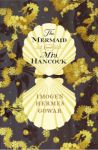 The Mermaid and Mrs. Hancock by Imogen Hermes Gowar [Jan. 25, Harvill Secker]: “A spellbinding story of curiosity, love and obsession from an astonishing new talent. One September evening in 1785, the merchant Jonah Hancock hears urgent knocking on his front door. One of his captains is waiting eagerly on the step. He has sold Jonah’s ship for what appears to be a mermaid.” Comes recommended by Elle. (NetGalley download)
February
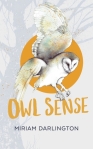 Owl Sense by Miriam Darlington [Feb. 6, Guardian Faber]: Darlington’s previous nature book, Otter Country, was stunning. Here, “Darlington sets out to tell a new story. Her fieldwork begins with wild encounters in the British Isles and takes her to the frosted borders of the Arctic. In her watching and deep listening to the natural world, she cleaves myth from reality and will change the way you think of this magnificent creature.”
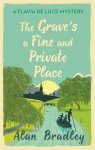 The Grave’s a Fine and Private Place by Alan Bradley [Feb. 8, Orion]: I’ve read all eight Flavia de Luce novels so far, which is worth remarking on because I don’t otherwise read mysteries and I usually find child narrators annoying. There’s just something delicious about this series set in 1950s England. This one will be particularly interesting because a life-changing blow came at the end of the previous book.
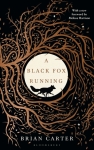 A Black Fox Running by Brian Carter [Feb. 8, Bloomsbury UK]: “A beautiful lost classic of nature writing” from 1981 that “sits alongside Tarka the Otter, Watership Down,” et al. “This is the story of Wulfgar, the dark-furred fox of Dartmoor, and of his nemesis, Scoble the trapper, in the seasons leading up to the pitiless winter of 1947. As breathtaking in its descriptions of the natural world as it is perceptive in its portrayal of damaged humanity.” Championed by Melissa Harrison.
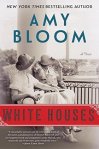 White Houses by Amy Bloom [Feb. 13, Random House]: The story of Lorena Hickock’s friendship/affair with Eleanor Roosevelt. “From Washington, D.C. to Hyde Park, from a little white house on Long Island to an apartment on Manhattan’s Washington Square, Amy Bloom’s new novel moves elegantly through fascinating places and times, written in compelling prose and with emotional depth, wit, and acuity.” (Edelweiss download)
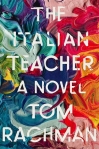 The Italian Teacher by Tom Rachman [Feb. 20, Riverrun/Viking]: I’m a huge fan of Rachman’s, especially his previous novel, The Rise & Fall of Great Powers. “1955: The artists are gathering together for a photograph. In one of Rome’s historic villas, a party is bright with near-genius, shaded by the socialite patrons of their art. … Rachman displays a nuanced understanding of twentieth-century art and its demons, vultures and chimeras.” (Edelweiss download)
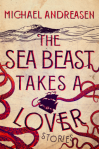 The Sea Beast Takes a Lover: Stories by Michael Andreasen [Feb. 27, Dutton (Penguin Group)]: “Romping through the fantastic with big-hearted ease, these stories cut to the core of what it means to navigate family, faith, and longing, whether in the form of a lovesick kraken slowly dragging a ship of sailors into the sea [or] a small town euthanizing its grandfathers in a time-honored ritual.” (NetGalley download)
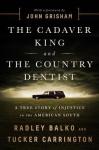 The Cadaver King and the Country Dentist: A True Story of Injustice in the American South by Radley Balko and Tucker Carrington [Feb. 27, PublicAffairs]: “After two three-year-old girls were raped and murdered in rural Mississippi, law enforcement pursued and convicted two innocent men, [who] spent a combined thirty years in prison before finally being exonerated in 2008. Meanwhile, the real killer remained free.”
March
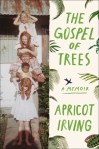 The Gospel of Trees: A Memoir by Apricot Irving [March 6, Simon & Schuster]: “Apricot Irving grew up as a missionary’s daughter in Haiti—a country easy to sensationalize but difficult to understand. Her father was an agronomist, a man who hiked alone into the hills … to preach the gospel of trees in a deforested but resilient country. Her mother and sisters, meanwhile, spent most of their days in the confines of the hospital compound they called home. As a child, this felt like paradise; as a teenager, the same setting felt like a prison.”
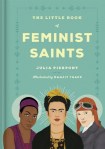 The Little Book of Feminist Saints by Julia Pierpont (illus. by Manjitt Thapp) [March 6, Random House]: This project reminds me a lot of A Glorious Freedom with its focus on women’s achievements and the full-color portraits of the subjects. I’ve just opened the file and the first two pieces give you a sense of the range that will be covered: Artemisia Gentileschi and Michelle Obama! (Edelweiss download)
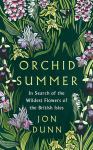 Orchid Summer: In Search of the Wildest Flowers of the British Isles by Jon Dunn [March 8, Bloomsbury UK]: Dunn’s were my favorite contributions to the Wildlife Trusts’ Seasons anthologies (e.g. Winter). I’ve also enjoyed following his botanical travels on Twitter. “From the chalk downs of the south coast of England to the heathery moorland of the Shetland Isles, and from the holy island of Lindisfarne in the east to the Atlantic frontier of western Ireland, Orchid Summer is a journey into Britain and Ireland’s most beautiful corners.”
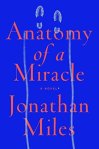 Anatomy of a Miracle by Jonathan Miles [March 13, Hogarth]: Miles’s previous novel, Want Not, is one of the books I most wish I’d written. “Rendered paraplegic after a traumatic event, Cameron Harris has been living his new existence alongside his sister, Tanya, in their battered Biloxi, Mississippi neighborhood where only half the houses made it through Katrina. … [A] stunning exploration of faith, science, mystery, and the meaning of life.”
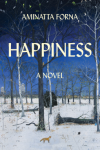 Happiness by Aminatta Forna [March 16, Grove Atlantic]: “London. A fox makes its way across Waterloo Bridge. The distraction causes two pedestrians to collide—Jean, an American studying the habits of urban foxes, and Attila, a Ghanaian psychiatrist there to deliver a keynote speech. … Forna’s unerring powers of observation show how in the midst of the rush of a great city lie numerous moments of connection.” (NetGalley download)
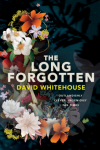 The Long Forgotten by David Whitehouse [March 22, Pan Macmillan/Picador]: “When the black box flight recorder of a plane that went missing 30 years ago is found at the bottom of the sea, a young man named Dove begins to remember a past that isn’t his. The memories belong to a rare flower hunter in 1980s New York, whose search led him around the world and ended in tragedy.” (NetGalley download)
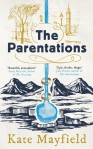 The Parentations by Kate Mayfield (to review for Shiny New Books?) [March 29, Oneworld]: From editor Jenny Parrott: “a stunning speculative historical novel … The story spans 200 years across Iceland and London, as a strange boy who can never die is surrounded by a motley collection of individuals, each with vested interests in his welfare. … [S]ome of the most extraordinary literary prose I’ve read during a thirty-year career.”
April
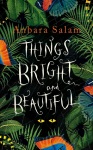 Things Bright and Beautiful by Anbara Salam [April 5, Fig Tree]: “1954, the South Pacific islands. When Beatriz Hanlon agreed to accompany her missionary husband Max to a remote island, she knew there would be challenges. But it isn’t just the heat and the damp and the dirt. There are more insects than she could ever have imagined, and the islanders are strangely hostile. [Then] an unexpected … guest arrives, and the couple’s claustrophobic existence is stretched to breaking point.” Sounds like Euphoria by Lily King. (NetGalley download)
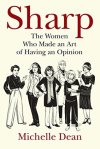 Sharp: The Women Who Made an Art of Having an Opinion by Michelle Dean [April 10, Grove Press]: “Dorothy Parker, Rebecca West, Hannah Arendt, Mary McCarthy, Susan Sontag, Pauline Kael, Joan Didion, Nora Ephron, Renata Adler, and Janet Malcolm—these brilliant women’s lives intertwine as they cut through the cultural and intellectual history of America in the twentieth century, arguing as fervently with each other as they did with the sexist attitudes of the men who often undervalued their work as critics and essayists.”
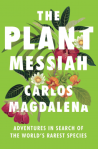 The Plant Messiah: Adventures in Search of the World’s Rarest Species by Carlos Magdalena [April 10, Doubleday]: “Carlos Magdalena is not your average horticulturist. He’s a man on a mission to save the world’s most endangered plants. … [He] takes readers from the Amazon to the jungles of Mauritius. … Back in the lab, we watch as he develops groundbreaking, left-field techniques for rescuing species from extinction, encouraging them to propagate and thrive once again.” (NetGalley download)
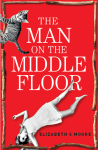 The Man on the Middle Floor by Elizabeth S. Moore (for blog tour) [April 12, RedDoor Publishing]: “Despite living in the same three-flat house in the suburbs of London, the residents are strangers to one another. … They have lived their lives separately, until now, when an unsolved murder and the man on the middle floor connect them. … It questions whether society is meeting the needs of the fast growing autistic section of society.” (print ARC)
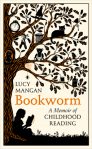 Bookworm: A Memoir of Childhood Reading by Lucy Mangan [April 24, Random House UK]: “This is a love letter to the joys of childhood reading, full of enthusiasm and wit, telling the colorful story of our best-loved children’s books, the extraordinary people who created them, and the thousand subtle ways they shape our lives.” (NetGalley download)
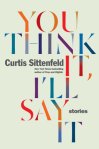 You Think It, I’ll Say It: Stories by Curtis Sittenfeld [April 24, Random House]: I would read anything Curtis Sittenfeld wrote; American Wife is still one of my absolute favorites. “The theme that unites these stories … is how even the cleverest people tend to misread others, and how much we all deceive ourselves. Sharp and tender, funny and wise, this collection shows [her] knack for creating real, believable characters that spring off the page.”
May
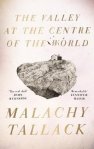 The Valley at the Centre of the World by Malachy Tallack [May 3, Canongate]: I’ve reviewed and enjoyed both of Tallack’s previous nonfiction works, including The Un-Discovered Islands. “Set against the rugged west coast of Shetland, in a community faced with extinction, [this] is a novel about love and grief, family and inheritance, rapid change and an age-old way of life. … [T]hese islanders must decide: what is left of us when the day’s work is done, the children grown, and all our choices have been made?”
 Shapeshifters: A Journey through the Changing Human Body by Gavin Francis [May 8, Basic Books]: “Francis considers the inevitable changes all of our bodies undergo—such as birth, puberty, and death, but also … those that only some of our bodies will: like getting a tattoo, experiencing psychosis, suffering anorexia, being pregnant, or undergoing a gender transition. … [E]ach event becomes an opportunity to explore the meaning of identity.”
 The Ensemble by Aja Gabel [May 15, Riverhead]: An “addictive debut novel about four young friends navigating the cutthroat world of music and their complex relationships with each other, as ambition, passion, and love intertwine over the course of their lives.”
 Why Do Birds Suddenly Disappear? by Lev Parikian (for blog tour) [May 17, Unbound]: “A lapsed and hopeless birdwatcher’s attempt to see 200 birds in a year. But it’s not just about birds. It’s about family, music, nostalgia; hearing the stories of strangers; the nature of obsession and obsession with nature.”
June
 The Great Believers by Rebecca Makkai [June 19, Viking]: I loved both of Makkai’s previous novels and have her short story collection on my Kindle. “Fiona is in Paris tracking down her estranged daughter, who disappeared into a cult. While staying with an old friend, a famous photographer …, she finds herself finally grappling with the devastating ways the AIDS crisis affected her life and her relationship with her daughter.” (Edelweiss download)
Other lists of enticing 2018 releases that might give you some ideas:
Guardian (UK, nonfiction)
Halfman, Halfbook (UK, mostly science/nature and history)
Parchment Girl (mostly nonfiction)
Stylist (UK)
Which 2018 books are you most looking forward to? Do any of my choices interest you?
The Devil and Webster by Jean Hanff Korelitz
It’s hard to resist a campus novel. The Devil and Webster, the sixth novel by Jean Hanff Korelitz, is unusual in focusing more on the administration than the students of a fictional American college. Webster College, Massachusetts was founded as a Native American training academy in the eighteenth century by missionary Josiah Webster. Now it rivals Harvard and other Ivy League schools, attracting liberal students with its enlightened gender and racial politics. (I had Swarthmore and Oberlin in mind as models.)
Yet Naomi Roth, Webster’s first female president, soon finds that racial and sexual tension still bubble under the surface here. A decade ago, her first major challenge as president was dealing with the uproar when Nell Jones-Givens, who lived in female-only Radclyffe Hall, began transitioning to become Neil. But now she faces an even stickier problem: A group of students have set up an Occupy-style camp in the center of the quad to protest the decision to deny tenure to Nicholas Gall, a popular African-American anthropology professor.
 The protest is spearheaded by Omar Khayal, a charismatic Palestinian refugee who wowed Naomi’s closest friend, Dean of Admissions Francine Rigor, with his application essay about growing up in the midst of conflict and surviving the death of his entire family. What Omar and these other outraged students don’t know – and Naomi can’t reveal because of the confidentiality of the process – is that Gall has a negligible publication record and was also found guilty of plagiarism. They instead presume that this is all because he is black.
What starts off as manageable dissent thus morphs into unpleasant, racially motivated retribution. “Webster is not a city on a hill. Webster is still the reactionary place it was before,” Omar declares in a media interview. In this context, Naomi’s upcoming Native American conference, though planned long ago, seems like a pathetic attempt at placation.
Throughout, the third-person narration sticks close to Naomi, a compelling protagonist not least because she’s a single mother and her daughter Hannah is also a protesting Webster student. By documenting Naomi’s thoughts (often in italics) versus what she says, Korelitz emphasizes the difficult position she’s in, always having to hold her tongue and speak diplomatically, as when addressing the protest camp:
“My only interest is in learning more about your concerns and your intentions. We share this community, and I’m sure we all want the best for it. If there are problems to be identified, issues to be discussed, changes to be made…whatever. It won’t happen if you won’t…” Talk, she wanted to say. Open your fucking mouths with their years of orthodontia and use those expensively educated voices to articulate your pathetic complaints about this…this halcyon, evolved, rarified, creative, and intellectual college campus, where you are free to learn and nap and make things and have sex and get high and change your fucking gender even, and clean water comes out of the tap and you wave your school ID under a scanner to help yourself to smorgasbords of food (meat! meat alternative! vegan! lactose-sensitive! nut-free! gluten-free!) and all we expect of you is that you pass your classes and don’t hurt anyone else. But she didn’t say these things. Of course she didn’t say them.
Naomi has her own background in feminist activism, but now, instead of being in a position to ‘speak truth to power,’ she has to realize that, as Francine reminds her, she is the power.
This is an interesting book about appearances and assumptions. Again and again characters make ethical compromises, proving how difficult it is to find and maintain the moral high ground. As the college’s historian points out to Naomi, from its very beginnings Webster has had a tendency towards capitulation. He plans to write up this story in a book called The Devil and Webster – which is also a reference to “The Devil and Daniel Webster,” the 1936 O. Henry Award-winning, Faustian short story by Steven Vincent Benét. I haven’t read the story, but looking at a synopsis I can see that it’s relevant in that it touches on themes of race, patriotism and the treatment of Native Americans.
The story line feels fresh and surprising, if at times melodramatic. My problem was more with the author’s style, which seemed to me old-fashioned and belabored. Korelitz has a habit of minutely describing everything: a house, a room, the food, the hairstyles, and so on. There are four pages on Naomi’s presidential wardrobe, and we get not just a passing reference to her PhD thesis but three pages on it. This means that it feels like it takes forever for the plot to get going. Much of modern fiction is more minimalist, I think, or would more naturally weave in its short bits of backstory. I even wondered if this book would have been better off as a collection of linked short stories from different points in Naomi’s or the college’s past.
This is all a shame, because while I liked the characters, dialogue and setting and enjoyed many of the turns of phrase (e.g. “filling in the spousal synapses” and “Garrison Keillor’s voice had a narcotic vocal element that always made her feel sleepy, each word a nepenthe puff”), I found the book tiresome overall, and can’t imagine myself picking up another one from Korelitz any time soon.
The Devil and Webster was published in the UK by Faber & Faber on April 6th and in the USA by Grand Central Publishing on March 21st. My thanks to Josh Smith for the review copy.
My rating: 
What are your favorite campus novels?
Besides Donna Tartt’s The Secret History, I’ve loved Kingsley Amis’s Lucky Jim, Chad Harbach’s The Art of Fielding, Julie Schumacher’s Dear Committee Members, and many of David Lodge’s books. See also my review of Bradstreet Gate by Robin Kirman.
My (Tiny) Collection of Signed Copies
The other day I discovered a pencil-written recipe in the back of a secondhand book I got for Christmas. It got me thinking about handwriting in books: signatures, inscriptions, previous owners’ names, marginalia, and so on. If I can find enough examples of all those in my personal library, I might turn this into a low-key series. For now, though, I’ve rounded up my signed copies for a little photo gallery.
I’ve never placed particular value on owning signed copies of books. I’m just as likely to resell a signed book or give it away to a friend as I am a standard copy. The signed books I do have on my shelves are usually a result of having gone to an author event and figuring I may as well stick around for the signing. A few were totally accidental in secondhand purchases.
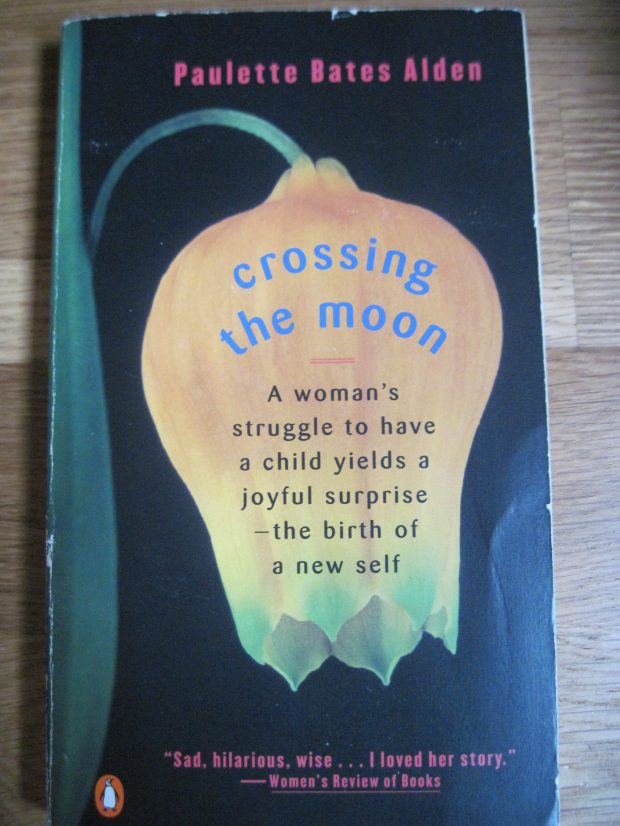
Though I’ve had personal correspondence with Paulette Bates Alden and love the three books of hers that I’ve read, this signature is entirely coincidental, in a used copy from Amazon. Shame on Patti for getting rid of it after Paulette’s book club visit in 2000!

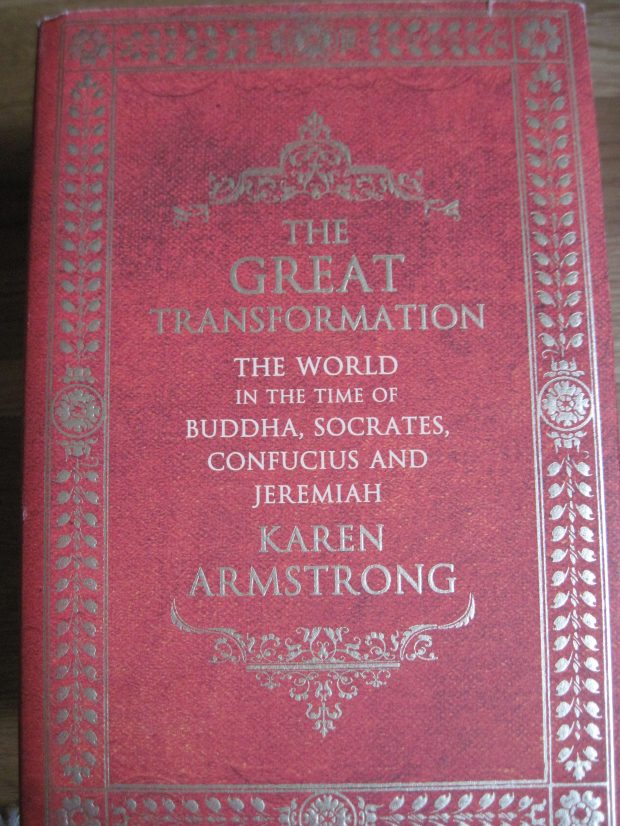
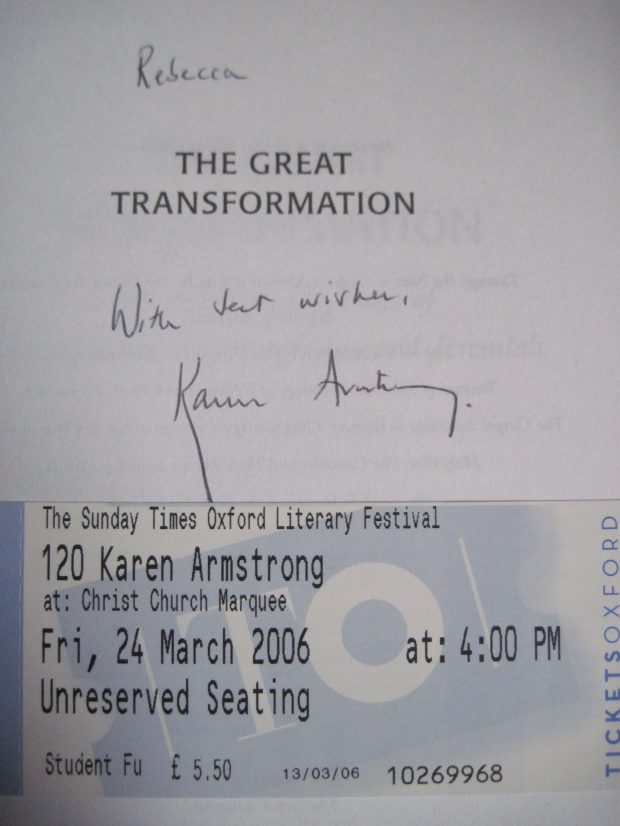
I love Karen Armstrong’s work, especially her two memoirs about deciding not to be a nun, and A History of God. I’ve seen her speak twice and am always impressed by her clear reasoning. (Tell you a secret, though: I couldn’t get through this particular book.)
While my husband worked at Royal Holloway we saw Alain de Botton speak at the Runnymede Literary Festival and I had him sign a copy of my favorite of his books.


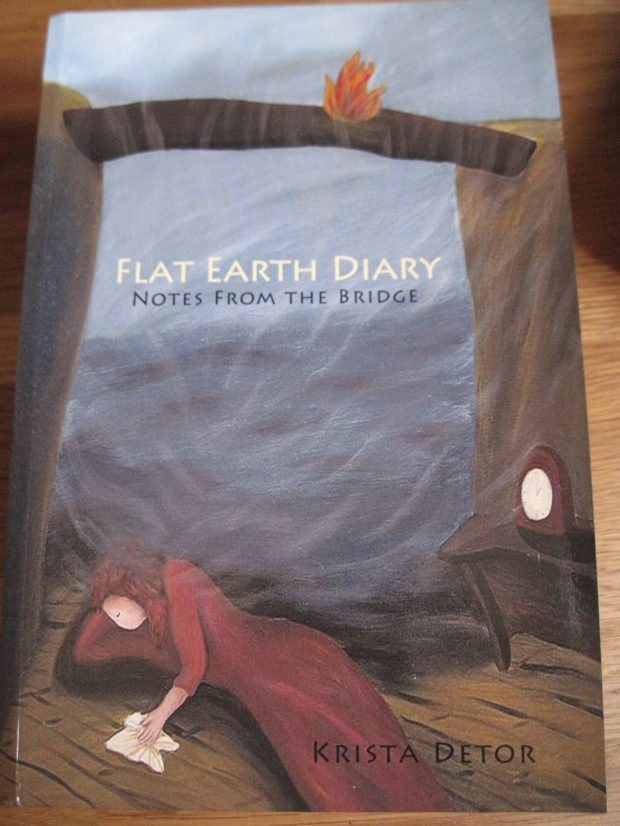
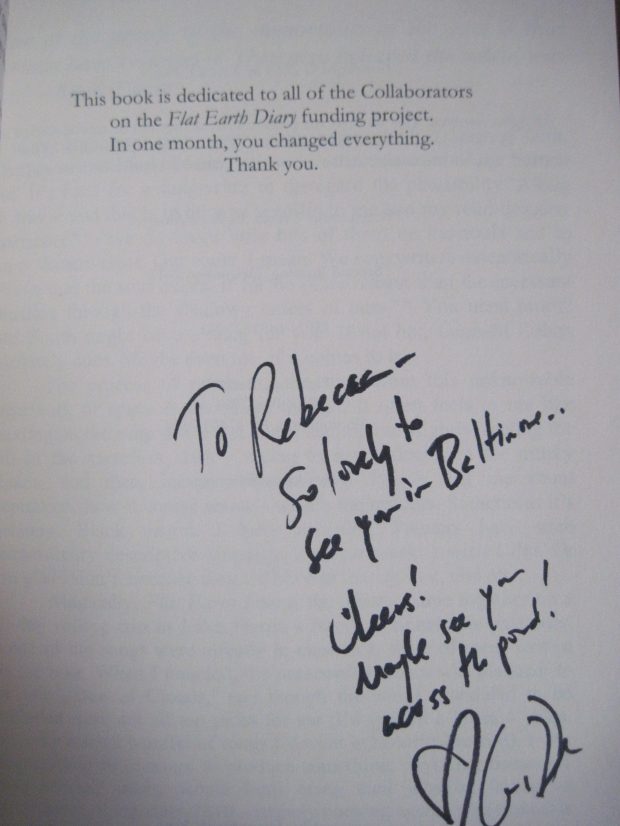
Krista Detor is one of our favorite singer-songwriters. We’ll be seeing her play for the fourth time in March. Luckily for us (but unluckily for the world, and for her coffers), this folk songstress from Indiana is unknown enough to play folk clubs and house concerts on both sides of the Atlantic. She wrote a book documenting the creative process behind her next-to-last album; when I saw her in Maryland she signed it with “Maybe see you across the pond!”
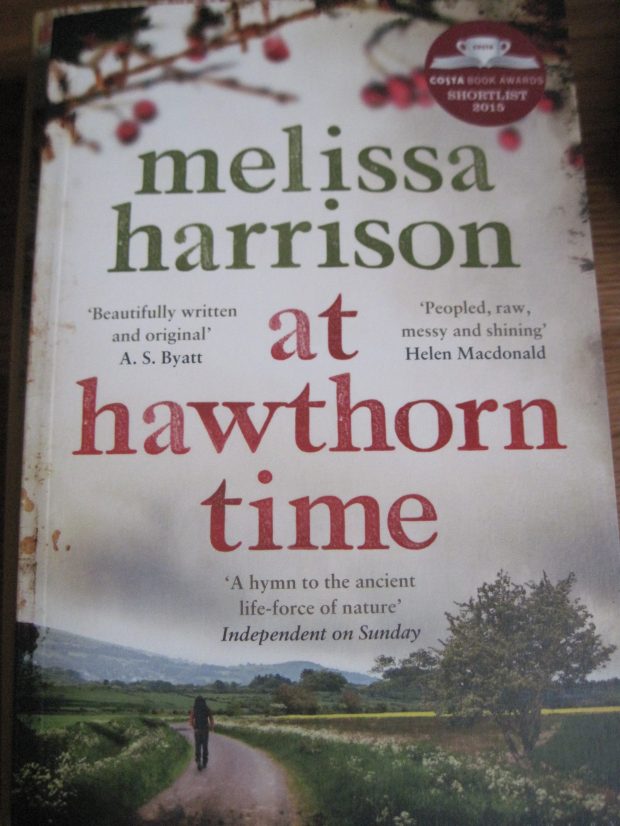
I have yet to read one of Melissa Harrison’s books, though I’m interested in her novels and her book on British weather. However, she edited the Seasons anthologies issued by the Wildlife Trusts last year – two of which my husband’s writing appeared in. When she spoke on the University of Reading campus about notions of the countryside in literature, my husband went along to meet her and bought a paperback of her second novel for her to sign.

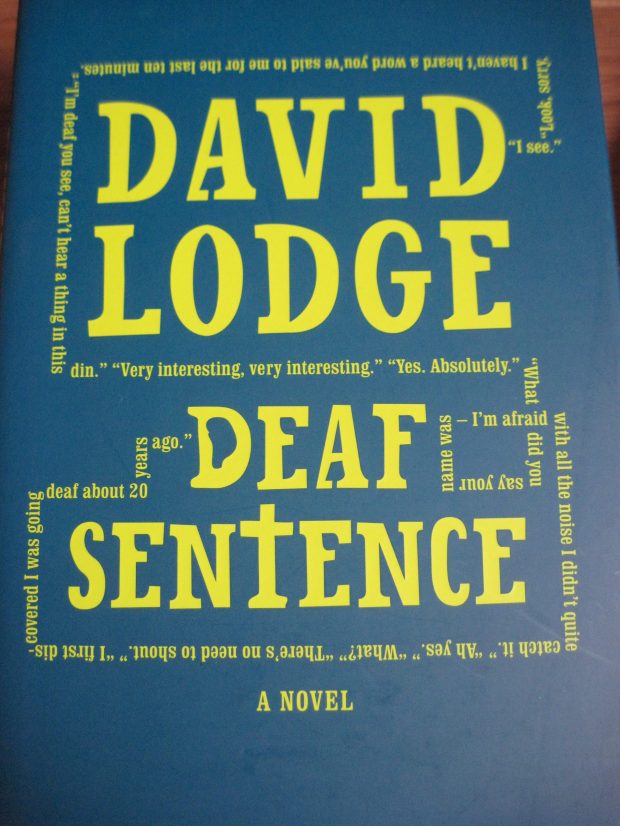
I’ve seen David Lodge speak twice, both times at the London Review Bookshop. He’s one of my favorite authors ever but, alas, isn’t all that funny or personable live; his autobiography is similarly humorless compared to his novels. Deaf Sentence was a return to his usual comic style after his first stab at historical fiction (Author, Author, about Henry James’s later life). The second time I saw him he was promoting A Man of Parts, which again imagines the inner life of a famous author – this time H.G. Wells.

An obscene bargain from Amazon that just happened to be signed. I’m looking forward to starting this one soon: books about book are (almost) always such a cozy delight.

-
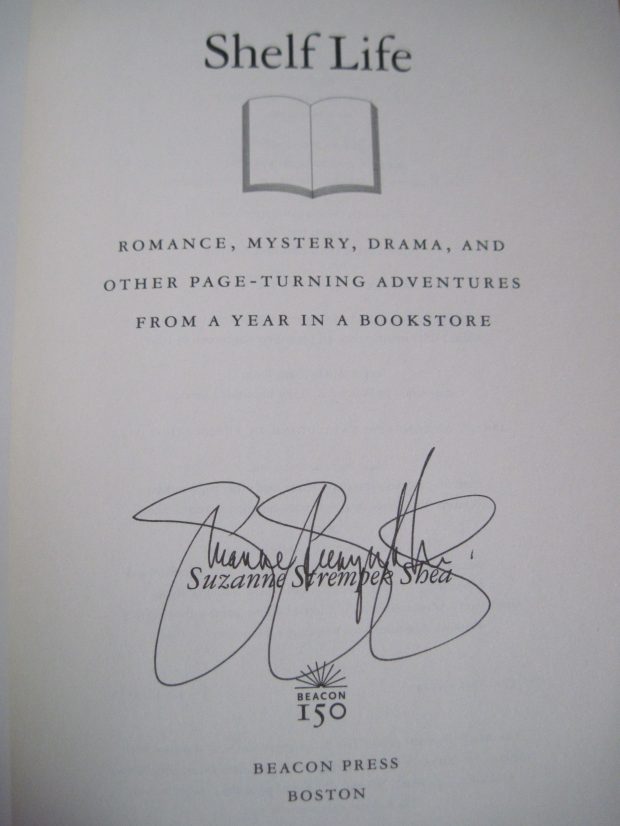
- You can tell she enjoys her S’s.
Plus three signed copies languishing in boxes in America:
- Blue Shoe by Anne Lamott: I love Lamott’s nonfiction but have never tried one of her novels. I found this one at a library book sale, going for $1; I guess nobody noticed the signature.
- The Sixteenth of June by Maya Lang: I originally read the book via NetGalley, but it quickly became a favorite. After she saw my five-star review, Maya asked me to help her out with word-of-mouth promotion and was kind enough to send me a signed copy as thanks.
- The Life of D.H. Lawrence: An Illustrated Biography by Keith M. Sagar: Sagar was one of the keynote speakers at the D.H. Lawrence Society of North America conference I attended in the summer of 2005.
Do you deliberately buy signed copies? What are some of the jewels in your collection?
Landmark Books in My Life, Part II
This is a follow-up to a piece I wrote in September about the books that shaped my early life. I think of my twenties in general, and 2005–7 in particular, as a golden period in my reading life, when I started to develop the tastes that still guide my book choices today.

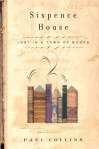 I was an English and Religion major and studied abroad in England for my junior year in 2003–4. As I was getting ready to go overseas for that first time in the summer of 2003, Susan Allen Toth’s trilogy of travel memoirs, starting with My Love Affair with England, and Paul Collins’s Sixpence House whetted my appetite for travel in Great Britain and, in the case of the latter, made me determined to get to Hay-on-Wye, Wales as soon as I could. (I first visited in May 2004 and have gone back several times since.)
 One of the most memorable books I read during my year abroad was Robert Elsmere by Mrs. Humphry Ward. It’s almost forgotten nowadays, but was a bestseller at its release in 1888. The story of a minister’s loss of faith and how it affects his marriage, it’s a stand-in for a whole faith-and-doubt subgenre that was wildly popular at the time. The novel is long, brooding and overwritten—in many ways it exemplifies the worst characteristics of the Victorian novel—but it resonated with my own crisis of faith and planted the seed for my Master’s thesis on women’s faith and doubt narratives in Victorian fiction.
 Part of working through that ongoing crisis of faith was seeing other religions more objectively and being open to the similarities between them. I found Karen Armstrong’s comparative study of the Abrahamic faiths (Christianity, Judaism and Islam), A History of God, absolutely riveting when I read it in my senior year of college. It’s a classic.
 My academic conference career began and ended with one I attended the summer after college graduation. I adapted a paper I’d written about D.H. Lawrence’s new moral framework for sexuality and was accepted to present it at the D.H. Lawrence Society of North America’s annual conference in 2005, which that year was held in Santa Fe, New Mexico. Thankfully, I’ve mostly blanked out my actual paper presentation as part of a panel of three young people, but the trip as a whole was wonderful—it was my first time in the southwest, and the conference included great field trips to Lawrence’s ranch at Taos and the Georgia O’Keeffe museum. I prepared for the experience by reading David Lodge’s Small World, a paperback I’d plucked from the shelves of the bookstore where I worked part-time during my senior year. “A satire about the academic conference circuit? I’m there!” I thought, and since then David Lodge has become one of my two or three favorite authors.
 It wasn’t until I returned to England to get my Master’s in 2005–6 that I really reclaimed reading as a leisure activity. The last couple years of college had been so busy I’d barely been able to cope with my assigned reading; I remember never making it very far in any paperback I picked up from the public library (like Charles Frazier’s Cold Mountain, which I’ve never gone back to). But the long, lonely evenings in Leeds had to be filled somehow, and the upstairs stacks of the magnificent Brotherton Library had plenty to offer in the way of literary fiction. In that year I made my way through loads of books by A.S. Byatt and Julian Barnes, as well as David Lodge (my top 3, probably). Possession made the biggest impression, but I love pretty much all of Byatt’s work. If pressed to name my favorite author, it would be her.
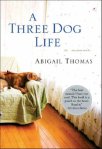 In the partial year between finishing my Master’s and getting married back in England, I lived at home with my parents and worked part-time at a community college library. My evening shifts were often dead quiet, so I got plenty of reading done behind the circulation desk. One book I selected at random from the public library shelves, Abigail Thomas’s A Three Dog Life, had a big impact on me in 2007. The memoir tells of her husband’s traumatic brain injury and the aftermath. Thomas writes in a fragmentary, episodic format that felt fresh and jolted me. I wasn’t entirely sure I liked the style, but it sure was intriguing.

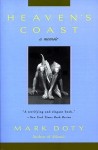 I picked up Meredith Hall’s Without a Map around the same time, which cemented my interest in women’s life stories. Memoirs have been among my favorite genres ever since. Mark Doty’s exquisite Heaven’s Coast, which I read the following year, kickstarted my particular fascination with bereavement memoirs. Also, I think it was through following up his memoirs with his collections of poems that I first got into contemporary poetry.
In recent years I’ve tried to branch out (e.g. into graphic novels and literature in translation), but contemporary literary fiction, historical fiction, memoirs, theology and travel books remain my preferred genres. Most of these loves I can trace back to my early twenties.
What books meant the most to you in young adulthood?
Reviews Roundup, January–February
One of my goals with this blog is to have one convenient place where I can gather together all my writing that has appeared in disparate online locations. To that end, once a month I provide links to all book reviews I’ve published elsewhere, with a rating (below each description) and a taster so you can decide whether to read more. A few exceptions: I won’t point out my Kirkus Indie, BlueInk or Publishers Weekly reviews since I don’t get a byline. Meanwhile, I’ve done my first review for the Pittsburgh Post-Gazette – exciting!
The Bookbag
The Noise of Time by Julian Barnes: “Art is the whisper of history, heard above the noise of time.” Through a fictionalized biography of the Russian composer Shostakovich, Barnes questions how art can withstand political oppression. Knowing Barnes’s penchant for stylistic experimentation, this was never going to be a straightforward, chronological life story. Instead, as he so often does, he sets up a tripartite structure, focusing on three moments when Shostakovich has a reckoning with Power. The book is full of terrific one-liners (“Integrity is like virginity: once lost, never recoverable”), but there are not many memorable scenes to latch on to.

Motions and Moments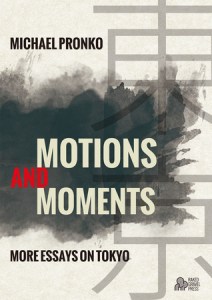 : More Essays on Tokyo (& interview) by Michael Pronko: Pronko’s third collection of essays about his adopted city is an eloquent tribute to a place full of contradictions and wonders. Compared to his earlier collection, Beauty and Chaos, I sense Pronko is now more comfortable in his surroundings, perhaps happier to include himself in ‘we’ rather than looking on passively at ‘them’. For instance – inspired by Japanese women’s perfect outfits – he consciously tries to dress better, and he’s taken to eating ramen and sleeping on a futon, just like a native. The highlight is a set of pieces written in the aftermath of the 2011 earthquake / tsunami.

BookBrowse
 The Portable Veblen by Elizabeth McKenzie: Veblen, named after the late-nineteenth-century Norwegian-American economist, is one of the oddest heroines you’ll ever meet. She thinks squirrels are talking to her and kisses flowers. But McKenzie doesn’t just play Veblen for laughs; she makes her a believable character well aware of her own psychological backstory. I suspect the squirrel material could be a potential turn-off for readers who can’t handle too much whimsy. Over-the-top silly in places, this is nonetheless a serious account of the difficulty of Veblen and Paul, her neurology researcher fiancé, blending their dysfunctional families and different ideologies – which is what marriage is all about.
 Weathering by Lucy Wood: This atmospheric debut novel is set in a crumbling house by an English river and stars three generations of women – one of them a ghost. Ada has returned to her childhood home after 13 years to scatter her mother Pearl’s ashes, sort through her belongings, and get the property ready to sell. In a sense, then, this is a haunted house story. Yet Wood introduces the traces of magical realism so subtly that they never feel jolting. Like the river, the novel is fluid, moving between the past and present with ease. The vivid picture of the English countryside and clear-eyed look at family dynamics remind me most of Tessa Hadley (The Past) and Polly Samson (The Kindness).
Foreword Reviews
When We Were Invincible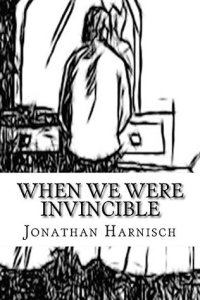 by Jonathan Harnisch: In this short novel, a young man wrestles with depression and Tourette’s syndrome, which together drive him to the point of suicide. A series of dreams and chance meetings, along with the possibility of romance and faith in God, pull him back from the edge. The book successfully introduces philosophical themes and gives a sympathetic picture of mental illness. However, it is weaker at filling in background and providing transitions, and there are many awkward, unlikely lines of dialogue. Recommended to fans of The Curious Incident of the Dog in the Night-Time.

Nudge
 The Life and Death of Sophie Stark by Anna North: The twisty, clever story of a doomed filmmaker – perfect for fans of Hausfrau. Who is Sophie Stark? A New York City-based indie director whose four documentary-style movies are “almost more like life than life itself.” Bisexual and with certain traits of high-functioning autism, Sophie is easily misunderstood. She’s a rebel who doesn’t conform to social niceties. The book is told through five first-person reminiscences from the people closest to her. In this respect the novel’s format recalls Kitchens of the Great Midwest. My favorite sections, though, are the reviews of her films, all by the same critic.
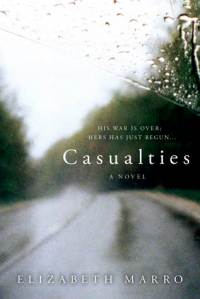 Casualties by Betsy Marro: A powerful, melancholy debut novel about how war affects whole families, not just individual soldiers. As in Bill Clegg’s Did You Ever Have a Family, which Casualties resembles in tone if not in style, a bereaved mother sets off on a journey. Ruth’s unlikely companion on the road trip east is a Gulf War amputee who appears little more than a conman but genuinely wants to clean up his act so he can reconcile with his teenage daughter. At times the road trip scenario felt a little far-fetched to me, and Casey too obvious a replacement son figure. Yet as both he and Ruth ponder how much they have lost and the small things they can try to put right, they together form a touching picture of the various ways war’s effects can linger.
Pittsburgh Post-Gazette
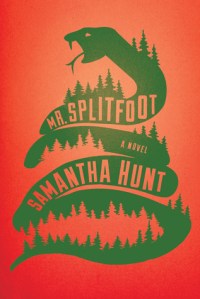 Mr. Splitfoot by Samantha Hunt: “All stories are ghost stories,” Samantha Hunt proclaims in her quirky third novel about the crossover between motherhood and mysticism. In a dual storyline that takes in fundamentalist cults, unlikely mediums and a pregnant woman’s pilgrimage, Hunt asks whether one can ever believe in the unseen. Mr. Splitfoot has the offbeat charm of Scarlett Thomas’s work. While the plot ultimately feels like a bit of a jumble, its vision of unexpected love and loyalty remains compelling. “The End’s always coming,” but it is how one lives in the face of brutality and impending extinction that matters.
I also post reviews of most of my casual reading and skimming on Goodreads:
 Rush Oh! by Shirley Barrett: A debut novel in which an Australian whaler’s daughter looks back at 1908, a catastrophic whaling season but also her first chance at romance. I felt that additional narrators, such as a whaleman or an omniscient voice, would have allowed for more climactic scenes. Still, I found this gently funny, especially the fact that the family’s cow and horse are inseparable and must be together on any outing. There are some great descriptions of whales, too.
 Felicity by Mary Oliver: I was disappointed with my first taste of Mary Oliver’s poetry. So many readers praise her work to the skies, and I’ve loved excerpts I’ve read elsewhere. However, I found these to be rather simplistic and clichéd, especially poems’ final lines, e.g. “Soon now, I’ll turn and start for home. / And who knows, maybe I’ll be singing.” or “Late, late, but now lovely and lovelier. / And the two of us, together—a part of it.” I’ll definitely try more of her work, but I’ll look out for an older, classic collection.
 Paulina & Fran by Rachel B. Glaser: Full of blunt, faux-profound sentences and smutty, two-dimensional characters. Others may rave about it, but this wasn’t for me. I get that it is a satire on female friendship and youth entitlement. But I hated how the main characters get involved in a love triangle, and once they leave college any interest I had in them largely disappeared. Least favorite lines: “Paulina. She’s like Cleopatra, but more squat.” / “She’s more like Humphrey Bogart” and “She craved the zen-ness of being rammed.”

 Noah’s Wife by Lindsay Starck: I kept wanting to love this book, but never quite did. It’s more interesting as a set of ideas – a town where it won’t stop raining, a minister losing faith, homeless zoo animals sheltering with ordinary folk – than as an executed plot. My main problem was that the minor characters take over so that you never get to know the title character, who remains nameless. There’s also a ton of platitudes towards the end. It reminded me most of The Readers of Broken Wheel Recommend and Not Forgetting the Whale (another cozy environmental dystopia based around biblical allusions).
 Spill Simmer Falter Wither by Sara Baume: This sounded like a charmingly offbeat story about a loner and his adopted dog setting off on a journey. As it turns out, this debut is much darker than expected, but what saves it from being unremittingly depressing is the same careful attention to voice you encounter in fellow Irish writers like Donal Ryan and Anne Enright. It’s organized into four sections, with the title’s four verbs as headings. In a novel low on action, the road trip is much the most repetitive section, extending to the language as well. Even so, Baume succeeds in giving a compassionate picture of a character whose mental state comes into question. (Full review in March 2016 issue of Third Way magazine.)
 Medium Hero by Korby Lenker: Lenker is an indie musician, and the 27 autobiographical stories in his debut collection are about the everyday challenges of being on the road versus trying to pay the bills. Many feature “Korby” or “Simon” as fictional stand-ins, and recurring locations include his hometown of Twin Falls, Idaho and his adopted home of Nashville. As the title suggests, Lenker has no illusions about being famous or out of the ordinary. Most of the time he just tries to be a decent guy, the kind who prays for family members in distress even though he’s not sure he believes in God. Lest that sound too serious, though, there are also stories about peeing his pants and the perils of being a metrosexual.
 Glitter and Glue by Kelly Corrigan: Slides down like ice cream. And I say that even though the whole basis for this memoir feels rather thin. Corrigan frames it around five months in the early 1990s when she worked as a nanny for two Australian kids whose mother died of cancer. For a young woman fresh out of college, it was like a trial run for being a mother, and also gave her a new appreciation for everything her own mother had done for her during her Philadelphia Catholic upbringing. If Corrigan’s father was the ‘glitter’ of the family, her mother was the ‘glue’ – holding everything together in the background. This is impressively reconstructed, dialogue and all, from letters, journals and photos.
 The Ballroom by Anna Hope: This novel was inspired by the story of the author’s great-great-grandfather, an Irishman who was a patient at Menston Asylum in West Yorkshire from 1909 to 1918. The novel zeroes in on the long, hot summer of 1911, focusing through alternating close third-person chapters on John Mulligan, a new patient named Ella Fay, and Dr. Charles Fuller, who wants to put his mental hospital at the frontline of eugenics research. Ultimately I didn’t like this quite as much as Wake, but I think it cements Anna Hope’s reputation as a solid historical fiction writer. I hope with her next book she’ll move beyond the years around World War I to consider a less-chronicled era.
 Life without a Recipe by Diana Abu-Jaber: The Jordanian–American writer reflects on how various food cultures have sustained her through a life that hasn’t always turned out as expected. Three marriages, a move from Portland to Florida, a winding path to motherhood in her forties, and her father’s death from leukemia are some of the main events. Like Sasha Martin’s Life from Scratch, this is more about family and personal history than it is about food (and there are no recipes). Still, food is the stuff of memories, and it is what binds her to two strong characters: her Jordanian father Bud with his stuffed grape leaves, and her maternal grandmother Grace with her frequent baking and the pastries they consumed together in Paris.
 Arctic Summer by Damon Galgut: This fictionalized account of the life of E.M. Forster focuses on the drawn-out composition of A Passage to India, which he began in 1913 but wouldn’t complete and publish until 1924. In between he broke off to write his explicitly homosexual novel Maurice (only published posthumously), spent three years working in Egypt during the war, and served as a secretary to an Indian maharajah. As fictionalized biographies of authors go, I’d rate this somewhere between David Lodge’s A Man of Parts (H.G. Wells) and Colm Tóibín’s superior The Master (Henry James); all three share a heavy focus on the author’s sexuality. “Buggery in the colonies. It wasn’t noble” is one of my favorite random snippets from this novel, and sums up, for me, its slightly prurient aftertaste.
Reviews Roundup, March–April
One of my goals with this blog is to have one convenient place where I can gather together all my writing that has appeared in disparate online locations. To that end, once a month – or maybe more often – I’ll provide links to all the book reviews I’ve published elsewhere, with a short taster and a rating (below) so you can decide whether to click to read more. (A couple of exceptions: I won’t point out my Kirkus Indie or BlueInk reviews since I don’t get a byline.)
BookBrowse
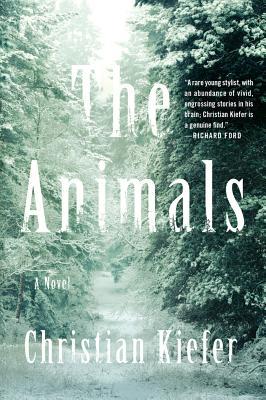 The Animals by Christian Kiefer [BookBrowse is a subscription service, but an excerpt is available for free on the website]: Kiefer’s second novel contrasts wildness and civilization through the story of a man who runs an animal refuge to escape from his criminal past.

The Bookbag
 The Sunlit Night by Rebecca Dinerstein: A debut novel as charming as it is quirky. Two young adults from Brooklyn meet in the far north of Norway, where one is an artist’s apprentice and the other is burying a beloved father. Bittersweet family backstories and burgeoning romance make this a winner.

Beauty and Chaos: Slices and Morsels of Tokyo Life by Michael Pronko (& interview): The pleasant and diverse travel essays in this collection draw on Pronko’s 15 years living in Japan. A long-term resident but still an outsider, he is perfectly placed to notice the many odd and wonderful aspects of Tokyo life.
The Blind Man of Hoy: A True Story by Red Szell: Red Széll started losing his sight at age 19. In 2013 he became the first blind person to climb the Old Man of Hoy, off the Orkney Islands. An inspirational rock-climbing adventure.

 Adeline: A Novel of Virginia Woolf by Norah Vincent: Set in 1925–1941 and focusing on Virginia Woolf’s marriage and later career, this is a remarkable picture of mental illness from the inside. For the depth of its literary reference and psychological insight, this is my favorite novel of 2015 so far.
Nudge
On Immunity: An Inoculation by Eula Biss: This wide-ranging work of nonfiction explores the facts, myths and metaphors of vaccination. Biss powerfully captures the modern phenomenon of feeling simultaneously responsible and powerless.
Chaplin and Company by Mave Fellowes: An aspiring mime buys a London canal boat and finds her father in this debut novel. Fellowes writes good descriptive passages and handles past and present capably. However, I was unsure whether Chaplin and Company overall has much narrative verve. What I will take away is an offbeat, bittersweet coming-of-age story.

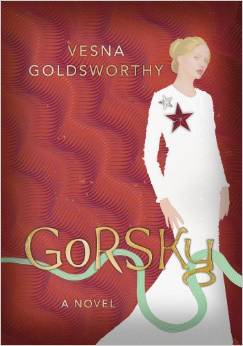 Gorsky by Vesna Goldsworthy: An updated version of The Great Gatsby set amongst contemporary London’s über-rich Russians. The novel is wise about the implications of class and immigration. However, as a whole it doesn’t work as well as some updated classics, such as The Innocents (Francesca Segal). In a sense, Goldsworthy’s literary debt is too obvious.

Quite a Good Time to Be Born: A Memoir, 1935-1975 by David Lodge [more personal musings and an overview of the book’s content]: David Lodge, one of Britain’s most celebrated comic novelists, surveys 40 years of personal and social change.
Better Than Before: Mastering the Habits of Our Everyday Lives by Gretchen Rubin: The author of The Happiness Project returns with a thorough guide to making and breaking habits, offering different strategies for different personality types.
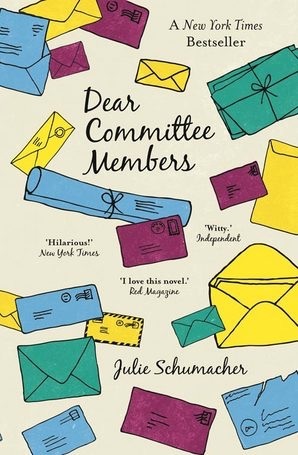 Dear Committee Members by Julie Schumacher: A very funny epistolary novel in the form of letters of recommendation written by a grouchy English professor. English graduates and teachers in particular will get a kick out of this, but I daresay anyone who has ever been fed up with bureaucracy at work will sympathize with Fitger.
The Last Asylum: A Memoir of Madness in Our Time by Barbara Taylor: Taylor was once a mental patient at Friern Hospital. This is an arresting vision of madness from the inside, as well as a history of England’s asylum system.
We Love This Book
 It’s What I Do: A Photographer’s Life of Love and War by Lynsey Addario: Photojournalist Lynsey Addario remembers a decade on the frontline of conflicts in the Middle East and Africa and strives for balance in her work and personal life. Journalists face real danger every day. It’s all here: bombs, car accidents, dehydration, beatings, and sexual assault. Yet all the risks over the years have been worth it “to convey beauty in war.”
Hausfrau by Jill Alexander Essbaum: Essbaum’s arresting debut novel reads like a modern retelling of Madame Bovary, with its main character a desperate housewife in Zurich. As deplorable as Anna’s actions may be, she is an entirely sympathetic tragic heroine. Watch her trajectory with horror but you cannot deny there is a little of Anna in you.
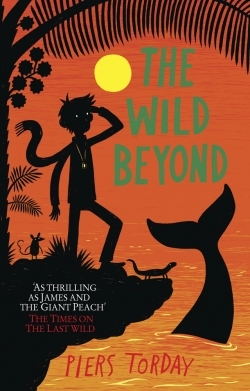 The Wild Beyond by Piers Torday: the suspenseful finale to “The Last Wild,” a fantasy trilogy for younger readers. The environmentalist message is not subtle but it is powerful and should inspire older children. Blending hints of Pullman and Tolkien with up-to-the-minute dystopian themes, this is an inventive take on the classic quest narrative.
The Time in Between: A Memoir of Hunger and Hope by Nancy Tucker: Nancy Tucker suffered from anorexia and bulimia for nearly a decade. Written in an original blend of styles, her eating disorder memoir is wrenching but utterly absorbing. You won’t find epiphanies or happy endings here, just a messy, ongoing recovery process – but 21-year-old Tucker narrates it exquisitely.
Quadrapheme literary magazine
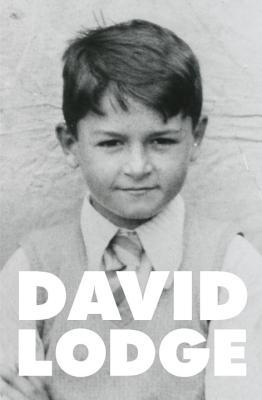 Quite a Good Time to Be Born: A Memoir, 1935-1975 by David Lodge [more of an essay about the context and sociological themes]: Even readers less familiar with Lodge’s work may be interested in the book’s insights into the social changes of post-war Britain. Lodge has not had a conventionally exciting life, and he knows it. From the title onward, his focus is more on his time period than his own uniqueness. He appears as an Everyman who superseded his working-class origins and expectations through hard work and luck.
Shiny New Books
 Reading the World: Confessions of a Literary Explorer by Ann Morgan: Not just another bibliomemoir. A better balance could have been struck between recycled blog content and academic musings on postcolonial literature and censorship. An interest in the politics of literature in translation would be a boon to anyone attempting this.
Foreword Reviews (self-published titles)
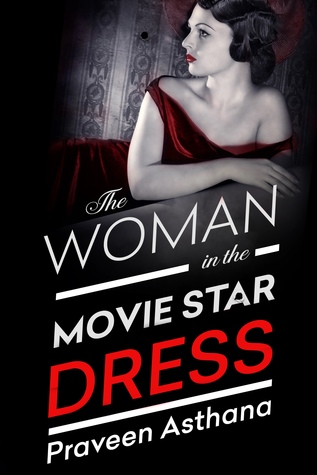 The Woman in the Movie Star Dress by Praveen Asthana: In this carefully plotted novel, a young Native American finds self-assurance and explores her sexuality by trying on the clothing – and personae – of Hollywood actresses. Spirited characters and dialogue make this an enjoyable read for classic film lovers.
Silence by Deborah Lytton: Lytton’s second novel for young adults concerns the unlikely match between a Broadway-bound singer who experiences temporary deafness after an accident and a pianist with a speech impediment and a traumatic past. It is a touching story about the forces that so often threaten us into silence and the struggle to find a voice anyway.
 Woody Allen: Reel to Real by Alex Sheremet: Woody Allen fans will prize this comprehensive, readable rundown of his oeuvre. This is an exhaustive study, ideal for established Allen enthusiasts and film students rather than the average moviegoer looking for an introduction.
I also post reviews of most of my casual reading on Goodreads.
The Mermaid’s Child by Jo Baker: This was Baker’s second novel, originally published in 2004. It doesn’t nearly live up to Longbourn, but it’s a fairly intriguing blend of historical fiction and fantasy. Malin’s father was a ferryman; her absent mother, so he swears, was a mermaid. Curiously timeless and placeless.
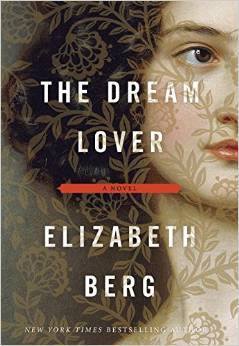 The Dream Lover: A Novel of George Sand by Elizabeth Berg: This historical novel about George Sand is a real slow burner. Berg makes the mistake of trying to be too comprehensive about Sand’s life; it would be better to just choose illustrative vignettes or representative love affairs (e.g. with Chopin) rather than include them all. There are two different timelines, 1831–1876 and 1804–1831, but together they’re still just a chronological slog.
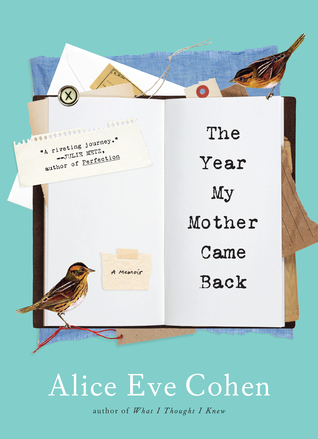 The Year My Mother Came Back by Alice Eve Cohen: There’s some gentle magic realism to this mother-daughter memoir. In the difficult year that forms the kernel of the memoir, Cohen’s younger daughter, Eliana, had a leg-lengthening surgery; her adopted older daughter, Julia, met her birth mother, Zoe; and Cohen herself underwent a lumpectomy and radiation for breast cancer. During radiation sessions, when she had to lie face-down, perfectly still, for 10 minutes at a time, her mother – dead for 20 years – would appear and talk to her.
A Sting in the Tale: My Adventures with Bumblebees by Dave Goulson: A wholly engaging tour through everything we know and are still trying to learn about bumblebees. I saw Goulson, founder of the UK’s Bumblebee Conservation Trust, speak at a nature conference in November and found him to be just as enthusiastic and well-informed in person. His occasional anthropomorphisms are unfailingly endearing.
 Black River by S.M. Hulse: Back in the town of Black River, Montana after his wife’s agonizing death, Wesley Carver must face the trauma he experienced as a prison guard when he was held hostage and tortured during an inmate riot. Now his attacker is up for parole, and Wes plans to attend the hearing and discourage the jury. At first you might think you’re reading a revenge story, but this is something subtler and sweeter than that. (What a shame that Hulse had to go by her initials, rather than Sarah, to be taken seriously in this genre, even though she’s on a level with Philipp Meyer.)
Trumbull Ave. by Michael Lauchlan: I didn’t like this quite as much as the other Made in Michigan books I’ve read, but Lauchlan does a good job of contrasting pastoral and post-industrial views of Detroit through free verse, as in “Detroit Pheasant,” the poem that gives the collection its cover image.
What Ridiculous Things We Could Ask of Each Other by Jeffrey Schultz: I enjoyed these poems set in a seemingly post-apocalyptic urban wasteland. They’re full of black humor, sarcasm and realistically pessimistic views of the American future. They’re very densely structured, usually in complete sentences of free verse.
Recommended Easter Reading
Unlike Christmas, Easter is a holiday that might not lend itself so easily to reading lists. December is the perfect time to be reading cozy books with wintry scenes of snow and hearth, or old-time favorites like Charles Dickens. Christmas-themed books and short stories are a whole industry, it seems. Lent and Advent both prize special foods, traditions and symbols, but beyond devotional reading there doesn’t seem to be an Easter book scene. Nonetheless, I have a handful of books I’d like to recommend for the run-up to Easter, whether for this year or the future.
 Easter, Michael Arditti
I hadn’t heard of Michael Arditti until I reviewed his novel The Breath of Night – a taut, Heart of Darkness-inspired thriller about a young man searching for a missing priest in the Philippines – for Third Way magazine in late 2013. He deserves to be better known. Easter (2000), his third novel, earned him comparisons to Iris Murdoch and Barbara Pym. His nuanced picture of modern Christianity, especially the Anglican Church, is spot-on.
I’ve just finished Part One, which traces the week between Palm Sunday and Easter Sunday in a fictional London parish, St Mary-in-the-Vale, Hampstead. Structured around the services of Holy Week and punctuated with bits of liturgy, the novel moves between the close third-person perspectives of various clergy and parishioners. Huxley Grieve, the vicar, is – rather inconveniently – experiencing serious doubts in this week of all weeks. And this at a time when the new Bishop of London, Ted Bishop (“Bishop by name, bishop by calling,” he quips), has announced his mission to root out the poison of liberalism from the Church.
So far I’m reminded of a cross between Susan Howatch and David Lodge (especially in How Far Can You Go?), with a dash of the BBC comedy Rev thrown in. Reverend Grieve’s sermons may be achingly earnest, but the novel is also very funny indeed. Here’s a passage, almost like a set of stage directions, from the Palm Sunday service: “The procession moves up the nave. The Curate leads the donkey around the church. It takes fright at the cloud of incense and defecates by the font.”
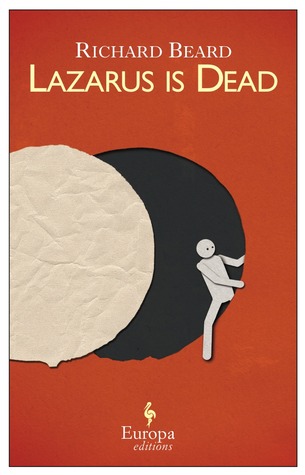 Lazarus Is Dead, Richard Beard
In this peculiar novel-cum-biography, Beard attempts to piece together everything that has ever been said, written and thought about the biblical character of Lazarus. The best sections have Beard ferreting out the many diseases from which Lazarus may have been suffering, and imagining what his stench – both in life and in death – must have been like. (“He stinketh,” as the Book of John pithily puts it.)
Alongside these reasonable conjectures is a strange, invented backstory for Jesus and Lazarus: when they were children Jesus failed to save Lazarus’ younger brother from drowning and Lazarus has borne a lifelong grudge. A Roman official is able to temporarily convince Lazarus that he needs to take up the mantle of the Messiah because he came back to life: he has the miracle to prove the position, whether he wants it or not. The end of the novel follows the strand of the Passion Week, though in a disconnected and halfhearted fashion.
Beard’s interest is not that of a religious devotee or a scriptural scholar, but of a skeptical postmodern reader. Lazarus is a vehicle for questions of textual accuracy, imagination, and the creation of a narrative of life and death. His unprecedented second life must make him irresistible to experimental novelists. Beard’s follow-up novel, Acts of the Assassins, is also Bible-themed; it’s a thriller that imagines the Roman Empire still in charge today.
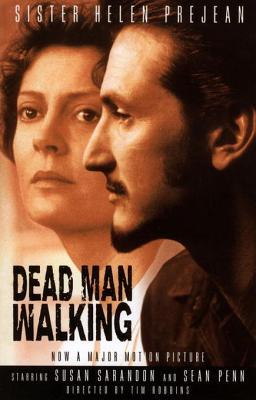 Dead Man Walking, Sister Helen Prejean
No matter your current thoughts on the death penalty, you owe it to yourself to read this book with an open mind. I read it in the run-up to Easter 2007, and would recommend it as perfect reading for the season. As I truly engaged with themes of guilt and retribution, I felt the reality of death row was brought home to me for the first time. Many of the men Prejean deals with in this book we would tend to dismiss as monsters, yet Jesus is the God who comes for the lost and the discounted, the God who faces execution himself.
The film version, which conflates some of the characters and events of the book, is equally affecting. I saw it first, but it does not ruin the reading experience in any way.
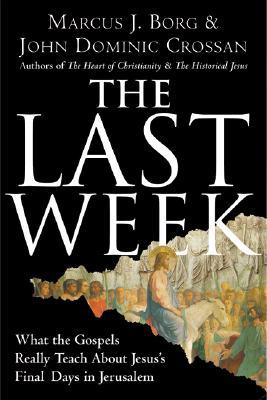 The Last Week: What the Gospels Really Teach about Jesus’s Final Days in Jerusalem, Marcus J. Borg and John Dominic Crossan
Marcus Borg, who just died on January 21st, has been one of the most important theologians in my continuing journey with Christianity. His Reading the Bible Again for the First Time and The Heart of Christianity are essential reading for anyone who’s about to give up on the faith. In this day-by-day account, mostly referencing the Gospel of Mark, Borg and Crossan convey all that is known about the historical Jesus’ last week and death. They collaborated on a second book, The First Christmas, which does the same for Jesus’ birth.
And now for two more unusual, secular selections…
 Bellman & Black, Diane Setterfield
Call me morbid, but I love English graveyards. My most enduring Easter memory is of dawn services at the country church in my husband’s hometown. In the weak half-light, with churchyard rooks croaking a near-deafening chorus, the overwhelming sense was of rampant wildness. The congregation huddled around a bonfire while a black-cloaked vicar intoned the story of scripture, from creation to the coming of Christ, as loudly as possible over the rooks – trying to win mastery over the night, and score a point for civilization in the meantime.
This anecdote goes some way toward explaining why I rather enjoyed Bellman and Black – but why many others won’t. Setterfield’s second novel is a peculiar beast, a bit like a classic suspense story but also an English country fable. Protagonist William Bellman is part Job and part Faustus. At age ten, he makes a catapult that kills a rook. Thereafter, his life is plagued by death, despite his successful career as an entrepreneur at a cloth mill. Can he make a deal with the Devil – or, rather, the sinister Mr. Black – that will stop the cycle of deaths?
Bellman’s daughter Dora is a wonderful character, and because I love birds anyway and have strong, visceral memories involving rooks in particular, I enjoyed Setterfield’s symbolic use of them. However, many will be bored to tears by details of cloth-making and dyeing in early nineteenth-century England. Setterfield evokes her time period cannily, but in such a painstaking manner that the setting does not feel entirely natural. Here’s hoping for a return to form with Setterfield’s third novel.
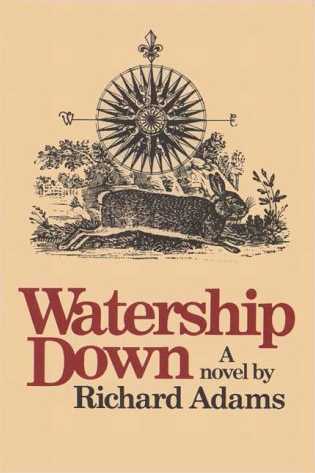 Watership Down, Richard Adams
This was the first book I ever borrowed from the Adult Fiction section of the public library, when I was eight years old. It quickly became a favorite, and though I didn’t reread it over and over like I did the Chronicles of Narnia, it still has a strong place in my childhood memories. Why have I chosen it for this list? Well, it’s about rabbits: a warren comes under threat from English countryside development and human interference.
I loved a little story Rachel Joyce inserts in her novel The Love Song of Miss Queenie Hennessy. Taking over from another nun, a young, air-headed nurse at Queenie’s hospice resumes reading Watership Down to a patient. At the end the patient cries, “Oh, it’s so sad, those poor rabbits” and the nurse replies, “What rabbits?” (You’d think the cover might have given it away!) It’s a good laugh, but also reflects how carefully Adams characterizes – one might say anthropomorphizes – each rabbit; you might forget they’re actually animals.
Do you have any favorite books to read or reread at particular holidays?
Happy spring reading!
Review: The Birth of the Pill by Jonathan Eig
The development of the birth control pill: this seems like an odd topic for my first book review on the new blog, but I’ll go with it. I have a special love for nonfiction that incorporates many different genres: history, biography, popular science, sociology, and so on. (See my next-to-last paragraph for some other examples of books that do this well.)
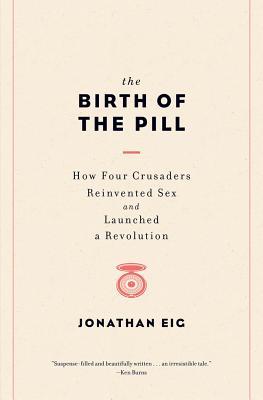 This is an epic adventure starring four unlikely heroes: two middle-aged doctors, Gregory Pincus, fired by Harvard, and John Rock, a Catholic; and two older ladies, Margaret Sanger, who left her first husband and family and grew increasingly addicted to alcohol and prescription pills, and Katharine McCormick, whose mentally ill husband died and left her with a huge fortune she dug into the birth control movement.

Dr. Gregory Pincus is on the left (date unknown). Copyright Mrs. F. Hammond.
From testing progesterone on rabbits to the desperate hunt for human test subjects in Puerto Rico and in a Massachusetts mental hospital, it is a tale full of surprises. When first presented to American doctors and the FDA, the contraceptive pill – then known as Enovid – was billed as an infertility drug: It regulated periods to make it more likely that women would then get pregnant after going off it. Pincus et al. conveniently failed to mention that it also prevented ovulation. I never would have expected a Trojan horse story.
Margaret Sanger was given a hero’s welcome on every trip to Japan, but she also had an unfortunate association with the eugenics movement – an inevitable offshoot of concerns about overpopulation? She once said that parents should have to apply for the right to have children just like immigrants have to apply for visas. The best random piece of trivia I came across here was that Prescott S. Bush, father of George and grandfather of Dubya, was the treasurer for Planned Parenthood’s first nationwide fundraising campaign in 1947. You can bet the Bush family has tried to cover that one up!

Margaret Sanger in 1922.
“Religion is a very poor scientist,” John Rock was known to say. The fight to have the Catholic Church change its position on birth control is an important background narrative in this book. The sexual revolution and the personal decision to contravene Catholic doctrine regarding contraception is also a major component of Quite a Good Time to Be Born, David Lodge’s recent memoir. It’s always fun when similar ideas come up in multiple books at the same time.
Jonathan Eig was previously known for his sports biographies, and there’s plenty of action and narrative here. Like the best science writers (Rebecca Skloot in The Immortal Life of Henrietta Lacks, David Quammen in Spillover, Atul Gawande in Being Mortal, or Siddhartha Mukherjee in The Emperor of All Maladies), he tells a story rich with three-dimensional characters.
We have a family legend about a Swiss ancestor who admitted herself to a mental asylum (then euphemistically called a sanatorium) in upstate New York in 1922 rather than have more children. She already had nine kids (one more died in infancy); she was tired and overworked. If this was what it took to keep her husband from making her pregnant again, so be it. She and thousands of housewives like her never could have guessed that one day (in 1960, to be precise) a simple pill could limit their family size. This is what this book is all about: the quest to give women control over their lives.
My rating:
 Bookish Beck = Rebecca Foster. American transplant to England. Freelance proofreader and book reviewer.
 Bookish Beck