Book Serendipity, Mid-November–Early January
This is a short set but I’ll post it now to keep things ticking over. I’ve lost nearly a week to the upper respiratory virus from hell, and haven’t felt up to sitting at my computer for any extended periods of time. I had to request extensions on a few of my work deadlines; I’ll hope to be back to normal blogging next week, too.
I call it “Book Serendipity” when two or more books that I read at the same time or in quick succession have something in common – the more bizarre, the better. This is a regular feature of mine every couple of months. Because I usually have 20–30 books on the go at once, I suppose I’m more prone to such incidents. People frequently ask how I remember all of these coincidences. The answer is: I jot them down on scraps of paper or input them immediately into a file on my PC desktop; otherwise, they would flit away! Feel free to join in with your own.
The following are in roughly chronological order.
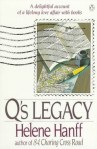
- Ayot St Lawrence as a setting in Q’s Legacy by Helene Hanff and Flesh by David Szalay.
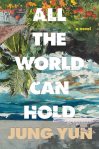
- A man who has panic attacks in Pan by Michael Clune and All the World Can Hold by Jung Yun.
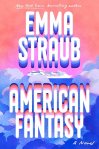
- Two of my Shelf Awareness PRO (early) reviews in a row were of 2026 novels set on a celebrity/reunion cruise: All the World Can Hold by Jung Yun, followed by American Fantasy by Emma Straub. In both, the narrative alternates between three main characters, the cruise is to celebrate a milestone birthday for a passenger’s relative, and there’s a celebrity who’s in AA.
- A teacher–student relationship develops into a friendship in The Irish Goodbye by Beth Ann Fennelly (with Molly McCully Brown, whose Places I’ve Taken My Body I’ve reviewed) and Lessons from My Teachers by Sarah Ruhl (with Max Ritvo, about whom she wrote a whole book).
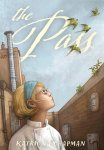 Someone becomes addicted to benzodiazepines in The Pass by Katriona Chapman and All the World Can Hold by Jung Yun (both 2026 releases).
- A New York City event scheduled to occur on September 15 or 16, 2001 is postponed because of 9/11 in Joyride by Susan Orlean (her wedding) and All the World Can Hold by Jung Yun (a cruise departure – it’s moved to Boston).
- A 1960s attempted suicide by putting one’s head in a gas oven in The Mercy Step by Marcia Hutchinson and The Soul of Kindness by Elizabeth Taylor.
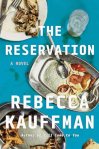
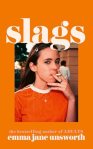
- A plan to eat cheese to induce dreams in The Reservation by Rebecca Kauffman and Slags by Emma Jane Unsworth.
- An author is (at least initially) aghast at the liberties taken with an adaptation of her book in Spent by Alison Bechdel and Joyride by Susan Orlean (the film Adaptation, one of my favourites, bears little relation to her nonfiction work The Orchid Thief, which I also love).
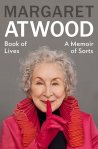
- A North American author meets her British publishers, André Deutsch and Diana Athill, in Book of Lives by Margaret Atwood and Q’s Legacy by Helene Hanff. (Atwood also mentions Sir Arthur Quiller-Couch, the title reference in the Hanff.)
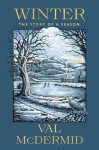
- An older white woman feels compelled to add, as an aside after a memory of slightly dodgy behaviour observed, that cultural appropriation was not a thing in those days in Book of Lives by Margaret Atwood and Winter by Val McDermid.
- I read two books in 2025 with a title taken from a Christian Wiman poem: A Truce that Is Not Peace by Miriam Toews, then Some Bright Nowhere by Ann Packer.
- A special trip undertaken for a younger sister’s milestone birthday: a road trip through Scotland in a campervan in Slags by Emma Jane Unsworth for a 40th; and a boy band reunion cruise to the Bahamas for a 45th in American Fantasy by Emma Straub.
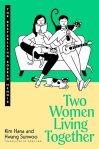
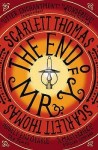
- A reference to Sartre’s “hell is other people” line (paraphrased) in Two Women Living Together by Kim Hana and Hwang Sunwoo and The End of Mr Y by Scarlett Thomas.
- The clock-drawing test as a shorthand for assessing a loved one’s dementia in Book of Lives by Margaret Atwood (her partner Graeme) and Joyride by Susan Orlean (her mother).
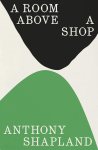 A sexual encounter between two men is presaged by them relieving themselves side by side at urinals in A Room Above a Shop by Anthony Shapland and The End of Mr Y by Scarlett Thomas.
- An older man who knows he’s having a stroke just wants to sit quietly in a chair and not be taken to hospital in Book of Lives by Margaret Atwood (her partner Graeme) and The Boy from the Sea by Garrett Carr.
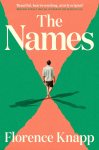
- A man who’s gone through Alcoholics Anonymous gets dangerously close to falling off the wagon: picks up a bottle of gin in a shop in The Names by Florence Knapp / buys a drink at a bar in All the World Can Hold by Jung Yun.
- I was reading two nonfiction books with built-in red ribbon bookmarks at the same time: Book of Lives by Margaret Atwood and Robin by Stephen Moss.
- Homoeopathy is an element in The Names by Florence Knapp and The End of Mr Y by Scarlett Thomas.
- A character named Sparrow in Spent by Alison Bechdel and Songs of No Provenance by Lydi Conklin.

- A mention of special celebrations for a Korean mother’s 70 birthday in Two Women Living Together by Kim Hana and Hwang Sunwoo and All the World Can Hold by Jung Yun.
- Some kinky practices in Songs of No Provenance by Lydi Conklin and Mr Norris Changes Trains by Christopher Isherwood.
- A girl from an immigrant family reads Greek mythology for escape in Visitations by Julia Alvarez and The Mercy Step by Marcia Hutchinson.
- “View halloo” (originally a fox-hunting term) is used as a greeting in Talking It Over by Julian Barnes and Arsenic for Tea by Robin Stevens.
What’s the weirdest reading coincidence you’ve had lately?
Best Books of 2025: The Runners-Up
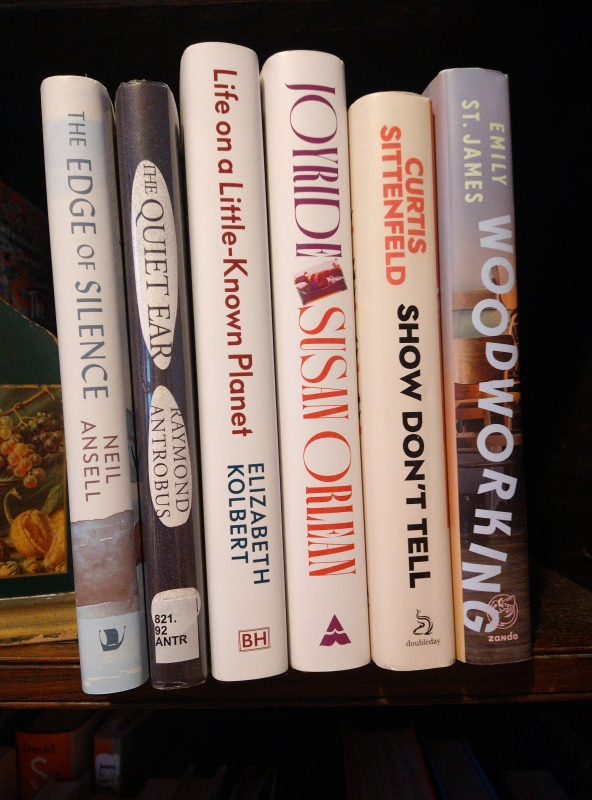
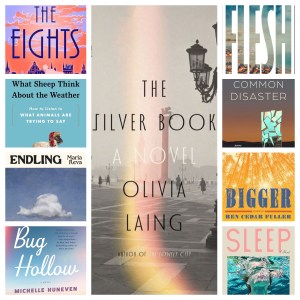
Coming up tomorrow: my list of the 15 best 2025 releases I’ve read. Here are 15 more that nearly made the cut. Pictured below are the ones I read / could get my hands on in print; the rest were e-copies or in-demand library books. Links are to my full reviews where available.
Fiction
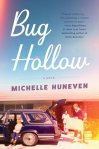 Bug Hollow by Michelle Huneven: A glistening portrait of a lovably dysfunctional California family beset by losses through the years but expanded through serendipity and friendship. Life changes forever for the Samuelsons (architect dad Phil; mom Sibyl, a fourth-grade teacher; three kids) when the eldest son, Ellis, moves into a hippie commune in the Santa Cruz Mountains. A rotating close third-person perspective spotlights each member. Fans of Jami Attenberg, Ann Patchett, and Anne Tyler need to try Huneven’s work pronto.
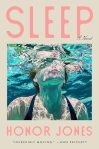 Sleep by Honor Jones: A breathtaking character study of a woman raising young daughters and facing memories of childhood abuse. Margaret’s 1990s New Jersey upbringing seems idyllic, but upper-middle-class suburbia conceals the perils of a dysfunctional family headed by a narcissistic, controlling mother. Jones crafts unforgettable, crystalline scenes. There are subtle echoes throughout as the past threatens to repeat. Reminiscent of Sarah Moss and Evie Wyld, and astonishing for its psychological acuity, this promises great things from Jones.
 The Silver Book by Olivia Laing: Steeped in the homosexual demimonde of 1970s Italian cinema (Fellini and Pasolini films), with a clear antifascist message filtered through the coming-of-age story of a young Englishman trying to outrun his past. This offers the best of both worlds: the verisimilitude of true crime reportage and the intimacy of the close third person. Laing leavens the tone with some darkly comedic moments. Elegant and psychologically astute work from one of the most valuable cultural commentators out there.
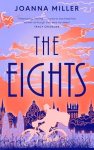 The Eights by Joanna Miller: Highly readable, book club-suitable fiction that is a sort of cross between In Memoriam and A Single Thread in terms of its subject matter: the first women to attend Oxford in the 1920s, the suffrage movement, and the plight of spare women after WWI. Different aspects are illuminated by the four central friends and their milieu. This debut has a good sense of place and reasonably strong characters. Despite some difficult subject matter, it remains resolutely jolly.
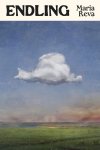 Endling by Maria Reva: What is worth doing, or writing about, in a time of war? That is the central question here, yet Reva brings considerable lightness to a novel also concerned with environmental devastation and existential loneliness. Yeva, a snail researcher in Ukraine, is contemplating suicide when Nastia and Sol rope her into a plot to kidnap 12 bride-seeking Western bachelors. The faux endings and re-dos are faltering attempts to find meaning when everything is breaking down. Both great fun to read and profound on many matters.
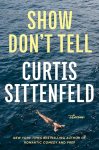 Show Don’t Tell by Curtis Sittenfeld: Sittenfeld’s second collection features characters negotiating principles and privilege in midlife. Split equally between first- and third-person perspectives, the 12 contemporary storylines spotlight everyday marital and parenting challenges. Dual timelines offer opportunities for hindsight on the events of decades ago. Nostalgic yet clear-eyed, these witty stories exploring how decisions determine the future are perfect for fans of Rebecca Makkai, Kiley Reid, and Emma Straub.
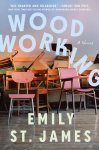 Woodworking by Emily St. James: When 35-year-old English teacher Erica realizes that not only is there another trans woman in her small South Dakota town but that it’s one of her students, she lights up. Abigail may be half her age but is further along in her transition journey and has sassy confidence. But this foul-mouthed mentor has problems of her own, starting with parents who refuse to refer to her by her chosen name. This was pure page-turning enjoyment with an important message, reminiscent of Celia Laskey and Tom Perrotta.
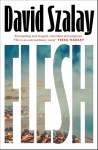 Flesh by David Szalay: Szalay explores modes of masculinity and channels, by turns, Hemingway; Fitzgerald and St. Aubyn; Hardy and McEwan. Unprocessed trauma plays out in Istvan’s life as violence against himself and others as he moves between England and Hungary and sabotages many of his relationships. He comes to know every sphere from prison to the army to the jet set. The flat affect and sparse style make this incredibly readable: a book for our times and all times and thus a worthy Booker Prize winner.
Nonfiction
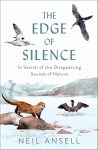 The Edge of Silence: In Search of the Disappearing Sounds of Nature by Neil Ansell: I owe this a full review. I’ve read all five of Ansell’s books and consider him one of the UK’s top nature writers. Here he draws lovely parallels between his advancing hearing loss and the biodiversity crisis we face because of climate breakdown. The world is going silent for him, but rare species may well become silenced altogether. His defiant, low-carbon adventures on the fringes offer one last chance to hear some of the UK’s beloved species, mostly seabirds.
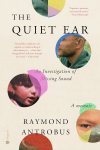 The Quiet Ear: An Investigation of Missing Sound by Raymond Antrobus: (Another memoir about being hard of hearing!) Antrobus’s first work of nonfiction takes up the themes of his poetry – being deaf and mixed-race, losing his father, becoming a parent – and threads them into an outstanding memoir that integrates his disability and celebrates his role models. This frank, fluid memoir of finding one’s way as a poet illuminates the literal and metaphorical meanings of sound. It offers an invaluable window onto intersectional challenges.
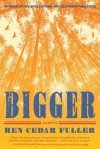 Bigger: Essays by Ren Cedar Fuller: Fuller’s perceptive debut work offers nine linked autobiographical essays in which she seeks to see herself and family members more clearly by acknowledging disability (her Sjögren’s syndrome), neurodivergence (she theorizes that her late father was on the autism spectrum), and gender diversity (her child, Indigo, came out as transgender and nonbinary; and she realizes that three other family members are gender-nonconforming). This openhearted memoir models how to explore one’s family history.
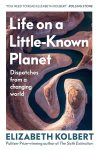 Life on a Little-Known Planet: Dispatches from a Changing World by Elizabeth Kolbert: These exceptional essays encourage appreciation of natural wonders and technological advances but also raise the alarm over unfolding climate disasters. There are travelogues and profiles, too. Most pieces were published in The New Yorker, whose generous article length allows for robust blends of research, on-the-ground experience, interviews, and in-depth discussion of controversial issues. (Review pending for the Times Literary Supplement.)
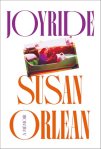 Joyride by Susan Orlean: Another one I need to review in the new year. As a long-time staff writer for The New Yorker (like Kolbert!), Orlean has had the good fortune to be able to follow her curiosity wherever it leads, chasing the subjects that interest her and drawing readers in with her infectious enthusiasm. She gives behind-the-scenes information on lots of her early stories and on each of her books. The Orchid Thief and the movie not-exactly-based on it, Adaptation, are among my favourites, so the long section on them was a thrill for me.
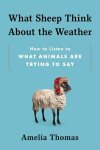 What Sheep Think About the Weather: How to Listen to What Animals Are Trying to Say by Amelia Thomas: A comprehensive yet conversational book that effortlessly illuminates the possibilities of human–animal communication. Rooted on her Nova Scotia farm but ranging widely through research, travel, and interviews, Thomas learned all she could from scientists, trainers, and animal communicators. Full of fascinating facts wittily conveyed, this elucidates science and nurtures empathy. (I interviewed the author, too.)
Poetry
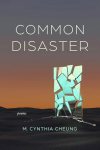 Common Disaster by M. Cynthia Cheung: Cheung is both a physician and a poet. Her debut collection is a lucid reckoning with everything that could and does go wrong, globally and individually. Intimate, often firsthand knowledge of human tragedies infuses the verse with melancholy honesty. Scientific vocabulary abounds here, with history providing perspective on current events. Ghazals with repeating end words reinforce the themes. These remarkable poems gild adversity with compassion and model vigilance during uncertainty.
Six Degrees of Separation: Second Place to Woman on the Edge of Time
The last Six Degrees of Separation post I did was back in April; I’ve fallen out of the habit since then. But this month an idea seized me and I’m back! This time we begin with Second Place by Rachel Cusk, which is on the Booker Prize longlist. (See Kate’s opening post.)

When I saw Cusk speak at the online Hay Festival, I learned that Second Place (my review) was loosely inspired by Mabel Dodge Luhan’s 1932 memoir Lorenzo in Taos, about the time when D.H. Lawrence came to visit her in New Mexico. Thoughts of Lawrence in Taos inevitably take me back to my first (and only) academic conference in 2005, hosted by the D.H. Lawrence Society of North America in Santa Fe, with a fieldtrip out to his Taos ranch.
 #1 One of the books I read ‘in preparation’ for attending that conference was Small World by David Lodge, a comedic novel about professors on the international conference circuit. I’ve included it as one of the Landmark Books of My Life.
 #2 Flights and “small world” connections also fill the linked short story collection Turbulence by David Szalay.
 #3 If you can bear to remember the turbulence of recent history, UnPresidented by Jon Sopel is a breezy diary of the 2020 U.S. election. We were lucky enough to have the author, a BBC presenter and brother of one of our members, join our book club discussion on Zoom.
 #4 That punning title reminded me of A Sting in the Tale by Dave Goulson, his first and probably best work of popular science – all of his books since have been very similar, but that’s no problem because his enthusiasm for insect life is infectious and he writes with the wit and charm of Gerald Durrell.
#5 Goulson’s latest book, which I’ve recently reviewed for Shelf Awareness, is called Silent Earth, about the grave threats that insects face (pesticides, invasive species, climate change and much more). It’s the second book I’ve read in recent years (the first was Losing Eden by Lucy Jones) that is explicitly based on or inspired by Silent Spring by Rachel Carson. Like Carson’s book, these seek to effect real societal change.


#6 Carson, Goulson and Jones all conjure up dystopian scenarios of unimaginable natural loss to spur readers into action. A feminist classic my book club read earlier in the year, Woman on the Edge of Time by Marge Piercy, contrasts utopian and dystopian scenes experienced by a Latina woman who’s been confined to a mental hospital. Will society evolve into a utopian vision of subsistence living and absolute gender equality, or move towards further isolation and urban barrenness? It’s an unusual and fascinating novel with hints of science fiction, but grounded in the real world. I still haven’t managed to review it, but next month’s 1976 Club may be just the excuse I need. Do give it a try!

Cycling round from one feminist novel to another, I’ve also featured a couple of personal favourites, some recent works, and a classic of nature writing.
Where will your chain take you? Join us for #6Degrees of Separation! (Hosted on the first Saturday of each month by Kate W. of Books Are My Favourite and Best.) Next month’s R.I.P.-appropriate starting point is the short story “The Lottery” by Shirley Jackson.
Have you read any of my selections? Are you tempted by any you didn’t know before?
Three Books that Originated on the Radio
As the end of the year approaches and I try to get through a final handful of review books, I’m looking for ways to combine posts. It may seem like a fairly arbitrary connection, but all three of these books originated as essays or short stories that were aired on British radio. I never listen to the radio so I miss out on these projects the first time around, but I’ve been interested to note how short forms and conversational styles lend themselves to oral performance.
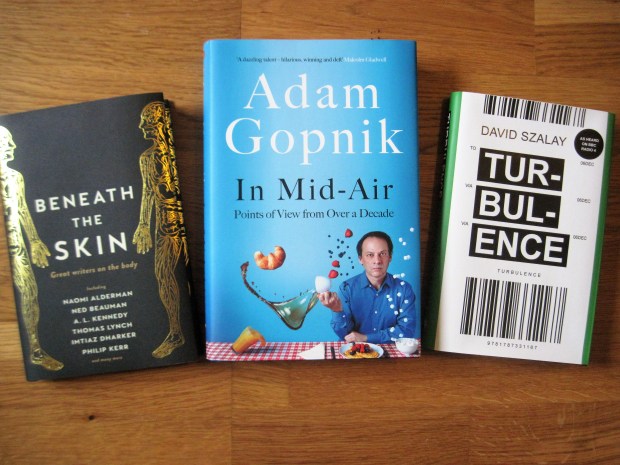
Beneath the Skin: Great Writers on the Body
These 15 pieces were commissioned for the BBC Radio 3 series “A Body of Essays.” Thomas Lynch, a small-town American undertaker and wonderful, unjustly obscure writer, opens and closes the volume. In his introduction he remarks – appropriately as Christmas draws near – that “We are an incarnate species”: we experience the world only through our bodies, which are made of disparate parts that work together as a whole. This project considers single organs by turn “in hopes that by knowing the part we might better know the whole of our predicament and condition.”
 Naomi Alderman, musing on the intestines, draws metaphorical connections between food, sex and death, and gives thanks that digestion and excretion are involuntary processes we don’t have to give any thought. Ned Beauman reports on misconceptions about the appendix as he frets about the odds of his bursting while he’s in America without health insurance. The late Philip Kerr describes the checkered history of the lobotomy, which used to reduce patients to a vegetative state but can now quite effectively treat epilepsy.
The pieces incorporate anatomical knowledge, medical history, current research, cultural connections, and sometimes observation of a hospital procedure. These threads are elegantly woven together, as in Patrick McGuinness’s essay on the ear, which skips between Hamlet’s father’s death, the secretive delight of mining for earwax, Beethoven’s ear trumpet, and what we know about in utero sounds.
 Most authors chose a particular organ because of its importance to their own health. Christina Patterson’s acne was so bad she went to the UK’s top skin specialist for PUVA light treatments, Mark Ravenhill had his gallbladder removed in an emergency surgery, and Daljit Nagra’s asthma led his parents to engage Sikh faith healers for his lungs. Two of my favorite chapters were by William Fiennes, whose extreme Crohn’s disease caused him to have a colostomy bag for two years in his early twenties, and poet Kayo Chingonyi, who has always been ashamed to admit that his parents both died of complications of HIV in Zambia. Such personal connections add poignancy to what could have been information dumps.
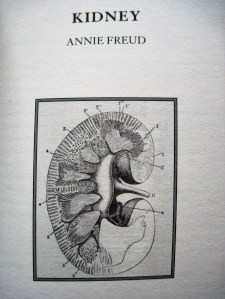
As is usual for essay collections, my interest varied somewhat. I had my hopes too high so was disappointed with a scattered piece on the kidneys. But the overall quality is terrific. If you enjoy medical reads to any extent, I recommend this as a bedside book to read occasionally.
Some favorite lines:
“It’s a strange and shifting thing – this sense I have that I am my body, of which some bits are essential and some expendable.” (Mark Ravenhill)
“There are things we only think about when they go wrong: the fan belt, the combi boiler, the bowel.” (William Fiennes)
“Like most of us, I take my body for granted. I live in the most complex, intricate machine and as long as it wakes up in the morning, and goes to bed at night, I am uninterested in its inner workings.” (Chibundu Onuzo, “Thyroid”)
My rating: 
Beneath the Skin was published by the Wellcome Collection imprint of Profile Books on October 25th. My thanks to the publisher for a free copy for review.
In Mid-Air by Adam Gopnik
New Yorker writer Gopnik contributed to BBC Radio 4’s A Point of View for over a decade. These essays date from 2012 to 2017 and are grouped into three loosely thematic sections on family, culture and politics. Gopnik self-deprecatingly sees himself as “offering measured ambivalences on everything.” As an American who was raised in Canada and has lived in Paris and spent significant time in London, he has a refreshingly cosmopolitan outlook and can appreciate the nuances in different countries’ identities. At the same time, he brings out what’s universal: being annoying to one’s teenage children, gauging the passing of time by family members’ changes, the desire to die with dignity (remembering his father-in-law’s death at age 95), and lessons in a happy marriage from Charles and Emma Darwin – he boils it down to lust, laughter and loyalty.
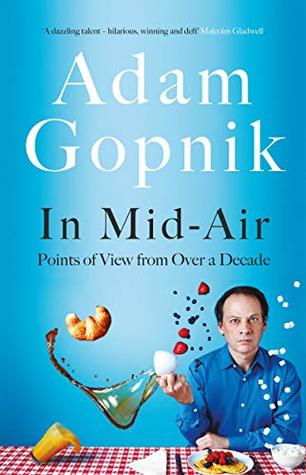 During the weeks that I spent with these essays I was frequently reminded of Jan Morris’s In My Mind’s Eye, which casts a similarly twinkling eye over the absurdities of modern life and the aging body. Gopnik endures shingles and shrugs over his funny last name (“drunken lout” in Russian) and short stature. He mostly ignores Twitter and decries our dependence on smartphones. As he’s never learned to drive, he’s amused by the idea of self-driving cars.
My favorite pieces were on significantly more trivial matters, though: the irony of famous Christmas songs being written by Jews, and a satire on society’s addiction to DVD box sets. Other arts references vary from the Beatles and Bob Dylan’s Nobel Prize to Cubism and literary festivals. It’s a quirky blend of high and low culture here. Bizarrely, Gopnik has recently written an oratorio on Alan Turing and a musical about a New York City restaurant.
The author is an unabashed liberal who prizes pluralism above all else but warns how fragile it is. In the final section he prophesies catastrophe under Trump and, afterwards, can only say that at least his election puts lesser issues into perspective. I valued the diagnosis of American insularity and British inwardness – this particular essay was written in 2013 but seems all the more relevant post-Brexit. This was my fifth book from Gopnik. While I didn’t engage with every essay and would have liked them to be chronological so there was a mix of topics all the way through, it was a pleasant and often thought-provoking read.
Some favorite lines:
“Watching the people we love die bit by bit is the hardest thing life demands until we recall that watching the people we love die bit by bit is in a certain sense what life simply is. It just usually takes more time for the bits to go by.”
“We should never believe that people who differ from us about how we ought to spend public money want to commit genocide or end democracy, and we should stop ourselves from saying so, even in the pixellated heat of internet argument. But when we see the three serpents of militarism, nationalism and hatred of difference we should never be afraid to call them out, loudly, by name”
My rating: 
In Mid-Air was published by riverrun, a new Quercus imprint, on October 18th. My thanks to the publisher for a free copy for review.
Turbulence by David Szalay
These 12 linked short stories, commissioned for BBC Radio 4, focus on travel and interconnectedness. Each is headed by a shorthand route from one airport to another, and at the destination we set out with a new main character who has crossed paths with the previous one. For instance, in “YYZ – SEA” the writer Marion Mackenzie has to cancel a scheduled interview when her daughter Annie goes into labor. There’s bad news about the baby, and when Marion steps away from the hospital to get Annie a few necessaries from a supermarket and is approached by a pair of kind fans, one of whom teaches Marion’s work back in Hong Kong, she’s overcome at the moment of grace-filled connection. In the next story we journey back to Hong Kong with the teacher, Jackie, and enter into her dilemma over whether to stay with her husband or leave him for the doctor she’s been having an affair with.
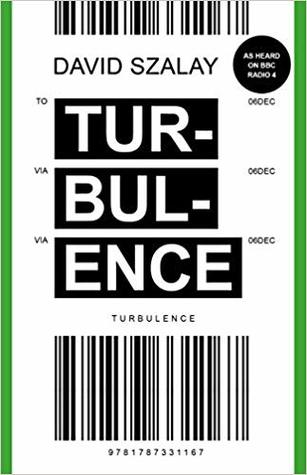 As he ushers readers around the world, Szalay invites us to marvel at how quickly life changes and how – improbable as it may seem – we can have a real impact on people we may only meet once. There’s a strong contrast between impersonal and intimate spaces: airplane cabins and hotel rooms versus the private places where relationships start or end. The title applies to the characters’ tumultuous lives as much as to the flight conditions. They experience illness, infidelity, domestic violence, homophobia and more, but they don’t stay mired in their situations; there’s always a sense of motion and possibility, that things will change one way or another.
My favorite story was “DOH – BUD,” in which Ursula goes to visit her daughter Miri and gains a new appreciation for Miri’s fiancé, Moussa, a Syrian refugee. I also liked how the book goes full circle, with the family from the final story overlapping with that of the first. Though a few of the individual stories are forgettable, I enjoyed this more than Szalay’s Booker-shortlisted All that Man Is, another globe-trotting set of linked stories.
Like Beneath the Skin, this acknowledges the many parts making up the whole of humanity; like In Mid-Air, it encourages a diversity of opinion and experience rather than narrow-mindedness. Maybe the three books had more in common than I first thought?
A favorite line:
“In fact it was hard to understand quite what an insignificant speck this aeroplane was, in terms of the size of the ocean it was flying over, in terms of the quantity of emptiness which surrounded it on all sides.”
My rating:
Turbulence is published by Jonathan Cape today, December 6th. My thanks to the publisher for a free copy for review.
Novellas in November Wrap-Up, with Mini-Reviews
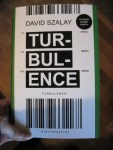 Novellas in November was a great success, helping me to finish more books in one month than I possibly ever have before. David Szalay’s Turbulence – a linked short story collection of tantalizing novella length – just arrived yesterday; I’ve started it but will be finishing it in December. The slim volume Fox 8 by George Saunders is also waiting for me at the library and I should be able to read it soon.
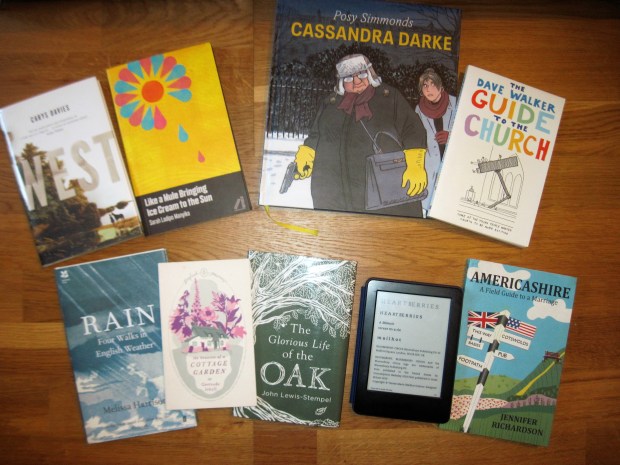
For this final installment I have 10 small books to feed back on: a mixture of fiction, graphic novels, nature books and memoirs.
Fiction:
West by Carys Davies (2018)
[149 pages]
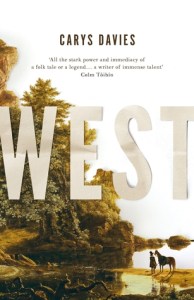 A gritty piece of historical fiction about a widowed mule breeder, Cyrus Bellman, who sets out from Pennsylvania to find traces of the giant creatures whose bones he hears have been discovered in Kentucky. He leaves his 10-year-old daughter, Bess, in the care of his sister, knowing he’ll be gone at least two years and may never return. Chapters cut between Cy’s harrowing journey in the company of a Native American guide, Old Woman From A Distance, and Bess’s home life, threatened by the unwanted attentions of their ranch hand neighbor and the town librarian. I don’t usually mind dark stories, but this was so bleak that I found it pretty unpleasant. The deus ex machina ending saved it somewhat.
Like a Mule Bringing Ice Cream to the Sun by Sarah Ladipo Manyika (2016)
[118 pages]
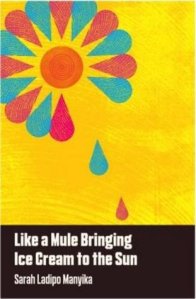 Morayo Da Silva is an unlikely heroine: soon to turn 75, she’s a former English professor from Nigeria who hopped between countries with her ambassador husband but now lives alone in San Francisco. The first-person narration switches around to give the perspectives of peripheral figures like a shopkeeper, a homeless woman, and Sunshine, the young friend who helps Morayo get her affairs in order after she has a fall and goes into a care home temporarily. These shifts in point of view can be abrupt, even mid-chapter, and are a little confusing. However, Morayo is a wonderful character, inspiring in her determination to live flamboyantly. I also sympathized with her love of books. I would happily have read twice as many pages about her adventures.
Graphic Novels:
Cassandra Darke by Posy Simmonds (2018)
[94 pages]
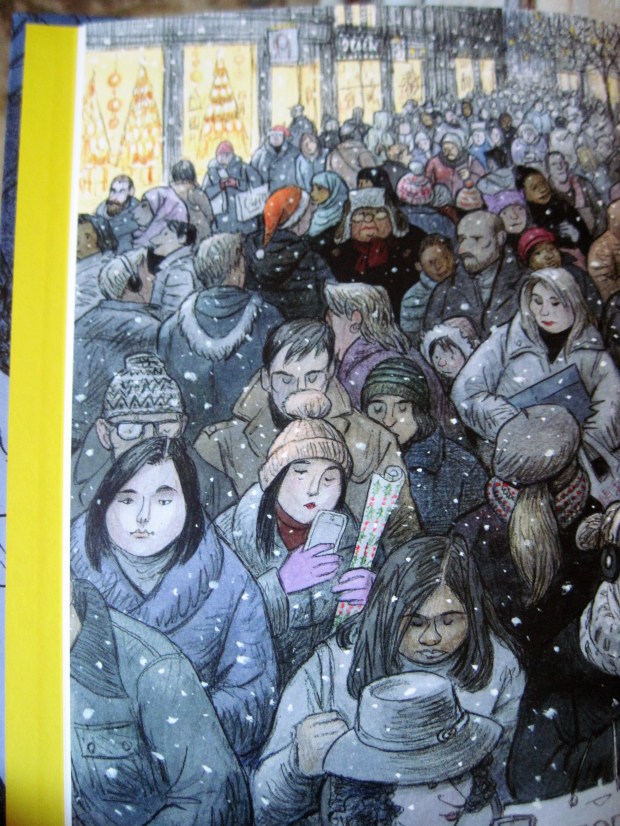
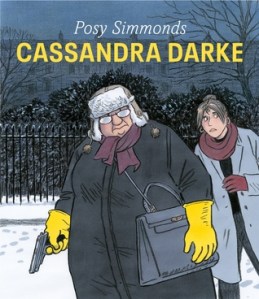 Simmonds would be great for graphic novel newbies: she writes proper, full-length stories, often loosely based on a classic plot, with lots of narration and dialogue alongside the pictures. Cassandra Darke is a 71-year-old art dealer who’s laid low by fraud allegations and then blindsided by a case of mistaken identity that brings her into contact with a couple of criminal rings. To start with she’s a Scrooge-like curmudgeon who doesn’t understand the big fuss about Christmas, but she gradually grows compassionate, especially after her own brief brush with poverty. Luckily, Simmonds doesn’t overdo the Christmas Carol comparisons. Much of the book is in appropriately somber colors, with occasional brightness, including the yellow endpapers and built-in bookmark.
The Dave Walker Guide to the Church by Dave Walker (2006)
[88 pages]
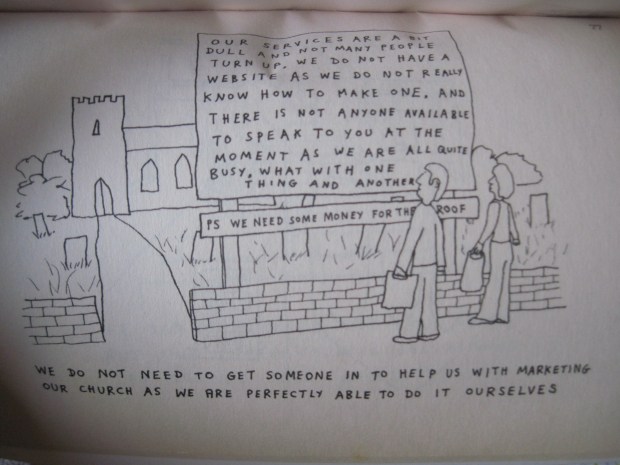
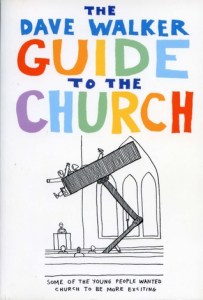 Most of these comics originally appeared in the Church Times, the official newspaper of the Church of England. No doubt you’ll get the most out of it if you’re familiar with Anglican churches or the like (Episcopalian or even Roman Catholic). My mother-in-law is a C of E vicar and we’ve attended a High Anglican church for the last two years, so I got many a good snort out of the book. Walker pokes fun at bureaucracy, silly traditions, closed-mindedness, and the oddities of church buildings and parishioners’ habits. My favorite spreads compare choirs and music groups on criteria like “ability to process in” and liken different church members to chess pieces to explain church politics.
Nature Books:
Rain: Four Walks in English Weather by Melissa Harrison (2016)
[100 pages]
 In the course of a year Harrison took four rainy walks, in different seasons and different parts of England. She intersperses her observations with facts and legends about the rain, quotes from historical weather guides and poems. It has the occasional nice line, but is overall an understated nature/travel book. A noteworthy moment is when she remembers scattering her mother’s ashes on a Dartmoor tor. I most liked the argument that it’s important to not just go out in good weather, but to adapt to nature in all its moods: “I can choose now to overcome the impulse for comfort and convenience that insulates us not only from the bad in life but from much of the good. I think we need the weather, in all its forms, to feel fully human.”
The Beauties of a Cottage Garden by Gertrude Jekyll (2009)
[88 pages]
 This mini-volume from Penguin’s English Journeys series feels like a bit of a cheat because it’s extracted from Wood and Garden (1899). Oh well. In short chapters Jekyll praises the variety of colors, smells and designs you’ll find in the average country garden, no matter how modest its size. She speaks of gardening as a lifelong learning process, humbly acknowledging that she’s no expert. “I hold that the best purpose of a garden is to give delight and to give refreshment of mind, to soothe, to refine, and to lift up the heart in a spirit of praise and thankfulness. … a garden is a grand teacher. It teaches patience and careful watchfulness; it teaches industry and thrift; above all, it teaches entire trust.”
The Glorious Life of the Oak by John Lewis-Stempel (2018)
[87 pages]
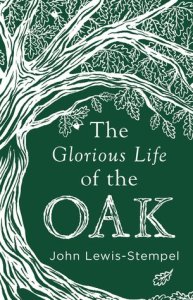
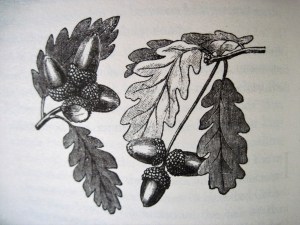 I didn’t enjoy this as much as the other Lewis-Stempel book I read this month, The Secret Life of the Owl. There’s a lot here about the role the oak has played in British history, such as in warships and cathedral roofs. Other topics are the oak’s appearance and function in different seasons, the use of acorns and oak leaves in cooking, and the myths and legends associated with the trees. I felt there was too much minimally relevant material added in to make up the page count, such as a list of Britain’s famous named oaks and long poems from the likes of John Clare and William Cowper. While Lewis-Stempel always has a piercing eye, I wonder if he shouldn’t be saving up his energies to write more substantial books.
General Nonfiction / Memoirs:
My Year by Roald Dahl (1993)
[64 pages]
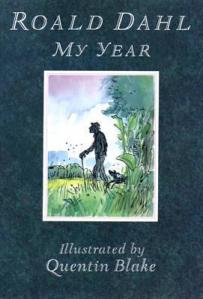 I spotted a copy in our Stamford Airbnb bedroom and read it over our two nights there. These short month-by-month essays were composed in the last year of Dahl’s life. Writing with children in mind, he remarks on what schoolkids will experience, whether a vacation or a holiday like Guy Fawkes night. But mostly he’s led by the seasons: the birds, trees and other natural phenomena he observed year after year from his home in Buckinghamshire. Dahl points out that he never lived in a city, so he chose to mark the passing of time chiefly by changes in the countryside. This is only really for diehard fans, but it’s a nice little book to have at the bedside. (Illustrated, as always, with whimsical Quentin Blake sketches.)
Heart Berries by Terese Marie Mailhot (2018)
[178 pages]
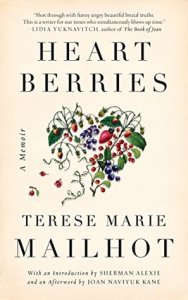 Mailhot was raised on a First Nation reservation on an island off of British Columbia. She is wary of equating her family with Native stereotypes, but there’s no denying that her father was a drunk and ended up murdered. After a childhood of abuse and foster homes, Mailhot committed herself to a mental hospital for PTSD, bipolar II and an eating disorder. It was there that she started writing her story. Much of the book is addressed in the second person to her partner, who helped her move past a broken marriage and the loss of her older son to his father’s custody. Though I highlighted lots of aphoristic pronouncements, I had trouble connecting with the book as a whole: the way imprecise scenes blend into each other makes it hard to find a story line in the murk of miserable circumstances. A more accurate title would have been “Indian Condition” or “Indian Sick” (both used as chapter titles).
Americashire: A Field Guide to a Marriage by Jennifer Richardson (2013)
[151 pages]
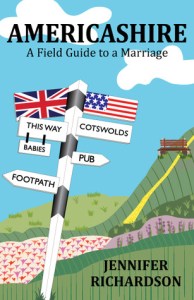 A memoir by an American woman married to a Brit and adjusting to English village life was always going to appeal to me. If you approach this as a set of comic essays on the annual rituals of rich toffs (summer fairs, auctions, horse racing, a hunt ball, a cattle market, etc.), it’s enjoyable enough. It’s when Richardson tries to be more serious, discussing her husband’s depression, their uncertainty over having children, and her possible MS, that the book falters. You can tell her editors kept badgering her to give the book a hook, and decided the maybe-baby theme was strongest. But I never sensed any real wrestling with the question. Not a bad book, but it lacks a clear enough idea of what it wants to be.
Total number of novellas read this month: 26
[not reviewed: In the Space between Moments: Finding Joy and Meaning in Medicine by Pranay Sinha – ]
A few that didn’t take: The Optician of Lampedusa by Emma Jane Kirby, The Mussel Feast by Birgit Vanderbeke, Sea of Ink by Richard Weihe
 My overall favorite: The Gifts of the Body by Rebecca Brown
Runners-up: Surfacing by Margaret Atwood, How to See Nature by Paul Evans, Bodies of Water by V. H. Leslie, and Ghost Wall by Sarah Moss
The ones that got away from me:
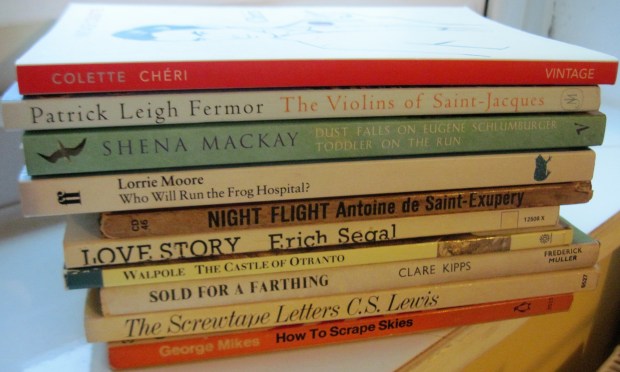
There’s always next year!
What’s the best novella you’ve read recently? Do you like the sound of any of the ones I read?
Polishing off the Booker Prize Shortlist
This is the second year in a row that I’ve managed to read the whole of the Man Booker Prize shortlist before the announcement of the winner. (In 2013 and 2014 I only got through four of the six titles.) Here’s my take on the final two from the shortlist (see my quick impressions of the others here and here), plus one from the longlist. I finish with thoughts about my favorites and the likely winner.
All That Man Is by David Szalay
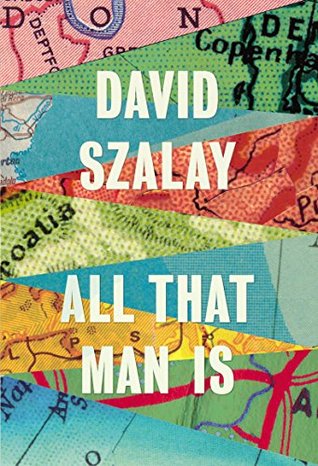 In a riff on the Ages of Man, Szalay gives nine vignettes of men trying to figure out what life is all about. His antiheroes range from age 17 to 73. Each section has several chapters and follows a similar pattern: a man from one European country travels to another European country; there are lots of scenes set at airports or otherwise in transit, and part of the overall atmosphere of dislocation is simply the effort of having to adjust to foreignness. These trips are made for various reasons: feckless French twentysomething Bérnard has been fired by his uncle so goes ahead with a vacation to Cyprus; tabloid journalist Kristian flies from Denmark to Spain to confirm rumors of a government minister’s involvement in a scandal; recently impoverished oligarch Aleksandr takes his yacht for a farewell Adriatic cruise.
Predictably, sex is a major theme: reluctant hook-ups, fantasy lovers, affairs regretted, wild oats never sown. At times I was ready to fill in the title phrase in my best Cockney accent with “All That Man Is…is a bloody wanker.” As individual stories, there’s nothing particularly wrong with these. Inevitably, though, some are more interesting than others, and they don’t quite succeed in feeding into an overarching message, unless to confirm a mood of hedonism and angst. Life is short and pointless; enjoy its moments while you can, eh? Overall, I didn’t find this to be the philosophical and elegiac experience I expected. The prose is great, though; I’d certainly read a more straightforward novel by Szalay.
Favorite lines: “How little we understand about life as it is actually happening. The moments fly past, like trackside pylons seen from a train window.”
My rating: 
Do Not Say We Have Nothing by Madeleine Thien
 “Music and stories, even in times like these, were a refuge, a passport, everywhere.” A sweeping epic of life in China in the turbulent 1960s–80s, this is the Canadian novelist’s fourth book. Narrated from the present day by Marie (or Ma-Li), who lives in Vancouver with her mother, the novel plunges into layers of flashbacks about her family’s connection to Ai-Ming and her musician father, Sparrow. With loyalty to the Communist Party (the title is a line from its anthem) considered the gold standard of behavior and Western music widely denounced as revolutionary, these characters are in a bind: will they pursue their identity as artists, or keep their heads down to avoid trouble? This theme reminded me of Julian Barnes’s fictionalized biography of the Russian composer Shostakovich, The Noise of Time, which also asks whether music can withstand political oppression.
If, like me, you know next to nothing about China’s Cultural Revolution and the transition from Chairman Mao to successive leaders, you will learn so much. There is no denying the power of this portrayal of history. In addition, I was consistently impressed by the book’s language. Thien incorporates Chinese characters and wordplay, musical bars, and snatches of poetry and folk songs. However, I didn’t find this easy reading. The flashbacks can feel endless, such that I experienced Marie’s sections as a relief and wished for more of them. I had to set daily reading targets to get through the novel before the library due date. Yet it is the sort of epic the Booker Prize loves – with echoes of Ruth Ozeki’s The Tale for the Time Being (which should have won in 2013) and Richard Flanagan’s The Narrow Road to the Deep North – and is full of wise observations about what keeps us going when life falls apart. (See my full review at Nudge.)
My rating: 
And here’s another from the longlist that I read recently:
The Many by Wyl Menmuir
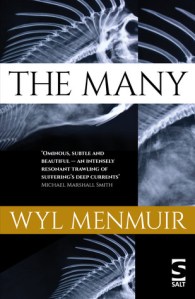 A short work of muted horror, all about atmosphere and the unexplained. Set in a Cornish fishing village, it sees newcomer Timothy Buchannan trying to figure out what happened to Perran, the man who occupied his rundown cottage until his death 10 years ago, and why everyone refuses to talk about him. Flashbacks in italics give glimpses into Timothy’s life with his wife, Lauren, who is meant to join him when he finishes the renovations; and into the fisherman Ethan’s past. I enjoyed the unsettling mood and the language used to describe the setting and Timothy’s dreams. Ultimately I’m not sure I fully understood the book, especially whether the late turns of the plot are to be viewed literally or allegorically. What I take away from it, and this is perhaps too simplistic, is an assertion that we are all joined in our losses. A quick, creepy read – you could do worse than pick it up this Halloween.
My rating: 
My two favorites from the shortlist are #1 His Bloody Project by Graeme Macrae Burnet and #2 Hot Milk by Deborah Levy. But my prediction for tomorrow’s winner is Do Not Say We Have Nothing by Madeleine Thien.
What have you managed to read from the Booker shortlist? What’s your prediction for tomorrow?
Short Stories in September
In 2014 I read 20 short story collections, but in 2015 and 2016 (at least so far) I’ve only managed 10 per year. Three of those have all clumped within the last month or so, though. I started The Pier Falls back in May but set it aside at the halfway point; luckily, when I returned to it earlier this month I devoured the rest within a few hours. I also reviewed the second annual anthology of Best Small Fictions for the Small Press Book Review, a new online venue for me, and tried out Alexandra Kleeman’s short stories after loving her debut novel last year. Mini reviews below…
Best Small Fictions 2016, edited by Stuart Dybek
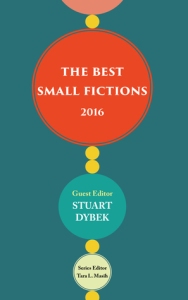 This collects 45 super-short stories that stand out for their structure, voice, and character development—all in spite of often extreme brevity. Humor and pathos provide sharp pivot points. It helps to have an unusual perspective, like that of a Venus flytrap observing a household’s upheavals (Janey Skinner’s “Carnivores”), or of potential names gathering around a baptismal font (Alberto Chimal’s “The Waterfall”). Hard as it is to choose from such a diverse bunch, I do have three favorites: Elizabeth Morton’s “Parting,” in which a divorce causes things to be literally divided; Mary-Jane Holmes’s “Trifle,” where alliteration and culinary vocabulary contrast an English summer with Middle Eastern traces; and Amir Adam’s “The Physics of Satellites,” which uses images from astronomy and a recent suicide to contrast falling, flying, and barely holding on. There are fewer highlights than in the previous volume, but this is still an excellent snapshot of contemporary flash fiction. (See my full review at the Small Press Book Review.)
The Pier Falls by Mark Haddon
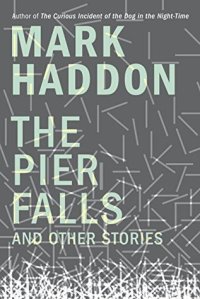 These nine stories examine what characters do in extreme, often violent situations. My three favorites were “Bunny,” reminiscent of The Fattest Man in Britain with its picture of a friendship between an obese man and a young woman who sees more in him than his size; “The Woodpecker and the Wolf,” a brilliantly suspenseful tale set in space – it reminded me of the Sandra Bullock movie Gravity; and “The Weir,” which imagines the unexpectedly lasting relationship between a lonely middle-aged man and the young woman he rescues from a near-suicide by drowning. “Wodwo” starts off as a terrific Christmas horror story but goes on far too long and loses power. I would say that about several of these stories, actually: they’re that bit too long, so that you start waiting for them to be over. I prefer sudden endings that give a bit of a kick. All in all, though, two-thirds of the stories are fairly memorable, and I’d say I liked this better than any of Haddon’s three novels.
Intimations by Alexandra Kleeman
 Kleeman’s debut novel, You Too Can Have a Body Like Mine, was a surprise favorite of mine from last year. Alas, her stories don’t pack the same punch. True, some of them employ a similar combination of surreal plot and in-your-face ideology, but only four out of the 12 stories seemed to me strong enough to stand alone. These were “Lobster Dinner,” surely inspired by David Foster Wallace’s Consider the Lobster, in which crustaceans wreak revenge on their consumers; “The Dancing-Master,” about a man who tries to introduce a nineteenth-century feral boy to culture only for wildness to come creeping back; “I May Not Be the One You Want,” in which Karen, writing a profile about a dairy farmer, avoids men’s attempts to turn her into a sexual object; and “Fake Blood,” another pseudo-horror story about a girl in a nurse costume who can’t decide whether she’s caught up in a murder mystery game or a real serial killer’s trap. Of the rest, four or five – including vignettes from Karen’s future life – are okay and a couple are pointless as well as seemingly endless (“A Brief History of Weather” and “Hylomorphosis”). Students of feminist literature, especially fans of Angela Carter, may be willing to exchange satisfying storytelling for messages about women’s bodies and anxiety about motherhood.
 On Tuesday I finished All That Man Is by David Szalay, from the Booker Prize shortlist. Whether it’s a novel or actually short stories is certainly a matter for debate! After I read Madeleine Thien’s shortlisted novel (I’ll be picking it up from the library on Friday) I’ll report back on both in advance of the prize announcement at the end of October.
 I’m also currently making my way through How Much the Heart Can Hold, a set of seven stories from the likes of Carys Bray and Donal Ryan on the theme of different types of love, and Petina Gappah’s forthcoming collection, Rotten Row. (Both are out in early November.)
Collections on my Kindle that I’m keen to read soon, maybe even before the end of this year, include We Come to Our Senses by Odie Lindsey, Music in Wartime by Rebecca Makkai, and Honeydew by Edith Pearlman.
Are you a short story fan? Read any good ones recently?
Booker Longlist Mini Reviews
Tomorrow the Man Booker Prize shortlist will be announced. I’d already read and reviewed four of the nominees (see my quick impressions here), and in the time since the longlist announcement I’ve managed to read another three and ruled out one more. Two were terrific; another was pretty good; the last I’ll never know because it’s clear to me I won’t read it.
His Bloody Project by Graeme Macrae Burnet
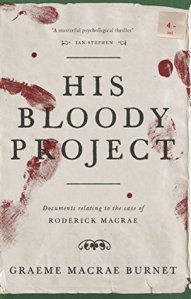 What a terrific, propulsive tale Burnet has woven out of a real-life (I think) nineteenth-century Scottish murder case. The seams between fact and fiction are so subtle you might forget you’re reading a novel, but it’s clear the author has taken great care in assembling his “documents”: witness testimonies, medical reports, a psychologist’s assessment, trial records, and – the heart of the book and the most fascinating section – a memoir written by the murderer himself. As you’re reading it you believe Roddy implicitly and feel deeply for his humiliation (the meeting with the factor and the rejection by Flora are especially agonizing scenes), but as soon as you move on to the more ‘objective’ pieces you question how he depicted things. I went back and read parts of his account two or three times, wondering how his memories squared with the facts of the case. A great one for fans of Alias Grace, though I liked this much better. This is my favorite from the Booker longlist so far.

Eileen by Ottessa Moshfegh
 “I often felt there was something wired weird in my brain, a problem so complicated only a lobotomy could solve it—I’d need a whole new mind or a whole new life.” This isn’t so much a book to enjoy as one to endure. Being in Eileen’s mind is profoundly unsettling. She’s simultaneously fascinated and disgusted by bodies; she longs for her alcoholic father’s approval even as she wonders whether she could get away with killing him. They live a life apart in their rundown home in X-ville, New England, and Eileen can’t wait to get out by whatever means necessary. When Rebecca St. John joins the staff of the boys’ prison where Eileen works, she hopes this alluring woman will be her ticket out of town.
There’s a creepy Hitchcock flavor to parts of the novel (I imagined Eileen played by Patricia Hitchcock as in Strangers on a Train, with Rebecca as Gene Tierney in Laura), and a nice late twist – but Moshfegh sure makes you wait for it. In the meantime you have to put up with the tedium and squalor of Eileen’s daily life, and there’s no escape from her mind. This is one of those rare novels I would have preferred to be in the third person: it would allow the reader to come to his/her own conclusions about Eileen’s psychology, and would have created more suspense because Eileen’s hindsight wouldn’t result in such heavy foreshadowing. I expected suspense but actually found this fairly slow and somewhat short of gripping.

Hot Milk by Deborah Levy
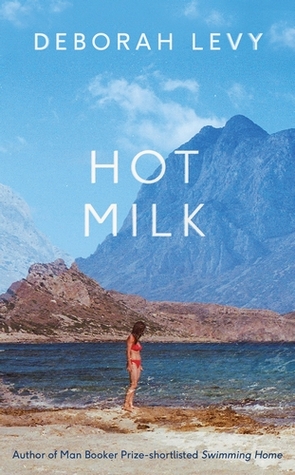 This is a most unusual mother–daughter story, set on the southern coast of Spain. Twenty-five-year-old Sofia Papastergiadis has put off her anthropology PhD to accompany her mother, Rose, on a sort of pilgrimage to Dr. Gómez’s clinic to assess what’s wrong with Rose’s legs. What I loved about this novel is the uncertainty about who each character really is. Is Rose an invalid or a first-class hypochondriac? Is Dr. Gómez a miracle worker or a quack who’s fleeced them out of 25,000 euros? As a narrator, Sofia pretends to objective anthropological observation but is just as confused by her actions as we are: she seems to deliberately court jellyfish stings, is simultaneously jealous and contemptuous of her Greek father’s young second wife, and sleeps with both Juan and Ingrid.
Levy imbues the novel’s relationships with psychological and mythological significance, especially the Medusa story. I don’t think the ending quite fits the tone, but overall this is a quick and worthwhile read. At the same time, it’s such an odd story that it will keep you thinking about the characters. A great entry I’d be happy to see make the shortlist.
[One I won’t be reading: The Schooldays of Jesus by J.M. Coetzee. I opened up the prequel, The Childhood of Jesus, and could only manage the first chapter. I quickly skimmed the rest but found it unutterably dull. It would take me a lot of secondary source reading to try to understand what was going on here allegorically, and it’s not made me look forward to trying more from Coetzee.]
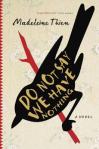 As for the rest: I have All That Man Is by David Szalay and Serious Sweet by A.L. Kennedy on my Kindle and will probably read them whether or not they’re shortlisted. The same goes for Do Not Say We Have Nothing by Madeleine Thien, for which I’m third in a library hold queue. I’d still like to get hold of The Many by Wyl Menmuir. That leaves just Hystopia by David Means, which I can’t say I have much interest in.
I rarely feel like I have enough of a base of experience to make accurate predictions, but if I had to guess which six books would make it through tomorrow, I would pick:
His Bloody Project by Graeme Macrae Burnet
The Schooldays of Jesus by J.M. Coetzee
Hot Milk by Deborah Levy
The North Water by Ian McGuire
My Name Is Lucy Barton by Elizabeth Strout
Do Not Say We Have Nothing by Madeleine Thien
That would be three men and three women, and a pretty good mix of countries and genres. I’d be happy with that list.
What have you managed to read from the Booker longlist? How do your predictions match up against mine?
A Booker Prize & Libraries Action Plan, Etc.
On Wednesday the Man Booker Prize’s longlist of 13 novels was announced. I never bother making predictions in advance of prize list announcements because inevitably I forget what was released during the eligibility period and I’m no good at squaring personal favorites with what a judging panel is likely to admire. See the Guardian’s photo essay and Karen’s thorough discussion at Booker Talk for more information about the nominees.
It turns out I’ve read and reviewed four of the longlisted books:
The Sellout by Paul Beatty for Shiny New Books: This is such an outrageous racial satire that I kept asking myself how Beatty got away with it. The Sellout struck a chord in America, but I’m slightly surprised that it’s also been received well in the UK.
The North Water by Ian McGuire for BookBrowse: A gritty, graphic novel about 19th-century whaling that traverses the open seas and the forbidding polar regions. It’s a powerful inquiry into human nature and the making of ethical choices in extreme circumstances.
Work Like Any Other by Virginia Reeves on Goodreads: I was meant to review this for BookBrowse but couldn’t rate it highly enough despite the competent writing. Between the blurb and the first paragraph, you already know everything that’s going to happen.
My Name Is Lucy Barton by Elizabeth Strout on Goodreads: I won a free copy through a Goodreads giveaway. I read this in one sitting on a plane ride and found it to be a powerful portrayal of the small connections that stand out in a life.
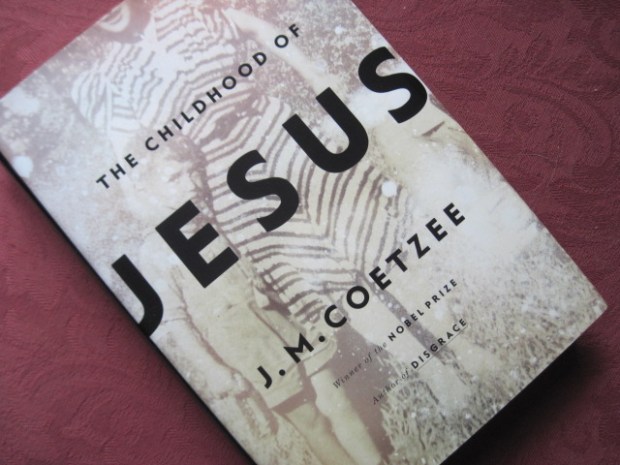
As for what’s next from the longlist, I finally have an excuse to read the copy of The Childhood of Jesus by J.M. Coetzee I won from Goodreads many moons ago – a sequel to which (The Schooldays of Jesus) is among the nominees. It’ll be my first Coetzee; if I like it I’ll be sure to read the follow-up book when it comes out in September.
I already knew I was interested in Eileen by Ottessa Moshfegh, a creepy debut novel about a misfit; All That Man Is by David Szalay, a linked short story collection about stages of men’s lives; and Do Not Say We Have Nothing by Madeleine Thien, set in Canada in the wake of the Tiananmen Square protests. I’ve only read one novel each by A.L. Kennedy and Deborah Levy and wasn’t hugely keen on either author’s style, but the subject matter of both Serious Sweet and Hot Milk is more tempting. I might seek them out from the library.
 And then there’s the books I’d simply never heard of. Of these I’m most interested in His Bloody Project by Graeme Macrae Burnet, based on a true-life murder in Scotland in the 1860s, and The Many by Wyl Menmuir, a debut novella about a village newcomer.
The surprise omission for me is Sarah Perry’s The Essex Serpent. I might also have expected to see Julian Barnes, Adam Haslett, and maybe even Ann Patchett on the longlist.
We’ve found a new rental house and hope to move in on August 15, but we’re waiting for our reference check to be complete and the tenancy contract to be drawn up before we can start doing official things like hire movers, change our address with a zillion service providers, and start packing in earnest.
This past week I’ve busied myself with comparing removals quotes and doing pre-packing tasks I’ve tried to convince myself are useful, like sorting through drawers of mementoes, assessing what’s in storage under the beds, and shifting some unwanted possessions through Freegle, a local web forum for giving away free stuff. So far I’ve gotten rid of a spice rack, 11 empty bottles, 55 empty CD cases, a cat tower plus some food and toys our fussy cat won’t use, and a wildly popular picnic hamper (11 offers came through!). It’s really gratifying to see things go to a good home.
Alas, we did also have to take some items to the local recycling center this weekend, which always seems like something of a failure, but no one’s going to want a broken vacuum cleaner and printer. My hope is that the small appliances dumped there will at least be mined for parts, so it’s better than sending them to landfill.
The weekend has also included berry picking at the local pick-your-own farm and making a summer pudding, a labor-intensive but delicious annual tradition. Plus this afternoon we’re off to Northampton to meet our newest nephew, born on the 20th.

Last year’s summer pudding.
I did finally start boxing up books last night. Much as I love my print library, it’s dispiriting just how much space it takes up. It took five boxes just to empty the small spare room bookcase! Before packing anything I did another full inventory of unread books in the flat and came up with a total of 205, higher than last time but not too bad considering the review books I’ve acquired recently as well as the secondhand shopping I’ve done. I’ve made good progress in my attempt to read mostly books I own for the summer, but it’s a resolution that will have to carry over into the autumn and winter.
The one thing that might scupper me in that plan is that, although we’re only moving 45 minutes away, we’ll be in a new council area where library reservations are free! For years I’ve been a part of library systems where it costs 40 or 50 pence to reserve each book, so I’ve kept holds to an absolute minimum. But from now on you can be sure I’ll be putting myself on the waiting list for every new and forthcoming book that appeals to me! Expect the monthly Library Checkout posts to resume by September.
 Bookish Beck = Rebecca Foster. American transplant to England. Freelance proofreader and book reviewer.
 Bookish Beck