My Most Memorable Backlist Reads of 2021
Like many bloggers, I’m irresistibly drawn to the new books released each year. However, I consistently find that many of my most memorable reads were published years or decades ago. These 19 selections, in alphabetical order within genre, together with my Best of 2021 posts (fiction and nonfiction), make up the top 15% of my reading for the year. Three of the below were rereads.

(The three books not pictured were read electronically or from the library.)
Fiction
 America Is Not the Heart by Elaine Castillo: Set in the early 1990s in the Filipino immigrant neighbourhoods of the Bay Area in California, this is a complex, confident debut novel that throws you into an unfamiliar culture at the deep end. The characters shine and the dialogue feels utterly authentic in this fresh immigration story.
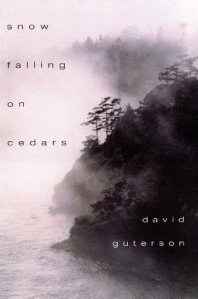
 Snow Falling on Cedars by David Guterson: The mystery element held me completely gripped – readers are just as in the dark as jurors until close to the end – but this is mostly a powerful picture of the lasting effects of racism. I was instantly immersed, whether in a warm courtroom with a snowstorm swirling outside or on a troop ship entering the Pacific Theater.
 Nothing but Blue Sky by Kathleen MacMahon: David is back on Spain’s Costa Brava, where he and his wife Mary Rose holidayed every summer for 20 years. This is a quiet novel about what goes unsaid in any marriage, and a deeply touching look at loss and what comes next. Grief, memory, fate: some of my favourite themes, elegantly treated.
 A Feather on the Breath of God by Sigrid Nunez: From the little I know of Nunez, this seems close to autofiction, especially in terms of her parents. Identifying the self by the key relationships and obsessions of a life makes sense, and this speaks to the universals of how we cope with a troublesome past. It cemented her as one of my favourite authors.
 Woman on the Edge of Time by Marge Piercy: An unusual and fascinating novel with hints of science fiction, but still grounded in the real world, this contrasts utopian and dystopian scenes experienced by a Latina woman who’s been confined to a mental hospital. It’s an intense cultural commentary from a writer ahead of her time on gender roles and the environment.
 My Dark Vanessa by Kate Elizabeth Russell: Obsessed with Lolita since she was a teenager, Russell decided to tell the teenage girl’s side of the story. She uses a dual timeline to great effect, creating an utterly immersive novel – as good a first-person narrative as anything Curtis Sittenfeld has ever written, and the ultimate #MeToo story.
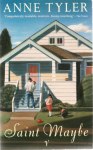 Saint Maybe by Anne Tyler: Ian Bedloe joins the puritanical Church of the Second Chance and drops out of college to help his parents raise his late brother’s three children. Anyone will be able to find themselves and their family in this story of the life chosen versus the life fallen into, and the difficult necessity of moving past regrets in the search for meaning.
 The Amateur Marriage by Anne Tyler: Unique in her oeuvre for how it bridges historical fiction and her more typical contemporary commentary. The Antons muddle their way through a volatile marriage for decades without figuring out how to change anything for the better. There is deep compassion for their foibles and how they affect the next generation.
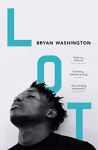 Lot by Bryan Washington: The musical equivalent might be a mixtape blasted from an open-top Corvette while touring the streets of Houston, Texas. Drug dealers, careworn immigrants, and prostitutes: Even the toughest guys have tender hearts in these 13 stories. Washington’s prose is earthy and slang-filled. The matter-of-fact phrasing made me laugh.
 Ethan Frome by Edith Wharton: I was so impressed by this condensed tragedy and the ambiance of a harsh New England winter. It struck me even more on a reread as a flawless parable of a man imprisoned by circumstance and punished for wanting more. A perfect example of how literature can encapsulate the human condition.
Poetry
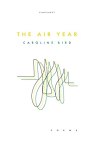 The Air Year by Caroline Bird: I read this with a big smile on my face, delighting in the clever and playful poems. The impermanence of relationships is a recurring theme. Dreams and miscommunication are also common elements, and lists grow increasingly absurd. I particularly liked where structure creates meaning, e.g. the mise en abyme of “Dive Bar.”
Nonfiction
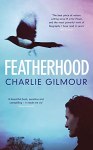 Featherhood by Charlie Gilmour: As an aimless twentysomething, Gilmour tried to rekindle a relationship with his unreliable poet father. Meanwhile, he was raising Benzene, a magpie that fell out of its nest. He makes elegant use of connections and metaphors; he’s so good at scenes, dialogue, and emotion – a truly natural writer.
 Spring in Washington by Louis J. Halle: From first migrant in February to last in June, the author traced the D.C. spring of 1945 mostly through the birds that he saw. More so than the specific observations of familiar places, though, I valued the philosophical outlook. For me this was an ideal combination of thoughtful prose and vicarious travel.
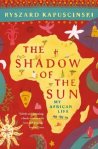 The Shadow of the Sun by Ryszard Kapuściński: This collection of essays spans decades and lots of African countries, yet feels like a cohesive narrative. Kapuściński saw many places right on the cusp of independence or in the midst of coup d’états. I appreciated how he never resorts to stereotypes or flattens differences. One of the few best travel books I’ve read.
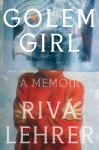 Golem Girl by Riva Lehrer: Lehrer has endured dozens of surgeries for spina bifida. Her touching family memoir is delivered in short, essay-like chapters, most named after books or films. It is also a primer in Disability theory and a miniature art gallery, filled with reproductions of her paintings. This inaugural Barbellion Prize winner is not to be missed.
 The Cost of Living by Deborah Levy: This sparse volume, the middle in an autobiographical trilogy, has Levy searching for the intellectual and physical freedom needed to reinvent her life after divorce. It is made up of conversations and memories; travels and quotations that have stuck with her. Each moment is perfectly chosen to reveal the self.
 Conundrum by Jan Morris: Morris was a trans pioneer; this transformed my understanding of gender when I first read it in 2006. Born James, Morris knew by age four that she was really a girl. A journalism career, marriage, five children, and two decades of hormone therapy preceded sex reassignment surgery. She paints hers as a spiritual quest toward her true identity.
 You’re Not Listening: What You’re Missing and Why It Matters by Kate Murphy: We all fail to listen properly sometimes, for various reasons. A New York Times journalist, Murphy does a lot of listening to her interview subjects. She also talks with representatives of so-called listening careers. This is a short, interesting, and genuinely helpful self-help book.
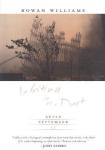 Writing in the Dust: After September 11 by Rowan Williams: Williams, then Archbishop of Wales, was in New York City on 9/11, just a few blocks from the World Trade Center. In the months that followed he pondered suffering, peacemaking, and the ways of God. He cautions against labelling the Other as Evil and responding with retribution. A superb book-length essay.
And if I really had to limit myself to just two favourites – my very best fiction and nonfiction reads of the year – they would be Snow Falling on Cedars and The Cost of Living.

What were your best backlist reads this year?
Merry Christmas!
(I’ll be back on the 27th with Love Your Library, then I have various year-end superlatives and statistics posts going through the 31st.)
Seven Final Novellas: Crumley, Morris, Rapp Black; Hunter, Johnson, Josipovici, Otsuka (#NovNov)
We’ll be wrapping up Novellas in November and giving final statistics on Tuesday. Today, I have mini reviews of another seven novellas I’ve been working on, some of them for the whole month. I’ll start with some short nonfiction and then move on to the fiction.
Nonfiction:
Barn Owl by Jim Crumley (2014)
[63 pages]
 I reviewed Kingfisher and Otter, two other titles from Crumley’s “Encounters in the Wild” series for the publisher Saraband, earlier in the month. Barn Owl follows the same pattern, traveling the Scottish islands in search of close encounters (with badgers and ospreys, too) but also stretching back to a childhood memory from 1950s Dundee, when there was an owl-occupied derelict farmstead a quarter-mile from his home. This is a lovely little full-circle narrative in that the book closes with “the barn owl, unlike all other night-flying owls, is the one that we can see in the dark … its inarguable beauty is layered with mystery, and …all of us have a place in our hearts and minds for mysterious beauty. I have known that to be an essential truth since I was about eight years old.” (Public library)
Conundrum by Jan Morris (1974)
[148 pages]
 A reread of a book that transformed my understanding of gender back in 2006. Morris (d. 2020) was a trans pioneer. Her concise memoir opens “I was three or perhaps four years old when I realized that I had been born into the wrong body, and should really be a girl.” Sitting under the family piano, little James knew it, but it took many years – a journalist’s career, including the scoop of the first summiting of Mount Everest in 1953; marriage and five children; and nearly two decades of hormone therapy – before a sex reassignment surgery in Morocco in 1972 physically confirmed it. I was struck this time by Morris’s feeling of having been a spy in all-male circles and taking advantage of that privilege while she could. She speculates that her travel books arose from “incessant wandering as an outer expression of my inner journey.” The focus is more on her unchanging soul than on her body, so this is not a sexual tell-all. She paints hers as a spiritual quest toward true identity and there is only joy at new life rather than regret at time wasted in the ‘wrong’ one. (Public library)
Frida Kahlo and My Left Leg by Emily Rapp Black (2021)
[145 pages]
 This was my third memoir by the author; I reviewed The Still Point of the Turning World and Sanctuary earlier in the year. Like Sinéad Gleeson does in Constellations, Rapp Black turns to Frida Kahlo as a role model for “translating … pain into art.” Polio, a streetcar accident, 32 operations, failed pregnancies and an amputated leg – Kahlo endured much suffering. It was this last particular that especially drew Rapp Black (who has had a prosthetic leg since early childhood) to her. On a visit to Kahlo’s Mexico City home, she can hardly bear the intimacy of seeing Kahlo’s prostheses and corsets. They plunge her back into her own memories: of passing as normal despite a disability, having an eating disorder, losing her son Ronan to Tay-Sachs disease, and starting over with a new marriage and baby. Rapp Black weaves this all together artfully as well as effectively, but for someone like me who is already conversant with her story, there wasn’t quite enough in the way of new material.
With thanks to Notting Hill Editions for the free e-copy for review.
Fiction:
These first two ended up having a major arc in common: desperate preservation of key family relationships against the backdrop of a believably falling-apart near-future world.
The End We Start From by Megan Hunter (2017)
[127 pages]
 A woman, her partner (R), and their baby son flee a flooded London in search of a place of safety, traveling by car and boat and camping with friends and fellow refugees. “How easily we have got used to it all, as though we knew what was coming all along,” she says. Her baby, Z, tethers her to the corporeal world. What actually happens? Well, on the one hand it’s very familiar if you’ve read any dystopian fiction; on the other hand it is vague because characters only designated by initials are hard to keep straight and the text is in one- or two-sentence or -paragraph chunks punctuated by asterisks (and dull observations): “Often, I am unsure whether something is a bird or a leaf. *** Z likes to eat butter in chunks. *** We are overrun by mice.” etc. It’s touching how Z’s early milestones structure the book, but for the most part the style meant this wasn’t my cup of tea. (Secondhand purchase)
My Monticello by Jocelyn Nicole Johnson (2021)
[For novella only: 182 pages?]
 Pick this up right away if you loved Danielle Evans’s The Office of Historical Corrections. After “the unraveling,” Da’Naisha and fellow escapees from racial violence in Charlottesville – including her former and current boyfriends, the one Black and the other white; and her ailing grandmother, MaViolet – shelter at Thomas Jefferson’s famous Virginia estate. At first they stay by the visitor’s center, but as weeks pass and they fear a siege, they retreat to the mansion itself. Da’Naisha, our narrator, becomes the de facto leader of the motley crew, spearheading a trip out for supplies. She harbors two major secrets, one about her heritage and one about her future. Although this is a bit too similar to Parable of the Sower, against which I judge just about any dystopian fiction, the setting and timeliness can’t be beat. I read the U.S. ebook edition, which includes five short stories that also explore race issues and employ the first person plural and second person to good effect; “Buying a House Ahead of the Apocalypse” encapsulated my whole autumn mood. (Read via Edelweiss)
The Cemetery in Barnes by Gabriel Josipovici (2018)
[101 pages]
 After reviewing Josipovici’s 100 Days earlier in the month, I wanted to get a taste of his fiction. The protagonist is a translator who has lived in London, Paris and now rural Wales. He’s been married twice but, whatever his living situation, he’s always prized the solitude and routine he needs for his work. Passages from Monteverdi’s opera L’Orfeo and Joachim du Bellay’s poetry – in the original language, sometimes but not always translated for us – drift through the novella, which also prioritizes the sort of repeated phrases that constitute a long-cohabitating couple’s domestic vocabulary. References to cemeteries and to du Bellay’s Regrets are hints of something hasn’t isn’t being revealed to us up front. I think I worked out what it was. Clever and interesting, but I’d like a bit more grounding detail. A favorite line: “for one’s life not living up to expectation there is no excuse, except for the paltry one that this is true of everybody’s life.” (University library)
When the Emperor Was Divine by Julie Otsuka (2002)
[145 pages]
 Otsuka’s The Buddha in the Attic, about Japanese mail order brides in early 1900s San Francisco, was one of my first encounters with the first person plural, which I’ve come to love. It also serves as a prequel to this, her debut novel. In Berkeley, California in 1942, a Japanese man is arrested as a potential enemy combatant. His wife, son and daughter are given just a matter of days to pack their things and evacuate to an internment camp in the desert. Otsuka takes us along on the train journey and to the camp, where small moments rather than climactic ones reveal the children’s sadness and the injustice of what they’re missing out on. I most enjoyed the last section, when they all return to their home after over three years away and start to piece life back together. I’d already read a few novels featuring Japanese internment (e.g. The Japanese Lover and Snow Falling on Cedars) but, more than that, Otsuka’s writing is a tad too subtle for me. (Secondhand purchase)
In total, I read 29 novellas this November – a new record for me! I didn’t set out to read the equivalent of nearly one per day, but it happened to pan out like that. Some of my selections were very short indeed, at under 100 pages; multiple volumes of Garfield comics also helped. Three were 5-star reads: The Cost of Living by Deborah Levy plus two rereads, Conundrum by Jan Morris (above) and our classics buddy read, Ethan Frome by Edith Wharton.
I also had a couple of DNFs:
Gone by Michael Blencowe: (45 pages) I made a second attempt on this essay collection about extinct species this month. Maybe I’ve just read too much around the topic recently. (Review copy)
Inside the Bone Box by Anthony Ferner: (50 pages) I loved the idea of a novella about a neurosurgeon, but mostly this concerns Nick’s fatness and his family members’ various dysfunctions. (New purchase)
New Networks for Nature 2021 Conference in Bath
 Hard to believe, but this past weekend was my seventh time attending the New Networks for Nature conference. It was held in Bath on this occasion, after a number of years in Stamford plus once each in Cambridge, York, and online (last year, of course). I happen to have written about it in most other years (2015, 2016, 2018, 2019 and 2020), and this year’s programme was so brilliant it would be a shame not to commemorate it. The weekend in Bath started off in a wonderful way: I was finally able to meet Susan of A life in books in person. We talked blogs and book prizes (and Covid and cats) over hot drinks by the Abbey square, and I even got her to sign my copy of her book, the Bloomsbury Essential Guide for Reading Groups.
As I’ve mentioned before, what makes New Networks for Nature special is the interdisciplinary approach: artists, poets, musicians, activists, academics and conservationists attend and speak. The audience, let alone the speakers’ roster, is a who’s who of familiar names and faces from the UK nature writing world. So although the event might seem geared more towards my ecologist husband, there’s always plenty to interest me, too. The conference planners make ongoing efforts to diversify the programme: this year there were several all-female panels and seven BIPOC appeared on stage. It was a hybrid event in two senses: people could live-stream from home if not comfortable attending in person, and a few speakers appeared on the screen from locations as far-flung as India and New Zealand.

Exploring the Kennet & Avon canal (which also runs behind our house) one lunchtime. Photo by Chris Foster.
I hadn’t had much time to peruse the programme before the conference began. Without exception, the sessions surpassed my expectations. The opening event on the Friday evening was, fittingly, about the question of inclusivity. Nicola Chester, author of On Gallows Down; Anita Roy, part of the Transition Town Wellington movement and co-editor of Gifts of Gravity and Light; and David Lindo, known as “The Urban Birder,” had a discussion with Seb Choudhury about access to ‘the countryside’, which they agreed is perhaps an unhelpful term that discourages people from going out and experiencing the wildlife on their doorstep.

Saturday opened with a panel on art and environmental awareness. Harriet Mead welds sculptures out of found objects, Rachel Taylor is a scientist who makes birds out of glass, and Sarah Gillespie is a landscape painter whose prints of moths are so lifelike you’d swear they’re photographs. Gillespie spoke for all of them when she said that attention breaks down the dualism between self and other, creating an exchange of energies, with the artist serving as the watchman. These observations appeared to hold true for nature writing as well.
Scientists and writers alike commented on plastics in the environment and species migration. Did you know that 500,000 tons of plastic food packaging is created in the UK per year? Or that dolphins form allyships and have a culture? In the afternoon we met three teenage climate activists who have been involved in school strikes, COP26 protests, and volunteering to cultivate green spaces. Their public speaking ability was phenomenal. A final session of the day was with Julian Hector, head of the BBC Natural History Unit. He showed clips from some of the most famous nature documentaries made during his tenure and polled the room about how they feel about the use of music for emotional manipulation.

Eurasian Curlew, photographed by Andreas Trepte, CC BY-SA 2.5, via Wikimedia Commons.
Speaking of music, the highlight of the conference came about due to the unlikely friendship between Mary Colwell, writer and curlew conservation activist, and singer/songwriter David Gray, who met her after he donated to one of her campaigns and has since gone along on one of her fundraising walks, narrated and scored a short documentary on curlews (you can watch it here), and contributed a song to a forthcoming RSPB-funded album inspired by curlews. We had the absolute treat of attending his first public performance in over two years on the Saturday evening at St Swithin’s Church, a venue that holds perhaps 200 people – versus next year he’ll be filling 20,000-seat stadiums for his White Ladder 20th anniversary tour.
This was carefully billed as an evening in conversation with David Gray rather than a gig, but in the end we got seven songs performed live at the church piano, as opposed to the three originally planned, so I call that a win! Other song excerpts were played over the sound system: “Let the Truth Sting” from his ‘angry young man’ phase, “Accumulates” as an anti-consumerism screed, and “Gulls” (based on an obscure Belgian poem) and “The Sapling” to illustrate how nature imagery enters into his lyrics.

Raised in Pembrokeshire, Gray loved going out on a fishing boat with his neighbours and seeing the seabirds massing around Skomer Island. He said he doesn’t think he’s ever gotten over those childhood experiences, and now he welcomes every sighting of a barn owl near his home in Norfolk (and encouraged us all to start gluing ourselves to roads). One of the songs he performed was indeed “The White Owl,” from Skellig, released early this year. Subtler than some of his albums, it was mostly recorded in a live setup and is built around simple, almost chant-like repeats and harmonies. That incantatory beauty was evident on another song he played live, “No False Gods,” which I didn’t realize has at its core a line from a Nan Shepherd poem: “We are love’s body or we are undone.”

Gray finished the official programme with his unreleased curlew song, “The Arc,” but came back for an encore of “Birds of the High Arctic,” “All that We Asked For” and “Sail Away” – this last to great cheers of recognition. He couldn’t figure out how to finish it after the whistling so just gave a few last plinks and then a hearty laugh as he returned to the stage to answer questions. We were impressed with his eloquence, sense of humour and BIG voice, especially on “Ain’t No Love” (from what has been our favourite of his albums, 2005’s Life in Slow Motion) – I got the feeling he barely needed a microphone to fill the whole church.
Sunday morning opened, appropriately, with a panel on nature and spirituality, featuring Satish Kumar, an octogenarian peace pilgrim to nuclear sites; Jini Reddy, author of Wanderland; and Nick Mayhew-Smith, who’s travelled to places of Celtic spirituality around the British Isles, such as hermits’ caves. Kumar led us in a meditation on gratitude and belonging, and suggested that we are all connected, and all spiritual, because we all share the same breath. He described the world’s religions as many tributaries of the same river.
Perhaps my favourite session of all was on the role of nature in weird and Gothic literature. Authors Maggie Gee and Laura Jean McKay (both appearing via video link), and Ruth Padel, a New Networks stalwart, conversed with Bath Spa professor Richard Kerridge. Gee has been writing about climate change in her novels for nearly 40 years; she said the challenge is to make the language fresh again and connect with readers subliminally and emotionally, without preaching or lecturing. She called The Red Children, coming out in March, a future fairy tale, comic and hopeful, and read from the beginning, including a raven’s speech.
 This connected with McKay’s The Animals in That Country, from which she read the passage where Jean realizes she can hear the lab mice talking to her. McKay said speculative fiction has been edging ever closer to reality in recent years; she recently realized she was reading Ling Ma’s zombie novel Severance as a guide to surviving the pandemic. In her opinion, novels are to open doors and ask questions – the opposite of what politicians do. Padel added that attention can be an antidote to eco-grief, with art a framework for creating resolution.
 Longer sessions were punctuated with readings (from On Gallows Down and Samantha Walton’s Everybody Needs Beauty), performances (Merlyn Driver, who grew up without electricity and not going to school on Orkney, proposed the curlew album to the RSPB and played his song “Simmer Dim”) or short films – one on the plastic pollution encountered by a stand-up paddle boarder travelling the length of the Severn river and another on the regenerative farming a young couple are doing in Spain at Wild Finca.
The closest we came to a debate over the weekend was with the final session on ecotourism. Representing the pro side was Ian Redmond, who works with mountain gorillas in Rwanda. The $1500 fee that each group of tourists pays to be taken into the reserve goes directly to conserving their habitat. But to get there people burn carbon flying long distances, and Nick Acheson finds that unconscionable. After 20 years as a wildlife guide to the amazing animals of Madagascar and South America, he’s vowed never to fly again. He stays close to home in Norfolk and travels by bike. His statistics were arresting and his argumentation hard to counter. Think hard about your motivation, he challenged. If you truly want to help local people and wildlife, donate money instead. The white saviour mentality is a danger here, too.
Much food for thought, then, though always in the back of the mind is the knowledge that (as some speakers did say aloud) this event preaches to the choir. How to reach those who haven’t fallen in love with the natural world, or haven’t woken up to the climate crisis? Those questions remain, but each year we have NNN to recharge the batteries.
Next time the conference will be back to York for the first weekend of November, with a tagline of “Survive, Thrive, Revive.” I’m looking forward to it already!
Would any of the conference’s themes or events have interested you?
R.I.P. Reads for Halloween: Ashworth, Bazterrica, Hill, Machado & More
I don’t often read anything that could be classed as suspense or horror, so the R.I.P. challenge is a fun excuse to dip a toe into these genres each year. This year I have an eerie relationship study, a dystopian scenario where cannibalism has become the norm, some traditional ghost stories old and new, and a bonus story encountered in an unrelated anthology.

Ghosted: A Love Story by Jenn Ashworth (2021)
Laurie’s life is thrown off kilter when, after they’ve been together 15 years, her husband Mark disappears one day, taking nothing with him. She continues in her job as a cleaner on a university campus in northwest England. After work she visits her father, who is suffering from dementia, and his Ukrainian carer Olena. In general, she pretends that nothing has happened, caring little how odd it will appear that she didn’t call the police until Mark had been gone for five weeks. Despite her obsession with true crime podcasts, she can’t seem to imagine that anything untoward has happened to him. What happened to Mark, and what’s with that spooky spare room in their flat that Laurie won’t let anyone enter?
 If you find unreliable narrators delicious, you’re in the right place. The mood is confessional, yet Laurie is anything but confiding. Occasionally she apologizes for her behaviour: “I realise this does not sound very sane” is one of her concessions to readers’ rationality. So her drinking problem doesn’t become evident until nearly halfway through, and a bombshell is still to come. It’s the key to understanding our protagonist and why she’s acted this way.
Ghosted wasn’t what I expected. Its air of supernatural menace mellows; what is to be feared is much more ordinary. The subtitle should have been more of a clue for me. I appreciated the working class, northern setting (not often represented; Ashworth is up for this year’s Portico Prize) and the unusual relationships Laurie has with Olena, as well as with co-worker Eddie and neighbour Katrina. Reminiscent of Jo Baker’s The Body Lies and Sue Miller’s Monogamy, this story of a storm-tossed marriage was a solid introduction to Ashworth’s fiction – this is her fifth novel – but I’m not sure the payoff lived up to that amazing cover.
With thanks to Sceptre for the free copy for review.
Tender Is the Flesh by Agustina Bazterrica (2017; 2020)
[Translated from the Spanish by Sarah Moses]
 This sledgehammer of a short Argentinian novel has a simple premise: not long ago, animals were found to be infected with a virus that made them toxic to humans. During the euphemistic “Transition,” all domesticated and herd animals were killed and the roles they once held began to be filled by humans – hunted, sacrificed, butchered, scavenged, cooked and eaten. A whole gastronomic culture quickly developed around cannibalism.
Marcos is our guide to this horrific near-future world. Although he works in a slaughterhouse, he’s still uneasy with some aspects of the arrangement. The standard terminology is an attempt at dispassion: the “heads” are “processed” for their “meat.” Smarting from the loss of his baby son and with his father in a nursing home, Marcos still has enough compassion that when he’s gifted a high-quality female he views her as a person rather than potential cuts of flesh. His decisions from here on will call into question his loyalty to the new system.
I wondered if there would come a point where I was no longer physically able to keep reading. But it’s fiendishly clever how the book beckons you into analogical situations and then forces you to face up to cold truths. It’s impossible to avoid the animal-rights message (in a book full of gruesome scenes, the one that involves animals somehow hits hardest), but I also thought a lot about how human castes might work – dooming some to muteness, breeding and commodification, while others are the privileged overseers granted peaceful ends. Bazterrica also conflates sex and death in uncomfortable ways. In one sense, this was not easy to read. But in another, I was morbidly compelled to turn the pages. Brutal but brilliant stuff. (Public library/Edelweiss)
Fear: Tales of Terror and Suspense, selected by Roald Dahl (2017)
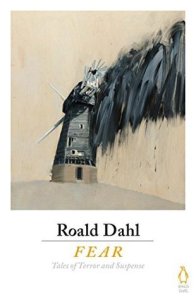 I reviewed the five female-penned ghost stories for R.I.P. back in 2019. This year I picked out another five, leaving a final four for another year. (Review copy)
“W.S.” by L.P. Hartley: The only thing I’ve read of Hartley’s besides The Go-Between. Novelist Walter Streeter is confronted by one of his characters, to whom he gave the same initials. What’s real and what’s only going on in his head? Perfectly plotted and delicious.
“In the Tube” by E.F. Benson: The concept of time is called into question when someone witnesses a suicide on the London Underground some days before it could actually have happened. All recounted as a retrospective tale. Believably uncanny.
“Elias and the Draug” by Jonas Lie: A sea monster and ghost ship plague Norwegian fishermen.
“The Ghost of a Hand” by J. Sheridan Le Fanu: A disembodied hand wreaks havoc in an eighteenth-century household.
“On the Brighton Road” by Richard Middleton: A tramp meets an ill boy on a road in the Sussex Downs. A classic ghost story that pivots on its final line.
The Small Hand: A Ghost Story by Susan Hill (2010)
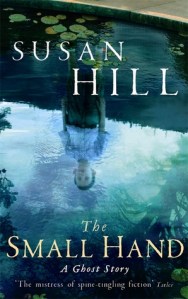 This was my fourth of Hill’s classic ghost stories, after The Woman in Black, The Man in the Picture and Dolly. They’re always concise and so fluently written that the storytelling voice feels effortless. I wondered if this one might have been inspired by “The Ghost of a Hand” (above). It doesn’t feature a disembodied hand, per se, but the presence of a young boy who slips his hand into antiquarian book dealer Adam Snow’s when he stops at an abandoned house in the English countryside, and again when he goes to a French monastery to purchase a Shakespeare First Folio. Each time, Adam feels the ghost is pulling him to throw himself into a pond. When Adam confides in the monks and in his brother, he gets different advice. A pleasant and very quick read, if a little predictable. (Free from a neighbour)
And a bonus story:
 Carmen Maria Machado’s “The Lost Performance of the High Priestess of the Temple of Horror” appears in Kink (2021), a short story anthology edited by Garth Greenwell and R.O. Kwon. (I requested it from NetGalley just so I could read the stories by Machado and Brandon Taylor.) It opens “I would never forget the night I saw Maxa decompose before me.” A seamstress, obsessed with an actress, becomes her dresser. Set in the 19th-century Parisian theatre world, this pairs queer desire and early special effects and is over-the-top sensual in the vein of Angela Carter, with hints of the sadomasochism that got it a place here.
Sample lines: “Women seep because they occupy the filmy gauze between the world of the living and the dead.” & “Her body blotted out the moon. She was an ambulatory garden, a beacon in a dead season, life where life should not grow.”
Also counting the short stories by Octavia E. Butler and Bradley Sides, I did some great R.I.P. reading this year! I think the book that will stick with me the most is Tender Is the Flesh.
The 1976 Club: Woman on the Edge of Time & The Takeover
It’s my fourth time participating in one of Simon and Karen’s reading weeks (after last year’s 1920 Club and 1956 Club and April’s 1936 Club). I start with a novel I actually read for my book club’s short-lived feminist classics subgroup way back in March but didn’t manage to review before now, and then have another I picked up especially for this challenge. Both were from the university library.

Woman on the Edge of Time by Marge Piercy
An unusual and fascinating novel with hints of science fiction, but still grounded in the real world (in a way that would attract fans of Octavia E. Butler’s Kindred and Parable duology), this contrasts utopian and dystopian scenes experienced by a Latina woman who’s been confined to a mental hospital. At 37, Connie Ramos has had a tough life marked by deprivation and domestic violence; “it was a crime to be born poor as it was a crime to be born brown.” She finds herself in conversation with Luciente, a plant geneticist who claims to be visiting from the future – coastal Massachusetts in 2137 – and has heard rumors of this prior Age of Greed and Waste. Luciente senses that Connie is a “catcher,” receptive to the wavelength of other times and places.
 When drawn into Luciente’s future, Connie thinks of it more as a peasant past because of the animal husbandry and agriculture, but comes to appreciate how technology and gender equality contribute to a peaceful society and environmentally restored landscape. I was intrigued by the dynamic Piercy imagines: everyone is of indeterminate gender (the universal pronouns are “person” and “per” – how about it? Both less confusing and more aesthetically pleasing than they/them!); embryos are cultured in machines and the resulting children raised communally with three honorary named “mother” figures. People choose their own names and change them in response to rites of passage. There’s no government or police. Free love reigns. “Our notions of evil center around power and greed” rather than sex, Connie is told.
With Connie and her fellow inmates facing mind-altering surgery in the ‘real’ world, Luciente’s community becomes a blessed escape. But on one of her time travels, she ends up in a dystopian future New York City instead. From 126 floors up, all that’s visible through the smoggy air is other towers. Everyone is genetically modified and everything is owned by corporations. Which scenario represents the authentic evolution of human society?
The way Piercy intersperses these visions with life at the mental hospital, and closes with excerpts from Connie’s patient notes, forces you to question whether they might all be hallucinations. We didn’t come to any firm conclusion during our Zoom discussion. The others found Connie’s life unremittingly bleak, but I love me a good mental hospital narrative. While I wearied a bit of the anthropological detail as the novel went on, I thought it an intense cultural commentary from a writer ahead of her time on gender roles and the environment (small-scale food production, foraging, renewable energy and reusing/recycling are givens in her utopia, and she questions the nonsensical reliance on cars. Why didn’t we listen to the prophets of the 1970s when we maybe had a chance to turn things around?!).
My rating:
The Takeover by Muriel Spark
 Had I read this in manuscript with no author name attached, I might have declared it to have been written by Iris Murdoch for the clutch of amoral characters, the love triangles, the peculiar religious society, the slight meanness of the attitude, and the detachment of the prose. Maggie Radcliffe is a rich American who owns three houses in the vicinity of Rome, one of which she rents out to Hubert Mallindaine, an effete homosexual who alleges that he is descended from the goddess Diana and founds a cult in her honour. He holds to this belief as fiercely as he defends his right to remain at Nemi even when Maggie decides she wants him out and employs lawyers to start eviction proceedings. There are odd priests, adulterous family members, scheming secretaries, and art and jewellery thieves, too. I wouldn’t say I’m a fan, but I liked this, my fourth novel by Spark, better than the rest. Italian bureaucracy makes for an amusing backdrop to what is almost a financial farce with an ensemble cast.
My rating:
Another 1976 release I’ve reviewed this year: The Easter Parade by Richard Yates.
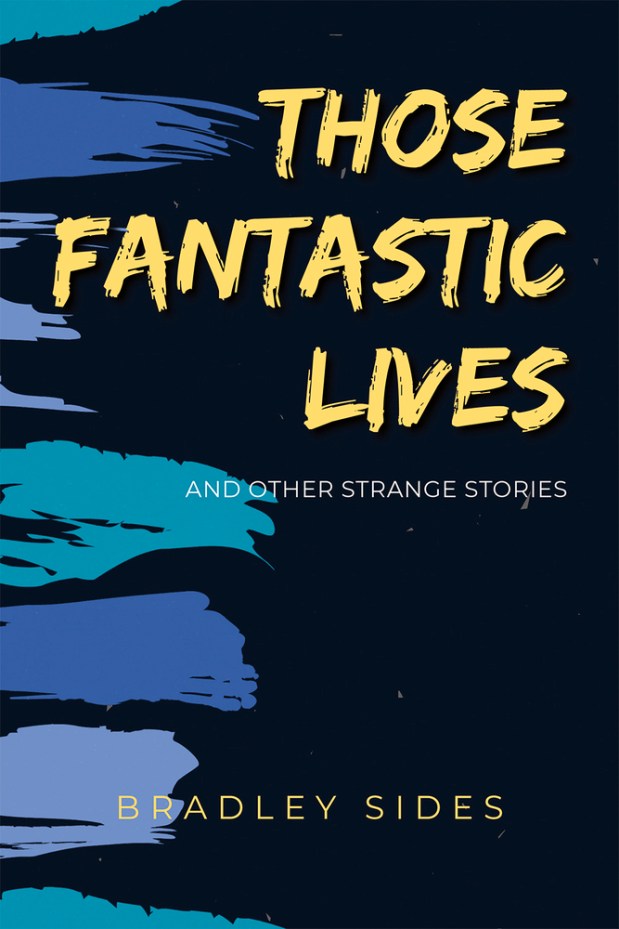
Review and Q&A: Those Fantastic Lives by Bradley Sides
Bradley Sides and I worked together on Bookkaholic web magazine in 2014–15 and I’ve been following his career ever since. I was delighted to get early access to his debut short story collection, Those Fantastic Lives (out today from Blacklight Press), which was an ideal transition for me from September’s short story focus to October’s R.I.P. challenge for how it blends the genres of dystopia, horror, and magic realism with literary writing.
Many of the protagonists in these 17 stories are orphans or children who have lost one parent. Grief uproots them, leaves them questing; combine their loneliness with dashes of the supernatural and you have perfect situations for strange and wonderful things to happen. So in the title story we have Sam, who at eight longs to follow in his psychic grandmother’s footsteps. In the achingly beautiful “Dolls for the End of the World,” young Patrick’s empathy somehow makes the apocalypse more bearable. In “The Hunt,” 10-year-old Zoey is obsessed with finding a sasquatch, while “In the Hollow” Walt trusts wolf-like creatures to lead him to his dead mother.
“Commencement,” in a first-person plural voice, is the creepiest of the lot, documenting preparations for graduation at a special academy. To be named the class valedictorian is an enduring yet dubious honor… But there are flashes of humor in the book as well. For instance, the lighthearted werewolf story “A Complicated Correspondence” is told via a series of increasingly convoluted e-mails. These two and “Back in Crowville,” in which scarecrows are used to scare off ghosts, too, struck me as perfect Halloween reading. I’d particularly recommend the book to readers of Kelly Link and Lydia Millet.
Brad and I had a chat over e-mail about his inspiration, themes and publication process.
Can you remember what the seed was for some of these stories? A particular line, scene, image, or character? Do you start writing a story with a title in mind, or does the title usually suggest itself later on?
Almost all of the stories I write come to me initially as a vision. I don’t mean in a dream or anything that dramatic, but I might be walking and see a stream, and suddenly that stream is placed in another world, and the stakes are much, much higher. Once I see my characters or my setting or my situation, I have to write a story that leads up to the moment I’m seeing. Writing and creating is, for me, a very internalized process.
Titles are so hard for me. I wish this weren’t the case, but I never write with titles in mind. Sometimes I’ll have the story ready, and I might have to wait weeks before I come to the right title. In regards to writing, I think I’m the worst at titling.
I think my favorite line in the book might be “Just because something can’t be seen doesn’t mean that it’s gone.” That’s from “The Comet Seekers,” about a pair of brothers in search of their father. A number of the stories feature children who have lost a guardian. How does bereavement alter the course of these coming-of-age narratives?
I’m so interested in loss in general. In life, we lose things. As kids. As adults. It doesn’t stop. I grew up on a farm, and animals died constantly. Chickens were slaughtered by foxes. Ducks were killed on their nests by turtles. Cows were sold and slaughtered. Pets died. Loss was everywhere. I’ve always thought about it. I guess, in many ways, loss haunts me.
I feel like bereavement and orphanhood create tension in many of my stories, but they also serve to add stakes to my characters’ lives. It’s tough to keep losing. Sometimes, you’ll do anything to keep from experiencing that—or to try to keep from experiencing that, at least. There’s power there.
I imagine that, like sequencing an album, choosing the order of the stories was a pleasurable challenge. How did you decide on the structure of the book – the opening story, the closing story; the themes running into or contrasting with each other; transitions; and so on?
It was a fun process to start putting all of my work together. I mean, it was also a little stressful once I got near the end and was getting ready to send Those Fantastic Lives out, but it was still fun. I have written a lot of stories, but for my collection, I wanted to only include the stories I love the most. I cut and cut based on just pure writerly love first—and gut instinct, I suppose. Once I had it narrowed, I started looking closely at themes. I removed a handful that felt like they didn’t belong. I really like slim collections (and slim books in general), so I wanted something relatively short—something less than 200 pages. The strangest thing I did was that I read the collection aloud. SEVERAL times, too. If a story didn’t fit the sound, I cut it. I really wanted to put out a cohesive collection, and I think (hope?) I’ve done that with these seventeen stories.
I loved how elements recurred in later tales – for instance, in both “Losing Light” and “The Mooneaters” characters consume sources of light and glow from the inside, and “What They Left Behind” connects back to “The Mooneaters” in that a character starts to sprout feathers. How do you account for these pervasive images?
This is probably a terrible response to such a great question, but it’s the truth: I look at the sky a lot. As in, probably way beyond what is normal. When I walk my dog, I look up at the morning sky and think about the clouds and the rising sun. When my wife and I are out on the porch in the evenings, I look up and think about the approaching stars. The coming moon. Whether early or late, the birds are always around, flying to wherever it is they go. I am so amazed by and curious of the sky. It’s such a beautiful, mysterious place that hovers above us, and it’s kind of the perfect space for me to root a lot of the fantastical elements of my stories.
In my favorite story, “The Galactic Healers,” Lian makes contact with aliens who offer a therapeutic balm. His suspicious father takes the medicine by force – a plan that quickly backfires. To what extent might this one be read as a parable of colonial exploitation and toxic masculinity?
I’m so glad you liked “The Galactic Healers,” Rebecca. It is one of my favorites, too. I’m naturally drawn, just as a human and not even necessarily speaking as a writer, to the topics you mention. I think about otherness. What it means to be outside or different. In that same way, I think about tender versus toxic behavior. I think the reading you have of the story is definitely a good one. And it probably captures where I was, in my head, at that time.
I sensed shades of Karen Russell and George Saunders. Who are some of your favorite writers, and who would you cite as inspirations for the collection?
I love Karen Russell and George Saunders both. I’m honored that my work reminds you of their writing. I think they are both influences on my fiction. I’m also inspired by Ray Bradbury a lot. I’m a very visual creator, so television writers also serve as huge inspirations for me. Mike Flanagan’s work (The Haunting of Hill House and The Haunting of Bly Manor) haunts me, and I love it.
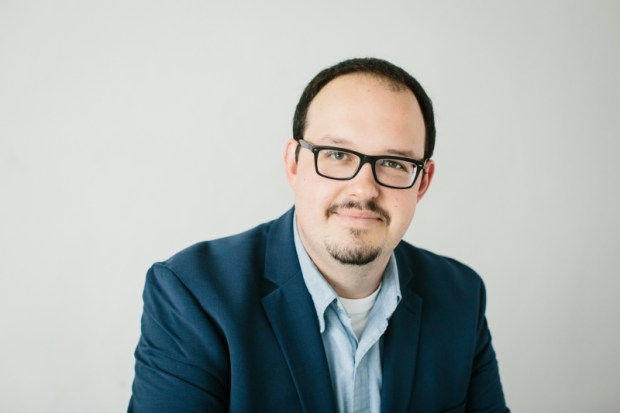
Bradley Sides. Photo by Abraham Rowe.
Versions of 12 of the stories previously appeared in various publications. What has your experience been of getting your work into literary magazines?
Getting published in literary magazines is an exhausting process. Don’t get me wrong, it’s a necessary one and one that gives me a lot of joy in the long run, but it’s also tough. I write weird stuff. Not every magazine wants a story about glowing monsters or a tiny kid whose home planet was invaded by giants and now lives on an ice cube. Finding the right magazine takes time, and even when I think I’ve found the right place, I’m sometimes wrong. I submit, hope for the best, and keep submitting. Usually, most of my stories wind up finding homes in the first five or so magazines I submit them to, but that’s not always the case. With “What They Left Behind,” for example, I bet I sent that story to twenty or thirty magazines before I found the perfect match at Crow & Cross Keys. Although it took some time to land at its home, it found its PERFECT home.
These stories were seven years in the making. What was your road to publication like, and how did you land at Blacklight Press?
Like many yet-to-publish-a-book writers, I was constantly searching for publication information as I was reaching the end of my writing cycle for Those Fantastic Lives, and I kept encountering these articles about how long and tough the publication process can be. I was prepared for it to take years before I found a press willing to take on my collection.
Once it was ready, I sent Those Fantastic Lives out to a handful of publishers—all of which I’d found out about with basic web searches. A couple were interested, but the offer wasn’t what I was looking for. A couple showed interest, but ultimately passed. Blacklight landed, and I knew it was what I was looking for very early on.
The process of when I began to when I found my publisher was probably less than six months.
The whole team at Blacklight has been fantastic, too. It’s really been a dream experience. I feel very grateful.
In your day job, you teach English and creative writing to high schoolers. What are some of the most important lessons you hope your students will take away from your classes, and what have you learned from them?
I hope, more than anything, that my students learn that their words—and their stories—matter. If they truly put themselves into their work, it is art, and it is important. I also hope they leave my classroom knowing how important respect is. To other writers. To themselves. To their eventual readers. To people in general. Respect is key.
I’ve learned so much from my creative writing students. They inspire me. They motivate me. Seeing their excitement when they write something they are proud of reminds me why I write in the first place. They are also wonderfully eager readers. I love discussing stories with them and learning how they perceive texts. Creative writing classes are treasured places.
What are you working on next?
Earlier this year, I began working on my next set of stories. I’m a slow writer. Maybe a very slow writer. With it being so early in the process, it’s hard to say exactly what the next collection will look like, but I do think I’ll largely stay focused on the same kinds of themes. Loss, loneliness, and transformation are naturally interesting to me. There’ll be more experimentation with form. A story in the shape of a manual. A gameplay story. A transcript. A flash in questions. There’ll be plenty of magical weirdness, too, with, probably, pond monsters, apocalypses, a shark boy, kidnapping ghosts, and who knows what else. I just hope it won’t take me so long to write this second book!
Short Stories in September, Part III: Butler, Costello, MacLaverty, Washington
Today I have a third set of terrific and varied short story collections. Between this, my Part I and Part II posts, and a bonus review I have coming up on Friday, I’ve gotten through 12 volumes of stories this month. This feels like a great showing for me because I don’t naturally gravitate to short stories and have to force myself to make a special effort to read them every September; otherwise, they tend to languish unread on my shelves and TBR.
From science fiction and horror tales set in alternate worlds to gritty slices of real life in Texas via two sets of quiet Irish relationship studies, this quartet of books showcases a range of tones and genres but fairly straightforward story structures and points of view. This was such a strong batch, I had to wonder why I never call myself a short story fan. All:
Bloodchild and Other Stories by Octavia E. Butler (2005)
 My first R.I.P. selection and one I can heartily recommend – even if you’re normally wary of dystopias, horror and science fiction. Butler makes these genres accessible by peopling her plots with relatable protagonists and carefully accounting for their bizarre predicaments without wasting time on extraneous world-building. The way in which she explores very human issues alongside the existence of alien beings reminds me of Mary Doria Russell’s The Sparrow, another of my rare forays into sci fi.
Along with the original five stories Butler published in 1970s and 1980s magazines and anthologies, this second edition contains two essays on her writing process and two new stories that date to 2003. In “Bloodchild,” a small band of humans live on another planet ruled by the Tlic, which sound like giant spiders or scorpions. Gan learns he is expected to play his part by being a surrogate for T’Gatoi’s eggs, but is haunted by what he’s heard this process involves. In a brief afterword (one is included with each piece here), Butler explains that the story arose from her terror of botflies, which she knew she might encounter in the Peruvian Amazon, and that she has always faced what scares her through her writing.
My other favorite story was “The Evening and the Morning and the Night,” about a subclass of people afflicted with Duryea-Gode disease. A cruel side effect of a parent’s cancer treatment, the illness compels sufferers to self-harm and they are often confined to asylums. Lynn and Alan visit his mother in one such institution and see what their future might hold. “Speech Sounds” and “Amnesty” reminded me most of the Parable novels, with the latter’s Noah a leader figure similar to Lauren. After an apocalyptic event, people must adapt and cooperate to survive. I appreciated how the two essays value persistence – more so than talent or inspiration – as the key to success as a writer. This was my fourth book by Butler and I don’t see why I shouldn’t keep going and read her whole oeuvre. (University library)
The China Factory by Mary Costello (2012)
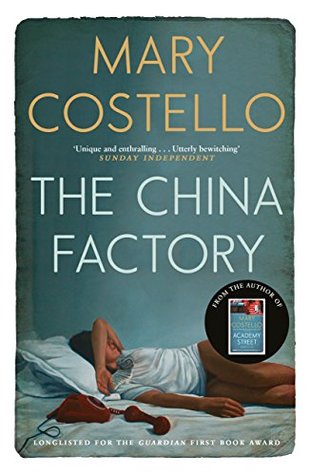 Academy Street is a near-perfect novella and I also enjoyed The River Capture, so I wanted to complete the set by reading Costello’s first book. Its dozen understated stories are about Irish men and women the course of whose lives are altered by chance meetings, surprise liaisons, or not-quite-affairs that needle them ever after with the could-have-been. The mood of gentle melancholy would suit a chilly moonlight drive along the coast road to Howth. In the opening title story, a teenage girl rides to her work sponging clay cups with an oddball named Gus. Others can’t get past things like his body odour, but when there’s a crisis at the factory she sees his calm authority save the day. Elsewhere, a gardener rushes his employer to the hospital, a woman attends her ex-husband’s funeral, and a school inspector becomes obsessed with one of the young teachers he observes.
Three favourites: In “And Who Will Pay Charon?” a man learns that, after he rejected Suzanne, she was hideously attacked in London. When she returns to the town as an old woman, he wonders what he might have done differently. “The Astral Plane” concerns a woman who strikes up a long-distance e-mail correspondence with a man from New York who picked up a book she left behind in a library. How will their intellectual affair translate into the corporeal world? The final story, “The Sewing Room,” reminded me most of Academy Street and could be a novel all of its own, as a schoolteacher and amateur fashion designer prepares for her retirement party and remembers the child she gave up for adoption. (Secondhand, gifted)
Blank Pages and Other Stories by Bernard MacLaverty (2021)
 I knew from The Great Profundo that I liked MacLaverty’s stories, and I also enjoyed his latest novel, Midwinter Break, so I was delighted to hear news of a new collection. A number of the longer stories are set at turning points in twentieth-century history. In 1940, a mother is desperate to hear word of her soldier son; in 1971 Belfast, officers search a woman’s house. Two of the historical stories appealed to me for their medical elements: “The End of Days,” set in Vienna in 1918, dramatizes Egon Schiele’s fight with Spanish flu, while “Blackthorns” gives a lovely picture of how early antibiotics promoted miraculous recovery. In the title story, a cat is all a writer has left to remind him of his late wife. “Wandering” has a woman out looking for her dementia-addled mother. “The Dust Gatherer” muses on the fate of an old piano. Elderly parents and music recur, establishing filaments of thematic connection.
Three favourites: In “Glasshouses,” a man temporarily misplaces his grandchildren in the botanical gardens; “The Fairly Good Samaritan” is the fable of a jolly drunk who calls an ambulance for his poorly neighbour – but not before polishing off her brandy; and in the gorgeous “Sounds and Sweet Airs” a young woman’s harp music enthrals the passengers on a ferry.
With thanks to Jonathan Cape for the free copy for review.
Lot: Stories by Bryan Washington (2019)
 The musical equivalent of Lot might be a mixtape played on a boombox or blasted from an open-top Corvette while touring the streets of Houston, Texas. Most of this Dylan Thomas Prize-winning linked collection follows Nic, a mixed-race Black/Latino boy who works in the family restaurant. As his family situation realigns – his father leaves, his older brother Javi enlists, his sister Jan has a baby – he’s trying to come to terms with his homosexuality and wondering if this gentrifying city suits him anymore. But he knows he’ll take himself wherever he goes, and as the book closes with “Elgin” (the most similar in mood and setup to Washington’s debut novel, Memorial) he’s thinking of taking a chance on love.
Drug dealers, careworn immigrants and prostitutes: Even the toughest guys have tender hearts in these stories. Eleven of 13 stories are in the first person. Where the narration isn’t Nic’s, it’s usually the collective voice of the neighbourhood boys. As far as I can tell, most of the story titles refer to Houston sites: particular addresses or neighbourhoods, or more vague locations. Like in Memorial, there are no speech marks. Washington’s prose is earthy and slang-filled. The matter-of-fact phrasing made me laugh: “He knocked her up in the usual way. For six minutes it looked like he’d stick around”; “He’d been staying there since the Great Thanksgiving Rupture, back when his brother’d found the dick pic in his pillowcase.” With the melting pot of cultures, the restaurant setting, and the sharp humour, this reminded me of Elaine Castillo’s America Is Not the Heart.
Three favourites: In “Shepherd,” the narrator emulates a glamorous cousin from Jamaica; “Bayou” is completely different from the rest, telling the urban legend of a “chupacubra” (a mythical creature like a coyote); “Waugh,” the longest story and one of just two told in the third person, is about a brothel’s worth of male sex workers and their pimp. Its final page is devastating. Despite their bravado, Washington’s characters are as vulnerable as Brandon Taylor’s. I think of these two young gay African American writers as being similar at root even though their style and approach are so very different. (New purchase)
A side note: I’m wondering how an author chooses primarily first person or third person POVs for short stories. MacLaverty and Taylor write exclusively in an omniscient third person; Washington and Eley Williams almost always plump for the first person. (Here, Butler was about half and half and Costello only used first person in three stories.) Is the third person seen as more impartial and commanding – a more elevated form of fiction? Is first person more immediate, informal and natural, but also perhaps too easy? I wouldn’t say I prefer one or the other (not in my novels, either); it all depends on the execution. Notably, none of this year’s stories were in the second person or employed experimental structures.
Two more collections I’m reading are spilling across into October for R.I.P., but will I keep up the short story habit after that? I still have a shelf full of unread story collections, and I have my eye on My Monticello, which I got from NetGalley…
Six Degrees of Separation: Second Place to Woman on the Edge of Time
The last Six Degrees of Separation post I did was back in April; I’ve fallen out of the habit since then. But this month an idea seized me and I’m back! This time we begin with Second Place by Rachel Cusk, which is on the Booker Prize longlist. (See Kate’s opening post.)

When I saw Cusk speak at the online Hay Festival, I learned that Second Place (my review) was loosely inspired by Mabel Dodge Luhan’s 1932 memoir Lorenzo in Taos, about the time when D.H. Lawrence came to visit her in New Mexico. Thoughts of Lawrence in Taos inevitably take me back to my first (and only) academic conference in 2005, hosted by the D.H. Lawrence Society of North America in Santa Fe, with a fieldtrip out to his Taos ranch.
 #1 One of the books I read ‘in preparation’ for attending that conference was Small World by David Lodge, a comedic novel about professors on the international conference circuit. I’ve included it as one of the Landmark Books of My Life.
 #2 Flights and “small world” connections also fill the linked short story collection Turbulence by David Szalay.
 #3 If you can bear to remember the turbulence of recent history, UnPresidented by Jon Sopel is a breezy diary of the 2020 U.S. election. We were lucky enough to have the author, a BBC presenter and brother of one of our members, join our book club discussion on Zoom.
 #4 That punning title reminded me of A Sting in the Tale by Dave Goulson, his first and probably best work of popular science – all of his books since have been very similar, but that’s no problem because his enthusiasm for insect life is infectious and he writes with the wit and charm of Gerald Durrell.
#5 Goulson’s latest book, which I’ve recently reviewed for Shelf Awareness, is called Silent Earth, about the grave threats that insects face (pesticides, invasive species, climate change and much more). It’s the second book I’ve read in recent years (the first was Losing Eden by Lucy Jones) that is explicitly based on or inspired by Silent Spring by Rachel Carson. Like Carson’s book, these seek to effect real societal change.


#6 Carson, Goulson and Jones all conjure up dystopian scenarios of unimaginable natural loss to spur readers into action. A feminist classic my book club read earlier in the year, Woman on the Edge of Time by Marge Piercy, contrasts utopian and dystopian scenes experienced by a Latina woman who’s been confined to a mental hospital. Will society evolve into a utopian vision of subsistence living and absolute gender equality, or move towards further isolation and urban barrenness? It’s an unusual and fascinating novel with hints of science fiction, but grounded in the real world. I still haven’t managed to review it, but next month’s 1976 Club may be just the excuse I need. Do give it a try!

Cycling round from one feminist novel to another, I’ve also featured a couple of personal favourites, some recent works, and a classic of nature writing.
Where will your chain take you? Join us for #6Degrees of Separation! (Hosted on the first Saturday of each month by Kate W. of Books Are My Favourite and Best.) Next month’s R.I.P.-appropriate starting point is the short story “The Lottery” by Shirley Jackson.
Have you read any of my selections? Are you tempted by any you didn’t know before?
Review Book Catch-Up: Motherhood, Nature Essays, Pandemic, Poetry
July slipped away without me managing to review any current-month releases, as I am wont to do, so to those three I’m adding in a couple of other belated review books to make up today’s roundup. I have: a memoir-cum-sociological study of motherhood, poems of Afghan women’s experiences, a graphic novel about a fictional worst-case pandemic, seasonal nature essays from voices not often heard, and poetry about homosexual encounters.
(M)otherhood: On the choices of being a woman by Pragya Agarwal
“Mothering would be my biggest gesture of defiance.”
 Growing up in India, Agarwal, now a behavioural and data scientist, wished she could be a boy for her father’s sake. Being the third daughter was no place of honour in society’s eyes, but her parents ensured that she got a good education and expected her to achieve great things. Still, when she got her first period, it felt like being forced onto a fertility track she didn’t want. There was a dearth of helpful sex education, and Hinduism has prohibitions that appear to diminish women, e.g. menstruating females aren’t permitted to enter a temple.
Married and unexpectedly pregnant in 1996, Agarwal determined to raise her daughter differently. Her mother-in-law was deeply disappointed that the baby was a girl, which only increased her stubborn pride: “Giving birth to my daughter felt like first love, my only love. Not planned but wanted all along. … Me and her against the world.” No element of becoming a mother or of her later life lived up to her expectations, but each apparent failure gave a chance to explore the spectrum of women’s experiences: C-section birth, abortion, divorce, emigration, infertility treatment, and finally having further children via a surrogate.
While I enjoyed the surprising sweep of Agarwal’s life story, this is no straightforward memoir. It aims to be an exhaustive survey of women’s life choices and the cultural forces that guide or constrain them. The book is dense with history and statistics, veers between topics, and needed a better edit for vernacular English and smoothing out academic jargon. I also found that I wasn’t interested enough in the specifics of women’s lives in India.
With thanks to Canongate for the free copy for review.
Forty Names by Parwana Fayyaz
“History has ungraciously failed the women of my family”
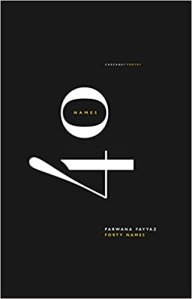 Have a look at this debut poet’s journey: Fayyaz was born in Kabul in 1990, grew up in Afghanistan and Pakistan, studied in Bangladesh and at Stanford, and is now, having completed her PhD, a research fellow at Cambridge. Many of her poems tell family stories that have taken on the air of legend due to the translated nicknames: “Patience Flower,” her grandmother, was seduced by the Khan and bore him two children; “Quietude,” her aunt, was a refugee in Iran. Her cousin, “Perfect Woman,” was due to be sent away from the family for infertility but gained revenge and independence in her own way.
Fayyaz is bold to speak out about the injustices women can suffer in Afghan culture. Domestic violence is rife; miscarriage is considered a disgrace. In “Roqeeya,” she remembers that her mother, even when busy managing a household, always took time for herself and encouraged Parwana, her eldest, to pursue an education and earn her own income. However, the poet also honours the wisdom and skills that her illiterate mother exhibited, as in the first three poems about the care she took over making dresses and dolls for her three daughters.
As in Agarwal’s book, there is a lot here about ideals of femininity and the different routes that women take – whether more or less conventional. “Reading Nadia with Eavan” was a favourite for how it brought together different aspects of Fayyaz’s experience. Nadia Anjuman, an Afghan poet, was killed by her husband in 2005; many years later, Fayyaz found herself studying Anjuman’s work at Cambridge with the late Eavan Boland. Important as its themes are, I thought the book slightly repetitive and unsubtle, and noted few lines or turns of phrase – always a must for me when assessing a poetry collection.
With thanks to Carcanet Press for the free copy for review.
Resistance by Val McDermid; illus. Kathryn Briggs
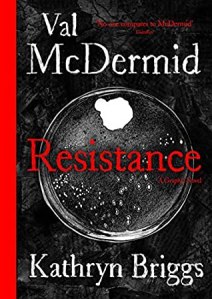 The second 2021 release I read in quick succession in which all but a small percentage of the human race (here, 2 million people) perishes in a pandemic – the other was Under the Blue. Like Aristide’s novel, this story had its origins in 2017 (in this case, on BBC Radio 4’s “Dangerous Visions”) but has, of course, taken on newfound significance in the time of Covid-19. McDermid imagines the sickness taking hold during a fictional version of Glastonbury: Solstice Festival in Northumberland. All the first patients, including a handful of rockstars, ate from Sam’s sausage sandwich van, so initially it looks like food poisoning. But vomiting and diarrhoea give way to a nasty rash, listlessness and, in many cases, death.
Zoe Beck, a Black freelance journalist who conducted interviews at Solstice, is friends with Sam and starts investigating the mutated swine disease, caused by an Erysipelas bacterium and thus nicknamed “the Sips.” She talks to the festival doctor and to a female Muslim researcher from the Life Sciences Centre in Newcastle, but her search for answers takes a backseat to survival when her husband and sons fall ill.
The drawing style and image quality – some panes are blurry, as if badly photocopied – let an otherwise reasonably gripping story down; the best spreads are collages or borrow a frame/backdrop (e.g. a medieval manuscript, NHS forms, or a 1910s title page).


SPOILER
{The ending, which has an immune remnant founding a new community, is VERY Parable of the Sower.}
With thanks to Profile Books/Wellcome Collection for the free copy for review.
Gifts of Gravity and Light: A Nature Almanac for the 21st Century, ed. Anita Roy and Pippa Marland
I hadn’t heard about this upcoming nature anthology when a surprise copy dropped through my letterbox. I’m delighted the publisher thought of me, as this ended up being just my sort of book: 12 autobiographical essays infused with musings on landscapes in Britain and elsewhere; structured by the seasons to create a gentle progression through the year, starting with the spring. Best of all, the contributors are mostly female, BIPOC (and Romany), working class and/or queer – all told, the sort of voices that are heard far too infrequently in UK nature writing. In momentous rites of passage, as in routine days, nature plays a big role.
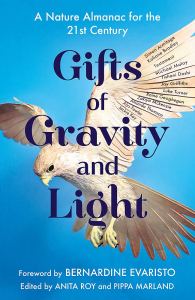 A few of my favourite pieces were by Kaliane Bradley, about her Cambodian heritage (the Wishing Dance associated with cherry blossom, her ancestors lost to genocide, the Buddhist belief that people can be reincarnated in other species); Testament, a rapper based in Leeds, about capturing moments through photography and poetry and about the seasons feeling awry both now and in March 2008, when snow was swirling outside the bus window as he received word of his uni friend’s untimely death; and Tishani Doshi, comparing childhood summers of freedom in Wales with growing up in India and 2020’s Covid restrictions.
Most of the authors hold two places in mind at the same time: for Michael Malay, it’s Indonesia, where he grew up, and the Severn estuary, where he now lives and ponders eels’ journeys; for Zakiya McKenzie, it’s Jamaica and England; for editor Anita Roy, it’s Delhi versus the Somerset field her friend let her wander during lockdown. Trees lend an awareness of time and animals a sense of movement and individuality. Alys Fowler thinks of how the wood she secretly coppices and lays on park paths to combat the mud will long outlive her, disintegrating until it forms the very soil under future generations’ feet.
A favourite passage (from Bradley): “When nature is the cuddly bunny and the friendly old hill, it becomes too easy to dismiss it as a faithful retainer who will never retire. But nature is the panic at the end of a talon, and it’s the tree with a heart of fire where lightning has struck. It is not our friend, and we do not want to make it our enemy.”
Also featured: Bernardine Evaristo (foreword), Raine Geoghegan, Jay Griffiths, Amanda Thomson, and Luke Turner.
With thanks to Hodder & Stoughton for the free copy for review.
Records of an Incitement to Silence by Gregory Woods
 Woods is an emeritus professor at Nottingham Trent University, where he was appointed the UK’s first professor of Gay & Lesbian Studies in 1998. Much of his sixth poetry collection is composed of unrhymed sonnets in two stanzas (eight lines, then six). The narrator is often a randy flâneur, wandering a city for homosexual encounters. One assumes this is Woods, except where the voice is identified otherwise, as in “[Walt] Whitman at Timber Creek” (“He gives me leave to roam / my idle way across / his prairies, peaks and canyons, my own America”) and “No Title Yet,” a long, ribald verse about a visitor to a stately home.
Other times the perspective is omniscient, painting a character study, like “Company” (“When he goes home to bed / he dare not go alone. … This need / of company defeats him.”), or of Frank O’Hara in “Up” (“‘What’s up?’ Frank answers with / his most unseemly grin, / ‘The sun, the Dow, my dick,’ / and saunters back to bed.”). Formalists are sure to enjoy Woods’ use of form, rhyme and meter. I enjoyed some of the book’s cheeky moments but had trouble connecting with its overall tone and content. That meant that it felt endless. I also found the end rhymes, when they did appear, over-the-top and silly (Demeter/teeter, etc.).
Two favourite poems: “An Immigrant” (“He turned away / to strip. His anecdotes / were innocent and his / erection smelled of soap.”) and “A Knot,” written for friends’ wedding in 2014 (“make this wedding supper all the sweeter / With choirs of LGBT cherubim”).
With thanks to Carcanet Press for the free copy for review.
Would you be interested in reading one or more of these?
20 Books of Summer, #6–8: Aristide, Hood, Lamott
This latest batch of colour-themed summer reads took me from a depleted post-pandemic landscape to the heart of dysfunctional families in Rhode Island and California.
Under the Blue by Oana Aristide (2021)
Fans of Station Eleven, this one’s for you: the best dystopian novel I’ve read since Mandel’s. Aristide started writing this in 2017, and unknowingly predicted a much worse pandemic than Covid-19. In July 2020, Harry, a middle-aged painter inhabiting his late nephew’s apartment in London, finally twigs that something major is going on. He packs his car and heads to his Devon cottage, leaving its address under the door of the cute neighbour he sometimes flirts with. Hot days stack up and his new habits of rationing food and soap are deeply ingrained by the time the gal from #22, Ash – along with her sister, Jessie, a doctor who stocked up on medicine before fleeing her hospital – turn up. They quickly sink into his routines but have a bigger game plan: getting to Uganda, where their mum once worked and where they know they will be out of range of Europe’s at-risk nuclear reactors. An epic road trip ensues.
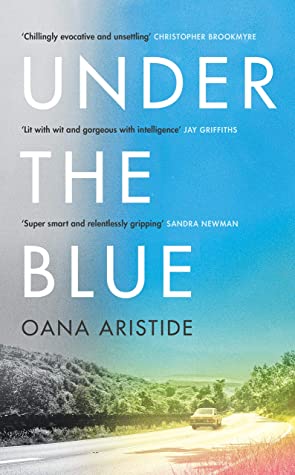 It gradually becomes clear that Harry, Ash and Jessie are among mere thousands of survivors worldwide, somehow immune to a novel disease that spread like wildfire. There are echoes of Cormac McCarthy’s The Road in the way that they ransack the homes of the dead for supplies, and yet there’s lightness to their journey. Jessie has a sharp sense of humour, provoking much banter, and the places they pass through in France and Italy are gorgeous despite the circumstances. It would be a privilege to wander empty tourist destinations were it not for fear of nuclear winter and not finding sufficient food – and petrol to keep “the Lioness” (the replacement car they steal; it becomes their refuge) going. While the vague sexual tension between Harry and Ash persists, all three bonds are intriguing.
In an alternating storyline starting in 2017, Lisa and Paul, two computer scientists based in a lab at the Arctic Circle, are programming an AI, Talos XI. Based on reams of data on history and human nature, Talos is asked to predict what will happen next. But when it comes to questions like the purpose of art and whether humans are worth saving, the conclusions he comes to aren’t the ones his creators were hoping for. These sections are set out as transcripts of dialogues, and provide a change of pace and perspective. Initially, I was less sure about this strand, worrying that it would resort to that well-worn trope of machines gone bad. Luckily, Aristide avoids sci-fi clichés, and presents a believable vision of life after the collapse of civilization.
The novel is full of memorable lines (“This absurd overkill, this baroque wedding cake of an apocalypse: plague and then nuclear meltdowns”) and scenes, from Harry burying a dead cow to the trio acting out a dinner party – just in case it’s their last. There’s an environmentalist message here, but it’s subtly conveyed via a propulsive cautionary tale that also reminded me of work by Louisa Hall and Maja Lunde. (Public library)
Ruby by Ann Hood (1998)
Olivia had the perfect life: fulfilling, creative work as a milliner; a place in New York City and a bolthole in Rhode Island; a new husband and plans to try for a baby right away. But then, in a fluke accident, David was hit by a car while jogging near their vacation home less than a year into their marriage. As the novel opens, 37-year-old Olivia is trying to formulate a letter to the college girl who struck and killed her husband. She has returned to Rhode Island to get the house ready to sell but changes her mind when a pregnant 15-year-old, Ruby, wanders in one day.
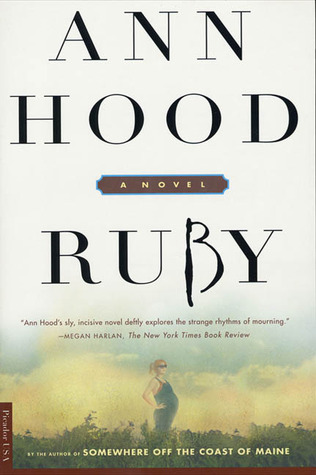 At first, I worried that the setup would be too neat: Olivia wants a baby but didn’t get a chance to have one with David before he died; Ruby didn’t intend to get pregnant and looks forward to getting back her figure and her life of soft drugs and petty crime. And indeed, Olivia suggests an adoption arrangement early on. But the outworkings of the plot are not straightforward, and the characters, both main and secondary (including Olivia’s magazine writer friend, Winnie; David’s friend, Rex; Olivia’s mother and sister; a local lawyer who becomes a love interest), are charming.
It’s a low-key, small-town affair reminiscent of the work of Anne Tyler, and I appreciated how it sensitively explores grief, its effects on the protagonist’s decision-making, and how daunting it is to start over (“The idea of that, of beginning again from nothing, made Olivia feel tired.”). It was also a neat touch that Olivia is the same age as me, so in some ways I could easily imagine myself into her position.
This was the ninth book I’ve read by Hood, an author little known outside of the USA – everything from grief memoirs to a novel about knitting. Ironically, its main themes of adoption and bereavement were to become hallmarks of her later work: she lost her daughter in 2002 and then adopted a little girl from China. (Secondhand purchase, June 2021)
[I’ve read another novel titled Ruby – Cynthia Bond’s from 2014.]
Blue Shoe by Anne Lamott (2002)
I’m a devoted reader of Lamott’s autobiographical essays about faith against the odds (see here), but have been wary of trying her fiction, suspecting I wouldn’t enjoy it as much. Well, it’s true that I prefer her nonfiction on the whole, but this was an enjoyably offbeat novel featuring the kind of frazzled antiheroine who wouldn’t be out of place in Anne Tyler’s work.
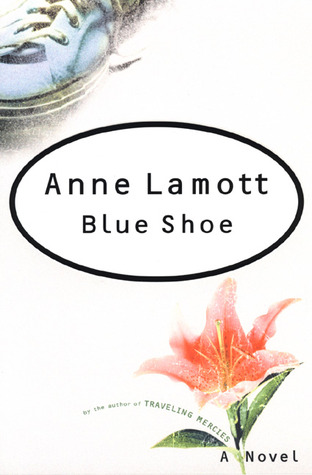 Mattie Ryder has left her husband and returned to her Bay Area family home with her young son and daughter. She promptly falls for Daniel, the handyman she hires to exterminate the rats, but he’s married, so she keeps falling into bed with her ex, Nicky, even after he acquires a new wife and baby. Her mother, Isa, is drifting ever further into dementia. A blue rubber shoe that Mattie finds serves as a totem of her late father – and his secret life. She takes a gamble that telling the truth, no matter what the circumstances, will see her right.
As in Ruby, I found the protagonist relatable and the ensemble cast of supporting characters amusing. Lamott crafts some memorable potted descriptions: “She was Jewish, expansive and yeasty and uncontained, as if she had a birthright for outrageousness” and “He seemed so constrained, so neatly trimmed, someone who’d been doing topiary with his soul all his life.” She turns a good phrase, and adopts the same self-deprecating attitude towards Mattie that she has towards herself in her memoirs: “She usually hoped to look more like Myrna Loy than an organ grinder’s monkey when a man finally proclaimed his adoration.”
At a certain point – maybe two-thirds of the way through – my inward reply to a lot of the novel’s threads was “okay, I get it; can we move on?” Yes, the situation with Isa is awful; yes, something’s gotta give with Daniel and his wife; yes, the revelations about her father seem unbearable. But with a four-year time span, it felt like Mattie was stuck in the middle for far too long. It’s also curious that she doesn’t apply her zany faith (a replica of Lamott’s) to questions of sexual morality – though that’s true of more liberal Christian approaches. All in all, I had some trouble valuing this as a novel because of how much I know about Lamott’s life and how closely I saw the storyline replicating her family dynamic. (Secondhand purchase, c. 2006 – I found a signed hardback in a library book sale back in my U.S. hometown for $1.)
Hmm, altogether too much blue in my selections thus far (4 out of 8!). I’ll have to try to come up with some more interesting colours for my upcoming choices.
Next books in progress: The Other’s Gold by Elizabeth Ames and God Is Not a White Man by Chine McDonald.
 Bookish Beck = Rebecca Foster. American transplant to England. Freelance proofreader and book reviewer.
 Bookish Beck