Book Serendipity, Mid-April to Mid-June
I call it “Book Serendipity” when two or more books that I read at the same time or in quick succession have something in common – the more bizarre, the better. This is a regular feature of mine every couple of months. Because I usually have 20–30 books on the go at once, I suppose I’m more prone to such incidents. People frequently ask how I remember all of these coincidences. The answer is: I jot them down on scraps of paper or input them immediately into a file on my PC desktop; otherwise, they would flit away!
The following are in roughly chronological order.
- Raising a wild animal but (mostly) calling it by its species rather than by a pet name (so “Pigeon” and “the leveret/hare”) in We Should All Be Birds by Brian Buckbee and Raising Hare by Chloe Dalton.
- Eating hash cookies in New York City in Women by Chloe Caldwell and How to Be Somebody Else by Miranda Pountney.
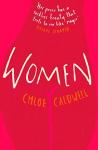
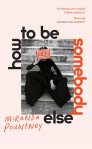
- A woman worries she’s left underclothes strewn about a room she’s about to show someone in one story of Single, Carefree, Mellow by Katherine Heiny and Days of Light by Megan Hunter.
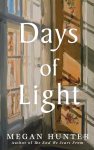 The dialogue is italicized in Women by Chloe Caldwell and Days of Light by Megan Hunter.
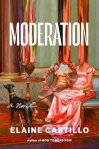
- The ‘you know it when you see it’ definition (originally for pornography) is cited in Moderation by Elaine Castillo and Bookish by Lucy Mangan.
- Women (including the protagonist) weightlifting in a gym in Moderation by Elaine Castillo and All Fours by Miranda July.
- Miranda July, whose All Fours I was also reading at the time, was mentioned in Chinese Parents Don’t Say I Love You by Candice Chung.
- A sibling story and a mystical light: late last year into early 2025 I read The Snow Queen by Michael Cunningham, and then I recognized this type of moment in Days of Light by Megan Hunter.
- A lesbian couple with a furniture store in Carol [The Price of Salt] by Patricia Highsmith and one story of Are You Happy? by Lori Ostlund.

- Not being able to see the stars in Las Vegas because of light pollution was mentioned in The Wild Dark by Craig Childs, then in Moderation by Elaine Castillo.
- A gynaecology appointment scene in All Fours by Miranda July and How to Be Somebody Else by Miranda Pountney.
- An awkwardly tall woman in Heartwood by Amity Gaige, How to Be Somebody Else by Miranda Pountney, and Stoner by John Williams.
- The 9/11 memorial lights’ disastrous effect on birds is mentioned in The Wild Dark by Craig Childs and How to Be Somebody Else by Miranda Pountney.
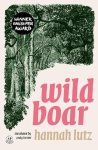
- A car accident precipitated by an encounter with wildlife is key to the denouement in the novellas Women by Chloe Caldwell and Wild Boar by Hannah Lutz.
- The plot is set in motion by the death of an older brother by drowning, and pork chops are served to an unexpected dinner guest, in Bug Hollow by Michelle Huneven and Days of Light by Megan Hunter, both of which I was reading for Shelf Awareness review.
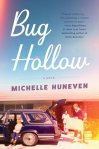
- Kids running around basically feral in a 1970s summer, and driving a box of human ashes around in Case Histories by Kate Atkinson and Bug Hollow by Michelle Huneven.
- A character becomes a nun in Case Histories by Kate Atkinson and Days of Light by Megan Hunter.
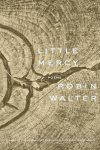
- Wrens nesting just outside one’s front door in Lifelines by Julian Hoffman and Little Mercy by Robin Walter.

- ‘The female Woody Allen’ is the name given to a character in Women by Chloe Caldwell and then a description (in a blurb) of French author Nolwenn Le Blevennec.
- A children’s birthday party scene in Single, Carefree, Mellow by Katherine Heiny and Friends and Lovers by Nolwenn Le Blevennec. A children’s party is also mentioned in Case Histories by Kate Atkinson and A Family Matter by Claire Lynch.
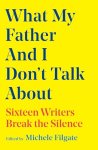
- A man who changes his child’s nappies, unlike his father – evidence of different notions of masculinity in different generations, in Case Histories by Kate Atkinson, What My Father and I Don’t Talk About, edited by Michele Filgate, and one piece in Beyond Touch Sites, edited by Wendy McGrath.
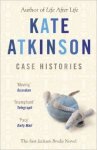
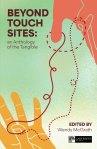
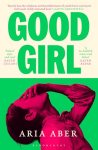
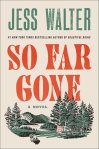
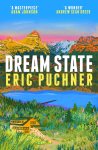
- What’s in a name? Repeated names I came across included Pansy (Case Histories by Kate Atkinson and Days of Light by Megan Hunter), Olivia (Case Histories by Kate Atkinson and A Family Matter by Claire Lynch), Jackson (Case Histories by Kate Atkinson and So Far Gone by Jess Walter), and Elias (Good Girl by Aria Aber and Dream State by Eric Puchner).
- The old wives’ tale that you should run in zigzags to avoid an alligator appeared in Alligator Tears by Edgar Gomez and then in The Girls Who Grow Big by Leila Mottley, both initially set in Florida.
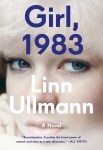
- A teenage girl is groped in a nightclub in Good Girl by Aria Aber and Girl, 1983 by Linn Ullmann.
- Discussion of the extinction of human and animal cultures and languages in both Nature’s Genius by David Farrier and Lifelines by Julian Hoffman, two May 2025 releases I was reading at the same time.
- In Body: My Life in Parts by Nina B. Lichtenstein, she mentions Linn Ullmann – who lived on her street in Oslo and went to the same school (not favourably – the latter ‘stole’ her best friend!); at the same time, I was reading Linn Ullmann’s Girl, 1983! And then, in both books, the narrator recalls getting a severe sunburn.
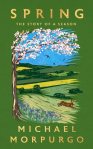 On the same day, I read about otter sightings in Lifelines by Julian Hoffman and Spring by Michael Morpurgo. The next day, I read about nesting swallows in both books.
- The Salish people (Indigenous to North America) are mentioned in Lifelines by Julian Hoffman, Dream State by Eric Puchner (where Salish, the town in Montana, is also a setting), and So Far Gone by Jess Walter.
- Driving into a compound of extremists, and then the car being driven away by someone who’s not the owner, in Dream State by Eric Puchner and So Far Gone by Jess Walter.
- A woman worries about her (neurodivergent) husband saying weird things at a party in The Honesty Box by Lucy Brazier and Normally Weird and Weirdly Normal by Robin Ince.
- Shooting raccoons in Ginseng Roots by Craig Thompson and So Far Gone by Jess Walter. (Raccoons also feature in Dream State by Eric Puchner.)
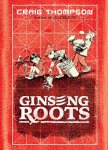
- A graphic novelist has Hollywood types adding (or at least threatening to add) wholly unsuitable supernatural elements to their plots in Spent by Alison Bechdel and Ginseng Roots by Craig Thompson.
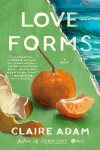
- A novel in which a character named Dawn has to give up her daughter in the early 1980s, one right after the other: A Family Matter by Claire Lynch, followed by Love Forms by Claire Adam.
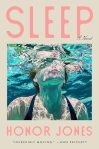
- A girl barricades her bedroom door for fear of her older brother in Love Forms by Claire Adam and Sleep by Honor Jones.
- A scene of an only child learning that her mother had a hysterectomy and so couldn’t have any more children in Dream Count by Chimamanda Ngozi Adichie and Other People’s Mothers by Julie Marie Wade.
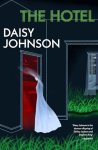
- An African hotel cleaner features in Dream Count by Chimamanda Ngozi Adichie and The Hotel by Daisy Johnson.

- Annie Dillard’s essay “Living Like Weasels” is mentioned in Nature’s Genius by David Farrier and The Dry Season by Melissa Febos.
- A woman assembles an inventory of her former lovers in Dream Count by Chimamanda Ngozi Adichie and The Dry Season by Melissa Febos.
What’s the weirdest reading coincidence you’ve had lately?
April Releases by Chung, Ellis, Gaige, Lutz, McAlpine and Rubin
April felt like a crowded publishing month, though May looks to be twice as busy again. Adding this batch to my existing responses to books by Jean Hannah Edelstein & Emily Jungmin Yoon plus Richard Scott, I reviewed nine April releases. Today I’m featuring a real mix of books by women, starting with two foodie family memoirs, moving through a suspenseful novel about a lost hiker, a sparse Scandinavian novella, and a lovely poetry collection with themes of nature and family, and finishing up with a collection of aphorisms. I challenged myself to write just a paragraph on each for simplicity and readability.

Chinese Parents Don’t Say I Love You: A memoir of saying the unsayable with food by Candice Chung
“to love is to gamble, sometimes gastrointestinally … The stomach is a simple animal. But how do we settle the heart—a flailing, skittish thing?”
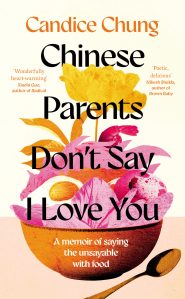 I got Caroline Eden (Cold Kitchen) and Nina Mingya Powles (Tiny Moons) vibes from this vibrant essay collection spotlighting food and family. The focus is on 2019–2021, a time of huge changes for Chung. She’s from Hong Kong via Australia, and reconnects with her semi-estranged parents by taking them along on restaurant review gigs for a Sydney newspaper. Fresh from a 13-year relationship with “the psychic reader,” she starts dating again and quickly falls in deep with “the geographer.” Sharing meals in restaurants and at home kindles closeness and keeps their spirits up after Covid restrictions descend. But when he gets a job offer in Scotland, they have to make decisions about their relationship sooner than intended. Although there is a chronological through line, the essays range in time and style, including second-person advice column (“Faux Pas”) and choose-your-own adventure (“Self-Help Meal”) segments alongside lists, message threads and quotes from the likes of Deborah Levy. My favourite piece was “The Soup at the End of the Universe.” Chung delicately contrasts past and present, singleness and being partnered, and different mental health states. The essays meld to capture a life in transition and the tastes and bonds that don’t alter.
With thanks to Elliott & Thompson for the free copy for review.
Chopping Onions on My Heart: On Losing and Preserving Culture by Samantha Ellis
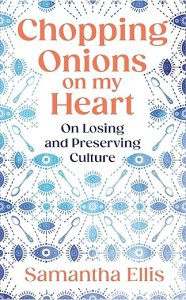 Ellis was distressed to learn that her refugee parents’ first language, Judeo-Iraqi Arabic, is in danger of extinction. Her own knowledge of it is piecemeal, mostly confined to its colourful food-inspired sayings – for example, living “eeyam al babenjan (in the days of the aubergines)” means that everything feels febrile and topsy-turvy. She recounts her family’s history with conflict and displacement, takes a Zoom language class, and ponders what words, dishes, and objects she would save on an imaginary “ark” that she hopes to bequeath to her son. Along the way, she reveals surprising facts about Ashkenazi domination of the Jewish narrative. “Did you know the poet [Siegfried Sassoon] was an Iraqi Jew?” His great-grandfather even invented a special variety of mango pickle. All of the foods described sound delicious, and some recipes are given. Ellis’s writing is enthusiastic and she braids the book’s various strands effectively. I wasn’t as interested in the niche history as I wanted to be, but I did appreciate learning about an endangered culture and language.
With thanks to Chatto & Windus (Vintage/Penguin) for the proof copy for review.
Heartwood by Amity Gaige
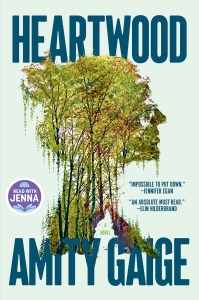 This was on my Most Anticipated list after how much I’d enjoyed Sea Wife when we read it for Literary Wives club. In July 2022, 42-year-old nurse Valerie Gillis, nicknamed “Sparrow,” goes missing in the Maine woods while hiking the Appalachian Trail. An increasingly desperate search ensues as the chances of finding her alive diminish with each day. The shifting formats – letters, transcripts, news reports, tip line messages – hold the interest. However, the chapters voiced by Lt. Bev, the warden who heads the mission, are much the most engaging, and it’s a shame that her delightful interactions with her sisters and nieces are so few and come so late. The third-person passages about Lena Kucharski in her Connecticut retirement home are intriguing but somehow feel like they belong in a different book. Gaige attempts to bring the threads together through three mother–daughter pairs, which struck me as heavy-handed. Mostly, this hits the sweet spot between mystery and literary fiction (apart from some red herrings), but because I wasn’t particularly invested in the characters, even Valerie, this fell a little short of my expectations. (Read via Edelweiss)
Wild Boar by Hannah Lutz (2016; 2025)
[Translated from Swedish by Andy Turner]
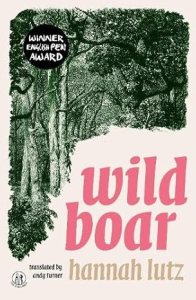 “I have seen them, the wild boar, they have found their way into my dreams!” Ritve travels from Finland to the forests of southern Sweden to track the creatures. Glenn, who appraises project applications for the council, has boar wander onto his property in the middle of the night. Mia, recipient of a council grant for her Recollections of a Sigga Child proposal, brings her ailing grandfather to record his memories for the local sound archive. As midsummer approaches, these three characters plus a couple of their partners will have encounters with the boar and with each other. Short sections alternate between their first-person perspectives. There is a strong sense of place and how migration poses challenges for both the human and more-than-human worlds. But it’s over before it begins. I found myself frustrated by how little happens, how stingily the characters reveal themselves, and how the boar, ultimately, are no more than a metaphor or plot device – a frequent complaint of mine when animals are central to a narrative. This might appeal to fans of Melissa Harrison’s fiction. In any case, I congratulate The Emma Press on their first novel, which won an English PEN Award.
With thanks to The Emma Press for the free copy for review.
Small Pointed Things by Erica McAlpine
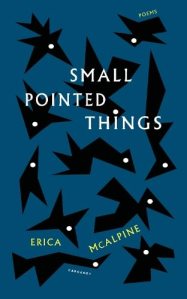 McAlpine is an associate professor of English at Oxford. Her second poetry collection is full of flora and fauna imagery. The title phrase comes from the opening poem, “Bats and Swallows” – in the “gloaming,” it’s hard to tell the difference between the flying creatures. The verse is bursting with alliteration and end rhymes, as just this first one shows (emphasis mine): “we couldn’t see / from where we stood in soft shadows / any signs that they were swallows // or bats”; “One seemed almost iridescent / as I tried to track / its crescent / flight across the hill.” Other poems consider moths, manatees, bees, swans and ladybirds; snowdrops and a cedar tree. Part II expands the view through conversations, theories and travel. What-ifs, consequences and regrets seep in. Parts III and IV incorporate mythical allusions, elegies and the concerns of motherhood. Sometimes the rhyme scheme adheres to a particular form. For instance, I loved “Triolet on My Mother’s 74th Birthday” – “You cannot imagine one season in another. … You cannot imagine life without your mother.” This is just my sort of poetry, sweet on the ear and rooted in nature and the everyday. A sample poem:
“Clementines”
New Year’s Day – another turning
of the sphere, with all we planned
in yesteryear as close to hand
as last night’s coals left unmanned
in the fire, still orange and burning.
It is the season for clementines
and citrus from Seville
and whatever brightness carries us until
leaves and petals once more fill
the treetops and the vines.
If ever you were to confess
some cold truth about love’s
dwindling, now would be the time – less
in order for things to improve
than for the half-bitter happiness
of peeling rinds
during mid-winter
recalling days that are behind
us and doors we cannot re-enter
and other doors we couldn’t find.
With thanks to Carcanet Press for the advanced e-copy for review.
Secrets of Adulthood: Simple Truths for Our Complex Lives by Gretchen Rubin
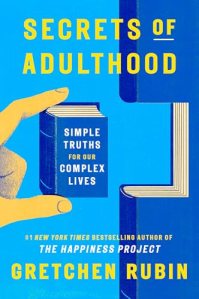 Rubin is one of the best self-help authors out there: Her books are practical, well-researched and genuinely helpful. She understands human nature and targets her strategies to suit different personality types. If you know her work, you’re likely aware of her fondness for aphorisms. “Sometimes, a single sentence can provide all the insight we need,” she believes. Here she collects her own pithy sayings relating to happiness, self-knowledge, relationships, work, creativity and decision-making. Some of the aphorisms were familiar to me through her previous books or her social media. They’re straightforward and sensible, distilling down to a few words truths we might be aware of but hadn’t truly absorbed. Like the great aphorists throughout history, Rubin relishes alliteration, repetition and contrasts. Some examples:
Accept yourself, and expect more from yourself.
I admire nature, and I am also nature. I resent traffic, and I am also traffic.
Work is the play of adulthood. If we’re not failing, we’re not trying hard enough.
Don’t wait until you have more free time. You may never have more free time.
This is not as meaty as her other work, and some parts feel redundant, but that’s the nature of the project. It would make a good bedside book for nibbles of inspiration. (Read via Edelweiss)
Which of these appeal to you?
Book Serendipity, Mid-February to Mid-April
I call it “Book Serendipity” when two or more books that I read at the same time or in quick succession have something in common – the more bizarre, the better. This is a regular feature of mine every couple of months. Because I usually have 20–30 books on the go at once, I suppose I’m more prone to such incidents. People frequently ask how I remember all of these coincidences. The answer is: I jot them down on scraps of paper or input them immediately into a file on my PC desktop; otherwise, they would flit away!
The following are in roughly chronological order.
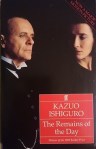
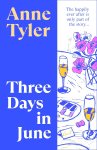
- The protagonist isn’t aware that they’re crying until someone tells them / they look in a mirror in The Remains of the Day by Kazuo Ishiguro and Three Days in June by Anne Tyler.
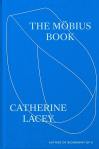
- A residential complex with primal scream therapy in Confessions by Catherine Airey and The Möbius Book by Catherine Lacey.
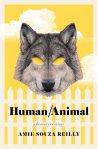
- Memories of wiping down groceries during the early days of the pandemic in The End Is the Beginning by Jill Bialosky and Human/Animal by Amie Souza Reilly.
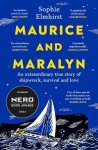
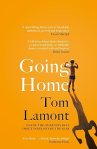
- A few weeks before I read Maurice and Maralyn by Sophie Elmhirst, I’d finished reading the author’s husband’s debut novel (Going Home by Tom Lamont); I had no idea of the connection between them until I got to her Acknowledgements.
- A mention of the same emergency money passing between friends in Alligator Tears by Edgar Gomez ($20) and The Möbius Book by Catherine Lacey ($100).
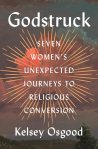
- Autobiographical discussions of religiosity and anorexia in The Möbius Book by Catherine Lacey and Godstruck by Kelsey Osgood.
- The theme of the dark night sky in The Wild Dark by Craig Childs, followed almost immediately by Night Magic by Leigh Ann Henion.
- Last year I learned about Marina Abramović’s performance art where she and her ex trekked to China’s Great Wall from different directions, met in the middle, and continued walking away to dramatize their breakup in The Ritual Effect by Michael Norton. Recently I saw it mentioned again in The Möbius Book by Catherine Lacey. Abramović’s work is also mentioned in Human/Animal by Amie Souza Reilly and is the basis for the opening track on Anne-Marie Sanderson’s album Old Light, “Amethyst Shoes.”
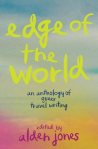
- The idea of running towards danger appears in Alex Marzano-Lesnevich’s essay in Edge of the World, a queer travel anthology edited by Alden Jones; and the bibliography of The Möbius Book by Catherine Lacey.
- I then read another Alex Marzano-Lesnevich essay in quick succession (both were excellent, by the way) in What My Father and I Don’t Talk About, edited by Michele Filgate.
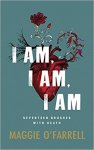
- A scene in which a woman goes to a police station and her concerns are dismissed because she has no evidence and the man/men’s behaviour isn’t ‘bad enough’ in I Am, I Am, I Am by Maggie O’Farrell and Human/Animal by Amie Souza Reilly.
- Too many details as the sign of a lie in Dream Count by Chimamanda Ngozi Adichie and Three Days in June by Anne Tyler.
- Scenes of throwing all of a spouse’s belongings out on the yard/street in Old Soul by Susan Barker, How to Survive Your Mother by Jonathan Maitland, and Human/Animal by Amie Souza Reilly.
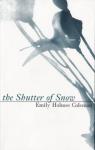
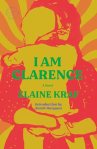
- Reading two lost American classics about motherhood and time spent in a mental institution at the same time: The Shutter of Snow by Emily Holmes Coleman and I Am Clarence by Elaine Kraf.
- Disorientation underwater: a literal experience in I Am, I Am, I Am by Maggie O’Farrell, then used as a metaphor for what it was like to be stuck in a blizzard on Annapurna in 2014 in The Secret Life of Snow by Giles Whittell.
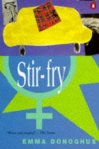
- A teenager who has a job cleaning hotels in Old Soul by Susan Barker and I Am, I Am, I Am by Maggie O’Farrell. (In Stir-Fry by Emma Donoghue, Maria is also a teenaged cleaner, but of office buildings.)
- A vacuum cleaner bag splits in Stir-Fry by Emma Donoghue and one story of Are You Happy? by Lori Ostlund – in the latter it’s deliberate, searching for evidence of the character’s late son after cleaning his room.
- An ailing tree or trees that have to be cut down in one story of The Accidentals by Guadalupe Nettel and The Lost Trees of Willow Avenue by Mike Tidwell.
- Buchenwald was mentioned in one poem each in A God at the Door by Tishani Doshi and The Ghost Orchid by Michael Longley.
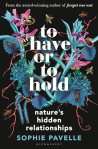
- A reference to Robin Wall Kimmerer’s Braiding Sweetgrass in To Have or to Hold by Sophie Pavelle and Human/Animal by Amie Souza Reilly.

- A mentally unwell woman deliberately burns her hands in I Am Clarence by Elaine Kraf and Every Day Is Mother’s Day by Hilary Mantel.
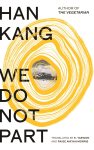
- A mention of the pollution caused by gas stoves in We Do Not Part by Han Kang and The Lost Trees of Willow Avenue by Mike Tidwell.
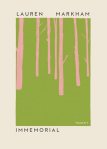
- An art installation involving part-buried trees was mentioned in Immemorial by Lauren Markham and then I encountered a similar project a few months later in We Do Not Part by Han Kang. Burying trees as a method of carbon storage is then discussed in The Lost Trees of Willow Avenue by Mike Tidwell.

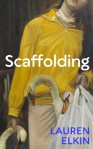
- Imagining the lives of the people living in an apartment you didn’t end up renting in Scaffolding by Lauren Elkin and one story of The Accidentals by Guadalupe Nettel.
- The Anthropocene is mentioned in Scaffolding by Lauren Elkin and The Alternatives by Caoilinn Hughes.
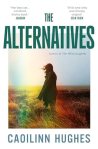
- I was reading three debut novels from the McKitterick Prize longlist at the same time, all of them with very similar page counts of 383, 387, and 389 (i.e., too long!).
- Being appalled at an institutionalized mother’s appearance in The End Is the Beginning by Jill Bialosky and Every Day Is Mother’s Day by Hilary Mantel.
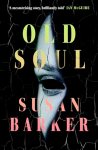 A remote artist’s studio and severed fingers in Old Soul by Susan Barker and We Do Not Part by Han Kang.
- A lesbian couple in New Mexico, the experience of being watched through a window, and the mention of a caftan/kaftan, in Old Soul by Susan Barker and one story of Are You Happy? by Lori Ostlund.
- Refusal to go to a hospital despite being in critical condition in I Am, I Am, I Am by Maggie O’Farrell and one story of Are You Happy? by Lori Ostlund.
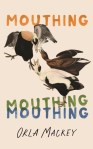
- It’s not a niche stylistic decision anymore; I was reading four novels with no speech marks at the same time: Old Soul by Susan Barker, Scaffolding by Lauren Elkin, The Alternatives by Caoilinn Hughes, and We Do Not Part by Han Kang. [And then, a bit later, three more: Wild Boar by Hannah Lutz, Mouthing by Orla Mackey, and How to Be Somebody Else by Miranda Pountney.]
 A lesbian couple is alarmed by the one partner’s family keeping guns in Spent by Alison Bechdel and one story of Are You Happy? by Lori Ostlund.
- Responding to the 2021 murder of eight Asian spa workers in Atlanta in Foreign Fruit by Katie Goh and Find Me as the Creature I Am by Emily Jungmin Yoon.
- Disposing of a late father’s soiled mattress in Mouthing by Orla Mackey and one story of Are You Happy? by Lori Ostlund.
 New York City tourist slogans in Apple of My Eye by Helene Hanff and How to Be Somebody Else by Miranda Pountney.
- A Jewish care home for the elderly in The End Is the Beginning by Jill Bialosky and Joanna Rakoff’s essay in What My Father and I Don’t Talk About (ed. Michele Filgate).
- A woman has no memory between leaving a bar and first hooking up with the man she’s having an affair with in If You Love It, Let It Kill You by Hannah Pittard and How to Be Somebody Else by Miranda Pountney.
 A stalker-ish writing student who submits an essay to his professor that seems inappropriately personal about her in one story of Are You Happy? by Lori Ostlund and If You Love It, Let It Kill You by Hannah Pittard.
- A pygmy goat as a pet (and a one-syllable, five-letter S title!) in Spent by Alison Bechdel and Sleep by Honor Jones.
- A Brooklyn setting and thirtysomething female protagonist in Sleep by Honor Jones, So Happy for You by Celia Laskey, and How to Be Somebody Else by Miranda Pountney.
- A mention of the American Girl historical dolls franchise in Sleep by Honor Jones and If You Love It, Let It Kill You by Hannah Pittard, both of which I’m reviewing early for Shelf Awareness.
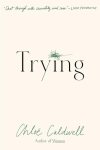 A writing professor knows she’s a hypocrite for telling her students what (not) to do and then (not) doing it herself in Trying by Chloé Caldwell and If You Love It, Let It Kill You by Hannah Pittard. These two books also involve a partner named B (or Bruce), metafiction, porch drinks with parents, and the observation that a random statement sounds like a book title.
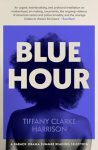
- The protagonist’s therapist asks her to find more precise words for her feelings in Blue Hour by Tiffany Clarke Harrison and So Happy for You by Celia Laskey.
- The protagonist “talks” with a dying dog or cat in The Möbius Book by Catherine Lacey and If You Love It, Let It Kill You by Hannah Pittard.
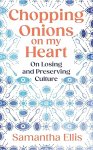 Shalimar perfume is mentioned in Scaffolding by Lauren Elkin and Chopping Onions on My Heart by Samantha Ellis.
- The Rapunzel fairytale is a point of reference in In the Evening, We’ll Dance by Anne-Marie Erickson and Secret Agent Man by Margot Singer, both of which I was reading early for Foreword Reviews.
What’s the weirdest reading coincidence you’ve had lately?
 Bookish Beck = Rebecca Foster. American transplant to England. Freelance proofreader and book reviewer.
 Bookish Beck