June Releases by Fiona Mozley, Heather Sellers & Myfanwy Tristram
This month I have a fiction–poetry–nonfiction trio covers fake memories, Florida’s beauty and weirdness, and the past 50 years of protests in the UK. I also excerpt my reviews of five June releases I read in advance for Shelf Awareness, including one that’s in the running for my Book of the Year.
Awake Awake by Fiona Mozley
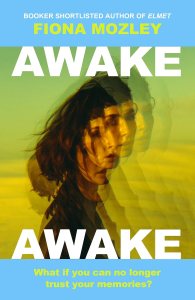 When writer Mary Mooney dives into her memories during appointments with her therapist, Sita, most of what comes up is the everyday stuff of her childhood in York: mild shenanigans with her younger brother, Jos; her friends Amelia and Eve plus Eric, a newcomer from New York City; and their wider circle. Early on, though, she warns readers that she’s untrustworthy. “In recent years, I have had difficulties with my memory,” she confesses. “It was not a sickness of forgetting. I did not have too few memories, but too many,” some of which couldn’t possibly be real – the best example being her conviction that her grandfather assassinated Hitler. She also tells Sita of a hotel fire and her rudeness to a couple of right-wing writers and journalists – things one does in dreams but not generally in real life.
The focus is on Mary and her peers’ formative teen years around the start of the Iraq War. In the final chapter, she offers a where-are-they-now for her closest friends. “Most of this is a verifiable journey through a life I really lived,” she notes, but “from hereon the fabrications begin.” This should have been an exciting revisiting of recent history in the company of an unreliable narrator, but everything about the novel is so dull that it was impossible to stay interested. It feels like pedestrian autofiction (insomuch as Mozley is from York and came of age in the same period as Mary, who is nominated for a major award for her first novel) drawing on a Blair-years upbringing. Mozley’s Elmet, which was shortlisted for the Booker Prize and the Sunday Times Young Writer of the Year Award, is one of my favourite debut novels of the last decade, so it’s a real shame that her subsequent work hasn’t lived up to that potential. Hot Stew (2021) was a DNF for me, a caricature-heavy London state-of-the-nation novel, and Awake Awake reads like a half-baked debut, not a world-class novelist’s third. Unless I hear rave reviews about a return to form in future, that’s it for me with Mozley.
With thanks to John Murray Publishers for the free copy for review.
Women in Tampa Talking about Alligators by Heather Sellers
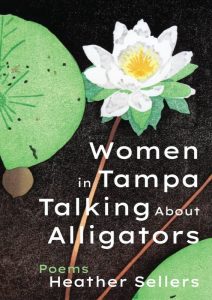 With such a title, how could you not want to read it?! In her fifth poetry collection, Sellers, a Florida native, recounts conversations with her neighbours, backyard sightings, and boat trips through swamp country. An appreciation of beauty rubs shoulders with awareness that it is threatened by climate breakdown and the state’s existential identity crisis. She describes Florida as “the thumbs-down thumb”; it “hangs on, for now, bobbing, / as she lowers into the dull warm blue sea.” Lovely poems about birds spin delightfully unexpected imagery: “watching the great white egret / stiletto across the jasmine fence, / black patent legs shining”. But they also contain barbs about the polluting influence of modern life (spot the alliteration and internal and slant rhymes):
Someone’s silvery phone gleaming underwater.
A fleet of rays flew between our little boats, skin kites on roller skates.
We discovered the things slung around the channel marker
was not a bird, just a plastic sack: the common, grey Florida Wal-Mart bag.
Cormorants dove into the chests of mangrove.
High above, paragraphs of frigates cursive-d land, land, land.
As winter and summer swap, the advantages and downsides of living in an identikit suburb mostly inhabited by retirees from elsewhere become clear. Nature is red in tooth and claw even in her garden, where crows prey on baby mockingbirds. Alligators are everywhere, and when “removed” for being a “nuisance” – in other words, interfering with human activity – their end reveals our inhumane priorities. “No? Seriously? They are euthanized? Euthanized for what, for living?” This is a terrific free verse collection at the intersection of the edenic and the diminished everyday. I would definitely read more by Sellers.
Published by Lynx House Press. With thanks to publicist Jeffrey Yamaguchi for the free e-copy for review.
Noisy Valley: The Art of Protest by Myfanwy Tristram
This is not a comprehensive history of protest but a snapshot of it over the past half-century or so, focussing on the Rhondda Valley in South Wales (not far from Cardiff), where a surprising number originated. The frame story is an exhibit of Tristram’s protest drawings at the Workers Gallery in Ynyshir, where she meets those featured. Each story is then expounded in turn, based on interviews with someone who led the protest or participated in it. We learn of miners’ strikes, a protest against a hospital closure, outrage over toxic runoff from a landfill, and a campaign to save Northern Meadows. One impetus was the worrying trend in the UK (and elsewhere) of governments cracking down on peaceful protests with overly harsh punishments.
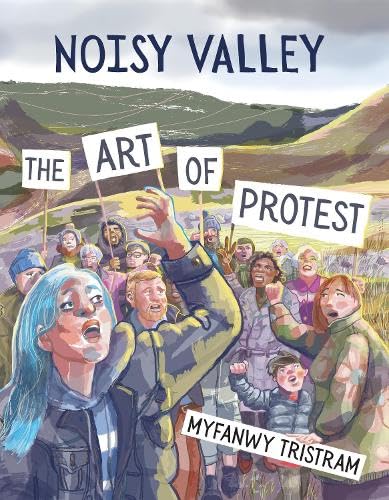
I was surprised to find that two of the chapters had local relevance for me: the Greenham Common women’s peace camp and the Aldermaston marches (part of the Campaign for Nuclear Disarmament). I was additionally taken aback to spot Martyn Joseph, a Welsh singer-songwriter we’re familiar with from Greenbelt Festival, turning up to sing a new bespoke version of “This Land Is Your Land” for a protest. I’m not fond of the talking heads approach to graphic nonfiction (also seen in Sexuality: A Graphic Guide and Trans History) or of the particular style here – monochrome in the main text with a few full-colour pages plus in the asides on the history of protest and changing regulations. I preferred the spreads focusing on landscapes. However, this is a worthwhile project and I particularly appreciated the below quote, which captures my feeling about the environmental marches I’ve been on in London.
You might find this a bit weird, but I never really thought that protest ever achieves its purpose. We still have nuclear weapons, you know. But it is worthwhile. My feeling is that protest is wonderful because it brings people together as a social group. The meeting of hearts and minds. I would argue that’s very positive.
~David Hurn, Aldermaston photographer
With thanks to SelfMadeHero for the free copy for review.
Reviewed for Shelf Awareness:
 The Daffodil Days by Helen Bain: A remarkable debut novel about the last years of Sylvia Plath’s life. I’ve already discussed it here.
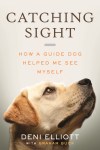 Catching Sight: How a Guide Dog Helped Me See Myself by Deni Elliott with Graham Buck: Elliott was diagnosed as legally blind as an adult, though she’d always had limited vision. She explores her relationships with five very different dogs and introduces the process of training guide dogs in this heartwarming story of human–animal connection and resilience.
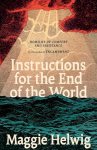 Instructions for the End of the World: Homilies of Comfort and Resistance by Maggie Helwig: Helwig is the rector of inner-city Toronto’s St. Stephen-in-the-Fields. Her stirring sermons espouse a practical, progressive theology and affirm the power of solidarity and the commitment to social justice in turbulent times (including the pandemic years).
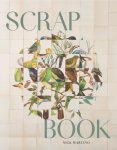 Scrap Book by Nick Martino: Martino’s formally inventive debut poetry collection draws on his mother’s journals and 1980s Polaroids to capture a Midwestern family dynamic overshadowed by divorce and his father’s incarceration.
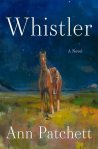 Whistler by Ann Patchett: Patchett is a master on the subject of family dysfunction, and her tenth novel, a stepdaughter–stepfather love story, is as wise as ever on secrets, traumatic memories, and storytelling. This is one of my top three books of 2026 so far, along with Brawler and John of John.
Which of these June releases have you read, or will you seek out now? What am I missing out on?
 Bookish Beck = Rebecca Foster. American transplant to England. Freelance proofreader and book reviewer.
