September Releases by Ilić, Lowe, McCallum, Philyaw & Temple
Dreamlike pandemic-era comics, cold-water swimming in Scottish lochs, poetry about art and a mixed-race heritage, a cheeky novel about beauty queens and Black church politics, and a laugh-out-loud guide to how (not) to traverse a midlife crisis: some great books came my way last month!
Nightmares and Daydreams: A.C. 2020 by Mirko Ilić
 “A.C.” stands for “After Covid.” In 2020, the Bosnian-born, New York City-based artist started drawing comics again after many years. These wordless, one-page, greyscale pieces explore the emotions of the pandemic era, with entrapment, surrealism and startling violence as recurring elements. Ilić plays with scale, scope and time. There are Escher-like optical illusions and mise-en-abîme effects. People meld with each other, metamorphose or disappear. A multi-lane city street splits open to reveal a chasm that swallows the cars and pedestrians and then closes back up as if nothing ever happened. The artist himself seems to appear in a number of scenes, looking out windows, sleeping in a coffin-like box or watching porn on his computer. There are a number of images that verge on the pornographic, in fact, with naked women and a dominatrix. (Shara McCallum (below) voices my reaction to these in “The Nude”: “Don’t offer me a neatly trimmed or, God forbid, / shaved, depilated, waxed, exfoliated c**t.) Disappointingly, Ilić lists his inspirations in a “Visual reference index” at the end, which rather spoils the mystery. I knew without consulting it that spread 29, in which a bedbound old man reaches out his arm and clenches his fist in front of a portrait of Dylan Thomas, was an allusion to “Do not go gentle into that good night.” That was one of my favourites in an inventive and striking but sometimes vulgar work.
With thanks to SelfMadeHero for the free copy for review.
Shiver: The Lessons of the Lochs by Brigid Lowe
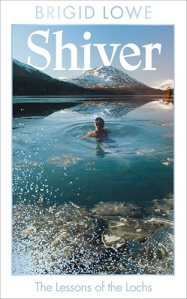 When Brigid Lowe’s marriage broke down, she moved with her three children from northern England to an Edinburgh flat. Feeling simultaneously unmoored and free in her early forties, she undertook an ongoing challenge-to-self to swim in 1,000 of Scotland’s lochs (there are 30,000 in total). “I am a fanatic. I swim outside now most days,” she confesses. For her, cold-water swimming means “taking in, and being taken in, by each loch and each moment on its own terms. There is no template.” Although she argues for the uniqueness of each loch, I found that the story quickly grew repetitive. Lowe is so sparing with personal details that I didn’t feel as engaged as I might have been with the overlaid narrative of her transformation from a traumatised wanderer to a strong, rooted matriarch. A prime example is her rape, which she refuses to name as such and recounts, in vague terms, in two pages. I’ve read a spate of swimming memoirs now, among them Freya Bromley’s The Tidal Year, Ruth Fitzmaurice’s I Found My Tribe and Jessica J. Lee’s superlative Turning, and it takes a lot for a book to hold its head up above that flood. I thought the setting of Scotland – her zeal for which I share (“Sometimes you fall in love with a place, and it’s as mysterious as any falling in love”) – would be that point of difference. While the prose is sumptuous and I enjoyed the glimpses of Scottish landscapes and wildlife across the seasons, they weren’t enough to hold my interest. The frequent references to Celtic legends, with a feminist slant, means that, in addition to swimming enthusiasts, I’d be more likely to recommend this to readers of works such as Sharon Blackie’s If Women Rose Rooted than to memoir junkies or tourists.
With thanks to Elliott & Thompson for the free copy for review.
Behold by Shara McCallum
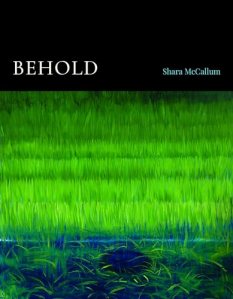 McCallum’s seventh book is a lush collection of ekphrastic poems (responses to artworks) and reflections on Jamaican American ancestry. In “Self-Portrait” – the first in a series with that heading – those major themes blend beautifully with a hefty dollop of assonance and sibilance: “At this point, I don’t know what in me is Jamaican / versus American. … since / we’re on the topic of the singular, about this subject: / she’s awfully tired of being parsed to see if she’s a fraud.” She applies art terms to the self: “Chiaroscuro” for a mixed-race identity and “Craquelure” for the wrinkles that provide “evidence of my ravishment” by time. Passion for art history (especially art by women and people of colour) meets fervour for social justice as McCallum exposes “the casual violence of misseeing” – who would look twice at the photograph of her Jamaican grandmother sweeping in midlife? I was unfamiliar with most of the artists and works featured, but that was fine; I almost didn’t want to look them up lest I spoil the magic of both by comparing the image with the poem.
With thanks to Alice James Books for the advanced e-copy for review.
The True Confessions of First Lady Freeman by Deesha Philyaw
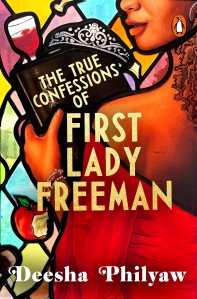 Philyaw’s 2020 short story collection, The Secret Lives of Church Ladies, was a surprise hit and set the bar high for her debut novel. Luckily, this lives up to the promise of her first book, which I called “bold and sexy,” and is all the more provocative for being set in the rarefied world of Southern U.S. Black megachurch pastors and their wives. Scharisse Freeman came from poverty, born to a single teenage mother who died of breast cancer when Scharisse was an adolescent. When she married David, 15 years her senior, it wasn’t unlike ascending to royalty. Together, they’ve raised a daughter, built a thousands-strong congregation, and lent their brand to everything from relationship books to salad dressing. At home they have a personal chef (David’s cousin Marcus) and an ice cream parlor. Schar seems like a shoo-in to win the annual First Lady pageant, but that’s before a scandal breaks linking her to her nemesis Daphne Lancaster’s husband, Jeddah, a mayoral candidate and inveterate adulterer also based in their town of Belleton, Georgia. Deciding how to refute the false allegations opens Schar’s eyes to her husband’s and the church’s priorities and uncovers a shocking secret about her father’s identity and the real cause of her mother’s death. Along the way, she tries to fix her relationship with her estranged bestie Petra, who is Black British and lesbian.
Fun fact you probably didn’t know about me: I grew up attending a Black megachurch in the Washington, D.C. metropolitan area. I recognised so much here: the opulence, the scripture quoting, the high fashion. A few names of public figures are real (Creflo Dollar and his yacht!); most other details are made up but totally believable if you’re at all familiar with this world. The novel is a little overlong (400+ pages) and soapy, but Schar’s voice is so fun and sassy that it carries the whole thing. Her footnotes and comebacks are hilarious, and you’ll want to cheer as she defies convention and blazes a trail for herself. (Read via NetGalley)
A Very British Midlife Crisis: A Survival Guide to the Best Years of Your Life by Rob Temple
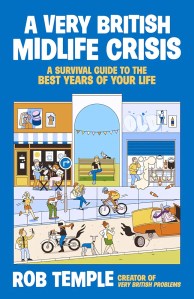 I started reading the Very British Problems series (which arose from a Twitter account of the same name) from the beginning, with the launch of Temple’s first book in 2013. Though I’ve missed some of the sequels, I’m delighted that this one unexpectedly dropped through my letterbox. I laughed and grimaced my way from start to finish; I could recognize pretty much every nonsensical decision, pathetic impulse, odd habit, and crotchety opinion. Not all of them are applicable to me, I hasten to add, but might be quirks I’ve observed in others of my generation or above. Temple proceeds thematically, considering health and work challenges, fashion, exercise, relationship and parenting issues, and so on. He translates dating profile phrases and rates hobbies by their potential regret value. Occasionally, his wife offers a female perspective. I probably guffawed the most at the section where he goes to a student house party as research (“I felt a TREMENDOUS urge to clean the bathroom”) and the glossary at the end (sample entries: “Being Knackered: Your permanent energy level,” “Cancelled Plans: Your favourite thing in the whole wide world”). This is silly, sure, but also warm and relatable. I think any reader of a certain age would get a kick out of it. I plan to pass my copy on to my brother-in-law, who turns 40 next month.
With thanks to Allen & Unwin for the free copy for review.
More to come: A sci-fi pairing as Under Story by Chloe Benjamin goes head to head with Exit Party by Emily St. John Mandel.
Which of these September releases have you read, or will you seek out now? What am I missing out on?
Six Degrees of Separation: From Sorrow and Bliss to Weather
This month we begin with Sorrow and Bliss by Meg Mason. (See also Kate’s opening post.) This is my personal favourite from the Women’s Prize shortlist and couldn’t be a better pick for the Six Degrees starter this month because I’ll be skimming back through the novel this weekend in advance of my book club’s discussion of it on Monday. (We’re one of this year’s six book groups shadowing the Women’s Prize through a Reading Agency initiative, so we then have to give semi-official feedback on our experience of the book by Wednesday.)

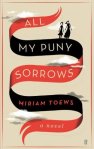 #1 Sorrow and Bliss is a terrific tragicomedy about sisterhood and mental health – as is All My Puny Sorrows by Miriam Toews, with which it shares a loaded title word as well.
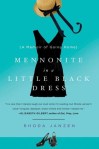 #2 Toews grew up in a Canadian Mennonite community, which leads me to my second choice, Mennonite in a Little Black Dress by Rhoda Janzen, a set of droll autobiographical essays that I read on a USA trip in 2017.
 #3 During the same trip, I read Dear American Airlines by Jonathan Miles, a witty novel about Bennie Ford’s rather miserable life, presented in the form of his longwinded complaint letter to the airline that has treated him to an unexpected overnight layover in Chicago.
 #4 Another laugh-out-loud book in the form of unlikely letters: Dear Committee Members by Julie Schumacher, in which Jason Fitger, an irascible middle-aged English professor in the Midwest, writes ambivalent letters of recommendation for students and colleagues.
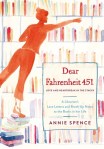 #5 One more “Dear” book of letters – I just can’t get enough of the epistolary form: Dear Fahrenheit 451 by Annie Spence. As the subtitle states, it’s a librarian’s love letters and breakup notes to books she’s adored and loathed. Casual and amusing, with good book recs.
 #6 I’ll finish with Weather by Jenny Offill, one of my favourites from 2020, which is also voiced by a librarian. Through Lizzie, Offill captures modern anxiety about Trump-era politics, the climate crisis and making meaningful use of time.
I have read all the books in this month’s chain (the links above are to my Goodreads reviews), and in a time of relentless bad news have chosen to prioritize humour and keep my descriptions short and light. These are all books that made me laugh, sometimes despite their weighty content, and half of them are built around letters. I’ve also looped from one Women’s Prize-shortlisted title to another.
Where will your chain take you? Join us for #6Degrees of Separation! (Hosted on the first Saturday of each month by Kate W. of Books Are My Favourite and Best.) Next month’s starting point will be Wintering by Katherine May – though it’s summer here, it’s winter where Kate is in Australia!
Have you read any of my selections? Tempted by any you didn’t know before?
Calypso by David Sedaris
“Why Aren’t You Laughing?” is one of the essay titles in Calypso, David Sedaris’s tenth book; it’s an ironically appropriate question you might ask of the whole book. It’s not that this isn’t funny – it is, very much so, in places – but that there’s a melancholy aura I hadn’t sensed in his work before. “Now We Are Five,” the second piece, sets the tone, explaining that Tiffany, Sedaris’s youngest sister, committed suicide in 2013, aged 49. He hadn’t spoken to her for the eight years prior to that. The siblings learn that she did it with pills plus a plastic bag over her head. These facts are just thrown out there for us: there’s no getting around how horrific it all was, but Sedaris doesn’t do much obvious hand-wringing or soul-searching.

Tiffany’s suicide is an occasional point of reference in these 21 short essays, as is their mother’s alcoholism and death from cancer. The remaining middle-aged family members – and their 90-something dad – make an effort to stay close, chiefly through meet-ups at the beach cottage Sedaris and his partner, Hugh Hamrick, buy in Emerald Isle, North Carolina. They name the place Sea Section, and it’s the setting for about a third of the book. Two-thirds of these essays were published previously, which entails some repetition, especially in the setup of each piece. I wondered if an adjustment to the sequencing and some editing out of repeated details could have made the Emerald Isle material flow together a bit better.
Sedaris’s trouble communicating with his father, a thrift-conscious hoarder, is one major theme of the book. “We’re like a pair of bad trapeze artists, reaching for each other’s hands and missing every time,” he writes. Their relationship mostly consists of trying to avoid talk of politics lest his father spout pro-Trump propaganda, and his father nagging him about his health. Despite advancing age, Sedaris’s medical crises are trivial and turned to humorous effect: broken ribs from falling off a ladder, an awful stomach virus that provides scatological background to a reading tour, and a fatty tumor he decides to freeze and feed to the snapping turtles the next time he’s on Emerald Isle.* O-kaaaay.
There are echoes of Me Talk Pretty One Day and When You Are Engulfed in Flames in the delight in languages and travel. “Your English Is So Good” skewers the annoyances of small talk and jargon, especially as used by waitstaff and shop assistants. Another essay is about what people in various countries shout when they get cut off in traffic – unsurprisingly, this one is rather foul-mouthed. Sedaris gets addicted to clothes shopping in Tokyo and obsesses over achieving his daily Fitbit steps goal while litter picking near his home in West Sussex. Some of my favorite essays were “A Modest Proposal,” reflecting on the Supreme Court’s legalization of gay marriage; “Untamed,” about feeding a local fox; and “Boo-Hooey,” in which he scoffs at ghost stories yet wonders if his dead mother visits him in dreams.
This collection doesn’t quite live up to the two I’ve already mentioned, and there were moments when I was put off by the author’s unthinking adherence to a luxurious lifestyle, but this is a solid book you wouldn’t have to be an existing fan to enjoy.
Favorite lines:
“The battle for gay marriage was, in essence, the fight to be as square as straight people, to say things like ‘My husband tells me that the new Spicy Chipotle Burger they’ve got at Bennigan’s is awesome!’”
“We’re not pessimists, exactly, but in late middle age, when you envision your life ten years down the line, you’re more likely to see a bedpan than a Tony Award.”
My rating: 
*The topic of the title essay. He’s affronted when he learns that the local kids know about ‘his’ snapping turtle and even have a name for it – he likens this to finding out that your cat is being secretly fed by the neighbors, who call it “Calypso.” It’s an obscure reference, definitely; then again, this is the same man who titled books Dress Your Family in Corduroy and Denim and Let’s Explore Diabetes with Owls. The cover design even has some slight relevance within the book: “Calypso” mentions an old friend he meets up with on an American book tour, Janet, and her woodgrain art.
Calypso comes out today, July 5th, in the UK from Little, Brown. It was released in the USA on May 29th. My thanks to the publisher for sending a free copy for review.
 Bookish Beck = Rebecca Foster. American transplant to England. Freelance proofreader and book reviewer.
