#ParisInJuly2026, I: Kiran Millwood Hargrave, Deborah Levy & Chris Newens
I wouldn’t want to be in Paris right now – continental Europe is far too hot in high summer and in recent years the UK has been following suit – but I am having such fun travelling there through books. I have a fantastic stack of Paris-set novels and memoirs on the go, perfect for sinking into on long afternoons and evenings while I hide from the second round of the heat wave in our relatively cool lounge. These first four selections were corkers! I mostly read them earlier: in May, or across several years, or started in January but only just finished. And what a treat they all were: an epic yet intimate queer romance, two auto/fiction hybrids about making a life as an unconventional woman, and a tour through Paris food, district by district.

Almost Life by Kiran Millwood Hargrave (2026)
There has been homoerotic content in Hargrave’s previous fiction for adults, but this is a full-blown queer love story that, with its time span (1978 to 2013) and heft, feels momentous, like a future classic. Erica is an earnest 18-year-old tourist experiencing Paris before starting at UEA. She meets Laure, an older, cynical Sorbonne art history student, on the steps of the Sacré-Coeur: drawn to her not just because they’re reading the same book (A Lover’s Discourse by Roland Barthes) but also because Laure looks so perfectly Parisian there in a louche sprawl, smoking a cigarette. Laure is a confirmed lesbian, whereas Erica was previously straight. It’s coup de foudre for sure. Laure has been with many women, including married ones, but what she feels for Erica is different, and Erica leaving at the end of the summer is such a blow that her problem drinking gets out of control.
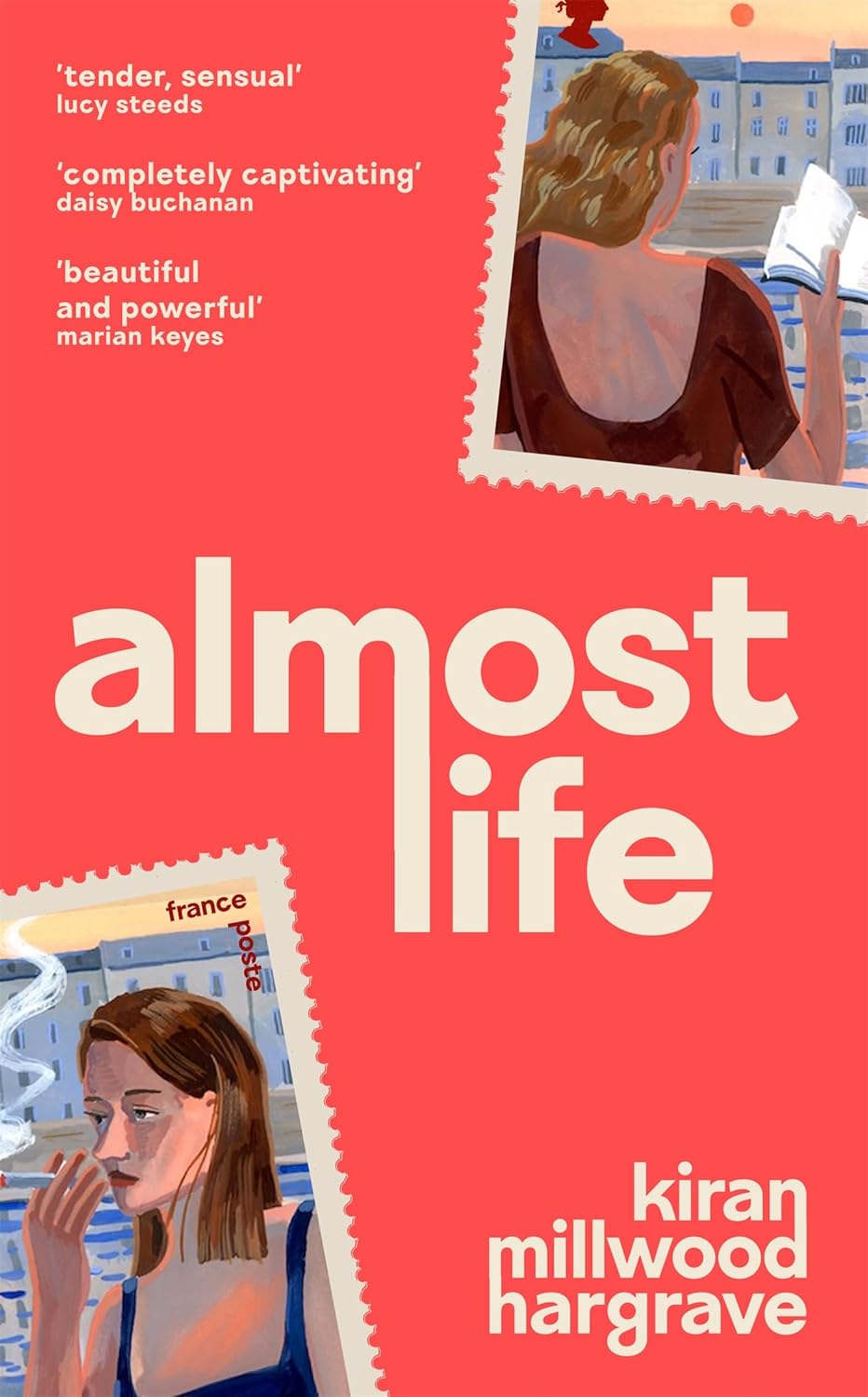
Comparisons with One Day by David Nicholls are inescapable what with the structure of jumping ahead by a few years with each section, although I’d argue that this is more similar to The Versions of Us by Laura Barnett and The Heart’s Invisible Furies by John Boyne. Hargrave’s close third-person narration alternates between her two protagonists and occasionally documents their interactions, though they keep missing their chance to be together. On two occasions Erica doesn’t write or visit when she should; twice they resume their love affair and could have gotten back together, but by then one or both has another partner. (Erica marries a Creative Writing MA classmate and they have two daughters.) The social context is important: they lose a dear friend to the AIDS crisis and Hargrave carefully bookends the action to show an advance in LGBTQ rights: early on, the characters are caught up in an attack on a gay bar in 1978; in the last pages, France legalizes same-sex marriage.
Thirty-five years is a long time in any relationship, but Erica and Laure’s is repeatedly strained by absence and perceived betrayals. They each, separately, go through a lot, including bereavements, addiction, mental health issues, and career disappointments. I thought the novel might have a speculative element, contrasting their potential life together with their divergent trajectories. In fact, only in one brief instance does Hargrave offer an alternative version of how things might have gone. Instead, the focus is on moments when fear or negligence stopped one of them from reaching out. I quibbled with a few seeming anachronisms and errors but overall found this delicious, touching, and even strangely close to home sometimes. Paris itself is a star, its museums, bars, and streets a perfect backdrop; Monet’s gardens and the Norfolk coast are appealing settings, too. This was a sweet, sexy, sobering read I can wholeheartedly recommend. (Public library) 
A linking passage:
“They went together to the Père-Lachaise and Erica pulled a button off her shirt to put on Gertrude Stein’s grave. Laure was amazed she knew Tender Buttons but not that Gertrude Stein had loved a woman. She did not want to be the lesbian prophet to this girl, but she could not help herself.”
My Year in Paris with Gertrude Stein: A Fiction by Deborah Levy (2026)
“Gertrude Stein said that’s enough. (I know that that’s not enough now.)”
~from “Roseability” by Idlewild – enjoy the c. 2000 Scottish punk!
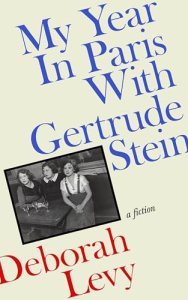
Here’s the good news: You don’t need to know anything – or particularly care – about Gertrude Stein to enjoy this. Even not having read any Stein, just having read about her, it was clear to me that the style is an homage in places (repetition, scant punctuation). But where Stein’s is famously cryptic, Levy’s prose is crystal-clear as usual. There’s a gauzy fictional storyline in which the narrator is wrestling with an inchoate essay about Gertrude Stein. (Rather like Geoff Dyer trying to write about D.H. Lawrence in Out of Sheer Rage.) She has two close friends: Eva is a graphic novelist with an international background, currently separated from a husband back in Seattle; Fanny is a polyamorous French lesbian who works in finance and, no matter the topic, tells it like it is. A mystery of sorts arises in the form of Eva’s lost cat, Bob. Fanny has heard about a cat found drowned in the canal and they later meet a Frenchman whose cat was stolen. (It’s unclear whether it’s all one and the same cat.)
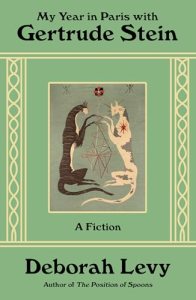
Cute American cover (though the British one is probably more apt).
The narrator alternates between this minor intrigue, biographical fragments about Stein, and her struggle to know how to capture her subject in words. Stein was brought up in a German Jewish household in Pennsylvania and failed her medical school exams at Johns Hopkins. In Paris she lived with Alice B. Toklas as she pleased, without apology: an artist’s muse, intellectual and author inspired by “early psychology and cubism.” Levy clearly admires Stein for pushing the boundaries of literature and of life, paving the way for so many. I wasn’t sure that the ‘story’, such as it is, matters here, or at least not as much as the biography and pastiche. Levy is very much in Ali Smith territory here. In any case, I found it playful, sophisticated and beguiling. There are so many plainly put but brilliant lines:
“Stein put her immense writing energies into making sure she was not understood. This is what interested me most about her writing. She did not believe it is worth having a conversation if everything is understandable.”
“Every century needs an artist to dismantle coherence as we have been taught it and make a space for something new to happen.”
I have a copy of The Autobiography of Alice B. Toklas that I’m going to attempt soon…
(Public library)
Real Estate by Deborah Levy (2021)
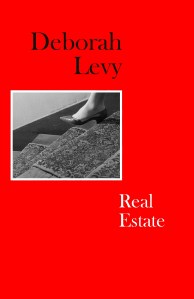 I’m not sure why it took me so long to read the final volume of Levy’s so-called Living Autobiography. I started it in August 2022: perfect timing because that was the year we bought our first house. But I left it part-read on a shelf until April. It’s not my favourite of the trilogy – that’s The Cost of Living, which is perfect – but I appreciated it a lot more than Things I Don’t Want to Know, which felt forced. Levy paints her life as restless, nomadic; to an extent, she likes it that way. She flits between London and Paris, attends a literary festival in India and takes an extended holiday in Greece. At age 60, single and with adult daughters, she doesn’t have to answer to anyone. Yet she longs for a home of her own – a deep sense of fulfilment that perhaps can’t be bought along with a piece of property. Is it a paradox to desire grounding but also freedom? That’s the main question that Levy explores here, and you can see why Stein would become a model for her (Leonora Carrington is another in this book). “It seemed to me all over again that in every phase of living we do not have to conform to the way our life has been written for us, especially by those who are less imaginative than ourselves.” This is incredibly quotable, and really a perfect book for every woman of a certain age as we come to resemble our mothers and ponder how to go on constructing ourselves through words and relationships.
to think and feel and live and love more freely is the point of life
So then, now that I was a sixty-year-old female character, both unwritten and constantly rewriting the script, what did I value, own, discard and bequeath?
Levy has an enviable talent for simplicity and clarity, but simultaneous impact and meaning. I’d be lucky to ever write anything autobiographical that has half as much elegance and power as her work. (New purchase – Amazon?) 
Moveable Feasts: A Story of Paris in Twenty Meals by Chris Newens (2025)
Newens, an English journalist, grew up working in his family bakery and tea rooms, so knew of the hard labour and long, early hours that daily food preparation requires. He’d lived in Paris for a decade when he decided that his strategy for getting a broader understanding of his adopted city would be through its cuisine. Arrondissement by arrondissement, he explores culinary landmarks and famous dishes, choosing one recipe from each to recreate in his kitchen. Some of these are familiar French staples such as croissants, crêpes, macarons, a goat’s cheese salad and tartiflette. Others aren’t so much a recipe as a serving suggestion: fresh oysters, an omelette with no ingredients beyond 3 eggs, pre-packaged escargots. Tourist food can be good or terrible, depending on where you go.
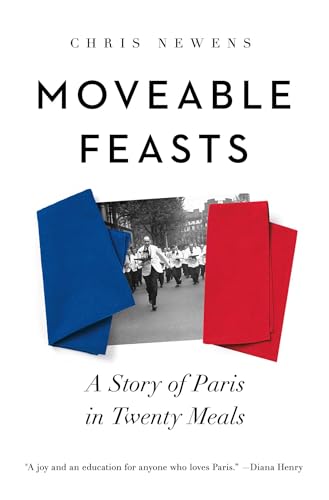 To get beyond clichés and give an accurate portrait of Paris, Newens realized, it’s essential to include ethnic dishes such as banh mi, couscous, falafel, kebabs (made of equal parts lamb belly and turkey thigh meat) and meen puyabaisse (a Tamil-fusion fish stew – A Waiter in Paris taught me that many of the city’s food service workers are from Sri Lanka) to reflect the many immigrant cultures that call Paris home. To mix things up, he sometimes strays from the usual format of meeting with restaurant staff and learning a dish from them. One chapter is an elegy for the family friend through whom he first discovered French food. In others he is surprised by the delicious/awful fare on offer at a Paris soup kitchen/sex club. Ultimately, he concludes that what sets the food in France apart, no matter the cuisine in question, is the quality of the produce, so his final trip is to Rungis, the largest produce market in the world, which supplies most of Paris’s food needs at some times of year. He then ties it all together by hosting a picnic where guests cook one of his 20 recipes to bring.
This is the best sort of armchair travelling, where you get to experience the deliciousness and excitement vicariously and can be relieved that you’ve avoided all the inconvenient or embarrassing realities of interviewing strangers. I also learned a fair bit about the different districts’ personalities and how tradition meets modernity in French food. Food is a daily chance at pleasure and I just love reading about it (even though I don’t cook). Newens won a Jane Grigson Trust Award for New Food and Drink Writers, and with his curiosity and sense of humour it’s easy to see why. (Read via Edelweiss)
The Best Books from the First Half of 2023
Yes, it’s that time of year already! It remains to be seen how many of these will make it onto my overall best-of year list, but for now, these are my 20 highlights. Plus, I sneakily preview another great novel that won’t release until September. (For now I’m highlighting 2023 releases, whereas at the end of the year I divide my best-of lists into current year and backlist. I’ve read 86 current-year releases so far and am working on another 20, so I’m essentially designating a top 20% here.) I give review excerpts and link to the full text from this site or elsewhere. Pictured below are the books I read in print; all the others were e-copies.

Fiction
 Shoot the Horses First by Leah Angstman: In 16 sumptuous historical stories, outsiders and pioneers face disability and prejudice with poise. The flash entries crystallize moments of realization, often about health. Longer pieces shine as their out-of-the-ordinary romances have space to develop. In the novella Casting Grand Titans, a botany professor in 1850s Iowa learns her salary is 6% of a male colleague’s. She strives for intellectual freedom, reporting a new-to-science species of moss, while working towards liberation for runaway slaves.
 The House Is on Fire by Rachel Beanland: Moving at a propulsive pace, Beanland’s powerful second novel rotates through the perspectives of these main characters – two men and two women; two white people and two enslaved Black people – caught up in the Richmond Theater Fire of 1811 (one of the deadliest events in early U.S. history) and its aftermath. Painstakingly researched and full of historical detail and full-blooded characters, it dramatizes the range of responses to tragedy and how people rebuild their lives.
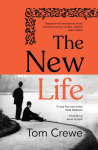 The New Life by Tom Crewe: Two 1890s English sex researchers (based on John Addington Symonds and Havelock Ellis) write a book called Sexual Inversion drawing on ancient Greek history and containing case studies of homosexual behaviour. Oscar Wilde’s trial puts everyone on edge; not long afterwards, their own book becomes the subject of an obscenity trial, and each man has to decide what he’s willing to give up in devotion to his principles. This is deeply, frankly erotic stuff, and, on the sentence level, just exquisite writing.
 Daughters of Nantucket by Julie Gerstenblatt: (Yes, another historical fire novel, and I reviewed both for Shelf Awareness!) This engrossing debut explores the options for women in the mid-19th century. Metaphorical conflagrations blaze in the background in the days leading up to the great Nantucket fire of 1846: each of three female protagonists (a whaling captain’s wife, a museum curator, and a pregnant Black entrepreneur) holds a burning secret and longs for a more expansive, authentic life. Tense and sultry; for Sue Monk Kidd fans.
 I Have Some Questions for You by Rebecca Makkai: When an invitation comes from her boarding school alma mater, Granby, to teach a two-week course on podcasting, Bodie indulges her obsession with the 1995 murder of her former roommate. Makkai has taken her cues from the true crime genre and constructed a convincing mesh of evidence and theories. She so carefully crafts her pen portraits, and so intimately involves us in Bodie’s psyche, that it’s impossible not to get invested. This is timely, daring, intelligent, enthralling storytelling.
 Sidle Creek by Jolene McIlwain: In this debut collection of 22 short stories, loosely linked by their location in the Appalachian hills in western Pennsylvania and a couple of recurring minor characters, McIlwain softens the harsh realities of addiction, poverty and violence with the tender bruises of infertility and lost love. Grief is a resonant theme in many of the stories, with pregnancy or infant loss a recurring element. At times harrowing, always clear-eyed, these stories are true to life and compassionate about human foibles and animal pain.
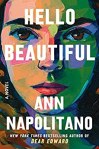 Hello Beautiful by Ann Napolitano: Oprah’s 100th book club pick. It’s a family story spanning three decades and focusing on the Padavanos, a working-class Italian American Chicago clan with four daughters. Julia meets melancholy basketball player William Waters while at Northwestern in the late 1970s. There is such warmth and intensity to the telling, and brave reckoning with bereavement, mental illness, prejudice and trauma. I love sister stories in general, and the subtle echoes of Leaves of Grass and Little Women add heft.
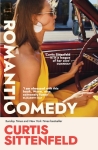 Romantic Comedy by Curtis Sittenfeld: Through her work as a writer for a sketch comedy show modelled on Saturday Night Live, Sally Milz meets Noah Brewster, a pop star with surfer-boy good looks. Plain Jane getting the hot guy – that never happens, right? In fact, Sally has a theory about this very dilemma… As always, Sittenfeld’s inhabiting of a first-person narrator is flawless, and Sally’s backstory and Covid-lockdown existence endeared her to me. Could this be called predictable? Well, what does one want from a romcom?
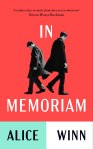 In Memoriam by Alice Winn: Heartstopper on the Western Front; swoon! Will Sidney Ellwood and Henry Gaunt both acknowledge that this is love and not just sex, as it is for so many teenage boys at their English boarding school? And will one or both survive the trenches of the First World War? Winn depicts the full horror of war, but in between there is banter, friendship and poetry. Some moments are downright jolly. This debut is obsessively researched, but Winn has a light touch with it. Engaging, thrilling, and, yes, romantic.
A bonus:
 The Vaster Wilds by Lauren Groff (Riverhead/Hutchinson Heinemann, 12 September): Groff’s fifth novel combines visceral detail and magisterial sweep as it chronicles a runaway Jamestown servant’s struggle to endure the winter of 1610. Flashbacks to traumatic events seep into her mind as she copes with the harsh reality of life in the wilderness. The style is archaic and postmodern all at once. Evocative and affecting – and as brutal as anything Cormac McCarthy wrote. A potent, timely fable as much as a historical novel. (Review forthcoming for Shelf Awareness.)
Nonfiction
 All My Wild Mothers by Victoria Bennett: A lovely memoir about grief and gardening, caring for an ill child and a dying parent. The book is composed of dozens of brief autobiographical, present-tense essays, each titled after a wildflower with traditional healing properties. The format realistically presents bereavement and caring as ongoing, cyclical challenges rather than one-time events. Sitting somewhere between creative nonfiction and nature essays, it’s a beautiful read for any fan of women’s life writing.
 Monsters by Claire Dederer: The question posed by this hybrid work of memoir and cultural criticism is “Are we still allowed to enjoy the art made by horrible people?” It begins, in the wake of #MeToo, by reassessing the work of film directors Roman Polanski and Woody Allen. The book is as compassionate as it is incisive. While there is plenty of outrage, there is also much nuance. Dederer’s prose is forthright and droll; lucid even when tackling thorny issues. Erudite, empathetic and engaging from start to finish.
 Womb by Leah Hazard: A wide-ranging and accessible study of the uterus, this casts a feminist eye over history and future alike. Blending medical knowledge and cultural commentary, it cannot fail to have both personal and political significance for readers of any gender. The thematic structure of the chapters also functions as a roughly chronological tour of how life with a uterus might proceed: menstruation, conception, pregnancy, labour, caesarean section, ongoing health issues, menopause. Inclusive and respectful of diversity.
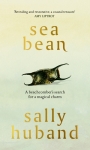 Sea Bean by Sally Huband: Stories of motherhood, the quest to find effective treatment in a patriarchal medical system, volunteer citizen science projects, and studying Shetland’s history and customs mingle in a fascinating way. Huband travels around the archipelago and further afield, finding vibrant beachcombing cultures. In many ways, this is about coming to terms with loss, and the author presents the facts about climate crisis with sombre determination. She writes with such poetic tenderness in this radiant debut memoir.
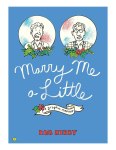 Marry Me a Little by Robert Kirby: Hopping around in time, this graphic memoir tells the story of how the author and his partner John decided to get married in 2013. The blue and red color scheme is effective at evoking a polarized America and the ebb and flow of emotions, with blue for calm, happy scenes and concentrated red for confusion or anger. This is political, for sure, but it’s also personal, and it balances those two aims well by tracing the history of gay marriage in the USA and memorializing his own relationship.
 All of Us Together in the End by Matthew Vollmer: In 2019, Vollmer’s mother died of complications of Alzheimer’s and Parkinson’s. Months later, his father reported blinking lights in the woods near the family cemetery. Although Vollmer had left the Seventh-Day Adventist Church in college, his religious upbringing influenced his investigation, which overlapped with COVID-19. Grief, mysticism, and acceptance of the unexplained are resonant themes. An unforgettable record of “a collision with the ineffable.”
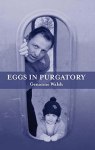 Eggs in Purgatory by Genanne Walsh: This autobiographical essay tells the story of the last few months of her father’s life. Aged 89, he lived downstairs from Walsh and her wife in San Francisco. He was quite the character: idealist, stubborn, outspoken; a former Catholic priest. Although he had no terminal conditions, he was sick of old age and its indignities and ready to exit. The task of a memoir is to fully mine the personal details of a situation but make of it something universal, and that’s just what she does here. Stunning.
Poetry
 More Sky by Joe Carrick-Varty: In this debut collection, the fact of his alcoholic father’s suicide is inescapable. The poet alternates between an intimate “you” address and third-person scenarios, auditioning coping mechanisms. His frame of reference is wide: football, rappers, Buddhist cosmology. The word “suicide” itself is repeated to the point where it becomes just a sibilant collection of syllables. The tone is often bitter, as is to be expected, but there is joy in the deft use of language.
 Lo by Melissa Crowe: This incandescent autobiographical collection delves into the reality of sexual abuse and growing up in rural poverty. Guns are insidious, used for hunting or mass shootings. Trauma lingers. “Maybe home is what gets on you and can’t / be shaken loose.” The collection is so carefully balanced in tone that it never feels bleak. In elegies and epithalamiums (poems celebrating marriage), Crowe honors family ties that bring solace. The collection has emotional range: sensuality, fear, and wonder at natural beauty.
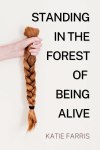 Standing in the Forest of Being Alive by Katie Farris: This debut collection addresses the symptoms and side effects of breast cancer treatment at age 36, but often in oblique or cheeky ways – it can be no mistake that “assistance” appears two lines before a mention of haemorrhoids, for instance, even though it closes an epithalamium distinguished by its gentle sibilance (Farris’s husband is Ukrainian American poet Ilya Kaminsky.) She crafts sensual love poems, and exhibits Japanese influences. (Review forthcoming at The Rumpus.)
 The House of the Interpreter by Lisa Kelly: Kelly is half-Danish and has single-sided deafness, and her second collection engages with questions of split identity. One section ends with the Deaf community’s outrage that the Prime Minister’s Covid briefings were not translated into BSL. Bizarre but delightful is the sequence of alliteration-rich poems about fungi, followed by a miscellany of autobiographical poems full of references to colour, nature and travel.
What are some of the best books you’ve read so far this year?
What 2023 releases should I catch up on right away?
Calypso by David Sedaris
“Why Aren’t You Laughing?” is one of the essay titles in Calypso, David Sedaris’s tenth book; it’s an ironically appropriate question you might ask of the whole book. It’s not that this isn’t funny – it is, very much so, in places – but that there’s a melancholy aura I hadn’t sensed in his work before. “Now We Are Five,” the second piece, sets the tone, explaining that Tiffany, Sedaris’s youngest sister, committed suicide in 2013, aged 49. He hadn’t spoken to her for the eight years prior to that. The siblings learn that she did it with pills plus a plastic bag over her head. These facts are just thrown out there for us: there’s no getting around how horrific it all was, but Sedaris doesn’t do much obvious hand-wringing or soul-searching.

Tiffany’s suicide is an occasional point of reference in these 21 short essays, as is their mother’s alcoholism and death from cancer. The remaining middle-aged family members – and their 90-something dad – make an effort to stay close, chiefly through meet-ups at the beach cottage Sedaris and his partner, Hugh Hamrick, buy in Emerald Isle, North Carolina. They name the place Sea Section, and it’s the setting for about a third of the book. Two-thirds of these essays were published previously, which entails some repetition, especially in the setup of each piece. I wondered if an adjustment to the sequencing and some editing out of repeated details could have made the Emerald Isle material flow together a bit better.
Sedaris’s trouble communicating with his father, a thrift-conscious hoarder, is one major theme of the book. “We’re like a pair of bad trapeze artists, reaching for each other’s hands and missing every time,” he writes. Their relationship mostly consists of trying to avoid talk of politics lest his father spout pro-Trump propaganda, and his father nagging him about his health. Despite advancing age, Sedaris’s medical crises are trivial and turned to humorous effect: broken ribs from falling off a ladder, an awful stomach virus that provides scatological background to a reading tour, and a fatty tumor he decides to freeze and feed to the snapping turtles the next time he’s on Emerald Isle.* O-kaaaay.
There are echoes of Me Talk Pretty One Day and When You Are Engulfed in Flames in the delight in languages and travel. “Your English Is So Good” skewers the annoyances of small talk and jargon, especially as used by waitstaff and shop assistants. Another essay is about what people in various countries shout when they get cut off in traffic – unsurprisingly, this one is rather foul-mouthed. Sedaris gets addicted to clothes shopping in Tokyo and obsesses over achieving his daily Fitbit steps goal while litter picking near his home in West Sussex. Some of my favorite essays were “A Modest Proposal,” reflecting on the Supreme Court’s legalization of gay marriage; “Untamed,” about feeding a local fox; and “Boo-Hooey,” in which he scoffs at ghost stories yet wonders if his dead mother visits him in dreams.
This collection doesn’t quite live up to the two I’ve already mentioned, and there were moments when I was put off by the author’s unthinking adherence to a luxurious lifestyle, but this is a solid book you wouldn’t have to be an existing fan to enjoy.
Favorite lines:
“The battle for gay marriage was, in essence, the fight to be as square as straight people, to say things like ‘My husband tells me that the new Spicy Chipotle Burger they’ve got at Bennigan’s is awesome!’”
“We’re not pessimists, exactly, but in late middle age, when you envision your life ten years down the line, you’re more likely to see a bedpan than a Tony Award.”
My rating: 
*The topic of the title essay. He’s affronted when he learns that the local kids know about ‘his’ snapping turtle and even have a name for it – he likens this to finding out that your cat is being secretly fed by the neighbors, who call it “Calypso.” It’s an obscure reference, definitely; then again, this is the same man who titled books Dress Your Family in Corduroy and Denim and Let’s Explore Diabetes with Owls. The cover design even has some slight relevance within the book: “Calypso” mentions an old friend he meets up with on an American book tour, Janet, and her woodgrain art.
Calypso comes out today, July 5th, in the UK from Little, Brown. It was released in the USA on May 29th. My thanks to the publisher for sending a free copy for review.
 Bookish Beck = Rebecca Foster. American transplant to England. Freelance proofreader and book reviewer.
