Book Serendipity, August to September
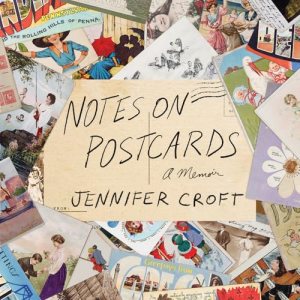
From Jennifer Croft’s superb Notes on Postcards (forthcoming in November):
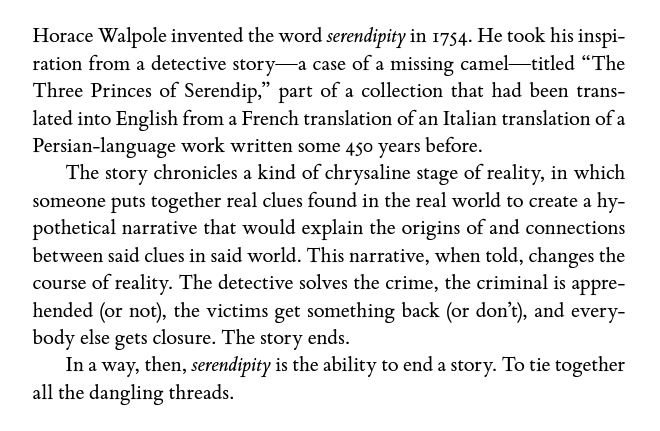
I’d heard that story of Horace Walpole and the etymology of “serendipity” before. Tying together dangling threads is a good description of what I try to do with these posts, which arise from my reading.
I call it “Book Serendipity” when two or more books that I have read at the same time or in quick succession have something in common – the more bizarre, the better. This is a regular feature of mine every couple of months. Because I usually have 20–30 books on the go at once, I suppose I’m more prone to such incidents. People frequently ask how I remember all of these coincidences. The answer is: I jot them down on scraps of paper or input them immediately into a file on my PC desktop; otherwise, they would flit away!
 The more accurate keyword would probably be “synchronicity,” which according to Carl Jung, who “believed in a universe of mysterious connections,” is “a meaningful coincidence in which an internal mental state somehow attracts a real-world parallel” (quotes from The Spirituality Gap by Ali Millar). An intriguing idea, that: somehow, by thinking about these ideas or details, I might be … luring repeat incidents to me?!
The following are in roughly chronological order.
What’s in a name?
- Girlfriends named Maddie (in Year of the Drought by Roland Buti) and Mattie (Tom’s in Pardon Our French by Alex Durand and Tom Carles); plus a granddaughter (in The Typing Lady and Other Fictions by Ruth Ozeki) and niece (in The Land and Its People by David Sedaris) named Maddy.
- A character named Hattie in Leaving the Yellow House by Saul Bellow and The Correspondent by Virginia Evans.
- A character named India in Leaving the Yellow House by Saul Bellow and Family Family by Laurie Frankel (our second The Marriage Plot/Literary Wives club read this year in which the protagonist was named India, after Mrs. Bridge by Evan S. Connell).
 A daughter named Rebecca in Switzy by Emma Cline and Family Family by Laurie Frankel (where she’s known as Bex); and sisters named Rebecca (known as Becks) in one story of The Rental Heart and Other Fairytales by Kirsty Logan and The Long Road to Holy Island by Austin Suggs. Those are both nicknames I’ve had, by the way. The one nickname I detest is Becky.
- A mother named Monica in The Summerhouse Trilogy by Alice Thomas Ellis and Apt Pupil by Stephen King.
- A Hilda in The Given World by Melissa Harrison and one story of Self-Help by Lorrie Moore.
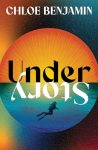
- A Clare in Under Story by Chloe Benjamin, The Leveret by Anna Goldreich and The Given World by Melissa Harrison.
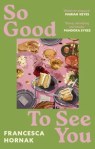
- A Sergio in Old Romantics by Maggie Armstrong and a Serge in So Good to See You by Francesca Hornak.
- A son named Silas in Under Story by Chloe Benjamin and So Good to See You by Francesca Hornak.
- Compensation for run-over chickens in Year of the Drought by Roland Buti and Don’t Let’s Go to the Dogs Tonight by Alexandra Fuller.
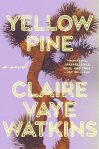
- “Enough is enough” is a slogan in The Land and Its People by David Sedaris (where it’s also an essay title) and Yellow Pine by Claire Vaye Watkins.
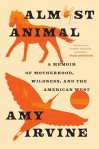
 Telluride, Colorado features as a setting in Almost Animal by Amy Irvine and in one essay of The Land and Its People by David Sedaris.
- A trip from Paris to see Chartres Cathedral in The Magician by W. Somerset Maugham and Shadow of a Man by May Sarton.
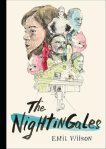
- Fleeting references to the Donner Party in Yellow Pine by Claire Vaye Watkins and The Nightingales by Emil Wilson.
- An essay about an Icelandic sheep ram, and the idea that one should ride geldings because they’re calmer and more reliable than mares, in Animals Taught Me Everything by Pam Houston and The Land and Its People by David Sedaris.
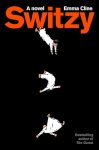
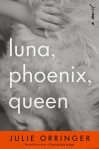
- The protagonist’s work performance declining due to dementia, and a tweed jacket, in Switzy by Emma Cline and Luna, Phoenix, Queen by Julie Orringer. (There’s also a tweed jacket mentioned in Strange Weather in Tokyo by Hiromi Kawakami.)

- German artist Käthe Kollwitz is mentioned in Seed Corn Must Not Be Ground (the title is from one of her works) by Pat Browne and The Book of Mating by Laksmi Pamuntjak.
- Child brides and incestuous rape are mentioned/feature in Almost Animal by Amy Irvine and The Book of Mating by Laksmi Pamuntjak, both of which I was reading early for Foreword Reviews.
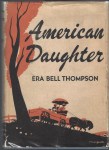
- The keeping of goats in Almost Animal by Amy Irvine and American Daughter by Era Bell Thompson, both of which I was reading early for Foreword Reviews.
- In August I unwittingly started rereading two books that I’d first read in April 2013 (is 13+ years the ideal interval?!): I Feel Bad about My Neck by Nora Ephron and Flush by Virginia Woolf.
- Men by the name of Christmas: the narrator’s parents wanted to name him Noel (but the German state didn’t allow it?!) in Botany of Madness by Leon Engler; and a main character is named Joe Christmas in Light in August by William Faulkner.
- To the narrator’s question of whether something awful has happened / they’ve done something wrong, a reply of “it very likely had but she hadn’t heard about it yet” in Our Spoons Came from Woolworths by Barbara Comyns and “Most likely. You know that better than I do” in Botany of Madness by Leon Engler.
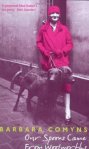
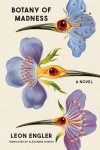
- The idea that human–animal communication/connection is deeper than that between humans because it is beyond language plays a major role in three books I read around the same time: Animals Taught Me Everything by Pam Houston, Mitz by Sigrid Nunez, and Luna, Phoenix, Queen by Julie Orringer. (The Houston and Orringer both publish on 13 October and I was reviewing them early for Shelf Awareness.)
- The fact that children of alcoholics feel they have to make everything perfect to avoid conflict appears in Botany of Madness by Leon Engler and Animals Taught Me Everything by Pam Houston.
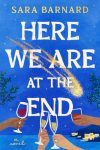 I encountered lines from the song “Closing Time” by Semisonic in Here We Are at the End by Sara Barnard (a specific reference to the pop song accompanied “Every new beginning comes from some other beginning’s end” – which I was amused to learn is actually a quote from Seneca!) and Family Family by Laurie Frankel (“You don’t have to go home. But you can’t stay here.” – not attributed, but I can’t but think she had the song in mind.)
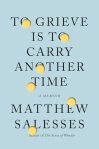
- The stereotype of overachieving Asian Americans is mentioned or discussed in Family Family by Laurie Frankel, Miracle Creek by Angie Kim, and To Grieve Is to Carry Another Time by Matthew Salesses. There are Korean Americans in all three, and Korean children adopted into a white family in the Frankel and Salesses.
- A young woman is aghast at her mother getting rid of loved pet(s) in Nightjar by Emily Ruskovich and The Nightingales by Emil Wilson (both titled after birds!)
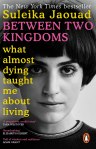
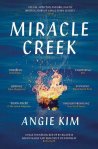
- A mention of the practice of buying single cigarettes from a city corner shop for 50 cents in Between Two Kingdoms by Suleika Jaouad and Miracle Creek by Angie Kim.
- Saving turtles from the road in Yellow Pine by Claire Vaye Watkins and then a mention of someone else doing so in To Grieve Is to Carry Another Time by Matthew Salesses.
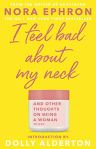 The lines “Leave as soon as you think to yourself, ‘This is a great party. I’m having a wonderful time’” from Nora Ephron’s I Feel Bad About My Neck are echoed in Emma Cline’s Switzy.
- A holy well is mentioned in The Given World by Melissa Harrison and Shiver by Brigid Lowe.
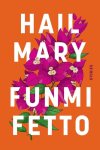
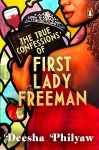
- A sexy pastor’s wife features in one story of Hail Mary by Funmi Fetto and The True Confessions of First Lady Freeman by Deesha Philyaw.
- A flawed pearl is mentioned in Apt Pupil by Stephen King and A Desert between Two Seas by A. Muia.
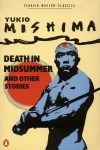
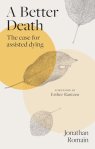
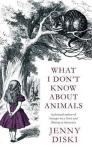
- A mention of hara-kiri (literal) in Death in Midsummer by Yukio Mishima and A Better Death by Jonathan Romain; and as a metaphor in What I Don’t Know about Animals by Jenny Diski.
- Camel cigarettes appear in Miracle Creek by Angie Kim and Apt Pupil by Stephen King.
- A woman remembers being nicknamed an “ice queen” in one story of Everest by Ashani Lewis and Plum by Hollie McNish.
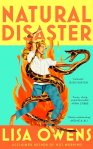
- A woman has to have a bowel movement in the labour ward in Old Romantics by Maggie Armstrong and Natural Disaster by Lisa Owens.
- The challenge of being a mother in the film industry is discussed in Family Family by Laurie Frankel and So Good to See You by Francesca Hornak.
 A three-year-old gets their own cereal breakfast in Old Romantics by Maggie Armstrong and So Good to See You by Francesca Hornak.
- A woman feels guilty of neglect due to her eight-year-old son’s death in a lake in Under Story by Cloe Benjamin and The Correspondent by Virginia Evans.
- A viral scandal where photographs/video footage are misconstrued to make a woman look bad in Hum by Helen Phillips and The True Confessions of First Lady Freeman by Deesha Philyaw.
- A misunderstanding causes a mother to be investigated for child neglect in one story of Old Romantics by Maggie Armstrong and Hum by Helen Phillips.
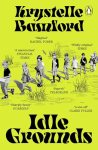 Shirley Temples (the non-alcoholic cocktail) are mentioned in Idle Grounds by Krystelle Bamford and The True Confessions of First Lady Freeman by Deesha Philyaw.
- A woman impulsively takes a dishwashing job in Under Story by Cloe Benjamin and Exit Party by Emily St. John Mandel.

- A scene of putting out sandbags in Rattlebone by Maxine Clair and The Long Road to Holy Island by Austin Suggs.
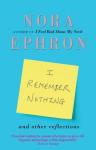 An unwanted mince pie in Idle Grounds by Krystelle Bamford and I Remember Nothing by Nora Ephron.
- A child in hospital with acute appendicitis in one story of Don’t Go to Sleep in the Dark by Celia Fremlin and Natural Disaster by Lisa Owens (and with suspected appendicitis in Shiver by Brigid Lowe).
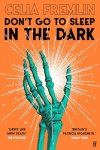
- The Tennyson poem “The Charge of the Light Brigade” is mentioned in Idle Grounds by Krystelle Bamford and Peck & Peck by Bonnie Garmus.
- Having to get off an elevator at the previous floor because it doesn’t go up to the destination in Exit Party by Emily St. John Mandel and Blood Is Dripping onto the Courtyard by Elvira Navarro.
- Realizing one’s bed is unmade in one story of Everest by Ashani Lewis and A Very British Midlife Crisis by Rob Temple.
- Confusion over the name of a possibly abused dog (with special powers!) adopted from a shelter in Peck & Peck by Bonnie Garmus and Luna, Phoenix, Queen by Julie Orringer.
- I encountered the phrase “She’s not worth it” in both Peck & Peck by Bonnie Garmus and The True Confessions of First Lady Freeman by Deesha Philyaw within 10 minutes!
 Someone being pulled back into the womb in Under Story by Chloe Benjamin and Nightmares and Daydreams: A.C. 2020 by Mirko Ilić.
- An apple orchard as a setting in Under Story by Chloe Benjamin and one story of Apple and Palm by Patricia Henley.

- “Little Nemo in Slumberland” as an image and metaphor in Switzy by Emma Cline and Nightmares and Daydreams: A.C. 2020 by Mirko Ilić.
- A lost twin sibling – lost at birth in Peck & Peck by Bonnie Garmus and H Is for Hawk by Helen Macdonald; lost later on in one story of The Rental Heart and Other Fairytales by Kirsty Logan.


- A portal to another timeline, and characters who are doubles of each other, in Under Story by Chloe Benjamin and Exit Party by Emily St. John Mandel.
- A lesbian couple moves to a new house and the one woman feels isolated and sad because she’s recently had a miscarriage in the debut novels The New People by Andrea Uptmor (reviewed for BookBrowse) and then The Leveret by Anna Goldreich.

- Nagging a woman to use lotion on her hands as they’re the first place to show signs of ageing in Hum by Helen Phillips and one story of Moderate to Poor, Occasionally Good by Eley Williams.
A couple of visual ones:
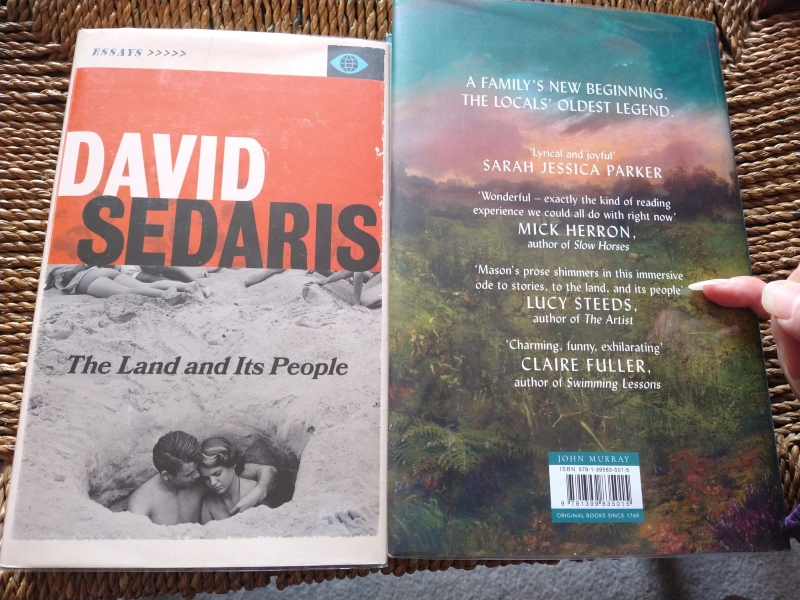
- I was reading The Land and Its People by David Sedaris at the same time as Country People by Daniel Mason, one of whose blurbs happens to borrow Sedaris’s title phrase.
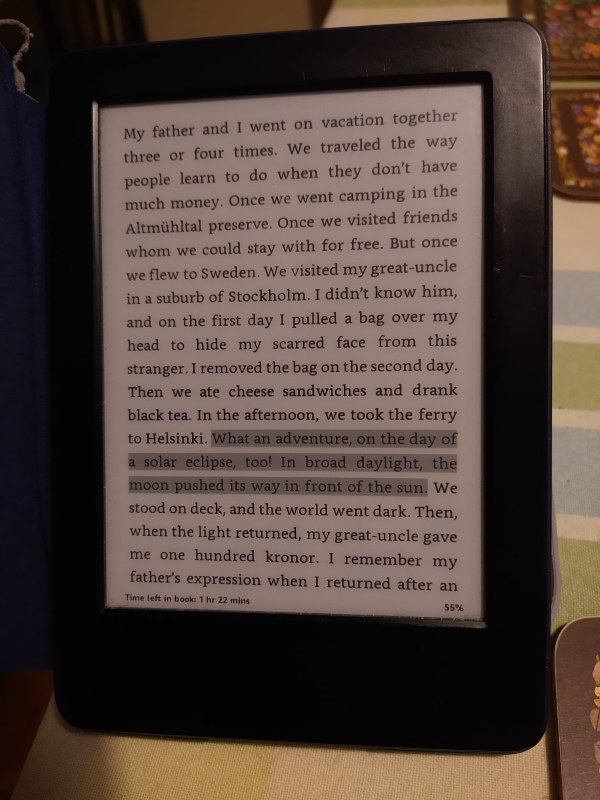
- I was reading Botany of Madness by Leon Engler and encountered this passage on the day of the solar eclipse in Europe (12 August):
What’s the weirdest reading coincidence you’ve had lately?
September Releases by Ilić, Lowe, McCallum, Philyaw & Temple
Dreamlike pandemic-era comics, cold-water swimming in Scottish lochs, poetry about art and a mixed-race heritage, a cheeky novel about beauty queens and Black church politics, and a laugh-out-loud guide to how (not) to traverse a midlife crisis: some great books came my way last month!
Nightmares and Daydreams: A.C. 2020 by Mirko Ilić
 “A.C.” stands for “After Covid.” In 2020, the Bosnian-born, New York City-based artist started drawing comics again after many years. These wordless, one-page, greyscale pieces explore the emotions of the pandemic era, with entrapment, surrealism and startling violence as recurring elements. Ilić plays with scale, scope and time. There are Escher-like optical illusions and mise-en-abîme effects. People meld with each other, metamorphose or disappear. A multi-lane city street splits open to reveal a chasm that swallows the cars and pedestrians and then closes back up as if nothing ever happened. The artist himself seems to appear in a number of scenes, looking out windows, sleeping in a coffin-like box or watching porn on his computer. There are a number of images that verge on the pornographic, in fact, with naked women and a dominatrix. (Shara McCallum (below) voices my reaction to these in “The Nude”: “Don’t offer me a neatly trimmed or, God forbid, / shaved, depilated, waxed, exfoliated c**t.) Disappointingly, Ilić lists his inspirations in a “Visual reference index” at the end, which rather spoils the mystery. I knew without consulting it that spread 29, in which a bedbound old man reaches out his arm and clenches his fist in front of a portrait of Dylan Thomas, was an allusion to “Do not go gentle into that good night.” That was one of my favourites in an inventive and striking but sometimes vulgar work.
With thanks to SelfMadeHero for the free copy for review.
Shiver: The Lessons of the Lochs by Brigid Lowe
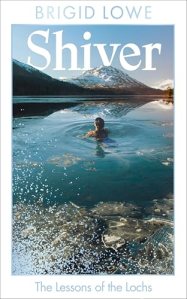 When Brigid Lowe’s marriage broke down, she moved with her three children from northern England to an Edinburgh flat. Feeling simultaneously unmoored and free in her early forties, she undertook an ongoing challenge-to-self to swim in 1,000 of Scotland’s lochs (there are 30,000 in total). “I am a fanatic. I swim outside now most days,” she confesses. For her, cold-water swimming means “taking in, and being taken in, by each loch and each moment on its own terms. There is no template.” Although she argues for the uniqueness of each loch, I found that the story quickly grew repetitive. Lowe is so sparing with personal details that I didn’t feel as engaged as I might have been with the overlaid narrative of her transformation from a traumatised wanderer to a strong, rooted matriarch. A prime example is her rape, which she refuses to name as such and recounts, in vague terms, in two pages. I’ve read a spate of swimming memoirs now, among them Freya Bromley’s The Tidal Year, Ruth Fitzmaurice’s I Found My Tribe and Jessica J. Lee’s superlative Turning, and it takes a lot for a book to hold its head up above that flood. I thought the setting of Scotland – her zeal for which I share (“Sometimes you fall in love with a place, and it’s as mysterious as any falling in love”) – would be that point of difference. While the prose is sumptuous and I enjoyed the glimpses of Scottish landscapes and wildlife across the seasons, they weren’t enough to hold my interest. The frequent references to Celtic legends, with a feminist slant, means that, in addition to swimming enthusiasts, I’d be more likely to recommend this to readers of works such as Sharon Blackie’s If Women Rose Rooted than to memoir junkies or tourists.
With thanks to Elliott & Thompson for the free copy for review.
Behold by Shara McCallum
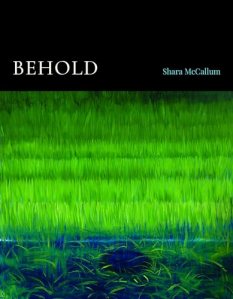 McCallum’s seventh book is a lush collection of ekphrastic poems (responses to artworks) and reflections on Jamaican American ancestry. In “Self-Portrait” – the first in a series with that heading – those major themes blend beautifully with a hefty dollop of assonance and sibilance: “At this point, I don’t know what in me is Jamaican / versus American. … since / we’re on the topic of the singular, about this subject: / she’s awfully tired of being parsed to see if she’s a fraud.” She applies art terms to the self: “Chiaroscuro” for a mixed-race identity and “Craquelure” for the wrinkles that provide “evidence of my ravishment” by time. Passion for art history (especially art by women and people of colour) meets fervour for social justice as McCallum exposes “the casual violence of misseeing” – who would look twice at the photograph of her Jamaican grandmother sweeping in midlife? I was unfamiliar with most of the artists and works featured, but that was fine; I almost didn’t want to look them up lest I spoil the magic of both by comparing the image with the poem.
With thanks to Alice James Books for the advanced e-copy for review.
The True Confessions of First Lady Freeman by Deesha Philyaw
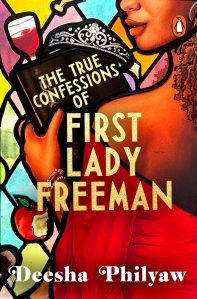 Philyaw’s 2020 short story collection, The Secret Lives of Church Ladies, was a surprise hit and set the bar high for her debut novel. Luckily, this lives up to the promise of her first book, which I called “bold and sexy,” and is all the more provocative for being set in the rarefied world of Southern U.S. Black megachurch pastors and their wives. Scharisse Freeman came from poverty, born to a single teenage mother who died of breast cancer when Scharisse was an adolescent. When she married David, 15 years her senior, it wasn’t unlike ascending to royalty. Together, they’ve raised a daughter, built a thousands-strong congregation, and lent their brand to everything from relationship books to salad dressing. At home they have a personal chef (David’s cousin Marcus) and an ice cream parlor. Schar seems like a shoo-in to win the annual First Lady pageant, but that’s before a scandal breaks linking her to her nemesis Daphne Lancaster’s husband, Jeddah, a mayoral candidate and inveterate adulterer also based in their town of Belleton, Georgia. Deciding how to refute the false allegations opens Schar’s eyes to her husband’s and the church’s priorities and uncovers a shocking secret about her father’s identity and the real cause of her mother’s death. Along the way, she tries to fix her relationship with her estranged bestie Petra, who is Black British and lesbian.
Fun fact you probably didn’t know about me: I grew up attending a Black megachurch in the Washington, D.C. metropolitan area. I recognised so much here: the opulence, the scripture quoting, the high fashion. A few names of public figures are real (Creflo Dollar and his yacht!); most other details are made up but totally believable if you’re at all familiar with this world. The novel is a little overlong (400+ pages) and soapy, but Schar’s voice is so fun and sassy that it carries the whole thing. Her footnotes and comebacks are hilarious, and you’ll want to cheer as she defies convention and blazes a trail for herself. (Read via NetGalley)
A Very British Midlife Crisis: A Survival Guide to the Best Years of Your Life by Rob Temple
 I started reading the Very British Problems series (which arose from a Twitter account of the same name) from the beginning, with the launch of Temple’s first book in 2013. Though I’ve missed some of the sequels, I’m delighted that this one unexpectedly dropped through my letterbox. I laughed and grimaced my way from start to finish; I could recognize pretty much every nonsensical decision, pathetic impulse, odd habit, and crotchety opinion. Not all of them are applicable to me, I hasten to add, but might be quirks I’ve observed in others of my generation or above. Temple proceeds thematically, considering health and work challenges, fashion, exercise, relationship and parenting issues, and so on. He translates dating profile phrases and rates hobbies by their potential regret value. Occasionally, his wife offers a female perspective. I probably guffawed the most at the section where he goes to a student house party as research (“I felt a TREMENDOUS urge to clean the bathroom”) and the glossary at the end (sample entries: “Being Knackered: Your permanent energy level,” “Cancelled Plans: Your favourite thing in the whole wide world”). This is silly, sure, but also warm and relatable. I think any reader of a certain age would get a kick out of it. I plan to pass my copy on to my brother-in-law, who turns 40 next month.
With thanks to Allen & Unwin for the free copy for review.
More to come: A sci-fi pairing as Under Story by Chloe Benjamin goes head to head with Exit Party by Emily St. John Mandel.
Which of these September releases have you read, or will you seek out now? What am I missing out on?
 Bookish Beck = Rebecca Foster. American transplant to England. Freelance proofreader and book reviewer.

