The BBC National Short Story Award 2025 Anthology
Another quick contribution to #ShortStorySeptember. I was delighted when Comma Press sent me a surprise copy of The BBC National Short Story Award 2025, which prints the five stories shortlisted for this year’s prize.
Now in its 20th year, the award has recognised established authors and newcomers alike – the roster of winners includes Lucy Caldwell, Sarah Hall (twice), Cynan Jones, James Lasdun, KJ Orr, Ingrid Persaud, Ross Raisin, Lionel Shriver and Naomi Wood – and the £15,000 prize money is very generous indeed for a single story.
This very evening, the winner will be announced live on the BBC Radio 4 Front Row programme (it starts at 7:15 p.m. if you’re in the UK). I’ll update my post later with news of the winner. For now, here are my brief thoughts on the five stories and which I hope will win.
“You Cannot Thread a Moving Needle” is an excerpt from Colwill Brown’s linked short story collection, We Pretty Pieces of Flesh. It’s in broad Doncaster dialect and written in the second person, thus putting the reader into the position of a young woman who is often pressured – by men and by the prevailing standards of beauty – into uncomfortable situations. It’s all drinking and sex and feeling in competition with other girls. ‘You’ grow up limited and bitter and wondering if revenge is possible. This was admirable for its gritty realism but not pleasant per se, and convinced me I don’t want to read the whole book.
“Little Green Man” by Edward Hogan begins with a classic scenario of two very different people being thrown together. Carrie stands out not just for being nearly six feet tall but also for being the only woman working for Parks and Gardens in Derby. One morning she’s assigned a temporary apprentice, Ryan, who is half her age and might be dismissed with one look as being no good (“lines shaved into his eyebrows … dyed blond hair” and a baby at home). But their interactions go beyond stereotypes as we learn of Ryan’s ambitions and his disapproving dad; and of Carrie’s ex, Bridget, who wanted more spontaneity. It’s a solid, feel-good story about not making your mind up about people, in the vein of Groundskeeping.

“Yair” by Emily Abdeni-Holman is another two-character drama, with the title figure an Israeli estate agent who takes the female narrator looking for an apartment in Jerusalem in 2018. Sexual tension and conflicting preconceived notions are crackling between them. A simple story with an autofiction feel, it reminded me of writing by Sigrid Nunez and Elizabeth Strout and exposes the falsity of facile us-and-them distinctions.
“Two Hands” by Caoilinn Hughes is a three-player comedy starring a married couple and their driving instructor. After a motorway crash in the beloved Fiat Panda they brought with them from Italy when they moved back to Ireland, Desmond and Gemma are in need of some renewed confidence behind the wheel. They talk about work – Des’s ancient archaeology research, Gemma’s translations – but not about the accident, which clearly is still affecting them both. Meanwhile, their late-seventies instructor is a War and Peace-reading calm presence whose compassion stretches only so far. I found this sharp, witty and original, just like Hughes’s Orchid & the Wasp.
Last but not least, “Rain: a history” by Andrew Miller is set in a sodden near-future English village. The protagonist has been having heart trouble and failing to connect with his traumatized teenage son. Nothing in his house or on his person ever feels dry. Their surroundings are menacing and desolate, yet still somehow beautiful. A letter came through the door last week, inviting everyone to meet in the parish church this evening. What can be done? Perhaps solidarity is as much as they, and we, can hope for. This was spare and haunting, and so much better than The Land in Winter.
I thoroughly enjoyed reading these entries and wouldn’t mind four out of the five winning. My sense of the spirit of the award is that it should go to a stand-alone story by an up-and-coming author. It’s hard to say what judges William Boyd, Lucy Caldwell, Ross Raisin, Kamila Shamsie and Di Speirs will go for: realism, novelty, subtlety, humour or prophecy? My personal favourite was “Yair,” but I have an inkling the award might go to Caoilinn Hughes and I would be very happy with that result as well.
With thanks to Comma Press for the free copy for review.
UPDATE: The winner was … the story I enjoyed the least, “You Cannot Thread a Moving Needle.” Nonetheless, I acknowledge that Colwill Brown has a distinctive voice.
Hard-Hitting Nonfiction I Read for #NovNov24: Hammad, Horvilleur, Houston & Solnit
I often play it safe with my nonfiction reading, choosing books about known and loved topics or ones that I expect to comfort me or reinforce my own opinions rather than challenge me. I wasn’t sure if I could bear to read about Israel/Palestine, or sexual violence towards women, but these four works were all worthwhile – even if they provoked many an involuntary gasp of horror (and mild expletives).
Recognising the Stranger: On Palestine and Narrative by Isabella Hammad (2024)
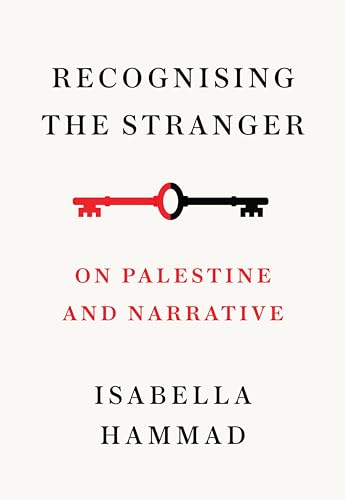 This is the text of the Edward W. Said Memorial Lecture that Hammad delivered at Columbia University on September 28, 2023. She posits that, in a time of crisis, storytelling can be a way of finding things out. Characters’ epiphanies, from Oedipus onward, see them encountering an Other but learning something about themselves in the process. In turning her great-grandfather’s life into her first novel, The Parisian, Hammad knew she had to avoid the pitfalls of nostalgia and unreliable memory. Fiction is always subjective, a matter of perspectives, and history is too. Sometimes the turning points will only be understood retrospectively.
Edward Said (1935–2003) was a Palestinian American academic and theorist who helped found the field of postcolonial studies. Hammad writes that, for him, being Palestinian was “a condition of chronic exile.” She takes his humanist ideology as a model of how to “dismantle the consoling fictions of fixed identity, which make it easier to herd into groups.” About half of the lecture is devoted to the Israel/Palestine situation. She recalls meeting an Israeli army deserter a decade ago who told her how a naked Palestinian man holding the photograph of a child had approached his Gaza checkpoint; instead of shooting the man in the leg as ordered, he fled. It shouldn’t take such epiphanies to get Israelis to recognize Palestinians as human, but Hammad acknowledges the challenge in a “militarized society” of “state propaganda.”
This was, for me, more appealing than Hammad’s Enter Ghost. Though the essay might be better aloud as originally intended, I found it fluent and convincing. It was, however, destined to date quickly. Less than two weeks later, on October 7, there was a horrific Hamas attack on Israel (see Horvilleur, below). The print version of the lecture includes an afterword written in the wake of the destruction of Gaza. Hammad does not address October 7 directly, which seems fair (Hamas ≠ Palestine). Her language is emotive and forceful. She refers to “settler colonialism and ethnic cleansing” and rejects the argument that it is a question of self-defence for Israel – that would require “a fight between two equal sides,” which this absolutely is not. Rather, it is an example of genocide, supported by other powerful nations.
The present onslaught leaves no space for mourning
To remain human at this juncture is to remain in agony
It will be easy to say, in hindsight, what a terrible thing
The Israeli government would like to destroy Palestine, but they are mistaken if they think this is really possible … they can never complete the process, because they cannot kill us all.
(Read via Edelweiss) [84 pages] 
How Isn’t It Going? Conversations after October 7 by Delphine Horvilleur (2025)
[Translated from the French by Lisa Appignanesi]
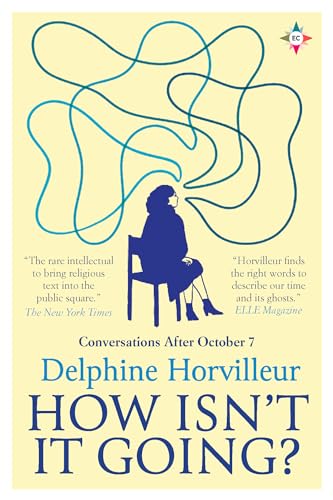 Horvilleur is one of just five female rabbis in France and is the leader of the country’s Liberal Jewish Movement. Earlier this year, I reviewed her essay collection Living with Our Dead, about attitudes toward death as illustrated by her family history, Jewish traditions and teachings, and funerals she has conducted. It is important to note that she expresses sorrow for Palestinians’ situation and mentions that she has always favoured a two-state solution. Moreover, she echoes Hammad with her final line, which hopes for “a future for those who think of the other, for those who engage in dialogue one with another, and with the humanity within them.” However, this is a lament for the Jewish condition, and a warning of the continuing and insidious nature of antisemitism. Who am I to judge her lived experience and say, “she’s being paranoid” or “it’s not really like that”? My job as reader is simply to listen.
There is by turns a stream of consciousness or folktale quality to the narrative as Horvilleur enacts 11 dialogues – some real and others imagined – with her late grandparents, her children, or even abstractions (“Conversation with My Pain,” “Conversation with the Messiah”). She draws on history, scripture and her own life, wrestling with the kinds of thoughts that come to her during insomniac early mornings. It’s not all mourning; there is sometimes a wry sense of humour that feels very Jewish. While it was harder for me to relate to the point of view here, I admired the author for writing from her own ache and tracing the repeated themes of exile and persecution. It felt important to respect and engage. [125 pages] 
With thanks to Europa Editions for the advanced e-copy for review.
Without Exception: Reclaiming Abortion, Personhood, and Freedom by Pam Houston (2024)
 If you’re going to read a polemic, make sure it’s as elegantly written and expertly argued as this one. Houston responds to the overturning of Roe v. Wade with 60 micro-essays – one for each full year of her life – about what it means to be in a female body in a country that seeks to control and systematically devalue women. Roe was in force for 49 years, corresponding almost exactly to her reproductive years. She had three abortions and believes “childlessness might turn out to be the single greatest gift of my life.” Facts could serve as explanations: her grandmother died giving birth to her mother; her mother always said having her ruined her life; she was raped by her father from early childhood until she left home as a young adult; she is gender-fluid; she loves her life of adventure travel, spontaneity and chosen solitude; she adores the natural world and sees how overpopulation threatens it. But none are presented as causes or excuses. Houston is committed to nuance, recognizing individuality of circumstance and the primacy of choice.
Many of the book’s vignettes are autobiographical, but others recount statistics, track American cultural and political shifts, and reprint excerpts from the 2022 joint dissent issued by the Supreme Court. The cycling of topics makes for an exquisite structure. Houston has done extensive research on abortion law and health care for women. A majority of Americans actually support abortion’s legality, and some states have fought back by protecting abortion rights through referenda. (I voted for Maryland’s. I’ve come a long way since my Evangelical, vociferously pro-life high school and college days.) I just love Houston’s work. There are far too many good lines here to quote. She is among my top recommendations of treasured authors you might not know. I’ve read her memoir Deep Creek and her short story collections Cowboys Are My Weakness and Waltzing the Cat, and I’m already sad that I only have four more books to discover. (Read via Edelweiss) [170 pages] 
Men Explain Things to Me by Rebecca Solnit (2014)
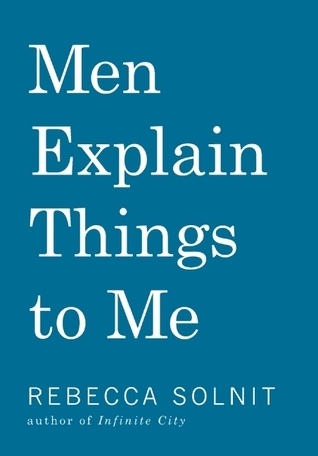 Solnit did not coin the term “mansplaining,” but it was created not long after the title essay’s publication in 2008 and was definitely inspired by her depiction of a male know-it-all. She was at a party in Aspen in 2003 when a man decided to tell her all about an important new book he’d heard of about Eadweard Muybridge. A friend had to interrupt him and say, “That’s her book.” A funny story, yes, but illustrative of a certain male arrogance that encourages a woman’s “belief in her superfluity, an invitation to silence” and imagines her “in some sort of obscene impregnation metaphor, an empty vessel to be filled with their wisdom and knowledge.”
This segues perfectly into “The Longest War,” about sexual violence against women, including rape and domestic violence. As in the Houston, there are some absolutely appalling statistics here. Yes, she acknowledges, it’s not all men, and men can be feminist allies, but there is a problem with masculinity when nearly all domestic violence and mass shootings are committed by men. There is a short essay on gay marriage and one (slightly out of place?) about Virginia Woolf’s mental health. The other five repeat some of the same messages about rape culture and believing women, so it is not a wholly classic collection for me, but the first two essays are stunners. (University library) [154 pages]
Have you read any of these authors? Or something else on these topics?
Seven Cats I Have Loved by Anat Levit (Translated by Yardenne Greenspan) for #NovNov22
“Most of the cats I come across must be able to sense right away that I am nothing but a cat in human clothes.”
 This short memoir could have fit next week’s nonfiction focus, but because it is translated from the Hebrew I’ve chosen to use it to round off our literature in translation week. Poet Anat Levit didn’t start off as a cat lady, yet in the year following her divorce she adopted five kittens. The first, Shelly, was a present for her small daughters, Daphna and Shlomit, and then another four fluffballs tempted her at the pet store: Afro, Lady, Mocha and Jesse. Add on Cleo, a beautiful Siamese she bought on impulse from a neighbour, and Mishely, a local stray she started to look after, and there you have it: the seven cats who took over her life.
This is a loose narrative filled with little observations on the differences in her cats’ appetites, mannerisms, and relationships to each other and to the author. As much as she loves them, Levit seems to find the animals a heavy emotional burden: she constantly wonders if she’s doing her best for them, treating them all the same (better than her children?), and so on.
Unfortunately, I felt the most attention is paid to the cats’ various illnesses and vet visits, and especially the periods of decline leading to each one’s death. Pets only live a fraction as long as humans, so books about loving them often incorporate death, and some might argue that it’s an essential part of the story: that your care for an animal companion encompasses their whole life and includes the duty to ease their death. Fair enough. But it can be a downer to read about. So, cat lovers, think carefully about whether you can handle the content; if you’re after sweet anecdotes and antics, this is not that book. Something about either the writing or the translation meant that I found the tone either too matter-of-fact (recounting the physical facts of deterioration) or melodramatic, e.g.,
That evening, it dawned on me that I had to hurry up and release Cleo from the relics of existence that survived in his body. Sometimes, death dawdles for no reason. On the threshold of my cats’ demise, it prescribed the kind of suffering that seemed to have erased the sweetness of all their previous years at once.
– and not often finding a balance. Still, there are some sweet moments that pet owners will appreciate. (A similar read from last year: The Writer’s Cats by Muriel Barbery.)
[133 pages]
With thanks to Serpent’s Tail for the free copy for review.

Women’s Prize Winners Reading Project: Grant, Martin, Shields et al.
In this 25th anniversary year of the Women’s Prize, readers are being encouraged to catch up on all the previous winners. I’d read 14 of them (including Hamnet) as of mid-April and have managed five more since then – plus a reread, a DNF and a skim. I recently reviewed Fugitive Pieces by Anne Michaels, and Half of a Yellow Sun by Chimamanda Ngozi Adichie and A Crime in the Neighborhood by Suzanne Berne as part of this summer reading post. This leaves just four more for me to read before voting for my all-time favorite in November.
When I Lived in Modern Times by Linda Grant (2000)
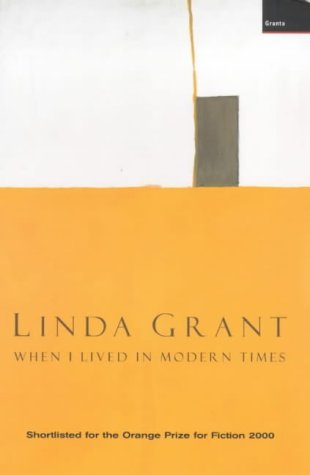 Some settings have been done to death, but here’s one I don’t think I’d ever encountered before: Israel in the final year before statehood. Grant dramatizes the contrast between Palestine, a doomed British colony, and the Jewish hope of a homeland. In 1946 twenty-year-old Evelyn Sert leaves her home in London, masquerading as a Gentile tourist (though she has Latvian Jewish ancestry) so as to jump ahead of thousands of displaced persons awaiting entry visas. With her mother recently dead of a stroke, she takes advice and money from her mother’s married boyfriend, “Uncle Joe,” a Polish Jew and Zionist, and heads to Palestine.
After six weeks on a kibbutz, Evelyn sets out to make her own life in Tel Aviv as a hairdresser and falls in with Johnny, a Jew who fought for the British. It’s safer to be part of the colonial structure here, so she once again passes as Gentile, dyeing her hair blonde and going by Priscilla Jones. In a land where all kinds of people have been thrown together by the accident of their ethnicity and the suffering it often entailed, one man’s terrorist is another’s freedom fighter. For Evelyn, who’s never known anywhere apart from suburban London and arrived in Palestine a virgin, the entire year is a journey of discovery. Will a place of ancient religious significance embrace modern architecture, technology and government? Grant really captures this period of transition for an individual and for a nascent nation of exiles. I loved the supporting characters and the nostalgic look back from half a century on. 
Favorite passages:
In a country with its face turned towards the future, our stories sat on our shoulders like a second head, facing the way we had come from. We were the tribe of Janus, if there is such a thing.
With hindsight it always seems easy to do the right thing, but we were trying to decide something in those days that people don’t often get a chance to have a say in and it was this: would we be a free nation after two thousand years of wandering or would we always be a subject race? Would we be ghetto Jews or new Jews?
Property by Valerie Martin (2003)
 A compact study of slavery that unfolds through the relationship between a New Orleans plantation owner’s wife and her husband’s mistress. Manon Gaudet has never been happy in her marriage, but when their slave girl, Sarah, bears her husband a second child, she decides she has had enough of silently condoning his behavior. A slave uprising and cholera and yellow fever outbreaks provide some welcome drama, but the bulk of this short novel is an examination of the psyche of a woman tormented by hatred and jealousy. Ownership of another human being is, if not technically impossible, certainly not emotionally tenable. Manon’s situation is also intolerable because she has no rights as a woman in the early nineteenth century: any property she inherits will pass directly to her husband. Though thoroughly readable, for me this didn’t really add anything to the corpus of slavery fiction.
A reread (as well as a buddy read with Buried in Print):
Larry’s Party by Carol Shields (1997)
“The whole thing about mazes is that they make perfect sense only when you look down on them from above.”
 Larry Weller is an Everyman: sometimes hapless and sometimes purposeful; often bewildered with where life has led him, but happy enough nonetheless. From the start, Shields dwells on the role that “mistakes” have played in making Larry who he is, like a floral arts catalogue coming in the mail from the college instead of one on furnace repair and meeting Dorrie at a Halloween party he attended with a different girl. Before he knows it he and a pregnant Dorrie are getting married and he’s been at his flower shop job for 12 years. A honeymoon tour through England takes in the Hampton Court Palace maze and sparks an obsession that will change the course of Larry’s life, as he creates his first maze at their Winnipeg home and gradually becomes one of a handful of expert maze-makers.
The sweep of Larry’s life, from youth to middle age, is presented roughly chronologically through chapters that are more like linked short stories: they focus on themes (family, friends, career, sex, clothing, health) and loop back to events to add more detail and new insight. I found the repetition of basic information about Larry somewhat off-putting in that it’s as if we start over with this character with each chapter – the same might be said of Olive Kitteridge, but that book’s composition was drawn out and it involves a multiplicity of perspectives, which explains the slight detachment from Olive. Here the third-person narration sticks close to Larry but gives glimpses into other points of view, tiny hints of other stories – a man with AIDS, a woman trying to atone for lifelong selfishness, and so on.
From my first reading I remembered a climactic event involving the Winnipeg maze; a ribald chapter entitled “Larry’s Penis,” about his second marriage to a younger woman and more; and the closing dinner party, a masterful sequence composed almost entirely of overlapping dialogue (like the final wedding reception scene in her earlier novel, The Box Garden) as Larry hosts his two ex-wives, his current girlfriend, his sister and his partner, and a colleague and boss. What is it like to be a man today? someone asks, and through the responses Shields suggests a state of uneasiness, of walking on eggshells and trying not to be a chauvinist in a world whose boundaries are being redrawn by feminism. That process has continued in the decades since, though with predictable backlash from those who consider women a threat.
It seems slightly ironic that Shields won the Women’s Prize for this episodic fictional biography of a man, but I found so much to relate to in Larry’s story – the “how did I get here?” self-questioning, the search for life’s meaning, “the clutter of good luck and bad” – that I’d say Larry is really all of us.
One of Shields’s best, and quite possibly my winner of winners.
My original rating (2008?):
My rating now: 
Currently rereading: Gilead by Marilynne Robinson
A skim:
A Spell of Winter by Helen Dunmore (1995)
 An annoying thing happened with this one: the back cover blurb gave away a central theme. It’s one I’m keen to avoid yet feel I have encountered disproportionately often in fiction, especially recently (I won’t name any titles as that would give it away instantly). Dunmore writes nicely – from my quick skim of this one it seemed very atmospheric – but I am not particularly drawn to her plots. I’ve read Exposure for book club and own two more of her novels, Talking to the Dead and Zennor in Darkness, so by the time I’ve read those I will have given her a solid try. So far I’ve preferred her poetry – I’ve read three of her collections.
A favorite passage:
“It is winter in the house. This morning the ice on my basin of water is so thick I can not break it. The windows stare back at me, blind with frost. … I can see nothing through the frost flowers on the glass. I wonder if it is snowing yet, but I think it is too cold. … I look at the house, still and breathless in the frost. I have got what I wanted. A spell of winter hangs over it, and everyone has gone.”
And a DNF:
The Song of Achilles by Madeline Miller (2011)
 Patroclus is a disappointment of a prince. He has no chance of winning Helen of Troy’s hand in marriage, and exile awaits him when he is responsible for an accidental death. As a foster child in the household of another king, he becomes obsessed with Achilles. The two young men take part in music lessons and military training, and Patroclus follows Achilles away from the palace to be taught by a centaur. That’s as far as I got before I couldn’t bear any more. The homoerotic hints are laughably unsubtle: (of a lyre) “‘You can hold it, if you like.’ The wood would be smooth and known as my own skin” & (fighting) “he rolled me beneath him, pinning me, his knees in my belly. I panted, angry but strangely satisfied.”
I got a free download from Emerald Street, the Stylist magazine e-newsletter. The ancient world, and Greek mythology in particular, do not draw me in the least, and I have had bad experiences with updates of Greek myths before (e.g. Bright Air Black by David Vann). I never thought this would be a book for me, but still wanted to attempt it so I could complete the set of Women’s Prize winners. I read 77 pages out of 278 in the e-book, but when I have to force myself to pick up a book, I know it’s a lost cause. As with the Dunmore, I think it’s safe to say this one never would have gotten my vote anyway.
The final four to complete my project:
(On the stack to read soon)
The Idea of Perfection by Kate Grenville – free from mall bookshop
The Glorious Heresies by Lisa McInerney – public library copy
How to Be Both by Ali Smith – public library copy; a planned buddy read with B.I.P.
(To get from the university library)
A Girl Is a Half-formed Thing by Eimear McBride
Read any Women’s Prize winners lately?
Booker Prize 2020: Longlist Progress & Shortlist Predictions
The 2020 Booker Prize shortlist will be announced tomorrow, September 15th. Following on from my initial thoughts … I’ve only managed to read one more book from the longlist, reviewed in brief below along with some thoughts on a few other nominees I’ve sampled.
Burnt Sugar by Avni Doshi
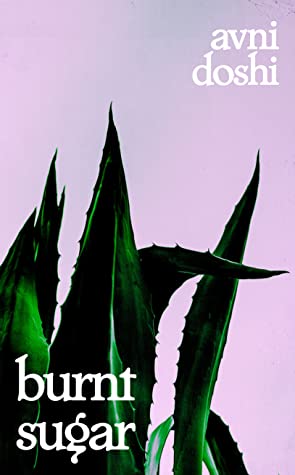 This short, intense novel is about two women locked into resentful competition. Tara and Antara also happen to be mother and daughter. When the long-divorced Tara shows signs of dementia, artist Antara and her American-born husband Dilip take her into their home in Pune, India. Her mother’s criticism and strange behavior stir up flashbacks to the 1980s and 1990s, when Antara felt abandoned by Tara during the four years they lived in an ashram and then her time at boarding school. Emotional turmoil led to medical manifestations like excretory issues and an eating disorder, and both women fell in love in turn with a homeless photographer named Reza Pine.
When Antara learns she is pregnant, the whole cycle of guilt and maternal ambivalence looks set to start again. Memory is precarious and full of potential hurt here, and Antara’s impassive narration is perfectly suited to the story of a toxic relationship. Neither the UK title nor the one for the original Indian publication (Girl in White Cotton) seems quite right to me; I might have chosen something related to the cover and endpaper image of the aloe plant: something that is as spiky as a cactus yet holds out hope of balm. This was a good fictional follow-up to a memoir I read earlier in the year about dementia’s effect on an Indian-American mother–daughter pair, What We Carry by Maya Shanbhag Lang.
Favorite passages:
It seems to me now that this forgetting is convenient, that she doesn’t want to remember the things she has said and done. It feels unfair that she can put away the past from her mind while I’m brimming with it all the time. I fill papers, drawers, entire rooms with records, notes, thoughts, while she grows foggier with each passing day.
I will never be free of her. She’s in my marrow and I’ll never be immune.
My rating: 
My thanks to Hamish Hamilton for the free copy for review.
DNFed:
Apeirogon by Colum McCann
 Reminiscent of the work of David Grossman, this is the story of two fathers, one Israeli and one Palestinian, who lost their daughters to the ongoing conflict between their nations: Rami Elhanan’s 13-year-old daughter Smadar was killed by a Palestinian suicide bomber, while Bassam Aramin’s 10-year-old daughter Abir was shot by Israeli border police. The two men become unlikely friends through their work with a peacemaking organization, with Bassam also expanding his sense of compassion through his studies of the Holocaust.
It doesn’t take long to piece the men’s basic stories together. But the novel just keeps going. It’s in numbered vignettes ranging in length from one line to a few pages, and McCann brings in many tangentially related topics such as politics, anatomy, and religious history. Bird migration is frequently used as a metaphor. Word association means some lines feel arbitrary and throwaway. Looking ahead, I could see the numbering goes up to 500, at which point there is a long central section narrated in turn by the two main characters, and then goes back down to 1, mimicking the structure of the One Thousand and One Nights, mentioned in #101.
The narrative sags under the challenge McCann has set for himself. At 200 pages, this might have been a masterpiece. Though still powerful, it sprawls into repetition and pretension. (I read the first 150 pages.)
My rating:
Set aside temporarily:
 The New Wilderness by Diane Cook: The blurb promised an interesting mother–daughter relationship, but so far this is dystopia by numbers. A wilderness living experiment started with 20 volunteers, but illnesses and accidents have reduced their number. Bea was an interior decorator and her partner, Glen, a professor of anthropology – their packing list and habits echo primitive human culture. I loved the rituals around a porcelain teacup, but in general the plot and characters weren’t promising. I read Part I (47 pages) and would only resume if this makes the shortlist, which seems unlikely. (See this extraordinarily detailed 1-star Goodreads review from someone who DNFed the novel near where I am now.)
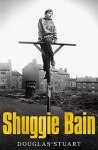 Shuggie Bain by Douglas Stuart: Dialect + depressing subject matter = a hard slog. Poverty and alcoholism make life in 1980s Glasgow a grim prospect for Agnes Bain and her three children. So far, the novel is sticking with the parents and the older children, with the title character barely getting a mention. I did love the scene where Catherine goes to Leek’s den in the pallet factory. This is a lot like the account Damian Barr gives of his childhood in Maggie & Me. I left off on page 82 but will go back to this if it makes the shortlist.
So that makes a total of 2 read, 4 DNFed, 2 set aside (and might yet DNF), 2 I still hope to read (one of which I’m awaiting from the library; the other is on my birthday wish list), and 3 I don’t intend to read. Not a great showing at all this year!
Still, I can never resist an opportunity to make predictions about a prize shortlist, so here’s what I expect to still be in the running after tomorrow. Weighty, diverse; a mixture of historical and contemporary.
- The Mirror & The Light by Hilary Mantel (will win)
- Apeirogon by Colum McCann
- The Shadow King by Maaza Mengiste
- Shuggie Bain by Douglas Stuart
- Real Life by Brandon Taylor
- How Much of These Hills Is Gold by C. Pam Zhang
What have you read from the longlist? What do you expect to be shortlisted?
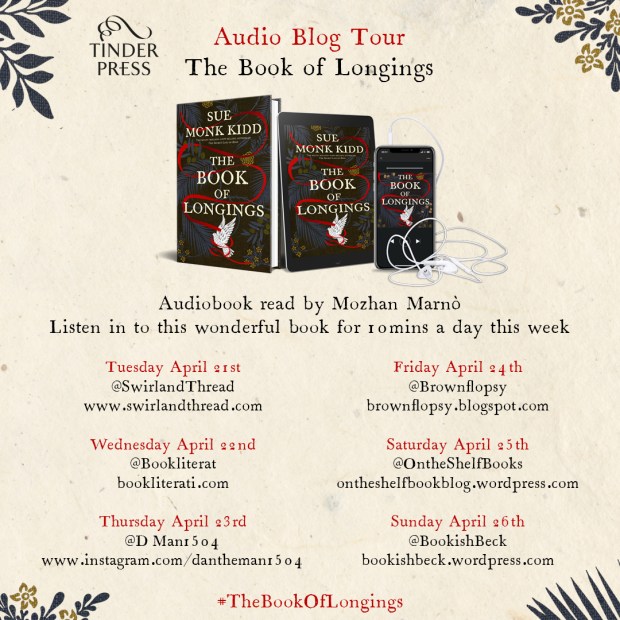
The Book of Longings by Sue Monk Kidd (& Audiobook Blog Tour)
~This review contains plot spoilers.~
Sue Monk Kidd’s bold fourth novel started as a what-if question: What if Jesus had a wife? Church tradition has always insisted that he remained unmarried, but she felt that, given the cultural norms of the Middle East at that time, it would have been highly unusual for him not to marry. Musing on the motivation for airbrushing a spouse out of the picture, on the last page of the novel Kidd asks, “Did [early Christians] believe making him celibate rendered him more spiritual?” Or “Was it because women were so often invisible?” Although The Book of Longings retells biblical events, it is chiefly an attempt to illuminate women’s lives in the 1st century CE and to chart the female contribution to sacred literature and spirituality.
Fourteen-year-old Ana is a headstrong young woman with a forthright voice and a determination to choose her own life. Privilege and luck are on her side: her father is the head scribe to Herod Antipas, the ruler of Galilee; and the repulsive widower to whom she’s been betrothed dies, freeing her to marry Jesus, a travelling craftsman who caught her eye at the market. Ana’s aunt, Yaltha from Alexandria, is a major influence in her life. She had a rare chance at education and encourages her niece in her writing. Ana knows several ancient languages and fills every papyrus scroll she can get her hands on with stories of the women in the Bible. Yaltha also gives her an incantation bowl in which to write her deeply held prayers.
If you’re familiar with Kidd’s other work (such as The Secret Life of Bees and Traveling with Pomegranates), you know that she often explores the divine feminine and matriarchal units. Historically, Christianity has a poor record of acknowledging its patriarchal tendencies and redressing the balance. But Kidd imagines that, right at the beginning, Jesus valued women and was open to them having a life beyond domestic chores and childrearing. He involves Ana in his discussions about God and the nature of the Kingdom; they both see and take compassion on people’s suffering; together they are baptized by John the Baptist. And when Ana tells Jesus she doesn’t believe she is meant to be a mother – her mother and aunt took herbal potions and have passed on their contraceptive knowledge to her – he accepts her choice, even though childlessness could bring shame on both of them.

I appreciated this picture of a woman who opts for writing and the spiritual life over motherhood. However, Kidd portrays a whole range of women’s experiences: Jesus’s mother and sister-in-law submit to the drudgery of keeping a household going; Ana’s friend is raped and has her tongue cut out in an attempt to silence her, yet finds new ways to express herself; and another major character is a servant involved in the healing rituals at a temple to Isis. A practicing Jew, Ana finds meaning in other religious traditions rather than dismissing them as idolatry. She also participates in wider intellectual life, such as by reading The Odyssey.
Some descriptions make this novel sound like alternative history. If you’re expecting Ana to save the day and change the course of history, you will be disappointed. Ana is simply an observer of the events documented in the Bible. While she recounts the inspirations for some parables and healing incidents, during two years in exile with her aunt she only hears secondhand accounts of Jesus’s ministry. Her brother, a Zealot, disagrees with Jesus on how to usher in the Kingdom of God. By the time Ana returns to Jerusalem, the events leading to the crucifixion have already been set in motion; she can only bear witness. For her, life will continue after Jesus’s death, in a women-led spiritual community. From avoiding motherhood to choosing a monastic-type life, Ana has a lot of freedom. Some readers may be skeptical about how realistic this life course is, but the key, I think, is to consider Ana as an outlier.
Kidd has made wise decisions here: for the most part she makes her story line parallel or tangential to the biblical record, rather than repeating material many will find overly familiar. She takes Jewish teaching as a starting point but builds a picture of a more all-encompassing spirituality drawn from multiple traditions. Her Jesus is recognizable and deeply human; Ana calls him “a peacemaker and a provocateur in equal measures” and remembers him telling her what it was like growing up with the stigma of his illegitimate birth. The novel is rooted in historical detail but the research into the time and place never takes over. Engrossing and convincing, this is a story of women’s intuition and yearning, and of the parts of history that often get overlooked. It wouldn’t be out of place on next year’s Women’s Prize longlist.
My rating:
The Book of Longings was released on Tuesday the 21st. My thanks to Tinder Press for the proof copy for review.
I’m the last stop on a small blog tour for the audiobook release: if you’re interested in listening to the first hour of The Book of Longings, visit the blogs below and follow the links. Each one is hosting a 10-minute excerpt. The final one is available here.
Some Early Recommendations for 2020
I haven’t done much dipping into 2020 releases yet, but I do have two that I would highly recommend to pretty much anyone, plus some more that are also worth highlighting.
My top recommendations (so far) for 2020:
American Dirt by Jeanine Cummins
[Coming on January 21st from Tinder Press (UK) / Flatiron Books (USA)]
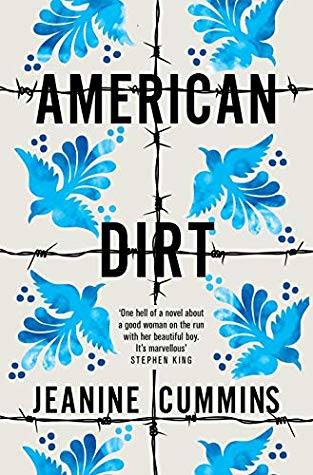 You’ve most likely already heard of this novel about the plight of migrants crossing the U.S. border in search of a better life. What’s interesting is that the main characters are not your typical border crossers: Lydia was a middle-class Acapulco bookshop owner whose journalist husband was murdered for his pieces exposing the local drug cartel. She and her eight-year-old son, Luca, know that the cartel is after them, too, and its informers are everywhere. They join Central American migrants in hopping onto La Bestia, a dangerous freight train network running the length of Mexico. Their fellow travelers’ histories reveal the traumatic situations migrants leave and the hazards they face along the way. Cummins alternates between the compelling perspectives of Lydia and Luca, and the suspense is unrelenting. It feels current and crucial. (My full review will be in Issue 491 of Stylist magazine, so if you are in London or another city that hands it out and can pick up a copy, keep an eye out!)
The Lost Family: How DNA Testing Is Upending Who We Are by Libby Copeland
[Coming on March 3rd from Abrams Press (USA)]
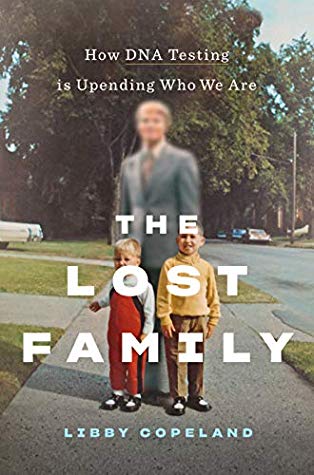 A terrific follow-up to one of my runners-up from last year, Inheritance by Dani Shapiro. I learned that “non-paternity events” such as Shapiro experienced are not as uncommon as you might think. Copeland spoke to scientists, DNA testing companies, and some 400 ordinary people who sent off saliva samples to get their DNA profile and, in many cases, received results they were never expecting. There are stories of secret second families, of people who didn’t find out they were adopted until midlife, and of babies switched at birth. We’ve come a long way since the days when people interested in family history had to trawl through reams of microfilm and wait months or years to learn anything new; nowadays a DNA test can turn up missing relatives within a matter of days. But there are a lot of troubling aspects to this new industry, including privacy concerns, notions of racial identity, and criminal databases. It’s a timely and thought-provoking book, written with all the verve and suspense of fiction.
Also of note (in release date order):
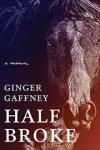 Half Broke: A Memoir by Ginger Gaffney: Horse trainer Gaffney has volunteered at the Delancey Street Foundation’s New Mexico ranch, an alternative prison for drug offenders, for six years. She chronicles how feral horses and humans can help each other heal. Great for fans of Cheryl Strayed. (February 4, W.W. Norton)
 Survival Is a Style: Poems by Christian Wiman: Wiman examines Christian faith in the shadow of cancer. This is the third of his books that I’ve read; I’m consistently impressed by how he makes room for doubt, bitterness and irony, yet a flame of faith remains. Really interesting phrasing and vocabulary here. (February 4, Farrar, Straus and Giroux)
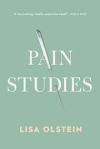 Pain Studies by Lisa Olstein: Another in a growing number of hard-hitting books about female pain. Specifically, Olstein has chronic migraines. In these essays she ranges from ancient philosophy to recent television in her references, and from lists of symptoms to poetic descriptions in her format. A little rambly, but stylish nonetheless. (March 4, Bellevue Literary Press)
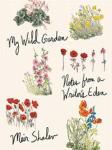 My Wild Garden: Notes from a Writer’s Eden by Meir Shalev: The Israeli novelist tells of how he took a derelict garden in the Jezreel Valley and made it thrive. He blends botanical knowledge with Jewish folklore. I particularly enjoyed his good-natured feud against his local mole rats. Gentle and charming. (March 31, Shocken)
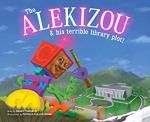 The Alekizou and His Terrible Library Plot! by Nancy Turgeon: The Alekizou can’t read! Jealous of the fun he sees children having at the library, he breaks in and steals all the vowels. Without them, books and speech don’t make sense. Luckily, the children know sign language and use it to create replacement letters. A fun picture book with rhymes reminiscent of Dr. Seuss, this also teaches children vowels and basic signing. (April 6, CrissCross AppleSauce)
With thanks to the publisher for the free PDF copy for review.
 Why We Swim by Bonnie Tsui: A personal history with swimming, but also a wide-ranging study of humans’ relationship with the water – as a source of food, exercise, healing, competition and enjoyment. Tsui meets scientists, coaches, Olympians and record holders, and recounts some hard-to-believe survival tales. (April 14, Algonquin Books)
Will you look out for one or more of these?
Any other 2020 reads you can recommend?
The Truth According to Us and Safekeeping
They say there are only two basic plots: a stranger comes to town, or the hero sets off on a journey. So far this summer I’ve enjoyed two novels that exemplify one or the other model.
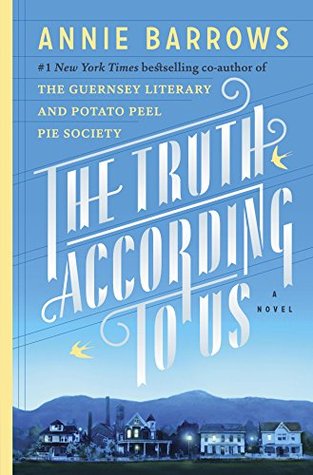 First is The Truth According to Us by Annie Barrows, co-author of the endearing The Guernsey Literary and Potato Peel Pie Society. This atmospheric historical novel is set in the sweltering summer of 1938. Layla Beck, a spoiled senator’s daughter, has been sent to Macedonia, West Virginia by the WPA to document the town’s story in advance of its sesquicentennial. Her uncle pulls strings to get her the job even though he thinks his flighty niece is “exactly as fit to work on the project as a chicken is to drive a Buick.”
From a lunatic Civil War general onwards, Macedonia has certainly had a colorful history. The problem is that all the local lights want to skew history to present themselves in the most favorable light. This applies to the family Layla boards with as well, the Romeyns. Felix and Jottie’s father ran the American Everlasting Hosiery Company until a devastating fire some 20 years ago – blamed on Jottie’s old sweetheart, Vause Hamilton.
Now Felix’s twelve-year-old daughter Willa, who narrates much of the novel, wants to get to the bottom of things. What really happened during that factory fire? Why are the Romeyns snubbed around town? Has her divorcé father turned to bootlegging, and can she stop Miss Beck from bewitching him? Like Scout Finch in To Kill a Mockingbird or Flavia de Luce in Alan Bradley’s mysteries, Willa is a spunky heroine whose curiosity carries the plot.
Once again Barrows makes good use of the epistolary format by inserting the letters Layla sends and receives during her time in Macedonia. Third person narration also gets us into the mind of Jottie, one of the strongest characters. However, later sections of the novel get a little bogged down in Jottie’s romantic history, and overall it is too long by at least a quarter. Barrows is better at capturing everyday speech and routines than momentous activities like a factory strike, but she certainly evokes the oppressive heat of a long American summer.
As Willa concludes, “The truth of other people is a ceaseless business. You try to fix your ideas about them, and you choke on the clot you’ve made.” This novel reminds us that others – whether strangers or family – are always a mystery, and history is a matter of interpretation.
My rating: 
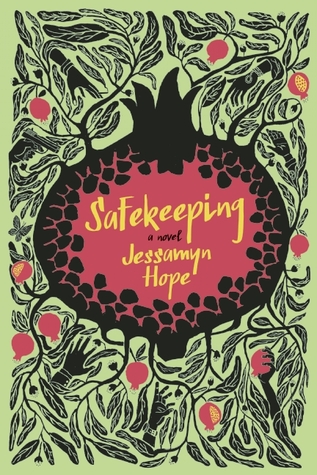 Next up is Safekeeping, the debut novel from Jessamyn Hope. A bit like All the Light We Cannot See, the Pulitzer Prize-winning novel from Anthony Doerr, the plot revolves around a priceless jewel. In this case it’s a medieval sapphire brooch that has been passed down through Adam’s family for centuries. In 1994, after the death of his grandfather, a Holocaust survivor, Adam undertakes a quest to return the brooch to the woman he fell in love with on an Israeli kibbutz and never forgot. Adam has his own problems – he’s a recovering junkie and alcoholic – but he feel he owes this to his grandfather’s memory.
A kibbutz undergoing the bitter transition from communalism to salaried work provides a vivid contrast to Adam’s native New York City. Hope populates her novel with a wonderful cast of eccentric characters. There’s Ulya, a Belarussian prima donna with a shoplifting habit; Claudette, a French Canadian Catholic crippled by mental health issues; Ziva, a kibbutz veteran who fights the changes tooth and nail despite advancing infirmity; and Ofir, a young man who endeavors to finish his military service early so he can return to his beloved piano.
I loved the way that Hope links the disparate characters in a constellation of connections. Acts of generosity, small or large, make a huge difference, even though betrayals past and present still linger. Close third person narration shifts easily between all the characters’ viewpoints, while two surprising historical interludes add depth. Hope handles flashbacks as elegantly as I’ve ever seen: you follow characters into their thoughts and suddenly snap back to the present right along with them.
I’ll confess I was slightly disappointed with the inconclusive ending. We follow the brooch rather than the characters, which means that in two cases we are left wondering about a person’s fate. Still, I was so impressed with the writing, especially the interweaving of past and present, that I will be eager to watch Hope’s career. Safekeeping is published by Fig Tree Books, a champion of modern Jewish literature, and has one of the most terrific book covers I’ve seen in a while.
My rating:
 Bookish Beck = Rebecca Foster. American transplant to England. Freelance proofreader and book reviewer.
 Bookish Beck