R.I.P. Reads, Part I: Apostolides, Dahl, Harkness, Kingfisher & Kohda
Ghosts, witches, vampires, creepy underground things: It can only be Readers Imbibing Peril time of year! Here’s my first five reviews.
The Homecoming by Zoë Apostolides (2025)
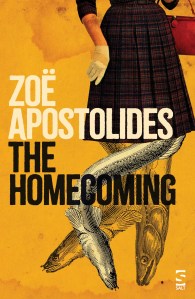 This debut novel dropped through my door as a total surprise: not only was it unsolicited, but I’d not heard about it. In this modern take on the traditional haunted house story, Ellen is a ghostwriter sent from London to Elver House, Northumberland, to work on the memoirs of its octogenarian owner, Catherine Carey. Ellen will stay in the remote manor house for a week and record 20 hours of audio interviews – enough to flesh out an autobiography. Miss Carey isn’t a forthcoming subject, but Ellen manages to learn that her father drowned in the nearby brook and that all Miss Carey did afterwards was meant to please her grieving mother and the strictures of the time. But as strange happenings in the house interfere with her task, Ellen begins to doubt she’ll come away with usable material. I was reminded of The Woman in Black, The Thirteenth Tale, and especially Wakenhyrst what with the local eel legends. The subplot about Ellen drifting apart from her best friend, a new mother, felt unnecessary, though I suppose was intended to bolster the main theme of women’s roles. There’s a twist that more seasoned readers of Gothic fiction and ghost stories might see coming. While I found this very readable and perfectly capably written, I didn’t get a sense of where the author hopes to fit in the literary market; she’s previously published a true crime narrative. Full disclosure: I once collaborated with Zoë on a Stylist assignment.
With thanks to Salt Publishing for the proof copy for review.
The Witches by Roald Dahl (1983)
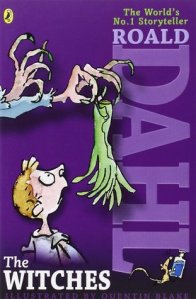 I’m sure I read all of Dahl’s major works when I was a child, though I had no specific memory of this one. After his parents’ death in a car accident, a boy lives in his family home in England with his Norwegian grandmother. She tells him stories from Norway and schools him in how to recognize and avoid witches. They wear wigs and special shoes to hide their baldness and square feet, and with their wide nostrils they sniff out children to turn them into hated creatures like slugs. When Grandmamma falls ill with pneumonia, she and the boy travel to a Bournemouth hotel for her recovery only to stumble upon a convention of witches under the guise of the Royal Society for the Prevention of Cruelty to Children. The Grand High Witch (Anjelica Huston, if you know the movie) has a new concoction that will transform children into mice at enough of a delay to occur the following morning at school. It’s up to the boy and his grandmother to save the day. I really enjoyed this caper, which I interpreted as being – like Tove Jansson’s The Summer Book – about imagination and making the most of one’s time with grandparents. But in the back of my mind was Jen Campbell’s objection to the stereotypical equating of disfigurement with villainy. The Grand High Witch also speaks with a heavy German accent. It would be understandable to dismiss this as dated and clichéd, but I still found it worthwhile. It also fit into my project to read books from my birth year. (Free from a neighbour)
The Black Bird Oracle by Deborah Harkness (2024)
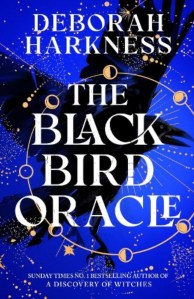 Somehow I’ve read this entire series even though none of the subsequent books lived up to A Discovery of Witches. What I loved about that first novel was how the author drew on her knowledge of the history of science to create a believable backdrop for a story of witches, vampires and other supernatural beings that took place largely in Oxford and its medieval libraries. Each sequel has elaborated further adventures for Diana Bishop, a witch; her vampire husband, Matthew de Clermont; and their family members and other hangers-on. Their twins, especially Becca, have inherited some of Diana’s power. I read the first half of this last year and finally skimmed to the end last week, so I haven’t retained much. Diana is summoned to the ancestral seat of the Bishops in Massachusetts and finds herself part of a community of gossipy, catty witches. (Dahl was right, they’re everywhere!) She has some fun, folksy interactions but things soon get more serious as she girds herself for a showdown with the darker implications of her gift. Overall, this didn’t add much to the ongoing narrative and the love scenes veered too close to romantasy for my liking. (Public library)
What Stalks the Deep by T. Kingfisher [Ursula Vernon] (2025)
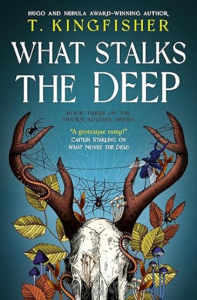 The third in the “Sworn Soldier” series, after What Moves the Dead and What Feasts at Night. Alex Easton is a witty, gender-nonconforming narrator, which is why I persist with these novellas even though I’m underwhelmed by the plots. Denton, the American doctor friend from the first book, begs Easton to come to West Virginia: his cousin Oscar has gone missing in a mine after sending a series of alarming letters about a red light he saw in the depths. Easton and their right-hand man, Angus, soon encounter claustrophobia-inducing cave systems, various kinds of bad air and siphonophore-like marine creatures that can assemble to imitate other beings. (Why aren’t these on the cover, huh?!) In other intriguing matters, Denton seems to have something going on with his friend John Ingold, an Indigenous scientist. Though, as Easton frequently reminds themself, that’s none of our business. There are some great set-pieces and funny, if anachronistic, asides (on learning how to flick a lighter just right: “I used to practice it for hours as a teenager, in hopes of impressing girls. Look, girls were more easily impressed in those days. Shut up.”) But my feeling with all three books is that they’re over before they’ve barely begun, and they never deliver the expected horror. Smart-ass, queer fantasy/horror: these will be some people’s perfect books, just not mine. If you’re intrigued, do at least try the first one, which riffs on Poe. (Read via Edelweiss)
Woman, Eating by Claire Kohda (2022)
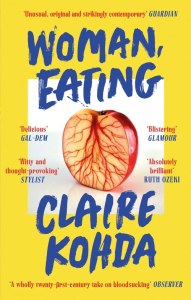 A very different sort of vampire novel. Twenty-three-year-old Lydia is half Japanese and half Malaysian; half human and half vampire. She’s trying to follow in her late father’s footsteps as an artist through an internship at a Battersea gallery, which comes with studio space where she’ll sleep to save money. But she can only drink blood like her mother, who turned her when she was a baby. Mostly she subsists on pig blood – which she can order dried if she can’t buy it fresh from a butcher – though, in one disturbing sequence, she brings home a duck carcass. When she falls for Ben, one of her studio-mates, she imagines what it would be like to be fully human: to make art together, to explore Asian cuisine, to bond over losing their mothers (his is dying of cancer; hers is in a care home with violence-tinged dementia). But Ben is already seeing someone, the internship is predictably dull, and a first attempt at consuming regular food goes badly wrong. There are a lot of promising threads in this debut. It’s fascinating how Lydia can intuit a creature’s whole life story by drinking their blood. She becomes obsessed with the Baba Yaga folk tale (and also mentions Malay vampire legends) and there’s a neat little bit of #MeToo revenge. But overall, it’s half-baked. Really, it’s just a disaster-woman book in disguise. The way Lydia’s identity determines her attitudes towards food and sex feels like a symbol of body dysmorphia. I’ll look out to see if Kohda does something more distinctive in future. (Secondhand – Awesomebooks.com)
More coming up on Halloween (thankfully, including books I liked better on average)!
Love Your Library, February 2023
Thanks to Cathy, Elle and Sarah for contributing with their recent library borrows!
While shelving in the large print area at the library I noticed something I’d never seen before: a “Dyslexic Edition” of a novel. I opened it up and saw that it has large type, but various other features: the font is a sans serif, in medium to dark blue, and there are lots of short sections rather than lengthy paragraphs. Instead of passages being in italics, they appear in bold face. The overall effect is fewer words on a page and maximized readability. We shelve these with large print, but there are plans to pull them out for a future display on disability awareness. There are also some children’s series geared towards dyslexic and reluctant readers, as well as the “Quick Reads” books put out by the Reading Agency for adult readers who may struggle with literacy.
This isn’t library-specific, but most of you will have heard about the new UK expurgated versions of Roald Dahl children’s books commissioned from the consultancy Inclusive Minds by his literary estate. Dahl’s work still flies off the shelves at my library. What’s more, it’s inspired countless other writers with his particular brand of snarky/edgy humour. Apparently the specific changes made are to, in hundreds of places, replace words like “fat,” “stupid” and “ugly.” In general, I’m leery of censorship, preferring that parents speak to their children about the appropriate use of words or, if that can’t be guaranteed, adding an introduction or afterword. (The unaltered “classic” Dahl collection will still be sold, too.)
Yet I am sympathetic in this case because I know how hurtful some stereotypes can be. For instance, we have Jen Campbell to thank for this addition to The Witches (who are portrayed as bald and wearing wigs): “There are plenty of other reasons why women might wear wigs and there is certainly nothing wrong with that.” She has various genetic conditions including alopecia and has long been opposed to casual associations of disfigurement with evil in popular culture.
What’s your take?
And my own library reading since last month:
READ
- The New Life by Tom Crewe

- Once Upon a Tome by Oliver Darkshire

- How to Be Sad by Helen Russell

- Lucy by the Sea by Elizabeth Strout

- City of Friends by Joanna Trollope

- Crying in H Mart by Michelle Zauner
Plus a load of picture books about winter and snow; I reviewed them here.


CURRENTLY READING
- A Fortunate Man by John Berger
- The Things We Do to Our Friends by Heather Darwent
- Martha Quest by Doris Lessing
- Nightwalking: Four Journeys into Britain after Dark by John Lewis-Stempel
- His Only Wife by Peace Adzo Medie
- Manorism by Yomi Sode
I also have the rest of the Folio Prize poetry shortlist out on loan to read soon. A lot of the other books pictured in this post have already gone back unread. I never consider that a problem, though, as it still helps libraries retain funding, and authors get royalties!
What have you been reading or reviewing from the library recently?
Share a link to your own post in the comments. Feel free to use the above image. The hashtag is #LoveYourLibrary.
The Wellcome Book Prize 2018 Awards Ceremony
 Hey, we got it right! Mark O’Connell’s To Be a Machine, our shadow panel’s pick, won the Wellcome Book Prize 2018 last night. Of the three shadow panels I’ve participated in and the many others I’ve observed, this is the only time I remember the shadow winner matching the official one. Clare, Paul and I were there in person for the announcement at the Wellcome Collection in London. When we briefly spoke to the judges’ chair, Edmund de Waal, later in the evening, he said he was “relieved” that their decision matched ours – but I think it was definitely the other way around!
Simon Chaplin, Director of Culture & Society at the Wellcome Trust, said that each year more and more books are being considered for the prize. De Waal revealed that the judges read 169 books over nine months in what was for him his most frightening book club ever. “To bring the worlds of medicine and health into urgent conversation” requires a “lyrical and disciplined choreography,” he said, and “how we shape stories of science … is crucial.” He characterized the judges’ discussions as both “personal and passionate.” The Wellcome-shortlisted books make a space for public debate, he insisted.

Judges Gordon, Paul-Choudhury, Critchlow, Ratcliffe and de Waal. Photo by Clare Rowland.
The judges brought each of the five authors present onto the stage one at a time for recognition. De Waal praised Ayobami Adebayo’s “narrative of hope and fear and anxiety” and Meredith Wadman’s “beautifully researched and paced thriller.” Dr Hannah Critchlow of Magdalene College, Cambridge called Lindsey Fitzharris’s The Butchering Art “gruesome yet fascinating.” Oxford English professor Sophie Ratcliffe applauded Kathryn Mannix’s book and its mission. New Scientist editor-in-chief Sumit Paul-Choudhury said Mark O’Connell’s book is about the future “just as much as what it means to be human in the twenty-first century.” Journalist and mental health campaigner Bryony Gordon thanked Sigrid Rausing for her “great honesty and stunning prose.”
But there can only be one winner, and it was Mark O’Connell, who couldn’t be there as his wife is/was giving birth to their second child imminently. The general feeling in the room was that he’d made the right call by deciding to stay with his family. He must be feeling like the luckiest man on earth right now, to have a baby plus £30,000! Max Porter, O’Connell’s editor at Granta and the author of Grief Is the Thing with Feathers, received the award on his behalf and read out the extremely witty speech he’d written in advance.
Afterwards we spoke to three of the shortlisted authors. Kathryn Mannix said she’d so enjoyed following our shadow panel reviews and that it was for the best that O’Connell won, as any other outcome might have spoiled the lovely girls’ club the others had going on during the weekend’s events. I got two signatures and we nabbed a quick photo with Lindsey Fitzharris. It was also great to meet Simon Savidge, the king of U.K. book blogging, and author and vlogger Jen Campbell. Other ‘celebrities’ spotted: Sarah Bakewell and Ben Goldacre.
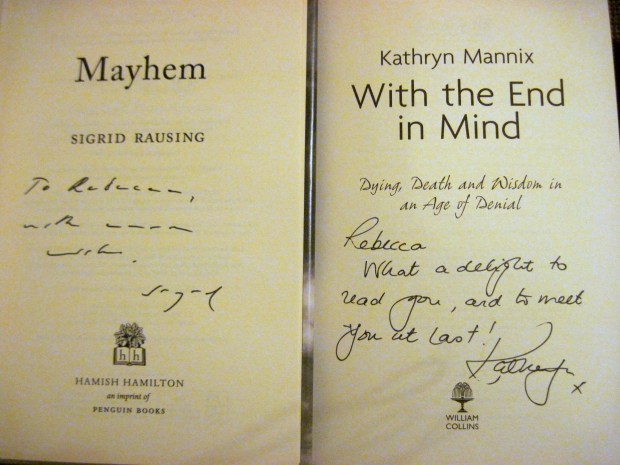
This time I stayed long enough for pudding canapés to come around – raspberry cake pops and mini meringues with strawberries. What a great idea! On the way out I again acquired a Wellcome goody bag: this year’s tote with a copy of The Butchering Art, which I only had on Kindle before. I’d also treated myself to this brainy necklace from the Wellcome shop and wore it to the ceremony. An all-round great evening. I’m looking forward to next year’s prize season already!

Paul, Lindsey Fitzharris, Clare and me.


The Diary of a Bookseller by Shaun Bythell
So you think you’d like to run a bookshop? Here’s a book to tempt and deter you in equal measure. In 2001 Shaun Bythell acquired The Bookshop, the flagship bookstore in Wigtown, the Book Town in Galloway in the southwest of Scotland. Here he gives a one-year snapshot of life at the shop, from February 2014 to February 2015. At the start you can feel the winter chill in the old granite building, and as months pass you sense mounting excitement at preparations for the annual Book Festival (going on now) and the Scottish referendum. It’s a pleasure to spend a vicarious year at the shop. This would make a great bedside book for a bookish type to parcel out 5–10 pages at a time (another Christmas gift idea?).
 Bythell frequently ventures out to buy book collections in auctions and from estates, and occasionally goes fishing with his father or friends. But mostly we see what daily life is like for a bookshop owner. He can’t afford full-time staff, so gets sporadic help from university-age gals; his most “reliable” part-timer is Nicky, a ski suit-wearing, Dumpster-diving Jehovah’s Witness who blithely ignores much of what he asks her to do.
Every entry opens and closes with statistics on the day’s takings and online orders. Profits range from £5 to £500 a day, rising in the summer and peaking around £1200 during the festival. Also listed is the number of customers who make purchases, which represents only one-fifth of daily footfall. Nowadays most bookstores sell online too, and The Bookshop reluctantly partners with Amazon as a marketplace seller. There’s also ABE and eBay; as a last-ditch option, some outfits take books in bulk, even if just to recycle them. Alongside online sales, it’s essential for bookstores to have sidelines. Bythell does video production and sells furniture, antiques and walking sticks carved by “Sandy, the tattooed pagan.”
As with Wendy Welch’s The Little Bookstore of Big Stone Gap, I enjoyed the nitty-gritty details about acquiring and pricing books, especially the serendipitous moments of coming across real treasures, like a book signed by Sir Walter Scott and a 1679 edition of the Decameron with an interesting provenance. The book is also full of quirky customer behavior, the kind of stuff that fills The Bookshop’s Facebook feed. Bythell cultivates a curmudgeonly persona – he once shot a broken Kindle and mounted it on the bookshop wall – and maintains a tone that’s somewhere between George Orwell (excerpts from whose “Bookshop Memories” serve as monthly epigraphs) and Jen Campbell (Weird Things Customers Say in Bookshops et al.). Here’s a few of the best encounters:
a whistling customer with a ponytail and what I can only assume was a hat he’d borrowed from a clown bought a copy of Paolo Coelho’s The Alchemist, I suspect deliberately to undermine my faith in humanity and dampen my spirits further.
A man smelling of TCP [antiseptic] was the only customer in the shop for the first hour of opening, during which time I attempted to put out fresh stock. He had an uncanny ability to be standing in front of every shelf to which I needed access, regardless of the subject or where in the shop the relevant shelves were.
While I was repairing a broken shelf in the crime section, I overheard an elderly customer confusing E. L. James and M. R. James while discussing horror fiction with her friend. She is either going to be pleasantly surprised or deeply shocked when she gets home with the copy of Fifty Shades of Grey she bought.
I’ve been to Hay-on-Wye six times now but haven’t made it to Wigtown yet. It’s high on my bookish wish list. I had two additional reasons for wanting to read this particular book: I’d read Three Things You Need to Know about Rockets, a memoir by Bythell’s former partner, the American Jessica Fox (here known as “Anna”; in her book he’s “Ewan”), about coming to Scotland on a whim and falling in love with a bookshop owner; and I’m awfully fond of The Bookshop Band, a folky husband–wife musical duo who this year relocated from Bath to Wigtown. It was such fun to read about their first time playing in Wigtown and their stay as the inaugural guests/temporary store managers via The Open Book Airbnb project.

Colin Kinnear [CC BY-SA 2.0 (https://creativecommons.org/licenses/by-sa/2.0)%5D, via Wikimedia Commons.
The Book Shop trivia:
- December is by far the quietest month. (“The few people who give second-hand books as gifts for Christmas are usually eccentric” – count me as one of them!)
- Railway books sell best.
- Terry Pratchett, John Buchan, P.G. Wodehouse and E.F. Benson books are also perennial best sellers.
- You’ll be amazed at how many customers try to haggle over prices. It’s a shop, not a rummage sale, for goodness’ sake! I can’t imagine ever having the cheek to offer less than the advertised price.
My rating:
The Diary of a Bookseller was released in the UK on September 28th. My thanks to Profile Books for the free review copy.
A Tale of Two Bookshops: Bookbarn International and Wonder Book
A friend’s wedding in Bristol last Saturday provided the perfect opportunity for a return visit to Bookbarn International, a terrific secondhand bookshop near Bath in northeast Somerset. Between the stock on their shelves and in the warehouse from which they sell online, they have millions of books, and all the ones in the shop are either £1 or 50 pence (children’s books and, when I went, all paperback fiction as a summer reading promotion). It’s like heaven for this bibliophile. I first went a couple years ago on the way back from Cornwall – although, on both occasions, my longsuffering husband protests, Bookbarn wasn’t really ‘on the way’ in any sense.
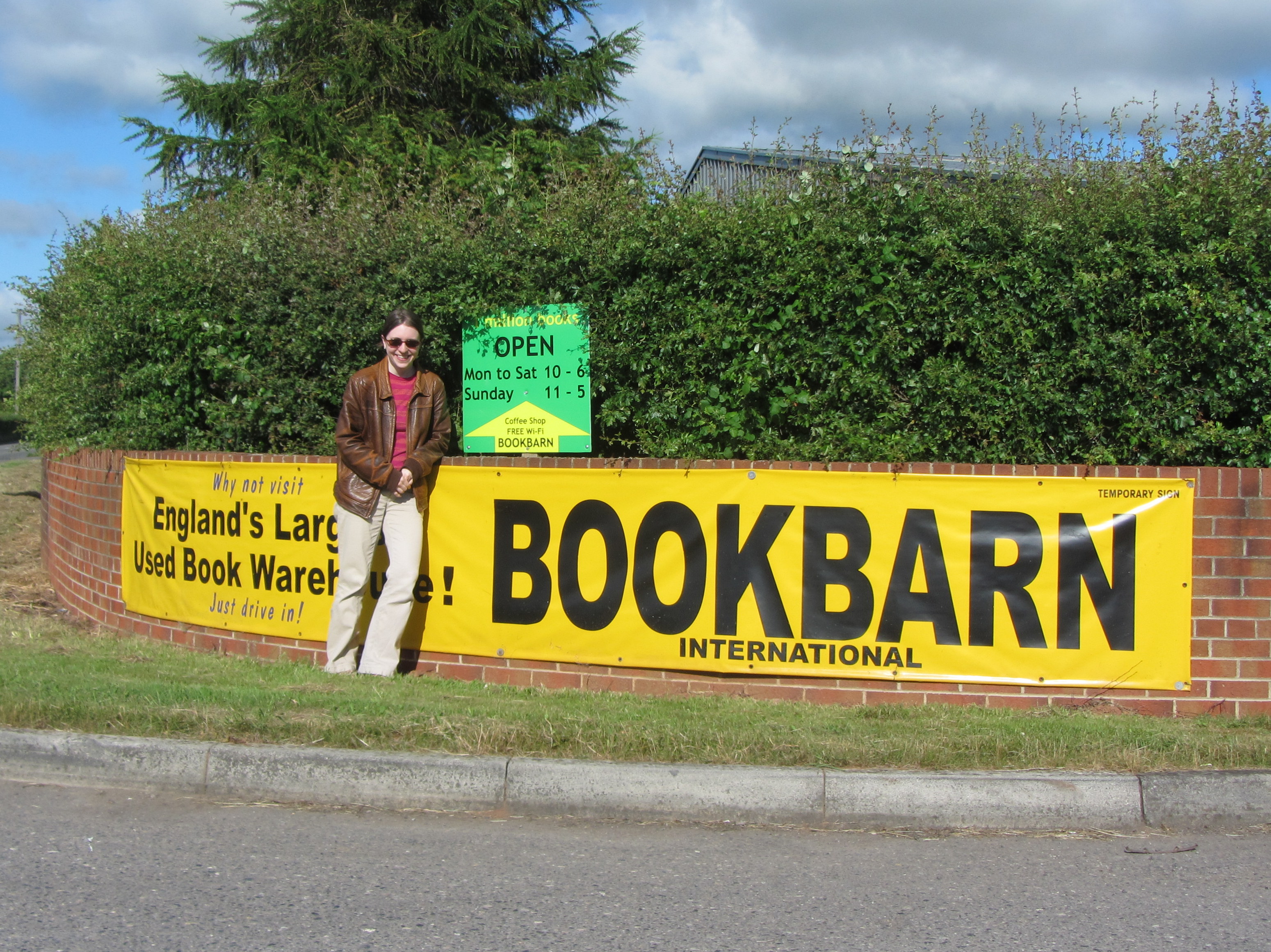
First visit in June 2013

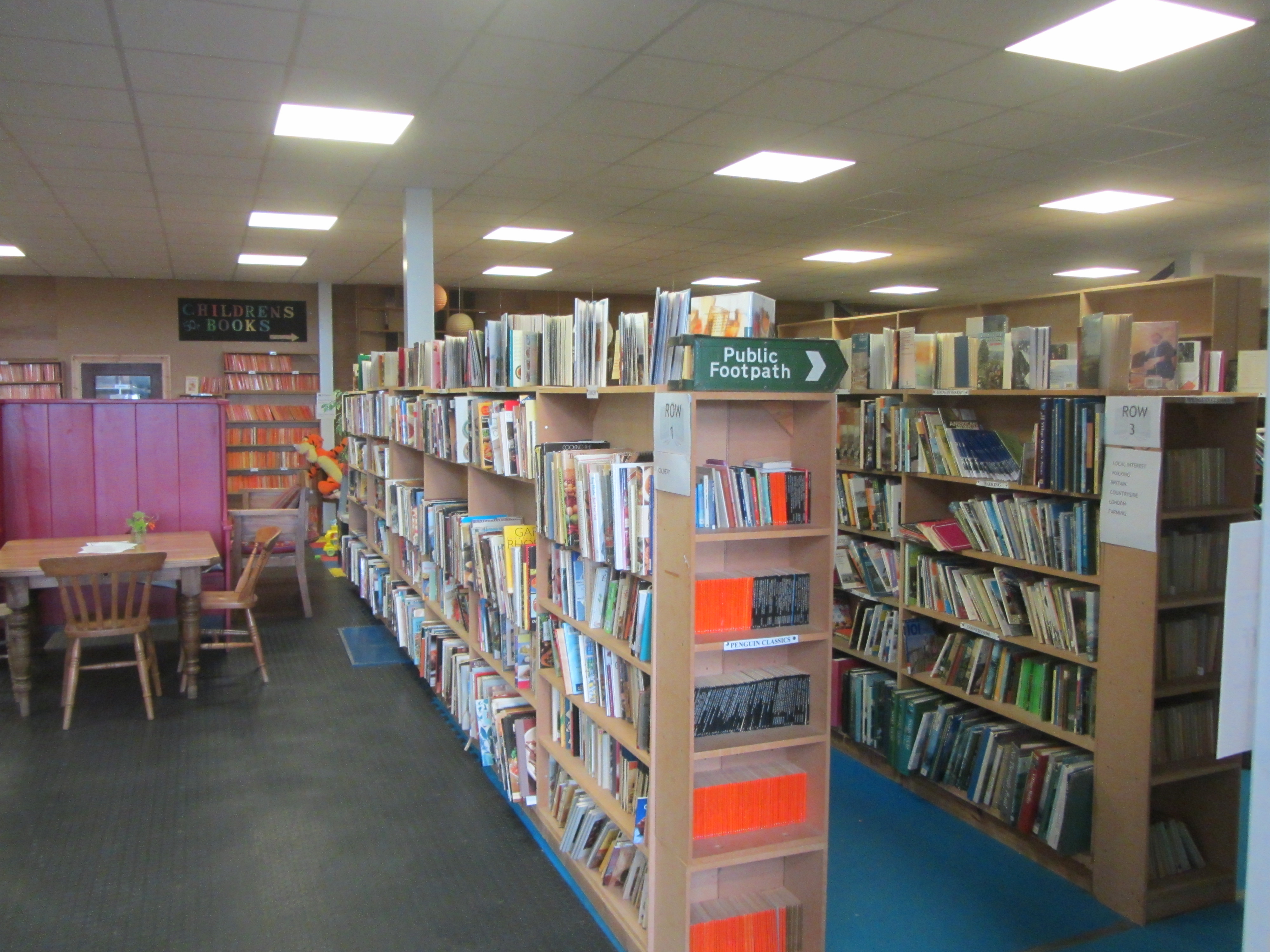
Well worth the detour, though, as Bookbarn is basically the British equivalent of my beloved Wonder Book, a chain with several branches in Maryland. I first encountered the store when my sister worked for WHAG television station in Hagerstown, and when I chose to go to college in Frederick, I wouldn’t say that the town’s two Wonder Book branches (one has since closed, alas) were a deciding factor, but they were certainly a bonus. I even worked there as a part-time book assistant during my senior year at Hood College, and it didn’t quite spoil my love for the place – though I’ll admit it’s much better to be a customer than an employee.
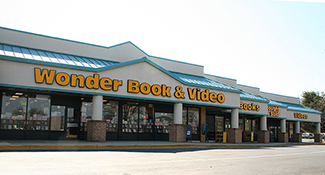
The Frederick location (photo from their website).

Say it ain’t so! You never know what you’ll find in terms of categorization at Wonder Book.
I’ve lived abroad for over eight years now, but I still manage to get back to Wonder Book once or twice a year during visits to family. Like Bookbarn, it’s an enormous warehouse-like place with dozens of different categories and subcategories of books, most at very reasonable prices. Again like Bookbarn, it’s the kind of place where you’ll need to allow time to root around, since within sections the books might not be in perfect alphabetical order. The stock rolls over so quickly or, especially in the case of theology, is so overwhelmingly large that there’s just no way to sensibly organize it all. Come with a list, but be willing to browse at a leisurely pace and let serendipity guide you as much as the subject headings. You’ll also find snacks and book-themed gifts such as (at Wonder Book anyway) mugs and T-shirts.
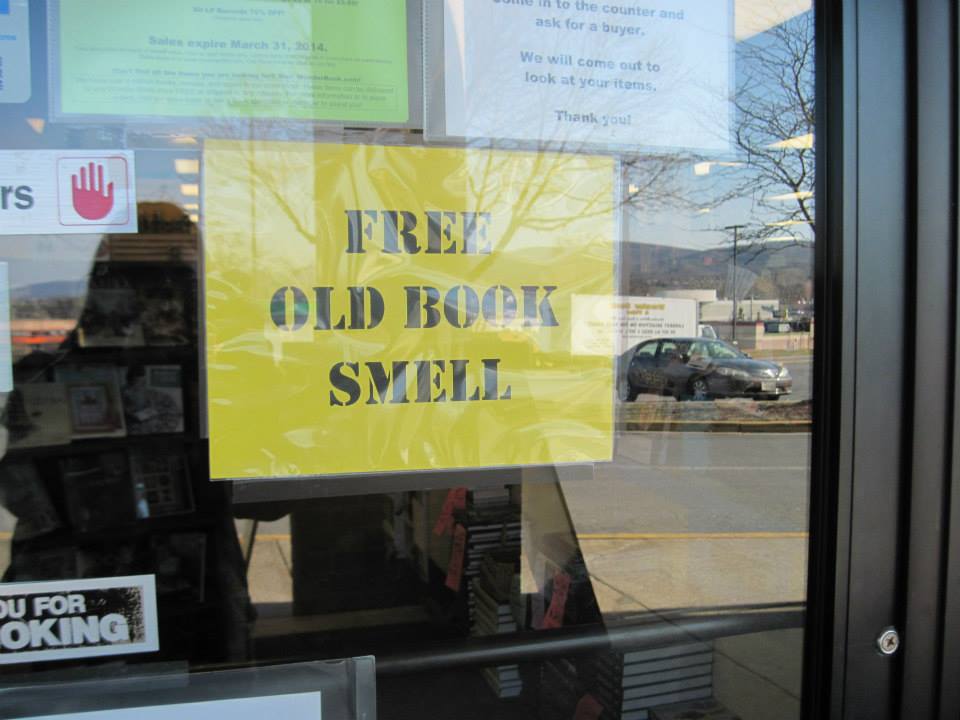
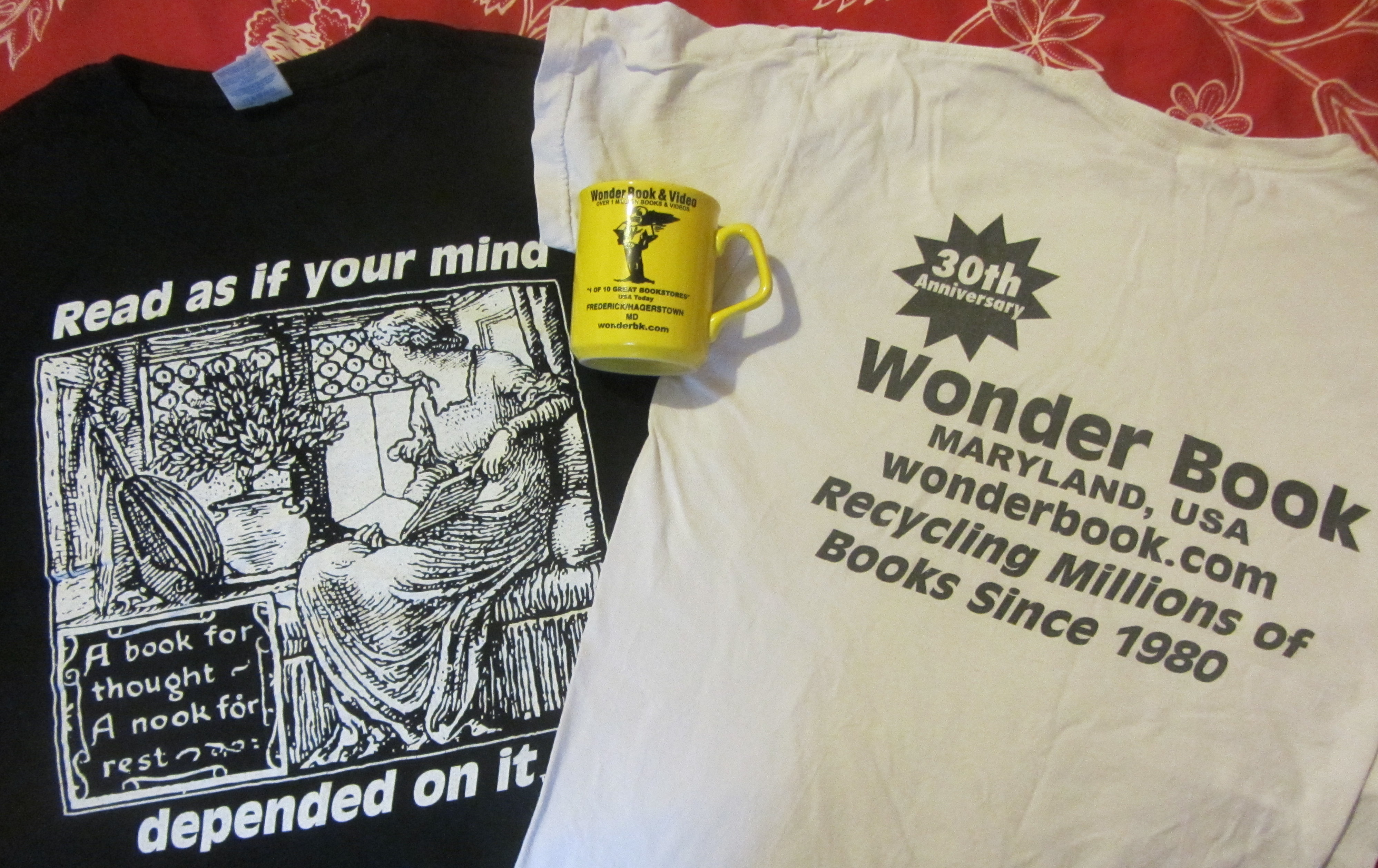
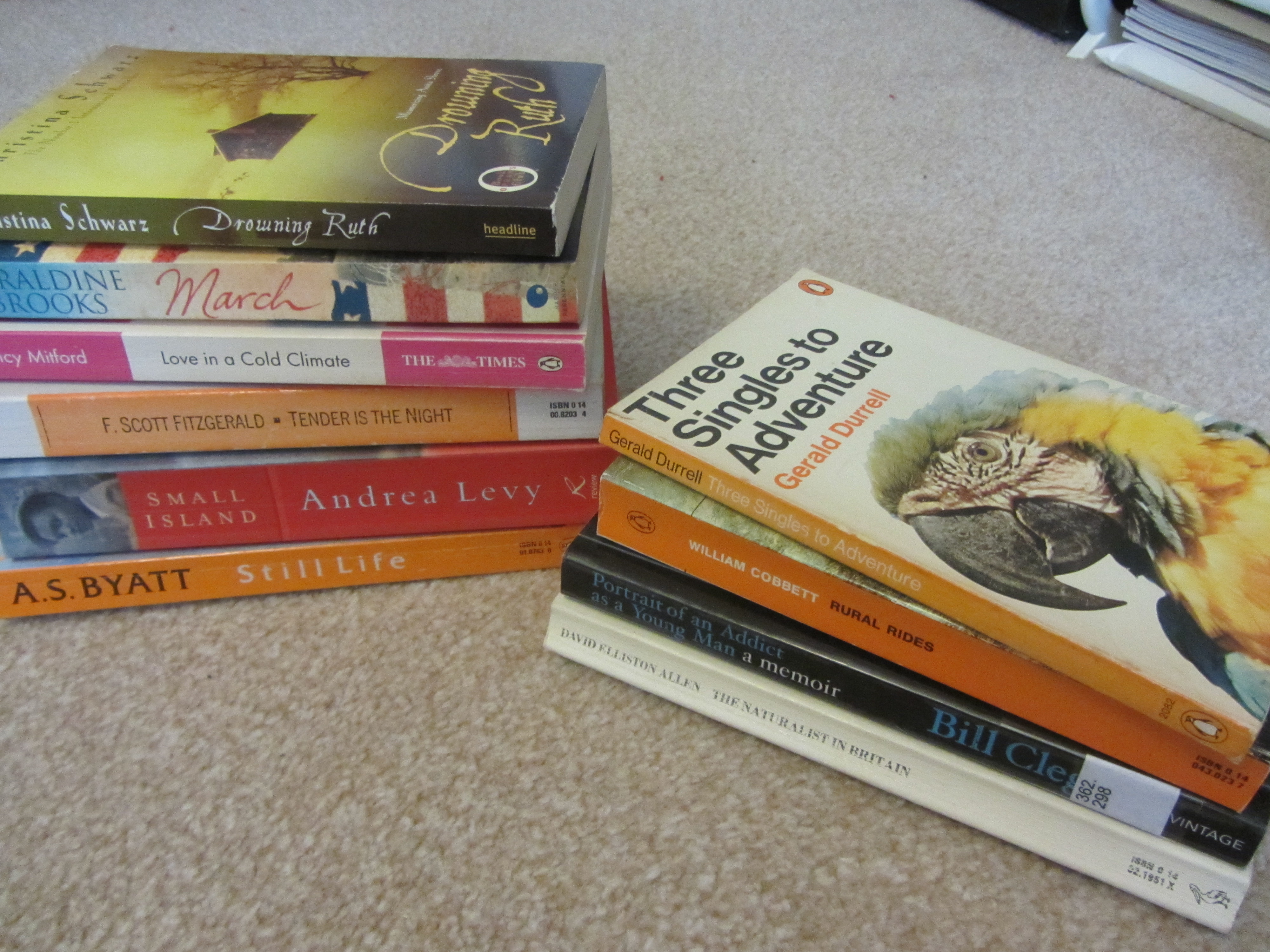
On this last visit to Bookbarn I got 18 books for all of £12 – bargain! Pictured below are my purchases, minus the ones certain readers or their children might be getting for birthday or Christmas presents later in the year…
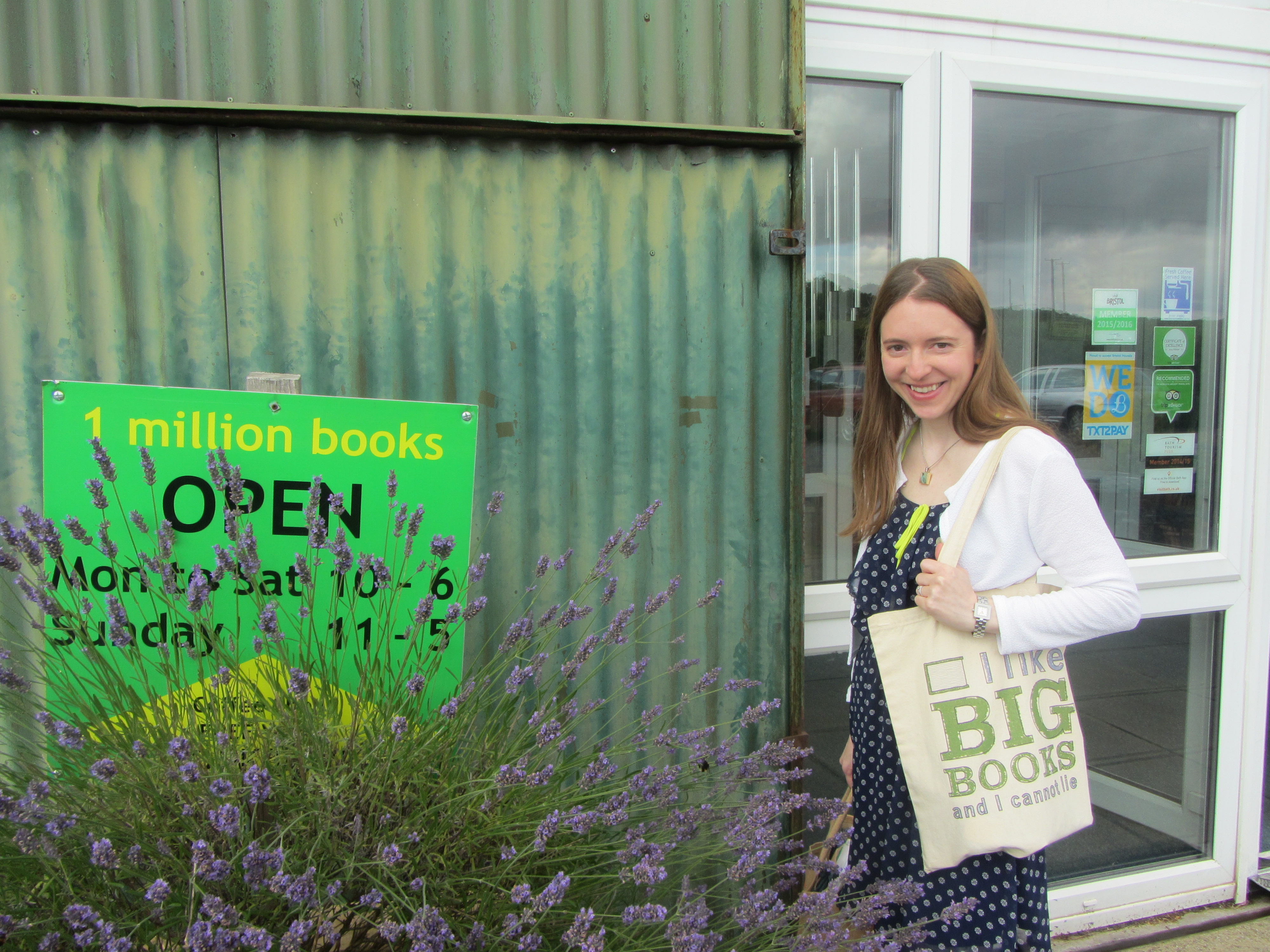
For the greatest concentration of wonderful bookshops in one place, I can’t recommend Hay-on-Wye, Wales highly enough (see my article on Book Towns for more). See also Jen Campbell’s The Bookshop Book for more ideas of bookshops to seek out wherever your travels take you.
Are you a devoted secondhand book shopper? What are some of your favorite bookshops in the United States, United Kingdom, or further afield?
 Bookish Beck = Rebecca Foster. American transplant to England. Freelance proofreader and book reviewer.
 Bookish Beck