Recent Poetry Releases by Anderson, Godden, Gomez, Goodan, Lewis & O’Malley
Nature, social engagement, and/or women’s stories are linking themes across these poetry collections, much as they vary in their particulars. After my brief thoughts, I offer one sample poem from each book.
And I Will Make of You a Vowel Sound by Morag Anderson
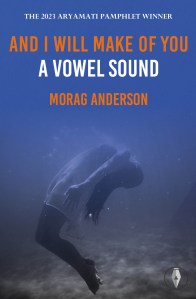 Morag Anderson was the 2023 Makar of the Federation of Writers in Scotland. She won the Aryamati Pamphlet Prize for this second chapbook of 25 poems. Her subjects are ordinary people: abandoned children, a young woman on a council estate, construction workers, and a shoplifter who can’t afford period products. The verse is rich with alliteration, internal rhymes and neologisms. Although sub/urban settings predominate, there are also poems dedicated to birds and to tracking the seasons’ march along a river. There is much sibilance to “Little Wren,” while “Cormorant Speaks” enchants with its fresh compound words: “Barefoot in mudslick streambeds I pathpick over rotsoft limbs, wade neckdeep in suncold loch”. “No Ordinary Tuesday, 2001” is about 9/11 and “None of the Nine Were There” expresses feminist indignation at the repeal of Roe v. Wade: “all nine were busy / stitching rules into the seams / of bleeding wombs.” A trio of poems depicts the transformation of matrescence: “Long after my shelterbody shucks / her reluctant skull / from my shell, // her foetal cells— / rosefoamed in my core— / migrate to mend my flensed heart.” Impassioned and superbly articulated. A confident poet whose work I was glad to discover.

With thanks to Fly on the Wall Press for the free copy for review.
With Love, Grief and Fury by Salena Godden
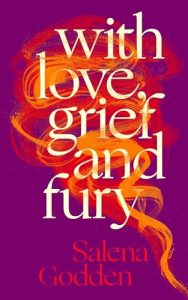 “In a time of apathy, / hope is a revolutionary act”. I knew Godden from her hybrid novel Mrs Death Misses Death, but this was my first taste of the poetry for which she is better known. The title gives a flavour of the variety in tone. Poems arise from environmental anxiety; feminist outrage at discrimination and violence towards women; and personal experiences of bisexuality, being childfree (“Book Mother” and “Egg and Spoon Race”), and entering perimenopause (“Evergreen Tea”). Solidarity and protest are strategies for dispelling ignorance about all of the above. Godden also marks the rhythms of everyday life for a single artist, and advises taking delight in life’s small pleasures. The social justice angle made it a perfect book for me to read portions of on the Restore Nature Now march through London in June …

… and while volunteering as an election teller at a polling station last week. It contains 81 poems (many of them overlong prose ones), making for a much lengthier collection than I would usually pick up. The repetition, wordplay and run-on sentences are really meant more for performance than for reading on the page, but if you’re a fan of Hollie McNish or Kae Tempest, you’re likely to enjoy this, too.
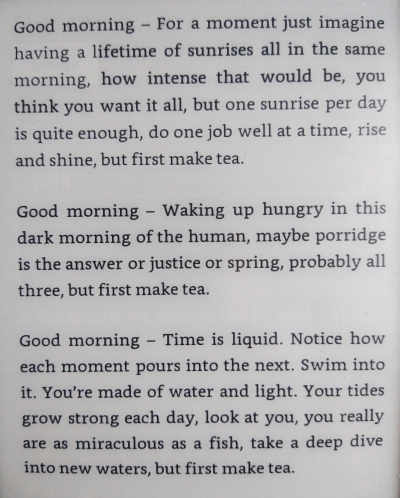
An excerpt from “But First Make Tea”
(Read via NetGalley) Published in the UK by Canongate Press.
Inconsolable Objects by Nancy Miller Gomez
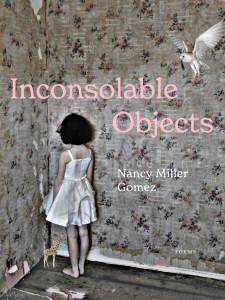 Nancy Miller Gomez’s debut collection recalls a Midwest girlhood of fairground rides and lake swimming; tornadoes and cicadas. But her remembered Kansas is no site of rose-tinted nostalgia. “Missing History” notes how women’s stories, such as her grandmother’s, are lost to time. A pet snake goes missing and she imagines it haunting her mother. In “Tilt-A-Whirl,” her older sister’s harmless flirtation with a ride operator turns sinister. “Mothering,” likewise, eschews the cosy for images of fierce protection. The poet documents the death of her children’s father and abides with a son enduring brain scans and a daughter in recovery from heroin addiction. She also takes ideas from the headlines, with poems about the Ukraine invasion and species extinction. There is a prison setting in two in a row – she has taught Santa Cruz County Jail poetry workshops. The alliteration and slant rhymes are to die for, and I love the cover (Owl Collage by Alexandra Gallagher) and frequent bird metaphors. This also appeared on my Best Books from the First Half of 2024 list. [My full review is on Goodreads.]

With thanks to publicist Sarah Cassavant (Nectar Literary) and YesYes Books for the e-copy for review.
In the Days that Followed by Kevin Goodan
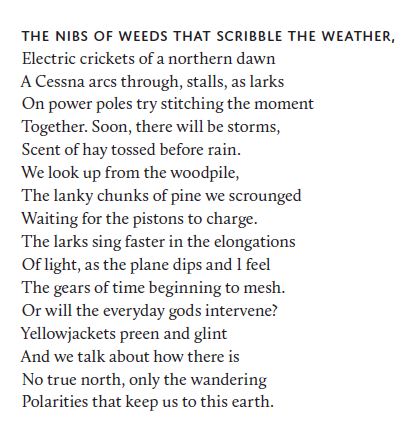
 These 41 poems, each limited to one stanza and one page, are named for their first lines, like hymns. With their old-fashioned lyricism and precise nature vocabulary, they are deeply rooted in place and animated by frequent rhetorical questions. Birds and fields, livestock and wildfires: Goodan marks where human interest and the natural world meet, or sometimes clash. He echoes Emily Dickinson (“After great patience, a small bird comes”) and also reminds me of Keith Taylor, whose upcoming collection I’ve reviewed for Shelf Awareness. The pages are rain-soaked and ghost-haunted, creating a slightly melancholy atmosphere. Unusual phrasing and alliteration stand out: “on the field / A fallow calm falls / Leaving the soil / To its feraling.” He’s a new name for me though this is his seventh collection; I’d happily read more. [After I read the book I looked at the blurb on Goodreads. I got … none of that from my reading, so be aware that it’s very subtle.]
With thanks to Alice James Books for the e-copy for review.
From Base Materials by Jenny Lewis
 This nicely ties together many of the themes covered by the other collections I’ve discussed: science and nature imagery, ageing, and social justice pleas. But Lewis adds in another major topic: language itself, by way of etymology and translation. “Another Way of Saying It” gives the origin of all but incidental words in parentheses. The “Tales from Mesopotamia” are from a commissioned verse play she wrote and connect back to her 2014 collection Taking Mesopotamia, with its sequence inspired by The Epic of Gilgamesh. There are also translations from the Arabic and a long section paraphrases the Rubaiyat of Omar Khayyam, which recalls the books of Ecclesiastes and Job with its self-help aphorisms. Other poems are inspired by a mastectomy, Julian of Norwich, Japanese phrases, and Arthurian legend. The title phrase comes from the Rubaiyat and refers to the creation of humanity from clay. There’s such variety of subject matter here, but always curiosity and loving attention.
“On Translation”
The trouble with translating, for me, is that
when I’ve finished, my own words won’t come;
like unloved step-children in a second marriage,
they hang back at table, knowing their place.
While their favoured siblings hold forth, take
centre stage, mine remain faint, out of ear-shot
like Miranda on her island shore before the boats
came near enough, signalling a lost language;
and always the boom of another surf – pounding,
subterranean, masculine, urgent – makes my words
dither and flit, become little and scattered
like flickering shoals caught up in the slipstream
of a whale, small as sand crabs at the bottom of a bucket,
harmless; transparent as zooplankton.
With thanks to Carcanet Press for the e-copy for review.
The Shark Nursery by Mary O’Malley
 This was my first time reading Irish poet Mary O’Malley. Nature looms large in her tenth collection, as in several of the other books I’ve reviewed here, with poems about flora and fauna. “Late Swallow” is a highlight (“your loops and dives leave ripples in the air, / a winged Matisse, painting with scissors”) and the title’s reference is to dogfish – what’s in a name, eh? The meticulous detail in her descriptions made me think of still lifes, as did a mention of an odalisque. Other verse is stimulated by Greek myth, travel to Lisbon, and the Gaelic language. Sections are devoted to pandemic experiences (“Another Plague Season”) and to technology. “The Dig” imagines what future archaeologists will make of our media. I noted end and internal rhymes in “April” and the repeated sounds and pattern of stress of “clean as a quiver of knives.” O’Malley has a light touch but leaves a big impression.
“Holy”
The days lengthen, the sky quickens.
Something invisible flows in the sticks
and they blossom. We learn to let this
be enough. It isn’t; it’s enough to go on.
Then a lull and a clip on my phone
of a small girl playing with a tennis ball
her three-year-old face a chalice brimming
with life, and I promise when all this is over
I will remember what is holy. I will say
the word without shame, and ask if God
was his own fable to help us bear absence,
the cold space at the heart of the atom.
With thanks to Carcanet Press for the e-copy for review.
Recent Releases by Nathan Hill, Hisham Matar, Sigrid Nunez and More
One key way in which 2024’s reading has already differed from previous years’ is that I no longer avoid doorstoppers. I now classify any book with over 400 pages as a doorstopper, and by that definition I have already gotten through three this year: The Tidal Year plus two of the below, with Wellness standing out as the true whopper at 597 small-print pages. January offered a set of releases full of variety: gritty yet funny flash fiction; a novel of big ideas and big empathy for its flawed characters; an exile’s elegant love letter to Libya from London; a coy pandemic-era reflection on connection and creation; and a tour of nature close to home.
Universally Adored and Other One Dollar Stories by Elizabeth Bruce
 This was a great collection of 33 stories, all of them beginning with the words “One Dollar” and most of flash fiction length. Bruce has a knack for quickly introducing a setup and protagonist. The voice and setting vary enough that no two stories sound the same. What is the worth of a dollar? In some cases, where there’s a more contemporary frame of reference, a dollar is a sign of desperation (for the man who’s lost house, job and wife in “Little Jimmy,” for the coupon-cutting penny-pincher whose unbroken monologue makes up the whole of “Grocery List”), or maybe just enough for a small treat for a child (as in “Mouse Socks” or “Boogie Board”). In the historical stories, a dollar can buy a lot more. It’s a tank of gas – and a lesson on the evils of segregation – in “Gas Station”; it’s a huckster’s exorbitant charge for a mocked-up relic in “The Grass Jesus Walked On.”
The tone ranges from black comedy (“Festus”) to high tragedy (“Votive Candle”), but the book mostly falls within the realm of dirty realism with the attention to working-class country folk, so I’d recommend the collection to fans of authors who perch on the lighter side of that subgenre, such as Barbara Kingsolver or Denis Johnson. A few of my favorite stories, in addition to the above, were “Ice-Cold Water,” which I appreciated for the Washington D.C. setting and the way that an assumption about who would be racist was overturned by a moment of simple compassion; “Dolores,” in which a slick humanitarian fundraiser meets a waitress who has his number; and “Boiling the Buggers,” a window onto Covid-exacerbated mental illness. (Read via BookSirens)
Wellness by Nathan Hill
Somehow nearly eight years have passed since Hill’s debut novel, The Nix, which I dubbed “a rich, multi-layered story about family curses and failure.” I admired it as much for its prose as for its ideas, and Wellness is just as effervescent and insightful. It’s a state-of-the-nation novel filtered through one Chicago family: experimental photographer and underperforming academic Jack; his wife Elizabeth, a placebo researcher at Wellness; and their YouTube-obsessed son Toby. They’ve recently invested their life savings in a new condo and are considering trendy features like open shelves and separate master bedrooms. It would be oversimplifying, but true, to say that this couple is experiencing midlife and marital crises. Their nineties college romance – and a time of life when everything felt open and possible – is so remote now. When Elizabeth suggests they join a friend at a swingers’ club and a patient of hers who’s also a parent at Toby’s school sees them outside, chaos ensues.
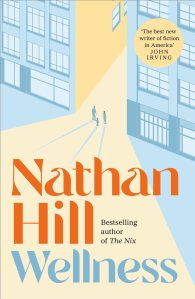
Some elements from The Nix carry over, such as campus politics, the American Midwest, and mother–son relationships, but also broader questions of authenticity, purpose and nurture. Is love itself a placebo? The novel spends time with Jack and Elizabeth at the dawn of their relationship and in the present day, but also looks back to their early careers and first years of parenthood. Hill is clearly fascinated with the sort of psychological experimentation Elizabeth engages in (there’s a whole bibliography of scientific papers consulted) but also turns it to humorous effect, as when Elizabeth subjects Toby to the marshmallow test. A lot of information is conveyed through dialogue, yet it never feels forced. A couple of long asides, on Elizabeth’s family history and the algorithms guiding Jack’s interactions with his conspiracy theorist father, tried my patience, but I loved a four-page chapter on a funeral supper where every sentence starts “There was.” Sooooo many quotable lines throughout.
The only fault in an addictive and spot-on novel (how did he know?! you’ll find yourself thinking about your own attitude to work/marriage/children) is that Hill is so committed to excavating these characters’ backstory of stunted emotion – Jack estranged from his religious Kansas farmer parents after a traumatic incident you feel right in the gut; Elizabeth glad to jettison her father’s wealth with his anger – that he hurries through the denouement. Still, this is sure to be a fiction highlight of my year. It’s one for readers of Jonathan Franzen, sure, but I also thought it reminiscent of Katherine Heiny’s Standard Deviation and Meg Wolitzer’s The Interestings.
With thanks to Picador for the proof copy for review.
My Friends by Hisham Matar
“Benghazi was the one place I longed for the most, it was also the place I most feared to return to.”
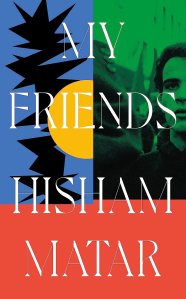 Taking a long walk through London one day, Khaled looks back from midlife on the choices he and his two best friends have made. He first came to the UK as an eighteen-year-old student at Edinburgh University. Everything that came after stemmed from one fateful day. Matar places Khaled and his university friend Mustafa at a real-life demonstration outside the Libyan embassy in London in 1984, which ended in a rain of bullets and the accidental death of a female police officer. Khaled’s physical wound is less crippling than the sense of being cut off from his homeland and his family. As he continues his literary studies and begins teaching, he decides to keep his injury a secret from them, as from nearly everyone else in his life. On a trip to Paris to support a female friend undergoing surgery, he happens to meet Hosam, a writer whose work enraptured him when he heard it on the radio back home long ago. Decades pass and the Arab Spring prompts his friends to take different paths.
I’d previously only read Matar’s short nonfiction work A Month in Siena. The slow, meditative style I enjoyed so much there didn’t translate well into doorstopper length; by the 300-page mark I found myself skimming to see if anything else might happen. Despite the title, we come to know Mustafa and Hosam much less well than we do Khaled. I would happily have had the book’s plot and sentiment concentrated into a taut 200 pages. However, I’m still interested in trying other books by Matar. In the Country of Men is significantly shorter and available from the backroom storage area of my library, and his Folio Prize-winning memoir The Return, too, is on shelf and I reckon will be right up my street.
With thanks to Viking (Penguin) for the proof copy for review.
The Vulnerables by Sigrid Nunez
I’m a huge Nunez fan after reading The Friend, What Are You Going Through, and especially A Feather on the Breath of God. Her last three books have been very much of a piece: autofiction voiced by an unnamed woman who has a duty of care towards a friend or a friend’s pet and ponders, in wry meta fashion, the nature of autobiographical writing and the meaning of life and death at a time of climate breakdown. Alas, The Vulnerables seems like no more than a rehashing of The Friend, with flanking main characters chosen at random from central casting: a parrot named Eureka and a mentally ill college drop-out called Vetch. This quirky trio is thrown together in a lavish New York City apartment during lockdown and nothing much happens but conversation brings them closer.
 A second problem: Covid-19 stories feel dated. For the first two years of the pandemic I read obsessively about it, mostly nonfiction accounts from healthcare workers or ordinary people looking for community or turning to nature in a time of collective crisis. But now when I come across it as a major element in a book, it feels like an out-of-place artefact; I’m almost embarrassed for the author: so sorry, but you missed your moment. My disappointment may primarily be because my expectations were so high. I’ve noted that two blogger friends new to Nunez were enthusiastic about this (but so was Susan, who’d enjoyed her before). That’s not to say this wasn’t a pleasantly fluid and incisive read, even if its message of essential human vulnerability is an obvious one. Anyway, I’ll take Nunez musing on familiar subjects over most other contemporary writers any day:
“Never write ‘I don’t remember,’ Editor says; it undermines your authority. But write as if you remember everything and Reader will smell a rat.”
“You can start with fiction or start with documentary, according to Jean-Luc Goddard. Either way, you will inevitably find the other.”
“I like this clarification by the narrator of a book by Stendhal: ‘It is not out of egotism that I say “I”; it is simply the quickest way to tell the story.’)”
(À propos of the doorstoppers above)
“Does that mean a long novel is easier to write than a short one? / Um, no. But, to borrow from a certain critic, in almost every long book I read I see a short one shirking its job.”
With thanks to Virago for the proof copy for review.
And a bonus work of nonfiction:
Local: A Search for Nearby Nature and Wildness by Alastair Humphreys
Lev Parikian alerted me to this amiable record of weekly discoveries of the nature on one’s home turf. Humphreys has been an international adventure traveller and written many books about his exploits. Here, by contrast, he zooms the lens in about as far as it will go, ordering a custom-made 20-km-square OS map that has his house at the centre and choosing one surrounding grid square per week (so 52 out of a total of 400) to cycle to and explore. He’s chosen to leave his town unnamed so this can function as an Everyman’s journey through edgelands. And his descriptions and black-and-white photographs really do present an accurate microcosm of modern England: fields, woods, waterways, suburban streets.
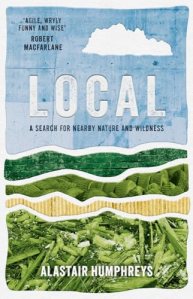 From one November to the next, he watches the seasons advance and finds many magical spaces with everyday wonders to appreciate. “This project was already beginning to challenge my assumptions of what was beautiful or natural in the landscape,” he writes in his second week. True, he also finds distressing amounts of litter, no-access signs and evidence of environmental degradation. But curiosity is his watchword: “The more I pay attention, the more I notice. The more I notice, the more I learn.”
Each week’s observations send him down a research rabbit hole, with topics including caves, land management, mudlarking, plant species, and much more. The nature of the short chapters means that there can only ever be a cursory look at huge issues like rewilding and veganism, but Humphreys is nimble in weaving in the brief, matter-of-fact discussions. His eagerness is irrepressible. “How you look, what you see, and the way all this makes you feel: a single map and the best of all possible worlds.” (See also: Paul’s review.)
With thanks to the author for the free copy for review.
My Best Backlist Reads of the Year
Like many bloggers, I’m irresistibly drawn to the new books released each year. However, I consistently find that many of my more memorable reads were published earlier – most of these happen to have been published between one and a few years ago, with the ‘oldest’ being from 2004. These dozen selections – alphabetical within genre but in no particular rank order – together with my Best of 2023 post (coming up tomorrow), make up about the top 10% of my year’s reading.

Fiction
 Loved and Missed by Susie Boyt: The heart-wrenching story of a woman who adopts her granddaughter because of her daughter’s drug addiction. The prose is stunning as Boyt traces the history of this complicated, makeshift family. The title has a wry double meaning, but also connotations of anticipatory grief. There can be love even where there is estrangement, or eternal separation. That is one of the enduring messages of this gem of a short novel.
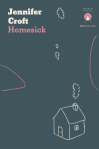 Homesick by Jennifer Croft: Each vignette – some just a paragraph long – is perfectly chosen to reveal a family dynamic and a moment in American history. What Croft does so brilliantly is to chart the accretion of ordinary and landmark events that form a life. In the end it didn’t matter whether this was presented as memoir or autofiction, so true was it to the experience of 1990s girlhood, as well as to sisterhood and coming of age.
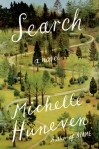 Search by Michelle Huneven: When middle-aged restaurant critic Dana Potowski is invited to be on the search committee to appoint the next minister for her California Unitarian church, she reluctantly agrees but soon wonders whether the experience could be interesting fodder for a new book… The setup might seem niche but will resonate with anyone who’s had a brush with bureaucracy. Pure pleasure; lit fic full of gossip and good food.
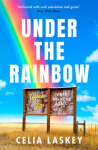 Under the Rainbow by Celia Laskey: Researchers identified Big Burr, Kansas as the most homophobic town in America. An Acceptance Across America task force descends on the rural backwater for a two-year program promoting education and friendship. Each chapter in the linked short story collection is a first-person, present-tense confession from a local or a queer visitor, whose stories interlock. Laskey inhabits all 11 with equal skill and compassion.
 The Chosen by Elizabeth Lowry: This utterly immersive novel examines Thomas Hardy’s relationship with his first wife, Emma Gifford. It opens on the morning of her death. The couple had long been estranged, but Hardy was instantly struck with grief – and remorse, his guilt compounded by what he found in her journals. A universal tale of waning romance, loss, and regret. Beautifully understated; perfectly convincing for the period but also timeless.
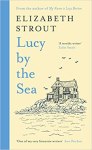 Lucy by the Sea by Elizabeth Strout: As Covid hits, William whisks Lucy from her NYC apartment to a house at the Maine coast. She’s an Everywoman recounting the fear and confusion of the early pandemic. Isolation has benefits: the first ‘room of her own’ she’s ever had, and time to ponder her childhood trauma and what went wrong in her marriage. Astute on American politics and writers’ inspirations; an effortless voice and emotional intelligence.
Nonfiction
 Bibliomaniac by Robin Ince: Ince was meant to undertake a stadium tour in Autumn 2021, but a Covid resurgence put paid to that. Not one for sitting around at home, he formulated Plan B: 100+ events, most of them in independent bookshops, over the course of two months, criss-crossing Britain and hitting many of my favourites. He’s not just a speaker at them but, invariably, a customer. I sensed a kindred spirit in so many lines. Witty and open-minded.
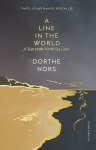 A Line in the World by Dorthe Nors: Nors lives in rural Jutland along the west coast of Denmark – little visited and largely unknown to foreigners. This can be both good and bad. Tourists feel they’re discovering somewhere new, but the residents are insular. Local legends and traditions, bird migration, reliance on the sea, wanderlust, maritime history, a visit to church frescoes, and more. Gorgeous writing and atmosphere, despite the bleakness.
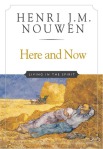 Here and Now by Henri Nouwen: This collection of micro-essays under themed headings like “Living in the Present” and “Suffering” is a perfect introduction to the Dutch Catholic priest’s theology. I marked out many reassuring or thought-provoking passages. I was taken by his ideas that the life of compassion is one of “downward mobility” and that inner freedom comes when you don’t judge anyone. Peaceful and readable; a good bedside devotional.
Poetry
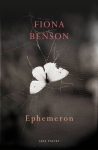 Ephemeron by Fiona Benson: Exquisite poems about the ephemeral, whether that be insect lives, boarding school days, primal emotions or moments from her children’s early years. The book is in four discrete corresponding sections but themes and language bleed from one into another and the whole is shot through with astonishing corporeality and eroticism. The form varies but the alliteration, slant rhymes and unexpected metaphors make each poem glisten.
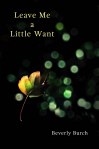 Leave Me a Little Want by Beverly Burch: Burch’s fourth collection juxtaposes the cosmic and the mundane, marvelling at the behind-the-scenes magic that goes into one human being born but also making poetry of an impatient wait in a long post office queue. Beset by environmental anxiety and the scale of bad news during the pandemic, she pauses in appreciation of the small and gradual.
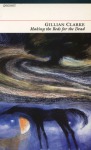 Making the Beds for the Dead by Gillian Clarke: Full of colour and nature imagery, profuse with alliteration and slant rhymes, relishing its specialist terminology, and taking on the serious subject matter of manmade disasters. Several sequences are devoted to gardening and geology; some pieces are ekphrastic, or dedicated to particular poets. The title sequence tackles the 2001foot and mouth disease outbreak. “The Fall” is on 9/11. Very affecting stuff.
My overall favourites were: in novels, Search and The Chosen (one contemporary and one historical) and in poetry, Ephemeron.
What were your best backlist reads this year?
Three on a Theme: “Rainbow” Books for Pride Month
Two of these are short story collections (and one almost is); two are specifically queer in outlook; all attracted me for their colorful covers, and all were borrowed from the library. #LoveYourLibrary

Rainbow Rainbow: Stories by Lydia Conklin (2022)
The 10 stories in this confident debut collection are unabashedly queer, and half involve the trans experience, whether ideation or reality. Conklin is nonbinary, so it’s tempting to read several stories as autobiographical: female characters long to get top surgery and transition to male or nonbinary, but worry it will change how they are perceived or desired. “Pink Knives” and “Boy Jump,” especially, have the flavor of autofiction, with protagonists traveling in Poland and feeling attraction to people of various genders. (The former has a pandemic setting, which I’ve noticed has at this point started to feel dated.) My overall favorite was “Sunny Talks,” in which middle-aged Lillia accompanies her trans teenage nephew to a conference for celebrity YouTubers but can’t bring herself to announce her own intended transition. Though life hasn’t been easy for Sunny, he has support she lacked growing up.
 Asher and Ivan, two characters of nebulous sexuality and future gender, are the core of “Cheerful Until Next Time” (check out the acronym), which has the fantastic opening line “The queer feminist book club came to an end.” “Laramie Time” stars a lesbian couple debating whether to have a baby (in the comic Leigh draws, a turtle wishes “reproduction was automatic or mandatory, so no decision was necessary”). “A Fearless Moral Inventory” features a pansexual who is a recovering sex addict. Adolescent girls are the focus in “The Black Winter of New England” and “Ooh, the Suburbs,” where they experiment with making lesbian leanings public and seeking older role models. “Pioneer,” probably my second favorite, has Coco pushing against gender constraints at a school Oregon Trail reenactment. Refusing to be a matriarch and not allowed to play a boy, she rebels by dressing up as an ox instead. The tone is often bleak or yearning, so “Counselor of My Heart” stands out as comic even though it opens with the death of a dog; Molly’s haplessness somehow feels excusable.
Six of the stories are in the third person and four in first person. I’d be interested to try Conklin’s longer-form work, and think first-person narration would particularly suit her. I didn’t really sense that this was a book meant for me, but that’s okay; a lot of readers will feel seen and represented. Pair this with, or have it on hand as a follow-up to, work by Allison Blevins, Melissa Febos and, most of all, Eley Williams. 
Under the Rainbow by Celia Laskey (2020)
In Laskey’s debut, which has been marketed as a novel but reads more like linked short stories, a favorite format of mine, researchers have identified Big Burr, Kansas as the most homophobic town in America. A task force from Acceptance Across America descends on the rural backwater for a targeted two-year program promoting education and friendship. Each chapter is a first-person, present-tense confession from a local or a queer visitor, whose stories interlock and push the chronology forward. For every positive step – a gender-neutral bathroom in the high school, a closeted individual who summons up the courage to come out – there is a regressive one, such as a AAA billboard being set on fire or a house being egged.
 Laskey inhabits all 11 personae with equal skill and compassion. Avery, the task force leader’s daughter, resents having to leave L.A. and plots an escape with her new friend Zach, a persecuted gay teen. Christine, a Christian homemaker, is outraged about the liberal agenda, whereas her bereaved neighbor, Linda, finds purpose and understanding in volunteering at the AAA office. Food hygiene inspector Henry is thrown when his wife leaves him for a woman, and meat-packing maven Lizzie agonizes over the question of motherhood. Task force members David, Tegan and Harley all have their reasons for agreeing to the project, but some characters have to sacrifice more than others.
Little references in later chapters catch you up on what’s happened with the others. I only questioned the need for Elsie as a POV character, and the exclusion of Jamal (presumably Laskey thought it unwise to write from the perspective of a Black man, but he’s a glaring omission). A final chapter, returning to one of the protagonists and set 10 years later, presents a town that’s changed enough to host its first gay wedding and first LGBTQ-owned business.
The novel is realistically sad, but not overly so, and was compellingly readable and heartwarming in a way that reminded me of how I felt about Shotgun Lovesongs. You might not want to live there, but I guarantee you’ll develop a certain fondness for Big Burr. 
Scattered Showers: Stories by Rainbow Rowell; illus. Jim Tierney (2022)
I spotted this collection while shelving in the YA section of the library one day and admired the sky blue naked hardback for its red sprayed edges, chunky rainbow endpapers, distinctive font, and teal and magenta interior color scheme. I’d read one Rowell book before, the graphic novel Pumpkinheads. This is probably a better match for her dedicated fans in that three of the stories are spin-offs from her fiction and a few of the rest are one-offs (Amazon Original Stories, a World Book Day publication, a contribution to an anthology), such that I felt a little like I was reading leftovers. A B-sides volume, if you will.
 Four of the nine are holiday-themed, so this could make a good Twixtmas read if you like seasonality; eight are in the third person and just one has alternating first person narrators. All are what could be broadly dubbed romances, with most involving meet-cutes or moments when long-time friends realize their feelings go deeper (“Midnights” and “The Snow Ball”). Only one of the pairings is queer, however: Baz and Simon (who are a vampire and … a dragon-man, I think? and the subjects of a trilogy) in the Harry Potter-meets Twilight-meets Heartstopper “Snow for Christmas.” The rest are pretty straightforward boy-girl stories.
I liked “Kindred Spirits,” in which Elena joins a small group (“three cold nerds”) of hardcore Star Wars fans waiting in line for the first sequel and notices Gabe, a classmate, as if for the first time; “Winter Songs for Summer,” in which a sensitive jock proves he knows his upstairs dorm mate better than anyone through the breakup-recovery tracks he puts on a mix CD for her; and “If the Fates Allow,” about Nebraska neighbors who bond over Jell-O salad during a couple of pandemic Christmases.
I wasn’t as enamored by the couple of fantasy stories, “The Prince and the Troll,” a fairy tale twisted into a vague environmental dystopian parable (“This isn’t easy. This is just another kind of hard. That’s all that’s left now, for any of us”), and “In Waiting,” about the evolving characters incubating in a writer’s head. “Mixed Messages” was refreshing for having middle-aged characters, two friends texting back and forth to try to work out whether the one missed a period because she’s pregnant or in perimenopause, but I doubt I’d be tempted to seek out the book these characters originated in (Attachments), or any of Rowell’s others. 
There was a clear winner here: Under the Rainbow!
Extra goodies:
Celebrate Pride Month! The Bookshop.org team has curated this list of books by LGBTQIA+ authors for you to enjoy. Please enjoy 20% OFF all titles. [affiliate link]
A song Sufjan Stevens wrote for Pride Month 2019.
And Finally by Henry Marsh & Sinkhole by Juliet Patterson
As I mentioned about my first batch of September releases, the nonfiction was on two broad themes: books about books (two still to come), and books about death (with What Remains? by Rupert Callender still to come). Here’s two from the latter camp.
And Finally: Matters of Life and Death by Henry Marsh
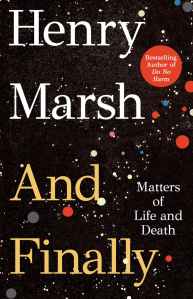 Marsh is a retired brain surgeon and the author of Do No Harm, one of the very best medical memoirs out there, as well as Admissions. As he was turning 70 a couple of years ago, two specific happenings prompted this third book. One: he volunteered for a brain scan as part of a medical study and, though he was part of a healthy cohort, was appalled at the degeneration his results showed. The other was that, after years of ignoring symptoms, he was diagnosed with advanced prostate cancer and a someday, far-off mortality started to seem a lot closer. The pandemic amplified his health worries and sense of isolation, so he threw himself into various domestic projects like clearing his loft, home renovations, and remodelling his daughter’s dollhouse to give to his beloved granddaughters.
As in Admissions, the book flits between topics: the hypoxia he experienced on a trip to Nepal, surgical mistakes made (he once operated on the wrong side of the neck), balcony gardens he created on his hospital’s neurosurgery wards, a potter friend who died of a brain tumour, and so on. Along with details of his cancer treatment, he discusses its typical course and waxes lyrical about the meaning of dreams, what we know about consciousness, and the fairy stories he made up to tell his granddaughters over Zoom during lockdown. He acknowledges his own limitations – he was conned not once but twice by cowboy builders, and declined to operate on a young Ukrainian doctor, leaving it to a colleague – and speaks out against technologies to extend the human lifespan and in favour of assisted dying.
In general, the book feels quite scattered and repetitious. However, I appreciated Marsh’s usual candour and could see how he would want to finish this quickly and get it out into the world, even if it would have benefited from further editing to make each chapter a more polished stand-alone essay. The good news is that his scan results were promising as of spring 2022 and I’ve seen on Twitter that he’s now in Ukraine with Rachel Clarke to speak at the Lviv BookForum. Is it selfish to hope we’ll get another book from him?
With thanks to Jonathan Cape for the free copy for review.
Sinkhole: A Legacy of Suicide by Juliet Patterson
In December 2008, poet Juliet Patterson’s father died by suicide, hanging himself from a bridge near his Minnesota home in the middle of the night. When the news came, Patterson was recovering from a car accident the week before and in the middle of debates with her partner Rachel about whether they would have a child. Her father had been in his late seventies, in fine health and with full mental capacity; he left his affairs ship-shape, and his suicide note was mostly practicalities about insurance, bank accounts and car ownership.
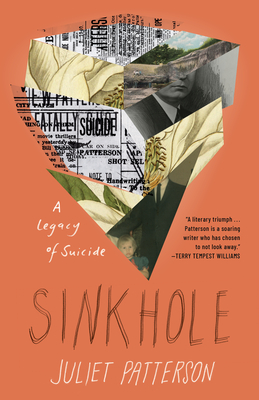 On the face of it, he wasn’t an obvious candidate, not someone you would worry about. Yet there was family history: both of Patterson’s parents lost their fathers to suicide. And there was a bizarre direct connection between their two Kansas-based families: her maternal grandmother’s best friend became her paternal grandfather’s secretary and mistress.
Patterson returns to Kansas on research trips to unearth her grandfathers’ lives: William a pottery manager who later struck it rich through Gulf Oil and Edward a New Deal Democratic congressman who lost his second bid for re-election. She pairs archival evidence – photographs and newspaper clippings – with skillfully imagined accounts of what each of her three ancestors did and felt on the day of his suicide. Her thinking is guided especially by the work of Edwin Shneidman, a psychologist who studied suicide notes.
Throughout, sinkholes, which are common in Kansas due to coal mining (one even opened up near her grandmother’s house), are both reality and metaphor for the chasm a suicide leaves. This gorgeously written family memoir approaches its difficult subject matter with brave tenderness and is one of my nonfiction favorites from the year so far. 
Published by Milkweed Editions in the USA. With thanks to Nectar Literary for the advanced e-copy for review.
“Being the Expert” on Women’s Religious Memoirs Again: Unfollow & Leaving the Witness
 I’ve fallen behind on the weekly prompts for Nonfiction November, but wanted to post a follow-up to my 2018 list of a baker’s dozen of memoirs I’ve read that explore women’s religious experiences. I’ve read a couple more this year that are worth adding to the list; in addition to their themes of doubt and making a new life outside the church, they also share an interesting detail: it’s an online friend that goads each author into questioning her beliefs. Even if you aren’t typically interested in this subgenre, you’ve likely heard of Unfollow because of the high-profile story behind it. (This week is hosted by Katie of Doing Dewey.)
Unfollow: A Journey from Hatred to Hope, Leaving the Westboro Baptist Church by Megan Phelps-Roper
“God hates f*gs.” If you know one thing about Westboro Baptist Church of Topeka, Kansas, it’s that this slogan plastered their signs and was part of their armory of in-your-face chants at nationwide protests.
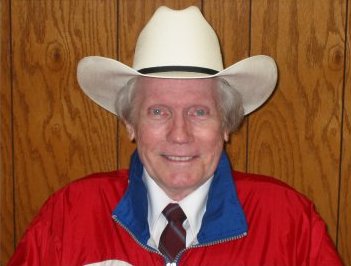
Fred Phelps in 2002. (User Rudolf 1922 on sv.wikipedia.)
Megan Phelps-Roper grew up in the Church, which was founded by her grandfather, Fred Phelps, and made up mostly of her extended family: Phelps had 13 children, and Phelps-Roper is one of 11. In 1989 Phelps learned that nearby Gage Park was a gay cruising spot and wrote in disgust to the mayor and other city officials. In a sense, he never got over it. The anti-homosexuality message would become Westboro’s trademark, at least until the church started its picketing of military funerals after the Iraq War – which, like 9/11, was interpreted as being God’s just punishment of American immorality.
By portraying it from the inside and recreating her shifting perspective from early childhood onwards, Phelps-Roper initially makes her extreme upbringing seem normal. After all, it’s the only thing she knew, and it never would have occurred to her that her family could be wrong. The Phelpses were fiercely intelligent and also ran a law firm, so it’s impossible to just dismiss them as redneck idiots. Frequent passages from the King James Bible appear in italics to echo the justifications the Church cited for its beliefs and actions.
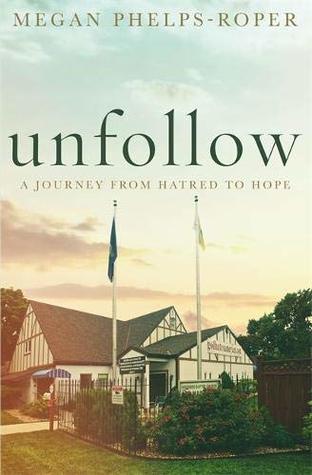 Only gradually did doubts start to creep in for the author as various uncles and brothers left the church. Phelps-Roper was even the voice of Westboro on Twitter, but defending funeral protests became increasingly difficult for her. Two things brought her to a breaking point. First, in something of a coup, the Church appointed a new body of elders – all male, of course – who instituted ever more draconian rules, such as a dress code for women, and effectively removed her mother from leadership. (Ultimately, they would kick the dying Fred Phelps himself out of the church.) Secondly, the Church started to spread fake news via doctored photos. For example, they claimed to be protesting a royal wedding in London, when in fact Westboro members never go anywhere the First Amendment can’t protect them.
All along, Phelps-Roper had been corresponding with “C.G.,” an online acquaintance with whom she played Words with Friends. Chad gently encouraged her to ask why Westboro believed as it did, and to unpick rather than ignore any doctrines that didn’t make sense. “What if we’re wrong? What if this isn’t The Place led by God Himself? What if we’re just people?” she wondered. In November 2012, she and her sister Grace left the Church and the family home, where she’d lived until age 26, and retreated to a Deadwood, South Dakota Airbnb to hike, read and think about what they’d left behind and what came next. I’d had just about enough of Westboro and its infighting by that point in the book – the chapter about her leaving gets a little melodramatic – so, like the author, I was glad to move on to another setting, and this interlude ended up being my favorite section.

Westboro Baptist Church demonstration outside the Virginia Holocaust Museum, March 2010. (JCWilmore [CC BY 3.0 (https://creativecommons.org/licenses/by/3.0)%5D.)
Note: Westboro was the subject of a Louis Theroux documentary in 2006, and in a nice full-circle moment, he’s now interviewing Phelps-Roper on some of her UK book tour spots. And, in another lovely aside, she married C.G.
My rating:
With thanks to riverrun for the free copy for review.
Leaving the Witness: Exiting a Religion and Finding a Life by Amber Scorah
Like In the Days of Rain by Rebecca Stott, this is the story of growing up in a cult and what happens when, as an adult, a woman has to build a new life free from the constraints – but also unmoored from the comforting framework – of a previously unquestioned belief system. Scorah grew up in Vancouver’s community of Jehovah’s Witnesses and, although she was temporarily disfellowshipped as a teenager for having premarital sex, the faith was her home and gave her a sense of purpose. Witnesses are discouraged from attending university or pursuing careers; without exception, they’re expected to preach and win converts – the only task worth engaging in given that the world is headed towards Armageddon.
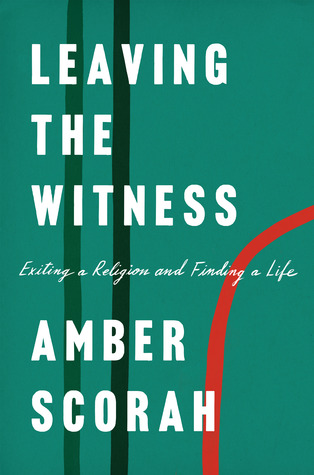 Scorah and her husband went to China as clandestine JW missionaries. Her Mandarin skills were good enough that she could become friends with her English-language pupils and then start to talk to them about religion. In the meantime, she became an early podcast host with the program “Dear Amber,” which offered advice on the Chinese language and culture. She embarked on a flirtatious correspondence with one of her regular listeners, Jonathan from Los Angeles, who goaded her into rethinking everything she’d been taught to believe. “I was questioning with a mind that had been trained not to. It was highly uncomfortable.”
As her marriage and faith simultaneously crumbled, Scorah had to decide what was left to form the foundation of a new life on her own in New York City. “My eye-glazing peace, unquestioning contentment, and eternal life were gone, and the time ahead of me was filled with people I didn’t yet know, uncertainty about the future, and, one day, death.” I was absorbed in the bittersweet outworkings of this before and after: a process of losing faith and deciding what’s next.
The final chapter is a whirlwind tour through her first years in NYC, including the tragic death of her infant son, Karl. This makes for something of an abrupt end to the book; I might have liked to get as much detail on all this as we got about the time in China. But it was clearly a deliberate decision to present such life and death matters from a hard-won secular perspective, without the false balm of a religion that promises she’ll see her son again. There’s a lot of secrecy about the Jehovah’s Witnesses, so this is a rare insider’s view as well as a wrenching account of loss and starting over.
My rating:
Full disclosure: Amber Scorah offered me a copy through a Facebook group we are both a part of.
Thanks to her and Viking for sending a free copy for review.
Can you see yourself reading either of these books?
Heartland by Sarah Smarsh
If you were a fan of Hillbilly Elegy by J.D. Vance, then debut author Sarah Smarsh’s memoir, Heartland, deserves to be on your radar too. Smarsh comes from five generations of Kansas wheat farmers and worked hard to step outside of the vicious cycle that held back the women on her mother’s side of the family: poverty, teen pregnancy, domestic violence, broken marriages, a lack of job security, and moving all the time. Like Mamaw in Vance’s book, Grandma Betty is the star of the show here: a source of pure love, she played a major role in raising Smarsh. The rundown of Betty’s life is sobering: her father was abusive and her mother had schizophrenia; she got pregnant at 16; and she racked up six divorces and countless addresses. This passage about her paycheck and diet jumped out at me:
Each month, after she paid the rent and utilities, and the landlady for watching Jeannie, Betty had $27 left. She budgeted some of it for cigarettes and gas. The rest went to groceries from the little store around the corner. The store sold frozen pot pies, five for a dollar. She’d buy twenty-five of them, beef and chicken flavor, and that would be her dinner all month. Every day, a candy bar for lunch at work and a frozen pot pie for dinner at home.
It’s a sad state of affairs when fatty processed foods are cheaper than healthy ones, and this is still the case today: the underprivileged are more likely to subsist on McDonald’s than on vegetables. Heartland is full of these kinds of contradictions. For instance, in the Reagan years the country shifted rightwards and working-class Catholics like Smarsh’s mother started voting Republican – in contravention of the traditional understanding that the Democrats were for the poor and the Republicans were for the rich. Smarsh followed her mother’s lead by casting her first-ever vote for George W. Bush in 2000, but her views changed in college when she learned how conservative fiscal policies keep people poor.
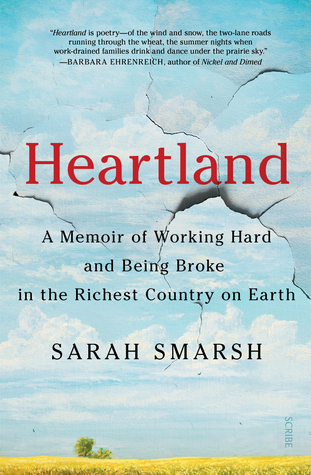 This isn’t a straightforward, chronological family story; it jumps through time and between characters. You might think of reading it as like joining Smarsh for an amble around the farm or a flip through a photograph album. Its vignettes are vivid, if sometimes hard to join into a cohesive story line in the mind. Some of the scenes that stood out to me were being pulled by truck through the snow on a canoe, helping Grandma Betty move into a house in Wichita but high-tailing it out of there when they realized it was infested by cockroaches, and the irony of winning a speech contest about drug addiction when her stepmother was hooked on opioids.
Heartland serves as a personal tour through some of the persistent trials of working-class life in the American Midwest: urbanization and the death of the family farm, an inability to afford health insurance and the threat of toxins encountered in the workplace, and the elusive dream of home ownership. Like Vance, Smarsh has escaped most of the worst possibilities through determination and education, so is able to bring an outsider’s clarity to the issues. At times she has a tendency to harp on the same points, though, adding in generalizations about the effects of poverty rather than just letting her family’s stories speak for themselves.
The oddest thing about Smarsh’s memoir – and I am certainly not the first reviewer to mention this since the book’s U.S. release in September – is who it’s directed to: her never-to-be-born daughter, “August”. Teen pregnancy was the family curse Smarsh was most desperate to avoid, and even now that she’s in her late thirties, a journalist and academic returned to Kansas after years on the East Coast, she remains childless. August is who Smarsh had in mind while working two or more jobs all through high school, earning higher degrees and buying her dream home. All along she was saving August from the hardships of a poor upbringing. While the unborn child is a potent symbol, it can be disorienting after pages of “I” to come across a “you” and have to readjust to who is being addressed.
Heartland is a striking book, not without its challenges to the reader, but one that I ultimately found rewarding to read in short bursts of 10 to 20 pages at a time. It’s worthwhile for anyone interested in what it’s really like to be poor in America.
My rating:
A favorite passage:
“My life has been a bridge between two places: the working poor and ‘higher’ economic classes. The city and the country. College-educated coworkers and disenfranchised loved ones. A somewhat conservative upbringing and a liberal adulthood. Home in the middle of the country and work on the East Coast. The physical world where I talk to people and the formless dimension where I talk to you.”
Heartland: A Memoir of Working Hard and Being Broke in the Richest Country on Earth was published by Scribe UK on November 8th. My thanks to the publisher for a free copy for review.
 Bookish Beck = Rebecca Foster. American transplant to England. Freelance proofreader and book reviewer.
 Bookish Beck