Book Serendipity, September through Mid-November
I call it “Book Serendipity” when two or more books that I read at the same time or in quick succession have something in common – the more bizarre, the better. This is a regular feature of mine every couple of months. Because I usually have 20–30 books on the go at once, I suppose I’m more prone to such incidents. People frequently ask how I remember all of these coincidences. The answer is: I jot them down on scraps of paper or input them immediately into a file on my PC desktop; otherwise, they would flit away.
Thanks to Emma and Kay for posting their own Book Serendipity moments! (Liz is always good about mentioning them as she goes along, in the text of her reviews.)
The following are in roughly chronological order.
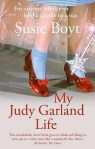
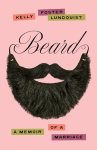
- An obsession with Judy Garland in My Judy Garland Life by Susie Boyt (no surprise there), which I read back in January, and then again in Beard: A Memoir of a Marriage by Kelly Foster Lundquist.
- Leaving a suicide note hinting at drowning oneself before disappearing in World War II Berlin; and pretending to be Jewish to gain better treatment in Aimée and Jaguar by Erica Fischer and The Lilac People by Milo Todd.
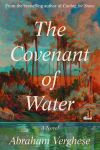
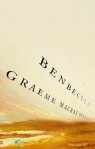
- Leaving one’s clothes on a bank to suggest drowning in The Covenant of Water by Abraham Verghese, read over the summer, and then Benbecula by Graeme Macrae Burnet.
- A man expecting his wife to ‘save’ him in Amanda by H.S. Cross and Beard: A Memoir of a Marriage by Kelly Foster Lundquist.
 A man tells his story of being bullied as a child in Goodbye to Berlin by Christopher Isherwood and Beard by Kelly Foster Lundquist.
- References to Vincent Minnelli and Walt Whitman in a story from Touchy Subjects by Emma Donoghue and Beard by Kelly Foster Lundquist.
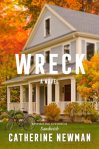
- The prospect of having one’s grandparents’ dining table in a tiny city apartment in Beard by Kelly Foster Lundquist and Wreck by Catherine Newman.
- Ezra Pound’s dodgy ideology was an element in The Dime Museum by Joyce Hinnefeld, which I reviewed over the summer, and recurs in Swann by Carol Shields.
- A character has heart palpitations in Andrew Miller’s story from The BBC National Short Story Award 2025 anthology and Endling by Maria Reva.
- A (semi-)nude man sees a worker outside the window and closes the curtains in one story of Cathedral by Raymond Carver and one from Good and Evil and Other Stories by Samanta Schweblin.
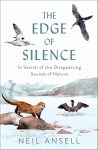
- The call of the cuckoo is mentioned in The Edge of Silence by Neil Ansell and Of All that Ends by Günter Grass.
 A couple in Italy who have a Fiat in Of All that Ends by Günter Grass and Caoilinn Hughes’s story from The BBC National Short Story Award 2025 anthology.
- Balzac’s excessive coffee consumption was mentioned in Au Revoir, Tristesse by Viv Groskop, one of my 20 Books of Summer, and then again in The Writer’s Table by Valerie Stivers.
- The main character is rescued from her suicide plan by a madcap idea in The Wedding People by Alison Espach and Endling by Maria Reva.
- The protagonist is taking methotrexate in Sea, Poison by Caren Beilin and Wreck by Catherine Newman.

- A man wears a top hat in Benbecula by Graeme Macrae Burnet and one story of Cathedral by Raymond Carver.
- A man named Angus is the murderer in Benbecula by Graeme Macrae Burnet and Swann by Carol Shields.
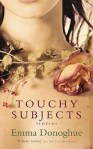 The thing most noticed about a woman is a hair on her chin in the story “Pluck” in Touchy Subjects by Emma Donoghue and Swann by Carol Shields.
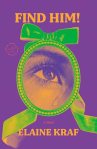
- The female main character makes a point of saying she doesn’t wear a bra in Sea, Poison by Caren Beilin and Find Him! by Elaine Kraf.
- A home hairdressing business in one story of Cathedral by Raymond Carver and Emil & the Detectives by Erich Kästner.
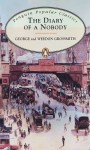
- Painting a bathroom fixture red: a bathtub in The Diary of a Nobody by George Grossmith, one of my 20 Books of Summer; and a toilet in Find Him! by Elaine Kraf.
- A teenager who loses a leg in a road accident in individual stories from A Wild Swan by Michael Cunningham and the Racket anthology (ed. Lisa Moore).
- Digging up the casket of a loved one in the wee hours features in Pet Sematary by Stephen King, one of my 20 Books of Summer; and one story of Pretty Monsters by Kelly Link.
- A character named Dani in the story “The St. Alwynn Girls at Sea” by Sheila Heti and The Silver Book by Olivia Laing; later, author Dani Netherclift (Vessel).
 Obsessive cultivation of potatoes in Benbecula by Graeme Macrae Burnet and The Martian by Andy Weir.
- The story of Dante Gabriel Rossetti digging up the poems he buried with his love is recounted in Sharon Bala’s story in the Racket anthology (ed. Lisa Moore) and one of the stories in Pretty Monsters by Kelly Link.
- Putting French word labels on objects in Alone in the Classroom by Elizabeth Hay and Find Him! by Elaine Kraf.
 A man with part of his finger missing in Find Him! by Elaine Kraf and Lessons from My Teachers by Sarah Ruhl.
- In Minor Black Figures by Brandon Taylor, I came across a mention of the Italian film director Pier Paolo Pasolini, who is a character in The Silver Book by Olivia Laing.
- A character who works in an Ohio hardware store in Flashlight by Susan Choi and Buckeye by Patrick Ryan (two one-word-titled doorstoppers I skimmed from the library). There’s also a family-owned hardware store in Alone in the Classroom by Elizabeth Hay.
- A drowned father – I feel like drownings in general happen much more often in fiction than they do in real life – in The Homecoming by Zoë Apostolides, Flashlight by Susan Choi, and Vessel by Dani Netherclift (as well as multiple drownings in The Covenant of Water by Abraham Verghese, one of my 20 Books of Summer).
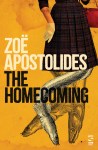
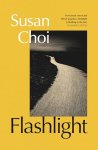
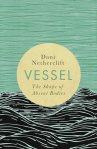
- A memoir by a British man who’s hard of hearing but has resisted wearing hearing aids in the past: first The Quiet Ear by Raymond Antrobus over the summer, then The Edge of Silence by Neil Ansell.
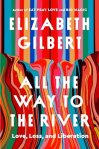 A loved one is given a six-month cancer prognosis but lives another (nearly) two years in All the Way to the River by Elizabeth Gilbert and Lessons from My Teachers by Sarah Ruhl.
- A man’s brain tumour is diagnosed by accident while he’s in hospital after an unrelated accident in Flashlight by Susan Choi and Saltwash by Andrew Michael Hurley.
- Famous lost poems in What We Can Know by Ian McEwan and Swann by Carol Shields.
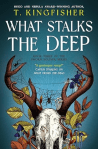
- A description of the anatomy of the ear and how sound vibrates against tiny bones in The Edge of Silence by Neil Ansell and What Stalks the Deep by T. Kingfisher.
- Notes on how to make decadent mashed potatoes in Beard by Kelly Foster Lundquist, Death of an Ordinary Man by Sarah Perry, and Lessons from My Teachers by Sarah Ruhl.
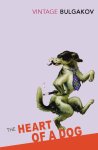
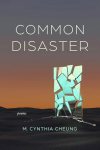
- Transplant surgery on a dog in Russia and trepanning appear in The Heart of a Dog by Mikhail Bulgakov and the poetry collection Common Disaster by M. Cynthia Cheung.
- Audre Lorde, whose Sister Outsider I was reading at the time, is mentioned in Lessons from My Teachers by Sarah Ruhl. Lorde’s line about the master’s tools never dismantling the master’s house is also paraphrased in Spent by Alison Bechdel.
- An adult appears as if fully formed in a man’s apartment but needs to be taught everything, including language and toilet training, in The Heart of a Dog by Mikhail Bulgakov and Find Him! by Elaine Kraf.
 Two sisters who each wrote a memoir about their upbringing in Spent by Alison Bechdel and Vessel by Dani Netherclift.
- The fact that ragwort is bad for horses if it gets mixed up into their feed was mentioned in Ghosts of the Farm by Nicola Chester and Understorey by Anna Chapman Parker.
- The Sylvia Plath line “the O-gape of complete despair” was mentioned in Vessel by Dani Netherclift, then I read it in its original place in Ariel later the same day.
- A mention of the Baba Yaga folk tale (an old woman who lives in the forest in a hut on chicken legs) in Common Disaster by M. Cynthia Cheung and Woman, Eating by Claire Kohda. [There was a copy of Sophie Anderson’s children’s book The House with Chicken Legs in the Little Free Library around that time, too.]
- Coming across a bird that seems to have simply dropped dead in Victorian Psycho by Virginia Feito, Vessel by Dani Netherclift, and Rainforest by Michelle Paver.
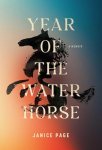
- Contemplating a mound of hair in Vessel by Dani Netherclift (at Auschwitz) and Year of the Water Horse by Janice Page (at a hairdresser’s).
- Family members are warned that they should not see the body of their loved one in Vessel by Dani Netherclift and Rainforest by Michelle Paver.
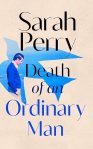
- A father(-in-law)’s swift death from oesophageal cancer in Year of the Water Horse by Janice Page and Death of an Ordinary Man by Sarah Perry.
- I saw John Keats’s concept of negative capability discussed first in My Little Donkey by Martha Cooley and then in Understorey by Anna Chapman Parker.
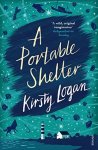
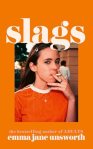
- I started two books with an Anne Sexton epigraph on the same day: A Portable Shelter by Kirsty Logan and Slags by Emma Jane Unsworth.
- Mentions of Martin Luther King, Jr.’s assassination in Q’s Legacy by Helene Hanff and Sister Outsider for Audre Lorde, both of which I was reading for Novellas in November.
- Mentions of specific incidents from Samuel Pepys’s diary in Q’s Legacy by Helene Hanff and Gin by Shonna Milliken Humphrey, both of which I was reading for Nonfiction November/Novellas in November.
- Starseed (aliens living on earth in human form) in Beautyland by Marie-Helene Bertino and The Conspiracists by Noelle Cook.
- Reading nonfiction by two long-time New Yorker writers at the same time: Life on a Little-Known Planet by Elizabeth Kolbert and Joyride by Susan Orlean.
- The breaking of a mirror seems like a bad omen in The Spare Room by Helen Garner and The Bell Jar by Sylvia Plath.
 The author’s husband (who has a name beginning with P) is having an affair with a lawyer in Catching Sight by Deni Elliott and Joyride by Susan Orlean.
- Mentions of Lewis Hyde’s book The Gift in Lessons from My Teachers by Sarah Ruhl and The Serviceberry by Robin Wall Kimmerer; I promptly ordered the Hyde secondhand!
- The protagonist fears being/is accused of trying to steal someone else’s cat in Minka and Curdy by Antonia White and Aunts Aren’t Gentlemen by P.G. Wodehouse, both of which I was reading for Novellas in November.
What’s the weirdest reading coincidence you’ve had lately?
20 Books of Summer, 7–9: Furies, The Earthquake Bird, and Greta & Valdin
It might seem that I’m very behind on 20 Books of Summer, and I am, but that’s mostly because I’ve done my usual trick of starting loads of books at once so that I’m currently in the middle of another nine with no prospect of finishing any particularly soon. I will eventually review more, but probably all in a rush and on the later side. It doesn’t help that quite a few happen to be lacklustre reads, such that I have to push myself through them instead of enjoying spending time with the stack. For today, though, I have a pretty readable trio made up of feminist short stories, a mild Japan-set mystery, and a highly random queer dysfunctional family novel that rose from indie obscurity in New Zealand. (Also a DNF.)
Furies: Stories of the Wicked, Wild and Untamed (2023)
It was my second attempt at this Virago anthology; I borrowed it from the library last year but never opened it, as far as I can remember. Each story is named after a synonym for “virago,” so the focus is on strong and unconventional women, but given that brief there is huge variety, including memoir (Ali Smith’s “Spitfire,” about her late mother’s WAAF service), historical research (CN Lester on sexology and early trans figures, Emma Donoghue on early-twentieth-century activist and lesbian Kathlyn Oliver, Stella Duffy on menopause) and even one graphic short, the mother–daughter horror story “She-Devil” by comics artist Eleanor Crewes.
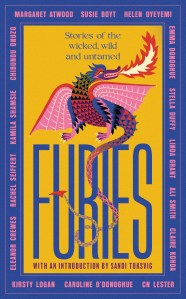 As with any anthology, some pieces stand out more than others. Caroline O’Donoghue, Helen Oyeyemi and Kamila Shamsie’s contributions were unlikely to convert me into a fan. Margaret Atwood is ever sly and accessible, with “Siren” opening with the line “Today’s Liminal Beings Knitting Circle will now be called to order.” I was surprised to get on really well with Kirsty Logan’s “Wench,” about girls ostracized by their religious community because of their desire for each other – I’ll have to read Now She Is Witch, as it’s set in the same fictional world – and Chibundu Onuzo’s “Warrior,” about Deborah, an Israelite leader in the book of Judges. And while I doubt I need to read a whole novel by Rachel Seiffert, I did enjoy “Fury,” about a group of Polish women who fended off Nazi invaders.
A few of my favourites were “Harridan” by Linda Grant, about an older woman who frightens the young couple who share her flat’s garden during lockdown (“this old lady, this hag she sees, this bitter travesty of her celestial youth and beauty is not her. Inside she’s a flame, she’s a pistol”); “Muckraker” by Susie Boyt, in which a woman makes conquests of breast cancer widowers; and “Tygress” by Claire Kohda, where the stereotype of the Asian ‘tiger mother’ turns literal. Duffy’s “Dragon” closes the collection with a very interesting blend of autofiction, interviews and medical reportage about different experiences of objectification in youth and invisibility in ageing. It brings the whole together nicely: “Tell me your tale and, in the telling, feel it all drop away. You are, and you are not, your story. Keep what serves you now, make space for new maybes.” (Free from a neighbour) 
The Earthquake Bird: A Novel of Mystery by Susanna Jones (2001)
 Susanna Jones’s When Nights Are Cold is one of my favourite novels that no one else has ever heard of, so I jumped at the chance to buy a bargain copy of her debut back in 2020. Lucy Fly has lived in Tokyo for ten years, working as a translator of machinery manuals. She wanted to get as far away as possible from her conventional family of six brothers, so she’s less than thrilled to meet fellow Yorkshire lass Lily Bridges, a nurse new to the country and looking for someone to help her find an apartment and learn some basic Japanese. Lucy is a prickly loner with only a few friends – and a lover, photographer Teiji – but she reluctantly agrees to be Lily’s guide.
We know from the start that Lucy is in custody being questioned about events leading up to Lily’s murder. She refuses to tell the police anything, but what we are reading is her confession, in which she does eventually tell all. We learn that there have already been three accidental deaths among her family and acquaintances – she seems cursed to attract them – and that her feelings about Lily changed over the months she showed the woman around. This short and reasonably compelling book gives glimpses of mountain scenery, noodle bars, and spartan apartments. Perhaps inevitably, it reminded me a bit of Murakami. It’s hard to resist an unreliable narrator. However, I felt Jones’s habit of having Lucy speak of herself in the third person was overdone. (Secondhand – Broad Street Book Centre, Hay-on-Wye) 
Greta & Valdin by Rebecca K Reilly (2021; 2024)
 The title characters are a brother and sister in their late twenties who share a flat and a tendency to sabotage romantic relationships. Both are matter-of-factly queer and biracial (Māori/Russian). The novel flips back and forth between their present-tense first-person narration with each short chapter. It takes quite a while to pick up on who is who in the extended Vladisavljevic clan and their New Zealand university milieu (their father is a science professor and Greta an English department PhD and tutor), so I was glad of the character list at the start.
I was expecting a breezy, snarky read and to an extent that’s what I got. Not a whole lot happens; situations advance infinitesimally through quirky dialogue thick with pop culture references. There are some quite funny one-liners, but the plot is so meandering and the voices so deadpan that I struggled to remain engaged. (On her website, Reilly, who is Māori, ascribes the book’s randomness to her neurodivergence.)
The protagonists seem so affectedly cynical that when they exhibit strong feelings for new partners, you’re a bit taken aback. Really, Reilly can do serious? One of the siblings is reunited with a former partner and starts to think about settling down and even adopting a child. This is the last novel I would have expected to end with a wedding, but so it does. If you’re a big fan of Elif Batuman and Naoise Dolan, this might be up your street. Below are some sample lines that should help you make up your mind (quotes unattributed to minimize spoilers).
I don’t really feel like anything these days, just a beautiful husk filled with opinions about globalism and a strong desire to go out for dinner.
I don’t think you’re the weirdest person I’ve ever met even though you do sometimes talk like a philosophical narrator in an independent film.
I’m trying to write my wedding speech, so I don’t go off on a tangent and start listing my favourite Arnold Schwarzenegger movies. I was thinking I could write an acrostic poem, but I’ve made the foolish decision of marrying someone whose name begins with X.
With thanks to Hutchinson Heinemann (Penguin Random House) for the free copy for review.
And a DNF:
 The Lost Love Songs of Boysie Singh by Ingrid Persaud – I thought Persaud’s debut novel, Love after Love, was fantastic, but I was right to be daunted by the length of this follow-up. The strategy is similar to that in Mrs. Hemingway by Naomi Wood: giving sideways looks at a famous man through the women he collected around him. John Boysie Singh was a real-life Trinidadian gangster who was hanged for his crimes in 1957 (as the article reprinted on the first page reveals). The major problem here is that all four of the dialect voices sound much the same, so I couldn’t tell them apart. Each time I opened the book, I had to look back at the blurb to be reminded that Popo was his prostitute mistress while Mana Lala was the mother of his son Chunksee. In the 103 pages I read (less than one-fifth of the total), there were so few chapters by Doris and Rosie that I never got a handle on who they were. Nor did I come to understand, or care about, Boysie. The editor needed to make drastic changes to this to ensure widespread readability. (Signed copy won in a Faber Instagram giveaway)
Book Serendipity, January to February 2024
I call it “Book Serendipity” when two or more books that I read at the same time or in quick succession have something in common – the more bizarre, the better. This is a regular feature of mine every couple of months. Because I usually have 20–30 books on the go at once, I suppose I’m more prone to such incidents. The following are in roughly chronological order.
- I finished two poetry collections by a man with the surname Barnett within four days in January: Murmur by Cameron Barnett and Birds Knit My Ribs Together by Phil Barnett.

- I came across the person or place name Courtland in The Optimist’s Daughter by Eudora Welty, then Cortland in a story from The Orange Fish by Carol Shields, then Cotland (but where? I couldn’t locate it again! Was it in Elizabeth Is Missing by Emma Healey?).
- The Manet painting Olympia is mentioned in Christmas Holiday by W. Somerset Maugham and The Paris Novel by Ruth Reichl (both of which are set in Paris).


- There’s an “Interlude” section in Babel by R.F. Kuang and The Vulnerables by Sigrid Nunez.
- The Morris (Minor) car is mentioned in Elizabeth Is Missing by Emma Healey and Various Miracles by Carol Shields.
- The “flour/flower” homophone is mentioned in Babel by R.F. Kuang and Various Miracles by Carol Shields.
- A chimney swift flies into the house in Cat and Bird by Kyoko Mori and The Optimist’s Daughter by Eudora Welty.
- A character named Cornelius in The Fruit Cure by Jacqueline Alnes and Wellness by Nathan Hill.
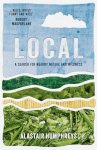
- Reading two year challenge books at the same time, A Year of Biblical Womanhood by Rachel Held Evans and Local by Alastair Humphreys, both of which are illustrated with frequent black-and-white photos by and of the author.
- A woman uses a bell to summon children in one story of Universally Adored and Other One Dollar Stories by Elizabeth Bruce and The Optimist’s Daughter by Eudora Welty.
- Apple turnovers get a mention in A Year of Biblical Womanhood by Rachel Held Evans and Wellness by Nathan Hill.
- A description of rolling out pie crust in A Year of Biblical Womanhood by Rachel Held Evans and Cat and Bird by Kyoko Mori.

- The idea of a house giving off good or bad vibrations in Wellness by Nathan Hill and a story from Various Miracles by Carol Shields.

- Emergency C-sections described or at least mentioned in Brother Do You Love Me by Manni Coe, The Unfamiliar by Kirsty Logan, Wellness by Nathan Hill, and lots more.
- Frustration with a toddler’s fussy eating habits, talk of “gentle parenting” methods, and mention of sea squirts in Wellness by Nathan Hill and Matrescence by Lucy Jones.
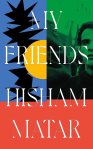
- The nickname “Poet” in The Tidal Year by Freya Bromley and My Friends by Hisham Matar.
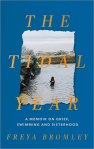
- A comment about seeing chicken bones on the streets of London in The Tidal Year by Freya Bromley and Went to London, Took the Dog by Nina Stibbe.
- Swans in poetry in The Tidal Year by Freya Bromley and Egg/Shell by Victoria Kennefick.
- A mention or image of Captcha technology in Egg/Shell by Victoria Kennefick and Went to London, Took the Dog by Nina Stibbe.
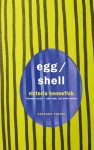

- An animal automaton in Loot by Tania James and Egg/Shell by Victoria Kennefick.
- A mention of Donna Tartt in The Tidal Year by Freya Bromley, Looking in the Distance by Richard Holloway, and Matrescence by Lucy Jones.
- Cathy Rentzenbrink appears in The Tidal Year by Freya Bromley and Went to London, Took the Dog by Nina Stibbe.
 Dialogue is given in italics in the memoirs The Tidal Year by Freya Bromley and The Unfamiliar by Kirsty Logan.
- An account of a man being forced to marry the sister of his beloved in A Year of Biblical Womanhood by Rachel Held Evans, Wellness by Nathan Hill, and The Tiger’s Wife by Téa Obreht.
- Saying that one doesn’t want to remember the loved one as ill (but really, not wanting to face death) so not saying goodbye (in Cat and Bird by Kyoko Mori) or having a closed coffin (Wellness by Nathan Hill).
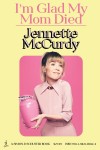
- An unhappy, religious mother who becomes a hoarder in Wellness by Nathan Hill and I’m Glad My Mom Died by Jennette McCurdy.
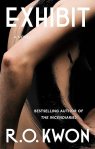
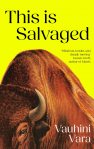
- Characters called Lidija and Jin in Exhibit by R. O. Kwon and Lydia and Jing in the first story of This Is Salvaged by Vauhini Vara.
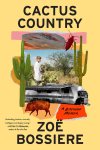
- Distress at developing breasts in Cactus Country by Zoë Bossiere and I’m Glad My Mom Died by Jennette McCurdy.
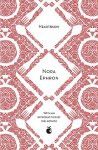
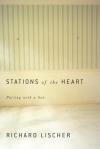
- I came across mentions of American sportscaster Howard Cosell in Heartburn by Nora Ephron and Stations of the Heart by Richard Lischer (two heart books I was planning on reviewing together) on the same evening. So random!
- Girls kissing and flirting with each other (but it’s clear one partner is serious about it whereas the other is only playing or considers it practice for being with boys) in Cactus Country by Zoë Bossiere and Winter’s Bone by Daniel Woodrell.
- A conversion to Catholicism in Places I’ve Taken My Body by Molly McCully Brown and Stations of the Heart by Richard Lischer.
- A zookeeper is attacked by a tiger when s/he goes into the enclosure (maybe not the greatest idea!!) in Tiger by Polly Clark and The Tiger’s Wife by Téa Obreht.

- The nickname Frodo appears in Tiger by Polly Clark and Brother Do You Love Me by Manni Coe.
- Opening scene of a parent in a coma, California setting, and striking pink and yellow cover to Death Valley by Melissa Broder and I’m Glad My Mom Died by Jennette McCurdy.

- An Englishman goes to Nigeria in Howards End by E.M. Forster and Immanuel by Matthew McNaught.
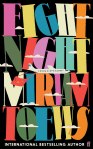 The Russian practice of whipping people with branches at a spa in Tiger by Polly Clark and Fight Night by Miriam Toews.
- A mother continues washing her daughter’s hair until she is a teenager old enough to leave home in Mrs. March by Virginia Feito and I’m Glad My Mom Died by Jennette McCurdy.
- Section 28 (a British law prohibiting the “promotion of homosexuality” in schools) is mentioned in A Bookshop of One’s Own by Jane Cholmeley, Some Kids I Taught and What They Taught Me by Kate Clanchy, and Brother Do You Love Me by Manni Coe.
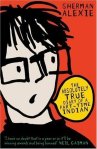
- Characters named Gord (in one story from Various Miracles by Carol Shields, and in Fight Night by Miriam Toews), Gordy (in The Absolutely True Diary of a Part-Time Indian by Sherman Alexie), and Gordo (in Blood Red by Gabriela Ponce).

- Montessori and Waldorf schools are mentioned in Cactus Country by Zoë Bossiere and When Fragments Make a Whole by Lory Widmer Hess.
- A trailer burns down in The Absolutely True Diary of a Part-Time Indian by Sherman Alexie and Cactus Country by Zoë Bossiere.
What’s the weirdest reading coincidence you’ve had lately?
Three on a Theme: Matrescence Memoirs (and a Bonus Novel)
I think of pregnancy and childbirth like any extreme adventure (skydiving, polar exploration): wholly extraordinary experiences with much to recommend them – though better appreciated retrospectively than in the moment – to which my response is a hearty “no, thanks.” But just as books have taken me to deserts and the frozen north, miles above or below the earth, into many eras and cultures, they’ve long been my window onto motherhood.
Matrescence, a word coined by anthropologist Dana Raphael in the 1970s, is the process of becoming a mother. It’s a transition period, like adolescence, that involves radical physical and mental changes and has lasting effects. And as Lucy Jones reports, up to 45% of women describe childbirth as traumatic. That’s not a niche experience; it’s an epidemic. If it was men going through this, you can bet it would be at the top of international research agendas.
These three memoirs (and a bonus novel) are bold, often harrowing accounts of the metamorphosis involved in motherhood. They’re personal yet political in how they expose the lack of social support for creating and raising the next generation. All four of these 2023 releases are eye-opening, lyrical and vital; they deserve to be better known.
Matrescence: On the Metamorphosis of Pregnancy, Childbirth and Motherhood by Lucy Jones
Like Jones’s previous book, Losing Eden, about climate breakdown and the human need for nature, Matrescence is a potent blend of scientific research and stories from the frontline. She has synthesized a huge amount of information into a tight 260-some pages that are structured thematically but also proceed roughly chronologically through her own matrescence. Not long into her pregnancy with her first child, a daughter, she realised the extent to which outdated and sexist expectations still govern motherhood: concepts like “natural childbirth” and “maternal instinct,” the judgemental requirement for exclusive breastfeeding, the idea that a parent should “enjoy every minute” of their offspring’s babyhood rather than admitting depression or overwhelm. After the cataclysm of birth, loneliness set in. “Matrescence was another country, another planet. I didn’t know how to talk about the existential crisis I was facing, or the confronting, encompassing relationship I was now in.”
 Jones is now a mother of three. You might think delivery would get easier each time, but in fact the birth of her second son was worst, physically: she had to go into immediate surgery for a fourth-degree anal sphincter tear. In reflecting on her own experiences, and speaking with experts, she has become passionate about fostering open discussion about the pain and risk of childbirth, and how to mitigate them. Women who aren’t informed about what they might go through suffer more because of the shock and isolation. There’s the medical side, but also the equally important social implications: new mothers need so much more practical and mental health support, and their unpaid care work must be properly valued by society. “Yet the focus remains on individual responsibility, maintaining the illusion that we are impermeable, impenetrable machines, disconnected from the world around us.”
The hybrid nature of the book is its genius. A purely scientific approach might have been dry; a social history well-trod and worthy; a memoir too inward-looking to make wider points. Instead it’s equally committed to all three purposes. I appreciated the laser focus on her own physical and emotional development, but the statistical and theoretical context gives a sense of the universal. The literary touches – lists and word clouds, verse-like meditations and flash vignettes about natural phenomena – are not always successful, but there is a thrill to seeing Jones experimenting. Like Leah Hazard’s Womb, this is by no means a book that’s just for mothers; it’s for anyone who’s ever had a mother.
With thanks to Allen Lane (Penguin) for the free copy for review.
Milk: On Motherhood and Madness by Alice Kinsella
 Kinsella is an Irish poet who became a mother in her mid-twenties; that’s young these days. In unchronological vignettes dated in relation to her son’s birth – the number of months after; negative numbers to indicate that it happened before – she explores her personality, mental health and bodily experiences, but also comments more widely on Irish culture (the stereotype of the ‘mammy’; the only recent closure of Magdalene laundries and overturning of anti-abortion laws) and theories about motherhood.
I liked this most when the author stuck close to her own sensory and emotional life; overall, the book felt too long and I thought a late segue into an argument against the dairy industry was unnecessary. Had I been the editor, I would have cut the titled essays and just stuck to the time-stamped pieces. At its best, though, this is a poetic engagement with the tropes and reality of motherhood, sometimes delivered in paragraphs that more closely resemble verse:
+1 I have become the common myth. Mother. The sleepy hum of early memories. The smell of shampoo, of Olay, of lavender. The feeling of safety. The absence of fear.
+2 There’s a possibility,
that we are among the happiest
people in the world:
mothers.[Record freeze preserve.] Fighting death by reproducing our days. Fighting death by reproducing. Here: your life on paper. Here: their life to come.
We’re expected to be mothers the instant we lock eyes with our baby. To shed everything we were and be reborn: Madonnas.
The baby’s favourite thing to do is sit on my lap and interact with other people. This is what mothers are for, I think. Comfort, security, a place to get to know the world from.
The language is gorgeous, and while Kinsella complains of disorientation to the point of worrying about losing herself (although she had struggled with mental health earlier in life, the subtitle’s reference to ‘madness’ seemed to me like overkill compared to other memoirs I’ve read of postpartum depression, trauma or psychosis, such as Inferno by Catherine Cho and Birth Notes by Jessica Cornwell), she comes across as entirely lucid. Her goal here is to find and add to the missing literature of motherhood, in much the same way that Jazmina Barrera, another young mother and writer, attempted with Linea Nigra. This would also make a good companion read to A Ghost in the Throat by Doireann Ní Ghríofa.
Kinsella is among my predictions for the Sunday Times Charlotte Aitken Young Writer of the Year Award shortlist, along with Eliza Clark (Penance) and Tom Crewe (The New Life). (Public library)
The Unfamiliar: A Queer Motherhood Memoir by Kirsty Logan
 I’ve read one of Kirsty Logan’s novels and dipped into her short stories. I immediately knew her parenting memoir would be up my street, but wondered how her fantasy/horror style might translate into nonfiction. Second-person narration is perfect for describing her journey into motherhood: a way of capturing the bewildering weirdness of this time but also forcing the reader to experience it firsthand. It is, in a way, as feminist and surreal as her other work. “You and your partner want a baby. But your two bodies can’t make a baby together. So you need some sperm.” That opening paragraph is a jolt, and the frank present-tense storytelling carries all through.
To start with, Logan’s wife Annie tried getting pregnant. They had a known sperm donor and did home insemination, then advanced to IVF. But after three miscarriages and a failed cycle, they took a doctor’s advice and switched to the younger womb – Logan’s, by four years. As “The Planning” makes way for “The Growing,” it helps that Annie knows exactly what she’s going through. The pregnancy sticks, though the fear of something going wrong never abates, and after the alternating magic and discomfort of those nine months (“You’ve reached the ‘shoplifting a honeydew’ stage”) it’s time for “The Birth,” as horrific an account as I’ve read. The baby had shifted to be back-to-back, which required an emergency C-section, but before that there was a sense of total helplessness, abandonment to unmanaged pain.
Finally the doctor comes. She asks what you would like, and you, shaking shitting pissing bleeding, unable to see when the pain reaches its peak, not screaming, not swearing, not being rude to anyone, not begging for an epidural, … say: I’d like to try some gas and air, if that’s okay, please.
What is remarkable is how Logan recreates this time so intensely – she took notes all through the pregnancy, plus on her phone in hospital and in the early days after bringing the baby home – but can also see how, even in the first hours, she was shaping it into a narrative. “You like that it’s a story. You like that it’s Gothic and gory … and funny.” Except it wasn’t. “You thought you were going to die.” And yet. “How can the lucid, everyday world explain this? The wonder, the curiosity, the recognition. The baby has lived inside your body, and you’ve only just met. The baby is your familiar, and deeply unfamiliar.”
This reminded me of other memoirs I’ve read about queer family-making, especially small by Claire Lynch, which similarly turns on the decision about which female partner will carry the pregnancy and is written in an experimental style. The Unfamiliar is utterly absorbing and conveys so much about the author and her family, even weaving in her father’s death seven years before. I’ve signed up for Logan’s online memoir-writing course (“Where to Start and Where to End”) organised by Writers & Artists (part of Bloomsbury) for next month.
With thanks to Virago Press for the free copy for review.
And, as a bonus, a short novel that deals with many of these same themes:
Reproduction by Louisa Hall
 Procreation. Duplication. Imitation. All three connotations are appropriate for the title of an allusive novel about motherhood and doppelgangers. A pregnant writer starts composing a novel about Mary Shelley and finds the borders between fiction and (auto)biography blurring: “parts of her story detached themselves from the page and clung to my life.” The first long chapter, “Conception,” is full of biographical information about Shelley and the writing and plot of Frankenstein, chiming with Mary and the Birth of Frankenstein by Anne Eekhout, which I read last year. It’s a recognisable piece of autofiction, moving with Hall from Texas to New York to Montana to Iowa as she marries, takes on various university teaching roles and goes through two miscarriages and then, in the “Birth” section, the traumatic birth of her daughter, after which she required surgery and blood transfusions.
These first two sections are exceptional. There’s a sublime clarity to them, like life has been transcribed to the page exactly as it was lived. The change of gears to the third section, “Science Fiction,” put me off, and it took me a long time to get back into the flow. In this final part, the narrator reconnects with a friend and colleague, Anna, who is determined to get pregnant on her own and genetically engineer her embryos to minimise all risk. Here she is more like a Rachel Cusk protagonist, eclipsed by another’s story and serving primarily as a recorder. I found this tedious. It all takes place during Trump’s presidency [Laura F. told me I accidentally published with that saying pregnancy – my brain was definitely saturated with the topic after these reads!] and the Covid pandemic, heightening the strangeness of matrescence and of the lengths Anna goes to. “What, after all, in these end times we lived in, was still really ‘natural’ at all?” the narrator ponders. She casts herself as the narrating Walton, and Anna as Dr. Frankenstein (or sometimes his monster), in this tale of transformation – chosen or not – and peril in a country hurtling toward self-implosion. It’s brilliantly envisioned, and – almost – flawlessly executed. (Public library)
Additional related reading:
Notes Made while Falling by Jenn Ashworth
After the Storm by Emma Jane Unsworth
And coming out in 2025: Mother, Animal by Helen Jukes (Elliott & Thompson)
Book Serendipity, August to September 2023
I call it “Book Serendipity” when two or more books that I read at the same time or in quick succession have something in common – the more bizarre, the better.
In Diary of a Tuscan Bookshop, Alba Donati remarks on this phenomenon: “Jung called these coincidences ‘synchronicities’, postulating that the universe possessed its own form of intelligence, which generated harmonies. A universe that detects and brings together the elements it feels are seeking each other in the endless swirl of life. Chance be damned.”
This is a regular feature of mine every couple of months. Because I usually have 20–30 books on the go at once, I suppose I’m more prone to such incidents. The following are in roughly chronological order.
- A memoir that opens with a little girl being injured in a bicycle accident: Some of Us Just Fall by Polly Atkin and Pharmakon by Almudena Sánchez.
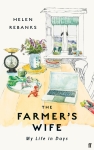
- Telling stories through embroidery in Cross-Stitch by Jazmina Barrera and The Farmer’s Wife by Helen Rebanks.

- A small boy nicknamed “Willmouse” (real name: William) in Mary and the Birth of Frankenstein by Anne Eekhout and The Greengage Summer by Rumer Godden.
- An account of a routine sonogram that ends with the technician leaving the doctor to deliver bad news in Reproduction by Louisa Hall and The Unfamiliar by Kirsty Logan.
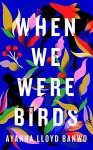
- Black dreadlocks/braid/ponytail being cut off in When We Were Birds by Ayanna Lloyd Banwo, The Wren, The Wren by Anne Enright, and Rebecca, Not Becky by Christine Platt and Catherine Wigginton Greene.

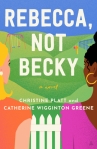
- Wondering how to arm a Black daughter against racist microaggressions in Rebecca, Not Becky by Christine Platt and Catherine Wigginton Greene and Ordinary Notes by Christina Sharpe.
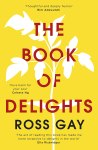
- Countering the commodification or romanticization of Black suffering in The Book of Delights by Ross Gay and Ordinary Notes by Christina Sharpe.

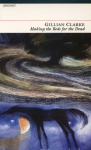
- An account of how the foot and mouth disease outbreak of 2001 affected the UK, especially northwest England, in Making the Beds for the Dead by Gillian Clarke and The Farmer’s Wife by Helen Rebanks.
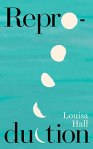
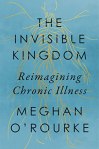
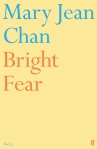
- I encountered the quote from Elaine Scarry’s The Body in Pain about pain being inexpressible in Reproduction by Louisa Hall and The Invisible Kingdom by Meghan O’Rourke on the same day. It’s also referenced in Mary Jean Chan’s Bright Fear.
- A mention of eating frogs’ legs in The Book of Delights by Ross Gay and La Vie by John Lewis-Stempel.
- I read about the effects of heavy metal pollution on the body in The Invisible Kingdom by Meghan O’Rourke and Windswept by Annie Worsley in the same evening.
- Composer Erik Satie is mentioned in Making the Beds for the Dead by Gillian Clarke and August Blue by Deborah Levy.
- Stendhal syndrome and Florence are mentioned in The Wren, The Wren by Anne Enright and Pharmakon by Almudena Sánchez.
- Swallows nesting in an old Continental building in Diary of a Tuscan Bookshop by Alba Donati and La Vie by John Lewis-Stempel.
- France being all about the rules and a “Putain de merde” exclamation to bad news in Dirt by Bill Buford and La Vie by John Lewis-Stempel.

- A character named Nomi in Friends and Strangers by J. Courtney Sullivan and one called Noemi in Diary of a Tuscan Bookshop by Alba Donati.
- Epigenetics (trauma literally determining the genetic traits that are passed on) is discussed in The Invisible Kingdom by Meghan O’Rourke and Pharmakon by Almudena Sánchez.
- Women of a certain age in Tuscany in The Three Graces by Amanda Craig and Diary of a Tuscan Bookshop by Alba Donati.
- Audre Lorde is quoted in Tremor by Teju Cole, Bibliomaniac by Robin Ince, The Invisible Kingdom by Meghan O’Rourke, Alone by Daniel Schreiber, and Ordinary Notes by Christina Sharpe.
- A Galway Kinnell poem is mentioned/quoted in The Dead Peasant’s Handbook by Brian Turner and Otherwise by Julie Marie Wade.
- The Bamiyan Buddhas are mentioned in Tremor by Teju Cole and The Dead Peasant’s Handbook by Brian Turner.


- Both The Three Graces by Amanda Craig and The Story of Lucy Gault by William Trevor open with a man shooting someone from his bedroom window.
- Linked short story collections about two children’s relationship with their Jamaican father, and mention of a devastating hurricane, in If I Survive You by Jonathan Escoffery and The Human Origins of Beatrice Porter and Other Essential Ghosts by Soraya Palmer. (Dual review coming up tomorrow!)
- Characters named Ben and Mara in The Whispers by Ashley Audrain and one story in Kate Doyle’s I Meant It Once.
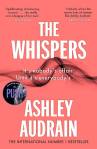
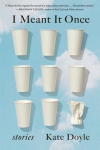
- Occasional uncut pages in my copies of I Meant It Once by Kate Doyle and The Unfamiliar by Kirsty Logan.
- A Florida setting and mention of the Publix supermarket chain in If I Survive You by Jonathan Escoffery and Arms and Legs by Chloe Lane.
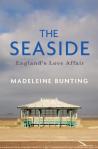
- A down-at-heel English seaside town near Scarborough features in The Seaside by Madeleine Bunting and Penance by Eliza Clark.

- A fictional northern town with “Crow” in the name: Crow-on-Sea in Penance by Eliza Clark and Crows Bank in Weyward by Emilia Hart.
- Claw-machine toys are mentioned in Penance by Eliza Clark and Directions to Myself by Heidi Julavits.
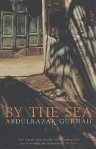
- Reading books by two Nobel Prize winners at the same time: Abdulrazak Gurnah (By the Sea) and Alice Munro (Hateship, Friendship, Courtship, Loveship, Marriage).
- Reading my second 2023 release featuring North Carolina ghost lights (after All of Us Together in the End by Matthew Vollmer, which I actually read last year): The Caretaker by Ron Rash.
- Reading my second 2023 release featuring a cat named Virginia Woolf (after Tell the Rest by Lucy Jane Bledsoe, which I actually read last year): one of the short stories in I Meant It Once by Kate Doyle.
- A character named Shay in Everyone but Myself by Julie Chavez, The Human Origins of Beatrice Porter and Other Essential Ghosts by Soraya Palmer and The Caretaker by Ron Rash.

What’s the weirdest reading coincidence you’ve had lately?
Three on a Theme (and #ReadIndies): Nonfiction I Sponsored Last Year
Here in the UK we’re hunkering down against the high winds of Storm Eunice. We’ve already watched two trees come down in a neighbour’s garden (and they’re currently out there trying to shore up the fence!), and had news on the community Facebook page of a huge conifer down by the canal. Very sad. I hope you’re all safe and well and tucked up at home.
Today I’m looking back at several 2021 nonfiction releases I helped come into existence. The first and third I sponsored via Unbound, and the second through Dodo Ink. Supporting small publishers also ties this post into Karen and Lizzy’s February Read Indies initiative. All: 

This Party’s Dead: Grief, Joy and Spilled Rum at the World’s Death Festivals by Erica Buist
A death tourism book? I’m there! This is actually the third I’ve read in recent years, after From Here to Eternity by Caitlin Doughty and Near the Exit by Lori Erickson. Buist’s journey was sparked off by the sudden death of her fiancé Dion’s father, Chris – he was dead for a week before his cleaner raised the alarm – and her burden of guilt. It’s an act of atonement for what happened to Chris and the fact that she and Dion, who used to lodge with him, weren’t there when he really needed it. It’s also her way of discovering a sense of the sacred around death, instead of simply fearing and hiding from it.
 This takes place in roughly 2018. The author travelled to eight festivals in seven countries, starting with Mexico for the Day of the Dead and later for an exploration of Santa Muerte, a hero of the working class. Other destinations included Nepal, Sicily (“bones of the dead” biscotti), Madagascar (the “turning of the bones” ceremony – a days-long, extravagant party for a whole village), Thailand and Kyoto. The New Orleans chapter was a standout for me. It’s a city where the dead outnumber the living 10 to 1 (and did so even before Katrina), and graveyard and ghost tours are a common tourist activity.
Buist is an entertaining writer, snappy and upbeat without ever seeming flippant as she discusses heavy topics. The mix of experience and research, the everyday and the momentous, is spot on and she recreates dialogue very well. I appreciated the earnest seeking here, and would happily read a book of hers on pretty much any subject. (New purchase from Unbound)
Trauma: Essays on Art and Mental Health, ed. Thom Cuell & Sam Mills
I’ll never learn: I left it nearly 10 months between finishing this and writing it up. And took no notes. So it’s nearly impossible to recreate the reading experience. What I do recall, however, is how wide-ranging and surprising I found this book. At first I had my doubts, thinking it was overkill to describe sad events like a break-up or loss as “traumatic”. But an essay midway through (which intriguingly trades off autobiographical text by Kirsty Logan and Freudian interpretation by Paul McQuade) set me straight: trauma cannot be quantified or compared; it’s all about the “unpreparedness of the subject. A traumatic event overwhelms all the defences laid out in advance against the encroachment of negative experience.”
 The pieces can be straightforward memoir fragments or playful, experimental narratives more like autofiction. (Alex Pheby’s is in the second person, for instance.) Within those broad branches, though, the topics vary widely. James Miller writes about the collective horror at the Trump presidency. Emma Jane Unsworth recounts a traumatic delivery – I loved getting this taste of her autobiographical writing but, unfortunately, it outshone her full-length memoir, After the Storm, which I read later in the year. Susanna Crossman tells of dressing up as a clown for her clinical therapy work. Naomi Frisby (the much-admired blogger behind The Writes of Womxn) uses food metaphors to describe how she coped with the end of a bad relationship with a narcissist.
As is inevitable with a collection this long, there are some essays that quickly fade in the memory and could have been omitted without weakening the book as a whole. But it’s not gracious to name names, and, anyway, it’s likely that different pieces will stand out for other readers based on their own experiences. (New purchase from Dodo Ink)
Four favourites:
- “Inheritance” by Christiana Spens (about investigating her grandparents’ lives through screen prints and writing after her father’s death and her son’s birth)
- “Blank Spaces” by Yvonna Conza (about the lure of suicide)
- “The Fish Bowl” by Monique Roffey (about everyday sexual harassment and an assault she underwent as a teenager; I enjoyed this so much more than her latest novel)
- “Thanks, I’ll Take the Chair” by Jude Cook, about being in therapy.
Women on Nature: 100+ Voices on Place, Landscape & the Natural World, ed. Katharine Norbury
It was over three years between when I pledged support and held the finished book in my hands; I can only imagine what a mammoth job compiling it was for Katharine Norbury (author of The Fish Ladder). The subtitle on the title page explains the limits she set: “An anthology of women’s writing about the natural world in the east Atlantic archipelago.” So, broadly, British and Irish writers, but within that there’s a lot of scope for variety: fragments of fiction (e.g., a passage from Jane Eyre), plenty of poetry, but mostly nonfiction narratives – some work in autobiographical reflection; others are straightforward nature or travel writing. Excerpts from previously published works trade off with essays produced specifically for this volume. So I encountered snippets of works I’d read by the likes of Miriam Darlington, Melissa Harrison, Sara Maitland, Polly Samson and Nan Shepherd. The timeline stretches from medieval mystics to today’s Guardian Country Diarists and BIPOC nature writers.
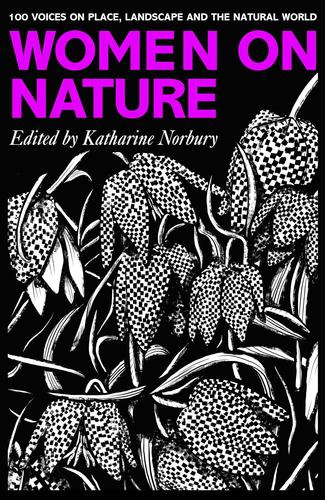 For most of the last seven months of 2021, I kept this as a bedside book, reading one or two pieces on most nights. It wasn’t until early this year that I brought it downstairs and started working it into my regular daily stacks so that I would see more progress. At first I quibbled (internally) with the decision to structure the book alphabetically by author. I wondered if more might have been done to group the pieces by region or theme. But besides being an unwieldy task, that might have made the contents seem overly determined. Instead, you get the serendipity of different works conversing with each other. So, for example, Katrina Porteous’s dialect poem about a Northumberland fisherman is followed immediately by Jini Reddy’s account of a trip to Lindisfarne; Margaret Cavendish’s 1653 dialogue in verse between an oak tree and the man cutting him down leads perfectly into an excerpt from Nicola Chester’s On Gallows Down describing a confrontation with tree fellers.
I’d highly recommend this for those who are fairly new to the UK nature writing scene and/or would like to read more by women. Keep it as a coffee table book or a bedside read and pick it up between other things. You’ll soon find your own favourites. (New purchase from Unbound)
Five favourites:
- “Caravan” by Sally Goldsmith (a Sheffield tree defender)
- “Enlli: The Living Island” by Pippa Marland (about the small Welsh island of Bardsey)
- “An Affinity with Bees” by Elizabeth Rose Murray (about beekeeping, and her difficult mother, who called herself “the queen bee”)
- “An Island Ecology” by Sarah Thomas (about witnessing a whale hunt on the Faroe Islands)
- My overall favourite: “Arboreal” by Jean McNeil (about living in Antarctica for a winter and the contrast between that treeless continent and Canada, where she grew up, and England, where she lives now)
“It occurred to me that trees were part of the grammar of one’s life, as much as any spoken language. … To see trees every day and to be seen by them is a privilege.”
Stay strong, trees!
Sponsored any books, or read any from indie publishers, recently?
Dylan Thomas Prize Blog Tour: Things We Say in the Dark by Kirsty Logan
It’s an honour to be kicking off the official Swansea University International Dylan Thomas Prize 2020* blog tour with a post introducing and giving an excerpt from one of this year’s longlisted titles, the short story collection Things We Say in the Dark by Kirsty Logan.

Many of these 20 stories twist fairy tale imagery into nightmarish scenarios, enumerating fears of bodies and pregnancies going wrong. Body parts are offered as tokens of love or left behind as the sole evidence of an abduction. Ghosts and corpses are frequent presences. I also recognized some of the same sorts of Celtic sea legends that infuse Logan’s debut novel, The Gracekeepers.
Some stories are divided into multiple parts by headings or point-of-view changes. Others are in unusual formats like footnotes, a questionnaire, bullet-pointed lists, or a couple’s contrasting notes on house viewings. The titles can be like mini-tales in their own right, e.g. “Girls Are Always Hungry when All the Men Are Bite-Size” and “The Only Thing I Can’t Tell You Is Why.”
In between the stories are italicized passages that seem to give context on Logan’s composition process, including her writing retreat in Iceland – but it turns out that this is a story, too, split into pieces and shading from autobiography into fiction.
Full of magic realism and gentle horror, this is a book for fans of Salt Slow and The Doll’s Alphabet.
My favourite story was “Things My Wife and I Found Hidden in Our House,” about a series of objects Rain and her wife Alice find in the derelict house Alice’s granny has left them. Here’s an excerpt from the story to whet your appetite:
- A KNIFE
I wasn’t surprised when Alice and I found the long thin silver knife wrapped in blackened grot beneath the floorboards. It wasn’t easy: to find it we’d had to pull up just about every rotting, stinking board in the house, our hands slick with blood and filth. Alice had told me that a silver knife through the heart is the only way to kill a kelpie, so if Alice’s gran really had killed it, the knife was likely to be there somewhere. Her mistake, her haunting, was in keeping the thing. As proof? A memento? We’d never know. Then again, we knew that her bathtub drowning was due to a stroke. So I guess you can never really know anything.
Alice and I gathered up the ring and the paper and the horse and the pearls and the hair and the glass jar and the knife, and we put them all in a box. We drove for hours until we got to the coast, to the town where Alice’s gran and her grandad and the first wife had all lived, and we climbed to the highest cliff and we threw all the things into the sea.
Together we drove back to the house, holding hands between the front seats. A steady calm grew in our hearts; we knew that it was over, that we had cleansed the house and ourselves, that we had proven women’s love was stronger than women’s hate.
- MORE
Approaching the front door, key outstretched, hands still held, hearts grown sweet, Alice and I stopped. Our hands unlinked. The doorknob was wrapped all around with layers of long black hair.
My thanks to Midas PR for the free copy for review, and to Harvill Secker for permission to reprint an excerpt.
*The Swansea University International Dylan Thomas Prize recognizes the best published work in the English language written by an author aged 39 or under. All literary genres are eligible, so there are poetry collections nominated as well as novels and short stories. The other 11 books on this year’s longlist are:
- Surge, Jay Bernard
- Flèche, Mary Jean Chan (my review)
- Exquisite Cadavers, Meena Kandasamy
- Black Car Burning, Helen Mort
- Virtuoso, Yelena Moskovich
- Inland, Téa Obreht
- Stubborn Archivist, Yara Rodrigues Fowler (my review)
- If All the World and Love Were Young, Stephen Sexton
- The Far Field, Madhuri Vijay
- On Earth We’re Briefly Gorgeous, Ocean Vuong
- Lot, Bryan Washington
The official blog tour runs this month and into April, with multiple bloggers covering each book. At the end of March, I’ll also be reviewing the poetry collection by Stephen Sexton.
My Patchy Experience with Book Clubs
I know that a number of you have long-term, faithful book clubs. Boy, am I envious! You might find it surprising that I’ve only ever been in one traditional book club, and it wasn’t a resounding success. Partway through my time working for King’s College, London, an acquaintance from another library branch started the club. A group of five to eight of us from Library Services aimed to meet after work one evening a month at a Southbank venue or a staff room to discuss our latest pick. By poring over old e-mails and my Goodreads library, I’ve managed to remember 10 of the books we read between November 2011 and June 2013:
- Do Androids Dream of Electric Sheep?, Philip K. Dick [classic science fiction]
- The Little Shadows, Marina Endicott [Canadian historical fiction]
- A Spot of Bother, Mark Haddon [contemporary fiction]
- The Talented Mr. Ripley, Patricia Highsmith [classic suspense]
- The Vintner’s Luck, Elizabeth Knox [bizarre historical fiction/magic realism]
- What Was Lost, Catherine O’Flynn [contemporary fiction]
- Franny and Zooey, J.D. Salinger [classic short fiction]
- The Rabbi’s Cat, Joann Sfar [graphic novel in translation]
- Girl Meets Boy, Ali Smith [an update of Greek myth]
- Angel, Elizabeth Taylor [an obscure English classic]
That may well be the complete list. Although I was a member for 20 months until I quit to go freelance, we often only managed to meet every other month because we couldn’t find a mutually convenient free evening or no one had read the book in time. I was consistently frustrated that – even when our selections were only about 200 pages long – I was often one of the only people to have read the whole book.
Overall, the quality of books we chose struck me as mediocre: I rated half of these books 2 stars, and the rest 3 stars. (I think I was a harsher rater then, but it’s not a good sign, is it?) Perhaps this is part of the inevitable compromising that goes with book clubs, though: You humor other people in their choices and hope they’ll be kind about yours? My suggestion, for the record, was the pretty dismal Little Shadows, for which I got a free set of book club copies to review for Booktime magazine. But I also voted in favor of most of the above list.
Looking back, I am at least impressed by how varied our selections were. People were interested in trying out different genres, so we ranged from historical fiction to sci-fi, and even managed a graphic novel. But when we did get together for discussion there was far too much gossipy chat about work, and when we finally got around to the book itself the examination rarely went deeper than “I liked it” or “I hated all the characters.”
If it was profound analysis I was after, I got that during the years I volunteered at Greenbelt, an annual summer arts festival with a progressive Christian slant. I eagerly read the eclectic set of three books the literature coordinator chose for book club meetings in 2010 – Star of the Morning: The Extraordinary Life of Lady Hester Stanhope by Kirsten Ellis, The First Person and Other Stories by Ali Smith, and The Bridge of San Luis Rey by Thornton Wilder – and then as a literature volunteer for the next three years I read and prepared copious notes and questions about our festival “Big Read.” We did Exile by Richard North Patterson in 2011, Dark Eden by Chris Beckett in 2012 and So Many Ways to Begin by Chris Beckett in 2013, and each time I offered to chair the book club meetings.
Unfortunately, due at least in part to logistical considerations, these were run in the way many festival events are: a panel of two to five talking heads with microphones was at the front of the tent, sometimes on a raised dais, while the audience of whatever size sat towards the back. This created a disconnect between the “experts” and the participants, and with the exception of the McGregor meeting I don’t recall much audience input. I’ve mostly blanked out the events – as I tend to for anything that entails public speaking and nervous preparation for something you can’t control – but I was pleased to be involved and I should probably make more of this on my CV. It wasn’t your average book club setting, that’s for sure.
In recent years the closest thing I’ve had to a book club has been online buddy reading. The shadow panels for the Wellcome Book Prize and Sunday Times Young Writer of the Year Award fall into this category, as do online readalongs I’ve done for several Iris Murdoch novels and for C.S. Lewis’s Mere Christianity with various female family members. A few of us book bloggers chatted about Andrea Levy’s Small Island in an online document earlier this year, and my mom and I e-mailed back and forth while reading W. Somerset Maugham’s The Painted Veil in May. I’m also doing my last three of the #20BooksofSummer as online buddy reads, checking in occasionally on Twitter.
Of course, there are some inherent limitations to this kind of discussion – people read at different paces and don’t want to spoil the plot for others, and at some point the back-and-forth fizzles out – but it’s always been easier for me to organize my thoughts in writing, so I likely feel more comfortable contributing than I might in an in-person meeting.
This is all context for my decision to join my neighborhood book club next month. The club arose some months back out of our community’s Facebook group, a helpful resource run by a go-getting lady a few doors down from us. So far it’s turning out to be a small group of thirty- and fortysomething women who alternate meetings at each other’s houses, and the name they’ve chosen gives an idea of the tone: “Books, Booze and Banter.”
I made the mistake of not getting involved right at the start; I wanted to hang back and see what kind of books they’d choose. This means I wasn’t part of the early process of putting titles in a hat, so I’ve looked on snobbishly for several months as they lurched between crime and women’s fiction, genres I generally avoid. (Still, there were actually a couple books I might have joined them for had I not been in America and had they been readily available at the public library.) For many people a book club selection will be the only book they get through that month, so I can understand how they’d want it to be something ‘readable’ that they’d be happy to pick up anyway. Even though statistically I read 27 books a month, I’m still jealously protective of my reading time; I want everything I read to be worthwhile.
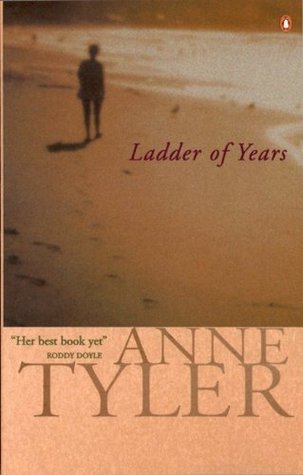 So for September I managed to steer the group away from a poorly received historical novel of over 400 pages and the new Joël Dicker and onto Ladder of Years by Anne Tyler, which the bookstore chain Waterstones has been promoting heavily as one of their books of the month. I already had a charity shop copy in hand and the others liked the sound of it, so we’re all set for September 12th! Future months’ literary fiction choices look promising, too, so provided I enjoy the discussion and the camaraderie I plan to stick with it: a backlist Pat Barker novel I’ve not read, and Kirsty Logan and Jonathan Coe novels I’ve read before and won’t reread but will remind myself about briefly before the meetings.
I’m out of practice with this book club thing. My mother tells me that I have a lot to contribute but that I must also be open to what I’ll learn from other people – even if I don’t expect to. So I don’t want to set myself up as some kind of expert. In fact, I probably won’t even mention that I’m a freelance book reviewer and book blogger. Mostly I’m hoping to find some friendly faces around the neighborhood, because even though we’ve lived here just over two years I still only know a handful of names and keep myself to myself as I work from home. Even if I have to read books I wouldn’t normally, it’ll be worth it to meet more people.
What has your experience with book clubs (in person and online) been?
Reviews Roundup, April–May
One of my goals with this blog is to have one convenient place where I can gather together all my writing that has appeared in disparate online locations. To that end, once a month – or maybe more often – I’ll provide links to all the book reviews I’ve published elsewhere, with a rating and a short taster so you can decide whether to click to read more. (A couple of exceptions: I won’t point out my Kirkus Indie or BlueInk reviews since I don’t get a byline.)
[I seem to have done more ‘free’ than ‘required’ reading this past month, which I attribute to having been on vacation in America for about two weeks of that time.]
BookBrowse
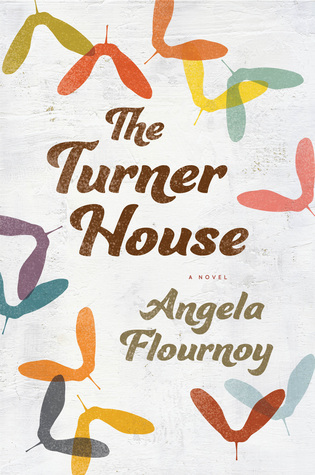 The Turner House by Angela Flournoy [subscription service, but an excerpt is available for free on the website]: In Flournoy’s debut novel, the 13 grown children of Francis and Viola Turner must put aside their own personal baggage and decide what will become of their parents’ Detroit house during the financial crisis.

The Bookbag
Mother of Eden by Chris Beckett: This sequel to 2012’s Arthur C. Clarke Award-winning science fiction novel Dark Eden sees Gela’s descendants splitting into factions and experimenting with different political systems. Starlight Brooking emerges as a Messiah figure, spreading a secret message of equality. Releases June 4th.
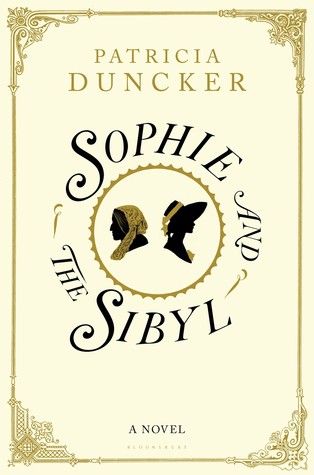 Sophie and the Sibyl by Patricia Duncker: In Duncker’s sixth novel, a playful Victorian pastiche, George Eliot’s interactions with her German publisher and his feisty young wife provide fodder for Daniel Deronda. Consciously modeled on John Fowles’s The French Lieutenant’s Woman, this is a postmodern blending of history, fiction, and metafictional commentary.
We Love This Book
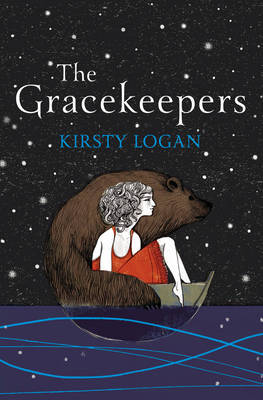 The Gracekeepers by Kirsty Logan: This inventive debut novel imagines a circus traveling through a flooded future world. Humanity is divided into two races, landlockers and damplings. Fear and prejudice distance these groups but the novel imagines them drawn together through a meeting between two young women, Callanish and North.

Foreword Reviews
 The Organ Broker by Stu Strumwasser: “There is no shortage of organs; there is only a shortage of organs in America.” The antihero of this debut novel finds organs on the international market and sells them for huge profits to Americans on transplant waiting lists. With snappy dialogue and a lovable hustler protagonist, it explores ethical ambiguities.
BookTrib
I chose my top four mother–daughter memoirs (by Alice Eve Cohen, Abigail Thomas, Alison Bechdel and Jeanette Winterson) for this Mother’s Day article.
I also post reviews of most of my casual reading on Goodreads.
Mademoiselle Chanel by C.W. Gortner: A writer of Tudor-era mysteries turns to more recent history with this novel about Coco Chanel. Detailing every business venture and love affair, he makes some parts a real chronological slog. I always associate Chanel with the 1950s–60s, so it was interesting to learn that she was born in the 1880s and experienced both world wars.
 The Empathy Exams by Leslie Jamison: I liked the medical-related pieces – attending a Morgellons disease conference, working as a medical actor – but not the Latin American travel essays or the character studies. The overarching theme of empathy was not as strong as I thought it would be; really, the book is more about how experiences mark the body.
The Real Thing: Lessons on Love and Life from a Wedding Reporter’s Notebook by Ellen McCarthy: McCarthy writes about weddings and relationships for The Washington Post. This is a collection of short pieces about modern dating, breakups, wedding ceremonies, marriage, and making love last. The style is breezy and humorous, largely anecdote- and interview-based, with some heartfelt moments. If you’re a wedding junkie you’ll definitely enjoy it, but I didn’t think it broke new ground.

 Visiting Hours: A Memoir of Friendship and Murder by Amy E. Butcher: The facts are simple: one night towards the end of their senior year at Gettysburg College, Kevin Schaeffer walked Butcher home from a drunken outing, then stabbed his ex-girlfriend to death. This book has elements of a true crime narrative, detailing the crime and speculating on possible causes for Kevin’s psychotic episode, but it’s more about how the crime affected Butcher. This is a concise and gripping narrative reminiscent of Half a Life by Darin Strauss.
A Reunion of Ghosts by Judith Claire Mitchell: Vee, Lady and Delph are the fourth generation of Alters, a Jewish family cursed with a rash of suicides. Indeed, the majority of the novel is the middle-aged sisters’ collective suicide note, narrated in the first-person plural. They reach back into the past to give the stories of their ancestors, including great-grandparents Iris and Lenz Alter, the latter of whom had the ironic distinction of being the Jewish creator of Zyklon gas (based on a real figure).

Beloved Strangers: A Memoir by Maria Chaudhuri: Islam versus Christianity is a background note, but the major theme is East versus West – specifically, Chaudhuri’s native Bangladesh set against America, where she attended university and later lived and worked. Religion, sexuality, dreams and second chances at love are all facets of the author’s search for a sense of home and family in a life of shifting loyalties. (My full review will appear in the autumn 2015 issue of Wasafiri literary magazine.)
 The Shore by Sara Taylor: Gritty and virtuosic, this novel-in-13-stories imagines 250 years of history on a set of islands off the coast of Virginia. As a Maryland native, I think of Chincoteague and Assateague as vacation destinations, but Taylor definitely focuses on their dark side here: industrial-scale chicken farms, unwanted pregnancies, domestic violence, bootleg liquor, gang rape, murders and meth labs.
Echoes of Heartsounds: A Memoir by Martha Weinman Lear: Longtime New York City journalist Lear’s first husband, a doctor named Hal, died after a series of heart attacks. Ironically, 30 years later she was admitted to the same hospital for a heart attack – an event that presents completely differently in women. As a sequel to her previous memoir, Heartsounds (1980), this explores life’s odd parallels and repetitions.
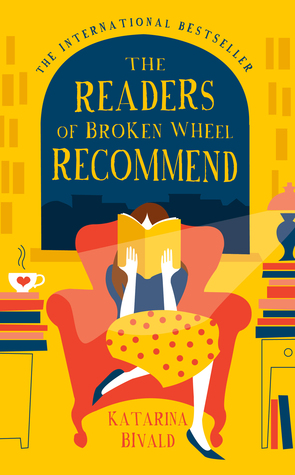 The Readers of Broken Wheel Recommend by Katarina Bivald: A Swedish tourist opens a bookstore in small-town Iowa. Given that she’d never visited the States at the time she wrote this novel (published in her native Sweden in 2013), Bivald has painted a remarkably accurate picture of a Midwestern town peopled with fundamentalists, gays, rednecks and a gun-toting diner owner. A cute read for book lovers, provided you can stomach a bit of chick lit / romance.
Life From Scratch: A Memoir of Food, Family, and Forgiveness by Sasha Martin: Martin writes well and I enjoyed this book overall, but at times you may become frustrated and ask “where’s the food?!” That’s because the makeup of this book is: Misery Memoir – 70% / Global Table Adventure blog – 30%. Martin had the idea to cook dishes from every country of the world. At the rate of one feast per weekend, the blog project took four years. She manages to give a fairly comprehensive overview of the cooking she did over that time.
Plumb Line by Steve Luttrell: Disappointingly average poems about nature and memory. The situations and sentiments are relatable but the language so plain that nothing sticks out.

The Sixth Extinction: An Unnatural History by Elizabeth Kolbert: The picture Kolbert paints of our environmental situation is depressing. I already knew the facts of climate change and animal extinction, but according to Kolbert the prognosis is even worse than I was aware. As a longtime New Yorker journalist, she writes at a good level for laymen: not talking down, nor assuming any specialist knowledge. Luckily, there are spots of humor to lighten the tone.
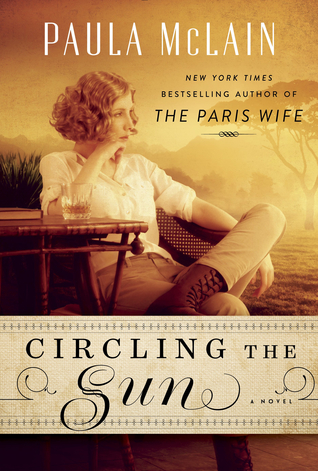 Circling the Sun by Paula McLain: This is just as good as The Paris Wife – if not better. I didn’t think I was very interested in aviatrix Beryl Markham, but McLain proved me wrong. The love triangle between her, Karen Blixen (Isak Dinesen) and Denys Finch Hatton forms the kernel of the book. McLain describes her African settings beautifully, and focuses as much on the small emotional moments that make a life as she does on the external thrills, though there are plenty of those.
The Size of Our Bed by Jacqueline Tchakalian: Well-structured and grouped into thematic sections, these poems are primarily about motherhood, the death of a much-loved husband from cancer, and adjusting to the reality of war. Alliteration and assonance stand in for traditional rhymes. Tchakalian is especially good with colors and flowers, which combine to create memorable metaphors. Releases September 15th.
 Bookish Beck = Rebecca Foster. American transplant to England. Freelance proofreader and book reviewer.
 Bookish Beck