Most Anticipated Books of 2026
Later than intended, but here we are. I’ve narrowed it down to the 25 books I’m most looking forward to in January–September, though no doubt I’ll have heard of many more unmissable titles before that time is up. My list is dominated by fiction, which I tend to find out about earlier. Also on my radar are novels by Sharon Bala, Freya Bromley, Mary Costello, Louise Kennedy, Ben Lerner, Paula McLain, Liz Nugent and Tom Perrotta; short stories by Jess Gibson (Margaret Atwood’s daughter); and nonfiction from Margaret Drabble, Cal Flyn, Siri Hustvedt and Anne Lamott.
In release date order, with UK publication info given first if available. The blurbs are adapted from Goodreads. I’ve taken the liberty of using whichever cover I prefer.
Fiction
 Departure(s) by Julian Barnes [20 Jan., Vintage (Penguin) / Knopf]: (Currently reading) I get more out of rereading Barnes’s classics than reading his latest stuff, but I’ll still attempt anything he publishes. He’s 80 and calls this his last book. So far, it’s heavily about memory. “Julian played matchmaker to Stephen and Jean, friends he met at university in the 1960s; as the third wheel, he was deeply invested in the success of their love”. Sounds way too similar to 1991’s Talking It Over, and the early pages have been tedious. (Review copy from publisher)
 Half His Age by Jennette McCurdy [20 Jan., Fourth Estate / Ballantine]: McCurdy’s memoir, I’m Glad My Mom Died, was stranger than fiction. I was so impressed by her recreation of her childhood perspective on her dysfunctional Mormon/hoarding/child-actor/cancer survivor family that I have no doubt she’ll do justice to this reverse-Lolita scenario about a 17-year-old who’s in love with her schlubby creative writing teacher. (Library copy on order)
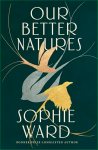 Our Better Natures by Sophie Ward [5 Feb., Corsair]: I loved Ward’s Booker-longlisted Love and Other Thought Experiments (though the follow-up, The Schoolhouse, was a letdown). “Amid the chaos and political upheaval of 1970s America, three very different women must accept the world as it is, or act to change it. Phyllis Patterson is a housewife in White Plains, Illinois. … Andrea Dworkin is an activist in Amsterdam. … Muriel Rukeyser is a poet in New York.” (Library copy on order)
 Brawler: Stories by Lauren Groff [Riverhead, Feb. 24]: (Currently reading) Controversial opinion: Short stories are where Groff really shines. Three-quarters in, this collection is just as impressive as Delicate Edible Birds or Florida. “Ranging from the 1950s to the present day and moving across age, class, and region (New England to Florida to California) these nine stories reflect and expand upon a shared the ceaseless battle between humans’ dark and light angels.” (For Shelf Awareness review) (Edelweiss download)
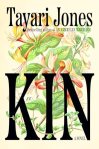 Kin by Tayari Jones [24 Feb., Oneworld / Knopf]: I’m a big fan of Leaving Atlanta and An American Marriage. This sounds like Brit Bennett meets Toni Morrison. “Vernice and Annie, two motherless daughters raised in Honeysuckle, Louisiana, have been best friends and neighbors since earliest childhood, but are fated to live starkly different lives. … A novel about mothers and daughters, about friendship and sisterhood, and the complexities of being a woman in the American South”. (Edelweiss download)
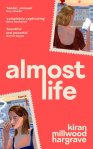 Almost Life by Kiran Millwood Hargrave [12 March, Picador / March 24, S&S/Summit Books]: There have often been queer undertones in Hargrave’s work, but this David Nicholls-esque plot sounds like her most overt. “Erica and Laure meet on the steps of the Sacré-Cœur in Paris, 1978. … The moment the two women meet the spark is undeniable. But their encounter turns into far more than a summer of love. It is the beginning of a relationship that will define their lives and every decision they have yet to make.” (Edelweiss download)
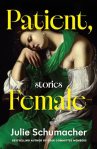 Patient, Female: Stories by Julie Schumacher [May 5, Milkweed Editions]: I found out about this via a webinar with Milkweed and a couple of other U.S. indie publishers. I loved Schumacher’s Dear Committee Members. “[T]his irreverent collection … balances sorrow against laughter. … Each protagonist—ranging from girlhood to senescence—receives her own indelible voice as she navigates social blunders, generational misunderstandings, and the absurdity of the human experience.” The publicist likened the tone to Meg Wolitzer.
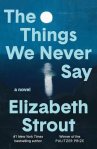 The Things We Never Say by Elizabeth Strout [7 May, Viking (Penguin) / May 5, Random House]: Hurrah for moving on from Lucy Barton at last! “Artie Dam is living a double life. He spends his days teaching history to eleventh graders … and, on weekends, takes his sailboat out on the beautiful Massachusetts Bay. … [O]ne day, Artie learns that life has been keeping a secret from him, one that threatens to upend his entire world. … [This] takes one man’s fears and loneliness and makes them universal.”
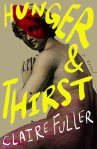 Hunger and Thirst by Claire Fuller [7 May, Penguin / June 2, Tin House]: I’ve read everything of Fuller’s and hope this will reverse the worsening trend of her novels, though true crime is overdone. “1987: After a childhood trauma and years in and out of the care system, sixteen-year-old Ursula … is invited to join a squat at The Underwood. … Thirty-six years later, Ursula is a renowned, reclusive sculptor living under a pseudonym in London when her identity is exposed by true-crime documentary-maker.” (Edelweiss download)
 Little Vanities by Sarah Gilmartin [21 May, ONE (Pushkin)]: Gilmartin’s Service was great. “Dylan, Stevie and Ben have been inseparable since their days at Trinity, when everything seemed possible. … Two decades on, … Dylan, once a rugby star, is stranded on the sofa, cared for by his wife Rachel. Across town, Stevie and Ben’s relationship has settled into weary routine. Then, after countless auditions, Ben lands a role in Pinter’s Betrayal. As rehearsals unfold, the play’s shifting allegiances seep into reality, reviving old jealousies and awakening sudden longings.”
 Said the Dead by Doireann Ní Ghríofa [21 May, Faber / Sept. 22, Farrar, Straus and Giroux]: A Ghost in the Throat was brilliant and this sounds right up my street. “In the city of Cork, a derelict Victorian mental hospital is being converted into modern apartments. One passerby has always flinched as she passes the place. Had her birth occurred in another decade, she too might have lived within those walls. Now, … she finds herself drawn into an irresistible river of forgotten voices”.
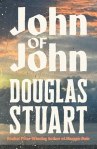 John of John by Douglas Stuart [21 May, Picador / May 5, Grove Press]: I DNFed Shuggie Bain and haven’t tried Stuart since, but the Outer Hebrides setting piqued my attention. “[W]ith little to show for his art school education, John-Calum Macleod takes the ferry back home to the island of Harris [and] begrudgingly resumes his old life, stuck between the two poles of his childhood: his father John, a sheep farmer, tweed weaver, and pillar of their local Presbyterian church, and his maternal grandmother Ella, a profanity-loving Glaswegian”. (For early Shelf Awareness review) (Edelweiss download)
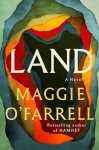 Land by Maggie O’Farrell [2 June, Tinder Press / Knopf]: I haven’t fully loved O’Farrell’s shift into historical fiction, but I’m still willing to give this a go. “On a windswept peninsula stretching out into the Atlantic, Tomás and his reluctant son, Liam [age 10], are working for the great Ordnance Survey project to map the whole of Ireland. The year is 1865, and in a country not long since ravaged and emptied by the Great Hunger, the task is not an easy one.” (Edelweiss download)
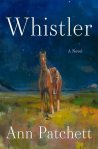 Whistler by Ann Patchett [2 June, Bloomsbury / Harper]: Patchett is hella reliable. “When Daphne Fuller and her husband Jonathan visit the Metropolitan Museum of Art, they notice an older, white-haired gentleman following them. The man turns out to be Eddie Triplett, her former stepfather, who had been married to her mother for a little more than year when Daphne was nine. … Meeting again, time falls away; … [in a story of] adults looking back over the choices they made, and the choices that were made for them.” (Edelweiss download)
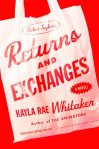 Returns and Exchanges by Kayla Rae Whitaker [2 June, Scribe / May 19, Random House]: Whitaker’s The Animators is one of my favourite novels that hardly anyone else has ever heard of. “A sweeping novel of one [discount department store-owning] Kentucky family’s rise and fall throughout the 1980s—a tragicomic tour de force about love and marriage, parents and [their four] children, and the perils of mixing family with business”. (Edelweiss download)
 The Great Wherever by Shannon Sanders [9 July, Viking (Penguin) / July 7, Henry Holt]: Sanders’s linked story collection Company left me keen to follow her career. Aubrey Lamb, 32, is “grieving the recent loss of her father and the end of a relationship.” She leaves Washington, DC for her Black family’s ancestral Tennessee farm. “But the land proves to be a burdensome inheritance … [and] the ghosts of her ancestors interject with their own exasperated, gossipy commentary on the flaws and foibles of relatives living and dead”. (Edelweiss download)
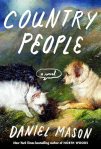 Country People by Daniel Mason [14 July, John Murray / July 7, Random House]: It doesn’t seem long enough since North Woods for there to be another Mason novel, but never mind. “Miles Krzelewski is … twelve years late with his PhD on Russian folktales … [W]hen his wife Kate accepts a visiting professorship at a prestigious college in the far away forests of Vermont, he decides that this will be his year to finally move forward with his life. … [A] luminous exploration of marriage and parenthood, the nature of belief and the power of stories, and the ways in which we find connection in an increasingly fragmented world.”
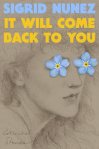 It Will Come Back to You: Collected Stories by Sigrid Nunez [14 July, Virago / Riverhead]: Nunez is one of my favourite authors but I never knew she’d written short stories. The blurb reveals very little about them! “Carefully selected from three decades of work … Moving from the momentous to the mundane, Nunez maintains her irrepressible humor, bite, and insight, her expert balance between intimacy and universality, gravity and levity, all while entertainingly probing the philosophical questions we have come to expect, such as: How can we withstand the passage of time? Is memory the greatest fiction?” (Edelweiss download)
 Exit Party by Emily St. John Mandel [17 Sept., Picador / Sept. 15, Knopf]: The synopsis sounds a bit meh, but in my eyes Mandel can do no wrong. “2031. America is at war with itself, but for the first time in weeks there is some good news: the Republic of California has been declared, the curfew in Los Angeles is lifted, and everyone in the city is going to a party. Ari, newly released from prison, arrives with her friend Gloria … Years later, living a different life in Paris, Ari remains haunted by that night.”
The Housekeeper by Rose Tremain [17 Sept., Vintage (Penguin); no cover image yet]: “Set in 1930s England and fictionalises the inspiration behind Daphne du Maurier’s famous novel, Rebecca.” Strangely, this started life as a short story (in The American Lover), then become a screenplay authored by Tremain (the film is in production and stars Uma Thurman and Anthony Hopkins), and is now being expanded into a novel. Tremain is 82 and a survivor of major cancer; I do wonder if this is the last book we can expect from her.
Nonfiction
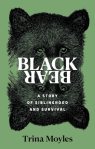 Black Bear: A Story of Siblinghood and Survival by Trina Moyles [Jan. 6, Pegasus Books]: Out now! “When Trina Moyles was five years old, her father … brought home an orphaned black bear cub for a night before sending it to the Calgary Zoo. … After years of working for human rights organizations, Trina returned to northern Alberta for a job as a fire tower lookout, while [her brother] Brendan worked in the oil sands … Over four summers, Trina begins to move beyond fear and observe the extraordinary essence of the maligned black bear”. (For BookBrowse review) (Review e-copy)
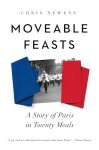 Moveable Feasts: A Story of Paris in Twenty Meals by Chris Newens [Feb. 3, Pegasus Books; came out in the UK in July 2025 but somehow I missed it!]: I’m a sucker for foodie books and Paris books. A “long-time resident of the historic slaughterhouse quartier Villette takes us on a delightful gastronomic journey around Paris … From Congolese catfish in the 18th to Middle Eastern falafels in the 4th, to the charcuterie served at the libertine nightclubs of Pigalle in the 9th, Newens lifts the lid on the city’s ever-changing, defining, and irresistible food culture.” (Edelweiss download)
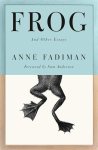 Frog: And Other Essays by Anne Fadiman [Feb. 10, Farrar, Straus and Giroux]: Fadiman publishes rarely, and it can be difficult to get hold of her books, but they are always worth it. “Ranging in subject matter from her deceased frog, to archaic printer technology, to the fraught relationship between Samuel Taylor Coleridge and his son Hartley, these essays unlock a whole world—one overflowing with mundanity and oddity—through sly observation and brilliant wit.”
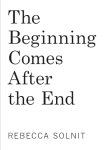 The Beginning Comes after the End: Notes on a World of Change by Rebecca Solnit [March 3, Haymarket Books]: A sequel to Hope in the Dark. Hope is a critically endangered species these days, but Solnit has her eyes open. “While the white nationalist and authoritarian backlash drives individualism and isolation, this new world embraces antiracism, feminism, a more expansive understanding of gender, environmental thinking, scientific breakthroughs, and Indigenous and non-Western ideas, pointing toward a more interconnected, relational world.” (Edelweiss download)
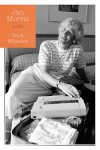 Jan Morris: A Life by Sara Wheeler [7 April, Faber / April 14, Harper]: I didn’t get on with the mammoth biography Paul Clements published in 2022 – it was dry and conventional; entirely unfitting for Morris – but hope for better things from a fellow female travel writer. “Wheeler uncovers the complexity of this twentieth-century icon … Drawing on unprecedented access to Morris’s papers as well as interviews with family, friends and colleagues, Wheeler assembles a captivating … story of longing, traveling and never reaching home.” (Edelweiss download)
Others’ lists whence a few of my ideas came!
What catches your eye here? What other 2026 titles do I need to know about?
Four More Short Nonfiction Books for Novellas for November
Short nonfiction turns up in every genre. Today I have a feminist manifesto, some miniature travel essays, a memoir of the writing life, and a book of environmentalist speeches.
Dear Ijeawele, or A Feminist Manifesto in Fifteen Suggestions by Chimamanda Ngozi Adichie (2017)
[63 pages]
 My fourth book this year by Adichie, who is also making a repeat appearance on one of my nonfiction novellas lists; I reviewed “We Should All Be Feminists” in 2017. While this builds on the TED talk that fueled that essay, it is more successful for me because of the frame: a long letter to a childhood friend who had just had a baby girl and wanted advice about how to raise her as a feminist. Adichie’s premises are that women matter equally and that if you can’t reverse the genders in a scenario and get acceptable results (e.g. ‘women should leave men who cheat,’ but we don’t necessarily demand the opposite), an argument is sexist.
Even when her points seem obvious – gender roles are nonsense, don’t hold up marriage as the pinnacle of achievement, downplay appearance – they are beautifully expressed, and there are lots of tactics that wouldn’t have occurred to me in the context of feminism: Normalize differences between people. Teach a girl to love reading – “Books will help her understand and question the world, help her express herself”. And beware of how language is used: if people deride a woman for ambition where they wouldn’t criticize a man, their problem is not with ambition but with women. Hillary Clinton and Kamala Harris come to mind…
Go ahead and buy a stack of this book to have on hand the next time a friend has a baby (boy or girl). Adichie wasn’t a mother when she wrote it, but in her Introduction she says that, looking back after the birth of her daughter, it still rang true and gave her plenty to live up to. 
[By the way, did you hear that Adichie is the Women’s Prize’s Winner of Winners for Half of a Yellow Sun? Her novel came out at #2 in my ranking of all 25 winners, so I’m pleased!]
A Time to Keep Silence by Patrick Leigh Fermor (1957)
[95 pages]
 Three brief essays about visits to monasteries: The Abbey of St. Wandrille de Fontanelle (Benedictine) and La Grande Trappe (Cistercian) in France, and the rock monasteries of Cappadocia in Turkey. I’ve read a fair bit about the monastic life, so I found little that was new in Fermor’s accounts of austere daily routines and religious history. I had more interest in the rock monasteries where some Church Fathers were based, simply because Turkey is a relatively unfamiliar setting for me, but despite Fermor’s rich descriptive gifts, this piece was, at nine pages, little more than a sketch. Alas, this was a disappointment.
The Cost of a Best Seller by Frances Parkinson Keyes (1953)
[118 pages]
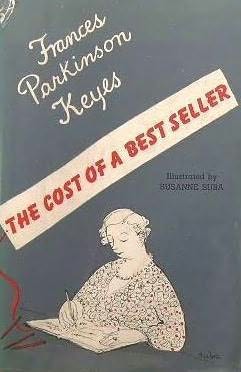 I picked up a £1 dustjacketless copy on a whim from the outdoor clearance area at the Hay Cinema Bookshop in September and started reading it immediately, off and on as a bedside book. Keyes is a twentieth-century author whose dozens of potboilers sold in their millions, but she has been largely forgotten since. Imagine my surprise, then, when her best-known novel, Dinner at Antoine’s (1948), turned up on a recent Book Riot list of New Orleans-themed literature – though mostly for the reference to the still-popular title restaurant.
When Keyes began writing, a mother of three young children in an attic room, it was to supplement her husband’s income, but the work soon became an obsession and allowed her to maintain her independence after her husband, a U.S. senator, died. Not until 17 years after the publication of her first novel did she have her first bestseller. She depicts fame as a double-edged sword: It allowed her to travel in Europe and to Louisiana, where she later made her home, but also made heavy demands on her time, requiring responses to annoying letters, hours spent signing books, and attendance at literary lunches. For someone with back problems, these commitments could be literally as well as figuratively painful.
Keyes has the popular fiction writer’s bitterness about never getting critical recognition. This memoir was pleasant enough, but hasn’t induced me to read any more by her. Readers fond of her work might get something more out of it. For the most part, it doesn’t feel dated, but one detail really got to me: Whenever she needed to ensure that she wouldn’t be disturbed, she would go work in the old slave quarters of her New Orleans mansion. Yipes! 
No One Is Too Small to Make a Difference by Greta Thunberg (2019)
[68 pages]
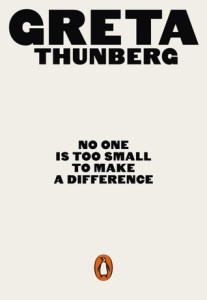 “Our house is on fire. … I want you to panic.” Starting with a speech she gave on a climate march in Stockholm in September 2018 and ending with her address to the UK parliament in April 2019, this punchy pamphlet of rhetoric makes it clear why the teenage Thunberg has rapidly become such an important public figure. She attributes her bluntness to her Asperger’s: the way her mind works, she sees climate breakdown as a simple, black and white issue – either we care or we don’t; either we stop emitting carbon or we don’t; either we find new ways of doing things now, or we stand by and watch it all go to ruin. She calls governments and international bodies to account for their inaction and lack of commitment, and for subsidizing fossil fuels and encouraging consumerism as usual.
Peppering in key statistics and accepted scientific guidelines but staying at a lay level, she calls on the world’s decision-makers to create hope for young people and others who will be most affected by global warming but don’t have a seat at the table. I admire Thunberg’s bravery as well as her words. The only issue with a wee book like this one is that the same points and language recur in multiple speeches, so there is inevitable repetition. 
It’s been Nonfiction week here on Novellas in November. #NovNov meets #NonficNov!

Starting Monday: Literature in Translation week, which Cathy is hosting.
20 Books of Summer, #15–16: Andrew Beahrs and Elizabeth Graver
Today I have a biography-cum-cultural history of America’s wild foods and a novel about beekeeping and mental illness.
Twain’s Feast: Searching for America’s Lost Foods in the Footsteps of Samuel Clemens by Andrew Beahrs (2010)
 (20 Books of Summer, #15) In 1879, Mark Twain, partway through the Grand Tour immortalized in A Tramp Abroad, was sick of bland, poor-quality European food and hankering for down-home American cooking. He drew up a list of 80 foodstuffs he couldn’t wait to get back to: everything from soft-shell crabs to proper ice water. “The menu shouts of a joyous abundance,” Beahrs writes. “It testifies to a deep bond in Twain’s mind between eating and tasting and celebrating … rooted food that would live forever in his memory.”
Beahrs goes in search of some of those trademark dishes and explores their changes in production over the last 150 years. In some cases, the creatures and their habitats are so endangered that we don’t eat them anymore, like Illinois’ prairie chickens and Maryland’s terrapins, but he has experts show him where remnant populations live. In San Francisco Bay, he helps construct an artificial oyster reef. He meets cranberry farmers in Massachusetts and maple tree tappers in Vermont. At the Louisiana Foodservice EXPO he gorges on “fried oysters and fried shrimp and fries. I haven’t had much green, but I’ve had pecan waffles with bacon, and I’ve inserted beignets and café au lait between meals with the regularity of an Old Testament prophet chanting ‘begat.’”
But my favorite chapter was about attending a Coon Supper in Arkansas, a local tradition that has been in existence since the 1930s. Raccoons are hunted, butchered, steamed in enormous kettles, and smoked before the annual fundraising meal attended by 1000 people. Raccoon meat is greasy and its flavor sounds like an acquired taste: “a smell like nothing I’ve smelled before but which I’ll now recognize until I die (not, I hope, as a result of eating raccoon).” Beahrs has an entertaining style and inserts interesting snippets from Twain’s life story, as well as recipes from 19th-century cookbooks. There are lots of books out there about the country’s increasingly rare wild foods, but the Twain connection is novel, if niche.
Source: A remainder book from Wonder Book (Frederick, Maryland)
My rating: 
The Honey Thief by Elizabeth Graver (1999)
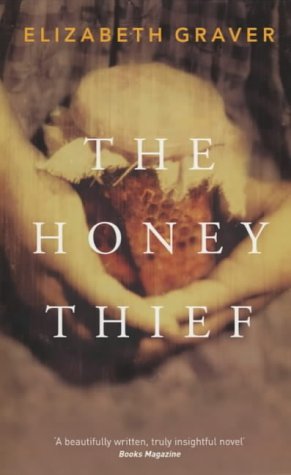 (20 Books of Summer, #16) Ever since I read The End of the Point (which featured in one of my Six Degrees posts), I’ve meant to try more by Graver. This was her second novel, a mother-and-daughter story that unearths the effects of mental illness on a family. Eleven-year-old Eva has developed a bad habit of shoplifting, so her mother Miriam moves them out from New York City to an upstate farmhouse for the summer. But in no time Eva, slipping away from her elderly babysitter’s supervision and riding her bike into the countryside, is stealing jars of honey from a roadside stand. She keeps going back and strikes up a friendship with the middle-aged beekeeper, Burl, whom she seems to see as a replacement for her father, Francis, who died of a heart attack when she was six.
Alternating chapters look back at how Miriam met Francis and how she gradually became aware of his bipolar disorder. This strand seems to be used to prop up Miriam’s worries about Eva (since bipolar has a genetic element); while it feels true to the experience of mental illness, it’s fairly depressing. Meanwhile, Burl doesn’t become much of a presence in his own right, so he and the beekeeping feel incidental, maybe only included because Graver kept/keeps bees herself. Although Eva is an appealingly plucky character, I’d recommend any number of bee-themed novels, such as The Secret Life of Bees by Sue Monk Kidd, The History of Bees by Maja Lunde, and even Generation A by Douglas Coupland, over this one.
Source: Secondhand copy from Beltie Books, Wigtown
My rating:
Four June Releases (Fiction & Poetry): Bennett, Gabrielsen, Kwek and Watts
(A rare second post in a day from me, to make way for tomorrow’s list of the best books of the first half of the year.) My four new releases for June are a novel about the complications of race and sexuality in 1950s–80s America, a novella in translation about a seabird researcher struggling through a time of isolation, and two new poetry books from Carcanet Press. As a bonus just in time for Pride Month, I finish with a mini write-up of The Book of Queer Prophets, an anthology of autobiographical essays that was published late last month.
The Vanishing Half by Brit Bennett
 Like some lost mid-career gem from Toni Morrison, this novel is meaty with questions of racial and sexual identity and seems sure to follow in the footsteps of Ruby and An American Marriage with a spot in Oprah’s book club and on Barack Obama’s summer reading list.
It’s the story of light-skinned African American twins Stella and Desiree Vignes, and how their paths divide in 1954. Both are desperate to escape from Mallard, Louisiana, where their father was lynched and their mother cleans white people’s houses. Desiree works in fingerprinting for the FBI in Washington, D.C., but in 1968 leaves an abusive marriage to return to Mallard with her dark-skinned daughter, Jude Winston. Stella, on the other hand, has been passing as white for over a decade. She was a secretary for the man who became her husband, Blake Sanders, and now lives a life of comfort in a Los Angeles subdivision.
The twins’ decisions affect the next generation, too. Both have one daughter. Jude goes to college in L.A., where she meets and falls in love with photographer Reese (born Therese), who is, in a different sense, “passing” until he can afford the surgery that will align his body with his gender. In a coincidence that slightly strains belief, Jude runs into Stella’s daughter, Kennedy, and over the next seven years the cousins – one a medical student; the other an actress – continue to meet occasionally, marvelling at how two family lines that started in Mallard, a tiny town that doesn’t even exist anymore, could have diverged so dramatically.
This is Bennett’s second novel, after The Mothers, which I’m keen to read. It’s perceptive and beautifully written, with characters whose struggles feel genuine and pertinent. Though its story line ends in the late 1980s, it doesn’t feel passé at all. The themes of self-reinvention and running from one’s past resonate. I expected certain characters to be forced into moments of reckoning, but the plot is a little messier than that – and that’s more like real life. A shoo-in for next year’s Women’s Prize list.
My rating: 
My thanks to Dialogue Books for the free copy for review.
Ankomst by Gøhril Gabrielsen (2017)
[Translated from the Norwegian by Deborah Dawkin]
 The unnamed narrator of Gabrielsen’s fifth novel is a 36-year-old researcher working towards a PhD on the climate’s effects on populations of seabirds, especially guillemots. During this seven-week winter spell in the far north of Norway, she’s left her three-year-old daughter behind with her ex, S, and hopes to receive a visit from her lover, Jo, even if it involves him leaving his daughter temporarily. In the meantime, they connect via Skype when signal allows. Apart from that and a sea captain bringing her supplies, she has no human contact.
Daily weather measurements and bird observations still leave too much time alone in a cramped cabin, and this starts to tell in the protagonist’s mental state: she’s tormented by sexual fantasies, by memories of her life with S, and by the thought of a local family, the Berthelsens, who experienced a disastrous house fire in 1870. More and more frequently, she finds herself imagining what happened to Olaf and Borghild Berthelsen. Solitude and this growing obsession with ghosts of the past make her start to lose her grip on reality.
I’d encountered an unreliable narrator and claustrophobic setting before from Gabrielsen with her second novel, The Looking-Glass Sisters. Extreme weather and isolation account for this being paired with Snow, Dog, Foot by Claudio Morandini as the first two books in Peirene’s 2020 “Closed Universe” trilogy. I was also reminded of Sarah Moss’s Night Waking. However, I found this novella’s metaphorical links – how seabirds and humans care for their young; physical and emotional threats; lowering weather and existential doom – too obvious.
My rating:
My thanks to Peirene Press for the free copy for review.
Moving House by Theophilus Kwek
 This is the first collection of the Chinese Singaporean poet’s work to be published in the UK. Infused with Asian history, his elegant verse ranges from elegiac to romantic in tone. Many of the poems are inspired by historical figures and real headlines. There are tributes to soldiers killed in peacetime training and accounts of high-profile car accidents; “The Passenger” is about the ghosts left behind after a tsunami. But there are also poems about the language and experience of love. I also enjoyed the touches of art and legend: “Monologues for Noh Masks” is about the Pitt-Rivers Museum collection, while “Notes on a Landscape” is about Iceland’s geology and folk tales. In most places alliteration and enjambment produce the sonic effects, but there are also a handful of rhymes and half-rhymes, some internal.
My individual favorite poems included “Prognosis,” “Sophia” (made up of two letters Sir Thomas Stamford Raffles writes home to his wife while surveying in Singapore), and “Operation Thunderstorm.” As an expat and something of a nomad, I especially loved the title poem, which comes last and explains the cover image: “every house has a skeleton – / while the body learns it must carry less / from place to place, a kind of tidiness / that builds, hardens. Some call it fear, // of change, or losing what we cannot keep. / Others, experience.” Recommended to fans of Mary Jean Chan, Nausheen Eusuf, Kei Miller and Ocean Vuong.
My rating:
My thanks to Carcanet Press for the PDF copy for review.
Red Gloves by Rebecca Watts
 I noted the recurring comparison of natural and manmade spaces; outdoors (flowers, blackbirds, birds of prey, the sea) versus indoors (corridors, office life, even Emily Dickinson’s house in Massachusetts). The style shifts from page to page, ranging from prose paragraphs to fragments strewn across the layout. Most of the poems are in recognizable stanzas, though these vary in terms of length and punctuation. Alliteration and repetition (see, as an example of the latter, her poem “The Studio” on the TLS website) take priority over rhymes. I was reminded of Elizabeth Bishop in places, while “Whereas” had me thinking of Stephen Dunn’s collection of that name (Layli Long Soldier also has a poetry book of the same title). A few of my individual favorite poems were “Surveillance,” “Building” and “Admission” (on a medical theme: “What am I afraid of? / The breaching of skin. / Violation of laws that / separate outside from in. / Liquidation of the thing / I call me.”).
My rating:
My thanks to Carcanet Press for the PDF copy for review.
And a bonus for Pride Month:
The Book of Queer Prophets: 24 Writers on Sexuality and Religion, edited by Ruth Hunt
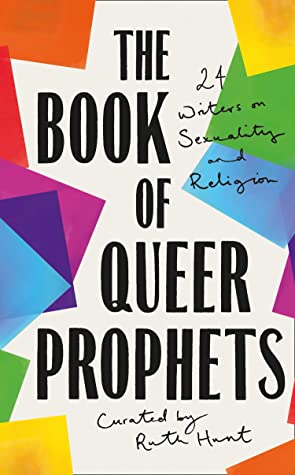 There isn’t, or needn’t be, a contradiction between faith and queerness, as the authors included in this anthology would agree. Many of them are stalwarts at Greenbelt, a progressive Christian summer festival – Church of Scotland minister John L. Bell even came out there, in his late sixties, in 2017. I’m a lapsed regular attendee, so a lot of the names were familiar to me, including those of poets Rachel Mann and Padraig O’Tuama.
Most of the contributors are Christian, then, including ordained priests like Desmond Tutu’s daughter, Mpho, and LGBT ally Kate Bottley, but we also hear from Michael Segalov, a gay Jewish man in London, and from Amrou Al-Kahdi (author of Unicorn: The Memoir of a Muslim Drag Queen), who describes the affirmation they found in the Sufi tradition. Dustin Lance Black tells of the exclusion LGBT Mormons still encounter.
Jarel Robinson-Brown addresses his lament on mistreatment to his nephew, as James Baldwin did in “My Dungeon Shook” (in The Fire Next Time). Tamsin Omond recounts getting married to Melissa on a London bridge in the middle of an Extinction Rebellion protest. Erin Clark, though bisexual, knows she can pass as straight because she’s marrying a man – so is she ‘gay enough?’ Two trans poets write of the way cathedrals drew them into faith. The only weaker pieces are by Jeanette Winterson (there’s nothing new if you’ve read her memoir) and Juno Dawson (entirely throwaway; ‘I’m an atheist, but it’s okay to be religious, too’).
Again and again, these writers voice the certainty that they are who God means them to be. A few of them engage with particular passages from the Bible, offering contextual critiques or new interpretations, but most turn to scripture for its overall message of love and justice. Self-knowledge is a key component of their search for truth. And the truth sets people free.
My rating:
I read an e-copy via NetGalley.
 Bookish Beck = Rebecca Foster. American transplant to England. Freelance proofreader and book reviewer.
 Bookish Beck