A Jest of God by Margaret Laurence
A Jest of God (1966) is the second in Margaret Laurence’s five-novel Manawaka sequence; it followed The Stone Angel (1964), which I reviewed here back in December. Recently reissued as part of the Apollo Classics imprint from Head of Zeus Books, these two books have been a wonderful opportunity for me to further my knowledge of Canadian literature.
Although Rachel Cameron, the narrator of A Jest of God, is a 34-year-old second-grade teacher who still lives with her mother, she has attributes in common with 90-year-old Hagar Shipley, the unforgettable central character of The Stone Angel. Both have a history of sexual hang-ups – Rachel’s in the form of erotic dreams – and experience temporary losses of self-control. The most striking example is when Rachel reluctantly accepts her fellow teacher Calla’s invitation to her Pentecostal church and, though she is mortified at hearing others speaking in tongues, involuntarily enters in herself with hysterical crying.
I loved this sequence. The Tabernacle of the Risen and Reborn provides such a contrast to Rachel’s mother’s staid church tradition, and it’s a perfect introduction to Rachel’s patterns of pride and embarrassment (another link to Hagar). Although Rachel frequently issues stern orders to herself – “Now, then. Enough of this. The main thing is to be sensible, to stop thinking and to go to sleep” – she can’t seem to stop worrying and second-guessing. This applies to her career as well as to her personal relationships. With her principal’s support, she takes surprisingly stern action against her favorite pupil when he starts playing truant.

It’s hard to say much more about the plot without giving too much away. Do I emulate the vagueness of the back cover blurb and simply explain that Rachel unexpectedly “falls in love for the first time, and embarks upon an affair that will change her life in unforeseen ways”? I’d prefer to go into a bit more depth, so if you want to avoid learning what happens I suggest skipping over my next few paragraphs.
To start with it seems Rachel’s best romantic prospect is Calla, who’s certainly interested. But about a third of the way into the novel, as the boredom of the long summer vacation is setting in, Nick Kazlik returns to town. He was the milkman’s son and Rachel’s childhood acquaintance, and is now a high school teacher in another town. They go out to a movie and share a kiss, and from there their relationship progresses rapidly. Rachel loses her virginity to him out in a field, and the more sex they have the more she’s seized with a belated terror of pregnancy. No doubt her anxiety about motherhood is colored by her passive-aggressive relationship with her own mother, whose dodgy heart leaves her utterly dependent on Rachel.
The novel reminded me most of Margaret Drabble’s The Millstone and Carrie Snyder’s Girl Runner. Like the protagonists of those novels, Rachel’s options seem stark: acquiring a secret abortion, or changing her life irrevocably by having a child out of wedlock. As the title phrase suggests, Rachel feels God is laughing at her presumptuousness: first for believing she might be loved in proportion to her own passion, and then for thinking she could become a mother. I wasn’t fond of the way the book backtracked on this main source of tension at the end. A retreat from calamity might seem fitting given Rachel’s usual overthinking, but the resolution felt to me like too much of a deus ex machina reprieve.
Ultimately, I found Nick and Rachel’s affair the least interesting element of this novel. Compared with the friendship with Calla, the startling religious experience, the interactions with pupils and the school principal, the troubled mother–daughter relationship, and an odd late-night encounter with the new owner of her late father’s funeral parlor, what’s a bit of sex? We’re meant to rejoice at Rachel’s chance at romance, I think, but also to recognize it as a fleeting but necessary spur to an altered life.
Two aspects of this reprint edition deserve a mention. There’s a terrific afterword from Margaret Atwood recalling meeting Laurence, her literary idol, at the Governor General’s Awards ceremony in 1967 (Atwood won for poetry and Laurence won for fiction with this novel). Apollo Classics have also chosen an excellent cover image: a 1960 photograph by Rosemary Gilliat Eaton entitled Woman preparing paint for an art class, Frobisher Bay.

The Margaret Laurence House in Neepawa, Manitoba, Canada. By Amqui (Own work) [CC BY-SA 3.0 (http://creativecommons.org/licenses/by-sa/3.0)%5D, via Wikimedia Commons.
With thanks to Blake Brooks at Head of Zeus/Apollo Classics for the free copy for review.
My rating: 
Classic of the Month: George Orwell’s 1984
Big Brother, the Thought Police, Newspeak, doublethink, 2 + 2 = 5, Room 101. I’d never read George Orwell’s Nineteen Eighty-Four until this month, but so many of its concepts and catchphrases were familiar to me; they’ve entered into popular culture to a remarkable extent. I found that the basics of the plot, and even the specifics of the horrifying climax, were already somewhere in the back of my mind. That’s how much of a household story this is. And, given the recent rise of authoritarian regimes, 1984 is back in style – if it ever went out.

Published in 1949, just four years after Animal Farm, the novel imagines a post-Revolution future in which Oceania (England) is alternately at war with Eurasia and Eastasia. It’s a dystopian vision of bombing raids, public hangings and triumphant film reels of refugees drowning. Absolute loyalty to Big Brother and his Party and total hatred of dissidents are required. Winston Smith works for the Ministry of Truth – an ironic name if ever there was one. His job is to doctor newspaper articles to ‘rectify’ the past. Scrutinized constantly by a telescreen, he ‘corrects’ the written record and burns the evidence in memory holes.
But Winston can’t forget that he once saw a photograph proving that several scapegoats who were executed were actually innocent, and ever since he has been unfaithful to the Party in his heart. “There was truth and there was untruth, and if you clung to the truth even against the whole world, you were not mad.” He makes two bids for freedom: his thought life, as revealed in his diary, and (in Part II) an affair with Julia, a fellow rebel he meets in a rented room above a pawnbroker’s. They join the Brotherhood, Emmanuel Goldstein’s anti-Party movement, and read from his manifesto. Impossible to forget, though, that there’s a Part III to come, and their happy nonconformity is unlikely to survive the Thought Police’s vigilance.
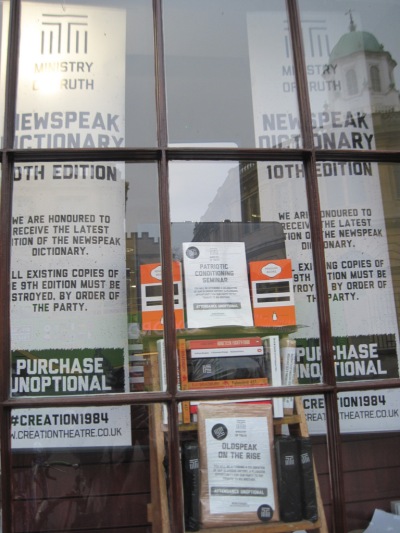
A 1984-themed window at Blackwells in Oxford.
I can’t say I enjoyed this novel exactly. It was more a case of recognizing its cultural importance and prescience about perennial political trends. What I most liked was the irony of the Party’s rebranding: the Ministry of Love is the torture headquarters, for instance, and the propaganda is rife with oxymorons (“WAR IS PEACE. FREEDOM IS SLAVERY. IGNORANCE IS STRENGTH.”). I also appreciated Orwell’s efforts to humanize Winston via his memories of his mother and sister, his estranged wife, and his simple love of beauty – as when he buys a glass and coral paperweight on a whim. Reassuringly, the relationship with Julia isn’t just about sex but is an example of true love against the odds: when Winston tells her “I’m thirty-nine years old. I’ve got a wife that I can’t get rid of. I’ve got varicose veins. I’ve got five false teeth,” she replies “I couldn’t care less.”
And yet there are parts of the book that are truly tedious, like the extracts from Goldstein’s manifesto and the appendix on Newspeak. Like many dystopians, this somewhat sacrifices story in the service of ideas. It certainly could have been cut by up to one-third. However, it’s still full of potent reminders like these about resisting misinformation:
I don’t imagine that we can alter anything in our own lifetime. But one can imagine little knots of resistance springing up here and there—small groups of people banding themselves together, and gradually growing, and even leaving a few records behind, so that the next generation can carry on where we leave off.
At present nothing is possible except to extend the area of sanity little by little. … We can only spread our knowledge outwards from individual to individual, generation after generation. In the face of the Thought Police, there is no other way.
If he [the average citizen of Oceania] were allowed contact with foreigners he would discover that they are creatures similar to himself and that most of what he has been told about them is lies. The sealed world in which he lives would be broken, and the fear, hatred and self-righteousness on which his morale depends might evaporate.
I found it rewarding to follow this with Margaret Atwood’s 2003 essay on Orwell. Nineteen Eighty-Four was the direct model for the feminist dystopia she started writing in the real 1984, The Handmaid’s Tale. She helped me realize something I hadn’t due to my eyes glazing over during the appendix: it’s in the past tense, looking back on a repressive government. In other words, she writes, “the regime has fallen … language and individuality have survived. For whoever has written the essay on Newspeak, the world of Nineteen Eighty-Four is over. … Orwell had much more faith in the resilience of the human spirit than he’s usually been given credit for.” In homage, she ended The Handmaid’s Tale with a section set hundreds of years in the future, when Offred’s world is studied by academics.
That’s important to remember: one day our current situation, horrible as it might feel to live through, will be nothing but a brief chapter in the history books. It’s up to us, though, to help ensure that whatever succeeds it is much better.
My rating: 
Next month: I plan to choose a short classic from “The Ten Best Novels for Thirtysomethings” list in The Novel Cure; my options are The Tenant of Wildfell Hall (Anne Brontë), The Rector’s Daughter (F.M. Mayor), and The Jungle (Upton Sinclair), all of which I own. Let me know which would be your pick.
2016 Runners-Up and Other Superlatives
Let’s hear it for the ladies! In 2016 women writers accounted for 9 out of my 15 top fiction picks, 12 out of my 15 nonfiction selections, and 8 of the 10 runners-up below. That’s 73%. The choices below are in alphabetical order by author, with any full reviews linked in. Many of these have already appeared on the blog in some form over the course of the year.
Ten Runners-Up:
FICTION
 Hag-Seed by Margaret Atwood: Atwood looks more like a good witch every year, and here she works her magic on The Tempest to produce the most satisfying volume of the Hogarth Shakespeare series yet. There’s a really clever play-within-the-play-within-the-play thing going on, and themes of imprisonment and performance resonate in multiple ways.
 The Atomic Weight of Love by Elizabeth J. Church: In Church’s debut, an amateur ornithologist learns about love and sacrifice through marriage to a Los Alamos physicist and a relationship with a Vietnam veteran. I instantly warmed to Meri as a narrator and loved following her unpredictable life story.
 We Love You, Charlie Freeman by Kaitlyn Greenidge: The Freemans are raising Charlie, a chimpanzee, as part of their family for a Toneybee Institute experiment and teaching him to communicate via sign language. This is a rich and unsettling story of human–human interactions, even more so than human–animal interactions; it’s a great first novel and I will follow Greenidge’s career with interest.
To the Bright Edge of the World by Eowyn Ivey: Ivey’s intricate second novel weaves together diaries, letters, photographs, and various other documents and artifacts to tell the gently supernatural story of an exploratory mission along Alaska’s Wolverine River in 1885 and its effects through to the present day. I can highly recommend this rollicking adventure tale to fans of historical fiction and magic realism.
This Must Be the Place by Maggie O’Farrell: Spreading outward from Ireland and reaching into every character’s past and future, this has all O’Farrell’s trademark insight into family and romantic relationships, as well as her gorgeous prose and precise imagery. I have always felt that O’Farrell expertly straddles the (perhaps imaginary) line between literary and popular fiction; her books are addictively readable but also hold up to critical scrutiny.
Commonwealth by Ann Patchett: This deep study of blended family dynamics starts with an early 1960s christening party Los Angeles policeman Fix Keating is throwing for his younger daughter, Franny; we see the aftermath of that party in the lives of six step-siblings in the decades to come. This is a sophisticated and atmospheric novel I would not hesitate to recommend to literary fiction fans in general and Patchett fans in particular.
 The Last Painting of Sara de Vos by Dominic Smith: Jessie Burton, Tracy Chevalier and all others who try to write historical fiction about the Netherlands in the seventeenth century, eat your hearts out. Such a beautiful epoch-spanning novel about art and regret.
Shelter by Jung Yun: A Korean-American family faces up to violence past and present in a strong debut that offers the hope of redemption. I would recommend this to fans of David Vann and Richard Ford.
NONFICTION
I Will Find You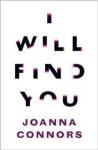 by Joanna Connors: By using present-tense narration, Connors makes the events of 1984 feel as if they happened yesterday: a blow-by-blow of the sex acts forced on her at knife-point over the nearly one-hour duration of her rape; the police reports and trials; and the effects it all had on her marriage and family. This is an excellent work of reconstruction and investigative reporting.
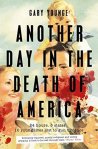 Another Day in the Death of America by Gary Younge: Younge built this book by choosing a 24-hour period (November 22 to 23, 2013) and delving into all 10 gun deaths of young Americans on record for that time: seven black, two Latino, and one white; aged nine to 18; about half at least vaguely gang-related, while in two – perhaps the most crushing cases – there was an accident while playing around with a gun. I dare anyone to read this and then try to defend gun ‘rights’ in the face of such senseless, everyday loss.
Various Superlatives:
Best Discoveries of the Year: Apollo Classics reprints (I reviewed three of them this year); Diana Abu-Jaber, Linda Grant and Kristopher Jansma.
Most Pleasant Year-Long Reading Experience: The seasonal anthologies issued by the UK Wildlife Trusts and edited by Melissa Harrison (I reviewed three of them this year).

Most Improved: I heartily disliked Sarah Perry’s debut novel, After Me Comes the Flood. But her second, The Essex Serpent, is exquisite.
Debut Novelists Whose Next Work I’m Most Looking Forward to: Stephanie Danler, Kaitlyn Greenidge, Francis Spufford, Andria Williams and Sunil Yapa.
The Year’s Biggest Disappointments: Here I Am by Jonathan Safran Foer, Today Will Be Different by Maria Semple, and Swing Time by Zadie Smith. Here’s hoping 2017 doesn’t bring any letdowns from beloved authors.


The Worst Book I Read This Year: Paulina & Fran (2015) by Rachel B. Glaser. My only one-star review of the year. ’Nuff said?
The 2016 Novels I Most Wish I’d Gotten to: (At least the 10 I’m most regretful about)
- The Power by Naomi Alderman
- The Museum of You by Carys Bray
- The Course of Love by Alain de Botton
- What Belongs to You by Garth Greenwell*
 Homegoing by Yaa Gyasi
- The Waiting Room by Leah Kaminsky
- The Inseparables by Stuart Nadler
- Harmony by Carolyn Parkhurst*
- The Nest by Cynthia D’Aprix Sweeney*
- The Underground Railroad by Colson Whitehead*
*Haven’t been able to find anywhere yet; the rest are on my Kindle.
Which of these should I get reading on the double?
Coming tomorrow: Some reading goals for 2017.
Books in Brief: Five I Loved Recently
Novels about Patricia Highsmith and a prison production of The Tempest; a true-life account of opening a secondhand bookstore; a faux memoir setting ancestors’ memories in the context of twentieth-century history; and an exposé of the happiness movement in America: these five very different books are all 4-star reads I can highly recommend.
The Crime Writer
By Jill Dawson
 Patricia Highsmith hated the term “crime writer”; she preferred to speak of her work as “suspense novels,” animated by the threat of danger. Dawson’s terrific pastiche is set in the early 1960s, when the nomadic Highsmith was living in a remote cottage in Suffolk, England. Beyond the barest biographical facts, though, Dawson has imagined the plot based on Highsmith’s own preoccupations: fear of a stalker, irksome poison-pen letters, imagining what it would be like to commit murder … and snails. In a combination of third- and first-person narration, she shows “Pat” succumbing to alcoholism and paranoia as she carries on affairs with Sam, a married woman, and Ginny, a young journalist who’s obsessed with her. You’re never quite sure as you’re reading what is actually happening in the world of the novel and what only occurs in Highsmith’s imagination; I’m sure that’s deliberate. This counts as one of the most gripping, compulsive books I’ve encountered this year.
The Little Bookstore of Big Stone Gap
By Wendy Welch
 Everyone told Wendy Welch and her husband that they were crazy when they decided to open a used bookstore in a small Appalachian Coalfields town in the middle of a recession. They lived above the shop and initially stocked it with their own library plus books picked up cheap at yard sales – though Welch later learned to be much more choosy about what they added to their inventory and to tailor their selections to the tastes of country readers. Essentially, they were making it all up as they went along, but eight years later they’re still a community fixture in Big Stone Gap, Virginia. (I’d love to visit someday.) For the most part that’s because they branched out to fill other roles: hosting cultural events, murder mystery evenings, a writing group, a crafting circle, and regular Quaker meetings. I appreciated the details about the nitty-gritty of running a bookstore (like a chapter on pricing) more than the customer interactions. A warm and fuzzy book-lover’s delight.
Hag-Seed: The Tempest Retold
By Margaret Atwood
 Margaret Atwood looks more like a good witch every year, and here she works her magic on The Tempest to produce the most satisfying volume of the Hogarth Shakespeare series yet. There’s a really clever play-within-the-play-within-the-play thing going on, and themes of imprisonment and performance resonate in multiple ways. It’s fun to see the disgraced Felix’s second act as a director of inmate plays at Fletcher Correctional – “I don’t care why you’re in here or what they say you’ve done: for this course the past is prologue.” Part V gets a little tedious/didactic as the cast hash out the characters’ afterlives, and at times (mainly the raps) you’re painfully aware that this is an old white lady trying to approximate how seasoned criminals might speak, but in general I thoroughly enjoyed this. Even though you see behind the scenes (e.g. my favorite chapter was about Felix wandering the streets of Toronto to buy props and costumes), you still get caught up in the magic. (See also Carolyn’s wonderful review at Rosemary and Reading Glasses.)
The Pursuit of Happiness: Why are we driving ourselves crazy and how can we stop?
By Ruth Whippman
 I call this niche genre anti-self-help. (Two other great examples are Smile or Die by Barbara Ehrenreich and Promise Land by Jessica Lamb-Shapiro.) Whippman has a particularly interesting perspective as a British Jew who moved to California for her husband’s work. With sharp humor and natural British cynicism, she investigates various manifestations of the American obsession with happiness, including the cult-like Landmark Forum, Zappos shoes HQ, Facebook’s encouragement of shallow social interaction, and the positive psychology movement. I especially liked her visit to Mormons in Salt Lake City (the nation’s happiest group, it seems, but also the most highly medicated against depression), but the funniest chapter is on happiness-focused parenting. The basic message is that the happiness movement went wrong by making it a matter of personal responsibility, of mental and spiritual triumph over circumstances. It gives no easy answers, but it’s a very enjoyable book.
Moonglow
By Michael Chabon
 Chabon’s seventh novel was inspired by his maternal grandfather’s deathbed confessions in 1989—or was it? A tongue-in-cheek author’s note refers to this as a “memoir,” and it’s narrated by “Mike Chabon,” but he and “Grandfather” (never named) are characters here in the same way that Jonathan Safran Foer and his ancestors are in Everything Is Illuminated. Space travel and explosives are Grandfather’s lifelong obsessions, but the chronology moves back and forth seemingly haphazardly, as if we are hearing this story exactly as it emerged. Chabon offers a rich meditation on how Jewishness and family secrets influence the creation of identity. With a seam of dark humor that brings to mind Jonas Jonasson’s The Hundred-Year-Old Man…, Moonglow inventively fuses family history and fiction but leaves cracks for happiness and meaning to shine through. (See my full review on the Pittsburgh Post-Gazette website.)
Have you read any of these? Which one takes your fancy?
Booker Longlist Mini Reviews
Tomorrow the Man Booker Prize shortlist will be announced. I’d already read and reviewed four of the nominees (see my quick impressions here), and in the time since the longlist announcement I’ve managed to read another three and ruled out one more. Two were terrific; another was pretty good; the last I’ll never know because it’s clear to me I won’t read it.
His Bloody Project by Graeme Macrae Burnet
 What a terrific, propulsive tale Burnet has woven out of a real-life (I think) nineteenth-century Scottish murder case. The seams between fact and fiction are so subtle you might forget you’re reading a novel, but it’s clear the author has taken great care in assembling his “documents”: witness testimonies, medical reports, a psychologist’s assessment, trial records, and – the heart of the book and the most fascinating section – a memoir written by the murderer himself. As you’re reading it you believe Roddy implicitly and feel deeply for his humiliation (the meeting with the factor and the rejection by Flora are especially agonizing scenes), but as soon as you move on to the more ‘objective’ pieces you question how he depicted things. I went back and read parts of his account two or three times, wondering how his memories squared with the facts of the case. A great one for fans of Alias Grace, though I liked this much better. This is my favorite from the Booker longlist so far.

Eileen by Ottessa Moshfegh
 “I often felt there was something wired weird in my brain, a problem so complicated only a lobotomy could solve it—I’d need a whole new mind or a whole new life.” This isn’t so much a book to enjoy as one to endure. Being in Eileen’s mind is profoundly unsettling. She’s simultaneously fascinated and disgusted by bodies; she longs for her alcoholic father’s approval even as she wonders whether she could get away with killing him. They live a life apart in their rundown home in X-ville, New England, and Eileen can’t wait to get out by whatever means necessary. When Rebecca St. John joins the staff of the boys’ prison where Eileen works, she hopes this alluring woman will be her ticket out of town.
There’s a creepy Hitchcock flavor to parts of the novel (I imagined Eileen played by Patricia Hitchcock as in Strangers on a Train, with Rebecca as Gene Tierney in Laura), and a nice late twist – but Moshfegh sure makes you wait for it. In the meantime you have to put up with the tedium and squalor of Eileen’s daily life, and there’s no escape from her mind. This is one of those rare novels I would have preferred to be in the third person: it would allow the reader to come to his/her own conclusions about Eileen’s psychology, and would have created more suspense because Eileen’s hindsight wouldn’t result in such heavy foreshadowing. I expected suspense but actually found this fairly slow and somewhat short of gripping.

Hot Milk by Deborah Levy
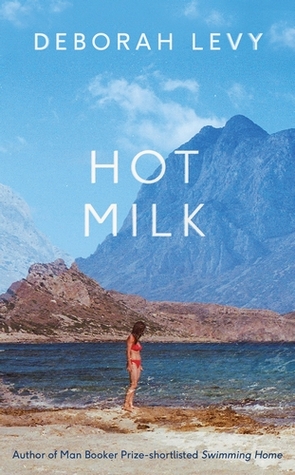 This is a most unusual mother–daughter story, set on the southern coast of Spain. Twenty-five-year-old Sofia Papastergiadis has put off her anthropology PhD to accompany her mother, Rose, on a sort of pilgrimage to Dr. Gómez’s clinic to assess what’s wrong with Rose’s legs. What I loved about this novel is the uncertainty about who each character really is. Is Rose an invalid or a first-class hypochondriac? Is Dr. Gómez a miracle worker or a quack who’s fleeced them out of 25,000 euros? As a narrator, Sofia pretends to objective anthropological observation but is just as confused by her actions as we are: she seems to deliberately court jellyfish stings, is simultaneously jealous and contemptuous of her Greek father’s young second wife, and sleeps with both Juan and Ingrid.
Levy imbues the novel’s relationships with psychological and mythological significance, especially the Medusa story. I don’t think the ending quite fits the tone, but overall this is a quick and worthwhile read. At the same time, it’s such an odd story that it will keep you thinking about the characters. A great entry I’d be happy to see make the shortlist.
[One I won’t be reading: The Schooldays of Jesus by J.M. Coetzee. I opened up the prequel, The Childhood of Jesus, and could only manage the first chapter. I quickly skimmed the rest but found it unutterably dull. It would take me a lot of secondary source reading to try to understand what was going on here allegorically, and it’s not made me look forward to trying more from Coetzee.]
 As for the rest: I have All That Man Is by David Szalay and Serious Sweet by A.L. Kennedy on my Kindle and will probably read them whether or not they’re shortlisted. The same goes for Do Not Say We Have Nothing by Madeleine Thien, for which I’m third in a library hold queue. I’d still like to get hold of The Many by Wyl Menmuir. That leaves just Hystopia by David Means, which I can’t say I have much interest in.
I rarely feel like I have enough of a base of experience to make accurate predictions, but if I had to guess which six books would make it through tomorrow, I would pick:
His Bloody Project by Graeme Macrae Burnet
The Schooldays of Jesus by J.M. Coetzee
Hot Milk by Deborah Levy
The North Water by Ian McGuire
My Name Is Lucy Barton by Elizabeth Strout
Do Not Say We Have Nothing by Madeleine Thien
That would be three men and three women, and a pretty good mix of countries and genres. I’d be happy with that list.
What have you managed to read from the Booker longlist? How do your predictions match up against mine?
Return to Bookbarn
Sounds like a summer blockbuster, doesn’t it? There was certainly plenty of tension on our drive from the Reading area to Somerset this past Friday, as traffic on the M4 built up and our time for book shopping ticked down from a planned hour and a half to just 35 minutes before store closing. It had been almost exactly one year since my last trip to Bookbarn International, and after weeks of wheedling I’d finally persuaded my husband to make the detour on our way to visit friends in Bristol.
Despite the tight deadline, I enjoyed my browsing and scored some good finds. As usual, it seemed like a terrific bargain: £14.50 for 15 books. One’s a gift for our nephew in America, four are nature books my husband chose, and the rest are mine! Bonus: a few days later it occurred to me to ask after the collectible books I left behind last year for Bookbarn to sell for me and it turns out I have nearly £21 coming to me – so in effect our shopping was free!
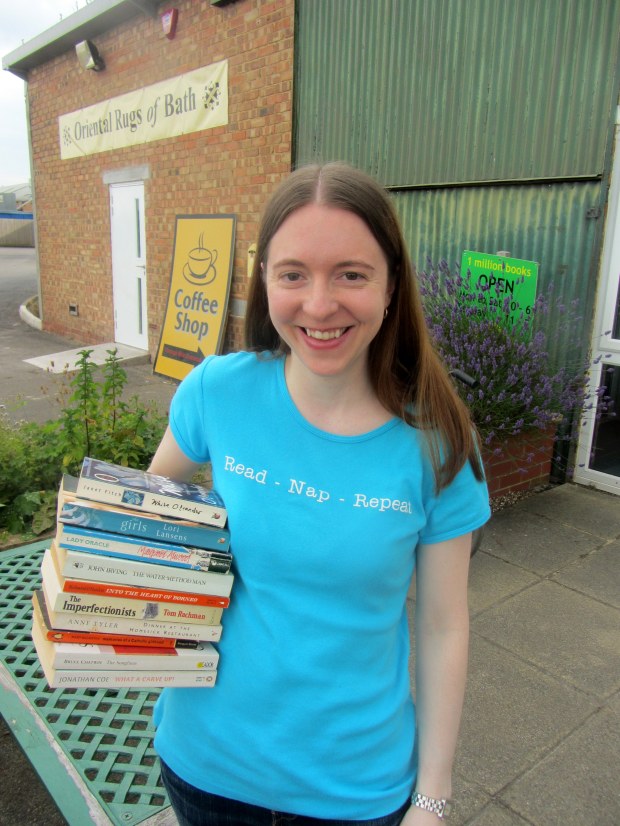
In case you can’t read the titles in the photo, here’s my haul:
Travel books:
The Songlines, Bruce Chatwin
Into the Heart of Borneo, Redmond O’Hanlon
[I featured both of the world-class travel writers in a recent article for Bookmarks, so it’s only proper that I actually read something by them.]
Memoir:
Memories of a Catholic Girlhood, Mary McCarthy [I’m a sucker for religious memoirs.]
Fiction:
Lady Oracle, Margaret Atwood [It’s been a while since I tried one from her back catalogue.]
What a Carve Up!, Jonathan Coe [I enjoyed the recent ‘sequel’, Number 11.]
White Oleander, Janet Fitch [An Oprah favorite I’ve long meant to read.]
The Water-Method Man, John Irving [Let’s hope for better things from his second novel.]
The Girls, Lori Lansens [I can’t resist a conjoined twins story.]
The Imperfectionists, Tom Rachman [Already read some years back, but worth owning.]
Dinner at the Homesick Restaurant, Anne Tyler [To continue my run of Tyler classics.]
Had any secondhand book coups lately?
Four Books Abandoned Recently (+ One I SHOULD Have)
I’d like to think I’ve gotten better at choosing books that are sure to suit me, but sometimes it’s still a matter of ditching the duds when it becomes clear they’re not working. Here’s the small (digital) pile of abandoned novels I’ve amassed over the last couple of months. I’d be interested to hear if you’ve read any of them and thought they were worth persisting with.
Mrs. Houdini by Victoria Kelly
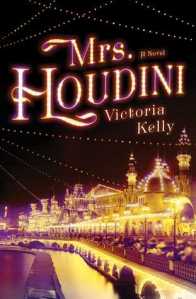 Perfectly serviceable historical fiction, but with no spark. I felt like I was just being given a lot of information about the two major time periods (1894 and 1929). Alas, scenes set at a séance, a circus, and an insane asylum are not nearly as exciting as they promise to be. And, as is often the case with these famous wives books – a genre I generally love but can also find oddly disappointing from time to time – the protagonist tries but fails to explain why she finds her husband so fascinating. “His eyes danced. There was a madness to his passion, but he was not insane. There was something real and familiar about him. … Harry was promising her a life of possibility, of magic, and it was unlike anything she had ever imagined for herself.” [Read the first 40%.]
My rating: 
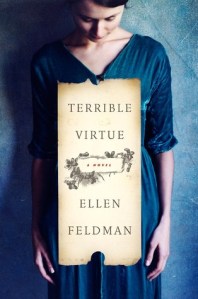 Terrible Virtue by Ellen Feldman
Another case of expectations too high and payoff too little. Fictionalized biographies can be among my favorite historical fiction, but the key is that they have to do something that a biography doesn’t do. They have to shape a story that goes beyond the chronology of what happened to whom and when. This novel about contraception activist Margaret Sanger failed to tell me anything I didn’t already know from The Birth of the Pill, a more engaging book all round. If anything this left me more confused about why Sanger consented to marriage and motherhood. These cringe-worthy lines try to explain it: “His [Bill’s] sex upended the world. His love filled the hole my childhood had carved out of me. Maybe that was the reason I married him.” [Read the first 26%.]
My rating: 
Vexation Lullaby by Justin Tussing
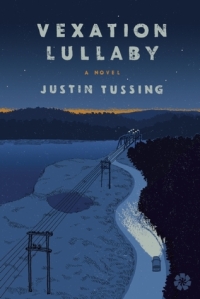 This started off very promising, with Pete Silver, a doctor in Rochester, New York, being summoned by ageing rock star Jimmy Cross for a consult. Jimmy knows Pete’s mother from way back and wants to know if he’ll accompany him on the airplane during this comeback tour as his personal physician. However, after that there was a lot of downtime filling in Pete’s backstory and introducing a first-person voice that didn’t feel relevant. This is Arthur Pennyman, a fan who’s seen every Jimmy Cross show and writes them up on his website. I didn’t care for Arthur’s sections and thought they pulled attention away from Pete’s story. That’s a shame, as the plot reminded me of Jennifer Egan’s A Visit from the Goon Squad. [Read the first nearly 100 pages.]
My rating:
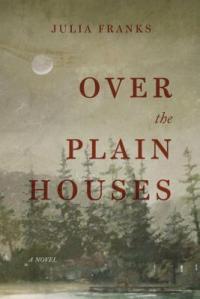 Over the Plain Houses by Julia Franks
Entirely decent historical fiction with a flavor of Ron Rash or Virginia Reeves (Work Like Any Other), but it felt so slow and aimless. Irenie Lambey is married to a harsh fundamentalist preacher named Brodis. She longs for their son to get a good education and hopes that the appearance of a USDA agent may be the chance, but Brodis cares about the boy’s soul rather than his mind. On night-time walks, Irenie stores up artifacts and memories in a cave – desperately trying to have a life larger than what her husband controls. It could well just be my lack of patience, but the believable dialect and solid characters weren’t quite enough to keep me reading. [Read the first 16%.]
My rating:
And now for the one I should have stopped reading at about the 25% point. I have an expanded version of this review on Goodreads; click on the title to read more.
The Mandibles: A Family, 2029–2047 by Lionel Shriver
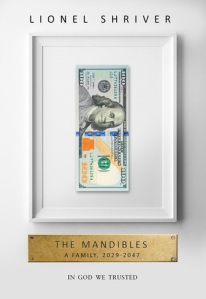 Shriver does a good line in biting social commentary. Here she aims at Atwood-style near-future speculative fiction and takes as her topic the world economy. I had big problems with this one. Worst is the sheer information overload: tons of economic detail crammed into frequent, wearisome conversations. Instead of making America’s total financial collapse a vague backdrop for her novel, she takes readers through it event by agonizing event. This means the first third or more of the novel feels like prologue, setting the scene. When she finally gets around to the crux of the matter – the entire extended Mandible family descending on Florence’s small New York City house – it feels like too little plot, too late. Everything Shriver imagines for the near future, except perhaps the annoying slang (e.g. “boomerpoop”), is more or less believable. But boy is it tedious in the telling.
My rating: 
The Best Fiction of 2015: My Top 15
2015 was a great year for fiction, largely dominated by doorstoppers (like Death & Mr. Pickwick and City on Fire, in addition to the Franzen and Yanagihara listed below) and Harper Lee. I’ve decided to pass on Go Set a Watchman, but I’ve read plenty of the year’s big-name fiction, as well as some more obscure titles I’d like to bring to your attention.
As difficult as it is to pit books against each other and come up with a numbered list, I’ve given it a go and come up with my top 15 fiction works of the year. To keep it simple for myself and straightforward for potential readers, I’m limiting myself to two sentences per title: the first is a potted summary; the second tells you why you should read it. I also link to any full reviews.
Let the countdown begin!
- The Shore
 by Sara Taylor: Gritty and virtuosic, this debut novel-in-13-stories imagines 250 years of history on a set of islands. Every region needs a literary chronicler, and I reckon Taylor – channeling David Mitchell with her cross-centuries approach – is it for the Eastern Shore of Maryland and Virginia’s islands.
 Gold Fame Citrus by Claire Vaye Watkins: Gold, fame, citrus: reasons people once came to California; now, only a desperate remnant remains in the waterless wasteland. As a smart, believable dystopian with a family at its heart, this trumps any of last year’s efforts (like Station Eleven or California).
 Preparation for the Next Life by Atticus Lish: Like West Side Story, this debut novel is an updated Romeo and Juliet narrative – a tragedy-bound love story with a grimy contemporary setting and a sobering message about racism and the failure of the American dream. The matter-of-fact style somehow manages to elevate the everyday and urban into an art form. (Reviewed for Third Way magazine in August.)
- Circling the Sun
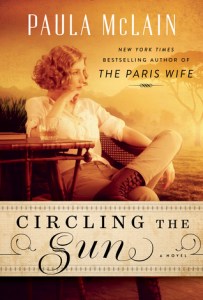 by Paula McLain: Before she ever thought of flying solo across the Atlantic, aviatrix Beryl Markham was just Beryl Clutterbuck: raised in Kenya, one of Africa’s first female horse trainers, its first professional female pilot, and the other side of the love triangle featuring Karen Blixen (Isak Dinesen) and Denys Finch Hatton. McLain describes her African settings beautifully, and focuses as much on the small emotional moments that make a life as she does on its external thrills.
 Kitchens of the Great Midwest by J. Ryan Stradal: One of my favorite debuts of the year: a culinary-themed collection of short stories loosely linked through the character of Eva Thorvald, a young chef with an unfortunate past and a rare palate. Read it for a glimpse of how ordinary, flawed Americans live – no fairytale endings here.
 Hausfrau by Jill Alexander Essbaum: This arresting debut reads like a modern retelling of Madame Bovary, with its main character a desperate American housewife in Zurich. Watch Anna’s trajectory with horror, but you cannot deny there is a little of her in you.
 The Versions of Us by Laura Barnett: In this impressively structured, elegantly written debut, Barnett chronicles the romantic lives of two Cambridge graduates through three-quarters of a century, giving three options for how their connection might play out. There is no one perfect person or story: unsentimental this may be, but it feels true to how life works. (Reviewed for Third Way magazine in July.)
 Fates and Furies by Lauren Groff: An incisive study of a marriage, beautifully written and rich with allusions to Shakespeare and Greek mythology. Groff makes it onto a short list of women I expect to produce the Great American Novel (along with Curtis Sittenfeld, Jennifer Egan, and Hanya Yanagihara).
 Purity by Jonathan Franzen: East Germany, Bolivia and Oakland, California: Franzen doesn’t quite pull all his settings and storylines together, but this is darn close to a 5-star Dickensian read. It’s strong on the level of character and theme, with secrecy, isolation and compassion as recurring topics.
 You Too Can Have a Body Like Mine by Alexandra Kleeman: Kleeman’s first novel is a full-on postmodern satire bursting with biting commentary on consumerism and conformity. Think of her as an heir to Dave Eggers and Douglas Coupland, with a hefty dollop of Margaret Atwood thrown in.
 The Animals by Christian Kiefer: Kiefer’s second novel contrasts wildness and civilization through the story of a man who runs an animal refuge to escape from his criminal past. A tough opening sequence establishes themes that will be essential to the novel: the fine line between instincts and decisions, the moral dilemmas involved in environmentalism, and the seeming inescapability of violence.
 The Tsar of Love and Techno by Anthony Marra: A collection of tightly linked short stories giving an intimate look at Russia and Chechnya in wartime and afterwards – revealing how politics, family, and art intertwine. Just as he did in his first novel, Marra renders unspeakable tragedies bearable through his warm and witty writing.
 Girl at War by Sara Nović: This pitch-perfect debut novel is an inside look at the Yugoslavian Civil War and its aftermath, from the perspective of a young girl caught up in the fighting. The way Nović recreates a child’s perspective on the horrors of war is masterful: Ana’s viewpoint is realistic and matter-of-fact, without the melodrama an omniscient narrator might inject.
 Adeline by Norah Vincent: Set in 1925–1941 and structured like a five-act play, the novel revolves around Virginia Woolf’s philosophical conversations with Leonard Woolf, Lytton Strachey and his lover Carrington, T.S. and Valerie Eliot, W.B. Yeats, and her doctor, Octavia Wilberforce. Vincent has produced a remarkable picture of mental illness from the inside.
- A Little Life
 by Hanya Yanagihara: Jude St. Francis: Dickensian orphan, patron saint of lost causes, Christlike Man of Sorrows, and one of the most memorable characters in recent fiction. This novel is an attempt to tackle the monolithic question of what makes life worth living; among the potential answers: love (though it doesn’t conquer all), friendship, creativity, and the family you create for yourself.
Best Discoveries of the Year: Mary Lawson (Road Ends), Daniel Kehlmann (F: A Novel), Jonathan Evison (This Is Your Life, Harriet Chance!) and Jonathan Coe (Number 11).
Debut Novelists Whose Next Work I’m Most Looking Forward to: Jessamyn Hope (Safekeeping – reviewed here in June) and Carmiel Banasky (The Suicide of Claire Bishop – reviewed for Foreword’s Fall 2015 issue).
 The Year’s Biggest Disappointments: Etta and Otto and Russell and James by Emma Hooper; Where My Heart Used to Beat by Sebastian Faulks and Avenue of Mysteries by John Irving (both rehash the authors’ familiar themes; I couldn’t make it past 15% in the latter).
Novels I Most Wish I’d Gotten to in 2015: Nell Zink’s Mislaid, Sara Baume’s Spill Simmer Falter Wither, and the final two volumes of Jane Smiley’s “Last Hundred Years” trilogy.
What are the best novels you read this year? Any new favorite books or authors? Your comments are always welcome.
I’ll be back tomorrow with my top 15 nonfiction books I read this year (most of them not published in 2015, however – I seem to have been a nonfiction slacker!)
Surveying the Almighty TBR List
Coming to the end of one year and looking ahead to another: it’s a good opportunity to take stock of my virtual and physical to-read piles once more. Thanks to fellow book bloggers Naomi at The Writes of Woman and Eleanor at Elle Thinks for giving me this meme idea and tagging me in it, respectively.
How do you keep track of your TBR pile?
I have a ridiculously large to-read shelf on Goodreads, but that’s more like a vague lifelong wish list – some of them I own, some I’ve only heard of and want to investigate further, some I’m desperate to get hold of, and so on. I recently culled my online TBR and cut it by about 10%, but it’s still overwhelming. In real life, I take occasional inventories of the unread books in our flat (192 at last count). However, this doesn’t account for the fact that at least half of my book collection is still in my parents’ house in the States. While I’m back there for some time over the holidays, I enjoy gazing at my books and choosing a select few to bring back in my suitcase. On this trip I’ll be boxing them all up to go into storage. When shall I ever be reunited with them?!
Is your TBR mostly print or e-book?
If I only consider the books I already have access to, there are more unread print ones on my shelves than there are e-book approvals through NetGalley and Edelweiss. There’s not all that much in it, though; I might estimate the print TBR at 400–500, while I have about 300 books at my disposal through those online sources and new titles come up for request all the time.
How do you determine which books from your TBR to read next?
This generally depends on review deadlines, library due dates, and e-book expirations. In some sense, then, my reading list is completely imposed on me from outside. However, I always make sure I let whimsy guide some of my choices. Next year I hope to be even better about just picking up a book off my shelves and starting it for no reason other than instantaneous interest.
A book that has been on my TBR the longest
On the virtual TBR: probably Fast Food Nation and some of Margaret Atwood’s back catalogue. On the vague list in my head: all the more obscure Dickens and Hardy titles.
 A book I recently added to my TBR
Rochester Knockings: A Novel of the Fox Sisters by Hubert Haddad.
 A book on my TBR strictly because of its beautiful cover
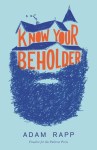
I love the beard-house on the cover of Know Your Beholder by Adam Rapp.
A book on my TBR that I never plan on reading
Will I really pick up Martin Amis’s novels, or Ian McEwan’s early work? How about those obscure Thomas Hardy novels like A Laodicean and A Pair of Blue Eyes?
 An unpublished book on my TBR that I’m excited for
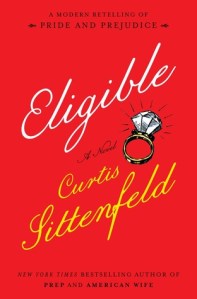
I recently started Eligible by Curtis Sittenfeld (to be published on April 19, 2016). Her novel American Wife is one of my absolute favorites, so I was excited about her Pride and Prejudice retelling and lucky enough to be sent an advanced copy. I’m not that into it yet – the third-person omniscient voice is taking a while to get used to because first-person female narrators are Sittenfeld’s forte – but I hope it will pick up soon.
 A book on my TBR that everyone recommends
I’ve encountered almost universal praise for Elena Ferrante’s four autobiographical novels, the first of which is My Brilliant Friend. They’re on my priority list for 2016.
A book on my TBR that everyone has read but me
1984 by George Orwell.
 A book on my TBR that I’m dying to read
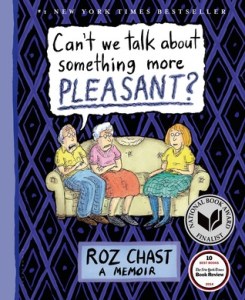
Some of my priority books to get hold of are Nell Zink’s novels, the final two books in Jane Smiley’s The Last Hundred Years trilogy, Can’t We Talk about Something More Pleasant? by Roz Chast, and Reasons to Stay Alive by Matt Haig. I’ve also been meaning to read The Signature of All Things by Elizabeth Gilbert for ages, and I’m intrigued to try The Guest Cat by Takashi Hiraide.
How many books are on your TBR shelf?
5,664 on the Goodreads shelf; maybe 500 in the print queue.
People I’m tagging:
Shannon at River City Reading
Lucy at Literary Relish
Reviews Roundup, September–October
One of my goals with this blog is to have one convenient place where I can gather together all my writing that has appeared in disparate online locations. To that end, once a month I’ll provide links to all the book reviews I’ve published elsewhere, with a rating (below each description) and a short taster so you can decide whether to click to read more. A couple of exceptions: I won’t point out my Kirkus Indie, BlueInk or Publishers Weekly reviews since I don’t get a byline.
The Bookbag
Rising Strong by Brené Brown: Brown, a qualitative researcher in the field of social work, encourages readers to embrace vulnerability and transform failure and shame through a simple process of re-evaluating the stories we tell ourselves. The gimmicky terminology and frequent self-referencing grated on me a bit, but I appreciated how the book made me reconsider events from my own life. It’s the ideas that carry Rising Strong, so as long as you come to it expecting a useful tool rather than a literary experience you shouldn’t be disappointed. Genuinely helpful self-help.

 Life After You by Lucie Brownlee: With honesty and humor, Brownlee reconstructs the two years following her husband’s sudden death. My sister is still a new widow, so I read this expecting it to resonate with her situation, and it certainly does. I had an issue with the title and marketing, though. When originally published last year, the book had the title Me After You. That’s been changed to sound a little less like a Jojo Moyes novel, but the cover is more chick lit than ever, which doesn’t really match the contents of the book.
The Glass Girl by Sandy Hogarth (& interview): Moving between Australia and England and spanning several decades of Ruth Bishop’s life, this debut novel explores the psychological effects of sexual trauma and betrayal. The middle of the book feels a little meandering, and the chronology is sometimes over-complicated. However, Ruth’s is a warm first-person voice, and the ending hints at welcome resolution to unanswered questions. My favorite aspect of the novel, though, is the frequent observations of the natural world.

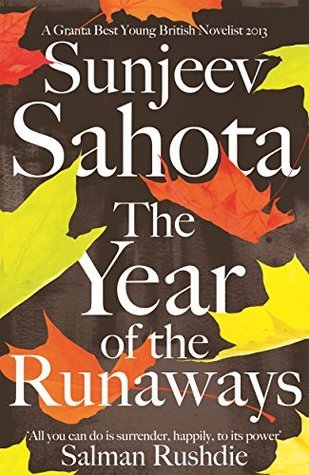 The Year of the Runaways by Sunjeev Sahota: With multilingual slang and several Sikh characters, Sahota’s second novel illuminates aspects of the South Asian experience that might be unfamiliar. Daily life is a struggle for Tochi, Randeep and Avtar: they work multiple jobs to make ends meet, serving at Crunchy Fried Chicken, cleaning sewers, or building a luxury hotel in Leeds. The fourth protagonist is Randeep’s visa-wife, Narinder. Through flashbacks we discover each one’s past. It’s a harrowing read, but you can’t help but sympathize with the four runaways as they make and dissolve connections over the year.
The Gap of Time by Jeanette Winterson: This contemporary ‘cover version’ of The Winter’s Tale links a London financier, a Parisian singer, and a blended family in New Orleans. Winterson creates clear counterparts for each Shakespeare characters, often tweaking names so they are recognizable but more modern. Inventive and true to the themes and imagery (time, adoption; angels, bears, statues) of the original, but ultimately adds little to one’s experience of Shakespeare. I’ll hope for better things from the rest of the Hogarth Shakespeare series. (Still to come: Margaret Atwood on The Tempest, Howard Jacobson on The Merchant of Venice and Anne Tyler on The Taming of the Shrew, among others.)
BookBrowse
 After the Parade by Lori Ostlund [subscription service, but the full text of my review will be available for free during the week of October 20th as part of Editor’s Choice]: Ostlund’s debut novel explores trauma and loneliness through the past and present of the protagonist, an ESL teacher who has just left his long-term partner, as well as the stories of those he meets. Although set over a six-month period, the novel is so full of flashbacks that it feels dense with the weight of the past. At times this can seem more like a set of short stories, only loosely connected through Aaron. Still, the overarching theme is strong and resonant: “after the parade,” after everything has changed irrevocably, you must keep going, pushing past the sadness to build a new life.
BookTrib
 The Best Small Fictions 2015, ed. by Tara L. Masih and Robert Olen Butler: In this very strong anthology of flash fiction, stories range from Tweet length to a few pages, but are always under 1,000 words. Titles and first lines carry a lot of weight. One of the best openers is “I didn’t recognize her without her head” (“Before She Was a Memory,” Emma Bolden). In genre the stories run the gamut from historical fiction to whimsical fantasy. You’ll be introduced to a wealth of fresh and existing talent. There are literally dozens of stand-outs here, but if I had to choose a top 3, they’d be “A Notice from the Office of Reclamation” by J. Duncan Wiley, “The Lunar Deep” by David Mellerick Lynch, and (overall favorite) “Something Overheard” by Yennie Cheung.
For Books’ Sake
 Fates and Furies by Lauren Groff: An incisive study of a marriage, beautifully written and rich with allusions to Shakespeare and Greek mythology. Short, verbless sentences pile up to create exquisite descriptions, as in “Sunset. House on the dunes like a sun-tossed conch. Pelicans thumb-tacked in the wind.” However, I was less sure about the necessity of the bracketed phrases, which seem to represent a Greek chorus giving omniscient commentary, and the use of slang and nicknames can grate. Groff makes it onto a short list of women I expect to produce the Great American Novel.
Foreword Reviews
 When All Goes Quiet by Augustinus F. Lodewyks: This religious memoir should interest those who are curious about how spiritual experience can infiltrate everyday life. “When all goes quiet, I know that Heaven is trying to show me its glory,” Lodewyks writes. In autobiographical vignettes, he vividly expresses his mystical visions, particularly those featuring Jesus, the Virgin Mary and angels, who tend to appear in times of crisis and during events of ritual significance like weddings, funerals and religious pilgrimages. Some will still object to the overt proselytizing, especially in the book’s last quarter.

The Blessing of Movement by Deborah Konrad: Konrad’s story is an inspirational memoir about life with disability and caring for dying relatives. Her sister Sandra became a quadriplegic in her twenties. Throughout the book, Konrad investigates the secret strength that underlay “the sunny disposition of the pretty paralyzed woman.” She concludes that it was all about thankfulness, as proven by Sandra’s gratitude journal. Konrad’s own life undeniably gets sidelined, though; more self-reflection would provide a good match for her insights into her sister’s character.
 DNA of Mathematics by Mehran Basti: Drawing on his academic specialty in mathematics, Basti explores how scientific theories have been used and misused through history. The book lacks focus due to frequent unrelated asides. It may be difficult to grant credibility to a scientist who dismisses the big bang because it was theorized through “semi-broken scientific methods” and seems to have a personal vendetta against Stephen Hawking. Most importantly, the mathematics that forms the book’s basis is never fully explained.

From Hell to Heaven, One Man’s Journey by Gustav Daffy: This book was inspired by an acrimonious divorce and other family troubles; although Christian faith helped Gustav adjust his thinking, many of the poems still feel like the angry outpourings of a man with an ax to grind. Moreover, formulaic rhyming and poor spelling and grammar mar this overlong collection. It would take a professional copyeditor to hone this into a concise set of linguistically and stylistically acute poems. However, the author’s in-the-moment reactions are easy to relate to.
Shiny New Books
 Grief Is the Thing with Feathers by Max Porter: It may seem perverse to twist Emily Dickinson’s words about hope into a reflection on bereavement, but Porter’s exceptional debut does just that: tweak poetic forebears – chiefly Poe’s “The Raven” and Ted Hughes’s Crow – to create a hybrid response to loss. The novella is composed of three first-person voices: Dad, Boys and Crow (the soul of the book: witty, onomatopoeic, often macabre). Dad and his two young sons are adrift in mourning; the boys’ mum died after an unspecified accident in their London flat. The three narratives resemble monologues in a play, with short lines laid out on the page more like stanzas of a poem.
We Love This Book
 A Slanting of the Sun by Donal Ryan: The Irish author of the novels The Spinning Heart (winner of the Guardian First Book Award in 2013) and The Thing About December, returns with 20 jolting, voice-driven short stories suffused with loneliness and anger. Nineteen of the 20 are in the first person, echoing the chorus of voices that made The Spinning Heart so effective. Many of the narrators speak in thick dialect and run-on sentences, which helps to immerse you in the rhythms of Irish speech. In a book full of lonely people, it is the moments of connection – however fleeting – that matter. For example, in “Long Puck,” one of the best stories, a Catholic priest posted to Syria initiates interfaith hurling matches that temporarily lift everyone’s spirits.
I also post reviews of most of my casual reading and skimming on Goodreads.
 The River by Helen Humphreys: Humphreys has lived along Ontario’s Napanee River for over a decade. I was expecting a blend of personal reflection and natural observations, but instead the book is mostly composed of brief fictional passages illuminating a handful of species. I liked the passages about the heron best – Humphreys successfully imagines the life of a plume hunter and contrasts it with the excitement of two women involved in the foundation of a bird conservation charity. However, much of the book felt like unconnected vignettes, not building to any kind of grander picture of a location.

The Mountain Can Wait by Sarah Leipciger: The novel opens and closes with a hit-and-run, but in between those momentous peaks it’s a quieter tale of a single father trying to guide his son and daughter into young adulthood in the wilds of Canada’s west and islands. Tom Berry’s work is not cutting trees down but planting them – an interesting adaptation of a traditional woodsman’s activity to a new eco age. I found the story a little sleepy but loved Leipciger’s writing, especially her account of the daily drudgery of manual labor and her descriptions of wilderness scenery.
 Decline of the Animal Kingdom by Laura Clarke: Bizarre, in-your-face poetry from a 30-year-old Canadian: business jargon, YouTube videos, fast food…and, yes, animals. Many of the poems feature mules and lions, including weird dialogues between a mule and its supervisor / domestic partner / psychiatrist. With plays on words and sexualized vocabulary, Clarke considers inter-species altruism and the inevitable slide towards extinction. Two favorite lines: “You forget you live parallel to violence” (from “Carnivora”); “The Tasmanian tiger live-tweets its extinction from the Hobart zoo in 1933” (from “Extirpation”).
Do No Harm: Stories of Life, Death and Brain Surgery by Henry Marsh: “Terrible job, neurosurgery. Don’t do it.” Lucky for us, Henry Marsh reports back from the frontlines of brain surgery so we don’t have to. He’s nearing retirement age after a career divided between a London hospital and medical missions to Ukraine. The punchy chapters are named after conditions he has treated or observed. Marsh comes across as having a hot temper, exhibiting extreme frustration with NHS bureaucracy. At the same time, he gets very emotional over his patients declining and dying, and experiences profound guilt over operations that go wrong or were ultimately unnecessary.

 In the Flesh by Adam O’Riordan: My favorite poems in O’Riordan’s debut collection were about Victorian Manchester, 1910s suffragettes and the Wordsworths, this last based on the author’s year in residence at their Lake District cottage. I also liked “The Corpse Garden” – about the outdoor forensic lab in Knoxville, Tennessee – and a couple of multi-part poems that seem to enliven family history. It’s the vocabulary and alliteration that make these poems; there are only a handful of rhyming couplets.
A Circle of Quiet by Madeleine L’Engle: If, like me, you only knew L’Engle through her Wrinkle in Time children’s series, this journal should come as a revelation. I didn’t know she wrote any nonfiction for adults. The Crosswicks books cannot be called simple memoirs, however; there’s so much more going on. In this journal (published 1972) of a summer spent at their Connecticut farmhouse, L’Engle muses on theology, purpose, children’s education, the writing life, the difference between creating stories for children and adults, neighbors and fitting into a community, and much besides.
 A View of the Harbour by Elizabeth Taylor: My third Taylor – not as good as Mrs. Palfrey, but better than Angel. It’s about the everyday family and romantic entanglements of a small English harbor village in the 1940s. Beth is a preoccupied writer who doesn’t notice that her husband, the local doctor, is carrying on an affair with her best friend, the divorcée Tory, who is also their next-door neighbor. As always, Taylor has great insight into the human psyche and unlikely relationships. The plot is low on thrills for sure, but it’s pleasant reading, especially if you’re on holiday at the seaside (I started reading it on the coast near Dublin).
Amazing Grace: A Vocabulary of Faith by Kathleen Norris: This makes the shortlist of books I would hand to skeptics to show them there might be something to this Christianity nonsense after all. Norris spent 20 years away from the faith but gradually made her way back, via the simple Presbyterianism of her Dakota relatives but also through becoming an oblate at a Benedictine monastery – two completely different expressions of the same faith. In few-page essays, she gives each word or phrase a rich backstory through anecdote, scripture and lived philosophy, ensuring that it’s not just religious jargon anymore.
 Undermajordomo Minor by Patrick deWitt: What The Sisters Brothers did for the Western, this does for the Gothic fairytale. It’s not quite as fun or successful as the previous book, but has a nicely campy Dracula or Jane Eyre feel. Lucien “Lucy” Minor, a compulsive liar, sets out to find adventure and romance as undermajordomo of a castle in the quaint German countryside. Here he meets pickpockets, a periodically insane baron, a randy maiden, and a strapping rival who’s a soldier in the absurdist local conflict. DeWitt’s understated humor is not as clearly on display here; there’s also, strangely, quite a bit of sex.
Sentenced to Life by Clive James: James, an Australian critic and all-round man of letters, was first diagnosed with leukemia in 2010. After a setback in 2013, he’s rallied, but these poems are certainly infused with a sense of imminent mortality. The incessant ABAB rhyming in the early poems set up a jaunty rhythm I didn’t find appropriate to the subject matter; I much prefer the later unrhymed poems. “Plot Points” is my favorite, artfully linking disparate historical moments.
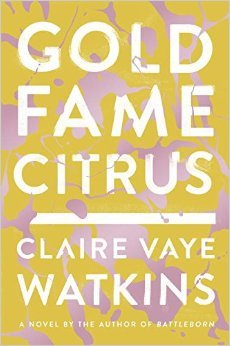 Gold Fame Citrus by Claire Vaye Watkins: Gold, fame, citrus: reasons people once came to California. Now, only a desperate remnant remains in this waterless wasteland. Luz and Ray squat in a starlet’s abandoned mansion and live off of Luz’s modeling money – she was once the environmental movement’s poster child, “Baby Dunn.” When they take charge of a baby called Ig, however, their priorities change. They set off for the strangely beautiful sea of dunes, the Amargosa, leaving behind the ‘frying pan’ of exposure to the elements for the ‘fire’ of a desert cult. There is some absolutely beautiful prose. This is the book that California (Edan Lepucki) wanted to be.
Satin Island by Tom McCarthy: U. is a corporate anthropologist in London, coming off the success of the Koob–Sassen contract and facing the blank page of the Great Report he’s tasked with writing. Not much happens here; the book is more about his anthropological observations and the things he fixates on, like oil spills, a sabotaged parachutist, and Satin Island – a place he encounters in a dream and then, by word association, likens to Staten Island, a destination he doesn’t quite make it to. For me the most interesting parts were about narrative. I found this too clever for its own good; not Booker Prize material.
 Bookish Beck = Rebecca Foster. American transplant to England. Freelance proofreader and book reviewer.
 Bookish Beck