Short Stories in September Roundup: Munro, Ulrich; Virago Anthology
This comes a few days later than I intended, but better late than never. I’ve been focusing on short stories in September for the last eight years. In September 2021 I read 12 short story collections; last year it was 11.5; this year I finished 11, so pretty much par for the course, and pushing my year-to-date total to 30 story collections – not bad going for someone who feels like she hardly ever reads stories and doesn’t seek them out. This year’s reviews are here, here and here.
Hateship, Friendship, Courtship, Loveship, Marriage by Alice Munro (2001)
I always think I’ve never read Munro before, but that’s not the case. A decade or more ago I read Lives of Girls and Women. The ironic thing is that I chose it because I thought it was the odd one out in her oeuvre, being a novel rather than short stories. In fact, it’s a linked story collection, and really they might as well be discrete stories. That book left no impression, but I’d happened to accumulate several more Munro collections over the years and, especially after she won the Nobel, felt delinquent for not reading her.
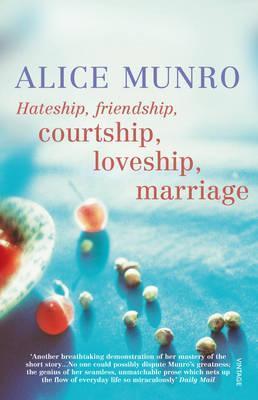 There are nine stories in the 320-page volume, so the average story here is 30–35 pages – a little longer than I tend to like, but it allows Munro to fill in enough character detail that these feel like miniature novels; they certainly have all the emotional complexity. Her material is small-town Ontario and the shifts and surprises in marriages and dysfunctional families.
More commonly, she employs an omniscient third person to allow her to move between minds, yet I found that the three first-person stories were among the most memorable: in “Family Furnishings,” a woman recalls the encounter with her father’s cousin that made her resolve to be a writer; in “Nettles,” childhood friends meet again in midlife and a potential affair is quashed by the report of a tragedy; in “Queenie,” a young woman spends a short time living with her older stepsister and her husband, her music teacher she ran off with. This last one reminded me of Tessa Hadley’s stories – no doubt Munro has been an influence on many.
For instance, the title story, which opens the collection, gave me strong Elizabeth Hay and Mary Lawson vibes. A housekeeper sets off on the train to start a new life, encouraged by a romantic correspondence fabricated by her adolescent charge, Sabitha, and her friend. Munro pays close attention to domestic minutiae like furniture and clothing. Illness and death are frequent seeds of a story: cancer in “Floating Bridge,” the suicide of an ALS patient in “Comfort,” and dementia in the oft-anthologized “The Bear Came Over the Mountain.”
Individual plots are less likely to stay with me than the quality of the prose, the compassionate eye, and the feeling of being immersed in a novel-length narrative when really I was only halfway through a few dozen pages. I’ll certainly read more Munro collections. (Free from a neighbour) 
Close Company: Stories of Mothers and Daughters, ed. Christine Park and Caroline Heaton (1987)
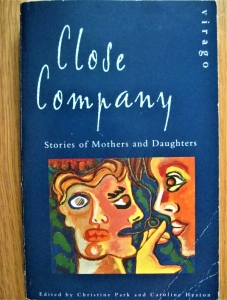 Back in 2021, I read 14 of these 25 stories (reviewed here) and set the book aside. At that time I noted the repeated theme of women’s expectations of their daughters, and that was true of the remainder as well. The editors quote Simone de Beauvoir in the introduction, “the daughter is for the mother at once her double and another person.” So in Emily Prager’s “A Visit from the Footbinder,” Lady Guo Guo subjects her spirited daughter to the same painful procedure she underwent as a child. The cultural detail was overpowering in this one, like the author felt she had to prove she’d done her research on China. The father–daughter relationship struck me more in Judith Chernaik’s Jewish Brooklyn-set “Honor Thy Father and Thy Mother.”
From this batch, two stood out the most: in “Children’s Liberation” by Jan Clausen, Lisa rebels against her lesbian mother’s bohemian lifestyle by idolizing heterosexual love stories; and in Zhang Jie’s “Love Must Not Be Forgotten,” a daughter comes to understand her mother by reading her diary about her doomed romance. My overall favourites, though, were still the stories by Jane Gardam, Janet Frame, Alice Walker and Charlotte Perkins Gilman. (Free mall bookshop) 
Small, Burning Things by Cathy Ulrich (2023)
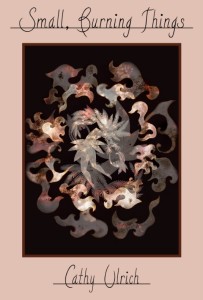 Ulrich’s second collection contains 50 flash fiction pieces, most of which were first published in literary magazines. She often uses the first-person plural and especially the second person; both “we” and “you” are effective ways of implicating the reader in the action. Her work is on a speculative spectrum ranging from magic realism to horror. Some of the situations are simply bizarre – teenagers fall from the sky like rain; a woman falls in love with a giraffe; the mad scientist next door replaces a girl’s body parts with robotic ones – while others are close enough to the real world to be terrifying. The dialogue is all in italics. Some images recur later in the collection: metamorphoses, spontaneous combustion. Adolescent girls and animals are omnipresent. At a certain point this started to feel repetitive and overlong, but in general I appreciated the inventiveness.
Published on 2 July by Okay Donkey Press. With thanks to publicist Lori Hettler for the free e-copy for review.
 I also read the first two stories in The Best Short Stories 2023: The O. Henry Prize Winners, edited by Lauren Groff. If these selections by Ling Ma and Catherine Lacey are anything to go by, Groff’s taste is for gently magical stories where hints of the absurd or explained enter into everyday life. Ma’s “Office Hours” has academics passing through closet doors into a dream space; the title of Lacey’s “Man Mountain” is literal. I’ll try to remember to occasionally open the book on my e-reader to get through the rest.
Booker Prize 2021: Longlist Reading and Shortlist Predictions
The 2021 Booker Prize shortlist will be announced tomorrow, September 14th, at 4 p.m. via a livestream. I’ve managed to read or skim eight of 13 from the longlist, only one of which I sought out specifically after it was nominated (An Island – the one no one had heard of; it turns out it was released by a publisher based just 1.5 miles from my home!). I review my four most recent reads below, followed by excerpts of reviews of ones I read a while ago and my brief thoughts on the rest, including what I expect to see on tomorrow’s shortlist.
Klara and the Sun by Kazuo Ishiguro
 Why ever did I put this on my Most Anticipated list of the year and pre-order a signed copy?! I’m a half-hearted Ishiguro fan at best (I love Nocturnes but am lukewarm on the other four I’ve read, including his Booker winner) and should have known that his take on AI would be no more inspiring than Ian McEwan’s (Machines Like Me) a couple of years back.
Klara is an Artificial Friend purchased as part of an effort to combat the epidemic of teenage loneliness – specifically, to cheer up her owner, Josie, who suffers from an unspecified illness and is in love with her neighbour, Rick, a bright boy who remains excluded. Klara thinks of the sun as a god, praying to it and eventually making a costly bargain to try to secure Josie’s future health.
Part One’s 45 pages are slow and tedious; the backstory could have been dispensed with in five fairy tale-like pages. There’s a YA air to the story: for much of the length I might have been rereading Everything, Everything. In fact, when I saw Ishiguro introduce the novel at a Guardian/Faber launch event, he revealed that it arose from a story he wrote for children. The further I got, the more I was sure I’d read it all before. That’s because the plot is pretty much identical to the final story in Mary South’s You Will Never Be Forgotten.
Klara’s highly precise diction, referring to everyone in the third person, also gives this the feeling of translated fiction. While that is part of Ishiguro’s aim, of course – to explore the necessarily limited perspective and speech of a nonhuman entity (“Her ability to absorb and blend everything she sees around her is quite amazing”) – it makes the prose dull and belaboured. The secondary characters include various campy villains, the ‘big reveals’ aren’t worth waiting for, and the ending is laughably reminiscent of Toy Story. This took me months and months to force myself through. What a slog! (New purchase) 
An Island by Karen Jennings (2019)
 Seventy-year-old Samuel has been an island lighthouse keeper for 14 years when a brown-skinned stranger washes up on his beach. Sole survivor from a sunken refugee boat, the man has no English, so they communicate through gestures. Jennings convincingly details the rigors of the isolated life here: Samuel dug his own toilet pipes, burns his trash once a week, and gets regular deliveries from a supply boat. Nothing is wasted and everything is appreciated here, even the thirdhand magazines and videotapes he inherits from the mainland.
Although the core action takes place in just four days, Samuel is so mentally shaky that his memories start getting mixed up with real life. We learn that he has been a father, a prisoner and a beggar. Jennings is South African, and in this parallel Africa, racial hierarchy still holds sway and a general became a dictator through a military coup. Samuel’s father was involved in the independence movement, while Samuel himself was arrested for resisting the dictator.
The novella’s themes – jealousy, mistrust, possessiveness, suspicion, and a return to primitive violence – are of perennial relevance. Somehow, it didn’t particularly resonate for me. It’s not dissimilar in style to J. M. Coetzee’s vague but brutal detachment, and it’s a highly male vision à la Doggerland. Though highly readable, it’s ultimately a somewhat thin fable with a predictable message about xenophobia. Still, I’m glad I discovered it through the Booker longlist. 
My thanks to Holland House for the free copy for review.
Bewilderment by Richard Powers
 This has just as much of an environmentalist conscience as The Overstory, but a more intimate scope, focusing on a father and son who journey together in memory and imagination as well as in real life. The novel leaps between spheres: between the public eye, where neurodivergent Robin is a scientific marvel and an environmental activist, and the privacy of family life; between an ailing Earth and the other planets Theo studies; and between the humdrum of daily existence and the magic of another state where Robin can reconnect with his late mother. When I came to the end, I felt despondent and overwhelmed. But as time has passed, the book’s feral beauty has stuck with me. The pure sense of wonder Robin embodies is worth imitating. (Review forthcoming for BookBrowse.)
China Room by Sunjeev Sahota
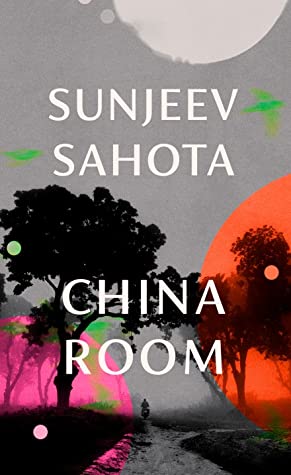 Sahota appeared on Granta’s list of Best Young British Novelists in 2013 and was previously shortlisted for The Year of the Runaways, a beautiful novel tracking the difficult paths of four Indian immigrants seeking a new life in Sheffield.
Three brides for three brothers: as Laura notes, it sounds like the setup of a folk tale, and there’s a timeless feel to this short novel set in the Punjab in the late 1920s and 1990s – it also reminded me of biblical stories like those of Jacob and Leah and David and Bathsheba. Mehar is one of three teenage girls married off to a set of brothers. The twist is that, because they wear heavy veils and only meet with their husbands at night for procreation, they don’t know which is which. Mehar is sure she’s worked out which brother is her husband, but her well-meaning curiosity has lasting consequences.
In the later storyline, a teenage addict returns from England to his ancestral estate to try to get clean before going to university and becomes captivated by the story of his great-grandmother and her sister wives, who were confined to the china room. The characters are real enough to touch, and the period and place details make the setting vivid. The two threads both explore limitations and desire, and the way the historical narrative keeps surging back in makes things surprisingly taut. See also Susan’s review. (Read via NetGalley)
Other reads, in brief:
(Links to my full reviews)
 Second Place by Rachel Cusk: Significantly more readable than the Outline trilogy and with psychological depths worth pondering, though Freudian symbolism makes it old-fashioned. M’s voice is appealing, as is the marshy setting and its isolated dwellings. This feels like a place outside of time. The characters act and speak in ways that no real person ever would – the novel is most like a play: melodramatic and full of lofty pronouncements. Interesting, but nothing to take to heart; Cusk’s work is always intimidating in its cleverness.
 A Town Called Solace by Mary Lawson: In 1972, Clara, a plucky seven-year-old, sits vigil for the return of her sixteen-year-old sister, who ran away from home; and their neighbour, who’s in the hospital. One day Clara sees a strange man moving boxes in next door. This is Liam Kane, who inherited the house from a family friend. Like Lawson’s other works, this is a slow burner featuring troubled families. It’s a tender and inviting story I’d recommend to readers of Tessa Hadley, Elizabeth Strout and Anne Tyler.
 No One Is Talking About This by Patricia Lockwood: This starts as a flippant skewering of modern life. A woman who became a social media star by tweeting quips like “Can a dog be twins?” reflects on life on “the portal” and under “the dictator.” Midway through the book, she gets a wake-up call when her mother summons her back to the Midwest for a family emergency. It’s the about-face that makes this novel, forcing readers to question the value of a digital existence based on glib pretence. Funny, but with an ache behind it.
 Light Perpetual by Francis Spufford: While I loved the premise, the execution didn’t live up to it. Spufford calls this an act of “literary resurrection” of five figures who survive a South London bombing. But these particular characters don’t seem worth spending time with; their narratives don’t connect up tightly, as expected, and feel derivative, serving only as ways to introduce issues (e.g. mental illness, sexual assault, racial violence, eating disorders) and try out different time periods. I would have taken a whole novel about Ben.
 This leaves five more: Great Circle (by Maggie Shipstead) I found bloated and slow when I tried it in early July, but I’m going to give it another go when my library hold comes in. The Sweetness of Water (Nathan Harris) I might try if my library acquired it, but I’m not too bothered – from Eric’s review on Lonesome Reader, it sounds like it’s a slavery narrative by the numbers. I’m not at all interested in the novels by Anuk Arudpragasam, Damon Galgut, or Nadifa Mohamed but can’t say precisely why; their descriptions just don’t excite me.
Here’s what I expect to still be in the running after tomorrow. Clear-eyed, profound, international; bridging historical and contemporary; much that’s unabashedly highbrow.
- Second Place by Rachel Cusk
 The Promise by Damon Galgut (will win)
- No One Is Talking About This by Patricia Lockwood
- Bewilderment by Richard Powers
- China Room by Sunjeev Sahota
- Light Perpetual by Francis Spufford
What have you read from the longlist? What do you expect to be shortlisted?
The Amateur Marriage by Anne Tyler (2004)
 This year I’ve been joining in Liz’s Anne Tyler readalong for most of the novels I own and hadn’t read yet. Just this summer, I’ve discovered two new favourites: Saint Maybe and now The Amateur Marriage – which surprised me because it was her sixteenth novel and not part of what I consider to be her golden mid-period of the 1980s-90s. Both Saint Maybe and The Amateur Marriage are, like Dinner at the Homesick Restaurant (my absolute favourite and, I was gratified to discover, Tyler’s favourite, too), effectively linked short story collections in which the chapters are self-contained narratives set at a particular point in a dysfunctional family’s life, with each one often focusing on a different character.
The Amateur Marriage feels unique in Tyler’s oeuvre for how it bridges historical fiction and her more typical contemporary commentary. Spanning 60 years precisely, it opens with the Pearl Harbor attack in 1941. In this Baltimore neighbourhood full of Polish immigrants, a spontaneous patriotic parade breaks out. In the excitement, Pauline jumps off a tram and hits her head on a lamppost. Her friends rush her to the Antons’ general store for a bandage and when Michael Anton meets her their fate is sealed. Pauline assumes Michael is bound for war and, so as not to disappoint her, he signs up. After his discharge, they marry – though Pauline had a near change of heart because they have so little in common and do nothing but fight.
{SPOILERS FOLLOW}
“Not quite forever”
The Antons’ marriage continues in the same volatile vein – until it doesn’t. I was taken aback that a story about marriage kept going even when Michael + Pauline ended, and even after one of them was no more. About two-thirds of the way through the book, on their 30th wedding anniversary, they find that their reminiscences are mostly of bitter arguments. Pauline wryly shakes her head over their antics, but Michael says to Pauline, “It has not been fun. It’s been hell.” She goads him into leaving, and he does.
I’ve jokingly heard women saying of their husbands, “I’m training him for his second wife,” and that seems to me to be the spirit of the title. These two characters had no idea that ‘opposites attract’ but don’t make for a stable marriage, and have muddled their way through for decades without figuring out how to change anything for the better. I sensed Tyler’s deep compassion for their foibles and how they affect the next generation.
A major thread of the novel is their eldest daughter Lindy’s teenage rebellion and eventual disappearance, reminding me a lot of Mary Lawson’s A Town Called Solace. Michael and Pauline retrieve her young son, Pagan, from San Francisco and raise him themselves, partly via shared custody. This theme of unexpected grandparent responsibility is a link to Saint Maybe and especially (along with the West as a setting) Clock Dance. There is no rapturous reunion to come, but the remnant of the family does eventually get back together.
Michael and Pauline are quintessential Tyler characters: the one easygoing if slightly useless (“He wished he had inhabited more of his life, used it better, filled it fuller”); the other highly strung and contrary, yet strong and efficient – “the ones who kept the planet spinning.” Michael never ceases to admire Pauline, even when he stops being married to her. In the penultimate chapter, the family swaps “Pauline stories” that exemplify how maddening but lovable she could be. You have someone in your family who’s just like that, right?
{END OF SPOILERS}
My U.S. paperback appends an interview with Tyler that I found illuminating. She knows that she doesn’t tend to break new ground with her fiction: “face it, I always write more or less the same sort of story,” she admits. During this reading project I’ve been debating whether this is a bad thing. Does it make her later work redundant? Does it mean she only had a limited store of good ideas? Are her characters types rather than three-dimensional creations? Marcie at Buried in Print loves the connections between the novels. I’m sure Liz does, too, but she’s also acknowledged that she finds individual plots strangely unmemorable.
I haven’t fully answered the above questions for myself. There are certainly Tyler books that I like more than others, but they have all been comforting and (mostly) compulsive reading. Her characters and situations feel so true to life that we don’t observe from the outside, but journey alongside and within them. (Secondhand purchase from 2nd & Charles, Hagerstown, MD, USA) See also Liz’s review.
Favourite lines:
“Was it possible to dislike your own wife? Well, no, of course not. This was just one of those ups-and-downs that every couple experienced.”
“so much about their parents had been embarrassing. Or did all children feel that way? But it seemed to George that the Antons’ lives were more extreme than other people’s. … People didn’t stay on an even keel in the Anton family. They did exaggerated things like throwing out their clothes or running away from home”
Another readalike: Larry’s Party by Carol Shields
My rating:
The 15 Tyler novels I’ve read, in order of preference (greatest to least), are:
Dinner at the Homesick Restaurant
Saint Maybe
The Amateur Marriage
Ladder of Years
The Accidental Tourist
Earthly Possessions
Breathing Lessons
Digging to America
Vinegar Girl
Back When We Were Grown-ups
Clock Dance
A Blue Spool of Thread
The Beginner’s Goodbye
Redhead by the Side of the Road
The Clock Winder
Next up for me will be Noah’s Compass later in September.
The Republic of Love by Carol Shields (Blog Tour Review)
“Let’s hear it for love.”
Last year I read, or reread, six Carol Shields novels (my roundup post). The ongoing World Editions reissue series is my excuse to continue rereading her this year – Mary Swann, another I’m keen to try again, is due out in August.
The Republic of Love (1992), the seventh of Shields’s 10 novels, was a runner-up for the Guardian Fiction Prize and was adapted into a 2003 film directed by Deepa Mehta. (I love Emilia Fox; how have I not seen this?!)
 The chapters alternate between the perspectives of radio disc jockey Tom Avery and mermaid researcher Fay McLeod, two thirtysomething Winnipeg lonely hearts who each have their share of broken relationships behind them – three divorces for Tom; a string of long-term live-in boyfriends for Fay. It’s clear that these two characters are going to meet and fall in love (at almost exactly halfway through), but Shields is careful to interrogate the myths of love at first sight and happily ever after.
On this reread, I was most struck by the subplot about Fay’s parents’ marriage and especially liked the secondary characters (like Fay’s godmother, Onion) and the surprising small-world moments that take place in Winnipeg even though it was then a city of some 600,000 people. Shields has a habit of recording minor characters’ monologues (friends, family, radio listeners, and colleagues) word for word without letting Fay or Tom’s words in edgewise.
Tom sometimes feels like a caricature – the male/female dynamic is not as successful here as in the Happenstance dual volume, which also divides the perspective half and half – and I wasn’t entirely sure what the mermaid theme is meant to contribute. Mermaids are sexually ambiguous, and in Fay’s Jungian interpretation represent the soul emerging from the unconscious. In any case, they’re an excuse for Fay to present papers at folklore conferences and spend four weeks traveling in Europe (Amsterdam, Copenhagen, northwest France).
The cover on the copy I read in 2016.
Straightforward romance plots don’t hold much appeal for me anymore, but Shields always impresses with her compassionate understanding of human nature and the complexities of relationships.
This was not one of my favorites of hers, and the passage of nearly five years didn’t change that, but it’s still pleasant and will suit readers of similarly low-key, observant novels by women: Kate Grenville’s The Idea of Perfection, Elizabeth Hay’s Late Nights on Air, Mary Lawson’s A Town Called Solace, and Anne Tyler’s The Accidental Tourist.
Favorite lines:
“Most people’s lives don’t wrap up nearly as neatly as they’d like to think. Fay’s sure of that. Most people’s lives are a mess.”
Fay’s mother: “I sometimes think that the best thing about your mermaids is the fact that they never age.”
The Republic of Love was reissued in the UK by World Editions in February. My thanks to the publisher for the free copy for review.
I was delighted to take part in the blog tour for The Republic of Love. See below for details of where other reviews and features have appeared or will be appearing.

Book Serendipity, Early 2021
I call it Book Serendipity when two or more books that I read at the same time or in quick succession have something pretty bizarre in common. Because I have so many books on the go at once (usually 20‒30), I suppose I’m more prone to such incidents.
Josh Cohen’s How to Live. What to Do, a therapist’s guide to literature, explains why this might happen:
More than one writer – the French poet Stéphane Mallarmé, the Argentinian writer Jorge Luis Borges – has advanced the exhilarating idea that each book is an infinitesimally small piece of one single, endless Book. I’ve always felt that this idea, unlikely as it might sound, makes perfect sense if you read enough novels [also nonfiction, for me]. The incidents, descriptions, phrases and images in the book you’re reading will always recall the incidents in another, and those in turn will call up the incidents in another, so that even as you’re reading one book, you’re reading countless others.
The following are in roughly chronological order.
- Mother‒baby swimming sessions in Some Body to Love by Alexandra Heminsley and The Still Point of the Turning World by Emily Rapp.


- [I think it would be a spoiler to even name them, but two novels I read simultaneously in January featured 1) a marriage / close relationship between a man and a woman – even though the man is gay; and 2) a character who beat his wife and then died in a convenient ‘accident’. One was published in 1997 and the other in 2020.]
- Stomas appeared in Dazzling Darkness by Rachel Mann and First Time Ever by Peggy Seeger late in my 2020 reading, and then in early 2021 in Pain: The Science of the Feeling Brain by Abdul-Ghaaliq Lalkhen and Love’s Work by Gillian Rose.
- An account of the author’s experience of ovarian hyperstimulation syndrome in Hormonal by Eleanor Morgan and I Miss You when I Blink by Mary Laura Philpott.
- Salmon fishing takes place in Snow Falling on Cedars by David Guterson and Kings of the Yukon by Adam Weymouth.


- The medical motto “see one, do one, teach one” appears in Breathtaking by Rachel Clarke and Complications by Atul Gawande.
- Filipino medical staff feature in America Is Not the Heart by Elaine Castillo and Breathtaking by Rachel Clarke.
- Twin Peaks is mentioned in The Fragments of My Father by Sam Mills and the anthology Trauma: Essays on Art and Mental Health; a different essay in the latter talks about Virginia Woolf’s mental health struggle, which is a strand in the former.
- St. Teresa of Ávila is mentioned in Heart by Gail Godwin and Sanatorium by Abi Palmer.

- The same Rachel Long poem appears in her debut collection, My Darling from the Lions, and The Emma Press Anthology of Love – but under different titles (“Portent” vs. “Delayed Gratification”).
- There’s a matriarch named Dot in Unsettled Ground by Claire Fuller and The Magician’s Assistant by Ann Patchett.
- There’s an Alaska setting in The Quality of Silence by Rosamund Lupton and Kings of the Yukon by Adam Weymouth.
- Becoming a mother is described as a baptism in Sanctuary by Emily Rapp Black and The Fragments of My Father by Sam Mills.


- While reading America Is Not the Heart by Elaine Castillo, I saw Castillo mentioned in the Acknowledgements of My Darling from the Lions by Rachel Long.
- Polar explorers’ demise is discussed in Ex Libris by Anne Fadiman and The Still Point by Amy Sackville.
- “Butterfingers” / “butter-fingered” is used in America Is Not the Heart by Elaine Castillo and The Clock Winder by Anne Tyler.
- There’s a mention of someone eating paper torn from books (the horror!) in Ex Libris by Anne Fadiman and The Clock Winder by Anne Tyler.
- I was reading three pre-releases at once, each of 288 pages: Milk Fed by Melissa Broder, Unsettled Ground by Claire Fuller, and A Town Called Solace by Mary Lawson.
- The Jewish golem myth is the overarching metaphor of Milk Fed by Melissa Broder and Golem Girl by Riva Lehrer.
- There’s a ceremony to pay respects to those who donated their bodies for medical school dissection in Maybe You Should Talk to Someone by Lori Gottlieb and Golem Girl by Riva Lehrer.
- An old woman with dementia features in The Living Sea of Waking Dreams by Richard Flanagan, Keeper by Andrea Gillies, and The Clock Winder by Anne Tyler.


- A mother dies of cancer on Christmas Day in This Party’s Dead by Erica Buist and The Fragments of My Father by Sam Mills.
- The main character does stand-up comedy in Milk Fed by Melissa Broder and This Party’s Dead by Erica Buist.
- Winning a goldfish at a carnival in The Air Year by Caroline Bird, A Feather on the Breath of God by Sigrid Nunez, and Anna Vaught’s essay in the Trauma anthology.
- ECT (electroconvulsive therapy) is mentioned in Adventures in Human Being by Gavin Francis and Woman on the Edge of Time by Marge Piercy.


- There’s a father who is non-medical hospital staff in The Push by Ashley Audrain (a cleaner) and A Feather on the Breath of God by Sigrid Nunez (a kitchen worker).
- There’s a character named Hart in The Wild Laughter by Caoilinn Hughes and The Birth House by Ami McKay.
- Cannibalism is a point of reference, a major metaphor, or a (surreal) reality in Mother for Dinner by Shalom Auslander, Eat or We Both Starve by Victoria Kennefick, and Light Perpetual by Francis Spufford.
- Infertility and caring for animals were two big themes shared by Brood by Jackie Polzin and Catalogue Baby by Myriam Steinberg. This became clearer when I interviewed both authors in February. Also, both women have shocks of pink hair in their publicity photos!


- A young woman works at a hotel in The Distance between Us by Maggie O’Farrell and My Dark Vanessa by Kate Elizabeth Russell (and The Glass Hotel by Emily St. John Mandel, which I read late last year).
What’s the weirdest reading coincidence you’ve had lately?
February Releases by de Visser, George, Lawson, and Smiley
Nonfiction about doctors’ memorable patients and a life of chronic pain and disability; novels set in 1970s Canada and contemporary (but magically outside-of-time) Paris.
That One Patient: Doctors’ and nurses’ stories of the patients who changed their lives forever by Ellen de Visser
[Translated from the Dutch by Brent Annable]
Ellen de Visser is a science writer for the most popular newspaper in the Netherlands, De Volkskrant. Her “That One Patient” column, which began in the summer of 2017, turns interviews with medical professionals into punchy first-person narratives. A collection of them was published in Dutch in 2019. This English translation tacks on 10 additional pieces based on conversations with English and American practitioners (including Dr. Anthony Fauci, immunologist and presidential medical advisor), four of them explicitly reflecting on COVID-19.
Many of the cases are decades old yet stuck with the doctor or nurse in question because of a vital lesson learned. Overtreatment is regretted just as much as an omission of care. Again and again, these medical professionals conclude that it’s impossible to judge someone else’s decisions or quality of life. For instance, a surgeon admits he had a hard time empathizing with his obese patients undergoing stomach reduction until he followed up with a young woman who told him about how invisible she’d felt before her surgery. Premature and disabled children bring grief or joy, not always in the expected doses. A doctor resents the work his team puts into repairing a woman who jumped from an eighth-floor window – why the heroic measures for someone who wanted to die? – until he learns she was pushed. A cancer surgeon develops breast cancer and now knows exactly what her patients go through.
 Some of these stories are disturbing: being stalked by a patient with a personality disorder, a man poisoning his girlfriend, a farmer predicting the very day and time of his death. A gynaecologist changes his mind about abortion after he meets a 15-year-old who gave birth at home and left her baby outside in a plastic bag to die of exposure. Other pieces are heart-warming: A paramedic delivers a premature, breech baby right in the ambulance. Staff throw a wedding at the hospital for a dying teen (as in Dear Life by Rachel Clarke). A woman diagnosed with cancer while pregnant has chemotherapy and a healthy baby – now a teenager. There’s even a tale from a vet who crowdfunded prostheses for a lively terrier.
One unique thing about the Netherlands is that euthanasia is legal and provided by doctors upon the express request of a patient suffering from a terminal illness. It is taken for granted in these essays, yet some interviewees express their discomfort with it as an option for young patients. De Visser is careful to note that, even with the situation as it is, only 4% of deaths in the Netherlands are by euthanasia, and the majority of these are end-stage cancer cases.
As with any collection of this nature, some stories are more enticing than others, but overall I found it a surprising and moving set of reflections that is alive to ethical complexities and grapples with tough issues like disability, doctor error, loneliness, pain, and sense of purpose.
Two quotes, in particular, stood out to me, one from a nurse – “We are only ever guests in other people’s lives, and that’s how we ought to behave” – and the other from Dr. Fauci’s piece. In 2014 he treated a doctor who had been volunteering in Sierra Leone after an Ebola outbreak but became ill with the virus and had to be evacuated. “He cited Hippocrates: ‘It is far more important to know what sort of person has the disease, rather than what sort of disease the person has.’ You treated me like a person, not a disease, he said. And that’s what medicine is all about.”
With thanks to 4th Estate for the proof copy for review.
A Still Life: A Memoir by Josie George
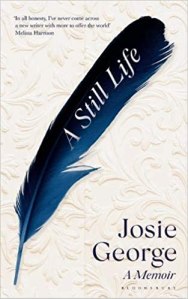 Over a year of lockdowns, many of us have become accustomed to spending most of the time at home. But for Josie George, social isolation is nothing new. Chronic illness long ago reduced her territory to her home and garden. The magic of A Still Life is in how she finds joy and purpose despite extreme limitations. Opening on New Year’s Day and travelling from one winter to the next, the book is a window onto George’s quiet existence as well as the turning of the seasons. (My full review will appear in a forthcoming issue of the Times Literary Supplement. See also Eleanor’s thorough review.) This is top of my wish list for next year’s Barbellion Prize shortlist.
With thanks to Bloomsbury for the proof copy for review.
A Town Called Solace by Mary Lawson
I discovered Mary Lawson in 2015 with Road Ends and caught up with Crow Lake in the summer of 2019. All four of her books are set in fictional locations inspired by the villages and rural areas of Northern Ontario, where the author grew up before moving to England in 1968. So Solace, while not a real town, is true to her memory and, despite the sometimes gruff or know-it-all locals, an emotional landmark for the three central characters, all of whom are processing trauma and looking for places of comfort where they can start over.
 1972. First we meet Clara, a plucky seven-year-old sitting vigil. She’s waiting for the return of two people: her sixteen-year-old sister, Rose, who ran away from home; and their next-door neighbour, Mrs. Orchard, whose cat, Moses, she’s feeding until the old lady gets back from the hospital. As days turn into weeks, though, it seems less likely that either will come home, and one day Clara sees a strange man moving boxes around in Mrs. Orchard’s house. This is Liam Kane, who’s inherited the house from a family friend. In his thirties and recently divorced, he’s taking a break in this tiny town, never imagining that he might find a new life. The third protagonist, and only first-person narrator, is Elizabeth, who lies in a hospital bed with heart trouble and voices her memories as a monologue to her late husband.
As we cycle through these three characters’ perspectives in alternating chapters, we gradually come to understand the connections between them. There are satisfying parallels in that, on multiple occasions but in slightly different ways, a child attaches to an older person or an adult stands in as a guardian for a neglected child. All of Lawson’s creations, even the secondary figures, are dealing with distressing memories or a loss of some kind, the details of which might only emerge much later on. Solace offers myriad opportunities for recovery, whether kitty playtime at Mrs. Orchard’s or diner food and homemade ice cream.
Like Lawson’s other works, this is a slow burner featuring troubled families. Her characters, often full of regret and sorrow, take a shadowy past as a prompt to reset their lives. They’re charming in spite of their flaws. I recalled that Crow Lake also looks back to the climactic happenings experienced by a seven-year-old girl. And like Road Ends, A Town Called Solace makes a convincing case for present decisions being influenced by historical trauma. It’s a tender and inviting story I’d recommend to readers of Wendy McGrath and Anne Tyler, with Clever Girl by Tessa Hadley and Olive, Again by Elizabeth Strout as specific readalikes. (My dilemma now is whether to read my only remaining Lawson novel, The Other Side of the Bridge, right away or save it: she’s not the most prolific author, with four books in 19 years.)
A favorite passage:
[Liam’s] life prior to coming north seemed to be taking on the quality of an old movie, one in which he’d been deeply engrossed while watching it but which now seemed trivial, unconvincing and profoundly lacking in either colour or plot. Solace had colour and plot in spades, maybe too much. In every way it was coming to seem more real than Toronto, with its endless malls and traffic jams and high-powered jobs. Though maybe, if he went back to Toronto, the same would be true in reverse. Maybe when he’d been back for a couple of months he’d find that it was Solace that seemed unreal, its unremarkable streets and stores like something from a dream, its dramatic landscape fading to nothing, like a holiday photo left in the sun.
With thanks to Chatto & Windus for the free copy for review.
The Strays of Paris by Jane Smiley
(Published in the USA in December 2020 under the title Perestroika in Paris. It’s been given a The Boy, the Mole, the Fox and the Horse treatment for its UK release.)
 My summary for Bookmarks magazine: “A racehorse, Perestroika—nicknamed Paras—strays from her unlocked suburban stable one day, carrying her groom’s purse in her mouth, and ends up in Paris’s Place du Trocadéro. Here she meets Frida the dog, Sid and Nancy the mallards, and Raoul the raven. Frida, whose homeless owner died, knows about money. She takes euros from the purse to buy food from a local market, while Paras gets treats from a baker on predawn walks. Etienne, an eight-year-old orphan who lives with his ancient great-grandmother, visits the snowy park to feed the wary animals (who can talk to each other), and offers Paras a home. A sweet fable for animal lovers.”
Yes, this is a talking animal book, but the animals only talk to each other; they communicate with humans through their gestures and soulful eyes. Kindly shopkeepers work out what Frida wants to buy based on what she stares at or points to with a paw; the baker whose window Paras passes on her early morning walks intuits that the horse is hungry; Etienne, who gives a couple of the stray animals a home during a chill winter, learns to understand when Paras needs to go out to relieve herself, after piles of dung build up in the sitting room.
I liked how patiently and convincingly Smiley builds the portrait of each character – human or animal – and the overall situation of kindness and good fortune. Raoul is particularly amusing for his birdsplaining: “It is a feature of age. I have learned so many things in my life that they just force their way out of my beak,” he says. However, a crow would be much more realistic for Paris (or any city) than a raven, and, overall, this was a little twee and farfetched for my tastes. It was nice to read something a bit different from Smiley, who I haven’t tried since her Last Hundred Years Trilogy. She has a sideline in YA horse novels; this should probably have been lumped with those. (Annabel liked it a bit more.)
I was sent an unsolicited review copy by Picador/Mantle.
What recent releases can you recommend?
Some of My Most Anticipated Releases of 2021
Although 120+ books that will be published in 2021 are already on my radar, I’ve limited myself to the 20 I’m most excited about. The modest number is a cheat in that I’ve already read a couple of books from this period in advance (and I’m currently reading another two), and I haven’t listed any that I already own as proofs or finished copies (pictured here) or have been promised. With a couple of exceptions, these books are due out between January and June.
I’m also not counting these three forthcoming books that I’ve sponsored via Kickstarter (the Trauma anthology) or Unbound:


Two that I read as U.S. e-books but would recommend that UK-based readers look out for in 2021 are Memorial by Bryan Washington (Jan. 7, Atlantic) and Transcendent Kingdom by Yaa Gyasi (March 4, Penguin).


The following are in UK release date order, within sections by genre; the quoted descriptions are from the publisher blurbs on Goodreads. Much more fiction is catching my eye this time.
Fiction
 The Living Sea of Waking Dreams by Richard Flanagan [Jan. 14, Chatto & Windus / May 25, Knopf] “In a world of perennial fire and growing extinctions, Anna’s aged mother … increasingly escapes through her hospital window … When Anna’s finger vanishes and a few months later her knee disappears, Anna too feels the pull of the window. … A strangely beautiful novel about hope and love and orange-bellied parrots.” I’ve had mixed success with Flanagan, but the blurb draws me and I’ve read good early reviews so far. [Library hold]
 The Charmed Wife by Olga Grushin [Jan. 21, Hodder & Stoughton / Jan. 12, Putnam] “Cinderella married the man of her dreams – the perfect ending she deserved after diligently following all the fairy-tale rules. Yet now, two children and thirteen-and-a-half years later, things have gone badly wrong. One night, she sneaks out of the palace to get help from the Witch who, for a price, offers love potions to disgruntled housewives.” A feminist retelling. I loved Grushin’s previous novel, Forty Rooms. [Edelweiss download]
 The Prophets by Robert Jones Jr. [Jan. 21, Quercus / Jan. 5, G.P. Putnam’s Sons] “A singular and stunning debut novel about the forbidden union between two enslaved young men on a Deep South plantation, the refuge they find in each other, and a betrayal that threatens their existence.” Lots of hype about this one. I’m getting Days Without End vibes, and the mention of copious biblical references is a draw for me rather than a turn-off. The cover looks so much like the UK cover of The Vanishing Half! [Publisher request pending]
 Mrs Death Misses Death by Salena Godden [Jan. 28, Canongate] “Mrs Death has had enough. She is exhausted from spending eternity doing her job and now she seeks someone to unburden her conscience to. Wolf Willeford, a troubled young writer, is well acquainted with death, but until now hadn’t met Death in person – a black, working-class woman who shape-shifts and does her work unseen. Enthralled by her stories, Wolf becomes Mrs Death’s scribe, and begins to write her memoirs.” [NetGalley download / Library hold]
No One Is Talking About This by Patricia Lockwood [Feb. 16, Bloomsbury / Riverhead] “A woman known for her viral social media posts travels the world speaking to her adoring fans … Suddenly, two texts from her mother pierce the fray … [and] the woman confronts a world that seems to contain both an abundance of proof that there is goodness, empathy and justice in the universe, and a deluge of evidence to the contrary.” Lockwood’s memoir, Priestdaddy, is an all-time favorite of mine. [NetGalley download / Publisher request pending]
A Town Called Solace by Mary Lawson [Feb. 18, Chatto & Windus / Feb. 16, Knopf Canada] “It’s North Ontario in 1972, and seven-year-old Clara’s teenage sister Rose has just run away from home. At the same time, a strange man – Liam – drives up to the house next door, which he has just inherited from Mrs Orchard, a kindly old woman who was friendly to Clara … A beautiful portrait of a small town, a little girl and an exploration of childhood.” I’ve loved the two Lawson novels I’ve read. [Publisher request pending]
 Klara and the Sun by Kazuo Ishiguro [March 2, Faber & Faber / Knopf] Synopsis from Faber e-mail: “Klara and the Sun is the story of an ‘Artificial Friend’ who … is warned not to invest too much in the promises of humans. A luminous narrative about humanity, hope and the human heart.” I’m not an Ishiguro fan per se, but this looks set to be one of the biggest books of the year. I’m tempted to pre-order a signed copy as part of an early bird ticket to a Faber Members live-streamed event with him in early March.
 Hot Stew by Fiona Mozley [March 18, Hodder & Stoughton / April 20, Algonquin Books] “The Soho that Precious and Tabitha live and work in is barely recognizable anymore. … Billionaire-owner Agatha wants to kick the women out to build expensive restaurants and luxury flats. Men like Robert, who visit the brothel, will have to go elsewhere. … An insightful and ambitious novel about property, ownership, wealth and inheritance.” This sounds very different to Elmet, but I liked Mozley’s writing enough to give it a try.
 Libertie by Kaitlyn Greenidge [March 30, Algonquin Books; April 29, Serpent’s Tail] “Coming of age as a free-born Black girl in Reconstruction-era Brooklyn, Libertie Sampson” is expected to follow in her mother’s footsteps as a doctor. “When a young man from Haiti proposes, she accepts, only to discover that she is still subordinate to him and all men. … Inspired by the life of one of the first Black female doctors in the United States.” I loved Greenidge’s underappreciated debut, We Love You, Charlie Freeman. [Edelweiss download]
 An Ordinary Wonder by Buki Papillon [April 9, Dialogue Books] “Richly imagined with art, proverbs and folk tales, this moving and modern novel follows Oto through life at home and at boarding school in Nigeria, through the heartbreak of living as a boy despite their profound belief they are a girl, and through a hunger for freedom that only a new life in the United States can offer. … a powerful coming-of-age story that explores complex desires as well as challenges of family, identity, gender and culture, and what it means to feel whole.”
Great Circle by Maggie Shipstead [May 4, Doubleday / Knopf] “In 1940s London, after a series of reckless romances and a spell flying to aid the war effort, Marian embarks on a treacherous, epic flight in search of the freedom she has always craved. She is never seen again. More than half a century later, Hadley Baxter, a troubled Hollywood starlet beset by scandal, is irresistibly drawn to play Marian Graves in her biopic.” I loved Seating Arrangements and have been waiting for a new Shipstead novel for seven years!
 The Anthill by Julianne Pachico [May 6, Faber & Faber; this has been out since May 2020 in the USA, but was pushed back a year in the UK] “Linda returns to Colombia after 20 years away. Sent to England after her mother’s death when she was eight, she’s searching for the person who can tell her what’s happened in the time that has passed. Matty – Lina’s childhood confidant, her best friend – now runs a refuge called The Anthill for the street kids of Medellín.” Pachico was our Young Writer of the Year shadow panel winner.
 Filthy Animals: Stories by Brandon Taylor [June 24, Daunt Books / June 21, Riverhead] “In the series of linked stories at the heart of Filthy Animals, set among young creatives in the American Midwest, a young man treads delicate emotional waters as he navigates a series of sexually fraught encounters with two dancers in an open relationship, forcing him to weigh his vulnerabilities against his loneliness.” Sounds like the perfect follow-up for those of us who loved his Booker-shortlisted debut novel, Real Life.
Saturday Night at the Lakeside Supper Club by J. Ryan Stradal [USA only? Pamela Dorman Books; no cover or exact date yet, just “Summer 2021”] “Combines the comedic pathos of John Irving with the brilliant generational storytelling of Jane Smiley and the wildly rich and quirky characters of fellow Minnesotan Anne Tyler … set on a lake in Northern Minnesota, about a beloved but dying family restaurant and whether it can be saved.” I was disappointed by Stradal’s latest, but love Kitchens of the Great Midwest enough to give him another try.
Matrix by Lauren Groff [Sept. 23, Cornerstone / Riverhead; no cover yet] “Cast out of the royal court by Eleanor of Aquitaine, … seventeen-year-old Marie de France is sent to England to be the new prioress of an impoverished abbey, its nuns on the brink of starvation and beset by disease. … a mesmerizing portrait of consuming passion, aberrant faith, and a woman that history moves both through and around.” Yuck to medieval history in general as a setting, but I love Groff’s work enough to get hold of this one anyway.
Nonfiction
 Islands of Abandonment: Nature Rebounding in the Post-Human Landscape by Cal Flyn [Jan. 21, William Collins; June 1, Viking] “A variety of wildlife not seen in many lifetimes has rebounded on the irradiated grounds of Chernobyl. A lush forest supports thousands of species that are extinct or endangered everywhere else on earth in the Korean peninsula’s narrow DMZ. … Islands of Abandonment is a tour through these new ecosystems … ultimately a story of redemption”. Good news about nature is always nice to find. [Publisher request pending]
 The Believer by Sarah Krasnostein [March 2, Text Publishing – might be Australia only; I’ll have an eagle eye out for news of a UK release] “This book is about ghosts and gods and flying saucers; certainty in the absence of knowledge; how the stories we tell ourselves to deal with the distance between the world as it is and as we’d like it to be can stunt us or save us.” Krasnostein was our Wellcome Book Prize shadow panel winner in 2019. She told us a bit about this work in progress at the prize ceremony and I was intrigued!
 A History of Scars: A Memoir by Laura Lee [March 2, Atria Books; no sign of a UK release] “In this stunning debut, Laura Lee weaves unforgettable and eye-opening essays on a variety of taboo topics. … Through the vivid imagery of mountain climbing, cooking, studying writing, and growing up Korean American, Lee explores the legacy of trauma on a young queer child of immigrants as she reconciles the disparate pieces of existence that make her whole.” I was drawn to this one by Roxane Gay’s high praise.
 Everybody: A Book about Freedom by Olivia Laing [April 29, Picador / May 4, W. W. Norton & Co.] “The body is a source of pleasure and of pain, at once hopelessly vulnerable and radiant with power. … Laing charts an electrifying course through the long struggle for bodily freedom, using the life of the renegade psychoanalyst Wilhelm Reich to explore gay rights and sexual liberation, feminism, and the civil rights movement.” Wellcome Prize fodder from the author of The Lonely City.
 Rooted: Life at the Crossroads of Science, Nature, and Spirit by Lyanda Lynn Haupt [May 4, Little, Brown Spark; no sign of a UK release] “Cutting-edge science supports a truth that poets, artists, mystics, and earth-based cultures across the world have proclaimed over millennia: life on this planet is radically interconnected. … In the tradition of Rachel Carson, Elizabeth Kolbert, and Mary Oliver, Haupt writes with urgency and grace, reminding us that at the crossroads of science, nature, and spirit we find true hope.” I’m a Haupt fan.
Which of these do you want to read, too?
What other upcoming 2021 titles are you looking forward to?
Book Serendipity, 2019 Second Half
I call it serendipitous when two or more books that I’m reading at the same time or in quick succession have something pretty bizarre in common. Because I have so many books on the go at once – usually between 10 and 20 – I guess I’m more prone to such incidents. I post these occasional reading coincidences on Twitter. What’s the weirdest one you’ve had lately? (The following are in rough chronological order.)
[Previous 2019 Book Serendipity posts from April and July.]
- Two novels in which a character attempts to glimpse famous mountains out of a train window but it’s so rainy they can barely be seen: The Unchangeable Spots of Leopards by Kristopher Jansma and The Pine Islands by Marion Poschmann.


- Ex-husbands move from England to California and remarry younger women in The Stillness The Dancing by Wendy Perriam and Heat Wave by Penelope Lively.
 References to Edgar Allan Poe in both Timbuktu by Paul Auster and The Unchangeable Spots of Leopards by Kristopher Jansma.
- An account of Percy Shelley’s funeral pyre in both The Unchangeable Spots of Leopards by Kristopher Jansma and Frankissstein by Jeanette Winterson.
- Mentions of barn owls being killed by eating poisoned rats in Owl Sense by Miriam Darlington and Homesick by Catrina Davies.


- Miriam Rothschild is mentioned in Irreplaceable by Julian Hoffman and An Obsession with Butterflies by Sharman Apt Russell.
- Gorse is thrown on bonfires in Homesick by Catrina Davies and The Stillness The Dancing by Wendy Perriam.
 A character has a nice cup of Ovaltine in Some Tame Gazelle by Barbara Pym and The Stillness The Dancing by Wendy Perriam.
- I started two books with “Bloom” in the title on the same day.

 Two books I finished about the same time conclude by quoting or referring to the T. S. Eliot lines about coming back to the place where you started and knowing it for the first time (Owl Sense by Miriam Darlington and This Is Not a Drill, the Extinction Rebellion handbook).
- Three books in which the narrator wonders whether to tell the truth slant (quoting Emily Dickinson, consciously or not): The Unchangeable Spots of Leopards by Kristopher Jansma, The Poisonwood Bible by Barbara Kingsolver and The Hiding Game by Naomi Wood.
- On the same day, I saw mentions of crullers in both On Chapel Sands by Laura Cumming and The Dutch House by Ann Patchett.


- There are descriptions of starling murmurations over Brighton Pier in both Irreplaceable by Julian Hoffman and Expectation by Anna Hope. (Always brings this wonderful Bell X1 song to mind!)
- I was reading The Outermost House by Henry Beston and soon after found an excerpt from it in Irreplaceable by Julian Hoffman; later I started The Easternmost House by Juliet Blaxland, whose title is a deliberate tip of the hat to Beston.
 At a fertility clinic, the author describes a pair of transferred embryos as “two sequins of light” (in On Chapel Sands by Laura Cumming) and “two points of light” (in Expectation by Anna Hope).
- Mentions of azolla ferns in Time Song by Julia Blackburn and Bloom (aka Slime) by Ruth Kassinger.
 Incorporation of a mother’s brief memoir in the author’s own memoir in On Chapel Sands by Laura Cumming and All Things Consoled by Elizabeth Hay.
- Artist mothers in On Chapel Sands by Laura Cumming, All Things Consoled by Elizabeth Hay, and Expectation by Anna Hope.
- Missionary fathers in The Poisonwood Bible by Barbara Kingsolver and The Wind that Lays Waste by Selva Almada.


- Twins, one who’s disabled from a birth defect and doesn’t speak much, in Golden Child by Claire Adam and The Poisonwood Bible by Barbara Kingsolver.
 An Irish-American family in a major East Coast city where the teenage boy does construction work during the summers in Ask Again, Yes by Mary Beth Keane and The Dutch House by Ann Patchett.
- SPOILERS: A woman with terminal cancer refuses treatment so she can die on her own terms and is carried out into her garden in Expectation by Anna Hope and A Reckoning by May Sarton.
- A 27-year-old professor has a student tearfully confide in her in Crow Lake by Mary Lawson and The Small Room by May Sarton.


- Reading The Yellow House by Sarah M. Broom at the same time as The Dutch House by Ann Patchett.
 “I was nineteen years old and an idiot” (City of Girls, Elizabeth Gilbert); “I was fifteen and generally an idiot” (The Dutch House, Ann Patchett).
- Mentions of a conjuring tricks book in Time Song by Julia Blackburn and Fifth Business by Robertson Davies.
- A teen fleeces their place of employment in Sweet Sorrow by David Nicholls and Who Will Run the Frog Hospital? by Lorrie Moore.


- A talking parrot with a religious owner in The Poisonwood Bible by Barbara Kingsolver and Olive Kitteridge by Elizabeth Strout.
- Pictorial book serendipity: three books I was reading, and another waiting in the wings, had a red, black and white color scheme.

 Kripalu (a Massachusetts retreat center) is mentioned in Fleishman Is in Trouble by Taffy Brodesser-Akner and Once More We Saw Stars by Jayson Greene.
- The character of Netty Quelch in Robertson Davies’s The Manticore reminds me of Fluffy in Ann Patchett’s The Dutch House.
- The artist Chardin is mentioned in How Proust Can Change Your Life by Alain de Botton and Varying Degrees of Hopelessness by Lucy Ellmann.
- A Czech grand/father who works in a plant nursery in the opening story of Andrea Barrett’s Ship Fever and Patricia Hampl’s The Florist’s Daughter.


- The author was in Eva Le Gallienne’s NYC theatre company (Madeleine L’Engle’s Two-Part Invention and various works by May Sarton, also including a biography of her).
 Gillian Rose’s book Love’s Work is mentioned in both Notes Made while Falling by Jenn Ashworth and My Year Off by Robert McCrum. (I will clearly have to read the Rose!)
- Sarah Baartman (displayed in Europe as the “Hottentot Venus”) is mentioned in Shame on Me by Tessa McWatt and Hull by Xandria Phillips.
20 Books of Summer, #14–15: Mary Lawson and Stephen Moss
Approaching the home straight with these two: another novel that happens to have an animal in the title, and a pleasant work of modern nature writing set in an English village. My rating for both:
Crow Lake by Mary Lawson (2002)
I’ve meant to read more by Lawson ever since I reviewed her latest book, Road Ends, for Nudge in May 2015. All three of her novels draw on the same fictional setting: Struan, Ontario. Lawson grew up in a similar Canadian farming community before moving to England in the late 1960s. After an invitation arrives for her nephew’s birthday party, narrator Kate Morrison looks 20 years into the past to remember the climactic events of the year that she was seven. When she and her siblings were suddenly orphaned, her teenage brothers, Luke and Matt, had to cobble together local employment that allowed them to look after their little sisters at home. With the help of relatives and neighbors, they kept their family of four together. All along, though, their lives were becoming increasingly entwined with those of the Pyes, a troubled local farming family.
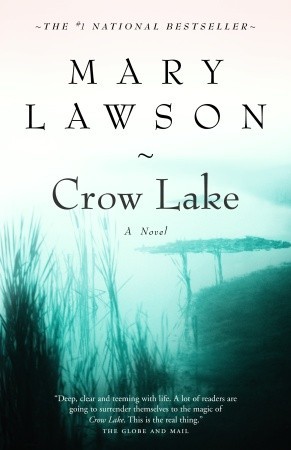 Matt inspired Kate’s love of pond life – she’s now an assistant professor of invertebrate ecology – but never got to go to college himself. Theirs was a family that prized schooling above all else (legend has it that Great-Grandmother installed a book rest on her spinning wheel so she could read while her hands were busy*) and eschewed emotion. “It was the Eleventh Commandment,” Kate recalls: “Thou Shalt Not Emote.”
This is a slow burner for sure, but it’s a winning picture of a family that stuck together despite the odds, as well as an appeal to recognize that emotional intelligence is just as important as book learning. The novel reminded me a lot of Surfacing by Margaret Atwood and The Girls by Lori Lansens, and I’d also recommend it to readers of Elizabeth Hay and Jane Urquhart.
*Delightfully, this detail was autobiographical for Lawson.
Wild Hares and Hummingbirds: The Natural History of an English Village by Stephen Moss (2011)
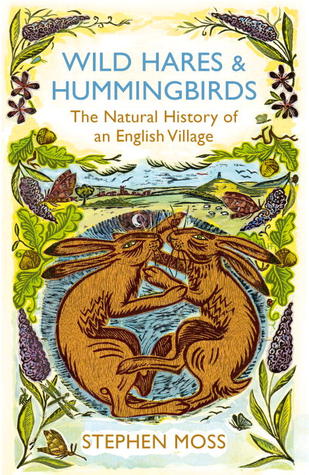 England doesn’t have any hummingbirds, but it does have hummingbird hawkmoths, which explains the title. In the tradition of Gilbert White, Moss writes a month-by-month tribute to what he regularly sees on his home turf of Mark, Somerset. As I did with Mark Cocker’s Claxton, I picked up the book partway – at the month in which I started reading it – and when I reached the end, returned to the beginning and read up to my starting point. Controversial, I know, but that July to June timeline worked fine: it gave me familiar glimpses of what’s going on with English nature now, followed by an accelerated preview of what I have to look forward to in the coming months.
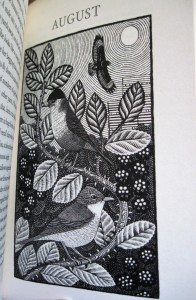 Moss is primarily a birder, so he focuses on bird life, but also notes what’s happening with weather, trees, fungi, and so on. In the central and probably best chapter, on June, he maximizes wildlife-watching opportunities: going eel fishing, running a moth trap, listening for bats, and looking out for unfamiliar plants. My minor annoyances with the book were the too-frequent references to “the parish,” which makes the book’s concerns seem parochial rather than microcosmic, and the common use of semicolons where commas and dashes would be preferable. But if you’re fond of modern nature writing, and have some familiarity with (or at least interest in) the English countryside, I highly recommend this as a peaceful, observant read. Plus, Harry Brockway’s black-and-white engravings heading each chapter are exquisite.
Favorite lines:
“Being in one place is also the best way to understand the passing of the seasons: not the great shifts between winter and spring, summer and autumn, which we all notice; but the tiny, subtle changes that occur almost imperceptibly, from week to week, and day to day, throughout the year.”
“For me, one of the greatest pleasures of living in the English countryside is the way we ourselves become part of the natural cycle of the seasons.”
Plans for 20 Books of Summer

This is my second time taking part in Cathy’s 20 Books of Summer project. Once again I plan to focus solely on books that I own to try to get through a respectable number of them. For 2019 I’ve decided to read books that are about animals or have an animal in the title. I’ve set aside a few back-ups (the ones standing upright in the photos), and if I’m struggling I can cheat a bit by including books that happen to have an animal on the cover.


In the interest of statistics … last year I read eight nonfiction titles and 12 fiction – so that’s exactly what I’ve pulled out for this year. (For the record, I only intend to read the first of Updike’s Rabbit novels at this stage.) I have two re-reads set aside this time (Julian Barnes and Abigail Thomas) versus one last year. Last year I read one doorstopper; this year I don’t have any on the docket. In 2018 I was particularly proud of getting through two short story collections, so this year I’ve chosen one animal-themed one to read. Randomly, three of last year’s books were review copies from publishers or the author, and three were signed copies. This time I have none of either, unless I do some substituting.
Also interesting to note is that this year three of the books I’ve picked are by Canadian authors (André Alexis, Michael Crummey and Mary Lawson), and another has a Canadian setting (The Tenderness of Wolves). Canadian readers, rejoice!
Another project I might join in with this summer is the Robertson Davies reading week – I own his Deptford trilogy, and would at least read one of the books, if not attempt all three.
 Bookish Beck = Rebecca Foster. American transplant to England. Freelance proofreader and book reviewer.
 Bookish Beck