20 Books of Summer, 14–16: Polly Atkin, Nan Shepherd and Susan Allen Toth
I’m still plugging away at the challenge. It’ll be down to the wire, but I should finish and review all 20 books by the 31st! Today I have a chronic illness memoir, a collection of poetry and prose pieces, and a reread of a cosy travel guide.
Some of Us Just Fall: On Nature and Not Getting Better by Polly Atkin (2023)
I was heartened to see this longlisted for the Wainwright Prize. It was a perfect opportunity to recognize the disabled/chronically ill experience of nature and the book achieves just what the award has recognised in recent years: the braiding together of life writing and place-based observation. (Wainwright has also done a great job on diversity this year: there are three books by BIPOC and five by women on the nature writing shortlist alone.)
 Polly Atkin knew something was different about her body from a young age. She broke bones all the time, her first at 18 months when her older brother ran into her on his bicycle. But it wasn’t until her thirties that she knew what was wrong – Ehlers-Danlos syndrome and haemochromatosis – and developed strategies to mitigate the daily pain and the drains on her energy and mobility. “Correct diagnosis makes lives bearable,” she writes. “It gives you access to the right treatment. It gives you agency.”
The book assembles long-ish fragments, snippets from different points of her past alternating with what she sees on rambles near her home in Grasmere. She writes in some depth about Lake District literature: Thomas De Quincey as well as the Wordsworths – Atkin’s previous book is a biography of Dorothy Wordsworth that spotlights her experience with illness. In describing the desperately polluted state of Windermere, Atkin draws parallels with her condition (“Now I recognise my body as a precarious ecosystem”). Although she spurns the notion of the “Nature Cure,” swimming is a valuable therapy for her.
Theme justifies form here: “This is the chronic life, lived as repetition and variance, as sedimentation of broken moments, not as a linear progression.” For me, there was a bit too much particularity; if you don’t connect to the points of reference, there’s no way in and the danger arises of it all feeling indulgent. Besides, by the time I opened this I’d already read two Ehlers-Danlos memoirs (All My Wild Mothers by Victoria Bennett and Floppy by Alyssa Graybeal) and another reference soon came my way in The Invisible Kingdom by Meghan O’Rourke. So overfamiliarity was a problem. And by the time I forced myself to pick this off of my set-aside shelf and finish it, I’d read Nina Lohman’s stellar The Body Alone. For those newer to reading about chronic illness, though, especially if you also have an interest in the Lakes, it could be an eye-opener.
With thanks to Sceptre (Hodder) for the free copy for review.
Selected Prose & Poetry by Nan Shepherd (2023)
 I’d read and enjoyed Shepherd’s The Living Mountain, which has surged in popularity as an early modern nature writing classic thanks to Robert Macfarlane et al. I’m not sure I’d go as far as the executor of the Nan Shepherd Estate, though, who describes her in the Preface as “Taylor Swift in hiking boots.” The pieces reprinted here are from her one published book of poems, In the Cairngorms, and the mixed-genre collection Wild Geese. There is also a 28-page “novella,” Descent from the Cross. After World War I, Elizabeth, a workers’ rights organiser for a paper mill, marries a shell-shocked veteran who wants to write a book but isn’t sure he has either the genius or the dedication. It’s interesting that Shepherd would write about a situation where the wife has the economic upper hand, but the tragedy of the sickly failed author put me in mind of George Gissing or D.H. Lawrence, so didn’t feel fresh. Going by length alone, I would have called this a short story, but I understand why it would be designated a novella, for the scope.
None of the miniature essays – field observations and character studies – stood out to me. About half of the book is given over to poetry. As with the nature writing, there is a feeling of mountain desolation. There are a lot of religious references and hints of the mystical, as in “The Bush,” which opens “In that pure ecstasy of light / The bush is burning bright. / Its substance is consumed away / And only form doth stay”. It’s a mixed bag: some feels very old-fashioned and sentimental, with every other line or, worse, every line rhyming, and some archaic wording and rather impenetrable Scots dialect. It could have been written 100 years before, by Robert Burns if not William Blake. But every so often there is a flash of brilliance. “Blackbird in Snow” is quite a nice one, and reminiscent of Thomas Hardy’s “The Darkling Thrush.” I even found the cryptic lines from “Real Presence” that inspired a song on David Gray’s Skellig. My favourite poem by far was:
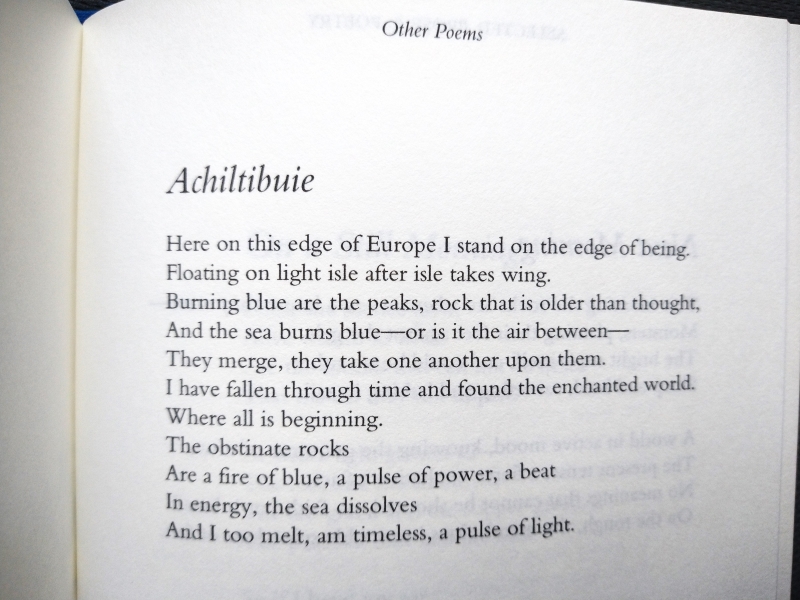
Overall, this didn’t engage me; it’s only for Shepherd fanatics and completists. (Won from Galileo Publishers in a Twitter giveaway)
England As You Like It: An Independent Traveler’s Companion by Susan Allen Toth (1995)
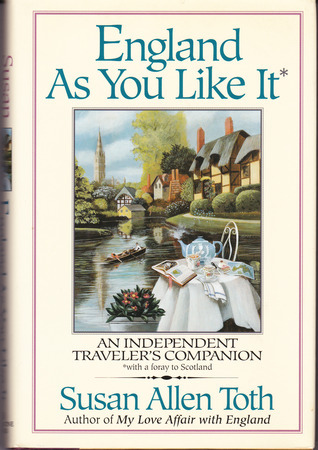 A reread. As I was getting ready to go overseas for the first time in the summer of 2003, Toth’s trilogy of memoirs whetted my appetite for travel in Britain. (They’re on my Landmark Books in My Life, Part II list.) This is the middle book and probably the least interesting in that it mostly recounts stays in particular favourite locations, such as Dorset, the Highlands, and various sites in Cornwall. However, I’ve never forgotten her “thumbprint theory,” which means staying a week or more in an area no larger than her thumb covers on a large-scale map, driving an hour or less for day trips. Not for her those cram-it-all-in trips where you race through multiple countries in a week (I have American friends who did Paris, London and Rome within six days, or five countries in eight days; blame it on stingy vacation policies, I guess). Instead, she wants to really bed into one place and have the time to make serendipitous discoveries such as an obscure museum or a rare opening of a private garden.
I most liked the early general chapters about how to make air travel bearable, her obsession with maps, her preference for self-catering, and her tendency to take home edible souvenirs. Of course, all the “Floating Facts” are hopelessly out-of-date. This being the early to mid-1990s, she had to order paper catalogues to browse cottage options (I still did this for honeymoon prep in 2006–7) and make international phone calls to book accommodation. She recommends renting somewhere from the National Trust or Landmark Trust. Ordnance Survey maps could be special ordered from the British Travel Bookshop in New York City. Entry fees averaged a few pounds. It’s all so quaint! An Anglo-American time capsule of sorts. I’ve always sensed a kindred spirit in Toth, and those whose taste runs toward the old-fashioned will probably also find her a charming tour guide. I’ve also reviewed the third book, England for All Seasons. (Free from The Book Thing of Baltimore)
July Releases, I: Books by Nina Lohman and Ricky Ray for Disability Pride Month
The Wellcome Book Prize (for health- and medicine-related books) and the Barbellion Prize (for representations of disability and/or chronic illness) are much missed, but I continue to be drawn to their highlighted themes in my reading. This is the first year that I’ve been aware of July as Disability Pride Month, though it’s been a thing since 1990 in the USA and 2015 in the UK. My first set of July releases – I have reviews of three novels coming up tomorrow – consists of a nonlinear memoir interrogating life with chronic pain and a chronically ill poet’s collection in which an old dog is an example of grace through suffering.
The Body Alone: A Lyrical Articulation of Chronic Pain by Nina Lohman
For well over a decade, Nina Lohman has endured Chronic Daily Headaches – when a doctor presented her with this phrase, she remarks, it was not so much a diagnosis as a description. Having a clinical term for her extreme pain did nothing to solve it; no treatment she has tried has helped much either, from pharmaceuticals to acupuncture. (Doctors think they’re breaking new ground if they suggest ice packs or elevating her neck.) Like Meghan O’Rourke’s The Invisible Kingdom, this documents a quest with no natural end. Lohman’s health fluctuates, and medical professionals and family and friends minimize her pain because she is able to pass as well, to carry out the daily tasks of raising two children.
The subtitle is apt for a work that is fragmentary and not driven by chronology. Had Cataloguing Pain not already been taken (by Allison Blevins), it might have been a perfect title. Some of Lohman’s short pieces read like poems, including erasure poems based on her medical notes. Repeated headings demonstrate a desire to organise her illness so as to make sense of it: “A Primer,” “Classifications” and “Perhaps” musings. She dwells on the names of things – shades of colours, groups of animals – while she longs for a vocabulary tailored to her own circumstances. Imagined monologues by doctors, friends and her husband (“He”) show pain has not turned her insular; she has empathy even when people act in hurtful ways.

One aspect of the book that I found particularly interesting is that Lohman, though not raised with Christian beliefs, studied theology at university level. Doctrines of the Fall bringing anguish and the Cross offering atonement are logical to her yet feel irrelevant to her situation. She bristles when a religious friend suggests that pain might be “her cross to bear.” Lohman admits she has given up hope on ever being free of pain, so finds resonance with poet Christian Wiman, who has been living with cancer for decades and whose work is equally infused with pain and faith.
It’s a journalistic as well as personal narrative, in the tradition of Anne Boyer, Sinéad Gleeson and Susan Sontag, shifting between modes and registers as Lohman gives a history of opiates, records of her pregnancies, and précis of philosophical understandings of suffering. “Theorizing can only take me so far,” she acknowledges, toward comprehending bodily experiences that defy language. And yet she employs words exquisitely, marshalling metaphors though they’re inadequate. The tone flows from enraged to resigned to cynical and back as she depicts the helplessness of women in a medical system that ignores their pain. Especially if you have enjoyed work by any of the authors I mention above, I highly recommend this debut: it’s sure to be one of my books of the year.
Published by the University of Iowa Press. With thanks to Nectar Literary for the free advanced e-copy for review.
The Soul We Share: Life with Earth and an Old Brown Dog by Ricky Ray
New England poet Ricky Ray describes himself as an “eco-mystic” and is the author of several previous works. Maura Dooley chose this as the Aryamati Collection Prize winner in 2023. As in Birds Knit My Ribs Together by Phil Barnett, nature is a source of comfort in a life complicated by chronic illness. In “Pain: 8 on a Scale out of 10,” Ray explains how “Some days, I never make it out of my head, / that coal-eyed melon … The impinged nerves crack their whips / within my animal pelt”. An accidental overdose and depression are matter-of-fact components of the poet’s history. While uxorious, he regrets that he may never become a father. And yet this couplet expresses deep pleasure in life:
(Dis)ability
Some days, my body is so beautiful
I can’t believe I get to live here.

His elderly rescue dog Addie is his beloved companion, and the delight she takes in physical existence despite advancing cancer is a model to him: “she still has a lot / to teach me about aging, about ignoring it, about how to throw my body— / even when it fails me, even when it hurts like hell—headlong into joy.” Multiple poems remember particular walks with her, such as in a Connecticut forest. He even gets a tutorial from her in how to dig a hole. Later on, he remarks as if to her, “Forgive me, I’m human, / we’re slow to learn, quick to forget— / it could be said we live too long / to appreciate each drop of time in the heart’s well.”
If his primary engagement with the nonhuman world is via a pet, Ray also widens the scope to include environmental plight: “you look up and extinction’s / already guzzling half the bestiary, / You think, / God, what have I done? / And the God in you answers: / harm, now what will you do?” This sense of responsibility meeting resolution echoes throughout the book. Ache is a spur to seek remedies; “I learned that hurt inducts all painfolk as conspirators // in the craft of healing.” The prose poems were a bit long and ranty for me (e.g., “Identity Earth: A Brief Biography of Our Planetary Self” goes on for more than six pages) and overall I found the book a little sentimental and New Age-adjacent. However, the poems about Addie are undeniably touching, and perfect for fans of Mary Oliver’s Dog Songs.
With thanks to Fly on the Wall Press for the free copy for review.
Have you read anything to tie into Disability Pride Month?
Book Serendipity, August to September 2023
I call it “Book Serendipity” when two or more books that I read at the same time or in quick succession have something in common – the more bizarre, the better.
In Diary of a Tuscan Bookshop, Alba Donati remarks on this phenomenon: “Jung called these coincidences ‘synchronicities’, postulating that the universe possessed its own form of intelligence, which generated harmonies. A universe that detects and brings together the elements it feels are seeking each other in the endless swirl of life. Chance be damned.”
This is a regular feature of mine every couple of months. Because I usually have 20–30 books on the go at once, I suppose I’m more prone to such incidents. The following are in roughly chronological order.
- A memoir that opens with a little girl being injured in a bicycle accident: Some of Us Just Fall by Polly Atkin and Pharmakon by Almudena Sánchez.
- Telling stories through embroidery in Cross-Stitch by Jazmina Barrera and The Farmer’s Wife by Helen Rebanks.

- A small boy nicknamed “Willmouse” (real name: William) in Mary and the Birth of Frankenstein by Anne Eekhout and The Greengage Summer by Rumer Godden.
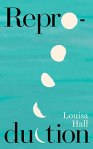
- An account of a routine sonogram that ends with the technician leaving the doctor to deliver bad news in Reproduction by Louisa Hall and The Unfamiliar by Kirsty Logan.
- Black dreadlocks/braid/ponytail being cut off in When We Were Birds by Ayanna Lloyd Banwo, The Wren, The Wren by Anne Enright, and Rebecca, Not Becky by Christine Platt and Catherine Wigginton Greene.

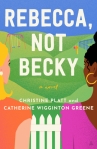
- Wondering how to arm a Black daughter against racist microaggressions in Rebecca, Not Becky by Christine Platt and Catherine Wigginton Greene and Ordinary Notes by Christina Sharpe.
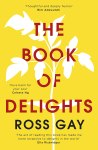
- Countering the commodification or romanticization of Black suffering in The Book of Delights by Ross Gay and Ordinary Notes by Christina Sharpe.

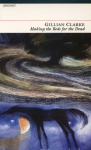
- An account of how the foot and mouth disease outbreak of 2001 affected the UK, especially northwest England, in Making the Beds for the Dead by Gillian Clarke and The Farmer’s Wife by Helen Rebanks.
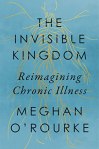
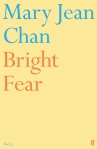
- I encountered the quote from Elaine Scarry’s The Body in Pain about pain being inexpressible in Reproduction by Louisa Hall and The Invisible Kingdom by Meghan O’Rourke on the same day. It’s also referenced in Mary Jean Chan’s Bright Fear.
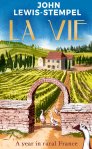
- A mention of eating frogs’ legs in The Book of Delights by Ross Gay and La Vie by John Lewis-Stempel.
- I read about the effects of heavy metal pollution on the body in The Invisible Kingdom by Meghan O’Rourke and Windswept by Annie Worsley in the same evening.
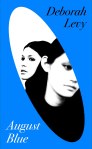
- Composer Erik Satie is mentioned in Making the Beds for the Dead by Gillian Clarke and August Blue by Deborah Levy.
- Stendhal syndrome and Florence are mentioned in The Wren, The Wren by Anne Enright and Pharmakon by Almudena Sánchez.
- Swallows nesting in an old Continental building in Diary of a Tuscan Bookshop by Alba Donati and La Vie by John Lewis-Stempel.
- France being all about the rules and a “Putain de merde” exclamation to bad news in Dirt by Bill Buford and La Vie by John Lewis-Stempel.

- A character named Nomi in Friends and Strangers by J. Courtney Sullivan and one called Noemi in Diary of a Tuscan Bookshop by Alba Donati.
- Epigenetics (trauma literally determining the genetic traits that are passed on) is discussed in The Invisible Kingdom by Meghan O’Rourke and Pharmakon by Almudena Sánchez.
- Women of a certain age in Tuscany in The Three Graces by Amanda Craig and Diary of a Tuscan Bookshop by Alba Donati.
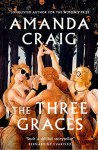
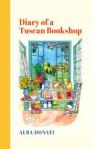
- Audre Lorde is quoted in Tremor by Teju Cole, Bibliomaniac by Robin Ince, The Invisible Kingdom by Meghan O’Rourke, Alone by Daniel Schreiber, and Ordinary Notes by Christina Sharpe.
- A Galway Kinnell poem is mentioned/quoted in The Dead Peasant’s Handbook by Brian Turner and Otherwise by Julie Marie Wade.
- The Bamiyan Buddhas are mentioned in Tremor by Teju Cole and The Dead Peasant’s Handbook by Brian Turner.


- Both The Three Graces by Amanda Craig and The Story of Lucy Gault by William Trevor open with a man shooting someone from his bedroom window.
- Linked short story collections about two children’s relationship with their Jamaican father, and mention of a devastating hurricane, in If I Survive You by Jonathan Escoffery and The Human Origins of Beatrice Porter and Other Essential Ghosts by Soraya Palmer. (Dual review coming up tomorrow!)
- Characters named Ben and Mara in The Whispers by Ashley Audrain and one story in Kate Doyle’s I Meant It Once.
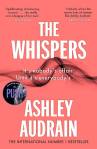
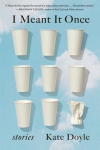
- Occasional uncut pages in my copies of I Meant It Once by Kate Doyle and The Unfamiliar by Kirsty Logan.
- A Florida setting and mention of the Publix supermarket chain in If I Survive You by Jonathan Escoffery and Arms and Legs by Chloe Lane.
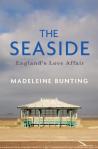
- A down-at-heel English seaside town near Scarborough features in The Seaside by Madeleine Bunting and Penance by Eliza Clark.

- A fictional northern town with “Crow” in the name: Crow-on-Sea in Penance by Eliza Clark and Crows Bank in Weyward by Emilia Hart.
- Claw-machine toys are mentioned in Penance by Eliza Clark and Directions to Myself by Heidi Julavits.
- Reading books by two Nobel Prize winners at the same time: Abdulrazak Gurnah (By the Sea) and Alice Munro (Hateship, Friendship, Courtship, Loveship, Marriage).
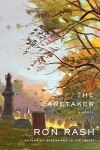
- Reading my second 2023 release featuring North Carolina ghost lights (after All of Us Together in the End by Matthew Vollmer, which I actually read last year): The Caretaker by Ron Rash.
- Reading my second 2023 release featuring a cat named Virginia Woolf (after Tell the Rest by Lucy Jane Bledsoe, which I actually read last year): one of the short stories in I Meant It Once by Kate Doyle.
- A character named Shay in Everyone but Myself by Julie Chavez, The Human Origins of Beatrice Porter and Other Essential Ghosts by Soraya Palmer and The Caretaker by Ron Rash.

What’s the weirdest reading coincidence you’ve had lately?
20 Books of Summer, 18–20: Ayanna Lloyd Banwo, Sarah Hall, Meghan O’Rourke
Whew, it’s the final day of the challenge and I’ve managed to finish and write up a last batch of two novels and one nonfiction work: a magic realist tableau of love and death in Trinidad, a fateful romance set against the backdrop of the construction of an English dam in 1936, and a personal and cultural record of chronic illness and its treatment in contemporary America.
When We Were Birds by Ayanna Lloyd Banwo (2022)
 I was sent a copy as part of the McKitterick Prize shortlist. The setting of a cemetery, Fidelis in Port Angeles, Trinidad, had vaguely attracted me even before its nomination. Emmanuel Darwin has turned his back on his Rastafarian upbringing to cut off his dreadlocks and work as a gravedigger (any contact with the dead is anathema in the religion). Meanwhile, Yejide, who lives in the hills, is losing her mother, Petronella, and gaining a legacy she’s not sure she wants: the women of her family are caretakers of the souls of the dead, keeping them alive in exchange for protection. Like the corbeaux, dark counterparts of tropical parrots, they tread the border of life and death. As All Saints’ and All Souls’ Days draw closer, Darwin and Yejide together have to decide whether they will be swallowed by the graveyard or escape it. While this was atmospheric and had alluring elements, the speculative angle was not notably well realized and the particular form of patois – eschewing all possessives and most verb conjugations – drove me nuts. I skimmed this one. (Free from the Society of Authors)
Haweswater by Sarah Hall (2002)
I bought this in Cumbria one year and started reading it in Cumbria the next. Once I got home, however, there was little impetus to keep going. Were it not for the temporary local interest, I likely would not have finished this debut novel, which lurches between dry and melodramatic. As it is, I had to skim to the end. Had it been my first taste of Sarah Hall’s work, it might have put me off trying her again.
 The frame is historical: Haweswater was indeed dammed to provide water for the city of Manchester in 1936, flooding the village of Mardale. Hall focuses on the people of Mardale, specifically the Lightburn family, who have persisted with farming despite its particular challenges in this hilly landscape. When Jack Liggett comes out from the City on behalf of the waterworks, he meets with hostility, including from the Lightburns’ daughter, Janet, who negotiates for their tenancy to continue until the dam is actually built. Then, well, you know, Romeo and Juliet and pride and prejudice and all that, and they start an affair. Hall has always written forthrightly about sex, starting here.
There’s a climactic final 60 pages in which three major characters die, two in symbolic acts of suicide, but it was a little too much tragedy, too late, for me after the dull midsection. I was intrigued, however, that a plot point turns on golden eagles being in the valley, as Wild Fell, another of my Haweswater-set reads, opens with the presence of the ghost of England’s last golden eagle, who vanished in 2015. This related snippet shows how over-the-top Hall’s use of dialect is: “Golden eagles wud be mor’less gone, gone or illegal these days, like, notta funni bizniz t’be gittin’ mixed up in, eh? What kinda daft bugger d’yer take mi for?” It’s like Thomas Hardy rustics – hard to take seriously. (Anne-Marie Sanderson’s haunting song “Haweswater” is based on the novel.) (Secondhand – Clutterbooks, Sedbergh, 2022) 
The Invisible Kingdom: Reimagining Chronic Illness by Meghan O’Rourke (2022)
Well before I was a devoted follower of the Barbellion Prize for books on disability and chronic illness, I was interested in these topics. For much of her forties and fifties, my mother struggled with fibromyalgia, one of a suite of illnesses misunderstood or even dismissed by the medical profession (as O’Rourke puts it, with a tongue-in-cheek nod to Jane Austen: “it is a truth universally acknowledged among the chronically ill that a young woman in possession of vague symptoms like fatigue and pain will be in search of a doctor who believes she is actually sick”). I hope this National Book Award nominee goes some way toward convincing skeptics that these are real conditions to be addressed by listening to patients and treating them holistically.
 In 2012 the author became seriously ill and spent much of her thirties in a fog of pain, spending the equivalent of several days per month at doctors’ appointments and agreeing to ever more bizarre treatments in her desperation. Some of her issues were autoimmune and/or genetic: Hashimoto’s (thyroid), Ehlers-Danlos, POTS, endometriosis. She also dealt with infertility at the same time as she was trying to get well enough to contemplate having children. For her, the turning point was when she was diagnosed with Lyme disease and put on antibiotics. (Later she would travel to London to get fecal microbiota transplants to restore her microbiome.) Chronic Lyme is similar to long COVID, the true extent of which we’re only just beginning to understand; reading a list of the symptoms, I was tempted to remotely/retrospectively diagnose a few people I know with one or the other. It can be ever so slightly miserable reading about navigating all of these conditions, though nowhere near as miserable as it must have been for O’Rourke to live through them, of course.
I knew the author for her exquisite memoir of losing her mother to cancer, The Long Goodbye. Here the writing is more functional and journalistic, but I was still impressed by the attention she pays and the connections she draws; she’s also a poet, so she’s open to emotions and keen to capture them in words. In the face of the unexplained, she contends, chronically ill people are searching for meaning and narrative (restitution, chaos or quest, as Arthur Frank named the three options). She probes her own psyche: “had I become trapped in my identity as a sick person, someone afraid of living? If my mission in life had been reduced to being well at all costs, then the illness had won.” There’s a good balance of research, personal experience and general reflection in this one. (Passed along by Laura – thank you!) 
Related reads: Ill Feelings by Alice Hattrick, It’s All in Your Head by Suzanne O’Sullivan, Waiting for Superman by Tracie White
And that’s a wrap! My summer reading was a little scattered and not as thematic as initially planned, but I stuck to my pledge to read only print books that I owned, and then cleared half of them from my shelves through reselling or donating to the Little Free Library. I’ll definitely call that a win.
My favourite from the 20 was a novel, Search by Michelle Huneven, then Making the Beds for the Dead by Gillian Clarke (poetry), followed by two chef’s memoirs, A Cook’s Tour by Anthony Bourdain and Dirt by Bill Buford, and Dorthe Nors’ nature/travel essays. The one DNF and couple of skims are unfortunate, but these things happen.
Next year I fancy a completely open challenge – just, again, getting through books from my shelves. (Maybe all hardbacks?)
Some of My Most Anticipated Releases of 2022
Ninety-nine 2022 releases have made it onto my Goodreads shelves so far. I’ve read about 10 already and will preview some of them tomorrow.
 This year we can expect new fiction from Julian Barnes, Carol Birch, Jessie Burton, Jennifer Egan, Karen Joy Fowler, David Guterson, Sheila Heti, John Irving (perhaps? at last), Liza Klaussman, Benjamin Myers, Julie Otsuka, Alex Preston and Anne Tyler; a debut novel from Emilie Pine; second memoirs from Amy Liptrot and Wendy Mitchell; another wide-ranging cultural history/self-help book from Susan Cain; another medical history from Lindsey Fitzharris; a biography of the late Jan Morris; and much more. (Already I feel swamped, and this in a year when I’ve said I want to prioritize backlist reads! Ah well, it is always thus.)
I’ve limited myself here to the 20 upcoming releases I’m most excited about. The low figure is a bit of a cheat: with a few exceptions, I’ve not included books I have / have been promised. I’ll be scurrying around requesting copies of most of the others soon. The following are due out between January and August and are in (UK) release date order, within sections by genre. (U.S. details given too/instead if USA-only. Quotes are extracted from publisher blurbs on Goodreads.)
U.S. covers – included where different – rule!
N.B. Fiction is winning this year!
Fiction
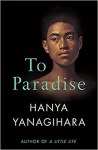 To Paradise by Hanya Yanagihara [Jan. 11, Picador / Doubleday] You’ll see this on just about every list; her fans are legion after the wonder that was A Little Life. Another doorstopper, but this time with the epic reach to justify the length: sections are set in an alternative 1893, 1993, and 2093 – “joined in an enthralling and ingenious symphony, as recurring notes and themes deepen and enrich one another.” [Proof copy]

UK cover
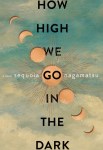 How High We Go in the Dark by Sequoia Nagamatsu [Jan. 18, Bloomsbury / William Morrow] Amazing author name! Similar to the Yanagihara what with the century-hopping and future scenario, a feature common in 2020s literature – a throwback to Cloud Atlas? I’m also reminded of the premise of Under the Blue, one of my favourites from last year. “Once unleashed, the Arctic Plague will reshape life on Earth for generations to come.”
Heartstopper, Volume 5 by Alice Oseman [Feb. ?, Hodder Children’s] I devoured the first four volumes of this teen comic last year. In 2020, Oseman tweeted that the fifth and final installment was slated for February 2022, but I don’t have any more information than that. Nick will be getting ready to go off to university, so I guess we’ll see how he leaves things with Charlie and whether their relationship will survive a separation. (No cover art yet.)
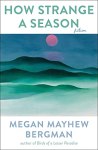 How Strange a Season by Megan Mayhew Bergman [March 29, Scribner] I enjoyed her earlier story collection, Almost Famous Women. “Bergman portrays women who wrestle with problematic inheritances: a modern glass house on a treacherous California cliff, a water-starved ranch, an abandoned plantation on a river near Charleston … provocative prose asks what are we leaving behind for our ancestors … what price will they pay for our mistakes?”
A Violent Woman by Ayana Mathis [April 7, Hutchinson] Her Oprah-approved 2013 debut, The Twelve Tribes of Hattie, got a rare 5-star review from me. About “an estranged mother and her daughter. Dutchess lives in Bonaparte, Alabama, a once thriving black town now in its death throes. Lena lives in Philadelphia in the 1980s. Her involvement with the radical separatist group STEP leads to transcendence and tragedy.” (No cover art yet.)
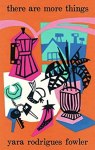 there are more things by Yara Rodrigues Fowler [April 28, Fleet] I so wanted her 2019 debut novel, Stubborn Archivist, to win the Young Writer of the Year Award. I love the cover and Hamlet-sourced title, and I’m here for novels of female friendship. “In January 2016, Melissa [South London native] and Catarina [born to well-known political family in Brazil] meet for the first time, and as political turmoil unfolds … their friendship takes flight.”


UK cover
Sea of Tranquility by Emily St. John Mandel [April 28, Picador / April 5, Knopf] This is the other title you’ll find on everyone else’s list. That’s because The Glass Hotel, even more so than Station Eleven, was amazing. Another history-to-future-hopper: “a novel of art, time, love, and plague that takes the reader from Vancouver Island in 1912 to a dark colony on the moon three hundred years later, unfurling a story of humanity across centuries and space.” [Edelweiss download]
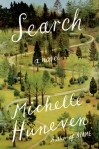 Search by Michelle Huneven [April 28, Penguin] A late addition to my list thanks to the Kirkus review. Sounds like one for readers of Katherine Heiny! “Dana Potowski is a restaurant critic and food writer … asked to join [her California Unitarian Universalist] church search committee for a new minister. Under pressure to find her next book idea, she agrees, and resolves to secretly pen a memoir, with recipes, about the experience.”


UK cover
Very Cold People by Sarah Manguso [April 28, Picador / Feb. 8, Hogarth] The debut novel from an author by whom I’ve read four nonfiction works. “For Ruthie, the frozen town of Waitsfield, Massachusetts, is all she has ever known. Once home to the country’s oldest and most illustrious families[,] … it is an unforgiving place awash with secrets. … Ruthie slowly learns how the town’s prim facade conceals a deeper, darker history…”
UK cover
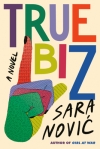
True Biz by Sara Nović [May 5, Little, Brown / April 5, Random House] Her 2015 Girl at War is one of my most-admired debuts of all time, and who can resist a campus novel?! “The students at the River Valley School for the Deaf just want to hook up, pass their history final, and have doctors, politicians, and their parents stop telling them what to do with their bodies. This revelatory novel plunges readers into the halls of a residential school for the deaf.”
 You Have a Friend in 10a: Stories by Maggie Shipstead [May 19, Transworld / May 17, Knopf] Shipstead’s Booker-shortlisted doorstopper, Great Circle, ironically, never took off for me; I’m hoping her short-form storytelling will work out better. “Diving into eclectic and vivid settings, from an Olympic village to a deathbed in Paris to a Pacific atoll, … Shipstead traverses ordinary and unusual realities with cunning, compassion, and wit.”

UK cover
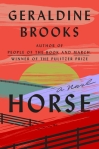 Horse by Geraldine Brooks [June 2, Little, Brown / June 14, Viking] You guessed it, another tripartite 1800s–1900s–2000s narrative! With themes of slavery, art and general African American history. I’m not big on horses, at least not these days, but Brooks’s March and Year of Wonders are among my recent favourites. “Based on the remarkable true story of the record-breaking thoroughbred, Lexington, who became America’s greatest stud sire.”
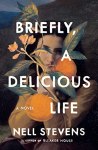

UK cover
Briefly, a Delicious Life by Nell Stevens [June 23, Picador / June 21, Scribner] I’ve read her two previous autofiction-y memoirs and loved Mrs Gaskell & Me. The title, cover and Victorian setting of her debut novel beckon. “In 1473, fourteen-year-old Blanca dies in a hilltop monastery in Mallorca. Nearly four hundred years later, when George Sand, her two children, and her lover Frederic Chopin arrive in the village, Blanca is still there: a spirited, funny, righteous ghost.”
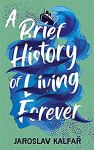 A Brief History of Living Forever by Jaroslav Kalfar [Aug. 4, Sceptre / Little, Brown] His Spaceman of Bohemia (2017) was terrific. “When Adela discovers she has a terminal illness, her thoughts turn to Tereza, the American-raised daughter she gave up at birth. … In NYC, Tereza is … the star researcher for two suspicious biotech moguls hellbent on developing a ‘god pill’ to extend human life indefinitely. … Narrated from the beyond by Adela.”
Nonfiction
 The Cure for Sleep by Tanya Shadrick [Jan. 20, Weidenfeld & Nicolson] Nature memoir / self-help. “On return from near-death, Shadrick vows to stop sleepwalking through life. … Around the care of young children, she starts to play with the shape and scale of her days: to stray from the path, get lost in the woods, make bargains with strangers … she moves beyond her respectable roles as worker, wife and mother in a small town.” [Review copy]
 The Invisible Kingdom: Reimagining Chronic Illness by Meghan O’Rourke [March 1, Riverhead] O’Rourke wrote one of the best bereavement memoirs ever. This ties in with my medical interests. “O’Rourke delivers a revelatory investigation into this elusive category of ‘invisible’ illness that encompasses autoimmune diseases, post-treatment Lyme disease syndrome, and now long COVID, synthesizing the personal and the universal.”

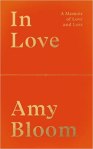
UK cover
In Love: A Memoir of Love and Loss by Amy Bloom [April 7, Granta / March 8, Random House] The true story of how Bloom accompanied her husband Brian, who had Alzheimer’s, to Dignitas in Switzerland to end his life. I’ve read quite a lot around assisted dying. “Written in Bloom’s captivating, insightful voice and with her trademark wit and candor, In Love is an unforgettable portrait of a beautiful marriage, and a boundary-defying love.”
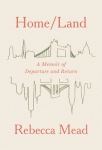 Home/Land: A Memoir of Departure and Return by Rebecca Mead [April 21, Grove Press UK / Feb. 8, Knopf] I enjoyed Mead’s bibliomemoir on Middlemarch. The Anglo-American theme is perfect for me: “drawing on literature and art, recent and ancient history, and the experience of encounters with individuals, environments, and landscapes in New York City and in England, Mead artfully explores themes of identity, nationality, and inheritance.”

UK cover
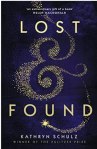
Lost & Found: A Memoir by Kathryn Schulz [April 28, Picador / Jan. 20, Random House] I loved her 2010 book Being Wrong, and bereavement memoirs are my jam. “Eighteen months before Kathryn Schulz’s father died, she met the woman she would marry. In Lost & Found, she weaves the story of those relationships into a brilliant exploration of the role that loss and discovery play in all of our lives … an enduring account of love in all its many forms.”
Poetry
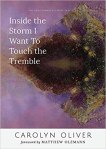 Inside the Storm I Want to Touch the Tremble by Carolyn Oliver [Aug. 19, Univ. of Utah Press] Carolyn used to blog at Rosemary and Reading Glasses. The poems she’s shared on social media are beautiful, and I’m proud of her for winning the Agha Shahid Ali Prize. “Inside this debut collection, girlhood’s dangers echo, transmuted, in the poet’s fears for her son. A body … is humbled by chronic illness. Stumbling toward joy across time and space, these poems hum with fear and desire, bewildering loss, and love’s lush possibilities.”
Themes arising: crossing three centuries; H & I titles, the word “brief”; moons and stars on covers. Mostly female authors (only two men here).
Do check out these other lists for more ideas!
Plus you can seek out all the usual lists (e.g. on Lit Hub and virtually every other book or newspaper site) … if you want to be overwhelmed!
What catches your eye here?
What other 2022 titles do I need to know about?
Best Backlist Reads of 2018
Like a lot of book bloggers, I’m irresistibly drawn to the shiny new books released each year. However, I’ve noticed recently that many of my most memorable reads were published years or even decades ago. In 2018 I even came across a handful of books that are for me among the very best representatives of their genre, whether that’s nature, travel, family memoir, historical fiction or science fiction. The below selections are in alphabetical order by author name, and account for all the rest of my 4.5- and 5-star ratings of the year (another 27!).

My best backlist reads of the year (most of the ones I own in print, anyway).
Fiction
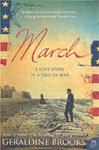 March by Geraldine Brooks (2005): The best Civil War novel I’ve read. The best slavery novel I’ve read. One of the best historical novels I’ve ever read, period. Brooks’s second novel uses Little Women as its jumping-off point but is very much its own story. The whole is a perfect mixture of what’s familiar from history and literature and what Brooks has imagined.
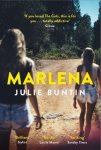 Marlena by Julie Buntin (2017): The northern Michigan setting pairs perfectly with the novel’s tone of foreboding: you have a sense of these troubled teens being isolated in their clearing in the woods, and from one frigid winter through a steamy summer and into the chill of the impending autumn, they have to figure out what in the world they are going to do with their terrifying freedom. It’s basically a flawless debut, one I can’t recommend too highly.
 Reading in the Dark by Seamus Deane (1996): Ireland’s internecine violence is the sinister backdrop to this family’s everyday sorrows, including the death of a child and the mother’s shaky mental health. The book captures all the magic, uncertainty and heartache of being a child, in crisp scenes I saw playing out in my mind.
 The Life and Loves of Lena Gaunt by Tracy Farr (2013): Lena Gaunt: early theremin player, grande dame of electronic music, and opium addict. I loved how Farr evokes the strangeness and energy of theremin music, and how sound waves find a metaphorical echo in the ocean’s waves – swimming is Lena’s other great passion.
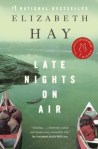 Late Nights on Air by Elizabeth Hay (2007): A tight-knit cast gathers around the local radio station in Yellowknife, a small city in Canada’s Northwest Territories: Harry and Gwen, refugees from Ontario starting new lives; Dido, an alluring Dutch newsreader; Ralph, the freelance book reviewer; menacing Eddie; and pious Eleanor. This is a marvellous story of quiet striving and dislocation; I saw bits of myself in each of the characters, and I loved the extreme setting, both mosquito-ridden summer and bitter winter.
 The Leavers by Lisa Ko (2017): An ambitious and satisfying novel set in New York and China, with major themes of illegal immigration, searching for a mother and a sense of belonging, and deciding what to take with you from your past. This was hand-picked by Barbara Kingsolver for the 2016 PEN/Bellwether Prize for Socially Engaged Fiction.
 The Invisible Bridge by Julie Orringer (2010): Hungarian Jew Andras Lévi travels from Budapest to Paris to study architecture, falls in love with an older woman who runs a ballet school, and – along with his parents, brothers, and friends – has to adjust to the increasingly strict constraints on Jews across Europe in 1937–45. It’s all too easy to burn out on World War II narratives these days, but this is among the very best I’ve read.
 The Sparrow by Mary Doria Russell (1996): For someone like me who struggles with sci-fi at the best of times, this is just right: the alien beings are just different enough from humans for Russell to make fascinating points about gender roles, commerce and art, but not so peculiar that you have trouble believing in their existence. All of the crew members are wonderful, distinctive characters, and the novel leaves you with so much to think about: unrequited love, destiny, faith, despair, and the meaning to be found in life.
 Salt Creek by Lucy Treloar (2015): Hester Finch is looking back from the 1870s – when she is a widowed teacher settled in England – to the eight ill-fated years her family spent at Salt Creek, a small (fictional) outpost in South Australia, in the 1850s–60s. This is one of the very best works of historical fiction I’ve read; it’s hard to believe it’s Treloar’s debut novel.
 Christmas Days: 12 Stories and 12 Feasts for 12 Days by Jeanette Winterson (2016): I treated myself to this new paperback edition with part of my birthday book token and it was a perfect read for the week leading up to Christmas. The stories are often fable-like, some spooky and some funny. Most have fantastical elements and meaningful rhetorical questions. Winterson takes the theology of Christmas seriously. A gorgeous book I’ll return to year after year.
Poetry
 Available Light by Marge Piercy (1988): The subjects are diverse: travels in Europe, menstruation, identifying as a Jew as well as a feminist, scattering her father’s ashes, the stresses of daily life, and being in love. Some of my favorites were about selectively adhering to the lessons her mother taught her, how difficult it is for a workaholic to be idle, and wrestling the deity for words.
Nonfiction
 Deep Country: Five Years in the Welsh Hills by Neil Ansell (2011): One of the most memorable nature/travel books I’ve ever read; a modern-day Walden. Ansell’s memoir is packed with beautiful lines as well as philosophical reflections on the nature of the self and the difference between isolation and loneliness.
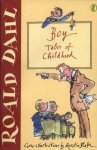 Boy by Roald Dahl (1984): Pranks and larks and holidays: these are all here; so is crushing homesickness and a bitter sense of injustice at being at the mercy of sadistic adults. Nearly 60 years later, Dahl could use memory and imagination to fully inhabit his childhood self and give a charming survey of the notable events of his life up to age 20.
 This Cold Heaven: Seven Seasons in Greenland by Gretel Ehrlich (2001): I thoroughly enjoyed my armchair trek across a frigid island nation in the company of Gretel Ehrlich, who traveled here repeatedly between 1995 and 2001 and intersperses her journeys with those of her historical model, Inuit–Danish explorer Knud Rasmussen, whose seven Arctic expeditions took in the west coast of Greenland and the far north of the North American continent. Every time she finds a fresh way to write about ice and sun glare and frigid temperatures.
 Ali: A Life by Jonathan Eig (2017): It’s a riveting account of outliving segregation and developing a personal style and world-beating confidence; it’s a sobering tale of facing consequences and having your own body fail you. I’m the furthest thing from a sports fan you could imagine, but I approached this as a book about a cultural icon and read it with a spirit of curiosity about how Eig would shape this life story and separate the facts from the legend. I loved it.
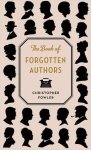 The Book of Forgotten Authors by Christopher Fowler (2017): A charming introduction to 99 more or less obscure writers. Each profile is a perfectly formed mini-biography with a survey of the author’s major work: in just two or three pages, Fowler is able to convey all a writer’s eccentricities and why their output is still worth remembering.
 To the Is-Land: An Autobiography by Janet Frame (1982): This is some of the best writing about childhood and memory that I’ve ever read, infused with music, magic and mystery. The prose alternates between dreamy and matter-of-fact as Frame describes growing up in New Zealand one of five children in the Depression and interwar years.
 Leaving Before the Rains Come by Alexandra Fuller (2015): This poignant sequel to Don’t Let’s Go to the Dogs Tonight is a portrait of Fuller’s two-decade marriage, from its hopeful beginnings to its acrimonious end. What I most appreciated about the book was Fuller’s sense of being displaced: she no longer feels African, but nor does she feel American.
 West With the Night by Beryl Markham (1942): Markham writes so vividly about the many adventures of her life in Africa: hunting lions, training race horses, and becoming one of the continent’s first freelance pilots, delivering mail and locating elephant herds. Whether she’s reflecting on the many faces of Africa or the peculiar solitude of night flights, the prose is just stellar.
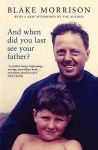 And When Did You Last See Your Father? by Blake Morrison (1993): An extraordinary memoir based around the author’s relationship with his father. Alternating chapters give glimpses into earlier family life and narrate Morrison’s father’s decline and death from cancer. This is simply marvelously written, not a bad line in the whole thing.
 The Seabird’s Cry: The Lives and Loves of Puffins, Gannets and Other Ocean Voyagers by Adam Nicolson (2017): This is an extraordinarily well-written and -researched book (a worthy Wainwright Prize winner) about the behavior, cultural importance, and current plight of the world’s seabirds. Each chapter takes up a different species and dives deep into everything from its anatomy to the legends surrounding it, simultaneously conveying the playful, intimate real lives of the birds and their complete otherness.
 The Long Goodbye: A Memoir of Grief by Meghan O’Rourke (2011): I read a whole lot of bereavement memoirs; this has been one of the very best. O’Rourke tells her story with absolute clarity – a robust, plain-speaking style that matches her emotional transparency. The heart of the book is her mother’s death from colorectal cancer on Christmas Day 2008, but we also get a full picture of the family life that preceded it and the first couple of years of aftermath.
 Ghosts of the Tsunami: Death and Life in Japan’s Disaster Zone by Richard Lloyd Parry (2017): Eighteen and a half thousand people died in the earthquake and tsunami that hit Japan in March 2011. It’s not really possible to get your head around a tragedy on that scale so, wisely, Parry focuses on a smaller story within the story: 74 died at Okawa primary school because the administration didn’t have a sufficient disaster plan in place. This is a stunning portrait of a resilient people, but also a universal story of the human spirit facing the worst.
 Lots of Candles, Plenty of Cake by Anna Quindlen (2012): A splendid memoir-in-essays that dwells on aging, parenting and female friendship. Some of its specific themes are marriage, solitude, the randomness of life, the process of growing into your own identity, and the special challenges her generation (roughly my mother’s) faced in seeking a work–life balance. Her words are witty and reassuring, and cut right to the heart of the matter in every case.
 The Happiness Project: Or, Why I Spent a Year Trying to Sing in the Morning, Clean My Closets, Fight Right, Read Aristotle, and Generally Have More Fun by Gretchen Rubin (2009): Probably the best self-help book I’ve read; dense (in the best possible way) with philosophy, experience and advice. What I appreciated most is that her approach is not about undertaking extreme actions to try to achieve happiness, but about finding contentment in the life you already have by adding or tweaking small habits – especially useful for pessimists like me.
 In the Days of Rain: A daughter. A father. A cult by Rebecca Stott (2017): This was a perfect book for my interests, and just the kind of thing I would love to write someday. It’s a bereavement memoir that opens with Stott’s father succumbing to pancreatic cancer and eliciting her promise to help finish his languishing memoir; it’s a family memoir that tracks generations through England, Scotland and Australia; and it’s a story of faith and doubt, of the absolute certainty experienced inside the Exclusive Brethren (a Christian sect that numbers 45,000 worldwide) and how that cracked until there was no choice but to leave.
 Writers & Company by Eleanor Wachtel (1993): Erudite and fascinating author interviews from Wachtel’s weekly Canadian Broadcasting Corporation radio program. Whether I’d read anything by these authors (or even heard of them) or not, I found each Q&A chock-full of priceless nuggets of wisdom about creativity, mothers and daughters, drawing on autobiographical material, the writing process, and much more.
And if I really had to limit myself to just two books – my very best fiction and nonfiction reads of the year – they would be March by Geraldine Brooks and And When Did You Last See Your Father? by Blake Morrison.

What were your best backlist reads this year?
Mixed Feelings about Elena Ferrante
I paid my 40 pence and waited in what felt like an endless holds queue to get my hands on a public library copy of My Brilliant Friend, the first of Elena Ferrante’s four Neapolitan novels. For months I’d been eager to try out this literary phenomenon in translation. I read about the first 100 pages and then my interest started to tail off. Aware of the impending due date, I skimmed the rest – so this doesn’t count towards my year’s reading list.
What went wrong? I didn’t dislike the book; in fact, I found it to be an accomplished psychological study of a female friendship and how it changes over time. Yet there were some factors that kept me at a distance. I’ll give a quick synopsis before listing pros and cons.
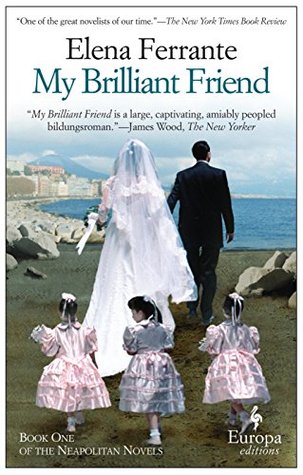 The Story:
Elena, in her sixties, gets a call from the son of her childhood best friend, Lila. His mother and all her possessions have vanished from her home. Elena recalls Lila’s longtime desire to disappear without a trace, and decides she won’t let her: she sits down to her computer to write the story of their friendship, a bulwark against failing memory and deliberate sabotage.
From here Elena, a novelist in her own right (often assumed to be an autobiographical stand-in for Ferrante), returns to the girls’ childhood in 1940s and 1950s Naples, a place of organized crime, domestic violence, and what seems like surprising social backwardness. Neapolitan dialect contrasts with educated Italian. Lila and Elena have a low-key academic rivalry until Lila has to quit school to help her father, a shoemaker. Even then Lila finds ways to show her friend up, maxing out her whole family’s library cards and learning Latin and Greek on her own time. Lila is always one step ahead of Elena, whether in her studies or in attracting boys’ attention. This volume concludes with Lila’s wedding at the age of 16.
What I Loved:
- The psychological acuity Ferrante brings to the relationship between Elena and Lila. Their friendship has a shifting dynamic, vacillating between jealousy and support as they move from childhood through puberty. The novel powerfully captures Elena’s hesitation and Lila’s brazenness, often in piercing one-liners:
she did her best to make me understand that I was superfluous in her life.
In general I was the pretty one, while she was skinny, like a salted anchovy, she gave off an odor of wildness
Lila acted … on me like a demanding ghost
only what Lila touched became important.
- The choice between education and a trade. Money and class have a lot to do with it, but both girls long for a Woolfian “room of one’s own” and even talk of writing novels together one day. Although Lila finds fulfillment designing shoes, it’s plain she envies Elena’s chance to complete high school. “My brilliant friend” is what Lila calls Elena late on in the novel, but it’s what Elena has always thought of Lila too.
- The Naples setting: Don Achille’s murder; setting off fireworks on New Year’s; the sense that the community is on the up and up when someone they know publishes a book. A few of my favorite lines describe the girls’ neighborhood:
We didn’t know the origin of that fear-rancor-hatred-meekness that our parents displayed toward the Carraccis and transmitted to us, but it was there, it was a fact, like the neighborhood, its dirty-white houses, the fetid odor of the landings, the dust of the streets.
What I Struggled with:
- A lack of context. Footnotes would have been intrusive, but perhaps a short introduction from the translator or an English-language critic could have helped set the scene and given some sociological details that would aid in my understanding of mid-twentieth-century Italy. Even just within the first chapter of Only in Naples by Katherine Wilson, a memoir I’m currently reading, there’s more basic information about Italy to help orient foreigners.
- The confusing names. The central characters are known by multiple names – for example, Lila’s full name is Raffaella Cerullo – and nicknames aren’t always intuitive; it reminded me of the variations in War & Peace. Thank goodness for the three-page index of characters.
- Short shrift given to Elena’s odd relationship with her mother. I felt there was a lot more that could have been explored. Perhaps that is a matter for another volume.
- Repetition in the day to day, especially regarding Elena’s schooling. I wondered whether all four, or at least two, of the books might have been condensed into one 400-page novel.
- Minor punctuation and translation issues. I only marked out one passage that sounded false to my ear (“I’ve kept a place for you.” / “Go away, my mother has understood everything.”), but the punctuation drove me a little nutty. I dislike lots of phrases being strung together with commas – as in the anchovy sentence above; I always look for a semicolon!
In general, I avoid series fiction. I hate being saddled with a sense of obligation, and I don’t like feeling that a story is unfinished. That doesn’t mean a book’s last pages can’t be open-ended, but I’d prefer to imagine my own future for the characters rather than have to read about it in another book or three or 14. While I seriously doubt I will pick up another of the Neapolitan novels, I could possibly be persuaded to pick up one of her stand-alone novellas. Naomi at Consumed by Ink wrote a very appealing review of The Lost Daughter, for instance. Although this long-awaited literary experiment was a touch disappointing, I’m still eager to try another model of “autofiction” in translation, Karl Ove Knausgaard.
My rating: 
Further reading: Meghan O’Rourke’s 2014 Guardian article about Elena Ferrante’s growing popularity and mysterious persona.
 Bookish Beck = Rebecca Foster. American transplant to England. Freelance proofreader and book reviewer.
 Bookish Beck