#ReadingtheMeow2026, Part II: George Mikes & Louise Ross Memoirs; Letters of Note: Cats
I’m a few days late with this second batch (after my first post on some Chinese and Japanese cat books). Thanks again to Mallika of Literary Potpourri for hosting the annual Reading the Meow challenge, which is always a great excuse for me to get to a handful of the many cat books on my shelves and e-readers.
Tsi-Tsa by George Mikes; illus. Nicholas Bentley (1978)
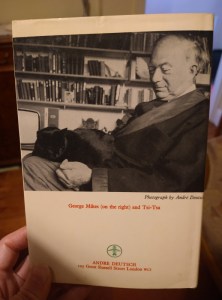
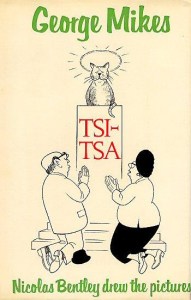 Mikes wasn’t an animal lover at all, but when Tsi-Tsa (from the Hungarian cica, which means pussycat) started turning up in his London house, he finally got it. “A man who had made fun of British cat-worship for several decades, I fell for Tsi-Tsa in the grand way – at first without even noticing it,” he writes. She was actually Sooty, his neighbour’s cat, but so determinedly adopted Mikes – sleeping on his chest, with her right paw on his left shoulder – that her owner told him he could have the cat. His transformation into an ailurophile was soon complete: “The days when I thought that all cats were alike – that a cat was a cat was a cat – have long passed. … By now I am fully aware that cats differ from one another as significantly – and are as much individuals – as humans, or more so.”
 Most of the book is devoted to two crises: his diagnosis of impending blindness, and Tsi-Tsa going missing. If you’re wary of cat memoirs because the pet tends to die at the end, you needn’t worry. This ‘biography’ of Tsi-Tsa ends with her very much alive, having learned to adjust to her physical limitations after being hit by a car. I’ve read several of Mikes’s books, including the trilogy of satirical expat advice books that make up How to Be a Brit. This is similarly light-hearted, if a little insubstantial. If you’ve enjoyed books by Derek Tangye and Doreen Tovey, you’ll find it comparable. (Secondhand – Addymans bargain alley, Hay-on-Wye)
And another novella-length memoir about a black cat that makes itself at home and becomes part of the family!
Slow Blink: A Memoir by Louise Ross (2026)
A 1927 book found on her elderly father’s bookshelf, the poetry collection archy and mehitabel by Don Marquis, sparked Ross’s journey into memory for a look at two very special cats. In Marquis’ book, Archy the cockroach was a human poet in a previous life, while Mehitabel the alley cat was Cleopatra. Ross’s family thus gave to one of their cats the noble name of Mehitabel, and she became the girl’s best buddy as she was growing up in Australia. It became a nightly ritual: her mother would put the cat outside, Mehitabel cried underneath Ross’s window, which she opened to let the cat sneak in and share her bed. In the morning, back out Mehitabel would hop, dashing round to the laundry room yard to pretend she’d been outside all night. Boarding school, early career and travels drove the friends apart somewhat before Mehitabel died at the venerable age of 22.
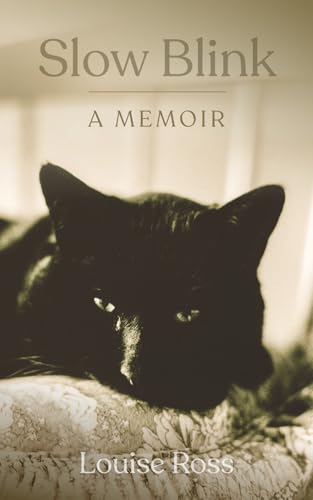 Eight years later, Ross was living in Colorado with her husband and struck up a friendship with a stray black cat who hung out by the bins of their townhouse complex. Eventually he came to trust her and even to shelter indoors from harsh winter weather. What name to give him? Archy, of course. He survived their landlord’s laying down of the law as well as a period of being lost miles away before dying of feline leukaemia. It was only a yearlong relationship in the end, but it had a lasting effect, not least because Ross continued to see Archy after his death. Future losses only reinforced for her the idea that something continues beyond death. “He taught me that some experiences can’t be explained, and that love persists in ways we don’t understand but can, if we’re open and willing, receive.”
While not all pet owners will have experience of such a literal enduring relationship, we can all affirm the strength of the bond with animals, and I also appreciated Ross’s brief (95-page) memoir for its marveling at life’s twists and turns – she now lives in Portugal and has published two volumes of interviews with fellow expatriates and immigrants living there.
With thanks to the author for the free e-copy for review.
Letters of Note: Cats, ed. Shaun Usher (2020)
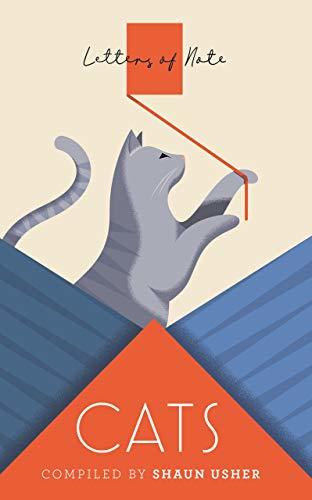 Canongate’s series of short thematic letters anthologies launched in 2013, arising from the website lettersofnote.com. There’s a variety of encounters and experiences here, and the tone ranges from forlorn or silly to outraged. Elizabeth Taylor mourns her missing cat and Jack Kerouac’s mother informs him of the death of his pet. T.S. Eliot tries out the cat-themed nonsense verse he’d become famous for in a birthday note to his godson. Jack Lemmon proposes a cat ranch to his pal Walter Matthau; Erasmus Darwin (grandfather of Charles) and poet Anna Seward exchange slightly saucy ‘love letters’ written in the voices of their cats. Charles Dickens and Jane Carlyle both recount cats’ vendettas against pet canaries.
Some letters are more interesting than others, as you’d expect. There are nice glimpses of cats’ oddities – a reminder that, in many ways, they’re the same across centuries and countries. I was most struck by two entries. One was Adlai Stevenson’s official objection to an Illinois Senate bill proposing owners restrain cats on leashes so they can’t kill birds. “The problem of cat versus bird is as old as time,” he rightly observes, but I can personally attest that leash training works and means our little hunter only kills spiders and houseflies instead of … everything that moves. This environmentalist bill would have been ahead of its time for 1949. The most affecting piece was an open letter by Guy Davenport to the drivers of Lexington, Kentucky, one of whom ran over his cat. It’s a brilliant miniature polemic. This was intermittent entertainment; fun to browse or sample. (Secondhand – hospital book sale)
 Bookish Beck = Rebecca Foster. American transplant to England. Freelance proofreader and book reviewer.
 Bookish Beck