Classic of the Month: Cider with Rosie by Laurie Lee (1959)
 (20 Books of Summer #2) Lee’s quaint family memoir is set in the years immediately after World War I. He was born in 1914 and his childhood unfolded in Stroud, Gloucestershire and nearby village Slad. I started reading Cider with Rosie in April 2019 when we stopped in Stroud for a night on the way back from a holiday in Devon. I got through the first 100 pages quickly, with the voice reminding me slightly of Gerald Durrell’s in his autobiographical trilogy, but then set the book aside for over a year before picking it back up for this summer’s food- and drink-themed reading. Taking such a long break wasn’t a major problem because the book’s vignettes are thematically arranged, so there was no plot as such to lose track of.
Lee was part of his father’s second brood, born out of the widower’s remarriage to his housekeeper. His father left his new family after just a few years, and for the next three decades Lee’s mother dutifully waited for a return that never came. Lee was a sickly child, doted on by his older half-sisters. He was surrounded by a large wider family of brothers, eccentric war-veteran uncles and duelling elderly neighbors who lived one upstairs and one downstairs in a sort of granny annex attached to their untidy, rambling 17th-century stone house. The book depicts a village on the cusp of modernization: everything was still done with wagons and horses, but that was soon to change.
It’s a nostalgic, evocative look at a country childhood. Lee captures a bygone era, portraying himself as similarly on the precipice of losing innocence. The title comes from a late moment when Rosie Burdock tempts the adolescent Lee with alcoholic cider and kisses underneath a hay wagon. This penultimate chapter on the lust of the flesh takes an alarming turn as he describes the village boys’ planned gang rape of a religious 16-year-old, Lizzy. Lee was among the boys who followed her into the woods one Sunday after church. Luckily, they lost their nerve and nothing happened, but Lee’s blasé recounting felt out of keeping and somehow more dated than the rest of his material. It left a sourness I couldn’t get over.
Quintessentially English but not as purely delightful as I expected, this was still a book I valued for its characterization and its description of golden moments in memory.
Some favorite passages:
“Summer, June summer, with the green back on earth and the whole world unlocked and seething – like winter, it came suddenly and one knew it in bed, almost before waking up; with cuckoos and pigeons hollowing the woods since daylight and the chipping of tits in the pear-blossom.”
“Myself, my family, my generation, were born in a world of silence; a world of hard work and necessary patience, of backs bent to the ground, hands massaging the crops, of waiting on weather and growth; of villages like ships in the empty landscapes and the long walking distances between them; … [The horse’s] eight miles an hour was the limit of our movements, as it had been since the days of the Romans. That eight miles an hour was life and death, the size of our world, our prison.”
Source: Free bookshop
My rating: 
Ten more childhood memoirs:
A few I’ve written about here and prefer:
- Boy by Roald Dahl
- To the Is-land by Janet Frame
- Don’t Let’s Go to the Dogs Tonight by Alexandra Fuller
- Bookworm by Lucy Mangan
- Period Piece by Gwen Raverat
A couple of favorites I’ve never written up:
- Oleander, Jacaranda by Penelope Lively
- Hellfire and Herring by Christopher Rush
Plus a few that I haven’t liked quite as much:
- Maggie & Me by Damian Barr
- Childhood by Tove Ditlevsen
- Rosie by Rose Tremain
A Few Bizarre Backlist Reads: McEwan, Michaels & Tremain
I’ve grouped these three prize-winning novels from the late 1980s and 1990s together because they all left me scratching my head, wondering whether they were jumbles of random elements and events or if there was indeed a satisfyingly coherent story. While there were aspects I admired, there were also moments when I thought it indulgent of the authors to pursue poetic prose or plot tangents and not consider the reader’s limited patience. I had to think for ages about how to rate these, but eventually arrived at the same rating for each, reflecting my enjoyment but also my hesitation. 
The Child in Time by Ian McEwan (1987)
[Whitbread Prize for Fiction (now Costa Novel Award)]
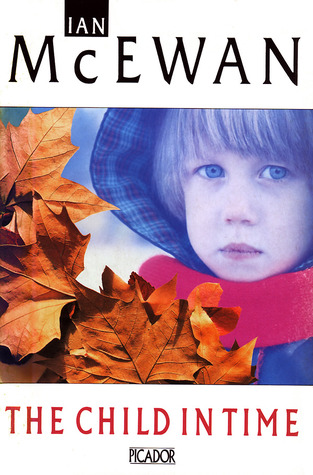 This is the second-earliest of the 13 McEwan books I’ve read. It’s something of a strange muddle (from the protagonist’s hobbies of Arabic and tennis lessons plus drinking onwards), yet everything clusters around the title’s announced themes of children and time.
Stephen Lewis’s three-year-old daughter, Kate, was abducted from a supermarket three years ago. The incident is recalled early in the book, as if the remainder will be about solving the mystery of what happened to Kate. But such is not the case. Her disappearance is an unalterable fact of Stephen’s life that drove him and his wife apart, but apart from one excruciating scene later in the book when he mistakes a little girl on a school playground for Kate and interrogates the principal about her, the missing child is just subtext.
Instead, the tokens of childhood are political and fanciful. Stephen, a writer whose novels accidentally got categorized as children’s books, is on a government committee producing a report on childcare. On a visit to Suffolk, he learns that his publisher, Charles Darke, who later became an MP, has reverted to childhood, wearing shorts and serving lemonade up in a treehouse.
Meanwhile, Charles’s wife, Thelma, is a physicist researching the nature of time. For Charles, returning to childhood is a way of recapturing timelessness. There’s also an odd shared memory that Stephen and his mother had four decades apart. Even tiny details add on to the time theme, like Stephen’s parents meeting when his father returned a defective clock to the department store where his mother worked.
This is McEwan, so you know there’s going to be a contrived but very funny scene. Here that comes in Chapter 5, when Stephen is behind a flipped lorry and goes to help the driver. He agrees to take down a series of (increasingly outrageous) dictated letters but gets exasperated at about the same time it becomes clear the young man is not approaching death. Instead, he helps him out of the cab and they celebrate by drinking two bottles of champagne. This doesn’t seem to have much bearing on the rest of the book, but is the scene I’m most likely to remember.
Other noteworthy elements: Stephen has a couple of run-ins with the Prime Minister; though this is clearly Margaret Thatcher, McEwan takes pains to neither name nor so much as reveal the gender of the PM (in fear of libel claims?). Homeless people and gypsies show up multiple times, making Stephen uncomfortable but also drawing his attention. I assumed this was a political point about Thatcher’s influence, with the homeless serving as additional stand-ins for children in a paternalistic society, representing vulnerability and (misplaced) trust.
This is a book club read for our third monthly Zoom meeting, coming up in the first week of June. While it’s odd and not entirely successful, I think it should give us a lot to talk about: the good and bad aspects of reverting to childhood, whether it matters if Kate ever comes back, the caginess about Thatcher, and so on.
Fugitive Pieces by Anne Michaels (1996)
[Orange Prize (now Women’s Prize for Fiction)]
“One can look deeply for meaning or one can invent it.”
 Poland, Greece, Canada; geology, poetry, meteorology. At times it felt like Michaels had picked her settings and topics out of a hat and flung them together. Especially in the early pages, the dreamy prose is so close to poetry that I had trouble figuring out what was actually happening, but gradually I was drawn into the story of Jakob Beer, a Jewish boy rescued like a bog body or golem from the ruins of his Polish village. Raised on a Greek island and in Toronto by his adoptive father, a geologist named Athos who’s determined to combat the Nazi falsifying of archaeological history, Jakob becomes a poet and translator. Though he marries twice, he remains a lonely genius haunted by the loss of his whole family – especially his sister, Bella, who played the piano. Survivor’s guilt never goes away. “To survive was to escape fate. But if you escape your fate, whose life do you then step into?”
The final third of the novel, set after Jakob’s death, shifts into another first-person voice. Ben is a student of literature and meteorological history. His parents are concentration camp survivors, so he relates to the themes of loss and longing in Jakob’s poetry. Taking a break from his troubled marriage, Ben offers to go back to the Greek island where Jakob last lived to retrieve his notebooks – which presumably contain all that’s come before. Ben often addresses Jakob directly in the second person, as if to reassure him that he has been remembered. Ultimately, I wasn’t sure what this section was meant to add, but Ben’s narration is more fluent than Jakob’s, so it was at least pleasant to read.
Although this is undoubtedly overwritten in places, too often resorting to weighty one-liners, I found myself entranced by the stylish writing most of the time. I particularly enjoyed the puns, palindromes and rhyming slang that Jakob shares with Athos while learning English, and with his first wife. If I could change one thing, I would boost the presence of the female characters. I was reminded of other books I’ve read about the interpretation of history and memory, Everything Is Illuminated and Moon Tiger, as well as of other works by Canadian women, A Student of Weather and Fall on Your Knees. This won’t be a book for everyone, but if you’ve enjoyed one or more of my readalikes, you might consider giving it a try.
Sacred Country by Rose Tremain (1992)
[James Tait Black Memorial Prize, Prix Fémina Etranger]
In 1952, on the day a two-minute silence is held for the dead king, six-year-old Mary Ward has a distinct thought: “I am not Mary. That is a mistake. I am not a girl. I’m a boy.” Growing up on a Suffolk farm with a violent father and a mentally ill mother, Mary asks to be called Martin and binds her breasts with bandages. Kicked out at age 15, she lives with her retired teacher and then starts to pursue a life on her own terms in London. While working for a literary magazine and dating women, she consults a doctor and psychologist to explore the hormonal and surgical options for becoming the man she believes she’s always been.
Meanwhile, a hometown acquaintance with whom she once shared a dentist’s waiting room, Walter Loomis, gives up his family’s butcher shop to pursue his passion for country music. Both he and Mary/Martin are sexually fluid and, dissatisfied with the existence they were born into, resolve to search for something more. The outsiders’ journeys take them to Tennessee, of all places. But when Martin joins Walter there, it’s an anticlimax. You’d expect their new lives to dovetail together, but instead they remain separate strivers.
At a bare summary, this seems like a simple plot, but Tremain complicates it with many minor characters and subplots. The story line stretches to 1980: nearly three decades’ worth of historical and social upheaval. The third person narration shifts perspective often to show a whole breadth of experience in this small English village, while occasional first-person passages from Mary and from her mother, Estelle, who’s in and out of a mental hospital, lend intimacy. Otherwise, the minor characters feel flat, more like symbols or mouthpieces.
To give a flavor of the book’s many random elements, here’s a decoding of the extraordinary cover on the copy I picked up from the free bookshop:
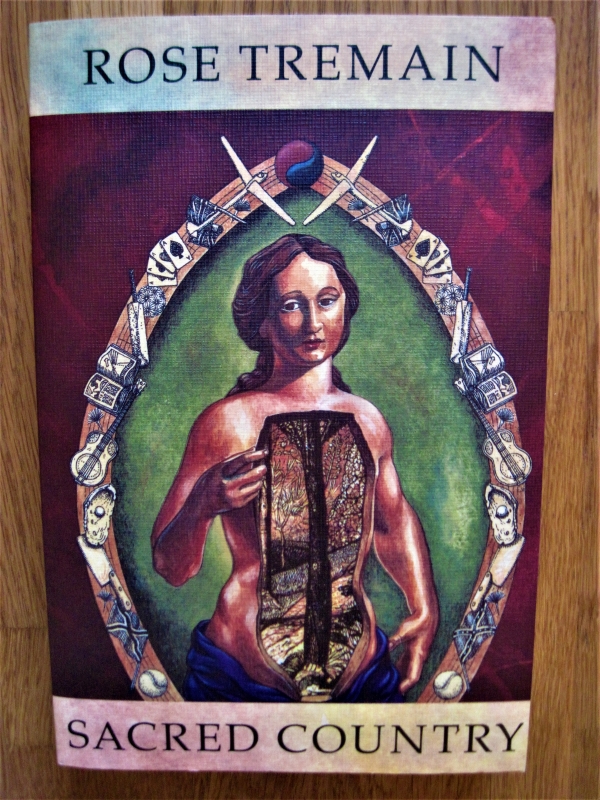
Crimson background and oval shape = female anatomy, menstruation
Central figure in a medieval painting style, with royal blue cloth = Mary
Masculine muscle structure plus yin-yang at top = blended sexuality
Airplane = Estelle’s mother died in a glider accident
Confederate flag = Tennessee
Cards = fate/chance, conjuring tricks Mary learns at school, fortune teller Walter visits
Cleaver = the Loomis butcher shop
Cricket bat = Edward Harker’s woodcraft; he employs and then marries Estelle’s friend Irene
Guitar = Walter’s country music ambitions
Oyster shell with pearl = Irene’s daughter Pearl, whom young Mary loves so much she takes her (then a baby) in to school for show-and-tell
Cutout torso = the search for the title land (both inward and outer), a place beyond duality
Tremain must have been ahead of the times in writing a trans character. She acknowledged that the premise was inspired by Conundrum by Jan Morris (who, born James, knew he was really a girl from the age of five). I recall that Sacred Country turned up often in the footnotes of Tremain’s recent memoir, Rosie, so I expect it has little autobiographical resonances and is a work she’s particularly proud of. I read this in advance of writing a profile of Tremain for Bookmarks magazine. It feels very different from her other books I’ve read; while it’s not as straightforwardly readable as The Road Home, I’d call it my second favorite from her. The writing is somewhat reminiscent of Kate Atkinson, early A.S. Byatt and Shena Mackay, and it’s a memorable exploration of hidden identity and the parts of life that remain a mystery.
My Best Backlist Reads of 2019
Like many book bloggers, I’m irresistibly drawn to the shiny new books released each year. However, I consistently find that many of my most memorable reads were published years or even decades ago.
These selections, in alphabetical order by author name, account for the rest of my 5-star ratings of the year, plus a handful of 4.5 and high 4 ones.
Fiction
 Faces in the Water by Janet Frame: The best inside picture of mental illness I’ve read. Istina Mavet, in and out of New Zealand mental hospitals between ages 20 and 28, undergoes regular shock treatments. Occasional use of unpunctuated, stream-of-consciousness prose is an effective way of conveying the protagonist’s terror. Simply stunning writing.
 The Monsters of Templeton by Lauren Groff: Groff wrote this in homage to Cooperstown, New York, where she grew up. We hear from leading lights in the town’s history and Willie’s family tree through a convincing series of first-person narratives, letters and other documents. A charming way to celebrate where you come from with all its magic and mundanity.
 The Poisonwood Bible by Barbara Kingsolver: What an amazing novel about the ways that right and wrong, truth and pain get muddied together. Some characters are able to acknowledge their mistakes and move on, while others never can. Christianity and colonialism have a lot to answer for. A masterpiece.
 The Grass Is Singing by Doris Lessing: Begins with the words “MURDER MYSTERY”: a newspaper headline announcing that Mary, wife of Rhodesian farmer Dick Turner, has been found murdered by their houseboy. The breakdown of a marriage and the failure of a farm form a dual tragedy that Lessing explores in searing psychological detail.
 Moon Tiger by Penelope Lively: Seventy-six-year-old Claudia Hampton, on her deathbed in a nursing home, determines to write a history of the world as she’s known it. More impressive than the plot surprises is how Lively packs the whole sweep of a life into just 200 pages, all with such rich, wry commentary on how what we remember constructs our reality.
 The Friend by Sigrid Nunez: The narrator is a writer and academic who has stepped up to care for her late friend’s aging Great Dane, Apollo. It feels like Nunez has encapsulated everything she’s ever known or thought about, all in just over 200 pages, and alongside a heartwarming little plot. (Animal lovers need not fear.)
 There There by Tommy Orange: Orange’s dozen main characters are urban Native Americans converging on the annual Oakland Powwow. Their lives have been difficult, to say the least. The novel cycles through most of the characters multiple times, so gradually we work out the links between everyone. Hugely impressive.
 In the Driver’s Seat by Helen Simpson: The best story collection I read this year. Themes include motherhood, death versus new beginnings, and how to be optimistic in a world in turmoil. Gentle humor and magic tempers the sadness. I especially liked “The Green Room,” a Christmas Carol riff, and “Constitutional,” set on a woman’s one-hour lunch break walk.
 East of Eden by John Steinbeck: Look no further for the Great American Novel. Spanning from the Civil War to World War I and crossing the country from New England to California, this is just as wide-ranging in its subject matter, with an overarching theme of good and evil as it plays out in families and in individual souls.
 Cutting for Stone by Abraham Verghese: The saga of conjoined twins born of a union between an Indian nun and an English surgeon in 1954. Ethiopia’s postcolonial history is a colorful background. I thrilled to the accounts of medical procedures. I can’t get enough of sprawling Dickensian stories full of coincidences, minor characters, and humor and tragedy.
 Extinctions by Josephine Wilson: The curmudgeonly antihero is widower Frederick Lothian, at age 69 a reluctant resident of St Sylvan’s Estate retirement village. It’s the middle of a blistering Australian summer and he has plenty of time to drift back over his life. He’s a retired engineering expert, but he’s been much less successful in his personal life.
Poetry
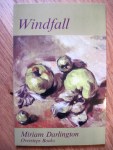 Windfall by Miriam Darlington: I’d had no idea that Darlington had written poetry before she turned to nature writing. The verse is rooted in the everyday. Multiple poems link food and erotic pleasure; others make nature the source of exaltation. Lots of allusions and delicious alliteration. Pick this up if you’re still mourning Mary Oliver.
 Girls Are Coming Out of the Woods by Tishani Doshi: The third collection by the Welsh–Gujarati poet and dancer is vibrant and boldly feminist. The tone is simultaneously playful and visionary, toying with readers’ expectations. Several of the most arresting poems respond to the #MeToo movement. She also excels at crafting breath-taking few-word phrases.
 Where the Road Runs Out by Gaia Holmes: A major thread of the book is caring for her father at home and in the hospital as he was dying on the Orkney Islands – a time of both wonder and horror. Other themes include pre-smartphone life and a marriage falling apart. There are no rhymes, just alliteration and plays on words, with a lot of seaside imagery.
 Autumn Journal by Louis MacNeice: MacNeice wrote this long verse narrative between August 1938 and the turn of the following year. Everyday life for the common worker muffles political rumblings that suggest all is not right in the world. He reflects on his disconnection from Ireland; on fear, apathy and the longing for purpose. Still utterly relevant.
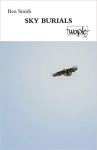 Sky Burials by Ben Smith: I discovered Smith through the 2018 New Networks for Nature conference. He was part of a panel discussion on the role poetry might play in environmental activism. This collection shares that environmentalist focus. Many of the poems are about birds. There’s a sense of history but also of the future.
Nonfiction
 Crow Planet: Essential Wisdom from the Urban Wilderness by Lyanda Lynn Haupt: During a bout of depression, Haupt decided to start paying more attention to the natural world right outside her suburban Seattle window. Crows were a natural place to start. A charming record of bird behavior and one woman’s reawakening, but also a bold statement of human responsibility to the environment.
 All Things Consoled: A Daughter’s Memoir by Elizabeth Hay: Hay’s parents, Gordon and Jean, stumbled into their early nineties in an Ottawa retirement home. There are many harsh moments in this memoir, but almost as many wry ones, with Hay picking just the right anecdotes to illustrate her parents’ behavior and the shifting family dynamic.
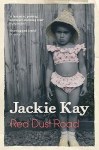 Red Dust Road by Jackie Kay: Jackie Kay was born out of the brief relationship between a Nigerian student and a Scottish nurse in Aberdeen in the early 1960s. This memoir of her search for her birth parents is a sensitive treatment of belonging and (racial) identity. Kay writes with warmth and a quiet wit. The nonlinear structure is like a family photo album.
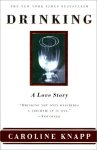 Drinking: A Love Story by Caroline Knapp: An excellent addiction memoir that stands out for its smooth and candid writing. For nearly 20 years, Knapp was a high-functioning alcoholic who maintained jobs in Boston-area journalism. The rehab part is often least exciting, but I appreciated how Knapp characterized it as the tortured end of a love affair.
 The Trauma Cleaner: One Woman’s Extraordinary Life in Death, Decay and Disaster by Sarah Krasnostein: I guarantee you’ve never read a biography quite like this one. It’s part journalistic exposé and part “love letter”; it’s part true crime and part ordinary life story. It considers gender, mental health, addiction, trauma and death. Simply a terrific read.
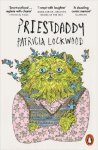 Priestdaddy by Patricia Lockwood: A memoir of growing up in a highly conservative religious setting, but not Evangelical Christianity as you or I have known it. Her father, a married Catholic priest, is an unforgettable character. This is a poet’s mind sparking at high voltage and taking an ironically innocent delight in dirty and iconoclastic talk.
 The Snow Leopard by Peter Matthiessen: For two months in 1973, Matthiessen joined a zoologist on a journey from the Nepalese Himalayas to the Tibetan Plateau in hopes of spotting the elusive snow leopard. Recently widowed, Matthiessen put his Buddhist training to work as he pondered impermanence and acceptance. The writing is remarkable.

This Sunrise of Wonder: Letters for the Journey by Michael Mayne: Mayne’s thesis is that experiencing wonder is what makes us human. He believes poets, musicians and painters, in particular, reawaken us to awe by encouraging us to pay close attention. Especially with the frequent quotations and epigraphs, this is like a rich compendium of wisdom from the ages.
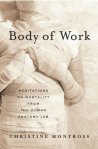 Body of Work: Meditations on Mortality from the Human Anatomy Lab by Christine Montross: When she was training to become a doctor, Montross was assigned an older female cadaver, Eve, who taught her everything she knows about the human body. Montross is also a poet, as evident in this lyrical, compassionate exploration of working with the dead.
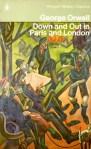 Down and Out in Paris and London by George Orwell: An excellent first-hand account of the working and living conditions of the poor in two world cities. Orwell works as a dishwasher and waiter in Paris hotel restaurants for up to 80 hours a week. The matter-of-fact words about poverty and hunger are incisive, while the pen portraits are glistening.
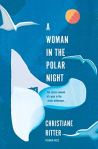 A Woman in the Polar Night by Christiane Ritter: In 1934, Ritter, an Austrian painter, joined her husband Hermann for a year in Spitsbergen. I was fascinated by the details of Ritter’s daily tasks, but also by how her perspective on the landscape changed. No longer a bleak wilderness, it became a tableau of grandeur. A travel classic worth rediscovering.
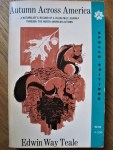 Autumn Across America by Edwin Way Teale: In the late 1940s Teale and his wife set out on a 20,000-mile road trip from Cape Cod on the Atlantic coast to Point Reyes on the Pacific to track the autumn. Teale was an early conservationist. His descriptions of nature are gorgeous, and the scientific explanations are at just the right level for the average reader.
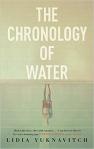 The Chronology of Water by Lidia Yuknavitch: This blew me away. Reading this nonlinear memoir of trauma and addiction, you’re amazed the author is still alive, let alone a thriving writer. The writing is truly dazzling, veering between lyrical stream-of-consciousness and in-your-face informality. The watery metaphors are only part of what make it unforgettable.

(Books not pictured were read from the library or on Kindle.)
And if I really had to limit myself to just two favorites – my very best fiction and nonfiction reads of the year – they would be Moon Tiger by Penelope Lively and Priestdaddy by Patricia Lockwood.
What were your best backlist reads this year?
Other 2019 Superlatives and Some Statistics
My best discoveries of the year: The poetry of Tishani Doshi; Penelope Lively and Elizabeth Strout (whom I’d read before but not fully appreciated until this year); also, the classic nature writing of Edwin Way Teale.


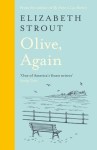
The authors I read the most by this year: Margaret Atwood and Janet Frame (each: 2 whole books plus parts of 2 more), followed by Doris Lessing (2 whole books plus part of 1 more), followed by Miriam Darlington, Paul Gallico, Penelope Lively, Rachel Mann and Ben Smith (each: 2 books).
Debut authors whose next work I’m most looking forward to: John Englehardt, Elizabeth Macneal, Stephen Rutt, Gail Simmons and Lara Williams.
My proudest reading achievement: A 613-page novel in verse (Mary Ann Sate, Imbecile by Alice Jolly) + 2 more books of over 600 pages (East of Eden by John Steinbeck and Cutting for Stone by Abraham Verghese).


Best book club selection: Red Dust Road by Jackie Kay was our first nonfiction book and received our highest score ever.
Some best first lines encountered this year:
- “What can you say about a twenty-five-year old girl who died?” (Love Story by Erich Segal)
- “The women of this family leaned towards extremes” (Away by Jane Urquhart)
- “The day I returned to Templeton steeped in disgrace, the fifty-foot corpse of a monster surfaced in Lake Glimmerglass.” (from The Monsters of Templeton by Lauren Groff)
The downright strangest book I read this year: Lanny by Max Porter
The 2019 books everybody else loved (or so it seems), but I didn’t: Fleishman Is in Trouble by Taffy Brodesser-Akner, The Topeka School by Ben Lerner, Underland by Robert Macfarlane, The Boy, The Mole, The Fox and The Horse by Charlie Mackesy, Three Women by Lisa Taddeo and The Nickel Boys by Colson Whitehead
 The year’s major disappointments: Cape May by Chip Cheek, We Are the Weather: Saving the Planet Begins at Breakfast by Jonathan Safran Foer, Letters to the Earth: Writing to a Planet in Crisis, ed. Anna Hope et al., Bowlaway by Elizabeth McCracken, Rough Magic: Riding the World’s Loneliest Horse Race by Lara Prior-Palmer, The Lager Queen of Minnesota by J. Ryan Stradal, The Knife’s Edge by Stephen Westaby and Frankissstein by Jeanette Winterson
The worst book I read this year: Jonathan Livingston Seagull by Richard Bach
Some statistics on my 2019 reading:
Fiction: 45.4%
Nonfiction: 43.4%
Poetry: 11.2%
(As usual, fiction and nonfiction are neck and neck. I read a bit more poetry this year than last.)
Male author: 39.4%
Female author: 58.9%
Nonbinary author (the first time this category has been applicable for me): 0.85%
Multiple genders (anthologies): 0.85%
(I’ve said this the past three years: I find it interesting that female authors significantly outweigh male authors in my reading; I have never consciously set out to read more books by women.)
E-books: 10.3%
Print books: 89.7%
(My e-book reading has been declining year on year, partially because I’ve cut back on the reviewing gigs that involve only reading e-books and partially because I’ve done less traveling; also, increasingly, I find that I just prefer to sit down with a big stack of print books.)
Work in translation: 7.2%
(Lower than I’d like, but better than last year’s 4.8%.)
Where my books came from for the whole year:
- Free print or e-copy from publisher: 36.8%
- Public library: 21.3%
- Secondhand purchase: 13.8%
- Free (giveaways, The Book Thing of Baltimore, the free mall bookshop, etc.): 9.2%
- Downloaded from NetGalley, Edelweiss or Project Gutenberg: 7.8%
- Gifts: 4.3%
- University library: 2.9%
- New purchase (usually at a bargain price): 2.9%
- Church theological library: 0.8%
- Borrowed: 0.2%
(Review copies accounted for over a third of my reading; I’m going to scale way back on this next year. My library reading was similar to last year’s; my e-book reading decreased in general; I read more books that I either bought new or got for free.)
Number of unread print books in the house: 440
(Last thing I knew the figure was more like 300, so this is rather alarming. I blame the free mall bookshop, where I volunteer every Friday. Most weeks I end up bringing home at least a few books, but it’s often a whole stack. Surely you understand. Free books! No strings attached!)
“All to Do with the Moon”: Four Books with Moon in the Title
I happened to read two books with the word moon in their titles within a couple of weeks in September, which prompted me to ransack my shelves and find two more. While these four are in completely different genres – one women’s fiction, one poetry, one memoir and one Booker-winning literary novel – they are all by women (naturally more in touch with the moon?) and all worth reading. In the weeks that I was undertaking this mini reading project, I couldn’t get Krista Detor’s song “All to Do with the Moon” out of my head (on this video, a live recording of the entire “Night Light” suite of three songs, it starts at about 6:15). She’s one of our favorite singer-songwriters, though, so this was no problem.
The Pull of the Moon by Elizabeth Berg (1996)
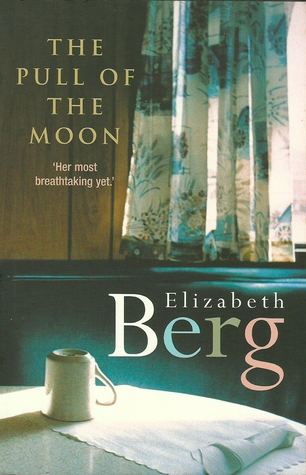 This is my second contemporary novel from Berg. I find her work effortlessly readable. She’s comparable to those other Elizabeths, McCracken and Strout, but also to Alice Hoffman and Anne Tyler. This one reminded me most of Tyler’s Ladder of Years in that both are about a middle-aged woman who takes a break from her marriage to figure out what she wants from life. Nan, “a fifty-year-old runaway,” takes off from her suburban Boston home and drives west, stopping at motels and cabins, eating at diners, and meeting the locals; eventually she gets as far as South Dakota. Her narration is in the form of letters to her husband, Martin, alternated with italicized passages from her journal. She reflects on everything that has made up her life – her upbringing, her marriage and other sexual encounters, raising her daughter, Ruthie – as well as on the small-town folk she meets in Iowa and Minnesota. The moon is a symbol of the femininity Nan fears she’s losing through menopause and hopes to reclaim on this journey.
The Moon Is Almost Full by Chana Bloch (2017)
 This was a lucky find in the clearance section at Blackwell’s on my Oxford day with Annabel. It’s a beautifully produced book from Autumn House, the small Pittsburgh press that released my favorite poetic work of last year: The Small Door of Your Death by Sheryl St. Germain. This was Bloch’s sixth and final book of poetry, published in the year of her death. She writes in the awareness that this cancer will be her end and doesn’t gloss over losses of function and dignity, but still finds delight in life through her family, writing and Jewish rituals: “Never forget / you were put on earth to gather joy // with melancholy hands” (from “Instructions for the Bridegroom”). A favorite poem was “The Will,” in which she imagines how the physical and intangible relics of her life will be distributed (“My plans and projects I hereby bequeath to the air / of which they were conceived. … Let the doctors pack up my heart / and keep it humming for the right customer.”).
Off-topic note: This was typeset in Mrs Eaves, which may well be one of my favorite fonts.
To the Moon and Back: A Childhood under the Influence by Lisa Kohn (2018)
 My special interest in women’s religious memoirs led me to list this among my most anticipated titles of 2018. I had it on my wish list for quite a while and then, when I saw it available for a bargain price online, snapped it up for myself. Lisa Kohn grew up in the New York City environs, the child of hippie parents she called Mimi and Danny rather than Mom and Dad. After their parents divorced, she and her brother lived in New Jersey with their mother and went into the City to visit their father, who was very lax about things like drugs. By the time Kohn was 10, her mother had gotten caught up in Reverend Moon’s Unification Church.
I knew next to nothing about the “Moonies,” so I found it fascinating to learn about this cult led by a South Korean reverend who let it be assumed that he was the new incarnation of Jesus Christ and the flourishing of his family on Earth would usher in God’s Kingdom. The Church became Kohn’s whole life until internal questioning set in during high school, and by the time she went to college she was adrift and into drugs instead. The book recreates scenes and dialogue well, but I found myself losing interest once the cult itself stopped being the main focus. 
Readalikes: Small Fry by Lisa Brennan-Jobs and In the Days of Rain by Rebecca Stott
Moon Tiger by Penelope Lively (1987)
 Seventy-six-year-old Claudia Hampton, on her deathbed in a nursing home, determines to write a history of the world – or at least, the world as she’s seen it. She’s been an author of popular history books (one of which, on Mexico, was made into a film), but she’s also been a daughter, a sister, a lover and a mother. As the book shifts between the first person and the third person, the present and the past, we learn volumes about Claudia and how her memory has preserved the layers of her personal history. There are a couple of big reveals, about her relationship with her brother Gordon and her time as a Second World War correspondent in Egypt, but what’s more impressive than these plot surprises is how Lively packs the whole sweep of a life into just 200 pages, all with such rich, wry commentary on how what we remember constructs our reality.
I made the fine choice to start reading this on holiday at the Jurassic coast in Dorset, which was fitting because Claudia grew up in Dorset and uses ammonites and rock strata as recurring metaphors. This won a well-deserved Booker Prize and is the best of the five Lively books I’ve read. I wasn’t particularly taken with the first couple I read by her, so I’m glad I tried again this year (with Heat Wave and then this). It’s just a shame that the copy I found in the free bookshop where I volunteer has such a dreadfully inappropriate cover, making it look like contemporary chick lit rather than serious literature. 
Some favorite lines:
“Argument, of course, is the whole point of history. Disagreement; my word against yours; this evidence against that. If there were such a thing as absolute truth the debate would lose its lustre. I, for one, would no longer be interested.”
“In life as in history the unexpected lies waiting, grinning from around corners. Only with hindsight are we wise about cause and effect.”
“Once it is all written down we know what really happened.”
A note on the title: From the context, it seems that a moon tiger was a special inflammatory device, maybe like a citronella candle, used to repel mosquitoes and other insects.
 Other ‘Moon’ books I have happened to review:
Crossing the Moon by Paulette Bates Alden
The Moon and Sixpence by W. Somerset Maugham
Book Serendipity, 2019 Second Half
I call it serendipitous when two or more books that I’m reading at the same time or in quick succession have something pretty bizarre in common. Because I have so many books on the go at once – usually between 10 and 20 – I guess I’m more prone to such incidents. I post these occasional reading coincidences on Twitter. What’s the weirdest one you’ve had lately? (The following are in rough chronological order.)
[Previous 2019 Book Serendipity posts from April and July.]
- Two novels in which a character attempts to glimpse famous mountains out of a train window but it’s so rainy they can barely be seen: The Unchangeable Spots of Leopards by Kristopher Jansma and The Pine Islands by Marion Poschmann.


- Ex-husbands move from England to California and remarry younger women in The Stillness The Dancing by Wendy Perriam and Heat Wave by Penelope Lively.
 References to Edgar Allan Poe in both Timbuktu by Paul Auster and The Unchangeable Spots of Leopards by Kristopher Jansma.
- An account of Percy Shelley’s funeral pyre in both The Unchangeable Spots of Leopards by Kristopher Jansma and Frankissstein by Jeanette Winterson.
- Mentions of barn owls being killed by eating poisoned rats in Owl Sense by Miriam Darlington and Homesick by Catrina Davies.


- Miriam Rothschild is mentioned in Irreplaceable by Julian Hoffman and An Obsession with Butterflies by Sharman Apt Russell.
- Gorse is thrown on bonfires in Homesick by Catrina Davies and The Stillness The Dancing by Wendy Perriam.
 A character has a nice cup of Ovaltine in Some Tame Gazelle by Barbara Pym and The Stillness The Dancing by Wendy Perriam.
- I started two books with “Bloom” in the title on the same day.

 Two books I finished about the same time conclude by quoting or referring to the T. S. Eliot lines about coming back to the place where you started and knowing it for the first time (Owl Sense by Miriam Darlington and This Is Not a Drill, the Extinction Rebellion handbook).
- Three books in which the narrator wonders whether to tell the truth slant (quoting Emily Dickinson, consciously or not): The Unchangeable Spots of Leopards by Kristopher Jansma, The Poisonwood Bible by Barbara Kingsolver and The Hiding Game by Naomi Wood.
- On the same day, I saw mentions of crullers in both On Chapel Sands by Laura Cumming and The Dutch House by Ann Patchett.


- There are descriptions of starling murmurations over Brighton Pier in both Irreplaceable by Julian Hoffman and Expectation by Anna Hope. (Always brings this wonderful Bell X1 song to mind!)
- I was reading The Outermost House by Henry Beston and soon after found an excerpt from it in Irreplaceable by Julian Hoffman; later I started The Easternmost House by Juliet Blaxland, whose title is a deliberate tip of the hat to Beston.
 At a fertility clinic, the author describes a pair of transferred embryos as “two sequins of light” (in On Chapel Sands by Laura Cumming) and “two points of light” (in Expectation by Anna Hope).
- Mentions of azolla ferns in Time Song by Julia Blackburn and Bloom (aka Slime) by Ruth Kassinger.
 Incorporation of a mother’s brief memoir in the author’s own memoir in On Chapel Sands by Laura Cumming and All Things Consoled by Elizabeth Hay.
- Artist mothers in On Chapel Sands by Laura Cumming, All Things Consoled by Elizabeth Hay, and Expectation by Anna Hope.
- Missionary fathers in The Poisonwood Bible by Barbara Kingsolver and The Wind that Lays Waste by Selva Almada.


- Twins, one who’s disabled from a birth defect and doesn’t speak much, in Golden Child by Claire Adam and The Poisonwood Bible by Barbara Kingsolver.
 An Irish-American family in a major East Coast city where the teenage boy does construction work during the summers in Ask Again, Yes by Mary Beth Keane and The Dutch House by Ann Patchett.
- SPOILERS: A woman with terminal cancer refuses treatment so she can die on her own terms and is carried out into her garden in Expectation by Anna Hope and A Reckoning by May Sarton.
- A 27-year-old professor has a student tearfully confide in her in Crow Lake by Mary Lawson and The Small Room by May Sarton.


- Reading The Yellow House by Sarah M. Broom at the same time as The Dutch House by Ann Patchett.
 “I was nineteen years old and an idiot” (City of Girls, Elizabeth Gilbert); “I was fifteen and generally an idiot” (The Dutch House, Ann Patchett).
- Mentions of a conjuring tricks book in Time Song by Julia Blackburn and Fifth Business by Robertson Davies.
- A teen fleeces their place of employment in Sweet Sorrow by David Nicholls and Who Will Run the Frog Hospital? by Lorrie Moore.


- A talking parrot with a religious owner in The Poisonwood Bible by Barbara Kingsolver and Olive Kitteridge by Elizabeth Strout.
- Pictorial book serendipity: three books I was reading, and another waiting in the wings, had a red, black and white color scheme.

 Kripalu (a Massachusetts retreat center) is mentioned in Fleishman Is in Trouble by Taffy Brodesser-Akner and Once More We Saw Stars by Jayson Greene.
- The character of Netty Quelch in Robertson Davies’s The Manticore reminds me of Fluffy in Ann Patchett’s The Dutch House.
- The artist Chardin is mentioned in How Proust Can Change Your Life by Alain de Botton and Varying Degrees of Hopelessness by Lucy Ellmann.
- A Czech grand/father who works in a plant nursery in the opening story of Andrea Barrett’s Ship Fever and Patricia Hampl’s The Florist’s Daughter.


- The author was in Eva Le Gallienne’s NYC theatre company (Madeleine L’Engle’s Two-Part Invention and various works by May Sarton, also including a biography of her).
 Gillian Rose’s book Love’s Work is mentioned in both Notes Made while Falling by Jenn Ashworth and My Year Off by Robert McCrum. (I will clearly have to read the Rose!)
- Sarah Baartman (displayed in Europe as the “Hottentot Venus”) is mentioned in Shame on Me by Tessa McWatt and Hull by Xandria Phillips.
Thomas Hardy Tourism in Dorset
We fancied a short break before term starts (my husband is a teaching associate in university-level biology), so booked a cheap Airbnb room in Bridport for a couple of nights and headed to Dorset on Wednesday, stopping at the Thomas Hardy birthplace cottage on the way down and returning on Friday via Max Gate, the home he designed on the outskirts of Dorchester.
I’d been to both before, but over 15 years ago. In the summer of 2004, at the end of my study abroad year, I used a travel grant from my college to spend a week in Dorset and Nottinghamshire, researching the sense of place in the works of Hardy and D.H. Lawrence. I marvel at my bravery now: barely out of my teens, there I was traveling alone by train and bus to places I’d never been before, finding my own B&B accommodation, and taking long countryside walks to arrive at many sites on foot.

Max Gate
I found that much had changed in 15 years. The main difference is that both properties have now been given the full National Trust treatment, with an offsite visitor centre and café down the lane from Hardy’s Cottage, and the upper floors of Max Gate now open to the public after the end of private tenancies in 2011.* This could be perceived as a good thing or a bad thing: Everything is more commercial and geared towards tourists, yes, but also better looked after and more inviting thanks to visitor income and knowledgeable volunteers. Fifteen years ago I remember the two sites being virtually deserted, with the cottage’s garden under black plastic and awaiting a complete replanting. Now it’s flourishing with flowers and vegetables.
*In 2004 only a few ground-floor rooms were open to the public. I happened to spot in the visitor’s book that novelist Vikram Seth had signed in just before me. When I made the caretakers aware of this, they expressed admiration for his work and offered him an exclusive look at the study where Hardy wrote Tess of the d’Urbervilles. I got to tag along! The story is less impressive since it’s been a standard part of the house tour for eight years now, but I still consider it a minor claim to fame.
The thatched cottage doesn’t possess anything that belonged to the Hardy family, but is decorated in a period style that’s true to its mid-1800s origin. Hardy was born here and remained until his early thirties, completing an architecture apprenticeship and writing his first few books, including Under the Greenwood Tree. Even if you’re not particularly familiar with or fond of Hardy’s work, I’d recommend an afternoon at the cottage for a glimpse of how simple folk lived in that time. With wood smoke spooling out of the chimney and live music emanating from the door – there are two old fiddles in the sitting room that guests are invited to play – it was a perfectly atmospheric visit.

 Afterwards, we headed to Portland, an isthmus extending from the south coast near Weymouth and known for its stone. It’s the setting of The Well-Beloved, which Hardy issued in serial form in 1892 and revised in 1897 for its book publication. Jocelyn Pierston, a sculptor whose fame is growing in London, returns to “the Isle of Slingers” (Hardy gave all his English locales made-up names) for a visit and runs into Avice Caro, a childhood friend. On a whim, he asks her to marry him. Before long, though, following a steamy (for Victorian literature, anyway) scene under an upturned boat during a storm, he transfers his affections to Miss Bencomb, the daughter of his father’s rival stone merchant. The fickle young man soon issues a second marriage proposal. I read the first 30 pages, but that was enough for me.

St. George’s Church, Portland, in a Christopher Wren style.
 [I failed on classics or doorstoppers this month, alas, so look out for these monthly features to return in October. I did start The Warden by Anthony Trollope, my first of his works since Phineas Finn in 2005, with the best of intentions, and initially enjoyed the style – partway between Dickens and Hardy, and much less verbose than Trollope usually is. However, I got bogged down in the financial details of Septimus Harding’s supposed ripping-off of the 12 old peasants who live in the local hospital (as in a rest center for the aged and infirm, like the Hospital of St Cross at Winchester). He never should have had his comfortable £800 a year, it seems. His son-in-law, the archdeacon Dr. Grantly, and his would-be son-in-law, gadfly John Bold, take opposing sides as Harding looks to the legal and religious authorities for advice. I read the first 125 pages but only briefly skimmed the rest. Given how much longer the other five volumes are, I doubt I’ll ever read the rest of the Barchester Chronicles.]
My other appropriate reading of the trip was Moon Tiger by Penelope Lively, in which Claudia Hampton, a popular historian now on her deathbed, excavates the layers of her personal past and dwells on the subjectivity of history and memory. She grew up in Dorset and mentions ammonites and rock strata, which we encountered on our beach walks.

Bridport isn’t so well known, but we thought it a lovely place, full of pleasant cafés, pubs and charity shops. It also has an independent bookshop and two secondhand ones, and we had an excellent meal of dumplings and noodle bowls at the English/Asian fusion restaurant Dorshi. It’s tucked away down an alley, but well worth a special trip. Our other special experience of the trip was a tour of Dorset Nectar, a small, family-run organic cider farm just outside of Bridport, which included a tasting of their 10+ delicious ciders. We had splendid late-summer weather for our three days away, too – we really couldn’t have asked for better.


Three secondhand books purchased, for a total of £4.10.
This Year’s Summer-Themed Reading: Lippman, Lively, Nicholls & More
Sun, warmth and rival feelings of endlessness and evanescence: here were three reads that were perfect fits for the summer setting.
Sunburn by Laura Lippman (2018)
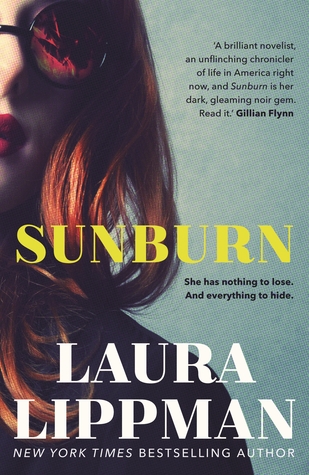 While on a beach vacation in 1995, a woman walks away from her husband and daughter and into a new life as an unattached waitress in Belleville, Delaware. Polly has been known by many names, and this isn’t the first time she’s left a family and started over. She’s the (literal) femme fatale of this film noir-inspired piece, as bound by her secrets as is Adam Bosk, the investigator sent to trail her. He takes a job as a chef at the diner where Polly works, and falls in love with her even though he may never fully trust her. Insurance scams and arson emerge as major themes.
I liked the fact that I recognized many of the Maryland/Delaware settings, and that the setup is a tip of the hat to Anne Tyler’s excellent Ladder of Years, which was published in the year this is set. It is a quick and enjoyable summer read that surprised me with its ending, but I generally don’t find mysteries a particularly worthwhile use of my reading time. Put it down to personal taste and/or literary snobbery.
Heat Wave by Penelope Lively (1996)
 My fourth Lively book, and the most enjoyable thus far. Pauline, a freelance copyeditor (“Putting commas into a novel about unicorns”) in her fifties, has escaped from London to spend a hot summer at World’s End, the Midlands holiday cottage complex she shares with her daughter Teresa, Teresa’s husband Maurice, and their baby son Luke. Maurice is writing a history of English tourism and regularly goes back to London for meetings or receives visits from his publishers, James and Carol. Pauline, divorced from a philandering husband, recognizes the signs of Maurice’s adultery long before Teresa does, and uneasily ponders how much to hint and how much to say outright.
The last line of the first chapter coyly promises an “agreeable summer of industry and companionship,” but the increasing atmospheric threats (drought or storms; combine harvesters coming ever nearer) match the tensions in the household. I expected this to be one of those subtle relationship studies where ultimately nothing happens. That’s not the case, though; if you’ve been paying good attention to the foreshadowing you’ll see that the ending has been on the cards.
I loved the city versus country setup of the novel, especially the almost Van Gogh-like descriptions of the blue sky and the golden wheat, and recognized myself in Pauline’s freelancer routines. Her friendships with bookseller Hugh and her client, novelist Chris Rogers, might be inconsequential to the plot but give Pauline a life wider than the confines of the cottage, and the frequent flashbacks to her marriage to Harry show what she had to overcome to earn a life of her own.
This was a compulsive read that was perfect for reading during the hottest week of our English summer. I’d recommend it to fans of Tessa Hadley, Susan Hill and Polly Sansom.
Sweet Sorrow by David Nicholls (2019)
 The title is a snippet from Romeo and Juliet, which provides the setup and subject matter for this novel about first love during the golden summer of 1997, when Charlie Lewis and Fran Fisher are 16. Charlie thinks he’s way too cool for the thespians, but if he wants to keep seeing Fran he has to join the Full Fathom Five Theatre Co-operative for the five weeks of rehearsals leading up to performances. Besides, he doesn’t have anything better to do – besides watching his dad get drunk on the couch and scamming the petrol station where he works nights. Charlie starts off as the most robotic Benvolio imaginable, but Fran helps bring him up to scratch with her private tutoring (which is literal as well as a euphemism).
Glimpses of the present day are an opportunity for nostalgia and regret, as Charlie/Nicholls coyly insists that first love means nothing: “love is boring. Love is familiar and commonplace for anyone not taking part, and first love is just a gangling, glandular incarnation of the same. … first love wasn’t real love anyway, just a fraught and feverish, juvenile imitation of it.” I enjoyed the teenage boy perspective and the theatre company shenanigans well enough, but was bored with the endless back story about Charlie’s family: his father’s record shops went bankrupt; his mother left him for another golf club colleague and took his sister; he and his depressed father are slobby roommates subsisting on takeaways and booze; blah blah blah.
It’s possible that had I read or seen R&J more recently, I would have spotted some clever parallels. Honestly? I’d cut 100+ pages (it should really be closer to 300 pages than 400) and repackage this as YA fiction. If you’re looking for lite summer fare reminiscent of Rachel Joyce and, yes, One Day, this will slip down easily, but I feel like I need to get better about curating my library stack and weeding out new releases that will be readable but forgettable. I really liked Us, which explains why I was willing to take another chance on Nicholls.
Note: There is a pretty bad anachronism here: a reference to watching The Matrix, which wasn’t released until 1999 (p. 113, “Cinnamon” chapter). Also a reference to Hobby Lobby, which as far as I know doesn’t exist in the UK (here it’s Hobbycraft) (p. 205, “Masks” chapter). I guess someone jumped the gun trying to get this ready for its U.S. release.
Favorite summery passage: “This summer’s a bastard, isn’t it? Sun comes out, sky’s blue if you’re lucky and suddenly there are all these preconceived ideas of what you should be doing, lying on a beach or jumping off a rope swing into the river or having a picnic with all your amazing mates, sitting on a blanket in a meadow and eating strawberries and laughing in that mad way, like in the adverts. It’s never like that, it’s just six weeks of feeling like you’re in the wrong place … and you’re missing out. That’s why summer’s so sad – because you’re meant to be so happy. Personally, I can’t wait to get my tights back on, turn the central heating up. At least in winter you’re allowed to be miserable” (Fran)
Plus a couple of skims:
The Sun Does Shine: How I Found Life and Freedom on Death Row by Anthony Ray Hinton with Lara Love Hardin (2018)
 I’d heard about Hinton’s case: he spent nearly 30 years on death row in Alabama for crimes he didn’t commit. In 1985 he was convicted of two counts of robbery and murder, even though he’d been working in a locked warehouse 15 miles away at the time the restaurant managers were shot. His mother’s gun served as the chief piece of evidence, even though it didn’t match the bullets found at the crime scenes. “My only crime was … being born black in Alabama,” Hinton concludes. He was a convenient fall guy, and his every appeal failed until Bryan Stevenson of the Equal Justice Initiative (and author of Just Mercy, which I’d like to read) took on his case.
It took another 16 years and an appeal to the U.S. Supreme Court, but Hinton was finally released and now speaks out whenever he can about justice for those on death row, guilty or innocent. Almost the most heartbreaking thing about the book is that his mother, who kept the faith for so many years, died in 2012 and didn’t get to see her son walk free. I love the role that literature played: Hinton started a prison book club in which the men read Go Tell It on the Mountain and To Kill a Mockingbird and discussed issues of race and injustice. Although he doesn’t say very much about his life post-prison, I did note how big of an adjustment 30 years’ worth of technology was for him.
I don’t set a lot of stock by ghostwritten or co-written books, and found the story much more interesting than the writing here (though Hardin does a fine job of recreating the way a black man from the South speaks), so I just skimmed the book for the basics. I was impressed by how Hinton avoided bitterness and, from the very beginning, chose to forgive those who falsely accused him and worked to keep him in prison. “I was afraid every single day on death row. And I also found a way to find joy every single day. I learned that fear and joy are both a choice.” The book ends with a sobering list of all those currently on death row in the United States: single-spaced, in three columns, it fills nine pages. Lord, have mercy.
The Last Supper: A Summer in Italy by Rachel Cusk (2009)
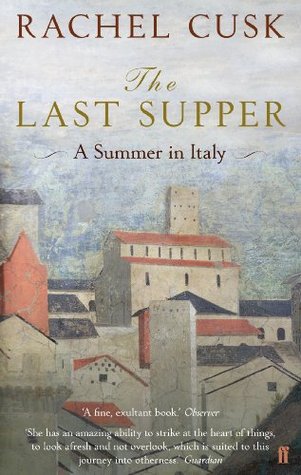 Having moved away from Bristol, Cusk and her family (a husband and two children) decided to spend a summer in Italy before deciding where to go next. They took the boat to France then drove, made a stop in Lucca, and settled into a rented house on the eastern edge of Tuscany. It proceeded to rain for 10 days. Cusk learns to speak the vernacular of football and Catholicism – but Italian eludes her: “I too feel humbled, feel childlike and impotent. It is hard to feel so primitive, so stupid.” They glory in the food, elemental and unpretentious; they try a whole spectrum of gelato flavors. And they experience as much culture as they can: “we will learn to fillet an Italian city of its artworks with the ruthless efficiency of an English aristocrat de-boning a Dover sole.” A number of these masterpieces are reproduced in the text in black and white. In the grip of a heatwave, they move on to Rome, Naples and Capri.
If I’d been able to get hold of this for my trip to Milan (it was on loan at the time), I might have enjoyed it enough to read the whole thing. As it is, I just had a quick skim through. Cusk can write evocatively when she wishes to (“We came here over the white Apuan mountains, leaving behind the rose-coloured light of the coast … up and up into regions of dazzling ferocity where we wound among deathly white peaks scarred with marble quarries, along glittering chasms where the road fell away into nothingness and we clung to our seats in terror”), but more often resorts to flat descriptions of where they went and what they did. I’m pretty sure Transit was a one-off and I’ll never warm to another Cusk book.
DNFs: Alas, One Summer: America, 1927 by Bill Bryson and The Go-Between by L. P. Hartley were total non-starters. Maybe some other day (make that year).
See also my 2017 and 2018 “summer” reads, all linked by the season appearing in the title.
Have you read any summer-appropriate books lately?
A Week in Italy and What I Read
We’re relieved to be back in the balmy UK after a sweltering week in northern Italy. Though our sixth-floor Airbnb apartment in Milan suited our needs perfectly, it was a challenge to keep it minimally comfortable. Eventually we worked out that it was essential to get up by 6:30 a.m. to close the balcony doors and shutter. The bedroom happened to be shaded, so I could set up my laptop in there and work until noon, when it was time to close out the heat of the day on that side. In the afternoons I read and napped on the divan, and then sometime between 6 and 10 p.m., depending on how sunny it had been during the day, we could fling the windows and doors wide open again. Fans helped, but we still passed some horribly muggy nights.


My husband was at his conference for four of the days, so we only braved the city centre itself on Monday morning, touring the Duomo and climbing the steps to the roof. This was well worth doing for views over the city. Afterwards we walked through the associated museum (mostly underground, and blissfully cool with air conditioning) and Galleria Vittorio Emanuele II, a luxurious nineteenth-century shopping arcade filled with designer fashions.


Two day trips by train got us out of the city and into slightly cooler temperatures: on Wednesday we explored Varenna and Bellagio on Lake Como, and on Saturday we took a bus and cable car from Lecco into the mountains at Piani d’Erna. We took full advantage of one-euro espressos and glasses of wine, and ate lots of pizza, pasta and gelato.

After much deliberation, this is the book stack I actually packed for our trip. I got through the first half of the Orwell, an excellent account of working as a dishwasher in Paris hotels and having to scrape together enough money to ward off starvation. I’ll be writing it up as my Classic of the Month in a couple of weeks. I also read Sunburn by Laura Lippman, which I’ll hold in reserve for a summer-themed post, and (on Kindle) So Many Rooms by Laura Scott, a debut poetry collection coming out in October that I’ll review here at a later date.
Two of my other Kindle reads ended up being perfect for the setting:
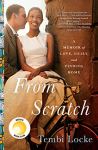
From Scratch: A Memoir of Love, Sicily, and Finding Home by Tembi Locke: This was the perfect book for me to read during the week in Italy. Not only is it set largely in Sicily, but it ticks a lot of boxes in terms of my reading interests: food, travel, bereavement, and the challenges of being an American overseas. During a semester abroad in Florence, Locke (an actress I was previously unfamiliar with) met and fell in love with Saro Gullo, an Italian chef. His parents could hardly accept him marrying someone from outside of Sicily, let alone a black woman from Texas, and refused to attend their wedding. But as the years passed they softened towards Locke, who gradually became accepted in Saro’s hometown of Aliminusa.
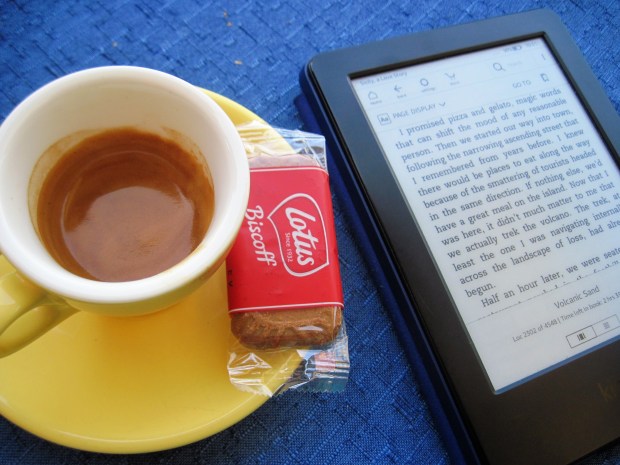
In fact, after Saro’s death from bone cancer in 2012, she became like a second daughter to Saro’s mother. The book focuses on the three summers in a row when she and her adopted daughter Zoela traveled to the family home in Sicily to stay with Nonna. I particularly appreciated the exploration of what it’s like to live between countries and cultures. This is one of three Reese Witherspoon book club books I’ve read so far (along with Where the Crawdads Sing and Daisy Jones and the Six), and all have been great – Reese’s recommendations are proving as reliable as Oprah’s.
 A mudslide blocked the route we should have taken back from Milan to Paris, so we rebooked onto trains via Switzerland. This plus the sub-Alpine setting for our next-to-last day made the perfect context for racing through Where the Hornbeam Grows: A Journey in Search of a Garden by Beth Lynch in just two days. Lynch moved from England to Switzerland when her husband took a job in Zurich. Suddenly she had to navigate daily life, including frosty locals and convoluted bureaucracy, in a second language. The sense of displacement was exacerbated by her lack of access to a garden. Gardening had always been a whole-family passion, and after her parents’ death their Sussex garden was lost to her. Two years later she and her husband moved to a cottage in western Switzerland and cultivated a garden idyll, but it wasn’t enough to neutralize their loneliness.
Much of what Lynch has to say about trying to find genuine connections as an expatriate rang true for me. Paradise Lost provides an unexpected frame of reference as Lynch asks what it means for a person or a plant to be transplanted somewhere new, and what it takes to thrive. Her elegant writing reminded me of Diana Athill’s and Penelope Lively’s, and the exploration of the self through gardens is reminiscent of Allan Jenkins’s Plot 29.
Other successful reads:
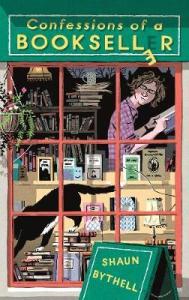 Confessions of a Bookseller by Shaun Bythell: This picks up right where The Diary of a Bookseller left off and carries through the whole of 2015. Again it’s built on the daily routines of buying and selling books, including customers’ and colleagues’ quirks, and of being out and about in a small town. I wished I was in Wigtown instead of Milan! Because of where I was reading the book, I got particular enjoyment out of the characterization of Emanuela (soon known as “Granny” for her poor eyesight and myriad aches and gripes), who comes over from Italy to volunteer in the bookshop for the summer. Bythell’s break-up with “Anna” is a recurring theme in this volume, I suspect because his editor/publisher insisted on an injection of emotional drama.
 City of Girls by Elizabeth Gilbert: There’s a fun, saucy feel to this novel set mostly in 1940s New York City. Twenty-year-old Vivian Morris comes to sew costumes for her Aunt Peg’s rundown theatre and falls in with a disreputable lot of actors and showgirls. When she does something bad enough to get her in the tabloids and jeopardize her future, she retreats in disgrace to her parents’ – but soon the war starts and she’s called back to help with Peg’s lunchtime propaganda shows at the Brooklyn Navy Yard. The quirky coming-of-age narrative reminded me a lot of classic John Irving, while the specifics of the setting made me think of Wise Children, All the Beautiful Girls and Manhattan Beach. The novel takes us to 2010, when Vivian is 90 and still brazenly independent. I was somewhat underwhelmed – while it’s a fairly touching story of how to absorb losses and make an unconventional family, I wondered if it had all meant much. I’ll be expanding this into a Shiny New Books review.
 Judgment Day by Sandra M. Gilbert: English majors will know Gilbert best for her landmark work of criticism, The Madwoman in the Attic (co-written with Susan Gubar). I had no idea that she writes poetry. This latest collection has a lot of interesting reflections on religion, food and art, as well as elegies to those she’s lost. Raised Catholic, Gilbert married a Jew, and the traditions of Judaism still hold meaning for her after husband’s death even though she’s effectively an atheist. “Pompeii and After,” a series of poems describing food scenes in paintings, from da Vinci to Hopper, is particularly memorable.
Not-so-successful reads:
 Vintage 1954 by Antoine Laurain: Dreadful! I would say: avoid this sappy time-travel novel at all costs. I thought the setup promised a gentle dose of fantasy, and liked the fact that the characters could meet their ancestors and Paris celebrities during their temporary stay in 1954. But the characters are one-dimensional stereotypes, and the plot is far-fetched and silly. I know many others have found this delightful, so consider me in the minority…
As well as a few DNFs…
What Dementia Teaches Us about Love by Nicci Gerard: I’ve read a lot of books about dementia, both clinical and anecdotal, and this doesn’t add anything new. (11%)
The Great Railway Bazaar by Paul Theroux: I read the first 32 pages, up to when Theroux arrives in northern Italy. He mostly describes his fellow passengers, as well as the details of meals and sleeping arrangements on trains. The writing struck me as old-fashioned, and I couldn’t imagine getting through another nearly 350 pages of it.
Out of the Woods by Luke Turner: Attempts to fuse nature and sexuality in a way that’s reminiscent of Hidden Nature by Alys Fowler. The writing didn’t draw me in at all. (5%)
Upcoming Reading Plans: Milan Trip and Summer Books
“Centre of fashion, business and finance,” “muggy and mosquito-ridden in summer” – from the guidebook descriptions it could hardly sound less like our kind of place, and yet Milan is where we’re off to tomorrow. While it wouldn’t be our first-choice destination, my husband is attending a landscape ecology conference there and presenting a paper; I’m going along for the week to have a holiday. It’s Italy. Why not?! I doubt the northern plain will be as much to our taste as Tuscany, which we explored on a wonderfully memorable trip in April 2014 (on which I first drank coffee), but there will still be history and culture around every corner, and we plan on eating very well and getting out of the city to see some of the Lakes region, too.
We’re traveling the slow way: a train to London; the Eurostar to Paris, where we’ll stay for one night; and a seven-hour train ride to Milan the following day. If the weather remains as hot as it has been in Continental Europe (e.g. 40°C / 105°F in Paris this week – ugh!), I’m not sure I’ll be up for a lot of solo sightseeing. I’ll put in a much-reduced work load for the week, but for much of the rest of the time when my husband is at the conference I may just lounge around our Airbnb, with a stack of print books, in front of the USB-powered fan I’ve ordered.
So of course I’ve been having great fun thinking about what reading material I might pack. I’ve assembled a main stack, and a subsidiary stack, of books that seem appropriate for one or more reasons.
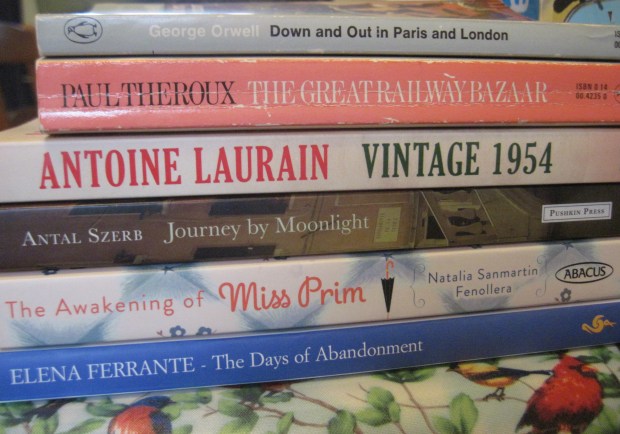
Down and Out in Paris and London, George Orwell – To read on the Eurostar between London and Paris. Orwell’s first book and my first try with his nonfiction: an account of the living conditions of the poor in two world cities.
Bonus goal it fulfills: Classic of the month
Vintage 1954, Antoine Laurain – For a Nudge review; to read en route to and in Paris. Drinking a 1954 Beaujolais transports a Parisian and his neighbors – including an Airbnb guest – back to the 1950s. Sounds like good fun.
Bonus goal it fulfills: Lit in translation
The Great Railway Bazaar, Paul Theroux – To read on the long train ride to Milan. Theroux travels from London to Tokyo on trains, then returns via the Trans-Siberian Express. I’ve always meant to try his work.
Bonus goal it fulfills: Travel classics
Journey by Moonlight, Antal Szerb – A Hungarian novel set on an Italian honeymoon. Try to resist these first lines: “On the train everything seemed fine. The trouble began in Venice, with the back-alleys.”
Bonus goals it fulfills: Lit in translation; 20 Books of Summer substitute (horse on the cover)
The Awakening of Miss Prim, Natalia Sanmarin Fenollera – Promises to be a cozy, fluffy novel about what happens when librarian Prudencia Prim arrives in a small village. I had the feeling it was set in Italy, but maybe it’s actually Spain? I’ll find out.
Bonus goal it fulfills: Lit in translation
The Days of Abandonment, Elena Ferrante – I’ve tried two Ferrante novels and not been too impressed, yet still I keep trying. This one’s set during a heat wave. Maybe I’ll get on with it better than I did with My Brilliant Friend or The Lost Daughter?
Bonus goal it fulfills: Lit in translation
The extra stack:
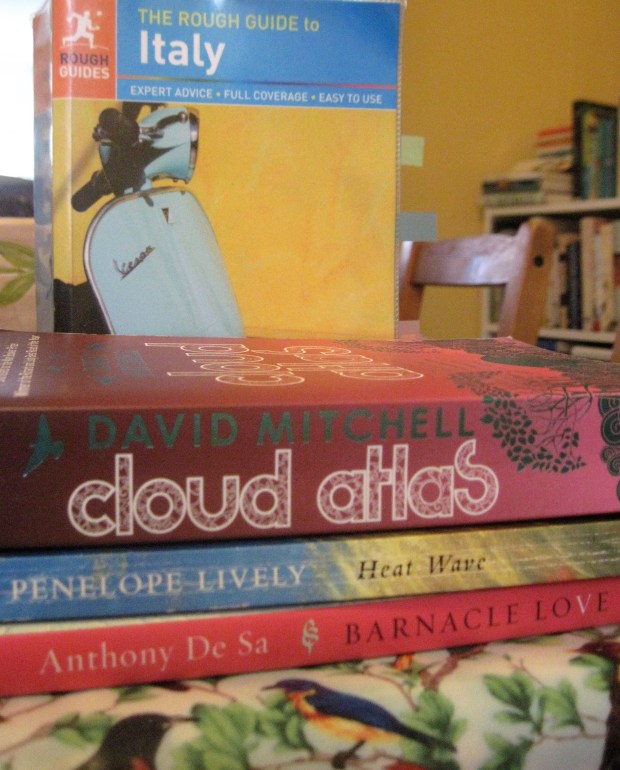
Heat Wave, Penelope Lively – The title says it all.
Bonus goal it fulfills: Reading with the seasons
Barnacle Love, Anthony De Sa – An extra animal book for 20 Books of Summer.
Cloud Atlas, David Mitchell – A novel I’ve meant to read for years. I’ve earmarked it for our super-long day of travel back to the UK.
Bonus goal it fulfills: Doorstopper of the Month
Considering getting from the library:
The Last Supper, Rachel Cusk – I’ve only made it through one of the three Cusk books I’ve attempted, but perhaps a travel memoir is a more surefire selection?
On my Kindle:
 The Fourth Shore, Virginia Baily – There’s an Italian flavor to this WWII novel, as there was to Baily’s previous one, Early One Morning. However, I’ve heard that this is mostly set in Tripoli, so I won’t make it a priority.
From Scratch, Tembi Locke – An actress’s memoir of falling in love with an Italian chef and her trips to his family home in Sicily with their adopted daughter. (Foodie and bereavement themes!)
I’ll read the first few pages of lots of these to make sure they ‘take’ and will try to pack a sensible number. (Which probably means all but one or two!) We’ll be packing light in general, since there’s only so many clothes one can wear in such heat, so I don’t mind carrying a backpack full of books – I’m used to it from weekly treks to the library and flights to America, and I know that I don’t find reading on Kindle as satisfying, though it certainly is convenient for when you’re on the go.
If you’d like to put in a good word for any of the above options, or want to dissuade me from a book I might not find worthwhile, let me know.
Meanwhile, I’ve been slow out of the gate with my 20 Books of Summer, but I finally have a first set of mini-reviews coming up tomorrow.
Other summer-themed books that I have on hand or will get from the library soon include One Summer: America, 1927 by Bill Bryson, The Go-Between by L.P. Hartley, The Sun Does Shine by Anthony Ray Hinton, The Summer Book by Tove Jansson, and Sunburn by Laura Lippman.
 Bookish Beck = Rebecca Foster. American transplant to England. Freelance proofreader and book reviewer.
 Bookish Beck