Nonfiction November: Fiction/Nonfiction Pairings
I’d never participated in Nonfiction November before because I tend to read at least 40% nonfiction anyway, but I couldn’t resist the temptation to put together some fiction and nonfiction pairings based on books I’ve read this year and last. (This week of the month-long challenge is posted by Sarah’s Book Shelves, a blog I love for its no-nonsense recommendations of what to read – and what not to read – from the recent U.S. releases.)
My primary example is two books that reveal what it’s really like to have Alzheimer’s disease. Mitchell’s, in particular, is a book that deserves more attention. When it came out earlier this year, it was billed as the first-ever “dementia memoir” (is that an oxymoron?) – except, actually, there had been one the previous year (whoops!): Memory’s Last Breath by Gerda Saunders, which I have on my Kindle and still intend to read. [See also Kate W.’s picks, which include a pair of books with a dementia theme.]
Still Alice by Lisa Genova (2007)
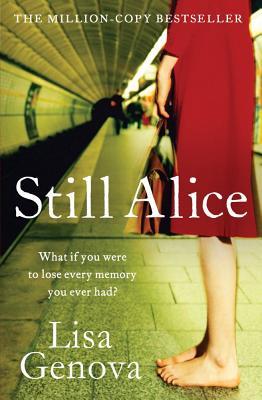 Genova’s writing, Jodi Picoult-like, keeps you turning the pages; I read 225+ pages in an afternoon. There’s true plotting skill to how Genova uses a close third-person perspective to track the mental decline of Harvard psychology professor Alice Howland, who has early-onset Alzheimer’s disease. “Everything she did and loved, everything she was, required language,” yet her grasp of language becomes ever more slippery even as her thought life remains largely intact. I also particularly enjoyed the descriptions of Cambridge and its weather, and family meals and rituals. There’s a certain amount of suspension of disbelief required – Would the disease really progress this quickly? Would Alice really be able to miss certain abilities and experiences once they were gone? – and ultimately I preferred the 2014 movie version, but this would be a great book to thrust at any caregiver or family member who’s had to cope with dementia in someone close to them.
My rating: 
 Other fictional takes on dementia that I can recommend: Unforgettable: Short Stories by Paulette Bates Alden, The Only Story by Julian Barnes, Everything Under by Daisy Johnson and Turn of Mind by Alice LaPlante.
&
Somebody I Used to Know by Wendy Mitchell with Anna Wharton (2018)
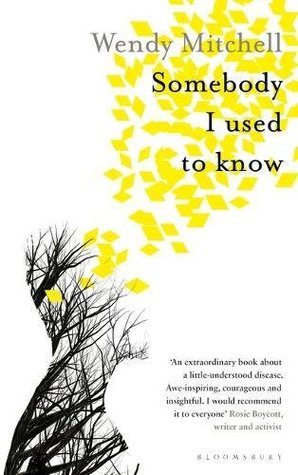 A remarkable insider’s look at the early stages of Alzheimer’s. Mitchell took several falls while running near her Yorkshire home, but it wasn’t until she had a minor stroke in 2012 that she and her doctors started taking her health problems seriously. In July 2014 she got the dementia diagnosis that finally explained her recurring brain fog. She was 58 years old, a single mother with two grown daughters and a 20-year career in NHS administration. Having prided herself on her good memory and her efficiency at everything from work scheduling to DIY, she was distressed that she couldn’t cope with a new computer system and was unlikely to recognize the faces or voices of colleagues she’d worked with for years. Less than a year after her diagnosis, she took early retirement – a decision that she feels was forced on her by a system that wasn’t willing to make accommodations for her.
The book, put together with the help of ghostwriter Anna Wharton, gives a clear sense of progression, of past versus present, and of the workarounds Mitchell uses to outwit her disease. The details and incidents are well chosen to present the everyday challenges of dementia. For instance, baking used to be one of Mitchell’s favorite hobbies, but in an early scene she’s making a cake for a homeless shelter and forgets she’s already added sugar; she weighs in the sugar twice, and the result is inedible. By the time the book ends, not only can she not prepare herself a meal; she can’t remember to eat unless she sets an alarm and barricades herself into the room so she won’t wander off partway through.
In occasional italicized passages Mitchell addresses her past self, running through bittersweet memories of all that she used to be able to do: “It amazes me now how you did it, because you didn’t have anyone to help you. You were Mum, Dad, taxi, chef, counsellor, gardener and housekeeper, all rolled into one.” Yet it’s also amazing how much she still manages to do as an ambassador for the Alzheimer’s Society and Dementia Friends. She crisscrosses the country to give speeches, attend conferences, and advise universities; she writes a blog and has appeared on radio to promote this book. Like many retired people, she’s found she’s busier than ever, and her engagements help her to feel purposeful and like she’s giving a positive impression of early-stage dementia. No matter that she has to rely on dozens of reminders to self in the form of Post-It notes, iPad alarms and a wall of photographs.
The story lines of this and Still Alice are very similar in places – the incidents while running, the inability to keep baking, and so on. And in fact, Mitchell reviewed the film and attended its London premiere, where she met Julianne Moore. Her book is a quick and enjoyable read, and will be so valuable to people looking to understand the experience of dementia. She is such an inspiring woman. I thank her for her efforts, and wish her well. This is one of my personal favorites for the shortlist of next year’s Wellcome Book Prize for medical reads.
My rating: 
 Other nonfiction takes on dementia that I can recommend: In Pursuit of Memory by Joseph Jebelli and The Summer of the Great-Grandmother by Madeleine L’Engle.
Additional pairings I would commend to you (all are books I have read and rated or above):


Talk before Sleep by Elizabeth Berg
&
Let’s Take the Long Way Home by Gail Caldwell and Truth and Beauty by Ann Patchett
- Celebrating the strength of female friendship, even in the face of life-threatening illness.


Bad News by Edward St. Aubyn
&
Portrait of an Addict as a Young Man by Bill Clegg
- Vivid portrayals of drug addiction.


Miss Smilla’s Feeling for Snow by Peter Høeg
&
This Cold Heaven by Gretel Ehrlich
- Armchair traveling in Greenland.


Sweetbitter by Stephanie Danler
&
Cork Dork by Bianca Bosker
- Glimpses into the high-class world of fine dining – and fine wine.
 Dear Fahrenheit 451: Love and Heartbreak in the Stacks by Annie Spence is chock-full of recommendations and reading pairs. The Novel Cure is also good for this sort of thing, though it is (no surprise) overwhelmingly composed of fiction suggestions.
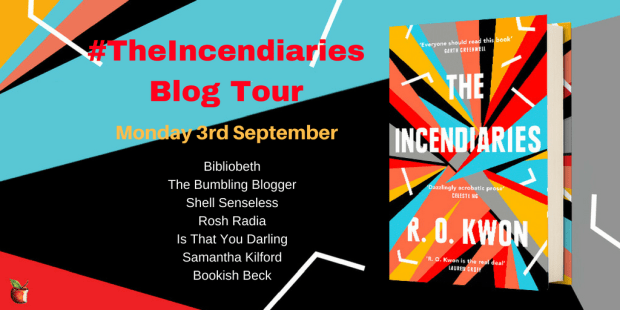
Blog Tour Review: The Incendiaries by R. O. Kwon
 The Incendiaries is a sophisticated, unsettling debut novel about faith and its aftermath, fractured through the experience of three people coming to terms with painful circumstances. Will Kendall left his California Bible college when he lost his faith. Soon after transferring to Edwards in upstate New York, he falls for Phoebe Lin at a party. Although he’s working in a restaurant to pay his way, he hides his working-class background to fit in with Phoebe and her glitzy, careless friends. Phoebe is a failed piano prodigy who can’t forgive herself: her mother died in a car Phoebe was driving. John Leal, a half-Korean alumnus, worked with refugees in China and was imprisoned in North Korea. Now he’s started a vaguely Christian movement called Jejah (Korean for “disciple”) that involves forced baptisms, intense confessions and self-flagellation. It’s no coincidence his last name rhymes with zeal.
Much of the book is filtered through Will’s perspective; even sections headed “Phoebe” and “John Leal” most often contain his second-hand recounting of Phoebe’s words, or his imagined rendering of Leal’s thoughts – bizarre and fervent. Only in a few spots is it clear that the “I” speaking is actually Phoebe. This plus a lack of speech marks makes for a somewhat disorienting reading experience, but that is very much the point. Will and Phoebe’s voices and personalities start to merge until you have to shake your head for some clarity. The irony that emerges is that Phoebe is taking the opposite route to Will’s: she is drifting from faithless apathy into radical religion, drawn in by Jejah’s promise of atonement.
As in Celeste Ng’s novels, we know from the very start the climactic event that powers the whole book: the members of Jejah set off a series of bombs at abortion clinics, killing five. The mystery, then, is not so much what happened but why. In particular, we’re left to question how Phoebe could be transformed so quickly from a vapid party girl to a religious extremist willing to suffer for her beliefs.
Kwon spent 10 years writing this book, and that time and diligence come through in how carefully honed the prose is: such precise images; not a single excess word. I can see how some might find the style frustratingly oblique, but for me it was razor sharp, and the compelling religious theme was right up my street. It’s a troubling book, one that keeps tugging at your elbow. Recommended to readers of Sweetbitter and Shelter.
Favorite lines:
“This has been the cardinal fiction of my life, its ruling principle: if I work hard enough, I’ll get what I want.”
“People with no experience of God tend to think that leaving the faith would be a liberation, a flight from guilt, rules, but what I couldn’t forget was the joy I’d known, loving Him.”
My rating: 
The Incendiaries will be published by Virago Press on September 6th. My thanks to the publisher for the free copy for review.
Note: An excerpt from The Incendiaries appeared in The Best Small Fictions 2016 (ed. Stuart Dybek), which I reviewed for Small Press Book Review. I was interested to look back and see that, at that point, her work in progress was entitled Heroics.
I was delighted to be invited to participate in the blog tour. See below for details of where other reviews are appearing today.
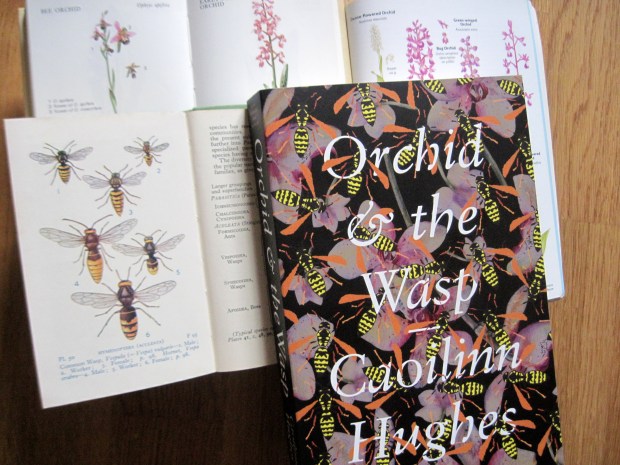
Orchid & the Wasp by Caoilinn Hughes
Gael Foess, the antiheroine of Caoilinn Hughes’ debut novel, is a trickster. When we first meet her in Dublin in 2002, the 11-year-old is promptly kicked out of school for trying to sell other girls “virginity pills.” As the years pass we see her con her way into a London Business School interview, self-assuredly teach a literature class when her professor doesn’t show up, pretend to be a journalist to get an exclusive interview, and use deception to try to boost the careers of both her mother, Sive (a conductor), and her younger brother, Guthrie (a painter and single dad). In the title metaphor, which refers to an orchid species that lures pollinating wasps, Gael is the seductive flower that gets what it wants. We’re also invited to think of her, with that typically Gael-ic name, as an incarnation of mythological Irish hero Cúchulainn.
The novel spans about nine years: a politically turbulent decade that opens with Iraq War protests and closes with the Occupy movement in New York City. The financial crisis temporarily jolts Gael and Guthrie’s father, Jarleth, a high-flying Barclays banker who leaves the family in 2008. The biblical parable of the talents, which he recounted to Gael when she was a little girl, comes back to resonate: It’s a potent reminder that money and skills don’t get distributed fairly in this life. When Gael gets to New York in 2011, she plans to redress the balance in two paradoxical ways: living in the Occupy camp and taking part in protests; and secretly earning her brother a fortune on his modern art. For even while decrying her father’s privilege, she indulges her own love of fine things; even if ironically, she says that she aspires to be in the 1%, too.
With all her contradictions, Gael is an unforgettable character. I also found Guthrie fascinating. It was serendipitous that I read this novel alongside Suzanne O’Sullivan’s new book, Brainstorm. Guthrie was a mystically religious child and suffered from seizures, which doctors determined weren’t due to epilepsy but to somatic delusions – psychological rather than physiological. The seizures, ironically, became a boon because they inspire his art: “they’re hallowed and each aura is an absolution – a benison – and not just a synaptic blip.”

The U.S. cover
Hughes is wonderfully adept at voices, bringing secondary characters to life largely through how they speak. I especially warmed to Art, Sive’s boyfriend, who’s a Yorkshireman; and Harper, Gael’s OCD-plagued flatmate from Las Vegas. Even a brief run-in with American officialdom gets the perfect deadpan rendering: “United States Customs has no interest in surprises. Matter of fact, we hate surprises.” The novel often has a frenetic pace – an energy that’s well matched by the virtuosic use of language, with wordplay, neologisms, and metaphors drawn from art, music and nature. An orchestra is compared to a flock of starlings; a despondent Sive “began to resemble a bass clef.” The Irish are like radishes: “Pink on the outside, white underneath. Speck of mud on their cheeks.” Harper’s entire upbringing is pithily reduced to an “only-childhood of sprinkler weather, window glare and doughnut glazing.” I also loved this tiny poem of a phrase: “sobbing hampers syntax.”
My only real misgiving about the novel is the ending: After Gael comes back from New York, things sort of fizzle out. I even wondered if the story line could have stopped a chapter earlier. But in a way it makes sense to get no tidy closure for our protagonist. Gael is still only 20 years old at the book’s end, so it’s no surprise that she remains a restless wanderer. I certainly wouldn’t object to hearing about her further adventures in a sequel. Hughes is an exciting writer who has rightfully attracted a lot of buzz for her debut, and this is sure to be one of my novels of the year. It’s a perfect follow-on read from Tom Rachman’s The Italian Teacher, and I’d also recommend it highly to fans of Sweetbitter, The Art of Fielding, The Nix, and The Life and Death of Sophie Stark. Watch out for it in two weeks’ time.
My rating:
Orchid & the Wasp will be published by Oneworld in the UK on June 7th. It’s not out in the USA until July 10th (Hogarth). My thanks to Margot Weale for a proof copy for review.
2017’s Runners-Up and Other Superlatives
The choices below are in alphabetical order by author, with any previously published reviews linked in (many of these books have already appeared on the blog in some way over the course of the year). You know the drill by now: to keep it simple for myself as well as for all of you who are figuring out whether you’re interested in these books or not, I’m limiting myself to two sentences per title. The first is a potted summary; the second tells you why you should read it. Across these three best-of posts (see also my Top Nonfiction and Best Fiction posts), I’ve spotlighted roughly the top 15% of my year’s reading.
Runners-Up:
 As a God Might Be by Neil Griffiths: The themes and central characters were strong enough to keep me powering through this 600-page novel of ideas about encounters with God and the nature of evil. This turned out to be just my sort of book: big and brazen, a deep well of thought that will only give up its deeper meanings upon discussion and repeat readings.
 Spaceman of Bohemia by Jaroslav Kalfař: The story of Jakub Procházka, a Czech astronaut who leaves his wife behind to undertake a noble research mission but soon realizes he can never escape his family history or the hazards of his own mind. A terrific blend of the past and the futuristic, Earth and space.
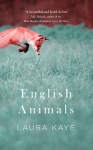 English Animals by Laura Kaye: A young Slovakian becomes a housekeeper for a volatile English couple and discovers a talent for taxidermy. A fresh take on themes of art, sex, violence and belonging, this is one of the more striking debut novels I’ve encountered in recent years.
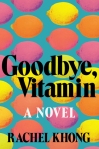 Goodbye, Vitamin by Rachel Khong: Reeling from a broken engagement, Ruth Young returns to her childhood home in California for a year to help look after her father, who has Alzheimer’s. This is a delightfully quirky little book, but you may well read it with a lump in your throat, too.
 Midwinter Break by Bernard MacLaverty: In MacLaverty’s quietly beautiful fifth novel, a retired couple faces up to past trauma and present incompatibility during a short vacation in Amsterdam. My overall response was one of admiration for what this couple has survived and sympathy for their current situation – with hope that they’ll make it through this, too. (Reviewed for BookBrowse.)
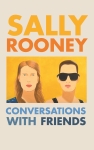 Conversations with Friends by Sally Rooney: An Irish college student navigates friendships and an affair with a married man. This is much more about universals than it is about particulars: realizing you’re stuck with yourself, exploring your sexuality and discovering sex is its own kind of conversation, and deciding whether ‘niceness’ is really the same as morality; a book I was surprised to love, but love it I did.
 Lincoln in the Bardo by George Saunders: The residents of Georgetown cemetery limbo don’t know they’re dead – or at least won’t accept it. An entertaining and truly original treatment of life’s transience; I know it’s on every other best-of-year list out there, but it really is a must-read.
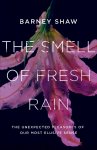 The Smell of Fresh Rain by Barney Shaw: Shaw travels through space, time and literature as he asks why we don’t have the vocabulary to talk about the smells we encounter every day. If you’re interested in exploring connections between smell and memory, discovering what makes the human sense of smell unique, and learning some wine-tasting-style tips for describing odors, this is a perfect introduction.
 A Life of My Own by Claire Tomalin: Tomalin is best known as a biographer of literary figures including Mary Wollstonecraft, Samuel Pepys and Charles Dickens, but her memoir is especially revealing about the social and cultural history of the earlier decades her life covers. A dignified but slightly aloof book – well worth reading for anyone interested in spending time in London’s world of letters in the second half of the twentieth century.
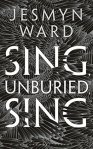 Sing, Unburied, Sing by Jesmyn Ward: The story of a mixed-race family haunted – both literally and figuratively – by the effects of racism, drug abuse and incarceration in Bois Sauvage, a fictional Mississippi town. Beautiful language; perfect for fans of Toni Morrison and Cynthia Bond.
I’ve really struggled with short stories this year, but here are four collections I can wholeheartedly recommend:
 What It Means when a Man Falls from the Sky by Lesley Nneka Arimah (Reviewed for Shiny New Books.)
- Unruly Creatures: Stories by Jennifer Caloyeras
- Bad Dreams and Other Stories by Tessa Hadley
- The Great Profundo and Other Stories by Bernard MacLaverty (1987)
The Best 2017 Books You Probably Never Heard of (Unless You Heard about Them from Me!):
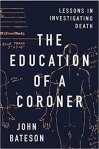 The Education of a Coroner by John Bateson: The coroner’s career is eventful no matter what, but Marin County, California has its fair share of special interest, what with Golden Gate Bridge suicides, misdeeds at San Quentin Prison, and various cases involving celebrities (e.g. Harvey Milk, Jerry Garcia and Tupac) in addition to your everyday sordid homicides. Ken Holmes was a death investigator and coroner in Marin County for 36 years; Bateson successfully recreates Holmes’ cases with plenty of (sometimes gory) details.
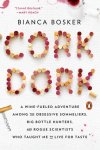 Cork Dork by Bianca Bosker: Tasting notes: gleeful, ebullient, learned, self-deprecating; suggested pairings: Sweetbitter by Stephanie Danler; Top Chef, The Great British Bake Off. A delightful blend of science, memoir and encounters with people who are deadly serious about wine.
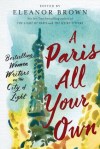 A Paris All Your Own: Bestselling Women Writers on the City of Light, edited by Eleanor Brown: A highly enjoyable set of 18 autobiographical essays that celebrate what’s wonderful about the place but also acknowledge disillusionment; highlights are from Maggie Shipstead, Paula McLain, Therese Anne Fowler, Jennifer Coburn, Julie Powell and Michelle Gable. If you have a special love for Paris, have always wanted to visit, or just enjoy armchair traveling, this collection won’t disappoint you.
 Ashland & Vine by John Burnside: Essentially, it’s about the American story, individual American stories, and how these are constructed out of the chaos and violence of the past – all filtered through a random friendship that forms between a film student and an older woman in the Midwest. This captivated me from the first page.
 Tragic Shores: A Memoir of Dark Travel, Thomas H. Cook: In 28 non-chronological chapters, Cook documents journeys he’s made to places associated with war, massacres, doomed lovers, suicides and other evidence of human suffering. This is by no means your average travel book and it won’t suit those who seek high adventure and/or tropical escapism; instead, it’s a meditative and often melancholy picture of humanity at its best and worst. (Reviewed for Nudge.)
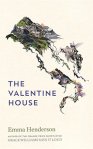 The Valentine House by Emma Henderson: This is a highly enjoyable family saga set mostly between 1914 and 1976 at an English clan’s summer chalet in the French Alps near Geneva, with events seen from the perspective of a local servant girl. You can really imagine yourself into all the mountain scenes and the book moves quickly –a great one to take on vacation.

The year’s runners-up and superlatives that I happen to have around in print.
Various Superlatives, Good and Bad:
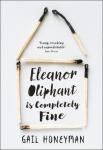 The 2017 Book Everybody Else Loved but I Didn’t: Eleanor Oliphant Is Completely Fine by Gail Honeyman. (See my Goodreads review for why.)
The Year’s Biggest Disappointments: All Grown Up by Jami Attenberg, Future Home of the Living God by Louise Erdrich, Between Them by Richard Ford and George and Lizzie by Nancy Pearl.
The Worst Book I Read This Year: Books by Charlie Hill (ironic, that). My only one-star review of the year.
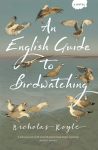 The Downright Strangest Book I Read This Year: An English Guide to Birdwatching by Nicholas Royle.
My Best Discoveries of the Year: Beryl Bainbridge, Saul Bellow, Bernard MacLaverty and Haruki Murakami. I’ve read two books by each of these authors this year and look forward to trying more from them.
The Debut Authors Whose Next Work I’m Most Looking Forward to: Lesley Nneka Arimah, Laura Kaye, Carmen Marcus, Julianne Pachico and Sally Rooney.
 The Best First Line of the Year: “History has failed us, but no matter.” (Pachinko, Min Jin Lee)
The Best Last Line of the Year: “If she was an instance of the goodness in this world then passing through by her side was miracle enough.” (Midwinter Break, Bernard MacLaverty)
Coming tomorrow: Some early recommendations for 2018.
2016 Runners-Up and Other Superlatives
Let’s hear it for the ladies! In 2016 women writers accounted for 9 out of my 15 top fiction picks, 12 out of my 15 nonfiction selections, and 8 of the 10 runners-up below. That’s 73%. The choices below are in alphabetical order by author, with any full reviews linked in. Many of these have already appeared on the blog in some form over the course of the year.
Ten Runners-Up:
FICTION
 Hag-Seed by Margaret Atwood: Atwood looks more like a good witch every year, and here she works her magic on The Tempest to produce the most satisfying volume of the Hogarth Shakespeare series yet. There’s a really clever play-within-the-play-within-the-play thing going on, and themes of imprisonment and performance resonate in multiple ways.
 The Atomic Weight of Love by Elizabeth J. Church: In Church’s debut, an amateur ornithologist learns about love and sacrifice through marriage to a Los Alamos physicist and a relationship with a Vietnam veteran. I instantly warmed to Meri as a narrator and loved following her unpredictable life story.
 We Love You, Charlie Freeman by Kaitlyn Greenidge: The Freemans are raising Charlie, a chimpanzee, as part of their family for a Toneybee Institute experiment and teaching him to communicate via sign language. This is a rich and unsettling story of human–human interactions, even more so than human–animal interactions; it’s a great first novel and I will follow Greenidge’s career with interest.
To the Bright Edge of the World by Eowyn Ivey: Ivey’s intricate second novel weaves together diaries, letters, photographs, and various other documents and artifacts to tell the gently supernatural story of an exploratory mission along Alaska’s Wolverine River in 1885 and its effects through to the present day. I can highly recommend this rollicking adventure tale to fans of historical fiction and magic realism.
This Must Be the Place by Maggie O’Farrell: Spreading outward from Ireland and reaching into every character’s past and future, this has all O’Farrell’s trademark insight into family and romantic relationships, as well as her gorgeous prose and precise imagery. I have always felt that O’Farrell expertly straddles the (perhaps imaginary) line between literary and popular fiction; her books are addictively readable but also hold up to critical scrutiny.
Commonwealth by Ann Patchett: This deep study of blended family dynamics starts with an early 1960s christening party Los Angeles policeman Fix Keating is throwing for his younger daughter, Franny; we see the aftermath of that party in the lives of six step-siblings in the decades to come. This is a sophisticated and atmospheric novel I would not hesitate to recommend to literary fiction fans in general and Patchett fans in particular.
 The Last Painting of Sara de Vos by Dominic Smith: Jessie Burton, Tracy Chevalier and all others who try to write historical fiction about the Netherlands in the seventeenth century, eat your hearts out. Such a beautiful epoch-spanning novel about art and regret.
Shelter by Jung Yun: A Korean-American family faces up to violence past and present in a strong debut that offers the hope of redemption. I would recommend this to fans of David Vann and Richard Ford.
NONFICTION
I Will Find You by Joanna Connors: By using present-tense narration, Connors makes the events of 1984 feel as if they happened yesterday: a blow-by-blow of the sex acts forced on her at knife-point over the nearly one-hour duration of her rape; the police reports and trials; and the effects it all had on her marriage and family. This is an excellent work of reconstruction and investigative reporting.
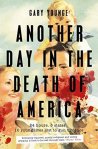 Another Day in the Death of America by Gary Younge: Younge built this book by choosing a 24-hour period (November 22 to 23, 2013) and delving into all 10 gun deaths of young Americans on record for that time: seven black, two Latino, and one white; aged nine to 18; about half at least vaguely gang-related, while in two – perhaps the most crushing cases – there was an accident while playing around with a gun. I dare anyone to read this and then try to defend gun ‘rights’ in the face of such senseless, everyday loss.
Various Superlatives:
Best Discoveries of the Year: Apollo Classics reprints (I reviewed three of them this year); Diana Abu-Jaber, Linda Grant and Kristopher Jansma.
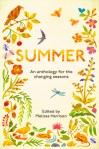
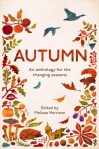
Most Pleasant Year-Long Reading Experience: The seasonal anthologies issued by the UK Wildlife Trusts and edited by Melissa Harrison (I reviewed three of them this year).

Most Improved: I heartily disliked Sarah Perry’s debut novel, After Me Comes the Flood. But her second, The Essex Serpent, is exquisite.
Debut Novelists Whose Next Work I’m Most Looking Forward to: Stephanie Danler, Kaitlyn Greenidge, Francis Spufford, Andria Williams and Sunil Yapa.
The Year’s Biggest Disappointments: Here I Am by Jonathan Safran Foer, Today Will Be Different by Maria Semple, and Swing Time by Zadie Smith. Here’s hoping 2017 doesn’t bring any letdowns from beloved authors.


The Worst Book I Read This Year: Paulina & Fran (2015) by Rachel B. Glaser. My only one-star review of the year. ’Nuff said?
The 2016 Novels I Most Wish I’d Gotten to: (At least the 10 I’m most regretful about)
- The Power by Naomi Alderman
- The Museum of You by Carys Bray
- The Course of Love by Alain de Botton
- What Belongs to You by Garth Greenwell*
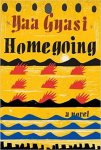 Homegoing by Yaa Gyasi
- The Waiting Room by Leah Kaminsky
- The Inseparables by Stuart Nadler
- Harmony by Carolyn Parkhurst*
- The Nest by Cynthia D’Aprix Sweeney*
- The Underground Railroad by Colson Whitehead*
*Haven’t been able to find anywhere yet; the rest are on my Kindle.
Which of these should I get reading on the double?
Coming tomorrow: Some reading goals for 2017.
The Best Fiction of 2016: My Top 15
You might be surprised to hear that I received ‘only’ eight books for Christmas. (And a very fetching owl bookmark.) Here they are:

As I did last year, I’ve come up with my top 15 fiction books of the year (the three translated works first appeared in English in 2016) and even attempted to rank them. Many of these books have already featured on the blog in some way over the course of the year. To keep it simple for myself as well as for all of you who are figuring out whether you’re interested in these books or not, I’m limiting myself to two sentences per title: the first is a potted summary; the second tells you why you should read it. I also link to any full reviews.
Without further ado, let the countdown begin!
 Your Heart Is a Muscle the Size of a Fist by Sunil Yapa: A hard-hitting novel with an unforgettably resonant title, this is set at the 1999 Seattle WTO protest: Yapa explores the motivations and backstories of activists, police officers, and delegates as the day deteriorates into violence. This fine debut is about cultivating the natural compassion in your heart even while under the threat of the fist.
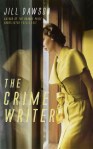 The Crime Writer by Jill Dawson: Beyond the barest biographical facts, Dawson has imagined the plot based on Patricia Highsmith’s own preoccupations: fear of a stalker, irksome poison-pen letters, imagining what it would be like to commit murder … and snails. You’re never quite sure as you’re reading what is actually happening in the world of the novel and what only occurs in Highsmith’s imagination, making this one of the most gripping, compulsive books I encountered this year.
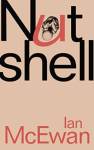 Nutshell by Ian McEwan: Within the first few pages, I was captivated and convinced by the voice of this contemporary, in utero Hamlet. His captive state pairs perfectly with Hamlet’s existential despair, but also makes him (and us as readers) part of the conspiracy: even as he wants justice for his father, he has to hope his mother and uncle will get away with their crime; his whole future depends on it.
 The Longest Night by Andria Williams: This absorbing work of historical fiction combines a remote setting, the threat of nuclear fallout, and a marriage strained to the breaking point in a convincing early 1960s atmosphere. A great debut and an author I’d like to hear more from.
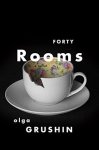 Forty Rooms by Olga Grushin: Each of us is said to occupy 40 rooms in our lives; this novel in 40 vignettes, one per room, tells the life story of a Russian immigrant to America who dreams of becoming a poet but ends up a suburban housewife and mother of six. I feel this book will resonate with women of every age, prompting them to question the path they’ve taken, the passions they’ve left unexplored, and whether it’s too late to change.
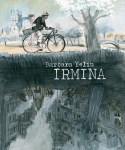 Irmina by Barbara Yelin: After her grandmother’s death Yelin, a Munich-based artist, found a box of diaries and letters that told the story of a budding love affair that was not to be and charted a young woman’s gradual capitulation to Nazi ideology. For the out-of-the-ordinary window onto Third Reich history and the excellent illustrations, I highly recommend this to graphic novel lovers and newbies alike.
 The Wonder by Emma Donoghue: In the 1850s a nurse investigates the case of an Irish girl surviving without food for months: miracle or hoax? Donoghue writes convincing and vivid historical fiction, peppering the text with small details about everything from literature to technology and setting up a particularly effective contrast between medicine and superstition.
 The Summer Guest by Alison Anderson: The kernel of the novel is a true story: for two summers in the late 1880s, Chekhov (known here as Anton Pavlovich) stayed at the Lintvaryovs’ guest house in Luka, Ukraine; one strand of the narration is a journal kept during those years by the family’s eldest daughter, who’s dying of a brain tumor. An elegantly plotted story about writing, translation, illness, and making the most of life.
 Quiet Flows the Una by Faruk Šehić: This autobiographical novel by a Bosnian poet and former soldier is full of poetic language and nature imagery. The lyrical writing about his beloved river provides a perfect counterpoint to the horror and absurdity of war.
 Three-Martini Lunch by Suzanne Rindell: Rindell brings the late 1950s, specifically the bustling, cutthroat New York City publishing world, to life through the connections between three young people who collide over a debated manuscript. It’s an expert evocation of Beat culture and post-war paranoia over communism and homosexuality.
 Golden Hill by Francis Spufford: The novel opens suddenly as twenty-four-year-old Richard Smith arrives from London with a promissory note for £1000; before he can finally get his money, he’ll fall in and out of love, fight a duel, and be arrested twice – all within the space of two months. Bawdy, witty, vivid historical fiction; simply brilliant.
 Why We Came to the City by Kristopher Jansma: Five university friends strive to make their lives count against the indifferent backdrop of recession-era New York City. You’ll see yourself in one or more of the characters, and the rest you’ll greet as if they were your own friends and makeshift family.
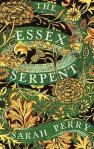 The Essex Serpent by Sarah Perry: The Essex Serpent was a real-life legend from the latter half of the seventeenth century, but Perry’s second novel has fear of the sea creature re-infecting Aldwinter, her invented Essex village, in the 1890s. This exquisite work of historical fiction explores the gaps – narrower than one might think – between science and superstition and between friendship and romantic love.
 The Tobacconist by Robert Seethaler: Seventeen-year-old Franz Huchel’s life changes for good when in 1937 his mother sends him away from his quiet lakeside village to work for her old friend Otto Trsnyek, a Vienna tobacconist. This novel is so many things: a coming-of-age story, a bittersweet romance, an out-of-the-ordinary World War II/Holocaust precursor, and a perennially relevant reminder of the importance of finding the inner courage to stand up to oppressive systems.
 Sweetbitter by Stephanie Danler: The restaurant where twenty-two-year-old Tess works is a claustrophobic world unto itself, like a theatre set where the food is high art and the staff interactions are pure drama. Everything about this novel is utterly assured: the narration, the characterization, the prose style, the plot, the timing; it captures the intensity and idealism of youth yet injects a hint of nostalgia.
& A poetry selection:
 Still the Animals Enter by Jane Hilberry: A rich, strange, gently erotic collection featuring diverse styles and blurring the lines between child and adult, human and animal, life and death through the language of metamorphosis. The message is that we are part of a shared life beyond the individual family or even the human species; we are all connected.
What are the best novels you read this year? Any new favorite books or authors?
I’ll be back tomorrow with the best nonfiction books I read this year.
A Perfect Book for Autumn: The City Baker’s Guide to Country Living
When Olivia Rawlings, the protagonist of pastry chef Louise Miller’s debut novel, The City Baker’s Guide to Country Living, arrives in Guthrie, Vermont one September, it’s with a weight of guilt and rumor behind her. She left Boston’s Emerson Club in ignominy after setting the place on fire with a Baked Alaska and sleeping with a married boss twice her age. Now her best friend, Hannah, is determined to help Livvy make a fresh start in a small town. She uses her clout as the local doctor’s wife to get Livvy a job as the chief baker at the Sugar Maple Inn, run by a formidable older lady named Margaret.
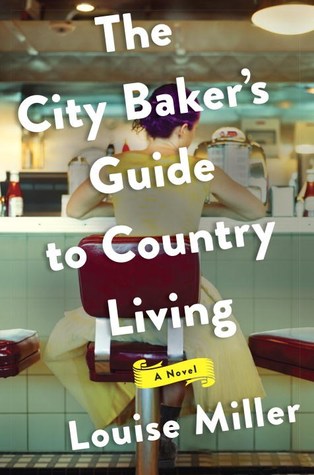 Livvy sets up in the sugar house with her Irish wolfhound, Salty, and settles into a daily routine of baking muffins, bread and cakes for the guests. She gets to know the local community by soaking up atmosphere at the Black Bear Tavern and playing banjo with the Hungry Mountaineers band at country dances. The McCrackens, in particular, become a kind of surrogate family for this lonely woman in her early thirties: Dotty is Margaret’s best friend; her husband Henry is battling colon cancer; and their youngest son Martin has temporarily given up his normal life in Seattle to help out. A love of food and music binds Livvy to the McCrackens, and Henry is like a stand-in for the father she lost as a teenager.
This is a warm, cozy read full of well-drawn secondary characters and romantic possibilities for Livvy. There’s nothing clichéd about it, though. Livvy is a sassy narrator whose hair goes from purple to orange to turquoise and whose promiscuous past matches her reputation for perfect macaroons and apple pie. I didn’t love the conflict at the three-quarters point that briefly takes Livvy back to Boston, but it all comes together in a satisfying dénouement.
I love how Miller documents the rhythms of the small-town country year, including tapping the maple trees in the early spring and a pie baking contest at the summer county fair. But I’m calling this a perfect book for autumn because of how the early chapters depict pivotal events from Livvy’s first months in Guthrie, especially the annual Harvest Festival supper (corn consommé, baby green salad with walnuts and maple vinaigrette, goat cheese on apple spice bread, prime rib or mushroom risotto, chive popovers, Vermont cheddar with quince paste, and pumpkin crème brûlée) and a boisterous Thanksgiving meal with the McCrackens.
Kitchens of the Great Midwest by J. Ryan Stradal was one of my top fiction picks of last year, and this is a worthy 2016 counterpart. Though not quite as edgy, Miller’s debut also shares the foodie theme of my favorite novel of 2016 so far, Sweetbitter by Stephanie Danler. All three of these books capture the almost theatrical magic of the restaurant meal. I’ll leave you with this extended passage describing the setup for the Harvest Festival. Though I’ve never been to New England in the fall, it makes me nostalgic for it all the same:
There is a moment after the prep is done and before the theater of the dinner service begins when I love to escape the kitchen. Dusk had fallen, and when I stepped outside, I was drawn to the light spilling from the barn, golden and inviting. I poked my head in. Margaret had outdone herself. The long tables were covered in cream linen. Squash-colored tapers stood tall in sparkling silver candelabras. Fat bouquets of sunflowers, goldenrod, and black-eyed Susans stuffed into mason jars were surrounded by tiny pumpkins and crab apples. I looked up to see a thousand white Christmas lights hanging from the rafters. The whole room glowed.
The City Baker’s Guide to Country Living was published by Pamela Dorman Books on August 9th. My electronic review copy came from NetGalley.
My rating: 
Discover Some Shiny New Books
If you haven’t already come across it, let me commend to you the UK-based web magazine Shiny New Books. It’s been around for two years now and has just released Issue #10. Each installment is stuffed full of terrific reviews and features. I suggest setting aside a bit of time each day for a week or two, say a half-hour tea break, to browse what the site has to offer. It specifically highlights what’s been recently published or reprinted in the UK, so in some cases these will be books that are already available in North America; in others these will be sneak previews of books not yet published there. You’re sure to find plenty that appeals.
I’m proud to be part of the stellar (if I do say so myself) team of SNB reviewers. Somehow I just kept volunteering for things and ended up with – whoops! – a whole five pieces in this latest issue: four reviews (two fiction, one nonfiction, and one classic reprint) and an interview. Two of the novels were fantastic, among my best reads of the year so far, while the other two books were worthwhile, even very good in places. Here are tasters of my reviews; click on a title to read the whole thing – and then spend some good time browsing the site.
Sweetbitter by Stephanie Danler
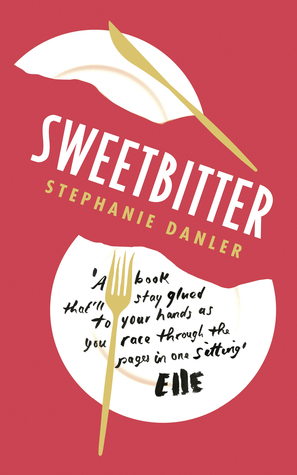 Twenty-two-year-old Tess arrives in New York City by car in June 2006. Two days later she interviews at a restaurant in Union Square and gets a job as a backwaiter and barista. Camaraderie makes the restaurant not just bearable but a kind of substitute home. Tess is most fascinated by two colleagues who stand apart from the crowd: Simone, the resident wine know-it-all, and bartender Jake. Try as she might, Tess can’t work out the dynamic between them. To mirror her one-year taste apprenticeship, the book is broken into four seasonal parts, headed by short sections in the second person or first-person plural. Everything about this novel is utterly assured: the narration, the characterization, the prose style, the plot, the timing. It’s hard to believe that Danler is a debut author rather than a seasoned professional. It captures the intensity and idealism of youth yet injects a hint of nostalgia. I’m willing to go out on a limb and call Sweetbitter my favorite novel of 2016.
My rating: 
I also interviewed Stephanie Danler over e-mail.
My Son, My Son by Howard Spring
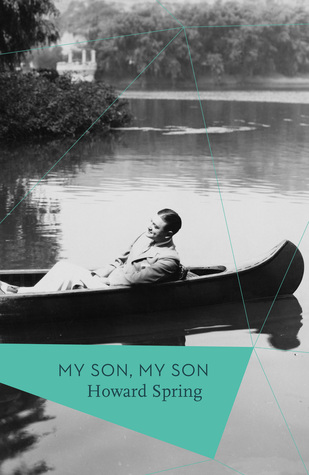 My Son, My Son opens in working-class Manchester in the 1870s and stretches through the aftermath of World War I. Like a Dickensian urchin, William Essex escapes his humble situation thanks to a kind benefactor and becomes a writer. His best friend is Dermot O’Riorden, a fervid Irish Republican. William’s and Dermot’s are roughly parallel tracks. Their sons’ lives, however, are a different matter. Oliver Essex and Rory O’Riorden are born on the same day, and it’s clear at once that both fathers intend to live vicariously through their sons. My Son, My Son struck me as an unusual window onto World War I, a subject I’ve otherwise wearied of in fiction. A straight line could be drawn between Great Expectations, Maugham’s Of Human Bondage, My Son, My Son, and The Goldfinch: all four feature a simultaneously sympathetic and enraging protagonist who overcomes family difficulties to dream of fame and fortune. No mere period or local interest piece, this is a book for the ages.
My rating: 
The Sellout by Paul Beatty
 This is such an outrageous racial satire that I kept asking myself how Beatty got away with it. Not only did he get away with it, he won a National Book Critics Circle Award. The novel opens at the U.S. Supreme Court, where the narrator has been summoned to defend himself against a grievous but entirely true accusation: he has reinstituted slavery and segregation in his hometown of Dickens, California. All the old stereotypes of African Americans are here, many of them represented by Hominy Jenkins. This reminded me most of Ishmael Reed’s satires and, oddly enough, Julian Barnes’s England, England, which similarly attempts to distill an entire culture and history into a limited space and time. The plot is downright silly in places, but the shock value keeps you reading. Even so, after the incendiary humor of the first third, the satire wears a bit thin. I yearned for more of an introspective Bildungsroman, which there are indeed hints of.
My rating: 
The Abundance by Annie Dillard
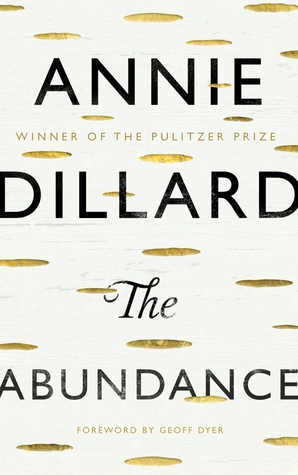 Dillard was raised a Christian in Pittsburgh, Pennsylvania, but her writing expresses an open spirituality rather than any specific faith. For readers who are reasonably familiar with her work, the selection given here might be a little disappointing. Why reread 60 pages from Pilgrim at Tinker Creek, I thought, when I have a copy of it up on the shelf? Rather than reading long, downright strange portions of For the Time Being and Teaching a Stone to Talk, why not go find whole copies to read (which might help with understanding them in context)? None of Dillard’s poetry or fiction has been included, and the most recent piece, “This Is the Life,” from Image magazine, is from 2002. I wish there could have been more fresh material as an enticement for existing fans. However, this will serve as a perfect introduction for readers who are new to Dillard’s work and want a taste of the different nonfiction genres she treats so eloquently and mysteriously.
My rating: 
 Bookish Beck = Rebecca Foster. American transplant to England. Freelance proofreader and book reviewer.
 Bookish Beck