Best of 2019: Fiction and Poetry
I’ve managed to whittle my favorite releases of 2019 down to 20 in total: 12 nonfiction (that’s for tomorrow), 5 fiction and 3 poetry. It felt like a particular achievement to limit myself to five top novels, though plenty more turn up on my runners-up list, due Saturday.
Let the countdown begin!
Fiction
-
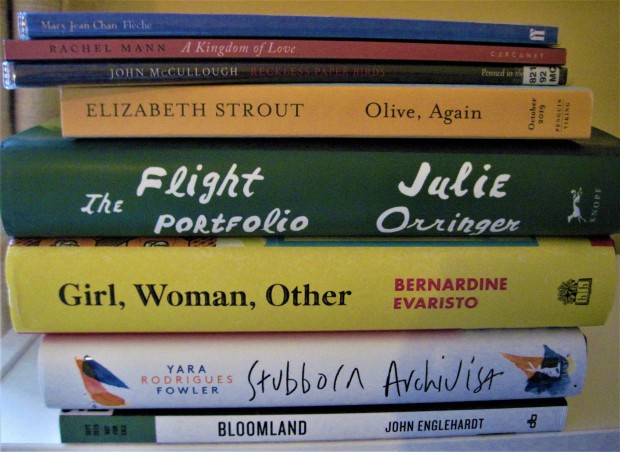
 Bloomland by John Englehardt: Subtle and finely crafted literary fiction about a mass shooting at a fictional Arkansas university. The second-person narration draws the reader into the action, inviting ‘you’ to extend sympathy to three very different characters: Rose, a student who becomes romantically involved with one of the injured; Eddie, a professor whose wife dies in the massacre; and Eli, the shooter. Englehardt writes a gorgeous sentence, too.
-
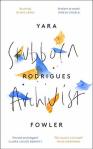 Stubborn Archivist by Yara Rodrigues Fowler: Autofiction in fragments, like a pure stream of memory and experience. Navigating between two cultures and languages, being young and adrift, and sometimes seeing her mother in herself: there’s a lot to sympathize with in the Brazilian–English main character. What a hip, fresh approach to fiction. I’d hoped to see Fowler on the Women’s Prize longlist and winning the Young Writer of the Year Award.
-
 Girl, Woman, Other by Bernardine Evaristo: A terrific linked short story collection about 12 black women in twentieth-century and contemporary Britain balancing external and internal expectations and different interpretations of feminism to build lives of their own. It’s a warm, funny book, never strident in its aims yet unabashedly obvious about them. It’s timely and elegantly constructed – and, it goes without saying, a worthy Booker Prize winner.
-
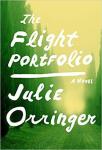 The Flight Portfolio by Julie Orringer: Every day the Emergency Rescue Committee in Marseille interviews 60 refugees and chooses 10 to recommend to the command center in New York City. Varian Fry and his staff arrange bribes, fake passports, and exit visas to get celebrated Jewish artists and writers out of the country via the Pyrenees or various sea routes. The story of an accidental hero torn between impossible choices is utterly compelling. This is richly detailed historical fiction at its best.
-
 Olive, Again by Elizabeth Strout: Crosby, Maine feels like a microcosm of modern society, with Olive as our Everywoman guide. She hasn’t lost her faculties or her spirit, but the approach of death lends added poignancy to her story. Strout is a master of psychological acuity and mixing hope with the darkness. Those who are wary of sequels need not fear: Olive, Again is even better than Olive Kitteridge. (I revisited the book for BookBrowse, whose subscribers likewise voted it the 2019 Best Fiction Award Winner.)
Poetry
-
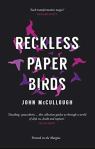 Reckless Paper Birds by John McCullough: From the Costa Awards shortlist. I was struck by the hard-hitting, never-obvious verbs, and the repeating imagery. Flashes of nature burst into a footloose life in Brighton. The poems are by turns randy, neurotic, playful and nostalgic. In “Flock of Paper Birds,” one of my favorites, the poet tries to reconcile the faith he grew up in with his unabashed sexuality.
-
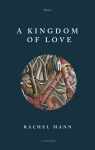 A Kingdom of Love by Rachel Mann: The Anglican priest’s poetry is full of snippets of scripture and liturgy (both English and Latin), and the cadence is often psalm-like. This is beautiful, incantatory free verse that sparkles with alliteration and allusions that those of a religious background will be sure to recognize. It’s sensual as well as headily intellectual. Doubt, prayer and love fuel many of my favorite lines.
-
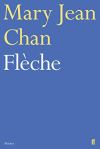 Flèche by Mary Jean Chan: Exquisite poems of love and longing, with the speaker’s loyalties always split between head and heart, flesh and spirit. Over it all presides the figure of a mother – not just Chan’s mother, who had difficulty accepting that her daughter was a lesbian, but also the relationship to the mother tongue (Chinese) and the mother country (Hong Kong). Fencing terms are used for structure. I was impressed by how clearly Chan sees how others perceive her, and by how generously she imagines herself into her mother’s experience. I’ve read 3.5 of the 4 nominees now and this is my pick to win the Costa Award.
What were some of your top fiction (or poetry) reads of the year?
Tomorrow I’ll be naming my favorite nonfiction of 2019.
A Report on My Most Anticipated Reads & The Ones that Got Away
Between my lists in January and June, I highlighted 45 of the 2019 releases I was most looking forward to reading. Here’s how I did:
Read: 28 [Disappointments (rated
or
): 12]
Currently reading: 1
Abandoned partway through: 5
Lost interest in reading: 1
Haven’t managed to find yet: 9
Languishing on my Kindle; I still have vague intentions to read: 1
To my dismay, it appears I’m not very good at predicting which books I’ll love; I would have gladly given 43% of the ones I read a miss, and couldn’t finish another 11%. Too often, the blurb is tempting or I loved the author’s previous book(s), yet the book doesn’t live up to my expectations. And I still have 376 books published in 2019 on my TBR, which is well over a year’s reading. For the list to keep growing at that annual rate is simply unsustainable.
Thus, I’m gradually working out a 2020 strategy that involves many fewer review copies. For strings-free access to new releases I’m keen to read, I’ll go via my local library. I can still choose to review new and pre-release fiction for BookBrowse, and nonfiction for Kirkus and the TLS. If I’m desperate to read an intriguing-sounding new book and can’t find it elsewhere, there’s always NetGalley or Edelweiss, too. I predict my FOMO will rage, but I’m trying to do myself a favor by waiting most of the year to find out which are truly the most worthwhile books rather than prematurely grabbing at everything that might be interesting.
I regret not having time to finish two 2019 novels I’m currently reading that are so promising they likely would have made at least my runners-up list had I finished them in time. I’m only a couple of chapters into The Confessions of Frannie Langton by Sara Collins (on the Costa Awards debut shortlist), a Gothic pastiche about a Jamaican maidservant on trial for killing her master and mistress (doubly intended) in Georgian London, but enjoying it very much. I’m halfway through The Dearly Beloved by Cara Wall, a quiet character study of co-pastors and their wives and how they came to faith (or not); it is lovely and simply cannot be rushed.
The additional 2019 releases I most wished I’d found time for before the end of this year are:
All This Could Be Yours by Jami Attenberg
Your House Will Pay by Steph Cha
Dominicana by Angie Cruz
&
In the Dream House by Carmen Maria Machado: I’ve heard that this is an amazing memoir of a same-sex abusive relationship, written in an experimental style. It was personally recommended to me by Yara Rodrigues Fowler at the Young Writer of the Year Award ceremony, and also made Carolyn Oliver’s list of nonfiction recommendations.
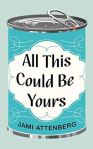
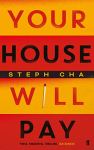
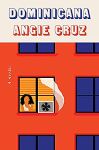

Luckily, I have another chance at these four since they’re all coming out in the UK in January; I have one as a print proof (Cruz) and the others as NetGalley downloads. I also plan to skim Invisible Women: Exposing Data Bias in a World Designed for Men by Caroline Criado Perez, a very important new release, before it’s due back at the library.
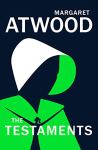 The biggest release of 2019 is another that will have to wait until 2020: I know I made a lot of noise about boycotting The Testaments, but I’ve gradually come round to the idea of reading it, and was offered a free hardback to read as a part of an online book club starting on the 13th, so I’m currently rereading Handmaid’s to be ready to start the sequel in the new year.
Here’s the books I’m packing for the roughly 48 hours we’ll spend at my in-laws’ over Christmas. (Excessive, I know, but I’m a dabbler, and like to keep my options open!) A mixture of current reads, including a fair bit of suspense and cozy holiday stuff, with two lengthy autobiographies, an enormous Victorian pastiche, and an atmospheric nature/travel book waiting in the wings. I find that the holidays can be a good time to start some big ol’ books I’ve meant to read for ages.

Left stack: to start and read gradually over the next couple of months; right stack: from the currently reading pile.
I’ll be back on the 26th to start the countdown of my favorite books of the year, starting with fiction.
Merry Christmas!
Young Writer of the Year Award Ceremony
It was great to be back at the London Library for last night’s Young Writer of the Year Award prize-giving ceremony. I got to meet Anne Cater (Random Things through my Letterbox) from the shadow panel, who’s coordinated a few blog tours I’ve participated in, as well as Ova Ceren (Excuse My Reading). It was also good to see shadow panelist Linda (Linda’s Book Bag) again and hang out with Clare (A Little Blog of Books), also on the shadow panel in my year, and Eric (Lonesome Reader), who seems to get around to every London literary event.
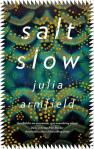 In case you haven’t heard, the shadow panel chose Salt Slow by Julia Armfield as their very deserving winner, but the official winner was Raymond Antrobus for his poetry collection The Perseverance. In all honesty, I’d given no thought to the possibility of it winning, mostly because Antrobus has already won several major prizes for the book, including this year’s £30,000 Rathbones Folio Prize (I reviewed it for the Prize’s blog tour). Now, there’s no rule saying you can’t win multiple prizes for the same book, but what struck me strangely about this case is that Kate Clanchy was a judge for both the Folio Prize and the Young Writer Award.
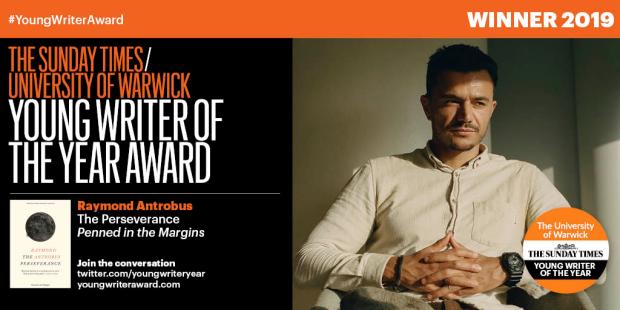
Antrobus seemed genuinely taken aback by his win and gave a very gracious speech in which he said that he looked forward to all the shortlistees contributing to the canon of English literature. He was quickly whisked away for a photo shoot, so I didn’t get a chance to congratulate him or have my book signed, but I did get to meet Julia Armfield and Yara Rodrigues Fowler and get their autographs.


Some interesting statistics for you: in three of the past four years the shadow panel has chosen a short story collection as its winner (and they say no one likes short stories these days!). In none of those four years did the shadow panel correctly predict the official winner – so, gosh, is it the kiss of death to be the shadow panel winner?!
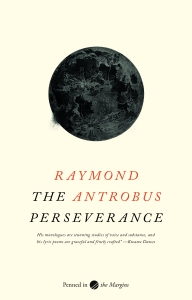 In the official press release, chair of judges and Sunday Times literary editor Andrew Holgate writes that The Perseverance is “both very personal and immensely resonant. The result is a memoir in verse very, very affecting and fresh.” Poet Kate Clanchy adds, “we wanted to find a writer who both speaks for now and who we were confident would continue to produce valuable, central work. … it was the humanity of the book, its tempered kindness, and the commitment not just to recognising difference but to the difficult act of forgiveness that made us confident we had found a winner for this extraordinary year.”
Also present at the ceremony were Sarah Moss (who teaches at the University of Warwick, the Award’s new co-sponsor) and Katya Taylor. I could have sworn I spotted Deborah Levy, too, but after conferring with other book bloggers we decided it was just someone who looked a lot like her.
In any event, it was lovely to see London all lit up with Christmas lights and to spend a couple of hours celebrating up-and-coming writing talent. (And I just managed to catch the last train home and avoid a rail replacement bus nightmare.)
Looking forward to next year already!
Young Writer of the Year Award: Shortlist Reviews and Predictions
Being on the shadow panel for the Sunday Times Young Writer of the Year Award was a bookish highlight of 2017 for me. I’m pleased for this year’s shadow panelists, a couple of whom are blogging friends (one I’ve met IRL), to have had the same opportunity, and I look forward to attending the prize ceremony at the London Library on December 5th.
I happened to have already read two of the shortlisted titles, the poetry collection The Perseverance by Raymond Antrobus and the debut novel Stubborn Archivist by Yara Rodrigues Fowler, which was one of my specific wishes/predictions. The kind folk of FMcM Associates sent me the other two shortlisted books, a short story collection and another debut novel, for blog reviews so that I could follow along with the shadow panel’s deliberations.
Salt Slow by Julia Armfield (2019)
These nine short stories are steeped in myth and magic, but often have a realistic shell. Only gradually do the fantastical or dystopian elements emerge, with the final paragraph delivering a delicious surprise. For instance, the narrator of “Mantis” attends a Catholic girls’ school and is caught up in a typical cycle of self-loathing and obsessing over boys. It’s only at the very end that we realize her extreme skin condition is actually a metamorphosis that enables her to protect herself. The settings are split between the city and the seaside; the perspective is divided almost perfectly down the middle between the first and third person. The body is a site of transformation, or a source of grotesque relics, as in “The Collectables,” in which a PhD student starts amassing body parts she could only have acquired via grave-robbing.
 Two favorites for me were “Formerly Feral,” in which a 13-year-old girl acquires a wolf as a stepsister and increasingly starts to resemble her; and the final, title story, a post-apocalyptic one in which a man and a pregnant woman are alone in a fishing boat, floating above a drowned world and living as if outside of time. This one is really rather terrifying. I also liked “Cassandra After,” in which a dead girlfriend comes back – it reminded me of Margaret Atwood’s The Robber Bride, which I’m currently reading for #MARM. “Stop Your Women’s Ears with Wax,” about a girl group experiencing Beatles-level fandom on a tour of the UK, felt like the odd one out to me in this collection.
Armfield’s prose is punchy, with invented verbs and condensed descriptions that just plain work: “Jenny had taken to poltergeisting round the house”; “skin like fork-clawed cottage cheese,” “the lobster shells gleam a slick vermilion” and “The sky is gory with stars.” There’s no shortage of feminist fantasy stories out there nowadays – Aimee Bender, Kelly Link, Carmen Maria Machado and Karen Russell are just a few others working in this vein – but the writing in Salt Slow really grabbed me even when the plots didn’t. I’ll be following Armfield’s career with interest.
Testament by Kim Sherwood (2018)
Eva Butler is a 24-year-old MA student specializing in documentary filmmaking. She is a live-in carer for her grandfather, the painter Joseph Silk (real name: József Zyyad), in his Fitzroy Park home. When Silk dies early on in the book, she realizes that she knows next to nothing about his past in Hungary. Learning that he wrote a testament about his Second World War experiences for the Jewish Museum in Berlin, she goes at once to read it and is distressed at what she finds. With the help of Felix, the museum’s curator, who did his PhD on Silk’s work, she travels to Budapest to track down the truth about her family.
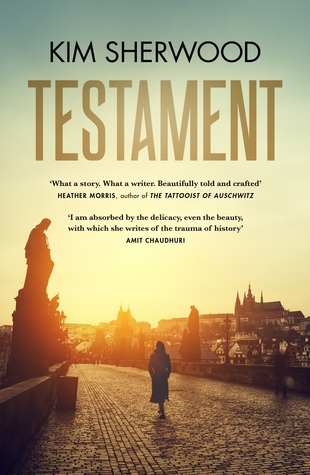 Sherwood alternates between Eva’s quest and a recreation of József’s time in wartorn Europe. Cleverly, she renders the past sections more immediate by writing them in the present tense, whereas Eva’s first-person narrative is in the past tense. Although József escaped the worst of the Holocaust by being sentenced to forced labor instead of going to a concentration camp, his brother László and their friend Zuzka were in Theresienstadt, so readers get a more complete picture of the Jewish experience at the time. All three wind up in the Lake District after the war, rebuilding their lives and making decisions that will affect future generations.
It’s almost impossible to write anything new about the Holocaust these days, and overfamiliarity was certainly a roadblock for me here. I was especially reminded of Julie Orringer’s The Invisible Bridge, what with its focus on the Hungarian Jewish experience. However, I did appreciate the way Sherwood draws on her family history – her grandmother is a Hungarian Holocaust survivor – to consider how trauma still affects the second and third generation. This certainly doesn’t feel like a debut novel. It’s highly readable, and the emotional power of the story cannot be denied. The Young Writer of the Year Award is great for highlighting books that risk being overlooked: in a year dominated by The Testaments, poor Testament was otherwise likely to sink without notice.
Note: “Testament” is also the title of the poem written by Sherwood’s great-grandfather that she recited at her grandfather’s funeral – just as Eva does in the novel. It opens this Telegraph essay (paywalled, but reprinted in the paperback of Testament) that Sherwood wrote about her family history.
General thoughts and predictions:
Any of these books would be a worthy winner. However, as Raymond Antrobus has already won this year’s £30,000 Rathbones Folio Prize as well as the 2018 Geoffrey Dearmer Award from the Poetry Society, The Perseverance has had sufficient recognition – plus it’s a woman’s turn. Testament is accomplished, and likely to hold the widest appeal, but it strikes me as the safe choice. Salt Slow would be an edgier selection, and feels quite timely and fresh. But Stubborn Archivist has stuck with me since I reviewed it in March. I called it “Knausgaard for the Sally Rooney generation” and wrote that “the last book to have struck me as truly ‘novel’ in the same way was Lincoln in the Bardo.” From a glance at the shadow panel’s reviews thus far, I fear it may prove too divisive for them, though.
Based on my gut instincts and a bit of canny thinking about the shadow panelists and judges, here are my predictions:
Shadow Panel:
- What they will pick: Testament [but they might surprise me and go with Salt Slow or Stubborn Archivist]
- What they should pick: Salt Slow
Official Judging Panel:
- What they will pick: Stubborn Archivist [but they might surprise me and go with Salt Slow]
- What they should pick: Stubborn Archivist
I understand that the shadow panel is meeting today for their in-person deliberations. I wish them luck! Their pick will be announced on the 28th. I’ll be intrigued to see which book they select, and how it compares with the official winner on December 5th.
Have you read anything from this year’s shortlist?
November Plans: Novellas, Margaret Atwood Reading Month & More
This is my fourth year joining Laura Frey and others in reading mostly novellas in November. Last year Laura put together a history of the challenge (here); it has had various incarnations but has no particular host or rules. Join us if you like! (#NovNov and #NovellasinNovember) The definition of a novella is loose – it’s based more on the word count than the number of pages – so it’s up to you what you’d like to classify as one. I generally limit myself to books of 150 pages or fewer, though I might go as high as 180-some if there aren’t that many words on a page. Some, including Laura and Susan, would be as generous as 200.


I’ve trawled my shelves for fiction and nonfiction stacks to select from, as well as a few volumes that include several novellas (I’d plan on reading at least the first one) and some slightly longer novels (150–190 pages) for backups. [From the N. West volume, I just have the 52-page novella The Dream Life of Balso Snell, his debut, to read. The Tangye book with the faded cover is Lama.] Also available on my Kindle are The Therapist by Nial Giacomelli*, Record of a Night too Brief by Hiromi Kawakami, Childhood: Two Novellas by Gerard Reve, and Milton in Purgatory by Edward Vass* (both *Fairlight Moderns Novellas, as is Atlantic Winds by William Prendiville).
Other November reading plans…
Margaret Atwood Reading Month
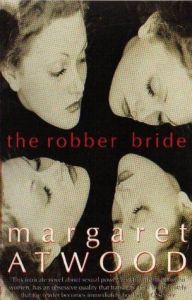 This is the second year of #MARM, hosted by Canadian bloggers extraordinaires Marcie of Buried in Print and Naomi of Consumed by Ink. This year they’re having a special The Handmaid’s Tale/The Testaments theme, but even if you’re avoiding the sequel, join us in reading one or more Atwood works of your choice. She has so much to choose from! Last year I read The Edible Woman and Surfacing. This year I’ve earmarked copies of the novel The Robber Bride (1993) and Moral Disorder (2006), a linked short story collection, both of which I got for free – the former from the free bookshop where I volunteer, and the latter from a neighbor who was giving it away.
Nonfiction November
I don’t usually participate in this challenge because nonfiction makes up at least 40% of my reading anyway, but last year I enjoyed putting together some fiction and nonfiction pairings and ‘being the expert’ on women’s religious memoirs, a subgenre I have a couple of books to add to this year. So I will probably end up doing at least one post. The full schedule is here.
Young Writer of the Year Award
Being on the shadow panel for the Sunday Times/PFD Young Writer of the Year Award was a highlight of 2017 for me. I was sad to not be able to attend any of the events last year. I’m excited for this year’s shadow panelists, a couple of whom are blogging friends (one I’ve met IRL), and I look forward to following along with the nominated books and attending the prize ceremony at the London Library on December 5th.
 With any luck I will already have read at least one or two books from the shortlist, which is to be announced on November 3rd. I have my fingers crossed for Yara Rodrigues Fowler, Daisy Johnson, Elizabeth Macneal, Stephen Rutt and Lara Williams; I expect we may also see repeat appearances from one of the poets recognized by the Forward Prizes and Guy Gunaratne, the winner of the 2019 Dylan Thomas Prize.
Any reading plans for November? Will you be joining in with novellas, Margaret Atwood’s books or Nonfiction November?
November Reading Plans: Novellas, Margaret Atwood and More
This is my third year joining Laura Frey and others in reading novellas in November. Laura has put together a history of the challenge here; it has had various incarnations but has no particular host or rules. Join us if you like! (#NovNov) The definition of a novella seems to be loose – it’s based more on word count than page count – so it’s up to you what you’d like to classify as one. I generally limit myself to books of 150 pages or fewer, though in some cases I’d probably go as high as 180-some. I’ve trawled my shelves and library pile and have four stacks to select from: fiction, classics, novella-length nonfiction, and slightly longer novels (160–190 pages) that I’ll keep around as backups but likely won’t get to.


Between what I have in these stacks, holds I’m waiting on at the library (West by Carys Davies, The Glorious Life of the Oak by John Lewis-Stempel and Holloway by Robert Macfarlane), and some additional choices on my e-readers (Lady into Fox by David Garnett, Heart Berries by Terese Marie Mailhot and Childhood: Two Novellas by Gerard Reve), I easily have enough for a book a day. In a future year maybe I’d be able to clear my schedule such that I could indeed read one novella per day, but I have so many review books on the go that I won’t aim for that. Besides, I’m not the kind of reader who’d sit down and read a 160-page book in one sitting; I’d be more likely to read 20 pages each in eight different books.
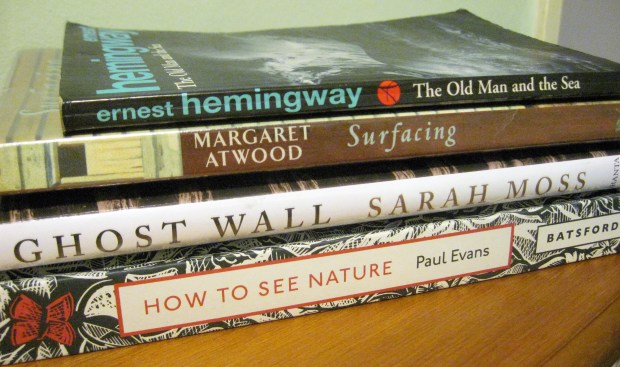
This is the pile I’ll be starting later today. (The Evans looks long but is 164 pages of text with various full- and half-page black-and-white illustrations dotted through.)
I got a headstart on Novellas in November with this Canongate volume published today.
Courage Calls to Courage Everywhere by Jeanette Winterson
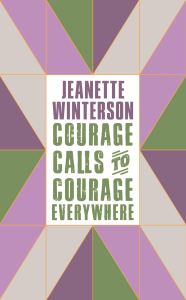 Last year it was Mary Beard’s Women and Power; in 2018 this is the Christmas gift to slip into every feminist book-lover’s stocking. Adapted from Winterson’s Richard Dimbleby Lecture and supplemented by the text of Emmeline Pankhurst’s 1913 speech “Freedom or Death,” this is a slim, attractive volume that feels timely if insubstantial. Winterson gives a potted history of suffragism and argues that female brains are not wired differently; it’s just social programming that tells us so. Gender imbalances in university admissions and the job market continued into the 1970s, so it’s no surprise, she says, that women are still catching up 40 years later – and she supports measures that could be labeled as positive discrimination.
From the #MeToo movement she makes what seems like an odd swerve into discussing AI because computer science/Silicon Valley is very male-dominated and she wants to be sure women have a respected role in the future. My reaction to this was the same as to Beard’s book and Chimamanda Ngozi Adichie’s We Should All Be Feminists: you can’t (and I don’t) dispute what the author has to say; for the most part the points are compelling and well made. Yet I don’t necessarily feel that I learned anything, or saw something familiar in a new way.
Favorite lines:
“When prejudice and bad science are no longer in the way, women always prove themselves as capable as men.”
“that’s how it is with patriarchy – we don’t notice the all-male panels, the movies where women are just the love interest, the number of male presenters on TV and radio […] and we do need parity, because women are one half of the population.”
My rating: 
Other November reading plans…
 Margaret Atwood Reading Month
One of my longer novellas is a library copy of Surfacing (1972), which will be my first of two reads for the Margaret Atwood Reading Month hosted by Marcie and Naomi. I also own a copy of The Edible Woman (1969) and look forward to trying both of these early works.
Young Writer of the Year Award
Being involved with the Sunday Times/PFD Young Writer of the Year Award was one of my highlights of 2017. I’m excited for this year’s shadow panelists, several of whom are longtime blogging friends, and look forward to following along with the shortlist reads even though I can’t attend this year’s events. With any luck I will already have read at least one or two of the nominees (fingers crossed for Daisy Johnson and Fiona Mozley) so that there’s only a couple more to discover.
John Leonard Prize committee
In May I joined the National Book Critics Circle. One of the awards they give annually is the John Leonard Prize for the best first book in any genre. The pool of nominees is based on member recommendations, and a volunteer panel of members (as many as are interested!) then reads the 5–7 finalists and votes for a winner by January 8th. I signed up to be on the panel, so I’m committed to reading all the finalists in e-book format within about six weeks. Again, I hope to find that I’ve already read at least a few of the nominees. Regardless, it will be a fun project to keep me busy over our two weeks in America for the holidays.

Any reading plans for November? Will you be joining in with novellas or Margaret Atwood’s books?
Short Story Collections Read Recently
This is the third year in a row that I’ve made a concerted effort to read more short stories in the alliterative month of September; see also my 2016 and 2017 performances. (I actually finished Sarah Hall’s collection in late August, but I’m going to cheat and include it anyway.) That makes for four volumes in total read recently. Surprisingly, I had my best luck with two that were published back in the early 1990s.
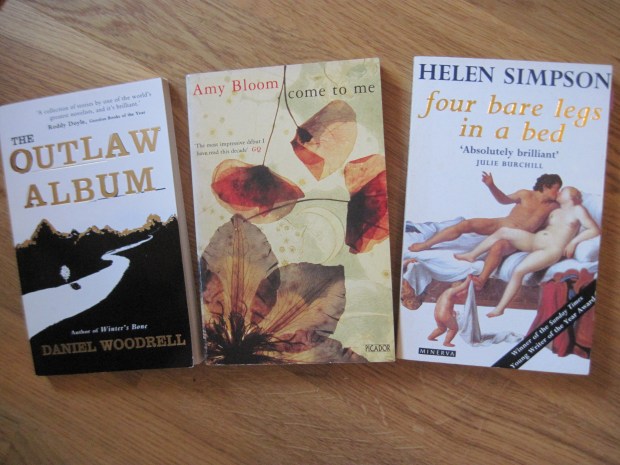
I read Sarah Hall’s book from the library; these three were bargains from my local charity warehouse, the Community Furniture Project.
Like many devoted novel readers, I struggle with short stories because they can feel fragmentary or open-ended, and it takes that much more effort to keep up with multiple settings and groups of characters. Yet I also get frustrated when the narrative voice and themes are too similar across a whole set of tales.
However, when done well short stories can be marvelous, of course. I enjoyed K.J. Orr’s article on short stories in the September 7th issue of the Times Literary Supplement. Among the virtues of the short story, she lists the following:
- “the capacity to stoke questions of definition and instability, resolution and irresolution … ; to deliver its conundrums to the reader in a state of compression”
- “The unpredictability involved means that picking up a new short story always feels to me a moment full of possibilities.”
- “The short story can combine complexity and uncertainty with ebullience and humour. It can take on subjects and situations that risk seeming clichéd and open them to wonder. It can put the familiar and the strange in conversation.”
And yet sometimes the quality of the writing, or at least the intensity of my engagement, can vary wildly within a story collection, which often makes the books difficult to rate and respond to as a whole. That’s what I found with these first two.
Madame Zero by Sarah Hall (2017)
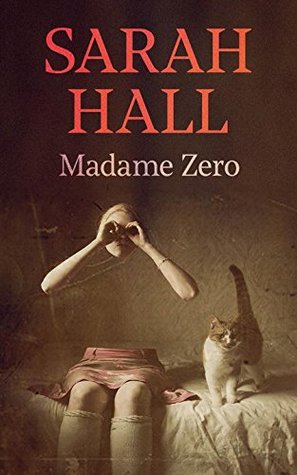 Three corkers; two pretty good; four been-there-read-that. My favorites were the first and last stories, “Mrs Fox” and “Evie” (winner of the BBC National Short Story Prize 2013 and shortlisted for the Sunday Times EFG Private Bank Short Story Award 2013, respectively). Both concern a fairly average marriage derailed when the wife undergoes a transformation. In the former Sophia literally turns into a fox and her husband scrambles for a way to make the relationship last. In “Evie,” Richard’s wife develops a voracious appetite for sweets and sex, and starts talking gibberish. This one is very explicit, but if you can get past that I found it both painful and powerful. I also especially liked “Case Study 2,” about a psychologist’s encounter with a boy who’s been brought up in a commune. It has faint echoes of T.C. Boyle’s “The Wild Child.”
“Wilderness” focuses on an intense episode of fear of heights during a trip to South Africa. In “Luxury Hour,” a new mother meets up with an old lover near the swimming pool they used to frequent and wonders where and why their lives diverged. This one reminded me of the first chapter of Rachel Cusk’s Transit.
As for the rest? “Goodnight Nobody” was completely forgettable, and the other three are in the vague speculative/post-apocalyptic vein that’s been done to death: “Theatre 6” = Red Clocks; “Later, His Ghost” = The Road et al.; “One in Four” = Station Eleven et al. I admire Hall’s writing in general, but The Wolf Border remains the best thing I’ve read by her.
My rating:
The Outlaw Album: Stories by Daniel Woodrell (2011)
 Based on the first six stories, I was planning a 5-star rating. (How can you resist this opening line? “Once Boshell finally killed his neighbor he couldn’t seem to quit killing him.”) But the second half of the book ended up being much less memorable; I wouldn’t say it wasn’t worth reading, but I got very little out of four of the stories, and the other two were okay but somewhat insubstantial. By contrast, the first two stories, “The Echo of Neighborly Bones” and “Uncle,” are gritty little masterpieces of violence and revenge.
I also particularly liked “Black Step” and “Night Stand,” about traumatized soldiers back from war (Woodrell himself was a Marine). Each has a creepy segment where the veteran gives sarcastic answers to the unspecified typical questions they always get; we have to infer that these are: How many people did you kill? What’s it like to kill someone? and What do you do with the bodies? There’s a nice balance between first- and third-person voices; lyrical and unlearned prose; and speech marks and none. I will definitely read more by Woodrell.
My rating: 
I thoroughly loved these next two debut collections. In each case I’d read one or two previous books by the author and not been wild about the writing (White Houses; In-Flight Entertainment and Cockfosters), but these two have convinced me to try more of their work.
Come to Me by Amy Bloom (1993)
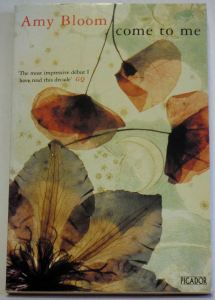 Bloom was a practicing psychotherapist, so it’s no surprise she has deep insight into her characters’ motivations. This is a wonderful set of stories about people who love who they shouldn’t love. In “Song of Solomon,” a new mother falls for the obstetrician who delivered her baby; in “Sleepwalking,” a woman gives in to the advances of her late husband’s son from a previous marriage; in “Light Breaks Where No Sun Shines,” adolescent Susan develops crushes on any man who takes an interest in her. My favorite was probably “Love Is Not a Pie,” in which a young woman rethinks her impending marriage during her mother’s funeral, all the while remembering the unusual sleeping arrangement her parents had with another couple during their joint summer vacations. The title suggests that love is not a thing to be apportioned out equally until it’s used up, but a more mysterious and fluid entity.
Linked short stories can be a useful halfway-house for readers who prefer novels and are still unsure about reading stories. Happily, then, the heart of this collection is five pieces that orbit around the same characters. In “Hyacinths” we meet David as a boy in Manitoba and get a glimpse of him as an adult. In the next story we encounter his second wife, Galen, and her lover, Henry. “Silver Water” is about a mental health crisis with David and Galen’s daughter, and the next two stories are about Henry, his wife Marie, and the other bonds they form.
Although I read the book quickly while on holiday and so haven’t marked out any particular quotes, convincing dialogue and insightful observations are on almost every page. I was reminded most of short stories I’ve read by Elizabeth McCracken and Carol Shields.
My rating: 
Four Bare Legs in a Bed and Other Stories by Helen Simpson (1990)
 Simpson won the inaugural Sunday Times Young Writer of the Year Award for this in 1991. Her protagonists are women disillusioned with the norms of marriage and motherhood. They ditch their safe relationships, or carry on brazen affairs; they fear pregnancy, or seek it out on their own terms. The feminist messages are never strident because they are couched in such brisk, tongue-in-cheek narratives. For instance, in “Christmas Jezebels” three sisters in 4th-century Lycia cleverly resist their father’s attempts to press them into prostitution and are saved by the bishop’s financial intervention; in “Escape Clauses” a middle-aged woman faces the death penalty for her supposed crimes of gardening naked and picnicking on private property, while her rapist gets just three months in prison because she was “asking for it.” (Nearly three decades on, it’s still so timely it hurts.)
I loved “The Bed,” a kind of fairy tale about a luxurious bed solving all a woman’s problems; “What Are Neighbours For,” in which each woman cattily plans what she can get out of the others; “Labour,” a brief five-act play set in a hospital delivery room; and “Zoë and the Pedagogues,” about a woman learning to drive who has two very different teachers (perhaps inevitably, this recalled Mirror, Shoulder, Signal by Dorthe Nors). “An Interesting Condition,” which takes place in an antenatal class, is like Curtis Sittenfeld’s “Bad Latch,” while multiple stories reminded me of Shena Mackay, especially “Send One Up for Me,” about a woman tiptoeing around her boarding house and trying not to anger the landlady.
My rating:
Are you a short story fan? Read any good ones recently?
Last-Minute Thoughts on the Booker Longlist
Tomorrow, the 20th, the Man Booker Prize shortlist will be announced. This must be my worst showing for many years: I’ve read just two of the longlisted books, and both were such disappointments I had to wonder why they’d been nominated at all. I have six of the others on request from the public library; of them I’m most keen to read The Overstory and Sabrina, the first graphic novel to have been recognized (the others are by Gunaratne, Johnson, Kushner and Ryan, but I’ll likely cancel my holds if they don’t make the shortlist). I’d read Robin Robertson’s novel-in-verse if I ever managed to get hold of a copy, but I’ve decided I’m not interested in the other four nominees (Bauer, Burns, Edugyan, Ondaatje*).
The Water Cure by Sophie Mackintosh
(Excerpted from my upcoming review for New Books magazine’s Booker Prize roundup.)
 The first word of The Water Cure may be “Once,” but what follows is no fairy tale. Here’s the rest of that sentence: “Once we have a father, but our father dies without us noticing.” The tense seems all wrong; surely it should be “had” and “died”? From the very first line, then, Sophie Mackintosh’s debut novel has the reader wrong-footed, and there are many more moments of confusion to come. The other thing to notice in the opening sentence is the use of the first person plural. That “we” refers to three sisters: Grace, Lia and Sky. After the death of their father, King, it’s just them and their mother in a grand house on a remote island.
There are frequent flashbacks to times when damaged women used to come here for therapy that sounds more like torture. The sisters still engage in similar sadomasochistic practices: sitting in a hot sauna until they faint, putting their hands and feet in buckets of ice, and playing the “drowning game” in the pool by putting on a dress laced with lead weights. Despite their isolation, the sisters are still affected by the world at large. At the end of Part I, three shipwrecked men wash up on shore and request sanctuary. The men represent new temptations and a threat to the sisters’ comfort zone.
This is a strange and disorienting book. The atmosphere – lonely and lowering – is the best thing about it. Its setup is somewhat reminiscent of two Shakespeare plays, King Lear and The Tempest. With the exception of a few lines like “we look towards the rounded glow of the horizon, the air peach-ripe with toxicity,” the prose draws attention to itself in a bad way: it’s consciously literary and overwritten. In terms of the plot, it is difficult to understand, at the most basic level, what is going on and why. Speculative novels with themes of women’s repression are a dime a dozen nowadays, and the interested reader will find a better example than this one.
My rating: 
Normal People by Sally Rooney
Conversations with Friends was one of last year’s sleeper hits and a surprise favorite of mine. You may remember that I was part of an official shadow panel for the 2017 Sunday Times Young Writer of the Year Award, which I was pleased to see Sally Rooney win. So I jumped at the chance to read her follow-up novel, which has been earning high praise from critics and ordinary readers alike as being even better than her debut. Alas, though, I was let down.
 Normal People is very similar to Tender – which for some will be high praise indeed, though I never managed to finish Belinda McKeon’s novel – in that both realistically address the intimacy between a young woman and a young man during their university days and draw class and town-and-country distinctions (the latter of which might not mean much to those who are unfamiliar with Ireland).
The central characters here are two loners: Marianne Sheridan, who lives in a white mansion with her distant mother and sadistic older brother Alan, and Connell Waldron, whose single mother cleans Marianne’s house. Connell doesn’t know who his father is; Marianne’s father died when she was 13, but good riddance – he hit her and her mother. Marianne and Connell start hooking up during high school in Carricklea, but Connell keeps their relationship a secret because Marianne is perceived as strange and unpopular. At Trinity College Dublin they struggle to fit in and keep falling into bed with each other even though they’re technically seeing other people.
The novel, which takes place between 2011 and 2015, keeps going back and forth in time by weeks or months, jumping forward and then filling in the intervening time with flashbacks. I kept waiting for more to happen, skimming ahead to see if there would be anything more to it than drunken college parties and frank sex scenes. The answer is: not really; that’s mostly what the book is composed of.
I can see what Rooney is trying to do here (she makes it plain in the next-to-last paragraph): to show how one temporary, almost accidental relationship can change the partners for the better, giving Connell the impetus to pursue writing and Marianne the confidence to believe she is loveable, just like ‘normal people’. It is appealing to see into these characters’ heads and compare what they think of themselves and each other with their awareness of what others think. But page to page it is pretty tedious, and fairly unsubtle.
I was interested to learn that Rooney was writing this at the same time as Conversations, and initially intended it to be short stories. It’s possible I would have appreciated it more in that form.
My rating: 
My thanks to Faber & Faber for the free copy for review.
 *I’ve only ever read the memoir Running in the Family plus a poetry collection by Ondaatje. I have a copy of The English Patient on the shelf and have felt guilty for years about not reading it, especially after it won the “Golden Booker” this past summer (see Annabel’s report on the ceremony). I had grand plans of reading all the Booker winners on my shelf – also including Carey and Keneally – in advance of the 50th anniversary celebrations, but didn’t even make it through the books I started by the two South African winners; my aborted mini-reviews are part of the Shiny New Books coverage here. (There are also excerpts from my reviews of Bring Up the Bodies, The Sellout and Lincoln in the Bardo here.)
Last year I’d read enough from the Booker longlist to make predictions and a wish list, but this year I have no clue. I’ll just have a look at the shortlist tomorrow and see if any of the remaining contenders appeal.
What have you managed to read from the Booker longlist? Do you have any predictions for the shortlist?
My Patchy Experience with Book Clubs
I know that a number of you have long-term, faithful book clubs. Boy, am I envious! You might find it surprising that I’ve only ever been in one traditional book club, and it wasn’t a resounding success. Partway through my time working for King’s College, London, an acquaintance from another library branch started the club. A group of five to eight of us from Library Services aimed to meet after work one evening a month at a Southbank venue or a staff room to discuss our latest pick. By poring over old e-mails and my Goodreads library, I’ve managed to remember 10 of the books we read between November 2011 and June 2013:
- Do Androids Dream of Electric Sheep?, Philip K. Dick [classic science fiction]
- The Little Shadows, Marina Endicott [Canadian historical fiction]
- A Spot of Bother, Mark Haddon [contemporary fiction]
- The Talented Mr. Ripley, Patricia Highsmith [classic suspense]
- The Vintner’s Luck, Elizabeth Knox [bizarre historical fiction/magic realism]
- What Was Lost, Catherine O’Flynn [contemporary fiction]
- Franny and Zooey, J.D. Salinger [classic short fiction]
- The Rabbi’s Cat, Joann Sfar [graphic novel in translation]
- Girl Meets Boy, Ali Smith [an update of Greek myth]
- Angel, Elizabeth Taylor [an obscure English classic]
That may well be the complete list. Although I was a member for 20 months until I quit to go freelance, we often only managed to meet every other month because we couldn’t find a mutually convenient free evening or no one had read the book in time. I was consistently frustrated that – even when our selections were only about 200 pages long – I was often one of the only people to have read the whole book.
Overall, the quality of books we chose struck me as mediocre: I rated half of these books 2 stars, and the rest 3 stars. (I think I was a harsher rater then, but it’s not a good sign, is it?) Perhaps this is part of the inevitable compromising that goes with book clubs, though: You humor other people in their choices and hope they’ll be kind about yours? My suggestion, for the record, was the pretty dismal Little Shadows, for which I got a free set of book club copies to review for Booktime magazine. But I also voted in favor of most of the above list.
Looking back, I am at least impressed by how varied our selections were. People were interested in trying out different genres, so we ranged from historical fiction to sci-fi, and even managed a graphic novel. But when we did get together for discussion there was far too much gossipy chat about work, and when we finally got around to the book itself the examination rarely went deeper than “I liked it” or “I hated all the characters.”
If it was profound analysis I was after, I got that during the years I volunteered at Greenbelt, an annual summer arts festival with a progressive Christian slant. I eagerly read the eclectic set of three books the literature coordinator chose for book club meetings in 2010 – Star of the Morning: The Extraordinary Life of Lady Hester Stanhope by Kirsten Ellis, The First Person and Other Stories by Ali Smith, and The Bridge of San Luis Rey by Thornton Wilder – and then as a literature volunteer for the next three years I read and prepared copious notes and questions about our festival “Big Read.” We did Exile by Richard North Patterson in 2011, Dark Eden by Chris Beckett in 2012 and So Many Ways to Begin by Chris Beckett in 2013, and each time I offered to chair the book club meetings.
Unfortunately, due at least in part to logistical considerations, these were run in the way many festival events are: a panel of two to five talking heads with microphones was at the front of the tent, sometimes on a raised dais, while the audience of whatever size sat towards the back. This created a disconnect between the “experts” and the participants, and with the exception of the McGregor meeting I don’t recall much audience input. I’ve mostly blanked out the events – as I tend to for anything that entails public speaking and nervous preparation for something you can’t control – but I was pleased to be involved and I should probably make more of this on my CV. It wasn’t your average book club setting, that’s for sure.
In recent years the closest thing I’ve had to a book club has been online buddy reading. The shadow panels for the Wellcome Book Prize and Sunday Times Young Writer of the Year Award fall into this category, as do online readalongs I’ve done for several Iris Murdoch novels and for C.S. Lewis’s Mere Christianity with various female family members. A few of us book bloggers chatted about Andrea Levy’s Small Island in an online document earlier this year, and my mom and I e-mailed back and forth while reading W. Somerset Maugham’s The Painted Veil in May. I’m also doing my last three of the #20BooksofSummer as online buddy reads, checking in occasionally on Twitter.
Of course, there are some inherent limitations to this kind of discussion – people read at different paces and don’t want to spoil the plot for others, and at some point the back-and-forth fizzles out – but it’s always been easier for me to organize my thoughts in writing, so I likely feel more comfortable contributing than I might in an in-person meeting.
This is all context for my decision to join my neighborhood book club next month. The club arose some months back out of our community’s Facebook group, a helpful resource run by a go-getting lady a few doors down from us. So far it’s turning out to be a small group of thirty- and fortysomething women who alternate meetings at each other’s houses, and the name they’ve chosen gives an idea of the tone: “Books, Booze and Banter.”
I made the mistake of not getting involved right at the start; I wanted to hang back and see what kind of books they’d choose. This means I wasn’t part of the early process of putting titles in a hat, so I’ve looked on snobbishly for several months as they lurched between crime and women’s fiction, genres I generally avoid. (Still, there were actually a couple books I might have joined them for had I not been in America and had they been readily available at the public library.) For many people a book club selection will be the only book they get through that month, so I can understand how they’d want it to be something ‘readable’ that they’d be happy to pick up anyway. Even though statistically I read 27 books a month, I’m still jealously protective of my reading time; I want everything I read to be worthwhile.
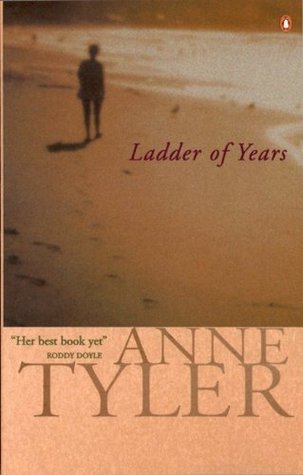 So for September I managed to steer the group away from a poorly received historical novel of over 400 pages and the new Joël Dicker and onto Ladder of Years by Anne Tyler, which the bookstore chain Waterstones has been promoting heavily as one of their books of the month. I already had a charity shop copy in hand and the others liked the sound of it, so we’re all set for September 12th! Future months’ literary fiction choices look promising, too, so provided I enjoy the discussion and the camaraderie I plan to stick with it: a backlist Pat Barker novel I’ve not read, and Kirsty Logan and Jonathan Coe novels I’ve read before and won’t reread but will remind myself about briefly before the meetings.
I’m out of practice with this book club thing. My mother tells me that I have a lot to contribute but that I must also be open to what I’ll learn from other people – even if I don’t expect to. So I don’t want to set myself up as some kind of expert. In fact, I probably won’t even mention that I’m a freelance book reviewer and book blogger. Mostly I’m hoping to find some friendly faces around the neighborhood, because even though we’ve lived here just over two years I still only know a handful of names and keep myself to myself as I work from home. Even if I have to read books I wouldn’t normally, it’ll be worth it to meet more people.
What has your experience with book clubs (in person and online) been?
Third Blog Anniversary
Hard to believe, but I’ve only been blogging for three years as of today. It feels like something I’ve been doing forever, but at the same time I still consider myself a newbie. This is my 382nd post, so I’ve been keeping up an average of 2.5 posts a week.

By Joey Gannon from Pittsburgh, PA (Candles) [CC BY-SA 2.0 (http://creativecommons.org/licenses/by-sa/2.0)%5D, via Wikimedia Commons.
I’ve particularly enjoyed doing author Q&As and highlighting seasonal reads, novellas, books about cats, and physical book traits. I especially like writing up bookshop visits and other literary travels, and discussing literary prizes. My supply of graphic novels seems to have dried up; for new releases I focus on literary fiction, historical fiction and memoirs.
Straightforward book reviews have always been less popular than book lists and other more tangentially book-related posts. Library Checkout posts are consistently well-liked, as were the “Books in Brief” sets of five mini-reviews I used to do. As I’ve noted before, my posts on abandoned books are always perversely popular.
Some of my favorite posts from the past year were on World Kidney Day, Mother–Daughter Author Pairs, and Book Hoarding, and my review in verse of Jonathan Eig’s Ali: A Life.
The numbers of likes seem to be less than informative as they simply reflect a growing number of followers – many of my recent posts have averaged 20–25 likes – so I prefer to look at comments, as it means people are truly reading and engaging. In terms of numbers of comments, my top posts of all time appeared in the last year and were:
- Bibliotherapy appointment
- Books in Brief, May 2017 (featuring books by Sebastian Barry, Tracy Chevalier, Thomas H. Cook, Nicole Gulotta and Elizabeth Hay)
- (Tied for 3rd) Booker Longlist 2017 & Jacob’s Room Is Full of Books review
Thanks to everyone who has supported me this past year, and/or all three years, by visiting the site, commenting, re-tweeting, and so on. You’re the best!
 Bookish Beck = Rebecca Foster. American transplant to England. Freelance proofreader and book reviewer.
 Bookish Beck