Book Serendipity, August to September
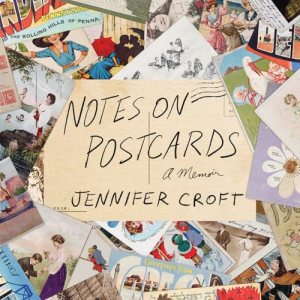
From Jennifer Croft’s superb Notes on Postcards (forthcoming in November):
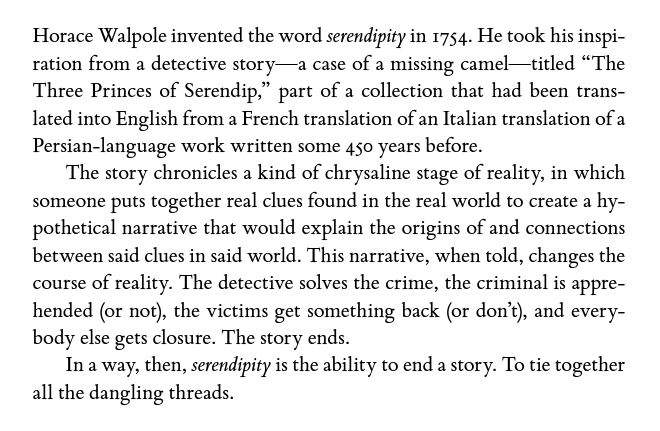
I’d heard that story of Horace Walpole and the etymology of “serendipity” before. Tying together dangling threads is a good description of what I try to do with these posts, which arise from my reading.
I call it “Book Serendipity” when two or more books that I have read at the same time or in quick succession have something in common – the more bizarre, the better. This is a regular feature of mine every couple of months. Because I usually have 20–30 books on the go at once, I suppose I’m more prone to such incidents. People frequently ask how I remember all of these coincidences. The answer is: I jot them down on scraps of paper or input them immediately into a file on my PC desktop; otherwise, they would flit away!
 The more accurate keyword would probably be “synchronicity,” which according to Carl Jung, who “believed in a universe of mysterious connections,” is “a meaningful coincidence in which an internal mental state somehow attracts a real-world parallel” (quotes from The Spirituality Gap by Ali Millar). An intriguing idea, that: somehow, by thinking about these ideas or details, I might be … luring repeat incidents to me?!
The following are in roughly chronological order.
What’s in a name?
- Girlfriends named Maddie (in Year of the Drought by Roland Buti) and Mattie (Tom’s in Pardon Our French by Alex Durand and Tom Carles); plus a granddaughter (in The Typing Lady and Other Fictions by Ruth Ozeki) and niece (in The Land and Its People by David Sedaris) named Maddy.
- A character named Hattie in Leaving the Yellow House by Saul Bellow and The Correspondent by Virginia Evans.
- A character named India in Leaving the Yellow House by Saul Bellow and Family Family by Laurie Frankel (our second The Marriage Plot/Literary Wives club read this year in which the protagonist was named India, after Mrs. Bridge by Evan S. Connell).
 A daughter named Rebecca in Switzy by Emma Cline and Family Family by Laurie Frankel (where she’s known as Bex); and sisters named Rebecca (known as Becks) in one story of The Rental Heart and Other Fairytales by Kirsty Logan and The Long Road to Holy Island by Austin Suggs. Those are both nicknames I’ve had, by the way. The one nickname I detest is Becky.
- A mother named Monica in The Summerhouse Trilogy by Alice Thomas Ellis and Apt Pupil by Stephen King.
- A Hilda in The Given World by Melissa Harrison and one story of Self-Help by Lorrie Moore.
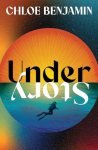
- A Clare in Under Story by Chloe Benjamin, The Leveret by Anna Goldreich and The Given World by Melissa Harrison.
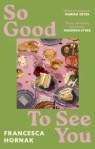
- A Sergio in Old Romantics by Maggie Armstrong and a Serge in So Good to See You by Francesca Hornak.
- A son named Silas in Under Story by Chloe Benjamin and So Good to See You by Francesca Hornak.
- Compensation for run-over chickens in Year of the Drought by Roland Buti and Don’t Let’s Go to the Dogs Tonight by Alexandra Fuller.
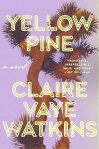
- “Enough is enough” is a slogan in The Land and Its People by David Sedaris (where it’s also an essay title) and Yellow Pine by Claire Vaye Watkins.
 Telluride, Colorado features as a setting in Almost Animal by Amy Irvine and in one essay of The Land and Its People by David Sedaris.
- A trip from Paris to see Chartres Cathedral in The Magician by W. Somerset Maugham and Shadow of a Man by May Sarton.
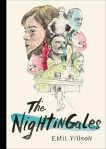
- Fleeting references to the Donner Party in Yellow Pine by Claire Vaye Watkins and The Nightingales by Emil Wilson.
- An essay about an Icelandic sheep ram, and the idea that one should ride geldings because they’re calmer and more reliable than mares, in Animals Taught Me Everything by Pam Houston and The Land and Its People by David Sedaris.
- The protagonist’s work performance declining due to dementia, and a tweed jacket, in Switzy by Emma Cline and Luna, Phoenix, Queen by Julie Orringer. (There’s also a tweed jacket mentioned in Strange Weather in Tokyo by Hiromi Kawakami.)
- German artist Käthe Kollwitz is mentioned in Seed Corn Must Not Be Ground (the title is from one of her works) by Pat Browne and The Book of Mating by Laksmi Pamuntjak.
- Child brides and incestuous rape are mentioned/feature in Almost Animal by Amy Irvine and The Book of Mating by Laksmi Pamuntjak, both of which I was reading early for Foreword Reviews.
- The keeping of goats in Almost Animal by Amy Irvine and American Daughter by Era Bell Thompson, both of which I was reading early for Foreword Reviews.
- In August I unwittingly started rereading two books that I’d first read in April 2013 (is 13+ years the ideal interval?!): I Feel Bad about My Neck by Nora Ephron and Flush by Virginia Woolf.
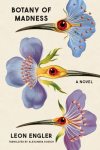
- Men by the name of Christmas: the narrator’s parents wanted to name him Noel (but the German state didn’t allow it?!) in Botany of Madness by Leon Engler; and a main character is named Joe Christmas in Light in August by William Faulkner.
- To the narrator’s question of whether something awful has happened / they’ve done something wrong, a reply of “it very likely had but she hadn’t heard about it yet” in Our Spoons Came from Woolworths by Barbara Comyns and “Most likely. You know that better than I do” in Botany of Madness by Leon Engler.
- The idea that human–animal communication/connection is deeper than that between humans because it is beyond language plays a major role in three books I read around the same time: Animals Taught Me Everything by Pam Houston, Mitz by Sigrid Nunez, and Luna, Phoenix, Queen by Julie Orringer. (The Houston and Orringer both publish on 13 October and I was reviewing them early for Shelf Awareness.)
- The fact that children of alcoholics feel they have to make everything perfect to avoid conflict appears in Botany of Madness by Leon Engler and Animals Taught Me Everything by Pam Houston.
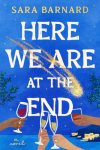 I encountered lines from the song “Closing Time” by Semisonic in Here We Are at the End by Sara Barnard (a specific reference to the pop song accompanied “Every new beginning comes from some other beginning’s end” – which I was amused to learn is actually a quote from Seneca!) and Family Family by Laurie Frankel (“You don’t have to go home. But you can’t stay here.” – not attributed, but I can’t but think she had the song in mind.)
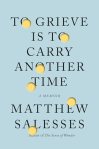
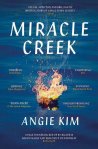
- The stereotype of overachieving Asian Americans is mentioned or discussed in Family Family by Laurie Frankel, Miracle Creek by Angie Kim, and To Grieve Is to Carry Another Time by Matthew Salesses. There are Korean Americans in all three, and Korean children adopted into a white family in the Frankel and Salesses.
- A young woman is aghast at her mother getting rid of loved pet(s) in Nightjar by Emily Ruskovich and The Nightingales by Emil Wilson (both titled after birds!)
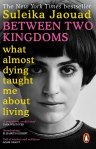
- A mention of the practice of buying single cigarettes from a city corner shop for 50 cents in Between Two Kingdoms by Suleika Jaouad and Miracle Creek by Angie Kim.
- Saving turtles from the road in Yellow Pine by Claire Vaye Watkins and then a mention of someone else doing so in To Grieve Is to Carry Another Time by Matthew Salesses.
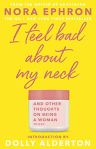 The lines “Leave as soon as you think to yourself, ‘This is a great party. I’m having a wonderful time’” from Nora Ephron’s I Feel Bad About My Neck are echoed in Emma Cline’s Switzy.
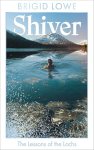
- A holy well is mentioned in The Given World by Melissa Harrison and Shiver by Brigid Lowe.
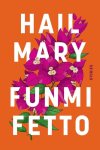
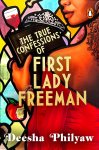
- A sexy pastor’s wife features in one story of Hail Mary by Funmi Fetto and The True Confessions of First Lady Freeman by Deesha Philyaw.
- A flawed pearl is mentioned in Apt Pupil by Stephen King and A Desert between Two Seas by A. Muia.
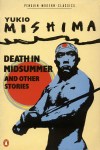
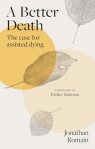
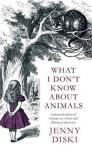
- A mention of hara-kiri (literal) in Death in Midsummer by Yukio Mishima and A Better Death by Jonathan Romain; and as a metaphor in What I Don’t Know about Animals by Jenny Diski.
- Camel cigarettes appear in Miracle Creek by Angie Kim and Apt Pupil by Stephen King.
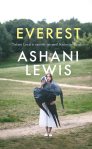
- A woman remembers being nicknamed an “ice queen” in one story of Everest by Ashani Lewis and Plum by Hollie McNish.
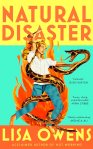
- A woman has to have a bowel movement in the labour ward in Old Romantics by Maggie Armstrong and Natural Disaster by Lisa Owens.
- The challenge of being a mother in the film industry is discussed in Family Family by Laurie Frankel and So Good to See You by Francesca Hornak.
 A three-year-old gets their own cereal breakfast in Old Romantics by Maggie Armstrong and So Good to See You by Francesca Hornak.
- A woman feels guilty of neglect due to her eight-year-old son’s death in a lake in Under Story by Cloe Benjamin and The Correspondent by Virginia Evans.
- A viral scandal where photographs/video footage are misconstrued to make a woman look bad in Hum by Helen Phillips and The True Confessions of First Lady Freeman by Deesha Philyaw.
- A misunderstanding causes a mother to be investigated for child neglect in one story of Old Romantics by Maggie Armstrong and Hum by Helen Phillips.
 Shirley Temples (the non-alcoholic cocktail) are mentioned in Idle Grounds by Krystelle Bamford and The True Confessions of First Lady Freeman by Deesha Philyaw.
- A woman impulsively takes a dishwashing job in Under Story by Cloe Benjamin and Exit Party by Emily St. John Mandel.

- A scene of putting out sandbags in Rattlebone by Maxine Clair and The Long Road to Holy Island by Austin Suggs.
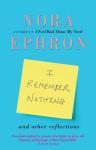 An unwanted mince pie in Idle Grounds by Krystelle Bamford and I Remember Nothing by Nora Ephron.
- A child in hospital with acute appendicitis in one story of Don’t Go to Sleep in the Dark by Celia Fremlin and Natural Disaster by Lisa Owens (and with suspected appendicitis in Shiver by Brigid Lowe).
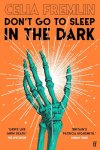
- The Tennyson poem “The Charge of the Light Brigade” is mentioned in Idle Grounds by Krystelle Bamford and Peck & Peck by Bonnie Garmus.
- Having to get off an elevator at the previous floor because it doesn’t go up to the destination in Exit Party by Emily St. John Mandel and Blood Is Dripping onto the Courtyard by Elvira Navarro.
- Realizing one’s bed is unmade in one story of Everest by Ashani Lewis and A Very British Midlife Crisis by Rob Temple.
- Confusion over the name of a possibly abused dog (with special powers!) adopted from a shelter in Peck & Peck by Bonnie Garmus and Luna, Phoenix, Queen by Julie Orringer.
- I encountered the phrase “She’s not worth it” in both Peck & Peck by Bonnie Garmus and The True Confessions of First Lady Freeman by Deesha Philyaw within 10 minutes!
 Someone being pulled back into the womb in Under Story by Chloe Benjamin and Nightmares and Daydreams: A.C. 2020 by Mirko Ilić.
- An apple orchard as a setting in Under Story by Chloe Benjamin and one story of Apple and Palm by Patricia Henley.

- “Little Nemo in Slumberland” as an image and metaphor in Switzy by Emma Cline and Nightmares and Daydreams: A.C. 2020 by Mirko Ilić.
- A lost twin sibling – lost at birth in Peck & Peck by Bonnie Garmus and H Is for Hawk by Helen Macdonald; lost later on in one story of The Rental Heart and Other Fairytales by Kirsty Logan.


- A portal to another timeline, and characters who are doubles of each other, in Under Story by Chloe Benjamin and Exit Party by Emily St. John Mandel.
- A lesbian couple moves to a new house and the one woman feels isolated and sad because she’s recently had a miscarriage in the debut novels The New People by Andrea Uptmor (reviewed for BookBrowse) and then The Leveret by Anna Goldreich.

- Nagging a woman to use lotion on her hands as they’re the first place to show signs of ageing in Hum by Helen Phillips and one story of Moderate to Poor, Occasionally Good by Eley Williams.
A couple of visual ones:
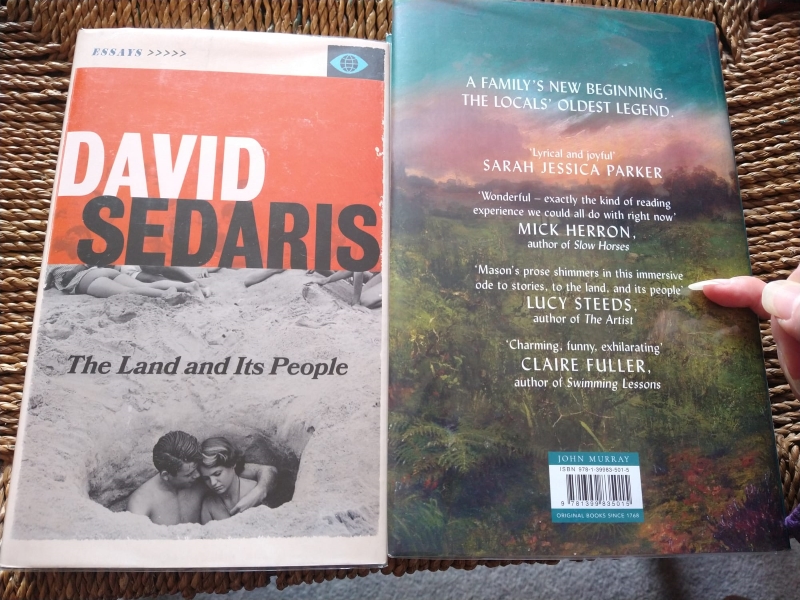
- I was reading The Land and Its People by David Sedaris at the same time as Country People by Daniel Mason, one of whose blurbs happens to borrow Sedaris’s title phrase.
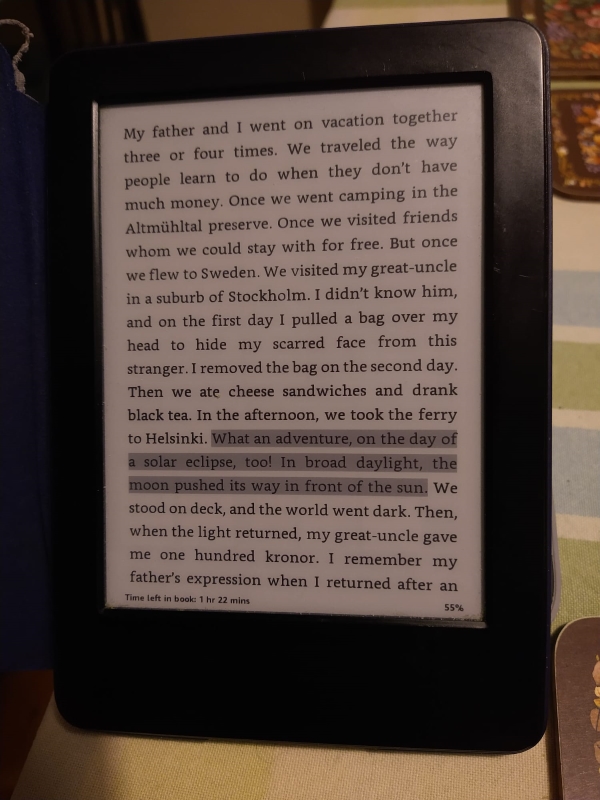
- I was reading Botany of Madness by Leon Engler and encountered this passage on the day of the solar eclipse in Europe (12 August):
What’s the weirdest reading coincidence you’ve had lately?
My Year in Short Stories (#ShortStorySeptember)
The Short Story September link-up is open (see my pinned post). At the start of the month, I’m inviting you to tell about the short stories you’ve already read this year, especially any that you’ve particularly enjoyed.

I don’t consider myself a great short story reader, so I was surprised to look back and find that I’ve already read 17 collections this year. I include in that four books that I consider to be linked short story collections, even though they were all published as novels rather than stories. (I’m sure Susan is right when she theorizes that this is about marketing – what’s expected to sell.) The best have been Brawler by Lauren Groff and Nightjar by Emily Ruskovich, which are actually quite similar.
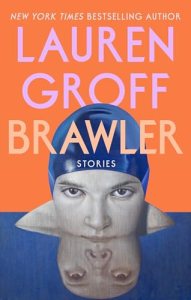
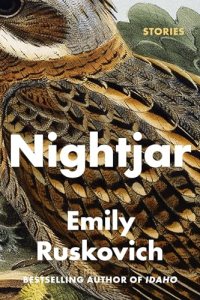
Some other favourites were:
 The Daffodil Days by Helen Bain: A slantwise biographical portrait of Sylvia Plath through her interactions in the last years of her life. The 16 chapters adopt the points-of-view of various secondary characters (e.g., Plath’s housekeeper, riding teacher, and brother), but the kernel of each is an encounter with Plath that illuminates her personality and state of mind. (Reviewed for Shelf Awareness)
Strange Weather in Tokyo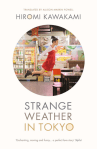 by Hiromi Kawakami: Tsukiko is a lonely barfly in her late thirties when she bumps into a secondary school teacher again. She calls him “Sensei,” and they start meeting up for low-key adventures. Kawakami infuses the book with attention to the seasons’ changes and everyday sensual pleasures like food. A lovely, subtle romance.
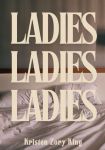 Ladies, Ladies, Ladies by Kristen Zory King: A “chapbook” containing 18 flash stories. It’s remarkable how much is packed into a few pages: a voice, a character, a setting and situation, an incident, a salient backstory, and some kind of epiphany or resolution. Fifteen of the pieces focus on one named character. Each story is distinctive, with no words wasted.
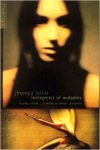 Interpreter of Maladies by Jhumpa Lahiri: Lahiri won the Pulitzer for this debut. Her characters tend to be Indian or Bengali immigrants in New England. Relationship studies trade off with accounts of encounters with strangers across generations and/or cultures. Often, food is a reminder of home. An overall theme is denying or affirming common humanity.
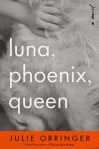 Luna, Phoenix, Queen by Julie Orringer: In Orringer’s wonderful third novel, the secrets between two literature professors and the adoption of a remarkable dog fuel an absorbing story of love, memory, and connection beyond words. Chapters take on different characters’ perspectives. (Review forthcoming for Shelf Awareness)
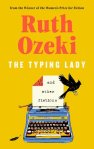 The Typing Lady and Other Fictions by Ruth Ozeki: Ozeki is up to her usual auto/metafiction tricks here, blurring the lines between fact and fiction, life and death. Themes include memory, creativity, language, ageing and cross-generation connections. The stories are playful without being twee, and represent a real return to form.
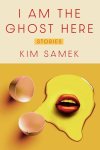 I Am the Ghost Here by Kim Samek: The television producer’s inventive debut recalls Ed Park and George Saunders with its focus on the mixed blessing of technology. Her speculative short stories’ protagonists deal with grief or new motherhood, often while also struggling with their health. Samek sets up unusual situations with knock-out first lines. (Reviewed for BookBrowse)
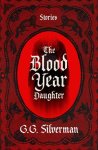 The Blood Year Daughter by G.G. Silverman: A remarkable collection that mixes feminist horror and twisted fairy tales into potent concoctions. Women’s bodies are imperiled by sadistic men and acts of self-sacrifice. Blood is a symbol of desire or power. Motherhood and sisterhood are vital bonds. Among bleak storylines come flashes of morbid humor. (Reviewed for Foreword Reviews)
All by women!
And the rest:
- Love Invents Us by Amy Bloom
- Baby in a Box by Sarah Braunstein (Reviewed for BookBrowse)
- A Calendar of Love and Other Stories by George Mackay Brown
- Museum Visits by Éric Chevillard
- Lesser Known Monsters of the 21st Century by Kim Fu
- It Will Come Back to You: Collected Stories by Sigrid Nunez
- The Book of Mating by Laksmi Pamuntjak [trans. from Indonesian by Annie Tucker] (Review forthcoming for Foreword Reviews)


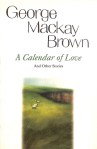
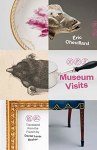
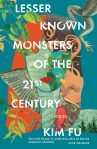
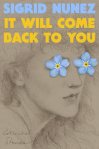
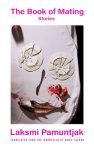
(All but two by women!)
What are some of your recent favorite experiences with short fiction?
20 Books of Summer, 12–13: Strange Weather in Tokyo (#WITMonth) & Mitz
Two terrific novellas I’m belatedly writing up today, one my first selection for Women in Translation month and the other a contribution to Virago’s “Summer of Sigrid.” Both: 
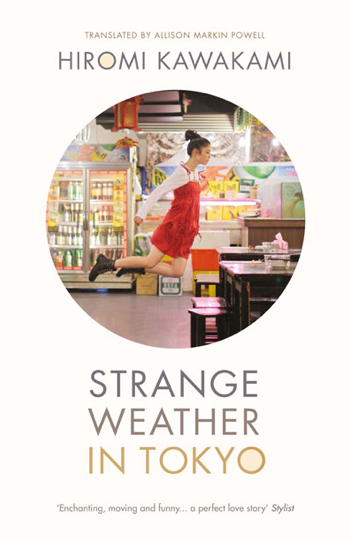
Strange Weather in Tokyo by Hiromi Kawakami (2001; 2012)
[Translated from Japanese by Allison Markin Powell]
 Tsukiko is a lonely barfly in her late thirties when she bumps into her secondary school Japanese teacher, Harutsuna Matsumoto, again. She calls him simply “Sensei,” and they start meeting up for low-key adventures: sharing tofu and saké at Satoru’s bar, marking annual holidays, and leaving the city to forage for mushrooms and visit his late wife’s island grave. Sensei quotes poetry and, ever the teacher, gently corrects his former pupil’s language. Tsukiko is an impassive young woman who never seemed to grow up (“I … still might not be considered a proper adult. … I just wasn’t able to ally myself with time”) and is prone to drinking too much, but finally starts to get a grip on her emotions thanks to this new connection.
Each chapter is discrete, building into a linked short story collection. The erratic (non)use of speech marks somehow didn’t bother me as it seems to suit Tsukiko’s slight disorientation. Kawakami infuses the book with attention to the seasons’ changes and everyday sensual pleasures like food. A drunk at the bar speaks for us readers when he asks the main characters, “You two, just what are you?” The nature of their bond is hard to pin down. Tsukiko is also courted by Kojima, a more age-appropriate boyfriend, but she feels nothing for him. Instead, a May–December relationship unfolds like cherry blossom, ever so gradually, from friendship into something deeper. Powell manages to fit some wordplay into her translation, as in this gently erotic passage:
At some point, sitting beside Sensei, I began to notice the heat that radiated from his body. Through his starched shirt, there came a sense of Sensei. A feeling of nostalgia. This sense of Sensei retained the shape of him. It was dignified, yet tender, like Sensei.
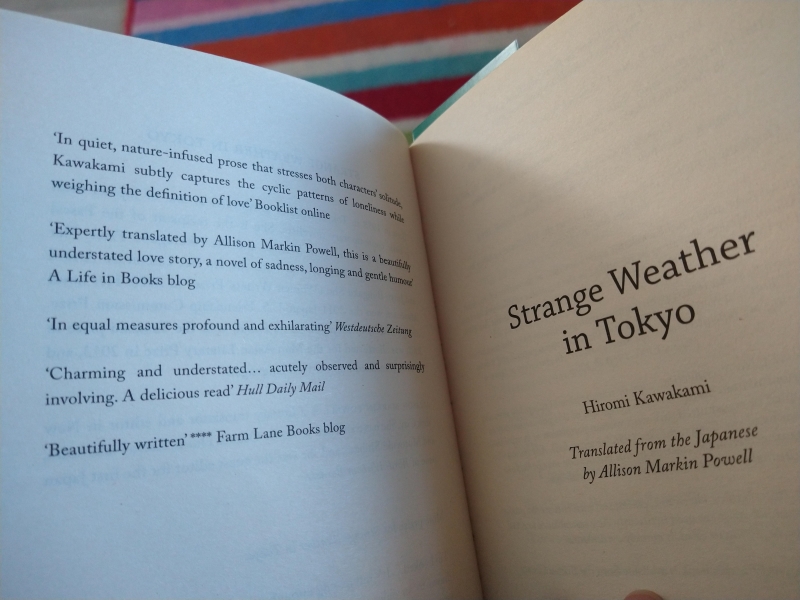
From the title and cover image, I might have expected the magic realism so common to Japanese literature, but this is something different: a lovely, subtle romance. It’s a reminder that it doesn’t have to be torrid passion to be true love. “Even a chance meeting is the result of a karmic connection,” as Sensei quotes. Susan (A life in books), whose review is excerpted in my paperback copy, is quite right. Kawakami was a great new discovery and I’ve got my eye on several more of her books: The Nakano Thrift Shop from the library and Record of a Night Too Brief and Far from Everywhere (forthcoming in February) on my e-reader. (Secondhand – Community Furniture Project, Newbury)
Mitz: The Marmoset of Bloomsbury by Sigrid Nunez (1998)
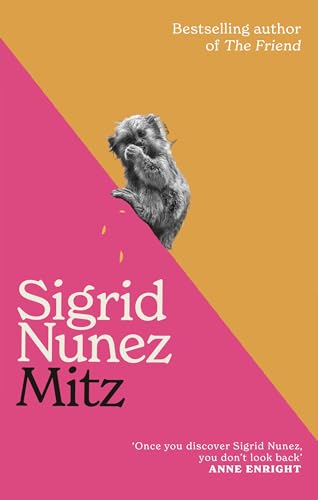 What a fun little book from Nunez’s back catalogue! On the one hand, a fictional mini-biography of the Woolfs by way of their pet marmoset might seem like a random choice of topic; on the other hand, you can see the seeds of her future autofiction in which human–animal connection is a starting point for wide-ranging meditations on life and death (a dog in The Friend; a parrot in The Vulnerables; and even, to a lesser extent, the cat in What Are You Going Through).
Mitz is a small monkey who induces strong, conflicting reactions: “You looked at her and thought, How grotesque. And the very next instant, How adorable. And then, How grotesque, again.” She takes a shine to Leonard on a visit the Woolfs pay to their friends the Rothschilds in 1934, and before long they’ve offered to take Mitz home to share their London and Sussex life, along with Pinka and Sally, the spaniels they had in succession. Mitz’s favourite spot thereafter was sat on Leonard’s shoulders, or napping on his feet. She accompanied the couple on their travels, too, so distracting people in Germany that Virginia would write in a letter that “the marmoset saved us from Hitler” (Leonard was Jewish). Visitors were less enamoured, thinking Mitz dirty and bad-tempered.
In any case, the creature was a lucky accessory to genius, and Nunez makes her our eyewitness to the composition of works such as Roger Fry and The Years:
From a distance, then, Mitz observed Virginia. And she saw how this mysterious activity that could bring such a flush to Virginia’s cheek could also have quite the opposite effect: Virginia was as white as her own writing paper. She scribbled and slashed; she muttered and she groaned and she cursed. She jumped up from the chair and wandered in circles about the room.
How much Mitz understands of ageing, death, and conflict, can never be known. These were tumultuous pre-war years, during which Virginia lost a nephew and fascism loomed large. Nunez sets personal cataclysms against international ones, imagining Mitz’s journey from a Brazilian forest, via a hellish ship, to the London junk shop where she was made to sit in a draughty window to drum up business. That she spent her last five years so loved and cosseted was a stroke of good fortune. Her death ends up feeling like a more general omen, as in the book’s final line: “It was Christmas Day, the last year of peace.”
I was reminded of the complications of keeping an exotic pet in My Animals and Other Family by Julia Blackburn, in which she buys Congo the bushbaby from Harrods (and there is also a family spaniel). As part of the backmatter of this reissue, a thank-you letter from Nigel Nicolson to Nunez and a 2019 afterword by Peter Cameron note the undeniable inspiration of Virginia Woolf’s Flush, a playful short biography of Elizabeth Barrett Browning’s cocker spaniel (for whom Pinka, a gift from Vita Sackville-West, was a model). I fancied rereading Flush so have picked that up as one of my substitute Books of Summer and am enjoying discovering the connections between it and Mitz. More anon.
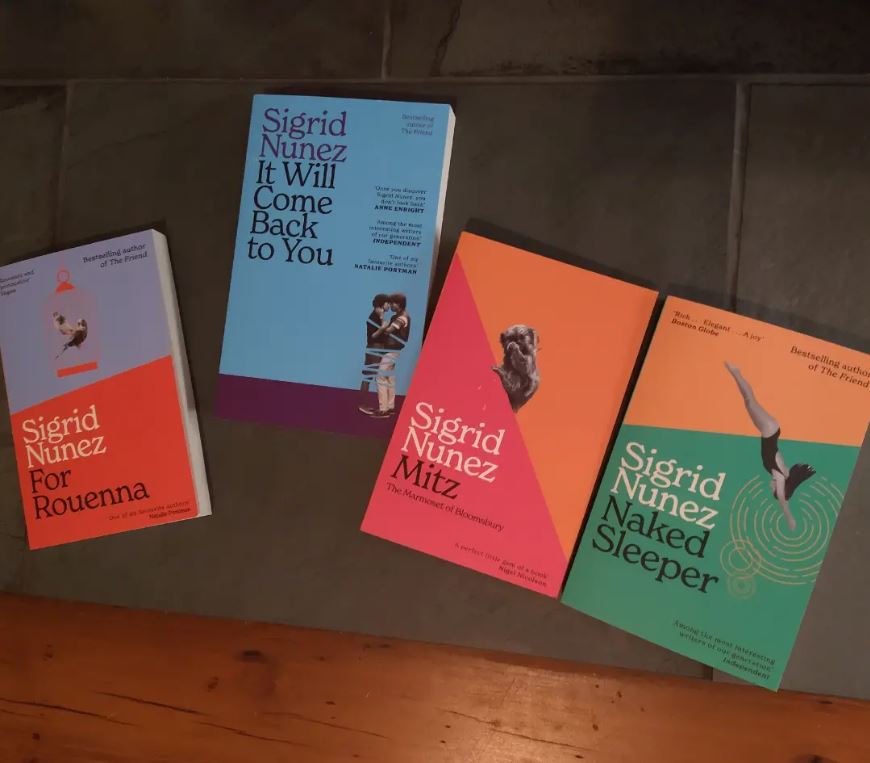
With thanks to Virago for the free copy for review, one of several matching reissues they sent me as part of their “Summer of Sigrid.”
November Plans: Novellas, Margaret Atwood Reading Month & More
This is my fourth year joining Laura Frey and others in reading mostly novellas in November. Last year Laura put together a history of the challenge (here); it has had various incarnations but has no particular host or rules. Join us if you like! (#NovNov and #NovellasinNovember) The definition of a novella is loose – it’s based more on the word count than the number of pages – so it’s up to you what you’d like to classify as one. I generally limit myself to books of 150 pages or fewer, though I might go as high as 180-some if there aren’t that many words on a page. Some, including Laura and Susan, would be as generous as 200.


I’ve trawled my shelves for fiction and nonfiction stacks to select from, as well as a few volumes that include several novellas (I’d plan on reading at least the first one) and some slightly longer novels (150–190 pages) for backups. [From the N. West volume, I just have the 52-page novella The Dream Life of Balso Snell, his debut, to read. The Tangye book with the faded cover is Lama.] Also available on my Kindle are The Therapist by Nial Giacomelli*, Record of a Night too Brief by Hiromi Kawakami, Childhood: Two Novellas by Gerard Reve, and Milton in Purgatory by Edward Vass* (both *Fairlight Moderns Novellas, as is Atlantic Winds by William Prendiville).
Other November reading plans…
Margaret Atwood Reading Month
 This is the second year of #MARM, hosted by Canadian bloggers extraordinaires Marcie of Buried in Print and Naomi of Consumed by Ink. This year they’re having a special The Handmaid’s Tale/The Testaments theme, but even if you’re avoiding the sequel, join us in reading one or more Atwood works of your choice. She has so much to choose from! Last year I read The Edible Woman and Surfacing. This year I’ve earmarked copies of the novel The Robber Bride (1993) and Moral Disorder (2006), a linked short story collection, both of which I got for free – the former from the free bookshop where I volunteer, and the latter from a neighbor who was giving it away.
Nonfiction November
I don’t usually participate in this challenge because nonfiction makes up at least 40% of my reading anyway, but last year I enjoyed putting together some fiction and nonfiction pairings and ‘being the expert’ on women’s religious memoirs, a subgenre I have a couple of books to add to this year. So I will probably end up doing at least one post. The full schedule is here.
Young Writer of the Year Award
Being on the shadow panel for the Sunday Times/PFD Young Writer of the Year Award was a highlight of 2017 for me. I was sad to not be able to attend any of the events last year. I’m excited for this year’s shadow panelists, a couple of whom are blogging friends (one I’ve met IRL), and I look forward to following along with the nominated books and attending the prize ceremony at the London Library on December 5th.
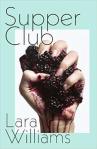 With any luck I will already have read at least one or two books from the shortlist, which is to be announced on November 3rd. I have my fingers crossed for Yara Rodrigues Fowler, Daisy Johnson, Elizabeth Macneal, Stephen Rutt and Lara Williams; I expect we may also see repeat appearances from one of the poets recognized by the Forward Prizes and Guy Gunaratne, the winner of the 2019 Dylan Thomas Prize.
Any reading plans for November? Will you be joining in with novellas, Margaret Atwood’s books or Nonfiction November?
 Bookish Beck = Rebecca Foster. American transplant to England. Freelance proofreader and book reviewer.
