20 Books of Summer 2018
This is my first year joining in with the 20 Books of Summer challenge run by Cathy of 746 Books. I’ve decided to put two twists on it. One: I’ve only included books that I own in print, to work on tackling my mountain of unread books (300+ in the house at last count). As I was pulling out the books that I was most excited to read soon, I noticed that most of them happened to be by women. So for my second twist, all 20 books are by women. Why not? I’ve picked roughly half fiction and half life writing, so over the next 12 weeks I just need to pick one or two from the below list per week, perhaps alternating fiction and non-. I’m going to focus more on the reading than the reviewing, but I might do a few mini roundup posts.
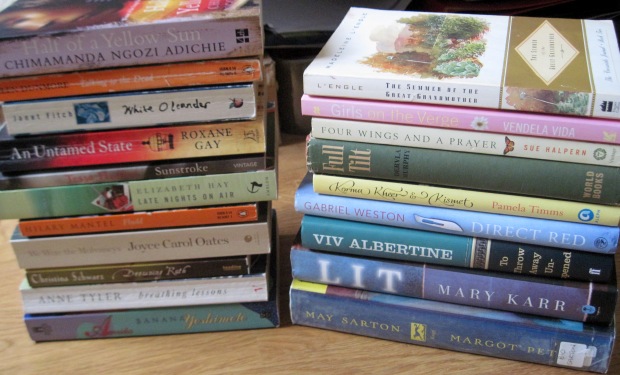
I’m doing abysmally with the goal I set myself at the start of the year to read lots of travel classics and biographies, so I’ve chosen one of each for this summer, but in general my criteria were simply that I was keen to read a book soon, and that it mustn’t feel like hard work. (So, alas, that ruled out novels by Elizabeth Bowen, Ursula K. LeGuin and Virginia Woolf.) I don’t insist on “beach reads” – the last two books I read on a beach were When Breath Becomes Air by Paul Kalanithi and Grief Cottage by Gail Godwin, after all – but I do hope that all the books I’ve chosen will be compelling and satisfying reads.
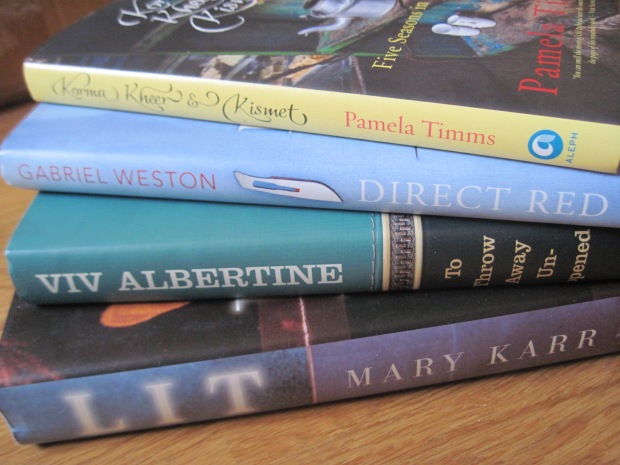
- To Throw Away Unopened by Viv Albertine – I picked up a copy from the Faber Spring Party, having no idea who Albertine was (guitarist of the all-female punk band The Slits). Everyone I know who has read this memoir has raved about it.
- Lit by Mary Karr – I’ve read Karr’s book about memoir, but not any of her three acclaimed memoirs. This, her second, is about alcoholism and motherhood.
- Korma, Kheer and Kismet: Five Seasons in Old Delhi by Pamela Timms – I bought a bargain copy at the Wigtown Festival shop earlier in the year. Timms is a Scottish journalist who now lives in India. This should be a fun combination of foodie memoir and travel book.
- Direct Red: A Surgeon’s Story by Gabriel Weston (a woman, honest!) – Indulging my love of medical memoirs here. I bought a copy at Oxfam Books earlier this year.
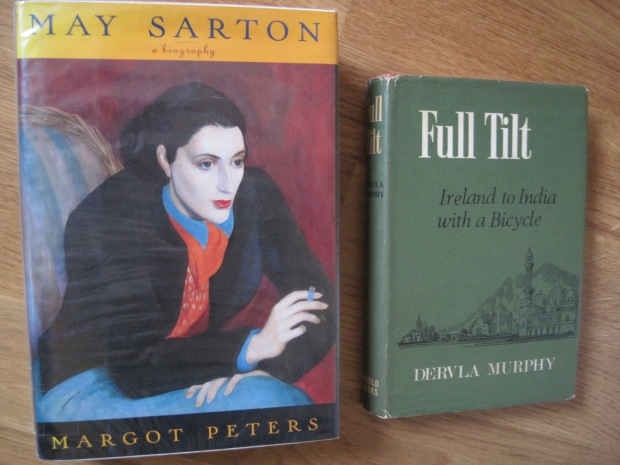 5. May Sarton by Margot Peters – I’ve been on a big May Sarton kick in recent years, so have been eager to read this 1997 biography, which apparently is not particularly favorable.
6. Full Tilt: Ireland to India with a Bicycle by Dervla Murphy – I bought this 1960s hardback from a charity shop in Cambridge a couple of years ago. It will at least be a start on that travel classics challenge.
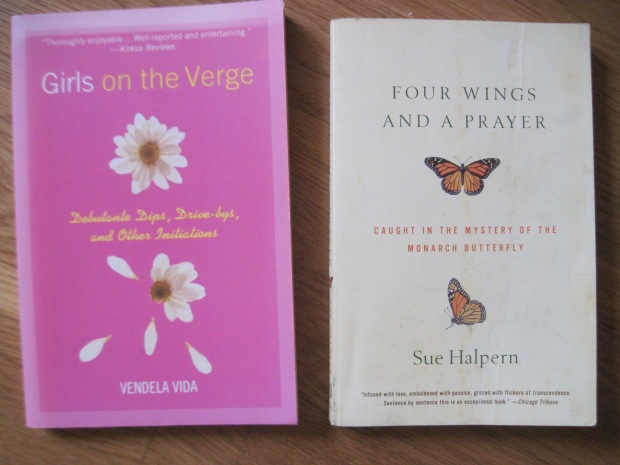
7. Girls on the Verge: Debutante Dips, Drive-bys, and Other Initiations by Vendela Vida – This was Vida’s first book. It’s about coming-of-age rituals for young women in America.
8. Four Wings and a Prayer: Caught in the Mystery of the Monarch Butterfly by Sue Halpern – Should fall somewhere between science and nature writing, with a travel element.
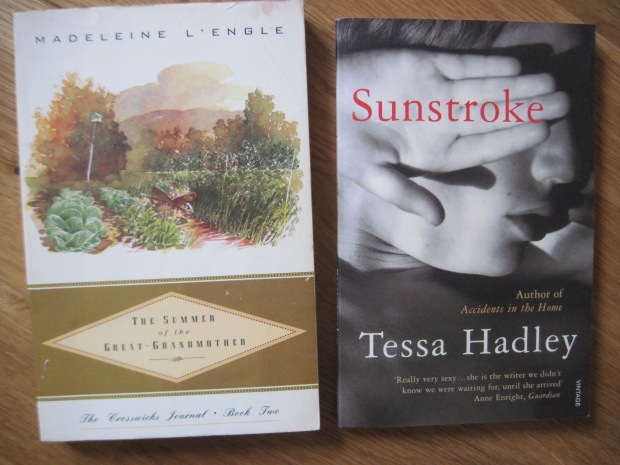
9. The Summer of the Great-Grandmother by Madeleine L’Engle – L’Engle is better known for children’s books, but she wrote tons for adults, too: fiction, memoirs and theology. I read the stellar first volume of the Crosswicks Journal, A Circle of Quiet, in September 2015 and have meant to continue the series ever since.
10. Sunstroke by Tessa Hadley – You know how I love reading with the seasons when I can. This slim 2007 volume of stories is sure to be a winner. Seven of the 10 originally appeared in the New Yorker or Granta.
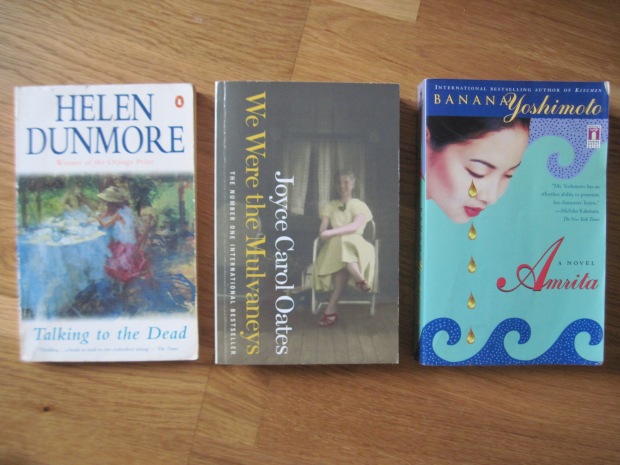
11. Talking to the Dead by Helen Dunmore – I’ve only ever read Dunmore’s poetry. It’s long past time to try her fiction. This one comes highly recommended by Susan of A life in books.
12. We Were the Mulvaneys by Joyce Carol Oates – Oates is intimidatingly prolific, but I’m finally going to jump in and give her a try.
13. Amrita by Banana Yoshimoto – A token lit in translation selection. “This is the story of [a] remarkable expedition through grief, dreams, and shadows to a place of transformation.” (Is it unimaginative to say that sounds like Murakami?)
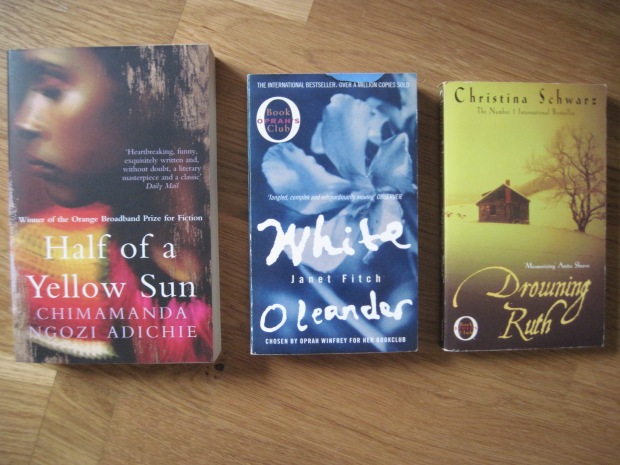
14. Half of a Yellow Sun by Chimamanda Ngozi Adichie – How have I not read any of her fiction yet?! This has been sitting on my shelf for years. I only vaguely remember the story line from the film, so it should be fairly fresh for me.
15. White Oleander by Janet Fitch – An Oprah’s Book Club selection from 1999. I reckon this would make a good beach or road trip read.
16. Drowning Ruth by Christina Schwarz – Another Oprah’s Book Club favorite from 2000. Set in Wisconsin in the years after World War I.
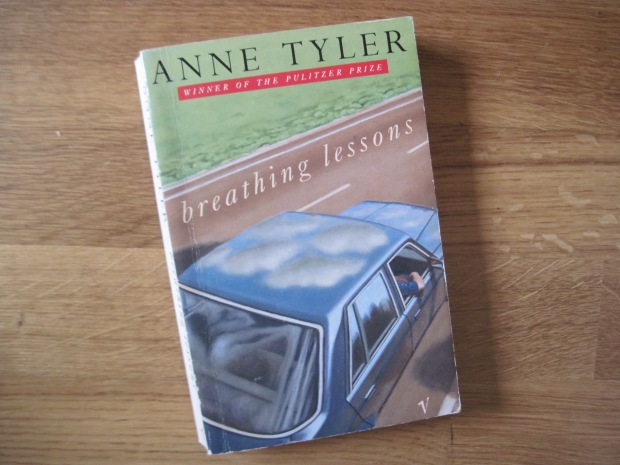
- Breathing Lessons by Anne Tyler – Tyler novels are a tonic. I have six unread on the shelf; the blurb on this one appealed to me the most. This summer actually brings two Tylers as Clock Dance comes out on July 12th – I’ll either substitute that one in, or read both!
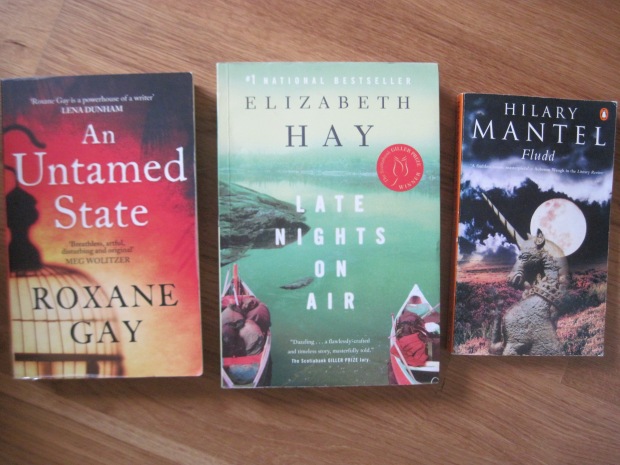
18. An Untamed State by Roxane Gay – I’ve only read Gay’s memoir, Hunger. She’s an important cultural figure; it feels essential to read all her books. I expect this to be rough.
19. Late Nights on Air by Elizabeth Hay – This has been on my radar for such a long time. After loving my first Hay novel (A Student of Weather) last year, what am I waiting for?
20. Fludd by Hilary Mantel – I haven’t read any Mantel in years, not since Bring Up the Bodies first came out. While we all await the third Cromwell book, I reckon this short novel about a curate arriving in a fictional town in the 1950s should hit the spot.
I’ll still be keeping up with my review books (paid and unpaid), blog tours, advance reads and library books over the summer. The aim of this challenge, though, is to make inroads into the physical TBR. Hopefully the habit will stick and I’ll keep on plucking reads from my shelves during the rest of the year.
Where shall I start? If I was going to sensibly move from darkest to lightest, I’d probably start with An Untamed State and/or Lit. Or I might try to lure in the summer weather by reading the two summery ones…
Which of these books have you read? Which ones appeal?
2017’s Runners-Up and Other Superlatives
The choices below are in alphabetical order by author, with any previously published reviews linked in (many of these books have already appeared on the blog in some way over the course of the year). You know the drill by now: to keep it simple for myself as well as for all of you who are figuring out whether you’re interested in these books or not, I’m limiting myself to two sentences per title. The first is a potted summary; the second tells you why you should read it. Across these three best-of posts (see also my Top Nonfiction and Best Fiction posts), I’ve spotlighted roughly the top 15% of my year’s reading.
Runners-Up:
 As a God Might Be by Neil Griffiths: The themes and central characters were strong enough to keep me powering through this 600-page novel of ideas about encounters with God and the nature of evil. This turned out to be just my sort of book: big and brazen, a deep well of thought that will only give up its deeper meanings upon discussion and repeat readings.
 Spaceman of Bohemia by Jaroslav Kalfař: The story of Jakub Procházka, a Czech astronaut who leaves his wife behind to undertake a noble research mission but soon realizes he can never escape his family history or the hazards of his own mind. A terrific blend of the past and the futuristic, Earth and space.
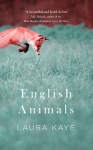 English Animals by Laura Kaye: A young Slovakian becomes a housekeeper for a volatile English couple and discovers a talent for taxidermy. A fresh take on themes of art, sex, violence and belonging, this is one of the more striking debut novels I’ve encountered in recent years.
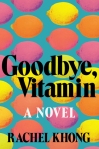 Goodbye, Vitamin by Rachel Khong: Reeling from a broken engagement, Ruth Young returns to her childhood home in California for a year to help look after her father, who has Alzheimer’s. This is a delightfully quirky little book, but you may well read it with a lump in your throat, too.
 Midwinter Break by Bernard MacLaverty: In MacLaverty’s quietly beautiful fifth novel, a retired couple faces up to past trauma and present incompatibility during a short vacation in Amsterdam. My overall response was one of admiration for what this couple has survived and sympathy for their current situation – with hope that they’ll make it through this, too. (Reviewed for BookBrowse.)
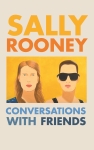 Conversations with Friends by Sally Rooney: An Irish college student navigates friendships and an affair with a married man. This is much more about universals than it is about particulars: realizing you’re stuck with yourself, exploring your sexuality and discovering sex is its own kind of conversation, and deciding whether ‘niceness’ is really the same as morality; a book I was surprised to love, but love it I did.
 Lincoln in the Bardo by George Saunders: The residents of Georgetown cemetery limbo don’t know they’re dead – or at least won’t accept it. An entertaining and truly original treatment of life’s transience; I know it’s on every other best-of-year list out there, but it really is a must-read.
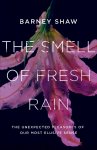 The Smell of Fresh Rain by Barney Shaw: Shaw travels through space, time and literature as he asks why we don’t have the vocabulary to talk about the smells we encounter every day. If you’re interested in exploring connections between smell and memory, discovering what makes the human sense of smell unique, and learning some wine-tasting-style tips for describing odors, this is a perfect introduction.
 A Life of My Own by Claire Tomalin: Tomalin is best known as a biographer of literary figures including Mary Wollstonecraft, Samuel Pepys and Charles Dickens, but her memoir is especially revealing about the social and cultural history of the earlier decades her life covers. A dignified but slightly aloof book – well worth reading for anyone interested in spending time in London’s world of letters in the second half of the twentieth century.
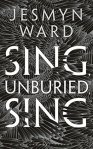 Sing, Unburied, Sing by Jesmyn Ward: The story of a mixed-race family haunted – both literally and figuratively – by the effects of racism, drug abuse and incarceration in Bois Sauvage, a fictional Mississippi town. Beautiful language; perfect for fans of Toni Morrison and Cynthia Bond.
I’ve really struggled with short stories this year, but here are four collections I can wholeheartedly recommend:
 What It Means when a Man Falls from the Sky by Lesley Nneka Arimah (Reviewed for Shiny New Books.)
- Unruly Creatures: Stories by Jennifer Caloyeras
- Bad Dreams and Other Stories by Tessa Hadley
- The Great Profundo and Other Stories by Bernard MacLaverty (1987)
The Best 2017 Books You Probably Never Heard of (Unless You Heard about Them from Me!):
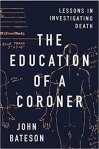 The Education of a Coroner by John Bateson: The coroner’s career is eventful no matter what, but Marin County, California has its fair share of special interest, what with Golden Gate Bridge suicides, misdeeds at San Quentin Prison, and various cases involving celebrities (e.g. Harvey Milk, Jerry Garcia and Tupac) in addition to your everyday sordid homicides. Ken Holmes was a death investigator and coroner in Marin County for 36 years; Bateson successfully recreates Holmes’ cases with plenty of (sometimes gory) details.
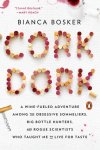 Cork Dork by Bianca Bosker: Tasting notes: gleeful, ebullient, learned, self-deprecating; suggested pairings: Sweetbitter by Stephanie Danler; Top Chef, The Great British Bake Off. A delightful blend of science, memoir and encounters with people who are deadly serious about wine.
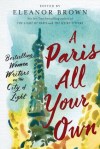 A Paris All Your Own: Bestselling Women Writers on the City of Light, edited by Eleanor Brown: A highly enjoyable set of 18 autobiographical essays that celebrate what’s wonderful about the place but also acknowledge disillusionment; highlights are from Maggie Shipstead, Paula McLain, Therese Anne Fowler, Jennifer Coburn, Julie Powell and Michelle Gable. If you have a special love for Paris, have always wanted to visit, or just enjoy armchair traveling, this collection won’t disappoint you.
 Ashland & Vine by John Burnside: Essentially, it’s about the American story, individual American stories, and how these are constructed out of the chaos and violence of the past – all filtered through a random friendship that forms between a film student and an older woman in the Midwest. This captivated me from the first page.
 Tragic Shores: A Memoir of Dark Travel, Thomas H. Cook: In 28 non-chronological chapters, Cook documents journeys he’s made to places associated with war, massacres, doomed lovers, suicides and other evidence of human suffering. This is by no means your average travel book and it won’t suit those who seek high adventure and/or tropical escapism; instead, it’s a meditative and often melancholy picture of humanity at its best and worst. (Reviewed for Nudge.)
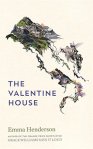 The Valentine House by Emma Henderson: This is a highly enjoyable family saga set mostly between 1914 and 1976 at an English clan’s summer chalet in the French Alps near Geneva, with events seen from the perspective of a local servant girl. You can really imagine yourself into all the mountain scenes and the book moves quickly –a great one to take on vacation.

The year’s runners-up and superlatives that I happen to have around in print.
Various Superlatives, Good and Bad:
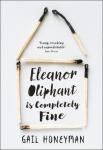 The 2017 Book Everybody Else Loved but I Didn’t: Eleanor Oliphant Is Completely Fine by Gail Honeyman. (See my Goodreads review for why.)
The Year’s Biggest Disappointments: All Grown Up by Jami Attenberg, Future Home of the Living God by Louise Erdrich, Between Them by Richard Ford and George and Lizzie by Nancy Pearl.
The Worst Book I Read This Year: Books by Charlie Hill (ironic, that). My only one-star review of the year.
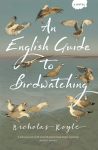 The Downright Strangest Book I Read This Year: An English Guide to Birdwatching by Nicholas Royle.
My Best Discoveries of the Year: Beryl Bainbridge, Saul Bellow, Bernard MacLaverty and Haruki Murakami. I’ve read two books by each of these authors this year and look forward to trying more from them.
The Debut Authors Whose Next Work I’m Most Looking Forward to: Lesley Nneka Arimah, Laura Kaye, Carmen Marcus, Julianne Pachico and Sally Rooney.
 The Best First Line of the Year: “History has failed us, but no matter.” (Pachinko, Min Jin Lee)
The Best Last Line of the Year: “If she was an instance of the goodness in this world then passing through by her side was miracle enough.” (Midwinter Break, Bernard MacLaverty)
Coming tomorrow: Some early recommendations for 2018.
Short Fiction for September
I toyed with the wild idea of only reading short stories as my fiction for the month of September, but it was never really going to happen: I just don’t find short stories compelling enough, and in some ways they feel like hard work – every few pages, it seems, you have to adjust to a new scene and set of characters. In the end I made it through one anthology of flash fiction this month, and read parts of three other story collections. Mini reviews below…
Best Small Fictions 2017, edited by Amy Hempel
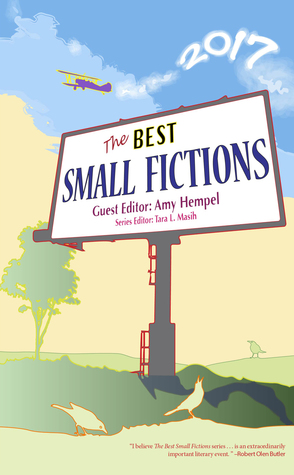 Now in its third year, the Best Small Fictions anthology collects the year’s best short stories under 1000 words. (I reviewed the two previous volumes for BookTrib and the Small Press Book Review.) Starting with a zinger of a first line is one strategy for making a short-short story stand out, and there are certainly some excellent opening sentences here. Symbols and similes are also crucial to conveying shorthand meaning. Two stand-outs are “States of Matter,” Tara Laskowski’s deliciously creepy story of revenge aided by a gravedigger; and Matthew Baker’s “The President’s Doubles,” in which an island nation becomes so protective of its imperiled leader that he ends up a prisoner. They’ve saved the best for last in this collection, though: the late Brian Doyle’s “My Devils,” in which an Irish-American boy learns how to interpret the adult world by deciphering what people say versus what they mean. It’s remarkable how concisely a coming of age and loss of blind faith are conveyed. Although there are fewer overall highlights than in the first volume, this is an excellent snapshot of contemporary super-short story writing, recommended for story lovers and newbies alike. (See my full review for the Pittsburgh Post-Gazette.)
The Bus Driver Who Wanted to Be God and Other Stories by Etgar Keret
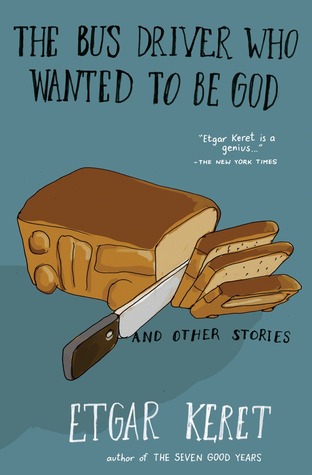 How can you not want to read a book with that title? Unfortunately, “The Story about a Bus Driver Who Wanted to Be God” is the first story and probably the best, so it’s all a slight downhill journey from there. That story stars a bus driver who’s weighing justice versus mercy in his response to one lovelorn passenger, and retribution is a recurring element in the remainder of the book. Most stories are just three to five pages long. Important characters include an angel who can’t fly, visitors from the mouth of Hell in Uzbekistan, and an Israeli ex-military type with the ironic surname of Goodman who’s hired to assassinate a Texas minister for $30,000. You can never predict what decisions people will make, Keret seems to be emphasizing, or how they’ll choose to justify themselves; “Everything in life is just luck.”
Aside from the title story, I particularly liked “Pipes,” in which the narrator makes himself a giant pipe through which to escape to Heaven, a place for misfits who’ve never found a way to be happy on Earth. Twisted biblical allusions like this are rife, including “Plague of the Firstborn.” A few stories have a folktale-like ambiance. It felt like there were too many first-person narrators, though, and too many repeating plots: “Good Intentions” takes up the same contract killing theme as “Goodman,” while both “Katzenstein” and “Jetlag” involve ejection from a plane. I read everything bar the 86-page novella Kneller’s Happy Campers; after so much flash fiction I wasn’t prepared to change pace so dramatically. So I’ve marked this as unfinished even though I read 110 pages in total. (Read in translation from the Hebrew.) 
Honeydew by Edith Pearlman
I don’t know what it is with me lately, but I seem to lack staying power with story collections. I read the first 40% of Pearlman’s most recent book on my Kindle and then just felt no need to continue. You could consider that a virtue of story collections: you can read as much or as little at a time as you want and pick and choose what bits interest you, in a way that you can’t with novels. Or you could say an author must be doing something wrong if a reader doesn’t long to keep turning the pages.
 At any rate, I enjoyed Pearlman’s stories well enough. They all apparently take place in suburban Boston and many consider unlikely romances. My favorite was “Castle 4,” set in an old hospital. Zephyr, an anesthetist, falls in love with a cancer patient, while a Filipino widower who works as a security guard forms a tender relationship with the gift shop lady who sells his disabled daughter’s wood carvings. I also liked “Tenderfoot,” in which a pedicurist helps an art historian see that his heart is just as hard as his feet and that may be why he has an estranged wife. “Blessed Harry” amused me because the setup is a bogus e-mail requesting that a Latin teacher come speak at King’s College London (where I used to work). Two stories in a row (four in total, I’m told) center around Rennie’s antique shop – a little too Mitford quaint for me.
Favorite lines: “Happiness lengthens time. Every day seemed as long as a novel. Every night a double feature. Every week a lifetime, a muted lifetime, a lifetime in which sadness, always wedged under her breast like a doorstop, lost some of its bite.” (from “Stone”)
Even though I didn’t finish either of these books, I’d gladly try something else by the authors. Can you recommend something to me?
Currently reading: After enjoying Bernard MacLaverty’s Midwinter Break so much, I picked up one of his short story collections (along with Keret’s) from Book-Cycle in Exeter earlier this month. So far I’ve read the first two stories in The Great Profundo, one about a struggling artist and a lonely widow who connect over an Emily Dickinson passage, and another about a cardinal whose father confesses he lost his faith years ago.

Upcoming: I have collections by Andrea Barrett, T.C. Boyle, Tessa Hadley and Alice Munro on the shelf. I also have far too many languishing on my Kindle, including For a Little While by Rick Bass, Whatever Happened to Interracial Love? by Kathleen Collins, We Come to Our Senses by Odie Lindsey, Music in Wartime by Rebecca Makkai and 99 Stories of God by Joy Williams. The ones I’m most likely to get to fairly soon, I think, are Difficult Women by Roxane Gay and The Garden Party by Katherine Mansfield.

Are you a short story fan? Read any good ones recently?
Show Her a Flower, a Bird, a Shadow by Peg Alford Pursell
Northern California’s Peg Alford Pursell is the founder of Why There Are Words, a Bay Area series of public literary readings, and the independent publishing house WTAW Press. Her short fiction has been shortlisted for the Flannery O’Connor Award.
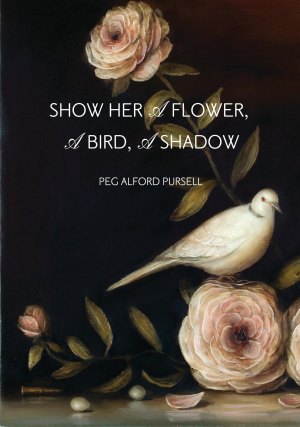
The lovely cover image is from White Dove and Roses by David Kroll.
Her debut work, Show Her a Flower, a Bird, a Shadow, is a collection of flash fictions, ranging in length from a few lines to a few pages, many of which have been previously published in literary journals or anthologies. They often read like poems, with the alliteration, colors and imagery lending more resonance to the prose than you usually find in short stories. First and last lines are especially incisive, like the phrase that opens “Petal, Feather, Particle,” about a single mother on her way to a hotel to calm her daughter down: “Show her a flower, a bird, a shadow, and she will show you what is simultaneously forming and falling apart.”
Plot is incidental and largely secondary to language and emotion here, but many of the pieces share a topic of shaky relationships, and the bonds that last in life versus the ones that fade away. Young female first-person narrators frequently alternate with third-person stories about older women, but a recurring theme throughout is how others view you versus how you see yourself. Especially in the context of long-term relationships, these characters have to keep life from going stagnant by staying in motion and living mindfully:
Just as in marriage. He didn’t believe in stopping, resting, or pausing. Drive was everything. Look at the fat bumblebee busy on the flower stalk: the creature anything but in repose, gathering nectar for all it’s worth before moving on to the next. That was how to be in the world. (from “At the Flower”)
Likewise, “This is what familiarity demands: that I examine every detail again as if new clues will present themselves,” a woman thinks while looking at photographs of her daughter (in “The Girl in the Picture”).
A few of my favorite stories were “Day of the Dead,” which mixes Mexican traditions with the narrator’s own bereavements; “Girl on a Hobby Horse,” in which a woman meditates with her Buddhist daughter after her own 14-year relationship breaks down; and “A Weak Light Shining through the High Small Window,” about a woman visiting her brain-injured husband in the hospital and imagining their future together.
The final piece, “Inscription of Time,” reminded me most of Margaret Drabble’s The Dark Flood Rises with its picture of a woman who has lost many family members and friends yet gains a necessary sense of closure when a former lover, a race car driver who once had an accident that left him in a temporary coma, invites her to his apartment to say a proper goodbye. “It was as if he’d understood what she hadn’t known until that moment. That she needed an ending.”
It may be only 70 pages long, but this book packs a poetic punch. Its images and lines linger, and it deserves to be read slowly and mulled over. I’d recommend it to readers of Tessa Hadley and Desiree Cooper, and fans of flash fiction in general.
Show Her a Flower, a Bird, a Shadow was released by ELJ Editions on March 31st. My thanks to the author for sending a PDF copy for review.
My rating: 
Starting the Year as I Mean to Go On?
The houseguests have gone home, the Christmas tree is coming down tomorrow, and it’s darned cold. I’m feeling stuck in a rut in my career, the blog, and so many other areas of life. It’s hard not to think of 2017 as a huge stretch of emptiness with very few bright spots. All I want to do is sit around in my new fuzzy bathrobe and read under the cat. Luckily, I’ve had some great books to accompany me through the Christmas period and have finished five so far this year.
I thought I’d continue the habit of writing two-sentence reviews (or maybe no more than three), except when I’m writing proper full-length reviews on assignment or for blog tours or other websites. Granted, they’re usually long and multi-part sentences, and this isn’t actually a time-saving trick – as Blaise Pascal once said, “I’m sorry I wrote you such a long letter; I didn’t have time to write a short one” – but it feels like good discipline.
So here’s some mini-reviews of what I’ve been reading in late December and early January:
The Dark Flood Rises, Margaret Drabble
 The “dark flood” is D.H. Lawrence’s metaphor for death, and here it corresponds to busy seventy-something Fran’s obsession with last words, obituaries and the search for the good death as many of her friends and acquaintances succumb – but also to literal flooding in the west of England and (dubious, this) to mass immigration of Asians and Africans into Europe. This is my favorite of the five Drabble books that I’ve read – it’s closest in style and tone to her sister A.S. Byatt as well as to Tessa Hadley, and the themes of old age and life’s randomness are strong – even though there seem to be too many characters and the Canary Islands subplot mostly feels like an unnecessary distraction. (Public library)
Hogfather, Terry Pratchett
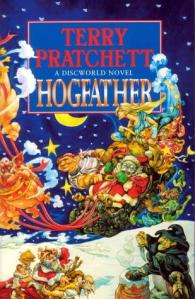 In Discworld belief causes imagined beings to exist, so when a devious plot to control children’s minds results in a dearth of belief in the Hogfather, the Fat Man temporarily disappears and Death has to fill in for him on this Hogswatch night. I laughed aloud a few times while reading this clever Christmas parody, but I had a bit of trouble following the plot and grasping who all the characters were given that this was my first Discworld book; in general I’d say that Pratchett is another example of British humor that I don’t entirely appreciate (along with Monty Python and Douglas Adams) – he’s my husband’s favorite, but I doubt I’ll try another of his books. (Own copy)
Love of Country: A Hebridean Journey, Madeleine Bunting
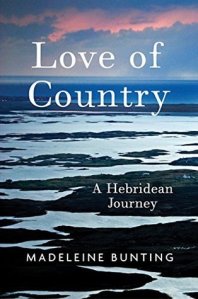 In a reprise of childhood holidays that inevitably headed northwest, Bunting takes a series of journeys around the Hebrides and weaves together her contemporary travels with the religion, folklore and history of this Scottish island chain, an often sad litany of the Gaels’ poverty and displacement that culminated with the brutal Clearances. Rather than giving an exhaustive survey, she chooses seven islands to focus on and tells stories of unexpected connections – Orwell’s stay on Jura, Lord Leverhulme’s (he of Port Sunlight and Unilever) purchase of Lewis, and Bonnie Prince Charlie’s landing on Eriskay – as she asks how geography influences history and what it truly means to belong to a place. (Public library)
Cobwebs and Cream Teas: A Year in the Life of a National Trust House, Mary Mackie
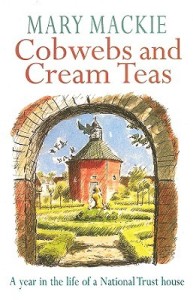 Mackie’s husband was Houseman and then Administrator at Felbrigg Hall in Norfolk in the 1980s – live-in roles that demanded a wide range of skills and much more commitment than the usual 9 to 5 (when he borrowed a pedometer he learned that he walked 15 miles in the average day, without leaving the house!). Her memoir of their first year at Felbrigg proceeds chronologically, from the intense cleaning and renovations of the winter closed season through to the following Christmas’ festivities, and takes in along the way plenty of mishaps and visitor oddities. It will delight anyone who’d like a behind-the-scenes look at the life of a historic home. (Own copy)
The Bridge Ladies: A Memoir, Betsy Lerner
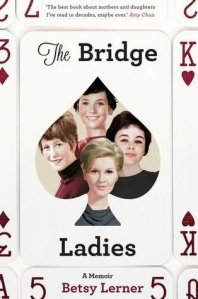 When life unexpectedly took the middle-aged Lerner back to her hometown of New Haven, Connecticut, she spent several years sitting in on her mother’s weekly bridge games to learn more about these five Jewish octogenarians who have been friends for 50 years and despite their old-fashioned reserve have seen each other through the loss of careers, health, husbands and children. Although Lerner also took bridge lessons herself, this is less about the game and more about her ever-testy relationship with her mother (starting with her rebellious teenage years), the ageing process, and the ways that women of different generations relate to their family and friends. It wouldn’t be exaggerating to say that every mother and daughter should read this; I plan to shove it in my mother’s and sister’s hands the next time I’m in the States. (Own copy)
Waiting on the Word, Malcolm Guite
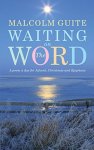 Guite chooses well-known poems (by Christina Rossetti, John Donne, Alfred Lord Tennyson, Samuel Taylor Coleridge et al.) as well as more obscure contemporary ones as daily devotional reading between the start of Advent and Epiphany; I especially liked his sonnet sequence in response to the seven “O Antiphons.” His commentary is learned and insightful, and even if at times I thought he goes into too much in-depth analysis rather than letting the poems speak for themselves, this remains a very good companion to the Christmas season for any poetry lover. (E-book from NetGalley)
 I started too many books over Christmas and have sort of put six of them on hold – including Titus Groan, which I’m thinking of quitting (it takes over 50 pages for one servant to tell another that the master has had a son?!), and City on Fire, which is wonderful but dispiritingly long: even after two good sessions with it in the days after Christmas, I’ve barely made a dent.
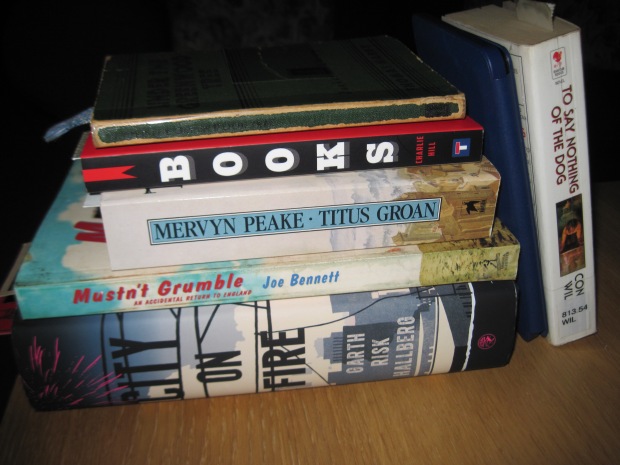
Stack on left = on hold (the book on top is Under the Greenwood Tree); standing up at right = books I’m actually reading.
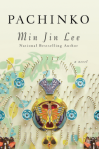
However, the three books that I am actively reading I’m loving: To Say Nothing of the Dog by Connie Willis is an uproarious blend of time travel science fiction and Victorian pastiche (university library), Pachinko by Min Jin Lee is a compulsive historical saga set in Korea (ARC from NetGalley), and the memoir Birds Art Life by Kyo Maclear has been compared to H Is for Hawk in the way she turns to birdwatching to deal with depression (e-book from Edelweiss). I also will be unlikely to resist my e-galley of the latest Anne Lamott book, Hallelujah Anyway (forthcoming in April, ARC from Edelweiss), for much longer.



Meanwhile, in post-holiday charity shopping I scored six books for £1.90: one’s been tucked away as a present for later in the year; the Ozeki I’ve already read, but it’s a favorite so I’m glad to own it; and the rest are new to me. I look forward to trying Han Kang; Anne Tyler is a reliable choice for a cozy read; and the Hobbs sounds like a wonderful Victorian-set novel.
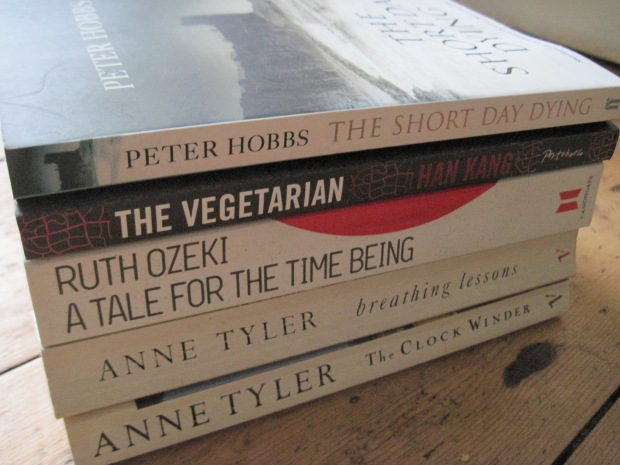
All in all, I seem to be starting my year in books as I mean to go on: reading a ton; making sure I review most or all of the books, even if I write just a few sentences; maintaining a balance between my own books, library books, and recent or advance NetGalley/Edelweiss reads; and failing to restrain myself from buying more.
Now if I could just work on my general attitude…
How’s the reading year starting off for you?
The 2017 Releases I’m Most Excited About
2017 hasn’t even begun and already I’m overwhelmed by the quantity and quality of new books to be released. This is by no means a full picture of what’s coming out next year; it’s only 30 titles that I happen to have heard about and/or know I want to seek out. The descriptions are taken from the publisher blurbs on Goodreads, NetGalley or Edelweiss. Some of these I already have access to in galley form; others I’ll be doing my darndest to get hold of! (Within categories, titles are in alphabetical order by author rather than by publication date.)
ASSIGNED
English Animals by Laura Kaye (for the blog tour) [Jan. 12, Little, Brown UK]: “When Mirka [from Slovakia] gets a job in a country house in rural England, she has no idea of the struggle she faces to make sense of a very English couple, and a way of life that is entirely alien to her.”
 Pachinko by Min Jin Lee (for BookBrowse) [Feb. 7, Grand Central]: “Pachinko follows one Korean family through the generations, beginning in [the] early 1900s. … [A] sweeping saga of an exceptional family in exile from its homeland and caught in the indifferent arc of history.”
No One Is Coming to Save Us by Stephanie Watts Powell (for the Pittsburgh Post-Gazette) [Apr. 4, Ecco]: “The Great Gatsby brilliantly recast in the contemporary South: a powerful first novel about an extended African-American family and their colliding visions of the American Dream.”
The Twelve Lives of Samuel Hawley by Hannah Tinti (for The Bookbag) [Mar. 28, Tinder Press]: “A father protects his daughter from the legacy of his past and the truth about her mother’s death in this thrilling new novel … Both a coming-of-age novel and a literary thriller, The Twelve Lives of Samuel Hawley explores what it means to be a hero, and the cost we pay to protect the people we love most.”
NOVELS (all by authors I’ve enjoyed in the past)
Greatest Hits by Laura Barnett [June 15, W&N]: “Cass Wheeler [is] a British singer-songwriter, hugely successful since the early 70s … Her task is to choose 16 songs from among the hundreds she has written … for a uniquely personal Greatest Hits record”
The Idiot by Elif Batuman [Mar. 14, Penguin]: “1995: Selin, the daughter of Turkish immigrants, arrives for her freshman year at Harvard. … With superlative emotional and intellectual sensitivity, mordant wit, and pitch-perfect style, Batuman dramatizes the uncertainty of life on the cusp of adulthood.”
The Hearts of Men by Nickolas Butler [Mar. 7, Ecco]: “Nelson, irrevocably scarred from the Vietnam War, becomes Scoutmaster of Camp Chippewa, while Jonathan marries, divorces, and turns his father’s business into a highly profitable company. … [A] sweeping, panoramic novel about the slippery definitions of good and evil, family and fidelity”
New Boy by Tracy Chevalier [May 16, Hogarth]: “The tragedy of Othello is transposed to a 1970s suburban Washington schoolyard, where kids fall in and out of love with each other before lunchtime, and practice a casual racism picked up from their parents and teachers.”
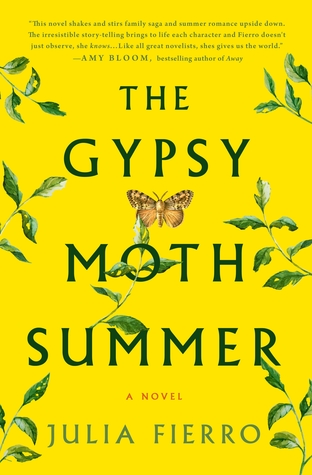 Gypsy Moth Summer by Julia Fierro [June 6, St. Martin’s]: “It is the summer of 1992 and a gypsy moth invasion blankets Avalon Island. … The Gypsy Moth Summer is about love, gaps in understanding, and the struggle to connect: within families; among friends; between neighbors and entire generations.” – Plus, get a load of that gorgeous cover!
Grief Cottage by Gail Godwin [June 6, Bloomsbury USA]: “Grief Cottage is the best sort of ghost story, but it is far more than that—an investigation of grief, remorse, and the memories that haunt us. The power and beauty of this artful novel wash over the reader like the waves on a South Carolina beach.”
The Evening Road by Laird Hunt [Feb. 7, Little, Brown & Co.]: “Reminiscent of the works of Louise Erdrich, Edward P. Jones and Marilynne Robinson, The Evening Road is the story of two remarkable women on the move through an America riven by fear and hatred, and eager to flee the secrets they have left behind.”
 The Awkward Age by Francesca Segal [May 4, Chatto & Windus]: “In a Victorian terraced house, in north-west London, two families have united in imperfect harmony. … This is a moving and powerful novel about the modern family: about starting over; about love, guilt, and generosity; about building something beautiful amid the mess and complexity of what came before.” – Sounds like Ann Patchett’s Commonwealth…
The Best of Adam Sharp by Graeme Simsion [Feb. 9, Penguin]: “The Best of Adam Sharp is about growing old and feeling young, about happy times and sad memories, about staying together and drifting apart, but most of all, it’s about how the music we make together creates the soundtrack that shapes our lives.” – Sounds a lot like the Barnett!
SHORT STORIES (also by authors I’ve enjoyed in the past)
The Dinner Party by Joshua Ferris: [May 2, Little, Brown & Co.]: “Full of the keenly observed, mordant wit that characterizes his beloved, award-winning novels, the stories in The Dinner Party are about people searching for answers in the aftermath of life’s emotional fissures”
Bad Dreams and Other Stories by Tessa Hadley [May 16, Harper]: “Hadley has proven herself to be the champion of revealing the hidden depths in the deceptively simple. In these short stories it’s the ordinary things that turn out to be most extraordinary: the history of a length of fabric or a forgotten jacket.”
NOVELS BY AUTHORS NEW TO ME
 A Separation by Katie Kitamura [Feb. 7, Riverhead Books]: “A mesmerizing, psychologically taut novel about a marriage’s end and the secrets we all carry.”
Hame by Annalena McAfee (Mrs. Ian McEwan) [Feb. 9, Harvill Secker]: “Mhairi McPhail dismantles her life in New York and moves with her 9-year-old daughter, Agnes, to the remote Scottish island of Fascaray. Mhairi has been commissioned to write a biography of the late Bard of Fascaray, Grigor McWatt, a cantankerous poet with an international reputation.”
NONFICTION: memoirs
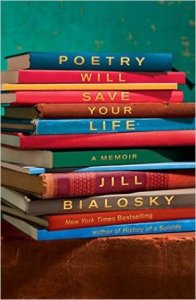 Poetry Can Save Your Life: A Memoir by Jill Bialosky [June 13, Atria]: “[A]n unconventional coming-of-age memoir organized around the 43 remarkable poems that gave her insight, courage, compassion, and a sense of connection at pivotal moments in her life.”
Between Them: Remembering My Parents by Richard Ford [May 2, Harper Collins]: “Ford brings his trademark candor, wit, and empathetic storytelling to the most intimate of landscapes: that of his love for two people who remain a mystery. Mining poignant details of his life in the American South during some iconic periods of the 20th century, Between Them illuminates the writer’s past as well as his beliefs on memory, relationships, and self-knowledge.”
The Mighty Franks: A Family Memoir by Michael Frank [May 16, Farrar, Straus and Giroux]: “A psychologically acute memoir about an unusual and eccentric Hollywood family.”
Sick: A Life of Lyme, Love, Illness, and Addiction by Porochista Khakpour [Aug. 8, Harper Perennial]: “In the tradition of Brain on Fire and The Empathy Exams, an honest, beautifully rendered memoir of chronic illness, misdiagnosis, addiction, and the myth of full recovery that details author Porochista Khakpour’s struggles with late-stage Lyme disease.”
A Stitch of Time: The Year a Brain Injury Changed My Language and Life by Lauren Marks [May 2, Simon & Schuster]: “Lauren Marks was twenty-seven, touring a show in Scotland with her friends, when an aneurysm ruptured in her brain and left her fighting for her life. … [A]n Oliver Sacks-like case study of a brain slowly piecing itself back together”
Homing Instincts: Early Motherhood on a Midwestern Farm by Sarah Menkedick [May 2, Pantheon]: “Fresh, intimate, and radiantly meditative, Homing Instincts is the story of one woman’s ‘coming of age’ as a first-time parent on her family’s rural Ohio farm.”
My Jewish Year: 18 Holidays, One Wondering Jew by Abigail Pogrebin [Mar. 14, Fig Tree Books]: “Although she grew up following some holiday rituals, Pogrebin realized how little she knew about their foundational purpose and contemporary relevance; she wanted to understand what had kept these holidays alive and vibrant, some for thousands of years. Her curiosity led her to embark on an entire year of intensive research, observation, and writing about the milestones on the religious calendar.”
 Theft by Finding: Diaries (1977–2002) by David Sedaris [May 30, Little, Brown & Co.]: “[F]or the first time in print: selections from the diaries that are the source of his remarkable autobiographical essays.”
How to Make a French Family: A Memoir of Love, Food, and Faux Pas by Samantha Vérant [Apr. 4, Sourcebooks]: “When Samantha is given a second chance at love at the age of forty, she moves to southwestern France, thinking she’s prepared for her new role in life as an instant American wife and stepmom. It turns out, though, that making a French family takes more than just good intentions and a quick lesson in croissant-baking.”
NONFICTION: poetry, biography, essays, travel
Eat This Poem: A Literary Feast of Recipes Inspired by Poetry by Nicole Gulotta [Mar. 21, Roost Books]: “The twenty-five inspiring poems in this book—from such poets as Marge Piercy, Louise Glück, Mark Strand, Mary Oliver, Billy Collins, Jane Hirshfield—are accompanied by seventy-five recipes that bring the richness of words to life in our kitchen, on our plate, and through our palate.”
Mozart’s Starling by Lyanda Lynn Haupt [May 16, Little, Brown & Co.]: “A charming story of Mozart and his pet starling, along with a natural history of the bird.”
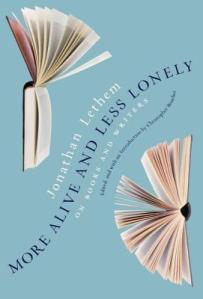 More Alive and Less Lonely: On Books and Writers by Jonathan Lethem [Mar. 14, Melville House]: “[C]ollects more than a decade of Lethem’s finest writing on writing, with new and previously unpublished material, including: impassioned appeals for forgotten writers and overlooked books, razor-sharp essays, and personal accounts of his most extraordinary literary encounters and discoveries.”
The Not-Quite States of America by Doug Mack [Feb. 14, W.W. Norton]: “American Samoa, Guam, Puerto Rico, the Northern Mariana Islands, and the U.S. Virgin Islands—and their 4 million people—are often forgotten, even by most Americans. … When Doug Mack realized just how little he knew about the territories, he set off on a globe-hopping quest covering more than 30,000 miles to see them all.”
What 2017 books are you most looking forward to?
Which of these interest you?
My Life in Book Quotes
I keep an ongoing Word file with details on my year’s reading: books finished with the date, number of pages, and source – similar information to what’s recorded on Goodreads – plus any quotations that particularly stood out to me. It occurred to me that by looking back through these annual book lists for the quotes that meant the most to me I could probably narrate my recent years. So here are the 2015–2016 quotes that tell my story.

Career
“I’m learning that what’s important is not so much what I do to make a living as who I become in the process. … the heroine, when at a juncture, makes her own choice—the nonheroine lets others make it for her.”
(A Year by the Sea: Thoughts of an Unfinished Woman, Joan Anderson)
“The dishes. The dishes! The goddamn dishes! No wonder women don’t succeed.”
(The author’s mother’s explosion in The Year My Mother Came Back, Alice Eve Cohen)
“Success says, What more can I get?
Craft says, Can you believe I get to do this?”
(How to Be Here: A Guide to Creating a Life Worth Living, Rob Bell)
“Amateurs look for inspiration; the rest of us just get up and go to work.”
(Everyman, Philip Roth)
Finding a Home
“In Orcadian, ‘flitting’ means ‘moving house’. I can hear it spoken with a tinge of disapproval or pity: the air-headed English couple who couldn’t settle.”
(The Outrun, Amy Liptrot)
“Where, after we have made the great decision to leave the security of childhood and move on into the vastness of maturity, does anybody ever feel completely at home?”
(A Circle of Quiet, Madeleine L’Engle)
“there is no such thing / as the right route or a clear passage / no matter where you start, / or how you plan it.”
(from “Aneurysm,” Selected Poems, Kate Clanchy)
Life vs. Books
“He had accepted that if you were a bookish person the events in your life took place in your head.”
(Golden Age, Jane Smiley)
“my way of seeing has always been different, shyer. To see the world I’ve always opened a book.”
(The Violet Hour: Great Writers at the End, Katie Roiphe)
“Other people’s lives, and the lives I read about in books, seem richer, mine seems so threadbare.”
(The Past, Tessa Hadley)
Overthinking
“She remembered finding her first white hair somewhere near her thirtieth birthday and it had sent her on a tailspin for half a day. It’s starting, she’d thought then. The follicle that produced that hair is dying. I’ve reached the tipping point and from now on it’s nothing but slow decline.”
(Dog Run Moon: Stories, Callan Wink)
“All the most terrifying Ifs involve people. All the good ones do as well.”
(A Little Life, Hanya Yanagihara)
“I wished then, and still do, that there was something in me also that would march steadily in one road, instead of down here or there or somewhere else, the mind running a net of rabbit-paths that twisted and turned and doubled on themselves, pursued always by the hawk-shadow of doubt.”
(Now in November, Josephine Johnson – to be reviewed here within next couple weeks)
Happy 200th Birthday, Charlotte Brontë!
Today marks a big anniversary: the bicentennial of Charlotte Brontë’s birth. I’ve noticed a whole cluster of books being published or reissued in time for her 200th birthday, many of which I’ve reviewed with enjoyment; some of which I’ve sampled and left unfinished. I hope you’ll find at least one book on this list that will take your fancy. There could be no better time for going back to Charlotte Brontë’s timeless stories and her quiet but full life story.
Short Stories Inspired by Jane Eyre
MINOR SPOILERS AHEAD.
 Reader, I Married Him: Stories Inspired by Jane Eyre, edited by Tracy Chevalier
A mixed bag. Although there are some very good stand-alone stories (from Tessa Hadley, Sarah Hall, Emma Donoghue and Elizabeth McCracken, as you might expect), ultimately the theme is not strong enough to tie them all together and some seem like pieces the authors had lying around and couldn’t figure out what else to do with. Think about it this way: what story isn’t about romance and the decision to marry?
A few of the tales do put an interesting slant on this age-old storyline by positing a lesbian relationship for the protagonist or offering the possibility of same-sex marriage. Then there are the stories that engage directly with the plot and characters of Jane Eyre, giving Grace Poole’s (Helen Dunmore) or Mr. Rochester’s (Salley Vickers) side of things, putting Jane and Rochester in couples therapy (Francine Prose), or making Jane and Helen Burns part of a post-WWII Orphan Exchange (Audrey Niffenegger). My feeling with these spinoff stories was, I’m afraid, what’s the point? Plus there were a number of others that just felt tedious.
My least favorites were probably by Lionel Shriver (incredibly boring!), Kirsty Gunn (unrealistic, and she gives the name Mr. Rochester to a dog!) and Susan Hill (the title story, but she’s made it about Wallis Simpson – and has the audacity to admit, as if proudly, that she’s never read Jane Eyre!). On the other hand, one particular standout is by Elif Shafak. A Turkish Muslim falls in love with a visiting Dutch student but is so unfamiliar with romantic cues that she doesn’t realize he isn’t equally taken with her.
In Patricia Park’s story, my favorite of all, a Korean girl from Buenos Aires moves to New York City to study English. Park turns Jane Eyre on its head by having Teresa give up on the chance of romance to gain stability by marrying Juan, the St. John Rivers character. I loved getting a glimpse into a world I was entirely ignorant of – who knew there was major Korean settlement in Argentina? This also redoubled my wish to read Park’s novel, Re Jane. She’s working on a second novel set in Buenos Aires, so perhaps it will expand on this story.

The Bookbag reviews
Charlotte Brontë’s Secret Love by Jolien Janzing
Charlotte and Emily Brontë’s time in Belgium – specifically, Charlotte’s passion for her teacher, Constantin Heger – is the basis for this historical novel. The authoritative yet inviting narration is a highlight, but some readers may be uncomfortable with the erotic portrayal; it doesn’t seem to fit the historical record, which suggests an unrequited love affair.

Sanctuary by Robert Edric
Branwell Brontë narrates his final year of life, when alcoholism, mental illness and a sense of disgrace hounded him to despair. I felt I never came to understand Branwell’s inner life, beneath the decadence and all the feeling sorry for himself. This gives a sideways look at Charlotte, Emily and Anne, though the sisters are little more than critical voices here; none of them has a distinctive personality.
Mutable Passions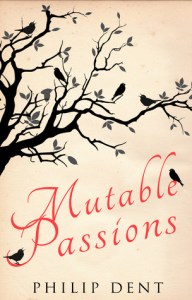 : Charlotte Brontë: A Disquieting Affair by Philip Dent
Dent focuses on a short period in Charlotte Brontë’s life: with all her siblings dead and Villette near completion, a surprise romance with her father’s curate lends a brief taste of happiness. Given her repeated, vociferous denial of feelings for Mr. Nicholls, I had trouble believing that, just 20 pages later, his marriage proposal would provoke rapturous happiness. To put this into perspective, I felt Dent should have referenced the three other marriage proposals Brontë is known to have received. Overwritten and suited to readers of romance novels than to Brontë enthusiasts, this might work well as a play. Dent is better at writing individual scenes and dialogue than at providing context.
Two Abandonees
I had bad luck with these two novels, which both sounded incredibly promising but I eventually abandoned (along with Yuki Chan in Brontë Country, featured in last month’s Six Books I Abandoned Recently post):
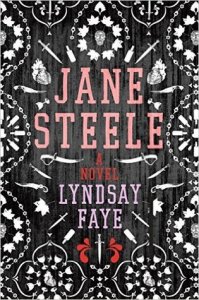 Jane Steele by Lyndsay Faye
Jane Steele is not quite Jane Eyre, though her life seems to mirror that of Brontë’s heroine in most particulars. How she differs is in her violent response to would-be sexual abusers. She’s a feminist vigilante wreaking vengeance on her enemies, whether her repulsive cousin or the vindictive master of “Lowan Bridge” (= Cowan Bridge, Brontë’s real-life school + Lowood, Jane Eyre’s). I stopped reading because I didn’t honestly think Faye was doing enough to set her book apart. “Reader, I murdered him” – nice spin-off line, but there wasn’t enough original material here to hold my attention. (Read the first 22%.)
 The Madwoman Upstairs by Catherine Lowell
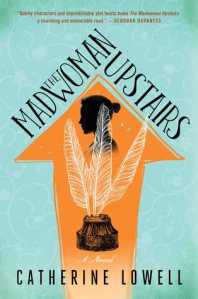
There was every reason for me to love this novel – awkward American narrator, Oxford setting, Brontë connections aplenty, snarky literary criticism – but I got bored with it. Perhaps it was the first-person narration: being stuck in sarcastic Samantha Whipple’s head means none of the other characters feel real; they’re just paper dolls, with Orville a poor excuse for a Mr. Rochester substitute. I did laugh out loud a few times at Samantha’s unorthodox responses to classic literature (“Agnes Grey is, without question, the most boring book ever written”), but I gave up when I finally accepted that I had no interest in how the central mystery/treasure hunt played out. (Read the first 56%.)
An Excellent Biography
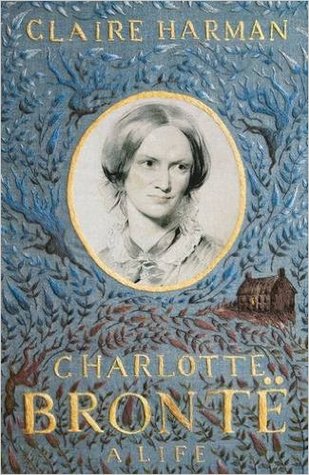 If I could recommend just one book from the recent flurry of Brontëana, it would be Charlotte Brontë: A Life by Claire Harman, which I reviewed for For Books’ Sake back in November.
One of the things Harman’s wonderful biography does best is to trace how the Brontës’ childhood experiences found later expression in their fiction. A chapter on the publication of Jane Eyre (1847) is a highlight. Diehard fans might not encounter lots of new material, but Harman does make a revelation concerning Charlotte’s cause of death – not TB, as previously believed, but hyperemesis gravidarum, or extreme morning sickness. This will help you appreciate afresh the work of a “poet of suffering” whose novels were “all the more subversive because of [their] surface conventionality.” Interesting piece of trivia for you: this and the Janzing novel (above) open with the same scene from Charlotte’s time in Belgium.

Have you read any of these, or other recent Brontë-themed books? What were your thoughts?
Reviews Roundup, January–February
One of my goals with this blog is to have one convenient place where I can gather together all my writing that has appeared in disparate online locations. To that end, once a month I provide links to all book reviews I’ve published elsewhere, with a rating (below each description) and a taster so you can decide whether to read more. A few exceptions: I won’t point out my Kirkus Indie, BlueInk or Publishers Weekly reviews since I don’t get a byline. Meanwhile, I’ve done my first review for the Pittsburgh Post-Gazette – exciting!
The Bookbag
The Noise of Time by Julian Barnes: “Art is the whisper of history, heard above the noise of time.” Through a fictionalized biography of the Russian composer Shostakovich, Barnes questions how art can withstand political oppression. Knowing Barnes’s penchant for stylistic experimentation, this was never going to be a straightforward, chronological life story. Instead, as he so often does, he sets up a tripartite structure, focusing on three moments when Shostakovich has a reckoning with Power. The book is full of terrific one-liners (“Integrity is like virginity: once lost, never recoverable”), but there are not many memorable scenes to latch on to.
Motions and Moments : More Essays on Tokyo (& interview) by Michael Pronko: Pronko’s third collection of essays about his adopted city is an eloquent tribute to a place full of contradictions and wonders. Compared to his earlier collection, Beauty and Chaos, I sense Pronko is now more comfortable in his surroundings, perhaps happier to include himself in ‘we’ rather than looking on passively at ‘them’. For instance – inspired by Japanese women’s perfect outfits – he consciously tries to dress better, and he’s taken to eating ramen and sleeping on a futon, just like a native. The highlight is a set of pieces written in the aftermath of the 2011 earthquake / tsunami.
BookBrowse
 The Portable Veblen by Elizabeth McKenzie: Veblen, named after the late-nineteenth-century Norwegian-American economist, is one of the oddest heroines you’ll ever meet. She thinks squirrels are talking to her and kisses flowers. But McKenzie doesn’t just play Veblen for laughs; she makes her a believable character well aware of her own psychological backstory. I suspect the squirrel material could be a potential turn-off for readers who can’t handle too much whimsy. Over-the-top silly in places, this is nonetheless a serious account of the difficulty of Veblen and Paul, her neurology researcher fiancé, blending their dysfunctional families and different ideologies – which is what marriage is all about.
 Weathering by Lucy Wood: This atmospheric debut novel is set in a crumbling house by an English river and stars three generations of women – one of them a ghost. Ada has returned to her childhood home after 13 years to scatter her mother Pearl’s ashes, sort through her belongings, and get the property ready to sell. In a sense, then, this is a haunted house story. Yet Wood introduces the traces of magical realism so subtly that they never feel jolting. Like the river, the novel is fluid, moving between the past and present with ease. The vivid picture of the English countryside and clear-eyed look at family dynamics remind me most of Tessa Hadley (The Past) and Polly Samson (The Kindness).
Foreword Reviews
When We Were Invincible by Jonathan Harnisch: In this short novel, a young man wrestles with depression and Tourette’s syndrome, which together drive him to the point of suicide. A series of dreams and chance meetings, along with the possibility of romance and faith in God, pull him back from the edge. The book successfully introduces philosophical themes and gives a sympathetic picture of mental illness. However, it is weaker at filling in background and providing transitions, and there are many awkward, unlikely lines of dialogue. Recommended to fans of The Curious Incident of the Dog in the Night-Time.
Nudge
 The Life and Death of Sophie Stark by Anna North: The twisty, clever story of a doomed filmmaker – perfect for fans of Hausfrau. Who is Sophie Stark? A New York City-based indie director whose four documentary-style movies are “almost more like life than life itself.” Bisexual and with certain traits of high-functioning autism, Sophie is easily misunderstood. She’s a rebel who doesn’t conform to social niceties. The book is told through five first-person reminiscences from the people closest to her. In this respect the novel’s format recalls Kitchens of the Great Midwest. My favorite sections, though, are the reviews of her films, all by the same critic.
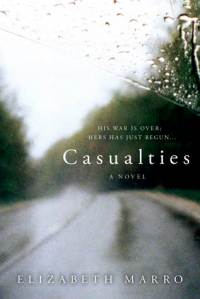 Casualties by Betsy Marro: A powerful, melancholy debut novel about how war affects whole families, not just individual soldiers. As in Bill Clegg’s Did You Ever Have a Family, which Casualties resembles in tone if not in style, a bereaved mother sets off on a journey. Ruth’s unlikely companion on the road trip east is a Gulf War amputee who appears little more than a conman but genuinely wants to clean up his act so he can reconcile with his teenage daughter. At times the road trip scenario felt a little far-fetched to me, and Casey too obvious a replacement son figure. Yet as both he and Ruth ponder how much they have lost and the small things they can try to put right, they together form a touching picture of the various ways war’s effects can linger.
Pittsburgh Post-Gazette
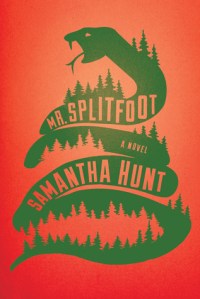 Mr. Splitfoot by Samantha Hunt: “All stories are ghost stories,” Samantha Hunt proclaims in her quirky third novel about the crossover between motherhood and mysticism. In a dual storyline that takes in fundamentalist cults, unlikely mediums and a pregnant woman’s pilgrimage, Hunt asks whether one can ever believe in the unseen. Mr. Splitfoot has the offbeat charm of Scarlett Thomas’s work. While the plot ultimately feels like a bit of a jumble, its vision of unexpected love and loyalty remains compelling. “The End’s always coming,” but it is how one lives in the face of brutality and impending extinction that matters.
I also post reviews of most of my casual reading and skimming on Goodreads:
 Rush Oh! by Shirley Barrett: A debut novel in which an Australian whaler’s daughter looks back at 1908, a catastrophic whaling season but also her first chance at romance. I felt that additional narrators, such as a whaleman or an omniscient voice, would have allowed for more climactic scenes. Still, I found this gently funny, especially the fact that the family’s cow and horse are inseparable and must be together on any outing. There are some great descriptions of whales, too.
 Felicity by Mary Oliver: I was disappointed with my first taste of Mary Oliver’s poetry. So many readers praise her work to the skies, and I’ve loved excerpts I’ve read elsewhere. However, I found these to be rather simplistic and clichéd, especially poems’ final lines, e.g. “Soon now, I’ll turn and start for home. / And who knows, maybe I’ll be singing.” or “Late, late, but now lovely and lovelier. / And the two of us, together—a part of it.” I’ll definitely try more of her work, but I’ll look out for an older, classic collection.
 Paulina & Fran by Rachel B. Glaser: Full of blunt, faux-profound sentences and smutty, two-dimensional characters. Others may rave about it, but this wasn’t for me. I get that it is a satire on female friendship and youth entitlement. But I hated how the main characters get involved in a love triangle, and once they leave college any interest I had in them largely disappeared. Least favorite lines: “Paulina. She’s like Cleopatra, but more squat.” / “She’s more like Humphrey Bogart” and “She craved the zen-ness of being rammed.”

 Noah’s Wife by Lindsay Starck: I kept wanting to love this book, but never quite did. It’s more interesting as a set of ideas – a town where it won’t stop raining, a minister losing faith, homeless zoo animals sheltering with ordinary folk – than as an executed plot. My main problem was that the minor characters take over so that you never get to know the title character, who remains nameless. There’s also a ton of platitudes towards the end. It reminded me most of The Readers of Broken Wheel Recommend and Not Forgetting the Whale (another cozy environmental dystopia based around biblical allusions).
 Spill Simmer Falter Wither by Sara Baume: This sounded like a charmingly offbeat story about a loner and his adopted dog setting off on a journey. As it turns out, this debut is much darker than expected, but what saves it from being unremittingly depressing is the same careful attention to voice you encounter in fellow Irish writers like Donal Ryan and Anne Enright. It’s organized into four sections, with the title’s four verbs as headings. In a novel low on action, the road trip is much the most repetitive section, extending to the language as well. Even so, Baume succeeds in giving a compassionate picture of a character whose mental state comes into question. (Full review in March 2016 issue of Third Way magazine.)
 Medium Hero by Korby Lenker: Lenker is an indie musician, and the 27 autobiographical stories in his debut collection are about the everyday challenges of being on the road versus trying to pay the bills. Many feature “Korby” or “Simon” as fictional stand-ins, and recurring locations include his hometown of Twin Falls, Idaho and his adopted home of Nashville. As the title suggests, Lenker has no illusions about being famous or out of the ordinary. Most of the time he just tries to be a decent guy, the kind who prays for family members in distress even though he’s not sure he believes in God. Lest that sound too serious, though, there are also stories about peeing his pants and the perils of being a metrosexual.
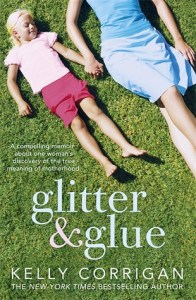 Glitter and Glue by Kelly Corrigan: Slides down like ice cream. And I say that even though the whole basis for this memoir feels rather thin. Corrigan frames it around five months in the early 1990s when she worked as a nanny for two Australian kids whose mother died of cancer. For a young woman fresh out of college, it was like a trial run for being a mother, and also gave her a new appreciation for everything her own mother had done for her during her Philadelphia Catholic upbringing. If Corrigan’s father was the ‘glitter’ of the family, her mother was the ‘glue’ – holding everything together in the background. This is impressively reconstructed, dialogue and all, from letters, journals and photos.
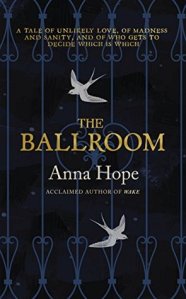 The Ballroom by Anna Hope: This novel was inspired by the story of the author’s great-great-grandfather, an Irishman who was a patient at Menston Asylum in West Yorkshire from 1909 to 1918. The novel zeroes in on the long, hot summer of 1911, focusing through alternating close third-person chapters on John Mulligan, a new patient named Ella Fay, and Dr. Charles Fuller, who wants to put his mental hospital at the frontline of eugenics research. Ultimately I didn’t like this quite as much as Wake, but I think it cements Anna Hope’s reputation as a solid historical fiction writer. I hope with her next book she’ll move beyond the years around World War I to consider a less-chronicled era.
 Life without a Recipe by Diana Abu-Jaber: The Jordanian–American writer reflects on how various food cultures have sustained her through a life that hasn’t always turned out as expected. Three marriages, a move from Portland to Florida, a winding path to motherhood in her forties, and her father’s death from leukemia are some of the main events. Like Sasha Martin’s Life from Scratch, this is more about family and personal history than it is about food (and there are no recipes). Still, food is the stuff of memories, and it is what binds her to two strong characters: her Jordanian father Bud with his stuffed grape leaves, and her maternal grandmother Grace with her frequent baking and the pastries they consumed together in Paris.
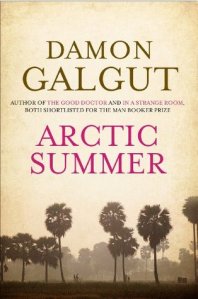 Arctic Summer by Damon Galgut: This fictionalized account of the life of E.M. Forster focuses on the drawn-out composition of A Passage to India, which he began in 1913 but wouldn’t complete and publish until 1924. In between he broke off to write his explicitly homosexual novel Maurice (only published posthumously), spent three years working in Egypt during the war, and served as a secretary to an Indian maharajah. As fictionalized biographies of authors go, I’d rate this somewhere between David Lodge’s A Man of Parts (H.G. Wells) and Colm Tóibín’s superior The Master (Henry James); all three share a heavy focus on the author’s sexuality. “Buggery in the colonies. It wasn’t noble” is one of my favorite random snippets from this novel, and sums up, for me, its slightly prurient aftertaste.
Reviews Roundup, July–August
One of my goals with this blog is to have one convenient place where I can gather together all my writing that has appeared in disparate online locations. To that end, once a month I’ll provide links to all the book reviews I’ve published elsewhere, with a rating (below each description) and a short taster so you can decide whether to click to read more. A couple of exceptions: I won’t point out my Kirkus Indie or BlueInk reviews since I don’t get a byline.
The Bookbag
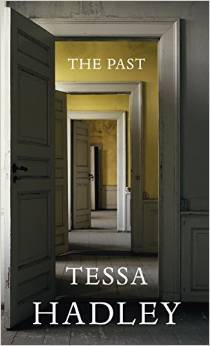 The Past by Tessa Hadley: Four adult siblings gather at their grandfather’s Devon vicarage for one last summer holiday before the house is sold. Their interactions, past and present, skirt the edges of tragedy and show the secrets and psychological intricacies any family harbors. Hadley writes beautifully subtle stories of English family life. Here she channels Elizabeth Bowen with a setup borrowed from The House in Paris: the novel is divided into three parts, titled “The Present,” “The Past,” and “The Present.” That structure allows for a deeper look at what the house and a neighboring cottage have meant to the central family. Hadley writes great descriptive prose and has such insight into family dynamics. Releases September 3rd.

 Between Gods by Alison Pick: At a time of transition – preparing for her wedding and finishing her first novel, set during the Holocaust – the author decided to convert to Judaism, the faith of her father’s Czech family. There are so many things going on in this sensitive and engrossing memoir: depression, her family’s Holocaust history, her conversion, career struggles, moving to Toronto, adjusting to marriage, and then pregnancy and motherhood following soon after – leading full circle to a time of postpartum depression. That said, this book is exactly what you want from a memoir: it vividly depicts a time of tremendous change, after which the subject is still somehow the same person, or perhaps more herself than ever.
BookBrowse
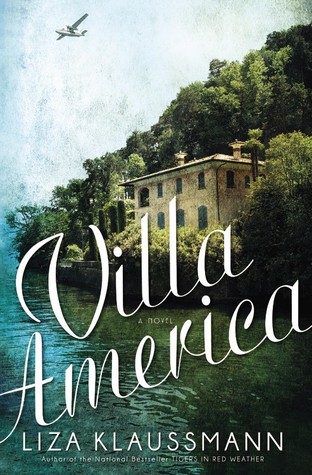 Villa America by Liza Klaussmann [the full text of my review is available for free this week as part of Editor’s Choice]: In her second novel, Klaussmann explores the glittering, tragic lives of Gerald and Sara Murphy, real-life models for F. Scott Fitzgerald’s Tender Is the Night. The book is slow to start with, with the first third unnecessarily devoted to Gerald’s and Sara’s childhoods and courtship. It is not until the Murphys are established in France and receive visits from fellow artists that the book really comes to life. It is easy to see why the Murphys attracted hangers-on. Yet beneath the façade of glamour, there is real sadness and struggle. Gerald’s uncertain sexuality is a tacit issue between him and Sara, and sickness strikes the family with cruel precision. The novel set up a beautiful contrast between happiness and tragedy.
Foreword Reviews
Stop the Diet, I Want to Get Off! by Lisa Tillinger Johansen: Yo-yo dieters and newbies alike should pick up Johansen’s witty book before wasting any time, money, or heartache on ineffective fad diets. Surveying diets old and new in a conversational style, Johansen gives the merits and dangers of each and suggests realistic principles for healthy eating and exercise. She bases her advice on solid facts, but cannily avoids the dry, scientific tone some experts might use. Instead, she uses chatty, informal language and personal stories to enliven her writing.
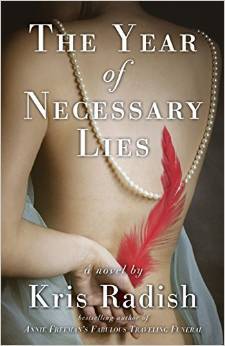 The Year of Necessary Lies by Kris Radish: Radish’s tenth novel highlights women’s role in the Audubon Society campaign to eradicate feathers from ladies’ hats. Her fictional heroine, Julia Briton, is a composite portrait of the many courageous women who stood up to plume hunters and the fashion industry alike in the early years of the twentieth century. “I did not simply want to survive, but to live with great passion and to do something that made a difference in the world,” Julia declares. Recommended for fans of Sue Monk Kidd’s The Invention of Wings.

Nudge
Now and at the Hour of Our Death by Susana Moreira Marques: In 2011 Marques, a freelance journalist, spent five months visiting the dying through a Portuguese home palliative care project. The resulting book falls into two parts: “Travel Notes about Death,” one-line aphorisms and several-paragraph anecdotes; and “Portraits,” case studies and interview transcripts from three families facing the death of a loved one. The lack of a straightforward narrative and the minimal presence of the author mean that the book overall feels disjointed. Nonetheless, it is a thought-provoking look at hospice services and emotions surrounding death. Releases September 3rd.
 Caught by Lisa Moore: A classic cat-and-mouse story in which a Canadian drug smuggler escapes from prison to score another load of marijuana from Colombia. Moore paints Slaney and Hearn as “modern-day folk heroes,” and her writing elevates what could have been a plain crime story into real literature. From the title onwards, the book is heavy with foreshadowing as Moore exploits the dramatic irony that readers know the police have a sting operation trailing Slaney the whole way. Indeed, the most remarkable thing about the novel is how it maintains tension even though the outcome seems inevitable. “The best stories … we’ve known the end from the beginning.” To my surprise, Caught is not just a good old-fashioned adventure story, but also has the epic, tragic weight of Homer’s Odyssey.
Field Notes from the Edge by Paul Evans: A book full of unexpected nuggets of information and inspiration: in addition to the travel notes and field observations, Evans (who writes a Guardian country diary from Wenlock Edge, Shropshire) incorporates personal anecdote, folk songs, myths and scientific advances. His central idea is that we have lost our connection with nature due to fear – “ecophobia,” the opposite of which is E.O. Wilson’s “biophilia.” How do we overcome that fear? Mostly by doing just what Evans does: spending time in nature, finding beauty and developing an affinity for particular places and species.
Shiny New Books
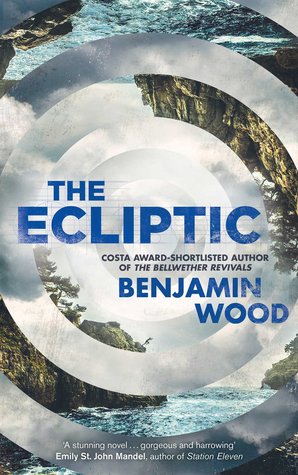 The Ecliptic by Benjamin Wood: Portmantle is a mysterious artists’ retreat center on a Turkish island. Our narrator, Elspeth Conroy (aka Knell), is a Scottish painter who came to Portmantle in 1962 after some struggles with mental illness. The first third of the novel is tremendously gripping and Gothic. The core of the book, nearly 200 pages, is a flashback to Elspeth’s life before. At last, after what feels like too long a digression, we come full circle back to Portmantle. I didn’t warm to The Ecliptic quite as much as I did to Wood’s debut, The Bellwether Revivals. Still, it’s really interesting to see how he alternates between realism and surrealism here. The parts that feel most real and immediate and the parts that are illusory are difficult to distinguish between. An odd, melancholy, shape-shifting novel.
We Love This Book
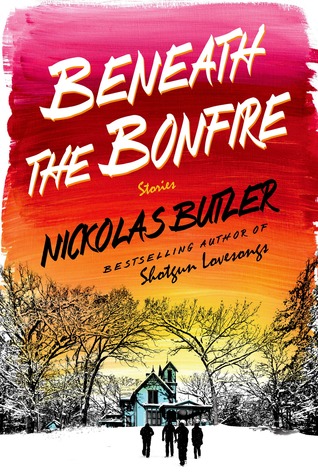 Beneath the Bonfire by Nickolas Butler: Ten tales of moral complexity in America’s gritty heartland. Fire and recreational drugs are powerful forces linking these Wisconsin-set stories. Opener “The Chainsaw Soirée” sets the tone by describing a failed utopia reminiscent of Lauren Groff’s Arcadia. The stand-out is “Morels,” in which three stoned friends go foraging for mushrooms in their dying rural community. The title’s similarity to “morals” is no coincidence: when the trio are involved in a hit-and-run they have to decide what to stand for. Unsentimental but lyrically composed, these stories will appeal to fans of Ron Rash.
 Among the Ten Thousand Things by Julia Pierpoint: Pierpont’s ambitiously structured debut novel explores how infidelity affects a whole New York City family. In short sections of matter-of-fact statements Pierpont gives a what-happened-next for each of the characters over the next decade or so. But “it’s the between-time that lasted,” Pierpoint argues as she returns to that summer of revelations for a closer look. The climactic events of the holiday contrast childhood innocence and adulthood; when you’re on the cusp, certain experiences can push you over the brink from one to the other. This offbeat take on the dysfunctional family novel should interest fans of Nicole Krauss or Rebecca Dinerstein (The Sunlit Night). [Few extra thoughts at Goodreads.]

I also post reviews of most of my casual reading and skimming on Goodreads.
 F: A Novel by Daniel Kehlmann: What does F stand for? Faith, finances, fraud, forgery, family and Fate all play a role in Kehlmann’s fourth novel available in English translation. F is also for the Friedlands: Arthur the unreliable patriarch; Martin, a portly Catholic priest who doesn’t believe in God; and his twin half-brothers, Eric and Ivan, a mentally ill businessman and a homosexual painter who forges his mentor’s masterworks. Reading this brilliant, funny spoof on the traditional family saga is like puzzling out a Rubik’s Cube: it is a multi-faceted narrative with many meanings that only become clear the deeper you go. (Full review in September/October 2015 issue of Third Way magazine.)

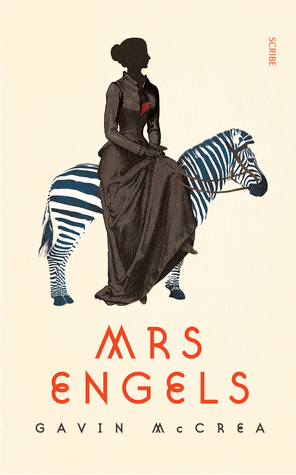 Mrs. Engels by Gavin McCrea: I generally love Victorian-set historical fiction and books about famous wives, so I was surprised by how little I liked this novel about Lizzie Burns, the illiterate, working-class Irish woman who was Frederick Engels’ longtime partner. The novel flits between 1870–1, when Lizzie and Frederick were newly arrived in London and involved in helping the poor and Franco-Prussian War refugees, and their earlier years in Manchester. Lizzie is a no-nonsense first-person narrator, and her coarse, questionably grammatical speech fits with her background. Unfortunately, I never warmed to Lizzie or felt that she was giving a truly intimate look at her own life. This novel had such potential to bring an exciting, revolutionary time to life, but it never fulfilled its promise for me. Releases in the States on October 13th.

Rank by Aaron McCollough: Some nice alliteration and pleasant imagery of flora, fauna and musical instruments. However, I struggled to find any overarching meaning in these run-on poems. In fact, I could not tell you what a single one of them is actually about. Story is just as important as sound in poetry, I feel, and in that respect this collection was lacking. Releases September 1st.
Trout’s Lie by Percival Everett: “The line of time / Is past. / The line folds back, / Splits. / Two lines now, future, present. The past / Is a circle of / Abstraction, regret.” There is a lot of repetition and wordplay in these poems. The title piece uses a line in Italian from Dante – translating to “in the middle of our life’s path” – that forms another recurring theme: being stuck between times or between options and having to decide which way to go. These read quickly, with the run-on phrases flowing naturally from topic to topic. I’m not sure this was the best introduction to a prolific author I’d never heard of; I’ll have to look into his other work. Releases October 15th.
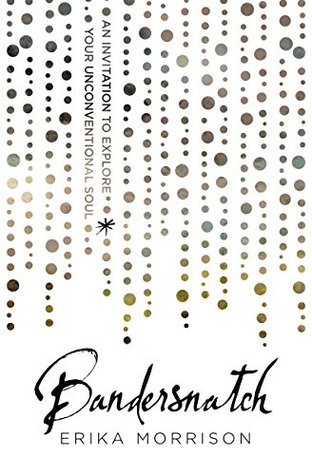 Bandersnatch by Erika Morrison: This is Christian self-help, an ideal read for fans of Glennon Doyle Melton and Rob Bell. The title, a creature from Lewis Carroll’s imagination, is Morrison’s shorthand for a troublemaker. She argues that as Christians we should be following Jesus down the road of “positive nonconformity”: taking an avant-garde approach to life, turning ordinary moments into divine opportunities through spiritual alchemy, taking an interest in the least of these with kingdom anthropology, and making the everyday trials of marriage and parenthood our works of art. I liked the book best when Morrison illustrated her points with stories from her own life. Overall I found the book repetitive, and the language can definitely be hippy-dippy in places. Releases October 6th.

Family Values by Wendy Cope: Cope mostly uses recognizable forms (villanelles, sonnets, etc.): this is interesting to see in contemporary poetry, but requires a whole lot of rhyming, most of it rather twee (e.g. “tuppence/comeuppance”), which gives the whole collection the feeling of being written for children. My two favorites were “Lissadell,” about a vacation to Ireland, and “Haiku,” perfect in its simplicity:
A perfect white wine
is sharp, sweet and cold as this:
birdsong in winter.
 Bookish Beck = Rebecca Foster. American transplant to England. Freelance proofreader and book reviewer.
 Bookish Beck