Three on a Theme: Books on Communes by Crossman, Heneghan & Twigg
Communal living always seems like a great idea but rarely works out well. Why? The short answer: Because people. A longer answer: Political ideals are hard to live out in the everyday when egos clash, practical arrangements become annoying, and lines of privacy or autonomy get crossed. All three books I review today are set in the aftermath of utopian failure. Susanna Crossman, who grew up in an English commune, looks back at 15 years of an abnormal childhood. The community in Birdeye is set to collapse after two founding members announce their departure, leaving one ageing woman and her disabled daughter. And in Spoilt Creatures, from a decade’s distance, Iris narrates the disastrous downfall of Breach House.
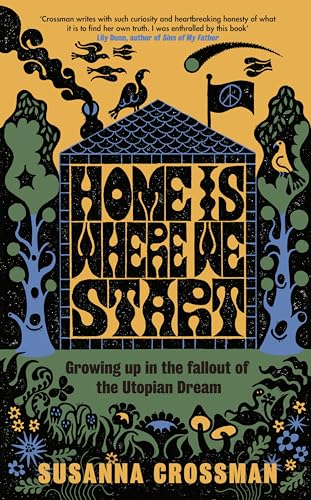
Home Is Where We Start: Growing up in the Fallout of the Utopian Dream by Susanna Crossman
For Crossman’s mother, “the community” was a refuge, a place to rebuild their family’s life after divorce and the death of her oldest daughter in a freak accident. For her three children, it initially was a place of freedom and apparent equality between “the Adults” and “the Kids” – who were swiftly indoctrinated into hippie opinions on the political matters of the day. “There is no difference between private and public conversations, between the inside and the outside. No euphemisms. Vaginas are discussed over breakfast alongside domestic violence and nuclear bombs.” Crossman’s present-tense recreation of her precocious eight-year-old perspective is canny, as when she describes watching Charles and Diana’s wedding on television:
It was beautiful, but I know marriage is a patriarchal institution, a capitalist trap, a snare. You can read about it in Spare Rib, or if you ask community members, someone will tell you marriage is legalized rape. It is a construction, and that means it’s not natural, and is part of the social reproduction of gender roles and women’s unpaid domestic labour.
 Their mum, now known only as “Alison,” often seemed unaware of what the Kids got up as they flitted in and out of each other’s units. Crossman once electrocuted herself at a plug. Another time she asked if she could go to an adult man’s unit for an offered massage. Both times her mother was unfazed.
The author is now a clinical arts therapist, so her recreation is informed by her knowledge of healthy child development and the long-term effects of trauma. She knows the Kids suffered from a lack of routine and individually expressed love. Community rituals, such as opening Christmas presents in the middle of a circle of 40 onlookers, could be intimidating rather than welcoming. Her molestation and her sister’s rape (when she was nine years old, on a trip to India ‘supervised’ by two other adults from the community) were cloaked in silence.
Crossman weaves together memoir and psychological theory as she examines where the utopian impulse comes from and compares her own upbringing with how she tries to parent her three daughters differently at home in France. Through vignettes based on therapy sessions with patients, she shows how play and the arts can help. (I’d forgotten that I’ve encountered Crossman’s writing before, through her essay on clowning for the Trauma anthology.) I somewhat lost interest as the Kids grew into teenagers. It’s a vivid and at times rather horrifying book, but the author doesn’t resort to painting pantomime villains. Behind things were good intentions, she knows, and there is nuance and complexity to her account. It’s a great mix of being back in the moment and having the hindsight to see it all clearly.
With thanks to Fig Tree (Penguin) for the proof copy for review.
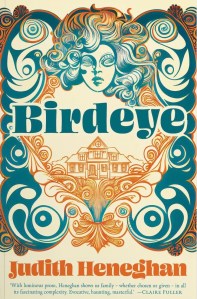
Birdeye by Judith Heneghan
Like Crossman’s community, the Birdeye Colony is based in a big crumbling house in the countryside – but this time in the USA; the Catskills of upstate New York, to be precise. Liv Ferrars has been the de facto leader for nearly 50 years, since she was a young mother to twins. Now she’s a sixty-seven-year-old breast cancer survivor. To her amazement, her book, The Attentive Heart, still attracts visitors, “bringing their problems, their pain and loneliness, hoping to be mended, made whole.”
 One of the ur-plots is “a stranger comes to town,” and that’s how Birdeye opens, with the arrival of a young man named Conor who’s read and admired Liv’s book, and seems to know quite a lot about the place. When Indian American siblings Sonny and Mishti, the only others who have been there almost from the beginning, announce that they’re leaving, it seems Birdeye is doomed. But Liv wonders if Conor can be part of a new generation to take it on.
It’s a bit of a sleepy book, with a touch of suspense as secrets emerge from Birdeye’s past. I was slightly reminded of May Sarton’s Kinds of Love. I most appreciated the character study of Liv and her very different relationships with her daughters, who are approaching fifty: Mary is a capable lawyer in London, while Rose suffered oxygen deprivation at birth and is severely intellectually disabled. Since Liv’s illness, Mary has pressured her to make plans for Rose’s future and, ultimately, her own. The duty of care we bear towards others – blood family; the chosen family of friends and comrades, even pets – arises as a major theme. I’d recommend this to those who love small-town novels.
With thanks to Salt Publishing for the free copy for review.
& 20 Books of Summer, #20:
Spoilt Creatures by Amy Twigg
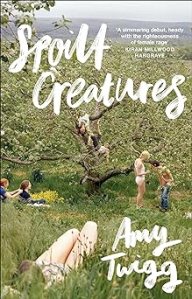 Alas, this proved to be another disappointment from the Observer’s 10 best new novelists feature (following How We Named the Stars by Andrés N. Ordorica). The setup was promising: in 2008, Iris reeling from her break-up from Nathan and still grieving her father’s death in a car accident, goes to live at Breach House after a chance meeting with Hazel, one of the women’s commune’s residents. “Breach House was its own ecosystem, removed from the malfunctioning world of indecision and patriarchy.” Any attempts to mix with the outside world go awry, and the women gain a reputation as strange and difficult. I never got a handle on the secondary characters, who fill stock roles (the megalomaniac leader, the reckless one, the disgruntled one), and it all goes predictably homoerotic and then Lord of the Flies. The dual-timeline structure with Iris’s reflections from 10 years later adds little. An example of the commune plot done poorly, with shallow conclusions rather than deeper truths at play.
With thanks to Tinder Press for the free copy for review.
On this topic, I have also read:
Novels:
Arcadia by Lauren Groff
The Blithedale Romance by Nathaniel Hawthorne
On my TBR:
O Sinners by Nicole Cuffy
We Burn Daylight by Bret Anthony Johnston
Nonfiction:
Heaven Is a Place on Earth by Adrian Shirk
July Releases: Speak to Me & The Librarianist
I didn’t expect these two novels to have anything in common, but in fact they’re both about lonely, introverted librarians who have cause to plunge into memories of a lost relationship. (They also had a couple of random tiny details in common, for which see my next installment of Book Serendipity.) Tonally, however, they couldn’t be more different, and while the one worked for me the other did not at all. You might be surprised which! Read on…
Speak to Me by Paula Cocozza
I adored Cocozza’s debut, How to Be Human, so news of her follow-up was very exciting. The brief early synopses made it sound like it couldn’t be more up my street what with the theme of a woman frustrated by her husband’s obsession with his phone – I’m a smartphone refusenik and generally nod smugly along to arguments about how they’re an addiction that encourages lack of focus and time wasting. But it turns out that was only a peripheral topic; the novel is strangely diffuse and detached.
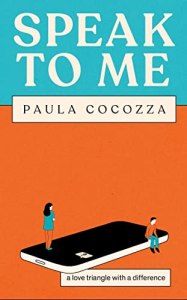 Susan is a middle-aged librarian and mother to teenage twin boys. She lives with them and her husband Kurt on a partially built estate in Berkshire full of soulless houses of various designs. Their “Beaufort” is not a happy place, and their marriage is failing, for several reasons. One is tech guru Kurt’s phone addiction. Susan refers to each new model as “Wendy,” and for her the last straw is when he checks it during the middle of sex on her 50th birthday. She joins a forum for likeminded neglected family members, and kills several Wendys by burial, washing machine, or sledgehammer.
But as the story goes on, Kurt’s issues fade into the background and Susan becomes more obsessed with the whereabouts of a leather suitcase that went missing during their move. The case contains letters and souvenirs from her relationship with Antony, whom she met at 16. She’s convinced that Kurt is hiding it, and does ever odder things in the quest to get it back, even letting herself into their former suburban London home. Soon her mission shifts: not only does she want Antony’s letters back; she wants Antony himself.
The message seems a fairly obvious one: the characters have more immediate forms of communication at their disposal than ever before, yet are not truly communicating with each other about what they need and want from life, and allowing secrets to come between them. “We both act as if talking will destroy us, but surely silence will, more slowly, and we will be undone by all the things we leave unsaid,” Susan thinks about her marriage. Nostalgia and futurism are both held up as problematic. Fair enough.
However, Susan is unforthcoming and delusional – but not in the satisfying unreliable narrator way – and delivers this piecemeal record with such a flat affect (reminding me of no one more than the title character from Kazuo Ishiguro’s Klara and the Sun; Susan even says, “Why do I feel scared that someone will find me out every time I tick the box that says ‘I am not a robot’?”) that I lost sympathy early on and couldn’t care what happened. A big disappointment from my Most Anticipated list.
With thanks to Tinder Press for the proof copy for review.
The Librarianist by Patrick deWitt
Bob Comet, a retired librarian in Portland, Oregon, gets a new lease on life at age 71. One day he encounters a lost woman with dementia and/or catatonia in a 7-Eleven and, after accompanying her back to the Gambell-Reed Senior Center, decides to volunteer there. A plan to read aloud to his fellow elderly quickly backfires, but the resident curmudgeons and smart-asses enjoy his company, so he’ll just come over to socialize.
 If it seems this is heading in a familiar A Man Called Ove or The Secret Diary of Hendrik Groen direction, think again. Bob has a run-in with his past that leads into two extended flashbacks: one to his brief marriage to Connie and his friendship with his best man, Ethan, in 1960; the other to when he ran away by train and bus at age 11.5 and ended up in a hotel as an assistant to two eccentric actresses and their performing dogs for a few days in 1945.
Imagine if Wes Anderson directed various Dickens vignettes set in the mid-20th-century Pacific Northwest – Oliver Twist with dashes of Great Expectations and Nicholas Nickleby. That’s the mood of Bob Comet’s early adventures. Witness this paragraph:
The next day Bob returned to the beach to practice his press rolls. The first performance was scheduled to take place thirty-six hours hence; with this in mind, Bob endeavored to arrive at a place where he could achieve the percussive effect without thinking of it. An hour and a half passed, and he paused, looking out to sea and having looking-out-to-sea thoughts. He imagined he heard his name on the wind and turned to find Ida leaning out the window of the tilted tower; her face was green as spinach puree, and she was waving at him that he should come up. Bob held the drum above his head, and she nodded that he should bring it with him.
(You can just picture the Anderson staginess: the long establishing shots; the jump cuts to a close-up on her face, then his; the vibrant colours; the exaggerated faces. I got serious The Grand Budapest Hotel vibes.) This whole section was so bizarre and funny that I could overlook the suspicion that deWitt got to the two-thirds point of his novel and asked himself “now what?!” The whole book is episodic and full of absurdist dialogue, and delights in the peculiarities of its characters, from Connie’s zealot father to the diner chef who creates the dubious “frizzled beef” entrée. And Bob himself? He may appear like a blank, but there are deep waters there. And his passion for books was more than enough to endear him to me:
“Bob was certain that a room filled with printed matter was a room that needed nothing.”
[Ethan:] “‘I keep meaning to get to books but life distracts me.’ ‘See, for me it’s just the opposite,’ Bob said.”
“All his life he had believed the real world was the world of books; it was here that mankind’s finest inclinations were represented.”
Weird and hilariously deadpan in just the way you’d expect from the author of The Sisters Brothers and French Exit, this was the pop of fun my summer needed. (See also Susan’s review.)
With thanks to Bloomsbury for the proof copy for review.
Would you read one or both of these?
20 Books of Summer, 17–20: Bennett, Davidson, Diffenbaugh, Kimmerer
As per usual, I’m squeezing in my final 20 Books of Summer reviews late on the very last day of the challenge. I’ll call it a throwback to the all-star procrastination of my high school and college years. This was a strong quartet to finish on: two novels, the one about (felling) trees and the other about communicating via flowers; and two nonfiction books about identifying trees and finding harmony with nature.
Tree-Spotting: A Simple Guide to Britain’s Trees by Ros Bennett; illus. Nell Bennett (2022)
Botanist Ros Bennett has designed this as a user-friendly guide that can be taken into the field to identify 52 of Britain’s most common trees. Most of these are native species, plus a few naturalized ones. “Walks in the countryside … take on a new dimension when you find yourself on familiar, first-name terms with the trees around you,” she encourages. She introduces tree families, basics of plant anatomy and chemistry, and the history of the country’s forests before moving into identification. Summer leaves make ID relatively easy with a three-step set of keys, explained in words as well as with impressively detailed black-and-white illustrations of representative species’ leaves (by her daughter, Nell Bennett).

Seasonality makes things trickier: “Identifying plants is not rocket science, though occasionally it does require lots of patience and a good hand lens. Identifying trees in winter is one of those occasions.” This involves a close look at details of the twigs and buds – a challenge I’ll be excited to take up on canalside walks later this year. The third section of the book gives individual profiles of each featured species, with additional drawings. I learned things I never realized I didn’t know (like how to pronounce family names, e.g., Rosaceae is “Rose-A-C”), and formalized other knowledge. For instance, I can recognize an ash tree by sight, but now I know you identify an ash by its 9–13 compound, opposite, serrated leaflets.

Some of the information was more academic than I needed (as with one of my earlier summer reads, The Ash Tree by Oliver Rackham), but it’s easy to skip any sections that don’t feel vital and come back to them another time. I most valued the approachable keys and their accompanying text, and will enjoy taking this compact naked hardback on autumn excursions. Bennett never dumbs anything down, and invites readers to delight in discovery. “So – go out, introduce yourself to your neighbouring trees and wonder at their beauty, ingenuity and variety.” 
With thanks to publicist Claire Morrison and Welbeck for the free copy for review.
Damnation Spring by Ash Davidson (2021)
When this would-be Great American Novel* arrived unsolicited through my letterbox last summer, I was surprised I’d not encountered the pre-publication buzz. The cover blurb is from Nickolas Butler, which gives you a pretty good sense of what you’re getting into: a gritty, working-class story set in what threatens to be an overwhelmingly male milieu. For generations, Rich Gundersen’s family has been involved in logging California’s redwoods. Davidson is from Arcata, California, and clearly did a lot of research to recreate an insider perspective and a late 1970s setting. There is some specialist vocabulary and slang (the loggers call the largest trees “big pumpkins”), but it’s easy enough to understand in context.
 What saves the novel from going too niche is the double billing of Rich and his wife, Colleen, who is an informal community midwife and has been trying to get pregnant again almost ever since their son Chub’s birth. She’s had multiple miscarriages, and their family and acquaintances have experienced alarming rates of infant loss and severe birth defects. Conservationists, including an old high school friend of Colleen’s, are attempting to stop the felling of redwoods and the spraying of toxic herbicides.
A major element, then, is people gradually waking up to the damage chemicals are doing to their waterways and, thereby, their bodies. The problem, for me, was that I realized this much earlier than any of the characters, and it felt like Davidson laid it on too thick with the many examples of human and animal deaths and deformities. This made the book feel longer and less subtle than, e.g., The Overstory. I started it as a buddy read with Marcie (Buried in Print) 11 months ago and quickly bailed, trying several more times to get back into the book before finally resorting to skimming to the end. Still, especially for a debut author, Davidson’s writing chops are impressive; I’ll look out for what she does next. 
*I just spotted that it’s been shortlisted for the $25,000 Mark Twain American Voice in Literature Award.
With thanks to Tinder Press for the proof copy for review.
The Language of Flowers by Vanessa Diffenbaugh (2011)
The cycle would continue. Promises and failures, mothers and daughters, indefinitely.
 The various covers make this look more like chick lit than it is. Basically, it’s solidly readable issues- and character-driven literary fiction, on the lighter side but of the caliber of any Oprah’s Book Club selection. It reminded me most of White Oleander by Janet Fitch, one of my 20 Books selections in 2018, because of the focus on the foster care system and a rebellious girl’s development in California, and the floral metaphors.
In Diffenbaugh’s debut, Victoria Jones ages out of foster care at 18 and leaves her group home for an uncertain future. She spends time homeless in San Francisco but her love of flowers, and particularly the Victorian meanings assigned to them, lands her work in a florist’s shop and reconnects her with figures from her past. Chapters alternate between her present day and the time she came closest to being adopted – by Elizabeth, who owned a vineyard and loved flowers, when she was nine. We see how estrangements and worries over adequate mothering recur, with Victoria almost a proto-‘Disaster Woman’ who keeps sabotaging herself. Throughout, flowers broker reconciliations.
I won’t say more about a plot that would be easy to spoil, but this was a delight and reminded me of a mini flower dictionary with a lilac cover and elaborate cursive script that I owned when I was a child. I loved the thought that flowers might have secret messages, as they do for the characters here. Whatever happened to that book?! (Charity shop)
Braiding Sweetgrass: Indigenous Wisdom, Scientific Knowledge and the Teachings of Plants by Robin Wall Kimmerer (2013)
I’d heard Kimmerer recommended by just about every nature writer around, North American or British, and knew I needed this on my shelf. Before I ever managed to read it, I saw her interviewed over Zoom by Lucy Jones in July 2021 about her other popular science book, Gathering Moss, which was first published 18 years ago but only made it to the UK last year. So I knew what a kind and peaceful person she is: she just emanates warmth and wisdom, even over a computer screen.
And I did love Braiding Sweetgrass nearly as much as I expected to, with the caveat that the tiny-print 400 pages of my paperback edition make the essays feel very dense. I could only read a handful of pages in a sitting. Also, after about halfway, it started to feel a bit much, like maybe she had given enough examples from her life, Native American legend and botany. The same points about gratitude for the gifts of the Earth, kinship with other creatures, responsibility and reciprocity are made over and over.
 However, I feel like this is the spirituality the planet needs now, so I’ll excuse any repetition (and the basket-weaving essay I thought would never end). “In a world of scarcity, interconnection and mutual aid become critical for survival. So say the lichens.” (She’s funny, too, so you don’t have to worry about the contents getting worthy.) She effectively wields the myth of the Windigo as a metaphor for human greed, essential to a capitalist economy based on “emptiness” and “unmet desires.”
I most enjoyed the shorter essays that draw on her fieldwork or her experience of motherhood. “The Gift of Strawberries” – “An Offering” – “Asters and Goldenrod” make a stellar three-in-a-row, and “Collateral Damage” is an excellent later one about rescuing salamanders from the road, i.e. doing the small thing that we can do rather than being overwhelmed by the big picture of nature in crisis. “The Sound of Silverbells” is one of the most well-crafted individual pieces, about taking a group of students camping when she lived in the South. At first their religiosity (creationism and so on) grated, but when she heard them sing “Amazing Grace” she knew that they sensed the holiness of the Great Smoky Mountains.
But the pair I’d recommend most highly, the essays that made me weep, are “A Mother’s Work,” about her time restoring an algae-choked pond at her home in upstate New York, and its follow-up, “The Consolation of Water Lilies,” about finding herself with an empty nest. Her loving attention to the time-consuming task of bringing the pond back to life is in parallel to the challenges of single parenting, with a vision of the passing of time being something good rather than something to resist.
Here are just a few of the many profound lines:
For all of us, becoming indigenous to a place means living as if your children’s future mattered, to take care of the land as if our lives, both material and spiritual, depended on it.
I’m a plant scientist and I want to be clear, but I am also a poet and the world speaks to me in metaphor.
Ponds grow old, and though I will too, I like the ecological idea of aging as progressive enrichment, rather than progressive loss.
This will be a book to return to time and again. (Gift from my wish list several years ago)
I also had one DNF from this summer’s list:
Human Croquet by Kate Atkinson: This reminded me of a cross between The Crow Road by Iain Banks and The Heavens by Sandra Newman, what with the teenage narrator and a vague time travel plot with some Shakespearean references. I put it on the pile for this challenge because I’d read it had a forest setting. I haven’t had much luck with Atkinson in the past and this didn’t keep me reading past page 60. (Little Free Library)
A Look Back at My 20 Books of Summer 2022
Half of my reads are pictured here. The rest were e-books (represented by the Kindle) or have already had to go back to the library.

My fiction standout was The Language of Flowers, reviewed above. Nonfiction highlights included Forget Me Not and Braiding Sweetgrass, with Tree-Spotting the single most useful book overall. I also enjoyed reading a couple of my selections on location in the Outer Hebrides. The hands-down loser (my only 1-star rating of the year so far, I think?) was Bonsai. As always, there are many books I could have included and wished I’d found the time for, like (on my Kindle) A House among the Trees by Julia Glass, This Is Your Mind on Plants by Michael Pollan and Finding the Mother Tree by Suzanne Simard.
At the start, I was really excited about my flora theme and had lots of tempting options lined up, some of them literally about trees/flowers and others more tangentially related. As the summer went on, though, I wasn’t seeing enough progress so scrambled to substitute in other things I was reading from the library or for paid reviews. This isn’t a problem, per se, but my aim with this challenge has generally been to clear TBR reads from my own shelves. Maybe I didn’t come up with enough short and light options (just two novella-length works and a poetry collection; only the Diffenbaugh was what I’d call a page-turner); also, even with the variety I’d built in, having a few plant quest memoirs got a bit samey.

Next year…
I’m going to skip having a theme and set myself just one simple rule: any 20 print books from my shelves (NOT review copies). There will then be plenty of freedom to choose and substitute as I go along.
The Circling Sky & The Sleeping Beauties
I think I have another seven April releases on the go that kind publishers have sent my way, but I’m so slow at finishing books that these two are the only ones I’ve managed so far. (I see lots of review catch-up posts in my future!) For now I have a travel memoir musing on the wonders of the New Forest and the injustice of land ownership policies, and a casebook of medical mysteries that can all be classed as culturally determined psychosomatic illnesses.
The Circling Sky: On Nature and Belonging in an Ancient Forest by Neil Ansell
After The Last Wilderness and especially Deep Country, his account of five solitary years in a Welsh cabin, Ansell is among my most-admired British nature writers. I was delighted to learn that his new book would be about the New Forest as it’s a place my Hampshire-raised husband and I have visited often and feel fond of. It has personal significance for Ansell, too: he grew up a few miles from Portsmouth. On Remembrance Sunday 1966, though, his family home burned down when a spark from a central heating wire sent the insulation up in flames. He can see how his life was shaped by this incident, making him a nomad who doesn’t accumulate possessions.
Hoping to reclaim a sense of ancestral connection, he returned to the New Forest some 30 times between January 2019 and January 2020, observing the unfolding seasons and the many uncommon and endemic species its miles house. The Forest has more than 1000 trees of over 400 years old, mostly oak and beech. Much of the rest is rare heath habitat, and livestock grazing maintains open areas. There are some plants only found in the New Forest, as well as a (probably extinct) cicada. He has close encounters with butterflies, a muntjac, and less-seen birds like the Dartford warbler, firecrest, goshawk, honey buzzard, and nightjar.
 But this is no mere ‘white man goes for a walk’ travelogue, as much of modern nature writing has been belittled. Ansell weaves many different themes into the work: his personal story (mostly relevant, though his mother’s illness and a trip to Rwanda seemed less necessary), the shocking history of forced Gypsy relocation into forest compounds starting in the 1920s, biomass decline, and especially the unfairness of land ownership in Britain. More than 99% of the country is in the hands of a very few, and hardly any is left as common land. There is also enduring inequality of access to what little there is, often along race and class lines. The have-nots have been taught to envy the haves: “We are all brought up to aspire to home ownership,” Ansell notes. As a long-term renter, it’s a goal I’ve come to question, even as I crave the security and self-determination that owning a house and piece of land could offer.
Ansell speaks of “environmental dread” as a “rational response to the way the world is turning,” but he doesn’t rest in that mindset of despair. He’s in favour of rewilding, which is not, as some might assume, about leaving land alone to revert to its original state, but about the reintroduction of native species and intentional restoration of habitat types. In extending these rewilded swathes, we would combat the tendency to think of nature as something kept ‘over there’ in small reserves while subjecting the rest of the land to intensive, pesticide-based farming and the exploitation of resources. The New Forest thus strikes him as an excellent model of both wildlife-friendly land management and freedom of human access.
I appreciated how Ansell concludes that it’s not enough to simply love nature and write about the joy of spending time in it. Instead, he accepts a mantle of responsibility: “nothing is more political than the way we engage with the world around us. … Nature writing may often be read for comfort and reassurance, but perhaps we need to allow a little room for anger, too, for the ability to rage at everything that has been taken from us, and taken by us.” The bibliography couldn’t be more representative of my ecologist husband’s and my reading interests and nature library. The title is from John Clare and the book is a poetic meditation as well as a forthright argument. It also got me hankering for my next trip to the New Forest.
My rating: 
With thanks to Tinder Press for the proof copy for review.
The Sleeping Beauties: And Other Stories of Mystery Illness by Suzanne O’Sullivan
O’Sullivan is a consultant at the National Hospital for Neurology and Neurosurgery. She won the Wellcome Book Prize for It’s All in Your Head, and The Sleeping Beauties picks up on that earlier book’s theme of psychosomatic illness – with the key difference being that this one travels around the world to investigate outbreaks of mass hysteria or sickness that have arisen in particular cultural contexts. An important thing to bear in mind is that O’Sullivan and other doctors in her field are not dismissing these illnesses as “fake”; they acknowledge that they are real and meaningful, yet there is clear evidence that they are not physical in origin – brain tests come back normal – but psychological with bodily manifestations.
 The case that gives the book its title appeared in Sweden in 2017. Child asylum seekers who had experienced trauma in their home country were falling into a catatonic state. O’Sullivan visited the home of sisters Nola and Helan, part of the Yazidi ethnic minority group from Iraq and Syria. The link between them and the other children affected was that they were all now threatened with deportation: Their hopelessness had taken on physical form, giving the illness the name resignation syndrome. “Predictive coding” meant their bodies did as they expected them to. She describes it as “a very effective culturally agreed means of expressing distress.”
In Texas, the author meets Miskito people from Nicaragua who combat the convulsions and hallucinations of “grisi siknis” in their community with herbs and prayers; shamans are of more use in this circumstance than antiepileptic drugs. A sleeping sickness tore through two neighbouring towns of Kazakhstan between 2010 and 2015, affecting nearly half of the population. As with the refugee children in Sweden, it was a stress response to being forced to move away – though people argued they were being poisoned by a local uranium mine. There is often a specific external factor that is blamed in these situations, as when mass hysteria and seizures among Colombian schoolgirls were attributed to the HPV vaccine.
This book was released on the 1st of April, and at times I felt I was the victim of an elaborate April Fool’s joke: the cases are just so bizarre, and we’re used to rooting out a physical cause. But she makes clear that, in a biopsychosocial understanding (as also discussed in Pain by Abdul-Ghaaliq Lalkhen), these illnesses are serving “a vital purpose” – just psychological and cultural. The first three chapters are the strongest; the book feels repetitive and somewhat aimless thereafter, especially in Chapter 4, which hops between different historical outbreaks of psychosomatic illness, like among the Hmong (cf. Anne Fadiman’s The Spirit Catches You and You Fall Down), and other patients she treated for functional disorders. The later example of “Havana syndrome” doesn’t add enough to warrant its inclusion.
Still, O’Sullivan does well to combine her interviews and travels into compelling mini-narratives. Her writing has really come on in leaps and bounds since her first book, which I found clunky. However, much my favourite of her three works is Brainstorm, about epilepsy and other seizure disorders of various origins.
My rating: 
With thanks to Picador for the proof copy for review.
What recent releases can you recommend?
The Book of Longings by Sue Monk Kidd (& Audiobook Blog Tour)
~This review contains plot spoilers.~
Sue Monk Kidd’s bold fourth novel started as a what-if question: What if Jesus had a wife? Church tradition has always insisted that he remained unmarried, but she felt that, given the cultural norms of the Middle East at that time, it would have been highly unusual for him not to marry. Musing on the motivation for airbrushing a spouse out of the picture, on the last page of the novel Kidd asks, “Did [early Christians] believe making him celibate rendered him more spiritual?” Or “Was it because women were so often invisible?” Although The Book of Longings retells biblical events, it is chiefly an attempt to illuminate women’s lives in the 1st century CE and to chart the female contribution to sacred literature and spirituality.
Fourteen-year-old Ana is a headstrong young woman with a forthright voice and a determination to choose her own life. Privilege and luck are on her side: her father is the head scribe to Herod Antipas, the ruler of Galilee; and the repulsive widower to whom she’s been betrothed dies, freeing her to marry Jesus, a travelling craftsman who caught her eye at the market. Ana’s aunt, Yaltha from Alexandria, is a major influence in her life. She had a rare chance at education and encourages her niece in her writing. Ana knows several ancient languages and fills every papyrus scroll she can get her hands on with stories of the women in the Bible. Yaltha also gives her an incantation bowl in which to write her deeply held prayers.
If you’re familiar with Kidd’s other work (such as The Secret Life of Bees and Traveling with Pomegranates), you know that she often explores the divine feminine and matriarchal units. Historically, Christianity has a poor record of acknowledging its patriarchal tendencies and redressing the balance. But Kidd imagines that, right at the beginning, Jesus valued women and was open to them having a life beyond domestic chores and childrearing. He involves Ana in his discussions about God and the nature of the Kingdom; they both see and take compassion on people’s suffering; together they are baptized by John the Baptist. And when Ana tells Jesus she doesn’t believe she is meant to be a mother – her mother and aunt took herbal potions and have passed on their contraceptive knowledge to her – he accepts her choice, even though childlessness could bring shame on both of them.

I appreciated this picture of a woman who opts for writing and the spiritual life over motherhood. However, Kidd portrays a whole range of women’s experiences: Jesus’s mother and sister-in-law submit to the drudgery of keeping a household going; Ana’s friend is raped and has her tongue cut out in an attempt to silence her, yet finds new ways to express herself; and another major character is a servant involved in the healing rituals at a temple to Isis. A practicing Jew, Ana finds meaning in other religious traditions rather than dismissing them as idolatry. She also participates in wider intellectual life, such as by reading The Odyssey.
Some descriptions make this novel sound like alternative history. If you’re expecting Ana to save the day and change the course of history, you will be disappointed. Ana is simply an observer of the events documented in the Bible. While she recounts the inspirations for some parables and healing incidents, during two years in exile with her aunt she only hears secondhand accounts of Jesus’s ministry. Her brother, a Zealot, disagrees with Jesus on how to usher in the Kingdom of God. By the time Ana returns to Jerusalem, the events leading to the crucifixion have already been set in motion; she can only bear witness. For her, life will continue after Jesus’s death, in a women-led spiritual community. From avoiding motherhood to choosing a monastic-type life, Ana has a lot of freedom. Some readers may be skeptical about how realistic this life course is, but the key, I think, is to consider Ana as an outlier.
Kidd has made wise decisions here: for the most part she makes her story line parallel or tangential to the biblical record, rather than repeating material many will find overly familiar. She takes Jewish teaching as a starting point but builds a picture of a more all-encompassing spirituality drawn from multiple traditions. Her Jesus is recognizable and deeply human; Ana calls him “a peacemaker and a provocateur in equal measures” and remembers him telling her what it was like growing up with the stigma of his illegitimate birth. The novel is rooted in historical detail but the research into the time and place never takes over. Engrossing and convincing, this is a story of women’s intuition and yearning, and of the parts of history that often get overlooked. It wouldn’t be out of place on next year’s Women’s Prize longlist.
My rating:
The Book of Longings was released on Tuesday the 21st. My thanks to Tinder Press for the proof copy for review.
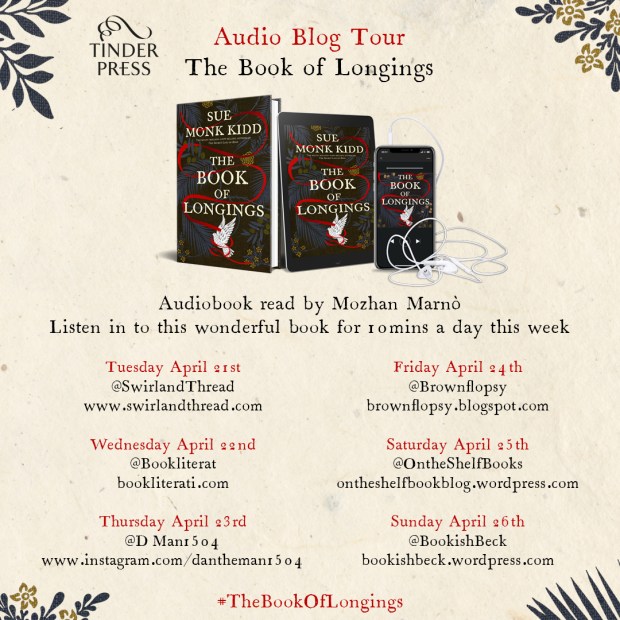
I’m the last stop on a small blog tour for the audiobook release: if you’re interested in listening to the first hour of The Book of Longings, visit the blogs below and follow the links. Each one is hosting a 10-minute excerpt. The final one is available here.
Hamnet by Maggie O’Farrell (Blog Tour Review)

I’ve been a huge admirer of Maggie O’Farrell’s work ever since I read The Hand that First Held Mine, which won the Costa Novel Award, in 2011. I was intrigued by the premise of her new book, in which she delves further back into history than she has before to imagine the context of the death of William Shakespeare’s son Hamnet and the effect it had on the playwright’s work – including, four years later, Hamlet.
Curiously, O’Farrell has decided never to mention Shakespeare by name in her novel, so he remains a passive, shadowy figure seen only in relation to his wife and children – he’s referred to as “the father,” “the Latin tutor” or “her husband.” Instead, the key characters are his wife Agnes (most will know her as Anne, but Agnes was the name her father, Richard Hathaway, used for her in his will) and Hamnet himself.

As the novel opens, 11-year-old Hamnet is alone in his grandfather’s glove workshop. His twin sister Judith has a fever and lumps at her neck and he is frantically trying to find an adult. But with his father in London, his mother off tending her bees and his grandfather’s indifference all too ready to shade into violence, there is no one to help. Although it’s Judith who appears to be ill with the Plague, readers know from the scant historical record that it is Hamnet who dies. Somehow, even though we see this coming, it’s still a heavy blow. Hamnet is a story of the moments that change everything, of regrets that last forever: Agnes will ever after be afflicted with a sense of having neglected her children just when they needed her.
Short chapters set in that summer of 1596 alternate with longer ones from 15 years before, when WS was engaged as a Latin tutor to the sons of a sheep farmer to pay off his father’s debts. Soon he became captivated by a young woman with a kestrel whom he assumed to be the family’s maid but learned was actually the unconventional daughter of the household, Agnes. She had a reputation as a herbal healer and was known to have second sight – just by holding someone’s hand, she could see into their past or predict their future.
There are some wonderfully vivid scenes in this earlier story line, including a tryst in the apple shed and Agnes going off alone into the forest to give birth to their first child, Susanna. My favourite chapter of all, though, is the central one that traces the journey of the pestilence from a glassmaker’s studio in Italy to the small Warwickshire village. The medical subplot of Hamnet has taken on a new significance that O’Farrell surely never predicted when she was immersing herself in the time period by undertaking falconry and mudlarking.
Although I remain a big fan, Hamnet is the least successful of the six books of O’Farrell’s that I’ve read. Her trademark third person omniscient voice and present tense narration, which elsewhere exude confidence and immediacy, here create detachment and even vagueness (“A boy is coming down a flight of stairs”; “Look. Agnes is pouring water into a pan”). The strategy for evoking the 16th century seems to be to throw in the occasional period prop, but the dialogue and vocabulary can feel anachronistic, as in “Boys! Stop that this instant! Or I’ll come up there and give you something to wail about”.
In comparison with historical fiction I’ve read recently by Geraldine Brooks and Hilary Mantel, this fell short. Overall, I found the prose flat and repetitive, which diluted the portrait of grief. My reaction was lukewarm, but this should not deter readers from trying this wonderful writer – if not this book, then any one of her previous five.
My thanks to Midas PR and Tinder Press for the free copy for review.
Three Review Books: Brian Kimberling, Jessica Pan & Francesca Segal
Three May–June releases: A fish-out-of-water comic novel about teaching English in Prague; and memoirs about acting like an extrovert and giving birth to premature twins.
Goulash by Brian Kimberling
 “Look where we are. East meets West. Communism meets capitalism.” In 1998 Elliott Black leaves Indiana behind for a couple of years to teach English in Prague. The opening sequence, in which he discovers that his stolen shoes have been incorporated into an art installation, is an appropriate introduction to a country where bizarre things happen. Elliott doesn’t work for a traditional language school; his students are more likely to be people he meets in the pub or tobacco company executives. Their quirky, deadpan conversations are the highlight of the book.
Elliott starts dating a fellow teacher from England, Amanda (she “looked like azaleas in May and she spoke like the BBC World Service”), who also works as a translator. They live together in an apartment they call Graceland. Much of this short novel is about their low-key, slightly odd adventures, together and separately, while the epilogue sees Elliott looking back at their relationship from many years later.
I was tickled by a number of the turns of phrase, but didn’t feel particularly engaged with the plot, which was inspired by Kimberling’s own experiences living in Prague.
With thanks to Tinder Press for a proof copy to review.
Favorite passages:
“Sorrowful stories like airborne diseases made their way through the windows and under the doorframe, bubbled up like the bathtub drain. It was possible to fill Graceland with light and color and music and the smell of good food, and yet the flat was like a patient with some untreatable condition, and we got tired of palliative care.”
“‘It’s good to be out of Prague,’ he said. ‘Every inch drenched in blood and steeped in alchemy, with a whiff of Soviet body odor.’ ‘You should write for Lonely Planet,’ I said.”
Sorry I’m Late, I Didn’t Want to Come: An Introvert’s Year of Living Dangerously by Jessica Pan
 Like Jessica Pan, I’m a shy introvert (a “shintrovert”) as well as an American in the UK, so I was intrigued to see the strategies she employed and the experiences she sought out during a year of behaving like an extrovert. She forced herself to talk to strangers on the tube, give a talk at London’s Union Chapel as part of the Moth, use friendship apps to make new girlfriends, do stand-up comedy and improv, go to networking events, take a holiday to an unknown destination, eat magic mushrooms, and host a big Thanksgiving shindig.
Like Help Me!, which is a fairly similar year challenge book, it’s funny, conversational and compulsive reading that was perfect for me to be picking up and reading in chunks while I was traveling. Although I don’t think I’d copy any of Pan’s experiments – there’s definitely a cathartic element to reading this; if you’re also an introvert, you’ll feel nothing but relief that she’s done these things so you don’t have to – I can at least emulate her in initiating deeper conversations with friends and pushing myself to attend literary and networking events instead of just staying at home.
With thanks to Doubleday UK for a proof copy to review.
Mother Ship by Francesca Segal
I’m a big fan of Segal’s novels, especially The Innocents, one of the loveliest debut novels of the last decade, so I was delighted to hear she was coming out with a health-themed memoir about giving birth to premature twins. Mother Ship is a visceral diary of the first eight weeks in the lives of her daughters, who were born by Caesarean section at 29 weeks in October 2015 and spent the next two months in the NICU, “an extremely well-funded prison or perhaps more accurately a high-tech zoo.”
Segal strives to come to terms with this unnatural start to motherhood. “Taking my unready daughters from within me felt not like a birth but an evisceration,” she writes; “my children do not appear to require mothering. Instead they need sophisticated medical intervention.” She describes with tender precision the feeling of being torn: between the second novel she’d been in the middle of writing and the all-consuming nature of early parenthood; and between her two girls (known for much of the book as “A-lette” and “B-lette”), who are at one point separated in different hospitals.

Spotted at Philadelphia airport.
As well as portraying her own state of mind, Segal crafts twinkly pen portraits of the others she encountered in the NICU, including the staff but especially her fellow preemie mums, who met in a “milking shed” where they pumped breast milk for the babies they were so afraid of losing that they resisted naming. (Though it was touch and go for a while, A-lette and B-lette finally earned the names Raffaella and Celeste and came home safely.) Female friendship is a subsidiary theme in this exploration of desperate love and helplessness. The layman’s look at the inside workings of medicine would have made this one of my current few favorites for next year’s Wellcome Book Prize (which, alas, is on hiatus). After encountering some unpleasant negativity about the NHS in a recent read, I was relieved to find that Segal’s outlook is pure gratitude.
With thanks to Chatto & Windus for the free copy for review.
Would you be interested in reading one or more of these?
Review: The Last Wilderness by Neil Ansell
Many travel books are about the quest for new, exotic places and the widest possible range of experiences; many nature books focus on the surprising quality and variety of life to be found by staying close to home. In that loose framework, Neil Ansell’s The Last Wilderness belongs on the nature shelf rather than the travel section: here he’s all about developing his knowledge of a particular place, the Northwest Highlands of Scotland, where he stays five times over the course of one year to give a panoramic view of the area in different non-touristy seasons.
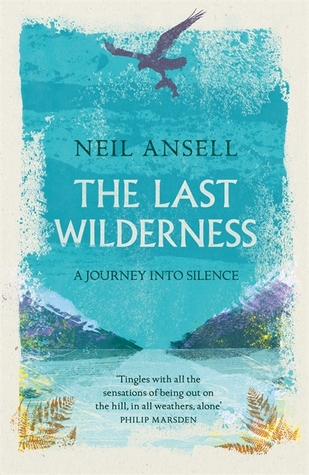 Ansell’s visits have the flavor of a pilgrimage: his wonder at the region’s sights and sounds, and particularly at the creatures he encounters, is akin to what one would experience in the presence of the holy; he also writes about wildlife as if it is a relic of a fast-vanishing world. “It is that exploratory desire to possess the wilds for ourselves that has resulted in their disappearance,” he notes. A true wilderness is unvisited, and true solitude is hard to experience “if the world is only a click away.”
Depicted against this backdrop of environmental damage are the author’s personal losses: a heart problem and progressive hearing loss mean that the world is narrowing in for him. He mourns each sign of diminishment, such as the meadow pipits whose call he can no longer hear. Depth of experience is replacing breadth for him, though flashbacks to his intrepid world travels – an African safari, hitchhiking in Australia, time in Sweden and Costa Rica – show that he has tried both approaches. There’s a good balance here between adventuring and the comfort of an increasingly familiar place.
Like “a tale told round a campfire,” Ansell’s is a meandering and slightly melancholy story that draws you in. If The Last Wilderness suffers, it’s mostly in comparison with his Deep Country (2011), one of the most memorable nature/travel books I’ve ever read, a modern-day Walden about his five years living in a cottage in the Welsh hills. Solitude and survival are more powerful themes there, though they echo here too. Once again, he writes of magical encounters with wildlife and gives philosophical reflections on the nature of the self. I can highly recommend Neil Ansell’s books to anyone who enjoys nature and travel writing.
My rating:
The Last Wilderness: A Journey into Silence will be published by Tinder Press on February 8th. My thanks to Becky Hunter for the review copy.
To the Bright Edge of the World by Eowyn Ivey
Eowyn Ivey’s intricate second novel weaves together diaries, letters, photographs, and various other documents and artifacts to tell the gently supernatural story of an exploratory mission along Alaska’s Wolverine River in 1885 and its effects through to the present day. If you have read Ivey’s 2012 debut, The Snow Child, you’ll remark once again on her skill in bringing the bleak beauty of Alaska to life on the page and blending magic realism and folktales with a nonetheless realistic view of history.
In March 1885 Lieutenant Colonel Allen Forrester sets out with a small team – including brash Sergeant Bradley Tillman, melancholy photographer Lieutenant Andrew Pruitt, native guides, and Samuelson, a trapper who serves as a go-between – to navigate a previously unmapped portion of Alaska. Back at Vancouver Barracks he’s left his wife of four months, Sophie. Bold and curious, she intended to travel into Alaska with Allen until she learned she was pregnant. Now she passes the months of her confinement – and raises eyebrows among the military wives – by pursuing her amateur hobbies of birdwatching and photography.
 Through alternating passages from journals by Allen and Sophie, Ivey contrasts the big adventures of surveying new territory with the smaller adventures of domestic life. Along their perilous journey Allen and his men encounter many legends and incidents they cannot explain: shape-shifters, like the women who morph into flocks of geese or the shaman who takes the form of a half-lame raven; a baby born out of a tree trunk; and a prehistoric creature that guards a lake. As Allen writes in a letter to Sophie towards the end of his journey:
I can find no means to account for what we have witnessed, except to say that I am no longer certain of the boundaries between man & beast, of the living and & dead. It has been a strange experience indeed. All that I have taken for granted, of what is real & true, has been called into question.
A framing story sets the historical narrative in the context of the present day: Walter Forrester has sent his great-uncle Allen’s letters and journal to a small Alaska museum for safekeeping. Initially the young curator, Joshua Sloan, is annoyed at the unwanted donation and the extra work it creates for him, but gradually – right alongside the novel’s readers – he starts to be sucked into the story the documents reveal. Through their correspondence, Josh and Walt develop a touching friendship despite their differences.
Ivey fits the pieces of her epistolary together in a sophisticated manner and makes you care about each of the characters. Sophie and Pruitt, especially, have traumatic backstories that help you understand their behavior. Sophie reminded me most of Meridian Wallace in Elizabeth J. Church’s The Atomic Weight of Love – both are self-taught scientists with a deep love for birds and a determination to live interesting lives even if others disapprove. The novel also brings to mind Maggie O’Farrell’s This Must Be the Place in that it skips back and forth in time and intersperses a central narrative with other documents, including an auction catalogue of relevant objects.
I found Sophie’s voice instantly more engaging than Allen’s shorthand-like style, and it took me a while – maybe 60–80 pages – to warm up to the storyline and characters. I would have appreciated an Author’s Note at the end of the book explaining what, if anything, was based on a true story and which documents are authentic. (As it is, I assume that all the characters are fictional but the explorers’ journey is based on the historical record.) Nonetheless, I can highly recommend this rollicking adventure tale to fans of historical fiction and magic realism.
With thanks to Katie Brown at Tinder Press for the free review copy.
My rating: 
 Bookish Beck = Rebecca Foster. American transplant to England. Freelance proofreader and book reviewer.
 Bookish Beck