Snow-y Reads
It’s been a frigid start to March here in Europe. Even though it only amounted to a few inches in total, this is still the most snow we’ve seen in years. We were without heating for 46 hours during the coldest couple of days due to an inaccessible frozen pipe, so I’m grateful that things have now thawed and spring is looking more likely. During winter’s last gasp, though, I’ve been dipping into a few appropriately snow-themed books. I had more success with some than with others. I’ll start with the one that stood out.


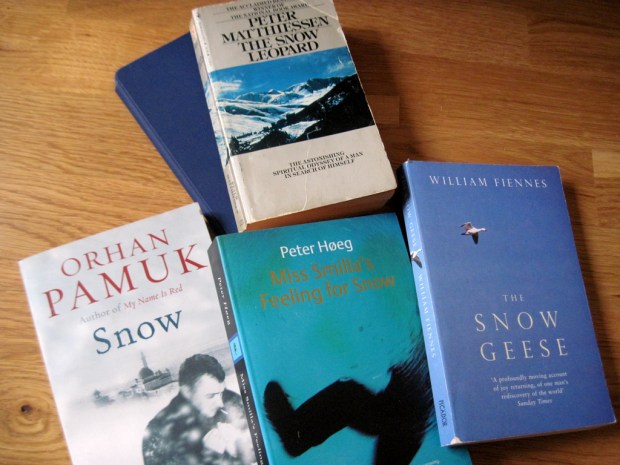
Miss Smilla’s Feeling for Snow by Peter Høeg (1992)
[trans. from the Danish by Felicity David]
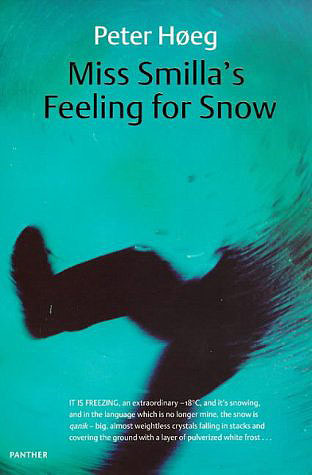 Nordic noir avant la lettre? I bought this rather by accident; had I realized it was a murder mystery, I never would have taken a chance on this international bestseller. That would have been too bad, as it’s much more interesting than your average crime thriller. The narrator/detective is Smilla Jaspersen: a 37-year-old mathematician and former Arctic navigator with a Danish father and Greenlander mother, she’s a stylish dresser and a shrewd, bold questioner who makes herself unpopular by nosing about where she doesn’t belong.
Isaiah, a little Greenlander boy, has fallen to his death from the roof of the Copenhagen apartment complex where Smilla also lives, and she’s convinced foul play was involved. In Part I she enlists the help of a mechanic neighbor (and love interest), a translator, an Arctic medicine specialist, and a mining corporation secretary to investigate Isaiah’s father’s death on a 1991 Arctic expedition and how it might be connected to Isaiah’s murder. In Part II she tests her theories by setting sail on the Greenland-bound Kronos as a stewardess. At every turn her snooping puts her in danger – there are some pretty violent scenes.
I read this fairly slowly, over the course of a month (alongside lots of other books); it’s absorbing but in a literary style, so not as pacey or full of cliffhangers as you’d expect from a suspense novel. I got myself confused over all the minor characters and the revelations about the expeditions, so made pencil notes inside the front cover to keep things straight. Setting aside the plot, which gets a bit silly towards the end, I valued this most for Smilla’s self-knowledge and insights into what it’s like to be a Greenlander in Denmark. I read this straight after Gretel Ehrlich’s travel book about Greenland, This Cold Heaven – an excellent pairing I’d recommend to anyone who wants to spend time vicariously traveling in the far north.
Favorite wintry passage:
“I’m not perfect. I think more highly of snow and ice than of love. It’s easier for me to be interested in mathematics than to have affection for my fellow human beings.”
My rating:
One that I left unfinished:
Snow by Orhan Pamuk (2002)
[trans. from the Turkish by Maureen Freely]
 This novel seems to be based around an elaborate play on words: it’s set in Kars, a Turkish town where the protagonist, a poet known by the initials Ka, becomes stranded by the snow (Kar in Turkish). After 12 years in political exile in Germany, Ka is back in Turkey for his mother’s funeral. While he’s here, he decides to investigate a recent spate of female suicides, keep tabs on the upcoming election, and see if he can win the love of divorcée Ipek, daughter of the owner of the Snow Palace Hotel, where he’s staying. There’s a hint of magic realism to the novel: the newspaper covers Ka’s reading of a poem called “Snow” before he’s even written it. He and Ipek witness the shooting of the director of the Institute of Education. The attempted assassination is revenge for him banning girls who wear headscarves from schools.
As in Elif Shafak’s Three Daughters of Eve, the emphasis is on Turkey’s split personality: a choice between fundamentalism (= East, poverty) and secularism (= West, wealth). Pamuk is pretty heavy-handed with these rival ideologies and with the symbolism of the snow. By the time I reached page 165, having skimmed maybe two chapters’ worth along the way, I couldn’t bear to keep going. However, if I get a recommendation of a shorter and subtler Pamuk novel I would give him another try. I did enjoy the various nice quotes about snow (reminiscent of Joyce’s “The Dead”) – it really was atmospheric for this time of year.
Favorite wintry passage:
“That’s why snow drew people together. It was as if snow cast a veil over hatreds, greed and wrath and made everyone feel close to one another.”
My rating:
One that I only skimmed:
The Snow Geese by William Fiennes (2002)
 Having recovered from an illness that hit at age 25 while he was studying for a doctorate, Fiennes set off to track the migration route of the snow goose, which starts in the Gulf of Mexico and goes to the Arctic territories of Canada. He was inspired by his father’s love of birdwatching and Paul Gallico’s The Snow Goose (which I haven’t read). I thought this couldn’t fail to be great, what with its themes of travel, birds, illness and identity. However, Fiennes gets bogged down in details. When he stays with friendly Americans in Texas he gives you every detail of their home décor, meals and way of speaking; when he takes a Greyhound bus ride he recounts every conversation he had with his random seatmates. This is too much about the grind of travel and not enough about the natural spectacles he was searching for. And then when he gets up to the far north he eats snow goose. So I ended up just skimming this one for the birdwatching bits. I did like Fiennes’s writing, just not what he chose to focus on, so I’ll read his other memoir, The Music Room.
My rating:
 Considered but quickly abandoned: In the Midst of Winter by Isabel Allende
Would like to read soon: The Snow Leopard by Peter Matthiessen – my husband recently rated this 5 stars and calls it a spiritual quest memoir, with elements of nature and travel writing.
What’s been your snowbound reading this year?
A Publisher Party and a One-Man Play
I was a veritable social butterfly this past week: I went out two evenings in a row! (Believe me, that’s rare.) On Tuesday I met up with bloggers Annabel, Eric and Kim at the Faber Spring Party held at Crypt on the Green in London, and on Wednesday my husband and I attended a performance at the University of Reading of Michael Mears’s one-man play on the plight of Britain’s conscientious objectors during World War I, This Evil Thing.
Faber Spring Party
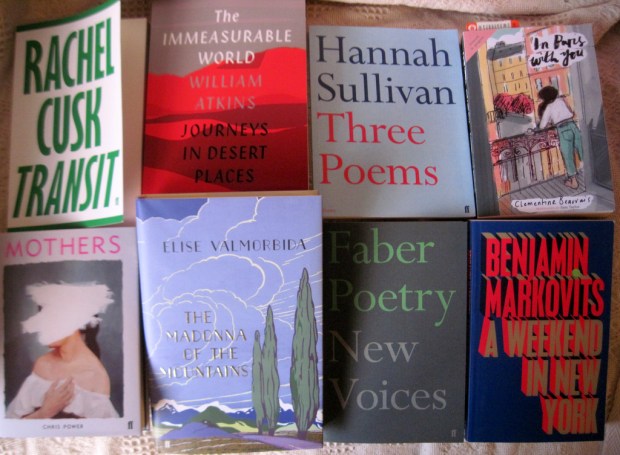
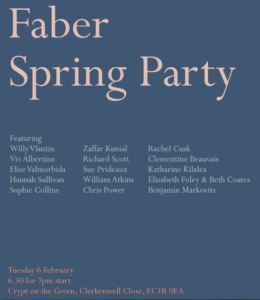 I’ve never been to an event quite like this. Publisher Faber & Faber, which will be celebrating its 90th birthday in 2019, previewed its major releases through to September. Most of the attendees seemed to be booksellers and publishing insiders. Drinks were on a buffet table at the back; books were on a buffet table along the side. Glass of champagne in hand, it was time to plunder the free books on offer. I ended up taking one of everything, with the exception of Rachel Cusk’s trilogy: I couldn’t make it through Outline and am not keen enough on her writing to get an advanced copy of Kudos, but figured I might give her another try with the middle book, Transit.

For the evening’s presentation, each featured author had a few minutes to introduce their new book and/or give a short reading.
Rachel Cusk opened the evening with a reading from Kudos. If you’re familiar with her recent work, you won’t be surprised at this synopsis: a man on a plane recounts having his dog put to sleep. (Out on May 3rd.)
William Atkins’s book on deserts, The Immeasurable World, is based on three years of travel and is, he is not ashamed to say, in the old-fashioned travel writing tradition. (Out on June 7th.)
Hannah Sullivan’s Three Poems is a hybrid work of poem-essays. #2 is more philosophical, she said; #3 is about her father’s death and her son’s birth. She read sonnet 3.21. (Out now.)
Clémentine Beauvais’s In Paris with You is a YA romance in free verse, loosely based on Eugene Onegin. I don’t know the source text but started this on the train ride home and it’s enjoyable thus far. I’m in awe at how translator Sam Taylor has taken the French of her Songe à la douceur and turned it into English poetry. (Out on June 7th.)
Chris Power’s Mothers is a book of linked short stories, three of which are about a character named Eva. He read a portion of a story about her having an encounter with an unpleasant man in Innsbruck. (Out on March 1st.)
Elise Valmorbida’s The Madonna of the Mountains, set in 1923–50, is a saga that resembles “an Italian Mother Courage,” she says. She read a scene in which a character comes across a madwoman. (Out on April 5th.)
Zaffar Kunial read the poem “Spark Hill” from his forthcoming collection Us. It’s about a childhood fight in the area of Birmingham where he grew up. He had a folder open in front of him but, impressively, recited the long poem completely from memory. (Out on July 5th.)
American novelist Benjamin Markovits was a professional basketball player in Germany for six months. Like the tennis-playing protagonist of his upcoming book, A Weekend in New York, he got tired of being measured. After 15 years, his hero is eager to escape a life of being constantly ranked. This is the first in a quartet of novels that inevitably invites comparison with John Updike’s “Rabbit” books. (Out on June 7th.)
I confess I didn’t previously know the name Viv Albertine; she was the guitarist for the female punk band The Slits, and To Throw Away Unopened is her second memoir. Albertine realized that it was her mother who had made her an angry rebel; the title is the label on a bag she found in her mother’s room after her death. (Out on April 5th.)
Sophie Collins incorporates hybrid forms in her poetry – what she calls “lyric essays.” The theme of her book Who Is Mary Sue? is perceptions of women’s writing (with “Mary Sue” as a metonym for the stereotypical good girl). She read from “Engine.” (Out now.)
Katharine Kilalea’s debut novel Ok, Mr Field is about an injured concert pianist who becomes obsessed with a house he buys in South Africa. (Out on June 7th.)
Elizabeth Foley and Beth Coates are the authors of two Homework for Grown-Ups books. Their new book, What Would Boudicca Do?, is about lessons we can draw from the women of history. For instance, the sampler booklet has pieces called “Dorothy Parker and Handling Jerks” and “Frida Kahlo and Finding Your Style.” There’s a heck of a lot of books like this out this year, though, and I’m not so sure this one will stand out. (Out on September 6th.)
Richard Scott read two amazingly intimate poems from his upcoming collection, Soho. One, “cover-boys,” was about top-shelf gay porn; the other was about mutilated sculptures of male bodies in the Athens archaeological museum. If you appreciated Andrew McMillan’s Physical, you need to get hold of this the second it comes out. I went back and read “cover-boys” in the sampler booklet and it wasn’t nearly as powerful as it was aloud; Scott’s reading really brought it to life, in contrast to some other authors’ dull delivery. (Out on April 5th.)
Sue Prideaux’s forthcoming biography of Friedrich Nietzsche is entitled I Am Dynamite! She encountered her subject when she wrote her first biography, of Edvard Munch. Although Nietzsche has been embraced by far-right groups in America, he was in fact against racism, nationalism, and anti-semitism, so he has important messages for us today. I’ll be keen to get hold of this one. (Out on September 6th.)
Guitar in hand, Willy Vlautin closed the evening with a performance of the title track from the soundtrack album to his fifth novel, Don’t Skip Out on Me – he was the singer in Portland, Oregon alt-country band Richmond Fontaine, which has recently stopped touring. He said the novel asks, “can you make the scars of broken people bearable?” (Out now.)

Now that I’ve got this terrific stack of books, wherever do I start?! I’m currently reading the Beauvais; from there I’ll focus on ones that have already been released, starting with Vlautin and the two poetry collections. The titles that aren’t out until June can probably wait – though it’s tempting to be one of the privileged few who get to read them nearly four months early. One Faber book per week should see me getting through all these by the final release date.
This Evil Thing
Michael Mears plays about 50 different characters in this one-man production. He’s an actor and pacifist who has written a number of solo pieces over 20 years. In this commemorative year of the end of the First World War, he knew we would hear a lot about battles, soldiers, and their families back home. But conscientious objectors weren’t likely to be remembered: theirs is a “story that’s rarely told,” he realized. This Evil Thing sets out to correct that omission. The title phrase refers not to war in general but specifically to conscription.
 The two main characters Mears keeps coming back to in the course of the play are Bert Brocklesby, a Yorkshire preacher, and philosopher Bertrand Russell. Brocklesby refused to fight and, when he and other COs were shipped off to France anyway, resisted doing any work that supported the war effort, even peeling the potatoes that would be fed to soldiers. He and his fellow COs were beaten, placed in solitary confinement, and threatened with execution. Meanwhile, Russell and others in the No-Conscription Fellowship fought for their rights back in London. There’s a wonderful scene in the play where Russell, clad in nothing but a towel after a skinny dip, pleads with Prime Minister Asquith.
As in solo shows I’ve seen before (e.g. A Christmas Carol with Patrick Stewart), Mears had to find subtle ways to distinguish between characters: he used a myriad different voices, including regional accents; he quickly donned a jacket, hat, or pair of glasses. Russell was identified by his ever-present pipe. The most challenging scene, Mears said in the Q&A at the end, was one with four characters in a French street café.
Mears reveals during the play that his grandfather fought in WWI and his father in WWII, but he has never had to put his own pacifist views to the test. What about Hitler? people always ask. Mears is honest and humble enough to admit that he doesn’t know what he would have done had he been called on to fight Hitler, or had he faced persecution as a CO in WWI. Ultimately, what Mears hopes audiences take from his play, which won acclaim at the Edinburgh Festival Fringe, is that “this is not an irrelevant piece of history.” Standing up for what you believe in, especially if it goes against the spirit of the times, is always valuable.
Five Perfect Winter Reads
When possible I enjoy reading with the seasons. As the holidays approached last year I picked out a pile of wintry reads that would see me through the dark, cold days of January. I’ve had a chance to read five of them so far, and give review extracts below. I may report back later on in the winter about a few books I plan to read with “snow” in the title.

In the Grip of Winter by Colin Dann
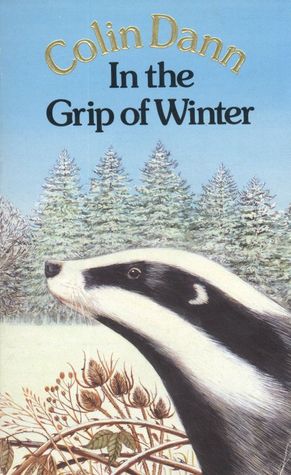 In this second book of the Farthing Wood series, the animals endure a harsh winter in their new home, the White Deer Park. When Badger falls down a slope and injures his leg, he’s nursed back to health at the Warden’s cottage, where Ginger Cat tempts him to join in a life of comfort and plenty. Meanwhile, Fox, Tawny Owl and the others are near starvation, and resort to leaving the park and stealing food from farms and rubbish bins. They have to band together and use their cunning to survive. This was a sweet book that reminded me of my childhood love of anthropomorphized animal stories (like Watership Down and the Redwall series). I doubt I’ll read another from the series, but this was a quaint read for the season.
My husband received this book for free from his school for some reason. Even early on his tastes turned towards wildlife. [One annoyance: the author always referred to Badger’s “set” instead of his “sett”; although it appears this may actually be a permissible variant, it wasn’t cool with me!]


Favorite wintry passage:
“‘Every winter is hard for some,’ Badger answered. ‘The weakest among us always suffer the most. The small creatures: the mice, the shrews, the voles and, particularly, the small birds – every winter takes its toll [on] them. But yes – I sense that this winter will be one to reckon with. There’s something in that wind…’”
My rating:
This Cold Heaven: Seven Seasons in Greenland by Gretel Ehrlich
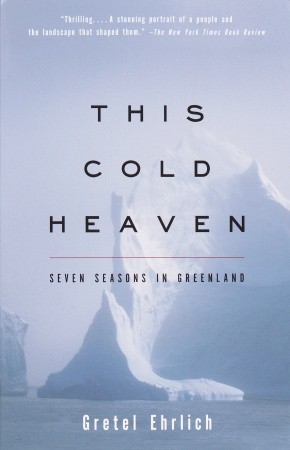 Once a year or so I encounter a book that’s so flawlessly written you could pick out just about any sentence and marvel at its construction. That’s certainly the case here. I never want to go to Greenland; English winters are quite dark and cold enough for me, and I don’t know if I could stomach seal meat at all, let alone for most meals and often raw. But that’s okay: I don’t need to book a flight to Qaanaaq, because through reading this I’ve already been in Greenland in every season, and I thoroughly enjoyed my armchair trek. Impressively, Ehrlich is always describing the same sorts of scenery, and yet every time finds a fresh way to write about ice and sun glare and frigid temperatures. I’ll be looking into her other books for sure.
Favorite wintry passage:
“The ice cap itself was a siren singing me back to Greenland, its walls of blue sapphire and sheer immensity always beguiling. Part jewel, part eye, part lighthouse, part recumbent monolith, the ice is a bright spot on the upper tier of the globe where the world’s purse strings have been pulled tight, nudging the tops of three continents together. Summers, it burns in the sun, and in the dark it hoards moonlight.”
My rating:
Further reading on Greenland: A Wilder Time: Notes from a Geologist at the Edge of the Greenland Ice by William E. Glassley (see my Foreword review) and The Prophets of Eternal Fjord by Kim Leine, an epic novel about an unconventional priest, set in late-eighteenth-century Denmark and Greenland (see my Nudge review). Also Sinéad Morrissey’s multi-part poem “Whitelessness.” You can read the first stanza of it here.
The Short Day Dying by Peter Hobbs
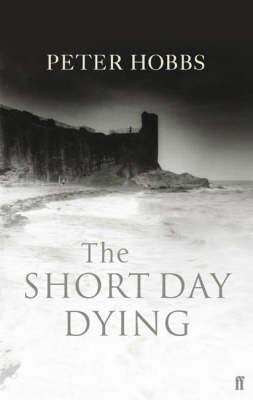 This short novel from 2005 deserves to be better known. It reminded me of Days Without End and On the Black Hill, but most of all of Francis Kilvert’s diary, perhaps as voiced by a rustic from Poldark. We journey through 1870 with Charles Wenmoth, a twenty-seven-year-old blacksmith’s apprentice and Methodist lay preacher in Cornwall mining country. Very little happens; the focus is on atmosphere and voice. The major struggle is with his melancholy spirit, which causes him to doubt his salvation. As winter circles round, the days grow shorter just as he senses life growing shorter. The short chapters are like undated diary entries (apparently based on the author’s great-great-grandfather’s); the sentences are almost completely unpunctuated, which at first had me twitching for my pencil to add commas to the run-on sentences, but eventually I gave myself over to the flow.
Favorite wintry passage:
“It is a shame we cannot stay children for ever and remain blind to the slow death of the land. How different it will all be in a few months the bare trees revealed as dark gnarled bodies. Something inside them though lives through the yearly famine and they always find new colour. I trust it is the same for us all.”
My rating:
Winter by Karl Ove Knausgaard
 This is my favorite of the three Knausgaard books I’ve read so far, and miles better than his Autumn. These short essays successfully evoke the sensations of winter and the conflicting emotions elicited by family life and childhood memories. The series is, loosely speaking, a set of instruction manuals for his unborn daughter, who is born a month premature in the course of this volume. So in the first book he starts with the basics of bodily existence – orifices, bodily fluids and clothing – and now he’s moving on to slightly more advanced but still everyday things she’ll encounter, like coins, stuffed animals, a messy house, toothbrushes, and the moon. I’ll see out this series, and see afterwards if I have the nerve to return to My Struggle.
Favorite wintry passage:
“winter not only muffles some sounds and intensifies others, it also has sounds that are entirely its own, unique to the season, and some of them are among the most beautiful of all. The low boom of ice-covered waters as they freeze, for instance, which can be heard on perfectly clear days or nights when the cold deepens, and which has something menacing or mighty about it, since it isn’t connected to an visible movement”
My rating:
Available Light by Marge Piercy
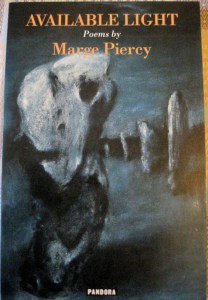 Many poetry volumes get a middling rating from me because some of the poems are memorable but others do nothing for me. This is on the longer side for a collection at 120+ pages, but only a handful of its poems fell flat. The subjects are diverse: travels in Europe (my cover depicts the Avebury stone circle in the gloom), menstruation, identifying as a Jew as well as a feminist, scattering her father’s ashes, the stresses of daily life, and being in love. The title poem, which appears first, has a slightly melancholy tone with its focus on the short days of winter, but the poet defiantly asserts meaning despite the mood: “Even the dead of winter: it seethes with more / than I can ever live to name and speak.” Piercy was a great discovery, and I’ll be trying lots more of her books from various genres.
Favorite wintry passage:
(from “Available light”)
In winter the light is red and short.
The sun hangs its wizened rosehip in the oaks.
By midafternoon night is folding in.
The ground is locked against us like a door.
Yet faces shine so the eyes stretch for them
and tracks in the snow are etched, calligraphy
My rating:
(And one book that didn’t quite work for me; I ended up abandoning it at 14%.
 The Bear and the Nightingale by Katherine Arden: Some striking turns of phrase, an enchanting wintry atmosphere … but a little Disney-fied for me. I got this free for Kindle so may come back to it at some point.
Favorite wintry passage:
“The years slipped by like leaves. …The clouds lay like wet wool above the trees.”)
Have you read any wintry books this year?
Review: The Last Wilderness by Neil Ansell
Many travel books are about the quest for new, exotic places and the widest possible range of experiences; many nature books focus on the surprising quality and variety of life to be found by staying close to home. In that loose framework, Neil Ansell’s The Last Wilderness belongs on the nature shelf rather than the travel section: here he’s all about developing his knowledge of a particular place, the Northwest Highlands of Scotland, where he stays five times over the course of one year to give a panoramic view of the area in different non-touristy seasons.
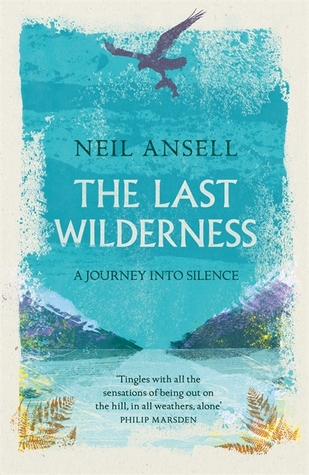 Ansell’s visits have the flavor of a pilgrimage: his wonder at the region’s sights and sounds, and particularly at the creatures he encounters, is akin to what one would experience in the presence of the holy; he also writes about wildlife as if it is a relic of a fast-vanishing world. “It is that exploratory desire to possess the wilds for ourselves that has resulted in their disappearance,” he notes. A true wilderness is unvisited, and true solitude is hard to experience “if the world is only a click away.”
Depicted against this backdrop of environmental damage are the author’s personal losses: a heart problem and progressive hearing loss mean that the world is narrowing in for him. He mourns each sign of diminishment, such as the meadow pipits whose call he can no longer hear. Depth of experience is replacing breadth for him, though flashbacks to his intrepid world travels – an African safari, hitchhiking in Australia, time in Sweden and Costa Rica – show that he has tried both approaches. There’s a good balance here between adventuring and the comfort of an increasingly familiar place.
Like “a tale told round a campfire,” Ansell’s is a meandering and slightly melancholy story that draws you in. If The Last Wilderness suffers, it’s mostly in comparison with his Deep Country (2011), one of the most memorable nature/travel books I’ve ever read, a modern-day Walden about his five years living in a cottage in the Welsh hills. Solitude and survival are more powerful themes there, though they echo here too. Once again, he writes of magical encounters with wildlife and gives philosophical reflections on the nature of the self. I can highly recommend Neil Ansell’s books to anyone who enjoys nature and travel writing.
My rating:
The Last Wilderness: A Journey into Silence will be published by Tinder Press on February 8th. My thanks to Becky Hunter for the review copy.
A Journey through Chronic Pain: Heal Me by Julia Buckley
Julia Buckley can pinpoint the very moment when her battle with chronic pain began: it was a Tuesday morning in May 2012, and she was reaching across her desk for a cold cup of coffee. Although she had some underlying health issues, the “fire ants” down her arm and “carving knife” in her armpit? These were new. From there it just got worse: neck and back pain, swollen legs, and agonizing periods. Heal Me is a record of four years of chronic pain and the search for something, anything to take the pain away. “I couldn’t say no – that was a forbidden word on my journey. You never know who’s going to be your saviour.”
 Having exhausted the conventional therapies available privately and via the NHS, most of which focus on cognitive behavioral therapy and coping strategies, Buckley quit work and registered as disabled. Ultimately she had to acknowledge that forces beyond the physiological might be at work. Despite her skepticism, she began to seek out alternative practitioners in her worldwide quest for a cure. Potential saviors included a guru in Vienna, traditional healers in Bali and South Africa, a witch doctor in Haiti, an herbalist in China, and a miracle worker in Brazil. She went everywhere from Colorado Springs (for medical marijuana) to Lourdes (to be baptized in the famous grotto). You know she was truly desperate when you read about her bathing in the blood and viscera of a sacrificial chicken.
Now the travel editor of the Independent and Evening Standard, Buckley captures all these destinations and encounters in vivid detail, taking readers along on her rollercoaster ride of new treatment ideas and periodically dashed hopes. She is especially incisive in her accounting of doctors’ interactions with her. All too often she felt like a statistic or a diagnosis instead of a person, and sensed that her (usually male) doctors dismissed her as a stereotypically hysterical woman. Fat shaming came into the equation, too. Brief bursts of compassion, wherever they came from, made all the difference.
I was morbidly fascinated with this story, which is so bizarre and eventful that it reads like a great novel. I’ll be cheering it on in next year’s Wellcome Book Prize race.
My rating:
Heal Me: In Search of a Cure is published today, January 25th, by Weidenfeld & Nicolson. My thanks to the publisher for a free copy for review.
Julia graciously agreed to take part in a Q&A over e-mail. We talked about invisible disabilities, the gendered treatment of pain, and whether she believes in miracles.
“I spent a day at the Paralympic stadium with tens of thousands cheering on equality, but when it was time to go home, nobody wanted to give me a seat on the Central Line. I was, I swiftly realised, the wrong kind of disabled.”
Yours was largely an invisible disability. How can the general public be made more aware of these?
I feel like things are very, very gradually moving forward – speaking as a journalist, I know that stories about invisible disabilities do very well, and I think as we all try to be more “on” things and “woke” awareness is growing. But people are still cynical – Heathrow and Gatwick now have invisible disability lanyards for travellers and someone I was interviewing about it said “How do I know the person isn’t inventing it?” I think the media has a huge part to play in raising awareness, as do things like books (cough cough). And when trains have signs saying things like “be aware that not all disabilities are visible” on their priority seats, I think that’s a step forward. Openness helps, too, if people are comfortable about it – I’m a huge believer in oversharing.
“I wondered whether it was a peculiarly female trait to blame oneself when a treatment fails.”
You make a strong case for the treatment of chronic pain being gendered, and your chapter epigraphs, many from women writers who were chronic pain or mental health patients, back this up. There’s even a name for this phenomenon: Yentl Syndrome. Can you tell us a little more about that? What did you do to push back against it?
Yentl Syndrome is the studied phenomenon that male doctors are un/consciously sexist in their dealings with female patients – with regards to pain, they’re twice as likely to ascribe female pain to psychological reasons and half as likely to give them adequate painkillers. In the US, women have to cycle through 12 doctors, on average, before they find the one to treat their pain adequately. There are equally shocking stats if you look at race and class, too.
I did absolutely nothing to push back against it when I was being treated, to be honest, because I didn’t recognise what was going on, had never heard of Yentl Syndrome and thought it was my problem, not theirs. It was really only when I met Thabiso, my sangoma in South Africa, that I felt the scales lift from my eyes about what had been going on. I make up for it now, though – I recently explained to a GP what it was, and suggested he be tested for it (long story, but we were on the phone and he was being incredibly patronising and not letting me speak). He hung up on me.
“In my head I added, I don’t care what they do to me, as long as it helps the pain.”
Meatloaf sang, “I would do anything for love, but I won’t do that.” Can you think of anything you wouldn’t have done in the search for a cure?
Well, I refused a spiritual surgery from John of God – I would have had the medical clamp up my nose or happily been cut into, but I was phobic about having my eyeball scraped – I had visions of Un Chien Andalou. So I had said repeatedly I was up for the other stuff but wouldn’t do the eye-scraping, and was told that probably meant I’d get the eye-scraping so I should go for the “invisible” surgery instead. But I can’t think of anything else I wouldn’t have done. The whole point, for me, was that if I didn’t throw myself into something completely, if I didn’t get better I’d never know if that was the treatment not working or my fault. Equally, my life was worthless to me – I knew I would probably be dead if I didn’t find an answer, so I didn’t have anything to lose.
Having said that, I know I would have had major difficulties slaughtering a goat if I’d gone back to Thabiso – I’m not sure if I could even have asked anyone else to do that for me.
Looking back, do you see your life in terms of a clear before and after? Are you the same person as you were before you went through this chronic pain experience?
There’s definitely a clear before and after in terms of how I think of my life – before the accident and after it. The date is in my head and I measure everything in my life around that, whether that’s a work event, a holiday, anything else – it’s always XX months/years before or after the accident. I don’t have the same thing with the day I got better because I try not to think about what happened and why, so I still calculate everything around the accident even though I should probably try and move my life to revolve around that happier day.
Largely I’m the same person. I still have the same interests and the same job, so I haven’t changed in that way. But I’d say I’m more focused – I lost so much of my life that I’m trying to make up for it now. So I don’t watch TV, I don’t go out to anything I’m not really interested in, I didn’t go to the work Christmas party because I could think of better things to do than stand around sober shouting over music … so I’m more ruthless about how I spend my time.
I also think invisible illness – or people’s reaction to it – hardens you. You have to grow a shell, otherwise you wouldn’t get through it. So I’m probably more brusque. I’m also really fucking angry about how I was treated and how I see other people – especially other women – being treated and I know that low-level anger shows through a lot. But as I said to a friend (male, obviously) recently, when he read my book and was upset at my anger: once you start noticing what’s going on, when you see people’s lives ruined because of pain, when in extreme cases you see women dying because of their gender, how can you not be angry? I think we should all be more angry. Maybe we could get more done.
You got a book contract before you’d completed all the travel. At that point you didn’t know what the conclusion of your quest would be: a cure, or acceptance of chronic pain as your new normal. Given that uncertainty, how did you go about shaping this narrative?
For the proposal for the book I did a country-by-country, treatment-by-treatment chapter plan (it was wildly ambitious, but pain and finances put the dampeners on it) and suggested the last chapter would be at a meditation retreat in Dorset, learning acceptance. I put in some waggish comment like “assuming I don’t get cured first hahaha”, but secretly I knew there was no way I could write the book if I wasn’t cured, partly on a very literal level – I physically wouldn’t be able to do it – but more because I didn’t see how I would ever be able to accept it. I actually postponed the deadline twice for the same reasons, and when I realised deadline 3 was looming and I wasn’t better and I was going to have to suck it up and write it I was distraught. I genuinely thought that putting all that I had been through onto the page and having to admit that I had failed – and failed my fellow pain people I was doing it for – would kill me. So I don’t know what I would have done if it had come to the crunch; luckily I got my pot of white chrysanthemums and didn’t have to see what happened.
You are leery of words like “miracle” and “cure,” so what terms might you use to describe what ended your pain after four years?
Something happened, and it happened in Brazil. But I would never tell anyone to hop on a plane to Brazil. What happened to me happened after four years of soul-searching and introspection as well as all those treatments. If I’d gone to Brazil first, I don’t know what would have happened.
Who do you see being among the audience for your book?
I’d love people who need it to read it and take what they need from it, but I’d also love doctors to read it – as an insight into patient psychology if nothing else – and I’d love it to be seen as a continuation of the whole #MeToo debate. That sounds holier than thou, and obviously it’d be great for people to read it as a Jon-Ronson-meets-Elizabeth-Gilbert-style romp because I’d feel like I’d succeeded from a writing point of view, but to be honest the only reason I wanted to write it in the first place was to show what’s happening to people in pain, and once I got better, the only thing that mattered to me was getting it into the hands of people who need it. I know how much I needed something like this.
Hungerford Literary Festival: Simon Fenwick on Joan Leigh Fermor
Birthday book haul.
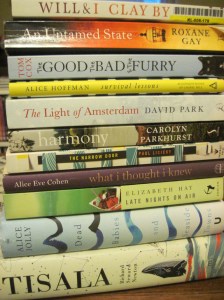
I had a pleasant birthday weekend: a five-mile country walk with some foraging of sloes, reading in the armchair with the cat, catching up with Poldark on DVD, and a three-course Italian feast my husband made from a River Café cookbook (plus a homemade Sachertorte). And I got 11 secondhand books for my birthday, if you were wondering!
We also attended a couple of Hungerford Literary Festival events. This year the theme was “Journeys,” so all of the featured books and authors were broadly travel-related Alas, the talk we were meant to attend on Saturday by Sunday Times writer Jonathan Dean, based on I Must Belong Somewhere, his memoir about researching his family’s European history, was cancelled due to insufficient ticket sales – we felt so sorry for the poor author!
However, on Sunday my husband saw Nick Hunt speak about his recent travelogue on famous European winds such as the mistral, and I saw Simon Fenwick in conversation with journalist Elinor Goodman about his new biography of Joan Leigh Fermor, the wife of celebrated travel writer Patrick Leigh Fermor (whom Fenwick and Goodman consistently called Paddy).
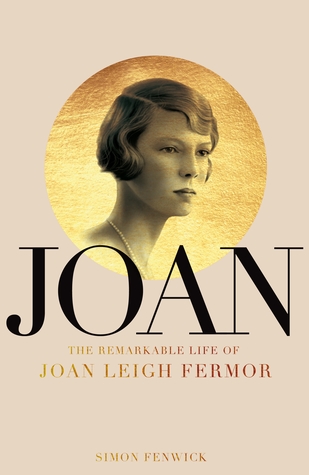 Fenwick considers Joan an enigmatic figure; although she could be quite a bitch, she also brought out the best in certain people, including Paddy. From a wealthy Yorkshire wool merchant family, she met golden writers like John Betjeman at bohemian parties. Although she was a fairly successful photographer – there will be a major exhibition of her work in London next year – she cast herself in a supporting role, as was traditional for the time: she would say that her career was all about helping Paddy in his, financially as well as morally. (I could just imagine what a novel about her would be called: The Travel Writer’s Wife.)
Although Fenwick believes Joan is a worthy biographical subject in her own right, her relationship with Paddy dominated the talk. When the couple met in Egypt in 1944, he was famous for having kidnapped a Nazi general, a stunt of debatable military benefit though it was certainly great for publicity. Women flocked to the handsome Paddy: he was carrying on two affairs at this time, and his one lover got pregnant and had an abortion.

Patrick Leigh Fermor. By Δημήτρης Παπαδήμος (Ιωάννης Δ.Παπαδήμος) [CC BY-SA 3.0], via Wikimedia Commons.
Joan was known as a wonderful cook and entertainer. In Greece they had a rotating cast of guests, and people would frequently just turn up uninvited. From afar the house looks like an ancient monastery, Fenwick said, though it’s now surrounded by modern buildings. Much of it is one huge room that serves as library, living room and dining room, with a corridor leading to the outside. In Joan’s time there were cats galore. Fenwick remembers the strong smell of jasmine the first time he walked through the archway into the courtyard.

The Fermors’ Greek villa. By Rodolph at English Wikipedia [CC BY-SA 3.0], via Wikimedia Commons.
Although Fenwick did not wish to comment on another biographer’s work, he noted that in comparison to Cooper’s his is perhaps a bit of a new view on Paddy, a “not wholly heroic but fascinating” figure, flawed “on a grand scale.” Fenwick was impressed by “his pure energy – in his writing and in everything he did.” While Paddy must have been exhausting to live with, Fenwick believes he and Joan recognized in each other a similar approach to life.
As a speaker Fenwick wasn’t particularly engaging: even with a microphone he seemed to mutter, and left awkward gaps before answering. Is it fair that his dull manner made me wonder whether his book would be worth reading? Not all authors can be charismatic in person, I’m sure; I would definitely struggle with public speaking if I ever had to go on a book tour. But I do wish he had perhaps read a section from his book so I could have gotten a sense of the style. I think Joan’s life is interesting enough that I will still read her biography someday, but perhaps only after I’ve read more of Paddy’s travel books and the Cooper biography, which I own in paperback.
Have you attended any literary events recently? Does an author’s personality influence your opinion of their books?
The Un-Discovered Islands by Malachy Tallack
 Last summer I very much enjoyed Malachy Tallack’s first book, 60 Degrees North, a memoir cum travel book about looking for a place to call home in the midst of a nomadic life; see my Nudge review. His new book is a gorgeous art object (illustrated by Katie Scott), composed of two- or three-page mini-essays about the real and legendary islands that have disappeared and/or been disproved over the centuries. A few of the names may be familiar – Atlantis, Thule and the Isles of the Blessed, perhaps – but many of the rest are fairly obscure entries in the historical and geographical record.
It’s fascinating to see how some of these islands inhabit both mythological and real space. For instance, my favorite story is that of Hufaidh in the Southern Iraq marshes. This area where the Euphrates and Tigris Rivers meet was the ancestral home of the Ma‘dān or “Marsh Arabs,” and was known to Western visitors such as Gavin Maxwell, who came to collect his otter Mijbil (the subject of Ring of Bright Water) there, and travel writer Wilfred Thesiger. Tallack writes that Hufaidh “was part paradise and part hell, both of this world and another.” When Thesiger asked locals about the island in the 1950s, he was told that “anyone who sees Hufaidh is bewitched, and afterwards no-one can understand his words.” So Hufaidh was mythical? In a sense, Tallack acknowledges, and yet Saddam Hussein’s deliberate destruction of the marshes after the first Gulf War also obliterated Hufaidh, and even the ongoing campaign of ecological restoration can never bring it back.

“Islands of Life and Death”
I was also intrigued by the tale of the Auroras, presumed to be located between the Falkland Islands and South Georgia. They were sighted multiple times between 1762 and 1796, including by a Spanish research ship, but were never seen again after the eighteenth century. Were the sailors simply mistaken? In 1820 Captain James Weddell concluded that they must have confused the Shag Rocks, 100 miles to the east, for a new set of islands. But the mystery remained, as evidenced by Edgar Allan Poe’s 1838 novel The Narrative of Arthur Gordon Pym of Nantucket, which has a ship’s crew searching for the Auroras as well as for fur seals.
Plato almost certainly invented Atlantis for his allegories, but in reading this book you will learn that some islands are indeed suspected to have sunk, like Sarah Ann Island in the Pacific, which the USA claimed for its guano resources. And while you might think that bogus territories could not exist in the late twentieth or early twenty-first centuries, a few did: the Terra Nova Islands of the Antarctic were only removed from the map in 1989, and Bermeja, an island in the Gulf of Mexico disputed between the United States and Mexico, was only definitively proven not to exist in 2009.

“The Age of Exploration”
A few of these cases feel thin or repetitive; even with 24 islands discussed in full and another 10 listed with capsule explanations in an appendix, you sometimes get the sense that the book required a lot of barrel-scraping to craft satisfying narratives out of frustratingly incomplete stories. Still, Tallack has done an admirable job parsing fact from fiction and extracting broad lessons about the truths that might lie deeper than our atlas pages:
Absence is terrifying, and so we fill the gaps in our knowledge with invented things. These bring us comfort, but they conflict, too, with our desire for certainty and understanding.
The science of navigation has worked towards the eradication … of mystery, and to an astonishing degree it has succeeded. We can know where we are and what direction we are traveling with just the click of a button. And though that technology brings its own kind of wonder, part of us mourns what has been lost.
With its excellent color illustrations, this would make a perfect coffee table book to dip into whenever you have five or ten spare minutes to read an essay or two. I would particularly recommend it to readers who are captivated by maps, historical oddities and hoaxes.


(My review copy came wrapped in matching paper!)
The Un-Discovered Islands releases in the UK tomorrow. My thanks to Kristian Kerr of Birlinn Polygon for the free copy.
My rating: 
Further reading: Two similar books I’ve read are The Ice Museum by Joanna Kavenna (about the search for Thule) and Banvard’s Folly by Paul Collins (more tangentially relevant – it’s about historical mistakes and failures). You might also try Judith Schalansky’s Atlas of Remote Islands.
Books in Brief: Five I Loved Recently
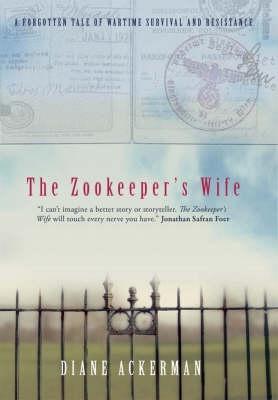 The Zookeeper’s Wife
By Diane Ackerman
A different sort of Holocaust story, set at Warsaw Zoo in the years surrounding World War II. Even after Nazis dismantled their zoo and killed many of the larger animals, Jan and Antonina Żabiński stayed at their home and used the zoo’s premises for storing explosives and ammunition for Jan’s work in the Polish resistance as well as sheltering “Guests,” Jews passing through. This is a gripping narrative of survival against the odds, with the added pleasure of the kind of animal antics you’d find in a Gerald Durrell book. Their son Ryszard kept as pets a badger who bathed sitting back in the tub like a person and an arctic hare who stole cured meats like “a fat, furry thug.” Much of the book is based on Antonina’s journals, but I wish there had been more direct quotes from it and less in the way of reconstruction.
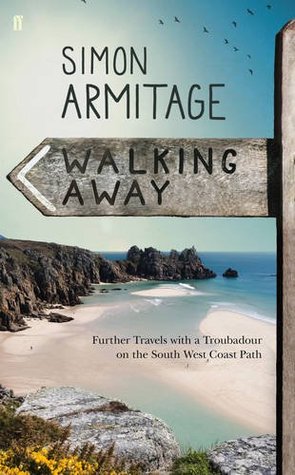 Walking Away: Further Travels with a Troubadour on the South West Coast Path
By Simon Armitage
As a sequel to Walking Home, the account of his 2010 trek along the Pennine Way, Armitage walked much of England’s South West Coast Path in August–September 2013. As before, he relied on the hospitality of acquaintances and strangers to put him up along the way and transport his enormous suitcase for him so he could walk about 10 miles a day to his next poetry reading. Emulating a modern-day troubadour, Armitage passed around a sock at the end of readings for donations (though the list of other stuff people left in the sock, with which he closes the book, is quite amusing). Along the way he meets all kinds of odd folk and muses on the landscape and the distressing amounts of seaside rubbish. His self-deprecating style reminded me of Bill Bryson. A pleasant ramble of a travel book.
 Winter World: The Ingenuity of Animal Survival
By Bernd Heinrich
This great seasonal read carefully pitches science to the level of the layman. Heinrich, an emeritus professor of biology at the University of Vermont, surveys various strategies animals use for surviving the winter: caching food, huddling together, hibernating or entering torpor, and lowering their body temperature – even to the point where 50% of their body water is ice, as with hibernating frogs. He carries out ever so slightly gruesome experiments that make him sound like a lovably nutty professor:
To find out how quickly a fully feathered kinglet loses body heat, I experimentally heated a dead kinglet and then measured its cooling rate. … I do not know how many seeds a chipmunk usually packs into each of its two pouches—I easily inserted sixty black sunflower seeds through the mouth into just one pouch of a roadkill.
His passion for knowledge carries through in his writing. I came away with a fresh sense of wonder for how species are adapted to their environments: “Much that animals have evolved to do would have seemed impossible to us, if experience has not taught us otherwise.”
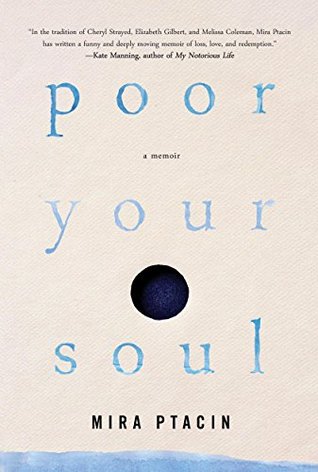 Poor Your Soul
By Mira Ptacin
Ptacin’s memoir is based around two losses: that of her brother, in a collision with a drunk driver; and that of a pregnancy in 2008. She skips back and forth in time to examine the numb aftermath of trauma as well as the fresh pain of actually going through it. In places I felt Ptacin sacrificed the literary quality hindsight might have allowed, prioritizing instead the somewhat clichéd thoughts and responses she had in the moment. Still, I loved so much about this book, especially her memories of growing up in the cereal capital of America and the account of her mother coming to America from Poland. Her mother is a terrific character, and it’s her half-warning, half-commiserative phrase that gives the novel its title (not a typo, as you might be forgiven for thinking): a kind of Slavic “I pity the fool.”
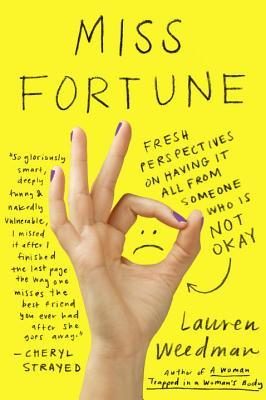 Miss Fortune: Fresh Perspectives on Having It All from Someone Who Is Not Okay
By Lauren Weedman
Weedman is a playwright and minor celebrity who’s worked on The Daily Show, Hung and Looking. This is a truly funny set of essays about marriage (from beginning to end), motherhood, working life and everything in between. Self-deprecatingly, she focuses on ridiculous situations she’s gotten herself into, like the world’s unsexiest threesome and an accidental gang symbol tattoo. Amid the laughs are some serious reflections on being adopted and figuring out how to be a responsible stepmother. With a warning that parts can be pretty raunchy, I’d recommend this to fans of David Sedaris and Bossypants.

 Bookish Beck = Rebecca Foster. American transplant to England. Freelance proofreader and book reviewer.
 Bookish Beck