Thinking about Dead Bodies with John Troyer (Hay Festival)
My second of three digital Hay Festival talks this year was by John Troyer, director of the interdisciplinary Centre for Death and Society at the University of Bath. Troyer is from Wisconsin (where he was speaking from, having been trapped there during a visit to his parents) and grew up with a father who owned a funeral home. This meant that he was aware of death from a young age: One of his earliest memories is of touching the hand of a dead woman when he went to visit his father at work.
 That’s not the only personal experience that went into his new book, Technologies of the Human Corpse, which I’m now keen to read. In 2018 his younger sister, Julie, died of brain cancer at age 43, so her illness and death became a late addition to the preface and also fed into a series of prose poems interspersed between the narrative chapters. She lived in Italy and her doctors failed to tell her that she was dying – that job fell to Troyer. (Unfortunately, this seems to be a persistent problem in Italy. In Dottoressa, her memoir of being an American doctor in Rome, which I read for a TLS review, Susan Levenstein writes of a paternalistic attitude among medical professionals: they treat their patients as children and might not even tell them about a cancer diagnosis; they just inform their family.)
Troyer discussed key moments that changed how we treat corpses. For instance, during the American Civil War there was a huge market for the new embalming technology; it was a way of preserving the bodies of soldiers so they could be returned home for funerals. Frauds also arose, however, and those taken in might find their loved one’s body arrived in a state of advanced decay. At around the same time, early photography captured corpses looking serene and sleeping. We might still take such photos, but we don’t tend to display them any more.
In the 1970s the “happy death” movement advocated for things like “natural death” and “death with dignity.” This piggybacked on the environmental and women’s movements and envisioned death as a taboo that had to be overcome. In recent decades a “necro-economy” based on the global trafficking of body parts (not organs for regulated transplant, Troyer clarified, but other tissue types) has appeared. While whole bodies may be worth just £2,000, “disarticulated” ones divided into their parts can net more like £100,000. Donating one’s body to science is, of course, a noble decision. Many people are also happy to donate their organs, though there remains a particular wariness about donating the eyes.
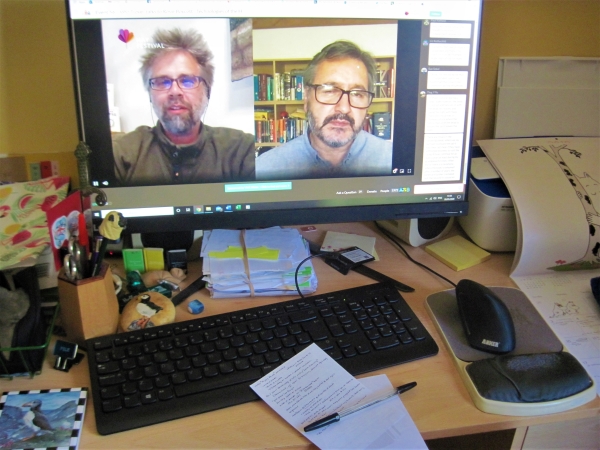
Troyer and Florence on my screen.
One section of Troyer’s book has become “uncannily resonant” in recent days, he noted. This is Chapter 3, on the AIDS corpse, an object of stigma. The biggest changes to death in the time of COVID-19 have been that family members are not able to be with a dying person in the ICU and that funerals cannot proceed as normal. In a viral pandemic, countries are producing a huge number of corpses that they aren’t prepared to deal with. (Indeed, the Washington, D.C. area is so overwhelmed with dead bodies that ice skating rinks have been requisitioned as makeshift morgues. The suburban Maryland rink I visited as a child is one such. Grim.)
Troyer spoke of the need for an everyday-ness to the discussion of death: talking with one’s next of kin, and encountering death in the course of a traditional education – he finds that even his final-year university students, studying in a related field, are very new to talking about death. A good way in that he recommends is simply to ask your loved ones what music they want played at their funerals, and the conversation can go from there.
We may not be able to commemorate the dead as we would like to at this time, but Troyer reminded the audience that funerals are for the living, whereas “the dead are okay with it – they know we’re doing our best.” The event was sensitively chaired by Peter Florence, the co-founder and director of Hay Festival (also responsible for last year’s controversial Booker Prize tie); the fact that Troyer got emotional talking about his sister only gave it more relevance and impact.
 I’ve read an abnormally large number of books about death, especially in the five years since my brother-in-law died of brain cancer (one reason why Troyer’s talk was so meaningful for me). Most recently, I read Bodies in Motion and at Rest (2000) by Thomas Lynch, a set of essays by the Irish-American undertaker and poet from Michigan. I saw him speak at Greenbelt Festival in 2012 and have read four of his books since then. His unusual dual career lends lyrical beauty to his writing about death. However, this collection was not memorable for me in comparison to his 1997 book The Undertaking, and I’d already encountered a shortened version of “Wombs” in the Wellcome Collection anthology Beneath the Skin. But this passage from “The Way We Are” stood out:
After years and years of directing funerals, I’ve come to the conclusion that seeing [the dead body] is the hardest and most helpful part. The truth, even when it hurts, has a healing in it, better than fiction or fantasy. When someone dies it is not them we fear seeing, it is them dead. It is the death. We fear that seeing will be believing. We fear not seeing too. We search the wreckage and the ruins, the battlefields and ocean floors. We must find our dead to let the loss be real.
Just for a bit of morbid fun, I decided to draw up my top 10 nonfiction books about death, dying and the dead. Many of these are personal accounts of facing death or losing a loved one. In contrast to the bereavement and cancer memoirs, the books by Doughty and Gawande are more like cultural studies, and Montross’s is about working with corpses. If you need a laugh, the Bechdel (a graphic memoir) and Doughty are best for black comedy.
 The Light of the World by Elizabeth Alexander
- Fun Home: A Family Tragicomic by Alison Bechdel (her father, too, was a funeral home director)
- Dear Life: A Doctor’s Story of Love and Loss by Rachel Clarke
- The Iceberg by Marion Coutts
- From Here to Eternity: Traveling the World to Find the Good Death by Caitlin Doughty
 Being Mortal: Medicine and What Matters in the End by Atul Gawande
- When Breath Becomes Air by Paul Kalanithi
- Body of Work: Meditations on Mortality from the Human Anatomy Lab by Christine Montross
- The Bright Hour: A Memoir of Living and Dying by Nina Riggs
- To Travel Hopefully: Journal of a Death Not Foretold by Christopher Rush
Young Writer of the Year Award Ceremony
It was great to be back at the London Library for last night’s Young Writer of the Year Award prize-giving ceremony. I got to meet Anne Cater (Random Things through my Letterbox) from the shadow panel, who’s coordinated a few blog tours I’ve participated in, as well as Ova Ceren (Excuse My Reading). It was also good to see shadow panelist Linda (Linda’s Book Bag) again and hang out with Clare (A Little Blog of Books), also on the shadow panel in my year, and Eric (Lonesome Reader), who seems to get around to every London literary event.
 In case you haven’t heard, the shadow panel chose Salt Slow by Julia Armfield as their very deserving winner, but the official winner was Raymond Antrobus for his poetry collection The Perseverance. In all honesty, I’d given no thought to the possibility of it winning, mostly because Antrobus has already won several major prizes for the book, including this year’s £30,000 Rathbones Folio Prize (I reviewed it for the Prize’s blog tour). Now, there’s no rule saying you can’t win multiple prizes for the same book, but what struck me strangely about this case is that Kate Clanchy was a judge for both the Folio Prize and the Young Writer Award.
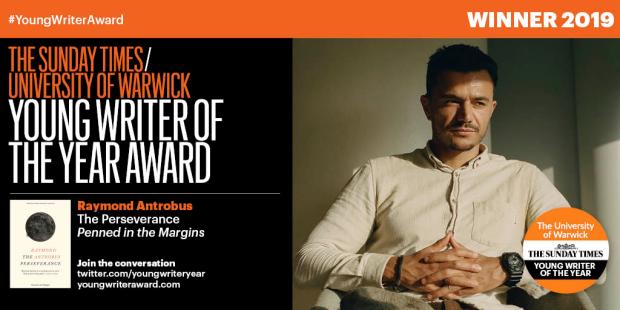
Antrobus seemed genuinely taken aback by his win and gave a very gracious speech in which he said that he looked forward to all the shortlistees contributing to the canon of English literature. He was quickly whisked away for a photo shoot, so I didn’t get a chance to congratulate him or have my book signed, but I did get to meet Julia Armfield and Yara Rodrigues Fowler and get their autographs.


Some interesting statistics for you: in three of the past four years the shadow panel has chosen a short story collection as its winner (and they say no one likes short stories these days!). In none of those four years did the shadow panel correctly predict the official winner – so, gosh, is it the kiss of death to be the shadow panel winner?!
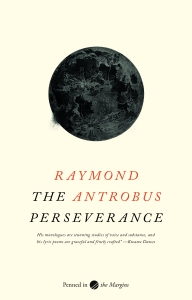 In the official press release, chair of judges and Sunday Times literary editor Andrew Holgate writes that The Perseverance is “both very personal and immensely resonant. The result is a memoir in verse very, very affecting and fresh.” Poet Kate Clanchy adds, “we wanted to find a writer who both speaks for now and who we were confident would continue to produce valuable, central work. … it was the humanity of the book, its tempered kindness, and the commitment not just to recognising difference but to the difficult act of forgiveness that made us confident we had found a winner for this extraordinary year.”
Also present at the ceremony were Sarah Moss (who teaches at the University of Warwick, the Award’s new co-sponsor) and Katya Taylor. I could have sworn I spotted Deborah Levy, too, but after conferring with other book bloggers we decided it was just someone who looked a lot like her.
In any event, it was lovely to see London all lit up with Christmas lights and to spend a couple of hours celebrating up-and-coming writing talent. (And I just managed to catch the last train home and avoid a rail replacement bus nightmare.)
Looking forward to next year already!
New Networks for Nature 2019
This past weekend was my fifth time attending Nature Matters, the annual New Networks for Nature conference. I’ve written about it on the blog a few times before: last year’s 10th anniversary meeting in Stamford, plus once when there was a particular focus on nature poetry and another time when it was held in Cambridge. This year the theme was “Time for Nature” and the conference was held at the very posh St Peter’s School in York, which dates back to 627 and resembles an Oxford college. We have close friends in York, but our timing was off in that they were in Italy this week. However, they sent us a key to their house and let us stay there while they were away, which saved us having to book an Airbnb or guest house.

York street scene. Photo by Chris Foster.
What makes Nature Matters so special is its interdisciplinary nature: visual artists, poets, musicians, writers, activists, academics and conservationists alike attend and speak. So although the event might seem geared more towards my ecologist husband, there’s always plenty to interest me, too. In particular, I enjoyed the panel discussions on nature in children’s books and new directions for nature writing. This year the organizers were determined to make the speakers’ roster more diverse, so some panels were three-quarters or wholly female, and four people of color appeared on the stage. (That might not seem like a great record, but in a field so dominated by white males it’s at least a start.)
 The Friday was a particularly brilliant day, the best day of sessions I can remember in any year. After a presentation by wildlife photographer and painter Robert Fuller, the first session was “Nature in Deep Time,” featuring three archaeologists from northern universities who talked about cave art, woodcraft, and evidence of rapid climate change. “Taking a long view, we get a very different perspective,” Professor Terry O’Connor of the University of York observed. The topic felt timely and tied in with a number of books that have come out this year, including Time Song by Julia Blackburn, Surfacing by Kathleen Jamie and Underland by Robert Macfarlane.
Next up was “Now or Never – Fighting for Nature,” featuring three female activists: Ruth Peacey, a filmmaker for BBC Wildlife whose subjects have included bird persecution in the Mediterranean; Sally Goldsmith, a campaigner who deployed poems and songs against the mass street tree-cutting campaign in Sheffield and helped save some 10,000 trees; and Hatti Owens, an environmental lawyer with ClientEarth who has partnered with Extinction Rebellion. The panel chair and one of this year’s organizers, writer Amy-Jane Beer, noted that activism is no longer radical, but an obligation.
Either side of lunch, Dr. Sara Goodacre of the University of Nottingham SpiderLab demonstrated how money spiders walk on water and “sail” using two raised legs to cope with wind; and Dr. Geoff Oxford of the University of York told the successful conservation story of the tansy beetle, which has recently been celebrated with a crowdfunded wall mural on the corner of York’s Queen Street and the Tansy Beetle Bar at the Rattle Owl restaurant on Micklegate. After the day’s proceedings, we joined a general movement over to see the mural and toast the bar’s grand opening.

Tansy beetle mural. Photo by Chris Foster.
The children’s books session featured Anneliese Emmans Dean, who gave very entertaining performances of her poems on insects and birds; Gill Lewis, who writes middle grade novels that introduce children to environmental issues; and Yuval Zommer, who writes and illustrates nonfiction guides with titles like The Big Book of Bugs and The Big Book of Blooms. Panel chair Ben Hoare, another of this year’s organizers and a former editor of BBC Wildlife magazine, concluded that children’s books should be joyous and not preachy.
There was still more to come on this jam-packed Friday! “The Funny Thing about Nature…” was essentially three stand-up comedy routines by Simon Watt, creator of the Ugly Animal Appreciation Society; Helen Pilcher, who has written a speculative book about the science of de-extinction; and Hugh Warwick, an author and hedgehog enthusiast. The language got a little crass in this session, but all three speakers were genuinely funny. As Watt put it, “Sincerity should not be our only weapon” in the fight for nature; he’s trying to reach the people who aren’t “already on our side.”
 After free gin and tonics provided by local producers SloeMotion, we had the absolute treat of a performance by Kitty Macfarlane, whose folk songs are inspired by the natural world. The title track of her 2018 album Namer of Clouds is about Luke Howard, who created the naming system for clouds (cumulus, stratus, and so on) in 1802. Other songs are about eels, a starling murmuration and the Sardinian tradition of weaving sea silk. She often incorporates field recordings of birdsong, and writes about her native Somerset Levels. Her voice is gorgeously clear, reminding me of Emily Smith’s. We bought her album and EP at once.
Saturday was a slightly less memorable day, with sessions on insects and the uplands, an interview with clean rivers campaigner (and former pop star) Feargal Sharkey, and the short film Raising the Hare by Bevis Bowden. Most engaging for me was a four-person discussion on new directions for nature writing, chaired by author and academic Richard Kerridge. Katharine Norbury is editing the Women on Nature anthology, which I have supported via Unbound; it’s due out next year. She went all the way back to Julian of Norwich and has included novelists, poets, gardeners and farmers – lots of women who wouldn’t have called themselves ‘nature writers’.

L to R: Kerridge, Norbury, Sethi, McKenzie and Smyth. Photo by Chris Foster.
Anita Sethi, a journalist from Manchester, speaks out about inequality of access to nature due to race, gender and class. She read part of her essay “On Class and the Countryside” from the Common People anthology edited by Kit de Waal. Zakiya McKenzie, a London-born Jamaican, was a Forest England writer in residence and founded the Green & Black project to give underprivileged children trips to the countryside. Richard Smyth, the author of A Sweet, Wild Note, spoke of the need for robust nature writing – and criticism. He stressed that it’s not good enough for nature writing to be “charming” or “lyrical”; it’s too important to be merely pleasant. I would have liked to hear him explore this more and for it to turn into more of a debate, but the discussion drifted into praise for experimental and speculative forms.

Peregrine on York Minster. Photo by Chris Foster.

Finishing off a Bettys lunch with cake and a mocha. Photo by Chris Foster.
There’s something for everyone at this conference; some of the elements that I didn’t get on with or found pretentious were others’ highlights, so it’s all a matter of taste. Spending time in York, one of my favorite cities, was an added bonus. We managed to fit in a trip to the National Railway Museum and lunch at Bettys on the Sunday before our train back.
Next year’s conference will be at the University of East Anglia in Norwich, 10–12 July. I’ve never been to Norwich so look forward to visiting it and attending the full conference once again. It’s always a fascinating, inspiring weekend with a wide range of speakers and ideas.
Would any of the conference’s themes or events have interested you?
Jane Eyre at the Newbury Corn Exchange
This is the second theatre adaptation of Jane Eyre that I’ve reviewed since I started my blog (and my second trip to Newbury’s Corn Exchange within two weeks). The previous one was just over four years ago, of the celebrated touring production that I saw at London’s National Theatre (review here). In comparing my notes from last night with my write-up from four years ago, I’ve discovered that the two productions were fairly similar in approach, with a bare-bones collection of wooden structures and furniture creating the set, and a handful of actors covering all the parts. Last night’s was even more stripped-back, with just a few blackened planks and a partial staircase representing the ruin of Thornfield Hall and serving as the backdrop for all the other settings. And here there were only five cast members, as compared to the NT’s 10: three actresses and two actors, with all bar one (Jane) revolving through the roles via simple costume changes like donning a bonnet or a waistcoat.
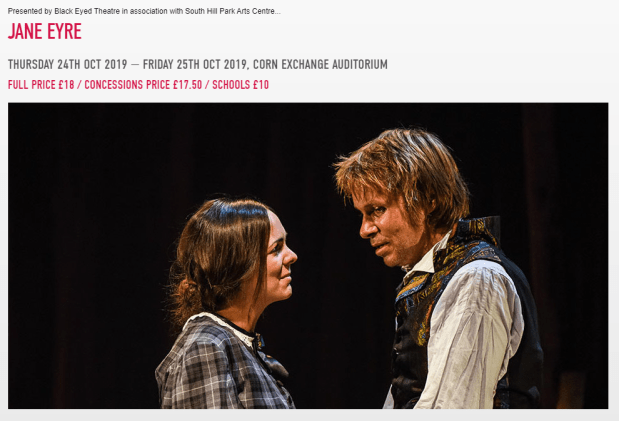
Probably my favorite aspect of this production was the live music. An antique piano stood at stage left and all the actors took turns playing it for background music or as part of a specific scene. Other instruments were also taken up occasionally: fiddle, cello, guitar, harmonium and recorder. Whereas the NT production made anachronistic use of pop songs, this production stuck to folk music that seemed appropriate to the time period. St. John Rivers’s pompous piety was exaggerated for comic effect, with Mrs. Fairfax another particularly amusing character. As in the NT show, one actor even briefly played Pilot the dog.
There were a few decisions that were less than successful for me, though. An eight-year jump between Helen’s death at Lowood School and Jane’s arrival at Thornfield Hall feels like a jolt. Jane wears the same dress throughout and nothing indicates her aging. She narrates her story as if she is revisiting her life in her mind. At a few points these explanations from the front of the stage slow down the action. Meanwhile, the strong Yorkshire accent the actress used was so much like Daisy’s in Downton Abbey that I struggled to take her seriously – it’s too much of a contrast with the Queen’s English most of the other characters speak. Is what we think of as a Yorkshire accent now actually how people spoke at that time?
But the chief transgression was omitting the pivotal scene in which Jane hears Rochester calling out to her and knows she has to return to Thornfield. Instead, Jane just makes a rational decision to “go home” after St. John leaves for India. Did the director think that modern audiences would find the mild supernatural content too unbelievable? Or was it just a practical matter in that the actor portraying Rochester happened to be playing the piano at that point? Surely a way could have been found around that.
In any case, it was a pleasant way to pass a few hours on a squally October night.
My rating: 
There is more information on the play, including photographs and a video trailer, on the Corn Exchange website.
What’s the last thing you saw at the theatre?
Bernardine Evaristo and Jennifer Nansubuga Makumbi in Conversation
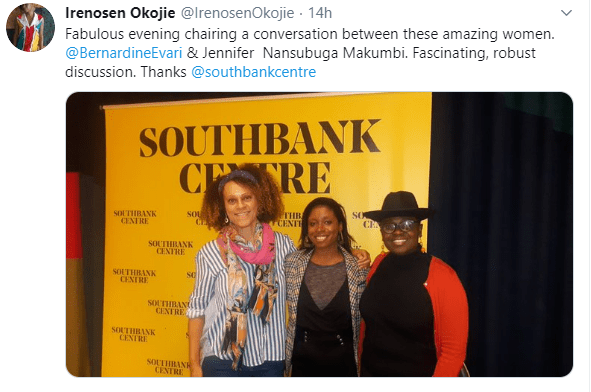
Through a giveaway on Eric’s blog, I won tickets to see Bernardine Evaristo and Jennifer Nansubuga Makumbi speak about their latest books at the London Literature Festival (this year’s theme: “Once Upon Our Times”) at the Southbank Centre yesterday. It was great to meet up with fellow bloggers Eric and Eleanor to hear these two black women writers read from their recent work and discuss feminism, the political landscape for writers of African descent, and their experiments with form.


Frustrated by the lack of black women in British literature, Evaristo started writing Girl, Woman, Other in 2013. She began with Carole (Anglo-Nigerian, like herself), who has to change to fit in, first at Oxford and then as a City banker. Next she moved on to the stories of Carole’s mother and school friend, and the book grew from there. All told, there are four mother–daughter pairs. Evaristo believes her background as an actress (in her twenties) allowed her to almost become these characters and write them from the inside, so that even though the chapters are written in the third person they feel like first-person narratives. The 12 flawed, complex main characters are “equal protagonists,” she insisted. Her aim was “to explore multiplicity to address our invisibility.” She characterizes the book’s style as “fusion fiction”: an accessible take on the experimental novel, with unorthodox, free-flowing language that allows readers to move easily between the different characters’ storylines.
Both Evaristo and Makumbi admitted to having a complicated relationship with feminism, Evaristo because the feminism of the 1980s did not seem to include black women and Makumbi because the fight for equality is still ongoing in patriarchal African societies like her native Uganda’s. Evaristo feels that feminism is now more inclusive and, also thanks to the #MeToo movement, there has been a place for her book that may not have been there five or 10 years ago. (The same goes for Makumbi, who has only now found a publisher for her very feminist first novel, which was rejected in the 2000s.) Both authors spoke of the ways in which people are made to feel “Other”: through sex, race and class. Makumbi pointed out that Africans experience a specific racism separate from other blacks in Britain. “I’m not racist, but I draw the line at Africans” is how she caricatured this view.
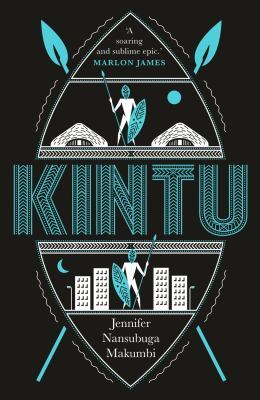 Makumbi’s novel Kintu is a sprawling family saga that has been compared to Roots, but she has recently released a collection of short stories that focus on Ugandan immigration to Britain between the 1950s and today. She envisioned Manchester Happened as “a letter back home” to tell people what it’s really like to settle in a new country, as well as a chance to reflect on the underrepresented East African immigration experience. Much of the book is drawn from her life, such as working as an airport security officer to fund her creative writing degree. Her mentor recommended that she start writing stories as a way to counterbalance the intensity of Kintu – a chance to see the beginning, middle and end as a simple arc. She assumed short stories would be easier than a novel, yet her first story took her four years to write. It is as if she can only look into her past for brief moments, anyway, she explained, so the story form has been perfect. She has deliberately avoided the negativity of many migration narratives, she said: Things have in fact gone well for her, and we’ve heard about things going wrong many times before.
I’m over halfway through Girl, Woman, Other now, and enjoying it very much – but wondering if its breadth sacrifices some depth. Evaristo acknowledged that she felt a bit less attached to these characters than she has in novels where she followed just one or two characters all the way through. Still, she feels that she knows and understands these women, even if she doesn’t like or approve of all of them. She read excerpts from the sections about Yazz, a feisty and opinionated young woman waiting for her mother’s play to start, and Hattie, a strong-willed 93-year-old from a Northumberland farming family. Makumbi read from two stories, one about a Ugandan couple arriving in Manchester in 1950 and the other set in the airport security area. In the latter the protagonist confiscates a whip from a priest, a funny moment that seems to represent Makumbi’s style – moderator Irenosen Okojie, a Nigerian author, mentioned another notable story from the perspective of a Ugandan street dog newly pampered in Britain.
I hope to read Manchester Happened soon, and should be featuring an extract from it next week as part of the Ake Book Festival blog tour. I’ll also finish the Evaristo this week and expect it to be on my Best of 2019 fiction list.
Booker Prize and Birthday Goings-On
The Booker Prize was announced last night in a live feed I watched over a glass of wine between my yoga class and birthday dessert. As chair of judges Peter Florence recapped each book, he said the most, and most effusively, about Ducks, Newburyport, so I thought Ellmann had it in the bag. Then, when it became clear there would be joint winners, I thought maybe Ellmann and Evaristo would share the Prize. But that’s not how things panned out…
I don’t have much to add to the conversation after yesterday’s Twitter storm; I remain entirely uninterested in reading The Testaments, an unnecessary sequel and, by all accounts, subpar Atwood work that didn’t need more buzz than it’s already attracted. Atwood won the Booker in 2000 for a brilliant novel, The Blind Assassin, one of my absolute favorites, and while she’s enough of a legend to be among the few authors to have won the Prize twice (along with Peter Carey, J.M. Coetzee and Hilary Mantel), maybe not for this book?

I am, however, delighted for Evaristo. If you haven’t yet picked up Girl, Woman, Other, I’d urge you to give it a try. I’m 1/3 into it now. Through a giveaway on Eric’s blog I won a copy plus two tickets to see Evaristo in conversation with Jennifer Nansubuga Makumbi (author of Manchester Happened, which I’ll be covering for the Ake Book Festival blog tour later this month) at the London Literature Festival on the 20th, but I couldn’t wait until I pick up my copy from the Southbank Centre so have been reading a library copy in the meantime.
You probably know that Girl, Woman, Other is a linked short story collection about 12 characters (mostly Black women) navigating twentieth-century and contemporary Britain, balancing external and internal expectations and different interpretations of feminism to build lives of their own. I’ve been surprised by the structure and style, however. It’s in four long chapters, each divided between three characters. These are almost like musical suites, with the three stories interlocking (I’m not in far enough to know if there is overlap between the suites). The prose is mostly uncapitalized and unpunctuated, with only a handful of full stops closing sections. This makes it more like poetry: a wry, radical stream of consciousness. I’d compare it, content-wise, to Homegoing by Yaa Gyasi and The Female Persuasion by Meg Wolitzer.
This is the third tie in Booker history – though after a 1992 tie the rules were changed so that it shouldn’t have happened again. As Gaby Wood, literary director of the Booker Prize Foundation, puts it, “The thinking was it just doesn’t work—it sort of detracts attention from both, rather than drawing attention to either.” So while it’s wonderful that Evaristo is the first Black woman to win the Booker, there is something almost sinister about the fact that, due to the tie, she gets just £25,000 in prize money rather than the full £50,000. However, both she and Atwood were extremely graceful in their acceptance speeches (Atwood sheepish and apologetic at the same time), so I will try to be as well. It’s a turn-up for the books, anyway!
 Yesterday was also my 36th birthday. A dismally wet Monday may not be ideal for a birthday, but I’d had the whole previous weekend for celebrating so can’t really complain. Saturday was a very Newbury day of volunteer gardening in the drizzle; an excellent lunch at Henry & Joe’s, a reasonably new restaurant with small plates of seasonal food, exquisitely presented – on the way to Michelin star quality; an early evening showing of Downton Abbey in the intimate upstairs theatre at the Corn Exchange; and a wander around the Fire Garden art installation, which features giant candles and automata. On Sunday I helped out at a fun and chaotic pet blessing service at church, followed by cake, presents and a homemade feast.


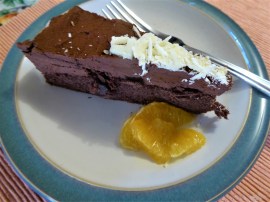 One of the best parts of preparing for my birthday is finding recipes for my husband to make for me. This year I picked a Chocolate Orange Truffle Cake from Perfect Chocolate Desserts (which includes photographs of every step), a veganized Chicken Jackfruit Mole with Red Cabbage Slaw and flatbreads from Pip & Nut: The Nut Butter Cookbook, and A Rum of One’s Own (aka hot buttered rum) from the Tequila Mockingbird literary cocktails book. All amazingly rich and delicious; by nightcap time, I could only manage a sip or two of the rum.

I gave myself the Monday off work (the nice thing about being a freelancer, even if I don’t get paid) and spent much of it reading in comfy spots around the house and looking out at the rain. I also picked out a pile of books I’ve been meaning to reread, but only got around to starting the Thomas. I hadn’t read it since it came out in 2006 yet I remember it so well, even particular phrasing. It was one of the first memoirs to make a really big impression on me.


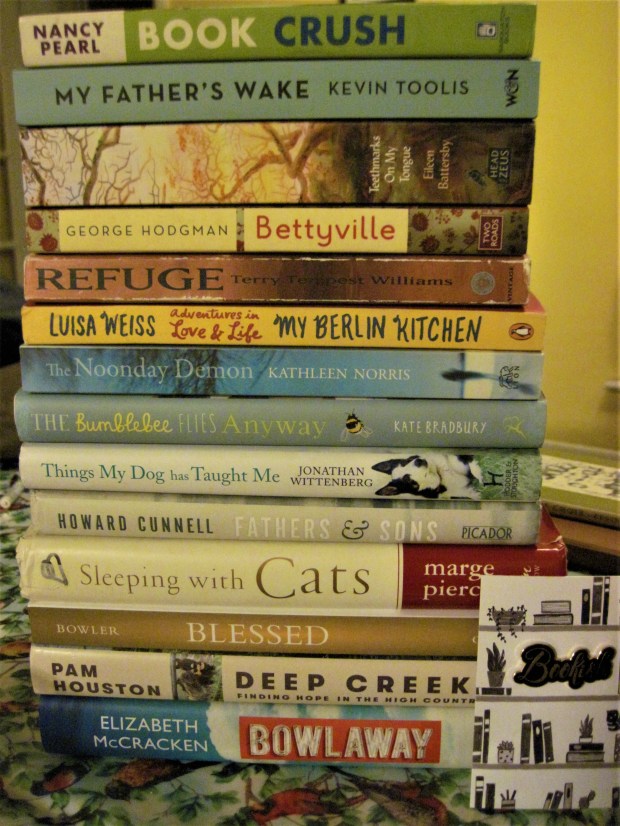
It won’t surprise you that my wish list contained only books this year, so with the exception of a mug mat, puffin socks and notecards, a couple of CDs, some chocolate and the perfect pin badge (“Bookish”), I received 14 books as presents: two novels and the rest nonfiction, mostly memoirs. I get much of my fiction from the library or from NetGalley/Edelweiss (particularly the American releases I can’t find elsewhere), but there are lots of nonfiction authors whose work I can’t find other than secondhand. I know where I’ll start with this pile: the Houston and McCracken are 2019 releases, so I want to read them before the end of the year in case they make a Best Of list. After that, I’ll let whimsy be my guide. A great haul!
Any additional Booker thoughts?
What caught your eye from my birthday stacks?
Penguin Influencers Event & 2020 Releases to Look Out For
Just a quick one to report on an event I attended in London last night – thanks to Annabel for asking if she could invite me along. This Penguin Influencers evening was held at sofa.com, a furniture showroom nestled beneath a railway arch near Southwark station. It was a slightly odd venue, but at least there were lots of comfy places to sit. Displays of proof copies were arranged on coffee tables so we could go around and fill our free Tana French tote bags with what caught our eye. There were a few dozen of us there: just one bloke; and mostly women younger than me.

It was good to meet some bloggers I recognized from Twitter and Facebook groups, including Rachel Gilbey (one of whose blog tours I’ve participated in) and Linda Hill (one of whose blog competitions I’ve won); I also spotted a couple more familiar faces, even though I didn’t get to say hello: Ova from Excuse My Reading and Umut from Umut Reviews. It was especially nice to see Beth Bonini, the Bookstagram queen, again. She used to live near me, though we didn’t realize that until just as she was moving from Newbury to London; she gave me her gorgeous bookcase.
As to the book acquisitions…
 The Wych Elm by Tana French is now out in paperback. I’ve not read anything by French, but have meant to for a long time because many trusted bloggers think she’s terrific, even if (like me) they don’t ordinarily read crime. This just exceeds 500 pages, so I think I’ll make it my doorstopper for next month, and it will also tie in with the R.I.P. challenge.
 I’d already read Olive, Again by Elizabeth Strout on my Kindle via a NetGalley download, but it’s great to now own one of my favorite releases of the year in print. (I found it difficult to go back through the e-book when writing my review because it didn’t have a proper table of contents and I’d forgotten all the chapter/story titles as I went along.)
 Three Hours by Rosamund Lupton is coming out on January 9th. It’s a tense school shooting novel set in Somerset, and the publicist told us that if we don’t agree with her in all those clichés – ‘I couldn’t put it down; I stayed up all night reading it’ – we can sue her!
 Dear Edward by Ann Napolitano is coming out on February 27th. Edward is the only survivor after a plane bound from New York City to Los Angeles crashes in Colorado. The novel is about how he rebuilds his life afterwards; the publicist warned us to bring tissues.
 Keeper by Jessica Moor is Penguin’s lead debut title of 2020, coming out on March 19th. When a young woman is found dead at a popular suicide site, the police dismiss it as an open-and-shut case of suicide. But the others at the women’s shelter where Katie Straw worked aren’t convinced. We meet five very different women from the refuge and hear their stories, in the process learning about some of the major threats that face women today. There are already words of praise in from Val McDermid and Jeanette Winterson.
It probably won’t be until later in December that I start reading 2020 titles and reporting back on what I’ve read, plus listing the other releases I’m most looking forward to.
Though I might have hoped for a few more free books to make the cost of my train ticket into London feel worthwhile, I enjoyed connecting with fellow bloggers, hearing about some 2020 releases, and briefly fooling myself that I’m an influencer in the book world. At the very least, I’m now on a Penguin mailing list so might be invited to some future events or sent some proofs.
The Wellcome Book Prize 2019 Awards Ceremony
The winner of the 10th anniversary Wellcome Book Prize is Murmur, Will Eaves’s experimental novel about Alan Turing’s state of mind and body after being subjected to chemical castration for homosexuality. It is the third novel to win the Prize. Although it fell in the middle of the pack in our shadow panel voting because of drastically differing opinions, it was a personal favorite for Annabel and myself – though we won’t gloat (much) for predicting it as the winner!

Clare, Laura and I were there for the announcement at the Wellcome Collection in London. It was also lovely to meet Chloe Metzger, another book blogger who was on the blog tour, and to see UK book v/blogging legends Eric Karl Anderson and Simon Savidge again.
The judges’ chair, novelist Elif Shafak, said, “This prize is very special. It opens up new and vital conversations and creates bridges across disciplines.” At a time when we “are pushed into monolithic tribes and artificial categories, these interdisciplinary conversations can take us out of our comfort zones, encouraging cognitive flexibility.” She praised the six shortlisted books for their energy and the wide range of styles and subjects. “Each book, each author, from the beginning, has been treated with the utmost respect,” she reassured the audience, and the judges approached their task with “an open mind and an open heart,” arriving at an “inspiring, thought-provoking, but we believe also accessible, shortlist.”
The judges brought each of the five authors present (all but Thomas Page McBee) onto the stage one at a time for recognition. Shafak admired how Sandeep Jauhar weaves together his professional expertise with stories in Heart, and called Sarah Krasnostein’s The Trauma Cleaner a “strangely life-affirming and uplifting book about a remarkable woman. … It’s about transitions.”
Doctor and writer Kevin Fong championed Amateur, his answer to the question “which of these books, if I gave it to someone, would make them better.” McBee’s Canongate editor received the recognition/flowers on the author’s behalf.

Writer and broadcaster Rick Edwards chose Arnold Thomas Fanning’s Mind on Fire for its “pressability factor” – the book about which he kept saying to friends and family, “you must read this.” It’s an “uncomfortably honest” memoir, he remarked, “a vivid and unflinching window, and for me it was revelatory.”
Writer, critic and academic Jon Day spoke up for Murmur, “a novel of great power and astonishing achievement,” about “what it means to know another person.”
Lastly, writer, comedian and presenter Viv Groskop spoke about Ottessa Moshfegh’s My Year of Rest and Relaxation, which she described as “Jane Eyre meets Prozac Nation.” The judges “had a lot of fun” with this novel, she noted; it’s “caustic, feminist … original, playful, [and] strangely profound.”
But only one book could win the £30,000 10th anniversary prize, and it was one that Shafak predicted will be “a future classic,” Murmur. Will Eaves thanked Charles Boyle of CB Editions for taking a chance on his work. He also acknowledged Alan Turing, who, like him, attended King’s College, Cambridge. As he read Turing’s papers, Eaves reported, he was gripped by the quality of the writing – “there’s a voice there.” Finally, in a clearly emotional moment, he thanked his mother, who died several years ago and grew up in relative poverty. She was a passionate believer in education, and Eaves encouraged the audience to bear in mind the value of a state education when going to the polls.
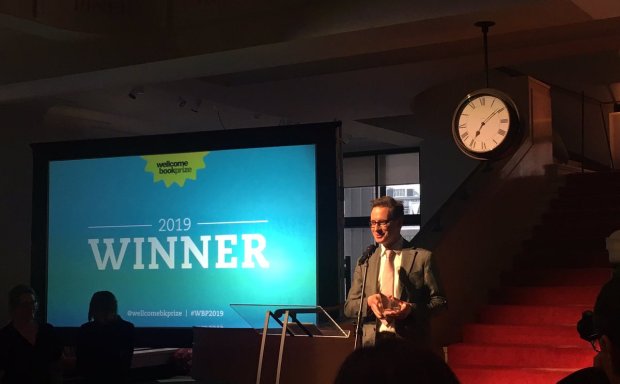
Photo by Eric Karl Anderson.
After the announcement we found Sarah Krasnostein, our shadow panel winner, and got a photo and a signature. She gave us the scoop on her work-in-progress, which examines six case studies, three from Australia and three from the USA, of people with extreme religious or superstitious beliefs, such as a widow who believes her husband was abducted by aliens. She’s exploring the “cognitive dissonance” that goes on in these situations, she said. Can’t wait for the new book!
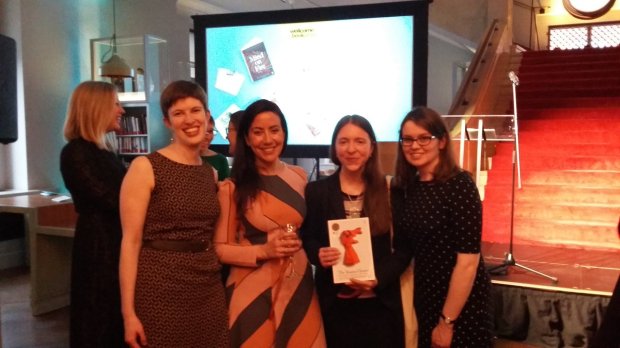
Laura, Sarah Krasnostein, me, Clare.
I also congratulated Will Eaves, whose book I’d covered for the blog tour, and got a signature. Other ‘celebrities’ spotted: Suzanne O’Sullivan, Ruth Padel and Robin Robertson. (Also a couple of familiar faces from Twitter that I couldn’t place, one of whom I later identified as Katya Taylor.)
I again acquired a Wellcome goody bag: this year’s limited-edition David Shrigley tote (I now have two so will pass one on to Annabel, who couldn’t be there) with an extra copy of The Trauma Cleaner to give to my sister.


Another great year of Wellcome festivities! Thanks to Midas PR, the Wellcome Book Prize and my shadow panel. Looking forward to next year already – I have a growing list of 2020 hopefuls I’ve read or intend to read.
See also: Laura’s post on the ceremony and the 5×15 event that took place the night before.
A Retrospective of 2018’s Events, Reading Projects and Themes
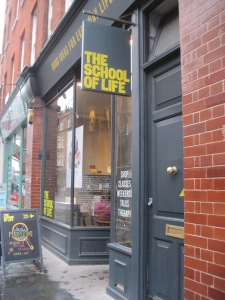 In January I had the tremendous opportunity to have a free personalized bibliotherapy appointment with Ella Berthoud at the School of Life in London. I’ve since read three of her prescriptions plus parts of a few others, but I still have several more awaiting me in the early days of 2019, and will plan to report back at some point on what I got out of all of them.
In March to April I ran a Wellcome Book Prize shadow panel for the second time. This year it was much more successful; I plan to do it again next year, too. (I actually proffered myself as an official judge for next year’s prize and got a very kind but entirely noncommittal e-mail back from the chairwoman, which I will have to take as victory enough.)
 Early April saw us visiting Wigtown, Scotland’s book town, for the first time. It was a terrific trip, but thus far I have not been all that successful at reading the 13 books that I bought! (Just two and a quarter so far.)
I reviewed three novels for Liz Dexter’s Iris Murdoch Readalong project: A Severed Head in March, The Italian Girl in June, and The Nice and the Good in September. In February I’ll pop back in with one more paperback that I own, The Sacred and Profane Love Machine. November was Margaret Atwood Reading Month, hosted by Marcie of Buried in Print and Naomi of Consumed by Ink, and provided me with a good excuse to read her first two novels.
 I did some “buddy reads” for the first time: Andrea Levy’s Small Island with Canadian blogger friends, including Marcie and Naomi; and West With the Night with Laila of Big Reading Life and Late Nights on Air with Naomi as well as Penny of Literary Hoarders during 20 Books of Summer, which I took part in for the first time. In May my mother and I read W. Somerset Maugham’s The Painted Veil and shared reading notes via e-mail. (A planned buddy read of The Left Hand of Darkness with Annabel and Laura was, alas, a fail.)
Besides the official Wellcome Book Prize blog tour in April, I participated in another 11 blog tours, averaging out at one a month. I’m going to scale back on these next year because I have too often found, after I accepted, that the book was a dud and I had to just run an extract because I could see I wasn’t going to get through it and write a review.
I joined my neighborhood book club in September and have attended every month since then. Our first four selections were Ladder of Years by Anne Tyler, The Gracekeepers by Kirsty Logan, Noonday by Pat Barker, and Number 11 by Jonathan Coe. I’d already read the Logan and Coe years ago and didn’t fancy rereading them, so wasn’t able to participate as much in those months, but was still glad to go along for the socializing. My husband even read the Coe and came to December’s meeting (was it just for the mince pies and mulled wine?!). We’ve set our first four reads for 2019 – the three below, in order from left to right, plus Ernest Hemingway’s The Garden of Eden, which I’ll borrow from the university library.

 In October I won tickets to see a production of Angela Carter’s Wise Children at the Old Vic in London. Just a few weeks later I won tickets to see Barbara Kingsolver in conversation about Unsheltered at the Southbank Centre. I don’t often make it into London, so it was a treat to have bookish reasons to go and blogging friends to meet up with (Clare of A Little Blog of Books joined me for both, and Laura T. was also at the Kingsolver event).
November was mostly devoted to novellas, for the third year in a row. Although I didn’t officially participate in Nonfiction November, I still enjoyed coming up with some fiction/nonfiction pairings and an “expert’s” list of women’s religious memoirs.
My husband wrote pretty much his entire PhD thesis this year and on Friday the 14th had his graduation ceremony. I was the moral support / proofreader / preparer of simple meals during the months when he was in the throes of writing up, so I will consider myself as sharing in the accomplishment. Congratulations, Dr. Foster!
This month and into January I’ll be reading the last few nominees for the National Book Critics Circle’s John Leonard Prize.

When the list of finalists was released, I was relieved to see I’d already read four out of seven (and three of those were ones I’d nominated); the other three – the Adjei-Brenyah and Brinkley stories and There There – were books I was keen to read but hadn’t managed to get hold of. About 80 of us NBCC members are reading the shortlist and voting for the best first book of the year by January 8th. Plus I’m technically up for an NBCC prize myself, in that I nominated myself (that’s how it works) for the 2018 Nona Balakian Citation for Excellence in Reviewing and sent in an application with five of my best reviews from the year.
The Ones that Got Away
 Two posts I planned but never got around to putting together would have commemorated the 50th anniversary of Thomas Merton’s death (I own several of his books but am most interested in reading The Seven-Storey Mountain, which celebrated its 70th birthday in October) and the 40th anniversary of the publication of The Snow Leopard by the late Peter Matthiessen. Perhaps I’ll try these authors for the first time next year instead.
Final Book Serendipity Incidents
In the second half of the year I started keeping track of all my weird reading coincidences, posting about them on Twitter or Instagram before collecting them into a blog post a couple months ago. Here are a few that popped up since then or recalled earlier reads from the year:
- Two protagonists named Willa: Anne Tyler’s Clock Dance and Barbara Kingsolver’s Unsheltered
- Two novels featuring bog people: Anne Youngson’s Meet Me at the Museum and Sarah Moss’s Ghost Wall
- Two dogs named Flash: Ben Crane’s Blood Ties and Andrew Marshall’s The Power of Dog
- Multiple sclerosis is an element in Christian Donlan’s The Unmapped Mind: A Memoir of Neurology, Incurable Disease and Learning How to Live, Jennifer Richardson’s Americashire and Michelle Obama’s Becoming (her father had it)
- The ideas of Freud are mentioned in a 1910s setting in Nancy Horan’s Loving Frank, Annabel Abbs’s Frieda and Daniel Mason’s The Winter Soldier
- Mermaids (or ‘mermaids’) and/or mermen appear in Imogen Hermes Gowar’s The Mermaid and Mrs Hancock, Melissa Broder’s The Pisces, Daniel Mason’s The Winter Soldier, and a series of poems in Miriam Darlington’s Windfall
- Bohemian writer dies young of tuberculosis (or similar) in novels about their wives: Annabel Abbs’s Frieda (D.H. Lawrence) and Nancy Horan’s Under the Wide and Starry Sky (Robert Louis Stevenson)
- Two books that mention the Indonesian practice of keeping dead relatives as mummies and bringing them out on occasion for ritual celebrations: From Here to Eternity by Caitlin Doughty and The Hot Young Widows Club by Nora McInerny
- Two books that include a trip to Lourdes for healing: Heal Me by Julia Buckley and Constellations by Sinéad Gleeson
- Two books that mention the irony of some of the most well-loved modern Christmas songs being written by Jews: In Mid-Air by Adam Gopnik and Christmas Days by Jeanette Winterson
Surprise Themes from My Year’s Reading
A few of these make sense – cults fit with my interest in narratives of religious experience, and it doesn’t take a psychologist to see that my relationship with my father has been an ongoing issue in recent years (I wonder how the numbers would compare for books about mothers?) – but most are completely random.
I decided a theme had to show up at least three times to make the list. Some topics I enjoyed so much I’ll keep reading about them next year. Within a category the books are in rough chronological order of my reading, and I include skims, DNFs and books in progress.
 Fathers (absent/difficult) + fatherhood in general: Educated by Tara Westover, And When Did You Last See Your Father? by Blake Morrison, The Italian Teacher by Tom Rachman, In the Days of Rain by Rebecca Stott, Implosion by Elizabeth W. Garber, Little Women by Louisa May Alcott & March by Geraldine Brooks, The Unmapped Mind by Christian Donlan, Never Mind and Bad News by Edward St. Aubyn, The Reading Promise by Alice Ozma, How to Build a Boat by Jonathan Gornall, Lake Success by Gary Shteyngart, Normal People by Sally Rooney, Rosie by Rose Tremain, My Father and Myself by J.R. Ackerley, Everything Under by Daisy Johnson, Ghost Wall by Sarah Moss, Surfacing by Margaret Atwood, Heart Berries by Terese Marie Mailhot, Blood Ties by Ben Crane, To Throw Away Unopened by Viv Albertine, Small Fry by Lisa Brennan-Jobs
Addiction: The Leavers by Lisa Ko, Mayhem by Sigrid Rausing, The Only Story by Julian Barnes, The Small Door of Your Death by Sheryl St. Germain, Writing and Madness in a Time of Terror by Afarin Majidi, Marlena by Julie Buntin, Ninety Days by Bill Clegg, Bad News by Edward St. Aubyn, Pretend I’m Dead by Jen Beagin, Heart Berries by Terese Marie Mailhot
 Greenland: A Wilder Time by William E. Glassley, This Cold Heaven by Gretel Ehrlich, Miss Smilla’s Feeling for Snow by Peter Høeg, On Balance by Sinéad Morrissey (the poem “Whitelessness”), Cold Earth by Sarah Moss, Crimson by Niviaq Korneliussen, The Library of Ice by Nancy Campbell
Cults: Educated by Tara Westover, Harmony by Carolyn Parkhurst, In the Days of Rain by Rebecca Stott, The Incendiaries by R.O. Kwon, A River Could Be a Tree by Angela Himsel
Trees: Ladders to Heaven by Mike Shanahan, The Overstory by Richard Powers, The Man Who Planted Trees by Jean Giono, The Wood and The Secret Life of the Oak by John Lewis-Stempel
 Flying: Skybound by Rebecca Loncraine, West With the Night by Beryl Markham, Going Solo by Roald Dahl, Skyfaring by Mark Vanhoenacker
The Anglo experience in Africa: Free Woman: Life, Love and Doris Lessing by Lara Feigel, Leaving Before the Rains Come by Alexandra Fuller, West With the Night by Beryl Markham, Going Solo by Roald Dahl
Korean-American women: The Incendiaries by R.O. Kwon, If You Leave Me by Crystal Hana Kim, All You Can Ever Know by Nicole Chung, Famous Adopted People by Alice Stephens, Digging to America by Anne Tyler
 New Zealand: The Garden Party and Other Stories by Katherine Mansfield, To the Is-Land by Janet Frame, Dunedin by Shena Mackay
Life in the White House: Living History by Hillary Rodham Clinton, All the Presidents’ Pastries by Roland Mesnier, Becoming by Michelle Obama
Lighthouses: Stargazing: Memoirs of a Young Lighthouse Keeper by Peter Hill, The Bird Artist by Howard Norman, Under the Wide and Starry Sky by Nancy Horan (about Robert Louis Stevenson, whose family built lighthouses)

More lighthouse books ready for next year.
Butterflies: Four Wings and a Prayer by Sue Halpern, Magdalena Mountain by Robert Michael Pyle, Mama Amazonica by Pascale Petit

More butterfly books ready for next year.
What were some of the highlights of your bookish year?
What odd coincidences and recurring themes have you spotted in your year’s reading?
New Networks for Nature 2018
This past weekend was my fourth time attending part of Nature Matters, the annual New Networks for Nature conference. I’ve written about it here a couple of times, once when there was a particular focus on nature poetry and another time when it was held in Cambridge. This year it was back in Stamford for a last time for the 10th anniversary. Next year: York.
What’s so special about the conference is its interdisciplinary nature: visual artists, poets, musicians, writers, politicians, academics and conservationists alike attend and present. So although the event might seem geared more towards my biologist husband, there’s always plenty to interest me, too. The roster is a who’s who of British nature writing: Mark Avery, Tim Birkhead, Mark Cocker, Mary Colwell, Miriam Darlington, Richard Kerridge, Peter Marren, Michael McCarthy, Stephen Moss, Adam Nicolson, Katharine Norbury, Ruth Padel, Laurence Rose and Mike Toms were all there this year. I also appreciate the atmosphere of friendly disagreement about what nature is and how best to go about conserving it.
I attended on Friday, a jam-packed day of sessions that began with Bob Gibbons presenting on the flowers and wildlife of Transylvania, a landscape and culture that are still almost medieval in character. Then Jeremy Mynott interviewed Mark Cocker about his latest book, Our Place: Can We Save Britain’s Wildlife before It Is Too Late? I’ve read other Cocker books, but not this one yet. Its main point seems to be that the country’s environmental organizations need to work together. Individuals and NGOs are doing passionate and wonderful things towards nature conservation, Cocker said, but overall “we ain’t getting there.” Bad news doesn’t sell, though, he noted: his book has sold just 6,000 copies compared to 30,000 for Wilding, Isabella Tree’s story of the rewilding success at Knepp.
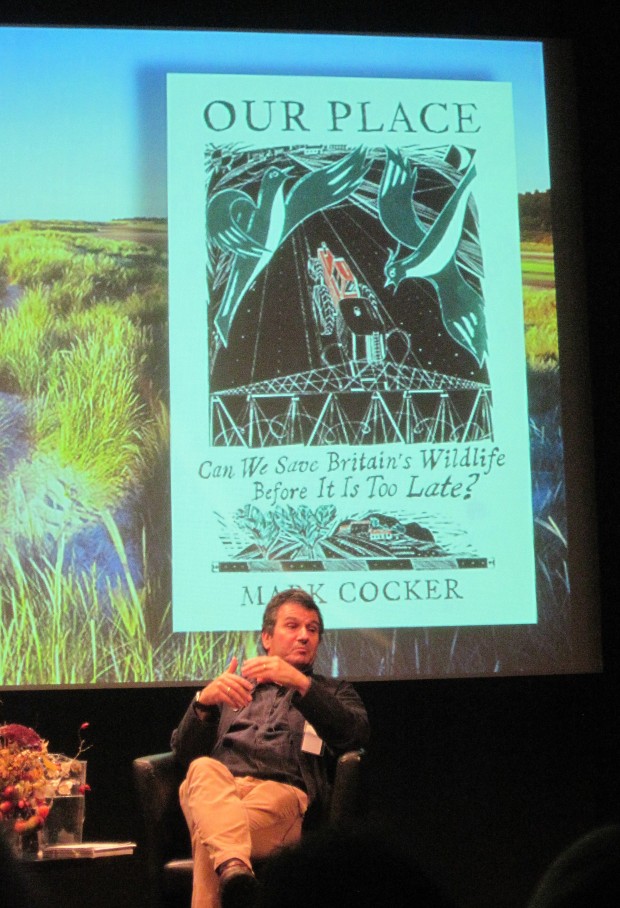
Mark Cocker
Cocker refused to define nature in a one-sentence soundbite, but argued that we have to consider ourselves a part of it rather than thinking about it as a victim ‘out there’ (the closest he came to a definition was “the totality of the system we are a part of”). “Our responsibility, terrifyingly, is unending,” he said – every time you open a new plastic toothbrush, you can’t forget that the old one you throw away will effectively be around forever. Our Place isn’t just composed of polemic, though: it’s structured around six beloved landscapes and finds moments of transcendence in being out in nature. You find hope by walking out the door, feeling the wind on your face and hearing the starling singing, Cocker remarked. He closed by reading a description from the book of the north Norfolk coast.
Either side of lunch were panels on how social media (mostly Twitter, plus smartphone apps) can serve nature and the role that poetry might play in environmental activism, with a brief interlude from visual artist Derek Robertson, who responded to the refugee crisis by traveling to Calais and Jordan and painting human figures alongside migratory birds. In the poetry session I especially enjoyed hearing from Ben Smith, a University of Plymouth lecturer and poet with a debut novel coming out in April 2019 (Doggerland, from Fourth Estate). He recently collaborated with Dr. Lee de Mora on a set of poems inspired by the Earth System Model, which provides the data for the International Panel on Climate Change. Climate modeling might seem an odd subject for poetry, but it provides excellent metaphors for failure and hope in “Spinning Up,” “Data Sets” and “Alternate Histories.”
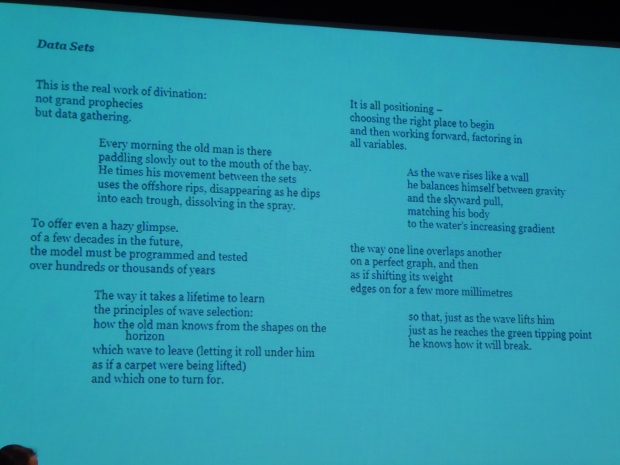
Ben Smith’s poem links unlikely subjects: surfing and climate modeling. Photo by Chris Foster.
Birmingham lecturer Isabel Galleymore, whose debut collection Significant Other is coming out from Carcanet Press in March, talked about how she uses the tropes of love poetry (praise, intimacy, pursuit and loss) when writing about environmental crisis. This shift in her focus began at university when she studied Wordsworth through an ecocritical lens, she said. Jos Smith and Luke Thompson were the other two poets on a panel chaired by Matt Howard. Howard quoted Keats – “We hate poetry that has a design on us” – and asked the poets for reactions. Smith agreed that polemic and poetry don’t mix well, yet said it’s good to have a reason for writing. He thinks it’s best when you can hold two or more ideas in play at a time.
After tea and a marvelous cake spread, it was time for a marathon of three sessions in a row, starting with three short presentations on seabirds: one by a researcher, one by a nature reserve manager, and one by a young artist who produced Chinese-style scroll paintings of the guillemot breeding colonies on Skomer and exhibited them in Sheffield Cathedral.
Next up was a highlight of the weekend: Green Party MP Caroline Lucas and Labour peer Baroness Barbara Young conversed with Michael McCarthy on the topic “Can Conventional Politics Save the Environment?” Both decried short-term thinking, the influence of corporations and the media, and government departments not working together. No one was ever elected on the promise of “less,” McCarthy suggested, but in reply Lucas talked about redefining terms: less of what? more of what? If we think in terms of quality of life, things like green energy and the sharing economy will become more appealing. She also believes that more people care about green issues than we think, but, e.g., a London mum might speak out about air quality without ever using the word “environment.” Baroness Young concluded that “adversarial politics, flip-flopping between parties, isn’t working” and we must get beyond it, at the local level if nothing else. That rang true for me for American politics, too.
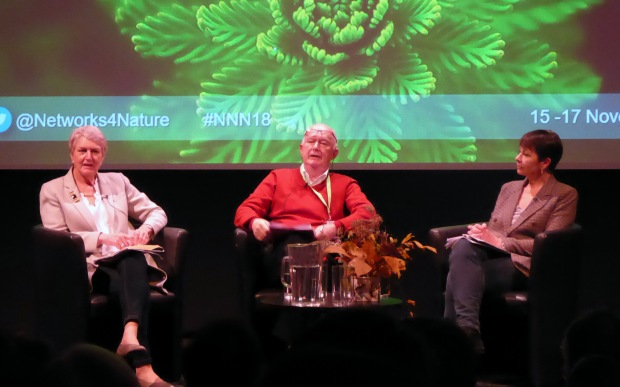
Young, McCarthy and Lucas. Photo by Chris Foster.
Before the day ended with a drinks reception, we were treated to a completely different presentation by Lloyd Buck, who raises and trains birds, mostly for television footage. So, for instance, the greylag geese flying in formation alongside the boat in David Attenborough’s 2012 Sixty Years in the Wild TV special had imprinted on Lloyd’s wife, Rose. Buck spoke about bonding with birds of very different personalities, and introduced the audience to five starlings (who appeared in Poldark), a peregrine, a gyrfalcon, a golden eagle, and Bran the raven, who showed his intelligence by solving several puzzles to find hidden chunks of meat.


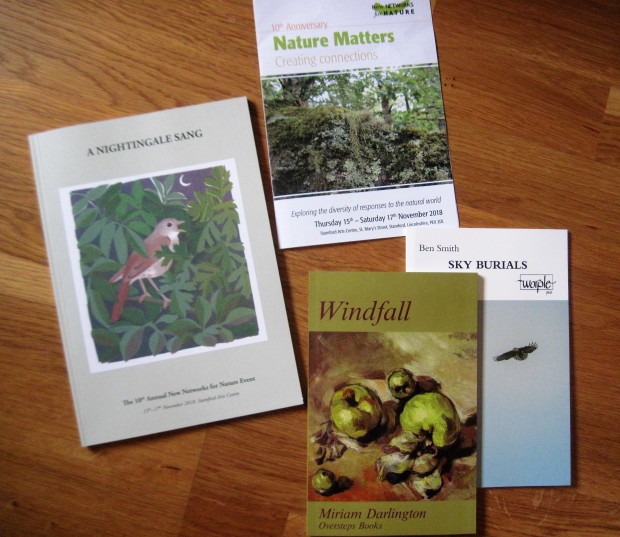
I purchased two books of poetry from the bookstall – I had no idea Darlington had written poetry before her nature books – and the conference brochure itself is a wonderful 75-page collection of recent artwork and short nature writing pieces, including most of the presenters but also Patrick Barkham, Tim Dee, Paul Evans, Philip Hoare, Richard Mabey, Helen Macdonald and Chris Packham – a keynote speaker announced for next year. I’ve been skipping through the booklet and have most enjoyed the pieces by Melissa Harrison and Helen Scales so far. Altogether, an inspiring and worthwhile weekend.
 Bookish Beck = Rebecca Foster. American transplant to England. Freelance proofreader and book reviewer.
 Bookish Beck