Book Serendipity in the Final Months of 2020
I call it Book Serendipity when two or more books that I read at the same time or in quick succession have something pretty bizarre in common. Because I have so many books on the go at once (20+), I suppose I’m more prone to such incidents than some. I also list these occasional reading coincidences on Twitter. (Earlier incidents from the year are here, here, and here.)
- Eel fishing plays a role in First Love, Last Rites by Ian McEwan and The Gospel of the Eels by Patrik Svensson.
- A girl’s body is found in a canal in First Love, Last Rites by Ian McEwan and Carrying Fire and Water by Deirdre Shanahan.
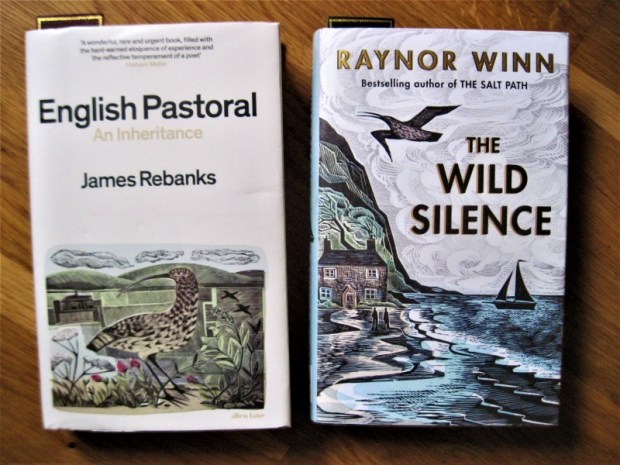
- Curlews on covers by Angela Harding on two of the most anticipated nature books of the year, English Pastoral by James Rebanks and The Wild Silence by Raynor Winn (and both came out on September 3rd).
- Thanksgiving dinner scenes feature in 666 Charing Cross Road by Paul Magrs and Such a Fun Age by Kiley Reid.
- A gay couple has the one man’s mother temporarily staying on the couch in 666 Charing Cross Road by Paul Magrs and Memorial by Bryan Washington.
- I was reading two “The Gospel of…” titles at once, The Gospel of Eve by Rachel Mann and The Gospel of the Eels by Patrik Svensson (and I’d read a third earlier in the year, The Gospel of Trees by Apricot Irving).

- References to Dickens’s David Copperfield in The Cider House Rules by John Irving and Mudbound by Hillary Jordan.
- The main female character has three ex-husbands, and there’s mention of chin-tightening exercises, in The Idea of Perfection by Kate Grenville and The Pumpkin Eater by Penelope Mortimer.
- A Welsh hills setting in On the Red Hill by Mike Parker and Along Came a Llama by Ruth Janette Ruck.


- Rachel Carson and Silent Spring are mentioned in A Year on the Wing by Tim Dee, The Frayed Atlantic Edge by David Gange, English Pastoral by James Rebanks and The Gospel of the Eels by Patrik Svensson. SS was also an influence on Losing Eden by Lucy Jones, which I read earlier in the year.
- There’s nude posing for a painter or photographer in The Glass Hotel by Emily St. John Mandel, How to Be Both by Ali Smith, and Adults by Emma Jane Unsworth.
- A weird, watery landscape is the setting for The Swallowed Man by Edward Carey and Piranesi by Susanna Clarke.
- Bawdy flirting between a customer and a butcher in The Idea of Perfection by Kate Grenville and Just Like You by Nick Hornby.


- Corbels (an architectural term) mentioned in The Idea of Perfection by Kate Grenville and Wakenhyrst by Michelle Paver.
- Near or actual drownings (something I encounter FAR more often in fiction than in real life, just like both parents dying in a car crash) in The Idea of Perfection, The Glass Hotel, The Gospel of Eve, Wakenhyrst, and Love and Other Thought Experiments.
- Nematodes are mentioned in The Gospel of the Eels by Patrik Svensson and Real Life by Brandon Taylor.
- A toxic lake features in The New Wilderness by Diane Cook and Real Life by Brandon Taylor (both were also on the Booker Prize shortlist).


- A black scientist from Alabama is the main character in Transcendent Kingdom by Yaa Gyasi and Real Life by Brandon Taylor.
- Graduate studies in science at the University of Wisconsin, and rivals sabotaging experiments, in Artifact by Arlene Heyman and Real Life by Brandon Taylor.
- A female scientist who experiments on rodents in Transcendent Kingdom by Yaa Gyasi and Artifact by Arlene Heyman.
- There are poems about blackberrying in Dearly by Margaret Atwood, Passport to Here and There by Grace Nichols, and How to wear a skin by Louisa Adjoa Parker. (Nichols’s “Blackberrying Black Woman” actually opens with “Everyone has a blackberry poem. Why not this?” – !)


What’s the weirdest reading coincidence you’ve had lately?
Book Serendipity in 2020: Part III
I call it Book Serendipity when two or more books that I read at the same time or in quick succession have something pretty bizarre in common. Because I have so many books on the go at once (usually around 20), I suppose I’m more prone to such incidents than some. I also list these occasional reading coincidences on a Twitter thread.
The following are in chronological order. (January to March’s incidents appeared in this post, and April to July’s here.)
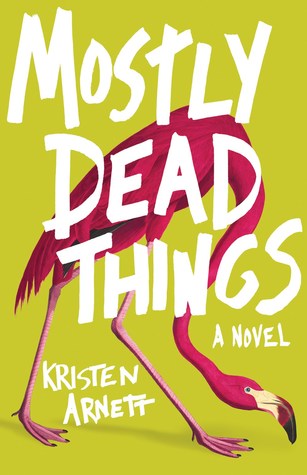
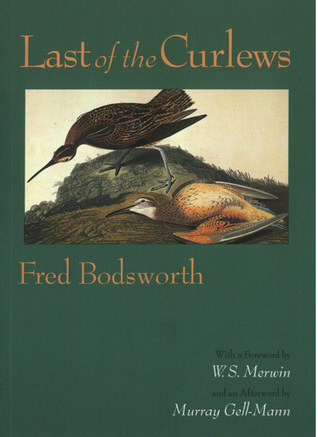
- Reading two books whose covers feature Audubon bird paintings.
- A 19th-century female character inherits a house but knows it will pass instantly to her spouse in Property by Valerie Martin and Islands of Mercy by Rose Tremain.
- A bag/sack of potatoes as a metaphor in Other People’s Pets by R.L. Maizes and Redhead by the Side of the Road by Anne Tyler.
- Nipple rings get a mention in Addition by Toni Jordan and Other People’s Pets by R.L. Maizes.
- Taxidermy is an element (most major in the first one) in Mostly Dead Things by Kristen Arnett, Wild Child by Patrick Barkham and Into the Tangled Bank by Lev Parikian.
- A discussion of bartenders’ habit of giving out free drinks to get big tips (a canny way of ‘stealing’ from the employer) in Kitchen Confidential by Anthony Bourdain and Other People’s Pets by R.L. Maizes.

- Characters named Seamus in Addition by Toni Jordan and Mother’s Milk by Edward St. Aubyn.
- Wild boar mentioned in Mostly Dead Things by Kristen Arnett, Other People’s Pets by R.L. Maizes and My Berlin Kitchen by Luisa Weiss.
- A fastidious bachelor who’s always cleaning his living space in Other People’s Pets by R.L. Maizes and Redhead by the Side of the Road by Anne Tyler.
- A character is a blogger in Americanah by Chimamanda Ngozi Adichie, Other People’s Pets by R.L. Maizes and My Berlin Kitchen by Luisa Weiss.
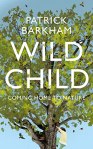
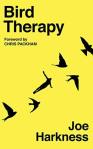
- Norfolk settings in Wild Child by Patrick Barkham and Bird Therapy by Joe Harkness (and both were on the Wainwright Prize longlist).
- A close aunt‒niece relationship in Mostly Dead Things by Kristen Arnett and Addition by Toni Jordan.
- A guy does dumb accents when talking about food, and specifically a French accent for “hamburger,” in Addition by Toni Jordan and Redhead by the Side of the Road by Anne Tyler.
- Recipes for a potato salad that is dressed with oil and vinegar rather than mayonnaise in Tender at the Bone by Ruth Reichl and My Berlin Kitchen by Luisa Weiss.
- Mentions of the Watergate hearings in A Crime in the Neighborhood by Suzanne Berne and Tender at the Bone by Ruth Reichl.
- Twins in Half of a Yellow Sun by Chimamanda Ngozi Adichie, A Crime in the Neighborhood by Suzanne Berne and The Yonahlossee Riding Camp for Girls by Anton DiSclafani.
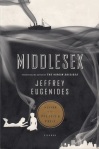
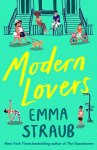
- Characters nicknamed “Lefty” in Middlesex by Jeffrey Eugenides and Modern Lovers by Emma Straub.
- Characters named Abir/Abeer in A Traveller at the Gates of Wisdom by John Boyne and Apeirogon by Colum McCann.
- Kayaking in Scotland in The Frayed Atlantic Edge by David Gange and Summerwater by Sarah Moss.
- The military coup in Nigeria features in Half of a Yellow Sun by Chimamanda Ngozi Adichie and The Shadow of the Sun by Ryszard Kapuściński.
- The song “White Christmas” is quoted in Mudbound by Hillary Jordan and Tales of the City by Armistead Maupin.
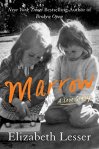
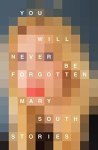
- The fact that fingerprints are formed by the fetus touching the uterine wall appears in Marrow by Elizabeth Lesser and You Will Never Be Forgotten by Mary South.
- Orkney as a setting in Close to Where the Heart Gives Out by Malcolm Alexander and The Frayed Atlantic Edge by David Gange. I’m hankering to go back!
- Teresa of Ávila is mentioned in Marrow by Elizabeth Lesser and You Will Never Be Forgotten by Mary South.
- A dog named Bingo in Half of a Yellow Sun by Chimamanda Ngozi Adichie and Modern Lovers by Emma Straub. (B-I-N-G-O!)
- Four sisters are given a joint name in A Crime in the Neighborhood by Suzanne Berne (Fran-Claire-Lois-Ada) and Marrow by Elizabeth Lesser (KaLiMaJo).
- The same Lilla Watson quote (“If you have come to help me, you are wasting your time. But if you have come because your liberation is bound up with mine, then let us work together”) appears in both The Gospel of Trees by Apricot Irving and Marrow by Elizabeth Lesser.
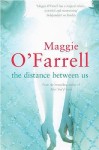
- An Irish author and Hong Kong setting for Exciting Times by Naoise Dolan and The Distance Between Us by Maggie O’Farrell.

- The Dorothy Parker quote “Men seldom make passes at girls who wear glasses” appears in both What Are You Going Through by Sigrid Nunez and First Time Ever by Peggy Seeger.
What’s the weirdest reading coincidence you’ve had lately?
Book Serendipity, April‒Early July
I call it serendipitous when two or more books that I read at the same time or in quick succession have something pretty bizarre in common. Because I have so many books on the go at once (usually around 20), I suppose I’m more prone to such incidents than some. I also list these occasional reading coincidences on Twitter. The following are in rough chronological order. (January to March appeared in this post.)
- Characters named Sonny in Pew by Catherine Lacey, My Father’s Wake by Kevin Toolis, and Sacred Country by Rose Tremain.
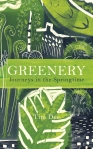
- A double dose via Greenery via Tim Dee – while reading it I was also reading Other People’s Countries by Patrick McGuinness, whom he visits in Belgium; and A Cold Spring by Elizabeth Bishop, referenced in a footnote.


- A red thread is worn as a bracelet for its emotional or spiritual significance in The Book of Longings by Sue Monk Kidd and Plan B by Anne Lamott.
- The Library of Alexandria features in Footprints by David Farrier and The Book of Longings by Sue Monk Kidd.
- The Artist’s Way is mentioned in At Hawthorn Time by Melissa Harrison and Traveling Mercies by Anne Lamott.
- Characters sleep in a church in Pew by Catherine Lacey and Abide With Me by Elizabeth Strout. (And both novels have characters named Hilda.)


- Coins being flung away among some trees in In the Springtime of the Year by Susan Hill and The Book of Longings by Sue Monk Kidd (literally the biblical 30 pieces of silver in the Kidd, which is then used as a metaphor in the Hill).
- Rabbit-breeding projects in When the Lights Go Out by Carys Bray and Parable of the Sower by Octavia E. Butler.


- Mentions of the Great Barrier Reef in When the Lights Go Out by Carys Bray and Footprints by David Farrier.
- The same very specific fact – that Seamus Heaney’s last words, in a text to his wife, were “Noli timere” – was mentioned in Curlew Moon by Mary Colwell and Greenery by Tim Dee.
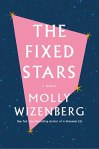
- Klondike ice cream bars appeared in both Small Victories by Anne Lamott and The Fixed Stars by Molly Wizenberg.

- The metaphor of a rising flood only the parent or the child will survive is used in both Exit West by Mohsin Hamid and What We Carry by Maya Lang.
- The necessity of turning right to save oneself in a concentration camp setting is mentioned in both Man’s Search for Meaning by Viktor Frankl and Fugitive Pieces by Anne Michaels.
- An English child is raised in North Africa in Oleander, Jacaranda by Penelope Lively and The Child in Time by Ian McEwan.
- The Bristol Stool Chart appeared in both Gulp by Mary Roach and The Bad Doctor by Ian Williams.


- A Greek island setting in both Exit West by Mohsin Hamid and Fugitive Pieces by Anne Michaels (plus, earlier, in A Theatre for Dreamers by Polly Samson).
- Both Writers & Lovers by Lily King and Mother: A Memoir by Nicholas Royle mention Talking Heads within the first 20 pages.
- A trip to North Berwick in the early pages of Mother: A Memoir by Nicholas Royle, and hunting for cowrie shells on the beach – so familiar from Evie Wyld’s The Bass Rock, read the previous month. (Later, more collecting of cowrie shells in Oleander, Jacaranda by Penelope Lively.)
- Children’s authors are main characters in The Crow Road by Iain Banks and The Child in Time by Ian McEwan.
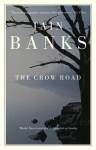

- A character is killed by a lightning strike in The Crow Road by Iain Banks and Writers & Lovers by Lily King.
- Characters named Ash in The Crow Road by Iain Banks and The Fixed Stars by Molly Wizenberg.
 A brother steals the main character’s object of affection in The Crow Road by Iain Banks and Sacred Country by Rose Tremain.
- A minor character in Parable of the Sower by Octavia E. Butler is called Richard Rohr … meanwhile, I was reading a book by Richard Rohr, The Universal Christ.
- A maternity ward setting in The Pull of the Stars by Emma Donoghue and The Bell in the Lake by Lars Mytting.
- A love triangle is a central element in Writers & Lovers by Lily King and The Bell in the Lake by Lars Mytting.


- Reading a book by a Galloway (The Trick Is to Keep Breathing by Janice Galloway) and a book about Galloway (Native: Life in a Vanishing Landscape by Patrick Laurie) simultaneously.
- Attending college in L.A. in The Vanishing Half by Brit Bennett and Dreams from My Father by Barack Obama.
- Two books that reference the same Darwin quote: Into the Tangled Bank by Lev Parikian, and “The Entangled Bank” is the title of the final poem in Red Gloves by Rebecca Watts.


- Characters with the surname Savage in The Box Garden by Carol Shields and Islands of Mercy by Rose Tremain.
- A character is taught how to eat oysters in The Vanishing Half by Brit Bennett and Kitchen Confidential by Anthony Bourdain.
- A Louisiana setting in The Vanishing Half by Brit Bennett and Property by Valerie Martin.
- Characters named Stella in The Vanishing Half by Brit Bennett and The Group by Lara Feigel.


- The last line of the book has a character saying “Come in” in Americanah by Chimamanda Ngozi Adichie and Ankomst by Gøhril Gabrielsen.
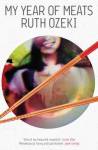
- Currently reading four books with mixed-race narrators: (Black/white) The Girl Who Fell from the Sky by Heidi Durrow, Dreams from My Father by Barack Obama, Memorial Drive by Natasha Trethewey; and (Japanese/white) My Year of Meats by Ruth Ozeki.
- Currently reading two novels in which a pair of orphaned sisters are taken in by relatives (Deerbrook by Harriet Martineau and Rise and Shine by Anna Quindlen). Plus two more novels with orphan characters: The Girl Who Fell from the Sky and My Year of Meats.
-
- In two of these four (not telling which, though you can safely assume it’s not the Victorian novel!), they are orphans because both parents were killed in a car accident. I feel like this is a fictional setup that I encounter all the time (cf. All the Beautiful Girls, The Monsters of Templeton, Saint Maybe) that can’t be that common in real life?
-


- Vassar as an alma mater in Kitchen Confidential by Anthony Bourdain and The Group by Mary McCarthy.
- Punahou School (Honolulu, Hawaii) is the author’s alma mater in The Noonday Demon by Kathleen Norris and Dreams from My Father by Barack Obama.
What’s the weirdest reading coincidence you’ve had lately?
Book Serendipity: 2020, Part I
I call it serendipitous when two or more books that I’m reading at the same time or in quick succession have something pretty bizarre in common. Because I have so many books on the go at once – usually between 10 and 20 – I guess I’m more prone to such incidents. I also post these occasional reading coincidences on Twitter. (The following are in rough chronological order.)
- A Wisconsin setting in three books within a month (Shotgun Lovesongs by Nickolas Butler, This Is How It Always Is by Laurie Frankel and Crossing to Safety by Wallace Stegner)
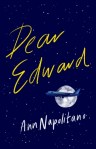
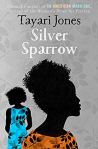
- I came across a sculpture of “a flock of 191 silver sparrows” in Dear Edward by Ann Napolitano while also reading Silver Sparrow by Tayari Jones.
- Characters nearly falling asleep at the wheel of a car in Crossing to Safety by Wallace Stegner and In the Dream House by Carmen Maria Machado
- There’s no escaping Henry David Thoreau! Within the span of a week I saw him mentioned in The Library of Ice by Nancy Campbell, The Snow Tourist by Charlie English, Losing Eden by Lucy Jones and Crossing to Safety by Wallace Stegner. Plus I’d just read the whole graphic novel Thoreau and Me by Cédric Taling.


- Discussions of the work of D.H. Lawrence in Unfinished Business by Vivian Gornick and The Offing by Benjamin Myers
- That scientific study on patient recovery in hospital rooms with a window view vs. a view of a brick wall turns up in both Dear Life by Rachel Clarke and Losing Eden by Lucy Jones.
- The inverted teardrop shapes mirror each other on these book covers:
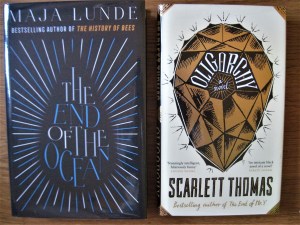
- Punchy, one-word titles on all these books I was reading simultaneously:

- Polio cases in The Golden Age by Joan London, Nemesis by Philip Roth and Crossing to Safety by Wallace Stegner
- An Italian setting and the motto “Pazienza!” in Dottoressa by Susan Levenstein and Crossing to Safety by Wallace Stegner
- Characters named Lachlan in The Ninth Child by Sally Magnusson and The Inland Sea by Madeleine Watts


- Mentions of the insecticide Flit in Nemesis by Philip Roth and Sacred Country by Rose Tremain
- A quoted Leonard Cohen lyric in Traveling Mercies by Anne Lamott; Cohen as a character in A Theatre for Dreamers by Polly Samson
- Plague is brought to an English village through bolts of cloth from London in Year of Wonders by Geraldine Brooks and Hamnet by Maggie O’Farrell; both also feature a woman who is a herbal healer sometimes mistaken for a witch (and with similar names: Anys versus Agnes)

- Gory scenes of rats being beaten to death in Hamnet by Maggie O’Farrell and Nemesis by Philip Roth
- Homemade mobiles in a baby’s room in A Theatre for Dreamers by Polly Samson and Sacred Country by Rose Tremain
- Speech indicated by italics rather than the traditional quotation marks in Pew by Catherine Lacey and Red at the Bone by Jacqueline Woodson
What’s the weirdest reading coincidence you’ve had lately?
Final Book Serendipity Incidents to Close out 2019
Just a short post this time. I call it serendipitous when two or more books that I’m reading at the same time or in quick succession have something pretty bizarre in common. Because I have so many books on the go at once – usually between 10 and 20 – I guess I’m more prone to such incidents. I post these occasional reading coincidences on Twitter. What’s the weirdest one you’ve had lately? (The following are in rough chronological order.)
[Previous 2019 Book Serendipity posts covered April, July and October.]
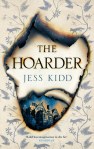
- Characters sit for a portrait in The Confession by Jessie Burton and The Hoarder by Jess Kidd.
- An obsession with saints in Fifth Business by Robertson Davies and The Hoarder by Jess Kidd.

- A mention of the urban myth regarding why our fingertips prune in water (something about an outdated evolutionary strategy for gripping underwater) in The Body by Bill Bryson and Humiliation: Stories by Paulina Flores.
- Memories of childhood trips to Martha’s Vineyard in Chances Are by Richard Russo and The Dearly Beloved by Cara Wall.
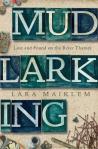
- The River Thames is the setting for Mudlarking by Lara Maiklem and Once Upon a River by Diane Setterfield.

- Mentions of pelicans being clubbed to death in God Unbound: Theology in the Wild by Brian McLaren and Autumn Across America by Edwin Way Teale.
- A character who speaks and writes backwards words in The Poisonwood Bible and The Robber Bride.
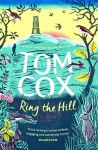
- Epigraphs containing folk names for the hare, and soon enough a dead hare, in Ring the Hill by Tom Cox and Starve Acre by Andrew Michael Hurley.

- An unexpected THIRD set of conjoined twins encountered this year (after Cutting for Stone and The Girls) in Fall on Your Knees by Ann-Marie Macdonald.
- The song “Oh My Darling, Clementine” is quoted in The Robber Bride and Fall on Your Knees.
- Warming an orphaned lamb in a low oven in Moral Disorder by Margaret Atwood and The Dig by Cynan Jones.
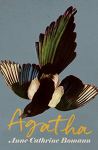
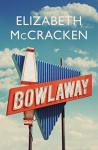
- A character is presumed incapable of laughter in Agatha by Anne Cathrine Bomann and Bowlaway by Elizabeth McCracken.
- Marilynne Robinson’s Housekeeping is mentioned in The River Capture by Mary Costello and Surrender by Joanna Pocock.
Book Serendipity, 2019 Second Half
I call it serendipitous when two or more books that I’m reading at the same time or in quick succession have something pretty bizarre in common. Because I have so many books on the go at once – usually between 10 and 20 – I guess I’m more prone to such incidents. I post these occasional reading coincidences on Twitter. What’s the weirdest one you’ve had lately? (The following are in rough chronological order.)
[Previous 2019 Book Serendipity posts from April and July.]
- Two novels in which a character attempts to glimpse famous mountains out of a train window but it’s so rainy they can barely be seen: The Unchangeable Spots of Leopards by Kristopher Jansma and The Pine Islands by Marion Poschmann.


- Ex-husbands move from England to California and remarry younger women in The Stillness The Dancing by Wendy Perriam and Heat Wave by Penelope Lively.
 References to Edgar Allan Poe in both Timbuktu by Paul Auster and The Unchangeable Spots of Leopards by Kristopher Jansma.
- An account of Percy Shelley’s funeral pyre in both The Unchangeable Spots of Leopards by Kristopher Jansma and Frankissstein by Jeanette Winterson.
- Mentions of barn owls being killed by eating poisoned rats in Owl Sense by Miriam Darlington and Homesick by Catrina Davies.


- Miriam Rothschild is mentioned in Irreplaceable by Julian Hoffman and An Obsession with Butterflies by Sharman Apt Russell.
- Gorse is thrown on bonfires in Homesick by Catrina Davies and The Stillness The Dancing by Wendy Perriam.
 A character has a nice cup of Ovaltine in Some Tame Gazelle by Barbara Pym and The Stillness The Dancing by Wendy Perriam.
- I started two books with “Bloom” in the title on the same day.

 Two books I finished about the same time conclude by quoting or referring to the T. S. Eliot lines about coming back to the place where you started and knowing it for the first time (Owl Sense by Miriam Darlington and This Is Not a Drill, the Extinction Rebellion handbook).
- Three books in which the narrator wonders whether to tell the truth slant (quoting Emily Dickinson, consciously or not): The Unchangeable Spots of Leopards by Kristopher Jansma, The Poisonwood Bible by Barbara Kingsolver and The Hiding Game by Naomi Wood.
- On the same day, I saw mentions of crullers in both On Chapel Sands by Laura Cumming and The Dutch House by Ann Patchett.


- There are descriptions of starling murmurations over Brighton Pier in both Irreplaceable by Julian Hoffman and Expectation by Anna Hope. (Always brings this wonderful Bell X1 song to mind!)
- I was reading The Outermost House by Henry Beston and soon after found an excerpt from it in Irreplaceable by Julian Hoffman; later I started The Easternmost House by Juliet Blaxland, whose title is a deliberate tip of the hat to Beston.
 At a fertility clinic, the author describes a pair of transferred embryos as “two sequins of light” (in On Chapel Sands by Laura Cumming) and “two points of light” (in Expectation by Anna Hope).
- Mentions of azolla ferns in Time Song by Julia Blackburn and Bloom (aka Slime) by Ruth Kassinger.
 Incorporation of a mother’s brief memoir in the author’s own memoir in On Chapel Sands by Laura Cumming and All Things Consoled by Elizabeth Hay.
- Artist mothers in On Chapel Sands by Laura Cumming, All Things Consoled by Elizabeth Hay, and Expectation by Anna Hope.
- Missionary fathers in The Poisonwood Bible by Barbara Kingsolver and The Wind that Lays Waste by Selva Almada.


- Twins, one who’s disabled from a birth defect and doesn’t speak much, in Golden Child by Claire Adam and The Poisonwood Bible by Barbara Kingsolver.
 An Irish-American family in a major East Coast city where the teenage boy does construction work during the summers in Ask Again, Yes by Mary Beth Keane and The Dutch House by Ann Patchett.
- SPOILERS: A woman with terminal cancer refuses treatment so she can die on her own terms and is carried out into her garden in Expectation by Anna Hope and A Reckoning by May Sarton.
- A 27-year-old professor has a student tearfully confide in her in Crow Lake by Mary Lawson and The Small Room by May Sarton.


- Reading The Yellow House by Sarah M. Broom at the same time as The Dutch House by Ann Patchett.
 “I was nineteen years old and an idiot” (City of Girls, Elizabeth Gilbert); “I was fifteen and generally an idiot” (The Dutch House, Ann Patchett).
- Mentions of a conjuring tricks book in Time Song by Julia Blackburn and Fifth Business by Robertson Davies.
- A teen fleeces their place of employment in Sweet Sorrow by David Nicholls and Who Will Run the Frog Hospital? by Lorrie Moore.


- A talking parrot with a religious owner in The Poisonwood Bible by Barbara Kingsolver and Olive Kitteridge by Elizabeth Strout.
- Pictorial book serendipity: three books I was reading, and another waiting in the wings, had a red, black and white color scheme.

 Kripalu (a Massachusetts retreat center) is mentioned in Fleishman Is in Trouble by Taffy Brodesser-Akner and Once More We Saw Stars by Jayson Greene.
- The character of Netty Quelch in Robertson Davies’s The Manticore reminds me of Fluffy in Ann Patchett’s The Dutch House.
- The artist Chardin is mentioned in How Proust Can Change Your Life by Alain de Botton and Varying Degrees of Hopelessness by Lucy Ellmann.
- A Czech grand/father who works in a plant nursery in the opening story of Andrea Barrett’s Ship Fever and Patricia Hampl’s The Florist’s Daughter.


- The author was in Eva Le Gallienne’s NYC theatre company (Madeleine L’Engle’s Two-Part Invention and various works by May Sarton, also including a biography of her).
 Gillian Rose’s book Love’s Work is mentioned in both Notes Made while Falling by Jenn Ashworth and My Year Off by Robert McCrum. (I will clearly have to read the Rose!)
- Sarah Baartman (displayed in Europe as the “Hottentot Venus”) is mentioned in Shame on Me by Tessa McWatt and Hull by Xandria Phillips.
Book Serendipity Strikes Again
Only two months since my last Book Serendipity entry, and already another 17 occurrences! I post these occasional reading coincidences on Twitter and/or Instagram. I call it serendipitous when two or more books that I’m reading at the same time or in quick succession have something pretty bizarre in common. Because I have so many books on the go at once – usually between 10 and 20 – I guess I’m more prone to such incidents. What’s the weirdest one you’ve had lately? (The following are in rough chronological order.)
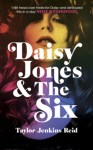
- Characters with lupus in The Monsters of Templeton by Lauren Groff and Daisy Jones & The Six by Taylor Jenkins Reid [I also read about one who features in Lost and Wanted by Nell Freudenberger] PLUS I then read Wise Blood by Flannery O’Connor, who died of lupus
- Daisy’s declaration of “I am not a muse. I am the somebody. End of fucking story” in Daisy Jones & The Six by Taylor Jenkins Reid reminded me of Lee Miller’s attitude in The Age of Light by Whitney Scharer
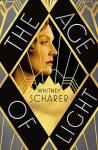
- Mentions of old ladies’ habit of keeping tissues balled up in their sleeves in The Girls by Lori Lansens and Growing Pains by Mike Shooter
 (A sad one, this) The stillbirth of a child is an element in three memoirs I’ve read within a few months, Notes to Self by Emilie Pine, Threads by William Henry Searle, and The Chronology of Water by Lidia Yuknavitch
- A character’s parents both died in a car accident in The Monsters of Templeton by Lauren Groff and Saint Maybe by Anne Tyler
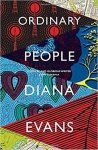
- Two books open on New Year’s Eve 2008 and comment on President Obama’s election: Ordinary People by Diana Evans and Rabbits for Food by Binnie Kirshenbaum

- Three novels in which both romantic partners are artists and find themselves (at least subconsciously) in competition: The Narrow Land by Christine Dwyer Hickey, The Age of Light by Whitney Scharer and Stanley and Elsie by Nicola Upson
- There’s a Czech father (or father figure) in The Florist’s Daughter by Patricia Hampl and The Girls by Lori Lansens
 I’d never heard of 4chan before, but then encountered it twice in quick succession, first in So You’ve Been Publicly Shamed by Jon Ronson and then in The Unauthorised Biography of Ezra Maas by Daniel James
- (Another sad one) Descriptions of the awful sound someone makes when they learn a partner or child has died in Hard Pushed by Leah Hazard and Jesus’ Son by Denis Johnson
- Alan Turing is a character in Murmur by Will Eaves and Machines Like You by Ian McEwan

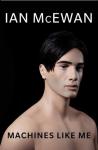
- Antonie van Leeuwenhoek (a pioneer of microscopy) is mentioned in Machines Like You by Ian McEwan and The Making of You by Katharina Vestre
- A woman is described as smelling like hay in Memoirs of a Book Thief by Alessandro Tota and Pierre Van Hove and The Chronology of Water by Lidia Yuknavitch
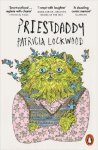 An inside look at the anti-abortion movement in Priestdaddy by Patricia Lockwood and Crazy for God by Frank Schaeffer
- The attempted adoption of a four-year-old boy who’s been in foster care is an element in The Ginger Child by Patrick Flanery and Machines Like You by Ian McEwan
- The loss of a difficult father who was an architect is an element in All the Lives We Ever Lived by Katharine Smyth and The Chronology of Water by Lidia Yuknavitch (and in last year’s Implosion by Elizabeth Garber)


- The improv mantra “Yes, and…” is mentioned in No Happy Endings: A Memoir by Nora McInerny by Sorry I’m Late, I Didn’t Want to Come: An Introvert’s Year of Living Dangerously by Jessica Pan
One Book Leads to Another (Including Shepherds’ Memoirs)
Reading about a particular topic, time period or type of character often leads me to want to read more about the same thing. This isn’t the same as what I call “book serendipity,” when such connections happen purely coincidentally; instead, it’s a deliberate way of following a thread of interest further. I keep meaning to read more about lighthouses, butterflies and Virginia Woolf, for instance. Some attempts are more successful than others, though.
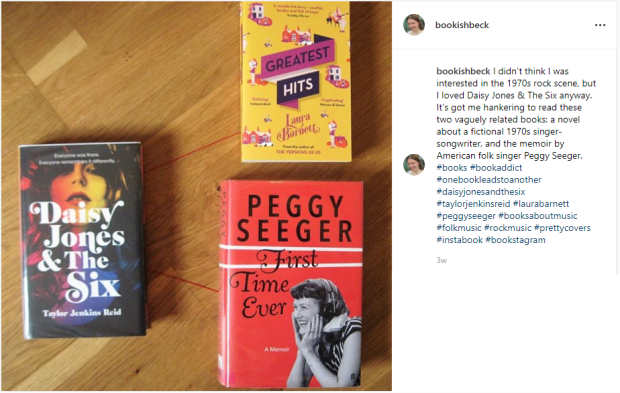
Alas, I had to return the Peggy Seeger memoir to the library unread because it was requested after me, and I haven’t found the immediate spur to pick up Greatest Hits yet.
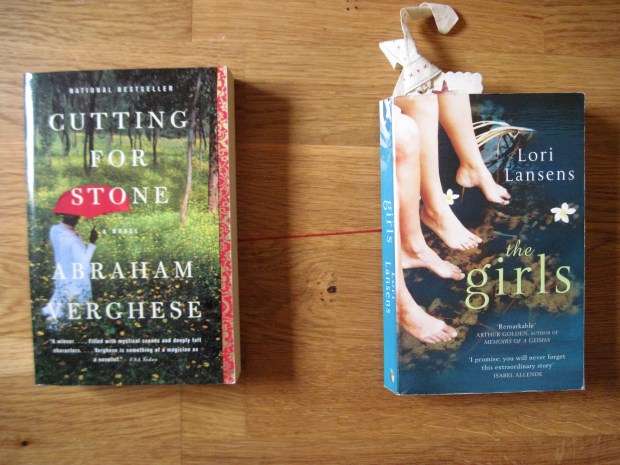
However, soon after I finished one novel about conjoined twins, Abraham Verghese’s Cutting for Stone, I launched straight into another one, Lori Lansens’ The Girls. I’m halfway through and it’s great so far. (Another I’d recommend is Chang and Eng by Darin Strauss, about the original “Siamese twins.”)
This spring I realized that I’d read four and a bit shepherds’ memoirs in 17 months, which is quite the concentration considering I’m not a countryside gal. Here’s how I’d rank the five:
#1: A Farmer’s Diary: A Year at High House Farm by Sally Urwin
 Urwin is a charming guide to a year in the life of her working farm in Northumberland. Just don’t make the mistake of dismissing her as “the farmer’s wife.” She may only be 4 foot 10 (her Twitter handle is @pintsizedfarmer and her biography describes her as “(probably) the shortest farmer in England”), but her struggles to find attractive waterproofs don’t stop her from putting in hard labor to tend to the daily needs of a 200-strong flock of sheep.
From mating the ewes to preparing the next year’s lambs for market, we see the whole cycle once through and about to start again. Lambing is a fraught couple of months that form the heart of the book, but there are plenty of other challenges, including stolen sheep, fallen trees, and constant financial concerns that lead to a petition to the Royal Agricultural Benevolent Institution for help paying the gas bill and keeping food on the table for their two kids.
Despite the year’s setbacks, Urwin has an indomitable spirit and writes in a chatty, chin-up style that reflects the book’s origin in blog posts from 2017 to 2018. She gets a lot of comic mileage out of her yo-yo dieting, the many escapades of Candy the fat pony, and quirky English traditions like the village fete. I enjoy reading about people’s daily habits through a diary, and all the better when it’s a lifestyle that’s totally foreign to me. 
#2: The Sheep Stell by Janet White
 First published in 1991, The Sheep Stell taps into a widespread feeling that we have become cut off from the natural world and that existing in communion with animals is a healthier lifestyle. White’s pleasantly nostalgic memoir tells of finding contentment in the countryside, first on her own and later with a dearly loved family. It is both an evocative picture of a life adapted to seasonal rhythms and an arresting account of the casual sexism – and even violence – White experienced in a traditionally male vocation when she emigrated to New Zealand in 1953. From solitary youthful adventures that recall Gerald Durrell’s and Patrick Leigh Fermor’s to a more settled domestic life with animals reminiscent of the writings of James Herriot and Doreen Tovey, White’s story is unfailingly enjoyable. (I reviewed it for the Times Literary Supplement last year.)
#3: On Sheep: Diary of a Swedish Shepherd by Axel Lindén
(translated from the Swedish by Frank Perry)
 Axel Lindén left his hipster Stockholm existence behind to take on his parents’ rural collective. On Sheep documents two years in his life as a shepherd aspiring to self-sufficiency and a small-scale model of food production. The diary entries range from a couple of words (“Silage; wet”) to several pages, and tend to cluster around busy times on the farm. The author expresses genuine concern for the sheep’s wellbeing. However, he cannily avoids anthropomorphism, insisting that his loyalty must be to the whole flock rather than to individual animals. The brevity and selectiveness of the diary keep the everyday tasks from becoming tiresome. Instead, the rural routines are comforting, even humbling.
 #4: The Shepherd’s Life by James Rebanks
My husband valued this more as a memoir than as a cultural document; the opposite was true for me. As a memoir it’s fairly unexceptional, but it’s valuable as a picture of a rare and dwindling way of life in the British countryside. 
#5: Heida: A Shepherd at the Edge of the World by Steinunn Sigurðardóttir
(translated from the Icelandic by Philip Roughton)
 DNF after 53 pages. I was offered a proof copy by the publisher on Twitter. I thought it would be interesting to hear about a female Icelandic shepherd who was a model before taking over her family farm and then reluctantly went into politics to try to block a hydroelectric power station on her land. Unfortunately, though, the book is scattered and barely competently written. It doesn’t help that the proof is error-strewn. [This mini-review has been corrected to reflect the fact that, unlike what is printed on the proof copy, the sole author is Steinunn Sigurðardóttir, who has written the book as if from Heiða Ásgeirsdóttir’s perspective.]
What’s the last major reading theme you’ve had?
Can I tempt you with a sheep-herding memoir?
We’re off to America tomorrow for two weeks for a holiday plus family time and a college friend’s wedding. While I won’t be particularly communicative on others’ blogs or social media, I’m scheduling a few blogs per week that we’re away. Back on June 3rd – just in time for the start of 20 Books of Summer!

Here’s the stack of books I’ve packed – with plenty more waiting for me over there and my Kindle providing some 400 backups.
Book Serendipity Incidents of 2019 (So Far)
I’ve continued to post my occasional reading coincidences on Twitter and/or Instagram. This is when two or more books that I’m reading at the same time or in quick succession have something pretty bizarre in common. Because I have so many books on the go at once – usually between 10 and 20 – I guess I’m more prone to such serendipitous incidents. (The following are in rough chronological order.)
What’s the weirdest coincidence you’ve had lately?
- Two titles that sound dubious about miracles: There Will Be No Miracles Here by Casey Gerald and The Unwinding of the Miracle: A Memoir of Life, Death, and Everything that Comes After by Julie Yip-Williams

- Two titles featuring light: A Light Song of Light by Kei Miller and The Age of Light by Whitney Scharer
- Grey Poupon mustard (and its snooty associations, as captured in the TV commercials) mentioned in There Will Be No Miracles Here by Casey Gerald and Drinking: A Love Story by Caroline Knapp
 “I Wanna Dance with Somebody” (the Whitney Houston song) referenced in There Will Be No Miracles Here by Casey Gerald and Don’t Call Us Dead by Danez Smith
- Two books have an on/off boyfriend named Julian: Drinking: A Love Story by Caroline Knapp and Extinctions by Josephine Wilson
- There’s an Aunt Marjorie in When I Had a Little Sister by Catherine Simpson and Extinctions by Josephine Wilson


- Set (at least partially) in a Swiss chalet: This Sunrise of Wonder by Michael Mayne and Crazy for God by Frank Schaeffer
- A character named Kiki in The Sacred and Profane Love Machine by Iris Murdoch, The Age of Light by Whitney Scharer, AND Improvement by Joan Silber
 Two books set (at least partially) in mental hospitals: Mind on Fire by Arnold Thomas Fanning and Faces in the Water by Janet Frame
- Two books in which a character thinks the saying is “It’s a doggy dog world” (rather than “dog-eat-dog”): The Friend by Sigrid Nunez and The Octopus Museum by Brenda Shaughnessy
- Reading a novel about Lee Miller (The Age of Light by Whitney Scharer), I find a metaphor involving her in My Year of Rest and Relaxation by Ottessa Moshfegh: (the narrator describes her mother) “I think she got away with so much because she was beautiful. She looked like Lee Miller if Lee Miller had been a bedroom drunk.” THEN I come across a poem in Clive James’s Injury Time entitled “Lee Miller in Hitler’s Bathtub”

- On the same night that I started Siri Hustvedt’s new novel, Memories of the Future, I also started a novel that had a Siri Hustvedt quote (from The Blindfold) as the epigraph: Besotted by Melissa Duclos
- In two books “elicit” was printed where the author meant “illicit” – I’m not going to name and shame, but one of these instances was in a finished copy! (the other in a proof, which is understandable)
- Three books in which the bibliography is in alphabetical order BY BOOK TITLE! Tell me this is not a thing; it will not do! (Vagina: A Re-education by Lynn Enright; Let’s Talk about Death (over Dinner) by Michael Hebb; Telling the Story: How to Write and Sell Narrative Nonfiction by Peter Rubie)
 References to Gerard Manley Hopkins in Another King, Another Country by Richard Holloway, This Sunrise of Wonder by Michael Mayne and The Point of Poetry by Joe Nutt (these last two also discuss his concept of the “inscape”)
- Creative placement of words on the page (different fonts; different type sizes, capitals, bold, etc.; looping around the page or at least not in traditional paragraphs) in When Death Takes Something from You Give It Back by Naja Marie Aidt [not pictured below], How Proust Can Change Your Life by Alain de Botton, Stubborn Archivist by Yara Rodrigues Fowler, Alice Iris Red Horse: Selected Poems of Yoshimasu Gozo and Lanny by Max Porter

- Twin brothers fall out over a girl in Cutting for Stone by Abraham Verghese and one story from the upcoming book Meteorites by Julie Paul
- Characters are described as being “away with the fairies” in Lanny by Max Porter and Away by Jane Urquhart
 Schindler’s Ark/List is mentioned in In the Beginning: A New Reading of the Book of Genesis by Karen Armstrong and Telling the Story: How to Write and Sell Narrative Nonfiction by Peter Rubie … makes me think that I should finally pick up my copy!
Incidents of Book Serendipity
Since May I’ve been posting my occasional reading coincidences on Twitter and/or Instagram. This is when two or more books that I’m reading at the same time or in quick succession have something pretty bizarre in common. Because I have so many books on the go at once – usually between 10 and 20 – I guess I’m more prone to such serendipitous incidents. What’s the weirdest one you’ve had lately? (The following are in rough chronological order.)
- Two historical novels set (partially) among the slaves of Martinique and featuring snippets of Creole (Patrick Chamoiseau’s Slave Old Man and Jane Harris’s Sugar Money)
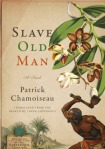
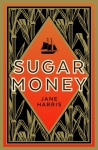
- A book about epilepsy and a conductor’s memoir, followed by a novel with a conductor character and another who has seizures (Suzanne O’Sullivan’s Brainstorm and Lev Parikian’s Why Do Birds Suddenly Disappear? to Caoilinn Hughes’s Orchid & the Wasp)
- Two characters mistake pregnancy for cholera (in Alexandra Fuller’s Leaving Before the Rains Come and W. Somerset Maugham’s The Painted Veil)
 Two characters are reading Ursula K. Le Guin’s The Left Hand of Darkness (in Lily Brooks-Dalton’s Good Morning, Midnight and Julie Buntin’s Marlena) … I’ve since tried again with Le Guin’s book myself, but it’s so dry I can only bear to skim it.
- Two memoirs by Iranian-American novelists with mental health and drug use issues (Porochista Khakpour’s Sick and Afarin Majidi’s Writing and Madness in a Time of Terror)
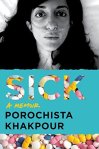

- References to the blasé response to Martin Luther King’s assassination in North Carolina (in Paulette Bates Alden’s Crossing the Moon and David Sedaris’s Calypso)
- The Police lyrics (in Less by Andrew Sean Greer and Summer by Karl Ove Knausgaard [a whole essay called “Sting”])

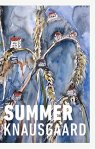
- Salmon croquettes mentioned in Less by Andrew Sean Greer and An American Marriage by Tayari Jones
 I’m reading Beryl Markham’s West with the Night … and then Glynnis MacNicol picks that very book up to read on a plane in No One Tells You This
- Starting two books with the word “Ladder” in the title, one right after the other: Ladders to Heaven by Mike Shanahan and Ladder of Years by Anne Tyler (followed just a couple of weeks later by A Ladder to the Sky by John Boyne!)


 Two books set in Dunedin, New Zealand, one right after the other – I planned it that way, BUT both have a character called Myrtle (To the Is-Land by Janet Frame and Dunedin by Shena Mackay). Then I encountered Harold Gillies, the father of plastic surgery, in Jim McCaul’s Face to Face, and guess what? He was from Dunedin!
- Then I was skimming Louisa Young’s You Left Early and she mentioned that her grandmother was a sculptor who worked with Gillies on prostheses, which was the inspiration for her WWI novel, My Dear I Wanted to Tell You.
- Two novels featuring drug addicts (Pretend I’m Dead by Jen Beagin and Bad News by Edward St. Aubyn)
- The same Wallace Stevens lines that appear as an epigraph to Barbara Kingsolver’s Unsheltered are mentioned in Elaine Pagels’s Why Religion? – “After the final no there comes a yes / And on that yes the future world depends.”

 “Twinkle, Twinkle, Little Star” is mentioned in Little by Edward Carey and Marilla of Green Gables by Sarah McCoy
- Reading Nine Pints, Rose George’s book about blood, at the same time as Deborah Harkness’s Time’s Convert, which is partially about vampires; in this it takes 90 days for a human to become fully vampirized – the same time it takes to be cured of an addiction according to the memoir Ninety Days by Bill Clegg.
 Bookish Beck = Rebecca Foster. American transplant to England. Freelance proofreader and book reviewer.
 Bookish Beck