Book Serendipity, March to April 2022
This is a bimonthly feature of mine. I call it Book Serendipity when two or more books that I read at the same time or in quick succession have something in common – the more bizarre, the better. Because I usually 20–30 books on the go at once, I suppose I’m more prone to such incidents. The following are in roughly chronological order.
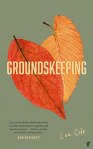
(I always like hearing about your bookish coincidences, too! Laura had what she thought must be the ultimate Book Serendipity when she reviewed two novels with the same setup: Groundskeeping by Lee Cole and Last Resort by Andrew Lipstein.)
- The same sans serif font is on Sea State by Tabitha Lasley and Lean Fall Stand by Jon McGregor – both released by 4th Estate. I never would have noticed had they not ended up next to each other in my stack one day. (Then a font-alike showed up in my TBR pile, this time from different publishers, later on: What Strange Paradise by Omar El Akkad and When We Were Birds by Ayanna Lloyd Banwo.)


- Kraftwerk is mentioned in The Facebook of the Dead by Valerie Laws and How High We Go in the Dark by Sequoia Nagamatsu.
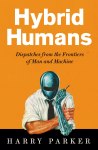
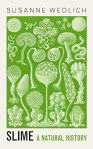
- The fact that bacteria sometimes form biofilms is mentioned in Hybrid Humans by Harry Parker and Slime by Susanne Wedlich.
- The idea that when someone dies, it’s like a library burning is repeated in The Reactor by Nick Blackburn and In the River of Songs by Susan Jackson.
- Espresso martinis are consumed in If Not for You by Georgina Lucas and Wahala by Nikki May.
- Prosthetic limbs turn up in Groundskeeping by Lee Cole, The Book of Form and Emptiness by Ruth Ozeki, and Hybrid Humans by Harry Parker.
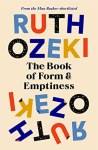
- A character incurs a bad cut to the palm of the hand in After You’d Gone by Maggie O’Farrell and The Book of Form and Emptiness by Ruth Ozeki – I read the two scenes on the same day.
- Catfish is on the menu in Groundskeeping by Lee Cole and in one story of Antipodes by Holly Goddard Jones.
 Reading two novels with “Paradise” in the title (and as the last word) at the same time: Paradise by Toni Morrison and To Paradise by Hanya Yanagihara.
- Reading two books by a Davidson at once: Damnation Spring by Ash and Tracks by Robyn.
- There’s a character named Elwin in The Five Wounds by Kirstin Valdez Quade and one called Elvin in The Two Lives of Sara by Catherine Adel West.
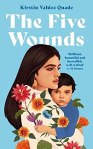

- Tea is served with lemon in The Beginning of Spring by Penelope Fitzgerald and The Two Lives of Sara by Catherine Adel West.
- There’s a Florence (or Flo) in Go Tell It on the Mountain by James Baldwin, These Days by Lucy Caldwell and Pictures from an Institution by Randall Jarrell. (Not to mention a Flora in The Sentence by Louise Erdrich.)
 There’s a hoarder character in Olga Dies Dreaming by Xóchitl González and The Book of Form and Emptiness by Ruth Ozeki.
- Reading at the same time two memoirs by New Yorker writers releasing within two weeks of each other (in the UK at least) and blurbed by Jia Tolentino: Home/Land by Rebecca Mead and Lost & Found by Kathryn Schulz.
- Three children play in a graveyard in Falling Angels by Tracy Chevalier and Build Your House Around My Body by Violet Kupersmith.


- Shalimar perfume is worn in These Days by Lucy Caldwell and The Five Wounds by Kirstin Valdez Quade.
- A relative is described as “very cold” and it’s wondered what made her that way in Very Cold People by Sarah Manguso and one of the testimonies in Regrets of the Dying by Georgina Scull.
 Cherie Dimaline’s Empire of Wild is mentioned in The Sentence by Louise Erdrich, which I was reading at around the same time. (As is The Beginning of Spring by Penelope Fitzgerald, which I’d recently finished.)
- From one poetry collection with references to Islam (Bless the Daughter Raised by a Voice in Her Head by Warsan Shire) to another (Auguries of a Minor God by Nidhi Zak/Aria Eipe).
- Two children’s books featuring a building that is revealed to be a theatre: Moominsummer Madness by Tove Jansson and The Unadoptables by Hana Tooke.
- Reading two “braid” books at once: Braiding Sweetgrass by Robin Wall Kimmerer and French Braid by Anne Tyler.

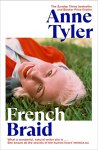
- Protests and teargas in The Sentence by Louise Erdrich and The Book of Form and Emptiness by Ruth Ozeki.
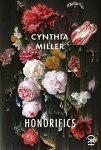
- Jellyfish poems in Honorifics by Cynthia Miller and Love Poems in Quarantine by Sarah Ruhl.
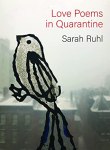
- George Floyd’s murder is a major element in The Sentence by Louise Erdrich and Love Poems in Quarantine by Sarah Ruhl.
What’s the weirdest reading coincidence you’ve had lately?
Love Your Library, April 2022
“Here on 42nd Street it was less elegant but no less strange. He loved this street, not for the people or the shops but for the stone lions that guarded the great main building of the Public Library, a building filled with books and unimaginably vast, and which he never dared to enter. He might, he knew, for he was a member of the branch in Harlem and was entitled to take books from any library in the city. But he had never gone in because the building was so big that it must be full of corridors and marble steps, in the maze of which he would be lost and never find the book he wanted. And then everyone, all the white people inside, would know that he was not used to great buildings, or to many books, and they would look at him with pity.”
(from Go Tell It on the Mountain by James Baldwin)
Hard to believe, but it’s already half a year since I relaunched my monthly library meme in this current form. I’m really grateful for all of you who have contributed posts and/or tagged me on social media. I love seeing what you’re reading from the library! The above quote clawed at my heart: no one should ever feel that libraries are not for them.
Annabel reviewed a new book about libraries and talked about her own experience growing up with South London’s libraries here. Eleanor and Rosemary posted photos of the books they’ve borrowed from their local libraries recently.


Elle is reading lots of Russian literature this spring, but also went on to devour most of her ‘death books’ stack within a week, and posted about them here.
For my part, I’m going to resurrect a format I used to use for “Library Checkout” posts to capture my library use over the past month, with links to my reviews where available:
READ
- These Days by Lucy Caldwell

- The Dangers of Smoking in Bed by Mariana Enríquez
- Dance Move by Wendy Erskine
- Pictures from an Institution by Randall Jarrell

- The Instant by Amy Liptrot

- If Not for You by Georgina Lucas

- Wahala by Nikki May
- Mr Pye by Mervyn Peake (April’s book club book)
- Outside, Inside by LeUyen Pham (a picture book)
- Bless the Daughter Raised by a Voice in Her Head by Warsan Shire (poetry)
- Under Milk Wood by Dylan Thomas

- Delicates by Brenna Thummler
 SKIMMED
- Go Tell It on the Mountain by James Baldwin
- Things I Have Withheld by Kei Miller
- Brown Baby by Nikesh Shukla
CURRENTLY READING
- Falling Angels by Tracy Chevalier (rereading for May’s book club meeting)
- Bitch: The Female of the Species by Lucy Cooke
- Empire of Wild by Cherie Dimaline
- The Sentence by Louise Erdrich
- Empire Antarctica by Gavin Francis
- Devotion by Hannah Kent
- Lean Fall Stand by Jon McGregor
- The Exhibitionist by Charlotte Mendelson (review coming tomorrow)
- The Unadoptables by Hana Tooke
- French Braid by Anne Tyler
CHECKED OUT, TO BE READ

(And I have a preposterous number of reservations pending.)
What have you been reading or reviewing from the library recently?

Share a link to your own post in the comments. Feel free to use the above image. The hashtag is #LoveYourLibrary. The project page gives an idea of what you might like to post about.
Love Your Library, March 2022
Naomi has been reading a variety of books from the library, including middle grade fiction and Indigenous poetry. Rosemary and Laura posted photos of the books they’ve borrowed from their local libraries recently.


Like Laura, I’ve been sourcing prize nominees from various places. In April I hope to read two nonfiction books from the Jhalak Prize longlist (Things I Have Withheld by Kei Miller and Brown Baby by Nikesh Shukla) and two more novels from the Women’s Prize longlist (The Paper Palace by Miranda Cowley Heller and The Island of Missing Trees by Elif Shafak), and I’ve just started Colm Tóibín’s Folio Prize-winning The Magician.
All from the library: a great way to read new and critically acclaimed books without having to buy them!


I’ve joined Kay, Lynn and Naomi for the Literary Wives online book club and our first read, coming up in June, will be The Sentence by Louise Erdrich, which will be doing double duty as part of the Women’s Prize longlist. I’m in the library holds queue and my copy should come in soon. My only other Erdrich so far, Love Medicine, was a 5-star read, so I have high hopes even though the premise for this one sounds a little iffy. (A bookshop ghost – magic realism being a common denominator on this year’s list – and a Covid lockdown setting.)
For those of you who like to plan ahead, here’s our schedule thereafter. I’ll be rereading two of them (Hornby and O’Farrell) and getting four out from the library (Feito, Hurston, Medie, O’Farrell). One I’ll request as a review copy (Lee), one was 99p on Kindle (Brown), and two more remain to be found secondhand (Gaige and Hunter). Maybe there’s one or more you’d like to join in with?
September 2022 Red Island House by Andrea Lee
December 2022 State of the Union by Nick Hornby
March 2023 His Only Wife by Peace Adzo Medie
June 2023 The Harpy by Megan Hunter
September 2023 Sea Wife by Amity Gaige
December 2023 Hamnet by Maggie O’Farrell
March 2024 Mrs. March by Virginia Feito
June 2024 Recipe for a Perfect Marriage by Karma Brown
September 2024 Their Eyes Were Watching God by Zora Neale Hurston
What have you been reading or reviewing from the library recently?
Do share a link to your own post in the comments, and feel free to use the above image. I’ve co-opted a hashtag that is already popular on Twitter and Instagram: #LoveYourLibrary.
Here’s a reminder of my ideas of what you might choose to post (this list will stay up on the project page):
- Photos or a list of your latest library book haul
- An account of a visit to a new-to-you library
- Full-length or mini reviews of some recent library reads
- A description of a particular feature of your local library
- A screenshot of the state of play of your online account
- An opinion piece about library policies (e.g. Covid procedures or fines amnesties)
- A write-up of a library event you attended, such as an author reading or book club.
If it’s related to libraries, I want to hear about it!
Too Much (to Do) and Never Enough (Time to Read)
Adapting a Mary Trump title there for a feeling I’m sure many of us have periodically. House hunting and purchasing have taken up a lot of time over the last six months. Now that we finally have keys to the new place, the work has only begun. The old chap who lived there as a tenant for decades before moving to a care home had been existing in some squalor (e.g., no shower or central heating). This past weekend we did a basic clean, including clearing out all the rubbish left in the outdoor bins. It almost felt like trauma cleaning. We haven’t yet had the fortitude to tackle the kitchen and bathroom, which are so greasy and grimy we might hire someone to clean them for us.
Much more fun has been the garden: we’ve transplanted some hedge plants from our rental garden, planted some trees, pruned the rose bushes, and made a plan for path, meadow and pond.

In the six weeks or so before we actually move in, there is so much to think about. We have a couple of tradespeople already booked, but there are lots of other renovations to research and get quotes for. So much to book, order, buy … we’re going to be bleeding money for the rest of this year. We will take on a few smaller projects ourselves, with neighbours’ help, but it is a very daunting prospect for people with no DIY skills. (And I just want to read instead.)
I should be ecstatic to own a home for the first time, and I do know how lucky I am to have somewhere to live and spare cash for improvements, but right now it all feels overwhelming. I’ve also been glum because I was denied the life insurance we applied for at the same time as a mortgage. I knew my genetic kidney disease would make a policy more expensive, but I wasn’t expecting to be declined outright – especially after the company strung me along for four months. The doctor’s reports they requested said only positive things about how stable my health was, how good my renal function, blood pressure under control. In the end they just looked at the condition name and said no. And that has made me feel a little worthless.
Still, chin up. It’s turned into a beautiful spring with fun outings such as a tour and tasting at a gin factory and folk gigs, including one by living legend Peggy Seeger.


I’m also genuinely enjoying the packing and culling process. Look at this vintage tech I found in a drawer! The Discman and Texas Instruments calculator still work, so I will continue using them.


Will I ever finish another book again?
Work has taken a slight backseat these days. I also feel like I’ll never finish another book again (though, actually, I’ll probably finish a poetry volume later today). It’s not that I’m in a slump. It’s that I’m currently reading 36 books, though the number I actually spend time with on a daily basis is more like 15–20. The rest languish in a pile next to the coffee table, or on my bedside stack. I’m working towards various projects, but my progress is at a slow crawl:
 Requested after me at the library: The Dangers of Smoking in Bed by Mariana Enríquez, If Not for You by Georgina Lucas, Wahala by Nikki May
March releases: You Tell the Stories You Need to Believe by Rebecca Brown, Ghosts of Spring by Luis Carrasco, Groundskeeping by Lee Cole, Brainspotting by A.J. Lees
Reading Ireland Month: Dance Move by Wendy Erskine, After You’d Gone by Maggie O’Farrell, Vinegar Hill by Colm Tóibín
April’s book club books: Paradise by Toni Morrison & Mr Pye by Mervyn Peake
Spring titles: Damnation Spring by Ash Davidson, The Beginning of Spring by Penelope Fitzgerald, Spring by Karl Ove Knausgaard, Sowing by Leonard Woolf
 Jhalak Prize longlist: Honorifics by Cynthia Miller (with two more to start in April)
Women’s Prize longlist: Build Your House Around My Body by Violet Kupersmith, The Book of Form and Emptiness by Ruth Ozeki, The Final Revival of Opal & Nev by Dawnie Walton (with two more to start in April)
And so on.
That doesn’t count review books I’m trying to catch up on, a buddy read with my husband, a couple of e-books, and two other low-key thematic challenges I have in mind.
I’m inching towards my end-of-March targets for the current-month releases and Irish books. But most of my reading time has gone to one book I’ve been trying to read since January. By forcing myself to read a big chunk of Hanya Yanagihara’s To Paradise every day – first 40 pages, then 50, now 60 – I have finally passed the 500-page point and hope to finish and review it this weekend. Then I’ll rip up some nasty old carpets!
“People say that life is the thing, but I prefer reading.”
~Logan Pearsall Smith
Has there been more reading, or living, for you lately?
Quick Thoughts on the Women’s Prize 2022 Longlist & My Reading Plans
Tuesday is my volunteering morning at the library, but at 9:45 I nipped onto one of the public access PCs so I could find out which books were on the Women’s Prize longlist. I just couldn’t wait until I got home! It’s a surprising list. Those who thought Rooney and Yanagihara would be snubbed were absolutely right. Debuts and historical fiction aren’t as plentiful as forecast, but there are two doorstoppers on there, plus another 450+-pager. And it is great to see a list that is half by BIPOC women.
Of my wishes and predictions, 1 and 2 were correct, so I got 3 right overall, with my wildcard choice being the only nominee I’ve read in full so far. I’m currently reading another 2 and have 3 more set to read – the moment I got the news I marched over to borrow a couple more.
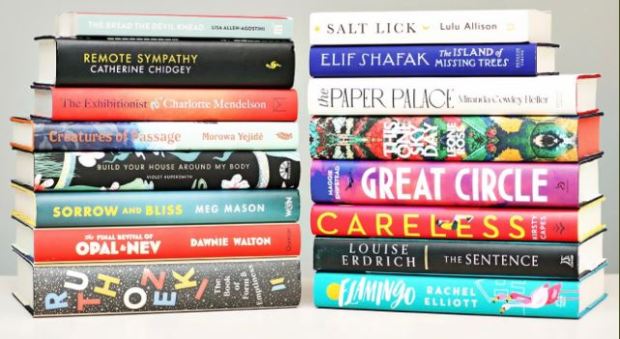
Fair play to the judges – I hadn’t even HEARD of these SIX titles:
- The Bread the Devil Knead by Lisa Allen-Agostini
- Salt Lick by Lulu Allison
- Careless by Kirsty Capes
- Remote Sympathy by Catherine Chidgey
- Flamingo by Rachel Elliott
- Creatures of Passage by Morowa Yejidé
I haven’t had a chance to look into these half-dozen, but will do so later on. I’m only likely to pick them up if a) others rave about them and/or b) they’re shortlisted.
Read:
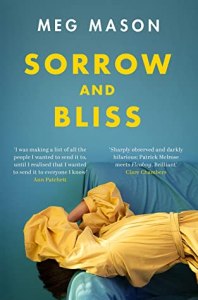 Sorrow and Bliss by Meg Mason: They say turning 40 can do weird things to you. Martha Friel gets a tattoo – so far, so stereotypical – but also blows up her marriage to Patrick, who’s been devoted to her since they were teens and met as family friends. In the year that follows, she looks back on a life that’s been defined by mental illness. As a young woman she was told she should never have children, but recently she met a new psychiatrist who gave her a proper diagnosis and told her motherhood was not out of the question. But is it too late for Martha and Patrick? Martha’s narration is a delight, wry and deadpan but also with moments of wrenching emotion. Her relationship with her sister, Ingrid, who gives birth to her first child on their aunt’s bathroom floor and eventually has four under the age of nine, is a highlight, and it’s touching to see how their mother and their aunt, both initially standoffish, end up being pillars of support. (My full review)
Currently reading:
 Build Your House Around My Body by Violet Kupersmith – I’m just over half done, and loving it. A weird and magical and slightly horror-tinged story set in Vietnam past and present, it builds on her debut ghost stories. Sort of plays the role Our Wives Under the Sea would have had on the longlist (though I dearly wish it could have been nominated as well).
 Set aside last year because it’s twee and annoying, but will now continue (ARGH + le sigh):
The Book of Form and Emptiness by Ruth Ozeki
 Own and will read soon (this was a treat to self with birthday money last year):
The Final Revival of Opal and Nev by Dawnie Walton
 Borrowed from library:
The Paper Palace by Miranda Cowley Heller
The Island of Missing Trees by Elif Shafak
 DNFed last year (twice); will not attempt again:
Great Circle by Maggie Shipstead
 On request from the library:
The Sentence by Louise Erdrich
The Exhibitionist by Charlotte Mendelson
Not interested in reading:
This One Sky Day by Leone Ross – I saw Ross speak about this and read an excerpt as part of a Faber showcase. I have a limited tolerance for magic realism and don’t think this appeals.
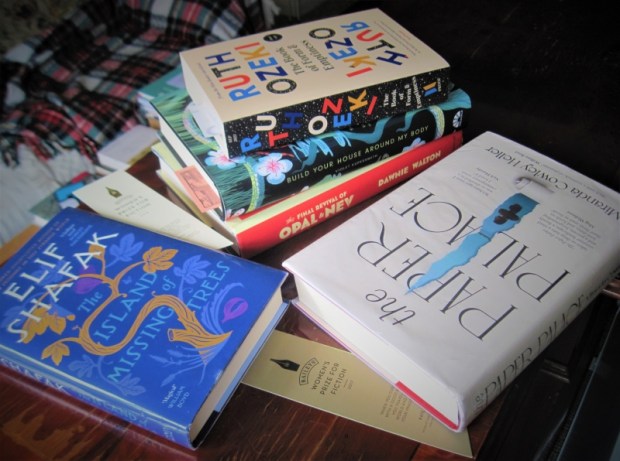
Above: my reading plans. Plenty to be getting on with before the shortlist announcement on 27th April!
What have you read, or might you read, from the longlist?
March Reading Plans
It’s beginning to look a lot like spring, with daffodils a-blooming, so I have amassed a set of appropriate reads and aim to report on them in two installments between April and May. I was already partway through Davidson’s novel, I’m getting stuck into the Fitzgerald and Knausgaard, and I hope to start the Woolf soon. I also have a review copy of Ghosts of Spring by Luis Carrasco.

Much as I tried with #FinishItFebruary, I still have some set-aside titles I couldn’t get through before the end of last month. It’s a good thing that (as I’ll never forget Damian Barr commenting) books are patient. I’ll reintroduce these to my stacks in the weeks to come, but NO MORE BOOKS can join them. I’m going to be strict with myself: keep going with a book or DNF it; no more limbo.
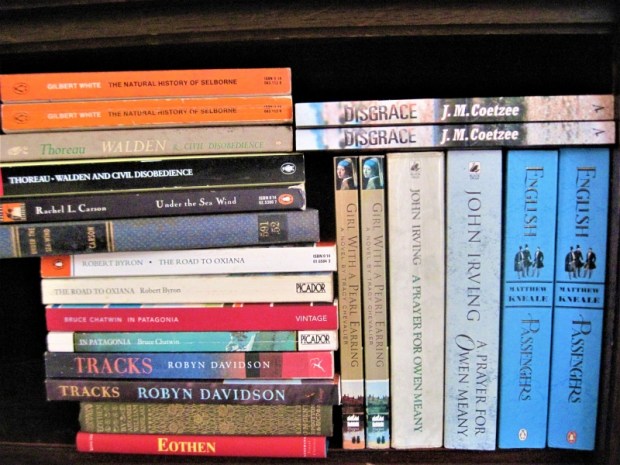
One of my informal goals for the rest of the year is to have a buddy read on the go with my husband at all times. I’d noticed that I happened to have duplicate copies of a couple of books, and then started to look out for extra copies at the free mall bookshop and Little Free Library in 2019–21, so I’ve ended up with 11 books in total: three nature classics, four travel books, three novels to reread, and one to read for the first time. Nature/travel is where our taste most often overlaps, but John Irving is our mutual favourite author and English Passengers is a novel we both loved. We’ll work out a schedule for 1–2 per month. He reads faster than I do (but has much less time to read overall), so we’ll agree on a time frame and chat either as we go or when we’ve both finished a book. Let me know if you fancy joining in with any of these.
Of course, it’s also Reading Ireland Month, hosted by Cathy of 746 Books, and I’ve earmarked these fiction options for the next few weeks. So far I’ve started Maggie O’Farrell’s debut novel. Plus I just got Wendy Erskine’s story collection Dance Move out from the library, and I have Colm Tóibín’s forthcoming poetry collection on my e-reader.
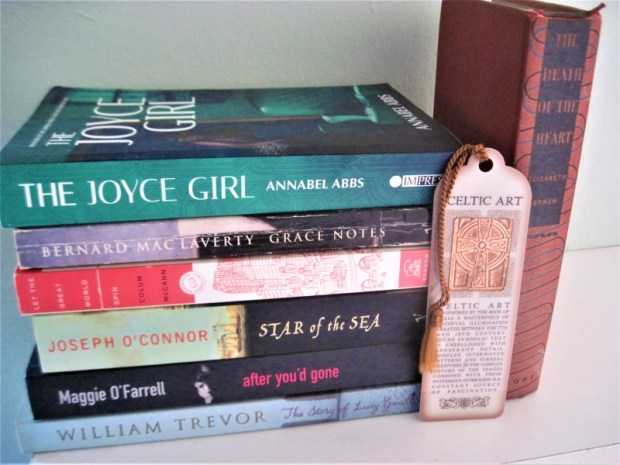
I’m currently reading A Portrait of the Artist as a Young Girl, a collection of autobiographical essays by Irish women writers that originated on the radio. I also got a jump-start in late February by reading these two short books by writers from Ireland:
Wild Child: A Journey through Nature by Dara McAnulty; illus. Barry Falls (2021)
 I’d expected this to be just a picture book. Instead, it’s a guided tour through four landscapes – the garden, the woods, the uplands, and a river – and it combines Robert Macfarlane-esque poetry (the rhyming and alliteration are reminiscent of The Lost Words books) with facts and crafts/activities. It starts small, with the birds a child in the UK might be able to see out their window, and then ventures further afield. There is a teaching focus, with information on species’ classification, life cycles and migrations. I also learned to recognize hazel catkins and flowers, and then identified them on our walk later the same day! But the main aim, I think, is simply to encourage wonder and inspire children to get outside and explore the nature around them. I liked the illustrations, but wish the birds hadn’t been given slightly googly eyes. (Public library)
To Star the Dark by Doireann Ní Ghríofa (2021)
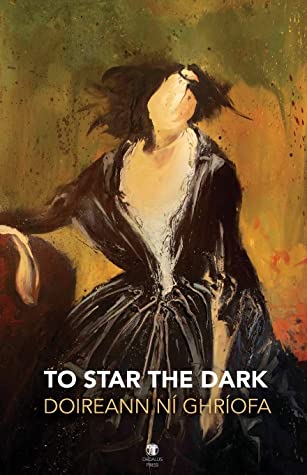 Like many, I discovered Ní Ghríofa through A Ghost in the Throat, a genre-bending work of feminist autofiction. I treated myself to a copy of this, her sixth poetry collection, as part of a Waterstones haul with my Christmas book token. One poem actually mentions Eibhlín Dubh, subject of A Ghost in the Throat, and the work as a whole has some of the same attributes, blending biographical portraits and historical reflection with autobiographical material.
“Two Daydreams” connects a teenager in a history exam with the generations leading back to the Famine. “An Experiment to Engineer an Inheritance of Fear” wonders if there is an inherited Irish trauma: “Give her terror in a meadow. / Bind her fear to a black potato. … / When exposed to the ancestral scent, great-grandchildren will show signs of distress.” A newborn’s stay in the NICU occasions “Seven Postcards from a Hospital” (originally addressed to Sara Baume, Ní Ghríofa reveals in the Notes). Marine biologist Maude Delap is the subject of one multi-part poem.
Sensual imagery abounds, and there are several incantatory spells, including the spring one below. My favourite poem was “Craquelure,” likening cracks in a fellow bus passenger’s phone screen to the weathering old paintings develop. (New purchase)
Love Your Library, February 2022
We’re now onto the fifth month of the Love Your Library feature. A big thank you to…
- “The Fab Four of Cley,” who run a Little Free Library in their area. They found last month’s post and gave me a link to a bilingual piece they wrote about a book sale they ran at their local church, with the thousands of books they’d amassed. Heavenly!
- Margaret of From Pyrenees to Pennines for her lovely account (with photos!) of a visit to the Central Public Library of Valencia.
- Mary R. of Bibliographic Manifestations for her post on interlibrary loans.
Blogger Laila of Big Reading Life also mentioned ILLs recently. I know some states and provinces are able to offer this service for free. When I lived in Maryland, statewide ILLs were free and I took full advantage of it. It’s how I binged on books by Marcus Borg, Frederick Buechner, Jan Morris, and many others during the year between my Master’s degree and moving back to England permanently. For my thesis research I’d had the University of Leeds’ ILL team get me an obscure Victorian novel on microfiche all the way from Australia. I also cheekily put through a few university ILLs for myself while I worked for King’s College London’s library system. Where I live now in the UK, a public library ILL costs £3 per book, so isn’t worth doing; you might as well find a secondhand copy at that price. I do miss the freedom of knowing that I could borrow (almost) anything I want.
Two funny moments from my recent library volunteering: I found Mrs Dalloway shelved under D, and an M. C. Beaton “Agatha Raisin” mystery shelved under R!
Read from the library recently:
 The Jasper & Scruff series by Nicola Colton: Having insisted I don’t like sequels or series … I do sometimes make exceptions, like I did for these early reader books (meant for, I don’t know, maybe ages 7 to 9?). I was drawn by the grey and white cat with a bowtie – that’s Jasper, a dapper fellow who likes the fine things in life and desperately wants to be admitted to the Sophisticats’ club, until he realizes they’re snooty and just plain mean. Whereas Scruff the puppy, though he makes life messy, is loving and fun. I liked the sequels more than the original because they build on each other, bringing back characters from the earlier books for a pirate-themed scavenger hunt, a reality TV-style talent show, and bookshop and diner ventures. There are good lessons about being honest and fair, even if others are cheating to outcompete you, and being yourself instead of putting on airs. I also like the menagerie of mammals: not just dogs and cats, but African megafauna, too.
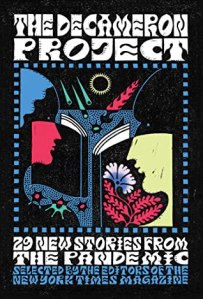 The Decameron Project: 29 New Stories from the Pandemic (originally published in The New York Times): Creative responses to Covid-19, ranging from the prosaic to the fantastical. I appreciated the mix of authors, some in translation and some closer to genre fiction than lit fic. Standouts were by Victor LaValle (NYC apartment neighbours; magic realism), Colm Tóibín (lockdown prompts a man to consider his compatibility with his boyfriend), Karen Russell (time stops during a bus journey), Rivers Solomon (an abused girl and her imprisoned mother get revenge), Matthew Baker (a feuding grandmother and granddaughter find something to agree on), and John Wray (a relationship starts up during quarantine in Barcelona). The best story of all, though, was by Margaret Atwood.
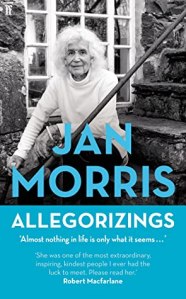 Allegorizings by Jan Morris: Disparate, somewhat frivolous essays written mostly pre-2009, or in 2013, and kept in trust by her publisher for publication as a posthumous collection, so strangely frozen in time. She was old but not super-old; thinking vaguely about death, but not at death’s door. The organizing principle, that everything can be understood on more than one level and so we must think beyond the literal, is interesting but not particularly applicable to the contents. There are mini travel pieces and pen portraits, but I got more out of the explorations of concepts (maturity, nationalism) and universal experiences (being caught picking one’s nose, sneezing).
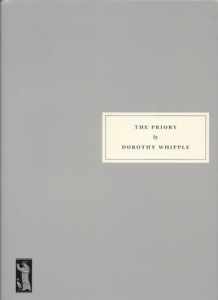 The Priory by Dorothy Whipple (read for book club): A cosy between-the-wars story, pleasant to read even though some awful things happen, or nearly happen. Like in Downton Abbey and the Cazalet Chronicles, there’s an upstairs/downstairs setup that’s appealing. It was interesting to watch how my sympathies shifted. The Persephone afterword provides useful information about the Welsh house (where Whipple stayed for a month in 1934) and family that inspired the novel. Whipple is a new author for me and I’m sure the rest of her books would be just as enjoyable, but I would only attempt another if it was significantly shorter than this one.
Borrowed since last month:

My latest university library book haul. Paradise by Toni Morrison is to read with my women’s classics book club subgroup in mid-April. Findings is to reread just because Kathleen Jamie is amazing. The other three are in preparation for the 1954 Club coming up in April.
Do share a link to your own post in the comments, and feel free to use the above image. I’ve co-opted a hashtag that is already popular on Twitter and Instagram: #LoveYourLibrary.
Here’s a reminder of my ideas of what you might choose to post (this list will stay up on the project page):
- Photos or a list of your latest library book haul
- An account of a visit to a new-to-you library
- Full-length or mini reviews of some recent library reads
- A description of a particular feature of your local library
- A screenshot of the state of play of your online account
- An opinion piece about library policies (e.g. Covid procedures or fines amnesties)
- A write-up of a library event you attended, such as an author reading or book club.
If it’s related to libraries, I want to hear about it!
Book Serendipity, January to February 2022
This is a bimonthly feature of mine. I call it Book Serendipity when two or more books that I read at the same time or in quick succession have something in common – the more bizarre, the better. Because I usually 20–30 books on the go at once, I suppose I’m more prone to such incidents. (I’ve realized that, of course, synchronicity is really the more apt word, but this branding has stuck.) I always like hearing about your bookish coincidences, too!
The following are in roughly chronological order.
- The author takes Valium to cope with fear of flying in two memoirs I read at the same time, I Came All This Way to Meet You by Jami Attenberg and This Boy We Made by Taylor Harris.


- The fact that the Spanish brought wild horses to the USA is mentioned in the story “The Team” by Tommy Orange (in The Decameron Project) and the poetry collection Rise and Float by Brian Tierney – this also links back to a book I reread in late 2021, Misty of Chincoteague by Marguerite Henry.
- There are roaches in a New York City apartment in I Came All This Way to Meet You by Jami Attenberg and the story “Other People’s Lives” in Loss of Memory Is Only Temporary by Johanna Kaplan.
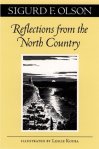
- The same Dostoevsky passage from The Brothers Karamazov, about loving everything (“Love all the earth, every ray of God’s light, every grain of sand or blade of grass, every living thing. If you love the earth enough, you will know the divine mystery” and so on), is quoted in Faith after Doubt by Brian McLaren and Reflections from the North Country by Sigurd Olson.

- A description of nicotine-stained yellow fingers in What I Wish People Knew About Dementia by Wendy Mitchell, The Cure for Sleep by Tanya Shadrick, and Free by Lea Ypi.
- Joni Mitchell’s music is mentioned in The Reactor by Nick Blackburn and The Cure for Sleep by Tanya Shadrick, two memoirs I was reading at the same time.
- From one summer camp story to another … I happened to follow up The Interestings by Meg Wolitzer with Honor Girl by Maggie Thrash.
- Audre Lorde’s definition of the erotic is quoted in Body Work by Melissa Febos and Heaven Is a Place on Earth by Adrian Shirk, both of which are March 15, 2022 nonfiction releases I’ve reviewed for Shelf Awareness.


- The 2017 white supremacist terrorist attack in Charlottesville, Virginia is mentioned in This Boy We Made by Taylor Harris (who lives there), Faith after Doubt by Brian McLaren (who was part of the clergy counterprotest group that day), and Heaven Is a Place on Earth by Adrian Shirk (she went there for a literary event a few months later).
- The Salvador Dalí painting The Persistence of Memory (that’s the one with the melting clock) is described in The Reactor by Nick Blackburn and This Boy We Made by Taylor Harris.
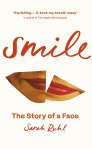
- On the same day, I came across the fact that Mary Shelley was pregnant while she wrote Frankenstein in two books: Linea Nigra by Jazmina Barrera and Smile by Sarah Ruhl.

- The fact that cysts in female organs can contain teeth comes up in Heaven Is a Place on Earth by Adrian Shirk and I Love You but I’ve Chosen Darkness by Claire Vaye Watkins.
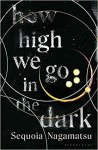
- Reading two novels by Japanese-American authors who grew up in Hawaii at the same time: How High We Go in the Dark by Sequoia Nagamatsu and To Paradise by Hanya Yanagihara.

- Twins are everywhere! Including, just in a recent reading pile, in Hands by Lauren Brown (she’s a twin, so fair enough), Birth Notes by Jessica Cornwell, The Snow Collectors by Tina May Hall, Smile by Sarah Ruhl (this and the Cornwell are memoirs about birthing twins, so also fair enough), Ordinary Love by Jane Smiley, and The Priory by Dorothy Whipple. For as uncommon as they are in real life, they turn up way too often in fiction.
- Bell’s palsy AND giving birth to twins are elements in Birth Notes by Jessica Cornwell and Smile by Sarah Ruhl.
- There’s a no-nonsense maternity nurse in Birth Notes by Jessica Cornwell and The Priory by Dorothy Whipple.


- U.S. West Coast wolves (a particular one in each case, known by a tracking number) are the subject of a poem in Postcolonial Love Poem by Natalie Diaz and The Necessity of Wildfire by Caitlin Scarano.
- Herons appear and/or have metaphorical/symbolic meaning in Thorpeness by Alison Brackenbury, What Willow Says by Lynn Buckle, Maggie Blue and the Dark World by Anna Goodall, and The Priory by Dorothy Whipple.

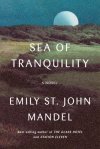
- There’s a character named Edwin in Booth by Karen Joy Fowler and Sea of Tranquility by Emily St. John Mandel.

- The use of “hoard” where it should be “horde” in Maggie Blue and the Dark World by Anna Goodall and Acts of Desperation by Megan Nolan – both errors were encountered in the same evening.
- I read about Lindisfarne in Jini Reddy’s essay in Women on Nature (ed. Katharine Norbury) and The Interior Silence by Sarah Sands in the same evening.
- “Flitting” as a synonym for moving house in Thorpeness by Alison Brackenbury and Nature Cure by Richard Mabey.

- A brother named Paul in Tides by Sara Freeman and Sea of Tranquility by Emily St. John Mandel.
- A woman knows her lover is on the phone with his ex by his tone of voice in Tides by Sara Freeman and Acts of Desperation by Megan Nolan.
- In two novels I’ve read so far this year – but I won’t say which ones as it’s a spoiler – the big reveal, towards the very end, is that a woman was caught breastfeeding someone who was not her baby and it caused a relationship-destroying rupture.
- Reading a second memoir this year where the chapters are titled after pop songs: Dear Queer Self by Jonathan Alexander (for a Foreword review) and now This Will Only Hurt a Little by Busy Philipps.


- A second short novel entitled The Swimmers this year: the first was Julie Otsuka’s, recently reviewed for Shiny New Books; a proof copy is on the way to me of Chloe Lane’s, coming out from Gallic Books in May.
- Reading a second memoir this year whose author grew up in the Chicago suburbs of Illinois (Arlington Heights/Buffalo Grove vs. Oak Park): I Came All This Way to Meet You by Jami Attenberg and This Will Only Hurt a Little by Busy Philipps.
- The linea nigra (a stripe of dark hair down a pregnant woman’s belly) provides the title for Linea Nigra by Jazmina Barrera and is also mentioned in Birth Notes by Jessica Cornwell.
 The famous feminist text Our Bodies, Ourselves is mentioned in Birth Notes by Jessica Cornwell and I Love You but I’ve Chosen Darkness by Claire Vaye Watkins.
- Childbirth brings back traumatic memories of rape in Birth Notes by Jessica Cornwell and This Will Only Hurt a Little by Busy Philipps.
What’s the weirdest reading coincidence you’ve had lately?
Thoughts on Literary Prizes, Sequels, and Finishing Books
I feel like my blogging is all over the place so far this month, but I’ll get back on track in the next couple of weeks with a few thematic roundups. Today, some disparate thoughts.
 Literary prize season will soon be in full swing, and can be overwhelming. I’m currently reading Megan Nolan’s Acts of Desperation, doing double duty from the Dylan Thomas Prize longlist and the Sunday Times Young Writer of the Year Award shortlist, and enjoying it more than expected given the inevitable Sally Rooney comparisons and messed-up young female tropes. However, I abandoned Here Comes the Miracle (from the latter) after 46 pages because it was just as When God Was a Rabbit as I feared.
 Today the second Barbellion Prize winner was announced: Lynn Buckle for What Willow Says, her lyrical novella about communication between a terminally ill woman, her deaf granddaughter, and the natural world. My choice from the shortlist would have been Josie George’s A Still Life, but I can see how the judges might have felt, in an early year when precedents are still being set, that it was important to recognize fiction as being just as valid a way of writing about disability and chronic illness.
Earlier in the week, the Rathbones Folio Prize shortlist was announced. Everyone remarked on the attractive mint green colour scheme! I found myself slightly disappointed; the Prize is usually more various since it includes nonfiction and poetry as well as fiction. Only one nonfiction title here: Philip Hoare going on (again) about whales. I’ve read another of poet Selima Hill’s collections so would gladly read this, too. I’ve already read the Brown and Keegan novellas and Sahota’s novel; I DNFed the Riley. Galgut has already won the Booker Prize. I’m awaiting a library hold of The Magician but I rather doubt my staying power with a 500-page biographical novel. My vote would, overwhelmingly, be for China Room.

I’m more tempted by the Fiction with a Sense of Place shortlist, announced as part of the Edward Stanford Travel Writing Awards early this month. What an intriguing and non-obvious set of nominees! Elena Knows was on the Barbellion longlist and the Greengrass and Shafak novels were previously shortlisted for the Costa Prize. I plan to try the Heller again this summer.

I’m also delighted to see that Small Bodies of Water by Nina Mingya Powles is shortlisted for the Stanford Dolman Travel Book of the Year Award.

I’ve been pondering my predictions and wishes (entirely separate things) for the Women’s Prize longlist and will post them early next month; for now, check out Laura’s.
I believe books should be self-contained and I struggle to engage with ANY series. Unpopular opinion alert: sequels are almost always indulgent and/or money-grubbing on the part of the author. Here are four high-profile literary fiction sequels I plan on skipping this year (in all the cases, I just didn’t like the original enough to continue the story):
- Either/Or by Elif Batuman – The Idiot was bizarre, deadpan and slightly entertaining, but I have no need to spend any more time with Selin.)
 The Candy House by Jennifer Egan – A Visit from the Goon Squad didn’t stand up to a reread.
- Less Is Lost by Andrew Sean Greer – Less, only mildly funny, was hugely overrated by critics.
- Tracy Flick Can’t Win by Tom Perrotta – I read, and saw the Reese Witherspoon-starring movie version of, Election ages ago; this is the one I’d be most likely to change my mind about, if I read good reviews.
I learned via a friend’s Instagram post that there is such a thing as #FinishItFebruary and felt seen. My goal had been to clear my set-aside shelf by the end of January; of course that didn’t happen, but I have been making some progress, reducing it from about 40 to more like 25. I try to reintroduce a part-finished book into my stack every few days. Sometimes it ‘takes’ and I finish it shortly; other times it languishes again, just in a different location. I’ll see how many more I can get to before the end of February.

A reminder of that set-aside shelf, as of early January.
Following any literary prize races this year?
Do you also avoid sequels, and leave books part-read?
I own too many unread books by…
A side effect of packing my library in preparation for moving: I’ve noticed there are certain authors whose works I tend to acquire secondhand and then stockpile rather than read. (I’ve also included in the tallies copies that I know are sitting in boxes in the USA.)
 D.H. Lawrence: 9+ (Aaron’s Rod, Kangaroo, The Lost Girl, The Plumed Serpent, a Complete Poems volume, Sea and Sardinia, a Selected Short Stories volume, Studies in Classic American Literature, The Woman Who Rode Away)
Lawrence was one of my research specialties as an undergraduate, so I read all his major works in my early twenties, as well as some lesser-known stuff, but haven’t felt compelled to pick up anything by him since. I’m not sure I’d care for him anymore, and it’s as if I don’t want to destroy the mystique. Yet I also can’t bring myself to get rid of these.
 T.C. Boyle: 7 (A Friend of the Earth, The Inner Circle, Riven Rock, The Tortilla Curtain, Water Music, The Women, World’s End)
I’ve read five of Boyle’s books and have had a mixed experience, but his plots – whether biographical (Alfred Kinsey! the wives and lovers of Frank Lloyd Wright!) or environmental – tend to attract me. My husband has actually become the bigger fan, so has read 3–4 of these that I haven’t.
 W. Somerset Maugham: 7 (Ashenden, Christmas Holiday, Creatures of Circumstance, Liza of Lambeth, The Magician, The Razor’s Edge, The Summing Up)
I read four of Maugham’s novels between 2014 and 2020. He’s an unappreciated author these days. Back when we had a free bookshop in my local mall, I volunteered weekly and most weeks came away with a backpack full of goodies. One week it was a partial leatherbound set of Maugham, which I’ve since supplemented with other paperbacks.
 Robertson Davies: 6.5 (The Salterton Trilogy, The Deptford Trilogy, The Cornish Trilogy)
I loved Fifth Business and The Rebel Angels, read for subsequent Robertson Davies week challenges run by Lory, but made aborted attempts at both ‘sequels’, so the rest of his three major trilogies remain unread on my shelves.
 Barbara Comyns: 5 (The Juniper Tree, The House of Dolls, Mr Fox, The Skin Chairs, A Touch of Mistletoe)
I blame Liz for this one: after I read Who Was Changed and Who Was Dead during Novellas in November last year, she passed on her Comyns stash in a lovely Christmas parcel. Most are short enough to suit a future #NovNov, but I have The Juniper Tree earmarked for 20 Books of Summer (flora themed) and A Touch of Mistletoe for Christmastide.

 Wendy Perriam: 5 (Absinthe for Elevenses, Breaking and Entering, Cuckoo, Michael, Michael, Sin City)
Again, mostly Liz’s fault. (Though two others came from my Hay-on-Wye haul in September 2020.) I’ve still only read the one novel by Perriam, The Stillness The Dancing, but it was great and made me confident that I’d enjoy engaging with her repeated themes.
 Richard Mabey: 4 (The Common Ground, Gilbert White biography, Nature Cure, The Unofficial Countryside)
Considering that Mabey is the father of modern British nature writing, it’s kind of shocking that I’ve never read anything by him. I’ve put Nature Cure on my bedside pile to start soon.
 Virginia Woolf: 4 (Between the Acts, The Waves, The Years, a volume of her diaries)
I’ve tried The Waves and The Years and didn’t get further than a few pages; I find Woolf unreadably dense in a way I didn’t in my early twenties, when I studied To the Lighthouse (go figure). But there’s still this compulsion to have read them so that I can be a well-rounded literary person.
 Kent Haruf: 3 (Plainsong, Eventide, Benediction)
Our Souls at Night topped my backlist reads in 2020, but an attempt at reading Plainsong soon after failed. I think it was more involved, with more strands, than I was expecting after the simplicity of his novella. So the trilogy, acquired piecemeal secondhand, has languished on my shelves. I’ll try again with Plainsong this year.
 Elizabeth Jane Howard: 3 (Marking Time, Confusion, Casting Off)
I loved sinking into The Light Years, the first volume of The Cazalet Chronicles (read for a book club meeting last January), and even read the first 60 pages of the sequel, Marking Time, but then tailed off – you can see I’m terrible about continuing with series. But I’d like to get back into this one and, when I do, I have Books 2–4 out of five awaiting me.
 Mary Karr: 3 (The Liars’ Club, Cherry, Lit)
Karr was key to the resurgence in popularity of memoirs in the 1990s. I’ve read her book about memoir (as well as a commencement speech she gave, and a volume of her poems), but not yet one of her actual memoirs. I found them all free or secondhand on trips back to the States. I don’t know whether it’s important to go in the chronological order listed above, or if I should just jump in with whichever, maybe Lit, about her struggle with alcoholism.
 Sue Miller: 3 (The Lake Shore Limited, While I Was Gone, The World Below)
After I read Monogamy in December 2020 and it ended up on my Best-of list for that year, I scurried to get hold of a bunch of her other books. I’ve since read The Senator’s Wife, which was a big disappointment, but I’m looking forward to trying more.
 Howard Norman: 3 (Devotion, The Northern Lights, What Is Left the Daughter)
I’ve read six of Norman’s books; he’s an underrated treasure of an author. I have no idea why I haven’t read these yet. Two are marooned in America, but The Northern Lights could make it onto a reading stack anytime. I just need the right excuse, it seems.
I’m thinking back to 2020, when I realized I had four unread Chimamanda Ngozi Adichie books on my shelves. Through various challenges – doorstoppers, summer reads, short stories, novellas – I managed to read them ALL that year, followed by another two in 2021. I don’t usually enjoy binging on particular authors in that way, but her books are different enough from each other (and just so good) that I didn’t mind.
I can’t promise to try the same tactic with these underread authors this year, but I can at least resolve to read one book by each of them, to reduce the backlog.
Do you have particular authors you own a lot by … but fail to read?
 Bookish Beck = Rebecca Foster. American transplant to England. Freelance proofreader and book reviewer.
