Library Checkout, July 2021
As seems to happen every few months, I felt the urge to cull my library stack and only keep out the books I’m actually excited about reading right now. So you’ll see that a lot of books got returned unread in July. I did manage to read a handful as well, though, with the list looking longer than it really is because of a lot of undemanding children’s and YA material. My summer crush is the super-cute Heartstoppers comics series.

As always, I give links to reviews of books not already featured, as well as ratings for reads and skims. I would be delighted to have other bloggers – not just book bloggers – join in with this meme. Feel free to use the image above and leave a link to your blog in the comments if you’ve taken part in Library Checkout (on the last Monday of each month), or tag me on Twitter and Instagram: @bookishbeck / #TheLibraryCheckout & #LoveYourLibraries.
READ
- Summer Story by Jill Barklem (a children’s book – these don’t count towards my year total)

- Heatstroke by Hazel Barkworth

- What If We Stopped Pretending? by Jonathan Franzen

- The Other Black Girl by Zakiya Dalila Harris
- Heartstoppers, Volume 1 by Alice Oseman
- Heartstoppers, Volume 2 by Alice Oseman
- Cicada by Shaun Tan (a children’s book – in length, at least)
- Dog by Shaun Tan (ditto)
SKIMMED
- Consumed: A Sister’s Story by Arifa Akbar

CURRENTLY READING
- Second Place by Rachel Cusk
- What White People Can Do Next: From Allyship to Coalition by Emma Dabiri
- All Boys Aren’t Blue: A Memoir-Manifesto by George M. Johnson
- The Rome Plague Diaries: Lockdown Life in the Eternal City by Matthew Kneale
- Nothing but Blue Sky by Kathleen MacMahon
- When the Stars Go Dark by Paula McLain
- Lena Finkle’s Magic Barrel by Anya Ulinich
- Ice Rivers by Jemma Wadham
CURRENTLY SKIMMING
- I Belong Here: A Journey along the Backbone of Britain by Anita Sethi
- Plague: A Very Short Introduction by Paul Slack
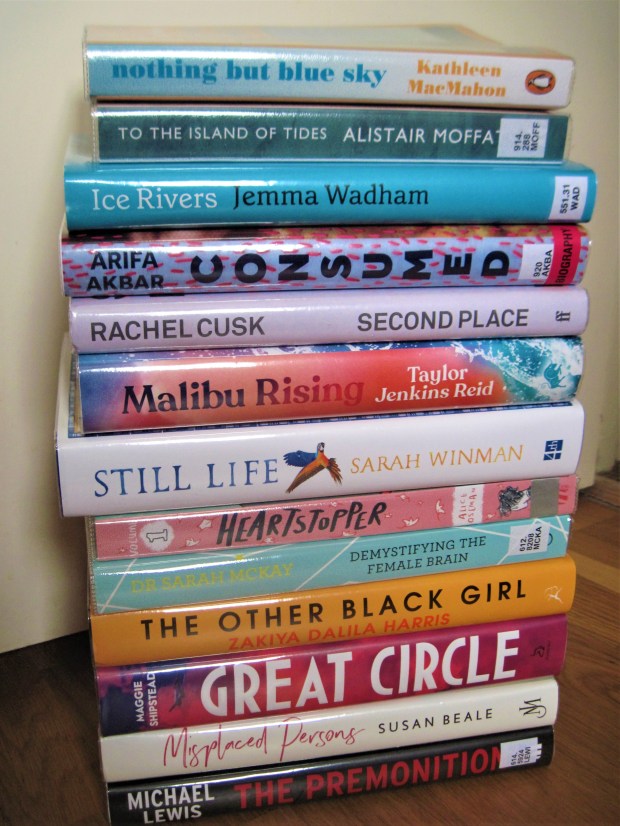
CHECKED OUT, TO BE READ
- Autumn Story by Jill Barklem
- The Tragic Death of Eleanor Marx by Tara Bergin
- Bloodchild and Other Stories by Octavia E. Butler
- The Song of the Lark by Willa Cather
- The Beet Queen by Louise Erdrich
- Gardening for Bumblebees: A Practical Guide to Creating a Paradise for Pollinators by Dave Goulson
- The Summer before the Dark by Doris Lessing
- Jilted City by Patrick McGuinness
- The State of the Prisons by Sinéad Morrissey
- Stiff by Mary Roach
- August Folly by Angela Thirkell
- August by Callan Wink
ON HOLD, TO BE PICKED UP
- The Easternmost Sky: Adapting to Change in the 21st Century by Juliet Blaxland
- The Sea Is Not Made of Water: Life between the Tides by Adam Nicolson
- Heartstoppers, Volume 4 by Alice Oseman
- Earthed: A Memoir by Rebecca Schiller
- Forecast: A Diary of the Lost Seasons by Joe Shute
- The Interestings by Meg Wolitzer
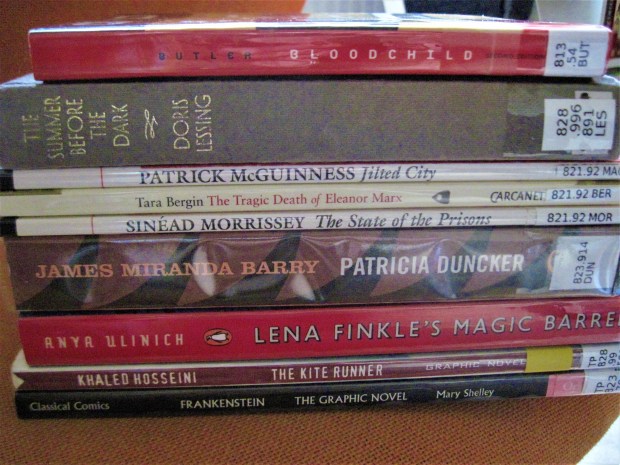
IN THE RESERVATION QUEUE
- Who Is Maud Dixon? by Alexandra Andrews
- The Echo Chamber by John Boyne
- Medusa’s Ankles: Selected Stories by A.S. Byatt
- Darwin’s Dragons by Lindsay Galvin
- Fathoms: The World in the Whale by Rebecca Giggs
- Silent Earth: Averting the Insect Apocalypse by Dave Goulson
- The Anthropocene Reviewed by John Green
- The Cure for Good Intentions: A Doctor’s Story by Sophie Harrison
- An Eye on the Hebrides: An Illustrated Journey by Mairi Hedderwick
- Standard Deviation by Katherine Heiny
- The Paper Palace by Miranda Cowley Heller
- The Premonition: A Pandemic Story by Michael Lewis
- Sorrow and Bliss by Meg Mason
- His Only Wife by Peace Adzo Medie
- Heartstoppers, Volume 3 by Alice Oseman
- Fox and I: An Uncommon Friendship by Catherine Raven
- Before Everything by Victoria Redel
- Everyone Is Still Alive by Cathy Rentzenbrink
- Cut Out by Michèle Roberts
- Sheets by Brenna Thummler
- The Lost Soul by Olga Tokarczuk
- A Walk from the Wild Edge by Jake Tyler
- 12 Bytes: How We Got Here. Where We Might Go Next by Jeanette Winterson
- The Hidden Life of Trees by Peter Wohlleben
- The Disaster Tourist by Ko-Eun Yun
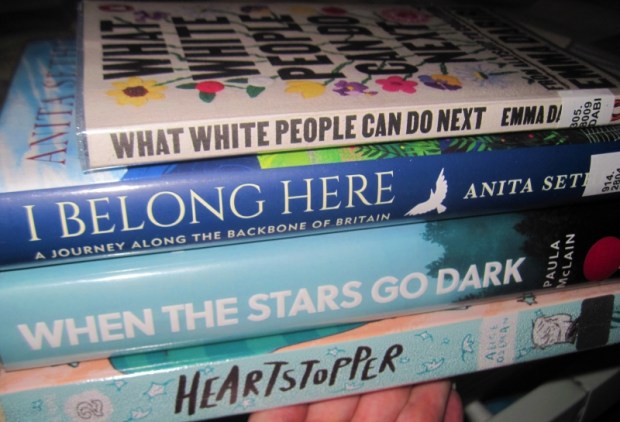
RETURNED UNFINISHED
- Malibu Rising by Taylor Jenkins Reid
- My Phantoms by Gwendoline Riley
- Great Circle by Maggie Shipstead
- Still Life by Sarah Winman
None of these captivated me after 10–30 pages. I’ll try the Shipstead and Winman again another time.
RETURNED UNREAD
- Misplaced Persons by Susan Beale
- This Happy by Niamh Campbell
- Heavy Light: A Journey through Madness, Mania and Healing by Horatio Clare
- Lakewood by Megan Giddings
- The Master Bedroom by Tessa Hadley
- A More Perfect Union by Tammye Huf
- Joe Biden: American Dreamer by Evan Osnos
- The Dig by John Preston
- Dreamland by Rosa Rankin-Gee
The last of these was requested after me; I (at least temporarily) lost interest in the rest.
What appeals from my stacks?
Book Serendipity, May to June 2021
I call it Book Serendipity when two or more books that I read at the same time or in quick succession have something pretty bizarre in common. Because I have so many books on the go at once (usually 20‒30), I suppose I’m more prone to such incidents. I’ve realized that, of course, synchronicity is really the more apt word, but this branding has stuck.
The following are in roughly chronological order.
- Sufjan Stevens songs are mentioned in What Is a Dog? by Chloe Shaw and After the Storm by Emma Jane Unsworth.
- There’s a character with two different coloured eyes in The Mothers by Brit Bennett and Painting Time by Maylis de Kerangal.

- A description of a bathroom full of moisturizers and other ladylike products in The Mothers by Brit Bennett and The Interior Silence by Sarah Sands.
- A description of having to saw a piece of furniture in half to get it in or out of a room in A Braided Heart by Brenda Miller and After the Storm by Emma Jane Unsworth.

- The main character is named Esther Greenwood in the Charlotte Perkins Gilman short story “The Unnatural Mother” in the anthology Close Company and The Bell Jar by Sylvia Plath. Indeed, it seems Plath may have taken her protagonist’s name from the 1916 story. What a find!
- Reading two memoirs of being in a coma for weeks and on a ventilator, with a letter or letters written by the hospital staff: Many Different Kinds of Love by Michael Rosen and Coma by Zara Slattery.


- Reading two memoirs that mention being in hospital in Brighton: Coma by Zara Slattery and After the Storm by Emma Jane Unsworth.
- Reading two books with a character named Tam(b)lyn: My Cousin Rachel by Daphne du Maurier and Coma by Zara Slattery.
- A character says that they don’t miss a person who’s died so much as they miss the chance to have gotten to know them in Featherhood by Charlie Gilmour and In by Will McPhail.

- A man finds used condoms among his late father’s things in The Invention of Solitude by Paul Auster and Featherhood by Charlie Gilmour.
- An absent husband named David in Open House by Elizabeth Berg and Ruby by Ann Hood.
- The murder of Thomas à Becket featured in Murder in the Cathedral by T.S. Eliot (read in April) and Heavy Time by Sonia Overall (read in June).


- Adrienne Rich is quoted in (M)otherhood by Pragya Agarwal and Heavy Time by Sonia Overall.
- A brother named Danny in Immediate Family by Ashley Nelson Levy and Saint Maybe by Anne Tyler.
- The male lead is a carpenter in Early Morning Riser by Katherine Heiny and Saint Maybe by Anne Tyler.
- An overbearing, argumentative mother who is a notably bad driver in Early Morning Riser by Katherine Heiny and Blue Shoe by Anne Lamott.
- That dumb 1989 movie Look Who’s Talking is mentioned in (M)otherhood by Pragya Agarwal and Early Morning Riser by Katherine Heiny.
- In the same evening, I started two novels that open in 1983, the year of my birth: The Other Black Girl by Zakiya Dalila Harris and Malibu Rising by Taylor Jenkins Reid.


- “Autistic” is used as an unfortunate metaphor for uncontrollable or fearful behavior in Open House by Elizabeth Berg and Blue Shoe by Anne Lamott (from 2000 and 2002, so they’re dated references rather than mean-spirited ones).
 A secondary character mentions a bad experience in a primary school mathematics class as being formative to their later life in Blue Shoe by Anne Lamott and Saint Maybe by Anne Tyler (at least, I think it was in the Tyler; I couldn’t find the incident when I went back to look for it. I hope Liz will set me straight!).
- The panopticon and Foucault are referred to in Great Circle by Maggie Shipstead and I Live a Life Like Yours by Jan Grue. Specifically, Jeremy Bentham’s panopticon is the one mentioned in the Shipstead, and Bentham appears in The Cape Doctor by E.J. Levy.
What’s the weirdest reading coincidence you’ve had lately?
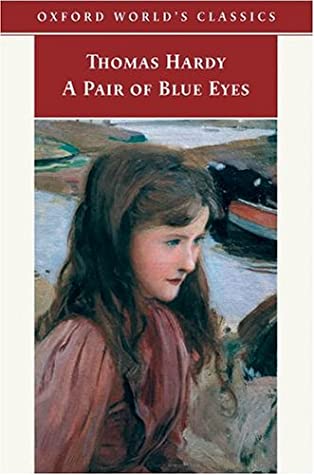
Classic of the Month & 20 Books of Summer #5: A Pair of Blue Eyes by Thomas Hardy (1873)
While going through my boxes stored in my sister’s basement, I came across an antiquarian copy of this lesser-known Hardy novel. I used to place a lot more value on books’ age and rarity, whereas now I tend to just acquire readable paperback copies. I also used to get on much better with Victorian novels – I completed an MA in Victorian Literature, after all – but these days I generally find them tedious. Two years ago, I DNFed Hardy’s The Well-Beloved, and I ended up mostly skimming A Pair of Blue Eyes after the first 100 pages. In any case, it fit into my 20 Books of Summer colour theme. It’s sad for me that I’ve lost my love for my academic speciality, but life is long and I may well go back to Victorian literature someday.
I found similarities to Far from the Madding Crowd, my favourite Hardy novel, as well as to Hardy’s own life. As in FFTMC, the focus is on a vain young woman with three suitors. Elfride Swancourt is best known for her eyes, rapturously described as “blue as autumn distance—blue as the blue we see between the retreating mouldings of hills and woody slopes on a sunny September morning. A misty and shady blue, that had no beginning or surface, and was looked into rather than at.” Her vicar father, suffering from gout and sounding much older than his actual age (40 was a different prospect in that time!), warns her that architects will soon be arriving from London to plan restoration work on the church tower.
The young architectural assistant who arrives at the Swancourts’ coastal parish in “Lower Wessex” (North Devon?) is Stephen Smith, a clear Hardy stand-in, desperate to hide his humble background as he seeks to establish himself in his profession. Stephen emulates his friend Henry Knight, a dilettante essayist and book reviewer. Book learning has given Stephen passable knowledge of everything from Latin to chess, but he doesn’t know how to do practical things like ride a horse. Elfride and Stephen, predictably, fall in love, and she is determined to go ahead with an engagement even when she learns that his parents are a mason and a milkmaid, but her father refuses to grant permission. It’s intriguing that this poor clergyman fancies himself of the class of the Luxellians, local nobility, than of the Smiths.
{SPOILERS FOLLOW}
Elfride’s previous love died, and his pauper mother, Mrs Jethway, blames her still for toying with her boy’s affections. When Stephen takes a position in India and Mr Swancourt remarries and moves the family to London, Elfride’s eye wanders. Time for love interest #3. The family runs into Knight, who is a distant cousin of Mrs Swancourt. There’s another, juicier, connection: Elfride is a would-be author (she writes her father’s sermons for him, putting passages in brackets with the instruction “Leave this out if the farmers are falling asleep”) and publishes a medieval romance under a male pseudonym. A negative write-up of her book needles her. “What a plague that reviewer is to me!” And who is it but Knight?
They begin a romance despite this inauspicious coincidence and his flirty/haughty refusal to admire her fine eyes – “I prefer hazel,” he says. Some of the novel’s most memorable scenes, famous even beyond its immediate context, come from their courtship. Knight saves her from falling off the church tower, while she tears her dress into linen strips and ties them into a rope to rescue him from a sea cliff (scandalous!). Somewhere I’d read an in-depth account of this scene: as Knight dangles from the rock face, he spots a trilobite, which, in its very ancientness, mocks the precariousness of his brief human life. Lovingly created and personally watched over by a supreme being? Pshaw. Hardy’s was a godless vision, and I’ve always been interested in that Victorian transition from devoutness to atheism.
The novel’s span is too long, requiring a lot of jumps in time. I did appreciate that Mrs Jethway becomes the instrument of downfall, writing a warning letter to Knight about Elfride’s mistreatment of her son and another former fiancé. Knight breaks things off and it’s not until 15 months later, after he and Stephen bump into each other in London and Knight realizes that Stephen was her other suitor, that they travel back to Wessex to duke it out over the girl. When they arrive, though, it’s too late: Elfride had married but then fallen ill and died; her funeral is to take place the very next day. As the book closes at the vault, it’s her widower, Lord Luxellian, who has the right to mourn and not either of her previous loves.
{END OF SPOILERS}
As always with Hardy, I enjoyed the interplay of coincidence and fate. There were a few elements of this novel that I particularly liked: the coastal setting, the characters’ lines of work (including a potential profession for Elfride, though Knight told her in future she should stick to domestic scenes in her writing!) and the role played by a book review, but overall, this was not a story that is likely to stick with me. I did wonder to what extent it inspired Lars Mytting’s The Bell in the Lake, about a country girl who falls in love with the man who comes to oversee construction at the local church.
Source: Secondhand purchase, most likely from Wonder Book and Video in the early 2000s
My rating:
Library Checkout, June 2021
I’m slowly getting back into the swing of things after my trip to the USA plus 10 days in quarantine. I sent my husband to pick up my latest pile of library reservations, and tomorrow I’ll get the chance to go in for one volunteering session before we’re off to Northumberland for 10 days (our major vacation of the year). It looks like Maggie Shipstead’s Great Circle, at over 600 pages, will form the bulk of my holiday reading.
I would be delighted to have other bloggers – not just book bloggers – join in with this meme. Feel free to use the image above and leave a link to your blog in the comments if you’ve taken part in Library Checkout (on the last Monday of each month), or tag me on Twitter and Instagram: @bookishbeck / #TheLibraryCheckout & #LoveYourLibraries.
READ
- Under the Blue by Oana Aristide
- Blue Dog by Louis de Bernières
- Early Morning Riser by Katherine Heiny
SKIMMED
- How to Be Sad: Everything I’ve Learned about Getting Happier, by Being Sad, Better by Helen Russell
CURRENTLY READING
- Becoming a Man: Half a Life Story by Paul Monette [set aside temporarily]
CHECKED OUT, TO BE READ
- This Happy by Niamh Campbell
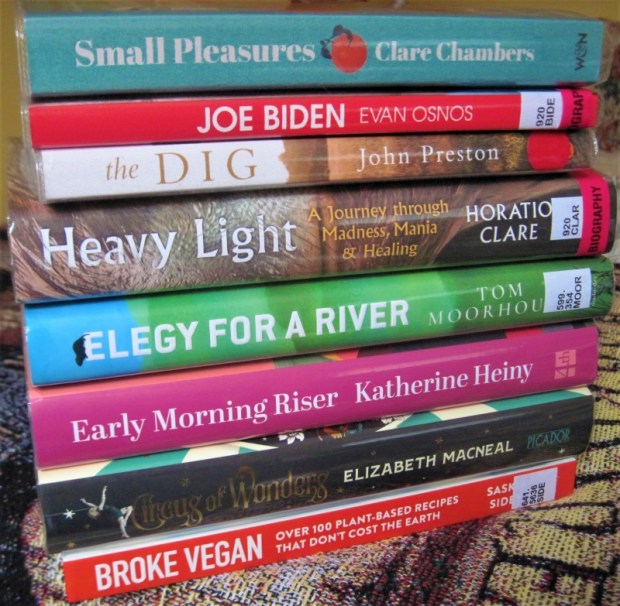
- Heavy Light: A Journey through Madness, Mania and Healing by Horatio Clare
- Lakewood by Megan Giddings
- The Master Bedroom by Tessa Hadley
- A More Perfect Union by Tammye Huf
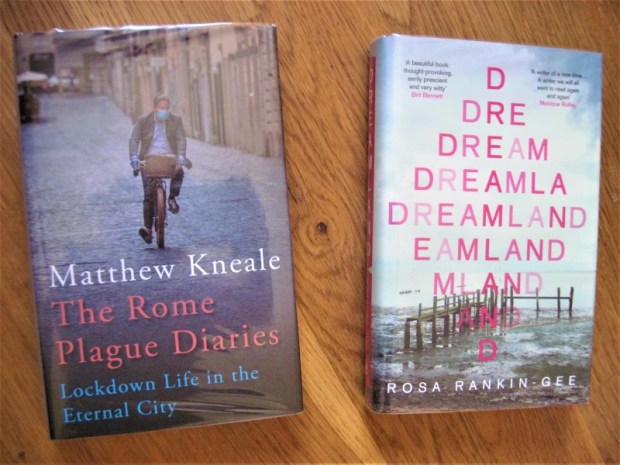
- The Rome Plague Diaries: Lockdown Life in the Eternal City by Matthew Kneale
- Elegy for a River: Whiskers, Claws and Conservation’s Last, Wild Hope by Tom Moorhouse
- Joe Biden: American Dreamer by Evan Osnos
- The Dig by John Preston
- Dreamland by Rosa Rankin-Gee
- Broke Vegan: Over 100 Plant-Based Recipes that Don’t Cost the Earth by Saskia Sidey [to skim only]
Plus a cheeky new selection from the university library – graphic novels, poetry, and a bit of fiction. No photo as of yet, but this is what my husband is bringing back for me later today.
- The Tragic Death of Eleanor Marx by Tara Bergin
- Bloodchild and Other Stories by Octavia E. Butler
- James Miranda Barry by Patricia Duncker
- The Kite Runner: Graphic Novel by Khaled Hosseini
- The Summer before the Dark by Doris Lessing
- Jilted City by Patrick McGuinness
- The State of the Prisons by Sinéad Morrissey
- Frankenstein: The Graphic Novel by Mary Shelley
- Lena Finkle’s Magic Barrel by Anya Ulinich
ON HOLD, TO BE PICKED UP
- Misplaced Persons by Susan Beale
- Second Place by Rachel Cusk
- The Other Black Girl by Zakiya Dalila Harris
- The Premonition: A Pandemic Story by Michael Lewis [to skim only]
- Nothing but Blue Sky by Kathleen MacMahon
- Demystifying the Female Brain: A Neuroscientist Explores Health, Hormones and Happiness by Sarah McKay [to skim only]
- Heartstoppers, Volume 1 by Alice Oseman
- Great Circle by Maggie Shipstead
- Ice Rivers by Jemma Wadham
- Still Life by Sarah Winman
IN THE RESERVATION QUEUE
- Consumed: A Sister’s Story by Arifa Akbar
- Who Is Maud Dixon? by Alexandra Andrews
- Medusa’s Ankles: Selected Stories by A.S. Byatt
- Darwin’s Dragons by Lindsay Galvin
- When the Stars Go Dark by Paula McLain
- His Only Wife by Peace Adzo Medie
- To the Island of Tides: A Journey to Lindisfarne by Alistair Moffat
- The Sea Is Not Made of Water: Life between the Tides by Adam Nicolson
- Malibu Rising by Taylor Jenkins Reid
- Everyone Is Still Alive by Cathy Rentzenbrink
- My Phantoms by Gwendoline Riley
- Earthed: A Memoir by Rebecca Schiller
- I Belong Here: A Journey along the Backbone of Britain by Anita Sethi
- Forecast: A Diary of the Lost Seasons by Joe Shute
- Plague: A Very Short Introduction by Paul Slack
- August Folly by Angela Thirkell
- A Walk from the Wild Edge by Jake Tyler
- August by Callan Wink
- The Hidden Life of Trees by Peter Wohlleben
RETURNED UNFINISHED
- Small Pleasures by Clare Chambers – The first few pages didn’t draw me in, and I’ve seen very polarized responses.
- Circus of Wonders by Elizabeth Macneal – I read the first 40-some pages and skimmed up to p. 90. Victoriana by numbers. None of the characters leapt out at me. Such a disappointment after how much I loved The Doll Factory!
What appeals from my stacks?
Library Checkout, May 2021
Another big library reading month for me as I scrambled to get through the books that were reserved after me and then wrangle the remaining pile under some semblance of control before heading back to the USA for my mother’s wedding. I’ve also suspended any holds that look like they might arrive imminently – the first time I’ve taken advantage of this option. Once I’m back I’m sure I’ll quickly build up another goodly stack to last me through the summer.
I give links to reviews of books I haven’t already featured here, as well as ratings for most reads and skims. I would be delighted to have other bloggers – not just book bloggers – join in with this meme. Feel free to use the image above and leave a link to your blog in the comments if you’ve taken part in Library Checkout (on the last Monday of each month), or tag me on Twitter and Instagram: @bookishbeck / #TheLibraryCheckout & #LoveYourLibraries.
READ
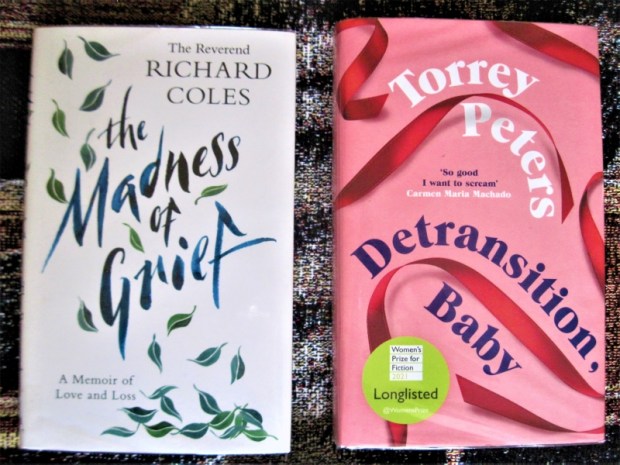
- The Madness of Grief: A Memoir of Love and Loss by Reverend Richard Coles
- Ten Days by Austin Duffy
- Featherhood: On Birds and Fathers by Charlie Gilmour

- Deep Water by Patricia Highsmith
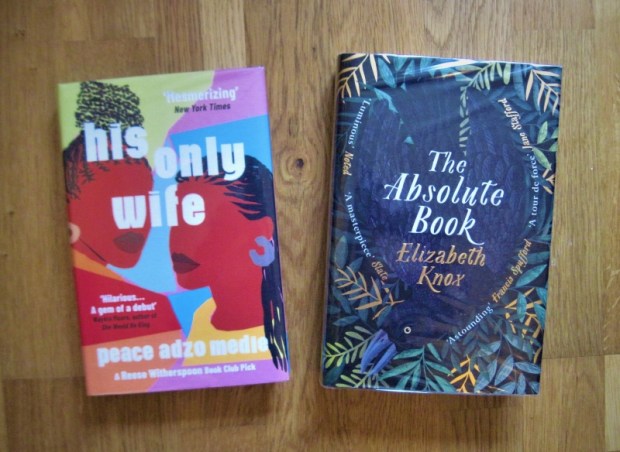
- The Absolute Book by Elizabeth Knox
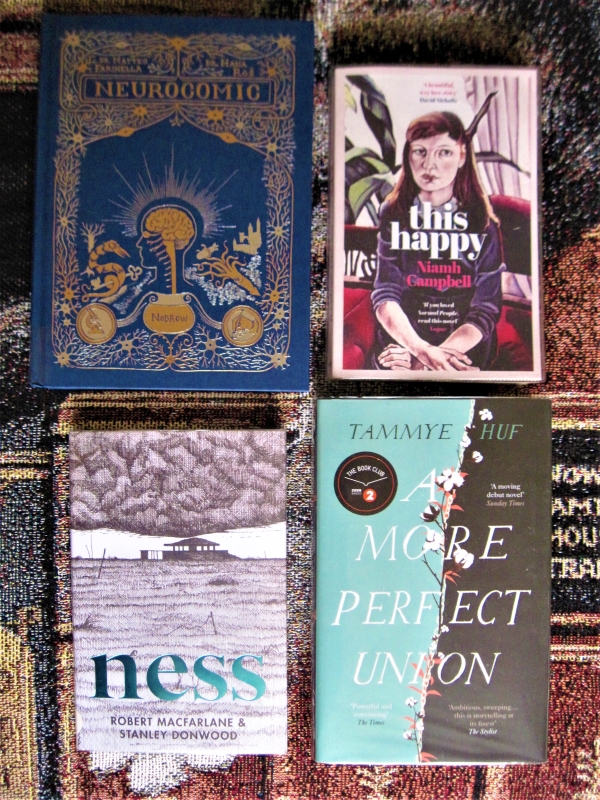
- Ness by Robert Macfarlane and Stanley Donwood

- The Lonely Passion of Judith Hearne by Brian Moore
- The Pleasure Steamers by Andrew Motion

- You’re Not Listening: What You’re Missing and Why It Matters by Kate Murphy
- Open Water by Caleb Azumah Nelson
- Woods etc. by Alice Oswald
- Detransition, Baby by Torrey Peters
- Neurocomic by Dr. Matteo Farinella (illustrations) and Dr. Hana Roš
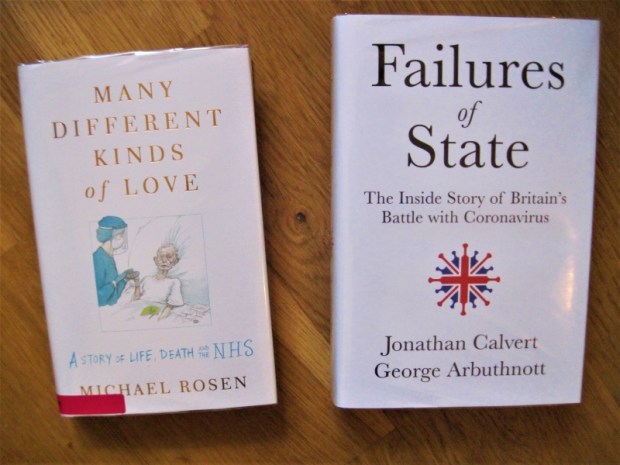
- Many Different Kinds of Love: A Story of Life, Death and the NHS by Michael Rosen
- When We Went Wild by Isabella Tree and Allira Tee (a children’s picture book; doesn’t count towards my year total)
SKIMMED
- After: A Doctor Explores What Near-Death Experiences Reveal about Life and Beyond by Bruce Greyson
- The Ministry of Bodies: Life and Death in a Modern Hospital by Seamus O’Mahony
CURRENTLY READING
- Blue Dog by Louis de Bernières
- Becoming a Man: Half a Life Story by Paul Monette [set aside temporarily]
CHECKED OUT, TO BE READ
- Under the Blue by Oana Aristide
- Summer Story and Autumn Story by Jill Barklem
- This Happy by Niamh Campbell
- The Pure Gold Baby by Margaret Drabble
- Lakewood by Megan Giddings
- The Master Bedroom by Tessa Hadley
- A More Perfect Union by Tammye Huf
- The Rome Plague Diaries: Lockdown Life in the Eternal City by Matthew Kneale
- His Only Wife by Peace Adzo Medie
- Dreamland by Rosa Rankin-Gee
- How to Be Sad: Everything I’ve Learned about Getting Happier, by Being Sad, Better by Helen Russell
- Earthed: A Memoir by Rebecca Schiller
- The Color Purple by Alice Walker (to reread)
IN THE RESERVATION QUEUE
- Who Is Maud Dixon? by Alexandra Andrews
- Misplaced Persons by Susan Beale
- Civilisations by Laurent Binet
- Medusa’s Ankles: Selected Stories by A.S. Byatt
- Small Pleasures by Clare Chambers
- Heavy Light: A Journey through Madness, Mania and Healing by Horatio Clare
- Second Place by Rachel Cusk
- Darwin’s Dragons by Lindsay Galvin
- Early Morning Riser by Katherine Heiny
- The Premonition: A Pandemic Story by Michael Lewis
- Nothing but Blue Sky by Kathleen MacMahon
- Circus of Wonders by Elizabeth Macneal
- Demystifying the Female Brain by Sarah McKay
- When the Stars Go Dark by Paula McLain
- Elegy for a River: Whiskers, Claws and Conservation’s Last, Wild Hope by Tom Moorhouse
- Acts of Desperation by Megan Nolan
- Heartstoppers, Volume 1 by Alice Oseman
- Joe Biden: American Dreamer by Evan Osnos
- The Dig by John Preston
- My Phantoms by Gwendoline Riley
- I Belong Here: A Journey along the Backbone of Britain by Anita Sethi
- Great Circle by Maggie Shipstead
- Broke Vegan: Over 100 Plant-Based Recipes that Don’t Cost the Earth by Saskia Sidey
- Still Life by Sarah Winman
- The Hidden Life of Trees by Peter Wohlleben
RETURNED UNFINISHED
- You Exist Too Much by Zaina Arafat
- The Last Migration by Charlotte McConaghy – I read the first 22 pages. The plot felt very similar to Ankomst and I didn’t get drawn in by the prose, but this has been a huge word-of-mouth hit among my Goodreads friends. I’ll try it again another time.
- Hot Stew by Fiona Mozley
RETURNED UNREAD
- Failures of State: The Inside Story of Britain’s Battle with Coronavirus by Jonathan Calvert and George Arbuthnott – I think I’m finally tiring of Covid stories.
- Life Support: Diary of an ICU Doctor on the Frontline of the COVID Crisis by Jim Down – Ditto, though having now seen him at a Hay Festival event I might give this a try another time.
- Life Sentences by Billy O’Callaghan – I can’t even remember how I heard about this or why I put a request on it!
What appeals from my stacks?
20 Books of Summer 2021 (Colour Theme) & Other Reading Plans
It’s my fourth year participating in Cathy’s 20 Books of Summer challenge. Three years ago, I read only books by women; two years ago, I did an animal theme; last year, all my choices were related to food and drink. This year it’s all about colour: the word colour, or one mentioned in a title or in an author’s name, or – if I get really stuck – a particularly vibrant one on a book cover. My options range from short stories to biography, with a couple of novels in translation and a couple of children’s classics to reread on the piles.
As usual, I will prioritize books from my own shelves, but this time I will also allow myself to include library and/or Kindle reads. For instance, I have a hold placed on Nothing but Blue Sky by Kathleen MacMahon, which was on the Women’s Prize longlist.
Here are the initial stacks I’m choosing from:

 One that’s not pictured but that I definitely plan to read and review over the summer is God Is Not a White Man by Chine McDonald, which came out earlier this month.
Tomorrow I’m flying out to the USA as my mother is getting remarried in mid-June. I’m not completely at ease about travelling, especially as on this occasion it has involved expensive private Covid testing and quarantine periods at either end, but I am looking forward to the fun aspects of travel, like downtime in an airport with nothing to do but read. For this purpose, the first two books for my challenge that I’ve packed are the novel Purple Hibiscus by Chimamanda Ngozi Adichie and the short story collection Emerald City by Jennifer Egan.


This week and next, the Hay Festival is taking place. I went nuts and booked myself onto eight different literary talks, three of which have already aired, with two more coming up this evening. Then there will be a few to keep me occupied during my first few days of quarantine next week. It’s a fantastic program and all the online events are free (though you can donate), so do take a look if you haven’t already. I’ll try to write up at least some of these events.

Liz’s Anne Tyler readalong is continuing throughout this year, and I happen to own one novel that’s scheduled for each of the next three months: Saint Maybe for June, A Patchwork Planet for July, and An Amateur Marriage for August. The last two I’ll be rescuing from boxes in my sister’s basement.
I always like reading with the seasons, so this is my summery stack:

I’ll start with Three Junes. Others I will contemplate getting out from the library include Heatstroke by Hazel Barkworth, The Summer before the Dark by Doris Lessing, and August by Callan Wink.
 In mid-June I’m on the blog tour for Mary Jane by Jessica Anya Blau, a novel that’s perfect for the season’s reading – nostalgic for a teen girl’s music-drenched 1970s summer, and reminiscent of Curtis Sittenfeld’s work.
I have also managed to amass a bunch of books about fathers and fatherhood, so I’ll do at least one “Three on a Theme” post to tie in with Father’s Day.
Are you joining in the summer reading challenge? What’s the first book on the docket?
Do you spy any favourites on my piles? Which ones should I be sure to read?
Adventures in Rereading: Madeleine L’Engle and Posy Simmonds
I’m not doing as well with my rereading goal this year as I did in 2020. So far I’ve gotten to The Republic of Love by Carol Shields and the two below (with another DNF). Considering that I completed 16 rereads last year, I’m looking seriously behind. I still have a bulging shelf of books I’d like to reread, but they never seem to make it onto my current reading stack…
A Wrinkle in Time by Madeleine L’Engle (1962)
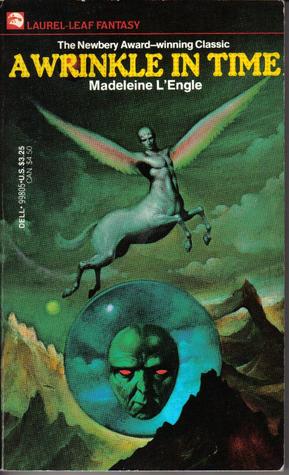 I probably picked this up at age seven or so as a natural follow-on from the Chronicles of Narnia – both are well-regarded children’s sci fi/fantasy from an author with a Christian worldview. In my memory I didn’t connect with L’Engle’s work particularly well, finding it vague and cerebral, if creative, compared to Lewis’s. I don’t think I ever went on to the multiple sequels. As an adult I’ve enjoyed L’Engle’s autobiographical and spiritual writing, especially the Crosswicks Journals, so I thought I’d give her best-known book another try.
On a proverbially dark and stormy night, Meg Murry and her precocious little brother Charles Wallace come down to the kitchen to join their mother for a snack. In blows Mrs. Whatsit with the promise of a way of rescuing their missing scientist father through a “tesseract,” or wrinkle in time. Mrs. Who and Mrs. Which, rounding out a trio of Macbeth-like witches, accompany the children and their friend Calvin on a perilous journey to face up to cosmic darkness in the form of a disembodied brain called IT that keeps their father hostage and tries to entrance Charles Wallace as well.
Interplanetary stories have never held a lot of interest for me. (As a child, I was always more drawn to talking-animal stuff.) Again I found the travels and settings hazy. It’s admirable of L’Engle to introduce kids to basic quantum physics, and famous quotations via Mrs. Who, but this all comes across as consciously intellectual rather than organic and compelling. Even the home and school talk feels dated. I most appreciated the thought of a normal – or even not very bright – child like Meg saving the day through bravery and love. This wasn’t for me, but I hope that for some kids, still, it will be pure magic.
Favorite lines:
“The only way to cope with something deadly serious is to try to treat it a little lightly.”
“we can’t take any credit for our talents. It’s how we use them that counts.”
Original rating (as remembered from childhood):
My rating now: 
Tamara Drewe by Posy Simmonds (2007)
This must be one of the first graphic novels I ever read. Hearing that it was an adaptation of Thomas Hardy’s Far from the Madding Crowd, one of my favorite novels, was enough to attract me. During the years that I worked at King’s College London, I took full advantage of Lambeth Library’s extensive graphic novel collection and would pick up big piles of all sorts of books on my lunch breaks – I got a gentle ribbing from library staff nearly every time I showed up. Anyway, this is all backstory to me finding a severely underpriced secondhand copy (99p! the dear old ladies pricing things couldn’t have known what they had) in the Hay-on-Wye Oxfam shop in April 2017. It took me until earlier this year to reread it, though.
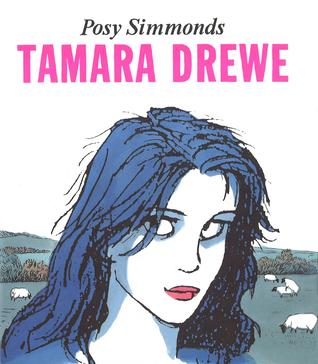 Simmonds recreates the central situation of FFTMC – an alluring young woman returns to her ancestral village and enraptures three very different men – but doesn’t stick slavishly to its plot. Her greatest innovation is in the narration. Set in and around a writers’ retreat, the novel is told in turns by Dr. Glen Larson, a (chubby, Bryson-esque) visiting American academic trying to get to grips with his novel; Beth Hardiman, who runs the retreat center and does all the admin for her philandering crime writer husband, Nicholas; and Casey Shaw, a lower-class teenager who, with her bold pal Jody, observes all the goings-on among the posh folk from the local bus shelter and later gets unexpectedly drawn in to their lives.
Tamara is a hotshot London journalist and, after a nose job, is irresistible to men. Andy Cobb, the Hardimans’ groundsman, runs a small organic food business and is a clear stand-in for Hardy’s Farmer Oak. He’s known Tamara nearly all their lives, and isn’t fussed about her new appearance and glitzy reputation. But she certainly turns Nicholas’s head, and also draws the attention of Ben, former drummer for a washed-up band. Tamara and Ben are a power couple in this sleepy village, and stir up jealousy. Ben is closest to Sergeant Troy, but he and Nicholas (who’s most like Boldwood) aren’t one-to-one equivalents. Casey and Jody fill the role of the servants and rustics, with chavs serving as the early 21st-century peasantry.
So Simmonds takes what she wants from Hardy, but adapts it as it suits her. There are a lot of words on the page compared to some graphic novels, so this would be a good halfway house for someone who’s new to comics for adults and still wants a good story to get the teeth into. At nearly 150 pages, there’s plenty of time for Simmonds to spin an involved, dramatic tale and give insight into her characters and their interactions. One ends up feeling, perhaps inevitably, more sympathy for the narrators than for the other characters, but all are well drawn. There’s a surprise ending, too. Back in 2010 I was probably more interested in getting a straight Hardy remake, so might have been disappointed when Simmonds strayed from the source material, but now I thoroughly enjoyed this for its own sake.
Original rating (2010?):
My rating now:
And a DNF:
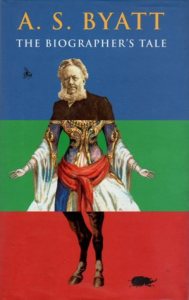 I’ve long considered A.S. Byatt a favorite author, and early last year my reread of one of her story collections was successful. But trying again with The Biographer’s Tale (2000) – which I remember reading in an airport as I traveled to or from Leeds, where I was doing a Master’s degree, to see my family for Christmas in 2005/6 – was a lost cause. I remembered an intricate, clever, witty take on the biographer’s art, but couldn’t have recited any details for you. I managed about the first 100 pages this time. Phineas G. sets out to write a biography of famous biographer Scholes Destry-Scholes, whose subjects included Francis Galton, Henrik Ibsen, and Carl Linnaeus. The novel quotes extensively from Destry-Scholes’s writing on these three, and his general notes on writing biography. I got lost somewhere in the documents. I think in my early twenties I was more impressed by virtuoso faux-scholarly writing like you often get in Byatt or Julian Barnes. Alas, it engages me less now.
Done any rereading lately?
Book Serendipity, Mid-March to Early May 2021
In early April, the publisher Canongate ran a newsletter competition for one reader to win a stack of their recent releases. All you had to do was reply with your favourite word. On Twitter they gave a rundown of the most popular responses. Turning up several times each were petrichor, mellifluous, and oleaginous. Most frequent of all was serendipity: I was one of 15 to submit it! And one of those entries, but not mine, won. Anyway, fun little story there.
I call it Book Serendipity when two or more books that I read at the same time or in quick succession have something pretty bizarre in common. Because I have so many books on the go at once (usually 20‒30), I suppose I’m more prone to such incidents. I’ve realized that, of course, synchronicity is really the more apt word, but this branding has stuck.
The following are in roughly chronological order.
- A white peacock is mentioned in Indelicacy by Amina Cain and The Mermaid of Black Conch by Monique Roffey, both of which were on the 2021 Rathbones Folio Prize shortlist.

- Speaking of that Rathbones Folio Prize shortlist, four of the eight were paperbacks with French flaps.
- The main character takes ballet lessons in Indelicacy by Amina Cain and A Feather on the Breath of God by Sigrid Nunez.
- Mermaids! A big theme in The Mermaid of Black Conch by Monique Roffey (of course) and The Republic of Love by Carol Shields, but they’re also mentioned in the opening story of The Office of Historical Corrections by Danielle Evans and are main characters in “The Pangs of Love” by Jane Gardam in the anthology Close Company.
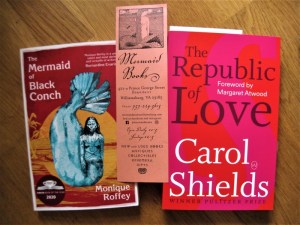
- The Brothers Grimm story about brothers who have been transformed into swans and their sister who sews shirts out of nettles to turn them back is reworked in The Charmed Wife by Olga Grushin and used as a metaphor in Dusk, Night, Dawn by Anne Lamott.
- An electric carving knife is mentioned as a means of suicide (yipes!) in The Inevitable by Katie Engelhart and Woman on the Edge of Time by Marge Piercy.
- A discussion of the distinction between the fear of dying and the fear of being dead in This Party’s Dead by Erica Buist and The Inevitable by Katie Engelhart.
- Two novels in a row in which an older man is appalled by the squalor of his young girlfriend’s apartment, and she calls him “daddy” during sex (double yipes!), made the Dylan Thomas Prize shortlist: Luster by Raven Leilani and My Dark Vanessa by Kate Elizabeth Russell.


- Architect husbands in The Push by Ashley Audrain and The Art of Falling by Danielle McLaughlin (and, last year, in A Celibate Season by Blanche Howard and Carol Shields), as well as a female architect as a main character in The Living Sea of Waking Dreams by Richard Flanagan earlier this year.
- The next-to-last essay in the Trauma anthology quotes from The Bell Jar by Sylvia Plath, which I was also reading at the time.
- A mention of the eels in London absorbing cocaine from the Thames in the final essay in the Trauma anthology; I then moved right on to the last 40 pages of Nobody Is Talking About This by Patricia Lockwood and the same bizarre fact was mentioned. A week and a half later, there it was again, this time in Asylum Road by Olivia Sudjic.
- A mention of sailors’ habit of getting tattoos of swallows in The Circling Sky by Neil Ansell (who has a swallow tattoo, even though he’s not a sailor) and Birdsong in a Time of Silence by Steven Lovatt.

- A father and teenage child wander an unfamiliar city and enter a sex shop together (yipes yet again!) in Three O’Clock in the Morning by Gianrico Carofiglio and Ten Days by Austin Duffy.
- A mention of the same University of Virginia study in which people self-administered electric shocks to alleviate the boredom of sitting alone with their thoughts in Rooted by Lyanda Lynn Haupt and You’re Not Listening by Kate Murphy.
- Basho’s poetry and George Monbiot’s Feral are both cited in The Circling Sky by Neil Ansell and Rooted by Lyanda Lynn Haupt.
- A dead sister named Mattie in Consent by Annabel Lyon and Drowning Ruth by Christina Schwarz.

- A young Black female protagonist and the same family dynamic (the mother committed suicide and the father is in the Marines/Navy) in The Mothers by Brit Bennett and Luster by Raven Leilani.
- On the same night, I read about two pets encountering snow for the first time: a cat in Close Encounters of the Furred Kind by Tom Cox and a dog in Open Water by Caleb Azumah Nelson.
- A character is described as being as wide as they are tall in Mother for Dinner by Shalom Auslander and The Absolute Book by Elizabeth Knox.


- A character is known as Seventh in Mother for Dinner by Shalom Auslander and the story “The Pangs of Love” by Jane Gardam in the Close Company anthology. Plus, there’s Septimus in Mrs Dalloway by Virginia Woolf, which I’m reading concurrently with those two.
What’s the weirdest reading coincidence you’ve had lately?
Library Checkout, April 2021
Over the past month, my library reading has included a few more novels from the Women’s Prize longlist and several memoirs, a few of them reflecting on the events of 2020. I also picked out a stack of picture books, most of them cat-themed, while looking for reservations (I’ve been back to volunteering at the library twice weekly).
I give links to reviews of books I haven’t already featured, as well as ratings for most reads and skims. I would be delighted to have other bloggers join in with this meme. Feel free to use the image above and leave a link to your blog in the comments if you’ve taken part in Library Checkout (the last Monday of each month), or tag me on Twitter and/or Instagram: @bookishbeck / #TheLibraryCheckout & #LoveYourLibraries.
READ
- Luster by Raven Leilani – review coming up tomorrow
- No One Is Talking About This by Patricia Lockwood – review coming up tomorrow

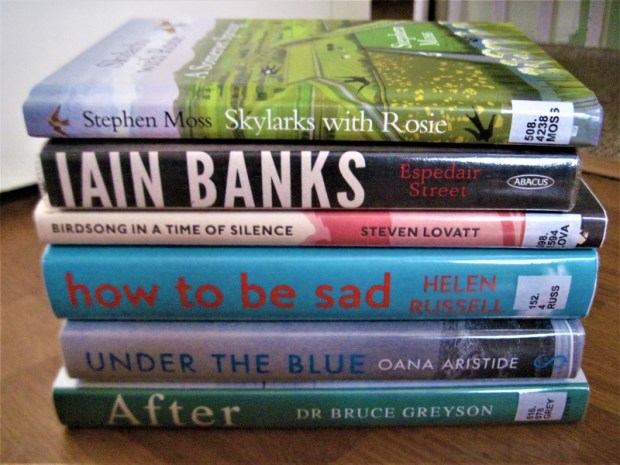
- Birdsong in a Time of Silence by Steven Lovatt
- Consent by Annabel Lyon – review coming up tomorrow
- Skylarks with Rosie: A Somerset Spring by Stephen Moss
- How We Met: A Memoir of Love and Other by Huma Qureshi
- UnPresidented: Politics, Pandemics and the Race that Trumped All Others by Jon Sopel

- Asylum Road by Olivia Sudjic
- When God Was a Rabbit by Sarah Winman
Also these children’s picture books, which don’t count towards my year totals.
-
- Alfie in the Garden by Debi Gliori
- The Poesy Ring by Bob Graham
- The Mice in the Churchyard by Kes Gray
- Captain Cat by Inga Moore
- Pussy Cat, Pussy Cat, Where Have You Been? I’ve Been to Washington and Guess What I’ve Seen by Russell Punter

- Fred by Posy Simmonds
- Alfie in the Garden by Debi Gliori
SKIMMED
- The Natural Health Service: What the Great Outdoors Can Do for Your Mind by Isabel Hardman
- The Librarian by Allie Morgan
CURRENTLY READING
- You Exist Too Much by Zaina Arafat
- Ten Days by Austin Duffy
- Featherhood: On Birds and Fathers by Charlie Gilmour
- The Last Migration by Charlotte McConaghy
- Becoming a Man: Half a Life Story by Paul Monette
- The Lonely Passion of Judith Hearne by Brian Moore
- Hot Stew by Fiona Mozley
- You’re Not Listening: What You’re Missing and Why It Matters by Kate Murphy
- Open Water by Caleb Azumah Nelson
- Woods etc. by Alice Oswald
CURRENTLY SKIMMING
- After: A Doctor Explores What Near-Death Experiences Reveal about Life and Beyond by Bruce Greyson
- The Ministry of Bodies: Life and Death in a Modern Hospital by Seamus O’Mahony
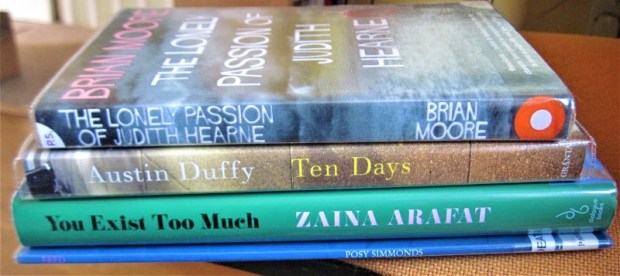
CHECKED OUT, TO BE READ
- Under the Blue by Oana Aristide
- The Address Book: What Street Addresses Reveal about Identity, Race, Wealth and Power by Deirdre Mask
- The Pleasure Steamers by Andrew Motion
- How to Be Sad: Everything I’ve Learned about Getting Happier, by Being Sad, Better by Helen Russell
ON HOLD, TO BE PICKED UP
- Who Is Maud Dixon? by Alexandra Andrews
- Failures of State: The Inside Story of Britain’s Battle with Coronavirus by Jonathan Calvert and George Arbuthnott
- Life Support: Diary of an ICU Doctor on the Frontline of the COVID Crisis by Jim Down
- The Absolute Book by Elizabeth Knox
- His Only Wife by Peace Adzo Medie
- Life Sentences by Billy O’Callaghan
- Many Different Kinds of Love: A Story of Life, Death and the NHS by Michael Rosen
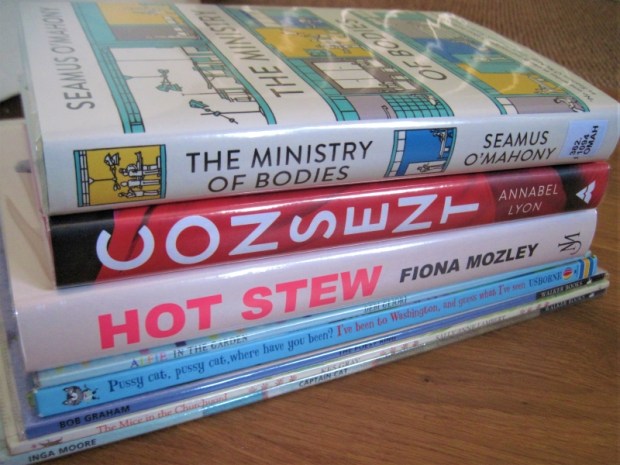
IN THE RESERVATION QUEUE
- Civilisations by Laurent Binet
- This Happy by Niamh Campbell
- Small Pleasures by Clare Chambers
- Heavy Light: A Journey through Madness, Mania and Healing by Horatio Clare
- The Madness of Grief: A Memoir of Love and Loss by Reverend Richard Coles
- Darwin’s Dragons by Lindsay Galvin
- Lakewood by Megan Giddings
- The Rome Plague Diaries: Lockdown Life in the Eternal City by Matthew Kneale
- Nothing but Blue Sky by Kathleen MacMahon
- Circus of Wonders by Elizabeth Macneal
- Acts of Desperation by Megan Nolan
- Detransition, Baby by Torrey Peters
- My Phantoms by Gwendoline Riley
- I Belong Here: A Journey along the Backbone of Britain by Anita Sethi
- Great Circle by Maggie Shipstead
- When We Went Wild by Isabella Tree and Allira Tee
RETURNED UNFINISHED
- Escape Routes by Naomi Ishiguro – I read and enjoyed a few stories, but didn’t feel the need to read any more (especially some very long or fantasy-looking ones).
- The Art of Falling by Danielle McLaughlin
RETURNED UNREAD
- A Tall History of Sugar by Curdella Forbes – Seemed like it might be tiresome (too involved, too much backstory, etc.).
- Double Blind by Edward St. Aubyn – Ponderous writing in the first few pages, and too many middling or negative reviews from friends on Goodreads.
What appeals from my stacks?
The Republic of Love by Carol Shields (Blog Tour Review)
“Let’s hear it for love.”
Last year I read, or reread, six Carol Shields novels (my roundup post). The ongoing World Editions reissue series is my excuse to continue rereading her this year – Mary Swann, another I’m keen to try again, is due out in August.
The Republic of Love (1992), the seventh of Shields’s 10 novels, was a runner-up for the Guardian Fiction Prize and was adapted into a 2003 film directed by Deepa Mehta. (I love Emilia Fox; how have I not seen this?!)
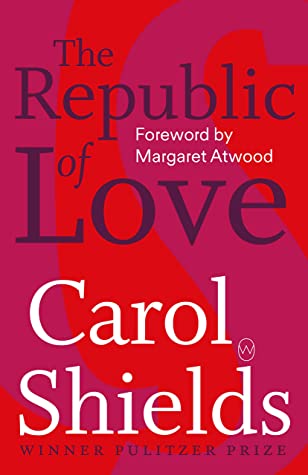 The chapters alternate between the perspectives of radio disc jockey Tom Avery and mermaid researcher Fay McLeod, two thirtysomething Winnipeg lonely hearts who each have their share of broken relationships behind them – three divorces for Tom; a string of long-term live-in boyfriends for Fay. It’s clear that these two characters are going to meet and fall in love (at almost exactly halfway through), but Shields is careful to interrogate the myths of love at first sight and happily ever after.
On this reread, I was most struck by the subplot about Fay’s parents’ marriage and especially liked the secondary characters (like Fay’s godmother, Onion) and the surprising small-world moments that take place in Winnipeg even though it was then a city of some 600,000 people. Shields has a habit of recording minor characters’ monologues (friends, family, radio listeners, and colleagues) word for word without letting Fay or Tom’s words in edgewise.
Tom sometimes feels like a caricature – the male/female dynamic is not as successful here as in the Happenstance dual volume, which also divides the perspective half and half – and I wasn’t entirely sure what the mermaid theme is meant to contribute. Mermaids are sexually ambiguous, and in Fay’s Jungian interpretation represent the soul emerging from the unconscious. In any case, they’re an excuse for Fay to present papers at folklore conferences and spend four weeks traveling in Europe (Amsterdam, Copenhagen, northwest France).
The cover on the copy I read in 2016.
Straightforward romance plots don’t hold much appeal for me anymore, but Shields always impresses with her compassionate understanding of human nature and the complexities of relationships.
This was not one of my favorites of hers, and the passage of nearly five years didn’t change that, but it’s still pleasant and will suit readers of similarly low-key, observant novels by women: Kate Grenville’s The Idea of Perfection, Elizabeth Hay’s Late Nights on Air, Mary Lawson’s A Town Called Solace, and Anne Tyler’s The Accidental Tourist.
Favorite lines:
“Most people’s lives don’t wrap up nearly as neatly as they’d like to think. Fay’s sure of that. Most people’s lives are a mess.”
Fay’s mother: “I sometimes think that the best thing about your mermaids is the fact that they never age.”
The Republic of Love was reissued in the UK by World Editions in February. My thanks to the publisher for the free copy for review.
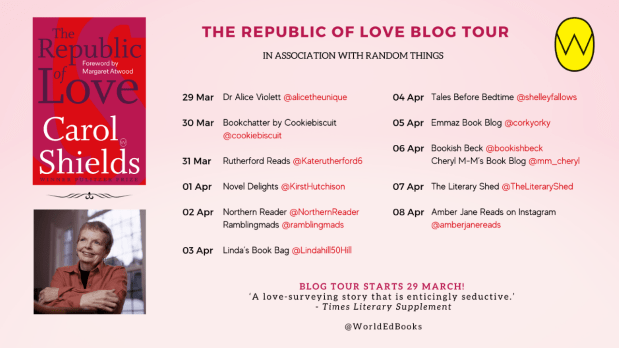
I was delighted to take part in the blog tour for The Republic of Love. See below for details of where other reviews and features have appeared or will be appearing.
 Bookish Beck = Rebecca Foster. American transplant to England. Freelance proofreader and book reviewer.
