20 Books of Summer 2024 Retrospective
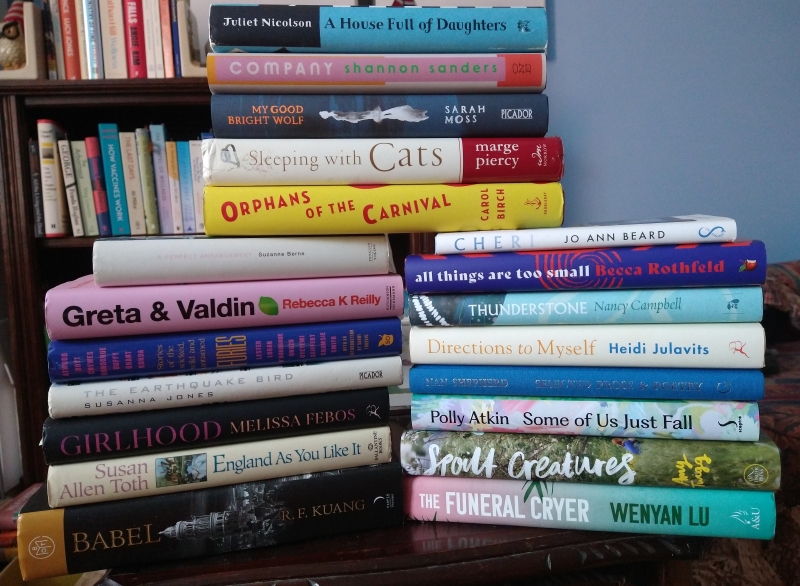
That’s a wrap! It was my seventh year in a row participating. I managed to read and review all 20 books by yesterday. Only eight of the books I earmarked in my plans (plus two more that were DNFs) made it into my final stacks, but I don’t really consider that a problem.

With what I substituted in, I ended up achieving 1 reread and getting through 7 review copies, 3 of which had been languishing in my set-aside piles for a long time. I stuck to my pledge to read only a) books that I owned in hardback and b) books by women. I read roughly half and half fiction and non- (11 vs. 9).
Unfortunately, a lot of my selections this year happened to be lackluster: there were 5 books that I rated at 2.5 stars or below, and another 6 that merited 3 stars. Those 11 make for a pretty low average rating across the 20.
By contrast, I had a few 4-star highlights: Company by Shannon Sanders, Sleeping with Cats by Marge Piercy, and My Good Bright Wolf by Sarah Moss (if anyone in the UK would like my proof copy of this last one, let me know and I’ll post it to you).
It was also fun tying into the Reading the Meow week and connecting reviews with events such as an online conference about Vita Sackville-West and the new album by the Bookshop Band.
I’ve cleared 16 of 23 (including the several DNFs) books from my shelves by reselling them or donating them to my neighbourhood Little Free Library. I’ll surely appreciate that extra space to accommodate the constant stream of incomers.
Next year I think I need to make the challenge even more open, because it seems that as soon as I ‘assign’ myself 20 books, I lose interest in most of them. Again, I want to limit myself to books from my shelves, but I won’t specify anything else. I’ll just let myself pick up whatever interests me at the time – bearing in mind that in the summers I like to indulge in juicy fiction that’s toward the popular end of literary.
How did your summer reading go?
Love Your Library, August 2024
It’s a Bank Holiday today here in the UK – if you have the day off, I hope you’re spending it a fun way. We’re on a day trip to Windsor Castle with friends who got free tickets through her work. Otherwise, there’s no way we would ever have gone: it’s very expensive, plus down with the monarchy and all that.
Thanks so much to Eleanor (here, here and here), Laura (the two images below) and Marcie for posting about their recent library reading!


Marina Sofia has posted a couple of relevant blogs, one a review of an Alberto Manguel book about his home library and the other a series of tempting photos of world libraries.
In the media: I loved this anti-censorship George Bernard Shaw quote posted by Book Riot on Instagram…

…and my heart was warmed by the story of Minnesota governor and current vice-presidential candidate Tim Walz installing a Little Free Library in the state capitol earlier this year. He gets my vote!
One volunteering day, a staff member told the strange-but-true story of an e-mail just received to the general libraries account. A solicitor presiding over an estate clearance let us know about a West Berkshire Libraries book found among their client’s effects, borrowed in early 1969 and never returned. Did we want it back? The consensus was that, as we’ve been doing fine without this book since BEFORE THE MOON LANDING, we will drop the issue.
Not exactly library related, but in other fun book news, I took a couple of online quizzes and got intriguing results:


My suggestion (for Angie Kim’s Happiness Falls) featured in the recent Faber Members’ summer reading recommendation round-up. And here’s that blog post I wrote for Foreword Reviews about the Bookshop Band’s new album and tour.
I’m hosting book club a week on Wednesday. Although it’s felt for a while like it might be doomed, the group has had a stay of execution at least until January. We took a break for the summer and at our July social everyone made enthusiastic noises about joining in with the four autumn and winter reads we voted on – plus we have two prospective new members who we hope will join us for the September meeting. So we’ll see how it goes.
My library use over the last month:
READ
- Private Rites by Julia Armfield

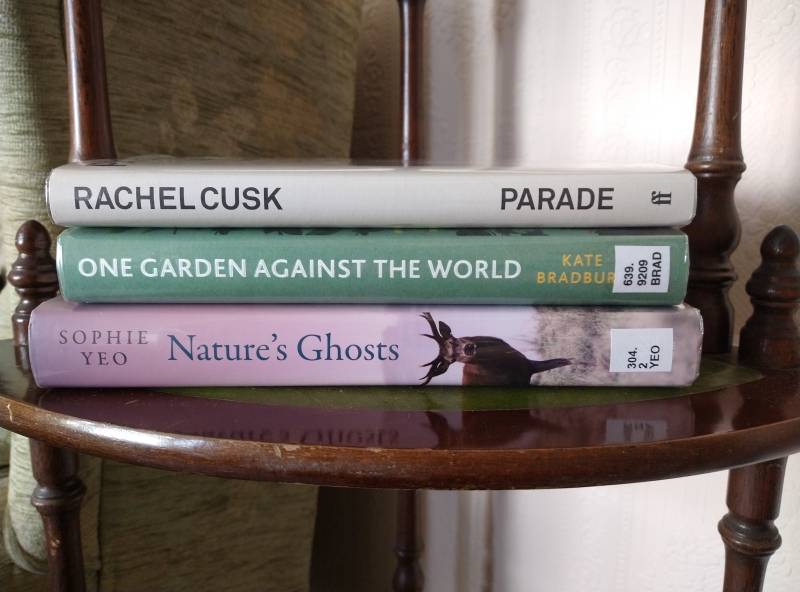
- Parade by Rachel Cusk

SKIMMED
- Nature’s Ghosts: A History – and Future – of the Natural World by Sophie Yeo
CURRENTLY READING
- One Garden against the World: In Search of Hope in a Changing Climate by Kate Bradbury
- Clear by Carys Davies (for September book club)
- Moominpappa at Sea by Tove Jansson
- The Garden against Time: In Search of a Common Paradise by Olivia Laing
- The Burial Plot by Elizabeth Macneal
- Late Light: Finding Home in the West Country by Michael Malay
- The Song of the Whole Wide World: On Motherhood, Grief, and Poetry by Tamarin Norwood
- The Echoes by Evie Wyld
CHECKED OUT, TO BE READ
- Wasteland: The Dirty Truth about What We Throw Away, Where It Goes, and Why It Matters by Oliver Franklin-Wallis
- This Is My Sea by Miriam Mulcahy
IN THE RESERVATION QUEUE
- The Glassmaker by Tracy Chevalier
- James by Percival Everett
- Small Rain by Garth Greenwell
- Bothy: In Search of Simple Shelter by Kat Hill
- The Painter’s Daughters by Emily Howes
- Dispersals: On Plants, Borders and Belonging by Jessica J. Lee
- Held by Anne Michaels
- Playground by Richard Powers
- Intermezzo by Sally Rooney
ON HOLD, TO BE PICKED UP
- The Accidental Garden: The Plot Thickens by Richard Mabey
RETURNED UNFINISHED
- The Cove: A Cornish Haunting by Beth Lynch – I enjoyed her previous memoir, and her writing is evocative, but this memoir about her return to the beloved site of childhood holidays lacks narrative drive. If you’re more familiar with the specific places, or can read it on location, you might be tempted to read the whole thing. I read 30 pages.
What have you been reading or reviewing from the library recently?

Share a link to your own post in the comments. Feel free to use the above image. The hashtag is #LoveYourLibrary.
Book Serendipity, June to Mid-August 2024
I call it “Book Serendipity” when two or more books that I read at the same time or in quick succession have something in common – the more bizarre, the better. This is a regular feature of mine every couple of months. Because I usually have 20–30 books on the go at once, I suppose I’m more prone to such incidents. People frequently ask how I remember all of these coincidences. The answer is: I jot them on scraps of paper or input them immediately into a file on my PC desktop; otherwise, they would flit away!
The following are in roughly chronological order.
- A self-induced abortion scene in Recipe for a Perfect Wife by Karma Brown and Sleeping with Cats by Marge Piercy.
- A woman who cleans buildings after hours, and a character named Tova who lives in the Seattle area in A Reason to See You Again by Jami Attenberg and Remarkably Bright Creatures by Shelby Van Pelt.
- Flirting with a surf shop employee in Sandwich by Catherine Newman and Remarkably Bright Creatures by Shelby Van Pelt.
- Living in Paris and keeping ticket stubs from all films seen in Paris Trance by Geoff Dyer and The Invention of Hugo Cabret by Brian Selznick.
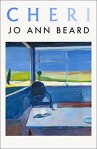
- A schefflera (umbrella tree) is mentioned in Cheri by Jo Ann Beard and Company by Shannon Sanders.

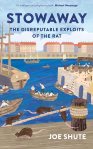
- The Plague by Albert Camus is mentioned in Knife by Salman Rushdie and Stowaway by Joe Shute.
- Making egg salad sandwiches is mentioned in Cheri by Jo Ann Beard and Sandwich by Catherine Newman.
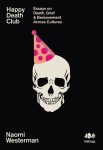
- Pet rats in Stowaway by Joe Shute and Happy Death Club by Naomi Westerman. Rats are also mentioned in Mammoth by Eva Baltasar, The Tale of Despereaux by Kate DiCamillo, and The Colour by Rose Tremain.
- Eels feature in Our Narrow Hiding Places by Kristopher Jansma, Late Light by Michael Malay, and The Colour by Rose Tremain.
- Atlantic City, New Jersey is a location in Florence Adler Swims Forever by Rachel Beanland and Company by Shannon Sanders.
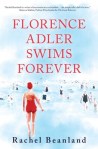 The father is a baker in Florence Adler Swims Forever by Rachel Beanland and Our Narrow Hiding Places by Kristopher Jansma.
- A New Zealand setting (but very different time periods) in Greta & Valdin by Rebecca K Reilly and The Colour by Rose Tremain.
- A mention of Melanie Griffith’s role in Working Girl in I’m Mostly Here to Enjoy Myself by Glynnis MacNicol and Happy Death Club by Naomi Westerman.
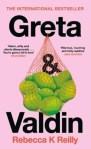 Ermentrude/Ermyntrude as an imagined alternate name in Greta & Valdin by Rebecca K Reilly and a pet’s name in Stowaway by Joe Shute.
- A poet with a collection that was published on 6 August mentions a constant ringing in the ears: Joshua Jennifer Espinoza (I Don’t Want to Be Understood) and Keith Taylor (What Can the Matter Be?).
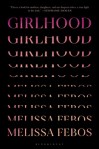
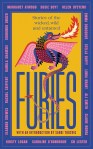
- A discussion of the original meaning of “slut” (a slovenly housekeeper) vs. its current sexualized meaning in Girlhood by Melissa Febos and Sandi Toksvig’s introduction to the story anthology Furies.
- An odalisque (a concubine in a harem, often depicted in art) is mentioned in I’m Mostly Here to Enjoy Myself by Glynnis MacNicol and The Shark Nursery by Mary O’Malley.
- Reading my second historical novel of the year in which there’s a disintegrating beached whale in the background of the story: first was Whale Fall by Elizabeth O’Connor, then Come to the Window by Howard Norman.
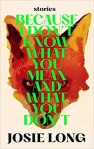 A short story in which a woman gets a job in online trolling in Because I Don’t Know What You Mean and What You Don’t by Josie Long and in the Virago Furies anthology (Helen Oyeyemi’s story).
- Her partner, a lawyer, is working long hours and often missing dinner, leading the protagonist to assume that he’s having an affair with a female colleague, in Recipe for a Perfect Wife by Karma Brown and Summer Fridays by Suzanne Rindell.
- A fierce boss named Jo(h)anna in Summer Fridays by Suzanne Rindell and Test Kitchen by Neil D.A. Stewart.
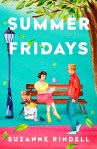
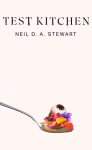
- An OTT rendering of a Scottish accent in Greta & Valdin by Rebecca K Reilly and Test Kitchen by Neil D.A. Stewart.
- A Padstow setting and a mention of Puffin Island (Cornwall) in The Cove by Beth Lynch and England as You Like It by Susan Allen Toth.
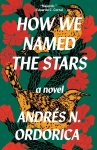
- A mention of the Big and Little Dipper (U.S. names for constellations) in Directions to Myself by Heidi Julavits and How We Named the Stars by Andrés N. Ordorica.
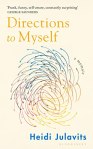
- A mention of Binghamton, New York and its university in We Are Animals by Jennifer Case and We Would Never by Tova Mirvis.
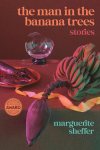
- A character accidentally drinks a soapy liquid in We Would Never by Tova Mirvis and one story of The Man in the Banana Trees by Marguerite Sheffer.
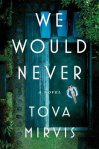 The mother (of the bride or groom) takes over the wedding planning in We Would Never by Tova Mirvis and Summer Fridays by Suzanne Rindell.
- The ex-husband’s name is Jonah in The Mourner’s Bestiary by Eiren Caffall and We Would Never by Tova Mirvis.
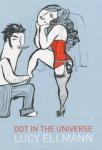
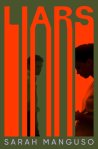
- The husband’s name is John in Dot in the Universe by Lucy Ellmann and Liars by Sarah Manguso.
- An affair is discovered through restaurant receipts in Summer Fridays by Suzanne Rindell and Test Kitchen by Neil D.A. Stewart.
- A mention of eating fermented shark in The Museum of Whales You Will Never See by A. Kendra Greene and Test Kitchen by Neil D.A. Stewart.
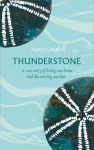
- A mention of using one’s own urine as a remedy in Thunderstone by Nancy Campbell and Terminal Maladies by Okwudili Nebeolisa.

- The main character tries to get pregnant by a man even though one of the partners is gay in Mammoth by Eva Baltasar and Until the Real Thing Comes Along by Elizabeth Berg.
- Motherhood is for women what war is for men: this analogy is presented in We Are Animals by Jennifer Case, Parade by Rachel Cusk, and Want, the Lake by Jenny Factor.
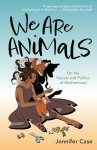 Childcare is presented as a lifesaver for new mothers in We Are Animals by Jennifer Case and Liars by Sarah Manguso.
- A woman bakes bread for the first time in Mammoth by Eva Baltasar and A Year of Biblical Womanhood by Rachel Held Evans.
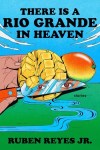
- A gay couple adopts a Latino boy in Greta & Valdin by Rebecca K Reilly and one story of There Is a Rio Grande in Heaven by Ruben Reyes, Jr.
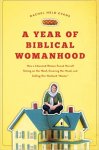 A husband who works on film projects in A Year of Biblical Womanhood by Rachel Held Evans and Liars by Sarah Manguso.
- A man is haunted by things his father said to him years ago in Parade by Rachel Cusk and one story in There Is a Rio Grande in Heaven by Ruben Reyes, Jr.
- Two short story collections in a row in which a character is a puppet (thank you, magic realism!): The Man in the Banana Trees by Marguerite Sheffer, followed by There Is a Rio Grande in Heaven by Ruben Reyes, Jr.
- A farm is described as having woodworm in Mammoth by Eva Baltasar and Parade by Rachel Cusk.
- Sebastian as a proposed or actual name for a baby in Signs, Music by Raymond Antrobus and Birdeye by Judith Heneghan.
What’s the weirdest reading coincidence you’ve had lately?
Love Your Library, July 2024
Thanks so much to Eleanor, Laura and Marcie for posting about their recent library reads! It’s been a light library reading month for me, but I’m awaiting many holds of recent releases, including a coincidental gardening-themed trio that I fancy reviewing together if the timing works out.
Marcie also gifted me a New York Times article so that I could go through their list of the 100 Best Books of the 21st Century so far and see how many I have read. The answer is 53 (+ 6 DNFs), with another 23 on my TBR. I pulled some awardees off my shelves and might try reading them later this year (below right) – let me know if you’d like to buddy read any of them with me. I was pleased to see that the article first encouraged readers to reserve books from their local library before giving links to places where they can be bought.


It was fun to find libraries mentioned in a couple of library books I’ve been reading recently:
- Thanked in the Acknowledgements to Soldier Sailor by Claire Kilroy: “The librarians of Howth and Baldoyle who are part of the village that raises the child”.
- From Late Light by Michael Malay:
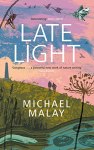 [When I was] a boy in Australia, my mother often took me to a library near our house, a small concrete building that stood across the road from a chicken shop and a video rental store. … the front door was slightly warped, making it difficult to pull open, while the carpet had been worn bare by years of footfall – and yet, to my fourteen- or fifteen-year-old self, it was a kind of palace. I would go there once or twice a week, roam the shelves on my own, gather all the books that appealed to me, and then take home as many titles as our library account would allow. I don’t think the books I chose were ever to my mother’s taste – at that time, I was obsessed with comics and fantasy novels – but she encouraged my enthusiasm anyway. … looking back now, I see that these books did other things for me – that they fed my curiosity, made time move in different ways, and opened up portals to other worlds. In all those years, I can’t remember my mother ever encouraging me to read more ‘serious’ or ‘literary’ books, and I continue to love her for that.
I’ve seen this Peanuts comic before and I love it. Isn’t library borrowing a brilliant concept?! All the more astounding when you step back to think about it anew. This was shared on Facebook by the library in the village where we go to church. Threatened with closure, it went independent. It has a building on peppercorn rent from the council and is run by volunteers. I don’t borrow books there because I can rarely visit during their limited opening hours (and I have plenty of other library books on my plate), but I do try to get to their book sales at least once or twice a year – particularly useful for stocking up on 3/£1 books for the book swapping game I run at our book club holiday social each year.

Tomorrow at 2 p.m. (if you’re in the UK, that is), the Booker Prize longlist will be announced. No doubt I’ll be baffled at all the books I’ve never heard of, or read. It happens every year. Perhaps I’ll be tempted enough by two or three nominees to place library holds on them right away.
My library use over the last month:
READ
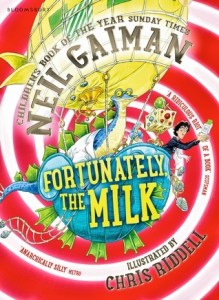
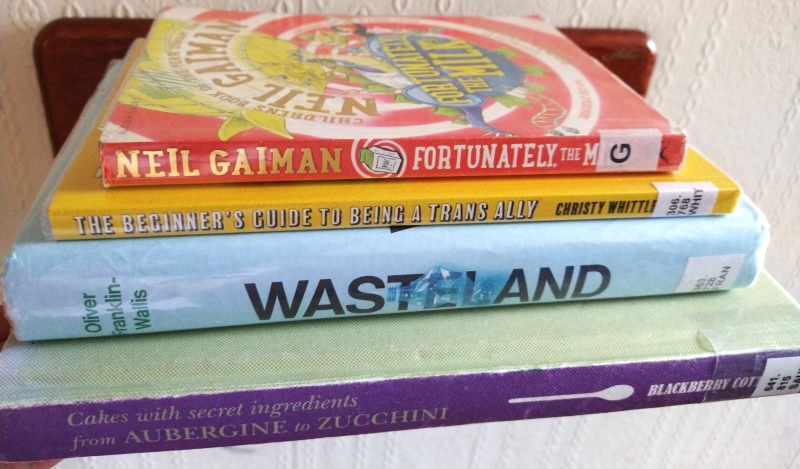
- Fortunately, The Milk… by Neil Gaiman

 SKIMMED
- Rites of Passage: Death and Mourning in Victorian Britain by Judith Flanders
CURRENTLY READING
 The Cove: A Cornish Haunting by Beth Lynch (I enjoyed her previous memoir)
- Groundbreakers: The Return of Britain’s Wild Boar by Chantal Lyons (Wainwright Prize longlist)
- Late Light: Finding Home in the West Country by Michael Malay (Wainwright Prize longlist)
- The Song of the Whole Wide World: On Motherhood, Grief, and Poetry by Tamarin Norwood (resuming this after it went out to fulfil an interlibrary loan)
CURRENTLY READING-ish (more accurately, set aside temporarily)
- Death Valley by Melissa Broder
- The Tale of Despereaux by Kate DiCamillo
- King: A Life by Jonathan Eig
- Mother’s Boy by Patrick Gale
- Learning to Think: A Memoir about Faith, Demons, and the Courage to Ask Questions by Tracy King
- Unearthing: A Story of Tangled Love and Family Secrets by Kyo Maclear
- Late Light: Finding Home in the West Country by Michael Malay
- Mrs Gulliver by Valerie Martin
- After Dark by Haruki Murakami
- Excellent Women by Barbara Pym
- Stowaway: The Disreputable Exploits of the Rat by Joe Shute
- Mrs Hemingway by Naomi Wood
CHECKED OUT, TO BE READ
- Wasteland: The Dirty Truth about What We Throw Away, Where It Goes, and Why It Matters by Oliver Franklin-Wallis
IN THE RESERVATION QUEUE
- Private Rites by Julia Armfield (I read 43% on Kindle and stalled so I’ll try again in print)
- One Garden against the World: In Search of Hope in a Changing Climate by Kate Bradbury
- The Painter’s Daughters by Emily Howes
- The Garden against Time: In Search of a Common Paradise by Olivia Laing
- The Accidental Garden: The Plot Thickens by Richard Mabey
- The Burial Plot by Elizabeth Macneal
- This Is My Sea by Miriam Mulcahy
- The Echoes by Evie Wyld
ON HOLD, TO BE PICKED UP
- Parade by Rachel Cusk
- Nature’s Ghosts: A History – and Future – of the Natural World by Sophie Yeo
RETURNED UNREAD
- Hungry Ghosts by Kevin Jared Hosein – A glance at the first few pages was enough to put me off.
What have you been reading or reviewing from the library recently?
This meme runs every month, on the final Monday. Share a link to your own post in the comments. Feel free to use the above image. The hashtag is #LoveYourLibrary.
Love Your Library, June 2024
Everyone is welcome to join in with this meme that runs on the last Monday of the month.
Thanks to Eleanor (here and here) and Laura (and image below) for posting about their recent library reads! I loved seeing Marina Sofia feature beautiful public library designs in one of her Friday Fun posts. Tom Beer, the Kirkus Reviews editor-in-chief, wrote about the love of books starting with libraries. And Sarah Turley shared this New York Times article (no paywall for the next few weeks) about the history of Black librarians during the Harlem Renaissance, including Nella Larsen.

The computer system was down at my library for a couple of weeks in May–June, such that I had to spend my volunteering sessions shelf-tidying or processing returns rather than filling reservations as I usually do. After the system update, I found that my saved lists had disappeared from my online account. Along with a general list of ~170 books I might want to borrow in the future, I had shelves for short stories, novellas, and Literary Wives. It is annoying that they’re gone, but maybe also freeing. If I hadn’t borrowed a book already, I must not have really wanted to read it, right?
There have also been tweaks to what certain categories are called. “Bestsellers” are now listed as “Short term loan,” which makes more sense for the two-week-loan collection as not all the books are blockbusters. But instead of Young Adult, the call number is now “Older teenage fiction” in the “Young person’s fiction” collection. Rather than School-Age Picture Books, it’s now “Picture books for older readers.” Seems like reinventing the wheel to me, but oh well…
My library use over the last month:
READ
- Piglet by Lottie Hazell
- Soldier Sailor by Claire Kilroy

- Knife: Meditations After an Attempted Murder by Salman Rushdie

- The Invention of Hugo Cabret by Brian Selznick

SKIMMED
- Languishing by Cory Keyes
CURRENTLY READING
- Death Valley by Melissa Broder
- The Tale of Despereaux by Kate DiCamillo
- Learning to Think: A Memoir about Faith, Demons, and the Courage to Ask Questions by Tracy King
- Unearthing: A Story of Tangled Love and Family Secrets by Kyo Maclear
- Late Light: Finding Home in the West Country by Michael Malay
- Mrs Gulliver by Valerie Martin
- After Dark by Haruki Murakami
- Excellent Women by Barbara Pym
- Stowaway: The Disreputable Exploits of the Rat by Joe Shute
- Mrs Hemingway by Naomi Wood (a reread)
RETURNED UNFINISHED
- Restless Dolly Maunder by Kate Grenville – It somehow seemed like I’d read this fictionalized family history before. The first two chapters were fine but I didn’t need to continue.
- Kay’s Incredible Inventions by Adam Kay – Silly and insubstantial, yet felt endless. I loved Kay’s Anatomy, his first book for kids, but the sequels have been unnecessary. I read 57 pages. (The other day at church I was amused to see a boy of ~11 years old walk in with this book under his arm. Truly, he is the target audience. I hope it kept him entertained during service!)

RETURNED UNREAD
- Bookshops & Bonedust by Travis Baldree – Seemed weird/twee/try-hard.
- You Are Here by David Nicholls – I read a few mini-chapters and thought, meh; I should release this to the 52 other people of my library system who appear to be desperate to read it. I did like the “Accept All Changes” section about the proofreader protagonist’s pedantry (I read a similar passage in a Mary Costello short story recently). If I ever want to try again, I have it on my Kindle from Edelweiss.
- The Spoiled Heart by Sunjeev Sahota – The first few pages were not just dull but actively awkwardly written, such that I had to go back and read particular sentences two to three times. Even the tiny fraction that I read felt dated and arbitrary: why focus on this situation, this time period, these people? Again, if I wish to try again I have it on my Kindle from NetGalley.
- Quilt on Fire by Christie Watson – I read a few pages and it seemed like this midlife memoir was going to be scattered and cliched.
What have you been reading or reviewing from the library recently?
Share a link to your own post in the comments. Feel free to use the above image. The hashtag is #LoveYourLibrary.
Book Serendipity, April to May 2024
I call it “Book Serendipity” when two or more books that I read at the same time or in quick succession have something in common – the more bizarre, the better. Of course, the truer term would be synchronicity, but the branding has stuck. In Liz Jensen’s Your Wild and Precious Life, she mentions that Carl Jung coined the term “synchronicity” for what he described as “a meaningful coincidence of two or more events where something other than the probability of chance is involved.” I like thinking that it’s not just a matter of luck.
This is a regular feature of mine every couple of months. I would normally have waited until the end of June, but I had way too many coincidences stored up! Because I usually have 20–30 books on the go at once, I suppose I’m more prone to finding them. People frequently ask how I remember all of these incidents. The answer is: I jot them down on scraps of paper or input them immediately into a file on my PC desktop; otherwise, they would flit away.
The following are in roughly chronological order.
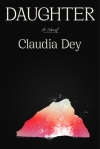
- Reading two King Lear updates at the same time: Private Rites by Julia Armfield and Daughter by Claudia Dey. The former has been specifically marketed as a “lesbian Lear,” but I had no idea that the latter also features two sisters plus a younger half-sister and their interactions with a larger-than-life father.

- Eating beans straight out of the tin in The Waterfall by Margaret Drabble and Of Mice and Men by John Steinbeck.
- Dead mice in Of Mice and Men by John Steinbeck and Stone Yard Devotional by Charlotte Wood.

-

- Screenshot
- Cloth holding the jaw of a corpse closed in one story from Barcelona by Mary Costello and A Woman’s Story by Annie Ernaux.
- Others see a character’s wife as a whore but the husband is oblivious in The Shipping News by E. Annie Proulx and Of Mice and Men by John Steinbeck.
 Setting up a game of solitaire in The Snow Hare by Paula Lichtarowicz and Of Mice and Men by John Steinbeck.
- Main character called Mona in Daughter by Claudia Dey and Mona of the Manor by Armistead Maupin.
- Being surprised at an older man still having his natural hair colour in one story of Barcelona by Mary Costello (where he’s aged 76) and Life in the Balance by Jim Down (where it’s Alan Bennett, at 84!).
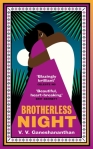
- A character named Anjali in Brotherless Night by V.V. Ganeshananthan and Moral Injuries by Christie Watson.

- A character named Cherry in Daughter by Claudia Dey and one story of This Is Why We Can’t Have Nice Things by Naomi Wood.
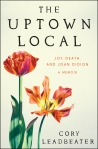
- My second memoir in two months in which a twentysomething son dies suddenly of a presumed heart problem: Fi by Alexandra Fuller, followed by Your Wild and Precious Life by Liz Jensen. (And a third in which his young friend died in the same way: The Uptown Local by Cory Leadbeater.) Also, Fuller and Jensen both see signs of their sons’ continued presence in bird sightings.
- Scratches on the inside of a coffin as proof of being buried alive in one story of Barcelona by Mary Costello and Life in the Balance by Jim Down.


- Surprise that one didn’t know the exact moment that a loved one died in one story of Barcelona by Mary Costello and Your Wild and Precious Life by Liz Jensen.
- Discussion of the meaning of brain stem death and a mention of meningococcal sepsis in Life in the Balance by Jim Down and Moral Injuries by Christie Watson.
- A scene set in a Denny’s diner in The Whole Staggering Mystery by Sylvia Brownrigg and After Dark by Haruki Murakami.


- A description of halal butchery in Barcelona by Mary Costello and Between Two Moons by Aisha Abdel Gawad.
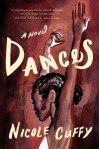
- A mention of ballet choreographer George Balanchine in Dances by Nicole Cuffy and The Uptown Local by Cory Leadbeater.
- A woman has an affair with a female postal worker in Mona of the Manor by Armistead Maupin and The Shipping News by Annie Proulx, both of which I DNFed.
- A character named Magdalena in Cloistered by Catherine Coldstream and The Snow Hare by Paula Lichtarowicz. The latter goes by Lena, which is also the name of the main character in Jungle House by Julianne Pachico. And there’s a character named Lina in Between Two Moons by Aisha Abdel Gawad.


- Being presented with powdered milk in Cloistered by Catherine Coldstream and Whale Fall by Elizabeth O’Connor.
- First I read a novel about a convent plagued by mice (Stone Yard Devotional by Charlotte Wood). Then I read a memoir about a convent plagued by feral cats (Cloistered by Catherine Coldstream).
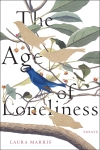
- Buffalo, New York as a setting in Consent by Jill Ciment and The Age of Loneliness by Laura Marris. It’s also mentioned in Enter Ghost by Isabella Hammad.


- Watching pigeons on one’s balcony in Keep by Jenny Haysom, Your Wild and Precious Life by Liz Jensen, and The Uptown Local by Cory Leadbeater.
 The family’s pet chicken is cooked for dinner in Coleman Hill by Kim Coleman Foote and The Snow Hare by Paula Lichtarowicz.
- The mother is named Gloria in Consent by Jill Ciment and Cold Spring Harbor by Richard Yates (and The War for Gloria by Atticus Lish, a DNF).
- A character named Anton in The Snow Hare by Paula Lichtarowicz and Jungle House by Julianne Pachico.
- A cat named Dog in The Door-to-Door Bookstore by Carsten Henn and a dog named Tiger in Jungle House by Julianne Pachico.
- Two nature books that feature wild cold-water swimming (though don’t they all these days?!): In All Weathers by Matt Gaw and Your Wild and Precious Life by Liz Jensen.
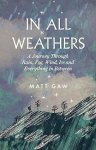

- Two nature books that mention W.H. Hudson: In All Weathers by Matt Gaw and North with the Spring by Edwin Way Teale.
 A large anonymous donation to a church in Slammerkin by Emma Donoghue and Excellent Women by Barbara Pym (£10–11, which was much more in the 18th century of the former than in the 1950s of the latter).
- A mention of Poughkeepsie, New York in Birdeye by Judith Heneghan and Woman of Interest by Tracy O’Neill.
- A 1950s scene of perusing a lipstick display in Recipe for a Perfect Wife by Karma Brown and Excellent Women by Barbara Pym.
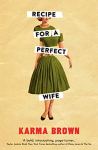

- A woman with a broken leg worries about how her garden will fare in Recipe for a Perfect Wife by Karma Brown and Remarkably Bright Creatures by Shelby Van Pelt.
- The same silent film image of a spaceship entering the moon’s eye (from Georges Méliès’s A Trip to the Moon) appears in Knife by Salman Rushdie and The Invention of Hugo Cabret by Brian Selznick. (I think this is the uncanniest coincidence of all this time!)

- A cleric who wears a biretta in Excellent Women by Barbara Pym and Daughters of the House by Michèle Roberts.
- A Black single mother who believes in the power of crystals in Company by Shannon Sanders and Another Word for Love by Carvell Wallace.

- An older woman really doesn’t want to leave her home but is moving into a retirement facility in Keep by Jenny Haysom and Remarkably Bright Creatures by Shelby Van Pelt. (There’s also a young woman who refuses to leave her house in Recipe for a Perfect Wife by Karma Brown.)
 A man throws his tie over his shoulder before eating in Recipe for a Perfect Wife by Karma Brown and Keep by Jenny Haysom.
- A mother writing a bad check becomes an important plot point in Remarkably Bright Creatures by Shelby Van Pelt and Another Word for Love by Carvell Wallace.
 A scene of self-induced abortion in Recipe for a Perfect Wife by Karma Brown and Sleeping with Cats by Marge Piercy.
- The Yiddish word feh (an expression of disappointment) appears in Feh by Shalom Auslander (no surprise there!) but also in A Reason to See You Again by Jami Attenberg, both of which are pre-release books I am reading for Shelf Awareness reviews.

What’s the weirdest reading coincidence you’ve had lately?
20 Books of Summer Plan
It’s my seventh year in a row participating in Cathy’s 20 Books of Summer challenge, which starts on 1 June and runs through the 1st of September.
In most previous years I have chosen a theme.
2018: Books by women
2019: Fauna
2020: Food
2021: Colours
2022: Flora
Last year was a grab bag, but about a third of my choices were foodie again. I love picking the books for a themed challenge, but when it comes to actually reading them, I often get bored reading around the same topic, even if I had ensured a variety of fiction/nonfiction, author style, etc.
So this year the plan is simply to read hardback books that I own. I have at least 80–100 options, across genres and of all lengths; review copies, set-aside books and rereads are all possible. I fancy curating a blend of recent acquisitions and long-time shelf sitters. By the end of August I can decide whether they’re keepers or I want to pass them along to make room for others; the width of 20 hardbacks should be significant!
You’ll see options on shelves dotted all around the house:
-
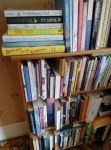
- Miscellaneous on bedroom shelves
-

- Biographies
-

- Bedside table
-

- Classics (mix of read/unread)
-
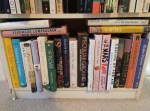
- Shelf of unread hardbacks
-

- Foodie lit shelf with a few options
-
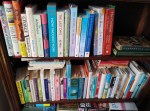
- Three shelves: review copies; set-aside; to reread
-
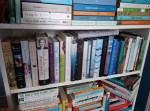
- Life writing case with one shelf of unread hardbacks
Here’s a tentative list of 20 hardbacks that are catching my eye right now – but I reserve the right to change my mind and ditch any or all of them in favour of other books that appeal more at the time!
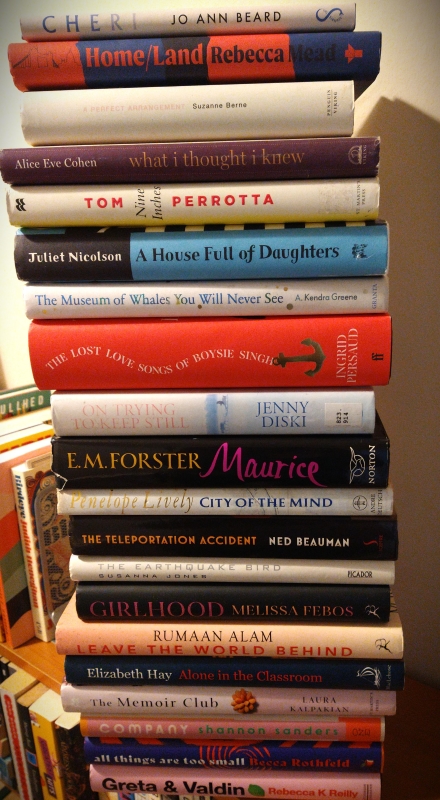
Leave the World Behind by Rumaan Alam (Free from a neighbour) – There was a lot of buzz about this a few years ago and I intended to read it right away but didn’t for whatever reason. My impression is of a literary novel that turns into a domestic thriller.
Cheri by Jo Ann Beard (New, Hungerford Bookshop with birthday voucher last year) – Cathy spoke very highly of this during Novellas in November. I daresay I’ll be grateful for one very short option over the summer. I wish more of my hardbacks were so slender!
The Teleportation Accident by Ned Beauman (Secondhand, Awesomebooks.com) – This would be my one reread of the challenge. I’ve read all but one of Beauman’s novels and this is the one I remember most fondly. Zany historical fiction with a fantasy twist.
A Perfect Arrangement by Suzanne Berne (Secondhand, Community Furniture Project) – I don’t know anything about this but I’m expecting it to be, like her Women’s Prize winner, A Crime in the Neighborhood, light yet substantial and quietly gripping.
What I Thought I Knew by Alice Eve Cohen (Secondhand, Amazon with gift money) – I loved her 2015 memoir, The Year My Mother Came Back, so much that I sought out her previous one … but it has sat on the shelf unread for years.
On Trying to Keep Still by Jenny Diski (Secondhand, Awesomebooks.com) – I’ve loved everything I’ve read by Diski so far. This is a book of travel essays.
Girlhood by Melissa Febos (New, Christmas gift last year) – I was so impressed by her latest essay collection, Body Work, that I knew I had to read everything else she’s written. This previous collection mixes memoir and feminist social history.
Maurice by E.M. Forster (Secondhand, Wonder Book and Video?) – I’ve owned this for so long that I can’t remember when and where I got it, but I’m guessing it came from the used bookstore where I worked in college. My only major Forster work still unread.
The Museum of Whales You Will Never See by A. Kendra Greene (Secondhand, Bas Books & Home) – More essays to slake the desire for armchair travel. This one’s set entirely in Iceland and is all about quirky museum collections.
Alone in the Classroom by Elizabeth Hay (Secondhand, Christmas gift last year) – I’ll read anything Hay writes. This will be my third novel from her.
The Earthquake Bird by Susanna Jones (Secondhand, Hay-on-Wye in 2020) – Doesn’t feel like I bought it ages ago, but nearly four years have passed. I thought her When Nights Were Cold (historical fiction about women’s mountaineering) was fantastic in 2013.
The Memoir Club by Laura Kalpakian (Secondhand, 2nd & Charles) – I’ve long wanted to try this author and finally found one of her books on a clearance shelf in December. I’m expecting slightly fluffy fun à la Elizabeth Berg et al., perfect for summer.
City of the Mind by Penelope Lively (Secondhand, French LFL) – My most recent acquisition; why not get to it right away? Besides, Lively is one of four authors on this list (the others are Diski, Forster and Hay) by whom I own two or more unread books.
Home/Land by Rebecca Mead (Review copy) – An Anglo-American memoir should be right up my street. I don’t know why I’ve let this one sit around for ages.
A House Full of Daughters by Juliet Nicolson (Free from a neighbour) – A family memoir about Vita Sackville-West’s clan. I don’t often read biographical stuff (as opposed to straight autobiographies), so this is a good excuse.
Nine Inches by Tom Perrotta (Free from a neighbour) – Short stories of blue-collar America. I used to love Perrotta and have read most of his books. Maybe I’ll find him a little macho these days, though.
The Lost Love Songs of Boysie Singh by Ingrid Persaud (Signed copy won in a Faber Instagram giveaway) – I loved her debut novel, Love after Love, but have been daunted by the length of this follow-up, which I know to contain multiple POVs and patois.
Greta & Valdin by Rebecca K. Reilly (Review copy) – A quirky novel about queer siblings and their oddball family in New Zealand. I started it in April but haven’t made much of a dent, so this is my strategy for getting back into it.
All Things Are Too Small by Becca Rothfeld (Review copy) – Cultural criticism from the Washington Post’s in-house nonfiction book reviewer, a philosophy PhD candidate. I’ve sampled the first few pages so far.
Company by Shannon Sanders (Review copy) – Linked short stories about the members of one extended Black family. I got partway through one story earlier in the month but it’s time to get back into it in earnest.
What do you make of my list? See any other hardback options in the photos that I should prioritize instead?
Love Your Library, May 2024
Thanks to Eleanor (here and here) and Marcie for posting about their recent library reads! Everyone is welcome to join in with this meme that runs on the last Monday of the month.
Earlier in the month I had an all-volunteering Tuesday where I went from 1) a busy morning library volunteering session straight to 2) a coffee meeting with the local repair café coordinator to discuss publicity, then 3) caught up on receipts and accounts for the suite of community gardening projects for which I’m treasurer and 4) went out to one of the garden sites to help fill newly constructed raised beds with compost, wood chip and veg plants. And of course, as I do every day when I’m not on holiday, I 5) stopped by the neighbourhood Little Free Library I curate to tidy the shelves and check whether any new stock was needed.
Ever since I was invited to become a local school governor last year (I declined) and a trustee of the neighbourhood nonprofit arts venue where I attend gigs and sometimes volunteer tending bar (earlier this year; I’m still thinking about it), I’ve had the feeling that others view me almost like a retiree. I postulate two main reasons. One, as an underemployed freelancer, I don’t appear to have a proper career. I don’t mind people thinking this as it feels true for me much of the time. Secondly, I don’t have children, a major commitment for many women of my age bracket. As Sheila Heti wrote in Motherhood, “There is something threatening about a woman who is not occupied with children. There is something at-loose-ends feeling about such a woman. What is she going to do instead? What sort of trouble will she make?”
I’m not particularly ambitious professionally; I wish I was in a financial situation to be the full-time volunteer that some perceive me to be – after all, my unpaid roles are, in many cases, less annoying and more rewarding than much of what I do for money. Maybe I’ll work out the right balance sometime in the near future. It’s important to feel productive and valued. In the meantime, it is gratifying that my skills are appreciated in my charitable work.
My library use over the last month:
(Links to reviews of books I have not already covered on the site)
READ
- Blossomise by Simon Armitage

- All the Beauty in the World: A Museum Guard’s Adventures in Life, Loss and Art by Patrick Bringley
- Cloistered: My Years as a Nun by Catherine Coldstream
- The Year of the Cat by Rhiannon Lucy Cosslett

- Enter Ghost by Isabella Hammad
- The Door-to-Door Bookstore by Carsten Henn
- Jungle House by Julianne Pachico

- Lunar New Year Love Story by Gene Luen Yang


SKIMMED
- Beautiful Trauma by Rebecca Fogg
- Second Helpings by Sue Quinn (a leftovers cookbook; we’re intrigued by the coffee grounds cookies!)
CURRENTLY READING
- Death Valley by Melissa Broder
- Restless Dolly Maunder by Kate Grenville
- Kay’s Incredible Inventions by Adam Kay
- After Dark by Haruki Murakami
- Excellent Women by Barbara Pym
- The Invention of Hugo Cabret by Brian Selznick
CHECKED OUT, TO BE READ
(The rest of what is pictured in the three photos!)

ON HOLD, TO BE COLLECTED
- Piglet by Lottie Hazell
- Languishing by Corey Keyes
- You Are Here by David Nicholls – The other week when I took this screenshot I thought there were a lot of holds on this one, more than I have seen since Lessons in Chemistry first came out. I looked again yesterday and I am now 1st out of 53. All waiting for one copy!

- Knife by Salman Rushdie
- The Spoiled Heart by Sunjeev Sahota
RETURNED UNFINISHED
- Mona of the Manor by Armistead Maupin – I read the first 30 pages. It seemed fun enough, if edgy for the sake of it (every main character is queer; crass speech). I encountered many more typos than I expected for a published book, including missing articles and quotation marks. Ultimately, I think you have to be invested in this series and its characters, whereas I had only ever read the first book, Tales of the City, and it didn’t captivate me.

RETURNED UNREAD
- Have a Little Faith by Kate Bottley – I admire her as a person but the first few pages made me think she’s not cut out for being a writer. This promised to be generic and twee.
- Learning to Think by Tracy King – Requested after me. Will try another time.
- The Half Bird by Susan Smillie – Did not enjoy the writing style at all.
- Help Wanted by Adelle Waldman – Requested after me. Might try another time.
What have you been reading or reviewing from the library recently?
Share a link to your own post in the comments. Feel free to use the above image. The hashtag is #LoveYourLibrary.
Love Your Library, April 2024
Thanks to Laila, Laura, Marcie (the middle and right-hand images below), and Naomi (here and here) for posting about their recent library reading! Everyone is welcome to join in with this meme that runs on the last Monday of the month.


It was National Library Week in the USA the week of the 7th, and I enjoyed Gretchen Rubin’s post about the libraries that have been special to her over the years. I can think of so many that have meant something to me, mostly back home in Maryland: the Silver Spring, Bowie and Frederick public libraries, and the Hood College library. And in England, the University of Reading library, the University of Leeds Brotherton library, the King’s College Maughan Library, Senate House Library, and all the county branch libraries I’ve been a member of, up through Newbury Library now. How about for you?

I’ve read some great stuff over the past month! I link to my reviews of anything I haven’t already covered on the blog.
READ
- Barcelona by Mary Costello
- Life in the Balance: A Doctor’s Stories of Intensive Care by Jim Down
- The Paris Wife by Paula McLain (a reread for book club)
- The Bee Sting by Paul Murray
- Come and Get It by Kiley Reid
- The Collected Stories of Carol Shields
- Of Mice and Men by John Steinbeck (a reread)
- Moral Injuries by Christie Watson
- Stone Yard Devotional by Charlotte Wood
- Land of Milk and Honey by C Pam Zhang
SKIMMED
- Brotherless Night by V.V. Ganeshananthan
- Blood: The Science, Medicine, and Mythology of Menstruation by Dr Jen Gunter

- How to Raise a Viking: The Secrets of Parenting the World’s Happiest Children by Helen Russell
- Before the Light Fades: A Memoir of Grief and Resistance by Natasha Walter
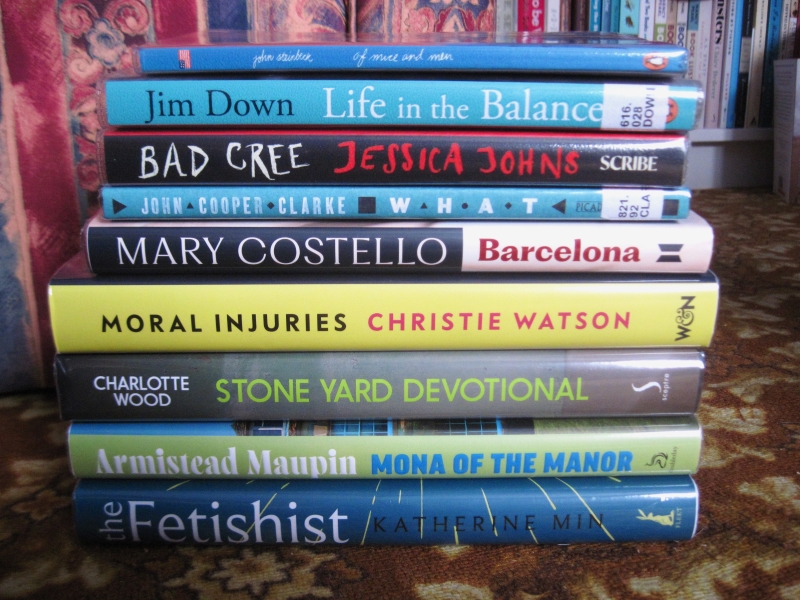
CURRENTLY READING
- Cloistered: My Years as a Nun by Catherine Coldstream
- Enter Ghost by Isabella Hammad
- The Door-to-Door Bookstore by Carsten Henn
- Kay’s Incredible Inventions by Adam Kay
- Mona of the Manor by Armistead Maupin
- After Dark by Haruki Murakami
- Lunar New Year Love Story by Gene Luen Yang
CHECKED OUT, TO BE READ
- Jungle House by Julianne Pachico
& the rest of what is pictured above and below:
What have you been reading or reviewing from the library recently?
Share a link to your own post in the comments. Feel free to use the above image. The hashtag is #LoveYourLibrary.
Rereading Of Mice and Men for #1937Club
A year club hosted by Karen and Simon is always a great excuse to read more classics. Between my shelves and the library, I had six options for 1937. But I started reading too late, and had too many books on the go, to finish more than one – a reread. No matter; it was a good one I was glad to revisit, and I’ll continue with the other reread at my own pace.
Of Mice and Men by John Steinbeck
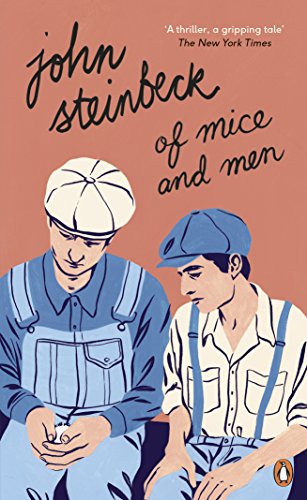 Are teenagers doomed to dislike the books they read in school? I think this must have been on the curriculum for 11th grade English. It was my third Steinbeck novella after The Red Pony and The Pearl, so to me it confirmed that he wrote contrived, depressing stuff with lots of human and animal suffering. Not until I read The Grapes of Wrath in college and East of Eden (THE Great American Novel) five years ago did I truly recognize Steinbeck’s greatness.
George and Lennie are itinerant farm workers in Salinas Valley, California. Lennie is a gentle giant, intellectually disabled and aware of his own strength when hauling sacks of barley but not when stroking mice and puppies. George looks after Lennie as a favour to Aunt Clara and they’re saving up to buy their own smallholding. This dream is repeated to the point of legend, somewhere between a bedtime story and scripture:
‘Someday—we’re gonna get the jack together and we’re gonna have a little house and a couple of acres an’ a cow and some pigs and—’ ‘An’ live off the fatta the lan’,’ Lennie shouted. ‘And have rabbits.’
They quickly settle in alongside the other ranch-hands and even convert two to their idyllic picture of independence. But the foreman, Curley, is a hothead and his bored would-be-starlet wife won’t stop roaming into the men’s quarters. No matter how much George tells Lennie to stay away from both of them, something is set in motion – an inevitable repeat of an incident from their previous employment that forced them to move on.
I remembered the main contours here but not the ultimate ending, and this time I appreciated the deliberate echoes and heavy foreshadowing (all that symbolism to write formulaic school essays about!): this is Shakespearean tragedy with the signs and stakes writ large against a limited background. Bar some paragraphs of scene-setting descriptions, it is like a play; no surprise it’s been filmed several times. (I wish I didn’t have danged John Malkovich in my head as Lennie; I can’t think of anyone else in that role, whereas Gary Sinise doesn’t necessarily epitomize George for me.) The characterization of the one Black character, Crooks, and the one woman are uncomfortably of their time. However, Crooks is given the dubious honour of conveying the bleak vision: “Nobody never gets to heaven, and nobody gets no land. It’s just in their head.” Like Hardy, Steinbeck knows what happens when the lower classes make the mistake of wanting too much. It’s a timeless tale of grit and desperation, the kind one can’t imagine not existing. (Public library)
Apposite listening: “The Great Defector” by Bell X1 (known for their quirky lyrics):
You’ve been teasing us farm boys
’til we start talking ’bout those rabbits, George
oh, won’t you tell us ’bout those rabbits, George?
Original rating (1999?):
My rating now:


Currently rereading: The Hobbit by J.R.R. Tolkien – My father gave me this for Christmas when I was 10. I think I finally read it sometime in my later teens, about when the Lord of the Rings films were coming out. I’m on page 70 now. I’d forgotten just how funny Tolkien is about the set-in-his-ways Bilbo and his devotion to a cosy, quiet life. When he’s roped into a quest to reclaim a mountain hoard of treasure from a dragon – along with 13 dwarves and Gandalf the wizard – he realizes he has much discomfort and many a missed meal ahead of him.


 DNFed: Journey by Moonlight by Antal Szerb – My second attempt with Hungarian literature, and I found it curiously similar to the other novel I’d read (Embers by Sandor Márai) in that much of it, at least the 50 pages I read, is a long story told by one character to another. In this case, Mihály, on his Italian honeymoon, tells his wife about his childhood best friends, a brother and sister. I wondered if I was meant to sense homoerotic attachment between Mihály and Tamás, which would appear to doom this marriage right at its outset. (Secondhand – Edinburgh charity shop, 2018)
 Skimmed: Out of Africa by Karen Blixen – I enjoyed the prose style but could tell I’d need a long time to wade through the detail of her life on a coffee farm in Kenya, and would probably have to turn a blind eye to the expected racism of the anthropological observation of the natives. (Secondhand – Way’s in Henley, 2015)
Here’s hoping for a better showing next time!
(I’ve previously participated in the 1920 Club, 1956 Club, 1936 Club, 1976 Club, 1954 Club, 1929 Club, and 1940 Club.)
 Bookish Beck = Rebecca Foster. American transplant to England. Freelance proofreader and book reviewer.
 Bookish Beck