Book Serendipity, Mid-February to Mid-April
I call it “Book Serendipity” when two or more books that I read at the same time or in quick succession have something in common – the more bizarre, the better. This is a regular feature of mine every couple of months. Because I usually have 20–30 books on the go at once, I suppose I’m more prone to such incidents. People frequently ask how I remember all of these coincidences. The answer is: I jot them down on scraps of paper or input them immediately into a file on my PC desktop; otherwise, they would flit away!
The following are in roughly chronological order.
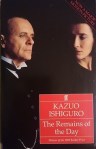
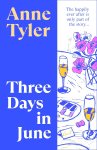
- The protagonist isn’t aware that they’re crying until someone tells them / they look in a mirror in The Remains of the Day by Kazuo Ishiguro and Three Days in June by Anne Tyler.
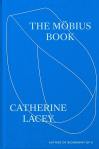
- A residential complex with primal scream therapy in Confessions by Catherine Airey and The Möbius Book by Catherine Lacey.
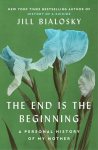
- Memories of wiping down groceries during the early days of the pandemic in The End Is the Beginning by Jill Bialosky and Human/Animal by Amie Souza Reilly.
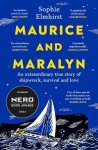
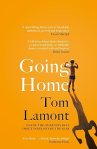
- A few weeks before I read Maurice and Maralyn by Sophie Elmhirst, I’d finished reading the author’s husband’s debut novel (Going Home by Tom Lamont); I had no idea of the connection between them until I got to her Acknowledgements.
- A mention of the same emergency money passing between friends in Alligator Tears by Edgar Gomez ($20) and The Möbius Book by Catherine Lacey ($100).
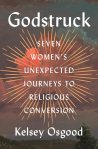
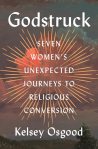
- Autobiographical discussions of religiosity and anorexia in The Möbius Book by Catherine Lacey and Godstruck by Kelsey Osgood.
- The theme of the dark night sky in The Wild Dark by Craig Childs, followed almost immediately by Night Magic by Leigh Ann Henion.
- Last year I learned about Marina Abramović’s performance art where she and her ex trekked to China’s Great Wall from different directions, met in the middle, and continued walking away to dramatize their breakup in The Ritual Effect by Michael Norton. Recently I saw it mentioned again in The Möbius Book by Catherine Lacey. Abramović’s work is also mentioned in Human/Animal by Amie Souza Reilly and is the basis for the opening track on Anne-Marie Sanderson’s album Old Light, “Amethyst Shoes.”
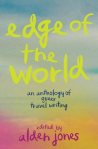
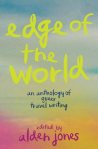
- The idea of running towards danger appears in Alex Marzano-Lesnevich’s essay in Edge of the World, a queer travel anthology edited by Alden Jones; and the bibliography of The Möbius Book by Catherine Lacey.
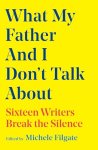
- I then read another Alex Marzano-Lesnevich essay in quick succession (both were excellent, by the way) in What My Father and I Don’t Talk About, edited by Michele Filgate.
- A scene in which a woman goes to a police station and her concerns are dismissed because she has no evidence and the man/men’s behaviour isn’t ‘bad enough’ in I Am, I Am, I Am by Maggie O’Farrell and Human/Animal by Amie Souza Reilly.
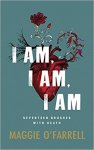
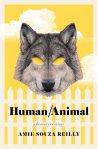
- Too many details as the sign of a lie in Dream Count by Chimamanda Ngozi Adichie and Three Days in June by Anne Tyler.
- Scenes of throwing all of a spouse’s belongings out on the yard/street in Old Soul by Susan Barker, How to Survive Your Mother by Jonathan Maitland, and Human/Animal by Amie Souza Reilly.
- Reading two lost American classics about motherhood and time spent in a mental institution at the same time: The Shutter of Snow by Emily Holmes Coleman and I Am Clarence by Elaine Kraf.
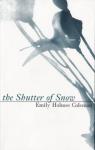
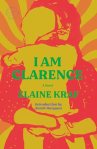
- Disorientation underwater: a literal experience in I Am, I Am, I Am by Maggie O’Farrell, then used as a metaphor for what it was like to be stuck in a blizzard on Annapurna in 2014 in The Secret Life of Snow by Giles Whittell.
- A teenager who has a job cleaning hotels in Old Soul by Susan Barker and I Am, I Am, I Am by Maggie O’Farrell. (In Stir-Fry by Emma Donoghue, Maria is also a teenaged cleaner, but of office buildings.)
- A vacuum cleaner bag splits in Stir-Fry by Emma Donoghue and one story of Are You Happy? by Lori Ostlund – in the latter it’s deliberate, searching for evidence of the character’s late son after cleaning his room.
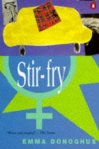

- An ailing tree or trees that have to be cut down in one story of The Accidentals by Guadalupe Nettel and The Lost Trees of Willow Avenue by Mike Tidwell.
- Buchenwald was mentioned in one poem each in A God at the Door by Tishani Doshi and The Ghost Orchid by Michael Longley.
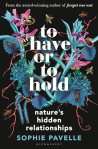
- A reference to Robin Wall Kimmerer’s Braiding Sweetgrass in To Have or to Hold by Sophie Pavelle and Human/Animal by Amie Souza Reilly.

- A mentally unwell woman deliberately burns her hands in I Am Clarence by Elaine Kraf and Every Day Is Mother’s Day by Hilary Mantel.
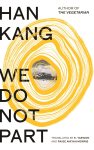
- A mention of the pollution caused by gas stoves in We Do Not Part by Han Kang and The Lost Trees of Willow Avenue by Mike Tidwell.
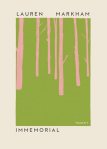
- An art installation involving part-buried trees was mentioned in Immemorial by Lauren Markham and then I encountered a similar project a few months later in We Do Not Part by Han Kang. Burying trees as a method of carbon storage is then discussed in The Lost Trees of Willow Avenue by Mike Tidwell.

- Imagining the lives of the people living in an apartment you didn’t end up renting in Scaffolding by Lauren Elkin and one story of The Accidentals by Guadalupe Nettel.
- The Anthropocene is mentioned in Scaffolding by Lauren Elkin and The Alternatives by Caoilinn Hughes.
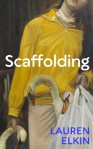
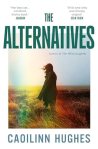
- I was reading three debut novels from the McKitterick Prize longlist at the same time, all of them with very similar page counts of 383, 387, and 389 (i.e., too long!).
- Being appalled at an institutionalized mother’s appearance in The End Is the Beginning by Jill Bialosky and Every Day Is Mother’s Day by Hilary Mantel.
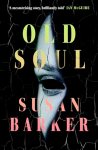 A remote artist’s studio and severed fingers in Old Soul by Susan Barker and We Do Not Part by Han Kang.
- A lesbian couple in New Mexico, the experience of being watched through a window, and the mention of a caftan/kaftan, in Old Soul by Susan Barker and one story of Are You Happy? by Lori Ostlund.
- Refusal to go to a hospital despite being in critical condition in I Am, I Am, I Am by Maggie O’Farrell and one story of Are You Happy? by Lori Ostlund.
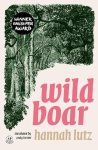
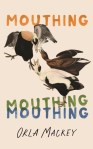
- It’s not a niche stylistic decision anymore; I was reading four novels with no speech marks at the same time: Old Soul by Susan Barker, Scaffolding by Lauren Elkin, The Alternatives by Caoilinn Hughes, and We Do Not Part by Han Kang. [And then, a bit later, three more: Wild Boar by Hannah Lutz, Mouthing by Orla Mackey, and How to Be Somebody Else by Miranda Pountney.]
 A lesbian couple is alarmed by the one partner’s family keeping guns in Spent by Alison Bechdel and one story of Are You Happy? by Lori Ostlund.
- Responding to the 2021 murder of eight Asian spa workers in Atlanta in Foreign Fruit by Katie Goh and Find Me as the Creature I Am by Emily Jungmin Yoon.
- Disposing of a late father’s soiled mattress in Mouthing by Orla Mackey and one story of Are You Happy? by Lori Ostlund.
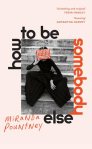 New York City tourist slogans in Apple of My Eye by Helene Hanff and How to Be Somebody Else by Miranda Pountney.
- A Jewish care home for the elderly in The End Is the Beginning by Jill Bialosky and Joanna Rakoff’s essay in What My Father and I Don’t Talk About (ed. Michele Filgate).
- A woman has no memory between leaving a bar and first hooking up with the man she’s having an affair with in If You Love It, Let It Kill You by Hannah Pittard and How to Be Somebody Else by Miranda Pountney.
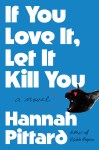 A stalker-ish writing student who submits an essay to his professor that seems inappropriately personal about her in one story of Are You Happy? by Lori Ostlund and If You Love It, Let It Kill You by Hannah Pittard.
- A pygmy goat as a pet (and a one-syllable, five-letter S title!) in Spent by Alison Bechdel and Sleep by Honor Jones.
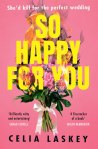
- A Brooklyn setting and thirtysomething female protagonist in Sleep by Honor Jones, So Happy for You by Celia Laskey, and How to Be Somebody Else by Miranda Pountney.
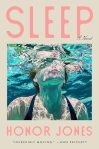
- A mention of the American Girl historical dolls franchise in Sleep by Honor Jones and If You Love It, Let It Kill You by Hannah Pittard, both of which I’m reviewing early for Shelf Awareness.
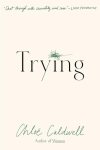 A writing professor knows she’s a hypocrite for telling her students what (not) to do and then (not) doing it herself in Trying by Chloé Caldwell and If You Love It, Let It Kill You by Hannah Pittard. These two books also involve a partner named B (or Bruce), metafiction, porch drinks with parents, and the observation that a random statement sounds like a book title.
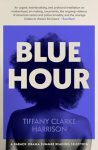
- The protagonist’s therapist asks her to find more precise words for her feelings in Blue Hour by Tiffany Clarke Harrison and So Happy for You by Celia Laskey.
- The protagonist “talks” with a dying dog or cat in The Möbius Book by Catherine Lacey and If You Love It, Let It Kill You by Hannah Pittard.
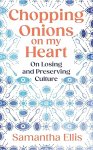 Shalimar perfume is mentioned in Scaffolding by Lauren Elkin and Chopping Onions on My Heart by Samantha Ellis.
- The Rapunzel fairytale is a point of reference in In the Evening, We’ll Dance by Anne-Marie Erickson and Secret Agent Man by Margot Singer, both of which I was reading early for Foreword Reviews.
What’s the weirdest reading coincidence you’ve had lately?
Love Your Library, March 2025
Thanks to Eleanor, Marcie, and Naomi for posting about their recent library reads!
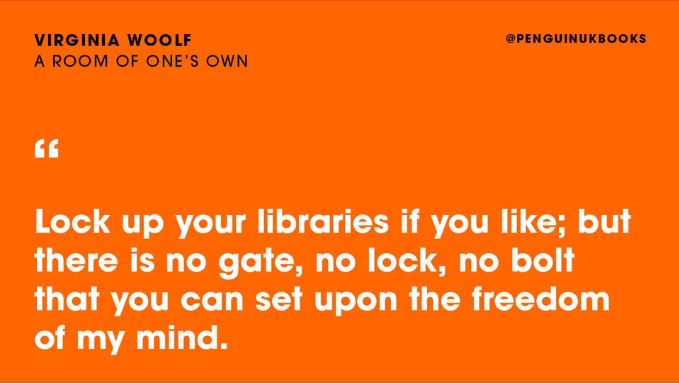
The library is the place with all the answers, as the below passage from When the Stammer Came to Stay by Maggie O’Farrell has it. The illustrations place this children’s book in a timeless past, perhaps somewhere between the 1920s and 1950s.


A major character in Every Day Is Mother’s Day by Hilary Mantel also heads to a library when looking for important information, but she is dismayed to find how much it has modernized (this is set in 1974):
“The library had changed a good deal, she noticed. The old wooden desks had gone, and the newspapers in racks. There were low vinyl seats that an elderly person could not get in and out of comfortably. There were modern pictures on the wall, sunbursts of yellow and orange, and a part marked ‘Children’s Play Area’. Children did not play in it, but ran about, loud and healthy. Fluttering notices on a cork board advertised yoga classes and Community Welfare Programmes, play-groups and Councillor’s Surgeries. People talked quite unashamedly in ordinary voices; there had only been an odd subdued whisper in the past”
We did actually have an anonymous complaint in the library comments book the other week about it being pretty loud for a library. I can only shrug. We don’t have any rules against phone use; patrons come to use the wi-fi and often do Zoom calls or interviews. I, too, would miss the silence if I came for a place to study.
My library use over the last month:
(links to books not already reviewed on the blog)
READ
- Mama’s Sleeping Scarf by Chimamanda Ngozi Adichie

- Old Soul by Susan Barker

- Every Day Is Mother’s Day by Hilary Mantel

- When the Stammer Came to Stay by Maggie O’Farrell

- Long Island by Colm Tóibín

- Three Days in June by Anne Tyler
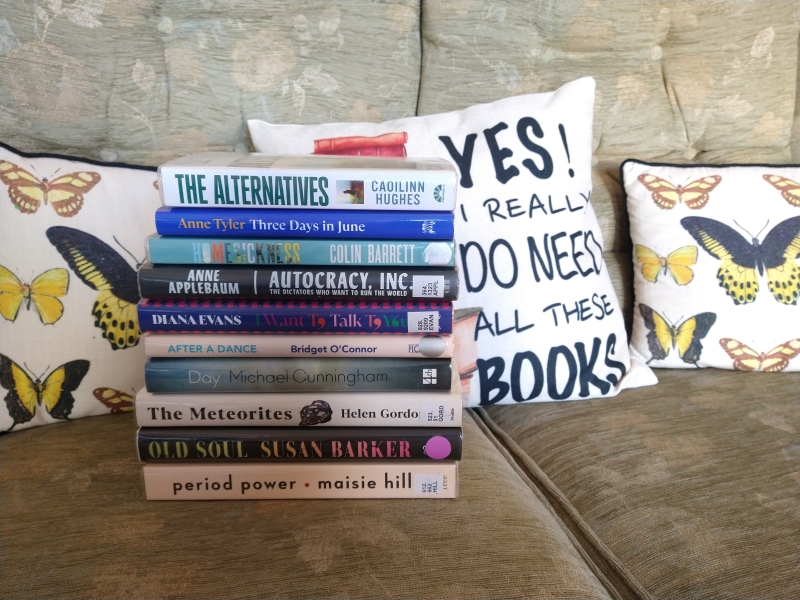
CURRENTLY READING
- The Alternatives by Caoilinn Hughes
- We Do Not Part by Han Kang
- The Leopard in My House: One Man’s Adventures in Cancerland by Mark Steel
CHECKED OUT, TO BE READ
- Day by Michael Cunningham
- The Meteorites: Encounters with Outer Space and Deep Time by Helen Gordon
- Period Power: Harness Your Hormones and Get Your Cycle Working for You by Maisie Hill
- The Forgotten Sense: The Nose and the Perception of Smell by Jonas Olofsson
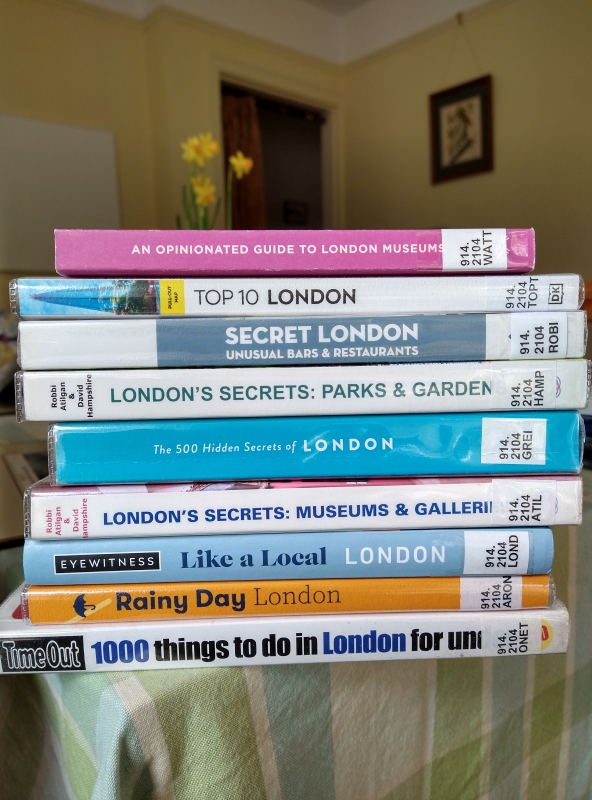
+ a bunch of London guides for advance planning for my sister’s visit in July
 IN THE RESERVATION QUEUE
- Case Histories by Kate Atkinson (for book club)
- Raising Hare by Chloe Dalton
- Time of the Child by Niall Williams
- Rebel Bodies: A Guide to the Gender Health Gap Revolution by Sarah Graham
ON HOLD, TO BE PICKED UP
- The Honesty Box by Lucy Brazier
- Deep Cuts by Holly Brickley
- Sarn Helen: A Journey through Wales, Past, Present and Future by Tom Bullough (to take to Hay-on-Wye)
- Maggie Blue and the White Crow by Anna Goodall
- Broken Country by Clare Leslie Hall
- I Am Not a Tourist by Daisy J. Hung
- Bookish: How Reading Shapes Our Lives by Lucy Mangan
- The Walking Cure: Harness The Life-Changing Power of Landscape to Heal, Energise and Inspire by Annabel Streets
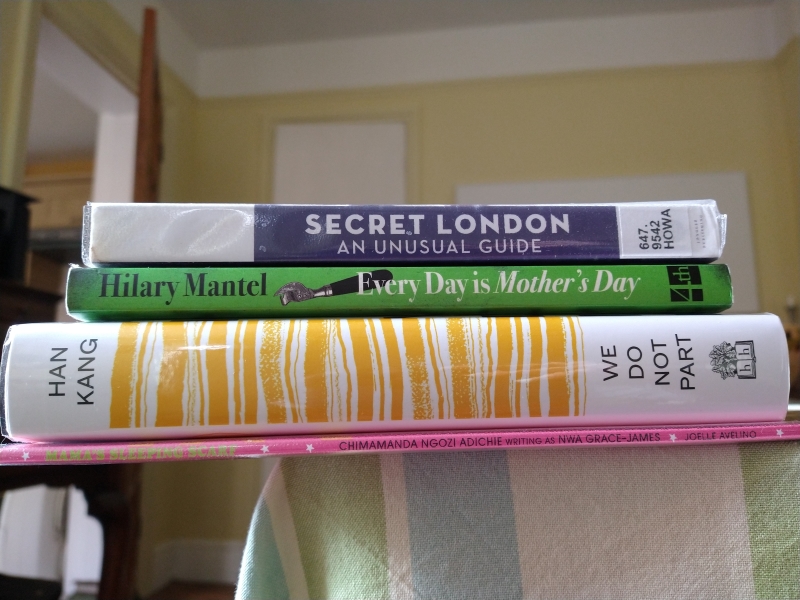
RETURNED UNREAD
- Autocracy, Inc. by Anne Applebaum – Too close to reality right now.
- Homesickness by Colin Barrett – Borrowed as a potential Reading Ireland Month book, but I couldn’t get into it.
- I Want to Talk to You: And Other Conversations by Diana Evans – Requested off me plus (this will sound really shallow) her spoken delivery was so bad on the Women’s Prize longlist announcement video that I was put off reading her.
- After a Dance by Bridget O’Connor – Same as for the Barrett.
What have you been reading or reviewing from the library recently?

Share a link to your own post in the comments. Feel free to use the above image. The hashtag is #LoveYourLibrary.
Making Plans for a Return to Hay-on-Wye & A Book “Overhaul”
I was last in Hay-on-Wye for my 40th birthday (write-up here). We’ve decided 18 months is a decent length between visits such that we can go back and find enough turnover in the bookshops and changes around the town. The plan is to spend four nights there in early April, in a holiday cottage we’ve not stayed in before. It’s in Cusop, just back over the border into England, which means a pleasant (if not pouring with rain) walk over the fields into the town. Normally we go for just a night or two, so this longer ninth trip to Hay will allow us time to do more local exploring besides thoroughly trawling all the bookshops and rediscovering the best eateries on offer.
An Overhaul of Last Trip’s Book Purchases
Simon of Stuck in a Book has a regular blog feature he calls “The Overhaul,” where he revisits a book haul from some time ago and takes stock of what he’s read, what he still owns, etc. (here’s the most recent one). With his permission, I occasionally borrow the title and format to look back at what I’ve bought. Previous overhaul posts have covered pre-2020 Hay-on-Wye purchases, birthdays, the much-lamented Bookbarn International, and Northumberland. It’s been a good way of holding myself accountable for what I’ve purchased and reminding myself to read more from my shelves.
So, earlier this week I took a look back at the 16 new and secondhand books I acquired in Hay in October 2023. I was quickly dismayed: 18 months might seem like a long time, but as far as my shelves go it is more like the blink of an eye.
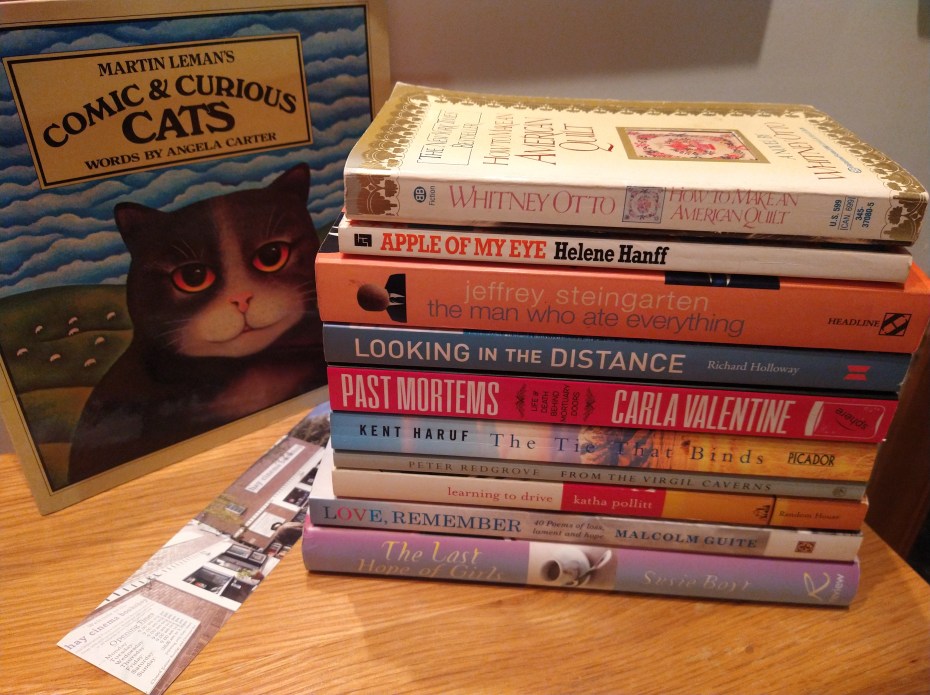
Read: Only 1 – Uh oh…
- Learning to Drive by Katha Pollitt
But also:
Partially read: 4
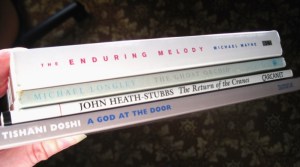
- A God at the Door by Tishani Doshi – Doshi is awesome. This is only my second of her poetry collections. I’ll finish it this month for Dewithon.
- Looking in the Distance by Richard Holloway – The problem with Holloway is that all of his books of recent decades are about the same – a mixture of mediations and long quotations from poetry – and I have one from last year on the review catch-up pile already. But I’m sure I’ll finish this at some point.
- The Ghost Orchid by Michael Longley – No idea why I set this one aside, but I’ve put it back on a current stack.
- The Enduring Melody by Michael Mayne – I have this journal of his approaching death as one of my bedside books and read a tiny bit of it at a time. (Memento mori?)
Skimmed: 1
- Love, Remember: 40 Poems of Loss, Lament and Hope by Malcolm Guite – I enjoyed the poetry selection well enough but didn’t find that the author’s essays added value, so I’m donating this to my church’s theological library.
That left 10 still to read. Eager to make some progress, I picked up a quick win, Comic & Curious Cats, illustrated in an instantly recognizable blocky folk art style by Martin Leman (I also have his Twelve Cats for Christmas, a stocking present I gave my husband this past year) and with words by Angela Carter. Yes, that Angela Carter! It’s picture book size but not really, or not just, for children. Each spread of this modified abecedarian includes a nonsense poem that uses the letter as much as possible: the cat’s name, where they live, what they eat, and a few choice adjectives. I had to laugh at the E cat being labelled “Elephantine.” Who knows, there might be some good future cat names in here: Basil and Clarissa? Francesca and Gordon? Wilberforce? “I love my cat with an XYZ [zed] … There is really nothing more to be said.” Charming. (Secondhand purchase – Hay-on-Wye Booksellers)


Total still unread: 9
Luckily, I’m still keen to read all of them. I’ll start with the two I purchased new, So Happy for You by Celia Laskey, a light LGBTQ thriller about a wedding (from Gay on Wye with birthday money from friends, a sweet older lesbian couple – so it felt appropriate to use their voucher there!), and Past Mortems by Carla Valentine, a memoir set at a mortuary (remainder copy from Addymans); as well as a secondhand novel, The Tie that Binds by Kent Haruf (Hay-on-Wye Booksellers) and the foodie essays of The Man Who Ate Everything by Jeffrey Steingarten (Cinema).
Then, if I still haven’t read them before the trip (who am I kidding…), I’ll pack for the car a few small volumes that will fit neatly into my handbag: Apple of My Eye by Helene Hanff, How to Make an American Quilt by Whitney Otto, and one of the poetry collections.
Love Your Library, February 2025
Thanks, as always, to Elle for posting about her recent library reading!
Libraries are havens, whatever the circumstances. Coinciding with me on my volunteering days are an unhoused man who sits outside using the wifi on a laptop until opening time, a blind flower arranger, bus drivers on loo breaks, and an intellectually disabled man who repeats excellent catch phrases, all to do with Christmas. It’s a space available to all.
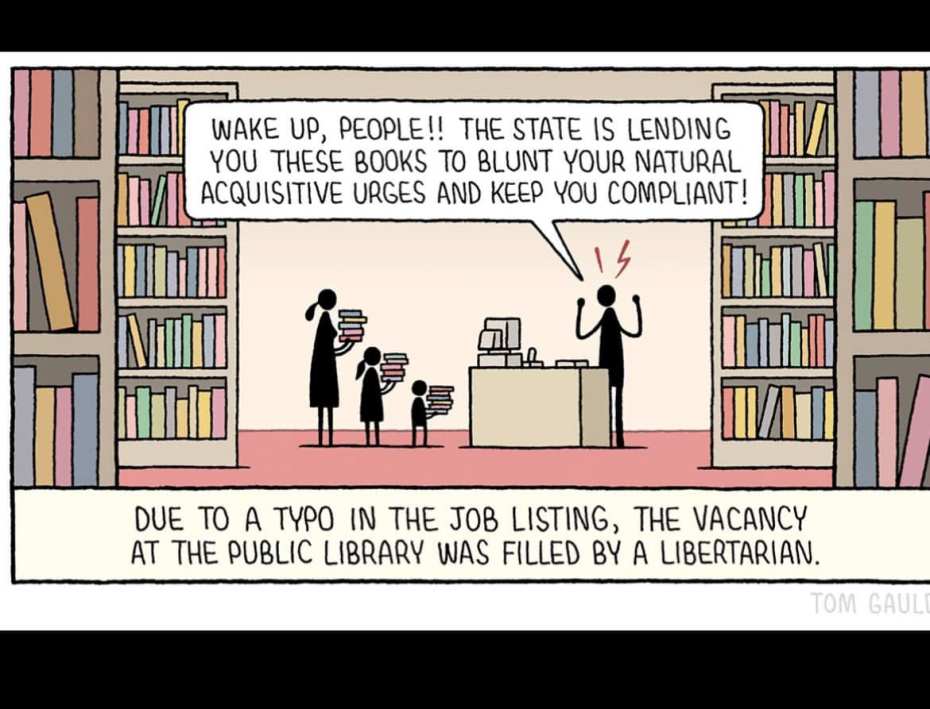
My library use over the last month:
(links to books not already reviewed on the blog)
READ
- Travels in the Scriptorium by Paul Auster
- Baumgartner by Paul Auster

- The Tale of Despereaux by Kate DiCamillo
- Myself & Other Animals by Gerald Durrell
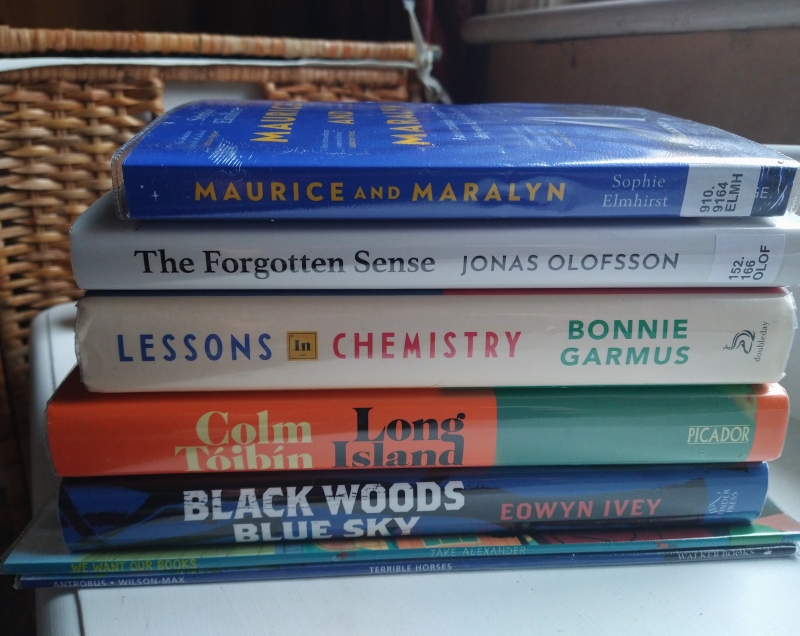
- Maurice and Maralyn: An Extraordinary True Story of Shipwreck, Survival and Love by Sophie Elmhirst

- The God of the Woods by Liz Moore
(& the children’s books pictured below)
CURRENTLY READING
- The Black Bird Oracle by Deborah Harkness
- Poetry Unbound: 50 Poems to Open Your World by Pádraig Ó Tuama
- Long Island by Colm Tóibín (for book club)
CHECKED OUT, TO BE READ
- Keep Love: 21 Truths for a Long-Lasting Relationship by Paul Brunson
- Lessons in Chemistry by Bonnie Garmus (to skim back through for Literary Wives)
- The Forgotten Sense: The Nose and the Perception of Smell by Jonas Olofsson
IN THE RESERVATION QUEUE
- Deep Cuts by Holly Brickley
- Raising Hare by Chloe Dalton
- I Want to Talk to You: And Other Conversations by Diana Evans
- We Do Not Part by Han Kang
- I Am Not a Tourist by Daisy J. Hung
- Bookish: How Reading Shapes Our Lives by Lucy Mangan
- When the Stammer Came to Stay by Maggie O’Farrell
- The Leopard in My House: One Man’s Adventures in Cancerland by Mark Steel
- Three Days in June by Anne Tyler
- Time of the Child by Niall Williams

ON HOLD, TO BE PICKED UP
- Autocracy, Inc. by Anne Applebaum
- Old Soul by Susan Barker
- Day by Michael Cunningham
- The Meteorites: Encounters with Outer Space and Deep Time by Helen Gordon
- Rebel Bodies: A Guide to the Gender Health Gap Revolution by Sarah Graham
- Period Power by Maisie Hill
- The Alternatives by Caoilinn Hughes
RETURNED UNFINISHED
- Confessions by Catherine Airey – I actually read the first 160 pages and enjoyed the first section about Cora in New York City in the wake of 9/11, but once the focus moved to her aunts in Ireland in the 1970s I failed to see a point.
- Unearthing: A Story of Tangled Love and Family Secrets by Kyo Maclear – I made it 50 or so pages into this last year but found it repetitive and elliptical. Dani Shapiro’s Inheritance, which tells quite a similar story (of finding out that the person the author always considered her father was not genetically related to her and that she was conceived by a sperm donor instead), was more engaging.
RETURNED UNREAD
- Newborn: Running Away, Breaking from the Past, Building a New Family by Kerry Hudson – I’m not sure why I requested this given I wasn’t impressed with Lowborn.
- Black Woods, Blue Sky by Eowyn Ivey – Requested off me; will try another time.
- The Coast Road by Alan Murrin – I don’t have time to focus on it now but might get it back out later in the year.
- No Filters: A Mother and Teenage Daughter Love Story by Christie Watson – The premise appealed to me but when I actually opened it up it looked scattered and lite.
What have you been reading or reviewing from the library recently?
Share a link to your own post in the comments. Feel free to use the above image. The hashtag is #LoveYourLibrary.
Book Serendipity, Mid-December 2024 to Mid-February 2025
I call it “Book Serendipity” when two or more books that I read at the same time or in quick succession have something in common – the more bizarre, the better. This is a regular feature of mine every couple of months. Because I usually have 20–30 books on the go at once, I suppose I’m more prone to such incidents. People frequently ask how I remember all of these coincidences. The answer is: I jot them down on scraps of paper or input them immediately into a file on my PC desktop; otherwise, they would flit away!
The following are in roughly chronological order.
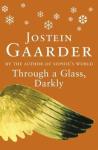
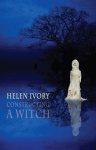
- The angel Ariel appears in Through a Glass Darkly by Jostein Gaarder and Constructing a Witch by Helen Ivory.
- The protagonist’s surname is English in Wild Houses by Colin Barrett and The Cannibal Owl by Aaron Gwyn.
- I read scenes of grief over a tree being cut down / falling next to one’s house in Dispersals by Jessica J. Lee and Small Rain by Garth Greenwell, one right after the other.
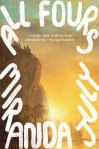
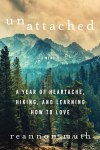
- A mother who does kundalini yoga in All Fours by Miranda July and Unattached by Reannon Muth.
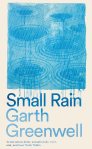
- The idea that happiness (unlike anxiety and sorrow) leaves no trace in writing or in life appeared for me on the same day in Memorial Days by Geraldine Brooks and Small Rain by Garth Greenwell.
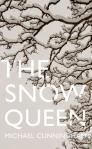
- Someone considers suicide by falling but realizes that at the current height they would injure themself but not die in Wild Houses by Colin Barrett, The Snow Queen by Michael Cunningham, and The Courage Consort by Michel Faber.
- The homosexual “bear” stereotype appears in The Snow Queen by Michael Cunningham and Small Rain by Garth Greenwell.
- A William Blake epigraph in Open, Heaven by Seán Hewitt and one of the poems included in Poetry Unbound by Pádraig Ó Tuama.
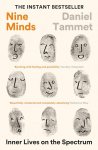
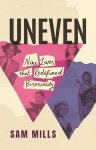
- A group biography including nine pen portraits (plus the author): Nine Minds by Daniel Tammet, followed in quick succession by Uneven by Sam Mills. (Similar, but with just seven subjects, is a book I’m currently reading about women’s religious conversions, Godstruck by Kelsey Osgood.)
- A book–life serendipity moment: in All Fours by Miranda July there is mention of an elderly cat named Alfie who needs to be given medication several times a day. Snap!
- By chance, I started reading Myself and Other Animals, a posthumous collection of short autobiographical pieces by Gerald Durrell, on his centenary (7 January 2025).
- Guilt over destroying a bird’s nest in The Book of George by Kate Greathead and I’ll Come to You by Rebecca Kauffman.
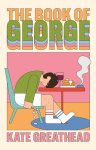
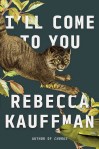
- The main female character has a birthmark in The Book of George by Kate Greathead and The Blindfold by Siri Hustvedt.
- Reading two novels at the same time that open with a new family having to be found for a little boy because his mentally ill mother is presumed to have died by suicide: Unexpected Lessons in Love by Bernardine Bishop and Going Home by Tom Lamont.
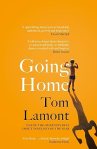 The protagonist is mistaken for a two-year-old boy’s father in The Book of George by Kate Greathead and Going Home by Tom Lamont.
- The mother is named Ellen in The Book of George by Kate Greathead and I’ll Come to You by Rebecca Kauffman.
- An ailing elderly father named Vic in Going Home by Tom Lamont and The God of the Woods by Liz Moore.
- A mother is sent to a mental hospital after the loss of her young son in Invisible by Paul Auster and The God of the Woods by Liz Moore.
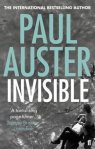
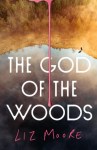
- A brother and sister share a New York City apartment in Invisible by Paul Auster and The Book of George by Kate Greathead.
- A mention of the Japanese artist Hokusai in While the Earth Holds Its Breath by Helen Moat and The Secret Life of Snow by Giles Whittell.
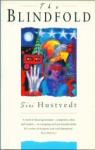 Adults dressing up for Halloween in The Blindfold by Siri Hustvedt and I’ll Come to You by Rebecca Kauffman.
- A second husband named Tim in Unexpected Lessons in Love by Bernardine Bishop and Because We Must by Tracy Youngblom.
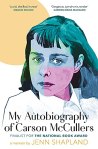
- The idea that ‘queers find each other’ in Edge of the World: An Anthology of Queer Travel Writing edited by Alden Jones and My Autobiography of Carson McCullers by Jenn Shapland.
- Experiencing 9/11 as a freshman in college (just like me!) in Dirty Kitchen by Jill Damatac and The Book of George by Kate Greathead. (There is also a 9/11 section in Confessions by Catherine Airey.)
- An intense poker game in I’ll Come to You by Rebecca Kauffman and Going Home by Tom Lamont.
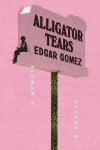 The main character is expelled on false drug possession charges in Invisible by Paul Auster and Alligator Tears by Edgar Gomez.
- Missing the chance to say goodbye before a father’s death, and a parent wondering aloud to their son whether they’ve been a good parent in The Book of George by Kate Greathead and The Remains of the Day by Kazuo Ishiguro.
- Someone departs suddenly, leaving her clothes and books behind, in Invisible by Paul Auster and My Autobiography of Carson McCullers by Jenn Shapland.
- Mentions of DACA (Deferred Action for Childhood Arrivals, an Obama-era U.S. immigration policy) and “Two-Buck Chuck” (a nickname for the Charles Shaw bargain wine sold at Trader Joe’s) in Dirty Kitchen by Jill Damatac and Alligator Tears by Edgar Gomez.
- A City Hall wedding in New York City in Baumgartner by Paul Auster and Dirty Kitchen by Jill Damatac.
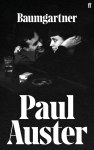
- Polish Jewish heritage and a parent who died of pancreatic cancer in Baumgartner by Paul Auster and The History of Love by Nicole Krauss.
- In Because We Must by Tracy Youngblom, she reads The Tale of Despereaux by Kate DiCamillo aloud to her son while he is recovering in hospital. I was reading Despereaux at the same time! (Also, in real-life serendipity, Youngblom and I both have a sister named Trish.)
- A code of 1–3 knocks is used in Confessions by Catherine Airey and The History of Love by Nicole Krauss.
 A scene of a teacup breaking in Junction of Earth and Sky by Susan Buttenwieser and The Möbius Book by Catherine Lacey.
What’s the weirdest reading coincidence you’ve had lately?
Adventures in Rereading: The History of Love by Nicole Krauss for Valentine’s Day
Special Valentine’s edition. Every year I say I’m really not a Valentine’s Day person and yet manage a themed post featuring one or more books with “Love” or “Heart” in the title. This is the ninth year in a row, in fact – after 2017, 2018, 2019, 2020, 2021, 2022, 2023, and 2024!
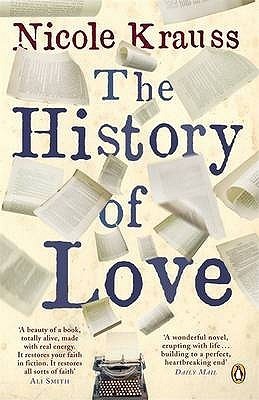 Leopold Gursky is an octogenarian Holocaust survivor, locksmith and writer manqué; Alma Singer is a misfit teenager grieving her father. What connects them? A philosophical novel called The History of Love, lost for years before being published in Spanish. Alma’s late father saw it in a bookshop window in Buenos Aires and bought it for his love. They adored it so much they named their daughter after the heroine. Now his widow is translating it into English on commission for a covert client. Leo and Alma’s distinctive voices, wry but earnest, really make this sparkle. Alma’s sections are numbered fragments from a diary and there are also excerpts from the book within the book. My only critique would be that she sounds young for her age; her precocity makes her seem closer to 10 than 15. But her little brother Bird, who thinks he may be the messiah, is a delight. The array of New York City locales includes a life drawing class, a record office, and a Central Park bench. A gentle air of mystery circulates as we work out who Leo’s son is and how Alma tracks down the author. It’s a bittersweet story that insists on love as an equivalent to loss. Complex but accessible, bookish and heartfelt, it’s one to recommend to my book club in the future. (Little Free Library)
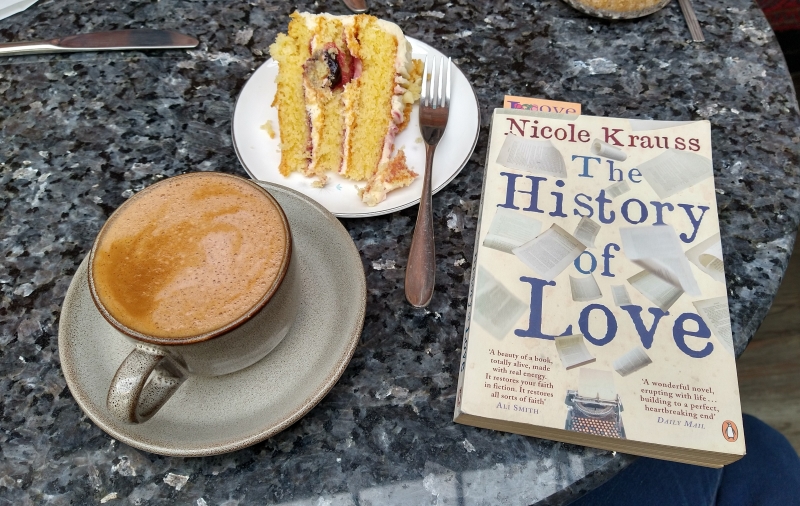
Finishing my reread during a coffee date in Hungerford this morning.
My original rating (2011):
When I first read this, I mostly considered it in comparison to Krauss’s former husband Jonathan Safran Foer’s work. (I’ve long since read everything by both of them.) I noted then that it
has a lot of elements in common with Everything is Illuminated, such as a preoccupation with Eastern European and Jewish ancestry, quirky methods of narration including multiple voices, and a sweet humour that lies alongside such heart-rending stories of family and loss that tears are never far from your eyes. Leo Gursky and Alma Singer are delightful and distinct characters. I wasn’t sure about the missing/plagiarized/mistaken The History of Love itself; the ruined copies, the different translations, the way the manuscript was constantly changing hands – all this was intriguing, but the book itself was a postmodern jumble of magic realism and pointless meanderings of thought.
Dang, I was harsh! But admirably pithy about the plot. It’s intriguing that I’ve successfully reread Krauss but failed with Foer when I attempted Everything is Illuminated again in 2020. Reading the first, 9/11-set section of Confessions by Catherine Airey, I’ve also been recalling his Extremely Loud and Incredibly Close and thinking it probably wouldn’t stand up to a reread either. I suspect I’d find it mawkish, especially with its child narrator. Alma evades that trap, perhaps by being that little bit older, though she sounds young because of how geeky and sheltered she is.
Love Your Library, January 2025
Thanks so much to Elle, Laura, and Skai for joining in this month!
READ
All children’s books this time!
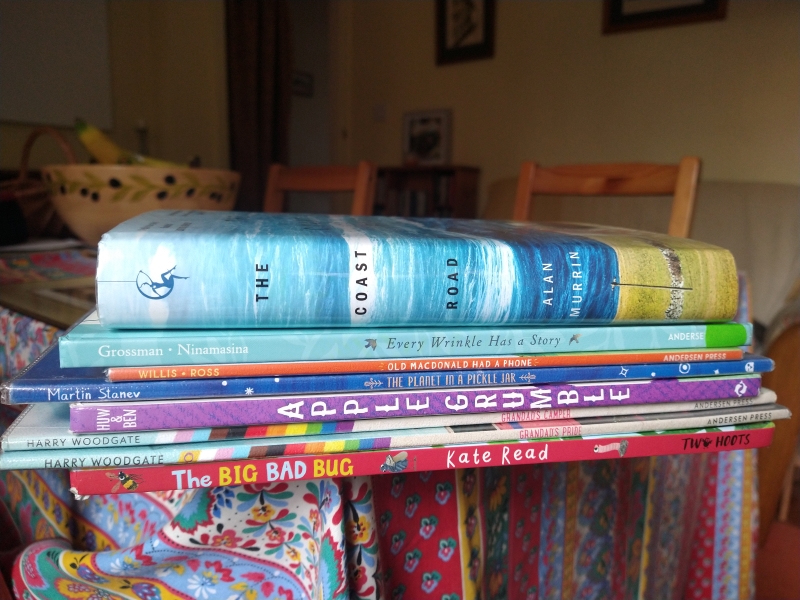
- Every Wrinkle Has a Story by David Grossman – A sweet story about how experiences make us who we are, so ageing is a good thing.

 Dexter Procter: The 10-Year-Old Doctor by Adam Kay – A fun if overlong book that will appeal to readers of Roald Dahl and David Walliams. It has bullying, a mystery and gross-out humour as well as some age-appropriate medical content.
 - Apple Grumble by Huw Lewis-Jones – There’s a grumpy apple. And that’s it.

 Constance in Peril by Ben Manley – So cute! Edward finds his favourite doll, Constance Hardpenny, in a bin. She’s dressed like a Victorian spinster and each day for a week she suffers a new near-calamity (her blank doll eyes somehow still conveying her alarm), only to be saved by Edward’s big sister.
 - The Big Bad Bug by Kate Read – Nice to see invertebrates featured. The message is about selfishness.
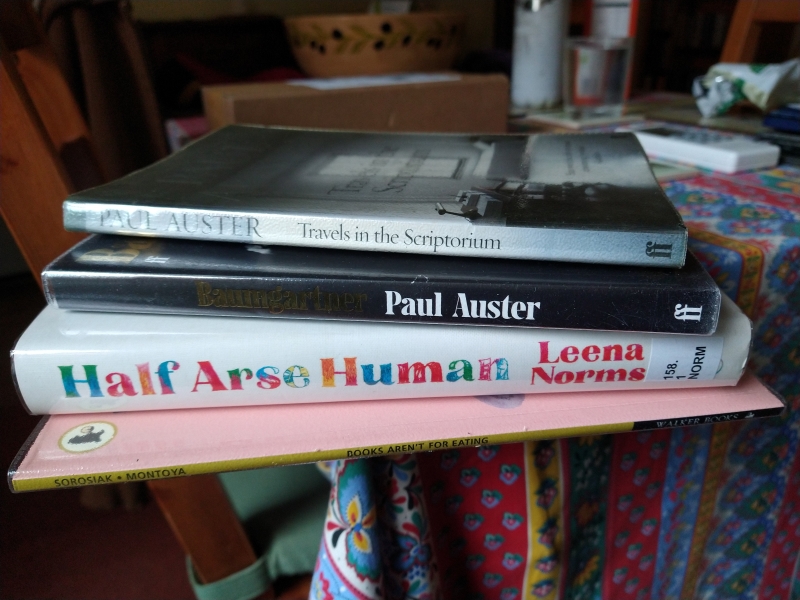
- Books Aren’t for Eating by Carlie Sorosiak – Starring a goat bookseller who learned to read books, not eat them, and passes on his enthusiasm to others. Other than the sudden ending, this was great.


- The Planet in a Pickle Jar by Martin Stanev – Intricate drawings and a touch of folklore (the author is Bulgarian) in this story of a grandmother who preserves the natural world and wants her grandchildren to continue her good work.
- Old Macdonald Had a Phone by Jeanne Willis – Updates the song for the tech age with a lesson that smartphones are useful tools but we mustn’t get addicted.
- Grandad’s Camper & Grandad’s Pride by Harry Woodgate – A little girl learns about her grandfather’s activist past with his partner and initiates a Pride parade in their little town. /
CURRENTLY READING
- Myself & Other Animals by Gerald Durrell
- The Black Bird Oracle by Deborah Harkness
- The God of the Woods by Liz Moore
- Poetry Unbound: 50 Poems to Open Your World by Pádraig Ó Tuama
(+ the set-aside ones I mentioned last time)
CHECKED OUT, TO BE READ
(Everything from last time +)
- Travels in the Scriptorium & Baumgartner by Paul Auster
- The Coast Road by Alan Murrin
- Half Arse Human by Leena Norms
IN THE RESERVATION QUEUE
(Everything from last time +)
- Confessions by Catherine Airey
- Deep Cuts by Holly Brickley
- Bellies by Nicola Dinan
- I Am Not a Tourist by Daisy J. Hung
- Bookish: How Reading Shapes Our Lives by Lucy Mangan
- When the Stammer Came to Stay by Maggie O’Farrell
ON HOLD, TO BE PICKED UP
- Maurice and Maralyn: An Extraordinary True Story of Shipwreck, Survival and Love by Sophie Elmhirst
- Black Woods, Blue Sky by Eowyn Ivey
- The Forgotten Sense: The Nose and the Perception of Smell by Jonas Olofsson
- Long Island by Colm Tóibín (for March book club)
RETURNED UNREAD
- The Mischief Makers by Elisabeth Gifford – I’ve enjoyed one of her books before, and a different biographical novel about Daphne du Maurier, but this seemed very bland at first glance.
What have you been reading or reviewing from the library recently?
Share a link to your own post in the comments. Feel free to use the above image. The hashtag is #LoveYourLibrary.
Reading Snapshot for Mid-January
As I said in my last post, I’m in the middle of a bunch of books but hardly finishing anything, so consider this another placeholder until my Love Your Library and January releases posts next week. People often ask how I read so much. One of the answers is that I generally read 20–30 books at once, bouncing between them as the mood takes me and making steady progress in most. A frequent follow-up question is how I keep so many books straight in my head. I maintain a variety of genres and topics in the stack and alternate between fiction, nonfiction and poetry in any reading session. If I’m going to be reviewing something, particularly for pay, I tend to make notes. Here’s a peek at my current stacks, with a line or two on each book and why I’m reading it.

- Myself & Other Animals by Gerald Durrell [public library] – This is a posthumous collection of excerpts from his published work, including newspaper articles, plus mini essays that he wrote towards an autobiography. We own/have read most of his animal-collecting and zoo-keeping memoirs and this is just as delightful, even in unconnected pieces. His conservationist zeal was ahead of his time.
- The God of the Woods by Liz Moore [public library] – It’s rare for me to borrow something from the Crime section, but this came highly lauded by Laila. Set in upstate New York in 1975, it’s a page-turning missing-girl mystery with a literary focus on character backstory, and it’s reminding me of Bright Young Women by Jessica Knoll and When the Stars Go Dark by Paula McLain.
- Gold by Elaine Feinstein [secondhand purchase] – I’ve enjoyed Feinstein’s poetry before so snapped this up on our second trip to Bridport. The first long poem was a monologue from the perspective of a collaborator of Mozart; I think I’ll engage more with the discrete poems to follow.
- Understorey by Anna Chapman Parker [review copy] – Catching up on one I was sent last year. It’s a one-year diary through ‘weeds’ (wild plants!) she observes and sketches near her home of Berwick upon Tweed, where we vacationed in September. I am enjoying reading a few peaceful entries per sitting.
- A God at the Door by Tishani Doshi [secondhand purchase] – Her Girls Are Coming out of the Woods was a favourite of mine a few years ago when I reviewed it for Wasafiri literary magazine. I found this on my last trip to Hay-on-Wye, and it is just as rich in long, forthright, feminist and political poems.
- The Secret Life of Snow by Giles Whittell [secondhand purchase] – I picked up a few snowy titles when we got a dusting the other week, in case it was the only snow of the year. This is so much like The Snow Tourist by Charlie English it’s uncanny; to my memory it’s more meteorological, though still accessible. The science is interspersed with travels and fun trivia about Norway’s Olympic skiers and so on.
- Moon of the Crusted Snow by Waubgeshig Rice [gift] – Probably my first book by an Indigenous Canadian, which was reason enough to read it. I’m about 50 pages in and so far it’s a plodding story of mysterious power outages which could just be part of the onset of winter but I suspect will turn out to be sinister and dystopian instead.
- Knead to Know by Neil Buttery [review copy] – Another 2024 book to catch up on. It’s a history of baking via mini-essays on loads of different breads, cakes, pies and pastries, many of them traditional English ones that you will never have heard of but will now want to cram. Lots of intriguing titbits.
- Invisible by Paul Auster [secondhand purchase] – Getting ready for Annabel’s second Paul Auster Reading Week in early February. A young (and Auster-like) would-be poet gets entangled with a thirtysomething professor who wants to fund a start-up literary magazine – and his French girlfriend. Highly readable and sure to get weirder.
- While the Earth Holds Its Breath by Helen Moat [review copy] – Yet another 2024 book to catch up on. Authors are still jumping on the Wintering bandwagon. This is composed of short autobiographical pieces about winter walks near home or further afield, many of them samey; the trip to Lapland has been a highlight so far.
- The Blindfold by Siri Hustvedt [review copy] – Also part of my preparation for Paul Auster Reading Week, and boy can you see his influence on her first novel! Iris Vegan is employed by Mr. Morning to record audio descriptions of relics left behind by a possibly murdered woman. Odd and enticing.
- Uneven by Sam Mills [review copy] – A group biography of nine bisexuals – make that 10, as there’s plenty of memoir fragments from Mills, too. I’ve read the chapters on Oscar Wilde, Colette & Bessie Smith, and Marlene Dietrich so far. It is particularly enlightening to think of Wilde as bi rather than a closeted homosexual.
- Unexpected Lessons in Love by Bernardine Bishop [secondhand purchase] – Every year I pick up at least a few “love” or “heart” titles in advance of Valentine’s Day. Bishop was one of my top discoveries last year (via The Street) and this Costa Award-nominated posthumous novel is equally engaging, even after just 50 pages.
- My Judy Garland Life by Susie Boyt [secondhand purchase] – After Loved and Missed, I was keen to try more from Boyt and this Ackerley Prize-shortlisted memoir sounded fascinating. I love The Wizard of Oz as much as the next person. Boyt, however, is a Garland mega-fan and blends biography and memoir as she writes about addiction, mental health, celebrity and the search for love.
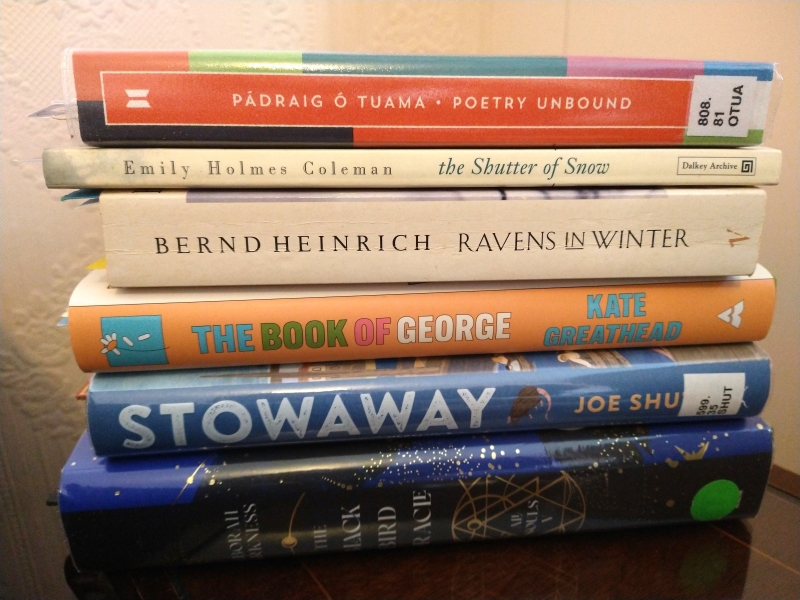
- Poetry Unbound by Pádraig Ó Tuama [public library] – I’m gradually making my way through this set of 50 poems and his critical/personal responses to them. Most of the poets have been unfamiliar to me. Marie Howe has been my top discovery.
- The Shutter of Snow by Emily Holmes Coleman [secondhand purchase] – Another incidental ‘snow’ title; this is autofiction about postpartum psychosis, written in a stream-of-consciousness style with no speech marks or apostrophes. It’s hard to believe it was written in the 1930s because it feels like it could have been yesterday.
- Ravens in Winter by Bernd Heinrich [secondhand purchase] – I’ve long meant to read more by Heinrich, who’s better known in the USA, after Winter World. This was a lucky find at Regent Books in Wantage. It’s a granular scientific study of bird behaviour, so I will likely read it very slowly, maybe even over two winters.
- The Book of George by Kate Greathead [review copy] – Linked short stories about an Everyman schmuck (and my exact contemporary) from adolescence up to today. He’s indecisive, lazy, an underachiever. Life keeps happening around him; will he make something happen? (George, c’est moi?) The deadpan tone is great.
- Stowaway by Joe Shute [public library] – I’ve been reading this off and on since, er, June, which is not to say that it’s not interesting but that it’s never been a priority. Like his book on ravens, it’s intended to rehabilitate the reputation of a species often considered to be a pest. He gets pet rats, too!
- The Black Bird Oracle by Deborah Harkness [public library] – It’s even rarer for me to borrow from the Science Fiction & Fantasy section of the library, but I’ve been following the series since A Discovery of Witches came out in 2011. I’m halfway through and enjoying Diana’s embrace of her witch heritage in the Salem area.
That’s not all, folks! There’s also the e-books.

- Dirty Kitchen by Jill Damatac [Edelweiss] – I’ll be reviewing this May release early for Shelf Awareness. The author’s Filipino family were undocumented immigrants in the USA and as a child she was occasionally abandoned and frequently physically abused. Recipes and legends offer a break from the tough subject matter (reminiscent of Educated or What My Bones Know).
- My Marriage Sabbatical by Leah Fisher [from publicist] – She Writes Press is a reliable source of women’s life writing. I’ve only just started this but will try to review it this month. Fisher, a psychotherapist, was sick of her psychiatrist husband’s workaholism and wanted to try living differently, starting with a house share.
- I’ll Come to You by Rebecca Kauffman [from publicist] – Another American linked short story collection, moving month by month through 1995 (does that count as historical fiction?!), cycling through the members of an extended family as they navigate illnesses and fraught parenting journeys. I’m getting J. Ryan Stradal vibes.
- Constructing a Witch by Helen Ivory [Edelweiss] – This feminist take on the historical persecution and stereotypes of witches is a good match for the Harkness! I just keep forgetting to open it up on my Kindle.
According to Goodreads, I’m reading 28 books at the moment, so I haven’t even covered all of them. (The rest include library books that would more honestly be classified as “set aside.”)
Whew. It somehow seems like even more when I write them all up like this…
Back to the reading!
Final Reading Statistics for 2024
Happy New Year! Even though we were out at neighbours’ until 2:45 a.m. (who are these party animals?!), I’m feeling bright-eyed and bushy-tailed today and looking forward to a special brunch at our favourite Newbury establishment. Despite all evidence to the contrary in the news – politically, environmentally, internationally – I’m choosing to be optimistic about what 2025 will hold. What hope I have comes from community and grassroots efforts.
In other good news, 2024 saw my highest reading total yet! (My usual average, as in 2019–21 and 2023, is 340.) Last year I challenged myself to read 350 books and I managed it easily, even though at one point in the middle of the year I was far behind and it didn’t look possible.
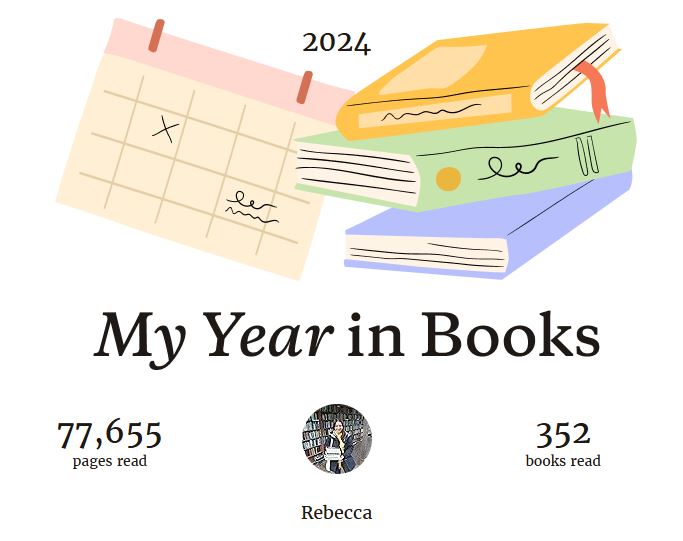
Reading a novella a day in November was certainly a major factor in meeting my goal. I also tend to prioritize poetry collections and novellas for my Shelf Awareness reviewing, and in general I consider it a bonus if a book is closer to 200 pages than 300+.
The statistics
Fiction: 51.4%
Nonfiction: 31.8% (similar to last year’s 31.2%)
Poetry: 16.8% (identical to last year!)
Female author: 67.9% (close to last year’s 69.7%)
Male author: 29.6%
Nonbinary author: 1.1%
Multiple genders (anthologies): 1.4%
BIPOC author: 18.4%
This has dropped a bit compared to previous years’ 22.4% (2023), 20.7% (2022), and 18.5% (2021). My aim will be to make it 25% or more.
LGBTQ: 21.6%
(Based on the author’s identity or a major theme in the work.) This has been increasing from 11.8% (2021), 8.8% (2022), and 18.2% (2023). I’m pleased!
Work in translation: 6%
I read only 21 books in translation last year, alas. This is an unfortunate drop from the previous year’s 10.6%. I do prefer to be closer to 10%, so I will need to make a conscious effort to borrow translated books and incorporate them in my challenges.
French (7)
German (4)
Norwegian (3)
Spanish (3)
Italian (1)
Latvian (1) – a new language for me to have read from
Swedish (1)
+ Misc. in a story anthology
2024 (or pre-release 2025) books: 52.3% (up from 44.7% last year)
Backlist: 47.7%
But a lot of that ‘backlist’ stuff was still from the 2020s; I only read five pre-1950 books, the oldest being Howards End and Kilmeny of the Orchard, both from 1910. I should definitely pick up something from the 19th century or earlier next year!
E-books: 32.1% (up from 27.4% last year)
Print books: 67.9%
I almost exclusively read e-books for BookBrowse, Foreword and Shelf Awareness reviews.
Rereads: 18
I doubled last year’s 9! I’m really happy with this 1.5/month average. Three of my rereads ended up being among my most memorable reading experiences for the year.
And, courtesy of Goodreads:
Average book length: 220 pages (in previous years it has been 217 and 225)
Average rating for 2024: 3.6 (identical to the last two years)
Where my books came from for the whole year, compared to 2023:
- Free print or e-copy from publisher: 44.8% (↑1.3%)
- Public library: 18.4% (↓5.7%)
- Secondhand purchase: 11.5% (↑1.7%)
- Free (giveaways, Little Free Library/free bookshop, from friends or neighbours): 9.8% (↑3.9%)
- Downloaded from NetGalley, Edelweiss, BookSirens or Project Gutenberg: 8.8% (↑2%)
- Gifts: 2.6% (↓1.5%)
- New purchase (often at a bargain price; includes Kindle purchases): 2.1% (↓2.6%)
- University library: 2% (↓1.2%)
So, like last year, nearly a quarter of my reading (24%) was from my own shelves. I’d like to make that more like a third to half, which would be better achieved by a reduction in the number of review copies rather than a drop in my library borrowing. It would also ensure that I read more backlist books.
What trends and changes did you see in your year’s reading?
Love Your Library, December 2024
Thanks so much to Eleanor, Jana and Naomi for writing about their recent library borrowing and reading! Marina Sofia also posted about marvellous library rooms and libraries with great views.
My library use over the last month:
READ
- Interlunar by Margaret Atwood
- Life before Man by Margaret Atwood
- A Beginner’s Guide to Dying by Simon Boas
- Small Rain by Garth Greenwell

- Dispersals: On Plants, Borders and Belonging by Jessica J. Lee
- Men Explain Things to Me by Rebecca Solnit
- Nine Minds: Inner Lives on the Spectrum by Daniel Tammet
- The Peculiar Life of a Lonely Postman by Denis Thériault
- The Safekeep by Yael van der Wouden
SKIMMED
- The Place of Tides by James Rebanks

CURRENTLY READING
- Dexter Procter: The 10-Year-Old Doctor by Adam Kay
- Poetry Unbound: 50 Poems to Open Your World by Pádraig Ó Tuama
CURRENTLY READING-ish (more accurately, set aside temporarily)
- Death Valley by Melissa Broder
- The Tale of Despereaux by Kate DiCamillo
- Learning to Think: A Memoir about Faith, Demons, and the Courage to Ask Questions by Tracy King
- Groundbreakers: The Return of Britain’s Wild Boar by Chantal Lyons
- Unearthing: A Story of Tangled Love and Family Secrets by Kyo Maclear
- Late Light: Finding Home in the West Country by Michael Malay
- Mrs Gulliver by Valerie Martin
- Stowaway: The Disreputable Exploits of the Rat by Joe Shute
CHECKED OUT, TO BE READ
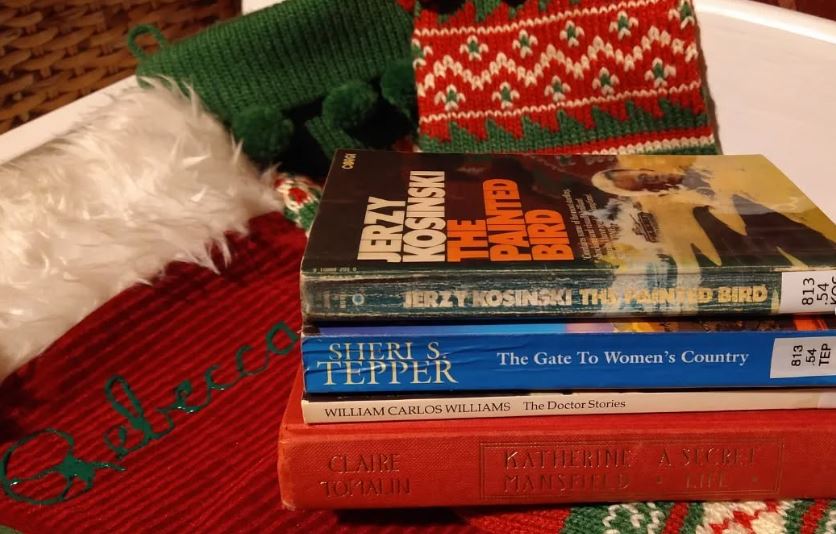
- The Painted Bird by Jerzy Kosinski
- The Gate to Women’s Country by Sheri S. Tepper
- Katherine Mansfield: A Secret Life by Claire Tomalin
- The Doctor Stories by William Carlos Williams
IN THE RESERVATION QUEUE
Some 2025 books are on order now, hooray!
- Old Soul by Susan Barker
- Keep Love: 21 Truths for a Long-Lasting Relationship by Paul Brunson
- Raising Hare by Chloe Dalton
- Maurice and Maralyn: An Extraordinary True Story of Shipwreck, Survival and Love by Sophie Elmhirst
- The Meteorites: Encounters with Outer Space and Deep Time by Helen Gordon
- The Alternatives by Caoilinn Hughes
- Newborn: Running Away, Breaking from the Past, Building a New Family by Kerry Hudson
- Black Woods, Blue Sky by Eowyn Ivey
- The Coast Road by Alan Murrin
- The Forgotten Sense: The Nose and the Perception of Smell by Jonas Olofsson
- The Leopard in My House: One Man’s Adventures in Cancerland by Mark Steel
- Three Days in June by Anne Tyler
- Time of the Child by Niall Williams
ON HOLD, TO BE PICKED UP
- Myself and Other Animals by Gerald Durrell
- The Mischief Makers by Elisabeth Gifford
- The Black Bird Oracle by Deborah Harkness
- The God of the Woods by Liz Moore
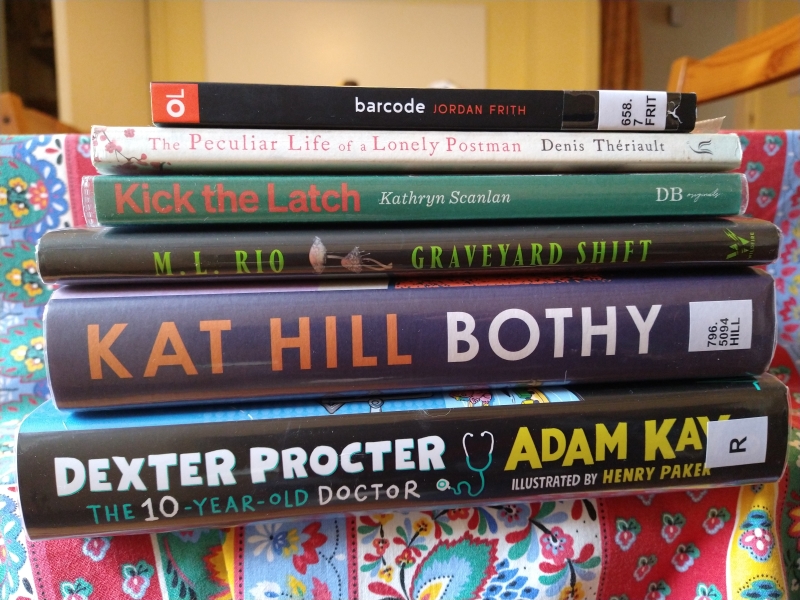
RETURNED UNREAD
- The Second Coming by Garth Risk Hallberg
- Bothy by Kat Hill
RETURNED UNFINISHED
- The City and Its Uncertain Walls by Haruki Murakami – I read 80 pages but found it aimless and flat.
- After Dark by Haruki Murakami – I couldn’t renew it for some reason. This is at least a nice short one, so I will go back to it once my hold comes in.
What have you been reading or reviewing from the library recently?
Share a link to your own post in the comments. Feel free to use the above image. The hashtag is #LoveYourLibrary.
 Bookish Beck = Rebecca Foster. American transplant to England. Freelance proofreader and book reviewer.
