The Winter Soldier by Daniel Mason
Though I’m often wary of war fiction – can anything new still be written about World War I? – I was drawn to The Winter Soldier by the enthusiastic American reviews and the medical theme. The protagonist of psychiatrist Daniel Mason’s third novel, Lucius Krzelewski, comes from southern Polish nobility. In the 1910s medicine was a path for those seeking social mobility, but for Lucius neurology study is a way out of his stifling aristocratic household. Under Herr Doktor Zimmer’s tutelage in Vienna, he experiments on ways to make blood vessels visible. Dismayed to learn that Zimmer believes the “mermaid” in the medical school’s anatomical museum is real, he hurries to enlist when war begins in 1914.
 As a 22-year-old medical lieutenant he’s stationed at a church turned into a regimental hospital at Lemnowice. Here Sister Margarete has been making do without a doctor in charge for two months. She’s been performing amputations and setting fractures in a lice-ridden building where hunger and typhoid are never far away. Lucius is ashamed of his ignorance compared to this skilled nurse; though he has textbook knowledge, he has no practical experience and has to learn on the job.
The following winter a Hungarian soldier suffering from “nervous shock” but no visible wounds is brought in, a sheaf of accomplished drawings padding his coat. For Lucius and Margarete, Sergeant József Horváth poses a particular challenge, which makes his recovery seem more like a resurrection: “they were both falling a little bit in love with their silent visitor or, more, with the cure that they had wrought.” Even as Lucius and Margarete fall in love and steal moments alone, they regret they couldn’t do more for Horváth. When Lucius and Margarete are separated, he vows to find her again – and make things right with Horváth.
I loved the novel’s first half, with its gallows humor, memorable scenes of gruesome medical procedures, and bleak conditions so convincing you’ll find yourself itching right along with the lice-plagued patients. But at about the halfway point the pace changes dramatically. Years pass and Lucius has various deployments and hospital positions. Curiously, although so much is happening to him outwardly, he’s stalled internally – haunted by thoughts of Margarete and Horváth. Perhaps this is why I felt the narrative slowed to a crawl. I could barely force myself to read more than five or 10 pages in a sitting, and the novel as a whole took me much longer to read than normal. Or maybe I was just missing Margarete, the most vibrant character.
Early on I was reminded of Julie Orringer’s The Invisible Bridge and Hubert Mingarelli’s A Meal in Winter, lesser-known war novels in which the stark beauty of the writing tempers the somber subject matter. Partway through I started thinking of Ambrose Parry’s The Way of All Flesh, in which an unqualified female outshines a male in medical knowledge. By the end I was recalling epic separation-filled romances like The English Patient and Birdsong.
Though the novel’s second half never matched the strength of the first, I was at least pleased that Mason avoided a clichéd, Hollywood-ready ending in favor of a more fitting one that, while still somewhat far-fetched, makes sense of the title’s emphasis. This is a moving story of the physical and psychological effects of war, and I would certainly read more by Mason.
My rating: 
The Winter Soldier was published in the UK by Mantle on October 18th. With thanks to the publisher for the free copy for review.
Novellas in November Wrap-Up, with Mini-Reviews
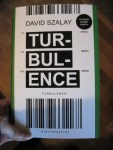 Novellas in November was a great success, helping me to finish more books in one month than I possibly ever have before. David Szalay’s Turbulence – a linked short story collection of tantalizing novella length – just arrived yesterday; I’ve started it but will be finishing it in December. The slim volume Fox 8 by George Saunders is also waiting for me at the library and I should be able to read it soon.
For this final installment I have 10 small books to feed back on: a mixture of fiction, graphic novels, nature books and memoirs.
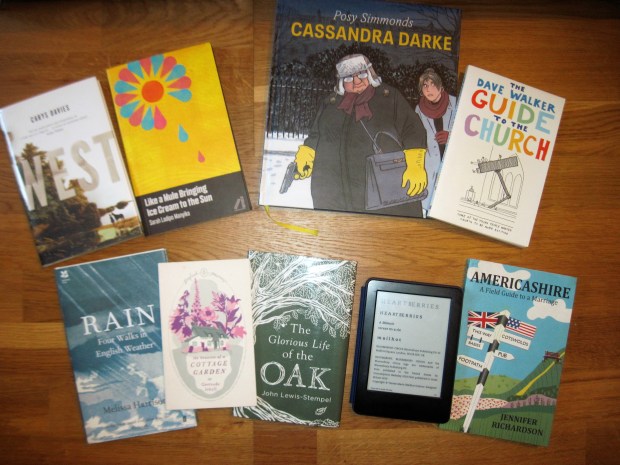
Fiction:
West by Carys Davies (2018)
[149 pages]
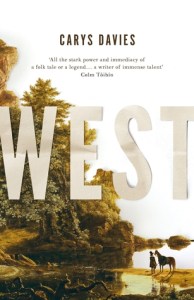 A gritty piece of historical fiction about a widowed mule breeder, Cyrus Bellman, who sets out from Pennsylvania to find traces of the giant creatures whose bones he hears have been discovered in Kentucky. He leaves his 10-year-old daughter, Bess, in the care of his sister, knowing he’ll be gone at least two years and may never return. Chapters cut between Cy’s harrowing journey in the company of a Native American guide, Old Woman From A Distance, and Bess’s home life, threatened by the unwanted attentions of their ranch hand neighbor and the town librarian. I don’t usually mind dark stories, but this was so bleak that I found it pretty unpleasant. The deus ex machina ending saved it somewhat.
Like a Mule Bringing Ice Cream to the Sun by Sarah Ladipo Manyika (2016)
[118 pages]
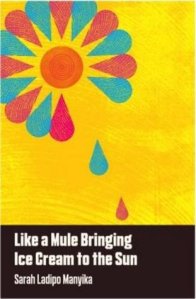 Morayo Da Silva is an unlikely heroine: soon to turn 75, she’s a former English professor from Nigeria who hopped between countries with her ambassador husband but now lives alone in San Francisco. The first-person narration switches around to give the perspectives of peripheral figures like a shopkeeper, a homeless woman, and Sunshine, the young friend who helps Morayo get her affairs in order after she has a fall and goes into a care home temporarily. These shifts in point of view can be abrupt, even mid-chapter, and are a little confusing. However, Morayo is a wonderful character, inspiring in her determination to live flamboyantly. I also sympathized with her love of books. I would happily have read twice as many pages about her adventures.
Graphic Novels:
Cassandra Darke by Posy Simmonds (2018)
[94 pages]
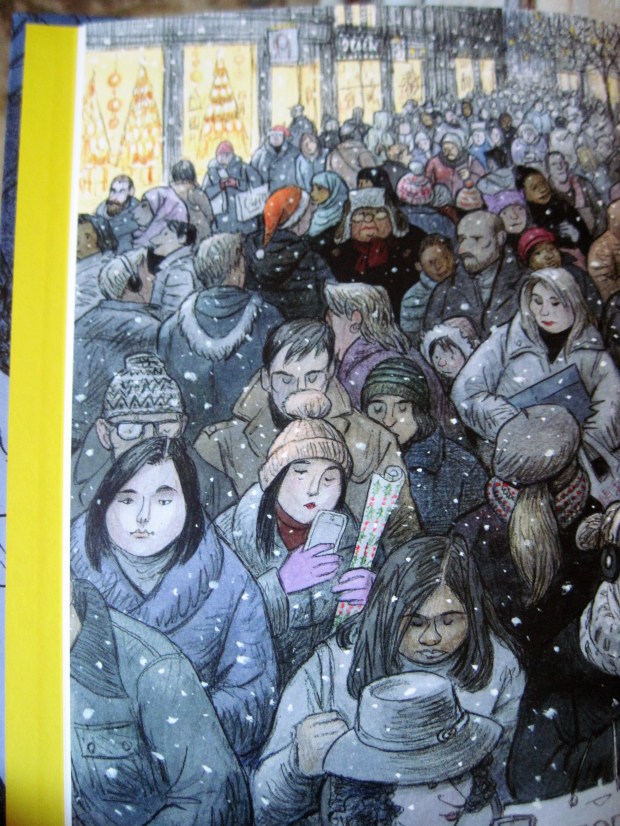
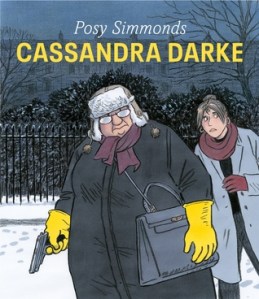 Simmonds would be great for graphic novel newbies: she writes proper, full-length stories, often loosely based on a classic plot, with lots of narration and dialogue alongside the pictures. Cassandra Darke is a 71-year-old art dealer who’s laid low by fraud allegations and then blindsided by a case of mistaken identity that brings her into contact with a couple of criminal rings. To start with she’s a Scrooge-like curmudgeon who doesn’t understand the big fuss about Christmas, but she gradually grows compassionate, especially after her own brief brush with poverty. Luckily, Simmonds doesn’t overdo the Christmas Carol comparisons. Much of the book is in appropriately somber colors, with occasional brightness, including the yellow endpapers and built-in bookmark.
The Dave Walker Guide to the Church by Dave Walker (2006)
[88 pages]
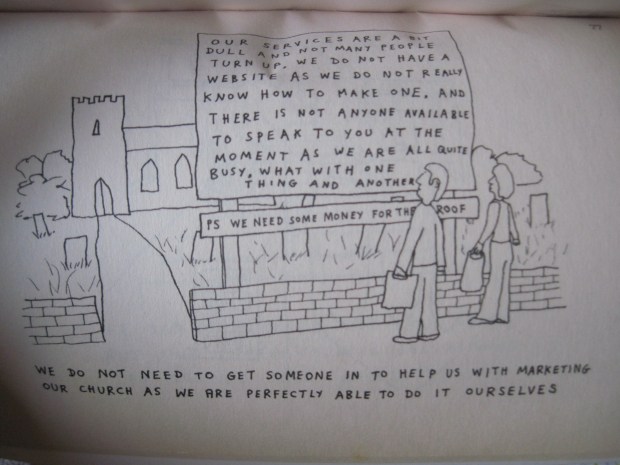
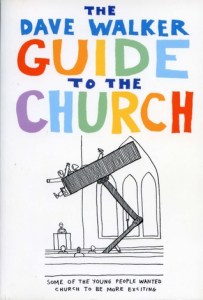 Most of these comics originally appeared in the Church Times, the official newspaper of the Church of England. No doubt you’ll get the most out of it if you’re familiar with Anglican churches or the like (Episcopalian or even Roman Catholic). My mother-in-law is a C of E vicar and we’ve attended a High Anglican church for the last two years, so I got many a good snort out of the book. Walker pokes fun at bureaucracy, silly traditions, closed-mindedness, and the oddities of church buildings and parishioners’ habits. My favorite spreads compare choirs and music groups on criteria like “ability to process in” and liken different church members to chess pieces to explain church politics.
Nature Books:
Rain: Four Walks in English Weather by Melissa Harrison (2016)
[100 pages]
 In the course of a year Harrison took four rainy walks, in different seasons and different parts of England. She intersperses her observations with facts and legends about the rain, quotes from historical weather guides and poems. It has the occasional nice line, but is overall an understated nature/travel book. A noteworthy moment is when she remembers scattering her mother’s ashes on a Dartmoor tor. I most liked the argument that it’s important to not just go out in good weather, but to adapt to nature in all its moods: “I can choose now to overcome the impulse for comfort and convenience that insulates us not only from the bad in life but from much of the good. I think we need the weather, in all its forms, to feel fully human.”
The Beauties of a Cottage Garden by Gertrude Jekyll (2009)
[88 pages]
 This mini-volume from Penguin’s English Journeys series feels like a bit of a cheat because it’s extracted from Wood and Garden (1899). Oh well. In short chapters Jekyll praises the variety of colors, smells and designs you’ll find in the average country garden, no matter how modest its size. She speaks of gardening as a lifelong learning process, humbly acknowledging that she’s no expert. “I hold that the best purpose of a garden is to give delight and to give refreshment of mind, to soothe, to refine, and to lift up the heart in a spirit of praise and thankfulness. … a garden is a grand teacher. It teaches patience and careful watchfulness; it teaches industry and thrift; above all, it teaches entire trust.”
The Glorious Life of the Oak by John Lewis-Stempel (2018)
[87 pages]
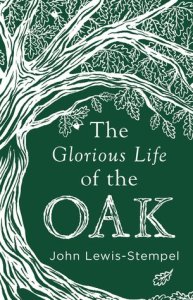
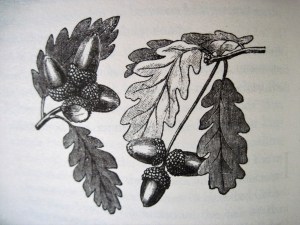 I didn’t enjoy this as much as the other Lewis-Stempel book I read this month, The Secret Life of the Owl. There’s a lot here about the role the oak has played in British history, such as in warships and cathedral roofs. Other topics are the oak’s appearance and function in different seasons, the use of acorns and oak leaves in cooking, and the myths and legends associated with the trees. I felt there was too much minimally relevant material added in to make up the page count, such as a list of Britain’s famous named oaks and long poems from the likes of John Clare and William Cowper. While Lewis-Stempel always has a piercing eye, I wonder if he shouldn’t be saving up his energies to write more substantial books.
General Nonfiction / Memoirs:
My Year by Roald Dahl (1993)
[64 pages]
 I spotted a copy in our Stamford Airbnb bedroom and read it over our two nights there. These short month-by-month essays were composed in the last year of Dahl’s life. Writing with children in mind, he remarks on what schoolkids will experience, whether a vacation or a holiday like Guy Fawkes night. But mostly he’s led by the seasons: the birds, trees and other natural phenomena he observed year after year from his home in Buckinghamshire. Dahl points out that he never lived in a city, so he chose to mark the passing of time chiefly by changes in the countryside. This is only really for diehard fans, but it’s a nice little book to have at the bedside. (Illustrated, as always, with whimsical Quentin Blake sketches.)
Heart Berries by Terese Marie Mailhot (2018)
[178 pages]
 Mailhot was raised on a First Nation reservation on an island off of British Columbia. She is wary of equating her family with Native stereotypes, but there’s no denying that her father was a drunk and ended up murdered. After a childhood of abuse and foster homes, Mailhot committed herself to a mental hospital for PTSD, bipolar II and an eating disorder. It was there that she started writing her story. Much of the book is addressed in the second person to her partner, who helped her move past a broken marriage and the loss of her older son to his father’s custody. Though I highlighted lots of aphoristic pronouncements, I had trouble connecting with the book as a whole: the way imprecise scenes blend into each other makes it hard to find a story line in the murk of miserable circumstances. A more accurate title would have been “Indian Condition” or “Indian Sick” (both used as chapter titles).
Americashire: A Field Guide to a Marriage by Jennifer Richardson (2013)
[151 pages]
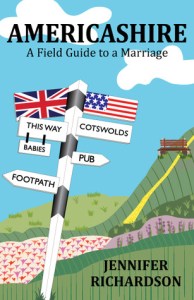 A memoir by an American woman married to a Brit and adjusting to English village life was always going to appeal to me. If you approach this as a set of comic essays on the annual rituals of rich toffs (summer fairs, auctions, horse racing, a hunt ball, a cattle market, etc.), it’s enjoyable enough. It’s when Richardson tries to be more serious, discussing her husband’s depression, their uncertainty over having children, and her possible MS, that the book falters. You can tell her editors kept badgering her to give the book a hook, and decided the maybe-baby theme was strongest. But I never sensed any real wrestling with the question. Not a bad book, but it lacks a clear enough idea of what it wants to be.
Total number of novellas read this month: 26
[not reviewed: In the Space between Moments: Finding Joy and Meaning in Medicine by Pranay Sinha –  ]
]
A few that didn’t take: The Optician of Lampedusa by Emma Jane Kirby, The Mussel Feast by Birgit Vanderbeke, Sea of Ink by Richard Weihe
 My overall favorite: The Gifts of the Body by Rebecca Brown
Runners-up: Surfacing by Margaret Atwood, How to See Nature by Paul Evans, Bodies of Water by V. H. Leslie, and Ghost Wall by Sarah Moss
The ones that got away from me:
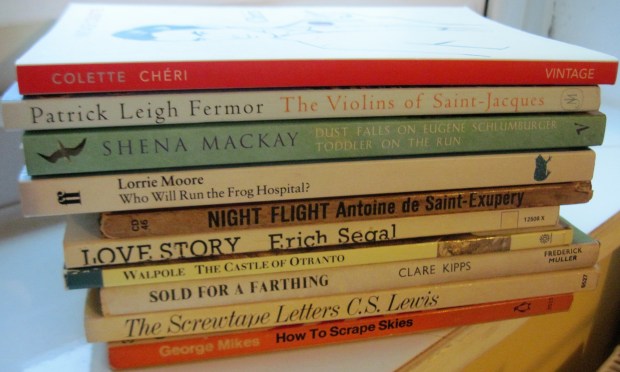
There’s always next year!
What’s the best novella you’ve read recently? Do you like the sound of any of the ones I read?
Margaret Atwood Reading Month: Surfacing and The Edible Woman
For the Margaret Atwood Reading Month hosted by Marcie and Naomi, I read her first two novels – though I didn’t realize they were so at the time, and read them in reverse order. These were my 18th and 19th Atwood books overall, and my 11th and 12th of her novels. It was particularly interesting to see the germ of her frequent themes in these early works.
Surfacing (1972)
(At 186 pages, this just about fit into Novellas for November too!) A young Canadian woman has returned to her French-speaking hometown, ostensibly to search for her missing father but really to search for herself. She’s an illustrator at work on a collection of Quebec folk tales, and in her past are a husband and child that she left behind. With her at her father’s lakeside cabin are her boyfriend Joe, whom she’s not sure she loves, and their friends David and Anna, a married couple whose dynamic is rather disturbing – David is always making demeaning sexualized jokes about Anna, who is afraid for him to see her without makeup on.
 This is a drifting, dreamy sort of book whose gorgeous nature writing (“Above the trees streaky mackerel clouds are spreading in over the sky, paint on a wet page; no wind at lake level, soft feel of the air before rain”) inures you to various threats. You’re never sure just how serious they’ll turn out to be. Will the men’s attitude to women spill over into outright assault? Will there be some big blowup with the resented Americans who are monopolizing the lake? (“We used to think they were harmless and funny and inept and faintly lovable, like President Eisenhower.”)
Meanwhile, the question of her father’s whereabouts becomes less and less important as the book goes on. The narrator seems to have closed herself off to emotion, but all that’s repressed returns dramatically in the final 20 pages (“From any rational point of view I am absurd; but there are no longer any rational points of view.”).
I suspect there may be a fair bit I missed; the book would probably benefit from future re-readings and even some exploration of secondary sources to think about all that’s going on. It’s maybe not as accessible and plot-heavy as much of Atwood’s later work, but I found it to be an intriguing and rewarding read, and it still feels timely more than four decades later.
The Edible Woman (1969)
Marian McAlpin works for Seymour Surveys, administering questionnaires about rice pudding and a new brand of beer. She shares an apartment with Ainsley, who tests electric toothbrushes, in the home of a harridan of a landlady who monitors their every move. Marian is happy enough with her boyfriend Peter and gradually drifts into an engagement – but she can’t stop thinking about Duncan, an apathetic graduate student whom she met during her survey rounds and ran into again at the laundromat. Duncan represents a sort of strings-free relationship that contrasts with the traditional marriage she’d have with Peter. Her challenge is to overcome the inertia of convention and decide what she really wants from her life.
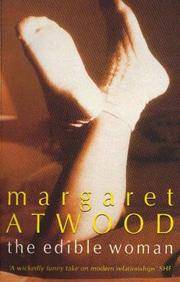 Part Two’s shift from first person to third person is a signal that Marian is dissociating from her situation. She recoils from food and pregnancy – two facts of bodily life that the book’s characters embrace greedily or turn from in horror. Gradually Marian eliminates more and more foods from her diet, starting with meat. And while Ainsley concocts a devious plan to get pregnant by Marian’s friend Len, Marian keeps in mind the cautionary tale of her college friend Clara, whose three monstrous children are always peeing on people or going off to poop in corners. Marian perceives Clara as having given up her mind in favor of her womb.
It’s unclear whether we’re meant to see Marian’s experience as a temporary eating disorder or a physical manifestation of endangered femininity. Now that veganism is mainstream, it sounds dated to hear her lamenting, “I’m turning into a vegetarian, one of those cranks; I’ll have to start eating lunch at Health Bars.” In any case, you can spot themes that will recur in Atwood’s later work, like the threat of the male gaze (Surfacing), the perception of the female body (Lady Oracle), manipulation of pregnancy (The Handmaid’s Tale) and so on. I can’t say I particularly enjoyed this novel, but I liked the food metaphors and laughed at the over-the-top language about babies.
Have you read any of Margaret Atwood’s books recently?
The Shortest of the Short: Four Novellas of under 50 Pages

Outside Stamford Library.
It’s a tradition now in its third and last year: I spend one day at the New Networks for Nature conference with my husband, and then (to save money, and because I’ve usually had my fill of stimulating speakers by then) wander around Stamford and haunt the public library on the other day.
 This past Saturday I browsed the charity shops and found a short story collection I’ve been interested in reading, but otherwise just spent hours in Stamford’s library looking through recent issues of the Times Literary Supplement and The Bookseller and reading from the stack of novellas I’d brought with me. I read four in one sitting because all were shorter than 50 pages long: two obscure classics and two nature books.

Fiction:
The Man Who Planted Trees by Jean Giono (1953)
[Translated from the French by Barbara Bray; 46 pages]
 Trees have been a surprise recurring theme in my 2018 reading. This spare allegory from a Provençal author is all about the difference one person can make. The narrator meets a shepherd and beekeeper named Elzéard Bouffier who plants as many acorns as he can; “it struck him that this part of the country was dying for lack of trees, and having nothing much else to do he decided to put things right.” Decades pass and two world wars do their worst, but very little changes in the countryside. Old Bouffier has led an unassuming but worthwhile life.
 There’s not very much to this story, though I appreciated the message about doing good even if you won’t get any recognition or even live to see the fruits of your labor. What’s most interesting about it is the publication history: it was commissioned by Reader’s Digest for a series on “The Most Extraordinary Character I Ever Met,” and though the magazine accepted it with rapture, there was belated outrage when they realized it was fiction. It was later included in a German anthology of biography, too! No one recognized it as a fable; this became a sort of literary in-joke, as Giono’s daughter Aline reveals in a short afterword.
Bartleby the Scrivener by Herman Melville (1853)
[40 pages from my Penguin Classics copy of Billy Budd, Sailor and Other Stories]
 You probably know the basic plot even if you’ve never read the story. Hired as the fourth scrivener in a Wall Street office of law-copyists, Bartleby seems quietly efficient until one day he mildly refuses to do the work requested of him. “I prefer not to” becomes his refrain. First he stops proofreading his copies, and then he declines to do any writing at all. (More and more these days, I find I have the same can’t-be-bothered attitude as Bartleby!) As the employer/narrator writes, “a certain unconscious air … of pallid haughtiness … positively awed me into my tame compliance with his eccentricities.” Farce ensues as he finds himself incapable of getting rid of Bartleby, even after he goes to the extreme of changing the premises of his office. Three times he even denies knowing Bartleby, but still the man is a thorn in his flesh, a nuisance turned inescapable responsibility. A glance at the introduction by Harold Beaver tells me I’m not the first to make such Christian parallels. (This was the first Melville I’ve read since an aborted attempt on Moby-Dick during college.)
Nonfiction:
The Company of Swans by Jim Crumley (1997)
[Illustrated by Harry Brockway, who also did the wood engravings for the Giono; 39 pages]

 Crumley is an underappreciated Scottish nature writer. Here he tells the tale of a pair of mute swans on a loch in Highland Perthshire. He followed their relationship with great interest over a matter of years. First he noticed that their nest had been robbed, twice within a few weeks, and realized otters must be to blame. Then, although it’s a truism that swans mate for life, he observed the cob (male) leaving the pen (female) for another! Crumley was overtaken with sympathy for the abandoned swan and got to feed her by hand and watch her fall asleep. “To suggest there was true communication between us would be outrageous, but I believe she regarded me as benevolent, which was all I ever asked of her,” he writes. Two years later he learns the end of her story. A pleasant ode to fleeting moments of communion with nature.
Favorite passages:
“Swans this wild let you into only a certain portion of their lives. They give you intimate glimpses. But you can never have any part in the business of being a swan. You can offer them no more than the flung tribute of your admiring gaze.”
“I think there is nothing in all nature that outshines that lustrous lacing of curves [of swan necks], nothing in all theatre that outperforms its pivotal tension.”
Holloway by Robert Macfarlane (2013)
[Illustrated by Stanley Donwood; 39 pages]
 In 2011 Macfarlane set out to recreate a journey through South Dorset that he’d first undertaken with the late Roger Deakin in 2005, targeting the sunken paths of former roadways. This is not your average nature or travel book, though; it’s much more fragmentary and poetic than you’d expect from a straightforward account of a journey through the natural world. I thought the stream-of-consciousness style overdone, and got more out of the song about the book by singer-songwriter Anne-Marie Sanderson. (Her Book Songs, Volume 1 EP, which has been one of my great discoveries of the year, is available to listen to and purchase on her Bandcamp page. It also includes songs inspired by Ian McEwan’s Sweet Tooth, Barbara Kingsolver’s The Poisonwood Bible, Sarah Hall’s Haweswater, and Doris Lessing’s Mara and Dann.) The black-and-white illustrations are nicely evocative, though.


Lines I liked:
“paths run through people as surely as they run through places.”
“The holloway is absence; a wood-way worn away by buried feet.”
Have you read any of these super-short novellas? Which one takes your fancy?
Novellas in November, Batch #2: 2 Fiction, 2 Nonfiction
Fiction about caregiving for AIDS patients and Victorian ghosts; nonfiction about American race relations and British wildlife: novellas have it all! Here are my latest four reads. All were .
Fiction:
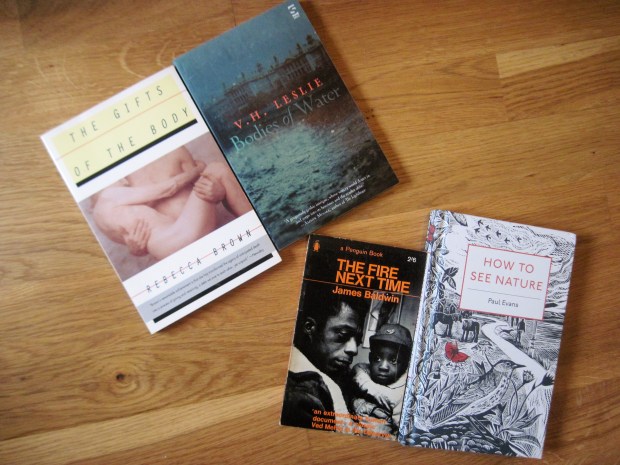
The Gifts of the Body by Rebecca Brown (1994)
[163 pages]
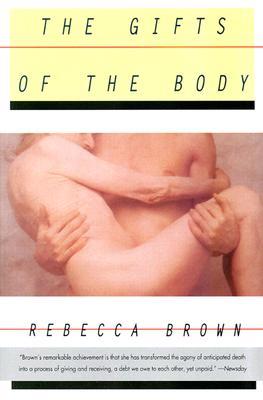 This is rather like a set of linked short stories, narrated by a home care aide who bathes and feeds those dying of AIDS. The same patients appear in multiple chapters titled “The Gift of…” (Sweat, Tears, Hunger, etc.) – Rick, Ed, Carlos, and Marty, with brief appearances from Mike and Keith. But for me the most poignant story was that of Connie Lindstrom, an old woman who got a dodgy blood transfusion after her mastectomy; the extra irony to her situation is that her son Joe is gay, and feels guilty because he thinks he should have been the one to get sick. Several characters move in and out of hospice care, and one building is so known for its AIDS victims that a savant resident greets the narrator with a roll call of its dead and dying. Brown herself had been a home-care worker, and she delivers these achingly sad vignettes in plain language that keeps the book from ever turning maudlin.
A favorite passage:
“I’d thought about the sores all week long, about how they looked and how it frightened me. But I’d worked myself up to acting like it didn’t bother me. … I also kept telling myself that even if I wasn’t feeling or thinking the right things, at least he was getting fed, at least he was getting his sheets changed, at least his kitchen was getting cleaned, at least his body was getting salve.”
(I found my copy over the summer in a Little Free Library in my mother’s new town in the States and read it in one day, on my travel to and from London for the Barbara Kingsolver event. Rebecca Brown is a repeat presence on my novellas list: Excerpts from a Family Medical Dictionary was in my 2016 roster.)
Bodies of Water by V. H. Leslie (2016)
[130 pages]
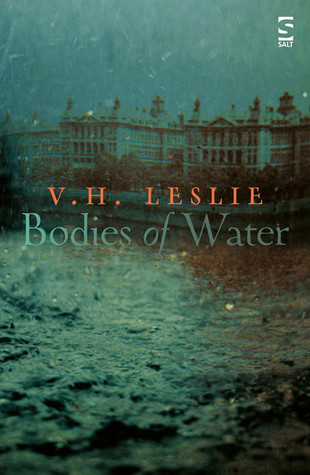 Left over from my R.I.P. reading plans. This was nearly a one-sitting read for me: I read 94 pages in one go, though that may be because I was trapped under the cat. The first thing I noted was that the setup and dual timeframe are exactly the same as in Barbara Kingsolver’s Unsheltered: we switch between the same place in 2016 and 1871. In this case it’s Wakewater House, a residential development by the Thames that incorporates the site of a dilapidated Victorian hydrotherapy center. After her partner cheats on her, Kirsten moves into Wakewater, where she’s alone apart from one neighbor, Manon, a hoarder who’s researching Anatomical Venuses – often modeled on prostitutes who drowned themselves in the river. In the historical strand, we see Wakewater through the eyes of Evelyn Byrne, who rescues street prostitutes and, after a disastrously ended relationship of her own, has arrived to take the Water Cure.
The literal and metaphorical connections between the two story lines are strong. Annabel described this novella as “watery,” and I would agree: pretty much every paragraph has a water word in it, whether it’s “river,” “sea,” “aquatic” or “immersion.” Both women see ghostly figures emerging from the water, and Manon’s interest in legends about water spirits and the motif of the drowned girl adds texture. Short chapters keep things ticking over, and I loved the spooky atmosphere.
A favorite line: “Sometimes old places like this retain a bit of the past, in the fabric of the building, and occasionally, they seep.”
(Purchased from Salt Publishing during their #JustOneBook fundraising campaign in late May.)
Nonfiction:
The Fire Next Time by James Baldwin (1963)
[89 pages]
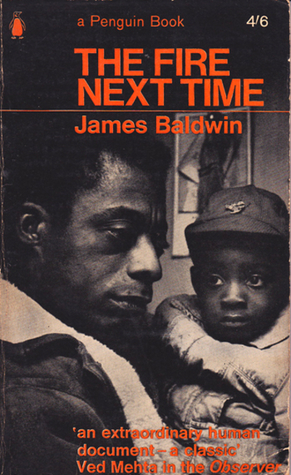 This was written yesterday, right? Actually, it was 55 years ago, but apart from the use of the word “Negro” you might have fooled me. Baldwin’s writing is still completely relevant, and eminently quotable. I can’t believe I hadn’t read him until now. This hard-hitting little book is composed of two essays that first appeared elsewhere. The first, “My Dungeon Shook,” a very short piece from the Madison, Wisconsin Progressive, is a letter addressed to his nephew and namesake on the 100th anniversary of emancipation. No doubt it directly inspired Ta-Nehisi Coates’s Between the World and Me.
“Down at the Cross: Letter from a Region in My Mind” is a 66-page essay that first appeared in the New Yorker. It tells of a crisis of faith that hit Baldwin when he was a teenager. Whereas he used to be a fervent young preacher in his church, he started to question to what extent Christianity of all stripes was upholding white privilege and black subjugation. Unless religion was making things better, he decided he wanted no part of it. Curiosity about the Nation of Islam led to Baldwin meeting Elijah Muhammad for dinner at his home in Chicago. I marked out so many passages from this essay. Here are a few that stood out most:
“To be sensual, I think, is to respect and rejoice in the force of life, of life itself, and to be present in all that one does, from the effort of loving to the breaking of bread.”
“If the concept of God has any validity or any use, it can only be to make us larger, freer, and more loving. If God cannot do this, then it is time we got rid of Him.”
“When a white man faces a black man, especially if the black man is helpless, terrible things are revealed.”
How to See Nature by Paul Evans (2018)
[164 pages]
 How to See Nature (1940), a quaint and perhaps slightly patronizing book by Shropshire naturalist and photographer Frances Pitt, was intended to help city evacuees cope with life in the countryside. Recently Pitt’s publisher, Batsford, commissioned Shropshire naturalist Paul Evans to revisit the topic. The result is a simply lovely volume (with a cover illustration by Angela Harding and black-and-white interior drawings by Evans’s partner, Maria Nunzia) that reflects on the range of modern relationships with nature and revels in the wealth of wildlife and semi-wild places we still have in Britain.
He starts with his own garden, where he encounters hedgehogs and marmalade hoverflies. Other chapters consider night creatures like bats; weeds and what they have to offer; and the wildlife of rivers, common land, moors and woods. I particularly enjoyed a section on reintroduced species such as beavers and red kites. The book closes with an A–Z bestiary of British wildlife, from adders to zooplankton.
 Throughout, Evans treats issues like tree blight, climate change and species persecution with a light touch. Although it’s clear he’s aware of the diminished state of nature and quietly irate at how we are all responsible for pollution and invasive species, he writes lovingly and with poetic grace. I would not hesitate to recommend this to fans of contemporary nature writing.
Favorite lines:
“the orb-weavers wait: sexual cannibals adorned in the extra-terrestrial glow of their pearl diadems, suspended in ethereal scaffolds woven from hundreds of glands controlled by their own sovereign will and unique metabolism”
“The last ‘woo-oooo’ of a tawny owl meets the first clockwork hiccup of a pheasant, then bird by bird in the scanty light, the songs begin”
(Paul Evans is a repeat presence on my novellas list: Herbaceous was in my 2017 roster.)
How to See Nature was published by Batsford on November 6th. My thanks to the publisher for a free copy for review.
Have you read any of these novellas? Which one takes your fancy?
Novellas in November, Part 1: 3 Fiction, 3 Nonfiction
This is my third year of prioritizing novellas for my November reading. I have plenty more on the go that I’ll try to write up as the month progresses. For this first installment I review three each of my recent fiction and nonfiction reads, all of them 150 pages or fewer.

Fiction:
Lady into Fox by David Garnett (1922)
[53 pages]
 I accidentally did things the wrong way round: a few months back I read Sarah Hall’s Madame Zero, which includes the BBC National Short Story Prize 2013 winner “Mrs Fox,” clearly modeled on Garnett’s half-charming, half-horrible fable. In both, an upper-middle-class marriage is derailed when the wife turns into a fox. Here Mr. Tebrick sends away the servants and retreats from the world to look after Silvia, who grows increasingly feral. To start with the vixen will wear clothing, sleep in a bed, play cards and eat table scraps, but soon she’s hunting birds outdoors. Before long she’s effectively a wild creature, though she still shows affection to Tebrick when he comes to visit her den.
Anyone in a partnership will experience a bittersweet sense of recognition at how Tebrick and Silvia try to accommodate each other’s differences and make compromises to maintain a relationship in defiance of the world’s disapproval and danger. Beware unsentimental animal peril throughout. I downloaded it from Project Gutenberg.
The Old Man and the Sea by Ernest Hemingway (1952)
[99 pages]
 It’s a wonder I never read this Pulitzer winner in high school. Like that other syllabus favorite, Steinbeck’s The Pearl, it’s a Great American novella praised for spare prose and weighty symbolism. My two decades’ worth of preconceptions were proven accurate insomuch as this is a gloomy story about the nobility but ultimate futility of human striving. After 84 days without a catch, Santiago returns to the waters off of Havana and finally gets a bite. Even after the harrowing process of reeling in the 18-foot marlin, his struggle isn’t over.
This is my third experience with Hemingway’s fiction; I remain unconvinced. I appreciated some of the old man’s solitary ruminations on purpose and determination – “My big fish must be somewhere,” “Now is no time to think of what you do not have. Think of what you can do with what there is” – though they sound rather like sound bites. And I kept almost falling asleep while reading this (until the sharks showed up), which almost never happens. Take that as you will.
Ghost Wall by Sarah Moss (2018)
[149 pages]
 It’s the late 1980s and teenager Silvie Hampton and her parents have joined a university-run residential archaeology course in the North of England, near bogs where human sacrifice once took place. Her father is a Rochdale-area bus driver, but British prehistory is his all-consuming hobby. They’ll skin rabbits with stone tools and forage for roots and berries. What could be better?! As it turns out, it’s a stifling summer, and the students can’t sneak off to civilization often enough. Mocked for her family’s accent, Silvie is uncomfortably aware of her class. And, always, she must tread carefully to avoid angering her father, who punishes perceived offenses with his belt or his fists.
Women’s bodies and what can be done to them is central; as the climax approaches, the tricksy matter of consent arises. Though I enjoyed Silvie’s sarcastic voice, I was underwhelmed for much of the book, yet ended up impressed by how much is conveyed in so few pages. If you haven’t read anything by Sarah Moss, do so immediately.
Nonfiction:
Losing Susan: Brain Disease, the Priest’s Wife, and the God Who Gives and Takes Away by Victor Lee Austin (2016)
[146 pages]
 Austin, an Episcopal priest and academic, met his wife Susan at St. John’s College in Santa Fe, New Mexico. She was his companion for nearly 40 years. Unusually for a cancer story, it wasn’t the beginning of the end when Susan was diagnosed with an astrocytoma brain tumor in 1993; surgery was successful and she lived for another 19 years, but white-matter disease, a side effect of radiation, meant that her brain function was continually diminishing.
The book gives a clear sense of Susan’s personality despite the progression of her illness, and of the challenges of being a caregiver while holding down a career. I enjoyed the details of the human story of coping with suffering, but in overlaying a spiritual significance on it Austin lost me somewhat. “God, who had given us so much, now gave us this evil,” he writes. While once this kind of language would have meant something to me, now it alienates me. I valued this more as a straightforward bereavement memoir than as a theological treatise.
The Secret Life of the Owl by John Lewis-Stempel (2017)
[84 pages]
 “There is something about owls. More than any other family of birds they produce a reaction in us, and have done so across time and continents.” Some species-specific natural/cultural histories can be long-winded, giving significantly more information than your averagely interested lay reader needs (Foxes Unearthed, for instance), but Lewis-Stempel’s short book about Britain’s owls gets it just right.
He gives some general information about the family, surveys the native species and occasional visitors, gives tips for telling them apart – I’m going to photograph a page on the difference between the five major species’ pellets for future reference – and shares legends and poems that feature owls (including a jaunty little Tennyson piece that reads like a folk song; I’ll suggest that my husband turn it into one). The black-and-white illustrations by Beci Kelly are charming, too. It’s a shame I missed this when it first came out, but it would still make a great gift for a bird lover this Christmas.
Pages from a Nature-Lover’s Diary by Kathleen A. Renninger (2013)
[72 pages]
 These are lovely excerpts from nature sketchbooks Renninger kept between 1987 and 2013. My mother bought the self-published book from the author at a craft fair, and I enjoyed spotting lots of familiar place names from southern central Pennsylvania, where my mother and sister used to live. In the past I’ve unfairly considered the area devoid of natural beauty, but it’s clear from Renninger’s encounters that the wildlife is out there if you’re patient and lucky enough to find it – mostly birds and insects, but even larger mammals like foxes and bears.
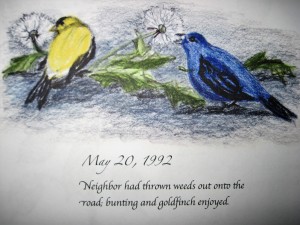 Many of her sightings are by chance: near her feeders or clothesline, or while driving past fields or down a residential street. Each month ends with a poem; these are slightly florid, but so earnest that they won me over. There are plentiful punctuation issues and the cursive font is a challenge to read, but the captured moments and the sense of the seasons’ passing make for a sweet book I’d recommend to anyone with a local interest.
Have you read any of these novellas? Which one takes your fancy?
Nonfiction November: Fiction/Nonfiction Pairings
I’d never participated in Nonfiction November before because I tend to read at least 40% nonfiction anyway, but I couldn’t resist the temptation to put together some fiction and nonfiction pairings based on books I’ve read this year and last. (This week of the month-long challenge is posted by Sarah’s Book Shelves, a blog I love for its no-nonsense recommendations of what to read – and what not to read – from the recent U.S. releases.)
My primary example is two books that reveal what it’s really like to have Alzheimer’s disease. Mitchell’s, in particular, is a book that deserves more attention. When it came out earlier this year, it was billed as the first-ever “dementia memoir” (is that an oxymoron?) – except, actually, there had been one the previous year (whoops!): Memory’s Last Breath by Gerda Saunders, which I have on my Kindle and still intend to read. [See also Kate W.’s picks, which include a pair of books with a dementia theme.]
Still Alice by Lisa Genova (2007)
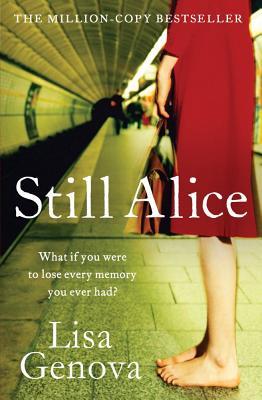 Genova’s writing, Jodi Picoult-like, keeps you turning the pages; I read 225+ pages in an afternoon. There’s true plotting skill to how Genova uses a close third-person perspective to track the mental decline of Harvard psychology professor Alice Howland, who has early-onset Alzheimer’s disease. “Everything she did and loved, everything she was, required language,” yet her grasp of language becomes ever more slippery even as her thought life remains largely intact. I also particularly enjoyed the descriptions of Cambridge and its weather, and family meals and rituals. There’s a certain amount of suspension of disbelief required – Would the disease really progress this quickly? Would Alice really be able to miss certain abilities and experiences once they were gone? – and ultimately I preferred the 2014 movie version, but this would be a great book to thrust at any caregiver or family member who’s had to cope with dementia in someone close to them.
My rating:
 Other fictional takes on dementia that I can recommend: Unforgettable: Short Stories by Paulette Bates Alden, The Only Story by Julian Barnes, Everything Under by Daisy Johnson and Turn of Mind by Alice LaPlante.
&
Somebody I Used to Know by Wendy Mitchell with Anna Wharton (2018)
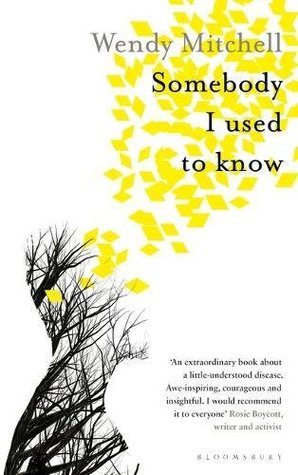 A remarkable insider’s look at the early stages of Alzheimer’s. Mitchell took several falls while running near her Yorkshire home, but it wasn’t until she had a minor stroke in 2012 that she and her doctors started taking her health problems seriously. In July 2014 she got the dementia diagnosis that finally explained her recurring brain fog. She was 58 years old, a single mother with two grown daughters and a 20-year career in NHS administration. Having prided herself on her good memory and her efficiency at everything from work scheduling to DIY, she was distressed that she couldn’t cope with a new computer system and was unlikely to recognize the faces or voices of colleagues she’d worked with for years. Less than a year after her diagnosis, she took early retirement – a decision that she feels was forced on her by a system that wasn’t willing to make accommodations for her.
The book, put together with the help of ghostwriter Anna Wharton, gives a clear sense of progression, of past versus present, and of the workarounds Mitchell uses to outwit her disease. The details and incidents are well chosen to present the everyday challenges of dementia. For instance, baking used to be one of Mitchell’s favorite hobbies, but in an early scene she’s making a cake for a homeless shelter and forgets she’s already added sugar; she weighs in the sugar twice, and the result is inedible. By the time the book ends, not only can she not prepare herself a meal; she can’t remember to eat unless she sets an alarm and barricades herself into the room so she won’t wander off partway through.
In occasional italicized passages Mitchell addresses her past self, running through bittersweet memories of all that she used to be able to do: “It amazes me now how you did it, because you didn’t have anyone to help you. You were Mum, Dad, taxi, chef, counsellor, gardener and housekeeper, all rolled into one.” Yet it’s also amazing how much she still manages to do as an ambassador for the Alzheimer’s Society and Dementia Friends. She crisscrosses the country to give speeches, attend conferences, and advise universities; she writes a blog and has appeared on radio to promote this book. Like many retired people, she’s found she’s busier than ever, and her engagements help her to feel purposeful and like she’s giving a positive impression of early-stage dementia. No matter that she has to rely on dozens of reminders to self in the form of Post-It notes, iPad alarms and a wall of photographs.
The story lines of this and Still Alice are very similar in places – the incidents while running, the inability to keep baking, and so on. And in fact, Mitchell reviewed the film and attended its London premiere, where she met Julianne Moore. Her book is a quick and enjoyable read, and will be so valuable to people looking to understand the experience of dementia. She is such an inspiring woman. I thank her for her efforts, and wish her well. This is one of my personal favorites for the shortlist of next year’s Wellcome Book Prize for medical reads.
My rating:
 Other nonfiction takes on dementia that I can recommend: In Pursuit of Memory by Joseph Jebelli and The Summer of the Great-Grandmother by Madeleine L’Engle.
Additional pairings I would commend to you (all are books I have read and rated or above):


Talk before Sleep by Elizabeth Berg
&
Let’s Take the Long Way Home by Gail Caldwell and Truth and Beauty by Ann Patchett
- Celebrating the strength of female friendship, even in the face of life-threatening illness.


Bad News by Edward St. Aubyn
&
Portrait of an Addict as a Young Man by Bill Clegg
- Vivid portrayals of drug addiction.


Miss Smilla’s Feeling for Snow by Peter Høeg
&
This Cold Heaven by Gretel Ehrlich
- Armchair traveling in Greenland.


Sweetbitter by Stephanie Danler
&
Cork Dork by Bianca Bosker
- Glimpses into the high-class world of fine dining – and fine wine.
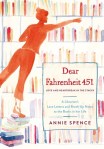 Dear Fahrenheit 451: Love and Heartbreak in the Stacks by Annie Spence is chock-full of recommendations and reading pairs. The Novel Cure is also good for this sort of thing, though it is (no surprise) overwhelmingly composed of fiction suggestions.
Wise Children by Angela Carter: On the Page and on the Stage
“What a joy it is to dance and sing!”

Through a Granta giveaway on Twitter I won two tickets to see Wise Children at London’s Old Vic theatre on October 18th. Clare of A Little Blog of Books joined me for an excellent evening at the theatre, and we both followed it up by reading the novel – Angela Carter’s final book, published in 1991. (Clare’s write-up of the book and play is here.) It has one of the best openers I’ve come across recently:
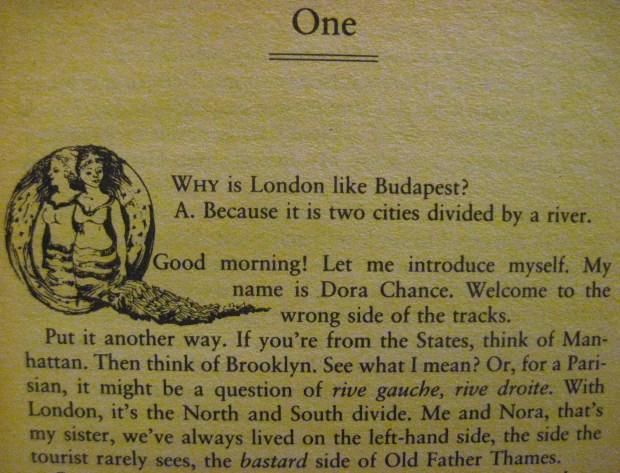
Twins Nora and Dora Chance turn 75 today; their father, Shakespearean actor Melchior Hazard, who has never publicly acknowledged them because they were born out of wedlock to a servant girl who died in childbirth, turns 100. At the last minute an invitation to his birthday party arrives, and between this point and the party Dora fills us in on the sisters’ knotty family history. Their father is also a twin (though fraternal); his brother Peregrine was more of a father to them than Melchior, with “Grandma” Chance, the owner of the boarding house where they were born, the closest thing they had to a mother growing up. By the time they’re teenagers, the girls are on stage at music halls. After a jaunt to Hollywood to appear in Melchior’s filming of A Midsummer Night’s Dream, they’re back in time for wartime deprivation and tragedy in South London, and decades of shabby nostalgia follow.
It’s a big, bawdy story that has, amazingly, been compressed into just 230 pages. There are five sets of twins in total, with multiple cases of doubling, incest and mistaken identity that would make Shakespeare proud. The novel is composed of five long chapters, like the acts in a play, with a Dramatis Personae on the last two pages (though it might have proven more helpful at the start), and the sisters even live at 49 Bard Road. Dora’s voice is slang-filled and gossipy, and she dutifully presents the sisters’ past as the tragicomedy that it was.
Indeed, Wise Children seems perfect for the stage, and Emma Rice’s production recreates everything that’s best about the book, including Dora’s delightful narration. At the start, resplendent in kimonos and turbans, she and Nora greet us from their Brixton home – represented by a kitschy caravan, which with minor redecoration between scenes serves for all the play’s interiors. The 75-year-olds remain on stage for virtually the entire performance, watching along with the audience from the wings and adding in fragments of commentary, often drawn directly from the text, as scenes from their past unfold (including plenty of simulated sex – I wouldn’t recommend taking along any under-15s).

Androgynous extras cycle into various roles as the action proceeds, with the twins represented first by puppets, then by three sets of actors of various races and genders – the teenage/young adult Nora is played by a Black man, while 75-year-old Dora is a man perhaps of South Asian extraction. This adds extra irony to the humor of one of Nora’s lines: “It’s every woman’s tragedy that, after a certain age, she looks like a female impersonator.” Grandma Chance, with her beehive, cat-eye glasses and nude bodysuit, steals the show, with seaside comedian Gorgeous George coming a close second as the most entertaining character.
The play has cut out most of the 1980s layer of characters and made the story line stronger in doing so. The only other scene I wish could have been included is a farcical multiple wedding ceremony in Hollywood. The glitzy costumes, recurring butterflies, and John Waters-esque tacky-chic of the set all felt true to the atmosphere of the book, and the songs mentioned in the text (such as “I Can’t Give You Anything but Love, Baby”) are supplemented by a couple of numbers that evoke the 1980s setting: “Electric Avenue” and “Girls Just Want to Have Fun.”
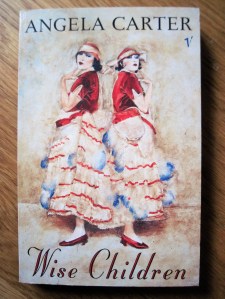 This was my fifth book by Carter, and now a joint favorite with The Bloody Chamber and Other Stories – but I liked the play that little bit better. If you get a chance to see it in London or on tour further afield, don’t pass it up. It’s a pure joy.
My rating: Book; Play 
To compare the thoughts of some professional theatregoers and see a few photos, check out the reviews on the Guardian and Telegraph websites.
R.I.P. Reads, Part II: Cox, Gaiman, Paver
Happy Halloween! I enjoyed taking part in R.I.P. for the first time this year. My top two choices out of the six fantastical and/or spooky books I managed to read would be The Loney and The Graveyard Book (see below). For this second installment I’ve been reading eerie short stories that take place in the English countryside, a young adult fantasy novel set mostly in a graveyard, and a ghost story that unfolds in the Himalayas of the 1930s.

Help the Witch by Tom Cox (2018)
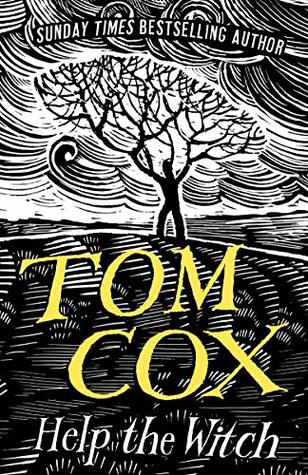 I knew Tom Cox for his witty books about his many cats, including The Good, the Bad and the Furry. His first foray into fiction was published by Unbound earlier this month; I pre-ordered it on a Kindle deal for £1. The settings are dilapidated cottages, moorland and villages, mostly in the North of England. Even in the spookier stories, there’s always a welcome touch of humor. “Seance” raises the ghost of a cyclist who was killed on his bike and now is destined to cycle evermore. He doesn’t, at first, realize that he’s dead. “‘Morning!’ he called to a middle-aged couple with a labradoodle, cheerfully, as he cycled past Whiddon Scrubs. They ignored him. ‘Shitbags,’ he said under his breath.”
The three sets of flash fictions, “Listings,” “Nine Tiny Stories about Houses,” and “Folk Tales of the Twenty-third Century,” particularly made me laugh, though each perhaps overstays its welcome a bit. My two favorites were proper ghost stories: “Speed Awareness,” about a peculiar mix-up with the course teacher, and “Just Good Friends,” in which a woman’s Internet dating experiences turn strange when she meets someone with inside knowledge about her past. I could see the latter being anthologized. These are enjoyable enough stories to flip through around Halloween.
My rating:
The Graveyard Book by Neil Gaiman (2008)
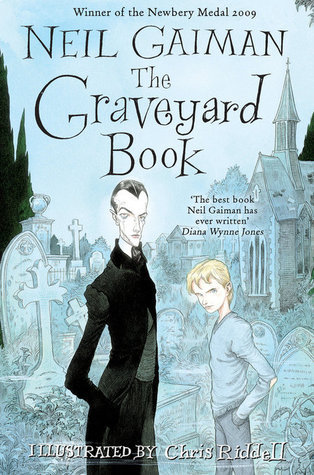 Nobody “Bod” Owens has lived in a graveyard ever since the night he climbed out of his cot and toddled there – the same night that a man named Jack murdered his parents and older sister. He was the only member of his family to survive the slaughter. Although he passes a happy childhood among the graveyard’s witches, ghouls and ghosts from many centuries, he knows he’s different. He’s alive; he has to eat and craves human friendship. As valuable as his lessons in Fading and Dreamwalking prove to be, he longs to attend school and discover more of the world outside – provided he can keep his head down and avoid notice; previous trips beyond the cemetery walls, such as to a pawnshop, have bordered on the disastrous.
Bod’s japes with his returning friend Scarlett turn more serious when he learns that Jack is still after him. This is quite a dark book for its young teen audience, but as I remember from the only other Gaiman book I’ve read, The Ocean at the End of the Lane, he’s a master at balancing sadness with humor and magic. The illustrations by Chris Riddell are terrific, too.
Favorite lines:
Silas, Bod’s guardian: “You’re alive, Bod. That means you have infinite potential. You can do anything, make anything, dream anything. If you change the world, the world will change.”
“Mother Slaughter’s headstone [was] so cracked and worn and weathered that all it said now was:
LAUGH
which had puzzled the local historians for over a hundred years.”
My rating:
Thin Air: A Ghost Story by Michelle Paver (2016)
 In 1935 Dr. Stephen Pearce and his brother Kits are part of a five-man mission to climb the most dangerous mountain in the Himalayas, Kangchenjunga. Thirty years before, Sir Edmund Lyell led an ill-fated expedition up the same mountain: more than one man did not return, and the rest lost limbs to frostbite. “I don’t want to know what happened to them. It’s in the past. It has nothing to do with us,” Dr. Pearce tells himself, but from the start it feels like a bad omen that they, like Lyell’s party, are attempting the southwest approach; even the native porters are nervous. And as they climb, they fall prey to various medical and mental crises; hallucinations of ghostly figures on the crags are just as much of a danger as snow blindness.
This is pacey, readable historical fiction with a good sense of period and atmosphere. I enjoyed Pearce’s narration, and the one-upmanship type of relationship with his brother adds an interesting dimension to the expedition dynamics. However, I never submitted sufficiently to Paver’s spell to find anything particularly scary. I’ll try again with her other ghost story, Dark Matter, about an Arctic expedition from the same time period.
Favorite passage:
“The Sherpas are wrong. This mountain has no spirit, no sentience and no intent. It’s not trying to kill us. It simply is.” [famous last words…]
My rating:
Have you been reading anything fantastical or spooky this October?
Magdalena Mountain by Robert Michael Pyle
“Wasn’t it Nabokov who said ‘It is astounding how little the ordinary person notices butterflies?’”
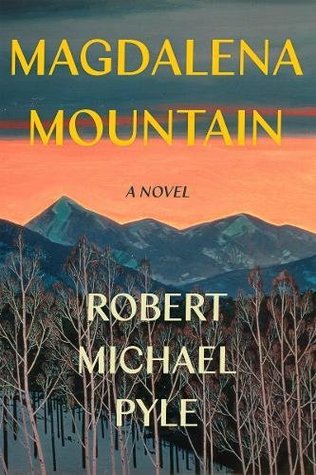 Butterflies, monks, students and teachers, prophets and saints: such is the cast of naturalist Robert Michael Pyle’s unusual and rewarding debut novel, Magdalena Mountain. It’s a golden autumn in the early 1970s as James Mead leaves Albuquerque on a Greyhound bus to travel to New Haven, Connecticut, where he will undertake a PhD in biology at Yale. He squats in a lab on campus to save money and, after some tension with his thesis advisor, decides to keep his head down, feeding the department’s giant cave roaches and becoming engrossed in the field journals written by one October Carson in 1969 during his travels out West.
Pyle presents nature as both beatific and harsh, a continuity of life that human events – like a car going over a cliff in the first chapter – barely disrupt. Occasional chapters check in on the woman who was in the car crash, Mary Glanville. Now suffering from amnesia, she believes she’s a famous figure from history. One day she escapes from her nursing home and hitchhikes into the Colorado mountains. In her weakened state she’s taken in by Attalus and Oberon, monks at a deconsecrated monastery devoted to the god Pan and the creeds of nature writers like John Burroughs, Aldo Leopold and John Muir. Attalus, a compassionless misogynist, vehemently protests Mary’s presence in their community, but Oberon soon falls in love with her.
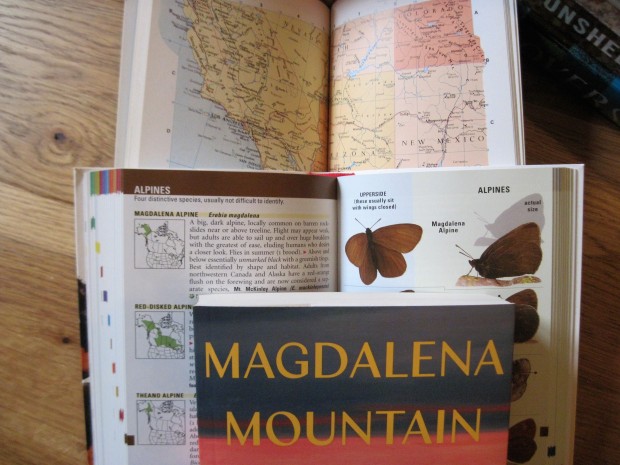
When James, disobeying his supervisor, lights out for Colorado for a summer of research at the Rocky Mountain Biological Laboratory, the stage is set for these major characters to collide on Magdalena Mountain, home to the distinctive, all-black Magdalena Alpine butterfly (Erebia magdalena). “Flight may appear weak, but adults are able to sail up and over huge boulders with the greatest of ease, eluding humans who desire a closer look. Flies in summer,” reads the description in my (Kaufman) field guide to North American butterflies. Intermittent segments of pure nature writing about Erebia’s life cycle – seven short chapters in total – establish the seasons and encourage a long view of local history, but somewhat slow down the novel’s tempo.
Pyle successfully pulls in so many different themes: academic infighting and the impulses of scientific researchers versus amateur collectors; environmentalism, especially through the threats that infestations, pesticides and off-road vehicles pose to the mountain landscape; activism, by way of the Vietnam War and nuclear weapons protests; and even sacred femininity and the myths surrounding Mary Magdalene. Mary Glanville’s name is a nice nod to history – Elinor Glanville was a seventeenth-century English collector who gave her name to the Glanville Fritillary – while Vladimir Nabokov, who was a keen lepidopterist as well as an academic and author, is mentioned several times for his real-life connections to the area.
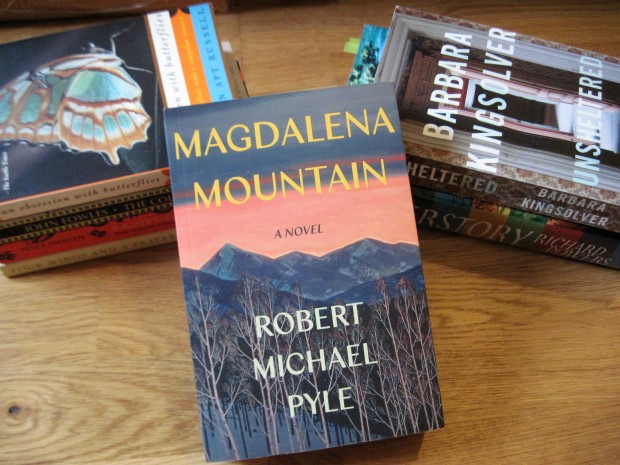
(A selection of my butterfly-themed books, read and unread, in the pile at the left.)
The quirky set of hangers-on at the monastery reminded me of an Iris Murdoch setup (thinking mostly of The Bell), while the passion for science and activism brought to mind two other excellent environmentally minded novels published this year, The Overstory and Unsheltered. Indeed, Mary preaches at one point, “Seek your shelter in nature … In love lies the only real shelter there is.” If you’re interested in the Powers and/or Kingsolver, I would commend Pyle’s book to you as well: it’s offbeat, dreamy yet fervent, with intriguing characters and elegant nature-infused language. One of my favorite descriptive scraps, so simple but so apt, was “a peeled peach of a moon.” I’m grateful to have had a chance to read this, and I will be seeking out Pyle’s nature writing, too.
My rating:
Magdalena Mountain was published in August 2018. My thanks to the good folk of Counterpoint Press (based in Berkeley, California) for sending a free copy for review.
 Bookish Beck = Rebecca Foster. American transplant to England. Freelance proofreader and book reviewer.
 Bookish Beck