January’s Nonfiction Releases: Clarke, Heminsley and Lalkhen
Three new books with medical themes (no surprise there), including the first Covid wave in the UK; fertility and body issues in a new queer family; and pain management strategies.
Breathtaking: Inside the NHS in a Time of Pandemic by Rachel Clarke
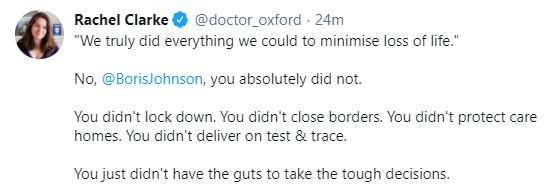
 Clarke is a palliative care doctor based in Oxfordshire. She runs the Katharine House hospice but during the coronavirus pandemic has also been on active duty in the Oxford University Hospitals system. If you’re on social media you have likely come across some of her postings as she has been equally vocal in her praise of the NHS and her criticism of Boris Johnson’s faltering policies, which are often of the too little, too late variety. So I was eager to read her insider’s account of hospital treatment of the first wave of Covid in the UK, especially because her previous book, Dear Life, was one of my top two nonfiction releases of last year.
The focus is on the first four full months of 2020, and the book originated in Clarke’s insomniac diaries and notes made when, even after manically busy shifts, she couldn’t rest her thoughts. Her pilot husband was flying to China even as increasingly alarming reports started coming in from Wuhan. She weaves in the latest news from China and Italy as well as what she hears from colleagues and disease experts in London. But the priority is given to stories: of the first doctor to die in China; of a Yorkshire ICU nurse’s father, who comes down with Covid and is on a ventilator in an Oxford hospital; and of her patients there and in the hospice. She is touched that so many are making great sacrifices, such as by deciding not to visit loved ones at the end of their lives so as not to risk spreading infection.
A shortage of PPE remained a major issue, though Dominic Pimenta (whose Duty of Care was my first COVID-19 book) pulled through for her with an emergency shipment for the hospice – without which it would have had to close. Clarke marvels at the NHS’s ability to create an extra 33,000 beds within a month, but knows that this comes at a cost of other services, including cancer care, being stripped back or cancelled, meaning that many are not receiving the necessary treatment or are pushing inescapable problems further down the road.
From January 26, 2021
A comparison with Gavin Francis’s Intensive Care, published earlier in the month, is inevitable. Both doctors bounce between headlines and everyday stories, government advice and the situation on the ground. Both had their own Covid scare – Clarke didn’t meet the criteria to be tested so simply went back to work two weeks later, when she felt well enough – and had connections to regions that foreshadowed what would soon happen in the UK. Both give a sense of the scope of the crisis and both lament that, just when patients need compassion most, full PPE leads to their doctors feeling more detached from them than ever.
However, within the same page count, Francis manages to convey more of the science behind the virus and its transmission, and helpfully explores the range of effects Covid is having for different groups. He also brings the story more up to the minute with a look back from November, whereas Clarke ends in April and follows up with an epilogue set in August. A book has to end somewhere, yes, but with this crisis ongoing, the later and more relevant its contents can be, the better. And in any book that involves a lot of death, mawkishness is a risk; Clarke so carefully avoided this in Dear Life, but sometimes succumbs here, with an insistence on how the pandemic has brought out the best in people (clapping and rainbows and all that). Her writing is as strong as ever, but I would have appreciated a sharper, more sombre look at the situation a few months later. Perhaps there will be a sequel.

From January 6, 2021
With thanks to Little, Brown UK for the free copy for review.
Some Body to Love: A Family Story by Alexandra Heminsley
 From Heminsley’s previous book, Leap In, I knew about her getting married and undergoing IVF. It was also a book about outdoor swimming; I appreciated her words on acquiring a new skill as an adult and overcoming body issues. This memoir continues the story: in 2017, after a gruelling journey through infertility treatment, Heminsley finally got the baby she wanted. But not before a couple more heart-wrenching moments: the lab made an error and notified her that she shared no DNA with this last embryo, and while heavily pregnant she was assaulted by a drunk man on a train. Both incidents left her feeling a loss of agency. “Why was I consistently being deemed the least reliable witness of my own reality?” she asks.
As they adjusted to new life with a baby, Heminsley started to notice that she wasn’t connecting with her husband, D, like she used to. She felt emotionally unsupported and, in fact, jealous of D’s relationship with their son, L. And while they’d never been the most conventional couple, D’s changes of appearance and wardrobe seemed like a sign of something bigger. Indeed, when L was six months old, D told Heminsley, “this body doesn’t represent who I am” and announced a decision to begin transitioning.
As D moved towards having a body that fit their identity, Heminsley, too, needed to get back in touch with her body. After books like Running Like a Girl, she was considered an exercise guru, but she didn’t see herself in the new obsession with Instagram-ready images of fitness perfection. This is not, then, primarily a memoir of queer family-making, because D’s transitioning was not Heminsley’s story to tell and mostly occurs in the background. Instead she focuses on what she does know and can control: her relationship to her own body.
However, this entails what can feel like irrelevant flashbacks to her teenage years of undergoing rehab at a military clinic in Germany for hypermobility, trips to Trinidad and Italy, and the genesis of her two sporting memoirs. Much as I applaud the sensitivity to trans and body issues, the book ends up feeling scattered. Still, the writing is so candid and the narrative so eventful that you’ll race through this even if you don’t normally pick up nonfiction. (For a bit more information, see my short write-up of the virtual book launch.)
With thanks to Chatto & Windus for the free copy for review.
Pain: The Science of the Feeling Brain by Abdul-Ghaaliq Lalkhen
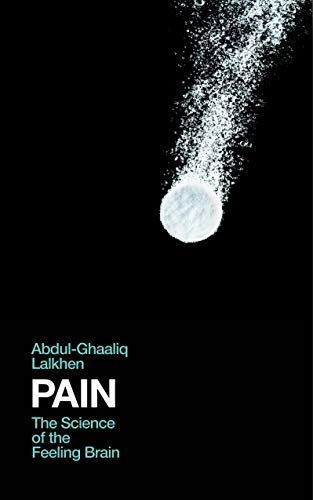 Originally from South Africa, Dr Lalkhen is an anaesthesiology and pain specialist based in Manchester. In a nutshell, his approach is “biopsychosocial,” meaning that he seeks to understand pain not just as a physical phenomenon resulting from acute injury or damage but as an ongoing process that is affected by emotional and psychological factors. Particularly in the context of chronic syndromes, he acknowledges that pain can continue even when its immediate cause has been repaired. Mental preparation can come into the equation: if a patient assumes they’ll wake up from surgery healed, they may be alarmed if pain persists. Lalkhen talks about managing patient expectations, perhaps with something as simple as the promise, “we’ll aim to get your pain down to a 4 after surgery.” In part, he blames Western society’s Cartesian philosophy for treating mind and body as separate rather than a system.
There are genetic and psychological reasons people might be predisposed to chronic pain. Pain itself can then change the brain chemistry, making the body more alert to pain signals. People can choose one of three paths, Lalkhen observes: “You can spend your time agitating about the alarm going off, you can try to ignore it (but the ignoring of it actually takes up more energy), or the final alternative is to learn to live with this deeply unpleasant situation.” Those who opt for pharmacological solutions can become addicted to opiates, which are less effective over time. Non-drug-related therapies involve the desensitization of nerves, the injection of anaesthetics or steroids, or the implanting of spinal cord stimulators. But all of these strategies have their limitations, and can diminish in efficacy. The patients he sees in his pain clinics may be disappointed that, rather than offering a panacea, he wants to wean them off their current pain relief and help them develop a new way of thinking about pain.
I felt I learned a lot from reading this. Lalkhen is careful to state that he is only referring to non-cancer pain (cancer pain in terminal patients will take all the morphine you can throw at it). Like many physicians, he worries about the modern epidemic of overtreatment and our obsession with wellness. I especially enjoyed the discussion of the understanding of pain and its treatment from the ancient world onward, and in particular the history of opiates. The prose is not literary, but this is an accessible and informational read if the subject matter draws you.
With thanks to Atlantic Books for the free copy for review.
What recent nonfiction releases can you recommend?
Fairy Tales, Outlaws, Experimental Prose: Three More January Novels
Today I’m featuring three more works of fiction that were released this month, as a supplement to yesterday’s review of Mrs Death Misses Death. Although the four are hugely different in setting and style, and I liked some better than others (such is the nature of reading and book reviewing), together they’re further proof – as if we needed it – that female authors are pushing the envelope. I wouldn’t be surprised to see any or all of these on the Women’s Prize longlist in March.
The Charmed Wife by Olga Grushin
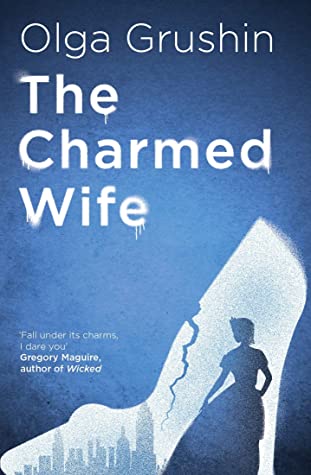 What happens next for Cinderella?
Grushin’s fourth novel unpicks a classic fairy tale narrative, starting 13.5 years into a marriage when, far from being starry-eyed with love for Prince Roland, the narrator hates her philandering husband and wants him dead. As she retells the Cinderella story to her children one bedtime, it only underscores how awry her own romance has gone: “my once-happy ending has proved to be only another beginning, a prelude to a tale dimmer, grittier, far more ambiguous, and far less suitable for children”. She gathers Roland’s hair and nails and goes to a witch for a spell, but her fairy godmother shows up to interfere. The two embark on a good cop/bad cop act as the princess runs backward through her memories: one defending Roland and the other convinced he’s a scoundrel.
Part One toggles back and forth between flashbacks (in the third person and past tense) and the present-day struggle for the narrator’s soul. She comes to acknowledge her own ignorance and bad behaviour. “All I want is to be free—free of him, free of my past, free of my story. Free of myself, the way I was when I was with him.” In Part Two, as the princess tries out different methods of escape, Grushin coyly inserts allusions to other legends and nursery rhymes: a stepsister lives with her many children in a house shaped like a shoe; the witch tells a variation on the Bluebeard story; the fairy godmother lives in a Hansel and Gretel-like candy cottage; the narrator becomes a maid for 12 slovenly sisters; and so on.
 The plot feels fairly aimless in this second half, and the mixture of real-world and fantasy elements is peculiar. I much preferred Grushin’s previous book, Forty Rooms (and Angela Carter’s The Bloody Chamber, one of her chief inspirations). However, her two novels share a concern with how women’s ambitions can take a backseat to their roles, and both weave folktales and dreams into a picture of everyday life. But my favourite part of The Charmed Wife was the subplot: interludes about Brie and Nibbles, the princess’s pet mice; their lives being so much shorter, they run through many generations of a dramatic saga while the narrator (whose name we do finally learn, just a few pages from the end) is stuck in place.
With thanks to Hodder & Stoughton for the free copy for review.
Outlawed by Anna North
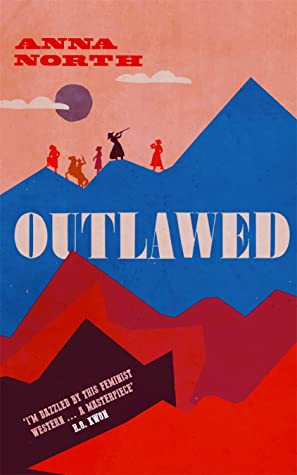 I was a huge fan of North’s previous novel, The Life and Death of Sophie Stark, which cobbles together the story of the title character, a bisexual filmmaker, from accounts by the people who knew her best. Outlawed, an alternative history/speculative take on the traditional Western, could hardly be more different. In a subtly different version of the United States, everyone now alive in the 1890s is descended from those who survived a vicious 1830s flu epidemic. The duty to repopulate the nation has led to a cult of fertility and devotion to the Baby Jesus. From her mother, a midwife and herbalist, Ada has learned the basics of medical care, but the causes of barrenness remain a mystery and childlessness is perceived as a curse.
Ada marries at 17 and fails to get pregnant within a year. After an acquaintance miscarries, rumours start to spread about Ada being a witch. Kicked out by her mother-in-law, she takes shelter first at a convent and then with the Hole in the Wall gang. She’ll be the doctor to this band of female outlaws who weren’t cut out for motherhood and shunned marriage – including lesbians, a mixed-race woman, and their leader, the Kid, who is nonbinary. The Kid is a mentally tortured prophet with a vision of making the world safe for people like them (“we were told a lie about God and what He wants from us”), mainly by, Robin Hood-like, redistributing wealth through hold-ups and bank robberies. Ada, who longs to conduct proper research into reproductive health rather than relying on religious propaganda, falls for another gender nonconformist, Lark, and does what she can to make the Kid’s dream a reality.
Reese Witherspoon choosing this for her Hello Sunshine book club was a great chance for North’s work to get more attention. However, I felt that the ideas behind this novel were more noteworthy than the execution. The similarity to The Handmaid’s Tale is undeniable, though I liked this a bit more. I most enjoyed the medical and religious themes, and appreciated the attention to childless and otherwise unconventional women. But the setup is so condensed and the consequences of the gang’s major heist so rushed that I wondered if the novel needed another 100 pages to stretch its wings. I’ll just have to await North’s next book.
With thanks to W&N for the proof copy for review.
little scratch by Rebecca Watson
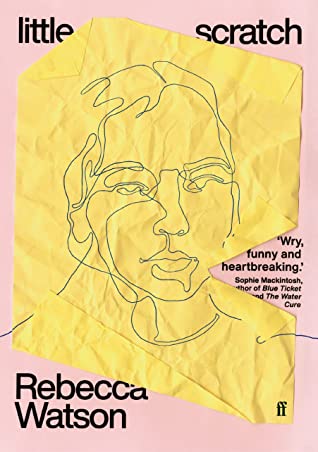 I love a circadian narrative and had heard interesting things about the experimental style used in this debut novel. I even heard Watson read a passage from it as part of the Faber Live Fiction Showcase and found it very funny and engaging. But I really should have tried an excerpt before requesting this for review; I would have seen at a glance that it wasn’t for me. I don’t have a problem with prose being formatted like poetry (Girl, Woman, Other; Stubborn Archivist; the prologue of Wendy McGrath’s Santa Rosa; parts of Mrs Death Misses Death), but here it seemed to me that it was only done to alleviate the tedium of the contents.
A young woman who, like Watson, works for a newspaper, trudges through a typical day: wake up, get ready, commute to the office, waste time and snack in between doing bits of work, get outraged about inconsequential things, think about her boyfriend (only ever referred to as “my him” – probably my biggest specific pet peeve about the book), and push down memories of a sexual assault. Thus, the only thing that really happens happened before the book even started. Her scratching, to the point of open wounds and scabs, seems like a psychosomatic symptom of unprocessed trauma. By the end, she’s getting ready to tell her boyfriend about the assault, which seems like a step in the right direction.
I might have found Watson’s approach captivating in a short story, or as brief passages studded in a longer narrative. At first it’s a fun puzzle to ponder how these mostly unpunctuated words, dotted around the pages in two to six columns, fit together – should one read down each column, or across each row, or both? – but when all the scattershot words are only there to describe a train carriage filling up or repetitive quotidian actions (sifting through e-mails, pedalling a bicycle), the style soon grates. You may have more patience with it than I did if you loved A Girl Is a Half-Formed Thing or books by Emma Glass.


A favourite passage: “got to do this thing again, the waking up thing, the day thing, the work thing, disentangling from my duvet thing, this is something, this is a thing I have to do then,” [appears all as one left-aligned paragraph]
With thanks to Faber & Faber for the free copy for review.
Tomorrow I’ll review three nonfiction works published in January, all on a medical theme.
What recent releases can you recommend?
Mrs Death Misses Death by Salena Godden
 Grief Is the Thing with Feathers meets Girl, Woman, Other would be my marketing shorthand for this one. Poet Salena Godden’s debut novel is a fresh and fizzing work, passionate about exposing injustice but also about celebrating simple joys, and in the end it’s wholly life-affirming despite a narrative stuffed full of deaths real and imagined.
What if Death wasn’t the male Grim Reaper stereotype? What if, instead, she was a poor black woman – a bag lady on a bus, or a hospital cleaner? In this playful and lilting story, we learn of Mrs Death’s work via her unwitting medium, Wolf Willeford, who one Christmas Eve goes walking in London’s Brick Lane area and buys an irresistible desk that reveals flashes of historical deaths. Once Mrs Death’s desk (and resentful at not being a piano), it now transmits her stories to Wolf, giving a whole new meaning to the term ghost writer. Wolf compiles and edits her memoirs, which take the form of diary entries, poems, and songs.
It’s never been more stressful to be Death, what with civil war in Syria, school shootings in the USA, and refugees drowning off the coast of France. But although the book’s frame of reference is up to the minute, wrongful deaths are nothing new, so occasional vignettes dramatize untimely demises – especially of black women – across the centuries: from the days of slavery to Jack the Ripper to police custody a few years ago. There are so many ways to die:
really nearly took that other plane on 9/11
had a coconut fall on your head
saw your village being bombed
slipped taking a selfie by the Grand Canyon
had a fight with an alligator
got stranded in a fierce and fast-moving bushfire
Speaking of fire, and of the title, Wolf (biracial, nonbinary, and possibly bipolar) is here to narrate only because Mrs Death missed one. Their mum died in a house fire. Wolf should have died that day, too, but heard a voice saying “Wake up, Wolf … Can you smell smoke?” Were they spared deliberately, or did Mrs Death make a mistake? (After all, we learn that when a patient briefly wakes up on the operating table before dying for good, it’s because Mrs Death’s printer got jammed.)
Where I think the novel really succeeds is in balancing its two levels: the cosmic, in which Life and Death are sisters and Time is Death’s lover in a sort of creation myth; and the personal, in which Wolf’s family tree, printed at the end, is an appalling litany of accidental deaths and executions. It’s easy to see why Wolf is so traumatized, but Mrs Death, ironically, reminds him that, despite all of the world’s fallen heroes and ongoing crises, there is still such beauty to be found in life.
All the warmth and all the joy is boiled in a soup of memory, we stir the good stuff from the bottom of the pot and hold the ladle up, drink, we say, look at all the good chunks of goodness, take in your share of good times, good music, good books, good food, good laughter, good people, be grateful for the good stuff, life and death, we say, drink.
There were a few spots where I thought the content repetitive and wondered if the miscellany format distracted from the narrative, but overall the book more than lives up to its fantastic cover, title, and premise. And with the pandemic’s global death toll rising daily, it could hardly be more relevant.
Unusual, musical, and a real pleasure to read: this is the first entry on my Best of 2021 shelf.
With thanks to Canongate for the free copy for review.
Tomorrow I’ll review a few more of January’s fiction releases, followed by nonfiction on Saturday.
Review Book Catch-Up: Bamforth, McGrath, Mertz
Today I have a book of medico-philosophical musings, a triptych of novels about the resonant moments of a Canadian childhood, and a varied collection of ekphrastic poems.
Scattered Limbs: A Medical Dreambook by Iain Bamforth (2020)
 A doctor based in Strasbourg, Iain Bamforth offers a commonplace book full of philosophical musings on medicine and wellness from the ancient world to today. All through December I would read just a few pages at a time as a palate cleanser between larger chunks of other books. Most of the entries are under three pages in length, with some one-sentence dictums interspersed. The point of reference is broadly European, with frequent allusions to English, French, and German literature (Charles Dickens, Marcel Proust, and Thomas Mann) and to Greek thinkers like Aristotle and Plato. The themes include memory, overtreatment, technology, and our modern wellness culture. If you’re equally interested in medicine and philosophy, this is a perfect bedside book for you; if you only gravitate towards one or the other, it’s possible that you could run low on patience for the high-brow rumination. My favourite piece was on “panicology,” and two stand-out lines are below.
“Prognostication is where writers and doctors resemble each other most.”
“A proper attitude to death can be a source of life. That is medicine’s only profundity.”
With thanks to Galileo Publishers for the free copy for review.
The Santa Rosa Trilogy by Wendy McGrath (2011–19)
I’m indulging in one last listen to our holiday music compilations as I write, before putting everything away until a hoped-for ‘Christmas in July’ with family and friends. Yesterday I devoured Broke City, the third novella in Wendy McGrath’s Santa Rosa Trilogy, in one sitting and treasured all the Christmas and pine tree references: they bind the book together but also connect it satisfyingly back to Book 1, Santa Rosa, which opened with Christine’s neighbour preparing a Christmas cake one summer. That annual ritual and its built-in waiting period take on new significance when the adult Christine’s life changes suddenly.
In this trio of linked narratives about Christine’s 1960s Edmonton childhood, totem objects and smells evoke memories that persist for decades: Pine-Sol, her parents’ cigarettes, the local meat-packing plant. Even at age seven, Christine is making synaesthetic links between colours and scents as she ponders language and imagines other lives. That her recollections – of a carnival, the neighbourhood grocery store, queasy road trips to her grandmother’s in Saskatchewan, a drive-in movie, and Christmas Eve with her father’s side of the family – so overlap with my late-1980s mental flipbook proves not that suburban Maryland and upstate New York (where I grew up and my mother’s home turf, respectively) are so similar to Alberta, but that this is the universal stuff of a later 20th-century North American childhood.


The other night, discussing The Light Years by Elizabeth Jane Howard, my book club noted how difficult it is to capture childhood in all its joy and distress. McGrath does so superbly, exploiting the dramatic irony between what Christine overhears and what she understands. Readers know her parents’ marriage is in trouble because she never sees them laughing or happy, and she hears her mother complain to her father about his drinking. We know the family is struggling because a man from the City delivers a box of Spam, standard issue to all those who are out of work over the winter. A simple mishearing (“clatteral,” “brain tuber”; thinking that an abattoir sounds “like a fancy ballroom”) can be a perfect example of the child perspective, too. Meanwhile, the pop culture references situate the story in the time period.
Towards the end of Broke City, young Christine declares, “I shall be unusual.” As we root for the girl to outrun her sadder memories and forge a good life, we hope that – like all of us – she’ll find a balance between the ordinary and the exceptional through self-knowledge. While Broke City was my favourite and could probably stand alone, it’s special to chart how moments turn into memories across the three books. I’d recommend the trilogy to readers of Tove Ditlevsen, Tessa Hadley, and Elizabeth Hay. I particularly loved the hybrid-poetry style of the Prologue to Santa Rosa (similar to what Bernardine Evaristo employs), so I would also be interested to try one of McGrath’s two poetry collections.
Some favourite passages:
“he walks at the same time everyday summer and winter
early morning when the day still makes promises” (Santa Rosa)
“Christine thought of herself as a child, with no idea of the world but all the ideas in the world. … Christine is the girl that used to live here, but the girl has disappeared. Her ghost is here, existing parallel to the person she is now. How did this happen? There must have been something she wasn’t paying attention to, something she didn’t see coming.” (Broke City)
With thanks to Wendy McGrath and Edmonton’s NeWest Press for the e-copies for review. I learned about the books from Marcie; see her appreciation of McGrath’s work at Buried in Print.
Color and Line by Carole Mertz (2021)
 “Ekphrastic” was a new vocabulary word for me – or, if I’d heard it before, I needed a reminder. It refers to poetry written to describe or respond to artworks. Many of Carole Mertz’s poems, especially in the first section, attest to her love of the visual arts. This is the Ohio church organist’s first full-length collection after the 2019 chapbook Toward a Peeping Sunrise and extensive publication in literary magazines. She was inspired by art ranging in date from 1555 to 2019. “Come Share a Glass with Me,” for instance, is a prose poem that imagines the story behind a Van Gogh. I loved the line “The ewer sits expectant” in a short poem capturing The Staircase by Xavier Mellery.
One could look up all of the artworks discussed, but the descriptions here are so richly detailed that I often didn’t feel I needed to. Two paintings in a row depict sisters. A poem about Salome and the beheading of John the Baptist draws on the Bible story, but also on its many portrayals through art history. Other topics include concern for the Earth and beloved works of literature. I particularly enjoyed “The Word in Joseph’s Hand,” a Christmas hymn that can be sung to the tune of “Lo, How a Rose E’er Blooming,” and a haiku about a cardinal, “a flash of bright red / … in the garden”. Below is my favourite of the poems; it incorporates the titles of 14 books, nine of them by Anne Tyler. See if you can spot them all!
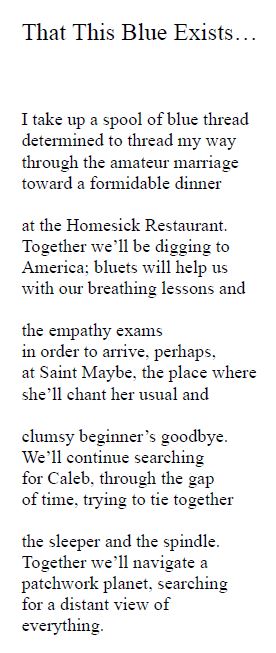
Color and Line was released by Kelsay Books on the 2nd. My thanks to Carole Mertz for the e-copy for review.
Would you be interested in reading one or more of these?
And, just for fun, put a description of or link to your favourite Bernie-in-mittens meme in the comments.
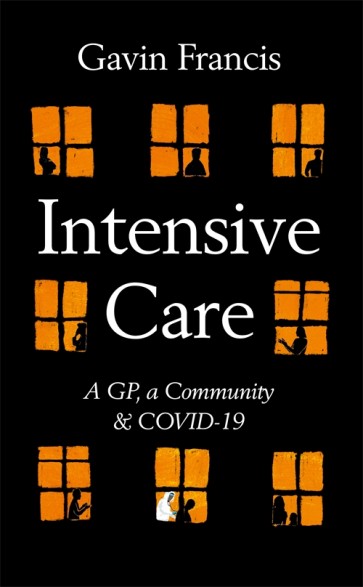
Review: Intensive Care by Gavin Francis
I finally finished a book in 2021! And it’s one with undeniable ongoing relevance. The subtitle is “A GP, a Community & COVID-19.” Francis, a physician who is based at an Edinburgh practice and frequently travels to the Orkney Islands for healthcare work, reflects on what he calls “the most intense months I have known in my twenty-year career.” He draws all of his chapter epigraphs from Daniel Defoe’s A Journal of the Plague Year and journeys back through most of 2020, from the day in January when he and his colleagues received a bulletin about a “novel Wuhan coronavirus” to November, when he was finalizing the book and learned of promising vaccine trials but also a rumored third wave and winter lockdown.
In February, no one knew whether precautions would end up being an overreaction, so Francis continued normal life: attending a conference, traveling to New York City, and going to a concert, pub, and restaurant. By March he was seeing more and more suspected cases, but symptoms were variable and the criteria for getting tested and quarantining changed all the time. The UK at least seemed better off than Italy, where his in-laws were isolating. Initially it was like flu outbreaks he’d dealt with before, with the main differences being a shift to telephone consultations and the “Great Faff” of donning full PPE for home visits and trips to care homes. The new “digital first” model left him feeling detached from his patients. He had his own Covid scare in May, but a test was negative and the 48-hour bug passed.
 Through his involvement in the community, Francis saw the many ways in which coronavirus was affecting different groups of people. He laments the return of mental health crises that had been under control until lockdown. Edinburgh’s homeless, many in a perilous immigration situation thanks to Brexit, were housed in vacant luxury hotels. He visited several makeshift hostels, where some residents were going through drug withdrawal, and also met longtime patients whose self-harm and suicidal ideation were worsening.
Children and the elderly were also suffering. In June, he co-authored a letter begging the Scottish education secretary to allow children to return to school. Perhaps the image that will stick with me most, though, is of the confused dementia patients he met at care homes: “there was a crushing atmosphere of sadness among the residents … [they were] not able to understand why their families no longer came to visit. How do you explain social distancing to someone who doesn’t remember where they are, sometimes even who they are?”
Francis incorporates brief histories of vaccination and the discovery of herd immunity, and visits a hospital where a vaccine trial is underway. I learned some things about COVID-19 specifically: it can be called a “viral pneumonia”; it has two phases, virological (the virus makes you unwell) and immunological (the immune system misdirects messages and the lungs get worse); and it affects the blood vessels as well as the lungs, with one in five presenting with a rash and some developing chilblains in the summer. Amazingly, as the year waned, Francis only knew three patients who had died of Covid, with many more recovered. But in August, a city that should have been bustling with festival tourists was nearly empty.
Necessarily, the book ends in the middle of things; Francis has clear eyes but a hopeful heart. While this is not the first COVID-19 book I’ve encountered (that was Duty of Care by Dominic Pimenta) and will be far from the last – next up for me will be Rachel Clarke’s Breathtaking, out at the end of this month – it is an absorbing first-hand account of a medical crisis as well as a valuable memorial of a time like no other in recent history. A favorite line was “One of the few consolations of this pandemic is its grim camaraderie, a new fellowship among the fear.” Another consolation for me is reading books by medical professionals who can compassionately bridge the gap between expert opinion and everyday experience.
Intensive Care was published by the Wellcome Collection/Profile Books on January 7th. My thanks to the publisher for the free copy for review.
Gavin Francis’s other work includes:
Previously reviewed: Shapeshifters
Also owned: Adventures in Human Being
I’m keen to read: Empire Antarctica, about being the medical officer at the British research centre in Antarctica – ironically, this was during the first SARS pandemic. (In July 2020, conducting medical examinations on the next batch of scientists to ship out there, he envied them the chance to escape: “By the time they came home it would be 2022. Surely we’d have the virus under control by then?”)
My Best Backlist Reads of 2020
Like many book bloggers, I’m irresistibly drawn to the shiny new books released each year. However, I consistently find that many of my most memorable reads were published years or even decades ago. These 29 selections, in alphabetical order by author name, account for the rest of my 4.5- and 5-star ratings of the year. Five rereads made it onto my list.
Fiction
 Americanah by Chimamanda Ngozi Adichie: Through Ifemelu’s years of studying, working, and blogging her way around the Eastern seaboard of the United States, Adichie explores the ways in which the experience of an African abroad differs from that of African Americans. On a sentence level as well as at a macro plot level, this was utterly rewarding.
 Year of Wonders by Geraldine Brooks: In 1665, with the Derbyshire village of Eyam in the grip of the Plague, the drastic decision is made to quarantine it. Frustration with the pastor’s ineffectuality attracts people to religious extremism. Anna’s intimate first-person narration and the historical recreation are faultless, and there are so many passages that feel apt.
 Shotgun Lovesongs by Nickolas Butler: Four childhood friends from Little Wing, Wisconsin. Which bonds will last, and which will be strained to the breaking point? This is a book full of nostalgia and small-town atmosphere. All the characters wonder whether they’ve made the right decisions or gotten stuck. A lot of bittersweet moments, but also comic ones.
 Kindred by Octavia E. Butler: A perfect time-travel novel for readers who quail at science fiction. Dana, an African American writer in Los Angeles, is dropped into early-nineteenth-century Maryland. This was such an absorbing read, with first-person narration that makes you feel you’re right there alongside Dana on her perilous travels.
 Dominicana by Angie Cruz: Ana Canción is just 15 when she arrives in New York from the Dominican Republic on the first day of 1965 to start her new life as the wife of Juan Ruiz. An arranged marriage and arriving in a country not knowing a word of the language: this is a valuable immigration story that stands out for its plucky and confiding narrator.
 Ella Minnow Pea by Mark Dunn: A book of letters in multiple sense. Laugh-out-loud silliness plus a sly message about science and reason over superstition = a rare combination that made this an enduring favorite. On my reread I was more struck by the political satire: freedom of speech is endangered in a repressive society slavishly devoted to a sacred text.
 Love Medicine by Louise Erdrich: Interlocking stories that span half a century in the lives of a couple of Chippewa families that sprawl out from a North Dakota reservation. Looking for love, looking for work. Getting lucky, getting even. Their problems are the stuff of human nature and contemporary life. I adored the descriptions of characters and of nature.
 Notes from an Exhibition by Patrick Gale: Nonlinear chapters give snapshots of the life of a bipolar artist and her interactions with her husband and children. Their Quakerism sets up a calm and compassionate atmosphere, but also allows family secrets to proliferate. The novel questions patterns of inheritance and the possibility of happiness.
 Confession with Blue Horses by Sophie Hardach: When Ella’s parents, East German art historians who came under Stasi surveillance, were caught trying to defect, their children were taken away from them. Decades later, Ella is determined to find her missing brother and learn what really happened to her mother. Eye-opening and emotionally involving.
 The Go-Between by L.P. Hartley: Twelve-year-old Leo Colston is invited to spend July at his school friend’s home, Brandham Hall. You know from the famous first line on that this juxtaposes past and present. It’s masterfully done: the class divide, the picture of childhood tipping over into the teenage years, the oppressive atmosphere, the comical touches.
 Our Souls at Night by Kent Haruf: Addie is a widow; Louis is a widower. They’re both lonely and prone to fretting about what they could have done better. Would he like to come over to her house at night to talk and sleep? Matter-of-fact prose, delivered without speech marks, belies a deep undercurrent of emotion. Understated, bittersweet, realistic. Perfect.
 The Emperor’s Children by Claire Messud: A 9/11 novel. The trio of protagonists, all would-be journalists aged 30, have never really had to grow up; now it’s time to get out from under the shadow of a previous generation and reassess what is admirable and who is expendable. This was thoroughly engrossing. Great American Novel territory, for sure.
 My Year of Meats by Ruth Ozeki: A Japanese-American filmmaker is tasked with finding all-American families and capturing their daily lives – and best meat recipes. There is a clear message here about cheapness and commodification, but Ozeki filters it through the wrenching stories of two women with fertility problems. Bold if at times discomforting.
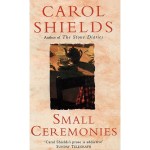 Small Ceremonies by Carol Shields: An impeccable novella, it brings its many elements to a satisfying conclusion and previews the author’s enduring themes. Something of a sly academic comedy à la David Lodge, it’s laced with Shields’s quiet wisdom on marriage, parenting, the writer’s vocation, and the difficulty of ever fully understanding another life.
 Larry’s Party by Carol Shields: The sweep of Larry’s life, from youth to middle age, is presented chronologically through chapters that are more like linked short stories: they focus on themes (family, friends, career, sex, clothing, health) and loop back to events to add more detail and new insight. I found so much to relate to in Larry’s story; Larry is really all of us.
 Abide with Me by Elizabeth Strout: Tyler Caskey is a widowed pastor whose five-year-old daughter has gone mute and started acting up. As usual, Strout’s characters are painfully real, flawed people, often struggling with damaging obsessions. She tenderly probes the dark places of the community and its minister’s doubts, but finds the light shining through.
 The Wife by Meg Wolitzer: On the way to Finland, where her genius writer husband will accept the prestigious Helsinki Prize, Joan finally decides to leave him. Alternating between the trip and earlier in their marriage, this is deceptively thoughtful with a juicy twist. Joan’s narration is witty and the point about the greater value attributed to men’s work is still valid.
Nonfiction
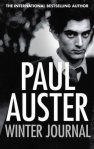 Winter Journal by Paul Auster: Approaching age 64, the winter of his life, Auster decided to assemble his most visceral memories: scars, accidents and near-misses, what his hands felt and his eyes observed. The use of the second person draws readers in. I particularly enjoyed the tour through the 21 places he’s lived. One of the most remarkable memoirs I’ve ever read.
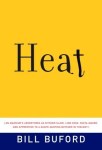 Heat by Bill Buford: Buford was an unpaid intern at Mario Batali’s famous New York City restaurant, Babbo. In between behind-the-scenes looks at frantic sessions of food prep, Buford traces Batali’s culinary pedigree through Italy and London. Exactly what I want from food writing: interesting trivia, quick pace, humor, and mouthwatering descriptions.
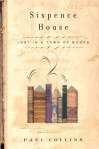 Sixpence House: Lost in a Town of Books by Paul Collins: Collins moved to Hay-on-Wye with his wife and toddler son, hoping to make a life there. As he edited the manuscript of his first book, he started working for Richard Booth, the eccentric bookseller who crowned himself King of Hay. Warm, funny, and nostalgic. An enduring favorite of mine.
 A Year on the Wing by Tim Dee: From a life spent watching birds, Dee weaves a mesh of memories and recent experiences, meditations and allusions. He moves from one June to the next and from Shetland to Zambia. The most powerful chapter is about watching peregrines at Bristol’s famous bridge – where he also, as a teen, saw a man commit suicide.
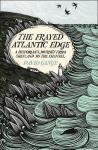 The Frayed Atlantic Edge by David Gange: While kayaking down the western coast of the British Isles and Ireland, Gange delves into the folklore, geology, history, local language and wildlife of each region and island group – from the extreme north of Scotland at Muckle Flugga to the southwest tip of Cornwall. An intricate interdisciplinary approach.
 Traveling Mercies: Some Thoughts on Faith by Anne Lamott: There is a lot of bereavement and other dark stuff here, yet an overall lightness of spirit prevails. A college dropout and addict, Lamott didn’t walk into a church and get clean until her early thirties. Each essay is perfectly constructed, countering everyday angst with a fumbling faith.
 In the Dream House by Carmen Maria Machado: This has my deepest admiration for how it prioritizes voice, theme and scene, gleefully does away with chronology and (not directly relevant) backstory, and engages with history, critical theory and the tropes of folk tales to interrogate her experience of same-sex domestic violence. (Second-person narration again!)
 Period Piece by Gwen Raverat: Raverat was a granddaughter of Charles Darwin. This is a portrait of what it was like to grow up in a particular time and place (Cambridge from the 1880s to about 1909). Not just an invaluable record of domestic history, it is a funny and impressively thorough memoir that serves as a model for how to capture childhood.
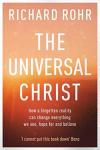 The Universal Christ by Richard Rohr: I’d read two of the Franciscan priest’s previous books but was really blown away by the wisdom in this one. The argument in a nutshell is that Western individualism has perverted the good news of Jesus, which is renewal for everything and everyone. A real gamechanger. My copy is littered with Post-it flags.
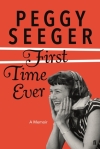 First Time Ever: A Memoir by Peggy Seeger: The octogenarian folk singer and activist has packed in enough adventure and experience for multiple lifetimes, and in some respects has literally lived two: one in America and one in England; one with Ewan MacColl and one with a female partner. Her writing is punchy and impressionistic. She’s my new hero.
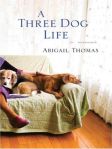 A Three Dog Life by Abigail Thomas: A memoir in essays about her husband’s TBI and what kept her going. Unassuming and heart on sleeve, Thomas wrote one of the most beautiful books out there about loss and memory. It is one of the first memoirs I remember reading; it made a big impression the first time, but I loved it even more on a reread.
 On Silbury Hill by Adam Thorpe: Explores the fragmentary history of the manmade Neolithic mound and various attempts to excavate it, but ultimately concludes we will never understand how and why it was made. A flawless integration of personal and wider history, as well as a profound engagement with questions of human striving and hubris.

(Books not pictured were read digitally, or have already gone back to the library.)
And if I really had to limit myself to just two favorites – my very best fiction and nonfiction reads of the year – they would be Our Souls at Night by Kent Haruf and Winter Journal by Paul Auster.
What were your best backlist reads this year?
The Best Books of 2020: Some Runners-Up
I’ve chosen 25 more cracking reads that were first released in 2020. (Asterisks = my hidden gems of the year.) Between this post and my Fiction/Poetry and Nonfiction best-of lists, I’ve now highlighted about the top 12% of my year’s reading.
Novels:
 The Vanishing Half by Brit Bennett: Like some lost mid-career gem from Toni Morrison, this novel is meaty with questions of racial and sexual identity. Light-skinned African-American twins’ paths divide in 1950s Louisiana. Perceptive and beautifully written, this has characters whose struggles feel genuine and pertinent.
 Piranesi by Susanna Clarke: To start with, Piranesi traverses his watery labyrinth like he’s an eighteenth-century adventurer, his resulting notebooks reading rather like Alexander von Humboldt’s writing. I admired how the novel moved from the fantastical and abstract into the real and gritty. Read it even if you say you don’t like fantasy.
 Exciting Times by Naoise Dolan: At 22, Ava leaves Dublin to teach English as a foreign language to wealthy preteens and almost accidentally embarks on affairs with an English guy and a Chinese girl. Dolan has created a funny, deadpan voice that carries the entire novel. I loved the psychological insight, the playfulness with language, and the zingy one-liners.
 *A Good Neighborhood by Therese Anne Fowler: Issues of race and privilege undermine a teen romance in a perfect-seeming North Carolina community. This is narrated in a first-person plural voice, like the Greek chorus of a classical tragedy. If you loved An American Marriage, it should be next on your list. I’m puzzled by how overlooked it’s been this year.
 Transcendent Kingdom by Yaa Gyasi: A more subdued and subtle book than Homegoing, but its treatment of themes of addiction, grief, racism, and religion is so spot on that it packs a punch. Gifty is a PhD student at Stanford, researching reward circuits in the mouse brain. There’s also a complex mother–daughter relationship and musings on love and risk. [To be published in the UK in March]
 The Mercies by Kiran Millwood Hargrave: A rich, natural exploration of a place and time period – full of detail but wearing its research lightly. Inspired by a real-life storm that struck on Christmas Eve 1617 and wiped out the male population of the Norwegian island of Vardø, it intimately portrays the lives of the women left behind. Tender, surprising, and harrowing.
 Sisters by Daisy Johnson: Teenagers September and July were born just 10 months apart, with July always in thrall to her older sister. For much of this short novel, Johnson keeps readers guessing as to why the girls’ mother, Sheela, took them away to Settle House, her late husband’s family home in the North York Moors. As mesmerizing as it is unsettling.
 The Book of Longings by Sue Monk Kidd: Kidd’s bold fourth novel started as a what-if question: What if Jesus had a wife? Although this retells biblical events, it is chiefly an attempt to illuminate women’s lives in the 1st century and to chart the female contribution to sacred literature and spirituality. An engrossing story of women’s intuition and yearning.
 *The Ninth Child by Sally Magnusson: Intense and convincing, this balances historical realism and magical elements. In mid-1850s Scotland, there is a move to ensure clean water. The Glasgow waterworks’ physician’s wife meets a strange minister who died in 1692. A rollicking read with medical elements and a novel look into Victorian women’s lives.
 *The Bell in the Lake by Lars Mytting: In this first book of a magic-fueled historical trilogy, progress, religion, and superstition are forces fighting for the soul of a late-nineteenth-century Norwegian village. Mytting constructs the novel around compelling dichotomies. Astrid, a feminist ahead of her time, vows to protect the ancestral church bells.
 What Are You Going Through by Sigrid Nunez: The narrator is called upon to help a terminally ill friend commit suicide. The voice is not solely or even primarily the narrator’s but Other: art consumed and people encountered become part of her own story; curiosity about other lives fuels empathy. A quiet novel that sneaks up to seize you by the heartstrings.
 Weather by Jenny Offill: A blunt, unromanticized, wickedly funny novel about how eco-anxiety permeates everyday life, written in an aphoristic style. Set either side of Trump’s election in 2016, the novel amplifies many voices prophesying doom. Offill’s observations are dead right. This felt like a perfect book for 2020 and its worries.
 Love and Other Thought Experiments by Sophie Ward: An intriguing set of linked short stories that combine philosophy and science fiction. Rachel and Eliza are preparing to have a baby together when an ant crawls into Rachel’s eye and she falls ill. I was particularly taken by the chapter narrated by the ant. It’s well worth making a rare dip into sci-fi for this one.
 *The Inland Sea by Madeleine Watts: The young female narrator of this debut novel lives in Sydney and works for Australia’s emergency call service. Against a backdrop of flooding and bush fires, a series of personal catastrophes play out. A timely, quietly forceful story of how women cope with concrete and existential threats.
Short Stories:
 To Be a Man by Nicole Krauss: These 10 stories from the last 18 years are melancholy and complex, often featuring several layers of Jewish family history. Europe, Israel, and film are frequent points of reference. “Future Emergencies,” though set just after 9/11, ended up feeling the most contemporary because it involves gas masks and other disaster preparations.
 *Help Yourself by Curtis Sittenfeld: A bonus second UK release from Sittenfeld in 2020 after Rodham. Just three stories, but not leftovers; a strong follow-up to You Think It, I’ll Say It. They share the theme of figuring out who you really are versus what others think of you. “White Women LOL,” especially, compares favorably to Kiley Reid’s Such a Fun Age.
 You Will Never Be Forgotten by Mary South: In this debut collection, characters turn to technology to stake a claim on originality, compensate for losses, and leave a legacy. These 10 quirky, humorous stories never strayed so far into science fiction as to alienate me. I loved the medical themes and subtle, incisive observations about a technology-obsessed culture.
Poetry:
 *Survival Is a Style by Christian Wiman: Wiman examines Christian faith in the shadow of cancer. This is the third of his books that I’ve read, and I’m consistently impressed by how he makes room for doubt, bitterness, and irony – yet a flame of faith remains. There is really interesting phrasing and vocabulary in this volume.
Nonfiction:
 Inferno: A Memoir by Catherine Cho: Cho experienced stress-induced postpartum psychosis after the birth of her son. She alternates between her time in the mental hospital and her life before the breakdown, weaving in family history and Korean sayings and legends. It’s a painstakingly vivid account.
 *The Lost Family: How DNA Testing Is Upending Who We Are by Libby Copeland: DNA tests can find missing relatives within days. But there are troubling aspects to this new industry, including privacy concerns, notions of racial identity, and criminal databases. A thought-provoking book with all the verve and suspense of fiction.
 *Signs of Life: To the Ends of the Earth with a Doctor by Stephen Fabes: Fabes is an emergency room doctor in London and spent six years of the past decade cycling six continents. This warm-hearted and laugh-out-loud funny account of his travels achieves a perfect balance between world events, everyday discomforts, and humanitarian volunteering.
 Losing Eden: Why Our Minds Need the Wild by Lucy Jones: Nature’s positive effect on human mental health is something we know intuitively and can explain anecdotally, but Jones wanted to investigate the scientific mechanism behind it. Losing Eden is full of common sense and passion, cramming in lots of information yet never losing sight of the big picture.
 *Nobody Will Tell You This But Me: A True (As Told to Me) Story by Bess Kalb: Jewish grandmothers are renowned for their fiercely protective love, but also for nagging. Both sides of the stereotypical matriarch are on display in this funny, heartfelt family memoir, narrated in the second person – as if from beyond the grave – by her late grandmother. A real delight.
 Diary of a Young Naturalist by Dara McAnulty: McAnulty is a leader in the UK’s youth environmental movement and an impassioned speaker on the love of nature. This is a wonderfully observant and introspective account of his fifteenth year and the joys of everyday encounters with wildlife. Impressive perspective and lyricism.
 Memorial Drive: A Daughter’s Memoir by Natasha Trethewey: Trethewey grew up biracial in 1960s Mississippi, then moved with her mother to Atlanta. Her stepfather was abusive; her mother’s murder opens and closes the book. Trethewey only returned to their Memorial Drive apartment after 30 years had passed. A striking memoir, delicate and painful.

(Books not pictured were read digitally, or have already gone back to the library.)
Coming tomorrow: My best backlist reads of the year.
Best of 2020: Nonfiction
Complementing yesterday’s list of my top fiction and poetry reads of 2020, I have chosen my six favorite nonfiction works of the year. Last year’s major themes were bodies, archaeology, and the environmental crisis; this year’s are adjacent: anatomy, nature, deep time, death, and questions of inheritance, both within families and more broadly. What will we leave behind? As usual, these topics reflect my own interests but also, I think, something of the zeitgeist.
Let the countdown begin!
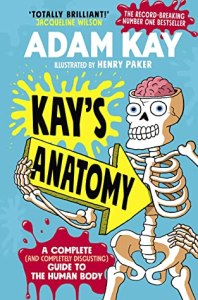 Kay’s Anatomy: A Complete (and Completely Disgusting) Guide to the Human Body by Adam Kay: Think of this as a juvenile, graphic novel version of Bill Bryson’s The Body; that’s exactly how thorough, accessible, and entertaining it is. Kay ditches his usual raunchiness and plumps for innocuous forms of humor: puns, dad jokes, toilet humor, running gags and so on. But where it counts – delivering vital information about not smoking, mental health, puberty, and facing the death of someone you love – Kay is completely serious, and always lets young readers know when it’s essential to tell an adult or ask a doctor. Henry Paker’s silly, grotesque illustrations are the perfect accompaniment.
-
 Sign Here If You Exist and Other Essays by Jill Sisson Quinn: The naturalist’s second essay collection considers themes of connection and change. Quinn regrets the afterlife prospect she lost along with her childhood Christian faith, while adopting a baby leads her to question notions of belonging and inheritance. Whether she’s studying wasps and reptiles or musing on family and faith, she knits her subjects together with meticulous attention. Putting self and nature under the microscope, she illuminates both. (Reviewed for Foreword.)
 Footprints: In Search of Future Fossils by David Farrier: Blending human and planetary history, environmental realism and literary echoes, Farrier, a lecturer in English literature, tells the story of the human impact on the Earth. Each chapter is an intricate blend of fact, experience, and story. We’ll leave behind massive road networks, remnants of coastal megacities, plastics, carbon and methane in the permafrost, the fossilized Great Barrier Reef, nuclear waste, and jellyfish-dominated oceans. An invaluable window onto the deep future.
-
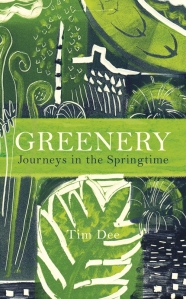 Greenery: Journeys in Springtime by Tim Dee: From the Cape of Good Hope to the Arctic Circle, Dee tracks the spring as it travels north. From first glimpse to last gasp, moving between his homes in two hemispheres, he makes the season last nearly half the year. His main harbingers are migrating birds, starting with swallows. The book is steeped in allusions and profound thinking about deep time and what it means to be alive in an era when nature’s rhythms are becoming distorted. A fresh, masterful model of how to write about nature.
-
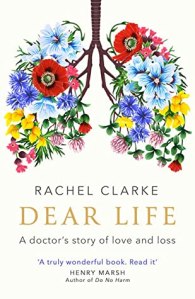 Dear Life: A Doctor’s Story of Love and Loss by Rachel Clarke: I’ve read so many doctors’ memoirs and books about death that it takes a truly special one to stand out. Clarke specializes in palliative medicine and alternates her patients’ stories with her own in a natural way. A major theme is her relationship with her doctor father and his lessons of empathy and dedication. She wrote in the wake of his death from cancer – an experience that forced her to practice what she preaches as a hospice doctor: focus on quality of life rather than number of days. This passionate and practical book encourages readers to be sure they and their relatives have formalized their wishes for end-of-life care and what will happen after their death.
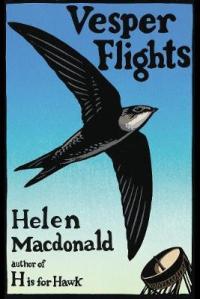 Vesper Flights by Helen Macdonald: Any doubt that Macdonald could write a worthy follow-up to H Is for Hawk evaporates instantly. Though these essays were written for various periodicals and anthologies and range in topic from mushroom-hunting to deer–vehicle collisions and in scope from deeply researched travel pieces to one-page reminiscences, they form a coherent whole. Equally reliant on argument and epiphany, the book has more to say about human–animal interactions in one of its essays than some whole volumes manage. As you might expect, birds are a recurring theme. Her final lines are always breath-taking. I’d rather read her writing on any subject than almost any other author’s.
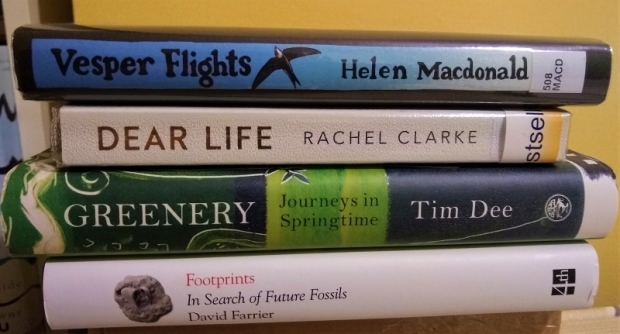
(Books not pictured were read digitally, or have already gone back to the library.)
What were some of your top nonfiction reads of the year?
Upcoming posts:
28th: Library Checkout
29th: Runners-up from 2020 (all genres)
30th: Best backlist reads
31st: Random superlatives and some statistics
Best of 2020: Fiction and Poetry
I’ve managed to whittle down my favorite releases of 2020 to 17 in total: six each from nonfiction (that’s for tomorrow) and fiction, plus five poetry volumes. Plenty more books from all genres will turn up on my runners-up list, due Tuesday.
Let the countdown begin!
Fiction
-
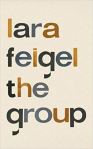 The Group by Lara Feigel: A kaleidoscopic portrait of five women’s lives in 2018. Stella, Kay, Helena, Polly, and Priss met as Oxbridge students. Now 40-ish, they live in London and remain close, though their lives have diverged. Fast-forward a Sally Rooney novel by 20 years and you have an idea of what to expect. This sexually frank and socially engaged story arose from the context of the #MeToo movement and fully acknowledges the privilege and limitations of its setting. The advantage of the apparent heterogeneity in the friend group is that it highlights depths of personality and subtleties of experience. Absorbing and relevant.
-
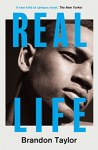 Real Life by Brandon Taylor: Over the course of one late summer weekend, Wallace questions everything about the life he has built. As a gay African American, he has always been an outsider at the Midwestern university where he’s a graduate student in biochemistry. Tacit prejudice comes out into the open in ugly ways; sex and violence are uneasily linked. I so admired how the novel is constructed: the condensed timeframe, the first and last chapters in the past tense (versus the rest in the present tense), the contrast between the cerebral and the bodily, and the thematic and linguistic nods to Virginia Woolf. A very fine debut indeed.
-
 Monogamy by Sue Miller: After 30 years, Annie and Graham are forced to scrutinize their marriage anew. Annie is a photographer; Graham owns a Cambridge, Massachusetts bookstore. Around them swirl a circle of family, friends, acquaintances, and former and would-be lovers. Miller knows her characters and how they interact intimately, and each viewpoint is thoroughly believable. Even in what seems a conventional story, she managed several proper made-me-gasp surprises. A beautifully observant novel about ambition, ageing and grief, reminiscent of Julia Glass, Sigrid Nunez, Maggie O’Farrell, and Carol Shields.
-
 Writers & Lovers by Lily King: Following a breakup and her mother’s sudden death, Casey Peabody is drowning in grief and debt. Between waitressing shifts, she chips away at the novel she’s been writing for six years. Life gets complicated, especially when two love interests appear. We see this character at rock bottom but also when things start to go well at long last. Thanks to the confiding first-person, present-tense narration, I felt I knew Casey through and through, and I cheered for her. I came to think of this as an older, sadder Sweetbitter, perhaps as written by Elizabeth Strout. It gives you all the feels, as they say.
-
 The Glass Hotel by Emily St. John Mandel: Mandel’s characters are rootless people stuck in literal or figurative states they don’t fully understand. Addiction is its own country for Paul, as is money for his half-sister, Vincent, who unexpectedly takes on the role of trophy wife to an older New York financier named Jonathan Alkaitis. Shuttling between the concrete (the shipping industry) and the abstract (even imaginary money can pay for luxuries), and laced with music and visual art, the novel explores liminal spaces, finding the fairy tales and nightmares that nip at the heels of real life. A satisfyingly layered story.
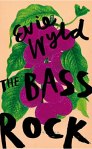 The Bass Rock by Evie Wyld: There’s no avoiding violence for the women and children of this fictional world. It’s a sobering theme, certainly, but Wyld convinced me hers is an accurate vision and a necessary mission. The novel cycles through its three strands in an ebb and flow pattern appropriate to the coastal setting, creating a sense of time’s fluidity. Themes and elements keep coming back, stinging a little more each time. An elegant, time-blending structure and an unrelenting course – that indifferent monolith off the coast of Scotland is the perfect symbol. Looking back, this is the novel that has most haunted my imagination.
Poetry
-
 How to Fly: In Ten Thousand Easy Lessons by Barbara Kingsolver: The opening segment, “How to Fly,” is full of folk wisdom from nature and the body’s intuitive knowledge. “Pellegrinaggio” is a set of poems about accompanying her Italian mother-in-law back to her homeland. “This Is How They Come Back to Us” is composed of elegies for the family’s dead; four short remaining sections are inspired by knitting, literature, daily life, and concern for the environment. The book gives equal weight to personal and collective losses, and Kingsolver builds momentum with her salient natural imagery and entrancing rhythms.
 Moving House by Theophilus Kwek: This is the Chinese Singaporean poet’s first collection to be published in the UK. Infused with Asian history, his elegant verse ranges from elegiac to romantic. Many poems are inspired by historical figures and real headlines; others are about the language and experience of love. I also enjoyed the touches of art and legend: “Monologues for Noh Masks” is about the Pitt-Rivers Museum collection, while “Notes on a Landscape” is about Iceland’s geology and folk tales. Highly recommended to readers of Mary Jean Chan and Ocean Vuong.
-
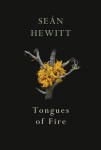 Tongues of Fire by Seán Hewitt: This debut collection is alive with striking imagery that draws links between the natural and the supernatural. Sex and grief, two major themes, are silhouetted against the backdrop of nature. Fields and forests are loci of meditation and epiphany, but also of clandestine encounters between men. Hewitt recalls travels to Berlin and Sweden, and charts his father’s rapid decline and death from an advanced cancer. The whole is capped off with the moving words addressed to the poet’s father: “You are not leaving, I know, // but shifting into image – my head / already is haunted with you”.
-
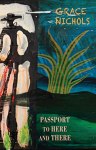 Passport to Here and There by Grace Nichols: Nichols’s ninth collection is split, like her identity, between the Guyana where she grew up and the England which she has made her home. Creole and the imagery of ghosts conjure up her coming of age in South America. She often draws on the natural world for her metaphors, and her style is characterized by alliteration and assonance. Nichols brings her adopted country to life with poems on everything from tea and the Thames to the London Underground and the Grenfell Tower fire. (My full review will appear in Issue 106 of Wasafiri literary magazine.)
-
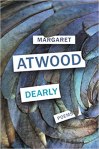 Dearly by Margaret Atwood: A treasure trove, rich with themes of memory, women’s rights, environmental crisis and bereavement and by turns reflective and playful, melancholy and hopeful. I can highly recommend it, even to non-poetry readers, because it is led by its themes; although there are layers to explore, the poems are generally about what they say they’re about, and more material than abstract. Alliteration, internal and slant rhymes, and neologisms will delight language lovers. Atwood’s imagery ranges from the Dutch masters to The Wizard of Oz; her frame of reference is as wide as the range of fields she’s written in.

(Books not pictured were read digitally, or have already gone back to the library.)
What were some of your top fiction and poetry reads of the year?
Tomorrow I’ll be naming my favorite nonfiction books from the year.
Mrs. Shields & Me: (Re)reading Carol Shields in 2020
It’s pure happenstance that I started reading Carol Shields’s work in 2006.

2005: When I first returned to England for my MA program at Leeds, I met a PhD student who was writing a dissertation on contemporary Canadian women writers. At that point I could literally name only one – Margaret Atwood – and I hadn’t even read anything by her yet.
2006: Back in the States after that second year abroad, living with my parents and killing time until my wedding, I got an evening job behind the circulation desk of the local community college library. A colleague passed on four books to me one day. By tying them up in a ribbon, she made a gift out of hand-me-downs: The Giant’s House, The Secret History, and two by Shields: Happenstance and The Stone Diaries. I’ve gone on to read most or all of the books by these authors, so I’m grateful to this acquaintance I’ve since lost touch with.
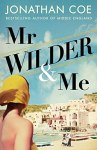
The inspiration for my post title.
Starting in June this year, I joined Marcie of Buried in Print in reading or rereading six Shields novels. She’s been rereading Shields for many years, and I benefited from her insight and careful attention to connections between the works’ characters and themes during our buddy reads. I’d treated myself to a secondhand book binge in the first lockdown, including copies of three Shields novels I’d not read before. We started with these.
Small Ceremonies (1976)
Shields’s debut ended up being my surprise favorite. A flawless novella, it brings its many elements to a satisfying conclusion and previews the author’s enduring themes in 180 pages. Judith is working on a third biography, of Susanna Moodie, and remembering the recent sabbatical year that she and her husband, a Milton scholar, spent with their two children in Birmingham. High tea is a compensating ritual she imported from a dismal England. She also brought back an idea for a novel. Meanwhile family friend Furlong Eberhardt, author of a string of twee, triumphantly Canadian novels, is casting around for plots.
 What ensues is something of a sly academic comedy à la David Lodge, laced with Shields’s quiet wisdom on marriage, parenting, the writer’s vocation, and the difficulty of ever fully understanding another life. Specific links to her later work include a wonderful dinner party scene with people talking over each other and a craft project.
The Box Garden (1977)
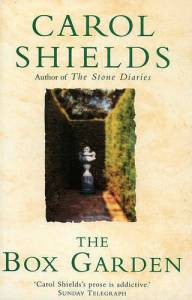 The companion novel to Small Ceremonies is narrated by Judith’s sister Charleen, a poet and single mother who lives in Vancouver and produces the National Botanical Journal. I imagined the sisters representing two facets of Shields, who had previously published poetry and a Moodie biography. Charleen is preparing to travel to Toronto for their 70-year-old mother’s wedding to Louis, an ex-priest. Via flashbacks and excruciating scenes at the family home, we learn how literally and emotionally stingy their mother has always been. If Charleen’s boyfriend Eugene’s motto is to always assume the best of people, her mother’s modus operandi is to assume she’s been hard done by.
The title comes from the time when a faithful Journal correspondent, the mysterious Brother Adam, sent Charleen some grass seed to grow in a window box – a symbol of thriving in spite of restrictive circumstances. I thought the plot went off in a silly direction, but loved the wedding reception. Specific links to Shields’s later work include a botanical hobby, a long train journey, and a final scene delivered entirely in dialogue. 
A Celibate Season (1991)
“We’re suffering a communication gap, that’s obvious.”
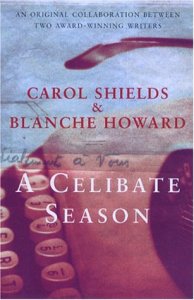 This epistolary novel was a collaboration: Blanche Howard wrote the letters by Jocelyn (“Jock”), who’s gone to Ottawa to be the legal counsel for a commission looking into women’s poverty, while Shields wrote the replies from her husband Charles (“Chas”), an underemployed architect who’s keeping the home fire burning back in Vancouver. He faces challenges large and small: their daughter’s first period versus meal planning (“Found the lentils. Now what?”). The household starts comically expanding to include a housekeeper, Chas’s mother-in-law, a troubled neighbor, and so on.
Both partners see how the other half lives. The misunderstandings between them become worse during their separation. Howard and Shields started writing in 1983, and the book does feel dated; they later threw in a jokey reference to the unreliability of e-mail to explain why the couple are sending letters and faxes. Two unsent letters reveal secrets Jock and Chas are keeping from each other, which felt like cheating. I remained unconvinced that so much could change in 10 months, and the weird nicknames were an issue for me. Plus, arguing about a solarium building project? Talk about First World problems! All the same, the letters are amusing.
Rereads
Happenstance (1980/1982)
 This was the first novel I read by Shields. My Penguin paperback gives the wife’s story first and then you flip it over to read the husband’s story. But the opposite reflects the actual publishing order: Happenstance is Jack’s story; two years later came Brenda’s story in A Fairly Conventional Woman. The obvious inheritor of the pair is A Celibate Season with the dual male/female narratives, and the setups are indeed similar: a man is left at home alone with his teenage kids, having to cope with chores and an unexpected houseguest.
What I remembered beforehand: The wife goes to a quilting conference; an image of a hotel corridor and elevator.
Happenstance
Jack, a museum curator in Chicago, is writing a book about “Indian” trading practices (this isn’t the word we’d use nowadays, but the terminology ends up being important to the plot). He and his best friend Bernie, who’s going through a separation, are obsessed with questions of history: what gets written down, and what it means to have a sense of the past (or not). I loved all the little threads, like Jack’s father’s obsession with self-help books, memories of Brenda’s vivacious single mother, and their neighbor’s failure as Hamlet in a local production. I also enjoyed an epic trek in the snow in a final section potentially modeled on Ulysses. 
A Fairly Conventional Woman
“Aside from quiltmaking, pleasantness was her one talent. … She had come to this awkward age, forty, at an awkward time in history – too soon to be one of the new women, whatever that meant, and too late to be an old-style woman.”
Brenda is in Philadelphia for a quilting conference. Quilting, once just a hobby, is now part of a modern art movement and she earns prizes and hundreds of dollars for her pieces. The hotel is overbooked, overlapping with an International Society of Metallurgists gathering, and both she and Barry from Vancouver, an attractive metallurgist in a pinstriped suit whom she meets in the elevator, are driven from their shared rooms by roommates bringing back one-night stands. This doesn’t add anything to the picture of a marriage in Jack’s story and I only skimmed it this time. It’s a wonder I kept reading Shields after this, but I’m so glad I did! 
I reviewed these last two earlier this year. They were previously my joint favorites of Shields’s work, linked by a gardening hobby, the role of chance, and the unreliability of history and (auto)biography. They remain in my top three.
 The Stone Diaries (1995)
What I remembered beforehand: a long train ride, a friend who by the feeling ‘down there’ thought that someone had had sex with her the night before, and something about the Orkney Islands.

Larry’s Party (1997)
What I remembered beforehand: a food poisoning incident (though I’d thought it was in one of Shields’s short stories), a climactic event involving a garden maze, a chapter entitled “Larry’s Penis,” and the closing dinner party scene.

Looking back: Fortunately, in the last 15 years I’ve done something to redress my ignorance, discovering Canadian women writers whom I admire greatly: Elizabeth Hay, Margaret Laurence, Mary Lawson and especially Margaret Atwood and Carol Shields.
Looking out: “I am watching. My own life will never be enough for me. It is a congenital condition, my only, only disease in an otherwise lucky life. I am a watcher, an outsider whether I like it or not, and I’m stuck with the dangers that go along with it. And the rewards.”
- That’s Judith on the last page of Small Ceremonies. It’s also probably Shields. And, to an extent, it seems like me. A writer, but mostly a reader, absorbing other lives.
Looking forward: I’m interested in rereading Shields’s short stories and Mary Swann (to be reissued by World Editions in 2021). And, though I’ve read 13 of her books now, there are still plenty of unread, lesser-known ones I’ll have to try to find secondhand one day. Her close attention to ordinary lives and relationships and the way we connect to the past makes her work essential.
 Bookish Beck = Rebecca Foster. American transplant to England. Freelance proofreader and book reviewer.
 Bookish Beck