Wellcome Book Prize Shadow Panel Decision
Addiction, death, infertility, surgery, transhumanism and vaccines: It’s been quite the varied reading list for the five of us this spring! Lots of science, lots of medicine, but also a lot of stories and imagination.
After some conferring and voting, we have arrived at our shadow panel winner for the Wellcome Book Prize 2018: To Be a Machine by Mark O’Connell.
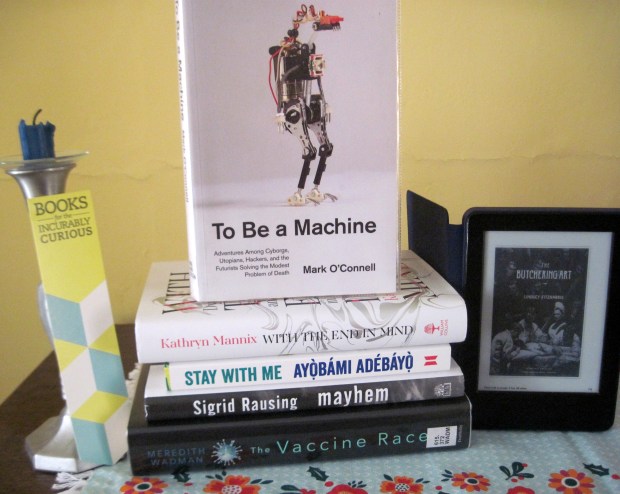
Rarely have I been so surprised to love a book. It’s a delight to read, and no matter what your background or beliefs are, it will give you plenty to think about. It goes deep down, beneath our health and ultimately our mortality, to ask what the essence of being human is.
Here’s what the rest of the shadow panel has to say about our pick:
Annabel: “O’Connell, as a journalist and outsider in the surprisingly diverse field of transhumanism, treats everyone with respect: asking the questions, but not judging, to get to the heart of the transhumanists’ beliefs. For a subject based in technology, To Be a Machine is a profoundly human story.”
Clare: “The concept of transhumanism may not be widely known or understood yet, but O’Connell’s engaging and fascinating book explains the significance of the movement and its possible implications both in the distant future and how we live now.”
Laura: “My brain feels like it’s been wired slightly differently since reading To Be a Machine. It’s not just about weird science and weird scientists, but how we come to terms with the fact that even the luckiest of us live lives that are so brief.”
Paul: “An interesting book that hopefully will provoke further discussion as we embrace technology and it envelops us.”

On Monday we’ll find out which book the official judges have chosen. I could see three or four of these as potential winners, so it’s very hard to say who will take home the £30,000.
Who are you rooting for?
Wellcome Book Prize: Shortlist Recap
Tomorrow morning we will announce our Wellcome Book Prize 2018 shadow panel winner. Beforehand I wanted to do a quick recap of my reviews, especially for the two books that I read before the shortlist announcement. My full reviews are here:
Stay with Me by Ayobami Adebayo 
To Be a Machine by Mark O’Connell 
Mayhem by Sigrid Rausing
The Vaccine Race by Meredith Wadman
I give some extra thoughts on and favorite quotes from the other two below:
The Butchering Art by Lindsey Fitzharris
 This is a great blend of medical history and popular science that should draw in readers who wouldn’t normally gravitate to either topic – provided they aren’t too squeamish. Fitzharris has recently returned to Oxford as a visiting academic, and this has also been nominated for the Wolfson History Prize. Follow her on Instagram (@drlindseyfitzharris) for a steady stream of gruesomely fascinating photos (I wish The Butchering Art had been illustrated!). Her next book will be much of a muchness, it seems, documenting the early years of plastic surgery after World War I through the story of pioneering surgeon Harold Gillies.
In the days before Joseph Lister…
“Operating theaters were gateways to death. It was safer to have an operation at home than in a hospital, where mortality rates were three to five times higher than they were in domestic settings.”
“The surgeon was very much viewed as a manual labourer who used his hands to make his living, much like a key cutter or plumber today.”
See what the rest of the shadow panel has to say about this book:
Annabel’s review: “[A]n extremely readable account of a ground-breaking career which led to real advances in hospital medicine. I enjoyed the whole, but particularly the grisly bits!”
Laura’s review: “It’s easy for me to feel a bit impatient with popular histories of periods or subjects that I know well, but Fitzharris strikes exactly the right note, writing clearly and accessibly with no dumbing down.”
Paul’s review: “It is one of the better books that I have read on medical history[;] Fitzharris writes in an engaging way on a subject that is not going to appeal to everyone, but in amongst all the blood is the fascinating story of Joseph Lister.”
With the End in Mind by Kathryn Mannix
 “It’s time to talk about dying. This is my way of promoting the conversation,” Mannix writes in her introduction to this accessible and reassuring book about death. She believes we are afraid of death because of our misconception that it is inevitably painful and undignified. In her decades of working in hospice care, this has rarely been the case. (Thank goodness that, compared to the earlier nineteenth-century situation Fitzharris surveys, we have reliable pain control options.) Mannix sees the role of the hospice worker as being like a midwife for the dying, a helpful idea I first encountered in Henry Fersko-Weiss’s Caring for the Dying: The Doula Approach to a Meaningful Death.
Many of the stories in this book are of peaceful deaths the patient and family had time to prepare for. Others are sad stories of denial. One, though, is quite gruesome, yet magnificently described. Alex, a young man with testicular teratoma, has a massive GI bleed:
“Alex’s head is thrown back, almost as though it is a voluntary movement. A huge, dark-red python slithers rapidly out of his mouth, pushing his head backwards as it coils itself onto the pillow beside him; the python is wet and gleaming and begins to stain the pillowcase and sheets with its red essence as Alex takes one snoring breath, and then stops breathing. His mother screams as he realises that the python is Alex’s blood. Probably all of his blood.”
See what the rest of the shadow panel has to say about this book:
Annabel’s review: “[I]t is helping patients, and their families and loved ones, to understand the process of dying, and dispelling the taboos around it that make this book such a valuable and compelling read. I wish I’d read something like this book before my mum died.”
Clare’s review: “For me, this enlightening book is a strong potential winner for the Wellcome Book Prize and I hope it brings comfort and guidance for those who need it.”
Laura’s review: “[The book is] written from her own experiences as a specialist in palliative care, and this proved, for me, both its strength and its downfall. … Mannix writes particularly well on the characteristic patterns of somebody who is entering a gradual decline.”
Paul’s review: “Can highly recommend this moving book and I think it should be essential reading for anyone who has any concerns about death.”
I wouldn’t be at all surprised to see either of these win the Wellcome Book Prize on Monday. Stay tuned for tomorrow’s shadow panel winner announcement, and Sunday’s write-up of a shortlist event I’m attending in London.
Final Wellcome Book Prize Shortlist Review: The Vaccine Race by Meredith Wadman
I had hoped this would be a comparable read to Rebecca Skloot’s The Immortal Life of Henrietta Lacks and Siddhartha Mukherjee’s The Emperor of All Maladies, which are two of my absolute favorite books and were also among the first to turn me on to medical-themed literature. Instead, I found myself skimming through the book’s dense scientific and historical information: like Mukherjee’s other book, The Gene, which made last year’s Wellcome shortlist, The Vaccine Race is overstuffed with a mixture of the familiar (for me, at least – genetics), the seemingly irrelevant (cell culture techniques and scientific nomenclature), and the truly interesting (questions of medical ethics).
The unlikely protagonist of this story is Leonard Hayflick, a single-minded and resourceful researcher who is still alive in his late eighties and assented to dozens of interviews and many more e-mails as Wadman put this book together. While in high school Hayflick made a chemistry lab in his basement, and in college he built his father a dental lab: that tells you how driven he was. After graduating from the University of Pennsylvania, he worked at the Wistar Institute on its campus. He chiefly investigated whether viruses cause cancer and whether a cell line will be immortal or subject to the normal rules of aging – the Hayflick limit, named after him, is the number of cell divisions possible before a cell line dies out.
 Hayflick experimented on his third child’s placenta, but also on aborted fetuses from the university hospital. Replacement fetal cell lines sourced from the Karolinska Institute in Stockholm, Sweden were used to produce the polio, rubella and rabies vaccines. In particular, he relied on the WI-38 line he developed from fetal cells taken from the Swedish “Mrs. X,” who – like Henrietta Lacks’s family – was never compensated; she did not want to be interviewed for or mentioned by name in this book. In the 1970s, with Roe v. Wade in the pipeline, the controversy over using aborted fetal tissue in research heated up*, and Hayflick was somewhat disgraced in the course of a 1976 lawsuit about his right to profit from WI-38.
But that’s not the only dubious ethical situation associated with the development of the twentieth century’s major vaccines: Hayflick’s bosses and associates had also tested early vaccines on intellectually disabled child “volunteers,” while a celebrated cancer researcher had injected cells into dying hospital patients and healthy prisoners in the name of science. Wadman writes, “by the mid-1960s, ordinary people were becoming less willing to give scientists carte blanche to tinker with human beings on a ‘Trust me, I know what’s best for you’ basis.” The question is whether these morally suspect strategies were worth it, given the alternative: rubella in pregnancy causes severe birth defects including blindness, while polio can be crippling and untreated rabies can lead to a slow and painful death.
These ethical questions are certainly worth thinking about, though the abortion history in particular is probably of much more interest to American readers. Here in Europe, abortion is a non-issue, so I don’t expect anyone to get fired up about the history of fetal tissue research. Wadman is certainly a thorough researcher and capable storyteller who doesn’t talk down when explaining science. That said, she might have scaled back on the science a bit to ensure that her work holds broader appeal for lay readers of popular science and medical history.
*More recently, Debi Vinnedge’s Children of God for Life nonprofit has opposed stem cell research despite a Vatican ruling that vaccines developed from fetal tissue are acceptable to use as long as there is no alternative.
My rating:
See what the rest of the shadow panel has to say about this book:
Annabel’s blog tour review: “The thrillerish feel to big pharma’s politics, and Hayflick’s continual battles for recognition and against anyone who wanted to take his cells away from him made for fascinating reading and added the much-needed human aspect.”
Clare’s review: “The Vaccine Race is a very dense read and some of the lengthier descriptions of things like the finer points of the biotechnology industry went a bit over my head in places. … However, the ethical debates are fascinating and clearly presented.”
Laura’s review: “Wadman writes clearly and compellingly, and given how much material she’s handling, managing to structure the book sensibly is a feat in itself. But I felt that The Vaccine Race was often not one thing or the other.”
Paul’s review: “It is a very important story that Wadman is telling … especially given that we may well be on the dawn of a new era in medicine with the rise of immunity against antibiotics.”
(Also, be sure to stop by Paul’s site today for an exclusive extract from The Vaccine Race as part of the ongoing blog tour.)
My gut feeling: This is the most science-y of the six books on the shortlist. For me that actually works against the broadness and public-facing nature of the prize, as expressed in its brief: “At some point, medicine touches all our lives. Books that find stories in those brushes with medicine are ones that add new meaning to what it means to be human. The subjects these books grapple with might include birth and beginnings, illness and loss, pain, memory, and identity. In keeping with its vision and goals, the Wellcome Book Prize aims to excite public interest and encourage debate around these topics.”
Shortlist strategy:
- Tomorrow I’ll quickly recap my thoughts about the two shortlisted books I read before the shortlist announcement, With the End in Mind and The Butchering Art.
- On Saturday morning I’ll announce our shadow panel winner. That day Clare and I are attending an event featuring five of the shortlisted authors in conversation at the Wellcome Collection in London. I’ll report back about it on Sunday.
- Monday is the awards ceremony, which I’ll be attending for the second year in a row. Expect my write-up of the experience on Tuesday. (In between you get a break from Wellcome Prize stuff with Library Checkout plus some recommendations for May!)
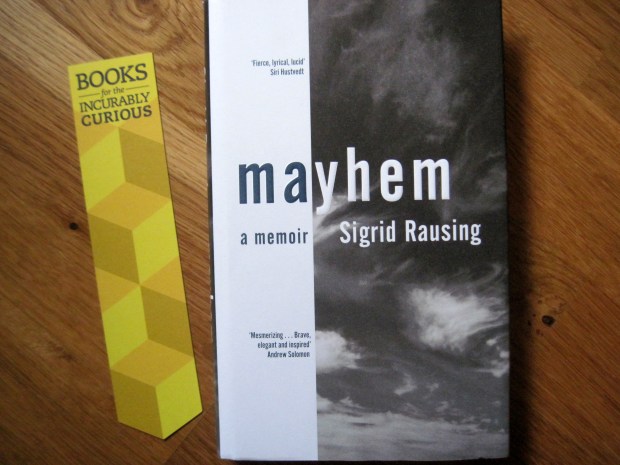
Wellcome Book Prize Blog Tour: Sigrid Rausing’s Mayhem
“Now that it’s all over I find myself thinking about family history and family memories; the stories that hold a family together and the acts that can split it apart.”
Sigrid Rausing’s brother, Hans, and his wife, Eva, were wealthy philanthropists – and drug addicts who kept it together long enough to marry and have children before relapsing. Hans survived that decade-long dive back into addiction, but Eva did not: in July 2012 the 48-year-old’s decomposed body was found in a sealed-off area of the couple’s £70 million Chelsea mansion. The postmortem revealed that she had been using cocaine, which threw her already damaged heart into a chaotic rhythm. She’d been dead in their drug den for over two months.
Those are the bare facts. Scandalous enough for you? But Mayhem is no true crime tell-all. It does incorporate the straightforward information that is in the public record – headlines, statements and appearances – but blends them into a fragmentary, dreamlike family memoir that proceeds through free association and obsessively deliberates about the nature and nurture aspects of addictive personalities. “We didn’t understand that every addiction case is the same dismal story,” she writes, in a reversal of Tolstoy’s maxim about unhappy families.

Rausing’s memories of idyllic childhood summers in Sweden reminded me of Tove Jansson stories, and the incessant self-questioning of a family member wracked by remorse is similar to what I’ve encountered in memoirs and novels about suicide in the family, such as Jill Bialosky’s History of a Suicide and Miriam Toews’ All My Puny Sorrows. Despite all the pleading letters and e-mails she sent Hans and Eva, and all the interventions and rehab spells she helped arrange, Rausing has a nagging “sense that when I tried I didn’t try hard enough.”
The book moves sinuously between past and present, before and after, fact and supposition. There are a lot of peculiar details and connections in this story, starting with the family history of dementia and alcoholism. Rausing’s grandfather founded the Tetra Pak packaging company, later run by her father. Eva had a pet conspiracy theory that her father-in-law murdered Swedish Prime Minister Olof Palme in 1986.
Rausing did anthropology fieldwork in Estonia and is now the publisher of Granta Books and Granta magazine. True to her career in editing, she’s treated this book project like a wild saga that had to be tamed, “all the sad and sordid details redacted,” but “I fear I have redacted too much,” she admits towards the end. She’s constantly pushing back against the more sensational aspects of this story, seeking instead to ground it in family experience. The book’s sketchy nature is in a sense necessary because information about her four nieces and nephews, of whom she took custody in 2007, cannot legally be revealed. But if she’d waited until they were all of age, might this have been a rather different memoir?
Mayhem effectively conveys the regret and guilt that plague families of addicts. It invites you to feel what it is really like to live through the “years of failed hope” that characterize this type of family tragedy. It doesn’t offer any easy lessons seen in hindsight. That makes it an uncomfortable read, but an honest one.
With thanks to Midas PR for the free copy for review.
My gut feeling: This book’s style could put off more readers than it attracts. I can think of two other memoirs from the longlist that I would have preferred to see in this spot. I suppose I see why the judges rate Mayhem so highly – Edmund de Waal, the chair of this year’s judging panel, describes the Wellcome shortlist as “books that start debates or deepen them, that move us profoundly, surprise and delight and perplex us” – but it’s not in my top tier.
See what the rest of the shadow panel has to say about this book:
Annabel’s review: “Rausing is clearly a perceptive writer. She is very hard on herself; she is brutally honest, knowing that others will be hurt by the book.”
Clare’s review: “Rausing writes thoughtfully about the nature of addiction and its many contradictions.”
Laura’s review: “One of the saddest bits of Mayhem is when Rausing simply lists some of the press headlines that deal with her family story in reverse order, illustrating the seemingly inescapable spiral of addiction.”
Paul’s review: “It is not an easy read subject wise, thankfully Rausing’s sparse but beautiful writing helps makes this an essential read.”
Also, be sure to visit Laura’s blog today for an exclusive extract from Mayhem.
Shortlist strategy: Tomorrow I’ll post a quick response to Meredith Wadman’s The Vaccine Race.
If you are within striking distance of London, please consider coming to one of the shortlist events being held this Saturday and Sunday.
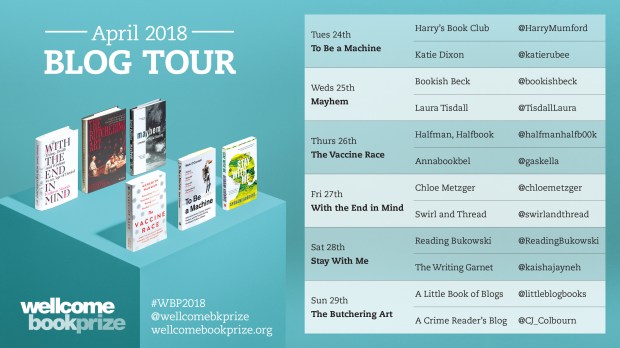
I was delighted to be asked to participate in the Wellcome Book Prize blog tour. See below for details of where other reviews and extracts have appeared or will be appearing soon.
Blog Tour Review: The Leavers by Lisa Ko
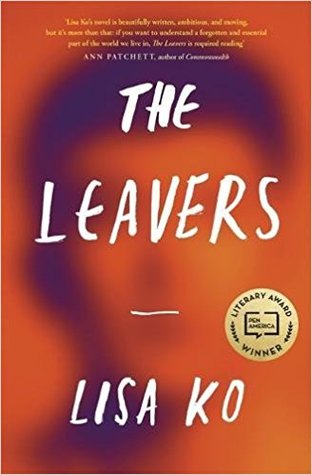
Lisa Ko’s exceptional debut novel, The Leavers, was hand-picked by Barbara Kingsolver for the 2016 PEN/Bellwether Prize for Socially Engaged Fiction, was a finalist for the 2017 National Book Award for Fiction in the States, and is now the launch title for Little, Brown UK’s new imprint, Dialogue Books, which will feature “stories from illuminating voices often excluded from the mainstream,” specifically those “for, about and by readers from the LGBTQI+, disability, working class and BAME communities.” I highly recommend it to fans of Nathan Hill’s The Nix, Atticus Lish’s Preparation for the Next Life and Celeste Ng’s Little Fires Everywhere. It’s an ambitious and satisfying novel set in New York and China, with major themes of illegal immigration, searching for a mother and a sense of belonging, and deciding what to take with you from your past.
 Eleven-year-old Deming Guo and his mother Peilan (nicknamed “Polly”), an undocumented immigrant, live in New York City with another Fuzhounese family: Leon, Polly’s boyfriend, works in a slaughterhouse, and they share an apartment with his sister Vivian and her son Michael. Deming gets back from school one day to find that his mother never came home from her job at a nail salon. She’d been talking about moving to Florida to work in a restaurant, but how could she just leave him behind with no warning?
Ten years later, Deming is Daniel Wilkinson, adopted and raised in upstate New York by a pair of white professors, Peter and Kay. He’s made a mess of his life with drinking and an addiction to online poker, and has been expelled from college. Now the guitar is his life, but even his best friend and bandmate Roland Fuentes isn’t willing to cut him any slack when he doesn’t show up for rehearsals and performances. Peter and Kay are pulling strings to get Daniel accepted into their college, but he keeps screwing up every chance he’s given. He can only hope his efforts to reconnect with his birth mother will be more successful.
The novel shifts fluidly between a third-person account of our protagonist then (Deming) and now (Daniel) and a first-person confession as Polly explains all: her upbringing in poverty in China, her pregnancy out of wedlock, her illegal entry to the United States, and why she had to leave Deming so suddenly. Polly and Deming/Daniel are vibrant characters, and I ached for their struggles. Both have the sense of being split between lives, of “juggling selves.” Their collective story is about figuring out who you are, what can be made right, and what to leave behind as you move forward in life. It’s such a beautiful novel, and an impressive debut from Lisa Ko.
My rating:
The Leavers will be published in paperback by Dialogue Books on April 26th. My thanks to Little, Brown for the free copy for review.
Book Triage
I feel like I have more books staring at me than ever before. I could blame free library reservations and a trip to Wigtown, but there’s one more major reason for the books stacking up: an utter lack of restraint when it comes to requesting or accepting books for review. I’ve had loads of books coming through the door in the past month or so. Some were offered to me by authors or publishers via Goodreads, Twitter or my blog’s contact form. Others I sent e-mails to request after I saw tempting reviews in the Guardian or previews on Susan’s blog.
Of course I want to read all of these books. I really want to read most of them. Otherwise I wouldn’t have gone to the trouble of requesting, borrowing or buying them. But even so, there’s only so much time. It’s not just a simple matter of picking up the book(s) from the stack that I most feel like reading at a given moment anymore. No, it’s become a triage process whereby I have to assess them by order of urgency.
So, what are my priorities? Here’s a baker’s dozen, in photos.
- Wellcome Book Prize shortlist reading. I’m on the last of six now; this is for the blog tour coming up next week.
- Library books that are due in early May and requested after me.
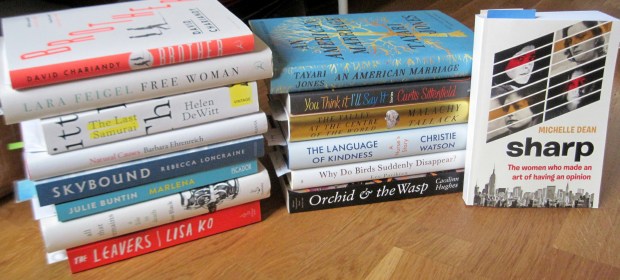
- Books I’ve requested for a blog review, in release date order. I feel so behind that you can expect some doubled-up reviews or mini-reviews in roundup form.
- Books I’ve agreed to review for another outlet, even if that’s just Goodreads.

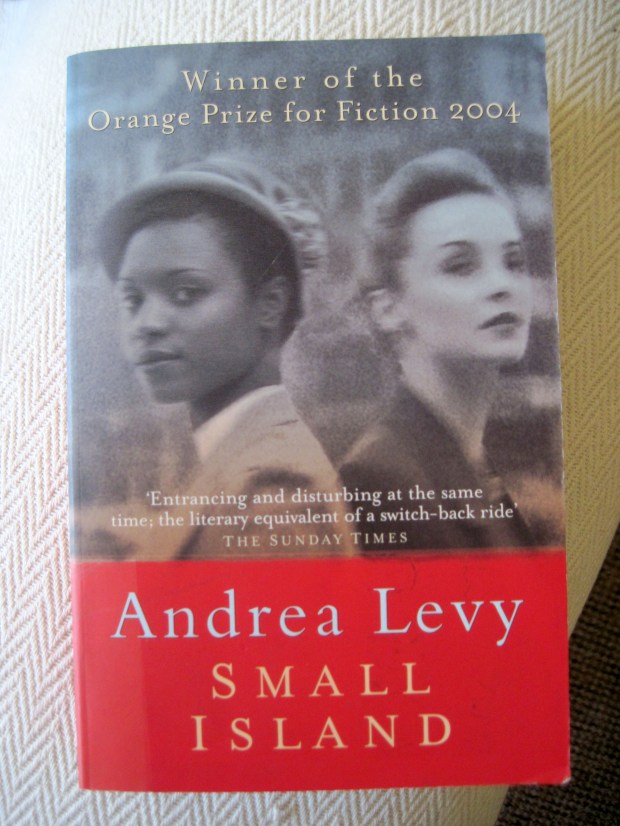
- My first-ever buddy read: Small Island with Buried in Print and Consumed by Ink, arranged months ago. Join us!
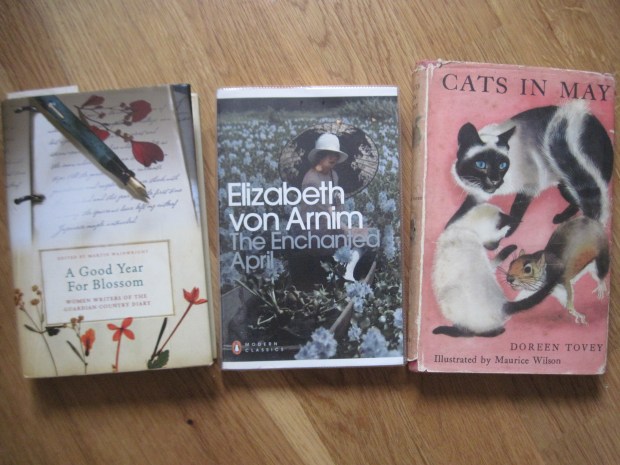
- Month- or season-specific reads.
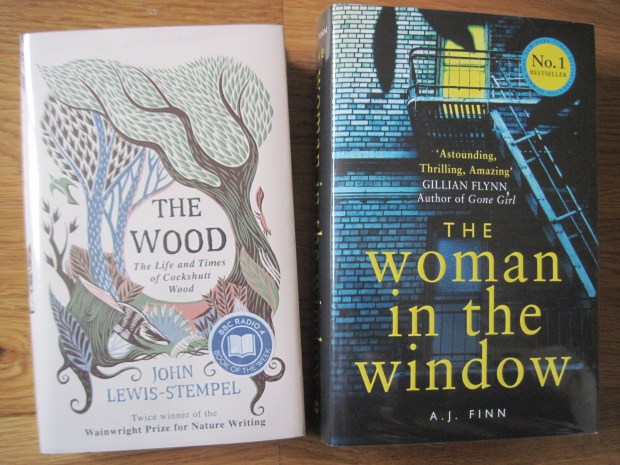
- Public library books with no current renewal issues.
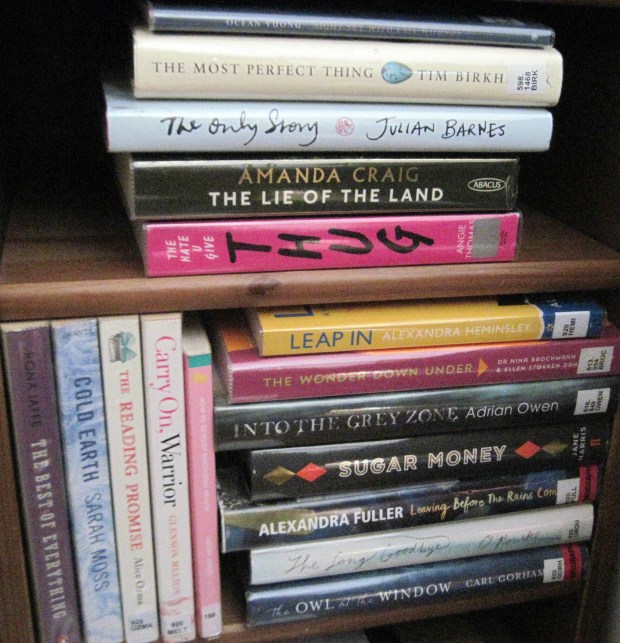
- Booker Prize winners for the 50th anniversary this summer – I’ll at least review the Coetzee for Shiny New Books, and perhaps a few more on the blog if I get the time.

- Three more Iris Murdoch novels to read as part of Liz’s #IMReadalong later on in the year, starting in June.

- Bibliotherapy prescriptions.

- Books I’ve set aside temporarily, generally because I have enthusiastically started too many at once and had to put some down to pick up more time-sensitive review books. Many of these I was enjoying very much and could see turning out to be 4- or even 5-star reads (especially Brooks, Frame and Matthiessen); others I might end up abandoning.

- University library books, which can be renewed pretty much indefinitely.

- Every other book I own, even if I had it eyed up for a particular challenge. My vague resolution to read lots of travel books and biographies has pretty much gone by the wayside so far. I also have barely managed a single classic. Sigh! There’s still two-thirds of the year left, but I certainly won’t be managing the one a month from these genres that I proposed.
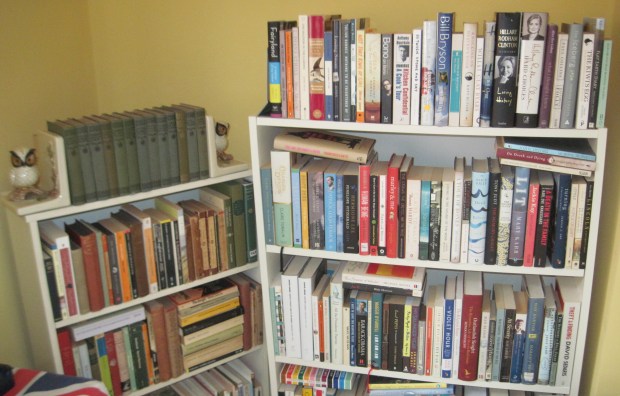
What’s your book triage situation like?
Two Memoirs: Border Control and Breast Cancer
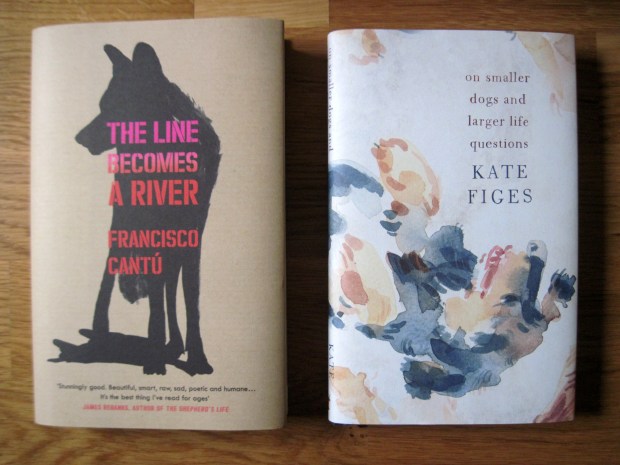
The Line Becomes a River
Francisco Cantú was a U.S. Border Patrol agent in Arizona and Texas for four years. Agents tracked illegals using the same skills with which hunters stalk their prey. Once captured, the would-be immigrants were detained, processed and deported. Days in the field were full of smuggled drugs, cached belongings and corpses of those who’d tried to cross in inhospitable conditions. Even when Cantú was transferred to a desk job, he couldn’t escape news of Mexican drug cartels and ritual mutilation of traitors’ corpses. Dreams of wolves and of his teeth breaking and falling out revealed that this was a more stressful career than he ever realized. Cantú worried that he was becoming inured to the violence he encountered daily – was he using his position “as a tool for destruction or as one of safekeeping”?
 Impressionistic rather than journalistic, the book is a loosely thematic scrapbook that uses no speech marks, so macho banter with colleagues blends into introspection, memories and stories. Cantú inserts snippets of U.S.–Mexico history, including the establishment of the border, and quotes from and discusses other primary and secondary texts. He also adds in fragments of his family’s history: His ancestors left Mexico during the Mexican Revolution of the 1910s, but there’s no doubt his Latino name and features made him a friendly face for illegal immigrants. He was often called upon to translate for those in custody. I felt that even if the overall policy was problematic, it was good to have someone compassionate in his job.
The final third of the book represents a change of gears: Cantú left law enforcement to be a Fulbright scholar and then embarked on an MFA in creative writing at the University of Arizona. During those years of study he worked as a barista at a food court and every day he chatted and shared food with another worker, José Martínez from Oaxaca. When José went back to Mexico to visit his dying mother and settle her estate, he was refused reentry to the United States for not having the proper papers. Cantú drew on his contacts in Border Patrol to find out when José’s hearing would be, helped his wife to gather character witness letters, and took José’s sons to visit him in the detention center during his continuance and civil trial. There’s a particularly wrenching recreated monologue from José himself.

I love these endpapers.
It is as if, for the first time, Cantú could see the human scale of U.S. immigration policy, what his mother, a former national park ranger, had described as “an institution with little regard for people.” No longer could he be blasé about the way things are. It was also, he recognized, an attempt to atone for the heartless deportations he had conducted as a Border agent. “All these years,” he said to his mother, “it’s like I’ve been circling beneath a giant, my gaze fixed upon its foot resting at the ground. But now, I said, it’s like I’m starting to crane my head upward, like I’m finally seeing the thing that crushes.” As he quotes from Holocaust historian Timothy Snyder, “It is for us as humanists to turn the numbers back into people.” That’s just what this remarkable memoir does. In giving faces to an abstract struggle, it passionately argues that people should not be divided by walls but united in common humanity.
My rating:
The Line Becomes a River was published in the UK by Bodley Head on March 1st. My thanks to the publisher for the free copy for review.
On Smaller Dogs and Larger Life Questions
It was hard to resist such a great title, especially with my penchant for cancer memoirs. In nine chapters that are almost like linked essays, Kate Figes reflects on the changes that a diagnosis of triple-negative, metastasized breast cancer has wrought in her life. However, like Vesna Goldsworthy’s Chernobyl Strawberries, the book sets the cancer experience within a wider life story of trauma and displacement. In the first essay, as Figes, a freelance nonfiction writer, approached age 60, she delighted in Zeus, their miniature wire-haired dachshund puppy, but also resented the sense of obligation. Cancer quickly changed her perspective.
 I appreciated the lack of bitterness; the book’s focus is generally on resilience and on the liberation of knowing that little is now expected of her: “when there is no need to rush just to be able to get through everything I had to achieve each day, there is a glorious sense of freedom, of empty space.” Two chapters go in-depth into Figes’s “arsenal” of cancer-fighting tools, everything from hyperbaric oxygen treatments to yoga. She gave up sugar and swears by cannabis oil, filtered water, supplements and fresh juices. Her embrace of complementary medicine and discussion of her limitations – it takes her an hour and a half to get dressed and have breakfast – will probably mean the most to others with a chronic illness.
As to the other essays, “Tennis” is an ode to a favorite hobby she had to give up; “Mediation” is about training as a family mediator. The psychological understanding she gained through this and through researching her books helped her work through childhood hurt over her parents’ divorce. “The Beach Hut” remembers recent ‘escapes’ to the seaside and contrasts them with her Jewish mother’s* escape from 1930s Germany. “Home,” my favorite essay, is about clearing out her mother’s flat and the memories and comfort a home retains, even decades later. “That’s the power I will leave behind too, the essence of having been really known. It will pervade every piece of crockery I have eaten off, … every chair I have sat on.”
Unfortunately, Figes frequently uses clichéd language – “Cancer can feel isolating” and “battle is the right word” – and seems to give credence to the damaging idea that unresolved emotional trauma caused her cancer. What with the typos and the slight repetition across the essays, this feels like a book that was put together in a hurry. A bit more time and editing could have made it more cohesive and fresh. But perhaps Figes does not have that time. Fellow cancer patients may well appreciate her dispatches from what she calls “Planet Cancer,” but it’s not a book that will particularly stand out for me in this crowded genre.
*Her mother was Eva Figes, an author in her own right.
My rating:
On Smaller Dogs and Larger Life Questions was published by Virago on February 28th. My thanks to the publisher for the free copy for review.
I Spy TBR Challenge
I spotted this recently on Ex Urbanis and it was too fun to pass up. (I believe the meme started on YouTube, but I’ve been unable to trace the chain back to the very beginning.) There are 20 categories; for each one choose at least one title or cover that fits in some way.
I decided to limit myself to books on my to-read shelves, but had to cheat for two categories and pick books I’ve already read. Some were so easy I could have picked out at least 5–10 books that fit the bill, while others were quite a challenge.
The idea is to gather up all the books within five minutes, but because I had to go up and down the stairs and survey shelves in multiple rooms it took me just over 15! See how fast you can find something for each prompt.
Food

Transport
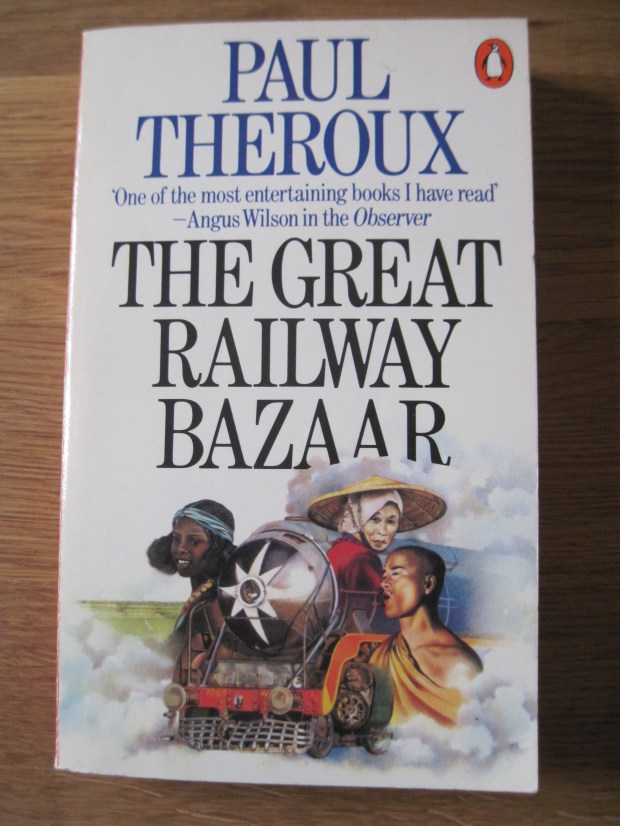
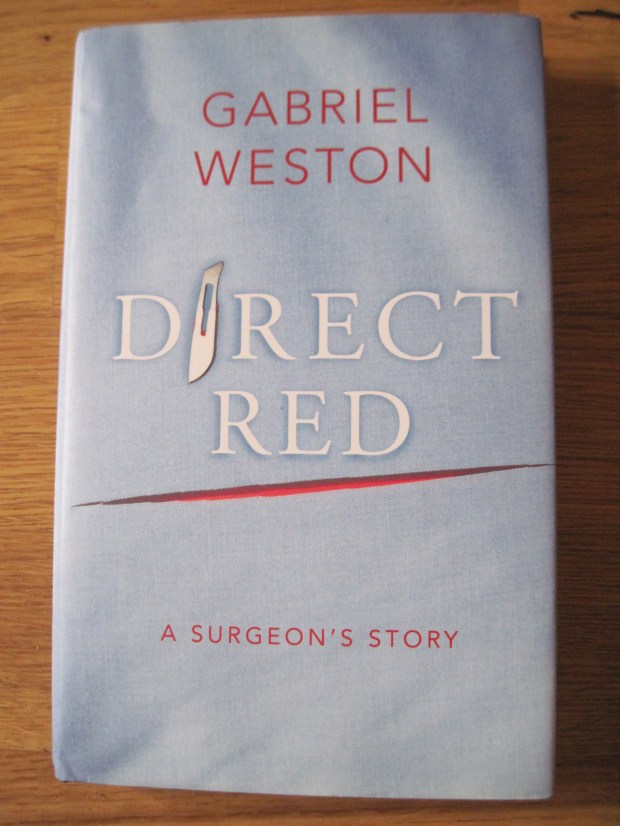
Weapon – This one was really tough, since I don’t read crime fiction. But I finally managed to find a surgeon’s memoir with a scalpel on the cover.
Animal – I could easily have found 15+ for this one, thanks to my husband’s nature books, but I stuck with fiction.
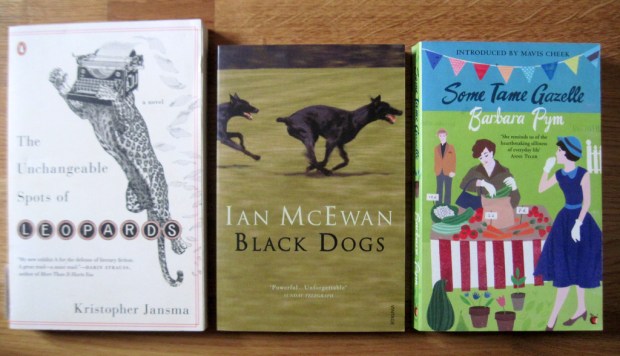
Number

Something You Read
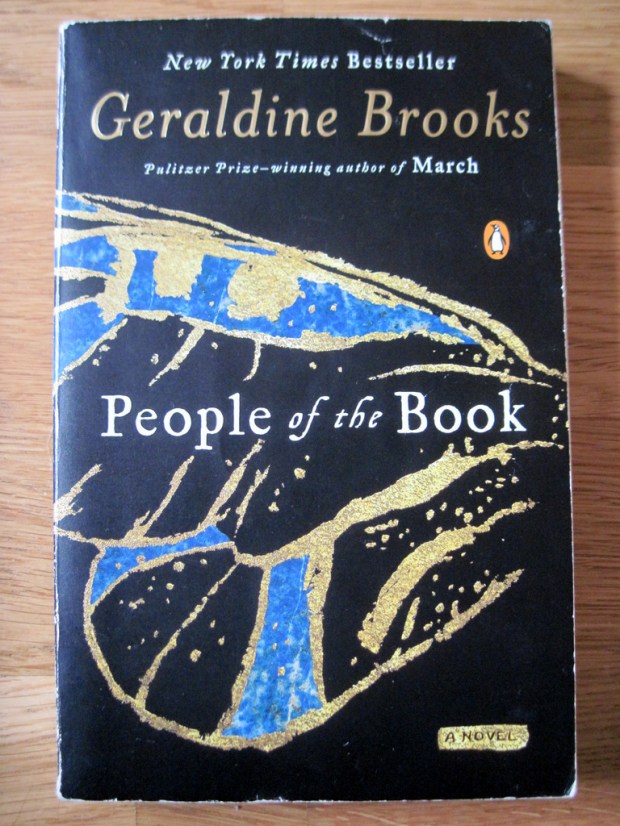
Body of Water
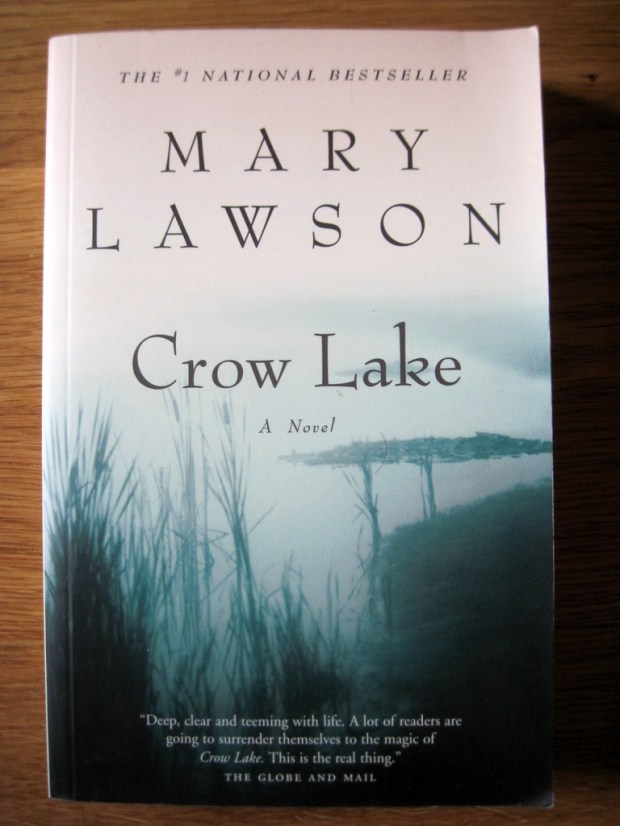
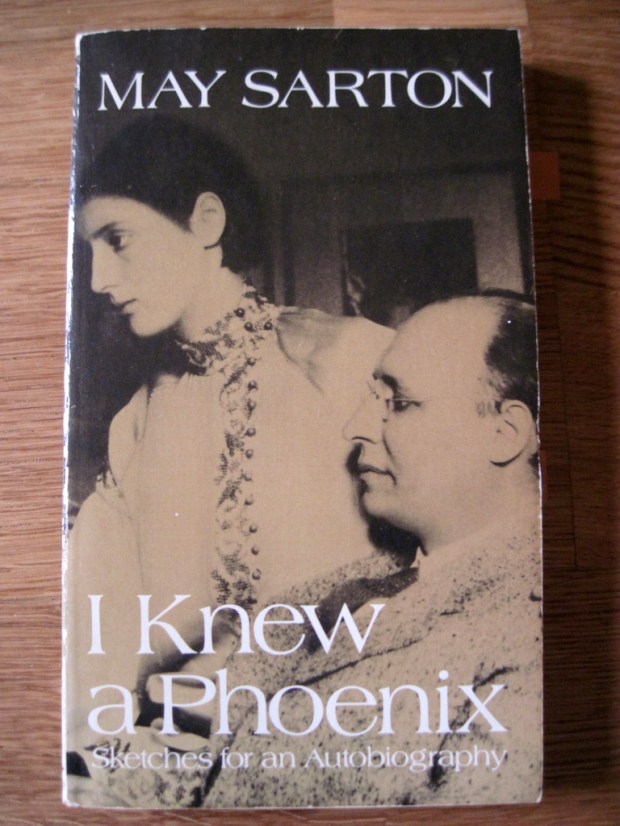
Product of Fire – Another really difficult one, so I cheated with this May Sarton memoir I’ve already read.
Royalty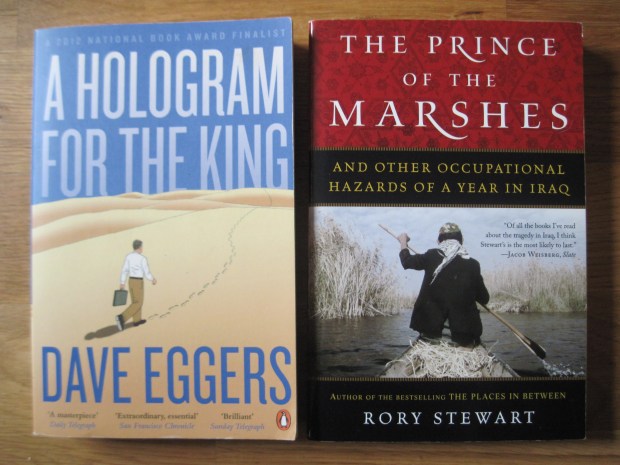
Architecture
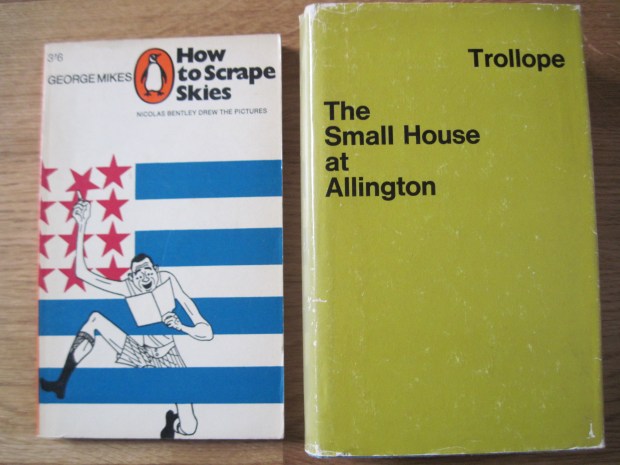
Clothing – Another cheat of sorts: all I could find was the cover of Bill Bryson’s memoir, which I’ve already read.

Family Member
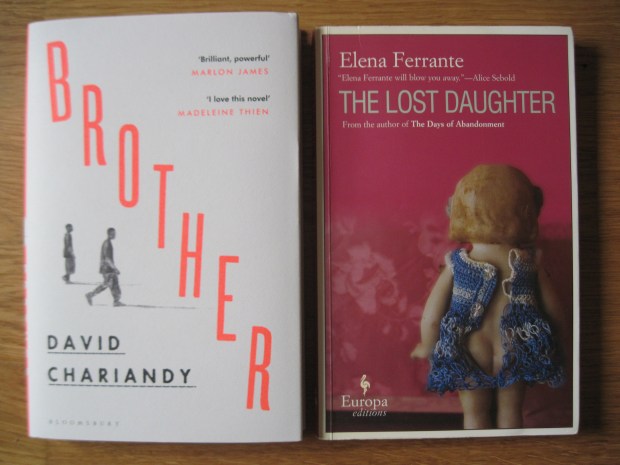
Time of Day

Music
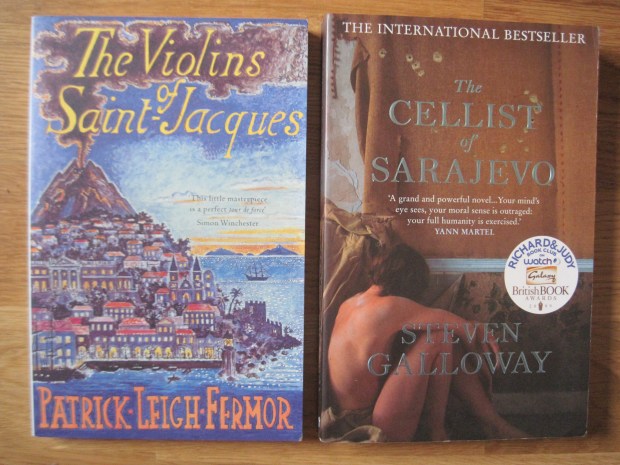
Paranormal Being
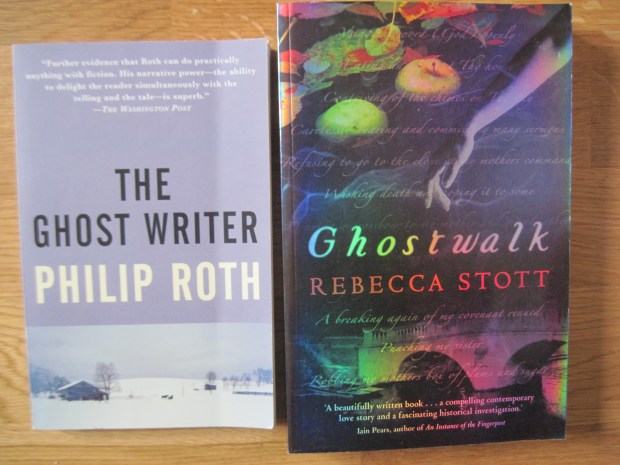
Occupation
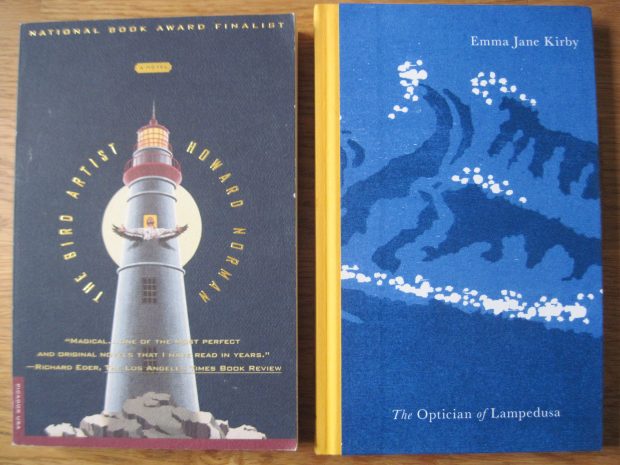
Season
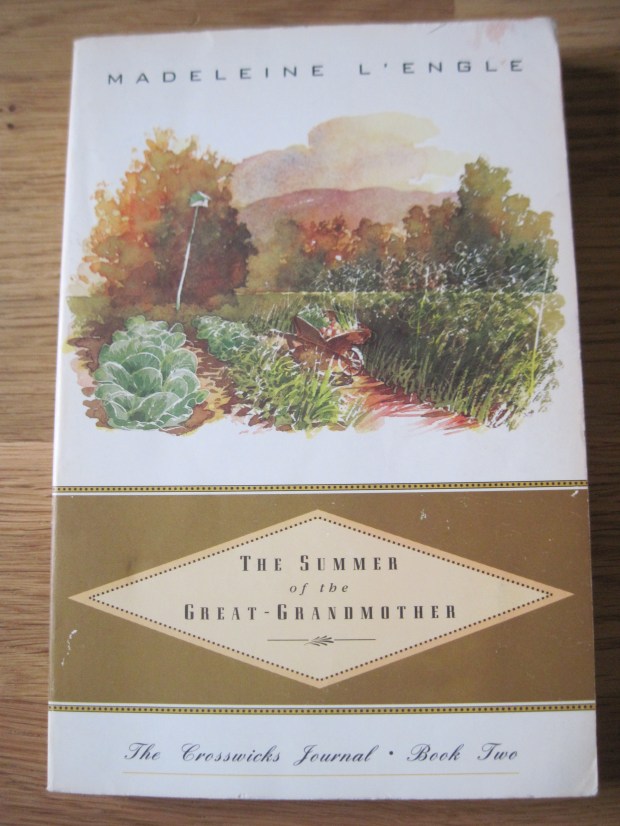
Color – Another one I could have amassed tons for. (Partially cut off is Ernest Hemingway’s Green Hills of Africa.)
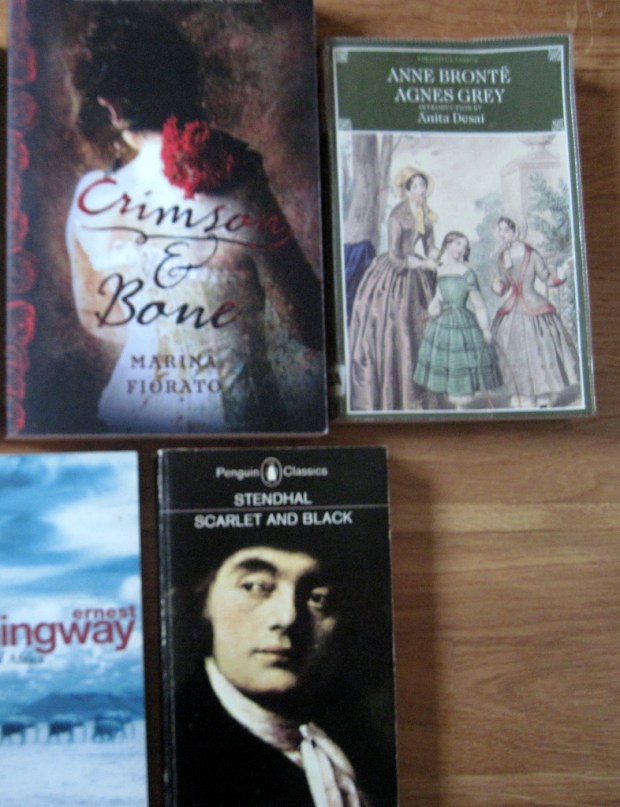
Celestial Body

Something that Grows
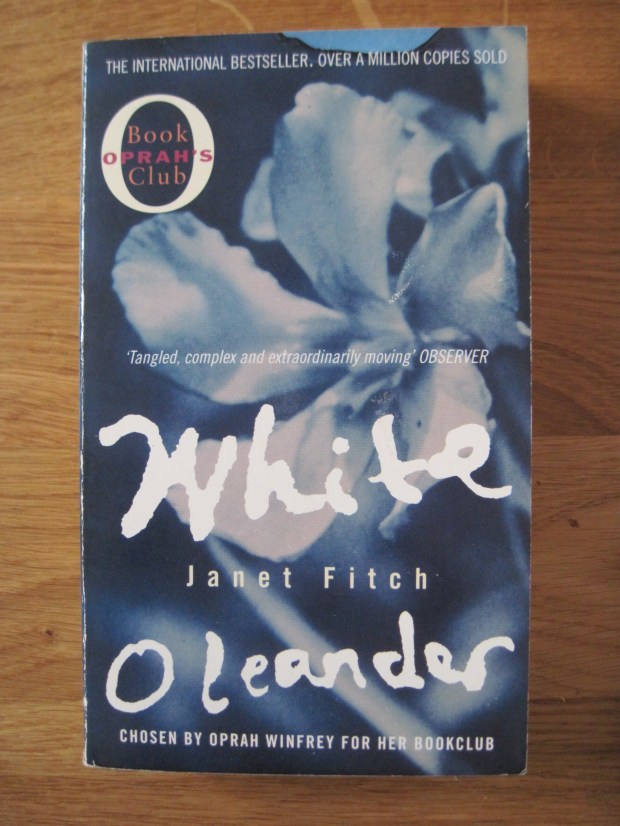
Wellcome Book Prize Shortlist: To Be a Machine by Mark O’Connell
The topic of this shortlisted book didn’t particularly appeal to me, so I was pleasantly surprised to enjoy it. Transhumanism is about using technology to help us overcome human limitations and radically extend our lifespan. Many of the strategies O’Connell, a Dublin-based freelance writer with a literature background, profiles are on the verge of science fiction. Are we looking at liberation from the rules of biology, or enslavement to technology? His travels take him to the heart of this very American, and very male, movement.
Cryogenic freezing: The first person was cryogenically frozen in 1966. Max More’s Alcor Life Extension Foundation in Scottsdale, Arizona offers whole-body or head-only (“neuro”) options for $200,000 or $80,000. More argues that the residents of Alcor are somewhere between living and dead. These entities are held in suspension in the belief that technology will one day allow us to upload the contents of the mind into a new vessel.
- This approach seems to conceive of the human mind/consciousness as pure information to be computed.
 Cyborgs: Grindhouse Wetware, near Pittsburgh, aims to turn people into literal cyborgs. Tim Cannon had a Circadia device the size of a deck of cards implanted in his arm for three months to take biometric measurements. Other colleagues have implanted RFID chips. He intends to have his arms amputated and replaced by superior prostheses as soon as the technology is available.
- That may seem extreme, but think how bound people already are to machines: O’Connell calls his smartphone a “mnemonic prosthesis” during his research travels.
Mortality as the enemy: Many transhumanists O’Connell meets speak of aging and death as an affront to human dignity. We mustn’t be complacent, they argue, but must oppose these processes with all we’re worth. One of the key people involved in that fight is Aubrey de Grey of SENS (“Strategies for Engineered Negligible Senescence”), and Google has also gotten in on it with their “Calico” project.
- O’Connell recounts explaining aging and death to his three-year-old son; his wife chipped in that – according to “Dada’s book” – perhaps by the time the boy is grown up death will no longer be a problem.
The Singularity: Posited by Ray Kurzweil, the Singularity is the future point at which artificial intelligence will surpass humanity. O’Connell likens it to the Christian idea of the Rapture, itself a moment of transcendence. At a conference on transhumanism and religion in Piedmont, California, he encounters Terasem, a religion founded recently by a transhumanist and transgender person.
- To my surprise, To Be a Machine makes frequent reference to religious ideas: O’Connell thinks of transhumanism as an attempt to reverse the Fall and become godlike, and he often describes the people he meets as zealots or saints, driven by the extremity of their beliefs. Both religion and transhumanism could be seen as a way of combating nihilism and insisting on the meaning of human life.
O’Connell’s outsider position helped me to engage with the science; he’s at least as interested, if not more so, in the deeper philosophical questions that transhumanism raises. I would caution that a grounding in religion and philosophy could be useful, as the points of reference used here range from the Gnostic gospels and St. Augustine to materialism and Nietzsche. But anyone who’s preoccupied with human nature should find the book intriguing.
You could also enjoy this purely as a zany travelogue along the lines of Elif Batuman’s The Possessed and Donovan Hohn’s Moby-Duck. The slapstick antics of the robots at the DARPA Robotics Challenge and the road trip in Zoltan Istvan’s presidential campaign Immortality Bus are particularly amusing. O’Connell’s Dickensian/Wildean delight in language is evident, and I also appreciated his passing references to William Butler Yeats.
It could be argued, however, that O’Connell was not the ideal author of this book. He is not naturally sympathetic to transhumanism; he’s pessimistic and skeptical, often wondering whether the proponents he meets are literally insane (e.g., to think that they are in imminent danger of being killed by robots). Most of the relevant research, even when conducted by Europeans, is going on in the USA, particularly in the Bay Area. So why would an Irish literary critic choose transhumanism as the subject for his debut? It’s a question I asked myself more than once, though it never stopped me from enjoying the book.
The title (from an Andy Warhol quote) may reference machines, but really this is about what it means to be human. O’Connell even ends with a few pages on his own cancer scare, a reminder that our bodies are flawed machines. I encourage you to give this a try even if you think you have no particular interest in technology or science fiction. It could also give a book club a lot to discuss.
Favorite lines:
“We exist, we humans, in the wreckage of an imagined splendor. It was not supposed to be this way: we weren’t supposed to be weak, to be ashamed, to suffer, to die. We have always had higher notions of ourselves. … The frailty is the thing, the vulnerability. This infirmity, this doubtful convalescence we refer to, for want of a better term, as the human condition.”
My rating:
See what the rest of the shadow panel has to say about this book:
Annabel’s review: “I loved this book from the front cover to the back, starting with its title. … He writes with empathy and a good deal of humour which makes the text always readable and entertaining, while provoking his readers to think deeply about their own beliefs.”
Clare’s review: “O’Connell’s prose style is wordy and ironic. He is pleasingly sceptical about many aspects of transhumanism. … It is an entertaining book which provides a lot of food for thought for a layperson like myself.”
Laura’s review: “Often, I found that his description of his own internal questions would mirror mine. This is a really fantastic book, and for me, a clear front runner for the Wellcome Book Prize.”
Paul’s review: “An interesting book that hopefully will provoke further discussion as we embrace technology and it envelops us.”
My gut feeling: Though they highlight opposite approaches to death – transcending it versus accepting it – this and Kathryn Mannix’s With the End in Mind seem to me the two shortlisted books of the most pressing importance. I’d be happy to see either of them win. To Be a Machine is an awful lot of fun to read, and it seems like a current favorite for our panel.
Shortlist strategy:
- I’m coming close to the end of my skim of The Vaccine Race by Meredith Wadman.
- I’m still awaiting a review copy of Mayhem by Sigrid Rausing, which I’ll be featuring as part of the official Wellcome Book Prize shortlist blog tour.
Meeting Mrs. Malaprop
I’d been aware for perhaps a few years that malapropisms are named after a character who’s prone to verbal gaffes. Last night I met Mrs. Malaprop herself at a performance of Richard Brinsley Sheridan’s The Rivals (1775) at nearby Watermill Theatre. This was our second trip to the Watermill, after The Picture of Dorian Gray last September. It’s a small and intimate venue and the production was somewhat in the round, so we were in a row to the left-hand side of the stage. It felt like we were right inside the action, though occasionally one actor would block another such that we couldn’t see the looks passing between them.
It was a small cast of eight actors, four of whom did double duty as servants. We meet two young couples—Lydia Languish and Captain Jack Absolute, with whom she’s fallen in love while he’s in disguise as penniless “Ensign Beverley” – they plan to elope; and Julia Melville and Faulkland, who saved her from drowning and has been her betrothed for years—along with two guardian figures, Sir Anthony Absolute and Mrs. Malaprop, and two hapless suitors played for laughs, country bumpkin Bob Acres and over-the-top-Irish Sir Lucius O’Trigger. The characters’ paths cross in amusing ways while they are all in Bath.
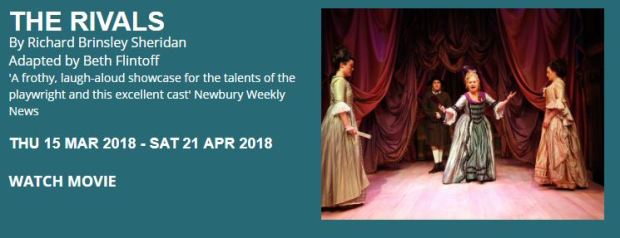
One of the key words in the play is “caprice” – a term you don’t encounter so often these days. (The adjectival form, capricious, is common enough, but I can’t remember the last time I saw the noun.) Several of the characters could be described as capricious, but especially Faulkland, who torments Julia with his doubts about the constancy of her love, and Lydia, who rather loses interest in Captain Jack once she realizes that their guardians approve of their match and she won’t have to undertake a romantic elopement instead.
What with the disguises, misunderstandings, and general farcical atmosphere, The Rivals is reminiscent of a Shakespearean comedy, though the language is easier to follow. Here in Beth Flintoff’s adaptation, much of the humor comes through in accents and exaggerated facial expressions, though Sir Anthony’s growled insults to his son and Bob Acres’ attempts to pass himself off as a gentleman are also highlights. The whole cast (see this full list) was terrific, including several actors familiar from British television and bit parts in films.
And, of course, there’s Mrs. Malaprop and her wondrous malapropisms. Sheridan would have taken her name from malapropos, a synonym for “inappropriate” first recorded in 1630, and an adaptation of the French term mal à propos (“poorly placed”). The first recorded use of “malaprop” for the wrong use of words was by Lord Byron in 1814. Some of the malapropisms in the play fell flat because both the spoken and intended words are too obscure nowadays. I think the director probably left out certain ones, and added at least one anachronistically modern one: “calamari” for calamity. But there were still some excellent ones. Here are a few of my favorites (see also this complete list):
“promise to forget this fellow – to illiterate him, I say, quite from your memory.”
“He is the very pine-apple of politeness!”
“she’s as headstrong as an allegory on the banks of the Nile.”
[I even spotted a malapropism (can I use that term for written rather than spoken words?) on my cornflakes box this morning:
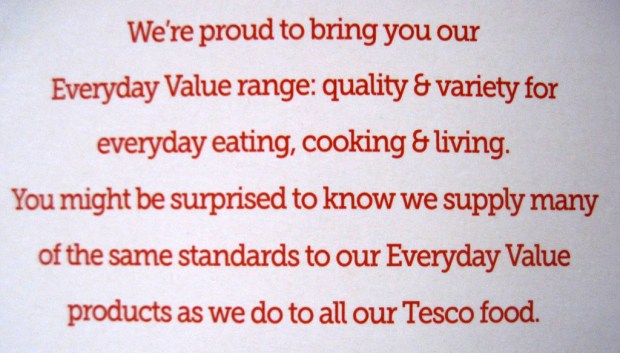
Do you spot it too?]
Great acting, costumes and hairstyles; laughs aplenty; and a rhyming prologue and epilogue that made reference to the modern day (“I’m not going to hex it with jokes about … anything unpleasant!” and “eat less baked beans and drink more champagne”): Altogether a splendid evening out at the theatre.
My rating:
 Bookish Beck = Rebecca Foster. American transplant to England. Freelance proofreader and book reviewer.
 Bookish Beck