Basket of Deplorables by Tom Rachman (2017)
“Basket of deplorables” is a term that Hillary Clinton applied to the xenophobic wing of Donald Trump’s supporters in a September 2016 campaign speech. Basket of Deplorables is Tom Rachman’s third of five books and I somehow had never heard of it until a good few years after its release. That surprised me because I’ve followed his career with interest and read his other works right at their publication.
Like Rachman’s The Imperfectionists and The Imposters, it’s a linked short story collection. The five stories are on the longish side but read quickly. In the opening title piece, a woman who went blind after an accident co-hosts a 2016 presidential election watch party with her husband in their Manhattan apartment. Their friends are uniformly left-wing and choke with disbelief as results start to filter through. In “Truth Is for Losers,” Glen agrees to stage a funeral for his billionaire brother Fleming, who has faked his own death. The memorial service is an opportunity for high farce, but I also warmed to Glen for his simple enthusiasm for his job as a Starbucks barista in Kalamazoo. This was my favourite of the stories; its depiction of the spread of fake news feels like a worthwhile analogy rather than a rehashing of headlines.
“Leakzilla” imagines the complications of Internet dating in an alternate world where would-be partners can scour each other’s e-mail history at will – and find out that someone masquerading as clued-in voted for Trump in 2016. “Sad! Wrong! Not Nice!” follows Fleming, a Trump-esque blowhard, into his new life in Italy. The backstory of a minor character explains a mysterious moment from the first piece, and the sister of the woman from “Leakzilla” is then the protagonist of “How the End Begins.” Here, Kelly discovers with quiet horror a website where you can input any person’s name and view their future cause of death. There is a grim dystopian edge to this final story.

Rachman gave the book the tagline (not quite a subtitle) of “Almost-true stories.” I suspect it was written quickly in response to Trump’s election and it is rather thin, aiming at obvious targets and exhibiting wholly reasonable yet unsubtle liberal outrage. I found it so depressing to see how history threatens to repeat itself less than a decade later:
“David’s worry is that Trump won’t accept his defeat, throwing the whole democratic process into chaos”
“More a boomerang of history, where we keep throwing out the bad bits, and they keep flying back, hitting us in the mouth.”
I can hardly bear to think about tomorrow’s election. The USA could elect the first woman president (of color, no less), or hand power back to a cretin – a convicted felon and probably the worst holder of the office in its nearly 250 years. It’s a choice between progress and regression. Between sanity and sleepwalking into destruction. And whatever happens at the polls, it seems inevitable that Trump will foment further violence and hatred.
 Did I do all I could? I sent in my postal vote several weeks ago, and donated to the Harris/Walz campaign (which means I now get seven e-mails a day from them, but that’s fine). The local Democrats Abroad branch didn’t reply to me over the summer, so I missed out on the chance to volunteer with them, whereas in 2020 I colored in postcards to send to Democrat-registered North Carolina voters in the UK to remind them to get their ballots.
My leanings are clear, then, and I’m sure pretty much all my readers will concur. That I didn’t enjoy this obscure Rachman work more is due to my low tolerance for satire in general and to the fact that these stories of division and deception are not almost true, but all too true. (Secondhand – gift from my wish list, Christmas 2023) 
My Year in Novellas (#NovNov24)
Here at the start of the month, we’re inviting you to tell us about the novellas you’ve read since last November.
I have a special shelf of short books that I add to throughout the year. When at secondhand bookshops, charity shops, a Little Free Library, or the public library where I volunteer, I’m always thinking about my piles for November. But I do read novellas at other times of year, too. Forty-four of them between December 2023 and now, according to my Goodreads shelves (last year it was 46, so it seems like that’s par for the course). I often choose to review books of novella length for BookBrowse, Foreword and Shelf Awareness. I’ve read a real mixture, but predominantly literature in translation and autobiographical works.


My favourites of the ones I’ve already covered on the blog would probably be (nonfiction) Alphabetical Diaries by Sheila Heti and (fiction) Aimez-vous Brahms by Françoise Sagan. My proudest achievements are: reading the short graphic novel Broderies by Marjane Satrapi in the original French at our Parisian Airbnb in December; and managing two rereads: Heartburn by Nora Ephron and Of Mice and Men by John Steinbeck.

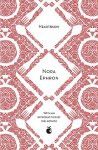

Of the short books I haven’t already reviewed here, I’ve chosen two gems, one fiction and one nonfiction, to spotlight in this post:
Fiction
Clear by Carys Davies
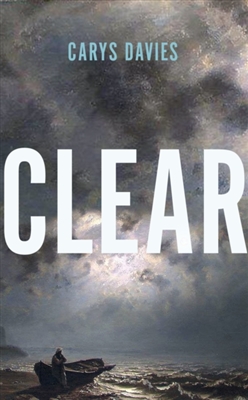 Clear depicts the Highland Clearances in microcosm though the experiences of one man, Ivar, the last resident of a remote Scottish island between Shetland and Norway. As in a play, there is a limited setting and cast. John is a minister sent by the landowner to remove Ivar, but an accident soon after his arrival leaves him beholden to Ivar for food and care. Mary, John’s wife, is concerned and sets off on the long journey from the mainland to rescue him. Davies writes vivid scenes and brings the island’s scenery to life. Flashbacks fill in the personal and cultural history, often via objects. The Norn language is another point of interest. The deceptively simple prose captures both the slow building of emotion and the moments that change everything. It seemed the trio were on course for tragedy, yet they are offered the grace of a happier ending.
In my book club, opinions differed slightly as to the central relationship and the conclusion, but we agreed that it was beautifully done, with so much conveyed in the concise length. This received our highest rating ever, in fact. I’d read Davies’ West and not appreciated it as much, although looking back I can see that it was very similar: one or a few character(s) embarked on unusual and intense journey(s); a plucky female character; a heavy sense of threat; and an improbably happy ending. It was the ending that seemed to come out of nowhere and wasn’t in keeping with the tone of the rest of the novella that made me mark West down. Here I found the writing cinematic and particularly enjoyed Mary as a strong character who escaped spinsterhood but even in marriage blazes her own trail and is clever and creative enough to imagine a new living situation. And although the ending is sudden and surprising, it nevertheless seems to arise naturally from what we know of the characters’ emotional development – but also sent me scurrying back to check whether there had been hints. One of my books of the year for sure. 
Nonfiction
A Termination by Honor Moore
Poet and memoirist Honor Moore’s A Termination is a fascinatingly discursive memoir that circles her 1969 abortion and contrasts societal mores across her lifetime.
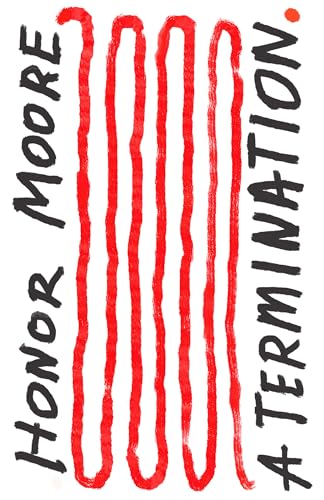 During the spring in question, Moore was a 23-year-old drama school student. Her lover, L, was her professor. But she also had unwanted sex with a photographer. She did not know which man had impregnated her, but she did know she didn’t feel prepared to become a mother. She convinced a psychiatrist that doing so would destroy her mental health, and he referred her to an obstetrician for a hospital procedure. The termination was “my first autonomous decision,” Moore insists, a way of saying, “I want this life, not that life.”
Family and social factors put Moore’s experiences into perspective. The first doctor she saw refused Moore’s contraception request because she was unmarried. Her mother, however, bore nine children and declined to abort a pregnancy when advised to do so for medical reasons. Moore observes that she made her own decision almost 10 years before “the word choice replaced pro abortion.”
This concise work is composed of crystalline fragments. The stream of consciousness moves back and forth in time, incorporating occasional second- and third-person narration as well as highbrow art and literature references. Moore writes one scene as if it’s in a play and imagines alternative scenarios in which she has a son; though she is curious, she is not remorseful. The granular attention to women’s lives recalls Annie Ernaux, while the kaleidoscopic yet fluid approach is reminiscent of Sigrid Nunez’s work. It’s a stunning rendering of steps on her childfree path. 
Reprinted with permission from Shelf Awareness.
I currently have four novellas underway and plan to start some more this weekend. I have plenty to choose from!
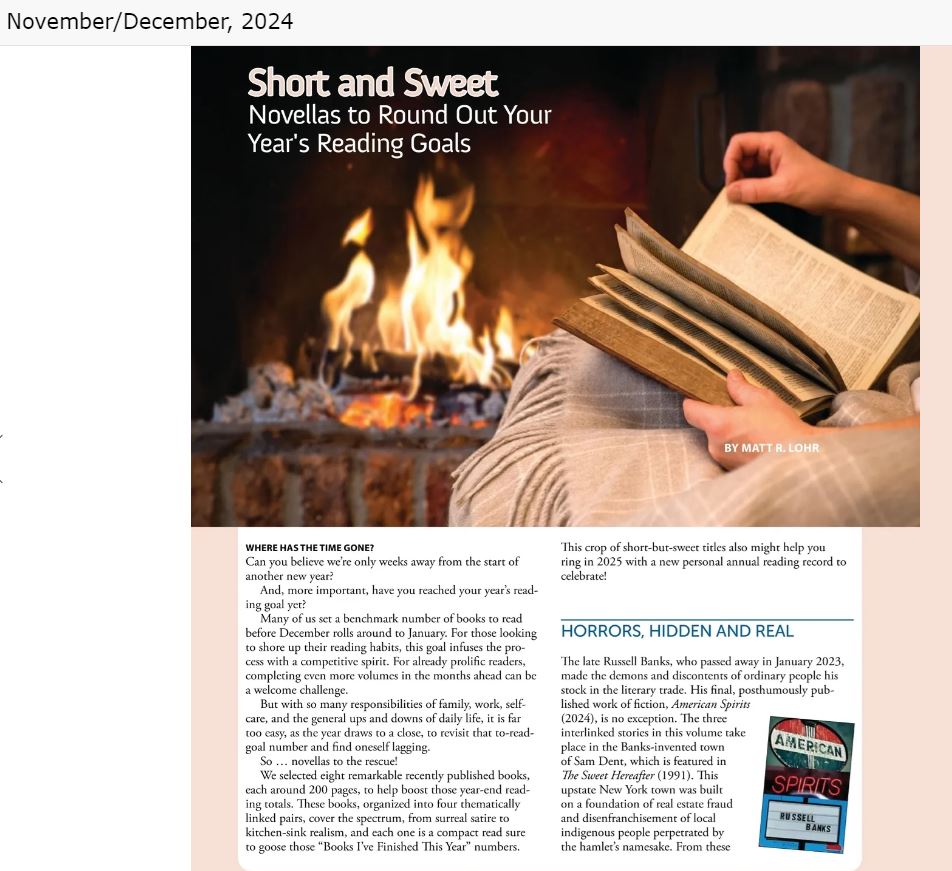
Everyone’s getting in on the act: there’s an article on ‘short and sweet books’ in the November/December issue of Bookmarks magazine, for which I’m an associate editor; Goodreads sent around their usual e-mail linking to a list of 100 books under 250 or 200 pages to help readers meet their 2024 goal. Or maybe you’d like to join in with Wafer Thin Books’ November buddy read, the Ugandan novella Waiting by Goretti Kyomuhendo (2007).
Why not share some recent favourite novellas with us in a post of your own?

A Belated R.I.P., Part III: Hand, Hurley, Kingfisher and Meddings
I meant to post on Halloween but the day got away from me, so here’s my belated third contribution to the Readers Imbibing Peril challenge (the first two are here and here). It’s rare for me to borrow from the horror section of the library and even rarer for me to read sequels, yet here I am with two purple-spotted spines and three books that count as continuations. I’m a little surprised at myself for managing eight R.I.P. reviews this year, but five of those were of very short books or graphic novels so were quick reads. With the possible exception of the dystopian final chapter of the Hurley, none of my selections scared me.
A Haunting on the Hill by Elizabeth Hand (2023)
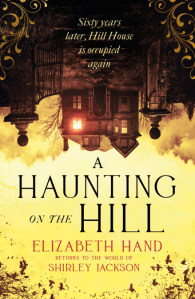 Hand was commissioned by Shirley Jackson’s estate to write a sequel to The Haunting of Hill House, which I read for R.I.P. in 2019 (my review). As in the original, four people gather at Hill House; artists rather than ghost-hunters, but they soon grasp the place’s supernatural malevolence. Holly has written a play about a historical witch – to be portrayed by Amanda, an actress of a certain age. Holly’s girlfriend, Nisa, provides music in the form of traditional murder ballads; actor Stevie makes up the quartet. Despite locals’ persistent admonitions, they take out a short-term rental on Hill House, thinking it will be atmospheric to finish the play and conduct read-throughs there. I was solidly engaged with the characters, whom Hand reinforces with traumatic backstories (Amanda’s proximity to an accidental death, Stevie’s molestation as a child actor), but couldn’t take the scary reveals seriously. A tablecloth suddenly soaked in blood? A black hare falling out of a chimney? Such moments just felt silly, plus Hand overplays the warnings versus the quartet’s blithe heedlessness. The ending is actually pretty chilling, but too much that came before strained belief. Do read the Jackson if you haven’t, though; it’s genuinely frightening. (Public library)
Barrowbeck by Andrew Michael Hurley (2024)
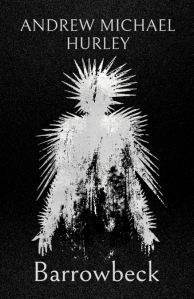 I’ve read all of Hurley’s novels (The Loney, Devil’s Day and Starve Acre), the first two for previous R.I.P. events. Here again, he explores the arcane beliefs and practices of an isolated community: Barrowbeck, a fictional valley on the Yorkshire–Lancashire borders. The 13 chapters, rather like linked short stories, alight at moments along its timeline, from the medieval conflict of “First Footing” all the way through the near-future desolation of “A Valediction.” What connects the vignettes is more tonal than geographical, though, with suspicion, exclusion and the uncanny recurring. There are hints of deadly customs and communion with the departed. As is true of most collections, some stories are more memorable than others, and I felt that a few went too far towards pastiche (e.g., “Autumn Pastoral” of The Woman in Black by Susan Hill). I had a few favourites: “To Think of Sicily,” set after the 15th-century visit of an Italian man bearing mysterious olive oil, introduces the people’s seemingly congenital xenophobia. In “Hymns for Easter,” residents killed in the First World War still join their voices with the choir’s. “Sisters,” about B&B operators trying to get rid of their solitary guest before closing for the winter, was the best of all and reminiscent of the twins in Daniel Mason’s North Woods. You should like this if you’re a Daisy Johnson fan or enjoyed Private Rites by Julia Armfield, though ultimately I found more difference than continuity across the chapters.
With thanks to John Murray Press for the proof copy for review.
What Feasts at Night by T. Kingfisher (2024)
 The second book of the “Sworn Soldier” duology, after What Moves the Dead. Easton has returned from Paris to their native Gallacia to give Miss Potter a fungi-hunting holiday as thanks for helping with the previous adventure. But the caretaker is dead and the home abandoned, so Easton hires a local widow and her grandson, Bors, to look after the property. Bors is soon troubled by the moroi, a ghost-woman who comes in dreams to sit on people’s chests, crushing the breath out of them. She also seems to take the form of moths. And next she comes for Easton. You’d think with all the world-building she’d done in the first book, Kingfisher could pack lots of plot into this novella. But there’s really not much to it. It was over before it began. The winking humour of the first book was worn-out. And the more I thought about it, the more uneasy I was with the negative nature imagery I kept encountering in horror: fungi, moths, rabbits/hares. I understand this is often harkening back to ancient legends, but in a biodiversity crisis we need love rather than fear. (Public library)
The Sad Ghost Club 2 by Lize Meddings (2022)
 This teen comic series is not about literal ghosts but about mental health. Young people struggling with anxiety and intrusive thoughts recognize each other – they’ll be the ones wearing sheets with eye holes. In the first book, which I reviewed for R.I.P. last year, SG meets Socks and determines to start a society for people like them. In this sequel, Socks worries that he’s not cool enough for the club and that SG, especially after they meet Rue, will leave him behind. The message is about being there for people even when they think they just want to be alone. By the end, it looks like the club is going to grow further. This barely built on the first book and contained so little incident that it felt unnecessary. Never mind! (Little Free Library)
Rather a lackluster finish to the challenge there, but the Hurley at least is recommended.
Novellas in November 2024 Link-Up (#NovNov24)
Happy November! It’s the fifth year that Cathy of 746 Books and I have been co-hosting Novellas in November. We hope you’ll enjoy reading and reviewing one or more short books this month.
Maybe you’d like to start with a My Year in Novellas retrospective looking back at any novellas you have read since last November (I’ll post mine tomorrow), or you could join in with our Booker Prize-winning buddy read, Orbital by Samantha Harvey.

This post will be pinned to the top of my site all through the month. I’ll add in more link parties as necessary.
Keep in touch via Bluesky (@cathybrown746.bsky.social / @bookishbeck.bsky.social), Instagram (@cathy_746books / @bookishbeck), and X (@cathy746books / @bookishbeck) and do use the feature images plus our new hashtag, #NovNov24.
Have a look at all the posts that have gone up so far!
October Books: Ballard, Czarnecki, Moss, Oliver, Ostriker, Steed & More
Apparently October is THE biggest month of the year for new releases. A sterling set came my way this year, including two beautiful novella-length memoirs, a luxuriantly illustrated work dedicated to an everyday bird species, two very different but equally elegant poetry collections, and a book of offbeat comics. Time and concentration only allow for a paragraph or so on each, but I hope that gives a flavour of the contents and will pique interest in the ones that suit you best. Plus I excerpt and link to my BookBrowse review of a poignant story of sisters and mental illness, and my Shelf Awareness review of a fantastic graphic novel adaptation.
Bound: A Memoir of Making and Remaking by Maddie Ballard
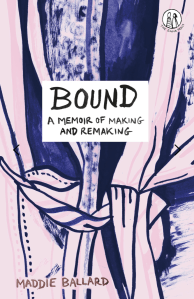 This collection of micro-essays considers sewing and much more. Each piece is headed by a pattern name and list of materials that Ballard made into an article of clothing for herself or for someone else. Among the minutiae of the craft, she slips in so many threads: about her mixed Chinese heritage and her relationship with her grandmother, about the environmental and financial benefits of making one’s own clothing, and especially about the upheaval of her twenties: the pandemic, a break-up, leaving a job to go back to school, finding roommates. I can barely mend a sock and I’m clueless when it comes to fashion, yet I can appreciate how sewing blends comfort and creativity. Ballard presents it as a meditative act of self-care:
I lower the needle and the world recedes. The process of sewing a garment – printing the pattern, tracing and cutting, sewing the first and the second and the fiftieth seam – is a lesson in taking your time.
Like gardening, sewing is an investment in the future – in what sort of person your future self will be, and how she will feel about her body, and what she will want to wear.
Similar to two other very short works of nonfiction I’ve read from The Emma Press, How Kyoto Breaks Your Heart by Florentyna Leow and Tiny Moons by Nina Mingya Powles (Ballard, too, is from New Zealand), this is a graceful, enriching book about a young woman making her way in the world and figuring out what is essential to her sense of home and identity. I commend it whether or not you have any particular interest in handicraft.
With thanks to The Emma Press for the free copy for review.
Encounters with Inscriptions: A Memoir Exploring Books Gifted by Parents by Kristin Czarnecki
When Kristin Czarnecki got in touch to offer a copy of her bibliomemoir about revisiting the books her late parents gifted her, I was instantly intrigued but couldn’t have known in advance how perfect it would be for me. Niche it might seem, but it combines several of my reading interests: bereavement, books about books, relationships with parents (especially a mother) and literary travels.
 The book starts, aptly, with childhood. A volume of Shel Silverstein poetry and A Child’s Christmas in Wales serve as perfect vehicles for the memories of how her parents passed on their love of literature and created family holiday rituals. Thereafter, the chapters are not strictly chronological but thematic. A work of women’s history opens up her mother’s involvement in the feminist movement; reading a Thomas Merton book reveals why his thinking was so important to her Catholic father. The interplay of literary criticism, cultural commentary and personal significance is especially effective in pieces on Alice Munro and Flannery O’Connor. A Virginia Woolf biography points to Czarnecki’s academic specialism and a cookbook to how food embodies memories.
It seems fitting to be reviewing this on the second anniversary of my mother’s death. The afterword, which follows on from the philosophical encouragement of a chapter on the Rubaiyat of Omar Khayyam, exhorts readers to cherish loved ones while we can – and be grateful for the tokens they leave behind. I had told Kristin about books my parents inscribed to me, as well as the journals I inherited from my mother. But I didn’t know there would be other specific connections between us, too, such as being childfree and hopeless in the kitchen. (Also, I have family in South Bend, Indiana, where she’s from, and our mothers were born in the first week of August.) All that to say, I felt that I found a kindred spirit in this lovely book, which is one of the nicest things that happens through reading.
With thanks to the author for the advanced e-copy for review.
The Starling: A Biography by Stephen Moss
 Moss has written a whole series of accessible bird species monographs suitable for nature buffs; this is the sixth. (I’ve not read the others, just Moss’s Wild Hares and Hummingbirds and Skylarks with Rosie, but we do have a copy of The Robin on the shelf that I’ve earmarked for Christmas.) The choice of the term ‘biography’ indicates the meeting of a comprehensive aim and intimate detail. The book conveys much anatomical and historical information about the starling’s relatives, habits, and worldwide spread, yet is only 187 pages – and plenty of those feature relevant paintings and photographs, too. It’s well known that starlings were introduced to Anglophone countries as part of misguided “acclimatisation” projects that we would now dub cultural imperialism. In the USA and elsewhere, the bird is still considered common. But with the industrialisation of agriculture, starlings are actually having less breeding success and thus are in decline.
Overall, the style of the book is dry and slightly workmanlike. However, when he’s recounting murmurations he’s seen in Somerset or read about, Moss’s enthusiasm lifts it into something special. Autumn dusk is a great time to start watching out for starling gatherings. I love observing and listening to the starlings just in the treetops and aerials of my neighbourhood, but we do also have a small local murmuration that I try to catch at least a few times in the season. Here’s how he describes their magic: “At a time when, both as a society and as individuals, we are less and less in touch with the natural world, attending this fleeting but memorable event is a way we can reconnect, regain our primal sense of wonder – and still be home in time for tea.”
With thanks to Square Peg, an imprint of Vintage (Penguin Random House) for the free copy for review.
The Alcestis Machine by Carolyn Oliver
 Carolyn is a blogger friend whose first collection, Inside the Storm I Want to Touch the Tremble, was on my Best Books of 2022 list. Her second is again characterized by precise vocabulary and crystalline imagery, often related to etymology, book history, or pigments (“You and I are marginalia shadowed / by a careless hand, we are gall-soaked vellum / invisible appetites consume.”). Astronomy and technology are a counterpoint, juxtaposing the ancient and the cutting-edge. I loved the language of sea creatures in “Strange Attractor” and the oblique approach to the passage of time (“Three popes ago, you and I”). The repeated three-word opening “In another life” gives a sense of many worlds, e.g., “In another life I’m a florist sometimes accused of inappropriate gravity.” Prose poems relay childhood memories. Love poems are tantalizing and utterly original: “If I promise not to describe the moon, will you / come with me a ways further into the night? / We’ll wash the forest floor / of ash and find a fairy ring / half-eaten, muted crescent bereft of power.” And alliteration never fails to win me over: “Tonight, snow tumbles over sophomores and starlings” and “the pillars in the water make a pillory not a pier”. Some of the collection remained cryptic for me; there was a bit less that grabbed me emotionally. But it’s still stirring work. And how flabbergasted was I to spot my name in the Acknowledgments? (Read via Edelweiss)
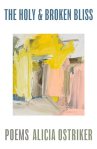
The Holy & Broken Bliss: Poems in Plague Time by Alicia Ostriker
“The words of an old woman shuffling the cards of her own decline the decline
of her husband the decline of her nation her plague-smitten world”
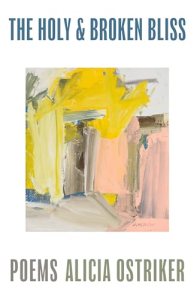 Out of pandemic isolation come new rituals: watching days and seasons pass, fighting for her own health but mostly her husband’s, and lamenting public displays of hate. Lines feel stark with honesty; some poems are just haiku length. Elsewhere, repetition and alliteration create a wistful tone. Jewish scripture and mysticism are the source of much of the language and outlook. Music and nature, too, promise the transcendent. Simple and remarkable. Here’s a stanza about late autumn:
It is almost winter and still
as I walk to the clinic the gingkos
sing their seraphic air
as if there is no tomorrow
With thanks to Alice James Books for the advanced e-copy for review.
Forces of Nature by Edward Steed
 Steed is a longtime New Yorker cartoonist who produces single panels. This means there is no story progression (as in a graphic novel), just what you see on one page. Some of the comics are wordless; many scenes are visual gags which, to be entirely honest, I didn’t always grasp. Steed’s recurring characters are unhappy couples, exiles on desert islands, and dumb cops or criminals. His style is deliberately simplistic: the people not much more advanced than stick figures and the animals especially sketchy. There are multiple attempted prison breaks and satirical depictions of God and the Garden of Eden. Many of the setups are contrived, and the tone can be absurd or prickly, even shading into gruesome. These comics weren’t altogether my cup of tea, though I did get a laugh out of a few of them (a seasonal example is below). Endorsed if you fancy a cross between Edward Gorey and The Book of Bunny Suicides.
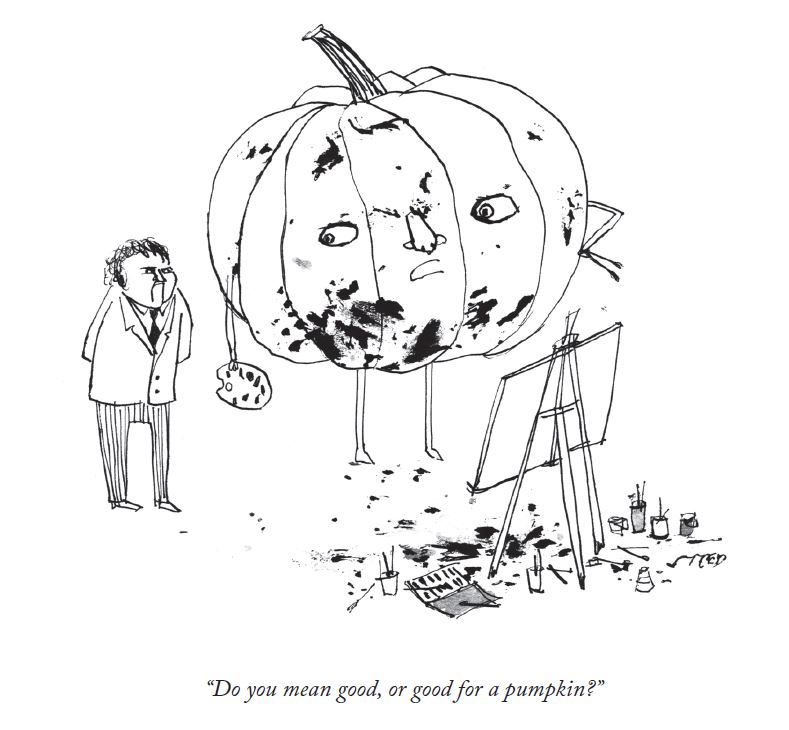
With thanks to Drawn & Quarterly for the e-copy for review.
Reviewed for BookBrowse:
 Shred Sisters by Betsy Lerner – “No one will love you more or hurt you more than a sister” is a wry aphorism that appears late in Lerner’s debut novel. Over the course of two decades, there is much heartache for the Shred family, but also moments of joy. Ultimately, a sisterly bond endures despite secrets, betrayals, and intermittent estrangement. Through her psychologically astute portrait of Olivia (“Ollie”) and Amy Shred, Lerner captures the lasting effects that mental illness can have on not just an individual, but an entire family.
Reviewed for Shelf Awareness:
 The Worst Journey in the World, Volume 1: Making Our Easting Down: The Graphic Novel by Sarah Airriess – The thrilling opening to a cinematically vivid adaptation of Apsley Cherry-Garrard’s 1922 memoir. He was an assistant zoologist on Robert Falcon Scott’s 1910-13 Terra Nova expedition to the South Pole. Even before the ship entered the pack ice, the journey was perilous. The book resembles a full-color storyboard for a Disney-style maritime adventure film. There is jolly camaraderie as the men sing sea shanties to boost morale. The second volume can’t arrive soon enough.
Love Your Library, October 2024
Thanks to Eleanor, Laura, Marcie, and Sarah for posting about their recent library reading!
I mentioned that my library has recently started running author events again, for the first time since Covid. Apart from that, the main thing that’s new is a sculpture of local author Michael Bond, creator of Paddington Bear, in the lobby. I have to say, it’s a little bit creepy because when you’re working behind the circulation desk you feel like there’s a person sat there the whole time. (And, as one staff member noted, he looks more than a little like Vladimir Putin.) It makes for a popular photo op, though not as much as the larger Paddington on a bench in the town centre. There’s nearly always a queue to get your photo taken with him.


My library will be a major source of books for Novellas in November for me.


My library use over the last month:
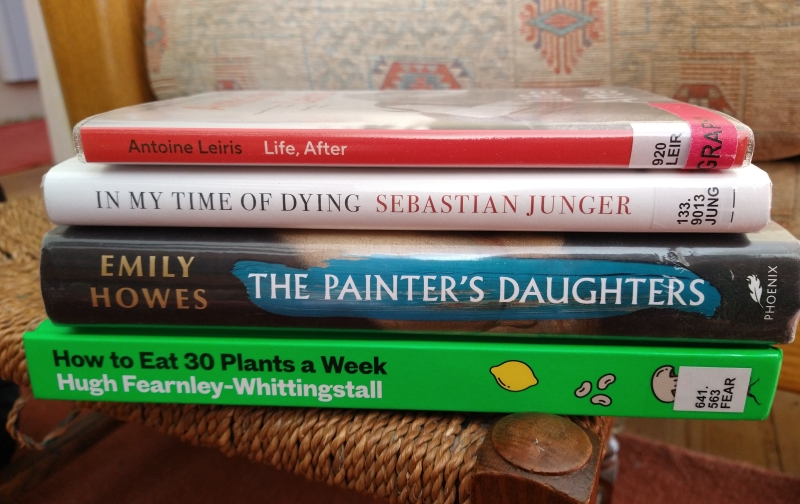
READ
- The Lone-Ranger and Tonto Fistfight in Heaven by Sherman Alexie
- I’m the King of the Castle by Susan Hill
- What Moves the Dead by T. Kingfisher
- Isabella & Blodwen by Rachael Smith
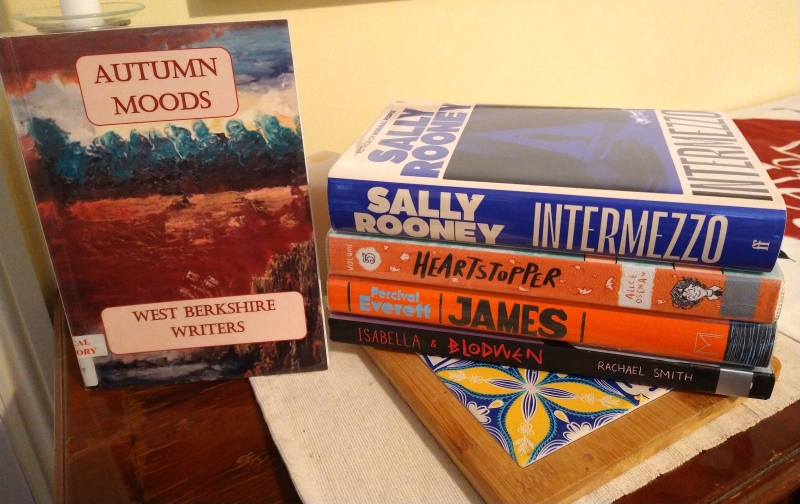
CURRENTLY READING
- Without Ever Reaching the Summit: A Himalayan Journey by Paolo Cognetti
- James by Percival Everett
- Small Rain by Garth Greenwell
- A Haunting on the Hill by Elizabeth Hand
- What Feasts at Night by T. Kingfisher
- Heartstopper: Volume 5 by Alice Oseman (a reread)
- Playground by Richard Powers
- Intermezzo by Sally Rooney
- Poetry Unbound: 50 Poems to Open Your World by Pádraig Ó Tuama
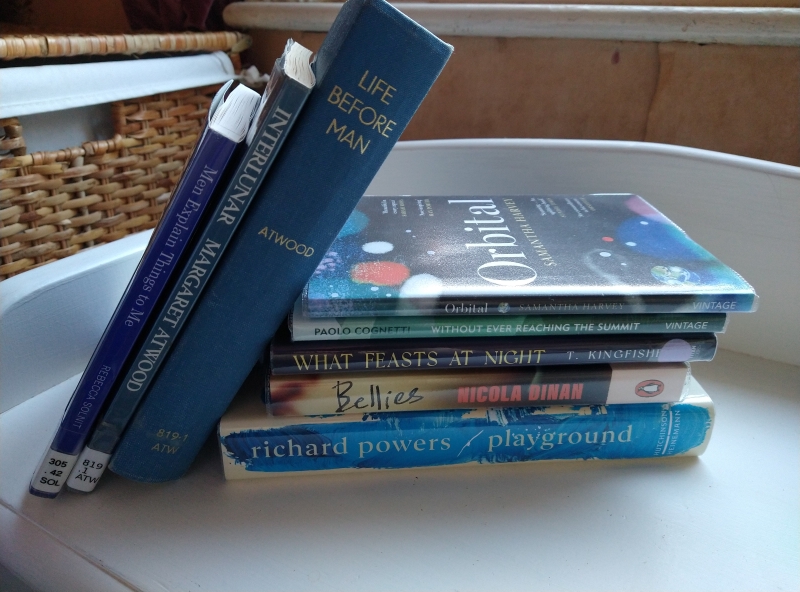
CHECKED OUT, TO BE READ
- Interlunar and Life Before Man by Margaret Atwood (for #MARM) [university library]
- Bellies by Nicola Dinan
- Orbital by Samantha Harvey
- Dispersals: On Plants, Borders and Belonging by Jessica J. Lee
- Men Explain Things to Me by Rebecca Solnit [university library]
+ various novellas I’m gradually bringing home
RETURNED UNREAD
- It’s Not Just You: How to Navigate Eco-Anxiety and the Climate Crisis by Tori Tsui – I feared it would be depressing (though of course that’s exactly why I should read it) and from a glance it also appeared formulaic.
RETURNED UNFINISHED
- The Glassmaker by Tracy Chevalier – Way too much technical info about glassmaking in the early pages. I may try it another time as I’ve read everything else she’s written.
- The Painter’s Daughters by Emily Howes – I read 24 pages. It seemed fine but undistinguished as historical fiction goes.
- Held by Anne Michaels – The first few pages of pretentious fragments were unbearable.
- Autumn Moods – Yeah … a local publication … wow, it was bad.
What have you been reading or reviewing from the library recently?

Share a link to your own post in the comments. Feel free to use the above image. The hashtag is #LoveYourLibrary.
Book Serendipity, August to October 2024
I call it “Book Serendipity” when two or more books that I read at the same time or in quick succession have something in common – the more bizarre, the better. This is a regular feature of mine every couple of months. Because I usually have 20–30 books on the go at once, I suppose I’m more prone to such incidents. People frequently ask how I remember all of these coincidences. The answer is: I jot them down on scraps of paper or input them immediately into a file on my PC desktop; otherwise, they flit away!
The following are in roughly chronological order.
- The William Carlos Williams line “no ideas but in things” is quoted in Home Is Where We Start by Susanna Crossman and echoed with a slight adaptation in Want, the Lake by Jenny Factor.
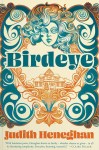
- A woman impulsively stops into a tattoo parlour in We Are Animals by Jennifer Case and Birdeye by Judith Heneghan.
- Cleaning up a partner’s bristles from the sink in 300 Arguments by Sarah Manguso and The Echoes by Evie Wyld.
- Sarah Manguso, by whom I was reading two books for a Bookmarks article, was quoted in Some of Us Just Fall by Polly Atkin.
- Someone is annoyed at their spouse making a mess cooking lemon preserves in How We Know Our Time Travelers by Anita Felicelli and Liars by Sarah Manguso, both of which are set in California.
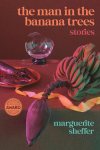
- Rumpelstiltskin is referenced in one short story of a speculative collection: How We Know Our Time Travelers by Anita Felicelli and The Man in the Banana Trees by Marguerite Sheffer.
- A father who is hard of hearing, and an Australian woman looking for traces of her grandmother’s life in England in The House with All the Lights On by Jessica Kirkness and The Echoes by Evie Wyld.
- A character named Janie or Janey in Their Eyes Were Watching God by Zora Neale Hurston and The Echoes by Evie Wyld. The Pre-Raphaelite model Janey is also mentioned in The Garden Against Time by Olivia Laing.
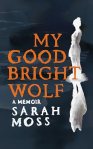 Contrasting one’s childhood love of the Little House on the Prairie books with reading them as an adult and being aware of the racial and colonial implications in Home Is Where We Start by Susanna Crossman and My Good Bright Wolf by Sarah Moss.
- A mention of Little Women in A Perfect Arrangement by Suzanne Berne and My Good Bright Wolf by Sarah Moss.
- A character grew up in a home hair-dressing business in A Perfect Arrangement by Suzanne Berne and Home Is Where We Start by Susanna Crossman.
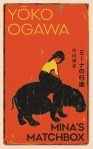
- The discovery of an old pram in an outbuilding in Instructions for a Heatwave by Maggie O’Farrell and Mina’s Matchbox by Yōko Ogawa.
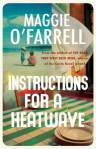
- An Irish woman named Aoife in My Good Bright Wolf by Sarah Moss and Instructions for a Heatwave by Maggie O’Farrell.
- Cooking then throwing out entire meals in My Good Bright Wolf by Sarah Moss and The Echoes by Evie Wyld. (Also throwing out a fresh meal in Birdeye by Judith Heneghan. Such scenes distress me!)
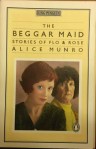 A new lover named Simon in one story of The Beggar Maid by Alice Munro and The Echoes by Evie Wyld.
- A character writes a recommendation letter for someone who then treats them vindictively, because they assumed the letter was negative when it wasn’t, in A Perfect Arrangement by Suzanne Berne and one story of The Beggar Maid by Alice Munro.
- After her parents’ divorce, the author never had a designated bedroom in her father’s house in Home Is Where We Start by Susanna Crossman and The Garden Against Time by Olivia Laing.
- Reading The Bell Jar as a teenager in Shred Sisters by Betsy Lerner and My Good Bright Wolf by Sarah Moss.
- A contentious Town Hall meeting features in A Perfect Arrangement by Suzanne Berne and Birdeye by Judith Heneghan.
- The wife is pregnant with twins in A Perfect Arrangement by Suzanne Berne and The Year of Living Biblically by A.J. Jacobs. (There are also twins in Birdeye by Judith Heneghan. In general, I find that they occur far more often in fiction than in real life!)
- 1930s Florida as a setting in Florence Adler Swims Forever by Rachel Beanland and Their Eyes Were Watching God by Zora Neale Hurston.
- Dorothy Wordsworth and her journals are discussed in Some of Us Just Fall by Polly Atkin and My Good Bright Wolf by Sarah Moss.
- Wordsworth’s daffodils are mentioned in Signs, Music by Raymond Antrobus and My Good Bright Wolf by Sarah Moss.
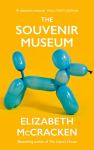
- “F*ck off” is delivered in an exaggerated English accent in Birdeye by Judith Heneghan and The Souvenir Museum by Elizabeth McCracken.
- The main character runs a country store in Their Eyes Were Watching God by Zora Neale Hurston and The Beggar Maid by Alice Munro.
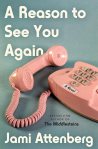 Reading a second novel this year in which the younger sister of a pair wants to go into STEM and joins the Mathletes in high school: first was A Reason to See You Again by Jami Attenberg; later was Shred Sisters by Betsy Lerner.
- An older sister who has great trouble attending normal school and so is placed elsewhere (including a mental institution) for a total of two years in Learning to Think by Tracy King and Shred Sisters by Betsy Lerner.
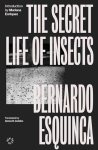
- The idea of trees taking revenge on people for environmental destruction in one story of The Secret Life of Insects by Bernardo Esquinca and one poem of The Holy & Broken Bliss by Alicia Ostriker.
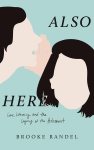
- An illiterate character in Instructions for a Heatwave by Maggie O’Farrell and Also Here by Brooke Randel.
-
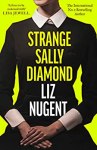 Controversy over throwing a dead body into the trash in Birdeye by Judith Heneghan and Strange Sally Diamond by Liz Nugent.
- A publishing assistant who wears a miniskirt and Doc Martens in Shred Sisters by Betsy Lerner and Summer Fridays by Suzanne Rindell.
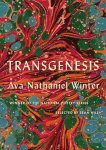
- Ancestors’ experience in Auschwitz in Also Here by Brooke Randel and Transgenesis by Ava Winter.
- The protagonist finds it comforting when her boyfriend lies down with his full weight on her in Shred Sisters by Betsy Lerner and The Echoes by Evie Wyld.
- A woman badgers her ex-husband about when his affair with his high school/college sweetheart started (before or after the divorce) in Shred Sisters by Betsy Lerner and Liars by Sarah Manguso.
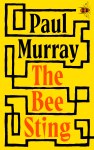 I encountered an Irish matriarch who married the ‘wrong’ brother, not Frank, in The Bee Sting by Paul Murray earlier in the year, and then in Instructions for a Heatwave by Maggie O’Farrell.
- A boy is playing in the family car on the driveway when it rolls backwards and kills someone in A Perfect Arrangement by Suzanne Berne and Tell Me Everything by Elizabeth Strout.
- Quantoxhead, Somerset is mentioned in On Trying to Keep Still by Jenny Diski and A House Unlocked by Penelope Lively.
- Tapeworms are mentioned in On Trying to Keep Still by Jenny Diski and one story of The Best Short Stories 2023: The O. Henry Prize Winners, ed. Lauren Groff.
- A description of horrific teeth in one story of The Best Short Stories 2023: The O. Henry Prize Winners, ed. Lauren Groff, and one story of The Long Swim by Terese Svoboda.
- A character researches potato blight, and another keeps his smoking a secret from his wife, in one story of The Best Short Stories 2023: The O. Henry Prize Winners, ed. Lauren Groff, and Tell Me Everything by Elizabeth Strout.
 A piano gets mauled out of anger in one story of Save Me, Stranger by Erika Krouse and Strange Sally Diamond by Liz Nugent.
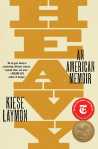
- Men experiencing eating disorders in Heavy by Kiese Laymon and Heartstopper Volumes 3 and 4 by Alice Oseman.
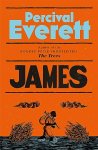
- Black people deliberately changing their vocabulary and speech register when talking to white people in James by Percival Everett and Heavy by Kiese Laymon.
- My second book of the year in which a woman from centuries ago who magically appears in the present requests to go night clubbing: first The Ministry of Time by Kaliane Bradley, then Isabella & Blodwen by Rachael Smith.
- Characters named Sadie in James by Percival Everett, The Souvenir Museum by Elizabeth McCracken, and Still Life at Eighty by Abigail Thomas.
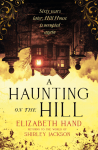
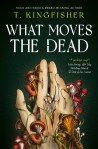
- Creepy hares in horror: A Haunting on the Hill by Elizabeth Hand and What Moves the Dead by T. Kingfisher. There were weird rabbits in I’m the King of the Castle by Susan Hill, too.
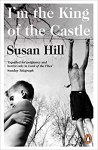
- I read two scenes of a calf being born, one right after the other: in Dangerous Enough by Becky Varley-Winter, then I’m the King of the Castle by Susan Hill.
- I read about an animal scratch leading to infection leading to death in a future with no pharmaceuticals in Station Eleven by Emily St. John Mandel in the morning and then in the afternoon heard Eve Smith mention the same thing happening due to antibiotic resistance in her novel The Waiting Rooms. Forget about R.I.P.; this is the stuff that scares me…
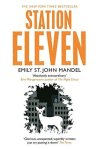
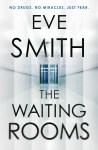
What’s the weirdest reading coincidence you’ve had lately?
Short Nonfiction Series for Novellas in November + Nonfiction November
Most Novellas in November participants focus on fiction, which is understandable and totally fine; I also like to incorporate works of short nonfiction during the month, which is a great opportunity to combine challenges with Nonfiction November.
Building on this list I wrote in 2021 (all the recommendations stand, but I’d update it by adding Weatherglass Books to the list of UK publishers), here are some nonfiction series that publish brief, intriguing works:
404 Ink’s Inklings series bears the tagline “big ideas to carry in your pocket.”
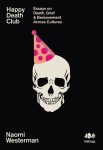 I have reviewed Happy Death Club.
Biteback Publishing’s Provocations series “is a groundbreaking new series of short polemics composed by some of the most intriguing voices in contemporary culture.”
- I have reviewed Last Rights. I spied a pair of books by John Sutherland on youth and ageing at my library.

Bloomsbury’s Object Lessons series “is a series of concise, collectable, beautifully designed books about the hidden lives of ordinary things.”
- I have reviewed Doctor, Dust, Grave, Pregnancy Test, and Recipe.
Bloomsbury’s 33 1/3 is “a series of short books about popular music.”
- I have reviewed Jesus Freak.
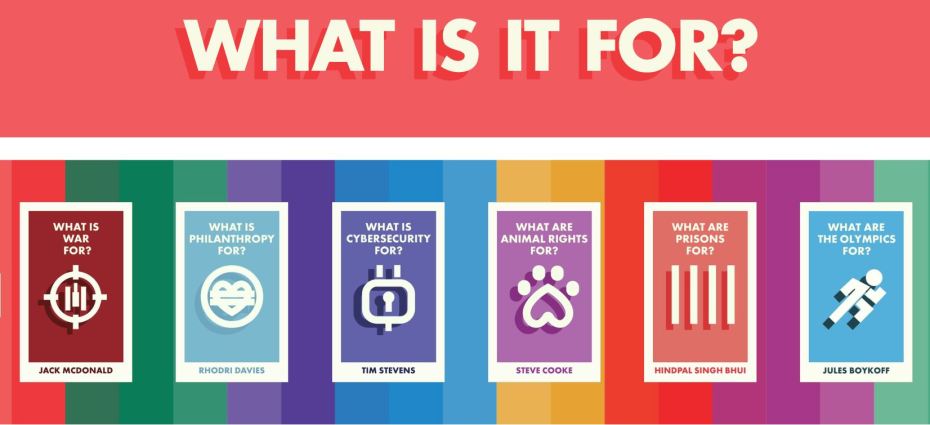
Bristol University Press’s What Is It For series is edited by George Miller, creator of the OUP Very Short Introductions (see below). Miller believes “short, affordable books can, and should, be intelligent and thought-provoking”; he hopes these will “be an agent for positive change,” addressing “tough questions about purpose and fitness for purpose: what has to change for the future to be better?”
A number of Fitzcarraldo Editions’ Essays are significantly under 200 pages.
 I have reviewed Intervals, A Very Easy Death, Happening, I Remain in Darkness, A Woman’s Story, and Alphabetical Diaries (plus others that are longer).
[Edited:] Thanks so much to Liz for letting me know about Jacaranda Books’ A Quick Ting On series, “the first ever non-fiction book series dedicated to Black British culture,” with books on plantains, Grime music, Black hair, and more.
[Edited:] There are three books so far in the Leaping Hare Press Find Your Path self-help series. I have just downloaded Find Your Path through Imposter Syndrome from Edelweiss.
Little Toller Books publishes mostly short nature and travel monographs and reprints.
- I have reviewed Deer Island, Aurochs and Auks, Orison for a Curlew, Herbaceous, The Ash Tree, and Snow.

From the Little Toller website
[Edited:] Thanks so much to Annabel for making me aware of Melville House’s The FUTURES series, which gives “imaginative future visions on a wide range of subjects, written by experts, academics, journalists and leading pop-culture figures.”
MIT Press’s Essential Knowledge series “offers accessible, concise, beautifully produced books on topics of current interest.” I spotted the Plastics book at my library.
Oxford University Press’s Very Short Introductions now cover a whopping 867 subjects!
- I had a couple of them assigned in my college days, including Judaism.
Penguin’s 100-book Great Ideas series reprints essays that introduce readers to “history’s most important and game-changing theories, philosophies and discoveries in accessible, concise editions.”
A number of Profile’s health-themed Wellcome Collection Books are well under 200 pages.
- I have reviewed Recovery, Free for All, Chasing the Sun, An Extra Pair of Hands, and After the Storm (plus others that are longer).


Saraband’s In the Moment series contains “portable, accessible books … exploring the role of both mind and body in movement, purpose, and reflection, finding ways of being fully present in our activities and environment.”
- I’m interested in Writing Landscape by Linda Cracknell and On Community by Casey Plett.
 Most of the original School of Life books are around 150 pages long. Their newer Essential Ideas series of three titles also promises “pocket books.”
- I have reviewed How to Develop Emotional Health, How to Age, How to Be Alone, and How to Think about Exercise.
Why not see if your local library has any selections from one or more of these series? #LoveYourLibrary

If you’re a reluctant nonfiction reader, choosing a short book could be a great way to engage with a topic that interests you – without a major time commitment. #NonfictionNovember
Keep in touch via X (@bookishbeck / @cathy746books) and Instagram (@bookishbeck / @cathy_746books). Add any related posts to the link-up. Don’t forget the hashtag #NovNov24.
Any suitable short nonfiction on your shelves?
Autumn Reads: Don Freeman, Seamus Heaney, Jo Lindley, Alice Oseman
I keep a whole box full of future seasonal reads. Winter is the largest contingent because it includes Christmas, cold, snow and ice; followed by summer, which also covers heat, sun and so on. Every once in a while, I’ll come across a spring-related book. Autumn may be great for misty canal walks, vibrant leaves and variegated squashes, but it’s the hardest of the seasons to find books for. I’ve read all the obvious ones by now. Some of the below connections are more abstract but not too much of a stretch, I hope.


Corduroy by Don Freeman (1968)
Autumn is when I wear the most corduroy, sometimes (accidentally) head to toe.
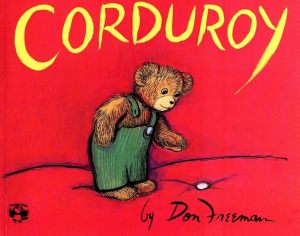
 I knew I’d read this as a child, but didn’t expect individual pages to feel so familiar. It must have been on frequent rotation in my house growing up. Corduroy the bear is among the toys on offer in a large department store. One morning Lisa, a little Black girl, picks him out, but her mother says no, they’ve spent too much already – and besides, the toy is damaged. He didn’t realize until her mother said: his green overall is missing a button. That night he rides the escalator to go look for the button, thinking he’ll never be loved until he’s complete. His adventure doesn’t turn out as planned, but Lisa hasn’t stopped thinking about him. Long before Toy Story, here was a sweet book about what toys get up to when we’re not around. And the repeated expressions of the bear’s meek wonderment – “This must be home,” “You must be a friend” – gave me the warm fuzzies. (Little Free Library)
Field Work by Seamus Heaney (1979)
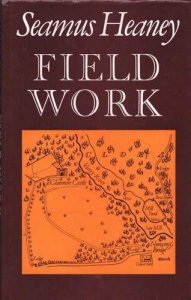 Harvest is a secondary theme in this poetry collection, which also has an overall melancholy tone that seems appropriate to the season of All Souls. Two poems are headed “In Memoriam” and another is titled “Elegy.” Even when they are not the stated topic, the Troubles rear up, as in the first section of “Triptych”: “Two young men with rifles on the hill, / Profane and bracing as their instruments. // Who’s sorry for our trouble?” The countryside can nevermore be an idyll when armoured cars and bombs could be anywhere. “The end of art is peace,” a late line from “The Harvest Bow,” may well be the poet’s motto (so long as “end” is interpreted as “goal”). There is a sequence of 10 sonnets and several poems devoted to animals. I experience Heaney’s poetry as linguistically fertile and formally rigorous; probably best heard out loud. (Secondhand – Oxfam, Marlborough)
Autumnal passages I marked:
“We toe the line / between the tree in leaf and the bare tree.” (from “September Song”)
“the sunflower, dreaming umber” (from “Field Work”)
“A rowan like a lipsticked girl” (from “Song”)
“the sunset blaze / of straw on blackened stubble, a thatch-deep, freshening barbarous crimson burn” (from “Leavings”)
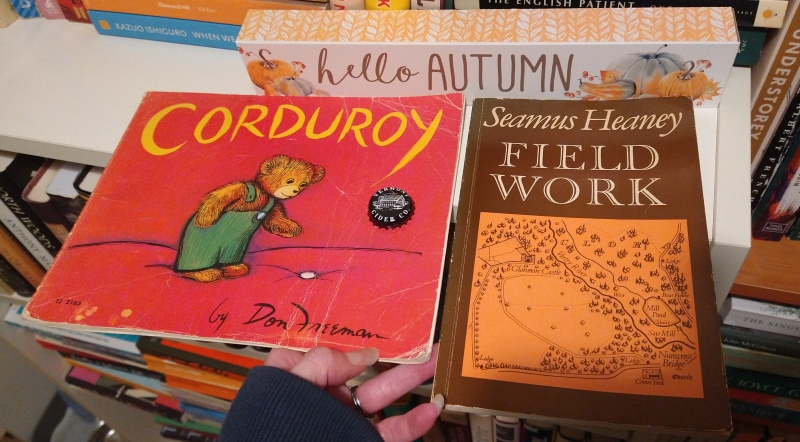
But none of those stood out to me as much as “Oysters,” the opening poem, which I photographed here. I’ve read and savoured every line of it five times now. It’s gold.
Hello Autumn by Jo Lindley (2023)
 Depicted as elfin children, the seasons take turns wearing a single crown. Autumn is a timid soul worried about what might go wrong. But when one of the others is at risk, he rushes to help even if it might take him outside his comfort zone. By doing so, he realizes how much there is to enjoy in every season. This is part of a didactic series (Little Seasons/Best Friends with Big Feelings) about coping with anxiety. I’m surprised it wasn’t classified in the mostly-nonfiction “Family Matters” section of the children’s library, which includes books on feelings, illnesses, death, divorce, siblings, first experiences, etc. It was a little heavy-handed for me and I wasn’t sure why the characters had to be elves. (Public library)
Heartstopper: Volume 1 by Alice Oseman (2019)
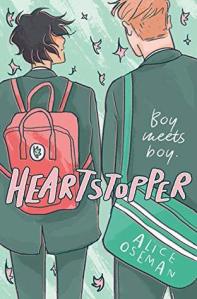 I’ve been rereading the series through the hardback reissue; I’m now on Volume 5 (and WHERE is Volume 6, huh?). I’ve included the first book because of the falling leaves motif on the cover, which fits the back-to-school vibe. (Public library)
What I thought this time: Just as cute the second time around. All the looks, all the blushes, all the angst! I’d forgotten the details of how Nick and Charlie met and got together. Single best page: when Tori appears out of nowhere and says to Charlie of Nick, “I don’t think he’s straight.”
Original review: It’s well known at Truham boys’ school that Charlie is gay. Luckily, the bullying has stopped and the others accept him. Nick, who sits next to Charlie in homeroom, even invites him to join the rugby team. Charlie is smitten right away, but it takes longer for Nick, who’s only ever liked girls before, to sort out his feelings. This black-and-white YA graphic novel is pure sweetness, taking me right back to the days of high school crushes.
Novellas in November Possibility Piles! (#NovNov24)
Less than two weeks to go now until Novellas in November (#NovNov24) begins! Cathy and I are getting geared up and making plans for what we’re going to read. As I mentioned in my announcement post, this year it’s my challenge to self to read mostly books of 150 pages or under. I gathered all my potential reads at home and in the library for photo shoots. Although we’re not having the below as themes this year, I’ve grouped my options in rough categories:
Short Classics (pre-1980)
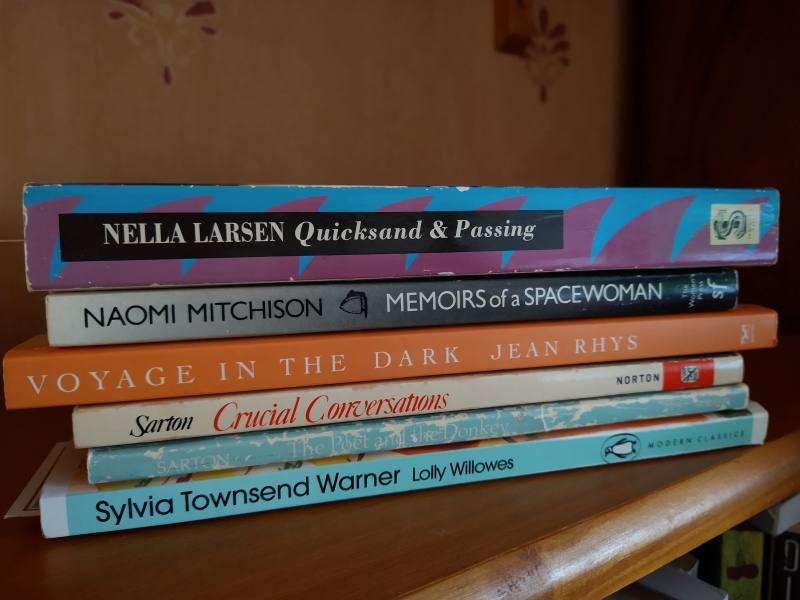
*Memoirs of a Spacewoman would do double duty for SciFi Month. I have already read Passing, so would just be reading Quicksand from the Nella Larsen omnibus.
Novellas in Translation
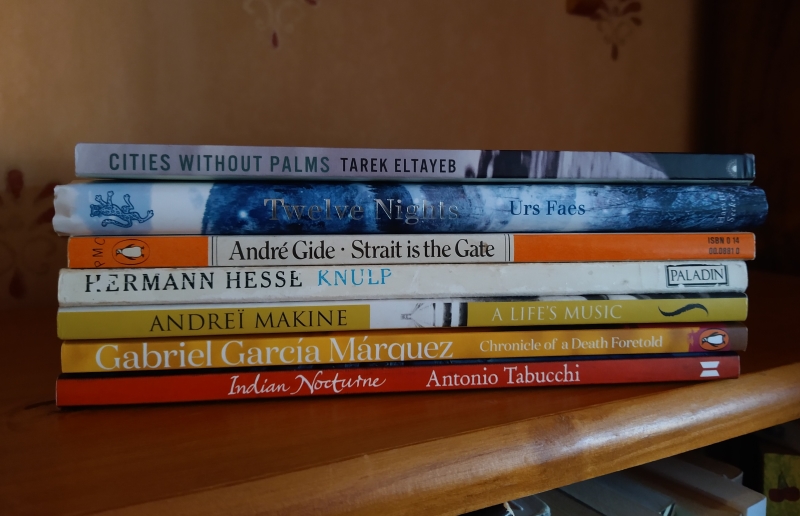
*Knulp, from the Little Free Library, would do double duty for German Literature Month.
Contemporary Novellas
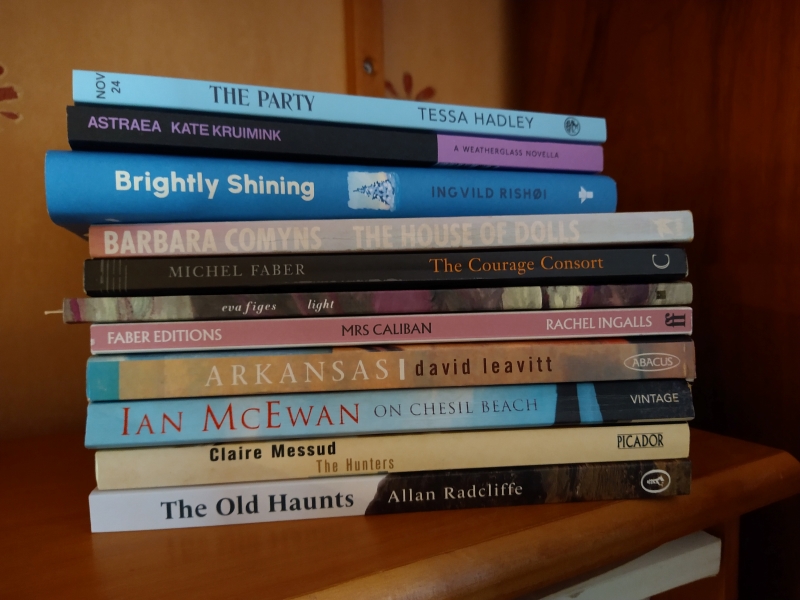
(With three review copies perched on the top.)
Library Haul


I can’t wait to get started on our buddy read, Orbital by Samantha Harvey!
Short Nonfiction
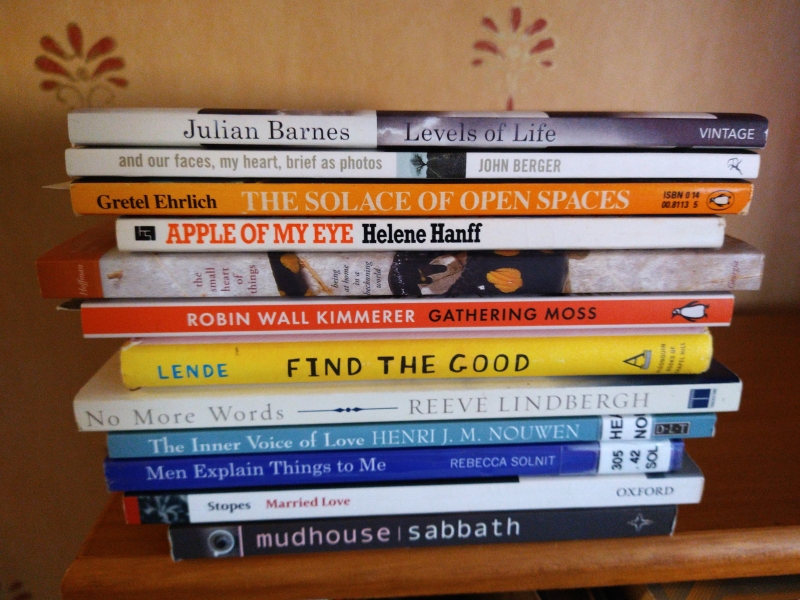
(And the right-hand Library Haul photo above.) On Wednesday I’ll post some ideas for how to link Novellas in November with Nonfiction November – there are various great series that only publish short nonfiction.
In 2021–2023, I read 29, 24 and 27 novellas, respectively. I wonder how many I’ll manage this year… Maybe I’ll aim for 30+, or an average of 1+ per day!
Spy any favourites or a particularly appealing title in my piles? Give me a recommendation for what I should be sure to try to get to.
The link-up is now open for you to share your planning posts!
Thanks to Cathy of What Cathy Read Next for starting us off.
Have any novellas lined up to read next month?
 Bookish Beck = Rebecca Foster. American transplant to England. Freelance proofreader and book reviewer.
 Bookish Beck