Novellas in November: A Change of Plans
I will be leaving Novellas in November in Cathy’s very capable hands this year. From tomorrow there will be a pinned post on her blog, 746 Books, where you can leave your links throughout the month.

We lost my mother yesterday evening, suddenly, and I’ll be flying out to the States in the next couple of days to help with arrangements and attend the funeral.
I happen to have read a few novellas already so will schedule in reviews of those, but won’t be able to read or write as much as I’d like. I might not manage to reply to comments or keep up with social media and your own blogs – forgive me.
I’ll be taking plenty of books with me, including lots of novellas. Perfect for travel days and moments stolen away from tedious admin tasks. And (books in general, of course) for distraction, comfort and good cheer. One thing I was sure to mention in the obituary I wrote this morning was that my mother passed on to me and to her many students her great love of reading.
Love Your Library, October 2022
Naomi has been reading an interesting selection of books from the library. I’ve recently returned a couple of giant piles of library books unread or part-read so that I can focus on novellas next month; I can always borrow those particular books again another time, or maybe the fact that none ever made it onto one of my reading stacks tells me I wasn’t excited enough about them.
A lot of other reading challenges are coming up in November: Australia Reading Month, German Literature Month, Margaret Atwood Reading Month, and Nonfiction November. If you don’t already have plans, your local library is a great source of options. And of course we would be delighted to have you join us in reading one or more short books for Novellas in November (#NovNov22), which launches tomorrow. I’ve been reading ahead for it, as you can see.
Since last month (links where I haven’t already reviewed a book or plan to soon):
READ
- The Improbable Cat by Allan Ahlberg

- Treacle Walker by Alan Garner

- Jungle Nama by Amitav Ghosh

- The Fear Index by Robert Harris

- Hare House by Sally Hinchcliffe

- We Have Always Lived in the Castle by Shirley Jackson

- Undoctored by Adam Kay

- Up at the Villa by W. Somerset Maugham
- Metronome by Tom Watson
- Tomorrow, and Tomorrow, and Tomorrow by Gabrielle Zevin
CURRENTLY READING
- Strangers on a Pier: Portrait of a Family by Tash Aw
- Heat and Dust by Ruth Prawer Jhabvala
- The Magic Pudding by Norman Lindsay
- Leap Year by Helen Russell
Then I have various new releases on hold for me, including the new Maggie O’Farrell novel (which I’m on the fence about actually reading) and this pleasingly colourful pair.
 What have you been reading or reviewing from the library recently?
 Share a link to your own post in the comments. Feel free to use the above image. The hashtag is #LoveYourLibrary.
October Poetry Releases: Bergin, Draycott, Lopez, Rizwan, Skoulding
It was a prolific month for poetry. There is so much variety here in form and topic, from the tongue-in-cheek aphorisms of Tara Bergin’s Savage Tales to the maritime and ornithological portrait of Anglesey in Zoë Skoulding’s A Marginal Sea. Something for everyone, I’d like to think, and I hope these capsule reviews and sample poems give you a taste.
Savage Tales by Tara Bergin
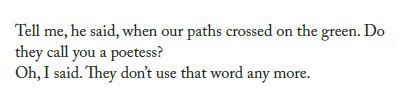
 This is the third collection by the Irish poet; I’d previously read her The Tragic Death of Eleanor Marx. Grouped into nine thematic sections, these very short poems take the form of few-sentence aphorisms or riddles, with the titles, printed in the bottom corner, often acting as something of a punchline – especially because I had them on my e-reader and they only appeared after I’d turned the digital ‘page’. Some appear to be autobiographical, about life for a female academic. Others are political (I loved “Tenants and Landlords”), or about wolves or blackbirds. The verse in “Constructions” takes different shapes on the page. Here are “The Subject Field” and “The Actor”:

With thanks to Carcanet Press for the free e-copy for review.
The Kingdom by Jane Draycott
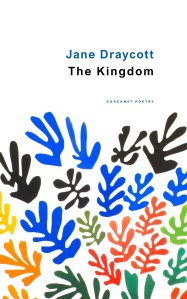 I love the Matisse cut-outs on the cover of Draycott’s fifth collection. The title poem’s archaic spelling (“hyther,” “releyf”) contrast with its picture of a modern woman seeking respite from “the men coming on to you / the taxi drivers saying here jump in no / no you don’t need no money.” Country vs. city, public vs. private, pastoral past and technological future are some of the dichotomies the verse plays with. I enjoyed the alliteration and references to an old English herbarium, Derek Jarman and polar regions. However, it was hard to find overall linking themes to latch onto.
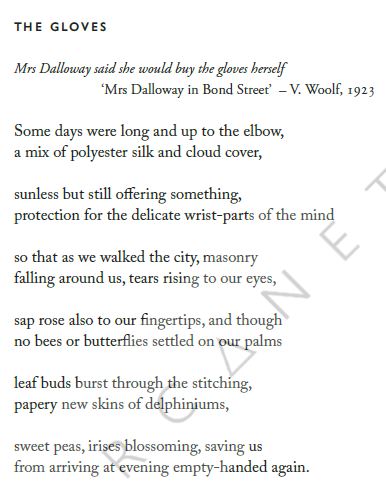
With thanks to Carcanet Press for the free e-copy for review.
We Borrowed Gentleness by J. Estanislao Lopez
 Brimming with striking metaphors and theological echoes, the first poetry collection by the Houston-based writer is an elegant record of family life on both sides of the Mexican border. “Laredo Duplex” (below) explains how violence prompted the family’s migration. “The Contract” recalls acting as a go-between for a father who didn’t speak English; in “Diáspora” the speaker is dubious about assimilation: “I am losing my brother to whiteness.” The tone is elevated and philosophical (“You take the knife of epistemology and the elegiac fork”), with ample alliteration. Flora and fauna and the Bible are common sources of unexpected metaphors. Lopez tackles big issues of identity, loss and memory in delicate verse suited to readers of Kaveh Akbar. (My full review is on Shelf Awareness.)
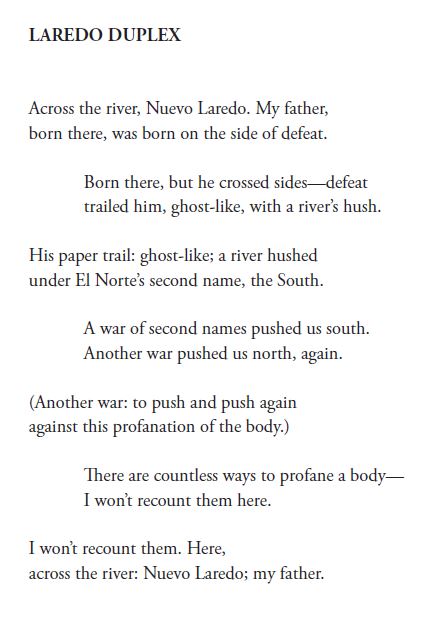
With thanks to Alyson Sinclair PR for the free e-copy for review.
Europe, Love Me Back by Rakhshan Rizwan
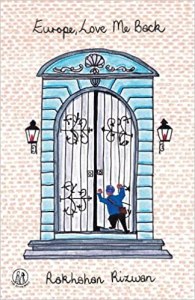 This debut collection has Rizwan juxtaposing East and West, calling out European countries for the prejudice she has experienced as a Muslim Pakistani in academia. She has also lived in the UK and USA, but mostly reflects on time spent in Germany and the Netherlands, where her imperfect grasp of the language was an additional way of standing out. “Adjunct” is the source of the cover image: she knocks and knocks for admittance, but finds herself shut out still. Rizwan takes extended metaphors from marriage, motherhood and women’s health: in “My house is becoming like my country,” she imagines her husband instituting draconian laws; in “I have found in my breast,” a visit to a doctor about a lump only exposes her own exoticism (“Basically, the Muslims are metastasizing”). In “Paris Proper,” she experiences the city differently from a friend because of the colonial history of the art. (See also Liz’s review.)
Some favourite lines:
“my breasts harden / with milk, that peculiar ache of women’s bodies / which do only half the sin / but carry all the history” (from “Half the Sin”)
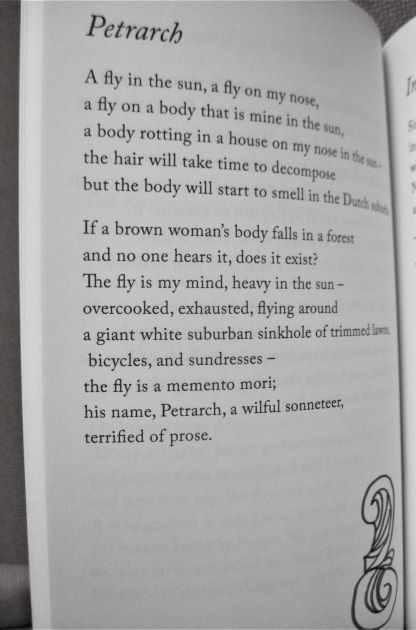
With thanks to The Emma Press for the proof copy for review.
A Marginal Sea by Zoë Skoulding
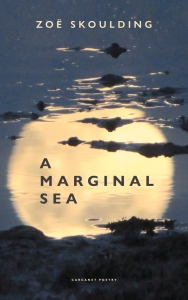 Skoulding’s collection is said to be all about Anglesey in Wales, but from that jumping-off point the poems disperse to consider maps, maritime vocabulary, seabirds, islands, tides and much more. There are also translations from the French, various commissions and collaborations, and pieces about the natural vs. the manmade. Some are in paragraph form and there’s a real variety to how lines and stanzas are laid out on the page. I especially liked “Red Squirrels in Coed Cyrnol.” I’ll read more by Skoulding.
 With thanks to Carcanet Press for the free e-copy for review.
Read any good poetry recently?
Three on a Theme: Raven Books for Halloween
It’s been a while since I’ve done a Three on a Theme post (over eight months, in fact). I thought it would be fun to round up a few nonfiction books about ravens that I’ve read over the last year or so – I just finished the Skaife last night.
I tend to associate ravens with Halloween because of Edgar Allan Poe’s eerie poem “The Raven.” In eighth grade English class we had the challenge of memorizing as much of this multi-stanza poem as possible. A friend and I took this very seriously and recited the whole thing, I think (or at least enough to be obnoxious), in front of the class. I can still conjure up big chunks of it in my memory: “Once upon a midnight dreary / while I pondered, weak and weary / over many a quaint and curious volume of forgotten lore…” The rhymes and alliteration make it a real earworm.
The Book of the Raven: Corvids in Art and Legend by Angus Hyland and Caroline Roberts (2021)
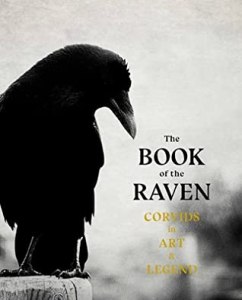 I loved the art, which ranges from the well-known (Van Gogh) to the recent and obscure and includes etchings, paintings and photographs, and wood carvings. The text was less illuminating, relying on some very familiar points of reference like Aesop’s fables, Norse myths, Poe’s “The Raven,” and so on. It’s slightly confusing that the authors decided to lump all corvids together as it suits them, so they include legends and poems associated with crows and magpies as well as ravens.
Most pieces are only one page and have an image facing, as well as at least two pages of wordless spreads between them. There are also shorter quotations embedded in some of the illustrations. Gothic font abounds and there is an overall black, white and red colour scheme. I was glad to be reminded that Charles Dickens’s pet raven, Grip III, was stuffed and is now in display in the Free Library of Philadelphia – that will be a sight to seek out on my next trip there. I also enjoyed learning about Jimmy, a Hollywood raven who appeared in over 1,000 films between 1938 and 1954, including It’s a Wonderful Life. This was a surprise Christmas gift, and a fun enough coffee table read.
A Shadow Above: The Fall and Rise of the Raven by Joe Shute (2018)
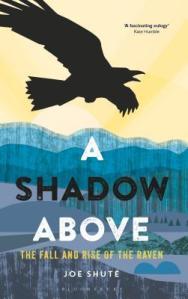 Ravens are freighted with such symbolism that people attribute special significance to their presence or absence. In parts of Britain, they were persecuted to the point of extirpation, but in recent years they have been finding new strongholds everywhere from sea cliffs and abandoned quarries to the New Forest and city centres. Travelling around the country, Shute learns how mythology reflects humans’ historical relationships with the birds and meets with those who hate and shoot ravens (farmers whose lambs and piglets they gang up to kill) as well as those who rehabilitate them or live with them as companions. It’s a balanced and well informed book, if a little by-the-numbers in its approach.
A terrific final paragraph: “Watching the birds dive under the fizzing pylon wires, I also realise just how much we need them close by. To provide us with a glimpse of wildness in a world hell-bent on civilising its furthest reaches, while at the same time inching closer towards the abyss. The raven will always continue to represent our own projections. This modern omen remains as yet ill-defined; our shared futures unresolved.” (Public library) 
The Ravenmaster by Christopher Skaife (2018)
A newspaper/magazine feature I enjoy is when a journalist interviews someone with a really random job – you know, like a cat food taste tester or the guy who cleans the Tube tunnels in London or empties the loos after Glastonbury Festival. This memoir was moderately interesting in the same sort of way.
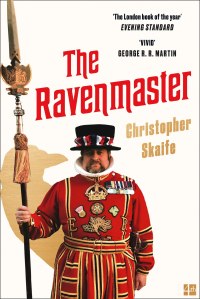 How does one get to be raven keeper at the Tower of London? In Skaife’s case, via the military. He was an indifferent student so joined the Army young and served for 24 years, including as a Drum Major and in Northern Ireland, before becoming a Yeoman Warder. He’s the sixth Ravenmaster (a new title after 1946), in post since 2011. He was always interested in history and as a mature student took a degree in archaeology, so he’s well suited to introducing the Tower to visitors. I appreciated his description of the challenge of making the experience fresh each time even though for him it’s become daily drudgery: “Doing a really great tour is like being a jazz musician: a moment’s improvisation based on a lifetime’s experience.”
Seeing to seven resident ravens’ needs is also repetitive and has to be done in the same way, on time, every day if he doesn’t want revolt – when he once tried to put them to bed in their cages in a different order, Merlina (who also plays dead and engages in hide-and-seek) led him a merry dance and he ended up falling into the moat. He’s sometimes learned the hard way, as when a raven died when it hid in scaffolding and then plunged to the ground – he realized he’d clipped its wings too severely. Other birds have been lost to foxes, so he’s gotten in the habit of feeding foxes in one spot so they’ll stay away from the raven enclosure.
It’s a good-natured, anecdotal book, but didn’t teach me anything I didn’t already know about ravens from various other books; it reports pretty entry-level information on bird intelligence, communication, and representations in popular culture. I most liked hearing about the ravens’ individual personalities and the little mishaps and surprises he’s experienced in dealing with them. But many chapters feel thrown together in an arbitrary order, and Skaife’s writing about his life before the Tower doesn’t add anything. So while I envy him living in such a history-saturated place and would probably like to tour the Tower one day, the book wasn’t the intriguing insider’s account I was looking for. A ghostwriter or extra helping editorial hand wouldn’t have gone amiss, honestly. (A gift from my wish list a couple of Christmases ago)
If you read just one … A Shadow Above by Joe Shute was the stand-out for me.
My next raven-themed read will be: Ravens in Winter by Bernd Heinrich.
The #1929Club: Passing and Letters to a Young Poet
A year club hosted by Karen and Simon is always a great excuse to read more classics. I appear to be getting in training for Novellas in November – both of these were notably short at under 100 pages, particularly the Rilke, which is little more than a pamphlet. (Both: )

Passing by Nella Larsen
By the time of her death in 1964, this Harlem Renaissance author had mostly fallen into obscurity, but she has received renewed attention in recent decades. I learned about Passing in connection to Brit Bennett’s The Vanishing Half, which it partially inspired.
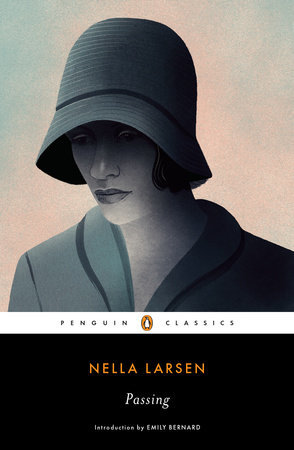 Irene Redfield and Clare Kendry grew up together in Chicago. Both are light-skinned African American women, their features described as “olive” or “golden.” Irene has remained within the Black community, marrying a doctor named Brian and living a comfortable life in Harlem. However, she is able to pass as white in certain circumstances, such as when she and Clare meet for tea in a high-end establishment. Clare, on the other hand, is hiding her ancestry from her white husband, Jack Bellew, who spews hatred for Black people. “It’s such a frightfully easy thing to do. If one’s the type, all that’s needed is a little nerve,” she insists.
Clare and Irene’s relationship could be characterized as that of frenemies, though critics have posited repressed homoeroticism based on how Larsen describes Clare’s beauty from Irene’s perspective. This is very subtle – I only spotted potential infatuation in the letter from Clare that Irene reads in the opening pages. Most of the time, Irene appears to disapprove of Clare for her recklessness, knowing that there could be dire consequences if Jack discovers her deception. She also starts to suspect that Clare is having an affair with Brian, and for these reasons, as well as her own discomfort and guilt, she avoids Clare as much as possible.
The trouble with Clare was, not only that she wanted to have her cake and eat it too, but that she wanted to nibble at the cakes of other folk as well.
Things come to a head in the final six pages, turning what had for much of its length been an ambling read into something of a shocker. Apparently scholars feel that Larsen flubs her endings, but I thought this one was fantastic, giving a Gatsby-esque tragic weight. Comparing Black women’s strategies of coping with a white world was also fascinating. My experience with African American classics is limited, so I was happy to increase my repertoire.
My secondhand copy – a dual volume with Quicksand, which I’ll plan on reading next November – came from the much-mourned Bookbarn International.
Letters to a Young Poet by Rainer Maria Rilke
[Translated from the German by Charlie Louth]
 I’d long wanted to read this and couldn’t find it through a library, so bought a copy as part of a Foyles order funded by last year’s Christmas money. I’m not clear on whether the Penguin Little Black Classics edition is abridged, but the 1929 preface by Franz Xaver Kappus, Rilke’s correspondent, only mentions 10 letters, which is how many are printed here, so I have at least gotten the gist. Most of the letters were sent in 1903–4, with a final one dated 1908, from various locations on Rilke’s European travels.
Kappus sent Rilke his early poetic efforts and received in reply a frank letdown – “the poems are not yet anything in themselves” – but also much kind, general advice about creativity, confidence, post-faith life, and thriving in spite of suffering. Even so tiny a book is almost endlessly quotable, with many self-help-oriented phrases I’d read in other contexts and found wonderfully reassuring:
Go into yourself. Examine the reason that bids you to write; check whether it reaches its roots into the deepest region of your heart, admit to yourself whether you would die if it should be denied you to write.
To be an artist means: not to calculate and count; to grow and ripen like a tree which does not hurry the flow of its sap and stands at ease in the spring gales without fearing that no summer may follow. But it comes only to those who are patient, who are simply there in their vast, quiet tranquillity, as if eternity lay before them.
be patient towards all that is unresolved in your heart and … try to love the questions themselves
I also got this 1929 autobiography out from the library. While I much admire the tone in the first paragraph and final pages (especially that last word!), I find I don’t have enough interest in the WWI poets to read what’s in between. It put a Sufjan Stevens song in my head, though.


I’ve previously participated in: 1920 Club, 1956 Club, 1936 Club, 1976 Club and 1954 Club.
Recent Writing for Bookmarks, Foreword and Shelf Awareness
I’ve been writing for U.S. print magazine Bookmarks for an astonishing 9.5 years now, and have the title of associate editor. The upcoming November/December issue is their first to be released in digital format as well, and as a promo it’s available to read for free here. My contributions to the issue are an article on fiction and nonfiction about women in STEM (starts on p. 23), and various of the anonymous synopses/critical summaries in the New Books Guide. Each issue has one or more author profiles, one or more thematic features, reader recommendations, a book group bio, and news on prizes and upcoming releases.
Here are excerpts from a few recent or upcoming reviews of October releases that I’ve contributed elsewhere. I link to the full text where available.
Foreword Reviews
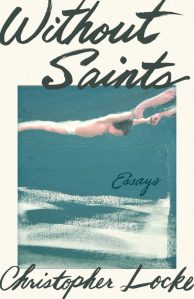 Without Saints: Essays by Christopher Locke: Fifteen flash essays present shards of a life story. Growing up in New Hampshire, Locke encountered abusive schoolteachers and Pentecostal church elders who attributed his stuttering to demon possession and performed an exorcism. By age 16, small acts of rebellion had ceded to self-harm, and his addictions persisted into adulthood. Later, teaching poetry to prisoners, he realized that he might have been in their situation had he been caught with drugs. The complexity of the essays advances alongside the chronology. Weakness of body and will is a recurrent element.
Shelf Awareness
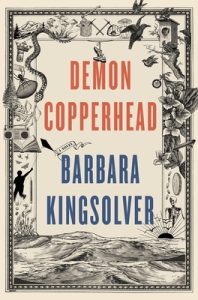 Demon Copperhead by Barbara Kingsolver: Her bighearted ninth novel follows the contours of Charles Dickens’s David Copperfield, transplanting the plot to 1990s southwest Virginia to uncover the perils of opiate addiction. Ten-year-old Damon Fields lives in a trailer home with his addict mother, who is employed at Walmart, and his new stepfather, Stoner, a mean trucker. Tragedy strikes and Damon moves between several foster homes before running away. “A kid is a terrible thing to be, in charge of nothing,” he remarks, looking back. His irrepressible, sassy voice is reminiscent of Holden Caulfield’s in this Appalachian cousin to Shuggie Bain.
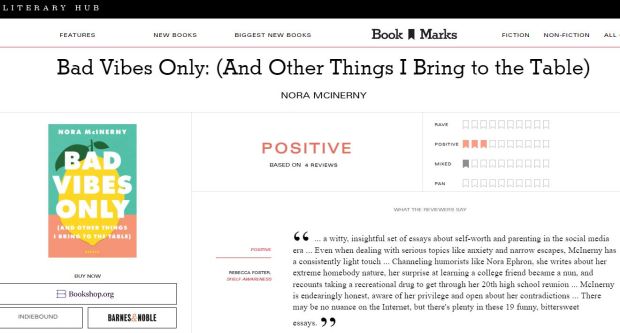
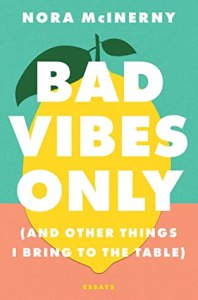 Bad Vibes Only by Nora McInerny: McInerny’s fifth book is a witty, insightful set of essays about self-worth and parenting in the social media era. Those familiar with the author’s previous autobiographical works will remember that within a few weeks in 2014, her father and first husband, Aaron, both died of cancer. After several years as a single mother, she married Matthew and they blended their families. Even when dealing with serious topics like anxiety and narrow escapes, McInerny has a light touch. She is endearingly honest, aware of her privilege and open about her contradictions. The then-and-now focus compares pre-Internet childhood with the challenges of raising kids with a constant online presence.
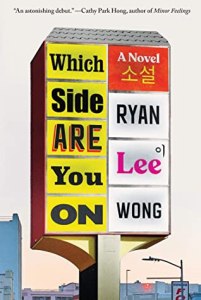 Which Side Are You On by Ryan Lee Wong: In Wong’s dynamite debut novel – set in Los Angeles, with its history of race riots – an Asian American college student committed to social justice rethinks how best to live out his ideals in the real world. Wong probes the generational gap between Reed and his parents through snappy dialogue and enjoyable scenes that constitute an incidental tour of multi-ethnic L.A. Full of vibrant characters, this punchy story offers no simple answers to ongoing racial conflicts. The portrait of a sanctimonious young man who wakes up to the reality of generational trauma and well-meaning failure is spot-on. Truly, a book for the contemporary moment.
It’s always a thrill to see my words quoted as authoritative: excerpts from my Bad Vibes Only review appear on Bookshop.org and on Lit Hub’s Bookmarks page (see below), and there’s an unattributed quote from my Which Side Are You On review on the book’s Amazon page.
Do any of these books interest you?
R.I.P. Reads, Part I: Ahlberg, Gaskell, Hinchcliffe and Watson
I don’t generally read horror or suspense, but the R.I.P. challenge is my annual excuse to pick up some slightly scarier material. For this first installment of super-short responses, I have a children’s book about a seriously problematic cat, a Victorian ghost story, and two recent Scotland-set novels about exiles haunted by the unexplained. (All: Public library)

The Improbable Cat by Allan Ahlberg (2003)
 I picked this up expecting a cute cat tale for children, only realizing afterwards that it’s considered horror. When a grey kitten wanders into their garden, Davy is less enamoured than the rest of the Burrell family. His suspicion mounts as the creature starts holding court in the lounge, expecting lavish meals and attention at all times. His parents and sister seem to be under the cat’s spell in some way, and it’s growing much faster than any young animal should. Davy and his pal George decide to do something about it. Since I’m a cat owner, I’m not big into evil cat stories (e.g., Cat out of Hell by Lynne Truss), and this one was so short as to feel underdeveloped.
 “The Old Nurse’s Story” by Elizabeth Gaskell (1852)
(collected in Gothic Tales (2000), ed. Laura Kranzler)
I had no idea that Gaskell had published short fiction, let alone ghost stories. Based on the Goodreads and blogger reviews, I chose one story to read. The title character tells her young charges about when their mother was a child and the ghost of a little girl tried to lure her out onto the Northumberland Fells one freezing winter. It’s predictable for anyone who reads ghost stories, but had a bit of an untamed Wuthering Heights feel to it. 
Hare House by Sally Hinchcliffe (2022)
 The unnamed narrator is a disgraced teacher who leaves London for a rental cottage on the Hare House estate in Galloway. Her landlord, Grant Henderson, and his rebellious teenage sister, Cass, are still reeling from the untimely death of their brother. The narrator gets caught up in their lives even though her shrewish neighbour warns her not to. There was a lot that I loved about the atmosphere of this one: the southwest Scotland setting; the slow turn of the seasons as the narrator cycles around the narrow lanes and finds it getting dark earlier, and cold; the inclusion of shape-shifting and enchantment myths; the creepy taxidermy up at the manor house; and the peculiar fainting girls/mass hysteria episode that precipitated the narrator’s banishment and complicates her relationship with Cass. The further you get, the more unreliable you realize this narrator is, yet you keep rooting for her. There are a few too many set pieces involving dead animals, and, overall, perhaps more supernatural influences than are fully explored, but I liked Hinchcliffe’s writing enough to look out for what else she will write. (Readalikes: The Haunting of Hill House and Wakenhyrst)
Metronome by Tom Watson (2022)
 Ever since I read Blurb Your Enthusiasm, I’ve been paying more attention to jacket copy. This is an example of a great synopsis that really gives a sense of the plot: mysterious events, suspicion within a marriage, and curiosity about what else might be out there. Aina and Whitney believe they are the only people on their island. They live simply on a croft and hope that, 12 years after their exile, they’ll soon be up for parole. Whitney stubbornly insists they wait for the warden to rescue them, while Aina has given up thinking anyone will ever come. There’s a slight Beckettian air, then, to the first two-thirds of this dystopian novel. When someone does turn up, it’s not who they expect. The eventual focus on parenthood meant this reminded me a lot of The Road; there are also shades of The Water Cure and Doggerland (though, thankfully, the dual protagonists ensure a less overly male atmosphere than in the latter). This was an easy and reasonably intriguing read, but ultimately a bit vague and bleak for me, and not distinguished enough at the level of the prose (e.g., way too many uses of “onside”).
Planning My Reading Stacks for Novellas in November (#NovNov22)
Just a couple of weeks until Novellas in November (#NovNov22) begins! I gathered up all of my potential reads for a photo shoot, including review copies, library loans, recent birthday gifts and books that have been languishing on my shelves for ages.
Week One: Short Classics (= pre-1980)

Week Two: Novellas in Translation
 I always struggle with this prompt the most. (The Sorrows of Young Werther by Johann Wolfgang Goethe would also be a token contribution to German Literature Month.)
Week Three: Short Nonfiction
 This is probably (not so secretly) my favourite week of the month. Others may find it strange to consider nonfiction during a novellas month, but this challenge is really about celebrating the art of the short book in all its forms, and I love a work that can contribute something significant on a topic, or illuminate a portion of an author’s life, in under 200 pages.
Week Four: Contemporary Novellas (= post-1980)

I have a few other options on my e-readers as well, such as Marigold and Rose by Louise Glück, Foster by Claire Keegan (our buddy read for the month), and The Hero of This Book by Elizabeth McCracken.
I read 29 novellas last November; why not aim for one a day this time?! November is also Margaret Atwood Reading Month, so I’ve lined up one of her fairly recent poetry collections that I picked up from a Little Free Library. Apart from that, I do have a few review books I need to get to for Shelf Awareness, so it’ll be a jam-packed month.
Kate has already come up with her list of possible titles. Look out for Cathy’s today, too. If you’re struggling for ideas, here’s a long list of suitable authors and publishers I put together last year, or you might like to browse through the reviews from 2021.
Now to get reading!!
Do you have any novellas in mind to read next month?
Which options from my stacks should I prioritize?
Birthday Outing and Book Haul
I’m not quite sure why, but I’ve made it a habit of posting something about each birthday I’ve celebrated since I started blogging. Maybe because, otherwise, the years pass so quickly that I can’t remember from one to another what I did, ate, or received as presents! So, to follow on from my 2015, 2016, 2017, 2018, 2019, 2020, and 2021 posts, here’s this year’s rundown. (Oh dear, I realize I’ve read just one of the books I received last year!)
On Thursday, I treated myself to a charity shop crawl around Newbury (it’s a great place for thrift shopping, as is nearby Thatcham) and got two jumpers plus this small stack of secondhand books.

Then yesterday, my actual birthday, we took time off and went to Kelmscott Manor in West Oxfordshire/the Cotswolds (right on the border with Gloucestershire), where Victorian designer William Morris lived. We’re a fan of Morris’s floral-based wallpaper and textile designs and he was a progressive thinker, too, embracing socialism and environmentalism – I’ll get his utopian novel, News from Nowhere, out from the university library to read soon. Despite a drizzly start to the day, the place was packed with visitors. The tea shop’s cakes incorporate fruit from the manor’s own trees. Naturally, I had to sample two of their offerings, and still had room for a chocolate beetroot cupcake (with the requisite candle) once we got home.


On the way back, we stopped in Wantage for some secondhand book shopping. I’d found out about Regent market from Simon’s blog and he’s right – it’s huge, with an excellent stock and good prices (£2 or £2.50 for nearly everything I looked at, vs. when we were in Inverness I didn’t buy a thing at Leakey’s because even poor-condition paperbacks started at £4). I would happily have spent much longer there and acquired twice as much, but one must be restrained when there are further book hauls to come. I was pleased to find several books I’ve been interested in reading for a while, as well as a couple by authors I’ve enjoyed before.

 I requested a vegan Chinese feast, inspired by a recent cookbook I’ve reviewed for Shelf Awareness’s upcoming gift books feature, The Vegan Chinese Kitchen by Hannah Che. My husband made a special trip to an Asian grocery superstore in Reading and the recipes were fairly involved, but the results – cabbage rolls, wontons and bao buns, most featuring tofu and mushrooms – were worth waiting for. We have leftovers for the weekend, along with a banoffee cheesecake from Nigella Lawson’s Kitchen still to come. (When are complicated dishes for if not for birthdays?)


Here are the books I received as birthday gifts, with more to come, I expect, plus a significant amount of birthday money that I may well spend on books. Some good options for #NovNov22 in here!

Book Serendipity, Mid-August to Mid-October 2022
It’s my birthday today and we’re off to Kelmscott Manor, where William Morris once lived, so I’ll start with a Morris-related anecdote even if it’s not a proper book coincidence. One of his most famous designs, the Strawberry Thief, is mentioned in Tomorrow, and Tomorrow, and Tomorrow by Gabrielle Zevin, and I happen to be using a William Morris wall calendar this year. I will plan to report back tomorrow on our visit plus any book hauls that occur.
I call it “Book Serendipity” when two or more books that I read at the same time or in quick succession have something in common – the more bizarre, the better. This is a regular feature of mine every few months. Because I usually have 20–30 books on the go at once, I suppose I’m more prone to such incidents. The following are in roughly chronological order.
 There’s a character named Verena in What Concerns Us by Laura Vogt and Summer by Edith Wharton. Add on another called Verona from Stories from the Tenants Downstairs by Sidik Fofana.
- Two novels with a female protagonist who’s given up a singing career: Brief Lives by Anita Brookner and What Concerns Us by Laura Vogt.
- Two books featuring Black characters, written in African American Vernacular English, and with elements of drug use and jail time plus rent rises driving people out of their apartments and/or to crime (I’ve basically never felt so white): Stories from the Tenants Downstairs by Sidik Fofana and Nightcrawling by Leila Mottley.

- Two books on my stack with the protagonist an African American woman from Oakland, California: Red Island House by Andrea Lee and Nightcrawling by Leila Mottley
- A middle-aged woman’s hair is described as colourless and an officious hotel staff member won’t give the protagonist a cup of coffee/glass of wine in Brief Lives by Anita Brookner and Oh William! by Elizabeth Strout.
- There’s a central Switzerland setting in Mountain Song by Lucy Fuggle and What Concerns Us by Laura Vogt.
- On the same day, I encountered two references to Mary Oliver’s famous poem “The Summer Day” (“what is it you plan to do / with your one wild and precious life?”): in Mountain Song by Lucy Fuggle and This Beauty by Nick Riggle. (Fuggle and Riggle – that makes me laugh!)
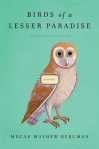
- In the same evening I found mentions of copperhead snakes in Demon Copperhead by Barbara Kingsolver (no surprise there), but also on the very first page of Birds of a Lesser Paradise by Megan Mayhew-Bergman.

- Crop circles are important to What Remains? by Rupert Callender and The Perfect Golden Circle by Benjamin Myers.
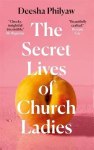
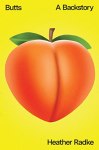
- I was reading two books with provocative peaches on the cover at the same time: The Secret Lives of Church Ladies by Deesha Philyaw and Butts: A Backstory by Heather Radke.
- A main character is pregnant but refuses medical attention in The Language of Flowers by Vanessa Diffenbaugh and What Concerns Us by Laura Vogt.
- An Australian setting and the slang “Carn” or “C’arn” for “come on” in Cloudstreet by Tim Winton and one story (“Halflead Bay”) from The Boat by Nam Le.
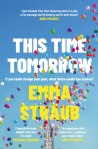
- Grape nuts cereal is mentioned in Leap Year by Helen Russell and This Time Tomorrow by Emma Straub.
- A character wagers their hair in a short story from Bratwurst Haven by Rachel King and one from Anthropology by Dan Rhodes.
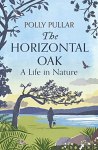
- Just after I started reading a Jackie Kay poetry collection (Other Lovers), I turned to The Horizontal Oak by Polly Pullar and found a puff from Kay on the front cover. And then one from Jim Crumley, whose The Nature of Spring I was also reading, on the back cover! (All Scottish authors, you see.)
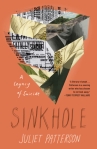
- Reading two memoirs that include a father’s suicide – Sinkhole by Juliet Patterson and The Horizontal Oak by Polly Pullar – at the same time.
- Middle school students reading Of Mice and Men in Ms. Hempel Chronicles by Sarah Shun-lien Bynum and Stories from the Tenants Downstairs by Sidik Fofana.
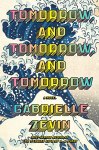
- A second novel in two months in which Los Angeles’s K-Town (Korean neighbourhood) is an important location: after Which Side Are You On by Ryan Lee Wong, Tomorrow, and Tomorrow, and Tomorrow by Gabrielle Zevin.
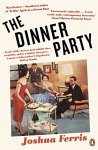
- The main character inherits his roommate’s coat in one story of The Dinner Party by Joshua Ferris, and Tomorrow, and Tomorrow, and Tomorrow by Gabrielle Zevin.
- The Groucho Marx quote “Whatever it is, I’m against it” turns up in What Remains? by Rupert Callender and Blurb Your Enthusiasm by Louise Willder (where it’s adapted to “we’re” as the motto of 3:AM Magazine).
 In Remainders of the Day by Shaun Bythell, Polly Pullar is mentioned as one of the writers at that year’s Wigtown Book Festival; I was reading her The Horizontal Oak at the same time.
- Marilyn Monroe’s death is mentioned in Sinkhole by Juliet Patterson and Tomorrow, and Tomorrow, and Tomorrow by Gabrielle Zevin.
- The types of standard plots that there are, and the fact that children’s books get the parents out of the way as soon as possible, are mentioned in And Finally by Henry Marsh and Blurb Your Enthusiasm by Louise Willder.
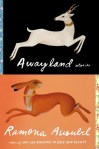
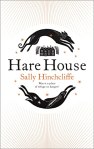
- Two books in quick succession with a leaping hare (and another leaping mammal, deer vs. dog) on the cover: Awayland by Ramona Ausubel, followed by Hare House by Sally Hinchcliffe.
- Three fingers held up to test someone’s mental state after a head injury in The House Is on Fire by Rachel Beanland and The Fear Index by Robert Harris.
- A scene where a teenage girl has to help with a breech livestock delivery (goat vs. sheep) in Belzhar by Meg Wolitzer and The Truants by Kate Weinberg.
- Two memoirs by a doctor/comedian that open with a scene commenting on the genitals of a cadaver being studied in medical school: Catch Your Breath by Ed Patrick wasn’t funny in the least, so I ditched it within the first 10 pages or so, whereas Undoctored by Adam Kay has been great so far.
What’s the weirdest reading coincidence you’ve had lately?
 Bookish Beck = Rebecca Foster. American transplant to England. Freelance proofreader and book reviewer.
