The Diary of a Bookseller by Shaun Bythell
So you think you’d like to run a bookshop? Here’s a book to tempt and deter you in equal measure. In 2001 Shaun Bythell acquired The Bookshop, the flagship bookstore in Wigtown, the Book Town in Galloway in the southwest of Scotland. Here he gives a one-year snapshot of life at the shop, from February 2014 to February 2015. At the start you can feel the winter chill in the old granite building, and as months pass you sense mounting excitement at preparations for the annual Book Festival (going on now) and the Scottish referendum. It’s a pleasure to spend a vicarious year at the shop. This would make a great bedside book for a bookish type to parcel out 5–10 pages at a time (another Christmas gift idea?).
 Bythell frequently ventures out to buy book collections in auctions and from estates, and occasionally goes fishing with his father or friends. But mostly we see what daily life is like for a bookshop owner. He can’t afford full-time staff, so gets sporadic help from university-age gals; his most “reliable” part-timer is Nicky, a ski suit-wearing, Dumpster-diving Jehovah’s Witness who blithely ignores much of what he asks her to do.
Every entry opens and closes with statistics on the day’s takings and online orders. Profits range from £5 to £500 a day, rising in the summer and peaking around £1200 during the festival. Also listed is the number of customers who make purchases, which represents only one-fifth of daily footfall. Nowadays most bookstores sell online too, and The Bookshop reluctantly partners with Amazon as a marketplace seller. There’s also ABE and eBay; as a last-ditch option, some outfits take books in bulk, even if just to recycle them. Alongside online sales, it’s essential for bookstores to have sidelines. Bythell does video production and sells furniture, antiques and walking sticks carved by “Sandy, the tattooed pagan.”
As with Wendy Welch’s The Little Bookstore of Big Stone Gap, I enjoyed the nitty-gritty details about acquiring and pricing books, especially the serendipitous moments of coming across real treasures, like a book signed by Sir Walter Scott and a 1679 edition of the Decameron with an interesting provenance. The book is also full of quirky customer behavior, the kind of stuff that fills The Bookshop’s Facebook feed. Bythell cultivates a curmudgeonly persona – he once shot a broken Kindle and mounted it on the bookshop wall – and maintains a tone that’s somewhere between George Orwell (excerpts from whose “Bookshop Memories” serve as monthly epigraphs) and Jen Campbell (Weird Things Customers Say in Bookshops et al.). Here’s a few of the best encounters:
a whistling customer with a ponytail and what I can only assume was a hat he’d borrowed from a clown bought a copy of Paolo Coelho’s The Alchemist, I suspect deliberately to undermine my faith in humanity and dampen my spirits further.
A man smelling of TCP [antiseptic] was the only customer in the shop for the first hour of opening, during which time I attempted to put out fresh stock. He had an uncanny ability to be standing in front of every shelf to which I needed access, regardless of the subject or where in the shop the relevant shelves were.
While I was repairing a broken shelf in the crime section, I overheard an elderly customer confusing E. L. James and M. R. James while discussing horror fiction with her friend. She is either going to be pleasantly surprised or deeply shocked when she gets home with the copy of Fifty Shades of Grey she bought.
I’ve been to Hay-on-Wye six times now but haven’t made it to Wigtown yet. It’s high on my bookish wish list. I had two additional reasons for wanting to read this particular book: I’d read Three Things You Need to Know about Rockets, a memoir by Bythell’s former partner, the American Jessica Fox (here known as “Anna”; in her book he’s “Ewan”), about coming to Scotland on a whim and falling in love with a bookshop owner; and I’m awfully fond of The Bookshop Band, a folky husband–wife musical duo who this year relocated from Bath to Wigtown. It was such fun to read about their first time playing in Wigtown and their stay as the inaugural guests/temporary store managers via The Open Book Airbnb project.

Colin Kinnear [CC BY-SA 2.0 (https://creativecommons.org/licenses/by-sa/2.0)%5D, via Wikimedia Commons.
The Book Shop trivia:
- December is by far the quietest month. (“The few people who give second-hand books as gifts for Christmas are usually eccentric” – count me as one of them!)
- Railway books sell best.
- Terry Pratchett, John Buchan, P.G. Wodehouse and E.F. Benson books are also perennial best sellers.
- You’ll be amazed at how many customers try to haggle over prices. It’s a shop, not a rummage sale, for goodness’ sake! I can’t imagine ever having the cheek to offer less than the advertised price.
My rating:
The Diary of a Bookseller was released in the UK on September 28th. My thanks to Profile Books for the free review copy.
Ghent and Amsterdam, and What I Read
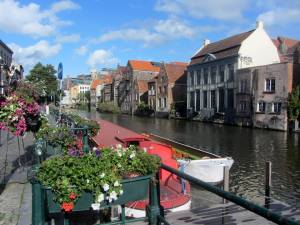
Ghent. Photo by Chris Foster
We got back on Monday from a packed week in Ghent and Amsterdam. Despite the chilly, showery weather and a slightly disappointing Airbnb experience in Ghent, it was a great trip overall. Our charming little B&B apartment in Broek in Waterland, a 20-minute bus ride from Amsterdam, more than made up for the somewhat lackluster accommodation in Belgium and was a perfect base for exploring the area. With our three-day, all-inclusive regional travel passes we were free to hop on as many trams and buses as we wanted.
On Saturday we crammed in lots of Amsterdam’s main attractions: the Rijksmuseum, the Begijnhof cloisters, the Botanical Gardens and the Anne Frank House, interspersed with window shopping, a rainy picnic lunch and an Indonesian takeaway dinner eaten by a canal. I also got to visit a more off-the-beaten-track attraction I’d spotted in our guide book: De Poezenboot or “The Cat Boat,” a home for strays moored on the Singel canal. Alas, the resident kitties were not as friendly as many we met on the rest of the trip, but it was still fun.


The highlight of our Amsterdam stay was the Van Gogh Museum on Sunday morning. It was crowded – everything was; though Ghent was very quiet, Amsterdam doesn’t seem to be into its off season yet, if it even has one – but we took our time and saw every single painting, many of which I’d never come across in reproductions. The galleries are organized in chronological order, so you get to trace Van Gogh’s style and state of mind over the years. Superb.
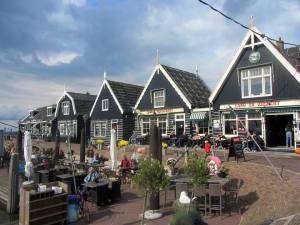
Marken. Photo by Chris Foster
At this point we were just about overwhelmed by the big city atmosphere, so we spent much of the next day and a half in the outlying Dutch towns of Marken and Edam. Flat fields and dykes, cows, cobbled streets and bicycles everywhere – it’s what you’d expect of Holland’s countryside, apart from a surprising dearth of windmills.


Bookish highlights:
- This Ghent University library – I’m presuming it held Special Collections/rare books:


- The American Book Center in Amsterdam:

Photo by Chris Foster
What I read:
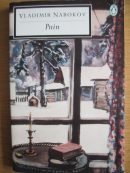 Pnin by Vladimir Nabokov: A comic novel about a Russian professor on an American college campus. While there are indeed shades of Lucky Jim – I certainly laughed out loud at Timofey Pnin’s verbal gaffes and slapstick falls – there’s more going on here. In this episodic narrative spanning 1950–4, Pnin is a figure of fun but also of pathos: from having all his teeth out and entertaining the son his ex-wife had by another man to failing to find and keep a home of his own, he deserves the phrase Nabokov originally thought to use as a title, “My Poor Pnin”.
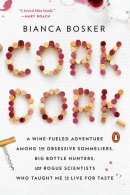 Cork Dork by Bianca Bosker: Bosker gave herself a year and a half to learn everything about wine in hopes of passing the Court of Master Sommeliers exam. Along the way she worked in various New York City restaurants, joined blind tasting clubs and attended an olfactory conference. The challenge included educating her palate, absorbing tons of trivia about growers and production methods, and learning accepted standards for sommelier service. The resulting book is a delightful blend of science, memoir and encounters with people who are deadly serious about wine.
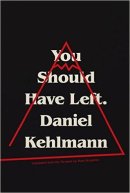 You Should Have Left by Daniel Kehlmann: And I thought my Airbnb experience was a nightmare? This is a horror novella about a writing retreat gone bad. The narrator is a screenplay writer who’s overdue delivering the sequel to Besties. As he argues with his partner, tries to take care of his daughter and produces fragments of the screenplay, the haunted house in the mountains starts to close in on him. I’ve loved Kehlmann’s work before (especially F), but he couldn’t convince me of the narrator’s state of mind or the peril. I actually found the book unintentionally humorous.
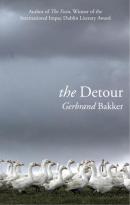 The Detour by Gerbrand Bakker: A Dutch translator and Emily Dickinson scholar has fled a mistake in her personal life and settled in rural Wales at the foot of Snowdon. “She had left everything behind, everything except the poems. They would have to see her through. She forgot to eat.” On her farmstead is a dwindling flock of geese and, later on, a young man surveying for a new footpath. Amidst her quiet, secret-filled days we also learn of her husband’s attempts to find her back in Amsterdam. Bakker’s writing is subtle and lovely, yet the story never quite took off for me.
 Tulip Fever by Deborah Moggach: If you liked Girl with a Pearl Earring and The Miniaturist, you may also enjoy this atmospheric, art-inspired novel set in the 1630s. (Originally from 1999, it’s recently been adapted into a film.) Sophia, married off to an old merchant, falls in love with Jan van Loos, the painter who comes to do their portrait. If Sophia and Jan are ever to be together, they’ll have to scrape together enough money to plot an elaborate escape. I thought this was rather soap opera-ish most of the way through, though I was satisfied with how things turned out in the end.
Plus other books I had on the go (lots of short works and literature in translation):
 Dangling Man by Saul Bellow
- Diary of a Bookseller by Shaun Bythell
- Madame Bovary by Gustave Flaubert
- The Unseen by Roy Jacobsen
- The Bus Driver Who Wanted to Be God and Other Stories by Etgar Keret
- Notes on a Banana: A Memoir of Food, Love and Manic Depression by David Leite
- The Fact of a Body: A Murder and a Memoir by Alexandria Marzano-Lesnevich
- Honeydew: Stories by Edith Pearlman
- A Girl Walks into a Book: What the Brontës Taught Me about Life, Love, and Women’s Work by Miranda Pennington
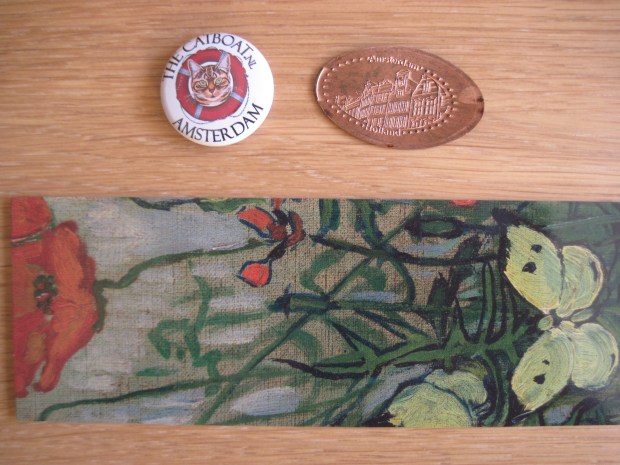
Extremely cheap souvenirs of Amsterdam to add to my collections: a badge, a pressed coin, and a Van Gogh bookmark.
What have you been reading recently?
Do you find that books read ‘on location’ never quite live up to your expectations?
European Traveling and Reading
We’ve been back from our European trip for over a week already, but I haven’t been up to writing until now. Partially this is because I’ve had a mild stomach bug that has left me feeling yucky and like I don’t want to spend any more time at a computer than is absolutely necessary for my work; partially it’s because I’ve just been a bit blue. Granted, it’s nice to be back where all the signs and announcements are in English and I don’t have to worry about making myself understood. Still, gloom over Brexit has combined with the usual letdown of coming back from an amazing vacation and resuming normal life to make this a ho-hum sort of week. Nonetheless, I want to get back into the rhythm of blogging and give a quick rundown of the books I read while I was away.
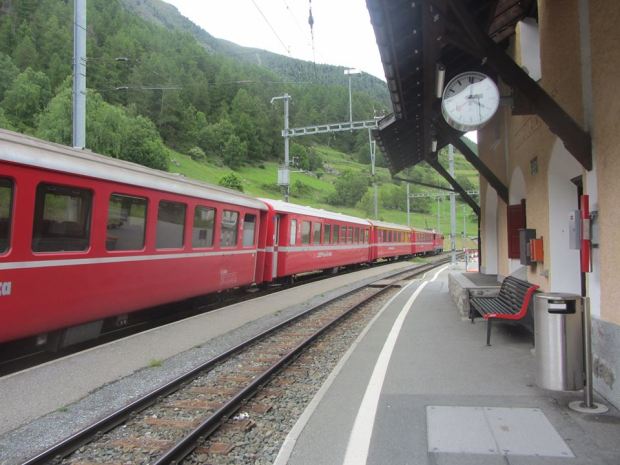
Tiny Lavin station, our base in southeastern Switzerland.
But first, some of the highlights of the trip:
- the grand architecture of the center of Brussels; live jazz emanating from a side street café
- cycling to the zoo in Freiburg with our friends and their kids
- ascending into the mountains by cable car and then on foot to circle Switzerland’s Lake Oeschinensee
- traipsing through meadows of Alpine flowers
- exploring the Engadine Valley of southeast Switzerland, an off-the-beaten track, Romansh-speaking area where the stone buildings are covered in engravings, paintings and sayings
- our one big splurge of the trip (Switzerland is ridiculously expensive; we had to live off of supermarket food): a Swiss dessert buffet followed by a horse carriage ride
- spotting ibex and chamois at Oeschinensee and marmots in the Swiss National Park
- miming “The Hills Are Alive” in fields near our accommodation in Austria (very close to where scenes from The Sound of Music were filmed)
- the sun coming out for our afternoon in Salzburg
- daily coffee and cake in Austrian coffeehouses
- riding the underground and trams of Vienna’s public transport network
- finding famous musicians’ graves in Vienna’s Zentralfriedhof cemetery
- discovering tasty vegan food at a hole-in-the-wall Chinese restaurant in Vienna that makes its own noodles
- going to Slovakia for the afternoon on a whim (its capital, Bratislava, is only 1 hour from Vienna by train – why not?!)
We went to such a variety of places and had so many different experiences. Weather and language were hugely variable, too: it rained nine days in a row; some mornings in Switzerland I wore my winter coat and hat; in Bratislava it was 95 °F. Even in the ostensibly German-speaking countries of the trip, we found that greetings and farewells changed everywhere we went (doubly true in the Romansh-speaking Engadine). Most of the time we had no idea what shopkeepers were saying to us. Just smile and nod. It was more difficult at the farm where we stayed in Austria. Thanks to Google Translate, we had no idea that the owner spoke no English; her e-mails were all in unusual but serviceable English. We speak virtually no German, so fellow farm guests, including a Dutch couple, had to translate between us. (The rest of Europe puts us to shame with their knowledge of languages!)
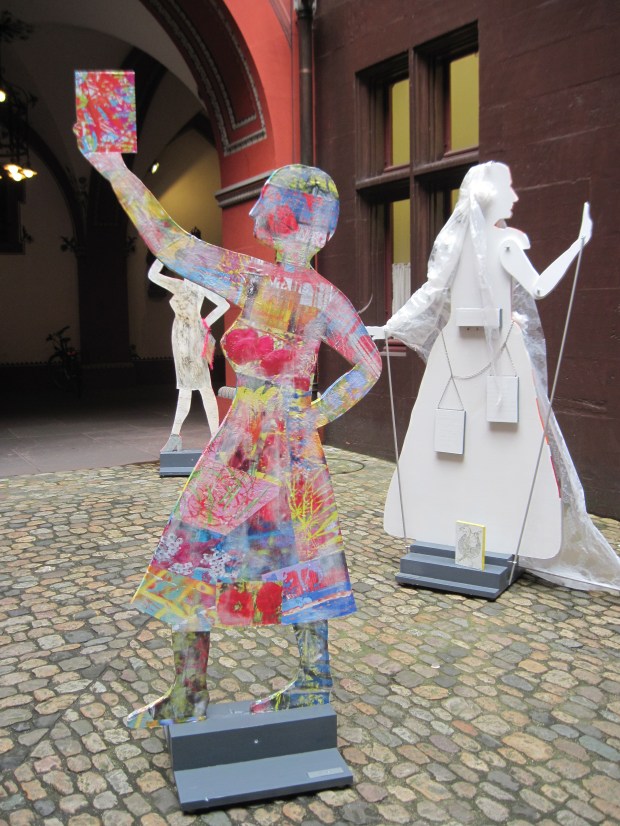
A reading-themed art installation at the Rathaus in Basel, Switzerland.
Train travel was, for the most part, easy and stress-free. Especially enjoyable were the small lines through the Engadine, which include the highest regular-service station in Europe (Ospizia Bernina, where we found fresh snowfall). The little town where we stayed in an Airbnb cabin, Lavin, was a request stop on the line, meaning you always had to press a button to get the train to stop and then walk across the tracks (!) to board. Contrary to expectations, we found that nearly all of our European trains were running late. However, they were noticeably more comfortable than British trains, especially the German ones. Thanks to train rides of an hour or more on most days, I ended up getting a ton of reading done.
 On the journey out I finished The Accidental Tourist by Anne Tyler. This is the first “classic” Tyler I’ve read, after her three most recent novels, and although I kept being plagued by odd feelings of ‘reverse déjà vu’, I really enjoyed it. This story of staid, reluctant traveler Macon Leary and how his life is turned upside down by a flighty dog trainer is all about the patterns of behavior we get stuck in. Tyler suggests that occasionally journeying into someone else’s unpredictable life might change ours for the good.
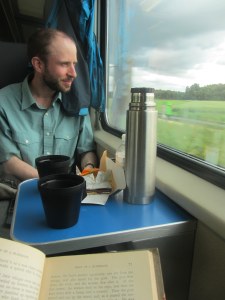 Diary of a Pilgrimage by Jerome K. Jerome was just what I expected: a very silly book about the travails of international travel. It’s much more about the luckless journey and the endurance of national stereotypes than it is about the Passion Play the travelers see once they get to Germany. It was amusing to see the ways in which some things have hardly changed in 125 years.
 A Whole Life by Robert Seethaler, a novella set in the Austrian Alps, is the story of Andreas Egger – at various times a farmer, a prisoner of war, and a tourist guide. Various things happen to him, most of them bad. I have trouble pinpointing why Stoner is a masterpiece whereas this is just kind of boring. There’s a great avalanche scene, though.
 The Book that Matters Most by Ann Hood releases on August 9th. A new book club helps Ava cope with her divorce, her daughter Maggie’s rebelliousness, and tragic events from her past. Each month one club member picks the book that has mattered most to them in life. I thought the choices were all pretty clichéd and Ava was unrealistically passive. Although what happens to her in Paris is rather melodramatic, I most enjoyed Maggie’s sections.
 Me and Kaminski was my second novel from Daniel Kehlmann. Know-nothing art critic Sebastian Zöllner interviews reclusive artist Manuel Kaminski and then accompanies the older man on a road trip to find his lost sweetheart. Zöllner is an amusingly odious narrator, but I found the plot a bit thin. This is a rare case where I would argue the book needs to be 100 pages longer.
 About midway through the trip I finished another I’d started earlier in the month, This Is Where You Belong by Melody Warnick. The average American moves 11.7 times in their life. I’m long past that already. The book collects an interesting set of ideas about how to feel at home wherever you are: things like learning the place on foot, shopping and eating locally, and getting to know your neighbors. I am bad about integrating into a new community every time we move, so I picked up some good tips. Warnick uses examples from all over (though mostly U.S. locations), but also makes it specific to her home of Blacksburg, Virginia.
 “A cabinet of fantasies, a source of knowledge, a collection of lore from past and present, a place to dream… A bookshop can be so many things.” In A Very Special Year by Thomas Montasser, Valerie takes over Ringelnatz & Co. bookshop when the owner, her Aunt Charlotte, disappears. She has the entrepreneurial skills to run a business and gradually develops a love of books, too. The title book is a magical tome with blank pages that reveal the reader’s destination when the time is right. Twee but enjoyable; a quick read.
 Eleven Hours by Pamela Erens is a taut thriller set during one woman’s experience of childbirth in New York City in 2004. Flashbacks to how the patient and her Caribbean nurse got where they are now add emotional depth. Another very quick read.
 Burning Secret by Stefan Zweig is a psychologically astute novella in which a 12-year-old tries to interpret what’s happening between his mother and a fellow hotel guest, a baron he looks up to. For this naïve boy, many things come as a shock, including the threat of sex and the possibility of deception. This reminded me most of Thomas Mann’s Death in Venice. (On a hill above Salzburg we discovered a strange disembodied bust of Stefan Zweig, along with a plaque and a road sign.)


 Playing Dead by Elizabeth Greenwood (releases August 9th) was great fun. Thinking of the six-figure education debt weighing on her shoulders, she surveys various cases of people who faked their own death or simply tried to disappear. Death fraud/“pseudocide” is not as easy to get away with as you might think. Fake drownings are especially suspect. I found most ironic the case of a man who lived successfully for 20 years under an assumed name but was caught when police stopped him for having a license plate light out. I particularly liked the chapter in which Greenwood travels to the Philippines, a great place to fake your death, and comes back with a copy of her own death certificate.
 Miss Jane by Brad Watson (releases July 12th) is a historical novel loosely based on the story of the author’s great-aunt. Born in Mississippi in 1915, she had malformed genitals, which led to lifelong incontinence. Jane is a wonderfully plucky protagonist, and her friendship with her doctor, Ed Thompson, is particularly touching. “You would not think someone so afflicted would or could be cheerful, not prone to melancholy or the miseries.” This reminded me most of What Is Visible by Kimberly Elkins, an excellent novel about living a full life and finding romance in spite of disability.
I also left two novels unfinished (that’ll be for another post) and made progress in two other nonfiction titles. All in all, a great set of reading!


I’m supposed to be making my way through just the books we already own for the rest of the summer, but when I got back of course I couldn’t resist volunteering for a few new books available through Nudge and The Bookbag. Apart from a few blog reviews I’m bound to, my summer plan will be to give the occasional quick roundup of what I’ve read of late.
What have you been reading recently?
Literary Tourism in Dublin
Almost immediately after our trip to Manchester (see my write-up of the literary destinations), we left again for Dublin, where my husband was attending a Royal Entomological Society conference. Like we did last year when he presented a poster at a conference in Florence, I went along since we only had to pay for my flight and meals.
We stayed north of the Liffey at one of the branches of Jurys Inn. For some reason they put us in a disabled room, which meant the bathroom was a bit odd, but I can’t complain about the breakfast buffet, which included black pudding, soda bread, fruit scones, and particularly delicious porridge.
Across the street was the terrific Chapters bookstore, with extensive secondhand and new stock. I highly recommend the Lonely Planet guide to Dublin, which provided my maps and many of my ideas for the week; I even managed to do 8 of their 10 recommended activities.
On Wednesday I wandered just a few minutes down the road to the Dublin Writers’ Museum. An audio guide takes you through the chronological displays about minor figures as well as the big names like W.B. Yeats, Oscar Wilde, and George Bernard Shaw. One caveat: only dead writers are considered; the museum is definitely missing a trick there – they could easily fill another room with living authors.
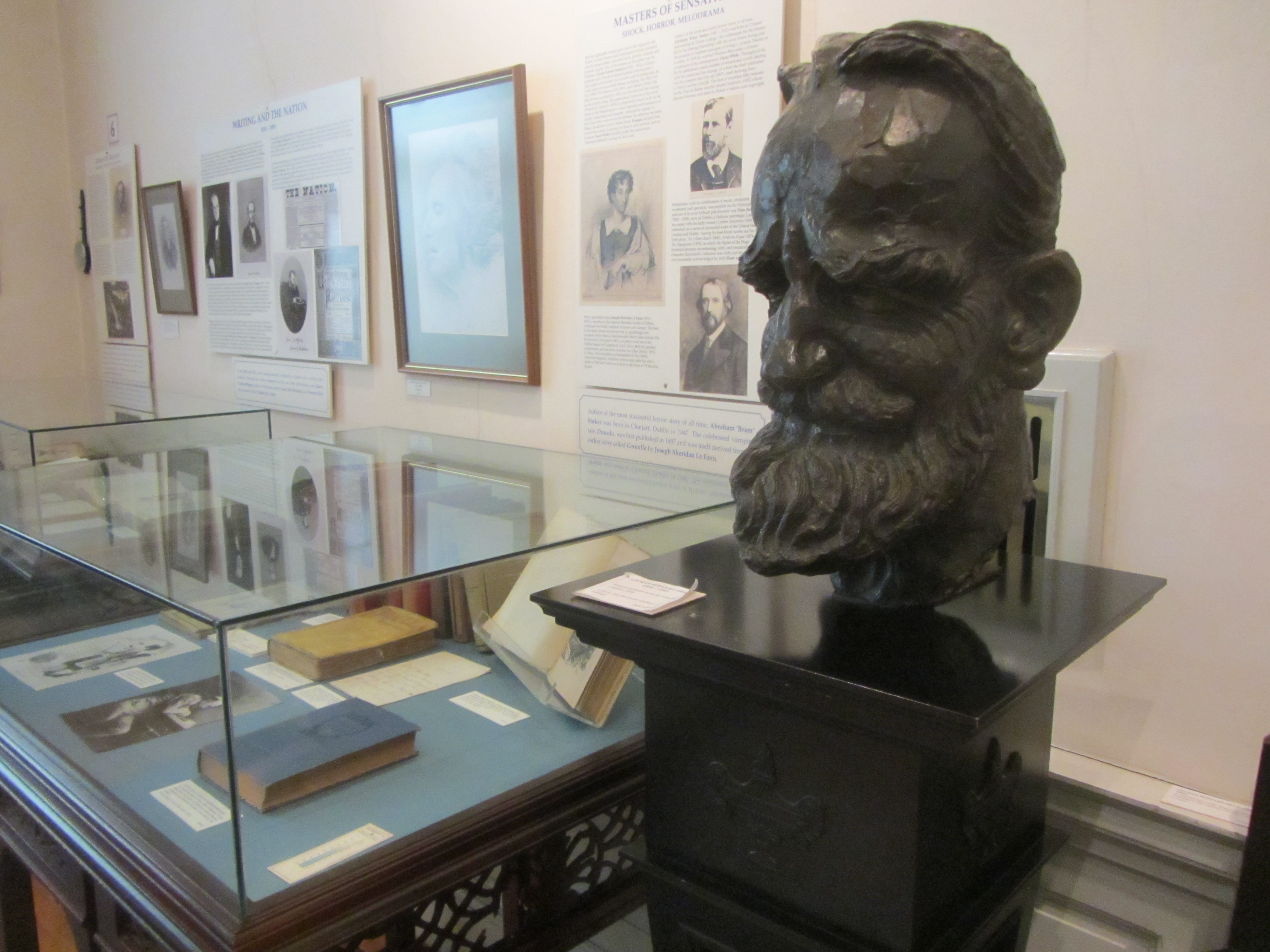
George Bernard Shaw
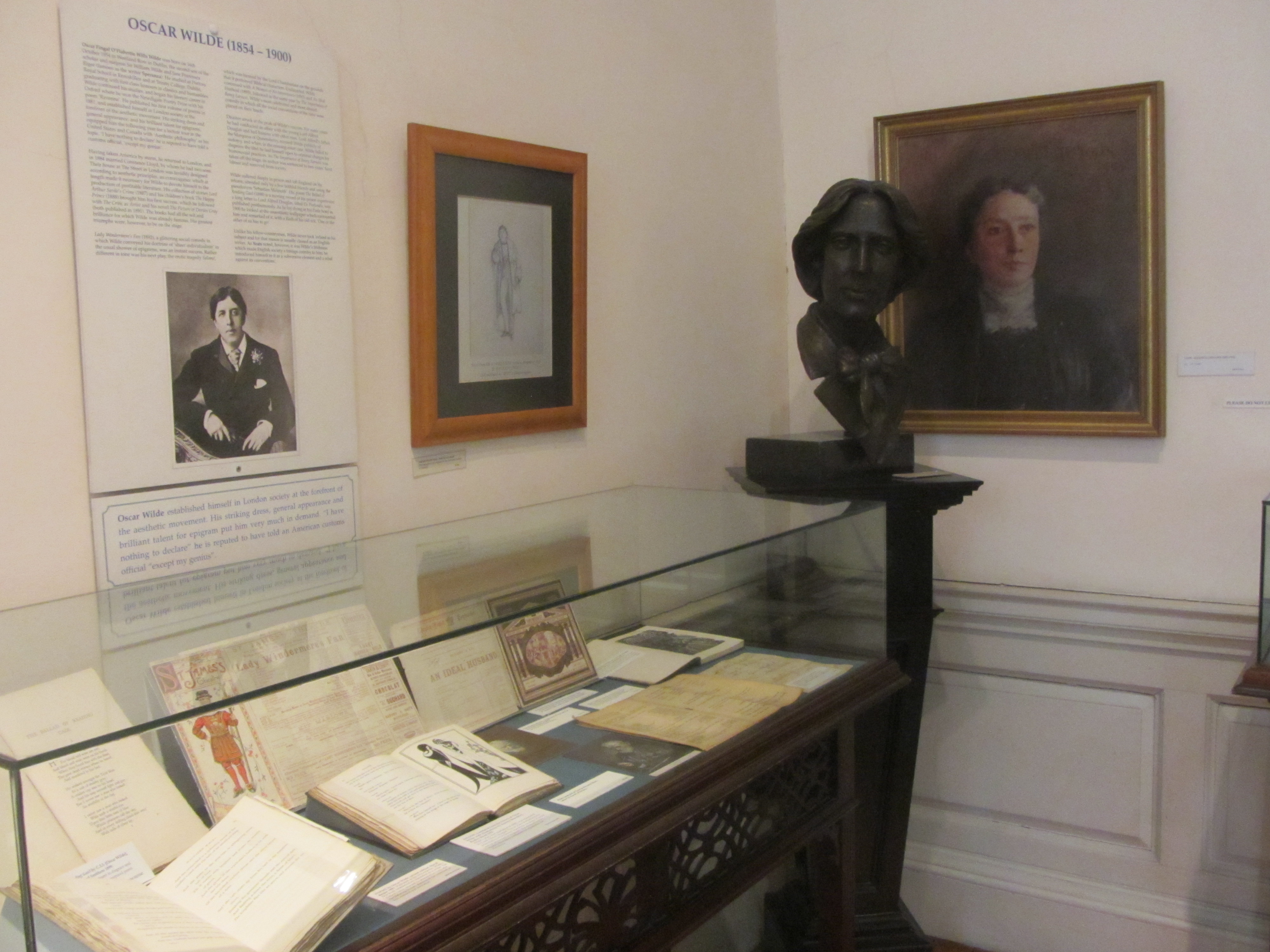
A case on Oscar Wilde. (That’s his wife in the portrait.)
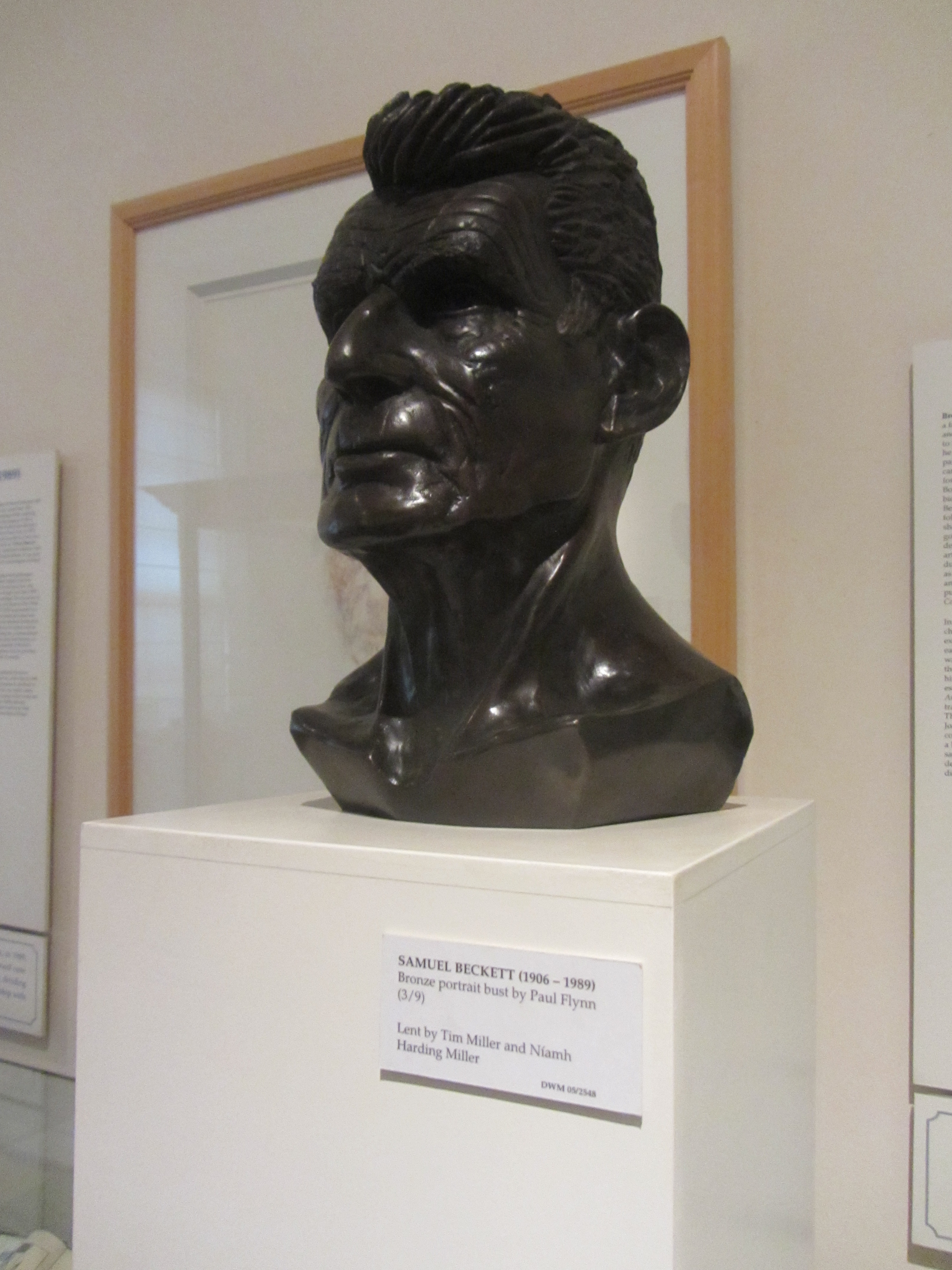
A striking bust of Beckett.
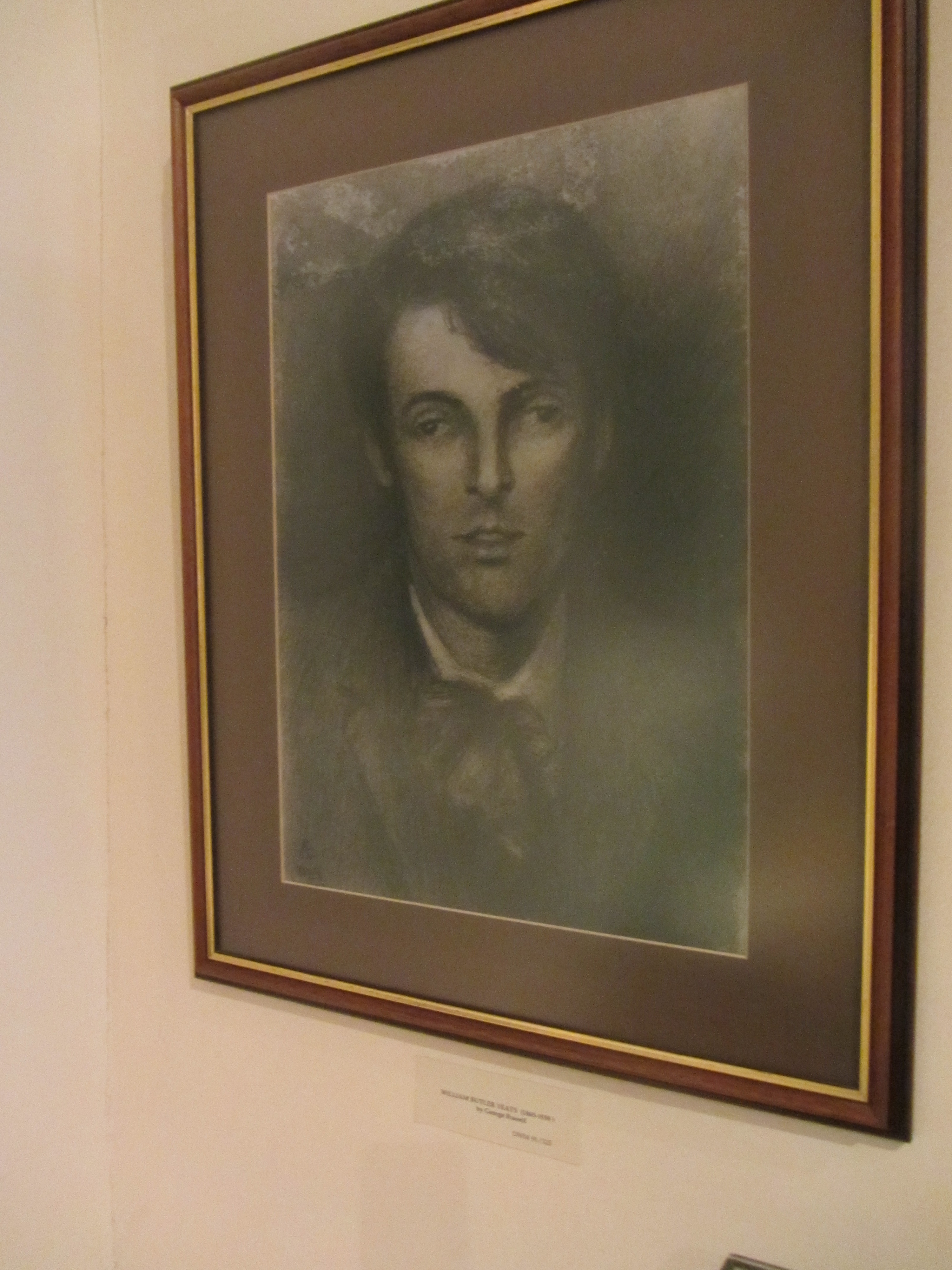
Poor Yeats is looking a bit cross-eyed.

I somehow hadn’t realized that Frank McCourt died six years ago.
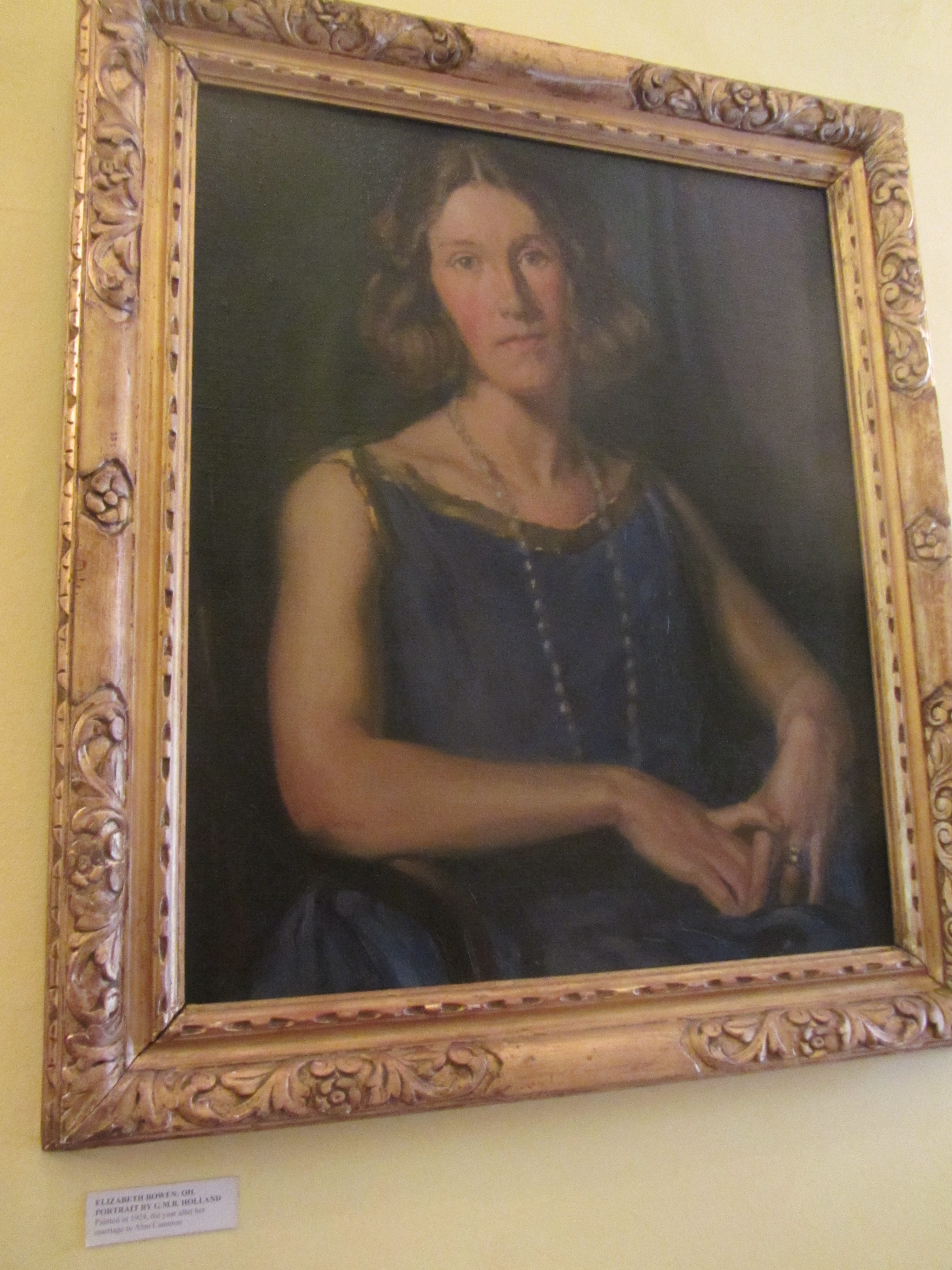
Painting of Elizabeth Bowen (I really need to read something by her…).
On the whole I found the place looking a bit shabby nowadays, but I passed a pleasant hour and a half here before popping a few doors down to the Dublin City Gallery, where they have multiple paintings by Jack B. Yeats (William Butler’s brother) as well as gems like a Monet and a Monet.
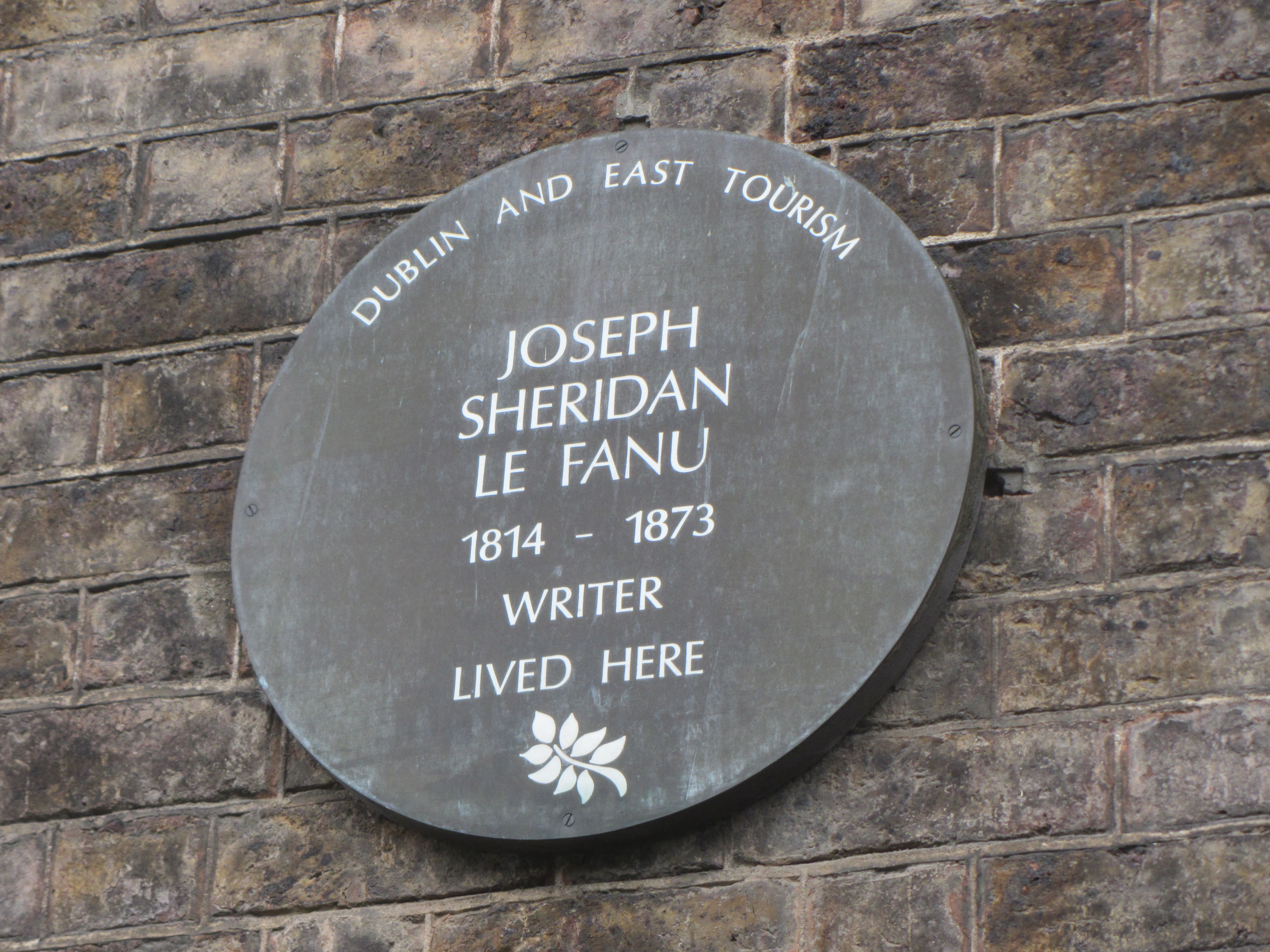
On Thursday I used the DK guide for a recommended walk through literary and Georgian Dublin. Along the way I discovered plaques to Yeats, Wilde (his home is now the headquarters of the American College and not open to the public, alas), ghost story writer Joseph Sheridan LeFanu, Bram Stoker, and Elizabeth Bowen, and a statue of poet Patrick Kavanagh by the canal. Fitzwilliam and Merrion Squares reminded me of London’s Bloomsbury Square (the latter houses a deliciously camp statue of Wilde), and St. Stephen’s Green would be a Hyde Park-type lovely spot for a sunny stroll – though it was drizzling and chilly as I walked through.

One of Yeats’s Dublin residences, 82 Merrion Square.
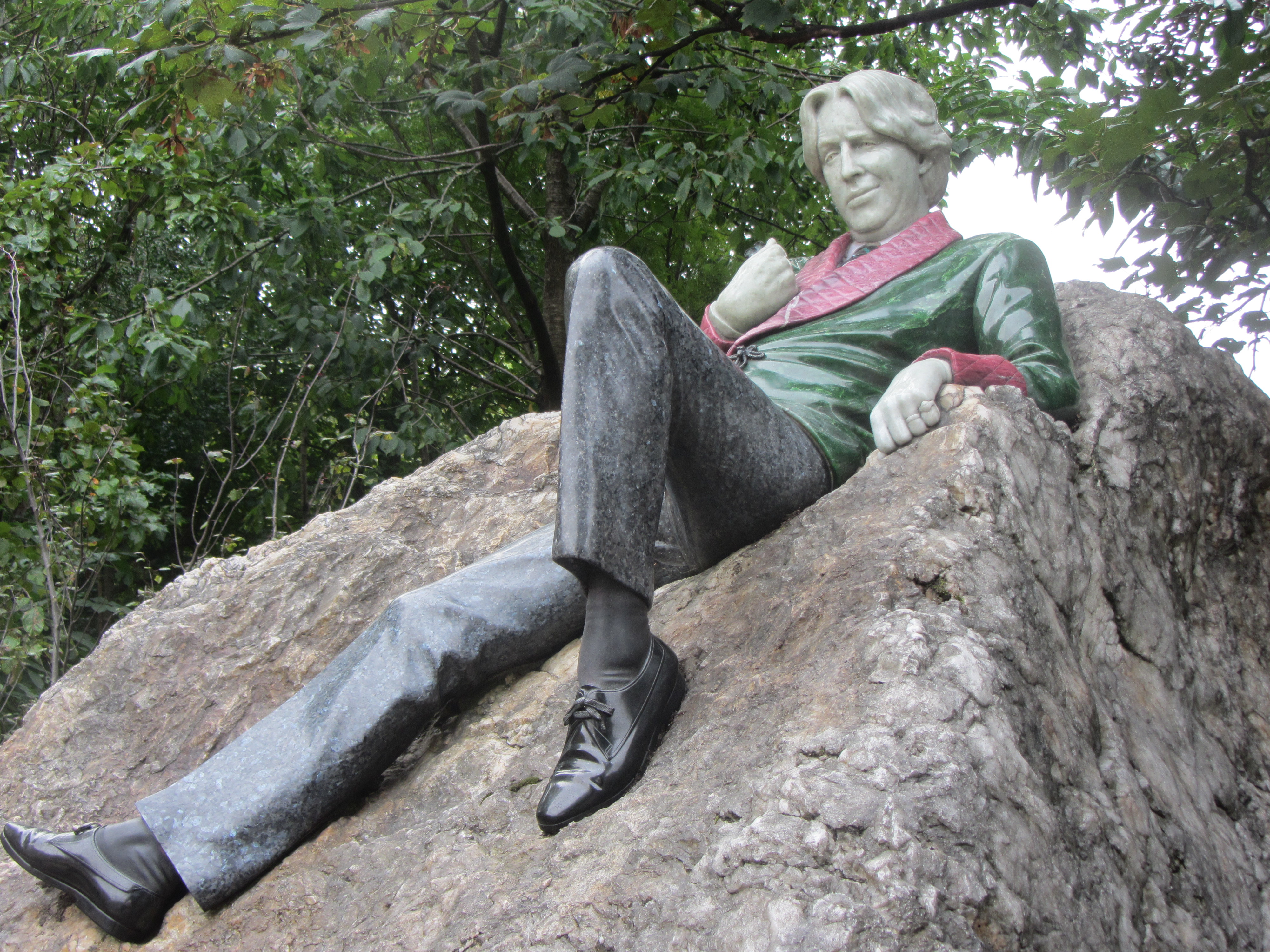

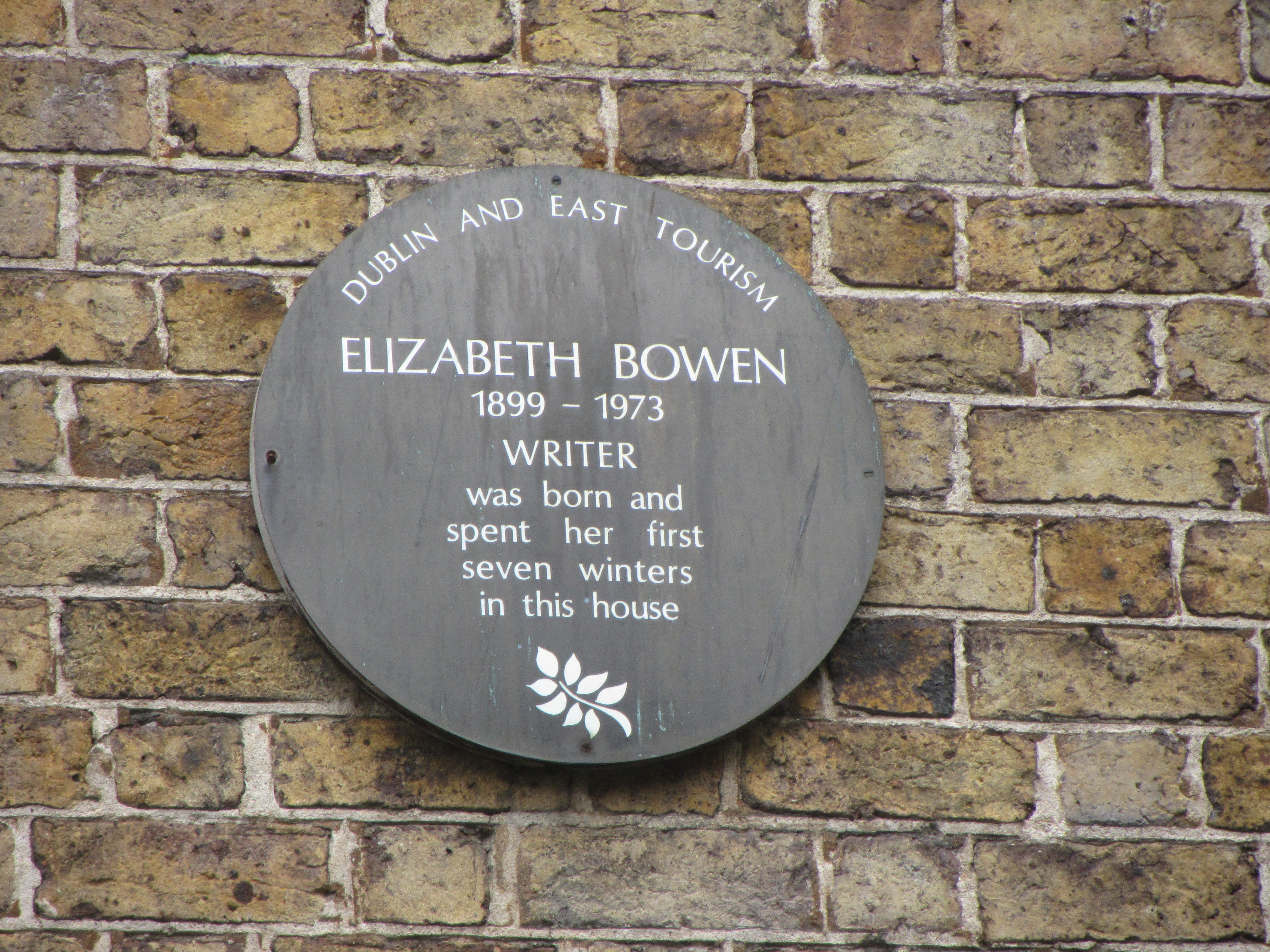

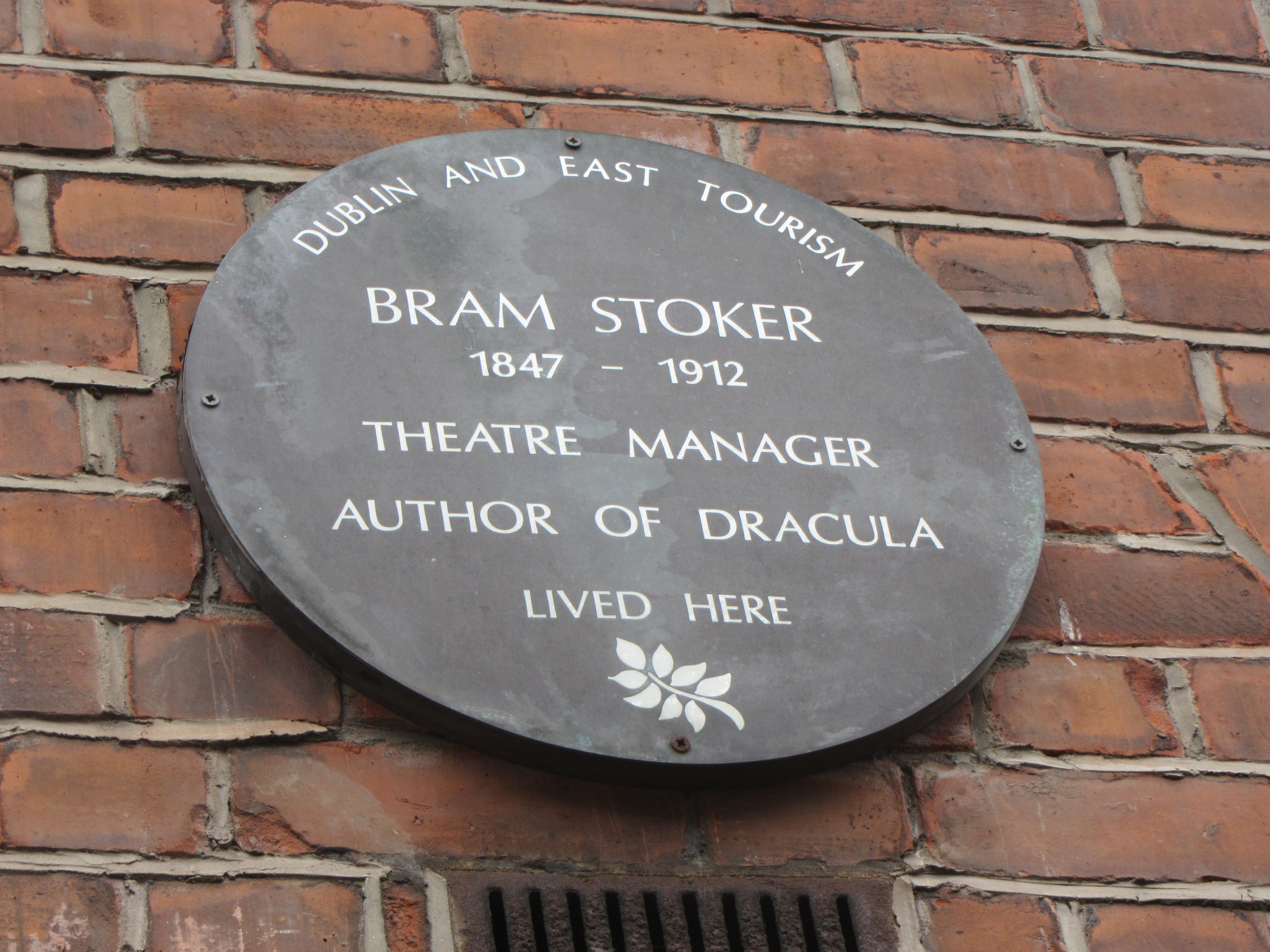
At the National Museum (Archaeology), I learned about Brian Boru, the national hero who kicked out the Vikings at the Battle of Clontarf and united the country.
My husband’s conference was at Trinity College, so he had a special chance to look in at the Old Library and the Book of Kells for a discounted price, but I didn’t end up going. On Thursday night we did something quintessentially Irish: found a pub with live traditional Irish folk music. Although we paid through the teeth for a pint of Guinness and a bottle of cider, it was an experience we wouldn’t have missed.
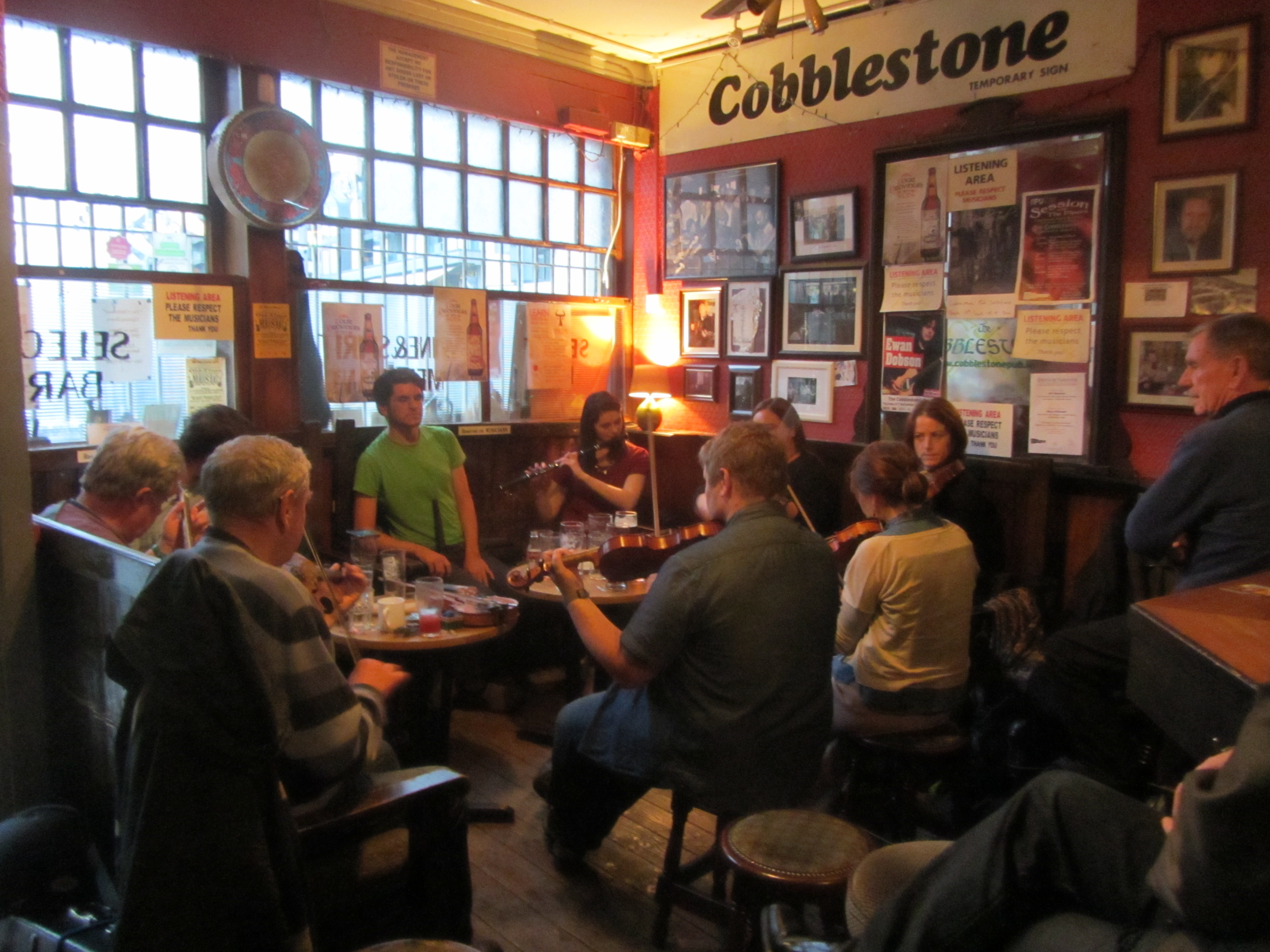
On Friday, after finishing up some reviewing work in the morning and checking out of the hotel, I returned to the Lonely Planet for a guided walk through Viking and medieval Dublin. The route took in the two cathedrals plus various other churches, ending up at the Castle and the Chester Beatty Library. I skipped the former but enjoyed a brief look at the rare books and manuscripts of the latter (mostly relating to the Far East, with a special focus on Asian religions) before walking back to the National Gallery to see the permanent collection.
That afternoon we moved on to Howth, a Dublin suburb only about 20 minutes away on the DART commuter train, but that somehow feels a world away: it’s a pleasant seaside village with heather- and gorse-covered hills and a lighthouse. It felt good to get out of the city – which was extremely busy and seemed to be mostly full of fellow tourists and the homeless – even if just for a little while.
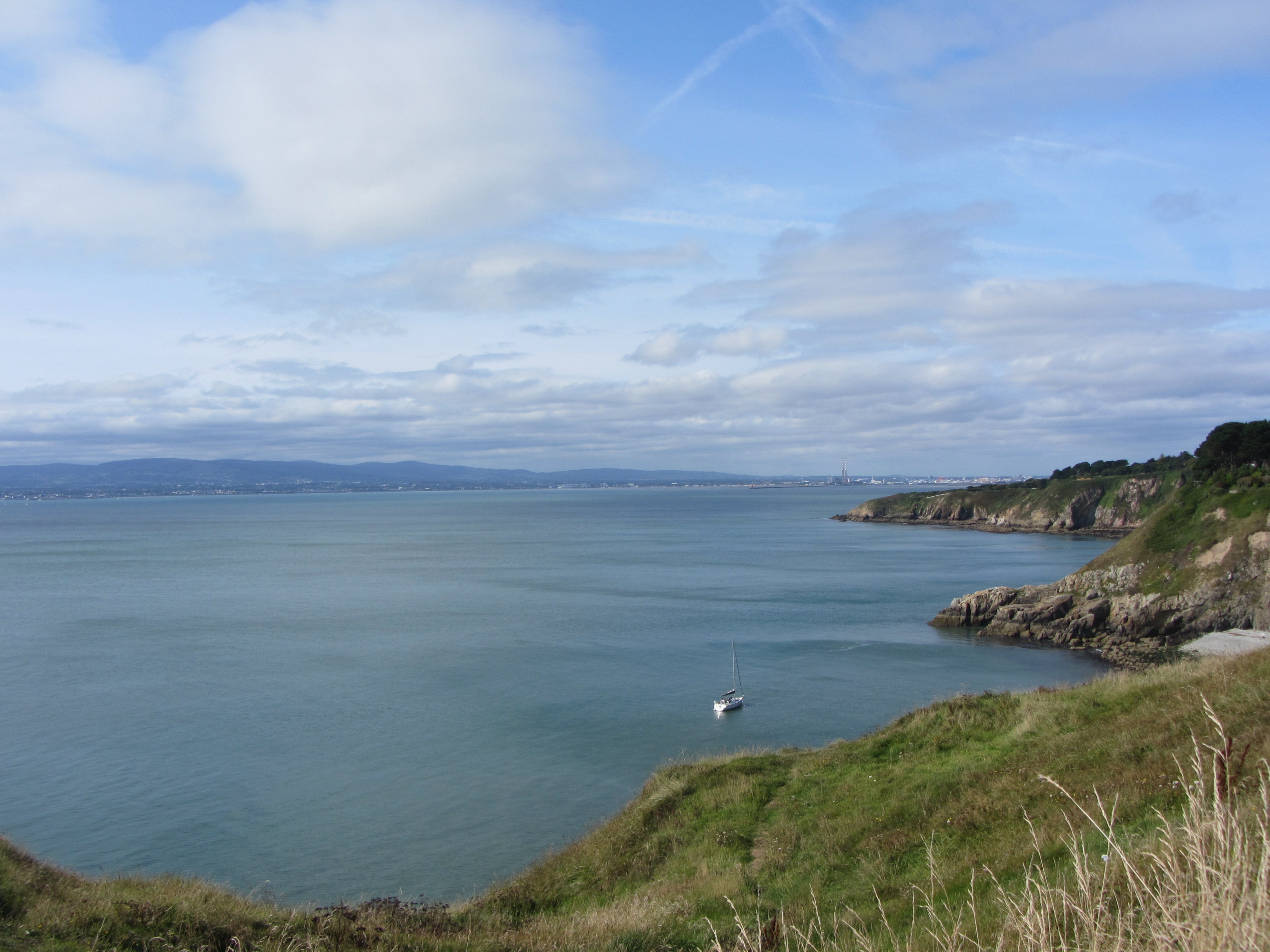
This was our first Airbnb experience and turned out well after some unfortunate communication difficulties. Before settling in to our B&B we found a cheap and filling meal of fish and chips. The next day we explored the cliffs and met some friendly hooded crows before heading back into Dublin for a look at the wonderfully musty Natural History Museum and an excellent dinner at The Woollen Mills (interesting American fusion food: I had pork belly mac & cheese, and our dessert platter included an Oreo peanut butter tart).
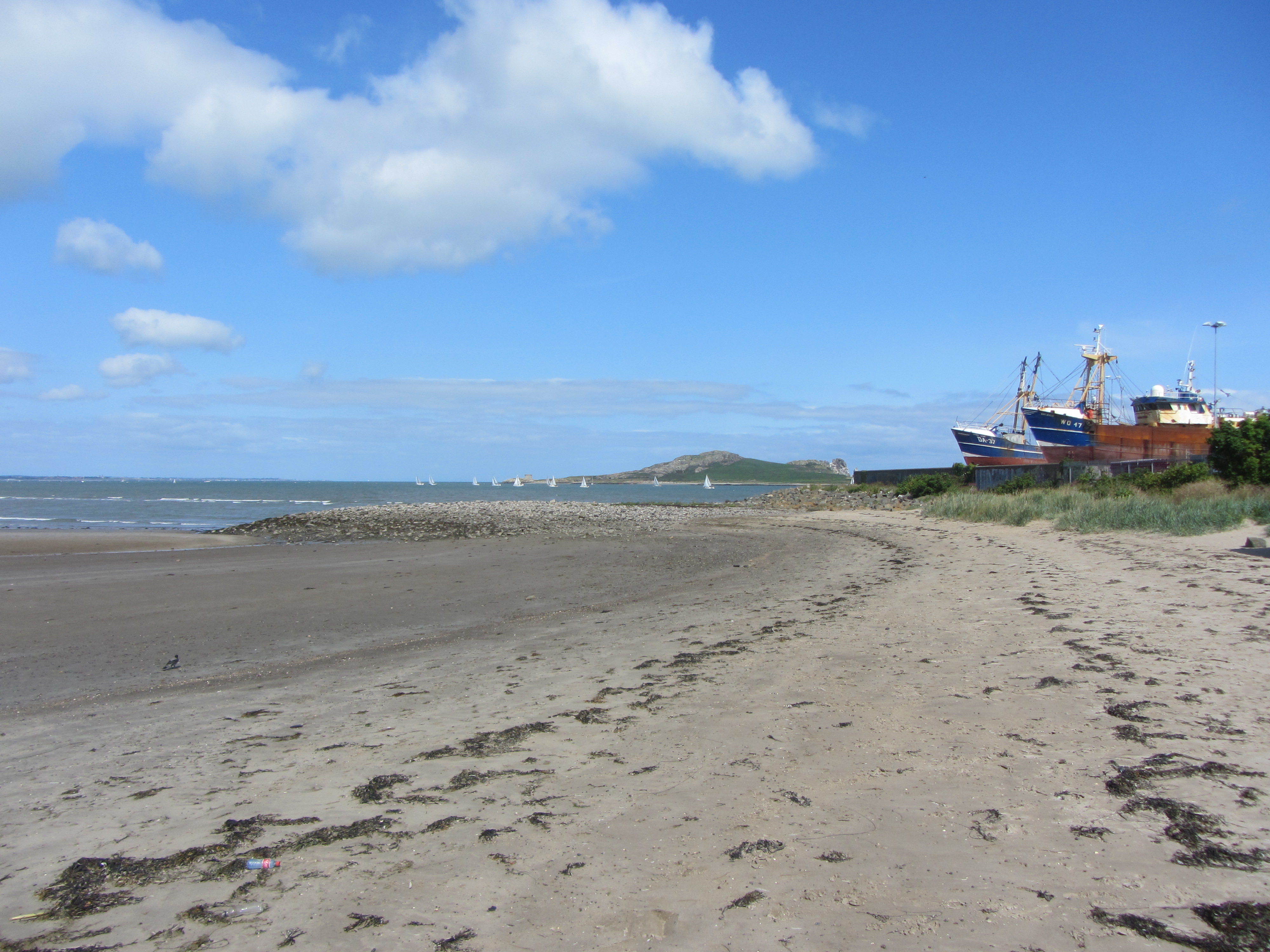

My overall feeling was that Dublin still isn’t making as much of its literary heritage as it might do. I was perhaps not as impressed as I’d hoped to be – it’s a lot like London, and not as quaint as I might have expected. Still, I’m glad I went. Next time, though, I suspect we’ll go to less inhabited and more picturesque areas in the south and west.
I hadn’t the courage to face Joyce’s Ulysses or some other monolith of Irish literature, but I did continue Anne Enright’s The Green Road while in Dublin. I was also working on My Salinger Year by Joanna Rakoff, Of Human Bondage by W. Somerset Maugham (my current doorstopper), and The Heart Goes Last by Margaret Atwood.
Any comments about Ireland and its literary sites and/or heroes are most welcome!
 Bookish Beck = Rebecca Foster. American transplant to England. Freelance proofreader and book reviewer.
 Bookish Beck