#NovNov26 Buddy Read: Sympathy Tower Tokyo by Rie Qudan
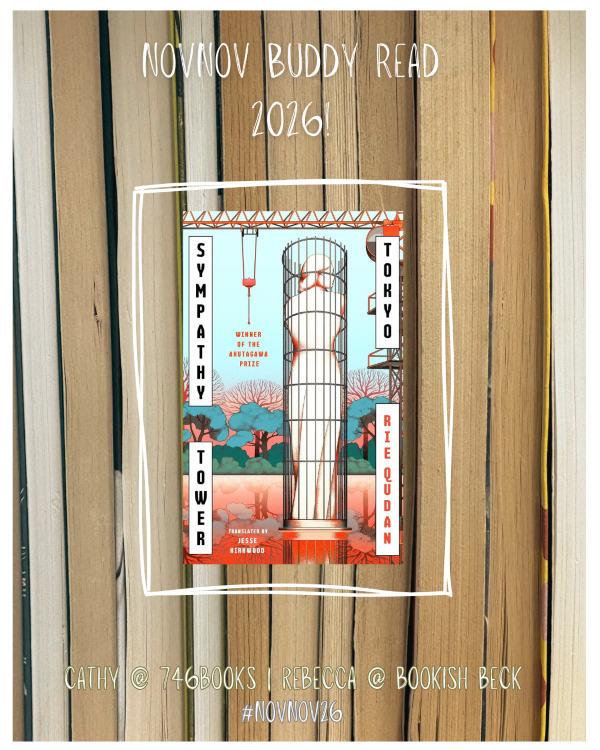
Sympathy Tower Tokyo, translated from the Japanese, is Rie Qudan’s fourth novel and won the Akutagawa Prize. An architect in her late thirties named Sara Machina is chosen to design a skyscraper to house prisoners in comfort. The striking Sympathy Tower, which will sit alongside Zaha Hadid’s Olympic stadium in this speculative future city, represents a whole new approach to the penal system: these “Homo Miserabilis” are people who, due to social and familial factors, were set up for criminality rather than goodness and thus deserve radical empathy. Inside the tower, negative language is banned in favour of that which promotes happiness.
Narration is shared between Sara and her younger boyfriend Takt, and augmented by epistolary elements such as an excerpt from Homo Miserabilis by Masaki Seto, the book wherein the concept originated; and an article by American journalist Max Klein, who visits the tower in 2030 and alternates between envy and outrage at the concept behind it. Some of these texts are preceded by an AI prompt Takt uses to achieve a particular linguistic register, and Sara also engages in conversation with the chatbot “AI-built.” These scenes are playful – she accuses it of mansplaining, for instance – but ultimately fatuous. An opening Translator’s Note gives some context about another language-related theme in the book: the use of katakana (a phonetic alphabet that approximates, e.g., English phrases) vs. complex kanji characters. Sara voices the worry that katakana may be undermining classical Japanese.
{SOME SPOILERS IN THE FOLLOWING}
Normally I enjoy a narrative comprised of different formats, but here they amounted to scattered storytelling. There are intriguing plot points, such as Seto’s murder, the fact that Sara was raped as a girl, and Takt getting a job as a prison guard because his mother is an inmate there, but these aren’t fleshed out. Readers get little sense of Sara’s inner life; there are two brief mentions of the assault and a moment where she expresses regret over designing the tower, but I was frustrated at her withholding. I expected this to be a profound book about compassion, creativity and language (the allusion to the Tower of Babel is made explicit at the beginning). But because situations, relationships and mindsets aren’t fully explored, the novella feels incomplete even though it spans four years. I hoped for more about the power of words to deceive or to create utopias. While it’s an easy read and raises interesting questions – so is indeed a good book club / buddy read – it didn’t go deep enough for my liking.
Although my overall feelings were lukewarm, I must put in a good word for translator Jesse Kirkwood (who also translated one of my other novellas this month, Suspicion by Seichō Matsumoto), for deftly rendering the book’s humour and wordplay – which must have been a challenge given the general reader’s ignorance about Japanese writing systems.
We’d love to have you read this and weigh in!
Also reviewed by Annabel, Brona, Cathy and Emma so far.
Sympathy Tower Tokyo by Rie Qudan (2024; 2025)
[Translated by Jesse Kirkwood]
(Little Free Library)

[134 pages]
Get Ready for Novellas in November! (#NovNov26)
Novellas: “all killer, no filler”
~Joe Hill
Hard to believe it’s nearly that time again. For the SEVENTH year in a row, Cathy of 746 Books and I are co-hosting Novellas in November as a month-long blogging and social media challenge celebrating the art of the short book (we include nonfiction, too). A novella technically contains 20,000 to 40,000 words, but to keep things simple we define it as any work under 200 pages.
This year’s buddy read is a 2024 novella translated from the Japanese last year:
Sympathy Tower Tokyo by Rie Qudan [translated by Jesse Kirkwood] is the author’s fourth novel and won the Akutagawa Prize. An architect named Sara Machina is assigned to design a city skyscraper meant to house criminals in comfort. While trying to navigate a middle way between compassion and recrimination – complicated by her own past victimhood – she converses with an AI chatbot. This engaging exploration of language, creativity and conformity comes with high praise from writers ranging from Helen Phillips to Bryan Washington. (134 pages)
Please join us in reading this any time between now and the end of November!
You might like to start off the month with a My Year in Novellas retrospective looking at any novellas you have read since last year’s NovNov and finish with a New to My TBR list based on what short books others have tempted you with.
It’s always a busy month in the blogging world with Nonfiction November, German Literature Month, Margaret Atwood Reading Month and SciFi Month. Why not search your shelves and/or local library for novellas that could count towards multiple challenges?
From 19 October a link-up post will be pinned at the top of my site so you can add your planning posts and book lists. Keep in touch via Bluesky (@bookishbeck.bsky.social / @cathybrown746.bsky.social) and Instagram (@bookishbeck / @cathy_746books) and feel free to use the terrific feature images Cathy has made plus our new hashtag, #NovNov26.
Spring Reading 2021: Birdsong, Cherry Blossom & More
It’s been a gorgeously sunny spring here – how about where you are? Although there have still been some frosty nights troubling the gardeners among us, it’s been warm in the daytime and the flowers and blossom are coming on apace.
Recently I’ve read a couple of books reflecting on the spring of 2020, specifically the opportunities it offered to reconnect with local nature at a time when we were isolated and couldn’t travel.
I’ve also been feeling nostalgic for Washington, D.C. and the Maryland suburbs, where I grew up. It’s been two years since my last trip back, but I’m holding out hope that I can make it over in June for a family wedding.
Rounding out my selection of “Spring” titles is an offbeat Japanese novella.
Looking back to the coronavirus spring:
On Thursday evening I watched “The Act of Nature Watching,” a special Earth Day Zoom talk for West Berkshire Libraries by local nature writer Nicola Chester, whose memoir is coming out in the autumn. The UK is one of the most nature-depleted countries, she lamented. We are hardwired to watch and love nature, she noted, yet have never been more alienated from it. Reading from her columns and anthology contributions (as well as the Lovatt, below) and giving tips on recognizing birdsong and mammal signs, she spoke of nature-watching as a form of mindfulness – an approach that chimed with the first three books I feature here.
Birdsong in a Time of Silence: An Awakening by Steven Lovatt (2021)
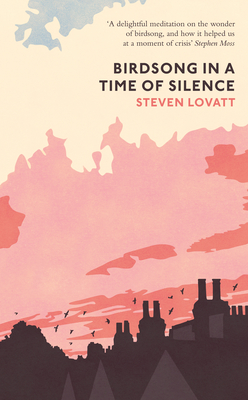 During the UK’s first lockdown, with planes grounded and cars stationary, many remarked on the quiet. All the better to hear birds going about their usual spring activities. For Lovatt, from Birmingham and now based in South Wales, it was the excuse he needed to return to his childhood birdwatching hobby. In between accounts of his spring walks, he tells lively stories of common birds’ anatomy, diet, lifecycle, migration routes, and vocalizations. (He even gives step-by-step instructions for sounding like a magpie.) Birdsong takes him back to childhood, but feels deeper than that: a cultural memory that enters into our poetry and will be lost forever if we allow our declining bird species to continue on the same trajectory.
Mentions of current events are sparse and subtle, so the spring feels timeless, as it should. I worried there might be too much overlap with A Sweet, Wild Note by Richard Smyth, but there’s room for both on your shelf. Lovatt’s writing is introspective and poetic, delighting in metaphors for sounds: “The song of a turtle dove is like the aural equivalent of a heat-haze, the gentlest corrugation of air, always just on the edge of your hearing.” 
Skylarks with Rosie: A Somerset Spring by Stephen Moss (2021)
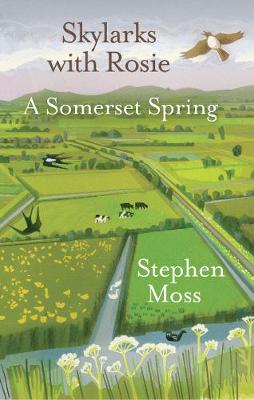 Lovatt must have been a pupil of Moss’s on the Bath Spa University MA degree in Travel and Nature Writing. The prolific Moss’s latest also reflects on the spring of 2020, but in a more overt diary format. Devoting one chapter to each of the 13 weeks of the first lockdown, he traces the season’s development alongside his family’s experiences and the national news. With four of his children at home, along with one of their partners and a convalescing friend, it’s a pleasingly full house. There are daily cycles or walks around “the loop,” a three-mile circuit from their front door, often with Rosie the Labrador; there are also jaunts to corners of the nearby Avalon Marshes. Nature also comes to him, with songbirds in the garden hedges and various birds of prey flying over during their 11:00 coffee breaks.
His speaking engagements and trips cancelled, Moss turns to online events instead. Twitter serves as a place for sharing outrage over UK politics and world events like George Floyd’s murder, but also as a welcoming community for sharing nature sightings. As the lockdown come to a close, he realizes that this time has had unexpected benefits: “Having to press the pause button … has made me rethink my life, in a good way.” He feels that, for once, he has truly appreciated the spring, “rediscovering the joys of wildlife-watching close to home”. This made for perfect reading in Somerset last week. 
Also recommended: The Consolation of Nature by Marren, McCarthy and Mynott
Remembering springs back home:
Spring in Washington by Louis J. Halle (1947)
“The discovery of spring each year, after the winter’s hibernation, is like a rediscovery of the universe … knowledge of spring gives me the freedom of the world.”
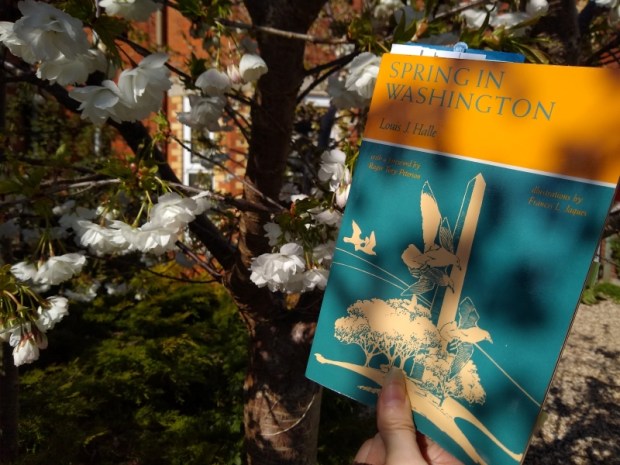 For Halle, who worked in the State Department, nature was an antidote to hours spent shuffling papers behind a desk. In this spring of 1945, there was plenty of wildfowl to see in central D.C. itself, but he also took long early morning bike rides along the Potomac or the C&O Canal, or in Rock Creek Park. From first migrant in February to last in June, he traces the spring mostly through the birds that he sees. More so than the specific observations of familiar places, though, I valued the philosophical outlook that makes Halle a forerunner of writers like Barry Lopez and Peter Matthiessen. He notes that those caught up in the rat race adapt the world to their comfort and convenience, prizing technology and manmade tidiness over natural wonders. By contrast, he feels he sees more clearly – literally as well as metaphorically – when he takes the long view of a landscape.
 I marked so many passages of beautiful description. Halle had mastered the art of noticing. But he also sounds a premonitory note, one that was ahead of its time in the 1940s and needs heeding now more than ever: “When I see men able to pass by such a shining and miraculous thing as this Cape May warbler, the very distillate of life, and then marvel at the internal-combustion engine, I think we had all better make ourselves ready for another Flood.”
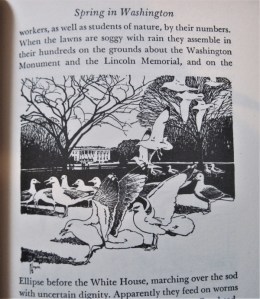
This was a lucky find at Hay Cinema Bookshop back in September. For me it was the ideal combination of thoughtful prose and vicarious travel, though I imagine it might not mean as much to those without a local connection. The black-and-white in-text illustrations by Francis L. Jaques are a particularly nice addition. 
Pussy cat, pussy cat, where have you been? I’ve been to Washington, and guess what I’ve seen… by Russell Punter and Dan Taylor (2019)
 More cherry blossoms over tourist landmarks! This is part of a children’s series inspired by the 1805 English rhyme about London; other volumes visit New York City, Paris, and Rome. In rhyming couplets, he takes us from the White House to the Lincoln Memorial via all the other key sights of the Mall and further afield: museums and monuments, the Library of Congress, the National Cathedral, Arlington Cemetery, even somewhere I’ve never been – Theodore Roosevelt Island. Realism and whimsy (a kid-sized cat) together; lots of diversity in the crowd scenes. What’s not to like? (Titled Kitty cat, kitty cat… in the USA.)
And, as a bonus, some fiction in translation:
Spring Garden by Tomoka Shibasaki (2014; 2017)
[Translated from the Japanese by Polly Barton]
 Like a Murakami protagonist, Taro is a divorced man in his thirties, mildly interested in the sometimes peculiar goings-on in his vicinity. Rumor has it that his Tokyo apartment complex will be torn down soon, but for now the PR manager is happy enough here. “Avoiding bother was Taro’s governing principle.” But bother comes to find him in the form of a neighbor, Nishi, who is obsessed with a nearby house that was the backdrop for the art book Spring Garden, a collection of photographs of a married couple’s life. Her enthusiasm gradually draws Taro into the depicted existence of the TV commercial director and actress who lived there 25 years ago, as well as the young family who live there now. This Akutagawa Prize winner failed to hold my interest – like The Guest Cat, it’s oddly preoccupied with architectural detail, a Japanese fascination that doesn’t translate so well.

 Bookish Beck = Rebecca Foster. American transplant to England. Freelance proofreader and book reviewer.

