October Recommendations: Ashworth, Donoghue, Kay & McWatt
Intricate essays about writing in the wake of trauma, a feel-good novel about an odd couple on a trip to France, hilarious festive outtakes from a career in medicine, and a race-themed family memoir: I have four very different books to recommend to you this month. All: 
Notes Made while Falling by Jenn Ashworth
(Coming from Goldsmiths Press [UK] on the 15th; already out from MIT Press [USA])
Like Anne Boyer’s The Undying and Sinéad Gleeson’s Constellations, this is an incisive memoir-in-essays about the effects of trauma on a woman’s body. Specifically, Ashworth’s story starts with her son’s birth in 2010, a disaster she keeps returning to over the course of seven sinuous personal essays. A routine C-section was followed by haemorrhaging, blood transfusions and anaphylaxis. The effects lasted for years afterwards: haunted by the sound of her blood dripping and the feeling that her organs could fall out of her abdomen at any time, she suffered from vomiting, insomnia and alcoholism, drinking late into the night as she watched gruesome true crime films.
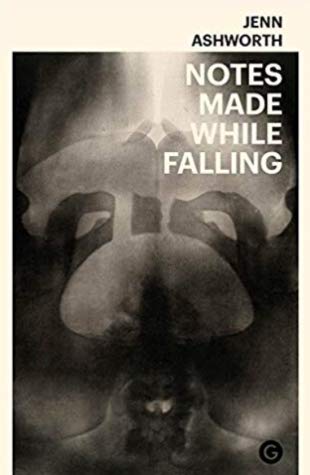 Ashworth toggles between experience, memory, and the transformation of experience into a written record. She admits she has lost faith in fiction, either reading or writing it (she is a lecturer at Lancaster University and the author of four novels). Her Mormon upbringing in Preston is a major part of her backstory, and along with her childhood indoctrination she remembers brief stays in a children’s home and in the hospital with chicken pox.
The essays experiment with structure and content. For instance, “Ground Zero” counts down from #8, with incomplete final lines in each section, then back up to #8, with each piece from the second set picking up where the first left off. Slashes and cross-outs represent rethinking or alternate interpretations. “Off Topic: On Derailment” encompasses so many topics, from excommunication to Agatha Christie to rollercoasters to Charles Dickens, that you have to read it to believe she can make it all fit together (elsewhere she muses on Chernobyl, magic tricks and hating King Lear).
“How to Begin: The Cut” started as a talk given at Greenbelt 2013, when I was in the audience. I especially loved “A Lecture on Influence,” a coy self-examination through creative writing lessons, and “How to Fall without Landing: Celestial City,” a meditation on the precariousness of the human condition. Her frame of literary reference is wide and surprising. This also reminded me of Sight by Jessie Greengrass, The Empathy Exams by Leslie Jamison, I Am, I Am, I Am by Maggie O’Farrell, and In the Days of Rain by Rebecca Stott; I would recommend it to readers of any of the above.
Some favorite lines:
“My God-hurt head has a hole in it or needs one; to let the world in, or out – I can’t ever decide.”
“how to write about everything? How to take in the things that don’t belong to you without being poisoned by them? How to make use of the things that live inside, those seedlings you never asked for? How to breathe in? How to breathe out? How to keep on doing that?”
“Some days it feels like writing truthfully about her own life is the most subversive thing a woman can do.”
My thanks to the publisher for the free copy for review.
Akin by Emma Donoghue
(Coming from Picador [UK] on the 3rd; already out from Little, Brown and Co. [USA])
I’ve read Donoghue’s six most recent works of fiction. Her books are all so different from each other in setting – a one-room prison in contemporary America, bawdy 1870s San Francisco, rural Ireland in the 1850s – that it’s hard to pin her down to one time period or roster of topics. She never writes the same book twice, and that’s got to be a good thing.
 Akin gets off to a slightly slow start but soon had me hooked. Noah Selvaggio, a childless widower and retired chemist in New York City, is looking forward to an imminent trip to Nice, where he was born, to celebrate his 80th birthday. He never guessed that he’d have company on his trip, much less a surly 11-year-old. This is Michael Young, his nephew Victor’s son. Victor died of a drug overdose a year and a half ago; the boy’s mother is in prison; his maternal grandmother has just died. There’s no one else to look after Michael, so with a rush passport he’s added to the itinerary.
In some ways Michael reminded me of my nephews, ages 11 and 14: the monosyllabic replies, the addiction to devices and online gaming, the finicky eating, and the occasional flashes of childlike exuberance. Having never raised a child, Noah has no idea how strict to be with his great-nephew about screen time, unhealthy food and bad language. He has to learn to pick his battles, or every moment of this long-awaited homecoming trip would be a misery. And he soon realizes that Michael’s broken home and troubled area of NYC make him simultaneously tougher and more vulnerable than your average kid.
The odd-couple dynamic works perfectly here and makes for many amusing culture clashes, not so much France vs. the USA as between these Americans of different generations. The dialogue, especially, made me laugh. Donoghue nails it:
[Noah:] “The genre, the style. Is rap the right word for it? Or hip-hop?”
[Michael:] “Don’t even try.” Michael turned his music back on.
(At the cathedral)
[Michael:] “This is some seriously frilly shit.”
[Noah:] “It’s called Baroque style.”
[Michael:] “I call it fugly.”
But there’s another dimension to the novel that keeps it from being pleasant but forgettable. Noah’s grandfather was a famous (fictional) photographer, Père Sonne, and he has recently found a peculiar set of photographs left behind by his late mother, Margot. One is of the hotel where they’re staying in Nice, known to be a holding tank for Jews before they were sent off to concentration camps. The more Noah looks into it, the more he is convinced that his mother was involved in some way – but which side was she on?
This is feel-good fiction in the best possible sense: sharp, true-to-life and never sappy. With its spot-on dialogue and vivid scenes, I can easily see it being made into a movie, too. It’s one of my favorite novels of the year so far.
My thanks to the publisher for the proof copy for review.
Twas the Nightshift before Christmas by Adam Kay
(Coming from Picador on the 17th)
 If you’ve read This Is Going to Hurt, the UK’s bestselling nonfiction title of 2018, you’ll know just what to expect from the comedian’s holiday-themed follow-up. It’s raunchy, morbid and laugh-out-loud funny. In the seven years that Kay was a medical doctor, he had to work on Christmas Day six times. He takes us through the holiday seasons of 2004 to 2009, from the sickeningly festive run-up to the letdown of Christmas day and its aftermath. With his Rudolph tie on and his Scrooge spirit intact, he attends to genital oddities, childbirth crises and infertility clients, and feebly tries to keep up his relationships with his family and his partner despite them having about given up on him after so many holiday absences.
This will be a stocking-stuffer for many this year, and I can see myself returning to it year after year and flicking through for a laugh. However, there’s one story here that Kay regrets omitting from This Is Going to Hurt as being too upsetting, and he also ends on a serious note, urging readers to spare a thought for those who give up their holidays to keep our hospitals staffed.
A favorite passage:
“A lot of the reward for this job comes in the form of a warm glow. It doesn’t make you look any less tired, you can’t pay the rent with it, and it’s worth a lot less than the social life you’ve traded it for, but this comforting aura of goodness and purpose definitely throws light into some dark corners and helps you withstand a lot of the shit.”
My thanks to the publisher for the proof copy for review.
Shame on Me: An Anatomy of Race and Belonging by Tessa McWatt
(Coming from Scribe UK on the 10th)
 “What are you?” This question has followed McWatt since she was eight years old. When her third-grade teacher asked the class if they knew what “Negro” meant, one boy pointed to her. “Oh, no, not Tessa,” the teacher replied, following up with a question: “What are you, Tessa?” But it has always been hard to put her mixed-race background into one word. Her family moved from Guyana to Canada and she has since settled in England, where she is a professor of creative writing; her ancestry is somewhat uncertain but may include Chinese, Indian, indigenous South American, Portuguese, French/Jewish, African, and Scottish.
The book opens with the startling scene of her grandmother, a young Chinese woman brought over to work the sugarcane fields of British Guiana, being raped by her own uncle. “To strangers, even friends—on some days also to myself—I am images of violence and oppression. I am the language of shame and destitution, of slavery and indenture, of rape and murder. I am images of power and privilege, of denial and shades of skin, shapes of faces,” McWatt writes.
Her investigation of the meaning of race takes the form of an academic paper, Hypothesis–Experiment–Analysis–Findings, and within the long third section she goes part by part through the bodily features that have most often been used as markers of racial identity, including the nose, eyes, hair and buttocks. She dives into family history but also into wider historical movements, literature and science to understand her hybrid self. It’s an inventive and sensitive work reminiscent of The Color of Water by James McBride. I would recommend it to anyone who enjoys reading (or feels they should try) interrogations of race.
A favorite line:
“as I try to square my politics with my privilege, it seems that my only true inheritance is that I am always running somewhere else.”
I won a signed proof copy in a Twitter giveaway.
Have you read any October releases that you would recommend? Do any of these tempt you?
Blog Tour Review: Ask Again, Yes by Mary Beth Keane
Ask Again, Yes is about the inextricable links that form between two Irish-American policemen’s families in New York. Francis Gleeson and Brian Stanhope meet as cops on the same South Bronx beat in July 1973 and soon move upstate, settling in as close neighbors in the suburb of Gillam. After a stillbirth and a miscarriage, Brian and his wife Anne, who’s from Dublin, finally have a son, Peter. Six months later, Francis and Lena’s third daughter, Kate, is born; from the start it’s as if Peter and Kate are destined for each other. They’re childhood best friends, but then, like Romeo and Juliet, have to skirt around the animosity that grows between their families to be together as adults.

Anne’s mental health issues and the Stanhope family history of alcoholism will lead to explosive situations that require heroic acts of forgiveness. I ached for many characters in turn, especially Lena and Kate. The title sets up a hypothetical question: if you had your life to live again, knowing what the future held, would you have it the same way? Keane suggests that for her characters the answer would be yes, even if they knew about all the bad that was to come alongside the good. Impossible to write any more about the plot without giving too much away, so suffice it to say that this is a wrenching story of the ways in which we repeat our family’s mistakes or find the grace to move on and change for the better.
As strong as the novel’s characterization is, and as intricately as the storyline is constructed around vivid scenes, I found this a challenging read and had to force myself to pick it up for 20 pages a day to finish it in time for my blog tour slot. Simply put, it is relentless. And I say that even though I was reading a novel about a school shooting at the same time. There aren’t many light moments to temper the sadness. (Also, one of my pet peeves in fiction is here: skipping over 15 years within a handful of pages.) Still, I expect Keane’s writing will appeal to fans of Celeste Ng and Ann Patchett – the latter’s Commonwealth, in particular, came to mind right away.
My rating: 
Ask Again, Yes was published by Michael Joseph (Penguin) on August 8th. My thanks to the publisher for the proof copy for review.
Reading Ireland Month 2019: Nonfiction – Lynn Enright and Emilie Pine
It’s my second time participating in Reading Ireland Month, run each March by Cathy of 746 Books and Niall of Raging Fluff. For this week’s nonfiction theme, I’ve put together reviews of two hard-hitting feminist books I happen to have read recently.

Vagina: A Re-education by Lynn Enright (2019)
 Sex education is poor and lacking in many parts of the world, Enright argues, including the Ireland she grew up in in the 1980s. We need better knowledge about gender, anatomy (including the range of what’s ‘normal’) and issues of consent, she insists. To that end, she sets out to bust myths about the hymen, clitoris, female orgasm, menstruation, gynecological problems, infertility, pregnancy and menopause. Her just-the-facts approach is especially helpful in her rundown of the female anatomy. She also encourages women not to take no for an answer from doctors who try to deny or minimize their pain.
This is a confident book sometimes marred by TMI (all in the name of openness and honesty, but still…) and repetitive writing. For me, there was too much overlap with other books I’ve read over the last five years or so: Vagina: A New Biography by Naomi Wolf, The Wonder Down Under: A user’s guide to the vagina by two female Norwegian medical students, Gross Anatomy by Mara Altman (waxing), Notes to Self by Emilie Pine (see below! rape, menstruation and infertility) and the upcoming Constellations by Sinéad Gleeson (women’s pain). Thus, after about page 50 I just skimmed this one. If you haven’t read anything like Vagina before, though, it would serve as a wonderfully comprehensive introduction.
Some favorite lines:
“With vaginas, it seems, we doubt what we know. With vaginas, we listen to the lies, more than we listen to the truth. … We perpetuate the unsureness with our silences – and with our acceptance of lies.”
“Pregnancy, abortion, miscarriage and birth are common but extraordinary – each story is unique. Women benefit when those stories are told – and listened to.”
My rating: 
With thanks to Allen & Unwin for the free copy for review.
Notes to Self: Essays by Emilie Pine (2018)
 Originally released by Ireland’s Tramp Press, this won the An Post Irish Book Award and has now been re-released by Penguin and other major publishers. You expect the average essay collection to contain 10 or 12 pieces, so the fact that there are only six here accounts for why they drag at a certain point. While I think most could be made snappier, they remain bold, accessible feminist takes on the body and expectations for women’s lives.
I especially liked “Notes on Intemperance,” the first essay, about her alcoholic father’s health crisis and the poor chances of him getting adequate treatment on Corfu, where he lived. She had to beg his nurses to wear gloves. When she learned that staff had to buy such disposables out of their own salaries, she understood – but was still appalled. Just being there was a miracle given there was no love lost between father and daughter.
Other essays are about infertility, the early breakdown of their parents’ marriage, menstruation and body hair, her wild teenage years and being raped, and the working woman’s constant struggle to be ambitious yet vulnerable without coming across as bitchy or oversensitive. The writing style is not flashy, but it doesn’t need to be. This is relatable straight talk, like you might get if you were to sit down with girlfriends of various backgrounds and experiences and actually discuss things that matter.
A favorite passage:
“It is hard to love an addict. Not only practically difficult, in the picking up after them and the handling of those aspects of life they’re not able [to] for themselves, but metaphysically hard. It feels like bashing yourself against a wall, not just your head, but your whole self. It makes your heart hard. … It took years of refusing him empathy before I realised that the only person I was hurting was myself.”
My rating:
I read an e-copy via NetGalley.
 I’ve also started a travel classic by Dervla Murphy, Full Tilt: Ireland to India with a Bicycle (1965), but travel books are such slow reads for me that I’ll likely be working on this one for months. Where I’ve got to now, she’s between Tehran and Afghanistan and nursing a bad sunburn. Already she’s eternally grateful that she brought a gun with her: she’s used it once to fend off wolves, once to deter a would-be rapist, and once to prevent bike thieves. Exciting stuff!
Two Final Wellcome Book Prize Longlist Reviews: Krasnostein & Moshfegh
I’ve now read eight of the 12 titles longlisted for the Wellcome Book Prize 2019 and skimmed another two, leaving just two unexplored.
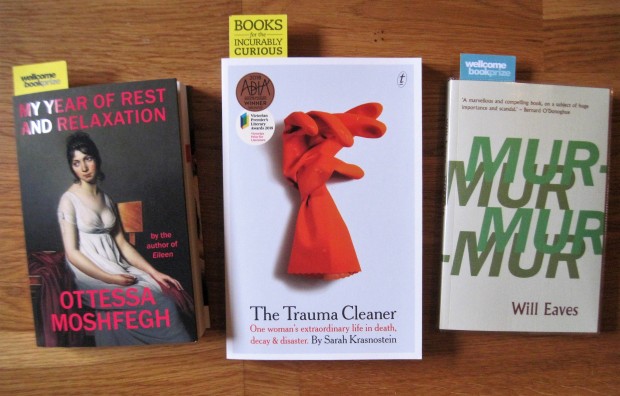
My latest two reads are books that I hugely enjoyed yet would be surprised to see make the shortlist (both ):
The Trauma Cleaner: One Woman’s Extraordinary Life in Death, Decay and Disaster by Sarah Krasnostein (2017)
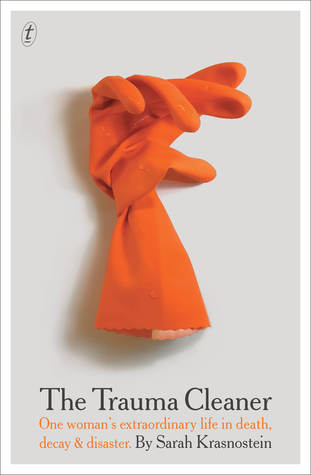 I guarantee you’ve never read a biography quite like this one. For one thing, its subject is still alive and has never been much of a public figure, at least not outside Victoria, Australia. For another, your average biography is robustly supported by archival evidence; to the contrary, this is a largely oral history conveyed by an unreliable narrator. And lastly, whether a biography is critical or adulatory overall, the author usually at least feigns objectivity. Sarah Krasnostein doesn’t bother with that. Sandra Pankhurst’s life is an incredible blend of ordinary and bizarre circumstances and experiences, and it’s clear Krasnostein is smitten with her. “I fall in love … anew each time I listen to her speak,” she gushes towards the book’s end. At first I was irked by all the fawning adjectives she uses for Sandra, but eventually I stopped noticing them and allowed myself to sink into this astonishing story.
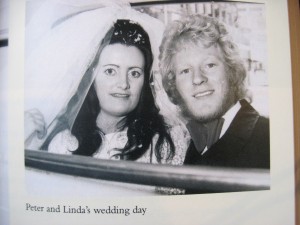
Sandra was born male and adopted by a couple whose child had died. When they later conceived again, they basically disowned ‘Peter’, moving him to an outdoor shed and making him scrounge for food. His adoptive father was an abusive alcoholic and kicked him out permanently when he was 17. Peter married ‘Linda’ at age 19 and they had two sons in quick succession, but he was already going to gay bars and wearing makeup; when he heard about the possibility of a sex change, he started taking hormones right away. Even before surgery completed the gender reassignment, Sandra got involved in sex work, and was a prostitute for years until a brutal rape at the Dream Palace brothel drove her to seek other employment. Cleaning and funeral home jobs nicely predicted the specialty business she would start after the hardware store she ran with her late husband George went under: trauma cleaning.
 Krasnostein parcels this chronology into tantalizing pieces, interspersed with chapters in which she accompanies Sandra and her team on assignments. They fumigate and clean up bodily fluids after suicides and overdoses, but also deal with clients who have lost control of their possessions – and, to some extent, their lives. They’re hoarders, cancer patients and ex-convicts; their homes are overtaken by stuff and often saturated with mold or feces. Sandra sympathizes with the mental health struggles that lead people into such extreme situations. Her line of work takes “Great compassion, great dignity and a good sense of humour,” she tells Krasnostein; even better if you can “not … take the smell in, ’cause they stink.”
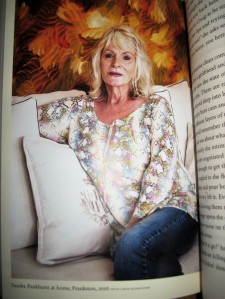 The author does a nice job of staying out of the narrative: though she’s an observer and questioner, there’s only the occasional paragraph in which she mentions her own life. Her mother left when she was young, which helps to explain why she is so compassionate towards the addicts and hoarders she meets with Sandra. Some of the loveliest passages have her pondering how things got so bad for these people and affirming that their lives still have value. As for Sandra herself – now in her sixties and increasingly ill with lung disease and cirrhosis – Krasnostein believes she’s never been unconditionally loved and so has never formed true human connections.
This book does many different things in its 250 pages. It’s part journalistic exposé and part “love letter”; it’s part true crime and part ordinary life story. It considers gender, mental health, addiction, trauma and death. It’s also simply a terrific read that should draw in lots of people who wouldn’t normally pick up nonfiction. I don’t expect it to advance to the shortlist, but if it does I’ll be not-so-secretly delighted.
A favorite passage:
Sometimes, listening to Sandra try to remember the events of her life is like watching someone reel in rubbish on a fishing line: a weird mix of surprise, perplexity and unexpected recognition. No matter how many times we go over the first three decades of her life, the timeline of places and dates is never clear. Many of her memories have a quality beyond being merely faded; they are so rusted that they have crumbled back into the soil of her origins. Others have been fossilised, frozen in time, and don’t have a personal pull until they defrost slightly in the sunlit air between us as we speak. And when that happens there is a tremor in her voice as she integrates them back into herself, not seamlessly but fully.
See also:
My Year of Rest and Relaxation by Ottessa Moshfegh (2018)
If you’ve read her Booker-shortlisted debut, Eileen, you’ll be unsurprised to hear that Moshfegh has written another love-it-or-hate-it book with a narrator whose odd behavior is hard to stomach. This worked better for me than Eileen, I think because I approached it as a deadpan black comedy in the same vein as Elif Batuman’s The Idiot. Its inclusion on the Wellcome longlist is somewhat tenuous: in 2000 the unnamed narrator, in her mid-twenties, gets a negligent psychiatrist to prescribe her drugs for insomnia and depression and stockpiles them so she can take pill cocktails to knock herself out for days at a time. In a sense this is a way of extending the numbness that started with her parents’ deaths – her father from cancer and her mother by suicide. But there’s also a more fantastical scheme in her mind: “when I’d slept enough, I’d be okay, I’d be renewed, reborn. I would be a whole new person.”
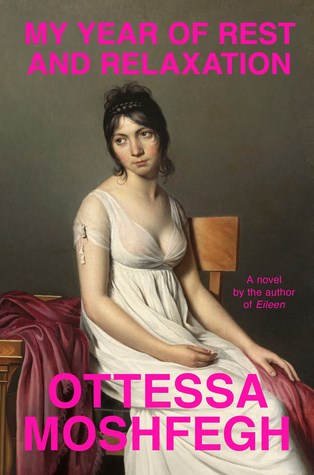 Ever since she was let go from her job at a gallery that showcases ridiculous modern art, the only people in this character’s life are an on-again, off-again boyfriend, Trevor, and her best (only) friend from college, longsuffering Reva, who keeps checking up on her in her New York City apartment even though she consistently treats Reva with indifference or disdain. Soon her life is a bleary cycle of sleepwalking and sleep-shopping, interspersed with brief periods of wakefulness, during which she watches a nostalgia-inducing stream of late-1990s movies on video (the kind of stuff I watched at sleepovers with my best friend during high school) – she has a weird obsession with Whoopi Goldberg.
It’s a wonder the plot doesn’t become more repetitive. I like reading about routines, so I was fascinated to see how the narrator methodically takes her project to extremes. Amazingly, towards the middle of the novel she gets herself from a blackout situation to Reva’s mother’s funeral – about the only time we see somewhere that isn’t her apartment, the corner shop, the pharmacy or Dr. Tuttle’s office – and this interlude is just enough to break things up. There are lots of outrageous lines and preposterous decisions that made me laugh. Consumerism and self-medication to deaden painful emotions are the targets of this biting satire. As 9/11 approaches, you wonder what it will take to wake this character up to her life. I’ve often wished I could hibernate through British winters, but I wouldn’t do what Moshfegh’s antiheroine does. Call this a timely cautionary tale about privilege and disengagement.
Favorite lines:
“Initially, I just wanted some downers to drown out my thoughts and judgments, since the constant barrage made it hard not to hate everyone and everything. I thought life would be more tolerable if my brain were slower to condemn the world around me.”
“Oh, sleep, nothing else could ever bring me such pleasure, such freedom, the power to feel and move and think and imagine, safe from the miseries of my waking consciousness.”
Reva: “you’re not changing anything in your sleep. You’re just avoiding your problems. … Your problem is that you’re passive. You wait around for things to change, and they never will. That must be a painful way to live. Very disempowering.”
See also:
And one more that I got out from the library and skimmed:
Murmur by Will Eaves (2018)
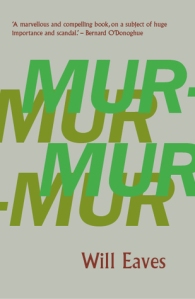 The subject is Alec Pryor, or “the scientist.” It’s clear that he is a stand-in for Alan Turing, quotes from whom appear as epigraphs at the head of most chapters. Turing was arrested for homosexuality and subjected to chemical castration. I happily read the first-person “Part One: Journal,” which was originally a stand-alone story (shortlisted for the BBC National Short Story Award 2017), but “Part Two: Letters and Dreams” was a lot harder to get into, so I ended up just giving the rest of the book a quick skim. If this is shortlisted, I promise to return to it and give it fair consideration.
See also:
We will announce our shadow panel shortlist on Friday. Follow along here and on Halfman, Halfbook, Annabookbel, A Little Blog of Books, and Dr. Laura Tisdall for reviews, predictions and reactions.
Calypso by David Sedaris
“Why Aren’t You Laughing?” is one of the essay titles in Calypso, David Sedaris’s tenth book; it’s an ironically appropriate question you might ask of the whole book. It’s not that this isn’t funny – it is, very much so, in places – but that there’s a melancholy aura I hadn’t sensed in his work before. “Now We Are Five,” the second piece, sets the tone, explaining that Tiffany, Sedaris’s youngest sister, committed suicide in 2013, aged 49. He hadn’t spoken to her for the eight years prior to that. The siblings learn that she did it with pills plus a plastic bag over her head. These facts are just thrown out there for us: there’s no getting around how horrific it all was, but Sedaris doesn’t do much obvious hand-wringing or soul-searching.

Tiffany’s suicide is an occasional point of reference in these 21 short essays, as is their mother’s alcoholism and death from cancer. The remaining middle-aged family members – and their 90-something dad – make an effort to stay close, chiefly through meet-ups at the beach cottage Sedaris and his partner, Hugh Hamrick, buy in Emerald Isle, North Carolina. They name the place Sea Section, and it’s the setting for about a third of the book. Two-thirds of these essays were published previously, which entails some repetition, especially in the setup of each piece. I wondered if an adjustment to the sequencing and some editing out of repeated details could have made the Emerald Isle material flow together a bit better.
Sedaris’s trouble communicating with his father, a thrift-conscious hoarder, is one major theme of the book. “We’re like a pair of bad trapeze artists, reaching for each other’s hands and missing every time,” he writes. Their relationship mostly consists of trying to avoid talk of politics lest his father spout pro-Trump propaganda, and his father nagging him about his health. Despite advancing age, Sedaris’s medical crises are trivial and turned to humorous effect: broken ribs from falling off a ladder, an awful stomach virus that provides scatological background to a reading tour, and a fatty tumor he decides to freeze and feed to the snapping turtles the next time he’s on Emerald Isle.* O-kaaaay.
There are echoes of Me Talk Pretty One Day and When You Are Engulfed in Flames in the delight in languages and travel. “Your English Is So Good” skewers the annoyances of small talk and jargon, especially as used by waitstaff and shop assistants. Another essay is about what people in various countries shout when they get cut off in traffic – unsurprisingly, this one is rather foul-mouthed. Sedaris gets addicted to clothes shopping in Tokyo and obsesses over achieving his daily Fitbit steps goal while litter picking near his home in West Sussex. Some of my favorite essays were “A Modest Proposal,” reflecting on the Supreme Court’s legalization of gay marriage; “Untamed,” about feeding a local fox; and “Boo-Hooey,” in which he scoffs at ghost stories yet wonders if his dead mother visits him in dreams.
This collection doesn’t quite live up to the two I’ve already mentioned, and there were moments when I was put off by the author’s unthinking adherence to a luxurious lifestyle, but this is a solid book you wouldn’t have to be an existing fan to enjoy.
Favorite lines:
“The battle for gay marriage was, in essence, the fight to be as square as straight people, to say things like ‘My husband tells me that the new Spicy Chipotle Burger they’ve got at Bennigan’s is awesome!’”
“We’re not pessimists, exactly, but in late middle age, when you envision your life ten years down the line, you’re more likely to see a bedpan than a Tony Award.”
My rating:
*The topic of the title essay. He’s affronted when he learns that the local kids know about ‘his’ snapping turtle and even have a name for it – he likens this to finding out that your cat is being secretly fed by the neighbors, who call it “Calypso.” It’s an obscure reference, definitely; then again, this is the same man who titled books Dress Your Family in Corduroy and Denim and Let’s Explore Diabetes with Owls. The cover design even has some slight relevance within the book: “Calypso” mentions an old friend he meets up with on an American book tour, Janet, and her woodgrain art.
Calypso comes out today, July 5th, in the UK from Little, Brown. It was released in the USA on May 29th. My thanks to the publisher for sending a free copy for review.
Some Accidental Thematic Overlaps in My Recent Reading
Five of the books I’ve read recently (most of them while traveling to and from the States) have shared an overarching theme of loss, with mental illness, alcoholism, suicide, and dogs as subsidiary topics running through two or more of them. I hadn’t deliberately chosen these books for their commonalities, so it was uncanny to see the same elements keep popping up. I wanted to come up with some kind of impressively complex Venn diagram to show off these unexpected connections but couldn’t quite manage it, so you’ll have to imagine it instead.
Mental Illness
The Archivist by Martha Cooley
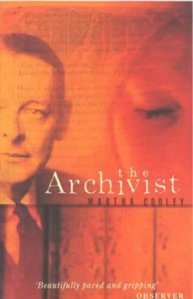 Matthias Lane is the archivist of the Mason Room, a university collection of rare books and literary papers. One of its treasures is a set of letters that passed between T.S. Eliot and his friend Emily Hale (held at Princeton in real life). Matt is haunted by memories of his late wife, Judith, a poet incarcerated in a mental hospital for over five years. A reckoning comes for Matt when he’s approached by Roberta Spire, a graduate student determined to view the Eliot–Hale letters even though they’re legally sealed until 2020. The more time Matt spends with Roberta, the more similarities start to arise between her and Judith; and between his situation and Eliot’s when the latter also put his wife away in a mental hospital. The novel asks what we owe the dead: whether we conform to their wishes or make our own decisions.
The Summer without Men by Siri Hustvedt
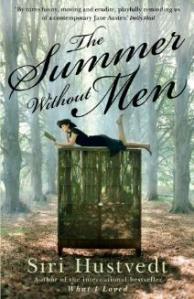 Thirty years on, poet Mia Fredricksen’s husband Boris asks her for a pause in their marriage so he can explore his feelings for his young French lab assistant. First things first: Mia goes crazy and ends up in a mental hospital for a short time. But then she sucks it up and goes back to her Minnesota hometown to teach poetry writing to teen girls for a summer, getting sucked into a bullying drama. This is a capable if not groundbreaking story of the shifts that occur in a long marriage and the strange things we all do as we face down the possibility of death. There are also wry comments about the unappreciated talents of the female artist. However, compared to the other two novels I’ve read from Hustvedt, this seemed feeble. Still, a quick and enjoyable enough read.
The Dogs of Babel by Carolyn Parkhurst
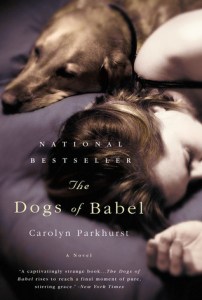 A delicious debut novel intellectual enough to bypass labels like ‘women’s fiction’ and ‘mystery’. One thing that sets it apart is how successfully Parkhurst writes from the perspective of a male narrator, Paul Iverson, who’s been knocked for six by the sudden death of his wife Lexy, a mask designer. While he was at the university where he teaches linguistics, she climbed to the top of the apple tree in their backyard and – what? fell? or jumped? The only ‘witness’ was their Rhodesian Ridgeback, Lorelei; in his grief Paul uses his sabbatical to research efforts to teach dogs to communicate, hoping one day Lorelei might tell all. Woven through are scenes from Paul and Lexy’s courtship and marriage; though Lexy occasionally struggled with her mental health, their dialogue is fun and zippy, like you might hear on The Gilmore Girls.
Suicide
The Archivist by Martha Cooley & The Dogs of Babel by Carolyn Parkhurst


Alcoholism
Don’t Let’s Go to the Dogs Tonight by Alexandra Fuller
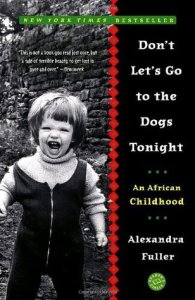 A classic memoir that conjures up all the sights, sounds, smells and feelings of Africa on the cusp of a colonial to postcolonial transition. Fuller’s family were struggling tobacco and cattle farmers in Rhodesia (Zimbabwe), Malawi and Zambia. She had absorbed the notion that white people were there to benevolently shepherd the natives, but came to question it when she met Africans for herself. While giving a sense of the continent’s political shifts, she mostly focuses on her own family: the four-person circus that was Bobo (that’s her), Van (older sister Vanessa), Dad, and Mum (an occasionally hospitalized manic-depressive alcoholic who lost three children) – not to mention an ever-changing menagerie of horses, dogs and other pets. This really takes you away to another place and time, as the best memoirs do, and the plentiful black-and-white photos are a great addition.
Let’s Take the Long Way Home by Gail Caldwell
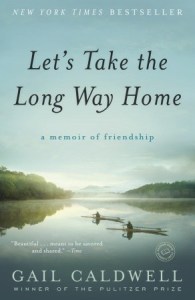 If you loved Ann Patchett’s Truth and Beauty, pick this up immediately. It’s a similar story of best friends: one who dies and one who survives. Caldwell’s best friend was Caroline Knapp (author of Drinking: A Love Story, among other nonfiction), whom she met via puppy ownership in Cambridge, Massachusetts. They were both single and childless, full-time authors with a history of alcoholism. Besides long walks with their dogs, they loved swimming and rowing together. In 2002 Caroline was diagnosed with stage-four lung cancer, inoperable and already metastasized. Despite all their proactive optimism, she was dead a matter of weeks later. In this moving and accessible short memoir, Caldwell drifts through her past, their friendship, Caroline’s illness, and the years of grief that followed the loss of Caroline and then her beloved Samoyed, Clementine, sharing what she learned about bereavement.
Dogs
The Dogs of Babel, Don’t Let’s Go to the Dogs Tonight & Let’s Take the Long Way Home


Do you ever find coincidental thematic connections in your reading?
Reviews Roundup, March–April
One of my goals with this blog was to have one convenient place where I could gather together all my writing that appears in disparate online locations. To that end, once a month I provide links to all book reviews I’ve published elsewhere, with a rating (below each description) and a taster so you can decide whether to read more. A few exceptions: I don’t point out my Kirkus Indie, BlueInk or Publishers Weekly reviews since I don’t get a byline.
The Bookbag
 The Improbability of Love by Hannah Rothschild: From the Baileys Prize longlist, an enchanting debut novel that blends art and cooking, mystery and romance. Annie McDee, a heartbroken PA and amateur chef, pays £75 for a painting from a junk shop, not realizing it’s a lost Watteau that will spark bidding wars and uncover a sordid chapter of history. In a triumph of playful narration, we mostly learn about the artwork’s history from the painting ‘herself’. She recounts her turbulent 300-year-history and lists her many illustrious owners, including Marie Antoinette, Napoleon and Queen Victoria. These are the novel’s only first-person sections; you can just imagine a voiceover from Helen Mirren or Judi Dench.

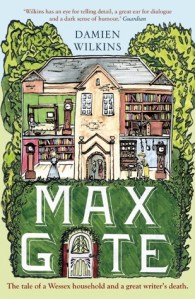 Max Gate by Damien Wilkins: This is a novel of Thomas Hardy’s last days, but we get an unusual glimpse into his household at Max Gate, Dorchester through the point-of-view of his housemaid, twenty-six-year-old Nellie Titterington. Ultimately I suspect a third-person omniscient voice would have worked better. In fact, some passages – recounting scenes Nellie is not witness to – are in the third person, which felt a bit like cheating. Fans familiar with the excellent Claire Tomalin biography might not learn much about Hardy and his household dynamics, but it was fun to spend some imaginary time at a place I once visited. [First published in New Zealand in 2013; releases in the US and UK on June 6th.]

 Dust by Michael Marder: A philosopher carries out an interdisciplinary study of dust: what it’s made of, what it means, and how it informs our metaphors. In itself, he points out, dust is neither positive nor negative, but we give it various cultural meanings. In the Bible, it is the very substance of mortality. Meanwhile “The war on dust, a hallmark of modern hygiene, reverberates with the political hygiene of the war on terror.” The contemporary profusion of allergies may, in fact, be an unintended consequence of our crusade against dust. The discussion is pleasingly wide-ranging, with some unexpected diversions – such as the metaphorical association between ‘stardust’ and celebrity – but also some impenetrable jargon. I’d be interested to try other titles from Bloomsbury’s “Object Lessons” series.
Foreword Reviews
How to Cure Bedwetting by Lane Robson (Oh, the interesting topics my work with self-published books introduces me to!): Explaining the anatomical and behavioral reasons behind bedwetting, the Calgary-based physician gives practical tips for curing the problem within six to twelve months. Throughout, the text generally refers to “pee” and “poop,” which detracts slightly from the professionalism of the work. All the same, this compendium of knowledge, drawing as it does on the author’s forty years of experience, should answer every possible question on the subject. Highly recommended to parents of younger elementary school children, this book will be an invaluable reference in tackling bedwetting.
Nudge
 The Prophets of Eternal Fjord by Kim Leine: An epic novel about an unconventional priest, set in late-eighteenth-century Denmark and Greenland. This struck me as a cross between Carsten Jensen’s We, the Drowned, another historical saga from Denmark and one of my favorite novels of all time, and Michel Faber’s The Crimson Petal and the White. Like the former, it features perilous sea voyages and ambivalent father–son relationships; like the latter, it’s edgy and sexualized, full of lechery and bodily fluids. No airbrushing the more unpleasant aspects of history here. The entire story is told in the present tense, with no speech marks. It took me nearly a month and a half to read; by the end I felt I’d been on an odyssey as long and winding as Morten’s.
PANK
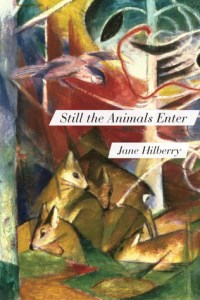 Still the Animals Enter by Jane Hilberry: A rich, strange, and gently erotic collection featuring diverse styles and blurring the lines between child and adult, human and animal, life and death through the language of metamorphosis. Ambivalence about the moments of transition between childhood and adulthood infuses Part One. Early on, “A Hole in the Fence” finishes on a whispered offer: “You could be part of this.” The message in this resonant collection, though, is that we already are a part of it: part of a shared life that moves beyond the individual family or even the human species. We are all connected—to the children we once were, to lovers and family members lost and found, and to the animals we watch in wonder.
Pittsburgh Post-Gazette
 Relief Map by Rosalie Knecht: Lomath, Pennsylvania consists of a half-mile stretch between old textile mills and is home to just 150 people. During one unpredictable summer, blackouts and the arrival of an Eastern European fugitive draw the residents into a welter of paranoia and misguided choices. Our eyewitness to provincial commotion is 16-year-old Livy Marko, who considers herself plain and awkward – her childhood style was supplied by Anne of Green Gables and Goodwill. Knecht’s writing is marked by carefully chosen images and sounds. The novel maintains a languid yet subtly tense ambience. For Livy, coming of age means realizing actions always have consequences. Offbeat and atmospheric, this debut is probably too quiet to make a major splash, but has its gentle rewards.
Shiny New Books
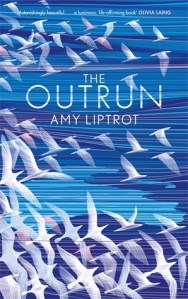 The Outrun by Amy Liptrot: Put simply, this is a memoir about Amy Liptrot’s slide into alcoholism and her subsequent recovery. Liptrot grew up on mainland Orkney, a tight-knit Scottish community she was eager to leave as a teenager but found herself returning to a decade later, washed up after the dissolute living and heartbreak she left behind in London. A simple existence, close to nature and connected to other people, was just what she needed during her first two years of sobriety. Her atmospheric writing about the magical Orkney Islands and their wildlife, rather than the slightly clichéd ruminating on alcoholism, is what sets the book apart. (On the Wellcome Prize shortlist.)

I also post reviews of most of my casual reading and skimming on Goodreads:
 Look We Have Coming to Dover! by Daljit Nagra: The dialect was a bit too heavy for me in some of these poems about the Sikh experience in Britain. By far my favorite was “In a White Town,” which opens: “She never looked like other boys’ mums. / No one ever looked without looking again / at the pink kameez and balloon’d bottoms, // mustard-oiled trail of hair, brocaded pink / sandals and the smell of curry. That’s why / I’d bin the letters about Parents’ Evenings …”
 Work Like Any Other by Virginia Reeves: Between the blurb and the first paragraph, you already know everything that’s going to happen. I admire books that can keep you reading with interest even though you know exactly what’s coming, but this isn’t really one of those. Ultimately I would have preferred for the whole novel, rather than just alternating chapters, to be in Roscoe’s first-person voice, set wholly in prison (where he helps out in the library and with the guard dogs) but with brief flashbacks to his electricity siphoning and the circumstances of his manslaughter conviction. The writing is entirely capable, but the structure made it so I felt the story wasn’t worth my time.
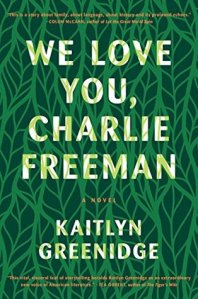 We Love You, Charlie Freeman by Kaitlyn Greenidge: The Freemans are raising Charlie, a chimpanzee, as part of their family for a Toneybee Institute experiment and teaching him to communicate via sign language. Flashbacks to the late 1920s bring an uncomfortable racial subtext to the surface, suggesting that the Toneybee has been involved in dodgy anthropological research over the decades. This is a deep and unsettling story of human–human interactions, even more so than human–animal interactions. I much preferred it to We Are All Completely Beside Ourselves.
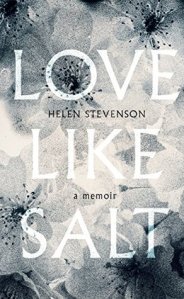 Love Like Salt by Helen Stevenson: Stevenson’s daughter Clara has cystic fibrosis, so I approached and enjoyed this as an illness memoir. However, it’s very scattered, with lots of seemingly irrelevant material included simply because it happened to the author: her mother’s dementia, their life in France, her work as a translator and her hobby of playing the piano, her older husband’s love for Italy and Italian literature, etc. Really the central drama is their seemingly idyllic life in France, Clara being bullied there, and the decision to move back to England (near Bristol), where the girls would attend a Quaker school on scholarships and Clara was enrolled in a widespread clinical trial with modest success. Enjoyable enough if you share some of the author’s interests.
 Springtime: A Ghost Story by Michelle de Kretser: Ghost story? Really? There’s very little in the way of suspense, and not too much plot either, in this Australia-set novella. I would expect tension to linger and questions to remain unanswered. Instead, the author exposes Frances’s ‘ghost’ as harmless. What I think de Kretser is trying to do here is show that ghosts can be people we have known and loved or, alternatively, places we have left behind. There is some nice descriptive writing (e.g. “three staked camellias stood as whitely upright as martyrs”), but not enough story to hold the interest.

 Let the Empire Down by Alexandra Oliver: This debut collection is heavily inspired by history and travel, as well as Serbian poetry and personal anecdote. I enjoyed the earlier poems, especially the ones with ABAB or ABBA rhyme schemes. My favorite was “Plans,” about a twenty-something manicurist who abandoned her talent for science to get ready cash: “A girl’s future should be full and bright, a marble, / but (alas for her) there is a catch: / we take on the immediate. Hope flags: / wishing to be wise and come out shining, / we pop a beaker over our own flame. / We do it cheerfully. We do it coldly.” The last quarter is devoted to poems about films, especially Italian cinema.
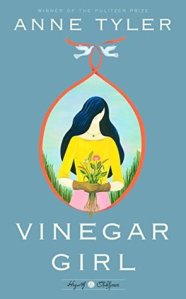 Vinegar Girl by Anne Tyler: This is the most fun I’ve had with the Hogarth Shakespeare series so far, as well as my favorite of the three Anne Tyler novels I’ve read. Yes, it’s set in Baltimore. Kate Battista, the utterly tactless preschool assistant, kept cracking me up. Her father, an autoimmune researcher, schemes for her to marry his lab assistant, Pyotr, so he can stay in the country after his visa expires. The plot twists of the final quarter felt a little predictable, but I was won over by the good-natured storytelling and prickly heroine. (I don’t know The Taming of the Shrew well enough to comment on how this functions as a remake.) Releases in June.
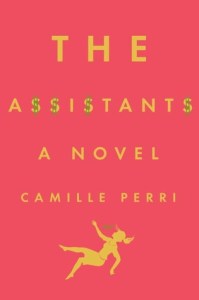 The Assistants by Camille Perri: At age 30, Tina Fontana has been a PA to media mogul Robert Barlow for six years. He’s worth millions; she lives in a tiny Brooklyn apartment. One day a mix-up in refunding expenses lands her with a check for $19,147. If she cashes it she can pay off her debts once and for all and no one at Titan Corporation will be any the wiser, right? This is a fun and undemanding read that will probably primarily appeal to young women. I would particularly recommend it to readers of Friendship by Emily Gould and A Window Opens by Elisabeth Egan. Releases May 3rd.
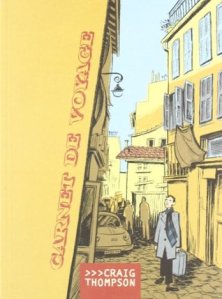 Carnet de Voyage by Craig Thompson: A sketchbook Thompson kept on his combined European book tour for Blankets and research trip for Habibi in March–May 2004. It doesn’t really work as a stand-alone graphic memoir because there isn’t much of a narrative, just a series of book signings, random encounters with friends and strangers, and tourism. My favorite two-page spread is about a camel ride he took into the Moroccan desert. I could also sympathize with his crippling hand pain (from all that drawing) and his “chaos tolerance” overload from the stress of travel.
 Rising Ground: A Search for the Spirit of Place by Philip Marsden: Some very nice writing indeed, but not much of a storyline. The book is something of a jumble of mythology, geology, prehistory, and more recent biographical information about some famous Cornish residents, overlaid on a gentle travel memoir. I enjoyed learning about the meanings of Cornish place names, in particular, and spotting locations I’ve visited.
And my highest recommendation goes to…
Commonwealth by Ann Patchett: It all starts with an early 1960s christening party Los Angeles policeman Fix Keating is throwing for his younger daughter, Franny. DA Bert Cousins turns up, uninvited, with a bottle of gin the grateful guests quickly polish off in their fresh-squeezed orange juice. He also kisses the hostess, sparking a chain of events that will rearrange the Keating and Cousins families in the decades to come. The novel spends time with all six step-siblings, but Franny is definitely the main character – and likely an autobiographical stand-in for Patchett. As a waitress in Chicago, she meets a famous novelist who’s in a slump; the story of her childhood gives him his next bestseller but forces the siblings to revisit a tragic accident they never fully faced up to. Sophisticated and atmospheric; perfect for literary fiction fans in general and Patchett fans in particular. Releases September 13th.
 Bookish Beck = Rebecca Foster. American transplant to England. Freelance proofreader and book reviewer.
 Bookish Beck