20 Books of Summer, 3–4: Cheri & All Things Are Too Small
A cancer story that treads the line between biography and fiction, and a set of high-brow essays about popular culture and modern life.
Cheri by Jo Ann Beard (2023)
{SPOILERS IN THIS ONE}
Claire Keegan helped popularize the trend of publishing stand-alone stories as small hardback volumes. It was my first time reading Beard, and her style does in fact remind me of Keegan, along with Denis Johnson and Ann Patchett. This originally appeared in the literary magazine Tin House in 2002. It is the life story of Cheri Tremble, a real woman who was born in 1950 and died in 1997 via an illegal assisted suicide conducted by Dr. Jack Kevorkian. I’d heard a lot about Cheri, but his name was never mentioned – to avoid spoilers, of course, yet it’s key.
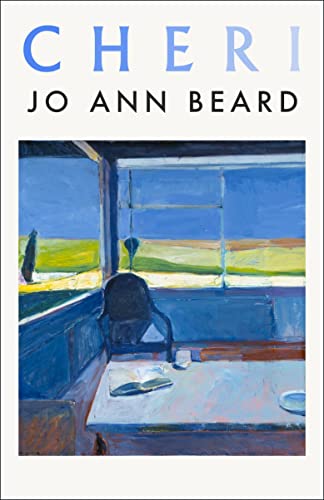 Cheri is an Amtrak ticket-taker who’s diagnosed with breast cancer in her mid-forties. After routine reconstructive surgery goes wrong and she’s left disabled, she returns to the Midwest and buys a home in Iowa. Here she’s supported by her best friends Linda and Wayne, and visited by her daughters Sarah and Katy. “Others have lived. She won’t be one of them. She feels it in her bones, quite literally.” When she hears the cancer has metastasized, she refuses treatment and starts making alternative plans. She’s philosophical about it; “Forty-six years is a long time if you look at it a certain way. Ursa is her seventh dog.”
Beard recounts all of this matter-of-factly (“the diminished lung capacity, the clangorous pain”), drawing on what is known of Cheri Tremble’s life and only adding her own stamp by making up memories that fuel flashbacks as Cheri drifts through pain-filled half-waking. One of these, of falling through the ice on a frozen pond as a child, appears early in the book and recurs at her moment of death. Beard also contrasts onlookers’ compassion or lack thereof.
It’s a potent portrait of everyday suffering and heroism and, in its way, an argument for assisted dying, which mustn’t be cloaked in secrecy as it was for Cheri – “They leave under cover of darkness, like duck hunters or criminals” to meet ‘Dr. Death’ in another state. I finished the story feeling underwhelmed; maybe I’ve simply read too much around the topic, but I couldn’t see how granting the subject interiority (which is what fiction is all about, yes, though the best biographies can do it, too) was enough to set it apart. (New purchase with birthday voucher, Hungerford Bookshop)
All Things Are Too Small: Essays in Praise of Excess by Becca Rothfeld (2024)
 Rothfeld, the Washington Post’s nonfiction book reviewer, is on hiatus from a philosophy PhD at Harvard. Her academic background is clear from her vocabulary. The more accessible essays tend to be ones that were previously published in periodicals. Although the topics range widely – decluttering, true crime, consent, binge eating, online stalking – she’s assembled them under a dichotomy of parsimony versus indulgence. And you know from the title that she errs on the side of the latter. Luxuriate in lust, wallow in words, stick two fingers up to minimalism and mindfulness and be your own messy self. You might boil the message down to: Love what you love, because that’s what makes you an individual. And happy individuals – well, ideally, in an equal society that gives everyone the same access to self-fulfillment and art – make for a thriving culture. That, with some Barthes and Kant quotes.
The writing has verve, from the alliterative word choice to the forcefulness of Rothfeld’s opinions. But in places her points of reference (from classic cinema, especially) are so obscure that I had no way in and the pieces felt like they would never end. My two favourites were “More Is More,” in which she’s as down on fragmentary autofiction (Jenny Offill et al.) as she is on Marie Kondo; and “Normal Novels,” about how she finds Sally Rooney’s self-deprecation and communism problematic. I knew the subject matter well enough to follow the arguments here, even if I ultimately disagreed with them.
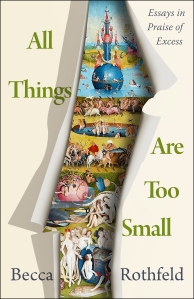
The U.S. cover featuring a Bosch painting is so much better!
Rothfeld is worth reading as a cultural critic, at least in small doses. She is clearly not interested in being a personal essayist, however, as the intimacy she keeps discussing in theory is almost completely absent. A piece on mental health, “Wherever You Go, You Could Leave,” opens with one tantalizing autobiographical line – “My first year of college, I attempted suicide and was promptly hastened home by an ominously smiling administrator” – then proceeds to poke fun at meditation for most of its 40 pages. It was interesting to see her fan-girl over her favourite novel, which I would even try if it wasn’t 480 pages: “I want to be reading Mating [by Norman Rush] constantly; I want to have been reading Mating forever, but always for the first time; I want everything in my life to be Mating and nothing but Mating”. Keep an eye out for the sequel: Actually, Moderation Is Cool: How I Learned to Temper My Expectations.
With thanks to Virago Press for the free copy for review.
Assisted Dying: Intervals by Marianne Brooker; Wendy Mitchell; and a Local Panel Discussion
Intervals by Marianne Brooker is on the longlist for the inaugural Women’s Prize for Non-Fiction, which my book club has applied to shadow. I’ve now read three of the nominees, the others being Matrescence and A Flat Place (review coming up tomorrow). Unsurprisingly, I’ve gravitated towards the ones based around a personal narrative – although all three are also political and incorporate research and cultural critique. Brooker’s is an extended essay about her mother’s protracted death with multiple sclerosis and the issues it brought up around disability, poverty, and inequality of access to medical care and services.

Specifically, Brooker decries the injustice of the wealthy having the option of travelling to Dignitas in Switzerland for an assisted death (current cost: £15,000), whereas her single mother, who lived in rented accommodation and had long been disabled and unable to work, apart from crafting and reading tarot, had so such relief in sight. Instead, she resorted to refusing life-sustaining nourishment. VSED, or voluntarily stopping eating and drinking, was a topic much on my mind anyway because of Wendy Mitchell’s death last month.
 Mitchell was diagnosed with early-onset Alzheimer’s in her fifties and was an energetic campaigner for dementia education and research for the last decade of her life. With a co-author, she wrote three books that give a valuable insider’s view of life with dementia: Somebody I Used to Know, What I Wish People Knew About Dementia, and One Last Thing, in which she specifically discusses VSED. She was determined to live independently. For her, a dignified life was being able to meet her own daily physical needs. She did not want to be in a care home, or to exist past the point where she could no longer recognise her daughters. So when, in January, she fell and broke both wrists, giving her a taste of dependency and derailing her plans to travel to Dignitas, she knew that the time had come. VSED was her way out. You can read her farewell message here.
Is wilful starvation a good death? I don’t really know. It’s peaceful, at least; a person simply gets weaker and weaker, spending more and more time asleep until they fade out, at home. But it can take two weeks to die in this way. Should loved ones have to watch this process?
Denied a liveable life and a legal right to die, my mum made a choice within and between the lines of the law. A decade after her diagnosis, when she was forty-nine and I was twenty-six, she decided to stop eating and drinking to end her suffering and her life. Her MS symptoms were barely treatable and certainly incurable: severe pain, incontinence, fatigue, the gradual but intensifying loss of mobility, vision and speech. But these medical symptoms were compounded by social conditions: isolation, stress, debt and fear of a future in which she would not be able to live or die in her chosen home. We were caught in a perfect storm.
Brooker’s description of the vigil of these last days, like her account of her vivacious mother’s life, is both tender and unflinching. It’s almost like a counterpoint to Simone de Beauvoir’s A Very Easy Death, but with the same incisive attention and emotional transfer between mother and daughter. The book also incorporates political commentary and quotations from psychologists and cultural critics. This somewhat distances the reader; it feels less like a bereavement memoir and more like an impassioned, personally inspired treatise. But that’s not to say there isn’t some levity. She remembers good times from their earlier life together, and reckons with her new role as her mother’s memorial and archivist in a way that really rang true for me. I wish the title was more evocative so as to draw the right readers to this book. 
With thanks to Fitzcarraldo Editions for the free copy for review.
Also on this topic, I have read In Love by Amy Bloom, That One Patient by Ellen de Visser, The Inevitable by Katie Engelhart, Darke Matter by Rick Gekoski, and Wild and Precious Life by Deborah Ziegler.
Last night I attended a local panel discussion put on by the Campaign for Dignity in Dying. It wasn’t a debate in that 3.5 of the 4 members on the panel were pro-assisted dying, and I would guess more than four-fifths of the audience as well. In fact, the only anti- voice of the evening was from a young Catholic man during question time. I knew about the event because one panelist attends my church: George Carey, a former archbishop of Canterbury.
The Anglican Church’s line – the religious response in general – is to uphold the sanctity of life and thus to oppose assisted suicide, so for Lord Carey to do otherwise is noteworthy. He changed his mind in 2014, he explained, after the high-profile case of Tony Nicklinson, who was paralysed after a stroke and lost his appeal over the right to die. “There is no theological contradiction between valuing life and wanting a good death,” Carey insisted. Jesus showed mercy to the ill and dying, and so should we. (He also, more facetiously, described King Saul’s mercy killing by an enemy soldier in 2 Samuel as an assisted death.)
The other panelists were a lawyer, a retired doctor, and a Member of Parliament. Lawyer Graham Wood noted that the 1961 Suicide Act, under which anyone who assists a suicide can be prosecuted, would have to be abolished, and that there would also need to be a negotiation regarding Article 2 of the European Convention on Human Rights, which protects the “right to life.” He was the most wary of the speakers, warning of the danger of undue influence being exerted by relatives when money and assets are involved – he said he sees the worst of humanity in his line of work.

Dr Barry Newman pinned his support for assisted dying to compassion and autonomy, two overriding values of a liberal society. He acknowledged the current professional risk for doctors, and noted that the UK’s main medical bodies remain neutral. However, he brought up a loophole, “double effect,” administering a medication that might end life but whose intent is to alleviate suffering, e.g., a high dose of morphine to an end-stage cancer patient.
Kit Malthouse, Conservative MP for northwest Hampshire, co-chairs a group on end-of-life and has campaigned for assisted dying. (American readers may be surprised by a conservative politician having liberal views on an ethical matter. In the UK, morality is not in lockstep with religions and/or political parties as it is in the USA. This was something it took me a while to get used to: I have Christian friends who vote for four different political parties.) He was disappointed that a members’ bill on assisted dying failed in 2015, but has hope that multiple recent cases (e.g., Esther Rantzen) will put it back on the agenda and believes support in the Commons is sufficient to push legislation through in six months.
“It’s coming,” he assured, not least because many of the UK’s European neighbours and other allies have introduced assisted dying. The UK bill does not go as far as the Dutch legislation, about which all the panelists expressed doubt, and can be tailored to this country’s health system. The status quo, Malthouse cautioned, is people suffering. We know from Oregon that the current proposal will work well, he said; there is vanishingly little abuse of the system in any of the places that have instituted assisted dying legislation.
It was all preaching to the choir as far as I was concerned. Indeed, the spontaneous applause and affirming subvocalizations reminded me of a Pentecostal church service. Clearly, many from the audience had witnessed loved ones dying in horrible ways (a few of these stories came out during question time, such as a woman whose husband went to Dignitas and another who had to fight for her terminally ill sister’s wishes when she was mistakenly resuscitated by paramedics after a suicide attempt). Malthouse observed that supporters of assisted dying have often been through horrific experiences with relatives or spouses.
I was already firmly in support so last night didn’t sway me in any way, but I was encouraged that so many people are thinking and talking about these issues. Maybe by the time I face such a crisis myself, or on someone else’s behalf, a compassionate law will be in place.
Books of Summer, 6–8: Elizabeth Berg, Patricia Lockwood & Wendy Mitchell
Although I have foodie lit as a background theme for the summer’s reading, my main goal is simply to read books that I own, especially recent acquisitions and long-time shelf-sitters (whereas last year, in slavish conformity to a theme, I substituted in a bunch of library books, review books and e-books). My latest batch includes a slightly twee novel, an outlandish poetry collection, and an uneven nonfiction swan song.
The Year of Pleasures by Elizabeth Berg (2005)
 From the cover, I was expecting this to be more foodie than it was. The protagonist does enjoy cooking for other people and reading cookbooks, though. Betta Nolan, 55 and recently widowed by cancer, drives from Boston to the Midwest and impulsively purchases a house in a Chicago suburb, something she and her late husband had fantasized about doing in retirement. It’s the kind of sweet little town where the only realtor is a one-woman operation and Betta as a newcomer automatically gets invited onto the local radio show. She also reconnects with her college roommates, tries dating, and mulls over her dream of opening a women’s boutique that sells silk scarves, handmade journals, essential oils and brownies.
While Berg is true to the shifting emotions that accompany grief, and gives Betta plenty of cute opportunities to make friends across the generations – with Lydia, the nonagenarian former owner of her house, now in a nursing home; Matthew, the fickle young man who does some odd jobs for her; and Benny, the next-door neighbor’s nine-year-old boy – I found the subplot about Matthew’s messy house and relationships silly, and Betta’s “What a Woman Wants” shop idea is so stereotyping I could feel myself rolling my eyes. Still, Berg’s novels, of which this was my fifth, are always reliably light and pleasant reads in an Anne Tyler vein. (Secondhand – 2nd & Charles) 
Motherland Fatherland Homelandsexuals by Patricia Lockwood (2014)
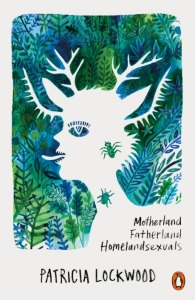 One of the more bizarre books I’ve ever read. I loved both Priestdaddy and No One Is Talking About This, but had no idea what to expect from Lockwood’s poems. They’re somewhere between absurdist monologues and thought experiments, often choosing an object or abstraction to animate (“A Recent Transformation Tries to Climb the Stairs”) and generally sexualized to the max (“Nessie Wants to Watch Herself Doing It”). Though they’re in stanzas, they aren’t heavy on poetic techniques. Some tangential topics are Bambi, Canada, basketball, waterfalls, King Kong adaptations, American poetry, Shirley Temple, and childhood hobbies like Animorphs, Egyptology and Magic Eye puzzles.
But really, her poetry is only “about” things in the loosest sense; the repetition, wordplay and snark are paramount. If you’ve heard of one, it’s likely to be the lengthy “Rape Joke,” which went as viral as it’s possible for a poem to and is, ironically, probably the sincerest entry here. Presumably based on her own bad experience with a teenage boyfriend, it is heartbreakingly banal: “The rape joke is that he was your father’s high school student … The rape joke is that come on, you should have seen it coming. … The rape joke is that you asked why he did it. The rape joke is he said he didn’t know, like what else would a rape joke say?”
A couple of my favourites were “List of Cross-Dressing Soldiers” and “He Marries the Stuffed-Owl Exhibit at the Indiana Welcome Center”; “The Father and Mother of American Tit-Pics,” in which a resurrected Emily Dickinson and Walt Whitman swap genders, had some of the more outrageous lines: “Walt Whitman is the Number Two Beach Body every year, because look at the way he snapped back into shape only months after giving birth to American Poetry.” Not really like any other poetry I’ve ever read. (New purchase with Christmas money) 
One Last Thing: Conversations on Life, Death and Assisted Dying by Wendy Mitchell with Anna Wharton (2023)
“We talk so often about prolonging life, but we are actually prolonging death by not discussing the suffering part of it.”
Wendy Mitchell’s first two books, Somebody I Used to Know and What I Wish People Knew About Dementia, are valuable peeks into daily life with young-onset Alzheimer’s. She has been a dedicated activist and educator in the nine years since her diagnosis, and I admire the work she’s done to get dementia services into the public eye.
 The problem with her final book is that I’ve read so much about preparations for dying and the question of assisted suicide and she doesn’t bring much new to the discussion – apart from the specific viewpoint of someone deciding when and how to end their life when they don’t know what the future course of their illness looks like. Mitchell believes people should have this choice, but current UK law does not allow for assisted dying. A loophole is voluntarily stopping eating and drinking (VSED), which she deems her best option. She stopped attending assessments in 2017 and has filed forms with her GP refusing treatment – her nightmare situation is being reliant on care in hospital and she doesn’t want to become that future, dependent Wendy.
Like Henry Marsh’s farewell book, And Finally, this gives the impression of having been written in a hurry and rushed into print, and so could have been edited more. As it is, it’s fairly scattered, repetitive and unpolished. The interviews could all be streamlined and tidied up, and the one with Kathryn Mannix is split up in a confusing way.
For readers new to the topic, however, this could be a useful introduction to the issues. It’s up-to-date in that Mitchell attends a Death Café, meets an end-of-life doula, and talks through the different forms (power of attorney, advance directive and so on) with experts. I also thought the epilogue was a lovely touch: after going for a ‘wing walking’ airplane adventure, she imagines that, having taken a bus into York, she sees her pre-diagnosis self and tells her everything she would want her to know, good and bad, about the challenges to come. (Proof copy from Hungerford Bookshop Summer Reading Celebration) [Different subtitle on finished edition?] 
Review Catch-Up: The Swimmers, Black Butterflies, Bi, and On the Scent
I have a preposterous backlog of review copies to finish and write about (I’m going to go ahead and blame buying a house, moving and DIY for my lack of focus and diminished time, as I have done most of this year), but I’ve decided to get on top of it by pulling a quartet off of my set-aside shelf each week for short responses. I always like to feature a variety, so here I have two fiction and two nonfiction selections: novels about assisted dying and the Bosnian War that are a lot funnier and more life-affirming than you might expect, and books about bisexuality and the sense of smell – and the effect of its loss.
The Swimmers by Chloe Lane (2020; 2022)
 Erin Moore has returned to her family’s rural home for Queen’s Birthday (now a dated reference, alas!), a long weekend in New Zealand’s winter. Not a time for carefree bank holiday feasting, this; Erin’s mother has advanced motor neurone disease and announces that she intends to die on Tuesday. Aunty Wynn has a plan for obtaining the necessary suicide drug; it’s up to Erin to choreograph the rest. “I was the designated party planner for this morbid final frolic, and the promise of new failures loomed. … The whole thing was looking more and more like the plot of a French farce, except it wasn’t funny.”
Lane renders a potentially maudlin situation merely bittersweet through black comedy. Erin isn’t the most endearing narrator because, Disaster Woman-like, she keeps undertaking weird acts of self-sabotage – at 26, she’s blown her first gallery curation opportunity by sleeping with her boss. Still, the picture of a different sort of dysfunctional family and the contrast between an illustrious past (Erin comes from a line of semi-pro swimmers: Aunty Wynn qualified to compete in the Commonwealth Games) and an iffy future make this fairly memorable, if not so much so as the other 2022 The Swimmers – Julie Otsuka’s.
Readalikes: Sorrow and Bliss by Meg Mason, What Are You Going Through by Sigrid Nunez, The Inland Sea by Madeleine Watts, The Weekend by Charlotte Wood
With thanks to Gallic Books for the proof copy for review.
Black Butterflies by Priscilla Morris (2022)
 Drawing on her own family history, Morris has crafted an absorbing story set in Sarajevo in 1992, the first year of the Bosnian War. Zora, a middle-aged painter, has sent her husband, Franjo, and elderly mother off to England to stay with her daughter, Dubravka, confident that she’ll see out the fighting in the safety of their flat and welcome them home in no time. But things rapidly get much worse than she is prepared for. Phone lines are cut off, then the water, then the electricity. “We’re all refugees now, Zora writes to Franjo. We spend our days waiting for water, for bread, for humanitarian handouts: beggars in our own city.”
When even the haven of her studio is taken away from her, she’s reduced to the bare bones of existence, with just a few beloved neighbours to keep her spirits up. Her painting, more an obsession than a hobby, keeps her human as she awaits space on a Red Cross convoy. The title has heartrending significance: ‘black butterflies’ are fragments of paper carried on the breeze after the burning of the National Library of Sarajevo, 30 years ago last month. It was especially poignant to be reading this during the war in Ukraine and think about the sorts of daily dangers and deprivation that people face in conflict zones. The pages turned quickly and I was reminded of Girl at War, one of my absolute favourites, as well as The Pianist.
With thanks to Duckworth for the proof copy for review.
Bi: The hidden culture, history, and science of bisexuality by Julia Shaw (2022)
I’m tying this in with today’s celebration of Bi Visibility Day. Shaw is a criminal psychologist; her third book is a departure for her thematically, but means a lot to her personally. Bisexuality is the largest minority sexuality group, yet bisexuals are less likely to be out because of misconceptions and stereotypes – there are fewer outward signals and less group identification – which can sometimes result in poor mental health. Shaw realized how tricky bi identity was when a German TV show wanted to base a character on her but didn’t know how to make her sexuality obvious to viewers (lingering glances/flirtations involving both men and women? a backstory about a previous relationship with a woman?), and when trying to figure out what to wear to gay bars.
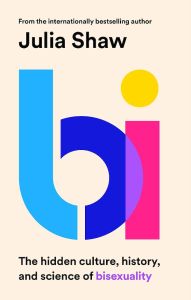 The book aims to situate bisexuality historically and scientifically. The term “bisexual” has been around since the 1890s, with the Kinsey Scale and the Klein Grid early attempts to add nuance to a binary view. Shaw delights in the fact that the mother of the Pride movement in the 1970s, Brenda Howard, was bisexual. She also learns that “being behaviourally bisexual is commonplace in the animal kingdom,” with many species engaging in “sociosexual” behaviour (i.e., for fun rather than out of reproductive instinct). It’s thought that 83% of bisexuals are closeted, mostly due to restrictive laws or norms in certain parts of the world – those seeking asylum may be forced to “prove” bisexuality, which, as we’ve already seen, is a tough ask. And bisexuals can face “double discrimination” from the queer community.
It felt odd to me that a final chapter on bisexual relationships ended up being mostly about threesomes, such that my main question (as she puts it: “what are the problems with the assumed link between bisexuality and non-monogamy?”) only merited four pages. A valuable book, certainly, but one to read for information rather than entertainment or thoughtful prose.
With thanks to Canongate for the free copy for review.
On the Scent: Unlocking the mysteries of smell – and how its loss can change your world by Paola Totaro and Robert Wainwright (2022)
Totaro (co-author Wainwright is her husband) contracted COVID-19 in March 2020 and temporarily lost the ability to smell, prompting her to embark on this investigation into a 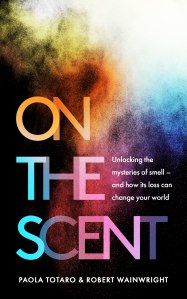 less-understood sense. One in 10,000 people have congenital anosmia, but many more than that experience it at some point in life (e.g., due to head trauma, or as an early sign of Parkinson’s disease), and awareness has shot up since it’s been acknowledged as a symptom of Covid. For some, it’s parosmia instead – smell distortions – which can almost be worse, with people reporting a constant odour of smoke or garbage, or that some of their favourite aromas, like coffee, were now smelling like faeces instead. Such was the case for Totaro.
She visits fascinating places like the Smell and Taste clinic in Dresden and the University of Reading Flavour Centre. “Sniffin’ sticks” are used to put people’s sense of smell to the test, but it’s notoriously difficult, even for those who haven’t had their senses compromised by illness, to name a smell out of context; people generally don’t score over 50%. That’s one of the major questions the book asks: why it is quite so difficult to identify smells, or describe them in words. Totaro also considers perfume-making, the associations of particular smells (bleach, pine or lemon, depending on your country) with cleanliness, and the potential for multisensory experiences, such as releasing odours during film showings. Lots of interesting topics and stories here, but not as compelling on the whole as The Smell of Fresh Rain.
With thanks to Elliott & Thompson for the proof copy for review.
Best of the 4: Black Butterflies
Would you be interested in reading one or more of these?
Recommended April Releases by Amy Bloom, Sarah Manguso & Sara Rauch
Just two weeks until moving day – we’ve got a long weekend ahead of us of sanding, painting, packing and gardening. As busy as I am with house stuff, I’m endeavouring to keep up with the new releases publishers have been so good as to send me. Today I review three short works: the story of accompanying a beloved husband to Switzerland for an assisted suicide, a coolly perceptive novella of American girlhood, and a vivid memoir of two momentous relationships. (April was a big month for new books: I have another 6–8 on the go that I’ll be catching up on in the future.) All:
In Love: A Memoir of Love and Loss by Amy Bloom
“We’re not here for a long time, we’re here for a good time.”
(Ameche family saying)
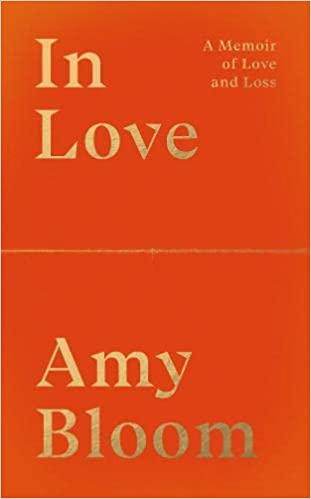
Given the psychological astuteness of her fiction, it’s no surprise that Bloom is a practicing psychotherapist. She treats her own life with the same compassionate understanding, and even though the main events covered in this brilliantly understated memoir only occurred two and a bit years ago, she has remarkable perspective and avoids self-pity and mawkishness. Her husband, Brian Ameche, was diagnosed with early-onset Alzheimer’s in his mid-60s, having exhibited mild cognitive impairment for several years. Brian quickly resolved to make a dignified exit while he still, mostly, had his faculties. But he needed Bloom’s help.
“I worry, sometimes, that a better wife, certainly a different wife, would have said no, would have insisted on keeping her husband in this world until his body gave out. It seems to me that I’m doing the right thing, in supporting Brian in his decision, but it would feel better and easier if he could make all the arrangements himself and I could just be a dutiful duckling, following in his wake. Of course, if he could make all the arrangements himself, he wouldn’t have Alzheimer’s”
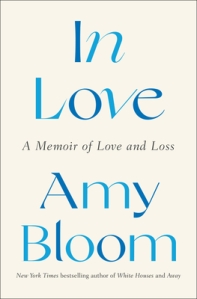
U.S. cover
She achieves the perfect tone, mixing black humour with teeth-gritted practicality. Research into acquiring sodium pentobarbital via doctor friends soon hit a dead end and they settled instead on flying to Switzerland for an assisted suicide through Dignitas – a proven but bureaucracy-ridden and expensive method. The first quarter of the book is a day-by-day diary of their January 2020 trip to Zurich as they perform the farce of a couple on vacation. A long central section surveys their relationship – a second chance for both of them in midlife – and how Brian, a strapping Yale sportsman and accomplished architect, gradually descended into confusion and dependence. The assisted suicide itself, and the aftermath as she returns to the USA and organizes a memorial service, fill a matter-of-fact 20 pages towards the close.
Hard as parts of this are to read, there are so many lovely moments of kindness (the letter her psychotherapist writes about Brian’s condition to clinch their place at Dignitas!) and laughter, despite it all (Brian’s endless fishing stories!). While Bloom doesn’t spare herself here, diligently documenting times when she was impatient and petty, she doesn’t come across as impossibly brave or stoic. She was just doing what she felt she had to, to show her love for Brian, and weeping all the way. An essential, compelling read.
With thanks to Granta for the free copy for review.
Very Cold People by Sarah Manguso
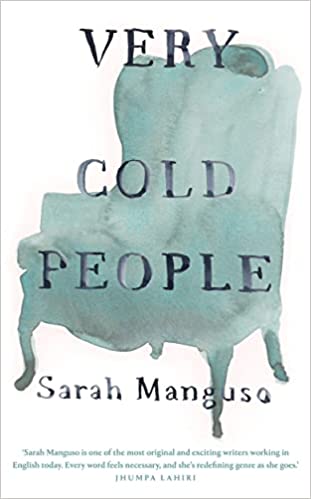
I’ve read Manguso’s four nonfiction works and especially love her Wellcome Book Prize-shortlisted medical memoir The Two Kinds of Decay. The aphoristic style she developed in her two previous books continues here as discrete paragraphs and brief vignettes build to a gloomy portrait of Ruthie’s archetypical affection-starved childhood in the fictional Massachusetts town of Waitsfield in the 1980s and 90s. She’s an only child whose parents no doubt were doing their best after emotionally stunted upbringings but never managed to make her feel unconditionally loved. Praise is always qualified and stingily administered. Ruthie feels like a burden and escapes into her imaginings of how local Brahmins – Cabots and Emersons and Lowells – lived. Her family is cash-poor compared to their neighbours and loves nothing more than a trip to the dump: “My parents weren’t after shiny things or even beautiful things; they simply liked getting things that stupid people threw away.”
The depiction of Ruthie’s narcissistic mother is especially acute. She has to make everything about her; any minor success of her daughter’s is a blow to her own ego. I marked out an excruciating passage that made me feel so sorry for this character. A European friend of the family visits and Ruthie’s mother serves corn muffins that he seems to appreciate.
My mother brought up her triumph for years. … She’d believed his praise was genuine. She hadn’t noticed that he’d pegged her as a person who would snatch up any compliment into the maw of her unloved, throbbing little heart.
U.S. cover
At school, as in her home life, Ruthie dissociates herself from every potentially traumatic situation. “My life felt unreal and I felt half-invested. I felt indistinct, like someone else’s dream.” Her friend circle is an abbreviated A–Z of girlhood: Amber, Bee, Charlie and Colleen. “Odd” men – meaning sexual predators – seem to be everywhere and these adolescent girls are horribly vulnerable. Molestation is such an open secret in the world of the novel that Ruthie assumes this is why her mother is the way she is.
While the #MeToo theme didn’t resonate with me personally, so much else did. Chemistry class, sleepovers, getting one’s first period, falling off a bike: this is the stuff of girlhood – if not universally, then certainly for the (largely pre-tech) American 1990s as I experienced them. I found myself inhabiting memories I hadn’t revisited for years, and a thought came that had perhaps never occurred to me before: for our time and area, my family was poor, too. I’m grateful for my ignorance: what scarred Ruthie passed me by; I was a purely happy child. But I think my sister, born seven years earlier, suffered more, in ways that she’d recognize here. This has something of the flavour of Eileen and My Name Is Lucy Barton and reads like autofiction even though it’s not presented as such. The style and contents may well be divisive. I’ll be curious to hear if other readers see themselves in its sketches of childhood.
With thanks to Picador for the proof copy for review.
XO by Sara Rauch
Sara Rauch won the Electric Book Award for her short story collection What Shines from It. This compact autobiographical parcel focuses on a point in her early thirties when she lived with a long-time female partner, “Piper”, and had an intense affair with “Liam”, a fellow writer she met at a residency.
“no one sets out in search of buried treasure when they’re content with life as it is”
“Longing isn’t cheating (of this I was certain), even when it brushes its whiskers against your cheek.”
 Adultery is among the most ancient human stories we have, a fact Rauch acknowledges by braiding through the narrative her musings on religion and storytelling by way of her Catholic upbringing and interest in myths and fairy tales. She’s looking for the patterns of her own experience and how endings make way for new life. The title has multiple meanings: embraces, crossroads and coming full circle. Like a spider’s web, her narrative pulls in many threads to make an ordered whole. All through, bisexuality is a baseline, not something that needs to be interrogated.
This reminded me of a number of books I’ve read about short-lived affairs – Tides, The Instant – and about renegotiating relationships in a queer life – The Fixed Stars, In the Dream House – but felt most like reading a May Sarton journal for how intimately it recreates daily routines of writing, cooking, caring for cats, and weighing up past, present and future. Lovely stuff.
With thanks to publicist Lori Hettler and Autofocus Books for the e-copy for review.
Will you seek out one or more of these books?
What other April releases can you recommend?
Six Degrees of Separation: What Are You Going Through to No Saints Around Here
I’ve become an occasional Six Degrees of Separation post-er, when the mood strikes me and/or I get a flash of inspiration. This month we began with What Are You Going Through, which I reviewed back in October 2020. (See Kate’s opening post.)
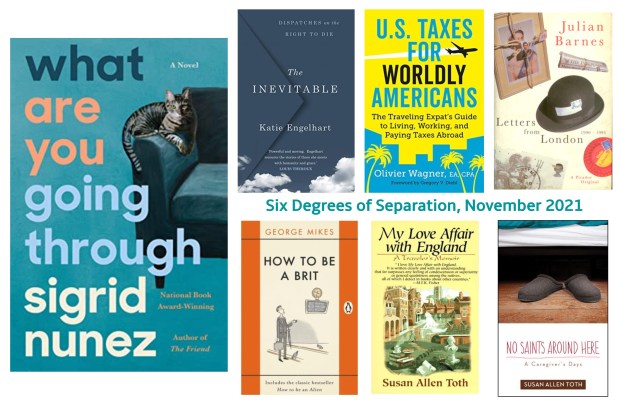
 Between that, The Friend and A Feather on the Breath of God, Sigrid Nunez has quickly become one of my favourite contemporary authors. I have two more of her novels on the shelf to read soon, one from my birthday haul.
In What Are You Going Through, the narrator is called upon to help a terminally ill friend commit suicide. However, I summed up the message as “Curiosity about other lives fuels empathy,” and noted “a sort of slapstick joy early in this morbid adventure.”
 #1 One of the stand-out books from my 2021 reading so far has been The Inevitable, which is about assisted dying. The case studies are wrenching but compassionately told. Katie Engelhart explores the nuances of situations, crafting expert portraits of suffering people and the medical professionals who seek to help them, and adding much in the way of valuable context.
 #2 As the saying goes, if there’s one thing inevitable besides death, it’s taxes. And if you’re a U.S. citizen, you will remain accountable to the IRS until the day you die, no matter where you live. (Eritrea is the only other country that requires expatriates to fill in tax returns.) I’ve now gotten my U.S. tax forms down to a science, keeping a list of pointers and previous years’ forms as scanned files so that I just have to plug in the year’s numbers, put zeroes in all the important boxes (since I’ve already paid income tax in the UK), and send it off. A matter of an hour or two’s work, rewarded by a G&T.
But I distinctly remember the Junes when I would spend days muddling through byzantine IRS forms, so I am very grateful that an offer for this e-book arrived in my inbox via my blog contact form in 2017: U.S. Taxes for Worldly Americans by Olivier Wagner. It goes through each form, often line by line. Three cheers for actually helpful self-help guides!
 #3 Another expat tip that I found extremely useful, small as it might seem, is that “quite” means something different in American vs. British English. To an American it’s a synonym for “very”; to the guarded Brits, it’s more like “rather.” I have the Julian Barnes essay collection Letters from London to thank for this vital scrap of etymological knowledge.
 #4 Unsurprisingly, I have built up a small library of books about understanding the English and their ways. In the How to Be a Brit omnibus, collecting three short volumes from the 1940s–70s, George Mikes (a Hungarian immigrant) makes humorous observations that have, in general, aged well. His mini-essays on tea, weather and queuing struck me as particularly apt. I would draw a straight line from this through Bill Bryson’s Notes from a Small Island to the Very British Problems phenomenon.
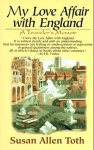 #5 As I was preparing to fly to England for the first time for my study abroad year, one of the authors who most whetted my appetite for British travel was Susan Allen Toth, whose trilogy of UK-themed memoirs-with-recommendations began with My Love Affair with England – included in one of my Landmark Books in My Life posts. I’m rereading one of the other three now.
 #6 Toth is a very underrated author, I feel. I’ve read most of her memoirs and have a short nonfiction work of hers on my pile for #NovNov. Her most recent book is No Saints Around Here: A Caregiver’s Days (2014), in which she chronicled the last 18 months of her husband James’s life, as she and an army of caregivers coped with his decline from Parkinson’s disease. Toth gets the tone just right: although she is honest, she is never melodramatic; although she often feels sorry for herself, she also recognizes how lucky she has been, not just to have done a good job of looking after James, but to have had him in her life at all.
I’ve gone full circle from one story of caregiving to another, via death, taxes and Englishness. The starting and ending books are reminders that you never fully know what another person is going through; all we can do is our best while cutting others some slack.
Where will your chain take you? Join us for #6Degrees of Separation! (Hosted on the first Saturday of each month by Kate W. of Books Are My Favourite and Best.) Next month’s starting point is our buddy read for week 4 of #NovNov, Ethan Frome by Edith Wharton.
Have you read any of my selections? Are you tempted by any you didn’t know before?
The Inevitable: Dispatches on the Right to Die by Katie Engelhart
Why, she wanted to know, was I so interested in the subject?
“Why isn’t everyone?” I asked.
The fact that I read a lot more books about death than the average person is something I attribute not to some morbid curiosity, but to pragmatism. As the title of Canadian reporter and documentary filmmaker Katie Engelhart’s book makes clear, this is the one subject none of us can avoid indefinitely, so why not learn about and understand it as much as possible? The Inevitable focuses on the controversial matter of assisted dying, also known as assisted suicide, euthanasia, or physician-assisted death. It’s a topic that’s already come up in my reading a couple of times this year: in the Dutch context of That One Patient by Ellen de Visser, and as a key part of the narrative in Darke Matter by Rick Gekoski.

Engelhart spends time with doctors and patients who are caught up in the assisted dying argument, chiefly in Western Europe and the United States. Ten states plus Washington, D.C. have assisted dying laws, sparked by Oregon’s Death with Dignity Act in 1994. In California, the author follows Dr. Lonny Shavelson for a month, observing all the meticulous regulations surrounded a physician-assisted death: patients with a terminal diagnosis and less than six months to live have to complete multiple forms, give many signatures, deliver oral testimony, and be able to drink the fatal concoction by themselves (whereas in other countries doctors can administer lethal injections). And if, when the time comes, a patient is too far gone to give spoken consent, the procedure is cancelled.
Other chapters consider specific cases that are not generally covered by current legislation but can drive people to seek assisted suicide: the ravages of old age, chronic degenerative illnesses, dementia, and severe mental illness. Each of these is given its own long chapter, like an extended magazine profile.
- Meet Avril Henry, a former Exeter University professor in her eighties, now living alone with a failing body but no specific diagnosis that would qualify her for AD. Pain has long since outweighed pleasure in her life, so she illegally imports Nembutal from a veterinary supplier in Mexico and makes a careful plan for what will happen with her body, home, and possessions after she takes the drug in the bathtub.
- Meet Maia Calloway, a 39-year-old former filmmaker confined to a wheelchair by multiple sclerosis. Her medicines cost $65,000 a year, not all covered by Medicare, and she can no longer rely on the patience of her boyfriend, who acts as her carer. She decides to raise the money to travel from Taos to a Swiss assisted dying clinic.
- Meet Debra, a 65-year-old widow so rapidly declining with dementia that she knows she has to make her arrangements at once. She contacts the Final Exit Network, which gives advice and equipment (e.g. a nitrogen tank) that can make a death look unexplained or like a standard suicide.
- Meet Adam, a 27-year-old in daily distress from OCD, anxiety, and depersonalization disorder. Though he’s lobbied for the inclusion of mental illness, he doesn’t qualify for AD under Canada’s laws. In 2017 he starts a Facebook livestream from a hotel room, intending to take poison off-screen. He loses his nerve this time, but is determined to try again.
These stories are so wrenching, but so compassionately told. Engelhart explores the nuances of each situation, crafting expert portraits of suffering people and the medical professionals who seek to help them, and adding much in the way of valuable context. Hers is a voice of reason and empathy. She mostly stays in the background, as befits a journalist, but occasionally emotional responses or skepticism come through – Exit International’s Philip Nitschke, vilified as a “Dr. Death” like Jack Kevorkian, is too much of a maverick for her.
And while her sympathy for the AD cause is evident, she also presents opposing arguments: from hospice doctors, from those afraid that the disabled will be pushed into assisted suicide to free up resources, from the family members of her subjects, and from those who have witnessed abuses of the system. There are those who frame this as a question of rights, and others who recognize a rare privilege; some who scorn the notion of escape, and others who speak of dignity and the kindness one would show a dying pet. The book is a vital contribution to an ongoing debate, with human stories at its heart.
With thanks to Atlantic Books for the free copy for review. The Inevitable was published in the UK on March 11th and is available from St. Martin’s Press in the USA.
Darke Matter by Rick Gekoski (Blog Tour Review)
Back in 2017, I enjoyed Rick Gekoski’s debut novel, Darke, in which curmudgeonly Dr. James Darke, a retired English teacher, literally seals himself off from the world after his wife Suzy’s death from cancer. I was pleasantly surprised to learn that a sequel was released last year – how appropriate to revisit themes of grief and isolation in 2020! – and right away was reminded of the delights of his grumpy, pompous first-person narration. As the second book opens, Darke is preparing to host his daughter Lucy with her partner Sam and son Rudy for Christmas and is in a Scrooge-like mood: “In my own home, I am blessedly safe from the canvassers, beggars and importuners spreading bubonically from house to house at Yuletide.”
Soon two things happen to shatter his peace: one is an invitation to join a poetry reading club hosted by a literary associate of his late wife – but he soon realizes it’s more of a support group for bereaved spouses. The second and much more serious interruption is a knock on the door from the police, who require more information about Suzy’s death. You see, early on in this book, Darke tells us himself that he gave Suzy a “soothing drink to carry her away,” and even in the face of others’ horror he maintains two seemingly contradictory facts: that he did not want for her to die, but that he did give her a fatal concoction to ease her terrible pain.
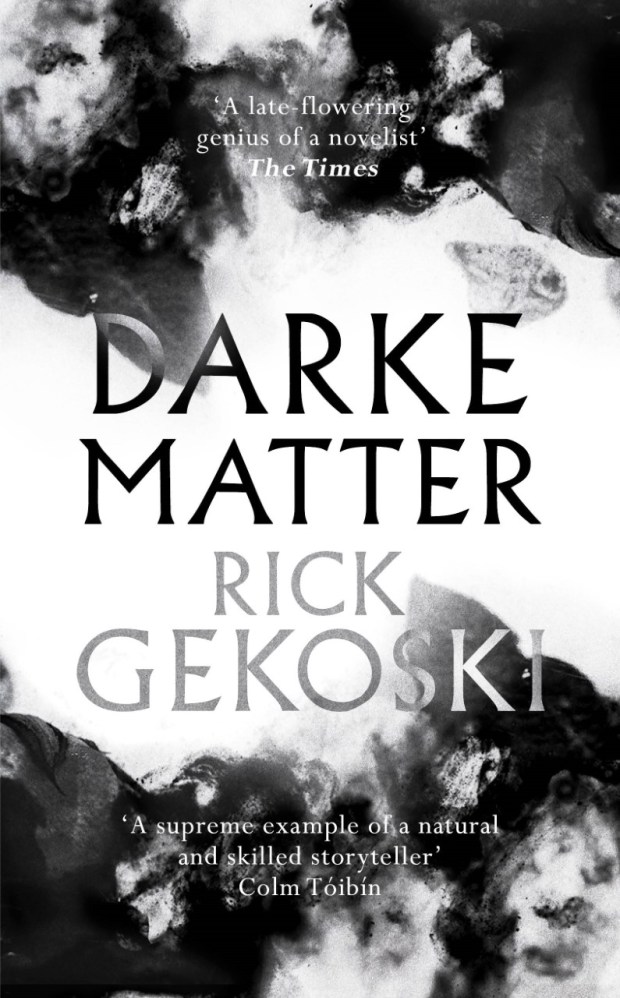
By coincidence, I was reading a nonfiction study of assisted dying, The Inevitable by Katie Engelhart, at the same time, and I’d also read That One Patient, a collection of interviews with Dutch medical professionals, some of whom have helped terminally ill patients to commit suicide, earlier this year. It was amusing, but also touching, to see Darke becoming an unwitting spokesman for this movement. He writes a manifesto headed “Easeful Death – Do you love your dog more than your wife?” and gets help disseminating it from a journalist acquaintance. Media attention follows and a scandal erupts.
One of the joys of this pair of novels is Darke’s fondness for literary allusions. In the previous book, these were mostly to Dante and Dickens. Here, the greatest debt is to Jonathan Swift: Darke has been reading Gulliver’s Travels to his grandson at bedtime, and decides to write a pastiche sequel to entertain the boy. Gradually, this turns into a coded story by which he can explain to Rudy what might happen to his grandfather. Will Captain Gulliver be found guilty of heresy? Will he have to flee to avoid jail?
Because we only ever experience Darke’s point of view, he is something of an unreliable narrator, and because he delivers the novel’s finale via his italicized Swiftian narrative, there is some uncertainty about what actually happens to our antihero. I didn’t enjoy this quite as much as the first book, but together they form a striking and witty character study. I especially appreciated how the sequel adds in a gentle note of controversy without allowing it to overtake the pleasures of the voice.
Darke Matter was first published in the UK by Constable in May 2020. The paperback edition came out on April 1st. My thanks to the publisher for the free copy for review.
I was happy to take part in the blog tour for Darke Matter. See below for details of where other reviews and features have appeared or will be appearing.

 Bookish Beck = Rebecca Foster. American transplant to England. Freelance proofreader and book reviewer.
 Bookish Beck