Booker Prize Longlist Reads (Switzy, The End of Everything) & Shortlist Predictions
In an hour or so, the Booker Prize shortlist will be announced. I’ve now read four of the longlisted novels; I’m still awaiting a library hold of May We Feed the King by Rebecca Perry, which is the only other I’m particularly keen to read. This is the first time in four years that I’ve made much of an effort to read from the longlist, i.e., besides what I happen to have already read. I think this year’s judging panel may have something to do with it: I have read (almost) everything by Raymond Antrobus and Patricia Lockwood, and I admire Mary Beard even if I don’t know her work so well.
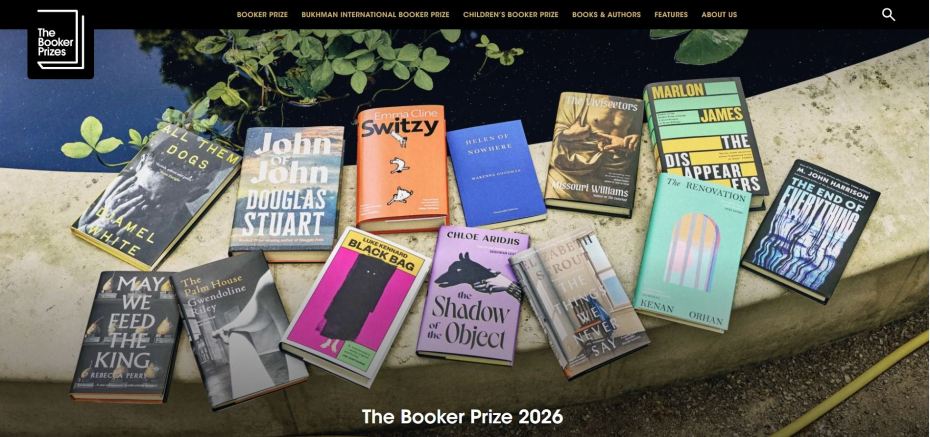
This pair contains unavoidably bleak stuff – dementia and preparing for an assisted death at Dignitas; weird goings-on in postapocalyptic London and Kent – but with some glints of humour. I could see the first being shortlisted but not the second.
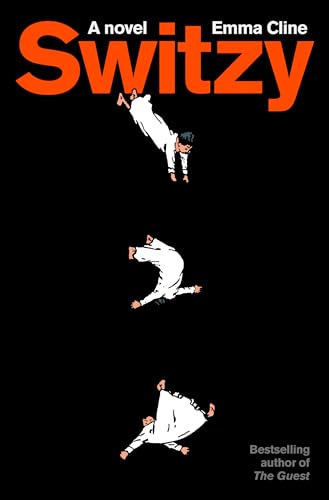
Switzy by Emma Cline
Like many, I read Cline’s debut, The Girls, but lost track of her career afterwards. I was taken aback at the subject matter of her fourth book, which sounded like fodder for a different author – an older male. I also worried that her portrait of a privileged businessman trying to make meagre amends for the wrongs from his past would be too similar to George Saunders’s subpar Vigil. But in the end she won me over with her close-third-person portrait of the last few days of an Everyman defying the inexorable course of dementia.
 David Hastings, 70, is en route to Zurich, headed to the never-named Dignitas. He’s on a private plane borrowed from a longtime associate, and has with him a personal assistant, Cody. Their first stop is London so he can see his daughter, Rebecca, and his musical prodigy grandson, Rainer, and say a sort of goodbye – although his relatives have no idea it’s the last time they’ll see him. He has one more stop to make, just over the Swiss border, to see Tom, a boarding school chum who endured hazing that David didn’t intervene to stop. Beyond the guilt, we sense that he longs to see Tom because he has always been half in love with him – a recurring homoerotic impulse never consummated. (An interesting parallel is that Rebecca is having clandestine meet-ups with a female friend. Is same-sex attraction inherited?)
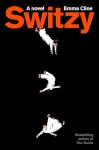
Depicting the mental turmoil of a character sinking into dementia is not that ground-breaking; I’ve read a number of novels that do so with aplomb (Still Alice, Elizabeth Is Missing, Turn of Mind, The Night Guest, The Swimmers). However, Cline convincingly traces David’s bewilderment at everyday traveller experiences of hotels, restaurants and taxis. It’s no mawkish tour through disability; instead, his outsider’s view skewers the ridiculousness of modern life. I was most impressed by the way David’s internal monologue skirts lost language and gets stuck on arbitrary phrases: sayings, song lyrics, liturgy. “The quick brown fox jumps over the lazy dog”; “The hills are alive…”; “Now and at the hour of our death…”; his ex-wife’s exhortation to their little girl to “brush away the sugar bugs”; and the story of Little Nemo in Slumberland (which lends the anomalous cover image).
“Unflinching” is a reviewing cliché, but this is what people have in mind when they say it. Cline follows David right up to his last moment, taking us into the room at the clinic with him. There’s nothing special, or even very likable, about this man, but as we follow along on his final physical experiences we get a sense of the weight of any life – which can still have value even if there are no longer any words for what’s happening. I found this much more affecting than I expected to, reaching the final pages with tear-soaked cheeks. (Read via NetGalley) 
Also recently reviewed by Cathy and Susan.
I’ve read and thought a lot about the topic of assisted dying, including with In Love by Amy Bloom, Intervals by Marianne Brooker, That One Patient by Ellen de Visser, The Inevitable by Katie Engelhart, and One Last Thing by Wendy Mitchell. Switzy would make a particularly good fictional counterpart to the Bloom, for those who wish to read further.
A bonus review:
A Better Death: The case for assisted dying by Jonathan Romain
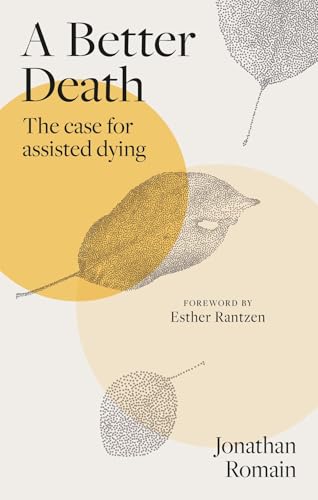 Romain is a rabbi and former chair of Dignity in Dying. In this short work, he gives a valuable history of relevant legislation in the UK and internationally, and a rundown (with rebuttals) of potential ethical objections to assisted dying. The party line of the major religions is to uphold the sanctity of life and thus oppose assisted suicide, but there are notable exceptions. Romain mentions a former archbishop of Canterbury who attends my church. George Carey changed his mind after the high-profile case of Tony Nicklinson, who was paralysed after a stroke and lost his appeal over the right to die. Pious supporters of the Campaign for Dignity in Dying emphasise the duty to be merciful to the suffering. Romain puts it this way: “From a religious perspective[,] it makes much more sense to say that we honour God most by healing someone when we can, comforting them when we cannot do so and helping them let go of life gently when desired.” Most medical bodies, too, have now reversed their official positions, with the majority voting to remain neutral on the matter. Romain characterises the campaign as a sign of humanitarian progress – like universal suffrage or the abolition of slavery – that future generations will look back on as overdue. He hopes that charismatic campaigners will arise from among the dying and their relatives. (The foreword is by TV presenter Esther Rantzen, who appealed after being diagnosed with terminal lung cancer. Just days ago, she announced she’s too fragile to travel to Dignitas.)
For me, this book offered little new because I was familiar with arguments around the issue, pro and con. However, it would be a good primer for those coming to such questions for the first time. What I did find helpful was a discussion of rituals we might develop to accompany an assisted death – a new sort of funeral that may one day be routine. Music, readings, a toast; a candle snuffed out or lit at the moment of death, and so on. Imagine a whole new category of human rite, one that should no longer be clouded in secrecy or available only to the wealthy. Alas, the latest version of the Terminally Ill Adults (End of Life) Bill was voted down by the House of Commons on 11 September, but no doubt it will be back in a new form soon. 
With thanks to Reaktion Books for the free copy for review.
The End of Everything by M. John Harrison
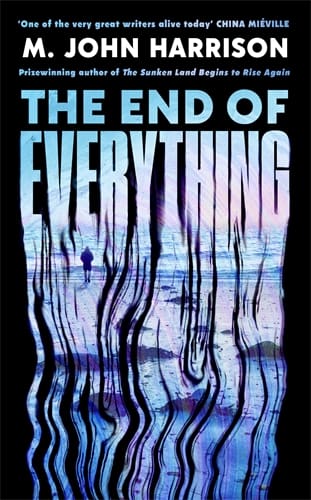 I was willing to give this a try for several reasons: it was readily available from my library (someone donated it), Harrison is lauded yet I’ve never approached his large back catalogue, and it’s novella length. Alas, those were insufficient to overcome my antipathy for vague dystopian scenarios in which characters’ actions have no clear motivations. Years post-crisis and -invasion, some people are still trying to flee Britain, but most seem content muddling along. “What were the iGhetti and where had they come from?” That’s a good question, and one to which we never get a straightforward answer, but the main hint is that they are jelly-like and arrived from elsewhere. Phillip Tennent engages in mudlarking – except some of the artefacts he discovers are amorphously humanoid and evolve human traits.
Initially it seems as if Phillip is the protagonist, but his 70-year-old painter aunt, Marnie, has more enduring importance. When she’s hounded out of her falling-down home, she shelters in an abandoned art gallery. She’s a surprising and almost admirable broad, handy with a weapon whenever she senses her way of life being threatened. There are some darkly comic outrageous happenings, and gruesome set pieces that blur the line between living and dead, human and non-. I had to wonder if there is also a Brexit allegory, given Marnie’s signs reading “HOW CAN YOU MISPLACE A CONTINENT?” Harrison’s prose is smooth and the pages turn quickly, but when I look back at the gnomic dictums I marked out, they don’t seem to mean anything:
Are we watching a film the universe is showing itself?
The world’s over. But that doesn’t matter. Because another one will be along soon enough.
Rather, significance is located in the expressions of uncertainty:
the apocalypse seemed to withhold itself, quickly becoming just another historical continuity.
There was a vigorous ambiguity to everything.
Believe all you like that at some level unavailable to you an organising principle exists. You will never have any evidence of that.
I suspect Harrison’s aim was to show how one can get used to anything, even random violence and purposeless wandering. But this watery postapocalyptic meander sheds no real light on the past, present, or future, and feels as if it should have been published more like a decade ago (at the time of The Wall by John Lanchester et al.). A couple of great scenes, such as children playing with fallen ash as if it were snow, aren’t enough to take the bitter edge off even such a short novel. I’m not tempted to try more by Harrison. (Public library) 
Also recently reviewed by Annabel.
Longlisted novels that I’d already read:
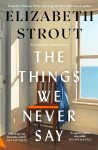 The Things We Never Say by Elizabeth Strout: Artie Dam is a likeable Everyman with the same sorts of secrets and struggles we all have. Sometimes he thinks his marriage is going well and he’s touching his high school history students’ lives; other times he feels fatalistic about his relationships and the US’s trajectory. Along with Lucy by the Sea, this is the most engaged Strout has been with the present day, and the most specific she’s gotten about political outrages. I liked how the flash-forwards prove Artie right in his predictions (occasionally based on premonitory dreams) or confirm what he couldn’t have known about the difference he made for two particular students. In his small way, Artie is a new Stoner.
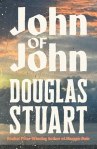 John of John by Douglas Stuart: One of my books of the year for sure. (I reviewed it for Shelf Awareness.) Stuart’s superb third novel is set on the Isle of Harris in the 1990s. Cal seeks to reconcile his sexuality and artistic goals with his family’s expectations and his devout upbringing. An absorbing, deliciously melodramatic story is built around the contrast between modernity and the old ways. The characters’ power plays and acts of desperation are heartrending, but mischief and love of colour and crafts lend lightness. Stuart’s every observation is profound; the simplest phrase is memorable for its beauty.
Here’s my thinking about the shortlist:
Lockwood may be to thank/blame for the weirder and more niche selections (i.e. previously unknown young Americans’ second books), whereas the judges are likely to come to a consensus on more straightforward, reader-friendly material. I imagine we’ll see a shortlist dominated by women and repeat nominees.
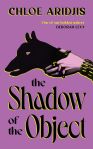
The Shadow of the Object by Chloe Aridjis – Especially with Antrobus and critic Rebecca Liu on the panel, we can expect at least two non-Anglo authors to make it through. Djamel White’s subject matter sounds neither appealing nor fresh. [Kenan Orhan is apparently Turkish American, though he looks white.] Though I’m personally not eager to read Aridjis again (after a DNF of Sea Monsters), I’m taking a gamble on this one being the second.
Switzy by Emma Cline – Edgy and powerful enough to deserve a place.
The Disappearers by Marlon James – A previous winner and a writer’s writer, though I’ve never particularly gotten on with his work.
May We Feed the King by Rebecca Perry – I’ve heard almost exclusively good things.
The Things We Never Say by Elizabeth Strout – She’s getting to be a Booker bridesmaid and has been nominated for poorer books, so I hope she’ll get another shot.
John of John by Douglas Stuart – How could you not?! I’ll throw a tantrum if it doesn’t make it through.
But, of course, the judges could surprise me with a wildcard such as Black Bag by Luke Kennard; Gwendoline Riley is inexplicably popular with judging panels, too.
What have you read from the longlist? Which book(s) do you most want to read, or see on the shortlist?
Assisted Dying: Intervals by Marianne Brooker; Wendy Mitchell; and a Local Panel Discussion
Intervals by Marianne Brooker is on the longlist for the inaugural Women’s Prize for Non-Fiction, which my book club has applied to shadow. I’ve now read three of the nominees, the others being Matrescence and A Flat Place (review coming up tomorrow). Unsurprisingly, I’ve gravitated towards the ones based around a personal narrative – although all three are also political and incorporate research and cultural critique. Brooker’s is an extended essay about her mother’s protracted death with multiple sclerosis and the issues it brought up around disability, poverty, and inequality of access to medical care and services.

Specifically, Brooker decries the injustice of the wealthy having the option of travelling to Dignitas in Switzerland for an assisted death (current cost: £15,000), whereas her single mother, who lived in rented accommodation and had long been disabled and unable to work, apart from crafting and reading tarot, had so such relief in sight. Instead, she resorted to refusing life-sustaining nourishment. VSED, or voluntarily stopping eating and drinking, was a topic much on my mind anyway because of Wendy Mitchell’s death last month.
 Mitchell was diagnosed with early-onset Alzheimer’s in her fifties and was an energetic campaigner for dementia education and research for the last decade of her life. With a co-author, she wrote three books that give a valuable insider’s view of life with dementia: Somebody I Used to Know, What I Wish People Knew About Dementia, and One Last Thing, in which she specifically discusses VSED. She was determined to live independently. For her, a dignified life was being able to meet her own daily physical needs. She did not want to be in a care home, or to exist past the point where she could no longer recognise her daughters. So when, in January, she fell and broke both wrists, giving her a taste of dependency and derailing her plans to travel to Dignitas, she knew that the time had come. VSED was her way out. You can read her farewell message here.
Is wilful starvation a good death? I don’t really know. It’s peaceful, at least; a person simply gets weaker and weaker, spending more and more time asleep until they fade out, at home. But it can take two weeks to die in this way. Should loved ones have to watch this process?
Denied a liveable life and a legal right to die, my mum made a choice within and between the lines of the law. A decade after her diagnosis, when she was forty-nine and I was twenty-six, she decided to stop eating and drinking to end her suffering and her life. Her MS symptoms were barely treatable and certainly incurable: severe pain, incontinence, fatigue, the gradual but intensifying loss of mobility, vision and speech. But these medical symptoms were compounded by social conditions: isolation, stress, debt and fear of a future in which she would not be able to live or die in her chosen home. We were caught in a perfect storm.
Brooker’s description of the vigil of these last days, like her account of her vivacious mother’s life, is both tender and unflinching. It’s almost like a counterpoint to Simone de Beauvoir’s A Very Easy Death, but with the same incisive attention and emotional transfer between mother and daughter. The book also incorporates political commentary and quotations from psychologists and cultural critics. This somewhat distances the reader; it feels less like a bereavement memoir and more like an impassioned, personally inspired treatise. But that’s not to say there isn’t some levity. She remembers good times from their earlier life together, and reckons with her new role as her mother’s memorial and archivist in a way that really rang true for me. I wish the title was more evocative so as to draw the right readers to this book. 
With thanks to Fitzcarraldo Editions for the free copy for review.
Also on this topic, I have read In Love by Amy Bloom, That One Patient by Ellen de Visser, The Inevitable by Katie Engelhart, Darke Matter by Rick Gekoski, and Wild and Precious Life by Deborah Ziegler.
Last night I attended a local panel discussion put on by the Campaign for Dignity in Dying. It wasn’t a debate in that 3.5 of the 4 members on the panel were pro-assisted dying, and I would guess more than four-fifths of the audience as well. In fact, the only anti- voice of the evening was from a young Catholic man during question time. I knew about the event because one panelist attends my church: George Carey, a former archbishop of Canterbury.
The Anglican Church’s line – the religious response in general – is to uphold the sanctity of life and thus to oppose assisted suicide, so for Lord Carey to do otherwise is noteworthy. He changed his mind in 2014, he explained, after the high-profile case of Tony Nicklinson, who was paralysed after a stroke and lost his appeal over the right to die. “There is no theological contradiction between valuing life and wanting a good death,” Carey insisted. Jesus showed mercy to the ill and dying, and so should we. (He also, more facetiously, described King Saul’s mercy killing by an enemy soldier in 2 Samuel as an assisted death.)
The other panelists were a lawyer, a retired doctor, and a Member of Parliament. Lawyer Graham Wood noted that the 1961 Suicide Act, under which anyone who assists a suicide can be prosecuted, would have to be abolished, and that there would also need to be a negotiation regarding Article 2 of the European Convention on Human Rights, which protects the “right to life.” He was the most wary of the speakers, warning of the danger of undue influence being exerted by relatives when money and assets are involved – he said he sees the worst of humanity in his line of work.

Dr Barry Newman pinned his support for assisted dying to compassion and autonomy, two overriding values of a liberal society. He acknowledged the current professional risk for doctors, and noted that the UK’s main medical bodies remain neutral. However, he brought up a loophole, “double effect,” administering a medication that might end life but whose intent is to alleviate suffering, e.g., a high dose of morphine to an end-stage cancer patient.
Kit Malthouse, Conservative MP for northwest Hampshire, co-chairs a group on end-of-life and has campaigned for assisted dying. (American readers may be surprised by a conservative politician having liberal views on an ethical matter. In the UK, morality is not in lockstep with religions and/or political parties as it is in the USA. This was something it took me a while to get used to: I have Christian friends who vote for four different political parties.) He was disappointed that a members’ bill on assisted dying failed in 2015, but has hope that multiple recent cases (e.g., Esther Rantzen) will put it back on the agenda and believes support in the Commons is sufficient to push legislation through in six months.
“It’s coming,” he assured, not least because many of the UK’s European neighbours and other allies have introduced assisted dying. The UK bill does not go as far as the Dutch legislation, about which all the panelists expressed doubt, and can be tailored to this country’s health system. The status quo, Malthouse cautioned, is people suffering. We know from Oregon that the current proposal will work well, he said; there is vanishingly little abuse of the system in any of the places that have instituted assisted dying legislation.
It was all preaching to the choir as far as I was concerned. Indeed, the spontaneous applause and affirming subvocalizations reminded me of a Pentecostal church service. Clearly, many from the audience had witnessed loved ones dying in horrible ways (a few of these stories came out during question time, such as a woman whose husband went to Dignitas and another who had to fight for her terminally ill sister’s wishes when she was mistakenly resuscitated by paramedics after a suicide attempt). Malthouse observed that supporters of assisted dying have often been through horrific experiences with relatives or spouses.
I was already firmly in support so last night didn’t sway me in any way, but I was encouraged that so many people are thinking and talking about these issues. Maybe by the time I face such a crisis myself, or on someone else’s behalf, a compassionate law will be in place.
Recommended April Releases by Amy Bloom, Sarah Manguso & Sara Rauch
Just two weeks until moving day – we’ve got a long weekend ahead of us of sanding, painting, packing and gardening. As busy as I am with house stuff, I’m endeavouring to keep up with the new releases publishers have been so good as to send me. Today I review three short works: the story of accompanying a beloved husband to Switzerland for an assisted suicide, a coolly perceptive novella of American girlhood, and a vivid memoir of two momentous relationships. (April was a big month for new books: I have another 6–8 on the go that I’ll be catching up on in the future.) All: 
In Love: A Memoir of Love and Loss by Amy Bloom
“We’re not here for a long time, we’re here for a good time.”
(Ameche family saying)
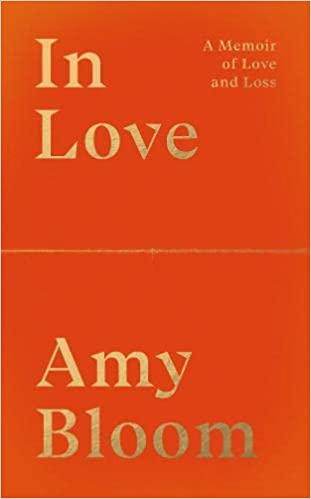
Given the psychological astuteness of her fiction, it’s no surprise that Bloom is a practicing psychotherapist. She treats her own life with the same compassionate understanding, and even though the main events covered in this brilliantly understated memoir only occurred two and a bit years ago, she has remarkable perspective and avoids self-pity and mawkishness. Her husband, Brian Ameche, was diagnosed with early-onset Alzheimer’s in his mid-60s, having exhibited mild cognitive impairment for several years. Brian quickly resolved to make a dignified exit while he still, mostly, had his faculties. But he needed Bloom’s help.
“I worry, sometimes, that a better wife, certainly a different wife, would have said no, would have insisted on keeping her husband in this world until his body gave out. It seems to me that I’m doing the right thing, in supporting Brian in his decision, but it would feel better and easier if he could make all the arrangements himself and I could just be a dutiful duckling, following in his wake. Of course, if he could make all the arrangements himself, he wouldn’t have Alzheimer’s”
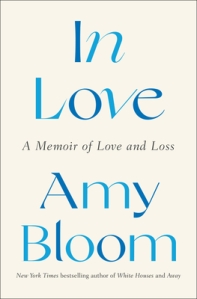
U.S. cover
She achieves the perfect tone, mixing black humour with teeth-gritted practicality. Research into acquiring sodium pentobarbital via doctor friends soon hit a dead end and they settled instead on flying to Switzerland for an assisted suicide through Dignitas – a proven but bureaucracy-ridden and expensive method. The first quarter of the book is a day-by-day diary of their January 2020 trip to Zurich as they perform the farce of a couple on vacation. A long central section surveys their relationship – a second chance for both of them in midlife – and how Brian, a strapping Yale sportsman and accomplished architect, gradually descended into confusion and dependence. The assisted suicide itself, and the aftermath as she returns to the USA and organizes a memorial service, fill a matter-of-fact 20 pages towards the close.
Hard as parts of this are to read, there are so many lovely moments of kindness (the letter her psychotherapist writes about Brian’s condition to clinch their place at Dignitas!) and laughter, despite it all (Brian’s endless fishing stories!). While Bloom doesn’t spare herself here, diligently documenting times when she was impatient and petty, she doesn’t come across as impossibly brave or stoic. She was just doing what she felt she had to, to show her love for Brian, and weeping all the way. An essential, compelling read.
With thanks to Granta for the free copy for review.
Very Cold People by Sarah Manguso
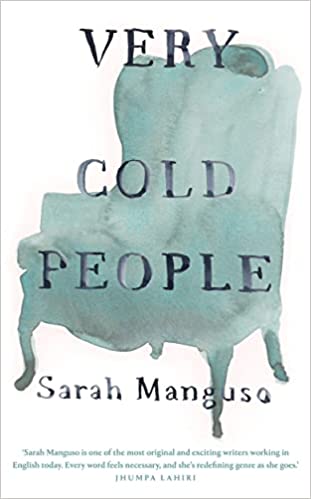
I’ve read Manguso’s four nonfiction works and especially love her Wellcome Book Prize-shortlisted medical memoir The Two Kinds of Decay. The aphoristic style she developed in her two previous books continues here as discrete paragraphs and brief vignettes build to a gloomy portrait of Ruthie’s archetypical affection-starved childhood in the fictional Massachusetts town of Waitsfield in the 1980s and 90s. She’s an only child whose parents no doubt were doing their best after emotionally stunted upbringings but never managed to make her feel unconditionally loved. Praise is always qualified and stingily administered. Ruthie feels like a burden and escapes into her imaginings of how local Brahmins – Cabots and Emersons and Lowells – lived. Her family is cash-poor compared to their neighbours and loves nothing more than a trip to the dump: “My parents weren’t after shiny things or even beautiful things; they simply liked getting things that stupid people threw away.”
The depiction of Ruthie’s narcissistic mother is especially acute. She has to make everything about her; any minor success of her daughter’s is a blow to her own ego. I marked out an excruciating passage that made me feel so sorry for this character. A European friend of the family visits and Ruthie’s mother serves corn muffins that he seems to appreciate.
My mother brought up her triumph for years. … She’d believed his praise was genuine. She hadn’t noticed that he’d pegged her as a person who would snatch up any compliment into the maw of her unloved, throbbing little heart.
U.S. cover
At school, as in her home life, Ruthie dissociates herself from every potentially traumatic situation. “My life felt unreal and I felt half-invested. I felt indistinct, like someone else’s dream.” Her friend circle is an abbreviated A–Z of girlhood: Amber, Bee, Charlie and Colleen. “Odd” men – meaning sexual predators – seem to be everywhere and these adolescent girls are horribly vulnerable. Molestation is such an open secret in the world of the novel that Ruthie assumes this is why her mother is the way she is.
While the #MeToo theme didn’t resonate with me personally, so much else did. Chemistry class, sleepovers, getting one’s first period, falling off a bike: this is the stuff of girlhood – if not universally, then certainly for the (largely pre-tech) American 1990s as I experienced them. I found myself inhabiting memories I hadn’t revisited for years, and a thought came that had perhaps never occurred to me before: for our time and area, my family was poor, too. I’m grateful for my ignorance: what scarred Ruthie passed me by; I was a purely happy child. But I think my sister, born seven years earlier, suffered more, in ways that she’d recognize here. This has something of the flavour of Eileen and My Name Is Lucy Barton and reads like autofiction even though it’s not presented as such. The style and contents may well be divisive. I’ll be curious to hear if other readers see themselves in its sketches of childhood.
With thanks to Picador for the proof copy for review.
XO by Sara Rauch
Sara Rauch won the Electric Book Award for her short story collection What Shines from It. This compact autobiographical parcel focuses on a point in her early thirties when she lived with a long-time female partner, “Piper”, and had an intense affair with “Liam”, a fellow writer she met at a residency.
“no one sets out in search of buried treasure when they’re content with life as it is”
“Longing isn’t cheating (of this I was certain), even when it brushes its whiskers against your cheek.”
 Adultery is among the most ancient human stories we have, a fact Rauch acknowledges by braiding through the narrative her musings on religion and storytelling by way of her Catholic upbringing and interest in myths and fairy tales. She’s looking for the patterns of her own experience and how endings make way for new life. The title has multiple meanings: embraces, crossroads and coming full circle. Like a spider’s web, her narrative pulls in many threads to make an ordered whole. All through, bisexuality is a baseline, not something that needs to be interrogated.
This reminded me of a number of books I’ve read about short-lived affairs – Tides, The Instant – and about renegotiating relationships in a queer life – The Fixed Stars, In the Dream House – but felt most like reading a May Sarton journal for how intimately it recreates daily routines of writing, cooking, caring for cats, and weighing up past, present and future. Lovely stuff.
With thanks to publicist Lori Hettler and Autofocus Books for the e-copy for review.
Will you seek out one or more of these books?
What other April releases can you recommend?
 Bookish Beck = Rebecca Foster. American transplant to England. Freelance proofreader and book reviewer.
